




Abstract
Alzheimer's disease (AD), which is a progressive neurodegenerative disorder is the most common form of dementia globally. Several studies have suggested alteration in the gut microbiota and HSV-1 infection as contributing factors to the development of the disease. As at now, there are no AD attenuating agents and AD pharmacotherapy is focused on managing symptoms while plants used in ethnomedicine remain potential sources of drugs for the treatment of the condition. Here, we reviewed published databases for African ethnomedicinal plants and functional foods of African origin that are used in the management of AD-related phenotypes, treatment of herpes simplex virus −1 (HSV-1) and/or improvement of gut microbiota. A total of 101 unique plant species and 24 different types of traditionally prepared African functional foodstuff were identified. Of the 101 identified plant species, 50 species serve as functional foodstuffs. Twenty-three (23) of the ethnomedicinal plant families were successfully identified for the treatment and management of AD-related phenotypes and age-related dementia. Eighteen (18) African plant species from 15 families were also identified as potent remedies for HSV-1; while many African wild fruits (3 species), roots and tubers (7 species), leafy vegetables (14 species), and seaweeds (26 species) were functional foods for modifying AD-related phenotypes. It was concluded that African medicinal plants are potential sources of both AD attenuating agents and phytocompounds that may be used against HSV-1 infection and alteration of gut microbiota. Additionally, a number of African functional foods are important sources of prebiotics and probiotics.
Introduction
Alzheimer's disease (AD) described by Alois Alzheimer in 1906, 1 is now the most common form of dementia globally. 2 AD results in memory loss and erosion of several cognitive and emotional functions. Age is often considered the most central risk factor for AD, with an estimated 14-fold increase in risk in people over 85 years of age compared to people between the ages of 65 and 69.1–7 Globally, it is estimated that between 7–10% of individuals over 65 years of age and approximately 50–60% of persons over 85 years of age suffer from AD. 5 The disease condition occurs as a result of the aggregation of misfolded β-amyloid and hyperphosphorylated tau peptides in selective regions of the central nervous system (CNS).8–14
Several studies have suggested alteration of the gut microbiota and HSV-1 infection as contributing factors to the development of the disease,15–17 while other studies have implicated dysbiosis in the intestinal microbiota and neurotropic infectious agents as triggers.18–20 Using polymerase chain reaction (PCR) in the studies of the human brain of elderly normal and AD patients have led to the detection of the viral DNA signal of human simplex virus type 1 (HSV-1) in the regions that are mostly affected by AD.21–23 These findings were confirmed by other studies that have also detected viral DNA signals in the brain.24–26 A study by Itzhaki et al (1993) has demonstrated by reverse transcription (RT) PCR that the infection was latent by the presence of latency-associated transcripts in favor of thymidine kinase transcripts.23,27 According to Jamieson and colleagues (1992), the viral DNA of HSV-1 was detected in only a very small percentage of brains in younger people compared to the aged, 22 suggesting that the virus is able to cross the blood-brain barrier in the aged possibly as a result of declined immunity.23,28 From both cell culture and brain studies, it is evident that HSV-1 cause neuronal damage directly or through inflammation when reactivated. 29
Gut microbiota induced immuno-modulation has emerged as an important pathway in the pathogenesis of AD. 30 The human gut microbiota is diverse, large, dynamic and made up of more than 100 trillion microorganisms that come from more than 1000 different bacteria species with evidence of the interplay between the intestinal mucosal immune system and intestinal microbiota.31,32 Numerous studies have generated compelling evidence suggesting that the human gut microbiota may play a key role in AD neuroinflammation 33 such that the gut flora can influence the brain in several ways through the immune system. Thus, signifying that the gut and the CNS engage in crosstalk.18,33–35
Currently, there is no AD attenuating agent36,37 and AD pharmacotherapy is focused on managing symptoms without disease attenuation. 38 The neuroprotective capabilities of natural phenolic compounds from plants used in ethnomedicine have been reported and they remain the preferred primary treatment choice. It is estimated that over 60% of the global population and approximately 80% of the population in developing countries rely on herbal medicine.37,39,40 According to Fabricant and Farnsworth (2001), a total of some 122 isolated compounds from 94 plant species have been identified. 41 Of these, 80% were employed for the same or related ethnomedicinal uses. 41 Considering the fact that these isolated plant compounds were derived from only 94 plant species out of an estimated 250 000 plant species, Mahapatra and colleagues argued that the plethora of active drug compounds that remains to be identified in plants is unlimited. 42 The use of prebiotics and probiotics has also been shown to help restore or at least improve the density and diversity of healthy human gut flora. This is achieved by consuming probiotic foodstuffs that provide healthy food microbes to the gut or indigestible polysaccharides known as prebiotics that are essential for the growth of healthy gut flora. 43 This study therefore reviewed published records on African ethnomedicinal plants that are used in the management of the above-stated disease conditions and those that are used as functional foodstuffs.
Methodology
This study reviewed electronic databases (Science Direct, Google Scholar, ResearchGate, and PubMed) and the Ghana Herbal Pharmacopoeia for African ethnomedicinal plants that have been used in the treatment of AD-related phenotypes, the treatment of HSV-1, and the enhancement and restoration of the gut microbiota, to determine their therapeutic efficacy and functional food use. The search was performed using specific search terms for the various disease conditions, and functional food usage.
Traditional Use of Plants
Ethnomedicinal Plants for the Management of AD-Related Phenotypes
The current AD management therapeutics are only focused on slowing disease progression and alleviating the symptoms.38,44 However, since time immemorial, mankind has always relied on ethnomedicine for the treatment and management of diseases related to the CNS.37,44 One plant from which successful ethnopharmaceutical have been developed for the treatment of dementia is Ginkgo biloba with a good safety profile.44,45 One of such efficacious remedies from Ginkgo biloba is EGb 761 (a standardized extract marketed by Wilmar Schwabe GmbH), which is very effective in the treatment of AD-related dementia in clinical trials.44,46 The drug discovery and development pipeline have always started with ethnomedicinal knowhow and it is now more important than ever to profile ethnomedicinal plants that can attenuate AD-related pathophysiology. This section is a compilation of some African ethnomedicinal plants that are traditionally used in the treatment and management of AD-related phenotypes. The compilation considers the (i) traditional use of the plants in humans; (ii) its uses on animals:—of which both (i) and (ii) are categorized as in vivo use; and (iii) its uses on cell-line(s), which is categorized as in vitro use.
The list of ethnomedicinal plants credited with attenuating capacity in AD-related phenotypes consists of plants belonging to the family Agapanthaceae to family Zingiberaceae (Table 1). Plants from the following families were identified Agapanthaceae, Aizoaceae, Amaryllidaceae, Apocynaceae, Araceae, Asteraceae, Combretaceae, Euphorbiaceae, Fabaceae, Gelidiaceae, Gracilariaceae, Hydrophilaceae, Lessoniaceae, Moringaceae, Myristicaceae, Orchidaceae, Piperaceae, Polygalaceae, Rhamnaceae, Scrophulariaceae, Sterculiaceae, Ulvaceae and Zingiberaceae, making a total of 23 plant families in all. Majority of the plants were from the family Amaryllidaceae, followed by an equal proportion of members from the following families:—Combretaceae, Euphorbiaceae, Piperaceae, Rhamnaceae and Zingiberaceae. Photographs of some of the members of plants listed in Table 1 are provided.
List of African Medicinal Plants Used for Memory and Cognition Enhancement, and Management of Other Alzheimer's Disease Related Phenotypes.
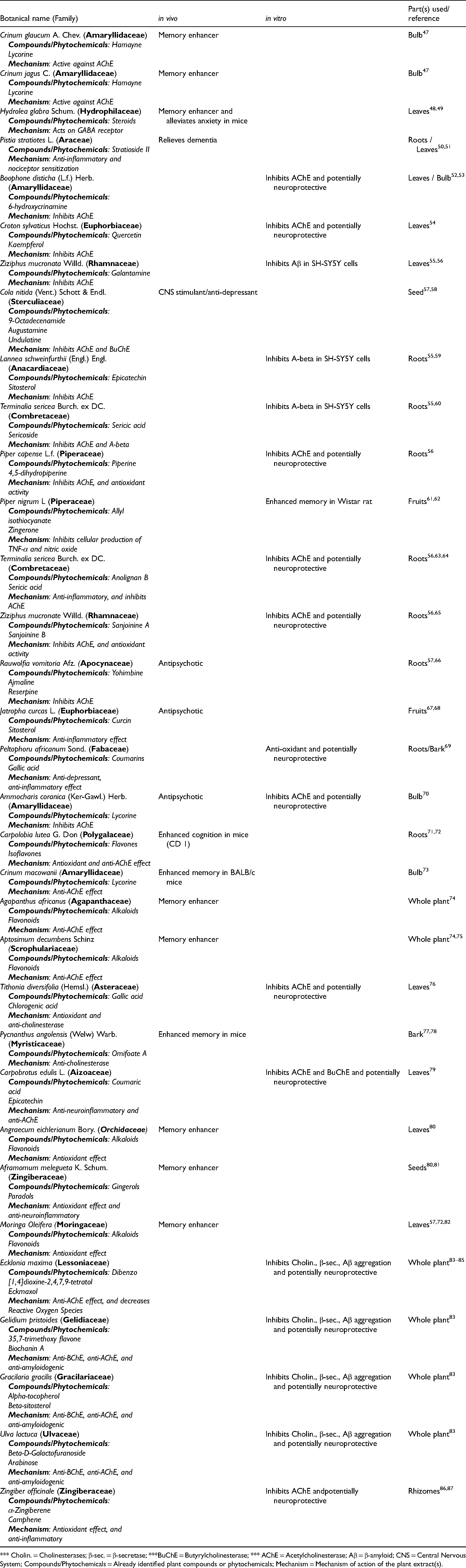
*** Cholin. = Cholinesterases; β-sec. = β-secretase; ***BuChE = Butyrylcholinesterase; *** AChE = Acetylcholinesterase; Aβ = β-amyloid; CNS = Central Nervous System; Compounds/Phytochemicals = Already identified plant compounds or phytochemicals; Mechanism = Mechanism of action of the plant extract(s).
Whole plant extract of Agapanthus africanus (Figure 1A) belonging to the Agapanthaceae family is known to have memory-enhancing capability and has been used to enhance memory in ethnomedicine. 74 The leaf extract of Carpobrotus edulis (Figure 1B) from the family Aizoaceae has been reported to have neuroprotective capacity and shown to inhibit AChE and BuChE in vitro. 79 The bulb extract of Crinum glaucum (Figure 1C), 47 Crinum jagus (Figure 1D), 47 and Crinum macowanii (Figure 1E) 73 have all demonstrated their capacity as memory enhancers in vivo whiles the in vitro assessment of the leaves and bulb extracts of Boophone disticha (Figure 1F) have both demonstrated the plant's neuroprotective potential and the capacity to inhibit AChE. 52 Furthermore, the bulb extract of Ammocharis coranica (Figure 1G), which is used ethnomedicinally as an antipsychotic, has also been reported to have neuroprotective capacity and ability to inhibit AChE in vitro. 70 The root extract of Rauwolfia vomitoria (family: Apocynaceae) (Figure 1I) was reported to be a potent antipsychotic agent used in ethnomedicine around the African continent.57,66

Photographs of some of the plants listed in Table 1.
Leave and root extracts of Pistia stratiotes (family: Araceae) (Figure 1H) are known to exhibit the capacity to relieve dementia in ethnomedicine. 50 The leaf extract of Tithonia diversifolia (family: Asteraceae) (Figure 1J) has demonstrated the capacity as both a neuroprotective agent and an inhibitor of AChE in vitro, 76 whereas root extract of Terminalia sericea (Figure 1L) belonging to the Family Combretaceae exhibited neuroprotective capacity and the ability to inhibit AChE in vitro. 56 The capacity of the root extract of Terminalia sericea to inhibit the formation of beta-amyloid was also demonstrated in the SH-SY5Y cell line. 56
Two plant species Jatropha curcas (Figure 1M) and Croton sylvaticus (Figure 1N), were identified from the Euphorbiaceae family. While the fruits of Jatropha curcas has antipsychotic properties, 67 the leaf extract of Croton sylvaticus have been reported to both inhibit AChE and protect neuron cells. 54 The root and bark extracts of Peltophorum africanum (family: Fabaceae) (Figure 1O) demonstrated a strong antioxidant capacity and neuroprotective potential in vitro. 69 Gelidium pristoides (Figure 1P), Gracilaria gracilis (Figure 1K), Ecklonia maxima (Figure 1Q), and Ulva lactuca (Figure 1R) were identified from Gelidiaceae, Gracilariaceae, Lessoniaceae, and Ulvaceae families respectively. Whole plant extracts from these plants have demonstrated their neuroprotective capacity, as well as their ability to inhibit cholinesterase, beta-secretase, and beta-amyloid aggregation in vitro. 83
Ethnomedicinal plants with the capacity to enhance memory were identified from the plant families: Moringaceae (Moringa Oleifera) (Figure 1S), Orchidaceae (Angraecum eichlerianum) (Figure 1T), Scrophulariaceae (Aptosimum decumbens) (Figure 1U), and Zingiberaceae (Aframomum melegueta) (Figure 1V). The leave extracts of Moringa Oleifera57,72 and Angraecum eichlerianum 80 have been shown to demonstrate the capacity to enhance memory, while the whole plant extract of Aptosimum decumbens demonstrated its ability to enhance memory. 74 Also, the seeds of Aframomum melegueta have been traditionally reported to enhance memory. 80 Another member identified from the Zingiberaceae family is Zingiber officinale (Figure 1W). The rhizome of Zingiber officinale had been identified as having neuroprotective capacity and the ability to inhibit AChE in vitro. 86 Pycnanthus angolensis is the plant that was identified as representative of the family Myristicaceae. Pycnanthus angolensis (Figure 1X) bark extract demonstrated its ability to enhance memory in mice. 77 The root extract of Carpolobia lutea (Figure 1Y) of the family Polygalaceae had successfully demonstrated cognition enhancement in CD1 mice. 79
The leave extract of Hydrolea glabra (Figure 1Z) of the family Hydrophilaceae has been shown to be a potent memory enhancer with the capacity to alleviate anxiety in mice.48,49 From the family Piperaceae were identified plant species; Piper capense (Figure 1AA) and Piper nigrum (Figure 1BB). The roots of Piper capense are known to be neuroprotective with the ability to inhibit AChE in vitro, 56 while the fruits of Piper nigrum have demonstrated memory enhancing capacity in the Wistar rat. 61
The root extract of Ziziphus mucronata (family: Rhamnaceae) (Figure 1CC) has been shown to possess neuroprotective capacity and AChE inhibitory effect, 56 while the leaf extract has been shown to inhibit beta-amyloid. 55 The seeds of Cola nitida (Figure 1DD) belonging to the Sterculiaceae family have been identified as having antidepressant properties and the ability to stimulate the CNS. 57
Ethnomedicinal Plants for the Treatment of Herpes Simplex Virus Type 1 (HSV-1)
The Herpes Simplex Virus
In essence, there are eight types of herpesviruses in a large family called Herpesviridae, which consist of viral particles made up of a single double-stranded DNA molecule contained in a viral envelope. 88 The large family of herpesviruses has been classified into 3 basic groups, (i) group alpha: made up of herpes simplex virus type-1 and −2 (HSV-1/HSV-2), and varicella-zoster virus (VZV); (ii) group beta: includes human herpesvirus type-6 and −7 (HHV-6/HHV-7), and human cytomegalovirus (HCMV); as well as (iii) group gamma: which has human herpesvirus type-8 (HHV-8) and Epstein-Barr virus (EBV) as members of the group.
Herpesviruses have the characteristic of persisting throughout the host's lifetime and can be reactivated from latency. 89 Herpesviruses are common pathogens that cause varying types of diseases ranging from infections of the skin, oral cavity, eye, esophagus, pharynx up to the genitalia. 90 HSV-1 is a neurotropic virus that causes lifelong infection and can enter latency in infected neuronal cells 91 with the possibility of reactivation resulting in recurrent and acute infections. 90
Current Trends in Antiviral Ethnopharmacology
Studies have shown the antiviral efficacy of several ethnomedicinal plants affecting various stages of viral growth. 92 Herbal preparations are widely used as antiviral drugs,92–94 and ethnopharmacological preparations are currently being classified for their activity against viral infections.92,95
Table 2 below shows the compiled list of some African ethnomedicinal plants that have been used and are still in use for the treatment and management of HSV-1 infection for several centuries. Plants with efficacy against HSV-1 infection were identified across several plant families (from family Anacardiaceae to Zygophyllaceae). The total number of plant families from which specific plants were identified is 15 in all, and these families are as follows: Anacardiaceae, Apocynaceae, Asteraceae, Capparaceae, Combretaceae, Ephedraceae, Ericaceae, Frankeniaceae, Geraniaceae, Leguminosae, Mimosaceae, Moringaceae, Sterculiaceae, Tamaricaceae, and Zygophyllaceae. The same family size dominance was observed for Capparaceae, Combretaceae, and Leguminosae (Table 2).
List of African Medicinal Plants That Have Demonstrated Inhibitory Activity Against HSV-1 Infection.

The aqueous ethanol extracts of Capparis sinaica (plant part: Aerial) (Figure 2A), Cyperus rotundus (plant part: Tuber) (Figure 2B), Ephedra alata (plant part: Aerial) (Figure 2C), Moringa peregrina (plant part: Seed) (Figure 2D), and Tamarix nilotica (plant part: Aerial) (Figure 2E) were found to possess anti-viral capacity against HSV-1 invasion of Vero cells in plaque reduction assay. 96 The aqueous ethanol root extract of Pelargonium sidoides (Figure 2F), when investigated using RC-37 cells, demonstrated its capacity as an inhibitor of HSV-1 invasion. 94

Photographs of some of the plants listed in Table 2.
Methanolic extracts of Erica multiflora (plant part: Aerial) (Figure 2G), 93 Combretum micranthum (plant part: Leaves) (Figure 2H), 96 and Bauhinia thonningii (plant part: Leaves) (Figure 2I) 111 have been identified as potent anti-HSV-1 agents using plaque reduction assay. However, both methanolic and acetonic extracts of the whole Frankenia pulverulenta (Figure 2J) plant demonstrated their ability to inhibit and reduce HSV-1 infection, when tested on Vero cells using a plaque reduction assay. 93 Also, the whole plant acetonic extract of Zygophyllum album (Figure 2K) reduced and inhibited HSV-1 invasion when investigated in Vero cells using plaque reduction assay. 93
Anti-HSV-1 inhibition and reduction potential were observed for the aqueous shoots and roots extract of Helichrysum aureonitens (Figure 2L) and Carissa edulis respectively. The extract from Helichrysum aureonitens inhibited and reduced HSV-1 invasion of Human lung fibroblast cells, 95 whiles the extract of Carissa edulis (Figure 2M) demonstrated its anti-HSV-1 capacity in both in Vero cells and Balb/C mice. 74
Many other plants have also demonstrated their capacity to inhibit and reduce HSV-1 infection when their methanolic extracts were investigated in human colonic cancer cells (HT-29). 111 The bark extracts of Anacardium occidentale (Figure 2N) and Sterculia setigera (Figure 2O) were identified as potential HSV-1 inhibitors. Furthermore, the methanolic leaves extracts of Dichrostachys glomerate, Detarium senegalensis (Figure 2P), and Guiera senegalensis (Figure 2Q) have been observed to reduce and inhibit HSV-1 infection in vivo. 111
Some African Plants and Traditional Foodstuff Used as Functional Foods
Functional Food
The gut microecology is the physiologic base for the consequence of prebiotics and probiotics on the host.108,120,121 Generally, probiotics and prebiotics are used in the production of functional foodstuff; containing healthy food microbes that are important for the biological processes of the human gut when ingested. And this is achieved by adding healthy microorganisms (probiotics) or indigestible polysaccharides (prebiotics) that artificially impact the host by selectively stimulating the growth of intestinal flora.118,122,123
In 1989, Fuller (1989) gave the first generally accepted definition of probiotics, which states that probiotics are “A live microbial feed supplement that beneficially affects the host animal by improving its intestinal microbial balance”.124,125 However, in 2001, probiotics were further defined by the Food and Agriculture Organization (FAO)/World Health Organization (WHO) (2001). 126 This definition described probiotics as “live microorganisms that when administered in adequate amounts confer health benefit effects on the host”. 127 It should be noted that some of these beneficial microorganisms for the health of the human gut originate from fermented foodstuffs or the environment. 128 The sole purpose of consuming foodstuff produced with probiotics is to prevent the thriving of pathogenic bacteria and their metabolites and to enhance the immune system in its response to infection and maintain proper intestinal function. Whiles, on the other hand, prebiotics are food items that promote the propagation and persistence of probiotic bacteria and beneficial pro-health microbes in the human gut.122,126
Some African Functional Foodstuffs
In recent times, several traditional African foods have been given functional food roles. These include traditional meals prepared either by way of fermentation, roots and tubers as well as some edible seaweeds, based on their ability to alter the colonic microbiome; either by contributing to its composition directly or by serving as a growth medium for the flora thereby directly contributing to human health.129–132
Probiotic Foodstuff
Several indigenous African traditional fermented foodstuff qualify as probiotic, however, not all fermented foodstuff can be classified as probiotic until some basic conditions are met. 133 Only fermented foodstuffs that meet the following conditions can be considered as probiotic foodstuffs. 134
A probiotic foodstuff must meet the following conditions:
- Have live organisms (106 cfu / ml). - The organisms must be members of the lactic acid bacteria (LAB) family. - Organisms must be resistant to gastric acidity and bile salts. - Must have no negative nutritional effects on the human body.
Probiotic Microorganisms
Probiotic organisms are largely functionally beneficial microbes that are able to convert the chemical components of raw plant and/or animal materials through fermentation. Which basically, augments the sensory quality of food and nutrients bio-availability, thus enhancing human health by contributing to the gut microflora equilibrium. These microbes also degrade mycotoxins and phytic acid among others, whiles producing compounds with antimicrobial and antioxidant properties.133,135
Microorganisms that qualify as probiotics:
Lactobacillus species: Lactobacillus casei, L. acidophilus, L. brevis, L. lactis, L. plantarum, L. fermentum, L. delbrueckii var. Bulgaricus. Bifidobacterium species: Bifidobacterium breve, Bf. animalis, Bf. Lactis, Bf. bifidum, Bf. longum, Bf. Adolescentis. Other organisms: Lactococcus lactis, Enterococcus faecium, Enterococcuc faecalis, Pediococcus acidolactici, Streptococcus salivarus var. thermophilus, Saccharomyces boulardi).
134
Prebiotics Foodstuff
Generally, prebiotics are indigestible foodstuff that beneficially affect the host health. Prebiotics are able to selectively stimulating the activity and/or growth of a particular or a group of gut-microorganisms which subsequently enhance host health. 136 For a foodstuff to qualify as prebiotic, the following under listed criteria must be met.
Prebiotic Classification Criteria
A prebiotic foodstuff must meet the following criteria:
Be resistant to the upper gut tract. Undergo fermentation by the intestinal microbiota. It should be beneficial to the host's health. Selectively stimulate probiotics. Have stability to food processing treatment.
132
Listed in Table 3 below are several traditional probiotic foodstuffs produced by random fermentation in some African countries. These African functional foods are produced from different kinds of raw materials. The raw materials may include, among others, cereals, legumes, milk, and fish.
Some Traditional African Probiotic non-Alcoholic Foodstuffs Produced by Spontaneous Fermentation.
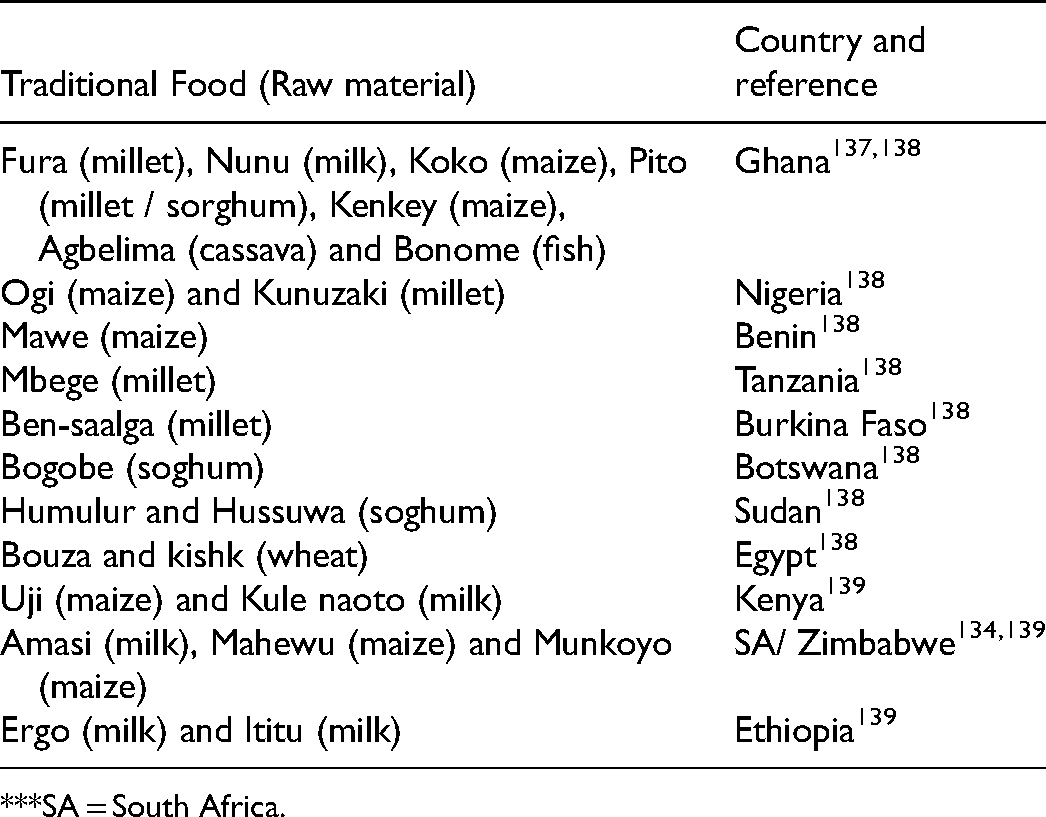
***SA = South Africa.
Several African seaweeds that are traditionally used as food have also been credited with the attributes of functional foods (Table 4). Most of these prebiotic seaweeds can be found in South Africa and Morocco (based on available publications). Not many such plants have been described from other countries on the continent. However, some of these gut-friendly and healthy seaweeds can also be found in East and West Africa.
Some African Seaweeds/Macroalgae with Prebiotic Capacity.

Note: Plant family names were retrieved form World Register of Marine Species (WoRMS); https://www.marinespecies.org/index.php. 142
Some leafy vegetables and wild African fruits (such as baobab, wild berries, and rosehip) have also been credited with prebiotic properties (Table 5). The membership of prebiotic plants doesn't go without the inclusion of roots and tubers. A good number of roots and tubers found throughout the continent have also been categorized as prebiotic plants. These include yam, cassava, potato and ginger among many others.
Some Prebiotic African Wild Fruits, Leafy Vegetables, and Roots and Tubers.

Conclusion
Irrespective of the large use of ethnomedicinal plants in Africa, not much scientific studies have been done on the use of ethnomedicine for the treatment and management of age-related dementia, viz-a-viz AD. However, both in vivo use and in vitro assessment of African ethnomedicinal plants have demonstrated the potential of these plants in the treatment of dementia and AD-related phenotypes, suggesting that they contain biocompounds that are effective in the prevention and stalling of the progression of AD. Thus, we might be able to find potential plant sources for a novel class of anti-age-related dementia drugs. The ethnomedicinal use of plants as antiviral agents has existed on the African continent for many years. The use of these ethnomedicinal plants by traditional healers, coupled with current research findings, has demonstrated the potential of ethnomedicine as a source for the development of new anti-HSV-1 drugs and possibly a cure. There is therefore the need to conduct further studies on plants that are traditionally used in the treatment of HSV-1 or in the botanical classes of those already identified in order to possibly carry them along the drug development pipeline. Finally, considering the general benefit of prebiotics and probiotics on overall human health, it is certainly of utmost importance to include prebiotics and probiotics in daily food intake. When a good balance is struck between prebiotics and probiotics, optimal synergy is likely to be achieved between prebiotics and probiotics, which will be beneficial to overall host health. This can be achieved by regulating the gut flora using functional food as therapy.
Footnotes
Acknowledgments
Not applicable.
Authors’ Contributions
E.J.T. did the literature search prepared initial draft. M.Y.O.A reviewed the initial draft and included  , D.L.S. conducted literature search and made inputs into Tables 1–3, M.M. conducted literature search and made inputs into tables Table 3 and A.O. generated the idea and reviewed the final draft.
Declaration of Conflicting Interests
The author(s) declared no potential conflicts of interest with respect to the research, authorship, and/or publication of this article.
Funding
The author(s) received no financial support for the research, authorship, and/or publication of this article.
Ethics Approval and Consent to Participate
Not applicable.
Consent for Publication
Not applicable.
Availability of Data and Materials
Data sharing not applicable to this article as no datasets were generated or analyzed during the current study.