Abstract

Immunization plays a pivotal role in upholding public health by effectively preventing the transmission and spread of infectious diseases. By stimulating the body’s immune system to recognize and respond to specific pathogens, vaccines effectively equip individuals with the necessary defenses to combat a wide range of diseases. Through the administration of vaccines according to a well-structured immunization schedule, individuals can develop immunity against various infectious agents, thereby reducing their susceptibility to infection and preventing the onward transmission of diseases within communities. 1 Vaccines have been developed and refined over decades of scientific research and have proven to be highly effective in reducing the burden of infectious diseases worldwide. Diseases that were once widespread, causing significant morbidity and mortality, have been significantly curtailed or even eradicated through successful vaccination campaigns. Examples include smallpox, which was eradicated globally in 1980, and polio, which has seen a remarkable decline in cases due to widespread immunization efforts. 2
Immunization schedules are meticulously designed to ensure optimal protection at different stages of life. India’s national immunization program has made significant strides in reducing the burden of vaccine-preventable diseases. Nevertheless, there is a pressing need to optimize and expand the existing immunization schedule to ensure robust protection across all age cohorts. Presently, the schedule predominantly concentrates on immunizations for infants and children, with relatively limited attention given to adolescents and adults. 3 By extending the immunization schedule to encompass individuals up to the age of 26, India can make substantial progress in mitigating the incidence of vaccine-preventable diseases throughout the population. This expansion will enhance the overall effectiveness of the immunization program and contribute to a healthier nation.
A crucial factor in designing an inclusive immunization schedule is considering the immunological maturity of individuals at different ages. Early infancy is a critical period when newborns possess limited immune protection, making them vulnerable to various infections. Immunizations administered during this period, such as Hepatitis B, BCG, and oral polio vaccines, are crucial in providing early defense against diseases. However, as children grow older, their immune systems evolve, necessitating adjustments to the immunization schedule to sustain optimal protection. Furthermore, adolescents and adults, who may be at increased risk of exposure due to lifestyle factors, occupational hazards, or travel, should also be included in the immunization program to ensure comprehensive immunity. 4
Expanding the immunization schedule to cover individuals up to the age of 26 aligns with the concept of ‘lifelong immunization’ and has several benefits. First, it enhances individual protection by extending the duration of immunity against diseases that may have waning immunity over time. Second, it helps in reducing disease transmission by creating a larger population with immunity, leading to herd immunity. Lastly, it supports the prevention of outbreaks and the potential reintroduction of diseases that were once under control. 5
In light of the unique healthcare challenges faced by India, such as a vast population, diverse geographic regions, and varied socioeconomic backgrounds, an inclusive immunization schedule is imperative. It would serve as a comprehensive framework for healthcare professionals and policymakers, guiding the administration of vaccines across different age groups. In addition, it would facilitate standardized and accessible immunization services, ensuring equitable coverage across urban and rural areas.
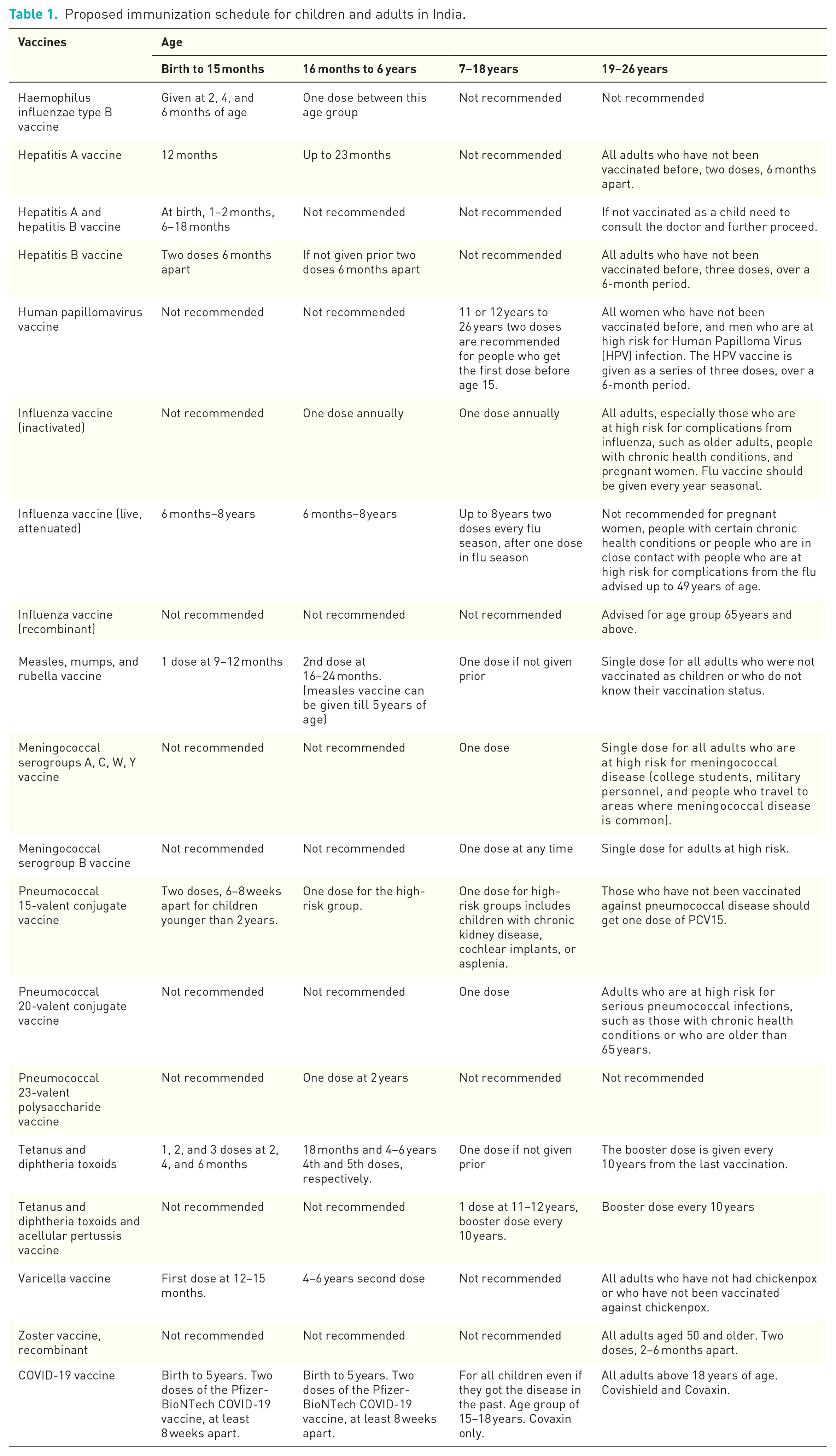
The establishment of a comprehensive and inclusive immunization schedule for India, encompassing all age groups from newborns to young adults up to the age of 26, holds immense potential in combating vaccine-preventable diseases. By expanding the existing national immunization program and tailoring it to the specific healthcare needs of India’s population, the country can significantly enhance public health outcomes and contribute to a healthier future for all its citizens. This article aims to propose such a schedule, incorporating the recommended vaccines tailored to different age groups while addressing the unique healthcare requirements of India’s diverse population (Table 1).6,7
Proposed immunization schedule for children and adults in India.