



Abstract
Student innovation competitions and programs (ICPs), including hackathons, start-up competitions, and customer discovery labs, have had a transformative impact on the higher education entrepreneurial ecosystem. They have also facilitated students’ experiences in Science, Technology, Engineering, and Math (STEM). However, there is a disparity in the number of underrepresented students and dominant student groups participating in STEM fields. While research supports the benefits of ICP participation, literature discussing students’ perceptions of these programs remains limited. This study addresses three research questions about participation motivation (perceived values and associated costs), participation barriers, and differing perceptions among groups. Semi-structured, in-depth interviews were conducted with 38 students (25 females/13 males, 17 participants/21 non-participants). The analysis focused on the Situated Expectancy-Value Theory (SEVT) and the Theory of Planned Behavior (TPB). The research findings contribute to fostering diversity and inclusion within educational or professional environments by uncovering values (e.g., acquiring professional skills) and costs (e.g., opportunity costs) that students associate with motivation to engage in ICPs. Institutional and individual barriers were identified, including limited program awareness, lack of diversity, and identity mismatch. Therefore, the study intends to inform STEM educators and ICP organizers, foster inclusivity and diversity in the entrepreneurial ecosystem, and offer guidance for interventions.
Introduction
Innovation Competitions and Programs (ICPs), such as hackathons, idea pitch competitions, start-up incubator competitions, design challenges, boot camps, and customer discovery labs, are among the foundational elements of university entrepreneurship ecosystems (Liu et al., 2021). Moreover, ICPs foster students’ experiences in Science, Technology, Engineering, and Math (STEM) and serve as a gateway for career readiness. These special co-curricular activities support the start and growth of university entrepreneurial ecosystems through (i) introducing students to entrepreneurship for the first time, (ii) identifying students with innovative ideas, encouraging them, and facilitating the process of taking their ideas into reality, (iii) increasing students’ innovation and entrepreneurship mindset (Bodolica & Spraggon, 2021; Bridgestock, 2022), (iv) connecting students with internal and external mentors (Prince et al., 2022), (v) helping students develop their networks (Mikesell et al., 2012; Schuster et al., 2006), and (vi) increasing their technical and entrepreneurship/innovation skills (James & Brookfield, 2014; Kayastha, 2017; Samson, 2010).
Despite these expected benefits and positive outcomes of the ICPs, students are often reluctant to engage in them. In particular, traditionally underrepresented students in STEM (women, people with disabilities, and three racial and ethnic groups – Black or African American, Latino or Hispanic, and American Indian or Alaska Native) participate in ICPs at lower rates, compared with their counterparts (Bryant et al., 2012; Walden et al., 2015, 2016; Wilson et al., 2007; Wilson & Patón-Romero, 2022). Because ICPs are gateway programs for higher education entrepreneurial ecosystems and companies increasingly seek graduates with innovation skills, student groups with low ICP participation rates might be disadvantaged at the start of their careers and are less likely to be involved in entrepreneurship subsequently. Therefore, a better understanding of how students from various groups make decisions about participating in ICPs, their motivation, and perceived barriers are highly relevant to increasing the diversity and inclusivity of university entrepreneurial ecosystems. Furthermore, research indicates that efforts to enhance the diversity of ICPs, such as promoting gender equality in hackathons (Falk et al., 2021; Lavínia Paganini & Kiev Gama, 2020; Paganini et al., 2021; Richterich, 2019), often prove ineffective as they fail to address the perceived obstacles that hinder the participation of a broader spectrum of students. Moreover, the existing literature on ICPs has not extensively investigated the various strategies that can be employed to promote diversity in ICPs (Bryant et al., 2012; Htun, 2019; Lavinia Paganini & Kiev Gama, 2020; Lavínia Paganini & Kiev Gama, 2020; Richard et al., 2015; Wilson et al., 2007). The topic of Diversity, Equity, and Inclusion (DEI) is not commonly addressed in STEM entrepreneurship ecosystems (Huang-Saad et al., 2018; Zappe et al., 2021), which presents an opportunity for theory-driven research about the barriers to ICP participation among underrepresented groups. A comprehensive examination of these obstacles is crucial in promoting greater inclusivity and equity within ICPs. This paper attempts to develop a theoretical framework to elucidate the factors influencing students’ participation in ICPs, addressing the following research questions (RQs): • RQ1: What motivates/demotivates students in participation ICPs? • RQ2: What are the perceived barriers that discourage student participation in ICPs? • RQ3: Are there any differences in perception among dominant and underrepresented groups (e.g., male vs. female, White/Asian vs. underrepresented racial/ethnic groups)?
The paper explores the motivation and barriers to student participation in ICPs. This novel insight is derived from an interview-based study, making a significant contribution to the existing literature in an understudied area. By analyzing these findings through theoretical frameworks, the study offers new insights into the motivations and deterrents influencing student participation in ICPs. Building on these insights and previous research, the paper proposes strategies and interventions to foster inclusivity for underrepresented students in ICPs.
Literature Review
College-Level Entrepreneurial Ecosystems and ICPs
This paper centers on ICPs, encompassing hackathons, start-up incubator competitions, design challenges, boot camps, and customer discovery labs. These specialized co-curricular activities are designed to enhance students’ innovation mindset (Kulturel-Konak et al., 2023a). A meta-analysis by Shulruf (2010) shows a significant correlation between co-curricular activities and positive educational outcomes. Apart from contributing to students’ academic development, these co-curricular activities facilitate the cultivation of 21st-century skills, provide practical applications for classroom learning, introduce students to diverse interests, and help them make informed career choices. Over the past decade, engineering programs have increasingly prioritized innovation and entrepreneurship to equip students with the necessary skills to address the complex challenges posed by the global economy and climate change (Alves et al., 2019; Byers et al., 2013; Da Silva et al., 2015; Karim, 2016), and ICPs play a pivotal role in such entrepreneurship initiatives. In addition, ICPs serve as vital components of university innovation and entrepreneurial ecosystems, functioning as recruitment grounds for various co-curricular programs. Moreover, these ICPs offer students invaluable exposure to entrepreneurship and innovation, fostering a culture of creativity and critical thinking within the academic environment (Liu et al., 2021). While the industry seeks to hire students with co-curricular experiences, many do not regularly participate in those experiences (Olewnik et al., 2023). Within the existing literature, only a limited number of studies have addressed the specific barriers that hinder student participation in ICPs (Kulturel-Konak et al., 2023c), particularly for underrepresented groups. Several authors indicate a lack of diversity in ICPs (Htun, 2019; Richard et al., 2015; Taylor & Clarke, 2018; Walden et al., 2015, 2016). Despite this, the specific reasons for students’ avoidance of these events have not been thoroughly discussed within the context of theoretical models. For example, it has been observed that hackathon environments often implicitly exclude women, contributing to gender disparities within these settings (Warner & Guo, 2017). The overrepresentation of white and Asian male participants in hackathons may create an unwelcoming environment, leading to marginalized student groups feeling excluded from these events (Kos, 2018). Scholars agree that strategies for enhancing diversity in ICPs are insufficiently explored in the literature (Bryant et al., 2012; Htun, 2019; Lavinia Paganini & Kiev Gama, 2020; Lavínia Paganini & Kiev Gama, 2020; Richard et al., 2015; Wilson et al., 2007). A notable gap in the literature is the absence of theory-driven analyses, with existing research often relying on anecdotal evidence or exploratory empirical data.
Research on hackathons, explicitly designed to promote engagement in STEM fields, represents an exception within this literature (Falk et al., 2021; Schmitt et al., 2023). While the data is limited, the underrepresentation of women in hackathons may stem from factors such as perceived low self-esteem, belonging to a minority group, and the influence of ‘toxic masculinity’ (Paganini & Gama, 2020; Paganini et al., 2021). These factors are further compounded by the lack of explicit anti-discriminatory policies (Punjwani, 2018), a competitive and unwelcoming atmosphere, and the absence of prior experience (Warner & Guo, 2017). According to Richterich’s (2019) ethnographic study, computing hackathons tend to reinforce traditional gender-based divisions of labor. Additionally, lacking diverse representations in hackathon promotional materials can discourage student participation (Murphy et al., 2007).
Motivational Theories
The research mentioned above aimed to depict the constraints on students’ involvement in ICPs without adopting a theoretical framework. Psychological theories that elucidate human motivation, including the Theory of Planned Behavior (TPB) (Ajzen, 1991), Self-Determination Theory (SDT) (Ryan & Deci, 2000), and Situated Expectancy-Value Theory (SEVT) (Eccles & Wigfield, 2020) hold relevance for the research questions and the interpretation of findings in this paper. In the subsequent sections, we provide a concise introduction to these motivational theories, accompanied by examples of studies that have employed them as a theoretical framework within the context of ICPs.
The TPB explains individual behavior as determined by behavioral intention, shaped by attitudes, subjective norms, and perceived behavioral control. This perception is influenced by internal factors, such as personal skills, capabilities, and knowledge (Ajzen, 1991) and external factors, including the availability of resources or support structures that facilitate or hinder behavior (Ajzen, 2001). Dang and Nguyen Viet (2021) utilized the TPB to investigate the factors influencing students’ intention to participate in co-curricular activities, noting that students with part-time jobs were less likely to engage in these activities due to time constraints. The TPB is commonly employed to study students’ entrepreneurial intentions.
The SDT (Ryan & Deci, 2000) distinguishes between intrinsic motivation, driven by internal factors such as interest and enjoyment, and extrinsic motivation, propelled by external factors like rewards or penalties. To foster personal development, the SDT emphasizes supporting intrinsic motivation and satisfying the three basic psychological needs: autonomy, competence, and relatedness. According to a study by Garcia (2022), intrinsic motivation significantly influenced the intention to participate in hackathons, while extrinsic motivation was crucial for sustained involvement. Researchers have also combined the SDT with the TPB to explain students’ entrepreneurial intentions (Al-Jubari et al., 2019; Baluku, Leonsio, Bantu, & Otto, 2019).
According to the SEVT, students’ decisions to undertake a task are influenced by their perceived likelihood of success in the task, the subjective value they attach to it, and the associated cost in comparison to other available alternatives. Eccles et al. (1983) propose that for a student to engage in a task, they must respond affirmatively to two fundamental questions: ‘Can I do the task?’ and ‘Is it worth doing the task?’ The first question reflects an individual’s belief in their ability to succeed in a given task (Expectation of Success or Expectancy). In contrast, the second question encompasses the perceived value of engaging in the activity. These expectancies and values are subjective beliefs that develop over time, influenced by previous experiences (Putwain et al., 2019), self-efficacy (Bandura, 1982), personal characteristics, the social environment, and other pertinent factors. The values derived from task engagement are commonly classified into three categories according to Eccles and Wigfield (2020): (i) intrinsic value, the expected enjoyment of a task or interest in a domain; (ii) utility value, the subjective value of a task for attaining an extrinsic goal, such as a career goal; (iii) attainment value, the perceived importance of a task to one’s identity, (e.g., gender-role and ethnic-racial identity). As ICPs typically lack traditional academic rewards, such as course credits or grades, participating students need to perceive a compelling value proposition to foster their engagement. The perceived cost component encompasses student perceptions of (i) effort cost, the amount of effort and time required for success in the task; (ii) opportunity cost, representing the potential trade-off of missing out on other activities (Eccles, 2009); (iii) psychological costs, adverse outcomes or anxiety stemming from the struggle or failure in the task (Eccles et al., 1983); and (iv) outside effort cost, negative appraisals of time, effort, or amount of work put forth for a task other than the task of interest (Flake et al., 2015).
Kulturel-Konak et al. (2023b) designed a survey based on the SEVT (Eccles & Wigfield, 2020; Kosovich et al., 2014) and SDT (Ryan & Deci, 2000) to examine students’ motivation and identify barriers to participating in ICPs. Their findings underscored critical factors influencing students’ decisions, such as the significant time commitment, limited awareness, and a lack of understanding of how ICP participation can contribute to academic and career objectives. Additionally, students’ preconceived notions about the relevance of ICPs to their majors, particularly among Art/Sciences students, were noted. They also reported that students with entrepreneurial family backgrounds appreciated ICPs. Shekhar (2023) employed the SEVT to explore gender-based differences influencing participation in engineering entrepreneurship programs. The research emphasized the subjective influence of peers, particularly the ‘inspirational role’ that played a more significant part for female students compared to their male counterparts. Furthermore, the SEVT has been employed in various other studies to gain insights into students’ motivations related to their involvement in entrepreneurship programs (Hsu et al., 2014; Parra & Knobloch, 2022; Shekhar & Huang-Saad, 2021) and entrepreneurship intentions (Shi et al., 2019).
Methodology
Creating Interview Questions & Interviewee Selection Procedures
The interview questions were collaboratively crafted by the extended research team, which comprised project consultants and research students. After an extensive review of the current literature, we decided to focus on the frameworks of the TPB, SDT, and SEVT to guide our research and analysis of interviews. Given that our research questions pertain to emerging topics that have not been extensively investigated in the literature before, we opted for an inductive research methodology. As a result, we avoided crafting questions that were overly focused on the theories informing our research. This strategy allowed us to acquire novel perspectives and cultivate a deeper comprehension through students’ feedback. After receiving input from both independent domain experts and a student panel, we revised the interview questions accordingly. We prioritized evaluating the questions’ face validity during the student panel review. Furthermore, we conducted pilot interviews to assess the interview questions and the overall interview procedures. The pilot interviews showed that some students did not elaborate enough in their responses to certain questions. Consequently, we streamlined the number of topics while supplementing the finalized interview guide with probing questions, aiming to prompt interviewees to elaborate and clarify their responses.
Students enrolled in various STEM programs at a land-grant university in the Northeastern United States were recruited for interviews using a survey that included demographic and Likert-scale questions regarding their perceptions of ICPs. Apart from the main campus, this university has 24 additional campuses across the state. Together, they make up 27% of the student population in 2023. The university has approximately 20,000 STEM students, with 12,000 (20% women and 12% underrepresented minorities) in engineering and 8000 in science programs (57% women and 20% underrepresented minorities). The recruitment survey link was distributed to the entire target student population and specific student groups, programs, and clubs whose input and insights were considered valuable for this research. We invited interviewees from the list of respondents while ensuring that the sample included diverse interviewees and that traditionally underrepresented students in STEM and the target student groups were represented adequately in our interviews. Out of 249 students who completed the survey, 160 students indicated a willingness to participate in the interviews. Following the recruitment survey, we conducted interviews with 38 students, comprising 25 females and 13 males, including 17 ICP participants and 21 non-participants, as well as 13 individuals from the White(9)/Asian(4) demographic (overrepresented in ICPs) and 25 from demographic groups that are underrepresented in ICPs. About 85% of interviewed students were from STEM-related majors. When selecting students for interviews, we aimed to ensure the inclusion of a diverse cohort of ICP participants and non-participants. Initially, we assessed the types of events in which students participated and prioritized events that aligned most closely with our research scope. Subsequently, we considered demographic factors to prioritize students from underrepresented backgrounds. At the same time, we aimed to achieve theoretical saturation in our interviews by ensuring the representation of students across various demographic groups. During the student interview invitation process, we made sure to include a balanced cross-section of students with diverse experiences and perspectives by adjusting our sampling channels to gather comprehensive insights.
Interview Procedure
Interviews were conducted remotely through video conferencing by two research team members, who had undergone consistent training on the objectives and techniques of the interviews. These sessions were scheduled in advance and lasted between 20 to 40 minutes, ensuring uniformity in data collection. The interviewers secured informed consent from the interviewees and sought permission to record the interviews via video. The interview recordings were transcribed into text through an automated system and then carefully reviewed for accuracy. In instances where necessary, accuracy was verified by cross-referencing the transcripts with the original video recordings. The interview transcripts were organized and categorized by specific questions in preparation for their upload into NVivo.
Analytical Approaches
Inter-Rater Reliability (Fleiss’s Kappa Statistics) for First Step Coding of the Questions by Three Independent Raters (p-Value = 0 for All Questions, Y: Questions for ICP Participants, N: Questions for Non-Participants).
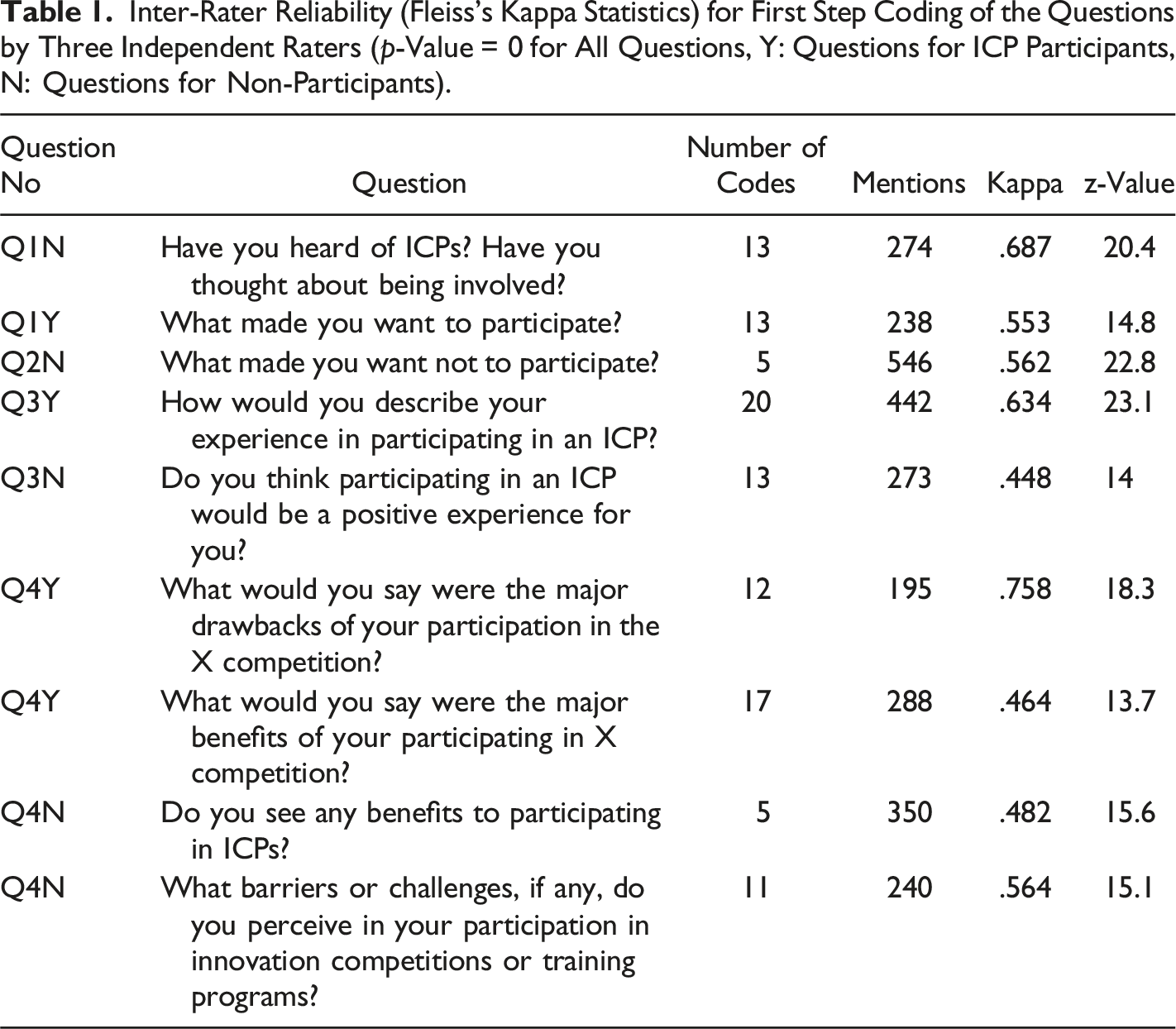
We continued to code and refine the data, discussed each code, and distilled the codes into first-order concepts. This step in the analysis allowed us to understand many of the key themes in our data, including the multifaceted dimensions of time cost and variations in coding patterns across gender, race/ethnicity, and major.
As a second step, we interpreted the data more closely through various theoretical lenses, as suggested by abductive analysis (Timmermans & Tavory, 2012). Given the importance of how students perceived the costs and benefits of ICPs, we settled on SEVT (Eccles & Wigfield, 2020) as a specific lens and started examining the data for evidence of constructs such as values, costs, and barriers. We found that some of the data fit well within the existing SEVT framework, but other aspects of the data did not. Therefore, we categorized the data using both existing and novel constructs for our analysis. We discussed the codes until we reached a consensus (Miles & Huberman, 1994). When the coding process was complete, the categories were grouped together to form broader themes.
The third step involved assembling the key constructs into theoretical arguments. In this step, these constructs became the building blocks for our theoretical model. Throughout the theorizing process, we compared our emerging theoretical findings with SEVT and TPB, focusing on fundamental differences among student groups. Our attention is increasingly centered on the examination of values, costs, and barriers linked to ICPs. Additionally, we examined emerging data patterns to identify any inconsistencies and unexplored mechanisms.
Findings
Emergent Themes
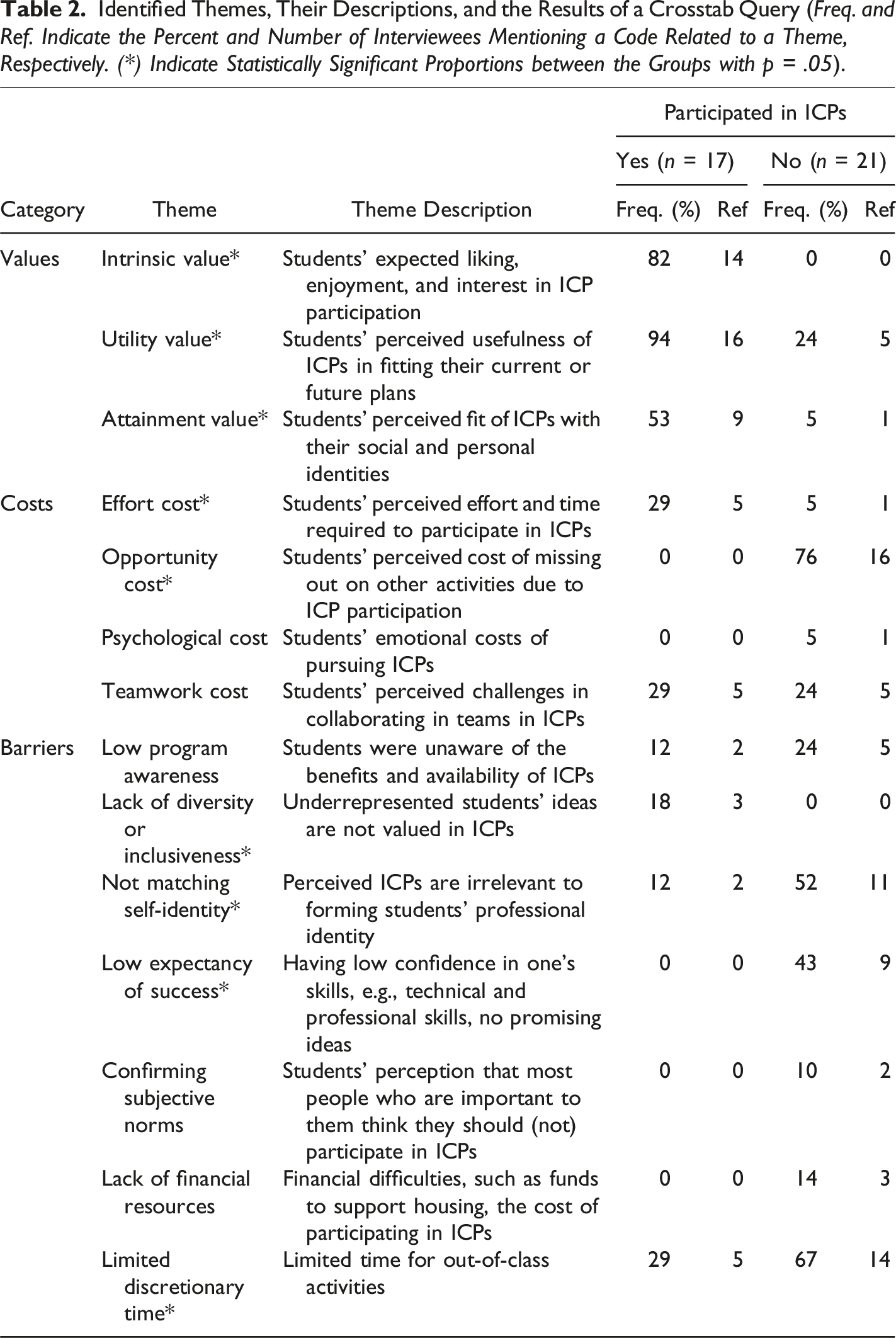
Identified Themes, Their Descriptions, and the Results of a Crosstab Query (Freq. and Ref. Indicate the Percent and Number of Interviewees Mentioning a Code Related to a Theme, Respectively. ( * ) Indicate Statistically Significant Proportions between the Groups with p = .05).
Values
Values are motivators for students to participate in ICPs (RQ1). Intrinsic value is the expected liking, enjoyment, and interest a student expects to gain from involving in ICPs (Eccles & Wigfield, 2020). Given the emphasis on task-related factors, conceptualizing intrinsic value in the context of ICPs closely aligns with situational interest. “It was really fun. I really enjoyed it to be able to brag about it in terms of money. To get up there and say, look, you should… give us money because this product is amazing… I really enjoy the entire experience overall.” (Female, Black, Graduate Science)
Utility value is conceptualized as usefulness regarding how well ICPs fit into a student’s current or future plans, such as participating in an ICP to enhance their resume or connect with the entrepreneurial ecosystem. In some respects, utility value is related to extrinsic motivation, as ICPs serve as a means to an end rather than an end themselves (Ryan & Deci, 2017). “When you’re going to do an internship, there are definitely skills that will be valued that you could take away from competition. And the world is competitive out there. Trying to be slightly less harsh situation in college for better prize, you then like going straight into (the real world).” (Male, Asian, Undergraduate Engineering)
Lastly, attainment value is determined by the relative importance that students associate with participating in ICPs based on their identities. The perceived alignment of ICPs with their social and personal identities influences students’ attainment value, reflecting the degree to which these programs enable or prevent individuals from engaging in behaviors that they consider integral to their fundamental sense of self (Eccles & Wigfield, 2020). Attainment value encompasses the elevation of self-confidence, cultivating a growth mindset, and acknowledging one’s strengths (Rosenzweig et al., 2022). “I would say because just getting to participate in something … new and getting to take on a new challenge. And just something completely different from what we’re usually used to and getting to create something and collaborate with different people. And just something in getting to put it out and letting others see it and hopefully you some concrete out of it.” (Female, Hispanic, Undergraduate Information Technology/Cyber Security)
Costs
Every activity has costs in addition to its benefits, and individuals avoid those that cost too much relative to their benefits, particularly when compared to alternative tasks with higher benefit-to-cost ratios (Eccles & Wigfield, 2020). These costs can be demotivators for students to participate in ICPs. There are different types of costs conceptualized in the SEVT as described in the literature review section: (i) effort cost, (ii) opportunity cost, and (iii) psychological cost. Regarding the effort cost, students continuously evaluate whether the involvement in ICPs justifies the exerted effort through a constant mental calculation. “Even though there are some benefits…it was like a lot of effort for just like a slim chance at having like the prize area making it to the next round. It … felt like you were taking a chance... but it also took a lot of time where like we could have been doing other things to like work on our project further.” (Female, White, Undergraduate Engineering)
For opportunity cost, students are confronted with the reality that time is a limited resource, and they must navigate a balance to fulfill tasks required by their coursework and other responsibilities. “My schedule… considering I lost track (of it and) it’s pretty hectic. Lately… my experiments are picking up, I do have to be in clinic for the next couple of days too. Yes, I do a lot of things.”
With regard to psychological cost, some students referred to it as experiencing “social anxiety,” particularly in the context of ICPs being competitive in nature. “I don't know. But for me it would kind of be like a social anxiety…What I’m picturing in my head is, right, you go to compete and it’s kind of like a social event where you’re there with other people and you’re like, you know, kind of face-to-face with the people that you’re competing against.” (Male, White, Undergraduate Medical)
Nevertheless, teamwork cost has emerged as another important cost dimension among students (Reeves et al., 2019). Students highlighted the challenges they faced in forming teams. “It’s hard to... make a big enough group because we didn’t have that many people that wanted to do like interests…because they have a different priority for the weekend.” (Female, White, Undergraduate Engineering)
Furthermore, students expressed concerns about the free riders within their teams, as they perceived limited control over the collaborative process and an inability to compel team members to actively engage in ICPs. “We were in a group and maybe everyone in the group didn’t participate at the full extent in which they should have.” (Female, Black, Graduate Science)
Barriers
Identified barriers were categorized into two sub-themes: institutional and individual. Institutional-level barriers include “low program awareness” and “lack of diversity and inclusiveness.” Individual barriers, on the other hand, include “not matching self-identity,” “low expectancy of success,” “confirming subjective norms,” “lack of financial resources,” and “limited discretionary time.”, which are related to the constructs of TPB.
Institutional- Low Program Awareness
Many students are unaware of the benefits and availability of ICPs, hindering their participation and engagement. One of the possible reasons for low awareness is suboptimal communication strategies to break through the information clutter faced by students. Students are constantly bombarded with flyers, emails, social media, newsletters, etc., but most promotional materials go unnoticed. “Basically lack of information, since I know there’s just so many things going on around campus, different things to do. You can get kind of lost in all of it.” (Female, Black, Undergraduate Agriculture)
Institutional- Lack of Diversity and Inclusiveness
Underrepresented students may have personal and academic issues associated with demonstrating grit and overcoming institutional racism throughout their lives (Kundu, 2019). When the campus environment lacks social and cultural support for underrepresented students, they may not feel comfortable, visible, or represented in student life as they are not included in the conversations and decisions that affect them (McCabe, 2016). “I am a woman of color. It was obvious sometimes where my ideas would be cut short or undermined...” (Female, Black, Undergraduate Engineering)
Individual- Not Matching Self-Identity
As students progress in their academic journeys, their self-identities develop and manifest differently. Students attribute varying degrees of importance to different tasks and activities that are connected to their identities (e.g., gender-role identity, professional identity) (Eccles & Wigfield, 2020). Some students who perceived ICPs as irrelevant to their self-identity formation are not motivated to engage in them. “I think (ICPs) are for engineering students, that are constantly being bombarded by the flyers, everything that’s around that…” (Female, Hispanic, Undergraduate Science)
Individual- Low Expectancy of Success
Behavioral choices, such as education and occupation, are influenced by students’ expectancy of success and the perceived importance the students attach to the various available options. When individuals harbor low expectations of success, reflecting a lack of confidence in their skills, traits, and capabilities to achieve success, they tend to be less motivated to participate in related activities (Eccles, 2009). “I think maybe it’s like lack of competence or lack of a specific idea that could gear me towards like…having a feeling like I have a fair shot… And if I knew that wasn’t going to be as fruitful… because I don’t have the necessary skills, talents, or whatever in order to succeed in that endeavor. Like I just haven’t really wanted to pursue that or invest time in that.” (Female, Hispanic, Undergraduate Science)
Individual- Confirming Subjective Norms
Subjective norm reflects an individual’s perception of the expectations held by influential people in their social circle, indicating whether these individuals believe the person should or should not engage in a particular behavior (Fishbein & Ajzen, 2009). When students perceive that their social circle does not support their participation, they may become less motivated to be involved in ICPs. “No one really ever encouraged me to go into it, or really related to any of my studies.” (Female, Black, Undergraduate Agriculture)
Individual- Lack of Financial Resources
Students who did not participate expressed concerns about the financial requirements associated with attending the event, including not only the cost of attendance but also the cost of living if they were to engage in ICPs during the summer. “A lot of like financial difficulties. Like, for example, if I wanted summer one, I’d have to find housing and be able to afford that.” (Female, Black, Undergraduate Science)
Individual- Limited Discretionary Time
Many non-participating students expressed concerns about the time commitment required for involvement in ICPs. They perceived their schedules as already packed with coursework, part-time employment, and various co-curricular activities, making it difficult to accommodate additional events. “I would say during school … (it may) interfere with my studies. I’m already a procrastinator. I don’t need (to spend) that extra time, I’m not being able to do my studies.” (Female, Black, Undergraduate Human Development)
Theoretical Implications
Regarding theoretical implications, the findings summarized in Table 2 are parallel to the predictions of the SEVT (Eccles & Wigfield, 2020), which suggest that students are more likely to engage in an activity if their expectancy of success is high, the activity is perceived to align with their personal goals, and the knowledge and skills acquired from ICPs are advantageous for their career development. Notably, our interview data revealed that participating students overwhelmingly emphasized the values they gained from ICPs. In contrast, 76% of non-participating students expressed concerns about opportunity costs, a sentiment not echoed by any participating students. Interestingly, both groups mentioned teamwork-related costs at comparable frequencies, while students who engaged in ICPs cited effort costs due to their direct experience. These insights suggest that a comprehensive cost-benefit analysis played a pivotal role in shaping students’ decisions regarding participation in ICPs. Additionally, the disparity in perceived expectancy of success between the two student groups, with 43% of non-participating students expressing “low expectancy of success,” further corroborated the predictions of the SEVT. By establishing a strong correlation between the SEVT and our interview findings, we are able to not only validate our observed data but also support the applicability of the proposed interventions and implications discussed in the following section. This will make them more relevant to a broader range of student populations.
Comparison Across Sub-Groups
Similarities and Differences in the Responses of Various Student Groups (Freq. and Ref. indicate the percent and number of interviewees mentioning a code related to a theme, respectively).
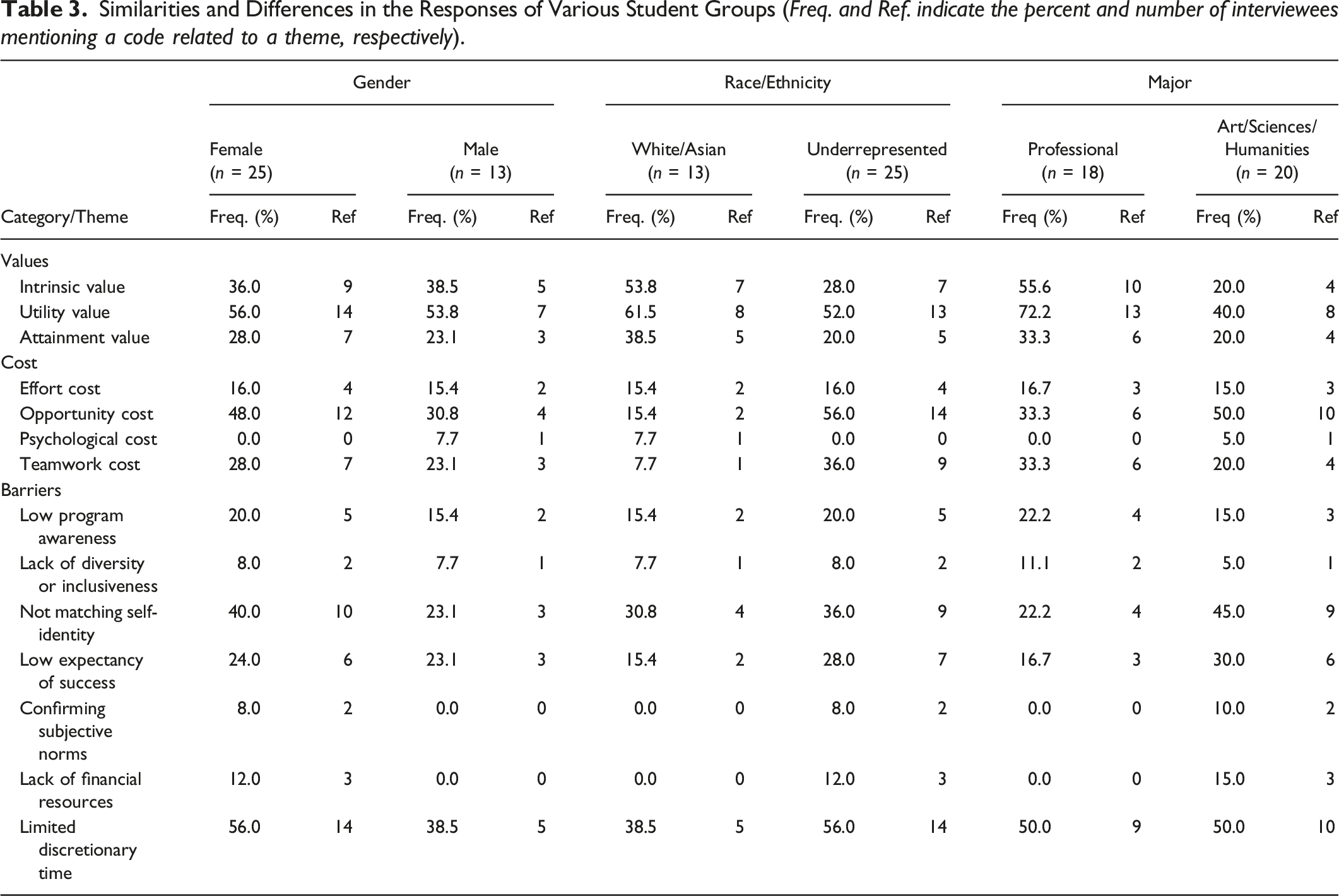
Drawing from the interview data, the most frequently cited barriers to participation were “limited discretionary time,” “not matching self-identity,” and “low expectancy of success.” Notably, female students were more inclined to express concerns about “limited discretionary time” and the notion of “not matching self-identity” as hindrances to their engagement. Conversely, in the context of cost-related considerations, “opportunity cost” and “teamwork cost” emerged as the most commonly referenced dimensions. In particular, female students are more likely to associate “opportunity cost” with participation in ICPs. “I just don’t have a lot of time... I’m doing my class work, my lab work, so I don’t have time to do other things that might also be interesting.” (Female, Black, Graduate, Science Education)
When we compared Whites/Asians (who are overrepresented in ICPs) and other races/ethnicities (who are underrepresented), an interesting pattern was observed. Overrepresented students were more likely to mention the values of ICPs compared to underrepresented students. In contrast, the underrepresented students mentioned “opportunity cost,” “teamwork cost,” and “limited discretionary time” more frequently than the overrepresented group. Overrepresented students tend to come from higher-income families; it is plausible that their families possess greater resources to support co-curricular activities. The different levels of emphasis placed on co-curricular activities and core academics by different groups may also explain the observed differences. For example, Latino families consider education a pathway to economic stability and strongly emphasize academic achievement in college (Gándara, 2015). Similarly, Black students often face significant pressure from family members to excel academically and obtain a college degree (Rowley et al., 2012). Consequently, many underrepresented students might regard time and resource-intensive activities like ICPs as secondary pursuits. This observed pattern in our data demands further studies to design effective interventions to increase the participation of underrepresented students in broader entrepreneurial ecosystems.
The notion of “not matching self-identity” emerged as a notable barrier for art/science students, who often regarded ICPs as activities more suited to engineering and business students, as previously discussed. Traditionally, student competitions have centered on technology and entrepreneurial concepts, fostering a strong association with engineering and business disciplines. Nevertheless, there is a growing movement toward integrating more entrepreneurship opportunities and teaching innovation skills within science and humanities programs (Carey et al., 2020). Universities, including the one where we conducted the study, have established interdisciplinary entrepreneurship centers that offer training and resources to students across academic fields (Pittaway et al., 2020; Welsh, 2014). Despite these endeavors, the persistence of the “not matching self-identity” barrier poses a significant challenge to the success of such interdisciplinary entrepreneurship initiatives. The perception that entrepreneurship is not pertinent can impede the engagement of humanities and science students, inhibiting their active participation in ICPs and related entrepreneurial endeavors.
Practical Implications of the Research
In this section, we cover strategies and interventions suggested by previous studies to overcome the identified barriers using the same theories that helped us understand our results. The noticeable similarities between our findings and the predictions of the SEVT and TPB, as well as SDT to some degree, underscore the relevance of these motivational theories in the context of ICPs. Additionally, they serve to validate the generalizability of our findings. Particularly, we observed a pattern of perceived values and costs consistent with the predictions of the SEVT. Our findings suggest that the SEVT can help educators understand and explain students’ motivation and decision-making about participating in ICPs. Consequently, the SEVT can be used to design strategies and interventions to address students’ real-world challenges, support them throughout ICPs, and reduce barriers to their engagement with ICPs. As we will discuss further, these interventions should increase the values and reduce the costs of ICPs to encourage a broader group of students to participate in ICPs.
Identified barriers, namely “lack of financial resources” and “limited discretionary time,” can be explained by the TPB’s perceived behavioral control construct, which postulates that a person’s perception of the ease or difficulty of performing an activity is a factor for performing the activity. In our study, students who did not participate in ICPs referred to these barriers more frequently than those who participated. The barriers of “not matching personal identity” and “conforming subjective norms” relate to the normative beliefs construct (social factors indicating which behaviors are deemed acceptable) and the subjective norms construct (how significant others perceive the behaviors as acceptable) within the TPB framework. Finally, we observed a significant effect of intrinsic motivation on student decisions according to the SDT.
Our theoretical insights summarized above have important practical implications in terms of lowering the barriers to participation in ICPs. Our findings indicated that the limited discretionary time was the most frequently mentioned barrier by the interviewees. Earlier research (Kulturel-Konak et al., 2023b; Rui et al., 2015) identified time demand as a significant barrier. Reducing the time demand of ICPs can help make them more accessible and appealing to all students. ICP organizers also have other options for intervention. For example, providing clear guidelines and expectations at the beginning can reduce uncertainty surrounding the time and effort requirements of ICPs. According to ICP organizers (Konak et al., 2023), it is critical to make expectations, judging criteria, and rules up front for running a successful program with the precaution that too rigid guidelines may negatively affect students’ creativity. Another feasible intervention involves streamlining the required time and diversifying the scope of ICPs. Furthermore, offering comprehensive support, mentorship, workshops, and training can help reduce the time students spend acquiring the skills and knowledge essential for ICPs, thereby alleviating any perception of time wastage. The opportunity cost was another frequently mentioned theme, closely tied to the time demand. Our study revealed that female students expressed slightly more concern about opportunity costs than their male counterparts, while underrepresented students also identified opportunity costs as a significant concern. Implementing interventions to alleviate opportunity costs for students could involve integrating ICPs with students’ academic obligations more effectively, introducing flexible scheduling (Rui et al., 2015), and providing students with financial and other resources.
The perception of low expectancy of success was mentioned by 43% of interviewees who did not participate in ICPs. Therefore, it was identified as an important barrier in this study. ICP organizers can address this barrier by sharing success stories of previous ICP participants, especially students who overcame challenges to thrive, involving role models who can inspire students and reframe the definition of success in ICPs, and emphasizing collaborative and networking aspects. For example, although ICP organizers consider cultivating students’ personal growth and development as one of their objectives in their events (Konak et al., 2023), this aspect of ICPs is not always adequately emphasized. Students might be more motivated if ICPs’ promotional materials explicitly outline the available training opportunities and resources designed to assist students in developing the requisite skills. Integrating collaboration into ICPs can alleviate student anxiety (Almeida & de Souza, 2022) and enhance student outcomes (Nag et al., 2013). Role models, especially peer-to-peer role models (Komulainen et al., 2020), can help students realize their true potential in ICPs.
The interconnected barriers of “not matching self-identity” and “lack of diversity and inclusiveness” pose notable challenges for ICP organizers. As discussed in the background section, lack of diversity has been a significant concern in ICPs, particularly for hackathons. A lack of diversity can make certain student groups feel excluded or unwelcome, deterring them from participating in these programs. For example, a large-scale empirical study on computing hackathons (Gan et al., 2022) found that participants from underrepresented student groups were less likely to continue coding than participants in well-presented groups. In this study, “not matching self-identity” was more frequently cited by non-participating students and those majoring in the arts and sciences. Similarly, previous research (Kulturel-Konak et al., 2023b) highlights how students in liberal arts, humanities, and science fields tend to hold more negative perceptions of ICPs compared to students in business and engineering disciplines. Gedeon (2020) suggests adopting an inclusive definition of entrepreneurship, which encompasses intrapreneurship, social innovation, personal growth, transformation, and agency, to increase the acceptance of entrepreneurship programs at higher education institutions. Research has indicated that social and situational support, which refers to individuals’ perceptions of how much others provide resources, encouragement, and support for them to succeed, positively impacts students’ college engagement (Kundu, 2019; Tani et al., 2021), particularly if faculty and peers encourage students to engage (Wang & Eccles, 2012). Providing social support to students through information sessions, intentional advising/mentoring (Prince et al., 2022) and success stories can help change negative perceptions about ICPs among some student groups.
To address these issues, it is also important to develop marketing materials, websites, and branding that communicate an inclusive message that appeals to diverse student groups. Punjwani (2018) notes that outreach to diverse student populations becomes challenging when event organizers do not represent those student groups. Therefore, it is essential to have ICP organizing, selection, and judging committee members who represent various disciplines and groups (Konak et al., 2023). Furthermore, persuasive messages regarding social norms, commonly referred to as social norm messaging, have demonstrated promise as an effective approach to fostering inclusion in higher education (Murrar et al., 2020). Social norm messaging can change students’ perceptions of ICPs by correcting their misconceptions about their peers’ actions. This approach can be instrumental in promoting inclusivity, as students frequently turn to each other for cues on appropriate behavior (Rhodes et al., 2020).
Limitations of the Research
It is essential to acknowledge some limitations of the research methodology and precautions that we took to limit their effect. Firstly, it is important to note that all interviewees were drawn from various geographically dispersed campuses of the same institution, and the interviews were conducted within a year after the institution fully resumed face-to-face instruction following the COVID-19 pandemic. While only a small number of interviewees explicitly discussed the negative impacts of the pandemic, it’s possible that students’ perceptions were subtly influenced. To enhance the generalizability of the findings to other populations, we made efforts to recruit interviewees from different campuses. Furthermore, particular attention was given to recruiting students underrepresented in ICPs. These factors should be considered when interpreting the research outcomes.
As is the case with any qualitative research, the analysis of the interview transcripts might be influenced by the research team’s subjectivity and bias. Two different research teams conducted and analyzed the interviews to reduce researcher bias. The coding and thematic extraction processes were carried out using a collaborative consensus-building approach, and an independent group of researchers was engaged to verify the reliability of the coding. During the pilot interviews, it became evident that some interviewees faced challenges articulating their perspectives. As a result, probing questions were developed to enhance the depth and quality of the responses. However, it should be noted that responses that were too brief were excluded from the analyses.
Repeating the study in other institutions and comparing the results will evaluate the generalizability of the findings in this paper. In addition, interviewing program organizers or mentors can provide an additional perspective to interpreting student perceptions about values, costs, and barriers of ICPs. Such a multi-perspective approach can better inform targeted interventions to increase the diversity and inclusiveness of ICPs. In this study, we also observed differences between underrepresented and overrepresented students’ perceptions of the values and costs of ICPs. Further studying the cause of this observed pattern can lead to more targeted interventions to increase underrepresented students’ participation in broader entrepreneurial ecosystems.
Conclusions
Innovation competitions and programs (ICPs) play important roles as a recruitment ground for many other co-curricular programs and expose students to entrepreneurship and innovation. Through the analysis of student interview data, the study has identified three major themes: values, costs, and barriers to participating in student ICPs. Within this framework, two distinct levels of barriers have been recognized: institutional and individual. Institutional-level barriers encompass challenges such as “low program awareness” and “lack of diversity and inclusiveness,” while individual barriers revolve around factors like “not matching self-identity” and “low expectancy of success.” Furthermore, the study has emphasized the significant influence of “opportunity cost” and “teamwork cost” on students’ engagement levels within ICPs. The dissemination of findings from this research will provide STEM educators and ICP organizers with valuable insights into the specific barriers and costs associated with student participation, thereby enabling stakeholders to better understand and address these challenges. This knowledge can serve as a basis for creating and executing targeted interventions to tackle these inclusivity challenges.
Footnotes
Declaration of Conflicting Interests
The author(s) declared no potential conflicts of interest with respect to the research, authorship, and/or publication of this article.
Funding
The author(s) disclosed receipt of the following financial support for the research, authorship, and/or publication of this article: This work was supported by National Science Foundation (DUE 2120936) and Penn State Social Science Research Institution.
