



Abstract
This study investigated what, how, why, for whom, and when extracurriculars add to entrepreneurship and enterprise education to examine the roles of extracurriculars in entrepreneurship and enterprise students’ education and learning processes. A systematic literature review method was chosen as it enables to identify characteristics of extracurricular entrepreneurship and enterprise education (EEE) through synthesis of validated studies of the phenomena. Findings indicate that EEE differs from formal EE owing to the influence of voluntariness and students’ engagement in the EEE. Students’ engagement in EEE and the motivation behind their engagement will be fundamental in the understanding of why, when, whom and how students engage and the outcome of engaging. The study contributes to the EE literature by addressing how the uniqueness of voluntarily participating in EEE influences learning situations, which distinguishes EEE from formal EE. Thus, the study has implications for research regarding how EEE and different EEE activities and initiatives need to further be explored to understand the potential of learning from participation in extracurricular entrepreneurship and enterprising education. The study provides implications for practice in regard of how EEE can be organized to foster learning.
Keywords
Introduction
Higher education students interested in entrepreneurship commonly participate in extracurricular entrepreneurship and enterprise initiatives (Preedy et al., 2020). Not only are these initiatives detached from traditional credit-giving curricular structures but extracurricular outcomes are not formally assessed as in study programs and curricula (Milner et al., 2016). Thus, extracurriculars depend on the participants’ engagement, including their drive and need for the initiatives and their attention. Neck (2018) argues that students are thus central actors in driving university entrepreneurship ecosystems through their active involvement in both curricular and extracurricular initiatives.
Generally, extracurricular participation can increase educational achievement for actively involved students compared with uninvolved students (Eccles et al., 2003). Extracurricular participation benefits students by contributing to increasing their soft skills (Milner et al., 2016). Entrepreneurs’ soft skills include “[…] living with uncertainty, opportunity identification, entrepreneurial mindset, creating, decision-making, developing empathy, business design, culture, life–work balance, social responsibility, and leveraging failure” (Neck & Greene, 2011, p. 56), which entrepreneurs require because their social capital is important for succeeding as entrepreneurs (Aldrich & Martinez, 2001; Davidsson & Honig, 2003).
Extracurriculars make important contributions to entrepreneurship and enterprise education (EEE), as they can be a beneficial arena for students to obtain practical experiences (Bonesso et al., 2018; Jones et al., 2021) and develop entrepreneurial skills and knowledge (Ansari et al., 2014; Padilla-Angulo, 2019). Extracurriculars function as communities of practice (CoPs) (Fauchald et al., 2022; Haneberg & Aaboen, 2022; Jones et al., 2021; Pittaway et al., 2015; Pocek et al., 2021; Preedy et al., 2020). Based on certain concerns, problems, or passions, the participants extend their knowledge and expertise in this area by interacting frequently (Lave & Wenger, 1991; Wenger et al., 2002). Participation in extracurricular initiatives can therefore be valuable for students’ experiential learning processes in becoming entrepreneurs (Cope, 2005; Pittaway & Thorpe, 2012; Politis, 2005; Preedy et al., 2020), as they can explore and experience entrepreneurship through action-based practice, which can be sufficient for learning entrepreneurship (Lackéus, 2014; Rasmussen & Sørheim, 2006). Thus, EEE can also enable social, and self-directed learning (Preedy et al., 2020).
Despite research indicating the positive effects of extracurricular entrepreneurship and enterprise initiatives and participation, little insight exists on the overall understanding of the role of EEE in developing students’ entrepreneurial learning opportunities (Neck & Corbett, 2018). Further, the role of extracurricular education and how it can provide an effective arena for students to learn entrepreneurship and enterprise are still rarely investigated (Pittaway et al., 2011; Preedy et al., 2020). The questions of what, how, why, for whom, and when have been stressed in entrepreneurship education (EE) research as fundamental to understanding how educational offers can support students’ entrepreneurial learning processes (Fayolle & Gailly, 2008; Hägg & Gabrielsson, 2020). Answers to these are needed to understand how extracurriculars add to students’ entrepreneurial learning. Therefore, the research question asked in this study is, “What and how do extracurricular entrepreneurship and enterprise education add to students’ entrepreneurial learning and education?”
This study examines EEE’s role in relation to the questions of what, how, why, for whom, and when it contributes to entrepreneurship and enterprise students’ learning processes. Based on a systematic literature review, the study contributes to the EE literature by addressing the role of EEE in students’ entrepreneurial learning. These insights create the basis for discussing the structure and organization of EEE initiatives, students’ engagement in EEE, and the intended outcomes of engagement, which in turn contribute to implications for further research and practice.
Because a systematic literature review enables the synthesis of previously validated research (Tranfield et al., 2003), this was chosen to approach the research question. The next section presents the systematic literature review and the analysis process, followed by the results and analysis of the included papers categorized according to their contributions. Next, the findings are discussed before presenting the conclusion, summarizing the contributions from this study in a thematic framework, which also offers a further research agenda for EEE. The study’s limitations that are presented last.
Methods
A systematic literature review method (Tranfield et al., 2003) was chosen for this study. A systematic literature review enables the synthesis of validated studies of the phenomena (Tranfield et al., 2003), which suits the aim of obtaining insights into what, how, why, for whom, and when extracurriculars contribute to entrepreneurial learning.
Following Tranfield et al.’s (2003) procedure, the first step of the literature review was to define the core concepts and inclusion criteria for the literature search. The EE field is emerging (Fayolle, 2018) but is still extensive nascent and narrow compared with the management education, entrepreneurship, and enterprise fields. Hence, the literature on EE outside of credit-giving programs is not large-scale. Consequently, a broad approach to the systematic literature review regarding the inclusion criteria was used, which means that papers from diverse fields were included with no time limit. Previous studies have reported that the entrepreneurship education field relies on empirical evidence (see, e.g., Fayolle, 2018; Hägg & Kurczewska, 2021). Both scientific articles and book chapters were decided to include in the review, as well as empirical, theoretical, and descriptive papers, to ensure coverage of research on activities and the “practice” within the activities/initiatives.
The selection criteria for the concepts to be included were based on the research question and the purpose of examining the roles of EEE in entrepreneurship and enterprising students ‘education and learning processes. This broad approach was taken to observe the phenomenon in its entirety. This involved the inclusion of contributions from diverse fields and channels and the use of broad and open search terms to ensure that relevant papers appeared in the search results.
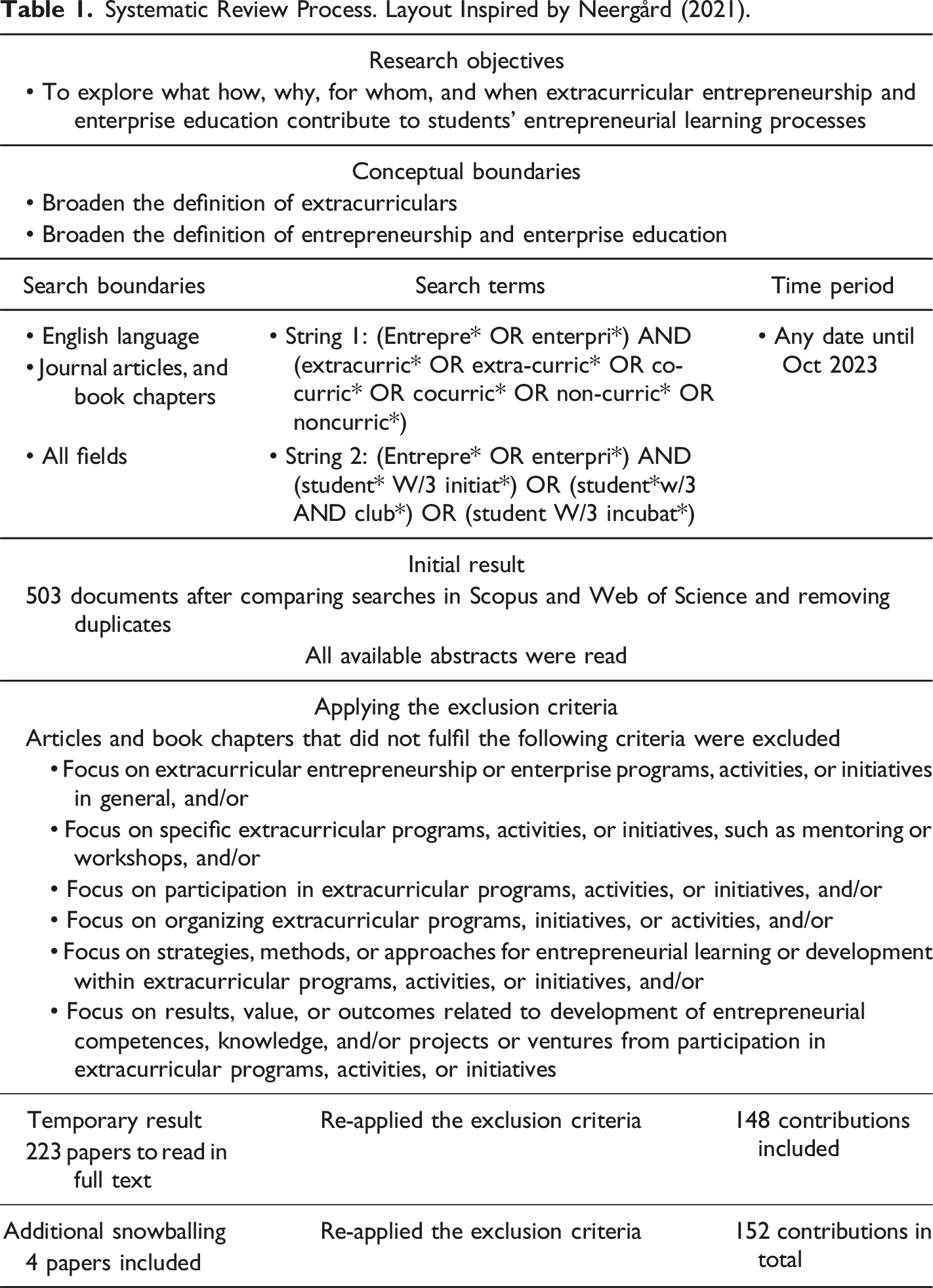
The EE literature mostly covers learning approaches from business and management, engineering, and specific entrepreneurship programs (Landström et al., 2022). Likewise, EEE follows certain common trends; therefore, the research field covers both entrepreneurship and enterprise education. Both terms were included in the search to cover a broad sample of literature on noncurricular initiatives. Cocurricular and extracurricular are used synonymously and not sufficiently distinguished in the literature. Therefore, extracurricular, cocurricular, and noncurricular were included as search keywords, resulting in the following search string: (entrepre* OR enterpri*) AND (extracurric* OR extra-curric* OR co-curric* OR cocurric* OR non-curric* OR noncurric*).
Within the entrepreneurship education and university entrepreneurship ecosystem literature, incubators and student clubs are often conducted beside or outside of curricular activities (see, e.g., Mustar, 2009; Pittaway et al., 2011). As incubation is an emerging topic within entrepreneurship education and learning, incubator or incubation can be used without being defined as cocurricular or extracurricular within a university context. Therefore, stud* incubat* and stud* club* were added to the search. Other terms covering learning initiatives outside of formal education were also added. To ensure that the search results covered student learning initiatives, student* had to be mentioned within three words of the search terms. This resulted in the second search string: (entrepre* OR enterpri*) AND (student* W/3 initiat*) OR (student*w/3 AND club*) OR (student W/3 incubat*).
Searches were conducted in Scopus and Web of Science. The searches retrieved 503 results, excluding duplicates. Additional searches were conducted in Google Scholar to evaluate the number of papers and results from the searches in Scopus and Web of Science.
The abstracts were filtered for relevance. As the study aimed to identify what and how extracurriculars add to students’ entrepreneurship and enterprise education and learning processes, the papers needed to include descriptions and/or explorations of the following: - Extracurricular programs, activities, or initiatives in general, and/or - Specific extracurricular programs, activities, or initiatives, such as mentoring or workshops, and/or - Participation in extracurricular programs, activities, or initiatives, and/or - Organization of extracurricular programs, initiatives, or activities, and/or - Strategies, methods, or approaches for entrepreneurial learning or development within extracurricular programs, activities, or initiatives, and/or - Results, value, or outcomes related to development of entrepreneurial competences, knowledge and/or projects or ventures from participation in extracurricular programs, activities, or initiatives.
Papers focusing on education levels below higher education were excluded. Papers where extracurriculars, cocurriculars, incubators, clubs, or initiatives were only mentioned and/or not described carefully and not the main objective were also excluded. Results not focused on entrepreneurship or enterprise education, learning situations, or entrepreneurial learning were also excluded. When the abstract contained insufficient information, the full paper was read.
Systematic Review Process. Layout Inspired by Neergård (2021).
Analysis Process
The analysis required the systematization, description, and tabulation of the data (Petticrew & Roberts, 2006; Pittaway et al., 2014). Therefore, the papers were categorized into three main categories: (1) descriptive papers, (2) empirical and conceptual papers, and (3) institutional, program-, and sector-specific contributions. This first categorization was done to get an overview of what and how activities, contents, and phenomena within EEE have been explored and investigated. Thus, the first round of categorization enabled discussion of what, how, why, when, and for whom EEE adds to students’ EE and their entrepreneurial learning processes. Next, the categorization was used to address the gaps and implications for theory development across and within qualitative, quantitative, and conceptual EE research. Appendix 1 includes an overview of the categorizations.
The first category comprises papers that describe extracurricular activities either alone or as part of higher education entrepreneurship and EE and/or activities. These papers did mainly emphasized descriptions of EEE activities and initiatives, their purpose, and intended outcomes. The second category includes empirical contributions on extracurriculars for students in the entrepreneurship and enterprise education fields. These provide a deeper exploration of EEE programs and specific activities and outcomes from EEE participation with theoretical and methodological anchoring. The third category focuses on EEE from perspectives other than entrepreneurship or enterprise education, including contributions in which EEE activities were offered to students outside entrepreneurship and enterprise education focusing on venture creation specifically (e.g., social enterprises, engineering and music). In addition, contributions focusing on the role of such activities in, for example, a university context or the university entrepreneurship ecosystem were placed in this category. Some contributions fulfilled the criteria for being in more than one category, but were decided to be included in one of them based on the main phenomena studied and the purpose and positioning of the contributions.
Next, subcategories were identified. The descriptive contribution subcategories include contributions describing specific EEE activities in depth and a second subcategory on EEE in relation to EE and/or program structures at higher education institutions. Three subcategories of empirical contributions were identified: (1) qualitative contributions examining the outcomes of EEE in relation to social and self-directed learning, relational support, and experiential learning processes for entrepreneurship and enterprise students, and (2) quantitative contributions examining different outcomes of EEE participation in relation to entrepreneurial intentions, motivation, and mindset. Institutional, program-, and sector-specific contributions were subcategorized in relation to university, ecosystem, or program structures and a subcategory of contributions on specific professions or study programs that focused on fostering entrepreneurial and enterprising skills.
The categories and contributions in the different subcategories are presented in the following section as a foundation for further analysis of what, how, why, for whom, and when EEE contributes to students’ entrepreneurial learning and education. Appendix 2 provides examples of papers in the different categories, supporting the descriptive overview in the following section. The table includes examples from each category that describe or explore general EEE programs containing several activities or focusing on specific activities. The what, how, why, for whom, and when of each example are included to illustrate the findings from the narrative analysis.
The findings were next mapped to identify the kinds of contributions that gave what type of insights and the relations between the contributions from the different categories. This formed the basis for further analysis and discussion of what and how extracurricular initiatives support students’ entrepreneurial learning and the potential opportunities and challenges in conceptualizing the phenomenon of entrepreneurial learning support offered through EEE.
Descriptive Contributions
Sixteen descriptive contributions were found, mostly in Entrepreneurship Education at Universities Learning from Twenty European Cases (Volkmann & Audretsch, 2017), which presents descriptions of noncurricular/additional learning initiatives in seven universities in Europe (Bischoff, 2017; Bischoff & Grünhagen, 2017; Grünhagen, 2017; Halbfas, 2017; Piva, 2017; Zagelmeyer, 2017a, 2017b). The contributions outline how initiatives are organized and are intended to support students but have fewer descriptions of how students engaged in them despite the expressed intentions behind the activities, such as “real-life development activities,” experiential processes, and community events (see Appendix 2). Some contributions mentioned the organization of extracurriculars (Covelli et al., 2020; Fulton, 2021; Pizarro & Graybeal, 2022; Van der Sijde & Van Driem, 1999).
Empirical Contributions
The second category includes 102 articles and book chapters with both qualitative and quantitative contributions. These comprise studies that investigate different EEE initiatives, such as mentoring (Fauchald et al., 2022; Preedy & Jones, 2015; Thaddeus et al., 2015), competitions (Bolzani & Luppi, 2021; Huster et al., 2017; Jang et al., 2019; McGowan & Cooper, 2012; Watson et al., 2014, 2015), and student-driven initiatives, such as incubators (Haneberg & Aaboen, 2022), clubs (Pittaway et al., 2011, 2015), and associations (Padilla-Angulo, 2019).
Most contributions in the cluster of qualitative research build on each other (Fauchald et al., 2022, 2023; Haneberg & Aaboen, 2020, 2022; Pittaway et al., 2015; Pocek et al., 2021; Preedy & Jones, 2015; Preedy et al., 2020; Williams Middleton et al., 2019). The core commonalities in the qualitative papers relate to their theoretical framing, which emphasizes EEE as an arena for social, experiential, and self-directed learning. Students’ learning opportunities in a social context and opportunities to develop entrepreneurial skills in EEE activities are emphasized in these contributions. (Ansari et al., 2014; Watson et al., 2014, 2015).
Some papers in the qualitative cluster indicate concrete learning outcomes from EEE participation (Fauchald et al., 2023; Pocek et al., 2021; Preedy et al., 2020; Watson et al., 2014; 2015), while the quantitative papers emphasize outcomes from participation in extracurricular initiatives. Ribeiro et al. (2022) find student-led activities to be as important as formal education when educating student entrepreneurs. Other outcomes relate to entrepreneurial self-efficacy and intentions (Atmono et al., 2023; Nguyen et al., 2021; Padilla-Angulo, 2019), motivation (Arranz et al., 2017; Rivero & Ubierna, 2021; Sun et al., 2023), and mindset (Cui et al., 2019). This stream is relatively new, and almost all quantitative papers use the same questionnaires and theoretical frameworks. For example, Sun et al. (2023) and Atmono et al. (2023) build on items for EE extracurriculars first utilized by Arranz et al. (2017) and Cui et al. (2019). Cui et al. (2019) and the other authors further build on well-known and much-utilized questionnaires in EE research, such as Liñán and Chen’s (2009) Entrepreneurial Intention Questionnaire, to measure the impact of extracurricular attendance (see Appendix 2).
Institutional, Program-, and Sector-Specific Contributions
Lastly, 34 articles and book chapters were identified as institutional and program- or sector-specific contributions. These concerns fostering entrepreneurship and enterprising skills for specific professions or programs or that describe EEE in relation to university, ecosystem, or program structures. The first group is quite small, including contributions from engineering (Boehm, 2020; Huerta et al., 2022), pharmacy (Mogul et al., 2020), ideological and political education (Jin, 2022), arts (Nybye, 2023; Philips & Podgorski, 2023), and sports (Amelink et al., 2019; Roșu, 2022), in addition to extracurricular initiatives engaging students in social and environmental entrepreneurship and enterprise (de Bronstein et al., 2023; Huster et al., 2017; Igwe et al., 2022; Isac, 2023; Upton & Sporton, 2022). Upton and Sporton (2022) consider the cocurricular structure of the social enterprise program because it “encourages the development of student communities of practice that help nurture the development of enterprising skills and entrepreneurship” (p. 2). Their findings show the development of enterprise and soft skills, contributing insights into EEE in relation to social enterprises and the program structure. Boehm’s (2020) study on how extracurricular programs focus on experiential learning to develop an entrepreneurial mindset in students has similar tendencies.
Wang et al. (2021) identify extracurricular activities as decisive for engaging students in entrepreneurial activities, which are important in creating and operating university entrepreneurship ecosystems. Wright et al. (2017) developed a framework to understand ecosystem requirements for student venture-creation activity. Several contributions, including many of the “early” contributions identified in the search, address questions related to the development of educational offers that provide students with real-life experiences and the inclusion of different stakeholders in learning activities (Diensberg, 2008; Van der Sijde & Van Driem, 1999). These focus on the kind of support that should be offered and how this support is relevant to real-life experiences and experiential learning.
Content Analysis Process
After the first categorization, all the findings were synthesized by grouping the contributions according to the information they provide about what, how, why, for whom, and when EEE contributes to students’ entrepreneurial learning and education. This mapping enables the identification of the kinds of contributions with insights that show the relations between the contributions from the different categories. This forms the basis for further analysis and discussion of what and how extracurricular initiatives support students’ entrepreneurial learning and the potential opportunities and challenges in conceptualizing the phenomenon of entrepreneurial learning support offered through EEE.
Results and Analysis
Trends and Developments in the Entrepreneurship and Enterprise Education Field
The systematic literature review resulted in 118 articles and 32 book chapters, almost all written by scholars, researchers, and practitioners within the fields of entrepreneurship and EE, management and business studies, educational science, and engineering. The contributions were published in journals and books from the same disciplines, including low-, medium-, and high-ranked journals (see Appendix 1). A few studies have been published in journals for other professions, such as engineering. An overview of the included publications, publication year, and journal are presented in Appendix 1.
In line with the trajectory of the EE field (e.g., Hägg and Gabrielsson, 2020; Liñan & Fayolle, 2015; Nabi, 2017), the results of this review show an increased number of publications in recent years. Only 27 of 152 contributions were published before 2015 (Figure 1). As can be seen from the table in Appendix 1, many of the oldest publications concerning incubation and learning opportunities for students within universities and university ecosystems have the most citations. However, the increase in papers addressing extracurricular and cocurricular EE activities specifically starts around 2013. Pittaway et al. (2011) is the first contribution included in this sample to use the term “extracurricular,” and their paper is the second most cited paper in the sample, with 243 citations. Publications per year between 1999 and October 2023.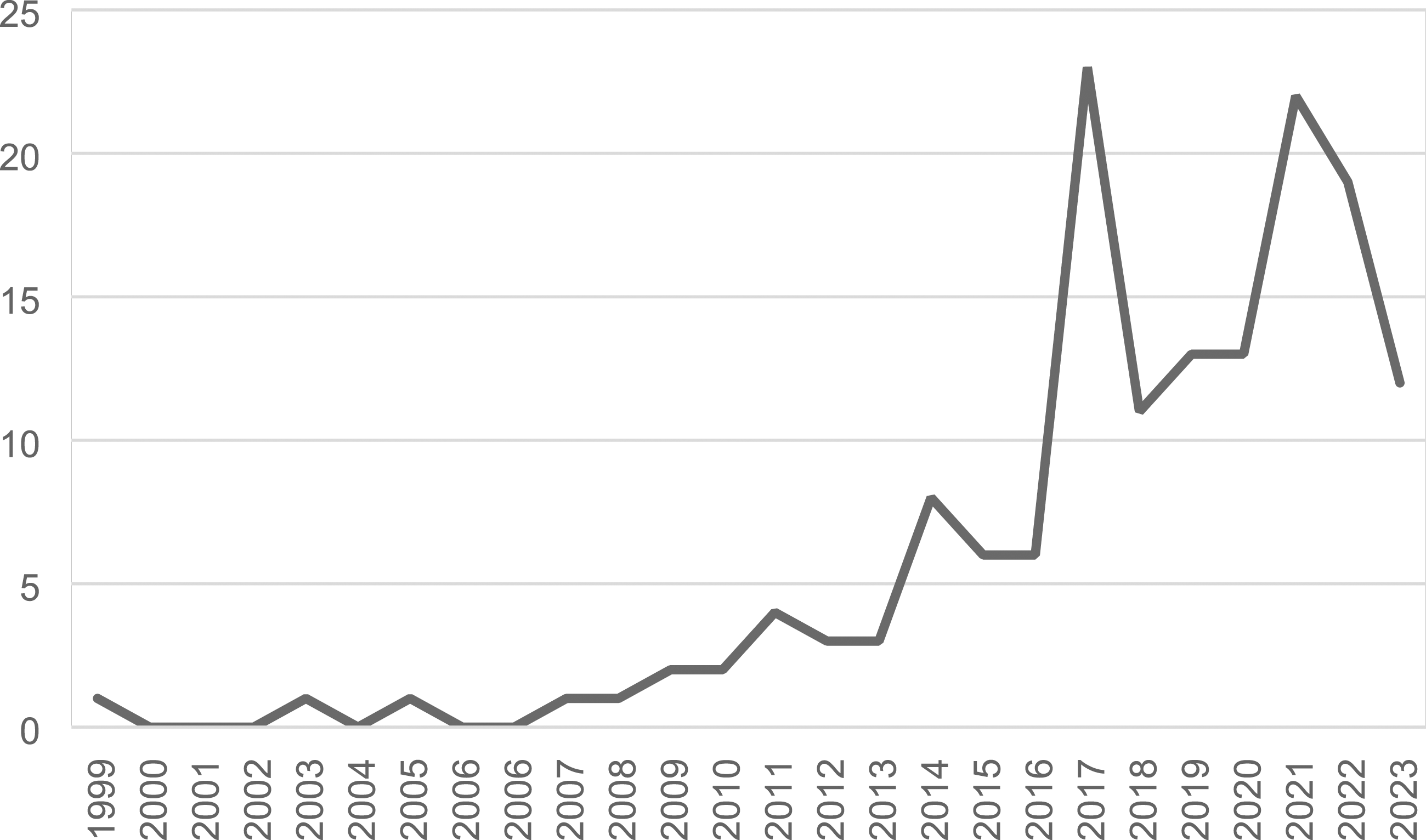
What, How, Why, for Whom, and When Extracurriculars Add to EE
This section presents the analysis of what, how, why, for whom, and when EEE adds to students’ entrepreneurial learning processes and entrepreneurship education.
What
The broad offers of extracurriculars include separate activities, such as pitch and business plan competitions, mentoring, workshops, inspirational talks, courses, and lectures, incubation, and student club initiatives offering diverse activities (Appendix 2). The definitions of extracurriculars and the use of the term are highly diverse and divided. Moreover, extracurricular lacks a clear definition in most contributions, and extracurricular and cocurricular tend to be interchangeable. For example, incubators are defined both as cocurricular and extracurricular but without an explanation of why. While some papers address extracurriculars generally as activities outside of credit-giving EE programs and courses, others address them as activities that add to specific programs, courses, or target groups of students, which mostly relate to enterprising students or student entrepreneurs (e.g., Fauchald et al., 2022; Fauchald et al., 2023; Haneberg & Aaboen, 2020; Pittaway et al., 2015; Pocek et al., 2021; Preedy et al., 2020; Watson et al., 2015). Further, the line between extracurricular and cocurricular initiatives appears unclear. How extracurriculars are initiated, organized, and carried out differs, making it challenging to define what EEE actually is without delving deeper into the aims of the initiatives. In addition, understanding the organizational structure of initiatives is important for comprehending what is offered through different kinds of initiatives.
Common to the programs or initiatives explored in qualitative and quantitative EE papers is the emphasis on reaching out to entrepreneurship or enterprise students. The qualitative papers address several potential outcomes from EEE participation related to obtaining entrepreneurial skills, knowledge, and experiences for the creation of ventures, enterprises, and networks (Fauchald et al., 2023; Haneberg & Aaboen, 2020, 2022; Jones et al., 2021; Pocek et al., 2021; Preedy et al., 2020; Watson et al., 2014; 2015). Several contributions refer to experiential learning (Kolb, 1984) and connect the learning experiences from participation in extracurriculars to experiential entrepreneurship education (Neck & Corbett, 2018; Politis, 2005). Few contributions address the role of extracurricular engagement in individuals’ experiential learning processes. An exception is Preedy et al. (2020), who address experiential learning potential from extracurriculars. The institutional, program-, and sector-specific papers describe EEE as more of an initiative to develop entrepreneurial skills and mindset for non-EE students (Boehm, 2020; Huerta et al., 2022; Huster et al., 2017; Igwe et al., 2022; Mogul et al., 2020; Upton & Sporton, 2022), not necessarily those previously interested in entrepreneurship, and to foster the kinds of skills valuable for further careers. Some initiatives in this research category also tend to be educator-initiated and -driven (Boehm, 2020; Huerta et al., 2022; Igwe et al., 2022; Mogul et al., 2020) rather than building on student requests, which differs from the subcategory of qualitative contributions. In this category, most contributions either frame or investigate how extracurricular entrepreneurship and enterprise initiatives enable social learning or serve as CoPs (Lave & Wenger, 1991; Wenger et al., 2002), which include a desire to extend knowledge and expertise through ongoing interactions. This leads to the question of how EEE contributes to students’ entrepreneurial learning and EE.
How
Preedy et al. (2020) demonstrate how extracurricular entrepreneurship initiatives “are restricted in enabling the experiential learning cycle to be completed due to limited reflection opportunities” (p. 1085), but can still be beneficial owing to the opportunities to develop autonomy in one’s own learning processes and social learning. In contrast, Fauchald et al. (2023) argue that EEE can force reflection through how initiatives are organized iteratively and repetitively.
Furthermore, extracurricular participation contributes to EE, as practical experiences can be beneficial for students (Ansari et al., 2014; Bonesso et al., 2018; Pocek et al., 2021) and for developing entrepreneurial skills and knowledge (Padilla-Angulo, 2019). Several studies support and add to, or describe, how EEE functions as part of experiential entrepreneurship education (Boehm, 2020; Carpenter & Wilson, 2022; Fulton, 2021; Ndou et al., 2018; Pocek et al., 2021; Preedy et al., 2020; Wright et al., 2017). However, few studies address how experiential learning can occur for each individual from extracurricular participation. How EEE can function as a social learning arena and CoP is emphasized (Fauchald et al., 2022; Haneberg & Aaboen, 2020, 2022; Pittaway et al., 2011, 2015; Pocek et al., 2021; Preedy et al., 2020; Preedy & Jones, 2015). As exemplified in Appendix 2 Pocek et al. (2021) found that immersion, comprehension, and coparticipation in entrepreneurial social practice enable students to create knowledge and greater self-confidence in doing entrepreneurship.
Informal approaches (Haneberg & Aaboen, 2020) and a broad sample of relevant ecosystem actors meeting and sharing experiences are identified as key elements fostering EEE. This implies that the organization of EEE is based on students’ needs and initiatives. However, what is interesting in this sense is that few contributions (Fauchald et al., 2022; Haneberg & Aaboen, 2020) describe or mention student engagement in relation to organizing extracurriculars and their participation in EEE. To comprehend how EEE adds to EE by empowering social and experiential learning opportunities and the development of autonomy, entrepreneurial skills, knowledge, and mindset, among others, we need to understand student engagement in these situations.
Studies on incubation indicate that such initiatives are valuable for learning and development. Muslim Saraireh (2021) found that training and consulting were ranked higher than the other forms of support incubation provides. However, research also emphasizes the instrumental and social aspects of incubation support as an important part of incubation services for students (Al-Dajani et al., 2014; Blank & Gabay-Mariani, 2021; Jones et al., 2021; Mele et al., 2022). Lyu et al. (2023) found that instrumental offerings such as start-up services are more decisive for students than entrepreneurship curriculars and extracurriculars for student entrepreneurs’ intention-behavior translation. Furthermore, the literature considering EEE in relation to structures of education considers and implicates that both aspects are interdependent (Diensberg, 2008; Van der Sijde & Van Driem, 1999). The review thus reveals diverse definitions of incubation and instrumental offerings which in some cases are considered as cocurricular or extracurricular, while in other contributions are defined as a home university-offered recourse. Further research is needed to define what and how university offerings can be considered in regard to students’ entrepreneurial learning.
Why
Despite the addressed lack of understanding of engagement in EEE, some answers on how EEE contributes to entrepreneurial learning and education imply that students participate in EEE based on potential learning, experience, and networking opportunities. Why EEE works can be answered through how EEE provides opportunities for more informal learning and meeting places. As shown in Appendix 2, the descriptive papers elaborate on the intentions behind EEE. However, these suggestions need further investigation.
Why students participate in EEE can also be discussed based on quantitative investigations of intentions, motivations, self-efficacy, and behavior (Arranz et al., 2017; Atmono et al., 2023; Cui et al., 2019; Padilla-Angulo, 2019; Ribeiro et al., 2022; Rivero & Ubierna, 2021; Sun et al., 2023) because these studies imply positive effects for students participating in extracurricular initiatives.
The results show why it is valuable for students to participate in EEE for the development of an entrepreneurial mindset, which can be an important factor in becoming an entrepreneur. However, some studies disprove these positive results or raise critical questions for further investigation. Rivero and Ubierna’s (2021) hypothesis that university extracurricular activities related to entrepreneurship and enterprising positively influence the motivation to start a business was rejected. Lyu et al. (2023) differentiate EEE from instrumental offerings, finding that instrumental offerings (i.e., start-up support services) have a stronger positive effect on progression from intention to behavior than entrepreneurship education offerings such as extracurriculars and courses. The authors suggest further research to “disentangle the relation between a specific course/extra-curricular activity and intention−behaviour conversion” (Lyu et al., 2023, p. 14). Hence, the characteristics of specific initiatives must be considered when measuring the effects of both formal courses, as supported by previous EE research (see, e.g., Thomassen et al., 2020), and extracurriculars. Based on the findings of what and how extracurriculars add to EE, extracurriculars differ considerably in the activities offered and their organization. The characteristics of extracurriculars, including the lack of credit-giving curricular content, structures, and fewer decisions related to pedagogical approaches, require even higher consciousness in regard to how to measure the outcomes from extracurricular participation. Moreover, results must be seen in relation to education and possibly other arenas that students participate in (Carpenter & Wilson, 2022).
This brings the analysis to new subjects for discussion on the why. Qualitative research emphasizes informal learning opportunities, networking, experience sharing, and social learning opportunities (Fauchald et al., 2022; Haneberg & Aaboen, 2020; Pittaway et al., 2011; Pocek et al., 2021; Preedy et al., 2020), whereas quantitative research emphasizes measuring intentions, entrepreneurial behaviors, mindset, and motivations (Cui et al., 2019; Lyu et al., 2023; Rivero & Ubierna, 2021). Because extracurricular initiatives are voluntary, students must be motivated to participate. Hence, positive results may not be surprising. This repeats the need for research on what the specific initiatives are and why and how students engage in certain kinds of extracurricular initiatives. Through these insights, it is also possible to understand why extracurriculars contribute to students’ entrepreneurial learning and education. The two groups of empirical papers belong to two literature streams (see Appendix 1). Although the two groups meet in some journals, such as the International Journal of Management Education (i.e., Cui et al., 2019; Fauchald et al., 2022), qualitative papers mostly appear in core journals for the European and US EE communities (Landström et al., 2022), while several core quantitative contributions are published in other entrepreneurship and education journals, such as Studies in Higher Education (Arranz et al., 2017; Padilla-Angulo, 2019). Untangling student engagements in specific activities and, from that, investigating the outcomes of participation in certain activities may be one way to understand why and how extracurriculars add to EE and give a broader understanding of why and how engagement in different EEE activities and initiatives contributes to entrepreneurial learning.
For Whom
Next is the question of whom extracurriculars contribute to entrepreneurial learning and education. From the contributions on EEE from outside core entrepreneurship or enterprise education studies, EEE is argued to be beneficial because it introduces students to learning to develop through student CoPs, which can lead to enterprising skills and entrepreneurship (Upton & Sporton, 2022). The findings indicate that students participate in extracurriculars for extra social or experiential learning opportunities and sharing and networking opportunities. In addition, the findings indicate that extracurriculars are offered as opportunities to learn entrepreneurship or enterprising skills in certain contexts. Hence, participants can be entrepreneurship or enterprise students searching for extra learning opportunities, members of an entrepreneurship CoP, or students from other programs interested in entrepreneurship and enterprise and being part of an entrepreneurial or enterprise community.
While Upton and Sporton (2022) argue for EEE to introduce ways of learning entrepreneurship and enterprise, quantitative research indicates that participating students have high motivation and/or high intentions. The methods sections in several papers also describe the sample as “more senior” students, meaning that often those who have been students for a while decide to participate. Although this is not surprising, as it may take some time before students develop an interest in entrepreneurship and enterprise, it also shows that many offers are organized more for adult students who have developed an interest in entrepreneurship or enterprise rather than for recruiting and inspiring new students. An exception is Padilla-Angulo’s (2019) study on the role of student associations in the development of entrepreneurial intentions for first-year undergraduate students. However, broad insights into what kind of EEE is valuable for whom depend on background and level of experience. This is important in understanding how extracurriculars add both to those who study and do not study entrepreneurship and enterprise, for how the level of experience within entrepreneurship and enterprise influences the relevance of different kinds of activities, and potential differences in how different EEE activities contribute to different student learning.
When
The same discussion is relevant for when EEE adds to EE. The analysis provides descriptive insights and research on EEE that offers nascent entrepreneurship students an introduction to entrepreneurship or as inspiration (e.g., Zagelmeyer, 2017a). However, EEE research mainly focuses on support for students creating ventures, including mentoring, pitching, business plan competitions, and networking opportunities. This means that EEE is offered when students already have high ambitions and heightened interest in entrepreneurship or enterprise. However, in creating ventures, determining when participation in extracurricular initiatives adds the most value is based on what kind of support is offered for what needs. Informal (Haneberg & Aaboen, 2020) and needs-driven perspectives (Haneberg & Aaboen, 2022) are important to consider when investigating engagement in extracurriculars, as it is plausible that students voluntarily engage in extracurriculars when they find it relevant.
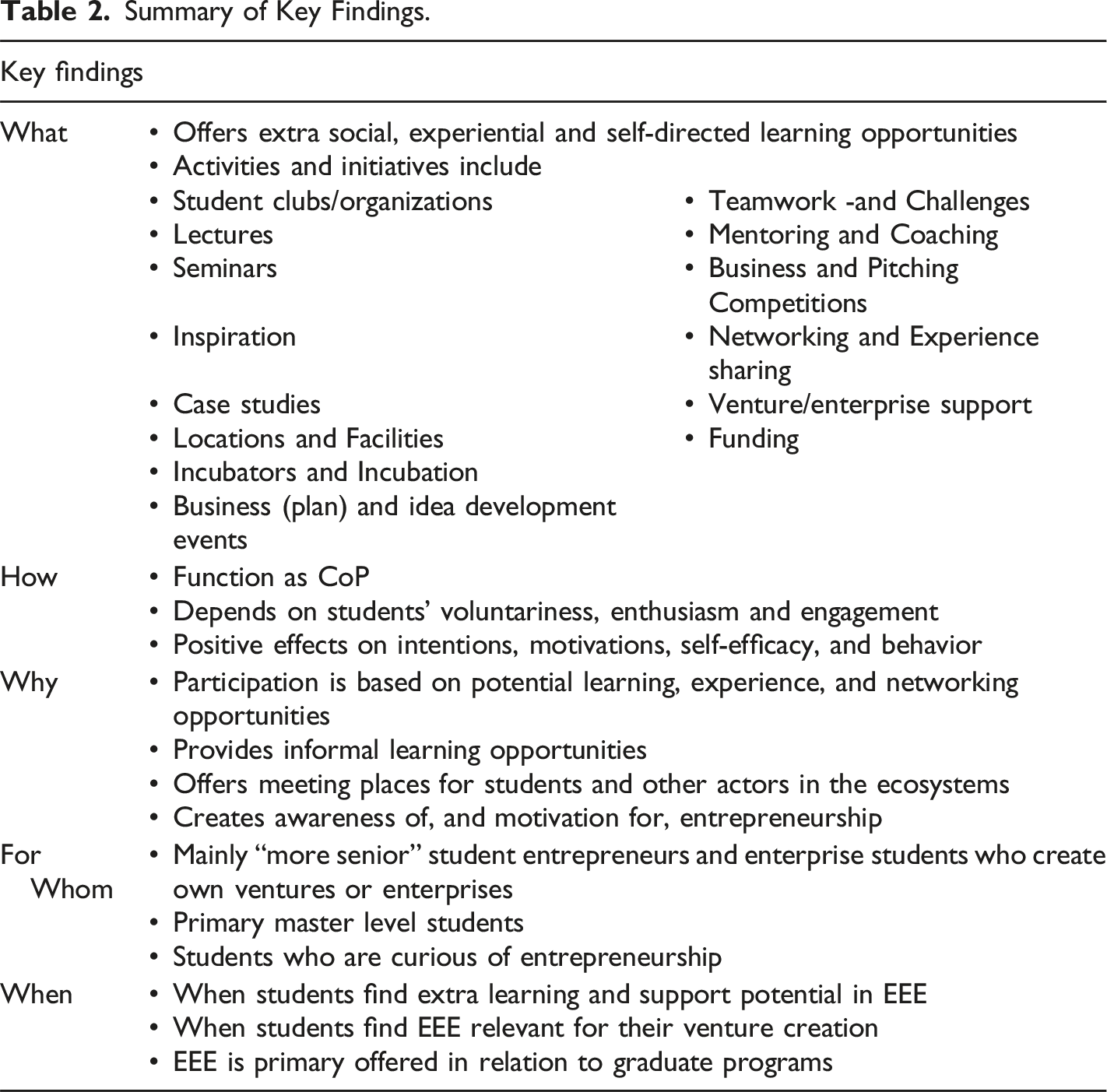
Summary of Key Findings.
Discussion
The analysis of the literature on extracurricular EEE provides insights into what EEE is, how, and why extracurriculars contribute to students’ entrepreneurial learning processes, and for whom and when different kinds of EEE offerings are relevant. This systematic review supports previous studies that imply that extracurriculars function as CoPs (Fauchald et al., 2022, 2023; Haneberg & Aaboen, 2020, 2022; Jones et al., 2021; Pittaway et al., 2015; Pocek et al., 2021; Preedy et al., 2020; Williams Middleton et al., 2019). This review also expands the understanding of how different EEE offerings can potentially function differently as CoPs by addressing for whom and when entrepreneurship and enterprising students engage in EEE and why. Figure 3 presents suggestions for further research.
Furthermore, the study adds to previous studies on how extracurriculars can potentially support students’ social, experiential, and self-directed learning (Preedy et al., 2020). Broad exploration of diverse offers of activities in regard to the potential function of these offers in entrepreneurship and enterprise students’ learning was revealed through the systematic literature review.
Based on these findings, Figure 2 provides a conceptual model illustrating examples of what and how EEE initiatives or activities can contribute to entrepreneurship and enterprise students’ learning and education. The model suggests a level of experience and knowledge foundation to distinguish for whom and when in their learning process different EEE can be sufficient for entrepreneurial learning and why. Several aspects and factors regarding what, how, why, for whom, and when EEE contributes to entrepreneurial learning and education still need to be explored (see Figure 4), which can be used for further development and revision of this conceptual model. Entrepreneurial learning support through extracurricular entrepreneurship education.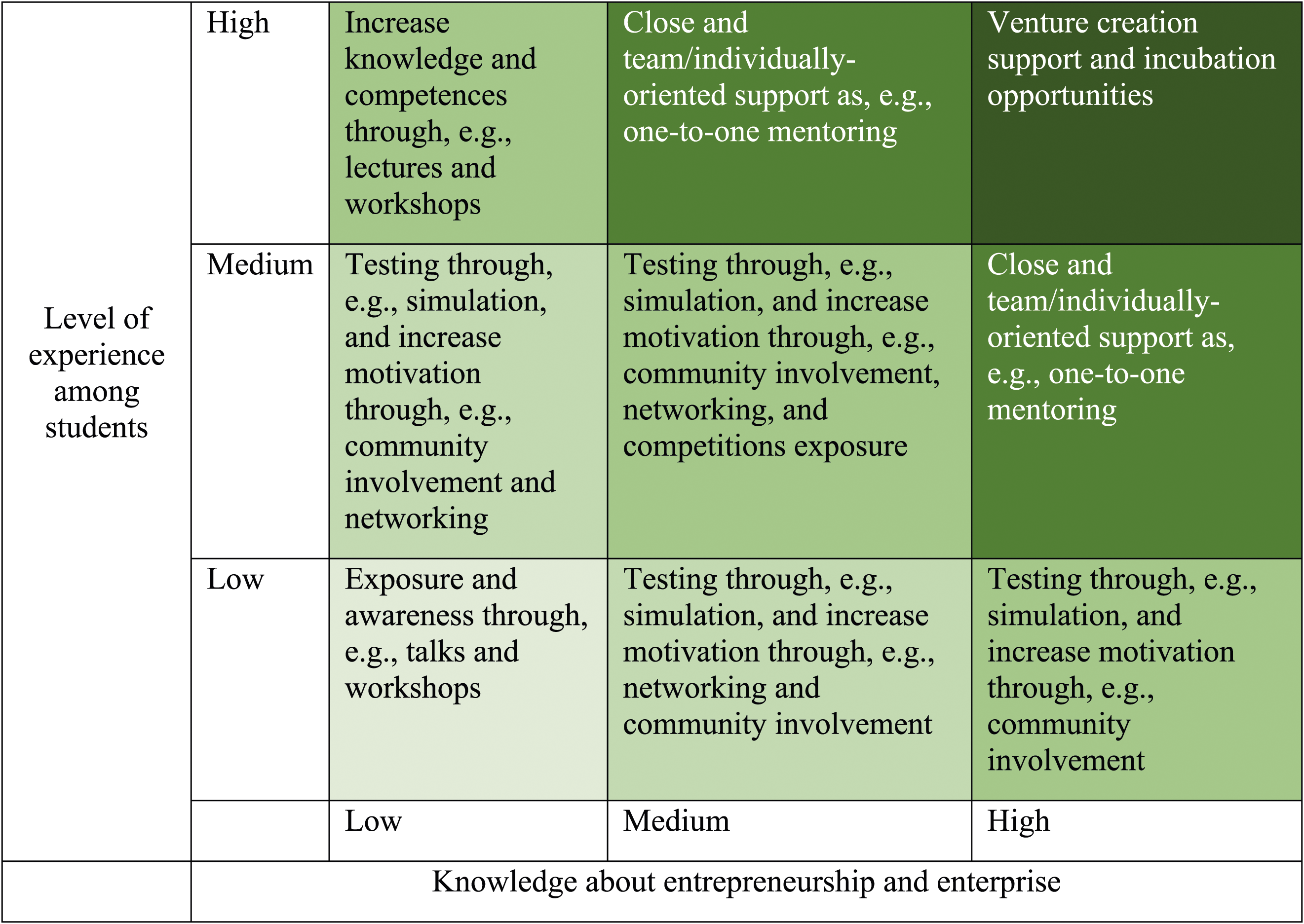
Research on how extracurriculars can contribute to entrepreneurial skill development (Padilla-Angulo, 2019; Watson et al., 2015) was elaborated based on a deeper exploration of what, how, why, for whom, and how EEE can contribute to students’ learning. The review uncovered that most research on outcomes from EEE engagement has positive results (Arranz et al., 2017; Atmono et al., 2023; Cui et al., 2019; Lyu et al., 2023; Padilla-Angulo, 2019; Ribeiro et al., 2022; Sun et al., 2023), while only a few studies show possibly negative implications (Lyu et al., 2023; Rivero & Ubierna, 2021). By comparing contributions in different categories and the results from different contributions across the categories, this study reveals the need for more and closer investigation regarding entrepreneurship and enterprise students’ learning outcomes from EEE participation and engagement.
The analysis provides insights suggesting that students’ engagement in EEE is important to consider in order to explore and investigate outcomes. These findings can be seen in relation to how entrepreneurs develop soft skills (Aldrich & Martinez, 2001; Milner et al., 2016; Neck & Greene, 2011) through the process of learning from doing and experiencing entrepreneurship (Cope, 2005; Pittaway & Thorpe, 2012; Politis, 2005). The role of extracurriculars as a CoP (Fauchald et al., 2022; Haneberg & Aaboen, 2020, 2022; Pittaway et al., 2015; Pocek et al., 2021; Preedy et al., 2020; Preedy & Jones, 2015; Williams Middleton et al., 2019) includes little rigidness and communities with much freedom and dissimilar structures and the necessary clear understanding of the purpose or clear definitions of the expected outcomes from participation. These main characteristics of EEE also differ from those of credit-giving EE. The basis for EEE is voluntary participation. The analysis indicates that students are motivated to participate in EEE by their interest in entrepreneurship or enterprise after achieving some experience in the first years of their studies. However, the findings also indicate that the community itself, when students are community insiders, motivates them to remain (Haneberg & Aaboen, 2022; Pittaway et al., 2015; Pocek et al., 2021). Therefore, the research implies that the uniqueness of each participant’s reason for voluntarily spending their time in extracurriculars may affect both what they learn and how. Hence, for both organizers and researchers to grasp what is going on in EEE and how it generates learning opportunities, the why must be understood, including insights into how students engage in specific contexts or activities. This has been of increased interest lately, but research must also consider the why in measuring outcomes from EEE engagement.
As Appendix 2 shows, extracurriculars also include networking activities and access to instrumental offerings and facilities through, for example, incubation, and arenas for venture and enterprise development. When engaging in extracurriculars, participants can have reasons and motivations other than learning opportunities and skill development, implying that the role of extracurriculars is complex and diverse compared with the core aim of formal EE. Consequently, the different literature streams emphasize the different purposes of extracurriculars. While most empirical contributions aim to identify how EEE enables learning, what kind of learning and skills (Fauchald et al., 2022; 2023; Haneberg & Aaboen, 2020, 2022; Pittaway et al., 2015; Pocek et al., 2021; Preedy & Jones, 2015; Preedy et al., 2020; Williams Middleton et al., 2019) can be developed, and students’ outcomes from participation (Arranz et al., 2017; Atmono et al., 2023; Cui et al., 2019; Padilla-Angulo, 2019; Rivero & Ubierna, 2021; Sun et al., 2023), several papers in the other contexts category focus more generally on how EEE can support venture creation and enterprise, which may bring value for the institutions beyond learning (Diensberg, 2008; Van der Sijde & Van Driem, 1999). Thus, whether, or not EEE’s purpose is skill development in itself can be discussed. A narrow focus of EEE emphasizing skill development may affect other participation outcomes and students’ reasons for participating. Hence, the analysis suggests that EEE’s role should be based on a balance of offerings, making the initiatives relevant for participating in the community for students with different motivations to engage at different stages in their learning processes. This supports the findings of Pocek et al. (2021) regarding how engagement in certain activities motivates further engagement.
A reduced focus on learning as an aim of EEE initiatives in itself does not necessarily negatively influence the potential for learning. Rather, the study reveals a strong focus on engagement, action, and interaction based on one’s own interests and needs. These can create learning for the individuals, especially considering soft skills development (Aldrich & Martinez, 2001; Milner et al., 2016; Neck & Greene, 2011) in participation in CoP offerings as, networking initiatives, and other extracurricular offerings. EEE can provide students with opportunities for creating relevant exploration and exploitation experiences that they can reflect and act upon and thus develop deeper meaning and knowledge from, which are fundamental for entrepreneurial learning (Cope, 2005; Pittaway & Thorpe, 2012; Politis, 2005). Individuals’ levels of engagement and action orientation in EEE activities and initiatives have been addressed as one of the main characteristics of EEE in the discussion above. Hence, these EEE factors influence involvement and thus the potential for experiential entrepreneurial learning, as illustrated in Figure 3. Student involvement in entrepreneurship extracurricular education.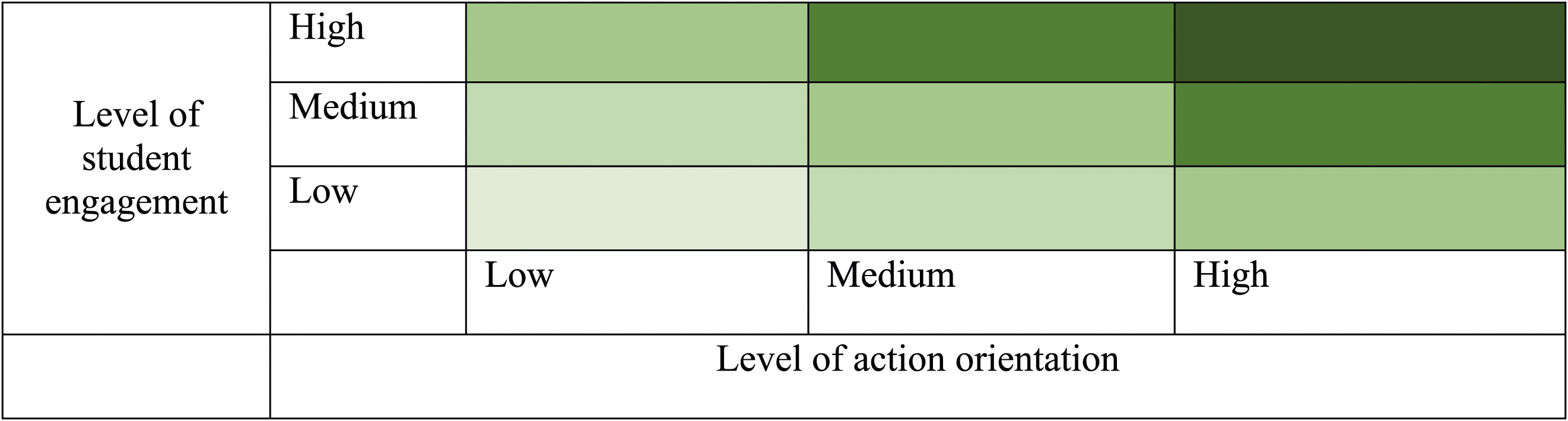
Conclusion and Implications for Further Research and Practice
The present study explored what, how, why, for whom, and when extracurriculars add to entrepreneurship and EE to answer the following question: “What and how do extracurricular entrepreneurship and enterprise education add to students’ entrepreneurial learning and education?” The systematic literature review confirms the findings of previous studies that indicate the positive effects of extracurricular participation and aggregates what, how, why, for whom, and when extracurriculars add to EE. On the basis of the findings, extracurricular entrepreneurship and enterprising education are argued to play a role in students’ entrepreneurial learning and education by (1) offering several diverse kinds of activities, such as networking events, mentoring, pitching, and business plan competitions, workshops, inspirational lectures, and incubation. These activities (2) offer arenas for entrepreneurial learning and exploration through informal participation and networking. Extracurricular initiatives share similarities with many in-curricular courses and university program offerings (e.g., Samwel Mwasalwiba, 2010). However, extracurriculars provide (3) extra social, experiential, and self-directed learning opportunities for students interested in entrepreneurship and enterprise, specifically student entrepreneurs and enterprising students. Consequently, EEE can be (4) a social arena or CoP for students with high entrepreneurial intentions and motivation. EEE’s learning potential depends on level of individual students’ engagement and voluntary involvement in activities that are sufficient for their level of experience.
Hence, the findings from this study support previous findings on how extracurricular education can increase educational achievement for actively involved students compared with uninvolved students (Eccles et al., 2003). However, the findings expand the understanding of how this looks in an EEE context. Yet, there are few studies within the EEE literature that directly examines how student can develop soft skills (Milner et al., 2016). These are important skills for entrepreneurs to develop (Neck & Greene, 2011) which research has addressed the potential of developing through extracurricular education (Milner et al., 2016), but potential for other skill development through EEE are also underexamined.
The study expands the understanding of extracurriculars in EE by exploring how previous research has investigated and managed the what, how, why, for whom, and when of extracurriculars. The contributions were discussed in relation to the research question, enabling identification of how the characteristics of voluntary participation in EEE influence learning situations. EEE differs from formal EE owing to the influence of voluntariness. Students’ engagement in EEE and the motivation behind their engagement are fundamental in understanding why, when, and how students engage and the outcomes. These insights create the basis for the discussion of the structure and organization of EEE initiatives, students’ engagement in EEE, and the intended outcomes of EEE engagement.
The analysis uncovered several gaps and limitations in the existing literature on the nascent field of extracurricular entrepreneurship and enterprise. Diverse perspectives on EEE are needed to expand and deepen the understanding of what, how, and why extracurricular participation engages entrepreneurship and enterprising students and when and for whom it is valuable (Figure 4). The most significant implications for further research are as follows: • Further exploration of how different EEE activities and initiatives can contribute to learning for students with foundational knowledge and experience in the fields of entrepreneurship or enterprise studies with potentially high intentions, but also for students without fundamental knowledge or experience and who have not yet explored entrepreneurship and a potential interest. For students with high intentions who have been exposed to entrepreneurship to some degree previously, this can involve venture and enterprise support, as exposure and awareness are relevant for students new to entrepreneurship. Further research is required with regard to (1) how students’ engagement in different EEE activities and initiatives can foster learning, (2) when different kinds of activities can foster what kind of learning for whom, (3) how EEE initiatives and actors can support learning and development for different student groups, and (4) the relation between credit-giving courses and programs and EEE in regard to students’ learning. Further research within these subtopics will contribute to increasing the understanding of how EEE can contribute to learning and education for entrepreneurship and enterprise students. • Related to this, a second theme for further investigation is what competences, knowledge, skills, and mindset students can develop from EEE and how. This also includes motivational aspects, intentions, and the development of self-efficacy. These topics should be explored in relation to (1) specific initiatives and activities, (2) the participants, (3) the purpose of participation (why students participate), and (4) the level of engagement (how the activities and initiatives can foster learning based on engagement and action orientation). Further research within these subtopics will contribute to increasing the understanding of what EEE contributes to learning for entrepreneurship and enterprise students. The findings also suggest authors to consider results from different literature streams when exploring these perspectives. • Next is the need for deeper and broader exploration of the relations between university resource offerings, university-offered entrepreneurship and enterprise programs, curriculars, and extracurriculars, and how these can function together to support entrepreneurial learning among students and/or student entrepreneurs’ experiential learning processes. Further research on these subtopics will contribute to (1) increased knowledge and understanding of entrepreneurship and enterprise students’ experiential learning processes and (2) relations between educational offerings within university entrepreneurship ecosystems in regard to students’ entrepreneurial learning. Further research agenda based on thematic framework.
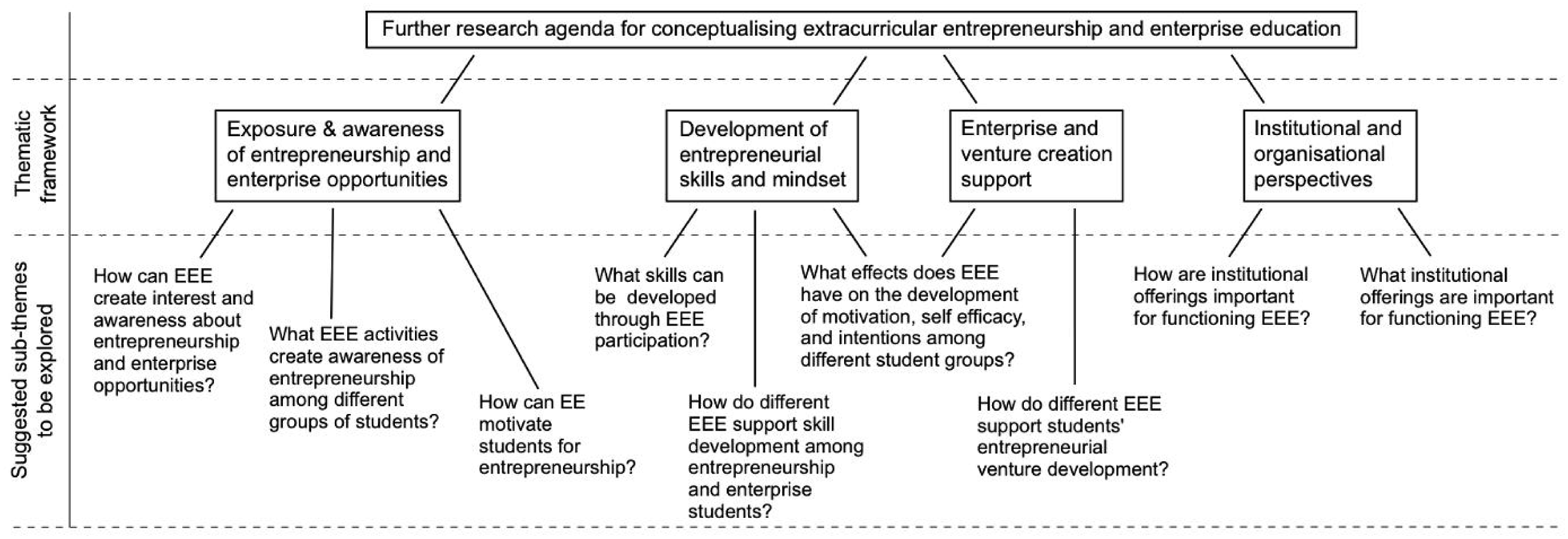
Further research within these three overarching topics will complementarily contribute to the research-based conceptualization and definition of extracurricular and cocurricular entrepreneurship education. Defining EEE is an important contribution to the fields of entrepreneurial learning and entrepreneurship education both in regard to (1) increasing knowledge and understanding of entrepreneurship and enterprise students’ experiential learning processes from EEE engagement and (2) developing a common terminology to guide the sharing of practices across universities and colleges.
Implications for Practice
The thematic framework and research agenda also offer implications for practice in regard to the use of terminology, but especially for how extracurricular initiatives create learning situations for entrepreneurship and enterprise students. EEE offers learning situations besides credit-giving curriculars and programs, which the students themselves find valuable at certain stages in their learning process. Thus, such initiatives must be kept as extracurriculars to obtain and hold their value. Higher education institutions must adopt a broad sample of extracurricular entrepreneurship and enterprising initiatives without necessarily expecting measurable outcomes, as for curricular activities, as different initiatives are valuable for smaller groups of students in certain periods. Furthermore, the uniqueness of the different learning contexts and each student’s experienced outcome at a specific time in the entrepreneurial learning process makes it challenging to compare and measure the value and outcome from participation. Hence, EEE offers must be trusted by university managers and policymakers when considering funding such initiatives to create continuity and sustainable operations of non-credit-giving activities and communities formed in EEE, which previous studies have addressed (Preedy & Jones, 2015).
Limitations
This study, as with all systematic literature reviews, has limitations. First, the literature search results depended on how the search criteria were applied to the headings, abstracts, and keywords. Contributions may have been missed because the criteria were insufficient for headings, abstracts, and key words. However, as the aim of the search was to capture all the contributions focused on extracurricular entrepreneurship and EE, the chosen constructs were expected to appear in these sections. Several pilot searches were conducted to ensure inclusion of all the construct terms. In addition, extensive snowballing was performed to ensure the inclusion of relevant contributions. A second relatable limitation was the choice not to search for specific activities, such as mentoring, pitching, and business competitions. However, as the focus of this review was on EEE as a concept, the search was limited only to contributions that addressed activities defined as extracurricular initiatives. As confirmed by the results, extracurriculars in EE lack a clear definition and conceptualization, and the distinctions between curricular, cocurricular, and extracurricular EE are vague. Thus, searches for specific learning activities would be extensive and, most certainly, highly challenging to define whether they should be included in the search.
Supplemental Material
Supplemental Material - Extracurricular Entrepreneurship and Enterprise Education: What, How, Why, for Whom, and When?
Supplemental Material for Extracurricular Entrepreneurship and Enterprise Education: What, How, Why, for Whom, and When? by Ragnhild Nordeng Fauchald in Entrepreneurship Education and Pedagogy.
Footnotes
Declaration of Conflicting Interests
The author(s) declared no potential conflicts of interest with respect to the research, authorship, and/or publication of this article.
Funding
The author(s) received no financial support for the research, authorship, and/or publication of this article.

Supplemental Material
Supplemental material for this article is available online.
References
Supplementary Material
Please find the following supplemental material available below.
For Open Access articles published under a Creative Commons License, all supplemental material carries the same license as the article it is associated with.
For non-Open Access articles published, all supplemental material carries a non-exclusive license, and permission requests for re-use of supplemental material or any part of supplemental material shall be sent directly to the copyright owner as specified in the copyright notice associated with the article.
