




Abstract
Entrepreneurship may be the only viable solution for finding employment in rural areas because of their limited labor markets. However, how curricular and extracurricular entrepreneurial activities can support the entrepreneurial potential of rural youth remains a question. Using a mixed-methods approach, we investigate the impact of curricular and extracurricular entrepreneurial activities on rural adolescents’ entrepreneurial self-efficacy (ESE) and desirability. Our findings show that extracurricular entrepreneurial activities, especially inventive and commercial ones, enhance both ESE and entrepreneurial desirability, but formal curricular entrepreneurial activities do not. Our study highlights how extracurricular entrepreneurial activities can support young people’s perceptions of their entrepreneurial potential while allowing them to explore and exploit local entrepreneurial opportunities. These activities are vital for rural areas to enable rural youth to see opportunities in their local surroundings and consider entrepreneurship as a career option early in life. The implications suggest that rural entrepreneurship education could leverage naturally occurring opportunities for leisure-time entrepreneurial activities in rural areas.
Keywords
Introduction
Entrepreneurial opportunities in rural areas are shaped by the local physical, social, and economic environment and the set of rules and norms that exist in space and time (Blenker et al., 2012; Halfacree, 1995; Stathopoulou et al., 2004). Rural regions have had to endure depopulation, a frail business fabric, high dependence on agriculture, and low purchasing power (Galvão et al., 2020). Entrepreneurship arising from local resources through local stakeholders provides employment opportunities in rural areas (Müller and Korsgaard, 2018), allowing rural youth to stay in the region. However, the realization of rural entrepreneurship requires a better understanding of how rural youth develop an interest in starting a business (Drennan et al., 2005). Their perceptions and decisions ultimately determine whether they stay in the region (Kristensen and Birch-Thomsen, 2013).
We argue that adolescents find it difficult to reliably assess and determine their future work-life intentions; we suggest that the key antecedents of entrepreneurial intentions, namely, entrepreneurial self-efficacy (ESE) and desirability (Liñán and Fayolle, 2015; Newman et al., 2019), be addressed because they can support the realization of entrepreneurial intentions (Kautonen et al., 2015). Previous research has focused on various contextual and personal antecedents that may influence ESE and entrepreneurial desirability, but there is a lack of understanding about the development of their precursors during adolescence (Drennan et al., 2005; Newman et al., 2019; Obschonka, 2016). The role of entrepreneurship education (EE) is heralded in enhancing ESE and entrepreneurial desirability (Bae et al., 2014; Gibb, 2002; van Gelderen, 2010), and previous research has attempted to determine whether and how EE affects students’ entrepreneurial attitudes and skills (Fretschner and Weber, 2013; Gielnik et al., 2015).
Furthermore, research on EE in rural contexts remains scarce (Pato and Teixeira, 2016), although rural areas have specific socio-economic characteristics which extend to entrepreneurship and business formation (e.g., Phillipson et al., 2019; Roundy, 2019). Similarly, the rural context may shape EE in a variety of ways. For example, the provision of EE, and pedagogical approaches may vary between rural and urban areas (Johansen and Schanke, 2013; Larty, 2021). Entrepreneurship is not only influenced by the spatial context in which it occurs (Koorsgaard et al., 2015) but also embedded in the processes taking place in social networks, families, communities, social groups, and other contexts that provide access to information, legitimacy, and support (Koorsgaard et al., 2022). In addition to the school and formal learning environment, adolescents’ leisure activities, in which they engage and socialize with others, influence their behaviors and attitudes (Behtoui, 2019). However, research is limited on whether it is possible to substitute or complement formal curricular EE with leisure time activities containing an entrepreneurial component. This is particularly interesting in rural contexts, where social embeddedness has been recognized to play an important role in entrepreneurial activities (Jack and Anderson, 2002; Klyver and Floey et al., 2012).
The purpose of this study is to examine the impact of curricular and extracurricular entrepreneurial activities on ESE and entrepreneurial desirability in rural youth. The rural environment is not merely an external condition; rather, it is reflected by whether and how young people see themselves and their local environments as key building blocks of entrepreneurial behavior. Researchers have acknowledged that EE has the potential to support young people by enhancing their awareness, interest, and knowledge with respect to entrepreneurial intentions, start-ups, and running a business (Nabi et al., 2017) and that EE enhances ESE and entrepreneurial desirability (Bae et al., 2014; Wardana et al., 2020; Wilson et al., 2007). In this study, we define curricular entrepreneurial activities based on the work of Souitaris et al. (2007) and Lackéus (2016) and address how students are encouraged to engage in entrepreneurship and entrepreneurial behavior, for instance, when teachers introduce entrepreneurship in class, when entrepreneurs visit schools, or when schools provide possibilities for students to participate in entrepreneurship programs or activities at school. We also focus on extracurricular activities, which play a key role in youths’ construction of their interests and self-efficacy (Vondracek and Skorikov, 1997). Arranz et al. (2017) found that extracurricular activities and proactive interactions with practitioners (Honig, 2004) could enhance individuals’ entrepreneurial interests. The present study is guided by the work of Obschonka et al. (2011), who defined extracurricular entrepreneurial activities as those that cover the invention, leadership, and commercial actions in which young people engage during their leisure time outside of their school environments. These leisure activities expose adolescents to social networks and activities.
By examining the curricular and extracurricular antecedents of ESE and entrepreneurial desirability, we contribute to the understanding of how interest in entrepreneurship can evolve during the early years of a person’s development before their actual career begins (Drennan et al., 2005; Newman et al., 2019; Obschonka, 2016). Moreover, instead of focusing on EE in rural areas in emerging economies (Udefuna et al., 2013), we examine EE in an understudied context of the rural areas of a developed, industrialized economy. We extend the domain of EE to include the role of informal learning environments outside the school environment and the extracurricular entrepreneurial activities of rural youth. Our study responds to recommendations to expand research to educational levels other than higher education (Nabi et al., 2017) and to investigate the development of ESE and desirability early in life (Obschonka et al., 2011). Both formal and informal approaches to entrepreneurship in youth are important, as childhood and youth are ideal periods for exposing young people to entrepreneurial skills, abilities, and attitudes (Filion, 1994). Our findings show that extracurricular entrepreneurial activities enhance both ESE and entrepreneurial desirability. Thus, such self-directed activities in rural areas are meaningful for rural youth to create and navigate new entrepreneurial opportunities by seeing the potential in their local surroundings, which would enable them to consider staying in the area. We argue that the boundaries between curricular and extracurricular activities should be kept open and fluid to enable such opportunities to be explored and exploited.
Theoretical Framework
Previous research has comprehensively documented that ESE and entrepreneurial desirability induce entrepreneurial intentions or even behavior (Kautonen et al., 2015; Liñán and Fayolle, 2015; Newman et al., 2019; Schlaegel and Koenig, 2014). Studies also suggest that EE supports the development of entrepreneurial competencies and attitudes (Hytti et al., 2010; Liñán and Chen, 2009) and that these can be channeled and reinforced through, among other aspects, educators’ pedagogical choices (Pittaway and Cope, 2007). The context of EE and the pedagogies used range from business planning to enabling students to act as entrepreneurs (Blenker et al., 2012; Mansoori and Lackéus, 2020). While curricular engagements shape adolescents’ perceptions of their skills, aspirations, and identity, extracurricular activities play a major role in the development of their interests and self-efficacy (Vondracek and Skorikov, 1997). Extracurricular activities take place outside of the required coursework, are voluntary by nature, and may be associated with employability, whereas curricular activities are part of the scheduled teaching time and focus on the development of competencies (Arranz et al., 2017; Milner et al., 2016; Preedy et al., 2020). Extracurricular activities may involve institutional support initiated by the school to foster students’ interests and intentions to start a business (Arranz et al., 2017), or activities initiated by students, including arts or sports or voluntary work (Milner et al., 2016; Stevenson and Clegg, 2012).
Accordingly, the theoretical framework of this study consists of five concepts: curricular and extracurricular entrepreneurial activities, perceived ESE and desirability, and the rural context (Figure 1). Curricular entrepreneurial activities have often been shown to have a positive influence on students’ ESE (Newman et al., 2019), but the findings are not consistent. Hershmann et al. (2022), for example, observed that participation in a blended entrepreneurship course does not strengthen students’ ESE. Arranz et al. (2017), in turn, found that extracurricular activities, such as conferences and business visits, as well as facilities and infrastructures for entrepreneurship, enhance students’ entrepreneurial interests. Kickul et al. (2008) concluded that work experience outside of the school improves teenage pupils’ ESE. Previous research has also shown that extracurricular entrepreneurial activities enhance entrepreneurial attitudes and perceived behavioral control (Almeida et al., 2021). These activities provide learning environments and experiences through learning-by-doing or experience-based pedagogies (Nabi et al., 2017; Pittaway et al., 2011). They take place, for example, through hobbies and similar personally meaningful activities (Obschonka et al., 2012), which are often organized locally by a variety of stakeholders. Therefore, such entrepreneurial endeavors are connected with the interests and values of those who live and work in certain places (Korsgaard et al., 2015). In the end, curricular EE and extracurricular entrepreneurial activities are considered tools that help rural residents either increase employment opportunities or create new ones through entrepreneurship (Barnard et al., 2018). Theoretical framework of the study.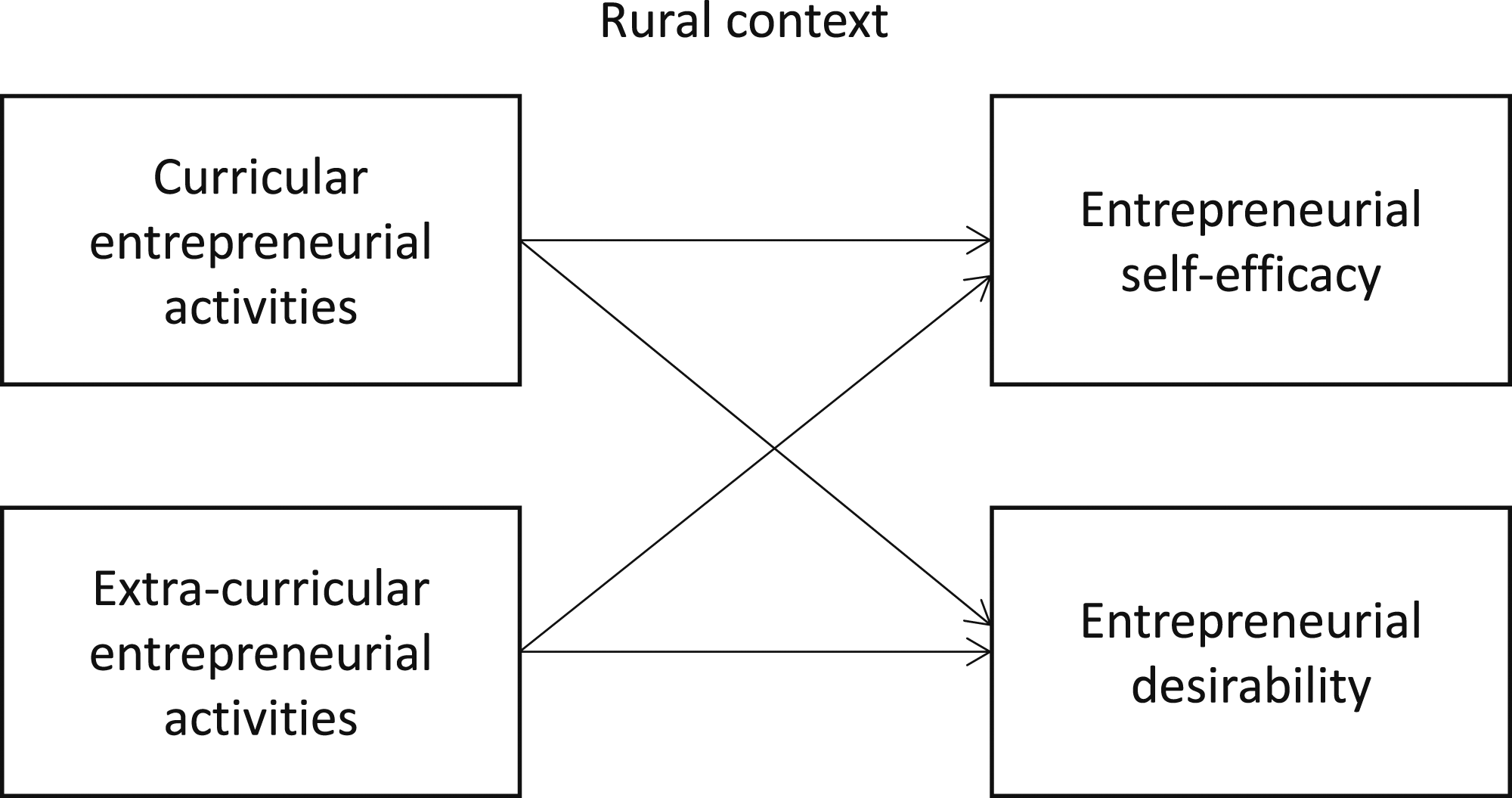
The immediate environment of EE and extracurricular activities includes, for example, networks, role models, and culture, all of which influence how entrepreneurship is considered locally (Julien, 2007). Similarly, location can play a crucial role in the creation of entrepreneurial opportunities (Blenker et al., 2012; Korsgaard et al., 2015). Therefore, the impact of EE on entrepreneurial outcomes is related to the environment in which EE is provided; EE is needed more in entrepreneurship-hostile institutional environments, where, for instance, access to financial capital is weak, or the public image of the entrepreneur is negative (Walter and Block, 2016). The local circumstances and structures, as well as agents, enable or constrain entrepreneurship (Stam and Welter, 2020). For example, teacher entrepreneurs have been recognized as important change agents who adopt creative teaching methods (Keyhani and Kim, 2021). Scholars have suggested that the local context may influence the results of EE, and recommended that educators strengthen their relationships with local businesses and enable students to learn in business (Lindh and Thorgren, 2016) and real-life settings. However, Huber et al. (2014) noted that the entrepreneurship programs delivered in primary school do not influence pupils’ cognitive skills. This indicates a need to also consider aspects outside of the school environment, such as pupils’ entrepreneurial activities during their leisure time.
Based on the above, there is a need to further investigate the impact of curricular and extracurricular entrepreneurial activities on ESE and entrepreneurial desirability among rural youth. For this, we apply a mixed-methods approach that enables the integration of qualitative and quantitative methods and data for analyses and allows us to address the research question comprehensively (Hurmerinta-Peltomäki and Nummela, 2006). We apply the QUAL > QUANT approach with equal status of sequentially conducted qualitative and quantitative studies (Molina-Azorín et al., 2012). We first conduct a qualitative pilot study to assist in the development of hypotheses based on the existing literature. Thereafter, we test the developed hypotheses using a quantitative design.
Qualitative Study of Adolescent Entrepreneurs in Rural Regions
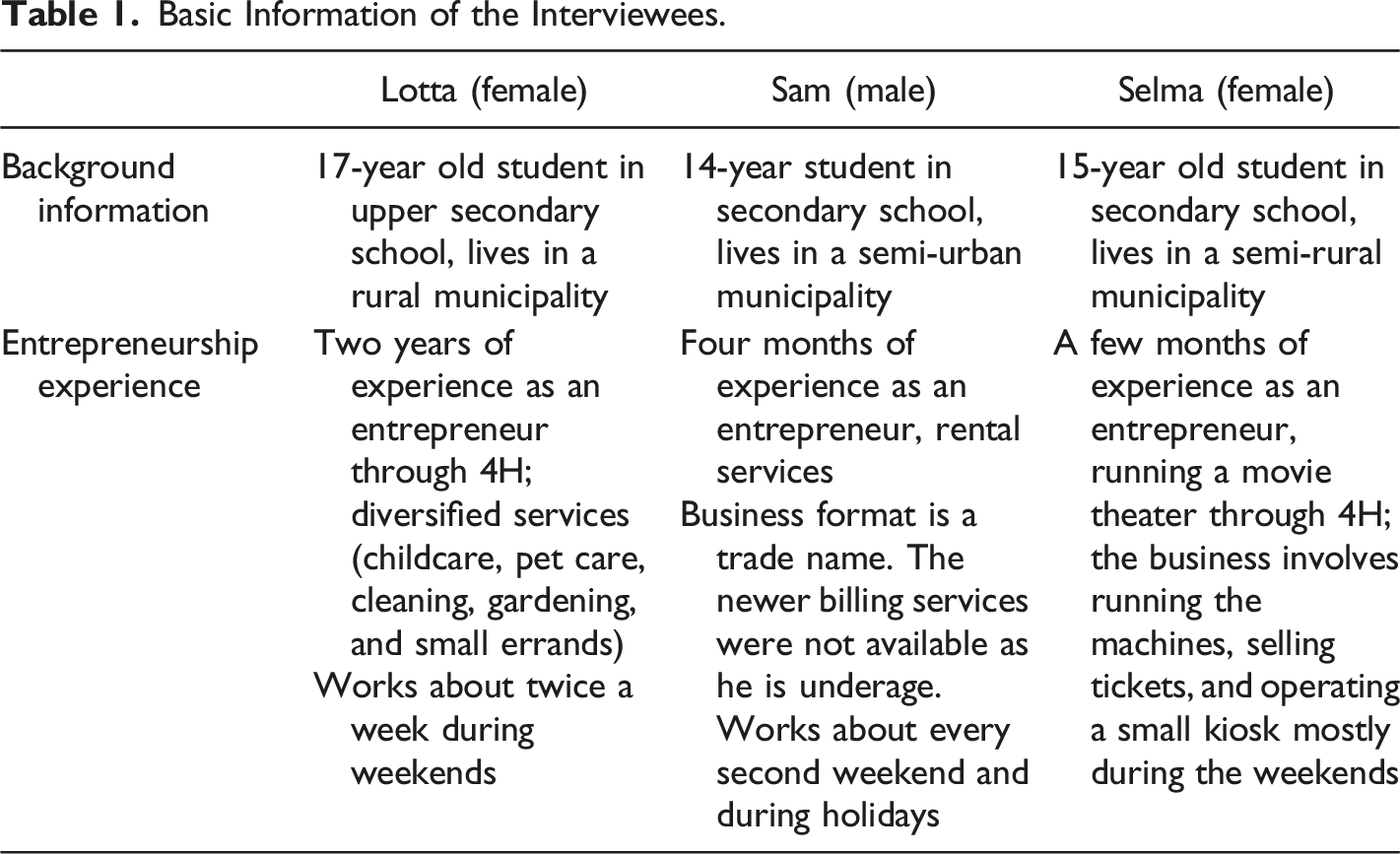
To assist in the development of hypotheses regarding the role of curricular and extracurricular entrepreneurial activities in ESE and entrepreneurial desirability, we conducted a qualitative study by interviewing three rural adolescent (aged 14–17 years) entrepreneurs. They were selected based on their age, having at least some (from a few months to two years) entrepreneurship experience, and living in three different types of Finnish rural regions. 1 The interviewees were identified based on suggestions from study advisors in their schools. The interviews covered a broad understanding of how they went about their lives, including their hobbies and entrepreneurial activities. Consequently, it was believed that the interviews captured the real-life, current situation and experiences of the adolescents as opposed to speculative thinking if the interviewees had no experience with entrepreneurship or to the retrospective reasoning that would have been obtained if the interviews were conducted with older participants regarding their early entrepreneurship experiences. Given the popularity of initiatives such as the 4H 2 activity and the Junior Achievement 3 program, adolescents have increasing opportunities to explore and experiment with real-life entrepreneurship. The Junior Achievement program has been expanding in Finland during the past 10 years, and currently, over 50,000 students from nearly 1,000 schools participate annually (JA Finland, Annual Report 2020–2021). The number of 4H enterprises has also been increasing over the years; there were already 1,412 enterprises with 1,578 entrepreneurs in 2019 compared with 95 enterprises with 158 enterprises in 2009 (Saarimäki, 2021). The JA program is offered via schools, whereas 4H is a leisure activity. Thus, studying this group of students who have been active in JA and/or 4H offers a unique opportunity to learn how ESE and entrepreneurial desirability are fostered at a young age and to explore the related antecedents.
Basic Information of the Interviewees.
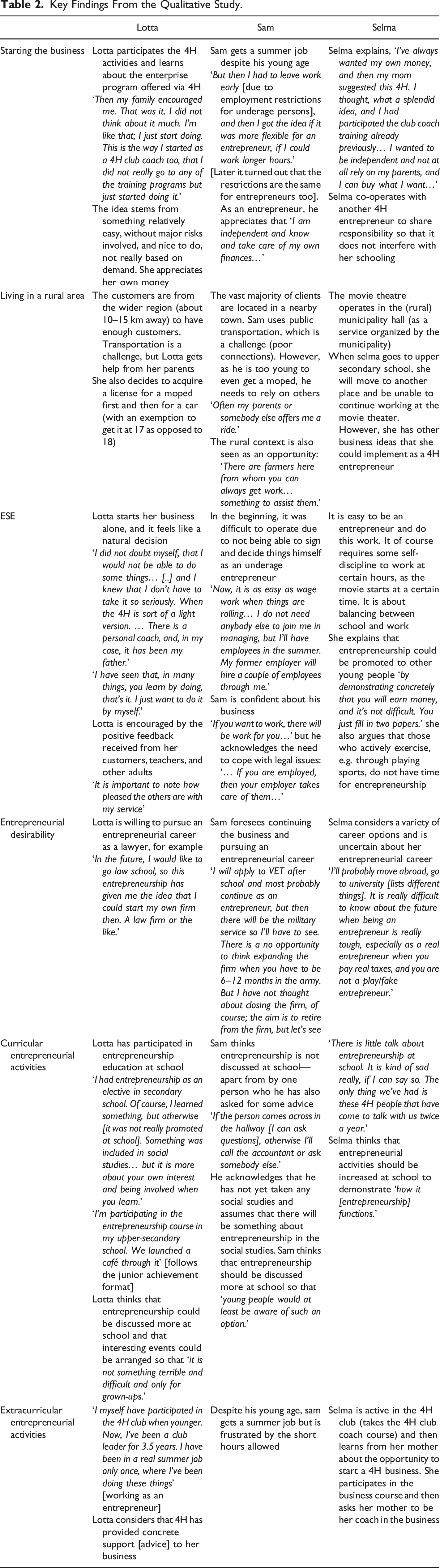
Key Findings From the Qualitative Study.
Hypothesis Development
The Role of Curricular and Extracurricular Entrepreneurial Activities in ESE
Among other factors, individuals’ formal education is commonly recognized as supporting ESE in early-life education (Newman et al., 2019). Although changes in ESE before and after curricular activities are not necessarily important (Huber et al., 2014; Morris et al., 2013; Von Graevenitz et al., 2010), previous research has noted that curricular activities and pedagogical choices positively influence students’ perceptions of their entrepreneurial skills and competencies (Birdthistle et al., 2016; Liñán and Chen, 2009) and their ESE (Shinnar et al., 2014; Zhao et al., 2005). However, research in this area is not consistent, as a study by Hershmann et al. (2022) showed that some curricular activities may not improve students’ ESE. The common rationale, though, is that exposing students to curricular activities, such as cases, course work, and teaching methods, supports their entrepreneurial self-confidence (Arranz et al., 2017). In turn, this provides them with the means for personal fulfillment or for bearing with uncertainty and might boost their perceptions of their entrepreneurial selves. For instance, according to our interview data, Lotta had taken entrepreneurship as an elective course in secondary school and is currently participating in the Junior Achievement program in upper secondary school. On the contrary, Sam and Selma did not report having participated in any entrepreneurial curricular activities. This was partly explained by Sam’s young age and not having been exposed to such curricular activities yet. Selma explained that 4H people visited her school to give information about 4H Enterprise opportunities. Thus, we hypothesize the following:
Curricular entrepreneurial activities are positively associated with perceived ESE in adolescents.
Engaging in extracurricular entrepreneurial activities may provide entrepreneurial experiences and self-determined learning (Kapasi and Grekova, 2018), which might not be available in curricular activities. Obschonka et al. (2012) found that leisure-time entrepreneurial activities positively influence a student’s entrepreneurial personality and entrepreneurial control beliefs over time. When studying ESE and desirability among adolescents, we need to recognize that possible entrepreneurship typically takes place only later in life, as age has been shown to have either a curvilinear (inverted U) or a positive linear relationship with entrepreneurship (Kautonen et al., 2014). Therefore, entrepreneurial activities should preferably have a long-lasting impact on, for example, self-efficacy in order for an increased ESE to influence entrepreneurship over the life course of young people. Research in this area is still scarce, and it has been suggested that more attention should be given to examining the possible changes in ESE in the long term (Newman et al., 2019). However, few existing empirical investigations have reported that entrepreneurial activities in childhood predict higher levels of ESE later in life (Obschonka et al., 2010). Increases in individuals’ entrepreneurial knowledge, experiences, and skills (Davidsson and Honig, 2003) also shape how they perceive their entrepreneurial capabilities. Developing entrepreneurial competencies early in life may thus increase individuals’ confidence in their skills later in life (Obschonka et al., 2012). In our qualitative study, all three participants reported “not doubting themselves” or finding entrepreneurship to be “easy.” This is at least true in the context of their 4H businesses (Lotta and Selma), which are considered safe real-life environments to learn by doing. In particular, Lotta was encouraged by the feedback she received from her customers and other adults. Sam, who operated his business as a “real business,” explained that the only difficulties he encountered were those brought about by his young age, not giving him the full capacity to make decisions. Thus, their extracurricular entrepreneurial activities seem to contribute to their perceived self-efficacy rather quickly and not only in the long term. We hypothesize the following:
Extracurricular entrepreneurial activities are positively associated with perceived ESE in adolescents.
The Role of Curricular and Extracurricular Entrepreneurial Activities in Entrepreneurial Desirability
Previous research has highlighted that formal EE and curricular entrepreneurial activities enhance students’ entrepreneurial attitudes (Arranz et al., 2017; Krueger and Brazeal, 1994). Zhang et al. (2014) illustrated a positive correlation between EE and perceived entrepreneurial desirability. Similarly, Hershmann et al. (2022) found that curricular activities can increase the desirability of entrepreneurship as a career choice among students. If pupils have experienced entrepreneurial curricular activities, such as participating in the Youth Achievement program, their entrepreneurial desirability is amplified (Peterman and Kennedy, 2003). Nonetheless, certain studies emphasized that (higher) education also produces analytical individuals (Laukkanen, 2000) and that EE may not encourage students to face ambiguity (Peterman and Kennedy, 2003). Our interviewees did not acknowledge that entrepreneurship plays any role in their school, which they considered “quite sad actually.” On the contrary, they suggested that there should be more “talk and discussion about the option” and “workshop-type entrepreneurial activities” to raise awareness of entrepreneurship among the youth. It seems that although the interviewees, such as Lotta, had been actively taking part in EE themselves, they had some difficulties in recognizing the curricular entrepreneurial activities that were part of their schooling. Taken together, curricular activities can be scarce, and pupils welcome a stronger presence of entrepreneurship in formal education to raise awareness of it. Therefore, we hypothesize the following:
Curricular entrepreneurial activities are positively associated with perceived entrepreneurial desirability in adolescents.
Souitaris et al. (2007) and Arranz et al. (2017) suggested that extracurricular entrepreneurial activities positively enhance students’ entrepreneurial attitudes. These findings are associated with university students, but Drennan et al. (2005) found that early childhood experiences, including negative ones, enhance one’s perceived entrepreneurial desirability. Obschonka et al. (2012) concluded that acquiring entrepreneurial competencies early supports the development of an entrepreneurial personality and reinforces entrepreneurial social capital. Therefore, we assume that having social capital developed through extracurricular entrepreneurial activities can support entrepreneurial desirability among adolescents. This was also highlighted in our qualitative study. Lotta and Selma began as club coaches in the 4H club, acquiring leadership skills early on. By participating in the 4H program, they learned about enterprise activities, which they found attractive. Similarly, Sam got a summer job at an early age, which then motivated him to start a business; currently, he is already planning to employ other young people during the summer. Gaining independence from their parents and earning some money through their entrepreneurial extracurricular activities further motivated the adolescents to engage in entrepreneurship. Therefore, we hypothesize the following:
Extracurricular entrepreneurial activities are positively associated with perceived entrepreneurial desirability in adolescents.
Quantitative Study among Adolescents
Sample and Data Collection
To test the hypotheses, we used cross-sectional survey data. We collected these data via an internet-aided tool from a sample of pupils studying in 14 different primary and secondary schools from selected rural areas in Finland in 2019. The selection of schools was based on a purposive sampling technique with a heterogeneous sampling method (Etikan et al., 2016) to obtain students from three different types of rural regions with varying proximity to the nearest city, varying levels of entrepreneurial activity, and wide geographical distribution areas across the country. The selection was based on statistics available from Statistics Finland (2019). We contacted the rector of each school for permission to carry out the survey and conduct the same during school hours. The schools included had a total of 1,914 pupils, and our data comprised 402 responses (response rate: 21%); of these, 319 responses had no missing values for the variables of interest in this study, thus forming our sample size.
Dependent Variables
We used two dependent variables. To measure perceived ESE, we used the scale from the work of Wilson et al. (2007), which comprises six items for self-assessment. The respondents were asked to compare themselves to other children in their grade using a five-point Likert scale that ranged from “1 = a lot worse” to “5 = much better.” The items address entrepreneurial competencies, such as “being creative” and “being able to solve problems.” All the items used in our scales are presented in the Appendix. The reliability of the ESE scale was .80, which exceeded the acceptance threshold and showed a high level of internal consistency (Hair et al., 2010). The reliability value was slightly higher than that of Wilson et al. (2007), which was .79 for middle/high school students.
Our second dependent variable, perceived entrepreneurial desirability, is based on the scale used by Liñán and Chen (2009). Their personal attitude scale comprises five items, such as “being an entrepreneur implies more advantages than disadvantages to me” and “a career as an entrepreneur is attractive to me” (see the Appendix). The respondents were asked to indicate their level of agreement with each of the five statements using a five-point Likert scale ranging from “1 = totally disagree” to “5 = totally agree.” The reliability value of this scale, .93, suggests a high level of internal consistency (Hair et al., 2010). In our data, the reliability of this scale was higher than what Liñán and Chen (2009) reported (.90).
Independent Variables
To measure curricular entrepreneurial activities, we adopted the scale used by Souitaris et al. (2007) for entrepreneurial experiences at school and the work of Lackéus (2016) on new approaches to entrepreneurship in education. Our scale contained eight items associated with entrepreneurship-related inputs at school, such as “views of a visiting entrepreneur or a visit to a company” and “creating something new at school (e.g., an idea, plan, or presentation related to entrepreneurship).” The respondents were asked to reflect on the extent to which the listed events encouraged them to consider starting an entrepreneurial career using a three-point scale with anchors of “1 = encouraged,” “2 = did not encourage,” and “3 = neutral.” The scale was dichotomized to analyze pupils’ exposure to curricular entrepreneurial activities such that the first two alternatives were recoded as “1 = some experience,” and the last one remained unaltered (i.e., “0 = no experience”). Curricular entrepreneurial activities represent a formative (not a latent) construct; thus, there is no assumption of correlation between the items, and, consequently, no reliability coefficient was calculated before computing the total score.
Extracurricular entrepreneurial activities were measured using the early entrepreneurial competence scale from the work of Obschonka et al. (2011). The original scale comprises 24 items and three dimensions: early inventive activities (items such as composing and painting), early leadership (items such as being the captain of a sports team or class spokesman), and early commercial activities (items such as selling things or thinking about selling things; see the Appendix). For all 24 items, the respondents were asked to indicate how often they engaged in the specified activities. We used a five-point Likert scale that ranged from “1 = never” to “5 = very often” for early inventive and early commercial activities and a dummy scale (“1 = yes” and “0 = no”) for early leadership activities. The reliability for the early inventive activities was .85, while that for early commercial activities was .78 (for early leadership as a formative construct, no reliability coefficient was calculated before determining the sum score). All items reached the acceptable level of internal consistency (Hair et al., 2010), and the reliability values were higher than those reported by Obschonka et al. (2011), which were .66 for early inventive activities and .75 for early commercial activities.
Control Variables
Descriptive Statistics and Correlation Matrix.
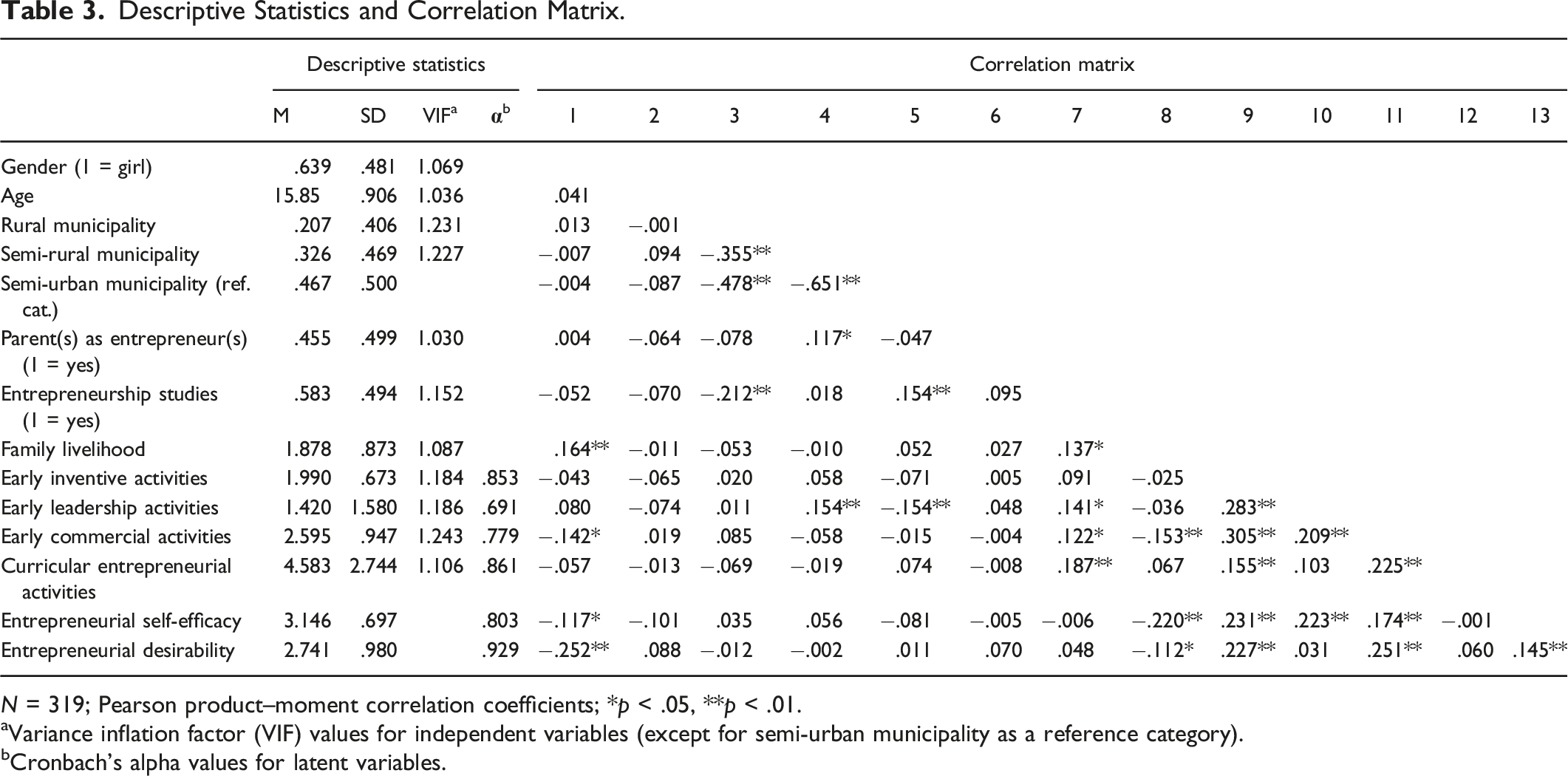
N = 319; Pearson product–moment correlation coefficients; *p < .05, **p < .01.
aVariance inflation factor (VIF) values for independent variables (except for semi-urban municipality as a reference category).
bCronbach’s alpha values for latent variables.
Results
For the quantitative analysis, we applied a two-stage approach (see Anderson and Gerbing, 1988; Hair et al., 2010). Before testing the hypotheses, we analyzed construct coherency (dimensionality, validity, and reliability) using exploratory factor analysis (EFA) with the principal component method and Varimax rotation for all latent variables. The EFA yielded a six-factor solution (KMO = .854, Bartlett’s test <.001) as the best fit for the data, accounting for 64% of the variance, and the item communalities (most above .5), item loadings (most above .5), and item cross-loadings (most below .3) also met the suggested criteria (Costello and Osborne, 2005; Hair et al., 2010). The overall factorial structure was as expected, except in the case of early inventive activities, for which three factors were extracted. However, based on the original conceptual justification of Obschonka et al. (2011), we decided to keep the items as they were and choose a one-factor solution for early inventive activities. Next, the reliability coefficients were calculated (Table 3), and a summated scale was created for each latent variable. In testing the hypotheses, we applied hierarchical multiple ordinary least squares regression. Our analyses show that the variance inflation factor scores were below the cutoff value of 3 (Hair et al., 2010), thus indicating that multicollinearity does not affect the results (Table 3).
Hierarchical Multiple Regression Results.
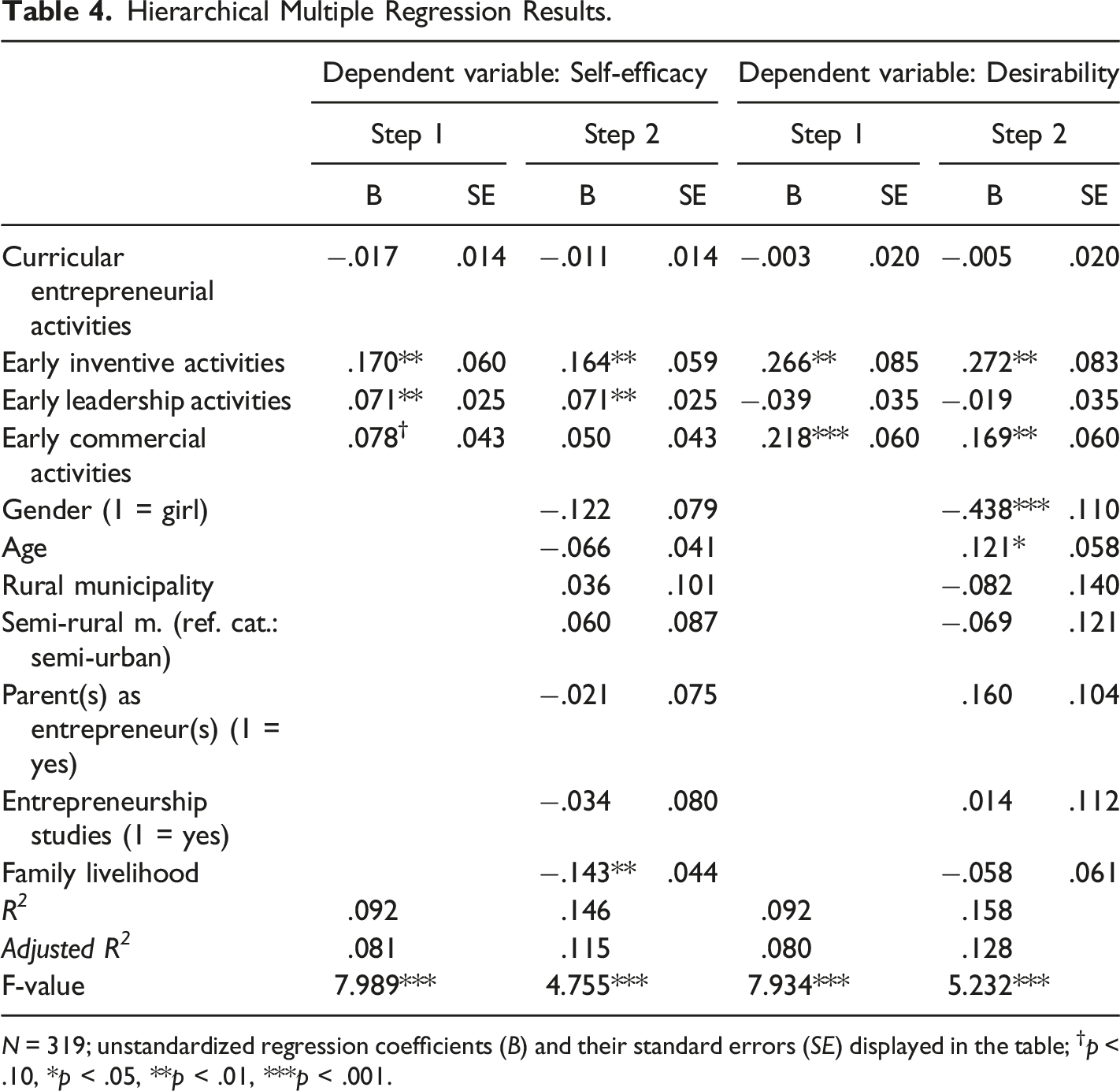
N = 319; unstandardized regression coefficients (B) and their standard errors (SE) displayed in the table; †p < .10, *p < .05, **p < .01, ***p < .001.
Our results also show that curricular entrepreneurial activities were not associated with perceived entrepreneurial desirability (p = .87); thus, H3 is not supported. The results concerning the perceived desirability show that early inventive activities (p < .01) and early commercial activities (p < .001) are significantly associated with desirability, but early leadership activities (p = .26) are not (Table 3). Therefore, H4 is only partially supported.
Discussion
Our study aimed to investigate the impact of curricular and extracurricular entrepreneurial activities on ESE and the desirability of entrepreneurship among rural youth. Building on a mixed-methods approach, our findings show that in rural areas, extracurricular entrepreneurial activities can compensate for the missing pieces of curricular EE. Our results demonstrate that early extracurricular entrepreneurial activities strengthen the perceived ESE and entrepreneurial desirability among rural youth, but contrary to our hypotheses and concurrent research (Bae et al., 2014; Wardana et al., 2020; Wilson et al., 2007), formal curricular entrepreneurial activities are not related to these aspects.
Our findings indicate that curricular entrepreneurial activities (i.e., formal EE) do not enhance ESE and the desirability of entrepreneurship among rural youth. Based on our qualitative study, we conclude that the formal school environment is not perceived as entrepreneurially inspiring and that its role in supporting engagement in entrepreneurship remains insignificant for the youth. This echoes the finding of Hadley (2022) that entrepreneurial knowledge, skills, and attitudes among the youth are largely accumulated through extra-curricular activities, leaving schools to consider that these can more effectively support students’ entrepreneurial learning. This is not to say that EE at school could not influence students’ entrepreneurial aspirations and their future steps on the entrepreneurship ladder; rather, we highlight that formal EE should also pay closer attention to the provision of activities that contribute positively to raising entrepreneurial awareness and attitudes and thus manifesting subsequent entrepreneurial behavior. Recent research has shown that entrepreneurship educators should focus on the possible negative effects of EE, as some pedagogical tools, such as the lean startup methodology, contain an element of experiencing failures, which could result in negative feelings toward entrepreneurship (Bandera et al., 2021). This requires the active measurement of the effectiveness of teaching and student learning (Neck and Corbett, 2018). Our qualitative study suggests that schools could do much more in terms of organizing interesting entrepreneurial workshops and events, for instance, by introducing entrepreneurship as a viable option for students. Therefore, our findings imply that in the rural context, EE should focus on the local environment, its networks, role models, and other stakeholders to become contextually relevant (Blenker et al., 2012; Larty, 2021).
Our findings also demonstrate that extracurricular entrepreneurial activities strengthen ESE and entrepreneurial desirability among rural youth. These informal learning opportunities and hobbies provide adolescents with a unique and natural learning environment for entrepreneurship. Such self-directed activities are meaningful in rural areas for rural youth to create and navigate new entrepreneurial opportunities by witnessing the potential in their local surroundings, earning some money, and subsequently considering staying in the area. Therefore, at best, extracurricular entrepreneurial activities function as external enablers that allow rural youth to evaluate their opportunity-related beliefs (Davidsson et al., 2020) in a local context that is close to them. After all, different localities offer different types of entrepreneurial opportunities (Blenker et al., 2012).
Our findings emphasize that rural EE could make more use of the associated rural locations and should pay more attention to providing activities that have a positive impact on entrepreneurship and are tailored to local needs. One such opportunity for EE could be to help local businesses to involve youth into their operations. Business owners recognize the value of youth to local economies but do not know how to meaningfully engage youth to their businesses to help adolescents gain useful entrepreneurial skills (De Guzman et al., 2020). Moreover, providing ways to experience and exercise autonomy and personal relevance is important for effective EE (van Gelderen, 2010). Our qualitative findings indicate that rural young people view early entrepreneurial activities merely as leisure-time activities that are not challenged by other serious time-consuming hobbies, such as competitive sports. Their attitudes toward entrepreneurship are also uncomplicated and strongly woven together with earning money and being less dependent on their parents. Our findings suggest that extracurricular entrepreneurial activities are important resources for raising awareness regarding one’s own capabilities, for experiencing firsthand the practicalities of enterprising, and for becoming an entrepreneur even as an adolescent. Indeed, extracurricular entrepreneurial activities that support adolescents’ ESE and entrepreneurial desirability at an early age may strengthen their entrepreneurial intentions later in life (Obschonka et al., 2012). We contribute to the field by highlighting the crucial role of extracurricular entrepreneurial activities in shaping young individuals’ perceptions of their entrepreneurial potential and entrepreneurship as a career option. These findings are particularly relevant for rural regions, where the supply of quality employment opportunities in paid work for the youth may be scarce, and entrepreneurship is an option to create employment for oneself and others. Reflecting Jack and Anderson’s (2002) results on the rural context of opportunity formation, our qualitative findings indicate that rural youth are embedded in the social fabric of their rural locations, and, supported by their family and other connections, they are able to find entrepreneurial work assignments in their surroundings even at a very young age. The entrepreneurial extracurricular activities of the youth seem to be naturally interwoven with their social connections and local opportunities. This confirms that entrepreneurship is context specific; it draws on the variety of innate resources available in a place (Korsgaard et al., 2015) and suggests that the living environment of young people shapes their interest in entrepreneurship.
In addition to their contextual implications, our findings contribute to theorizing the precursors of ESE and entrepreneurial desirability during adolescence (Obschonka, 2016). The results highlight that extracurricular entrepreneurial activities and informal exposure to entrepreneurship outside school generate opportune sources for supporting both ESE and entrepreneurial desirability (Krueger, 1993; McGee et al., 2009). Theoretically, this implies that entrepreneurial activities that are close to one’s self-interest give meaning to such activities and facilitate associated motivation and action (Bandura, 1990). Our findings also contribute to studies on adolescents’ entrepreneurial engagement in both curricular and extracurricular entrepreneurial activities. The missing link between formal EE and ESE or entrepreneurial desirability connects our findings to inconclusive results related to EE (Wilson et al., 2007). Adolescents may not yet have clear career ideas or skills that match the requirements of EE; therefore, our findings on how extracurricular entrepreneurial activities enhance ESE and entrepreneurial desirability contribute to the call to address EE at lower levels of education (Nabi et al., 2017).
Our results likewise imply that educators and educational policies should create an environment for the youth to engage in extracurricular entrepreneurial activities. Although such experiences are related to rural youth’s entrepreneurial perceptions, they may later determine whether they will stay in the rural region. Accordingly, creating a local entrepreneurial ecosystem that supports young people’s engagement in extracurricular entrepreneurial activities can help them cope with scarce employment opportunities and seek to create jobs for themselves and even others. Thus, this study has implications for rural entrepreneurship policies and rural EE. The opportunity for adolescents to engage in informal entrepreneurial activities and social networks seems vital to support rural entrepreneurship at an early stage among young people living in rural areas. Such activities not only introduce entrepreneurship as a feasible future career option but also provide prospects to gain financial independence from parents. Local policymakers need to ensure that regional organizations and third-sector actors work with schools to get adolescents involved in meaningful entrepreneurial activities. As an extension of our context, similar policies might also benefit from creating opportunities for youth entrepreneurship in urban areas. For instance, the generation of entrepreneurial ecosystems that support youth entrepreneurship in urban contexts might enable similar local connectivity as we found among rural youth. Furthermore, the role of local farmers and other entrepreneurs in supporting adolescents’ entrepreneurial activities is important for securing the future viability of the region.
The message for education policy is also clear. Schools play a role in exposing students to entrepreneurial activities by providing an arena for students, local entrepreneurs, and third-sector actors to meet. The development of measures and forums through which educators can strengthen their relationships with local businesses and enable students to learn in business settings (Lindh and Thorgren, 2016) should be ensured in rural areas. Educators in elementary schools could engage and encourage pupils to participate in entrepreneurial activities not only through entrepreneurship courses but also through ways that pupils find more appealing, such as interesting workshops, events, competitions, and discussion forums. The boundaries between curricular and extracurricular activities should be kept open and fluid to enable opportunities, for example, for 4H entrepreneurs, to use EE courses for supporting their leisure-time entrepreneurial activities. Finally, while rural schools may be considered disadvantaged against schools in more urban locations, our findings suggest that there are also many opportunities to develop EE practices that are strongly rooted in local contexts. This can be further highlighted if different regional stakeholders with close social networks decide to join forces in supporting the entrepreneurial activities of adolescents and thus the future viability of the region.
Limitations
Our study has certain limitations that provide possible directions for future research. First, our qualitative interview data consisted of adolescents with entrepreneurship experience. This served the purpose of hypothesis building in our mixed-method approach, but it would be interesting to examine in future qualitative studies also the views of those with no entrepreneurship background. Second, our cross-sectional study captured only the associations between ESE and entrepreneurial desirability and their precursors. Although our mixed-methods approach of integrating theory with both qualitative and quantitative empirical data provided a solid ground for theory development and testing, studying the phenomenon in a longitudinal research setting would be useful for gaining more knowledge about the dynamic and interactive influences of the studied precursors of ESE and entrepreneurial desirability. For instance, examining whether their relationships with ESE and entrepreneurial desirability vary over time or whether they compensate for each other at different stages of educational paths could be of interest. A longitudinal research setting would also make it possible to gain more insights into whether the level of ESE (Newman et al., 2019) and entrepreneurial desirability changes over time, which is especially relevant when examining youth whose entrepreneurship is likely to be realized only later in life.
Second, our findings indicate that individuals’ financial well-being could be a possible mediator in explaining the relationship between early commercial activities and ESE. Therefore, future research could address similar mechanisms and potential mediators that transform curricular and/or extracurricular entrepreneurial activities into entrepreneurial attitudes and perceptions.
Third, our study highlights the context-specific nature of extracurricular entrepreneurial activities among rural adolescents. Examining, for example, the role of different stakeholders, such as established entrepreneurs, support organizations, and other members of the local community, in fostering students’ ESE and desirability through curricular and extracurricular activities would be highly relevant. This embeddedness needs to be focused on in future research endeavors. Investigating in depth the practices within the Junior Achievement and 4H programs and how they interact with the other life experiences of young people, such as their family entrepreneurial activities, could be interesting to better understand how adolescents develop ideas for their future careers and preferred living environments.
Fourth, we investigated curricular and extracurricular entrepreneurial activities as antecedents of ESE and entrepreneurial desirability, but future studies would also benefit from examining their impact on subjective norms, which is considered another important cognitive factor influencing entrepreneurial intentions and consequent entrepreneurship (Ajzen, 1991; Liñán and Chen, 2009; Kautonen et al., 2015).
Finally, because our research design focused solely on rural youth, we did not study the possible differences or interaction effects arising from comparing rural and urban areas. These kinds of comparisons could help identify nuances in the relationships between curricular and extracurricular entrepreneurial activities. Our findings show that in rural areas, extracurricular entrepreneurial activities influence ESE and entrepreneurial desirability, but whether such relationships hold in an urban environment remains unclear.
In conclusion, we make an important contribution to the existing literature and identify new avenues for research by theorizing the precursors of perceived ESE and entrepreneurial desirability among rural adolescents. Our findings are relevant for education policy and for both regional and local policymakers, as they inform their decision making.
Footnotes
Declaration of Conflicting Interests
The author(s) declared no potential conflicts of interest with respect to the research, authorship, and/or publication of this article.
Ethical considerations
This study did not require ethical approval as determined by the Finnish Advisory Board on Research Integrity (TENK) at the University of Turku.
Informed consent
Consent was provided verbally by the principals of the selected educational institutions. The first page of the questionnaire included information about the data collection procedure, the research project's aim, anonymity, the confidential use of data (restricted to research team members and only for research purposes), and the contact information of the research team.
Funding
The author(s) disclose receipt of the following financial support for the research, authorship, and/or publication of this article from Ministry of Agriculture and Forestry of Finland / Makera Fund #2046/03.01.03/2017.

Notes
Appendix
Variable
Items
Scale
Curricular entrepreneurial activities (Lackéus, 2016; Souitaris et al., 2007)
‘Think about all your school years so far. Have the following things encouraged you to consider becoming an entrepreneur?’
Dummy, where 1 = some experience and 0 = no experience
The teacher’s views on entrepreneurship
The views of a visiting entrepreneur or a visit to a company
Developing knowledge, skills, and attitudes related to entrepreneurship
Creating something new at school (e.g., an idea, plan, or presentation related to entrepreneurship)
Creating something new for people outside my class
Participation in a program at school (e.g., business village primary school or business village upper school)
Starting a new business at school (e.g., JA company)
Continuation of an entrepreneurial project started outside the school
Extracurricular entrepreneurial activities (Obschonka et al., 2011)
Early inventive activities‘In the following, we are interested in creative activities in your free time. Think about how often you have done the following things.’
Five-point Likert scale, where 1 = never and 5 = very often
Music (e.g., inventing songs or playing melodies composed by yourself using an instrument)
Writing (e.g., writing stories/poems)
Painting (e.g., painting pictures)
Technical constructions (e.g., metal construction kit, soldering, and wiring)
Repair work (e.g., repairing a moped or technical apparatus)
Woodwork (e.g., carving, sawing, and filing)
Cooking (e.g., inventing/trying out new recipes)
Handicrafts (e.g., sewing, embroidering something new, and making pottery)
Gardening (e.g., laying out new patches and planting patches in a creative way)
Magic (e.g., creating new magic tricks)
Chemical experiments (e.g., with chemicals/other materials)
New games (e.g., devising new games)
Decorative work (e.g., flower arrangements and table decoration)
Building something (e.g., a hut or treehouse and making objects out of chestnuts or acorns)
Early leadership
‘What kind of responsible roles have you had at school or in your free time? Answer yes or no to the following points. I have had important tasks…’
Dummy, where 1 = yes and 0 = no
In my grade (e.g., class spokesperson)
In school (e.g., school magazine and school radio)
In a club (e.g., treasurer)
In a youth organization (e.g., scouts)
In a sports team (e.g., team captain)
Other important responsibilities in your leisure time (e.g., singer in a band)
Early commercial activities
‘How often have you done the following things in your free time?’
Five-point Likert scale, where 1 = never and 5 = very often
Selling things (e.g., selling things to friends and selling as a part-time job)
Thinking of things that would sell well
Trading/exchanging things (e.g., swapping stickers with friends)
Perceived entrepreneurial self-efficacy (Wilson et al., 2007)
‘Evaluate yourself in relation to other students in your class in the following areas. Think about whether you are worse or better than them.’
Five-point Likert scale, where 1 = a lot worse and 5 = much better
Being able to solve problems
Managing money
Being creative
Getting people to agree with you
Being a leader
Making decisions
Perceived entrepreneurial desirability (Liñán and Chen, 2009)
‘What do you think about the following statements related to entrepreneurship?’
Five-point Likert scale, where 1 = totally disagree and 5 = totally agree
Being an entrepreneur implies more advantages than disadvantages for me
A career as an entrepreneur is attractive to me
If I had the opportunity and resources, I’d like to start a firm
Being an entrepreneur would entail great satisfaction for me
Among various options, I would rather be an entrepreneur
Age
Continuous variable with a range from 13 to 19
Gender
Dummy, where 1 = girl and 0 = boy
Home municipality
Categorical, where 1 = rural municipality, 2 = semi-rural municipality, and 3 = semi-urban municipality
Entrepreneurship studies (mandatory or voluntary)
Dummy, where 1 = yes and 0 = no
Perceived family livelihood
Five-point Likert scale, where 1 = our livelihood is excellent and 5 = we need to compromise financially on almost everything
Parent’s engagement in entrepreneurship
Dummy, where 1 = one or both parents are or have been entrepreneurs and 0 = parents have no entrepreneurial experience