




Abstract
This article explores the political economy of groundwater-led agrarian transformation in dryland India through the expansion of groundwater irrigation and rice production since the 1990s. Within this process, I speak to aspirations by subsistence farmers and imaginaries by state governments for agricultural commercialisation via expanding and investing in irrigation infrastructures. In India, this has largely been driven by private and decentralised investments by smallholder farmers. Theoretically adding to the literature on water infrastructures, development aspirations and groundwater governance, I find how farmer aspirations of rice cultivation and associations of the crop with food security and status drove the debt-laden and capital-intensive rapid adoption of groundwater irrigation in dryland Telangana, aided by specific discourses and electricity subsidies policies post the formation of the newest state in India in 2014. I find that political discourses of historical inequalities over water in the struggle for state formation of Telangana in 2014 mobilised electricity subsidies as a key lever to re-imagine the state as a rice bowl of India through groundwater expansion, producing uneven political economy and ecological repercussions for farmers. This article finds that while rice production increased in a short period in Telangana, it came at the expense of widespread well failures and indebtedness at the farmer and village level colliding with the fragile semi-arid climate and hard rock aquifer setting in the state, deepening distress and decay from depleted water infrastructures and failed aspirations.
Introduction
For much of India's history, rainfed agriculture was excluded in agricultural policies in favour of building canal irrigation in fertile regions for large landholder classes and castes that became the centre of the Green Revolution in rice and wheat production (Bharucha, 2019; Harriss-White and Janakarajan, 1997). However, since the 1990s liberalisation era, a particular mix of policies and reforms have accelerated the expansion of groundwater irrigation in transforming agriculture in dryland India.
The ‘groundwater revolution’ has created a larger irrigated area in India in the last 50 years than centralised public canal investments managed since 1830 (Shah et al., 2021), spread over 20 million wells, of which 87% are owned by smallholder farmers (Ministry of Water Resources, 2017). Groundwater extraction predominantly relies on submersible electric motor pumps extracting invisible and diffusely spread water from cracks in sub-surface rocks and reservoirs known as aquifers through pipes to irrigate fields (Medrano-Pérez et al., 2022). Compared to canal irrigation, groundwater infrastructures are often decentralised, with private investments made by farmers with the exception of rural electrification and electricity supply to power pump motors (Vasavi, 2020). Recent estimates suggest groundwater irrigates 49% of the rice and 72% of the wheat grown in India today (Smilovic et al., 2015). Out of 29 states in India, around one-third provide electricity subsidies to promote groundwater expansion for water-intensive crops (Fosli et al., 2021). However, over two-thirds of groundwater aquifers in India are in shallow groundwater capacity hard rock aquifers, as well as featuring erratic monsoon rainfall making recharge intermittent and drilling into aquifers expensive due to the density of the rock relative to alluvial aquifers (Blakeslee et al., 2020; Mukherjee, 2018; Shah, 2010).
In the background of credit, irrigation liberalisation policies in the 1990s, millions of decentralised, informal debt-laden private investments into groundwater pumps and drilling wells drove the territorialisation of groundwater-irrigated rice in hitherto subsistence, dryland India. Building on insights from Birkenholtz (2009a, 2009b, 2017, 2022) on the coalescence of state policy and individual farmer decision-making in the rollout of groundwater technologies in northern India, this article further shows how individual aspirations infused into groundwater investments for rice cultivation by farmers are bound up with state government electricity subsidy policies and political imaginaries for creating new territories of groundwater driven rice expansion. Imaginaries in this article are taken to mean ‘collectively imagined forms of social life and social order reflected in the design and fulfilment of nation specific scientific and/or technological projects’ (Jasanoff and Kim, 2009: 120).
Theoretically, I speak to and contribute to the literature on water infrastructures, development aspirations and Indian groundwater governance within the broader processes of agrarian growth and change. More specifically, I draw on Boelens et al.'s (2016) concept of hydrosocial territories that is attendant to the fact that water contains not only physical properties but is managed and controlled through water infrastructures which affect political and cultural processes that inform norms and practises of how water is used and changes space itself (Linton and Budds, 2014; Swyngedouw, 1999). This concept can be applied especially to agrarian development in India, where for instance the drilling, extraction and pumping of groundwater from millions of individual irrigation well infrastructures materially change cropping patterns and groundwater flows, and discursively change social, political and environmental relations within a territorial space (Birkenholtz, 2009b, 2022). These are in flux between the materialisation of policies and aspirations/imaginaries by a range of actors, from politicians and bureaucrats to the everyday interaction with water infrastructures by farmers (Hommes et al., 2022; Jasanoff and Kim, 2009).
This article examines the political economy of groundwater-led agrarian transformation of the south Indian state of Telangana. Telangana was a historically rainfed, semi-arid subsistence agricultural region within the united state of Andhra Pradesh. Fertile and coastal parts of Andhra Pradesh benefited from a colonial legacy of canal infrastructure, making it a key site for a Green Revolution in rice in the 1960s–1970s and consolidation of political and economic power (Prasad, 2015). Inequalities in water, channelled through the historic neglect of irrigation development formed a pivotal impetus for a separate statehood for Telangana. The agitation became a reality on June 2nd, 2014, when Telangana became the 29th and newest state in India (Benbabaali, 2016). For the spearhead of the Telangana movement, new Chief Minister Kalvakuntla Chandrasekhar Rao (KCR), a rapid expansion of groundwater irrigation infrastructure adoption by farmers via subsidy incentives was a central part of realising his goal for Telangana to accelerate towards becoming the ‘Rice Bowl of India’.
In a political address in 2020, KCR proclaimed: India's youngest state, once described as the most backward and parched, is on the way to emerge as the new rice bowl of India. (Live Mint, 2020: 1)
I situate the paper's research in Telangana through ethnographic research conducted over eight months of fieldwork in 2018–2019 in Kavarampur 1 village in Nalgonda district, south Telangana. I argue that in erstwhile rainfed Kavarampur, groundwater adoption increased to 69% of households from 2000 to 2018 due to cultural aspirations from below of status and success associated with producing and consuming the crop, as well as food security. Simultaneously, I analyse how new groundwater territories in Telangana for KCR were forged from a development vision of breaking free from a historically rainfed agrarian region within Andhra Pradesh towards groundwater-driven intensive rice cultivation, enabled by his flagship free 24 × 7 electricity scheme. Over 20 years however, 89% of the 215 wells drilled in Kavarampur failed even after monsoon recharge in August 2019, as only 10 households fulfilled their aspirations in cultivating rice. In linking rapid groundwater expansion in dryland India and groundwater depletion and indebtedness for farmers, I show the ways in which infrastructures are not spatially nor temporally concretised out of positive aspirations of futurity but can also be suspended through decay, failure and ruin (Anand et al., 2018).
In this article I therefore try to understand (1) how and why has groundwater irrigation reconfigured the agrarian landscape of Telangana from a dryland state into a leading rice-producing state in India (2) how has this process of groundwater infrastructuring emerged from the political economy of aspiration for food security by farmers and imaginaries for the Telangana state respectively and (3) what are the repercussions of this political economy of agrarian change for the everyday material lives of farmers in Telangana?
The rest of the article is structured as follows. First, I unpack the theoretical underpinnings of water infrastructures, development aspirations/imaginaries and groundwater governance within the political economy of agrarian change in India, engaging with this literature to address their gaps. Second, I add context to the groundwater transformation of rural India before introducing the Telangana empirical context and methods. Third, I empirically and theoretically analyse groundwater adoption in Kavarampur. Finally, I situate groundwater in Telangana back within debates on water, power and rural development.
Water infrastructures
Critical scholarship on water in geography since the turn of the millennium has sought to reconceptualise water as hydrosocial, that is, how water and human societies reciprocally shape each other through different scales and times in the process of capitalist accumulation and development. Swyngedouw's (1999) chronicling of the intersection of water and power in the creation of hydraulic infrastructures in Franco's Spain problematised the singular role of humans controlling water and shaping nature, pointing out that in fact ‘water and power are mutually constitutive’ (Loftus, 2009: 959). Water is co-constituted via its material properties (flow, quality, and density) which influences society (social hierarchies, power, cultural meanings of water in different scalar configurations) and then gives rise to technology which is deployed to control water (Swyngedouw, 2009). Linton and Budds (2014) further developed the theorisation of water in their formulation of the hydrosocial cycle. They point to how water is mutually shaped by the physical properties of water, water infrastructures and the uneven social, political, economic and cultural processes which also influence its control and distribution across different scales under capitalist accumulation.
An analogous theorisation of water by Boelens et al. (2016) is the idea of hydrosocial territories, namely the spatial configuration of the control of water and the contestations that occur in the making of it – involving institutions, cultures, technologies, politics and the biophysical environment (ibid). Territorialisation is the ongoing process of contestation and construction of space through flows of water infrastructures as well as the material objects that exist in them (Artiga-Purcell, 2022). The materialisation of territory for Hommes et al. (2019) is the processual conflict between different conceptions, meanings and interests over space between actors.
To help us understand the role of meanings, discourses and aspirations attached to water infrastructures, it is useful to engage with the recent geographical and anthropological literature turn in the study of infrastructures (Anand et al., 2018; Barnes, 2017; Crow-Miller et al., 2017). Infrastructures are objects through which ideas, people, and goods flow, and in turn infrastructures confine, enable, or reshape these flows and processes (Larkin, 2013; Lawhon et al., 2018). This has been important in reconceptualising infrastructure as an amalgamation of temporal and spatial embeddedness of the evolution of the state, informal institutions and individuals who transform nature and society in combined and uneven ways (Anand et al., 2018). Applied to water, Linton and Budds (2014) view the flows of water in infrastructures as mirroring flows of power, repatterning societies and the environment (Crow-Miller et al., 2017). Power over water infrastructures however as Birkenholtz (2017) observes is never linearly applied between the individual and the state, and neither is the aspiration for modernity always fully realised or fixed.
Water in the form of irrigation creates new horizons by allowing certain new cropping patterns to emerge out of rainfed subsistence systems, with implications for food and income (Akber et al., 2022). Technologies shape farmer aspirations in the economic promises of prosperity they are embodied with – success, affluence, and self-respect (Shah, 2012). The risks that farmers take to invest in commercial agriculture and irrigation are burdened by political and economic constraints to escape poverty and aspire towards a material possibility of a good life (Flachs, 2019). Jakimow (2014) uses the allegory of a casino for describing subsistence farmers’ tryst with commercial agriculture – when the conditions are right, farmer's aspirational and economic risks pay off. Yet when it goes wrong due to market price fluctuations or the vagaries of pests or climate (Karamchedu, 2023), aspirational possibilities remain out of their reach, and the opportunity for wealth, status and disassociation from the grounded experience of poverty is ripped away again.
A key part of infrastructuring (Birkenholtz, 2022) is the struggles over different imaginaries and epistemics of water and development. As Appel et al. (2015: 1) explain, ‘at the same time as they promise circulation and distribution, these precarious assemblies also threaten breakdown and failure. As such the material and political lives of infrastructure reveal fragile relations between people, things and the institutions (both public and private) that seek to govern them’. For example, Mehta (2001) in her analysis of dam projects in Gujarat, India explains how techno-bureaucratic epistemics by dam engineers and politicians delimited the solutions to water scarcity to expanding water infrastructures. She noted how it occluded alternative, long practised and rooted realities of water management by farming communities who negotiated rainfed farming prior to dams (ibid). Water infrastructures are the reflection of multiple aspirations, imaginaries, discourses and behaviours in the mutual intertwining of flows of water, power and human action. Damonte and Boelens (2019) for example situate mega hydraulic infrastructures in coastal Peru as the pinnacle of economic development to fix water scarcity and boost agro-export production in a dryland area. Water infrastructures are reified through political discourses of power that imbue dams with expanding agrocapitalist production and water control. Damonte and Boelens (2019) refer to this process as power-through water. As Birkenholtz (2017) reminds us then, the relations between governments and individual farmers should not be assumed as hegemonic but an emergent process of technology adoption which has divergent and complex meanings, relations and artefacts associated with the flows of water. The expansion of irrigation technologies encompasses an assemblage of actors, incentives and interests ranging from government policy visions to individual farmer aspirations, broadly construed as the political economy of aspiration and part of agrarian growth under capitalism.
Within this article, I explore the temporal and spatial political economy of agrarian transformation in which farmers, technology and the state interact in the rollout of groundwater-irrigated rice production in dryland India. Rather than farmers being in contestation against or beholden to state actors in the process of irrigation expansion, I show how in dryland India, water infrastructures are deeply entwined with individual farmer meanings and desires for status and success, linked to the cultivation of rice via millions of private, decentralised investments into wells. At the same time, I show that groundwater irrigation expansion has been purposefully channelled through electricity subsidies as a means to an end to remake the agrarian imaginary of Telangana from a backward, rainfed state pre-independence to a leading rice producer in India.
In the next section, I examine the literature on the politics of groundwater expansion in India, where energy subsidies play a large role in incentivising groundwater expansion. Adding to the work by Hommes et al. (2022), I show that the effects of materialising these imaginaries in water infrastructures generate unpredictable outcomes for ecology, politics and development that upend neatly planned discourses of linear agrarian development and control over biophysical systems.
Groundwater and agrarian change in India
Approximately 43% of the world's irrigated land is dependent on groundwater (Zwarteveen et al., 2021). India is the world's largest consumer of groundwater, contributing to almost two-fifths of global annual consumption for irrigation and drinking purposes and primarily driven by smallholder farmers (Gleeson et al., 2019). Groundwater had several advantages to surface irrigation, namely the on-the-spot access of water requiring little transportation, individual access to a water source when needed, and water storage in aquifers in times of drought (Shah, 2010).
The policy impetus for private groundwater expansion in agriculture in India took off in the 1960s amidst support from international donors, financial institutions and public investments in low-cost loans for individual farmers to invest in wells to grow Green Revolution irrigated wheat varieties (Subramanian, 2015). Individual groundwater investment however was nonetheless limited to only upper caste large landholder farmers as prices for drilling and pump costs were up to $10,000 in the 1970s (Freed and Freed, 2002). As shown by Figure 1, in the 1970s, groundwater-irrigated areas in India stood at approximately 12 m ha, but at this stage in India only 23% of the cultivable area was irrigated (Directorate of Economics and Statistics India, 2023b). As late as the 1980s, 90% of all Indian government spending on irrigation projects was dedicated to large-scale dams (Shah, 2010). Politically and economically, the decision to pursue the top-down public infrastructure model became untenable in the 1980s following large-scale political unrest and protest movements against the human cost of dam projects (Shah and Boelens, 2021). In the 1980s, the shift in emphasis by the Indian government towards decentralised, individualised and privatised irrigation investments brought groundwater to the fore in irrigation policy (Shah, 2010). In the 1990s, tubewell area rapidly increased to overtake surface irrigation area for the first time at approximately 17 m ha, aided by specific processes and policies in the liberalisation era.
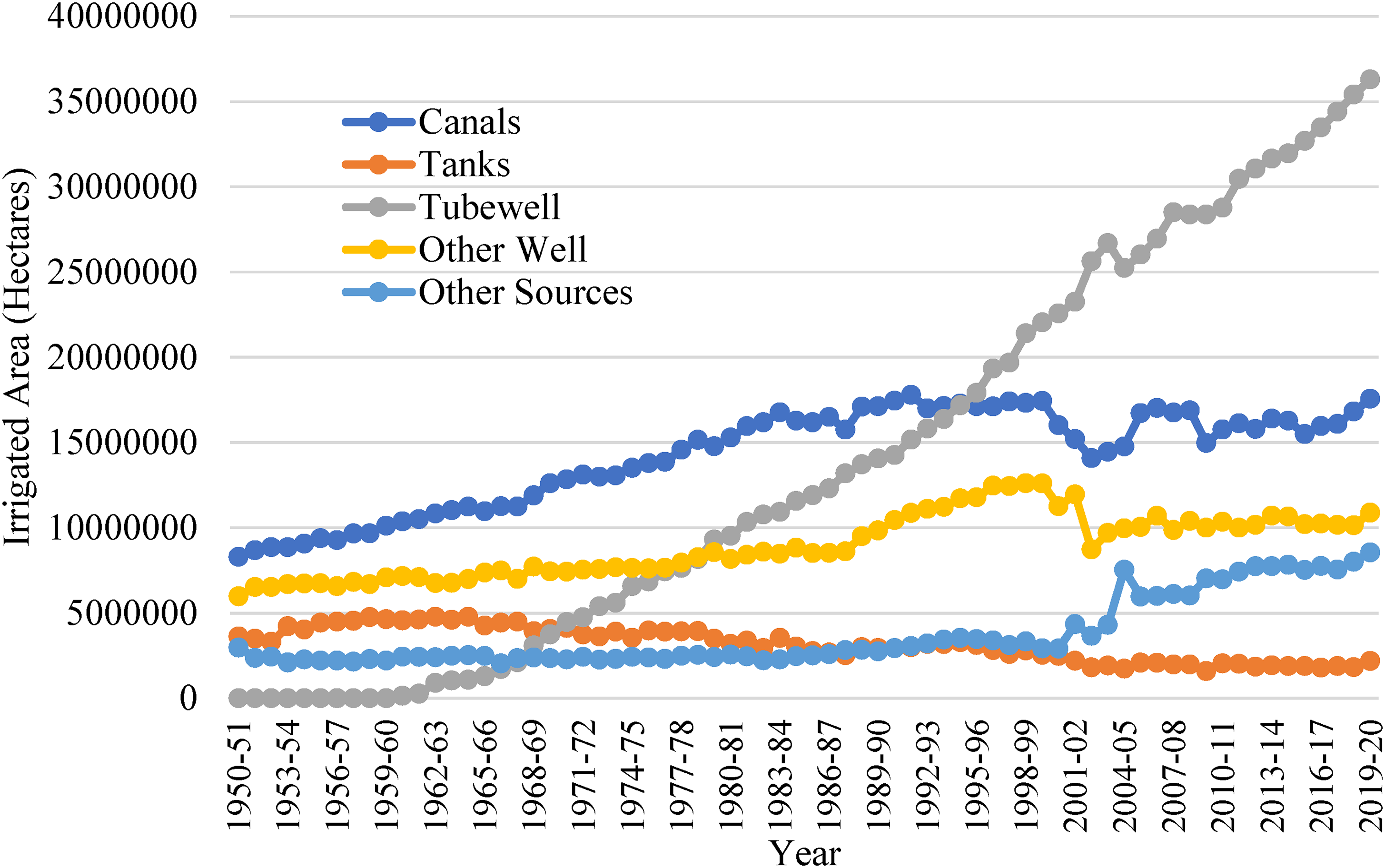
Irrigated area by source in India 1950–2020. Source: Directorate of Economics and Statistics India (2023a).
Price competition between irrigation firms that sold pumps, pipes and drilled for groundwater drove down well prices between the 1970s and 2000s from the equivalent of $10,000 to $1000 for drilling and pumps (Jacoby, 2017). Moreover, submersible pump technologies and imports also proliferated during the decade in variety and price (Narayanamoorthy, 2015). In addition, the increased availability of informal credit made wells accessible for smallholder farmers without sufficient collateral (Vasavi, 2020). The transformation of drylands into irrigated agriculture also shifted cropping patterns towards cash crops, ‘democratising’ irrigation access (Hoogesteger and Wester, 2015; Taylor, 2013). Shah et al. (2021) estimated the groundwater irrigated economy at $55–60 billion in 2010, 70% of total irrigated agricultural output. Between 1990 and 2015, 90% of the total irrigated area created in India was by groundwater (ibid). 87% of all wells in India in 2013 were owned by smallholder farmers (Ministry of Water Resources, 2017). By 2020, the groundwater irrigated areas stood at over 47 m ha, helping increase the total irrigated area as a share of the cultivable area to 53% (Directorate of Economics and Statistics India, 2023b). Groundwater expansion therefore reshaped the agrarian landscape in dryland India by enabling millions of rainfed farmers to transition to irrigated, cash-crop agriculture (Narayanamoorthy, 2015).
The key political development to enable groundwater expansion was electricity subsidies, justified by state governments as a socio-technical tool for alleviating drought and indebtedness in dryland India (Birner et al., 2011). In the early decades of groundwater development in the 1970s, the extent of adoption was limited by low rates of rural electrification, as state government electricity boards would charge market rates for electricity to power groundwater systems via metering electricity use (Subramanian, 2015). A critical juncture in Indian politics of competitive state-level party systems simultaneously emerged. Rural classes of farmers that had benefited from the Green Revolution in the 1960s in Punjab, Haryana, Uttar Pradesh and Andhra Pradesh began lobbying for subsidies in inputs, water and electricity, following two decades of diminishing returns from agriculture (Fan et al., 2008). The three demands of ‘bijli, sadak, pani’ (electricity, roads, and water) came to occupy a dominant vote-winning option for political parties (Badiani et al., 2012). In 1977, the Congress party in the south Indian state of Andhra Pradesh became the first in India to subsidise electricity for groundwater, on the grounds of poverty alleviation for dryland farmers (Birner et al., 2011). Rural electrification in the 1980s and 1990s was also key to groundwater expansion, as electrified villages in India saw an increase of 54–144% in private irrigation pump installation between 1982 and 1999 (Smith and Urpelainen, 2016). In India, 85% of groundwater pumps rely on electricity (Ministry of Water Resources, 2017).
Electricity subsidies were also a political and governance solution to groundwater. Voting blocs could be placated and the unviable costs of metering, regulating and collecting electricity revenues from the rapidly rising groundwater adoption could be overcome with a subsidised flat tariff (Sishodia et al., 2016). For instance, in 1998, as Taylor (2013) explains, the Andhra Pradesh TDP Chief Minister, backed by the World Bank, proposed electricity pricing for groundwater as part of liberalisation reforms, but thousands of farmers protested throughout the state to force a policy reversal back to subsidised electricity by 2000. By the next state elections in 2004, the ruling party lost, and the winning Congress party gained power based on their electoral promise of 7 h of free electricity per day for groundwater users (ibid). Electricity subsidies for groundwater irrigation in India increased by 16 times between 1980 and 2018 to $18bn per year (Akber et al., 2022; Shah et al., 2021). As of 2021, nine states in India had free electricity policies (Fosli et al., 2021).
Yet, 66% of the groundwater area in India is underlain by hard rock aquifers (Mukherjee, 2018) and features a semi-arid climate, where rainfall is scarce. In hard rock aquifer areas, groundwater availability is highly unpredictable, and aquifers have a low storage capacity, so groundwater is found in limited quantities in fissures in the rock, requiring multiple drill attempts to successfully extract groundwater (Hora et al., 2019). Low aquifer storage can be depleted by erratic monsoon seasons and an increase in the number and density of wells drilled, intensifying demand for the same aquifer. In addition, the high capital investments for the irrigation system are often financed by smallholder farmers through informal, high-interest credit, whose repayment structures heavily rely upon irrigated cash crop agriculture (Taylor, 2013).
In Figures 2 and 3 by Rajan et al. (2020: 268, 277), we see that the highest densities of groundwater extraction, deepest tube-wells and most overexploited aquifers in India are located in nine states and 27 districts of India where electricity for groundwater irrigation is subsidised the heaviest to grow water-intensive crops, e.g rice or sugarcane. This zone of groundwater extraction in India is responsible for 65% of the groundwater depletion in the country (ibid), indicating that aquifer properties, electricity subsidies, cropping patterns and changes in groundwater depletion are both the cause and consequences in the process of ecological and political economy changes in Indian agriculture since the expansion of groundwater irrigation in the 1990s (Birkenholtz, 2017).
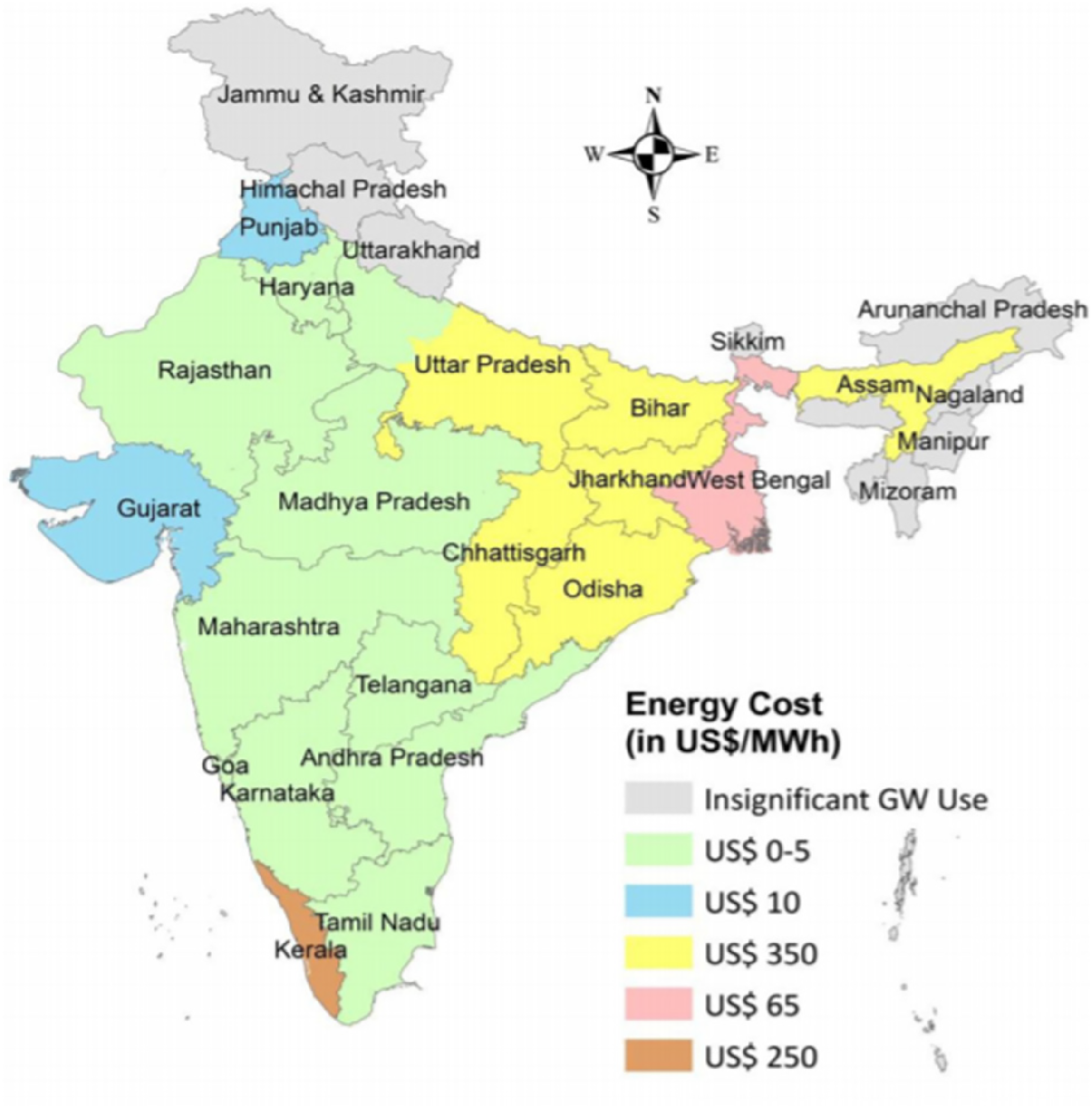
Electricity subsidies in India. Source: Rajan et al. (2020: 268).
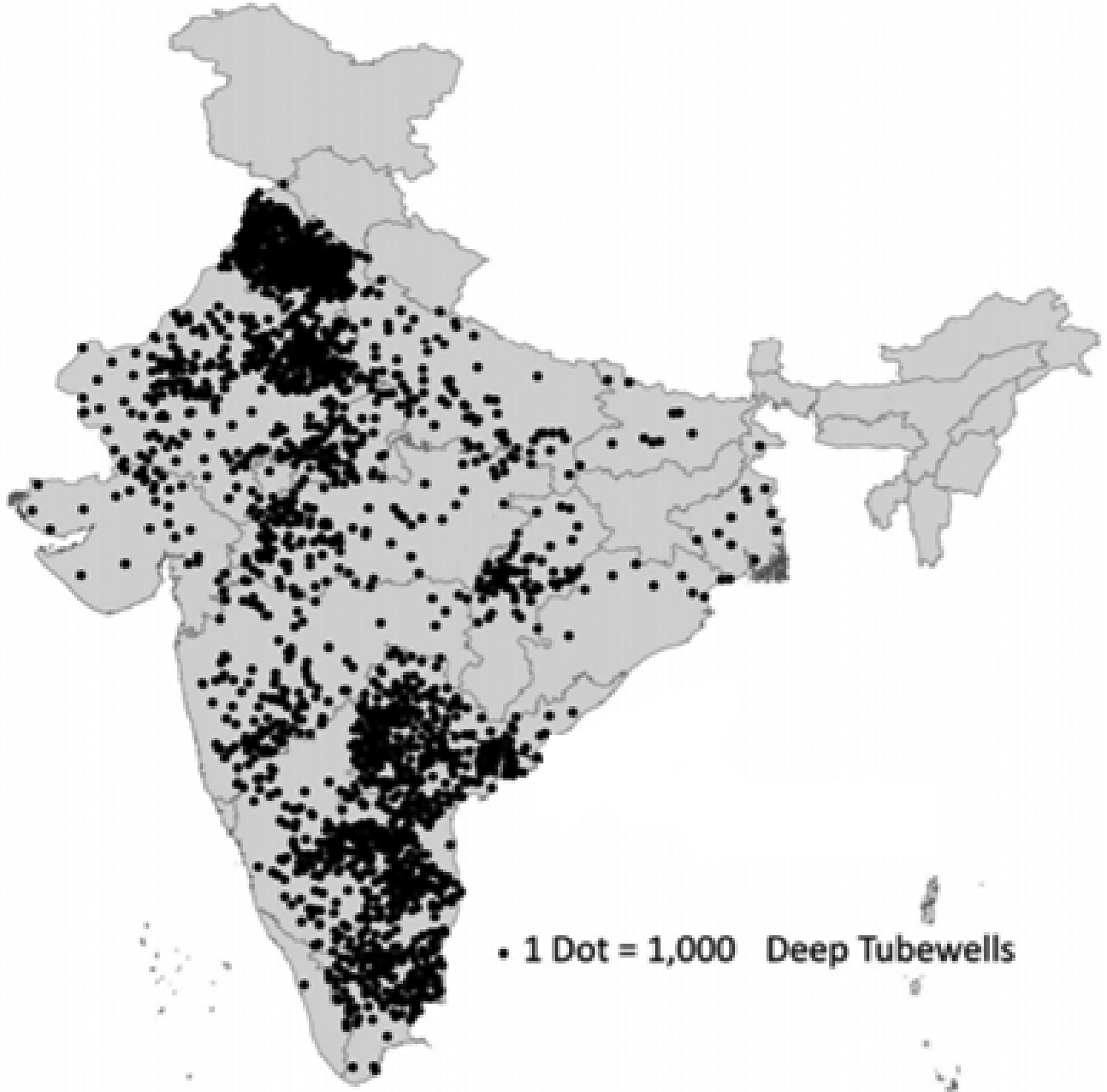
Tubewell density in India. Source: Rajan et al. (2020: 277).
Electricity subsidies have exacerbated groundwater depletion and electricity consumption in India, forming what Dubash (2002) calls the ‘energy-irrigation nexus’. From the farmers’ side, the desire to improve profitability from irrigated cash crop agriculture, availability of cheap credit and nominally ‘free’ extraction costs in India have unfortunately deepened socio-ecological vulnerabilities, driving them to competitively drill for groundwater to recoup their investments in inputs and irrigation technologies (Sishodia et al., 2017). This highlights how water users and water itself are not separate entities but mutually constituted and organised in a given setting and policy environment (Hoogesteger and Wester, 2015; Swyngedouw, 2009). As Birkenholtz (2017: 666) summarises, groundwater expansion has taken place in a political economy which has intensified irrigation extraction amidst ‘little or no regulations over groundwater use and/or with little promise of achieving them’. Nature–society–technology interactions in groundwater irrigation are driven by the logics of capital accumulation and expansion amidst uneven relations between governments and farmers (ibid).
In this article, I address the following gaps in the literature. First, unlike in case studies in India by authors such as Birkenholtz (2009a) where the pursuit of groundwater irrigation was towards cash crop cultivation, in the case of Telangana I demonstrate that the ascription of success and status with household-focused rice cultivation was the driver to expand groundwater irrigation. Second, I focus on how the Telangana government has utilised electricity subsidies for groundwater expansion as a way to create an imaginary agrarian transformation after state formation. Literature has thus far extensively discussed the role of water scarcity narratives necessitating governments to pursue capitalist accumulation goals within large dam infrastructures (Crow-Miller et al., 2017; Mehta, 2001). In this article, I study the discourses on historical dryland backwardness from the state government in Telangana, to show how groundwater irrigation expansion incentives were a way to re-territorialise Telangana physically and historically as a key rice-producing state in India. The decentralised expansion of groundwater in dryland India and millions of private debt-based irrigation infrastructure investments by farmers have occurred much faster than centrally planned dam projects, hence the economic and environmental ramifications for farmers in dryland landscapes in the remaking of Indian society are pertinent to study. Next, I introduce the methods and empirical context of Telangana, before theoretically and empirically analysing the political economy of groundwater-led agrarian transformation in Telangana.
Methods and empirical context
For the research, I conducted mixed methods ethnographic fieldwork in the state of Telangana, south India, made up of 94 interviews and 151 household surveys over nine months in 2018–2019. Most of the research took place with farmers in the village of Kavarampur, Nalgonda district. Alongside this, I drew on supplementary interviews with rural development NGOs, academics, groundwater policy makers and irrigation firms in Hyderabad, the capital city of Telangana and in rural peripheries to Kavarampur in Dittam 2 and Mallonda 3 . I also extensively used secondary Telangana and Indian government data on groundwater irrigation and cropping patterns, as well as online archival groundwater policy documents and press releases from the Chief Minister KCR's press office in the government of Telangana.
Telangana is dominated by smallholder farmers owning under 2 ha of land and features a dryland climate, which makes up around half of India's cultivable area (Pankaj et al., 2020). Telangana receives 70–80% of its 500–800 mm annual rainfall in the monsoon over only an average of 47 days from June to September (Government of Telangana, 2021). Most of Telangana is comprised of hard rock aquifers, as seen in 66% of India's aquifer area (Mukherjee, 2018), making it unsuitable for intensive groundwater development, something recognised by policymakers as early as the 1960s (Rao, 2014). Temperatures of up to 50°, high rates of evapotranspiration, and frequent droughts are common. Finally, laterite soils cover 85% of the state, which are difficult soils for cultivation due to their low fertility, infiltration capacity from rainfall and subsequent problems with high runoff rates (Central Groundwater Board Telangana, 2023)
The justification for choosing Telangana as a research site is its transformation from a dryland area into a groundwater and rice-cultivating state, and the critical role of struggles over water forming a key part of its politics for independent statehood in 2014 (Prasad, 2015). Telangana was dominated largely by rainfed food crops such as millets and sorghum for consumption and fodder, and its irrigation infrastructure was relatively neglected within a united Andhra Pradesh (Reddy et al., 2014).
As shown by Figure 4, groundwater irrigation was dominated by rudimentary dug wells until the 1990s which on average could only irrigate up to 2 ha of cultivable land and extract groundwater from 15 m depths (Ministry of Water Resources, 2017). Powered by oil or diesel engines, dug wells were limited to richer classes of farmers as drilling and pump costs for groundwater in the 1970s were equivalent to $10,000 per household (Freed and Freed, 2002). However, despite the presence of groundwater, even late as 1987, only 24% of Telangana's cultivable area was irrigated, and rice occupied 22% of the cultivable area (Directorate of Economics and Statistics Andhra Pradesh, 2006) so most farming was rainfed, with farmers growing subsistence food crops such as millets for household consumption and livestock fodder.
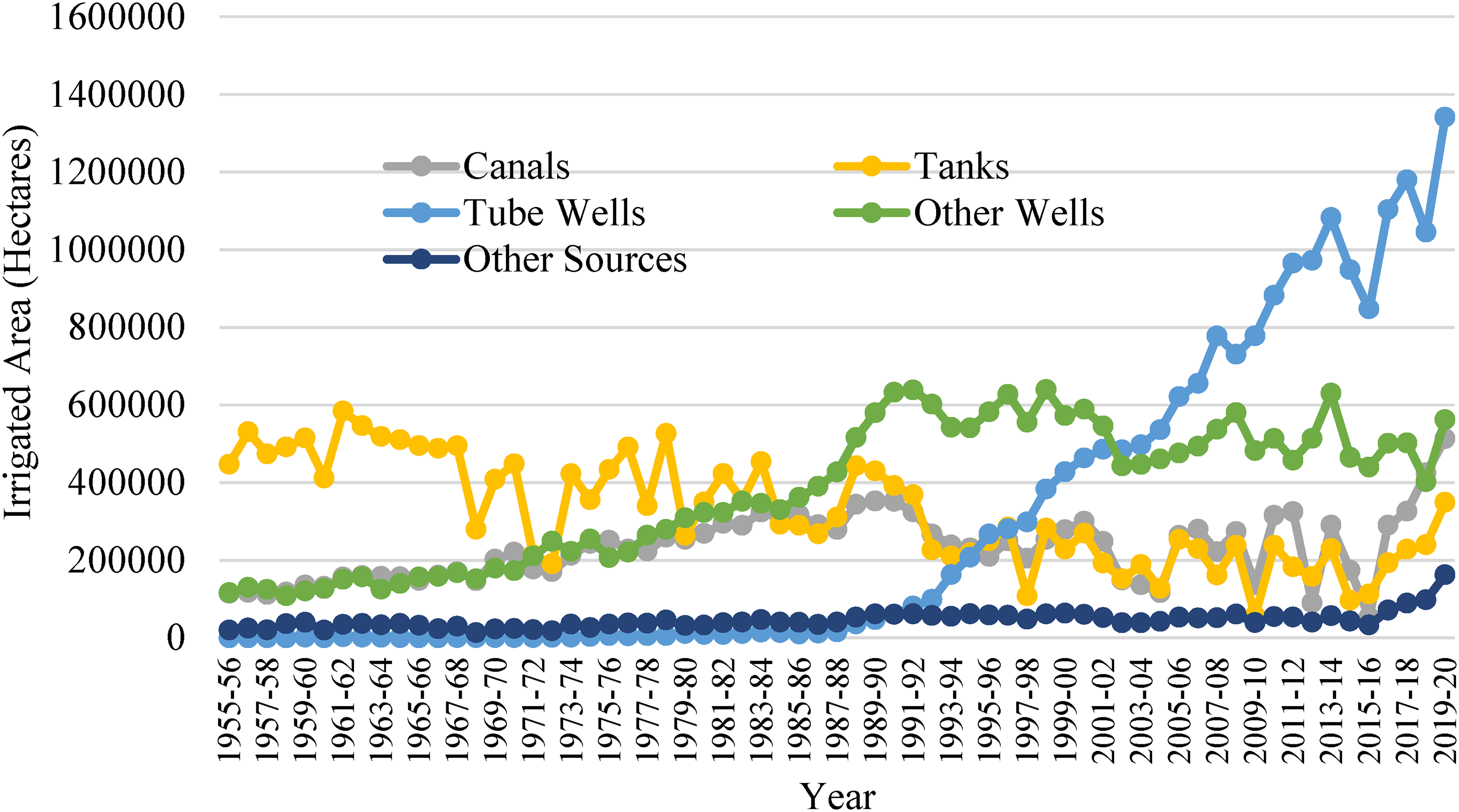
Irrigated area by source in Telangana 1955–2020. Source: Directorate of Economics and Statistics Andhra Pradesh (2006); Directorate of Economics and Statistics Telangana (2016); Directorate of Economics and Statistics India (2023a).
Economic liberalisation in the 1990s in credit and irrigation sectors provided the impetus for rainfed smallholder farmers to rapidly invest in groundwater to grow crops such as rice (Fosli et al., 2021). Tubewells, powered by electric submersible pumps, came to dominate the agrarian landscape from the 1990s onwards, as Figure 4 shows that tubewell irrigated area increased by almost 7× to almost 1.4 m ha by 2020 while other sources stagnated in this period of 30 years. Groundwater via tubewells was responsible for over 65% of Telangana's cultivable area to be irrigated by 2022 with rice occupying 50% of the cultivated area (Government of Telangana, 2023). Groundwater is the biggest irrigation source in Telangana as of 2022, contributing to 65% of the total irrigated area, of which 80% is owned by smallholder farmers (Government of Telangana, 2023; Ministry of Water Resources, 2017). The expansion has also been supported by successive electricity subsidy schemes in united Andhra Pradesh and continuing in Telangana, such as the 2018 24 × 7 free power policy for groundwater by KCR, incentivising the further expansion of groundwater and rice for Telangana's agricultural development.
Kavarampur village is located in Nalgonda district in south Telangana (see Figures 5 and 6). The village is 15 km from the town of Dittam, and 110 km from Hyderabad, the state capital. It is home to 155 households and has a similar semi-arid climate as Telangana, receiving approximately 80% of the total annual rainfall in the monsoon of approximately 460 mm (Government of Telangana, 2021). Most farmers were rainfed prior to groundwater access, as the village was located 55 km from the nearest canal command area. Rural electrification efforts in Kavarampur in 1999/2000 enabled groundwater access and adoption for the first time, a decade later than the rest of Telangana. Rural electrification is crucial as 92% of groundwater irrigation infrastructures in Telangana are reliant on electricity (Ministry of Water Resources, 2017). Kavarampur is populated by low caste and class other backward castes (OBC), scheduled tribes (ST) and scheduled caste (SC) groups, who make up nearly 90% of Telangana's agricultural population (National Sample Survey Organisation, 2021). Historically, members of these castes had comparatively low land sizes of under 2 ha, high poverty and low literacy rates to upper castes. In Kavarampur, the average landholding was 1.2 ha and adult literacy rates were less than 20%, with annual household incomes of approximately $2000. The village leader or sarpanch and the largest farmer in the village with 5 ha were both OBCs. Farming was a primary occupation in the village, growing a mix of Bt cotton and rice in the monsoon season from June to October. In the dry season, farmers migrated to Hyderabad or nearby Dittam town for daily wage labour in construction and agricultural labour to canal-irrigated Andhra Pradesh. Twenty farming households also owned buffalo for selling milk and some OBC households reared sheep/goats for sale and sold palm wine.
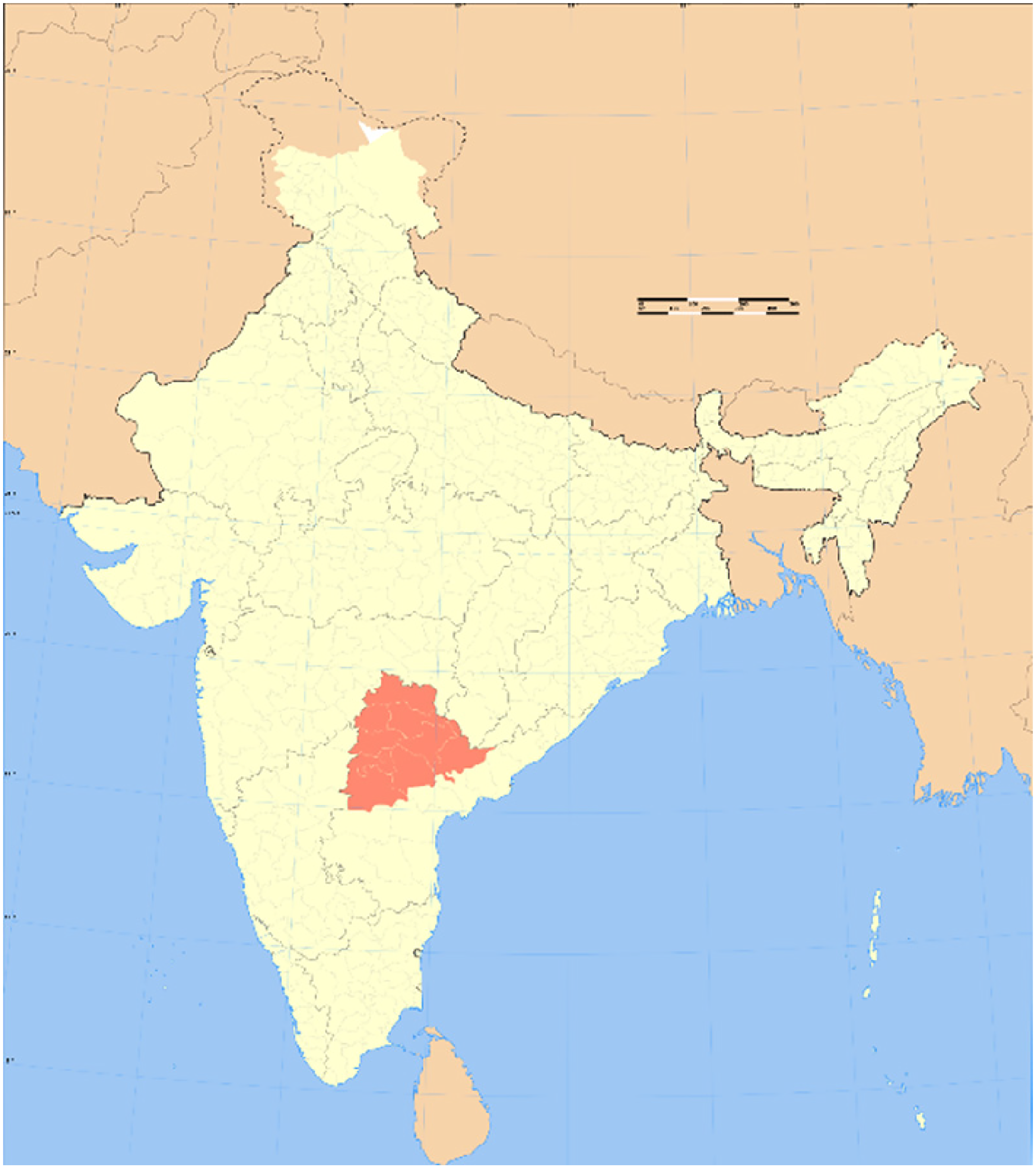
Telangana.
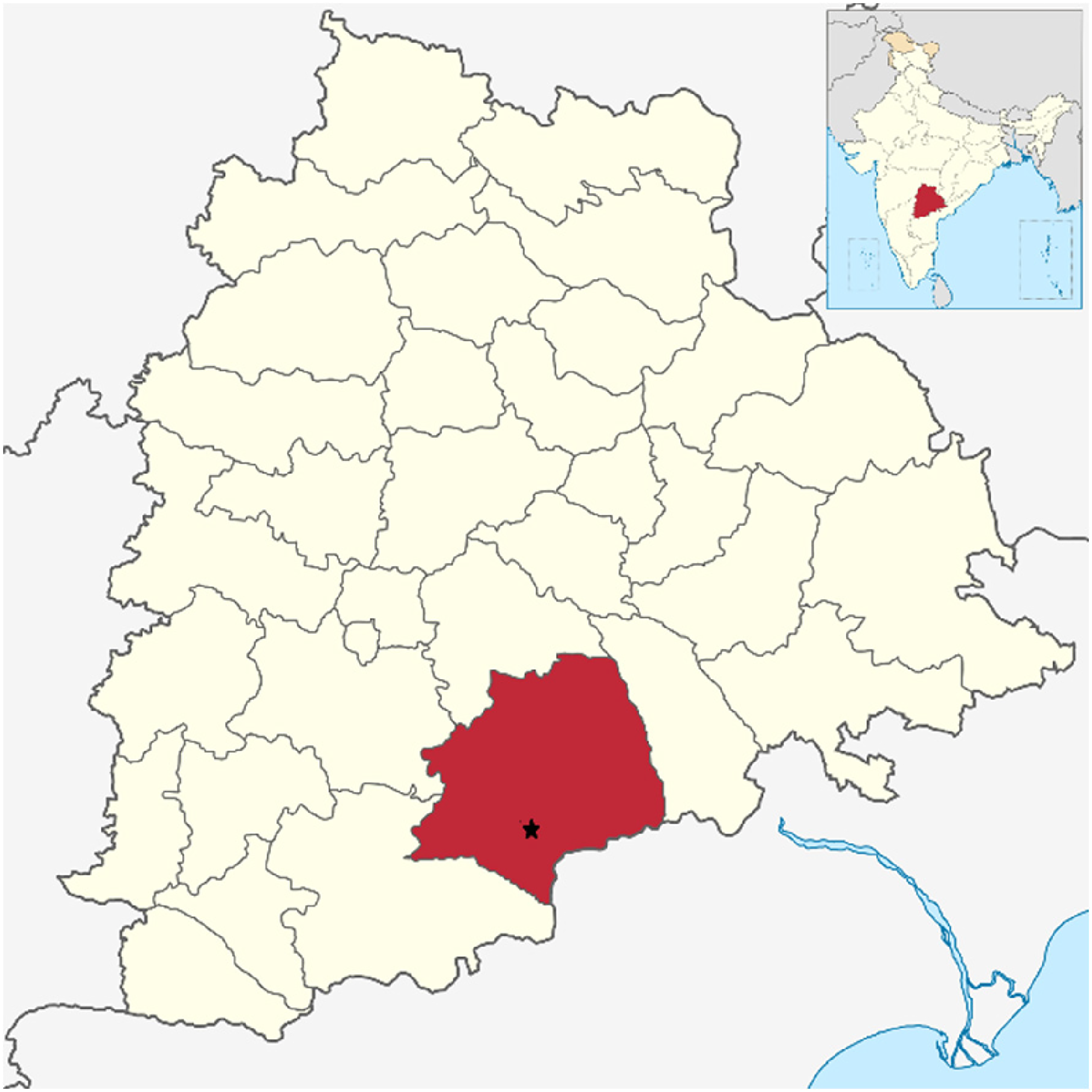
Kavarampur in Nalgonda District. Source: Wikipedia (2021) and Directorate of Economics and Statistics Telangana (2019).
Figures 5 and 6 provide maps of Telangana and Nalgonda districts where Kavarampur is located.
The selection process for Kavarampur as a research site involved snowball sampling at the beginning of the research in Hyderabad in July 2018. I contacted rural development NGOs, government and university agricultural departments. From this research phase, I recruited a research assistant, who worked for a rural development NGO in Nalgonda, a groundwater-dependent and rice-growing district. We travelled for two weeks in the Nalgonda district shortlisting villages which were roughly representative of cropping patterns, groundwater dependence, caste, landholdings, and population sizes as per 2011 rural Nalgonda and Telangana census data. Kavarampur was chosen as a result. The village leader in Kavarampur agreed to allow it as a research site and served as a crucial gatekeeper through mediating initial meetings with village participants as to the purpose and content of the research. I recruited two university-educated male and female local village research assistants upon the village leaders’ advice, who also significantly improved access and enabled expertise in relating to participants’ agrarian lives.
I utilised semi-structured interviews to understand the long-term process of agrarian change that occurred after the entry of groundwater irrigation into the village and the motivations and aspirations to grow rice. I asked questions on changes in cropping patterns over time, groundwater irrigation investment decisions, changes in groundwater use and depletion, farmers’ aspirations for their livelihoods and meanings they ascribed to rice and groundwater irrigation. Given the low literacy rates in the village, I recorded oral consent prior to interviews. I recorded interviews on a Dictaphone and concurrently wrote notes in paper notebooks. All interviews were conducted in Telugu, the local dialect and interviews were split in half between men and women, along with proportional representation to castes and landholding sizes as per the village level. I gave each participant a Telugu pseudonym name based on a random name generator. The interviews took place in the participants’ houses but I also visited farmer's fields for interviews throughout the research. I also conducted interviews with irrigation firms, groundwater policy experts and academics in Hyderabad and Dittam to understand agrarian change from a policy and historical context to respond to findings from farmer interviews. I transliterated and transcribed the interviews individually using the transcription software Transcribe Express Pro, and coded/analysed results thematically based on gaps in the literature, namely the role of farmer's aspirations to grow irrigated crops and government discourses of agrarian development in the making of groundwater hydrosocial territories. I also analysed secondary data from groundwater policy documents and press releases from the Chief Minister KCR’s office in the same way as interviews, which served as crucial sources of information to understand his motivations for groundwater expansion and justifying electricity subsidies.
Alongside interviews, I also conducted household surveys covering a 98% sample of the village. Surveys allowed me to corroborate interviews with the wider village, for instance, that perceptions of groundwater depletion, cropping patterns and rice cultivation aspirations were not anomalies. The household surveys were paper forms, conducted in Telugu but answers were written in English by me and research assistants. I asked questions on farmer recall data for one year, five year and 10 years on rice yields, groundwater depths, investment costs, number of drill attempts, well failure rates and groundwater depletion strategies. I manually uploaded survey results daily to Excel, where the rows and columns matched the format of the household surveys. I analysed data using descriptive statistics and presented the results in tables for the household survey year 2018.
Finally, access and familiarity with the research process were also enabled by my own positionality as a researcher. I am male, middle class, upper caste and of Indian origin, born in Hyderabad and with extended family in India. In addition, I grew up in and was educated in the United Kingdom and am currently a naturalised citizen. My Indian origin gave me fluency in Telugu and engendered trust amongst villagers due to their cultural familiarity with my background. I also developed a rapport with villagers in my daily formal and informal interactions over the nine-month research process. The village leader and research assistants were the most critical part of ensuring the research was successfully executed and completed.
The political economy of groundwater-led agrarian transformation in Telangana
Groundwater and unrealised rice aspirations
The expansion of groundwater-led agrarian transformation in Kavarampur and Telangana has been a product of the material reconfigurations of dryland rainfed agriculture, from a subsistence, low water use cropping system to a water-intensive, commodity-driven groundwater irrigation system, and the discursive policies and imaginaries that co-constitute these. Cultural farmers’ aspirations to grow and consume rice in the village formed a key part of the process.
Prior to groundwater, Kavarampur was largely a subsistence rainfed village, with farmers growing sorghum, millets, or castor in the monsoon for food and fodder. Farmers had long wanted to grow rice but were constrained by a lack of electrification and cash to afford groundwater irrigation. Rice for farmers not only represented an objectively better taste than millets but also signified affluence. Sampat, an elderly SC farmer with 1 ha of land articulated his desire to grow rice: Back then we were poor it was only sorghum and millets. We used to use millets as rice and for making chapatis every day. The taste was grainy and tough. Rice tasted good, it showed we were rich but we couldn’t afford borewells then. (Sampat, farmer, 5/6/19)
In the 1990s, economic liberalisation of the Indian economy propagated certain junctures and policies that enabled the widespread diffusion of groundwater irrigation-led rice cultivation. The availability of credit, and lower pump costs served as the catalyst for widespread groundwater adoption in Kavarampur. However, groundwater irrigation adoption didn’t begin in Kavarampur until 1999–2000, a decade later than the trends in Telangana, mainly due to the lack of rural electrification in the village upon which submersible pumps depended. The changes in rice and millet cultivation are also reflected Telangana-wide, as the millet cultivation area declined from its peak of 2 m ha in 1973–1974 to just 74,000 ha in 2022. In contrast, over the same period, rice cultivation has increased from 660,000 ha to over 3.5 m ha (Directorate of Economics and Statistics Andhra Pradesh, 2006; Directorate of Economics and Statistics Telangana, 2016; Government of Telangana, 2023).
From a rainfed village in 2000, groundwater irrigation was adopted by 69/105 (66%) farming households across caste and class in Kavarampur. From representative household surveys, I found that 100% of households that invested in groundwater irrigation did so to grow rice. Growing rice was preferred to buy it from the market or get the rice on PDS, a government welfare scheme where rice was distributed for free to below-poverty-line households. With annual household incomes of approximately $2000 most in Kavarampur were eligible for PDS rice. But even landless and poor farmers in the village chose to buy rice than eat PDS rice, which was regarded as unappetising and a last resort for only the poorest of farmers who couldn’t grow or buy it (Lilavati, interview, 26/6/19). This reflects the trends in Telangana whereby 80% of farmers are eligible for PDS rice but only 25% of the rice consumed in the state is from PDS sources (Government of Telangana, 2023). For groundwater-irrigated farmers, farmers preferred to grow their own rice for food security. This highlights the pregnant possibilities of irrigation infrastructures to generate and shape individual aspirations through flows of water, in this case, to extract groundwater to grow and consume rice (Larkin, 2013). As Vanita, an OBC farmer explained: Before the borewell, we grew and ate millets. We had always wanted to grow and eat rice for the household. Growing our own rice is better as buying from outside is [$200]
4
per year. When borewells came, we installed them immediately. (Vanita, farmer, 27/6/19)
In Kavarampur, farmers drilled 215 wells since 2000. By August 2019 however, only 24 wells functioned even after the monsoon recharge period, a failure rate of 89%. Similar surveys in villages in Telangana by Jacoby (2017) and Fosli et al. (2021) also found 70% or higher failure rates in wells with the expansion of electricity subsidies. In Kavarampur, only 10 out of 69 households with groundwater irrigation actually harvested rice as planned. Temporally in the 20 years since their adoption, groundwater infrastructures therefore fractured the rice cultivation promises held in the now dried-up flows of groundwater, revealing the fragile and unpredictable assemblages of people, nature and technology (Appel et al., 2015; Fennell, 2015). The low storage and poor recharge capability of laterite soils exacerbated the demand on the aquifer from well densities increasing in the village. Groundwater became the most common source of debt for farmers in Kavarampur, with 29% of farmers citing it as their biggest debt at approximately $2200. Table 1 provides more information on the long-term adoption of groundwater in Kavarampur.
Groundwater outcomes in Kavarampur.
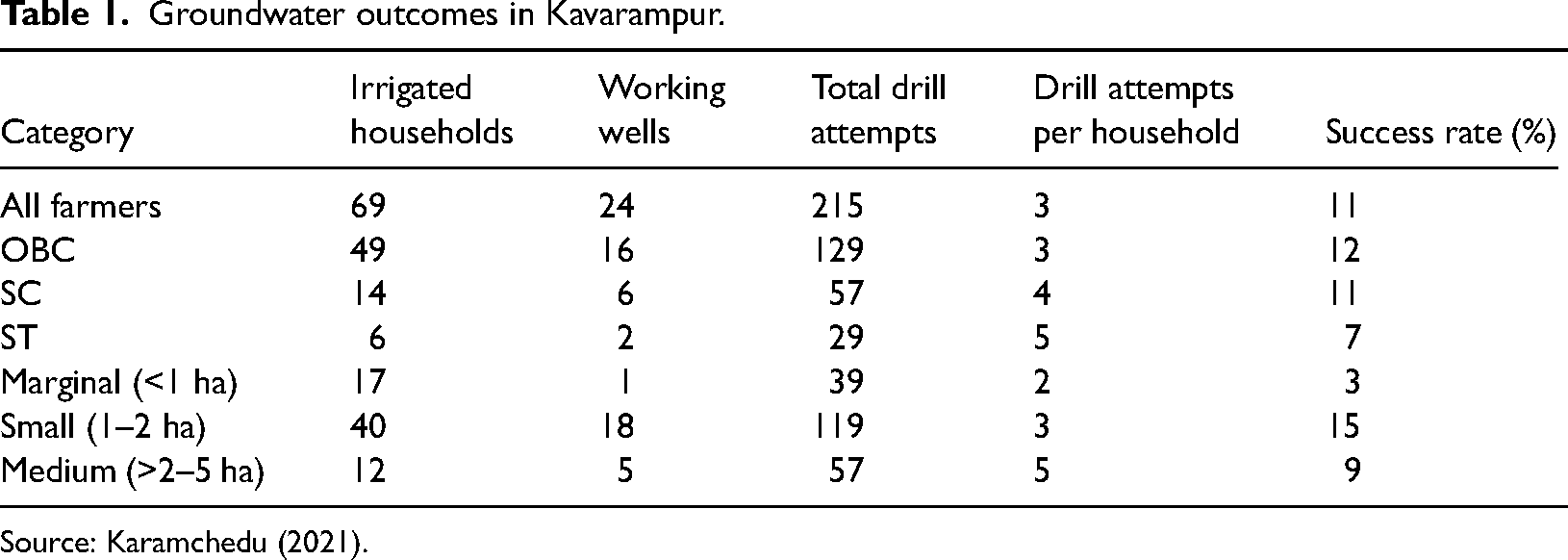
Source: Karamchedu (2021).
As Table 1 shows, no caste or class group experienced better than a 15% success rate for drilling wells. Installing a well cost up to approximately $1500 and an additional approximately $400–600 for each new well drilled. On average a farmer in Kavarampur made approximately $2000 annually before all expenses, so wells cost approximately 75% of household income. Nonetheless, there was differentiation in debt relations by caste, due to the social relations of credit that determined repayment terms, interest rates and the ability of households to weather losses. The worst affected group were SC farmers, the smallest landholders in the village, owning 0.57 ha on average for whom only 3% of all wells drilled worked. The price of failure and cumulative debt was greater for marginal SC farmers than larger landholder upper caste farmers as they lacked the collateral to finance groundwater on formal credit, relying on moneylenders charging 36% interest per year in addition to the groundwater construction costs, trapping them in debt relations with creditors. Medium OBC farmers had the wherewithal to drill five wells per household compared to two for marginal farmers after well failure. As Matthan (2022) highlights in her case study of groundwater depletion in hard rock Madhya Pradesh, SC farmers could not withstand the losses from groundwater due to their inability relative to upper castes to draw on more sources of income and access to better collateral terms for formal credit at lower interest rates. The uneven processes in which water infrastructures are conceived, planned and constructed reflect the differentiated water access and flows by class, caste, and ethnicity (Birkenholtz, 2022).
Gautam, an SC farmer owning 1.2 ha, drilled 12 wells over the last decade, spending over $5,000, but in the long term didn’t have enough water to grow rice: Rice is dependent on a working borewell tell me where there is a working borewell around here for the past five years … we drilled 12 borewells. We lost [$400] each time. (Gautam, farmer, 25/6/19)
Nonetheless, groundwater depletion is not a natural process solely determined by aquifers or the climate. The fixation on the physical properties to explain groundwater adoption and depletion in dryland Telangana silences how groundwater is also part of a state government project to justify capital accumulation through economic and political processes. In the next section, I detail the crucial role of historical discourses of dryland poverty utilised by the Chief Minister KCR and electricity subsidies to drive groundwater development in the state. I explore the ways in which water is used cultural resource to consolidate Telangana's identity as a dominant agro-exporter of rice, and the socio-ecological ramifications of these. Therein, I show how water imaginaries and development visions can emerge from different directions within a spatial context and time, shaping their divergent and uneven effects on water distribution, access and socio-ecological environments (Crow-Miller et al., 2017).
Electricity subsidies, groundwater depletion and the costs of the ‘Rice Bowl of India’
On January 1, 2018, the new ruling Telangana Rashtra Samiti party announced its flagship free 24 × 7 power policy for groundwater, expanding electricity subsidies at an unprecedented scale at a state level in India (Fosli et al., 2021). Total subsidies and costs to upgrade its electricity capacity to supply the 2.7 million groundwater pumps in the state amounted to approximately $6 billion since 2014 and $1bn just in servicing electricity subsidy costs each year (Government of Telangana, 2022, 2023). In just under a decade since its formation, Telangana uses the highest proportion of its electricity for groundwater irrigation in India at 41% per year of total annual electricity consumption (ibid). The end goal of the rapid infrastructural development has been to increase rice cultivation and production and remake the erstwhile backward state into a rice producer.
KCR set out this vision clearly in a speech on Indian Independence Day in 2021, stating: The agricultural sector collapsed in the combined state. Farmers committed suicide due to not getting irrigation water, no electricity, no crops and not clearing debts taken for investment. But today the farmers of Telangana are feeding not only Telangana but also the people of [the] entire country. Telangana [is] carved [out] as [the] ‘Rice Bowl of India’. (CM Office Telangana, 2021: 1)
Founded on legitimate inequalities over-irrigation development, groundwater expansion in Telangana for KCR was forged from the idea of breaking free from historical backwardness as a rainfed agrarian region within Andhra Pradesh through rice intensification. A new rice-growing groundwater territory was constructed out of deep-rooted imaginaries of inequality and poverty in the region within the unified Andhra Pradesh towards a techno-utopian future as a rice bowl of India through a set of policies and practises, namely electricity subsidies. Infrastructures are the historically mediated product of power, technology, water and society within a particular spatial context (Anand et al., 2018). Groundwater was made and remade by the spatial and temporal dryland landscape of Telangana in the pursuit of rice cultivation.
The empirical evidence of Telangana's rise as a rice producer in India is clear. As shown in Figure 7, rice production numbers have risen rapidly since the state's formation in 2014. In 2014–2015, Telangana ranked 12th in India for rice production at 4.5 million tonnes per year, far behind Andhra Pradesh in third with 8.5 million tonnes (Directorate of Economics and Statistics India, 2016). By 2022, rice production in Telangana ranked fourth in India and almost tripled to 12.5 million tonnes, much higher than Andhra Pradesh with 7.7 million tonnes (Directorate of Economics and Statistics India, 2023a). In particular, Figure 7 shows that just in the four years between 2018 when the 24 × 7 free power programme was introduced in 2022, rice production in the state doubled from 6 to 12 million tonnes per year. The creation of the rice bowl of India was driven largely by electricity subsidies which incentivised the rapid adoption of 639,000 new submersible groundwater pump connections for tubewells, which helped to increase groundwater area by approximately 41% since 2014 (Government of Telangana, 2022). Therefore in under a decade since its formation, Telangana has already overtaken Andhra Pradesh in rice production, competing with much larger and historically canal-irrigated dominant rice-producing states too in the process such as Punjab, Uttar Pradesh and West Bengal (Directorate of Economics and Statistics India, 2023a).
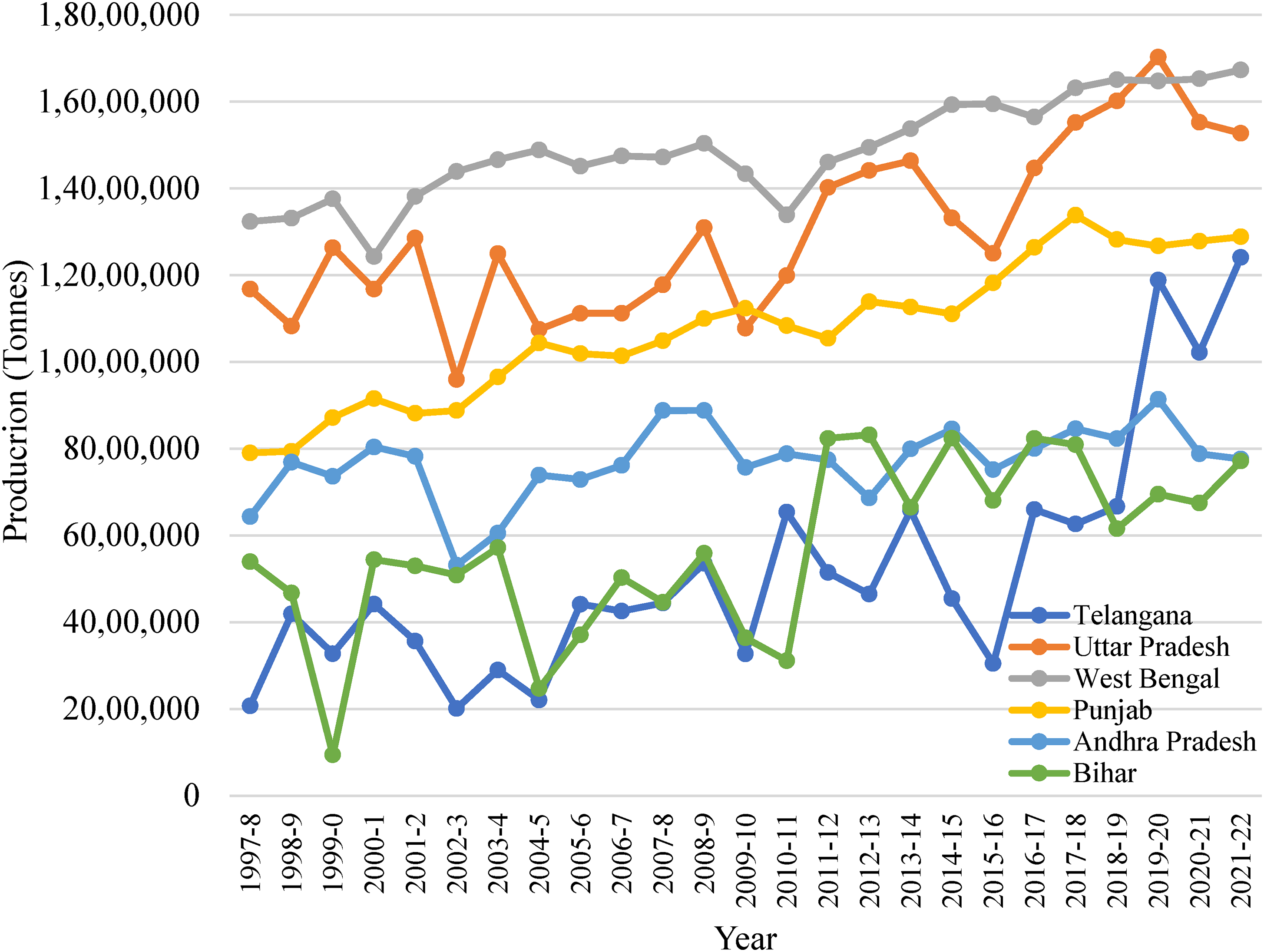
In Kavarampur however, the hybrid re-patterning of farmers' lives and of aquifers in the political economy of new groundwater-irrigated rice territories contributed to groundwater depletion and indebtedness. Electricity subsidies encouraged what Shah (2010) refers to as a zero-sum well drilling competition between farmers in Kavarampur, as the increase in well densities and digging deeper wells incentivised farmers to further keep their pumps running to draw on finite groundwater to try in vain to flood their fields for rice. This can be understood by Maréchal (2010) as a fundamental sunk cost fallacy problem, where drilling more and drilling deeper is a sign of escalation and commitment to an ephemeral prospect of finding groundwater. The reality, as Jacoby (2017) explains, is that there is no correlation with a number of wells drilled or depth with striking groundwater, and that in fact for every 10 m increase in well depth, drilling costs increase by 6% and pump costs by 9%, due to the greater time and energy expended to drill. The manifestation of how and why a certain technology is adopted and used is a function of power relations and articulation of particular visions of development at a given time, here in dryland India mediated by an unregulated groundwater political economy.
Well, failure rates of 89% of the 215 wells drilled in the village post-monsoon in August 2019, debts of $2200 per household and only 14% of households being able to grow rice underlined the exhaustion of groundwater. Central Groundwater Board Telangana (2023) show that between 1986–1987 and 2019–2020, well densities increased from 5 per km² to 27 per km². Meanwhile, yield per well decreased from >150 m³ to 15–30 m³ as did the area under wells from 4–6 ha to <1 ha in the same period (ibid). Although extensive efforts have been made to recharge and repair tanks, reservoirs and build large-scale surface lift irrigation to stem groundwater depletion and expand other forms of irrigation since state formation in 2014, groundwater still remains a priority for the state government for rice production and dominates 65% of the irrigated area in 2022 (Central Groundwater Board Telangana, 2023; Government of Telangana, 2023). Extensive drilling for and expansion of groundwater didn’t yield rice but created indebtedness from failed groundwater investments for farmers. Furthermore, as the National Sample Survey Organisation (2021) indicates, in 2018–2019 across all castes and classes, 47% of reporting households made a loss from rice production, the biggest reason down to drought or inadequate rainfall, which affected groundwater recharge. Given that 91% of agricultural households in Telangana are SC, ST and OBC too, this indicates that the problems in Kavarampur reflect the demographics of the state.
Considering the repeated failures over two decades, a mixture of fear, apprehension and resigned fatalism drained farmers of any confidence in their wells working again. Faced with the second successive poor monsoon in August 2019 at the end of the research, 95% of farmers interviewed in Kavarampur reported losing faith in groundwater. For Mallesh a middle-aged SC farmer, years of successive failures from his wells depleted him of his hope and finances: What else will we drill? Why would we drill again? As it is we are tired we have drilled and drilled and now we are tired of it in the village. The water won’t come. We have no money. (Mallesh, farmer, 4/7/19)
Discussion
In this article, I sought to understand (1) how and why groundwater has reconfigured the agrarian landscape of Telangana (2) how has groundwater infrastructures emerged from a political economy of aspiration by farmers and state respectively and (3) what the repercussions were in this political economy of agrarian change for farmers in Telangana. We can use this to frame the political economy of groundwater-led rice cultivation and agrarian transformation in Telangana in highlighting this article's contributions. This article finds that the discursive nature of aspirations of success, status tied to rice cultivation and consumption for individual rainfed farmers and the remaking of Telangana's image by KCR into the rice bowl of India occurred simultaneously but with divergent impetuses. Whilst farmers sought to drill for groundwater to grow rice for food security and transition away from millets, the end goal for the Telangana government's electricity subsidy incentives was for capital accumulation, maximising rice production for agro-exports.
Following Telangana's independence, KCR took to rebuilding the state's identity and image as a rice bowl of India through groundwater. Groundwater imaginaries were enacted across multiscalar networks of power from above and below. One as a symbol of outward power and identity of rice production for KCR, and the other, as personal fulfilment for farmers to grow and consume rice for success, status and taste. The territorialisation of groundwater-irrigated rice production in Telangana was not fixed or controlled by one political or technological vision but multiple, dynamic overlapping or contesting visions for water and development. Farmers’ agency in investing in groundwater infrastructures involved a process of ‘re-patterning of water space and territorial decision making’ (Boelens et al., 2018: 108). Instead of acquiescing to maximising rice production goals for export, I showed how groundwater expansion in Telangana was a product of bottom-up, decentralised and private infrastructural aspirational investments by smallholder farmers over time and space in remaking dryland landscapes for rice consumption and food security. The use of groundwater for food security and not cash crop cultivation for exports follows a different trajectory of agrarian transformation to the existing literature on groundwater expansion in India (Birkenholtz, 2022; Misquitta and Birkenholtz, 2021).
The material transformation of ecologies in the expansion of groundwater-irrigated rice production in Telangana reshaped groundwater levels, cropping patterns and food consumption choices within 30 years since the 1990s. Ultimately, KCR did go some way towards creating the ‘Rice Bowl of India’ as Telangana became the fourth largest rice producer in India in 2022, but at the expense of many farmers in villages such as Kavarampur. This is in line with the literature on infrastructures which finds that power relations temporally and unevenly constrain and enables flows of water (Truelove, 2019).
Moreover, in Kavarampur, while groundwater depletion was experienced by 89% of irrigated households across class and caste, there were differentiated outcomes for how debt relations shaped indebtedness from groundwater depletion. SC farmers with smaller land sizes faced more onerous repayment terms and higher interest rates relative to other social groups, demonstrating how technology adoption and agrarian distress are socially stratified alike existing literature on groundwater irrigation in India (Matthan, 2022; Shah, 2012). The simplicity of free electricity was politically salient to remake Telangana yet in a climatically extreme and difficult aquifer setting, such a practice has worsened farming outcomes at the micro-scale for farmers via groundwater depletion, well failures and punishing indebtedness in the long run in the pursuit of their rice aspirations.
Conclusion
Water infrastructures mediate the relationships between humans and water in the territories they construct and are constructed in (Anand et al., 2018). The transformation of rainfed Kavarampur and Telangana into an intensively irrigated rice-growing state has meant that groundwater has represented pregnant possibilities for both individual farmers and the Telangana government. The Chief Minister of Telangana KCR drove groundwater-led rice cultivation through financially mobilising electricity subsidy policies. He infused these policies with cultural, political and historical narratives of intraregional inequalities in agricultural and irrigation development that afflicted Telangana within a united Andhra Pradesh. Groundwater pumps were a critical material artefact that embodied freedom from water struggles from under Andhra Pradesh.
The embodiment of farmers’ aspirations for rice was premised on electricity subsidies and informal credit within groundwater-driven rice cultivation but soon became exclusionary and ruinous in the long term as farmers were unable to repay their debts from well failures. Electricity subsidies and historical narratives of water inequalities in Telangana from KCR helped drive the spatial and capital accumulation expansion of groundwater. But the risks and capital outlay to drill wells were borne from below by individual farmers, without realising any gains. Instead, groundwater development recreated similar fissures and inequalities from water infrastructures as in united Andhra Pradesh, this time one of KCR’s own making. The particular cropping and irrigation decisions which have undergirded the groundwater transformation of semi-arid Telangana have taken place in a contradictory manner. Telangana's success as a rice producer has hidden the consequences for individual smallholder farmers, which are the indebtedness crisis and depletion of aquifers in the long-term pursuit of groundwater-driven rice intensification.
In the village of Kavarampur, farming was transformed over two decades from a rainfed, sorghum and millet-eating village into a groundwater-irrigated one, being adopted by 69% of households in 2019 via heavy debt-backed investments at a farmer level. This stemmed from aspirations of success associated with growing and eating rice for household food security. The aspiration for rice cultivation became a mirage as it was not feasible for dryland smallholders due to the hostile semi-arid and drought-prone climate, difficult hard rock aquifer hydrogeology and high water requirements from the crop. Groundwater expansion through electricity subsidies was a politically expedient means to expanding the spaces for new forms of capital accumulation through rice production but to no avail for farmers in Kavarampur. Despite macro-level successes in rice production in the short term in Telangana, villages such as Kavarampur unravelled in the broken promises of irrigation infrastructures and dried-up pursuit of rice cultivation.
Highlights
The article examines the political economy of groundwater-led agrarian transformation in dryland India through concepts of infrastructures, aspirations and groundwater governance.
The article embeds the idea of hydrosocial territories to understand how bottom-up farmer groundwater adoption makes/is remade by dryland agriculture in changing the cropping patterns towards rice cultivation.
The article finds that access to informal credit and associations of rice cultivation and consumption with success facilitated rapid smallholder groundwater expansion from below.
The article finds political discourses of historical backwardness and electricity subsidies increased groundwater-led rice production in Telangana from above.
Increases in rice production after state formation in Telangana came at the uneven expense of smallholder groundwater depletion and indebtedness.
Footnotes
Acknowledgements
This article is dedicated to the people of Kavarampur village without whom this research would not be possible. Equally to Yadagiri, Mallesh and Jyothi for providing excellent research assistance. I am grateful to my PhD supervisors Admos Chimhowu, Ben Neimark and mentor Phil Woodhouse for helping shape the initial PhD chapter on groundwater irrigation. Thanks also to Marcus Taylor and Tom Lavers for substantial improvements to the PhD thesis after the viva. To Alex Loftus and Nithya Natarajan, I have been privileged to have your critical comments and support which greatly shaped this work. Finally, thank you to the three anonymous reviewers and editors of EPE who were meticulous in their suggestions and improvements to the paper. All errors are mine.
Funding
The author disclosed receipt of the following financial support for the research, authorship, and/or publication of this article: This article draws on PhD research funded by the Economic and Social Research Council (ESRC), Award Ref: ES/J500094/1.
Declaration of conflicting interests
The author declared no potential conflicts of interest with respect to the research, authorship, and/or publication of this article.

