




Abstract
In 2008, the American University in Cairo (AUC) moved from its downtown campus in Tahrir Square to the center of New Cairo. Through an analysis of AUC's historical land acquisitions at Cairo's urban periphery, this article examines how the university sought to influence land use over the past century. We argue that AUC's relatively recent role in New Cairo is an expression of the institution's century-long aspirations to acquire land on Cairo's periphery for a permanent suburban style campus. Drawing on the tools of political ecology and critical university studies, we trace how a suburban desert campus is consistently envisioned as a mechanism for the institution to play a significant role in influencing land politics and use in and beyond its campus. We highlight two key ways that AUC has historically situated itself in the city's development. First, purchasing land in order to relocate to the outskirts of the city has been central to AUC's strategy for accumulating wealth to ensure its long-term presence in Egypt. Second, acquiring large tracts of land for a suburban desert campus has been instrumental to AUC's educational mission to shape its student body, Egyptian society, and the political ecology of desert land in Egypt. Through archival research, we show how AUC's relationship to land positions the university as a significant institutional force in Cairo's rapidly urbanizing desert periphery. This situated case study contributes to an emerging body of scholarship examining the fraught historical and contemporary relationship between universities, land, environmental knowledge, and uneven urbanization in the Middle East and beyond.
Introduction
When the American University in Cairo (AUC) moved from its downtown Tahrir campus in 2008 to New Cairo, it became one of the largest landowners in the area. Located more than 30 kilometers east of Cairo's downtown, New Cairo was a yet-to-be developed satellite city, advertised as a future location for luxury housing, golf clubs, malls, and gated communities. AUC's new campus location situated the university as both a major landowner and producer of knowledge about land in New Cairo. This relocation was significant as AUC, a U.S. style liberal arts university, historically wields political and cultural prestige and is the most well-funded and resourced private university in the country, branding itself as a cultural and educational bridge between the United States and Egypt. 1 The university presented its 260-acre campus as “a city for learning” (AUC, 2015) and the catalyst for New Cairo's development. The technological force of AUC has been closely linked with the university's advertising imagination—its marketing of the campus as a space to shape what was a nascent community in New Cairo. Campus plans to influence land use in New Cairo spanned from architectural design and environmental standards, to the production of environmentally-conscious Egyptian citizens 2 and collaboration with “public authorities and private developers to influence the nature of the surrounding community.” 3 Many of the logistics and practices that were adopted in New Cairo's developments, including knowledge about desert landscaping, transport infrastructures, and water systems, were first implemented at AUC.
This article examines AUC's attempts to influence land use in Cairo over the past century through an analysis of the university's historical attempts to realize a suburban desert campus. We argue that AUC's relatively recent role in New Cairo is an expression of the institution's century-long aspirations to acquire land on Cairo's ever-growing periphery for a permanent suburban style campus. Drawing on political ecology and critical university studies, we trace how the acquisition of land for a new campus is consistently envisioned, from before AUC's founding in 1919 to the present, as a mechanism for the institution to play a significant role in influencing land politics and use in and beyond its campus. This vision was in line with its broader mandate to not only “create something for the university…[but also do] something for Egypt.” 4 We draw primarily on research at AUC's university archive. We supplement our historical methods with three semi-structured interviews with AUC staff involved in campus planning between 2009 and 2016. Our research is structured by the following questions: how and why did AUC become a significant actor in the development of New Cairo? To what extent has AUC historically and in the present sought to influence and intervene into land use at Cairo's contested urban periphery? Through our research, we found that the story of AUC's suburban campus and its relationship to land and land use at Cairo's periphery was a story of domestic upheavals and geopolitical tensions all articulated in a single institution's campus vision.
Below are three proposed designs, published in 1916, 1944, and 2005, for a campus located in a suburban, desert location. Throughout the article, we use these three designs as devices to structure our critical examination of the university's relations to land. Although the first two plans never materialized, they share much in common with AUC's current New Cairo campus. Each plan proposed a contiguous campus decorated by green landscape design, freed from the spatial constraints of an urban location and surrounded by what appears to be empty desert. In 1916, 1944, and 2005, the AUC board of trustees emphasized similar overarching benefits of a suburban desert location for the university's educational mission to “do something for Egypt” including: control over the campus’ student population, the ability to shape the surrounding community, the possibility for future expansion, and the capacity to utilize the campus to model how desert land should be developed. The plan for a suburban campus, finally realized with AUC's move to New Cairo in 2008, was intertwined with AUC leadership's long-standing interest to establish a university campus in order to shape land use in Egypt. (Figures 1–3)
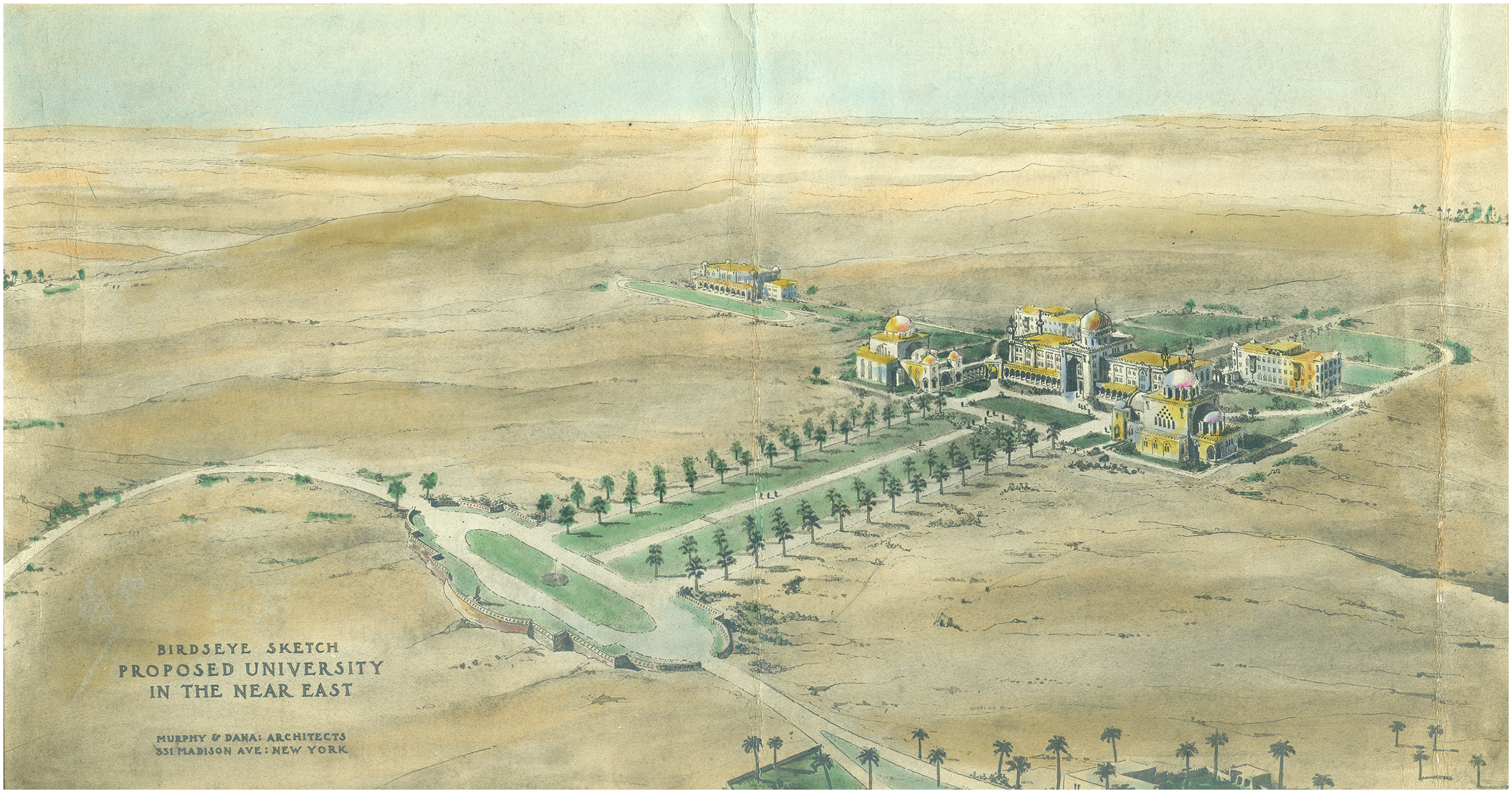
Titled “Birdseye Sketch, Proposed University in the Near East” Proposal for the University, 1916. Courtesy of the Rare Books and Special Collections Library, The American University in Cairo.
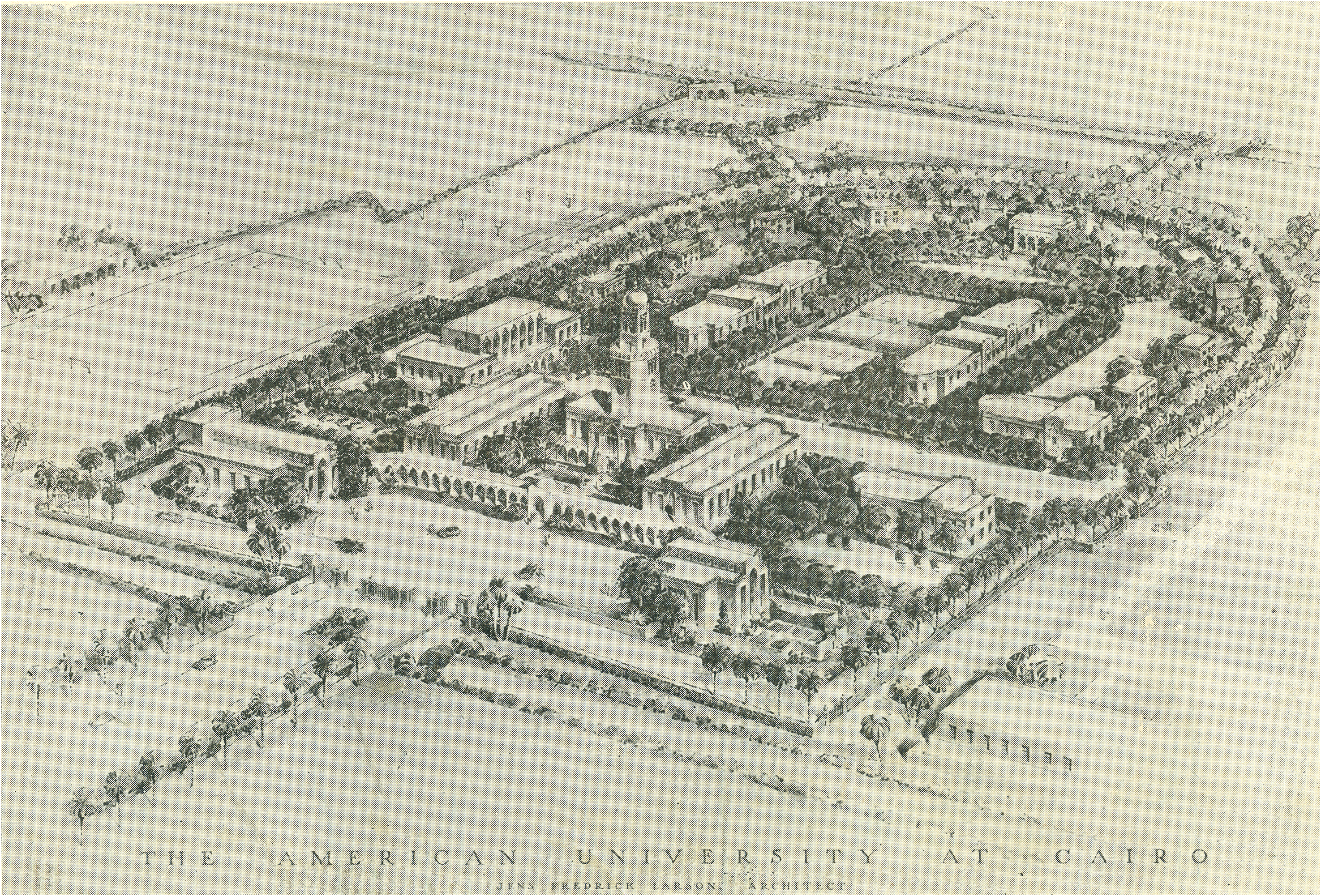
Titled “A Dream that Must Come True - A.U.C Out Along the Pyramid Road” Campus Plan and Sketch, 1944. Courtesy of the Rare Books and Special Collections Library, The American University in Cairo.
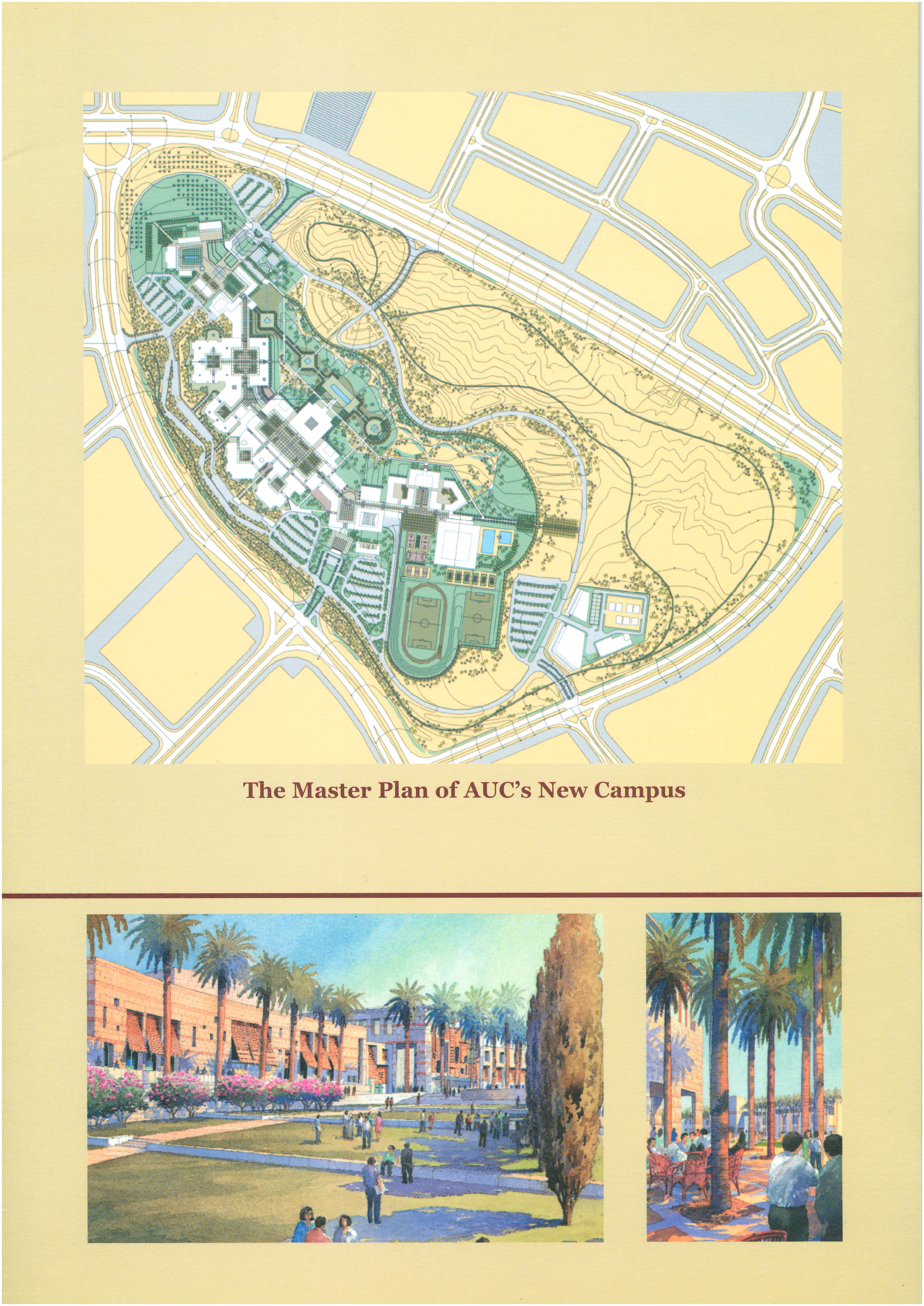
Titled “The Master Plan of AUC's New Campus” 2007. Courtesy of the Rare Books and Special Collections Library, The American University in Cairo.
We begin by providing a framework for how we approach AUC's relationship to land through the integration of historical political ecology (Arefin, 2019; Davis, 2015; Van Sant et al., 2020) and critical studies of universities that forefront the colonial relationship U.S. educational institutions have with land as both integral to delivering an education and as a commodity obtained through dispossession (Ahtone and Lee, 2020a, 2020b; la paperson, 2017; Nash, 2019; Stein, 2017). Following this historical political ecology approach to universities, we highlight two interrelated ways that AUC envisioned marshaling a suburban campus to shape land use in Egypt across the 1916, 1944, and 2005 campus plans. First, purchasing land in order to relocate to the outskirts of the city was central to AUC's strategy for accumulating wealth and ensuring its long-term presence in Egypt as the only private, foreign university until 2002. Second, acquiring large tracts of land for a suburban desert campus was vital in order to implement AUC's educational mission of modeling how desert land should be used and developed in Egypt. We proceed by tracing these entwined relations across the three plans beginning in 1916. Our historical analysis shows how AUC's relationship to land as both a storage of wealth and means of producing knowledge together position the university as a significant institutional force in shaping land use at Cairo's urbanizing periphery. We conclude with a discussion of how historical work on the relationship between universities and their wider ecologies is an important foundation for emerging scholarship on the role educational institutions play in climate and environmental injustice in the contemporary moment.
Political ecologies of the university and land
To understand AUC's history of attempted desert land acquisitions and its broader role in shaping land use at Cairo's urban periphery, we integrate often siloed frameworks in historical political ecology and critical university studies. Political ecology offers a robust framework to understand how institutions materially and discursively produce scarcity and govern struggles over resources like arable land often resulting in unequal impacts on communities and environments; while political ecology has been mobilized to analyze actors from states (Bigger and Neimark, 2017; Davis, 2016; Dempsey, 2016; Li, 2007; Mitchell, 2002) to international financial institutions and corporations (Bakker, 2010; Green, 2019; Goldman, 2006), the tools are rarely used to analyze academic institutions. We therefore supplement political ecology with the rich empirical studies and theories broadly under the label of critical university studies and allied investigations of the university in Ethnic Studies and American Studies (Singh and Vora, 2023). This literature helps us better analyze the particular institution our study is focused on and its relationship with land. To resist naturalizing the present configuration of higher education, land, and land use, we turn to historical work in both political ecology and critical university studies that trace the continuities and discontinuities in educational institutions’ approach to land in and beyond campuses. We follow Van Sant et al.'s (2020) call for historically informed geographical work that is “inspired by direct engagement with problems in the present” and whose methods, “are built around strategic and creative analyses of the past” (169).
With the force of an educational apparatus behind it, AUC functions as a uniquely influential actor when it comes to land and land use in New Cairo and beyond. Universities such as AUC are distinct from real estate developers and state subsidiaries that hold land and manage or regulate its use because universities also produce authoritative knowledge about land management and use. Because of the distinct ways in which their physical structures, institutional power as landowners and employers, and prestige endure, universities are important sites through which to study the politics of land. Critical university studies, an interdisciplinary field that began as an investigation of how neoliberal market rule restructured U.S. higher education, offers crucial insights for our work. Scholars in this field have demonstrated how in the United States, universities have and continue to participate as dominant real estate holders and developers, particularly in cities (Baldwin, 2021). For example, Columbia University and New York University are the second and third largest landowners in New York City and George Washington University is the second largest landowner in the District of Columbia, behind the federal government (Baldwin, 2015). Urban geographers and planners have argued that the contemporary role of U.S. urban universities as landowners and developers must be situated in relation to neoliberal trends and policies of urban renewal and land clearance (Ross, 2012; Wiewell and Perry, 2015). Examining the Ohio State University's role in redeveloping Columbus, Bose argues for an understanding of universities not just as landowners, but as developers driven in part by internal pressures such as expanding student bodies, but more importantly by the pressures of accumulation under neoliberal restructuring of universities (Bose, 2015).
Critical education scholar Sharon Stein (2017) calls for further attention not only to proximate or present actions, but to the conditions of possibility for capital accumulation, namely colonialism and imperialism. Without such an analysis, the university's role in commodifying and exploiting land is naturalized and the university appears as a passive actor responding to market forces, whereas in fact, as la paperson (2017) argues, “land accumulation as institutional capital is likely the defining trait of a modern day research university.” Stein shows how the accumulation of Indigenous and Black lands, lives and labor provided the conditions of possibility to establish many public institutions that continue to be both dependent on and vulnerable to accumulation (Stein, 2017, also see Ahtone and Lee, 2020a, 2020b, 2021; Curley and Smith, 2020; Wilder, 2013). Therefore, land, as la paperson writes “is a motor in the financing of the university, enabling many of them to grow despite economic crises” (25). In North America, this connection was solidified and developed during the late 19th century through the U.S. land-grant system (Nash, 2019), which was funded through the mass seizure and privatization of nearly 11 million acres of Indigenous land (Ahtone and Lee, 2020a, 2020b, 2021). Universities further facilitated colonization and imperialism by producing knowledge and labor to render the land productive for capital accumulation—ranging from agricultural extension schools to refining methods for fossil fuel extraction and arid lands expertise (Koch, 2023; Tretter, 2020). The educational and research infrastructure developed through this colonial relationship to land's commodification allowed for U.S. universities to be uniquely positioned in the global neoliberal counter-revolution and materially shape urbanization processes (Baldwin, 2021), resource extraction (Al-Saleh, 2022; Beasley, 2018), and development practices and ideologies (Kamola, 2019).
While critical university studies provide deep historicizations of the vital role land plays in the formation of modern universities, political ecology offers the tools to examine how universities participate as institutions in environmental governance and inequality. But political ecology scholarship focused on universities is still an emerging field of research. More recent work uses a political ecology frame to analyze university-based and often student-driven fossil fuel divestment campaigns (Belliveau and Dempsey, 2021; OHealy and Debski, 2017) and sustainability and climate change initiatives (Nelson, 2020; O’Neil and Sinden, 2021). Such research provides an important analysis of social movements, the neoliberal university, and the financialization of higher education, but is not often linked to material campus land, other landholdings, the colonial present of land relations, or land-use research on campus (Ladd, 2020; Kirk and Moeller, 2020).
Outside of North America, scholars working in the Middle East have studied transnational partnerships between U.S. universities and governments in the Gulf specifically with a focus on how these partnerships reshape the politics of land, land use, and sustainability initiatives in the region (Al-Saleh and Vora, forthcoming; Günel, 2019; Koch, 2018, 2019, 2023). This work builds on an established focus in environmental studies examining the political ecologies of arid lands and knowledge production (Davis, 2016, 2019). Koch's research into NYU-Abu Dhabi, U.S. branch campuses in Qatar Foundation's Education City, and King Abdullah University of Science and Technology demonstrates how these universities situate their campuses as exemplars of sustainability, but how their influence beyond campus is largely symbolic (2017). In a more historical register (2019), Koch shows how the current trend of AgTech in the Gulf region is presented by private firms as unprecedented but is in fact the expression of previous eras of failed partnerships between U.S. universities and Gulf governments. Koch carefully traces the University of Arizona's Environmental Research Lab's work in Abu Dhabi from 1969 to 1974. By unearthing the details of this failed project, Koch argues that this relatively unknown project of a U.S. university transforming land and land use in the Gulf constitutes an act of spectacular forgetting. Such forgetting ungirds a political tendency toward repetition in high-modernist projects that often fail to deliver the well-being they are touted to realize but continually find legitimacy decade after decade (671). Günel's work on Masdar City in the U.A.E. demonstrates the recursive nature of high-modernist projects meant to transform desert land into sites of innovation for a future green, sustainable, and knowledge-driven economy. Günel shows how Masdar leveraged partnerships with universities like MIT and university researchers around the world to legitimize its mission as a global pioneer in sustainability in everything from energy to currencies and the built environment. She argues that such efforts are not just overblown promises, but represent what she calls “technical adjustments” or the necessary innovations to keep the status quo of a capitalist fossil fueled economy in place (2019).
In Egypt, AUC has maintained a distinct orientation to land as a commodity closely linked to the university's realization of its educational mission, originating in 1916 with the first plan for a campus. This educational mission aimed to use a large isolated suburban space to control the education of AUC's student body, shape the community surrounding the campus, and model how desert land should be developed. Attempts to achieve this educational mission, in turn, structured the university's approach to land in Egypt as a distinct investment strategy. While this may have taken different forms, from the land holdings of U.S. missionaries to financialized endowment management strategies, AUC consistently treated land as an investment that would ultimately enable the institution to shape and influence the political ecologies of desert land in Egypt. In what follows, we use the above literature coupled with historical materials to document the key conjunctural forces that allowed AUC to realize its century-long aspiration for a suburban campus, before examining the longer history of these aspirations in and beyond its campus.
A brief history of AUC's present: neoliberal reforms in desert land and higher education
The possibility for AUC to purchase 260 acres of desert land for its current New Cairo campus was unprecedented, contingent upon a concurrent set of neoliberal reforms of Egypt's public lands and higher education landscape that began during the 1990s. It was only in 1992, that Law 101 allowed for the establishment of Egyptian for-profit private universities, with the first of its kind, October 6 University, established in 1996 (Cantini, 2016). It was not until 2002, with an amendment to Law 101/1992, that foreign universities were permitted. This set of laws profoundly altered Egypt's higher educational landscape, creating the possibility for the proliferation of private non-profit and for-profit higher education institutions, many of which set up campuses in New Cairo and other satellite cities (Cantini, 2016; Marsh, 2014). These transformations in higher education came with the concurrent 1990s neoliberal reform of public lands.
The contemporary relationship between universities and urban development was shaped by the privatization of once publicly-held assets. Before Egypt's land reforms in the early 1990s, the government held all desert land. Through legislation that transferred this publicly-held land to private ownership, developers began to invest in the transformation of Cairo's desert periphery into exclusive, residential communities (Dixon, 2010; Sims, 2014: 128–331). While these desert development projects come with recurrent promises of alleviating issues of density, traffic, and pollution, these projects produce elite enclaves that further entrench patterns of spatial segregation and urban inequality. Despite claims that neoliberal urbanization in Egypt was a privately-led project of urban expansion, the state remained a key participant in the construction of Cairo's satellite cities, not only through transfers of land and subsidizing infrastructure, such as roads and bridges, but also through the creation of luxury enclaves for military and state officials (Amar and Singerman, 2006; Dorman, 2013; Kuppinger, 2004: 43; Mitchell, 1999; Sims, 2014). This scholarship, while importantly drawing attention to the role of the state, neglects the unique role of private universities in Cairo's neoliberal urbanization. In fact, most of Egypt's private-for-profit universities were sited in Cairo's satellite cities and settlements.
This set of reforms created the opportunities for educational institutions such as AUC to become key drivers of newly forming satellite cities. We argue, however, that this role is not new but an expression of the institution's long-standing aspirations as a U.S. institution to shape land use in Egypt through a suburban style campus situated at Cairo's periphery. In the following sections, we examine two interrelated ways AUC approached land across the 1916, 1944, and 2005 plans. These include land as a storage of wealth to ensure AUC's long-term influence and land as a means of producing knowledge to model how desert land should be used in Egypt.
The 1916 plan: the origins of AUC's suburban desert campus
Although AUC was officially founded in 1919, planning for the university began in 1914 when the idea was proposed among a group of wealthy Protestant missionaries in New York City. These early plans revealed how, from the beginning, AUC imagined itself as a suburban educational institution—a geographical imagination which would shape the university's mission and land acquisition far into the future. In this section, we trace how AUC's early educational mission was attached to particular conceptions of land ownership for a campus to achieve its mission in and beyond the university. By the time plans for the university campus were first sketched out in 1916, AUC's aspirations to accumulate large landholdings in Cairo were intimately linked to land's use for the university: a desire to both control AUC's educational environment and position the institution as a model for land use in Egypt's national development. AUC's plan for a large suburban campus, however, was ultimately restricted and undermined by the geopolitical economy of land in Egypt at the turn of the century. AUC's acquisition of land then quickly became linked to how urban real-estate could accumulate value and be exchanged for larger tracts of land in Cairo's periphery.
AUC began as a U.S. missionary endeavor for a Christian university in Egypt, inspired by the Syrian Protestant College (later renamed American University of Beirut) and the American Robert College of Istanbul—two U.S. missionary educational projects established prior to AUC across the Ottoman Empire (Altan-Olcay, 2008; Anderson 2011; Kiwan 2018). The institution was sponsored by the United Presbyterian Church of America and funded by wealthy donors with ties to the church and interests in the Middle East. The founder and first president, Charles Watson, began searching for a suitable site for the university in 1912 with the United Presbyterian Board of Missions. At the time, Watson understood this project as a form of missionary work to “present Jesus Christ, in a strategically vital way, to the great Moslem world.” (Sharkey, 2015: 149).
Constrained by limited funds, Watson and AUC's board of trustees were interested in purchasing land in a remote, suburban location that would enable the university's security and expansion. 5 In the minutes of the first board of trustees meeting in 1914, the idea of an isolated and controlled suburban campus site was declared integral to the university's mission: “it is pointed out that the university is conceived as a boarding institution, hence better isolated; also large enough to command its own water, light, drainage, and transportation.” 6 These initial imaginaries of AUC, visualized in the 1916 birds-eye sketch of the campus, linked the educational mission of the university to its location and access to land. It is important to note that this vision was abstracted from the city; the exact location for the 1916 campus in these plans was not specified. What the board consistently emphasized was the importance for the university to command space—the campus, the people who study within it, and its surrounding community.
Over the next three years, the board attempted to secure property for the campus near the Pyramids, New Heliopolis, Gezireh Island, and Old Heliopolis. These endeavors fell through for a number of reasons, including lack of government permission to purchase land near the Pyramids, cost, geopolitical uncertainties, and the difficulties of securing and funding the necessary infrastructures for a suburban campus. 7
In 1919, after these options fell through, AUC was able to realize a land deal in downtown Cairo. Due to the 1919 Egyptian Revolution, land prices dropped, making the deal they had previously offered to Nestor Gianaclis, a Greek tobacco manufacturer, attractive. This downtown real estate had a long history of being transferred from owner to owner, transformed from a residential to commercial property before its use as an educational institution. Once part of the plantations of Ibrahim Pasha, this plot of land eventually housed a palace built around 1870. It was subsequently gifted to Egypt's Minister of Education, Khayri Pasha. Eventually, it was bought by Gianaclis and transformed into a tobacco factory during the 1890s. Prior to its purchase by AUC, the building had been used as an academic institution by the Egyptian University (eventually renamed Cairo University) starting in 1908, an early attempt by Egyptians to establish a national system of higher education. 8 While this real estate purchase was not aligned with AUC's suburban campus vision, university leadership capitalized on a brief window where falling land prices allowed AUC to acquire this lucrative downtown property and finally open its doors to students in 1919.
AUC leadership, however, continued searching for a suburban campus site which they considered necessary for ensuring the university's educational mission in Egypt. With the 1919 purchase of the downtown site, the board decided that urban campus facilities would be required for certain extension activities and professional schools. The continued search for a main campus suburban site from the 1920s to the late 1940s was very much connected to how the board understood AUC's role and mission in Egypt as a foreign educational institution. Throughout this period, AUC board members continually made arguments for moving to the desert that focused on the university's command over space: “it will enable us to control more perfectly the spirit and atmosphere of the college.” 9 This imagined campus space was juxtaposed to an uncontrollable, crowded urban context that Watson and board members associated with ill health and immorality. A controlled campus atmosphere was therefore considered integral to impactfully shaping Egyptian society. As one board member articulated: “once such a campus had been constructed, it would finally be possible to begin molding the characters and personalities of our students rather than merely serving as a bureau of information with no interest in the students’ life” (Murphy, 1987: 76–77).
Closely attached to this vision of education and land at Cairo's periphery were arguments about land as a key resource for ensuring AUC's long-term future. A large campus at Cairo's periphery meant that AUC would have access to physical space for future expansion, which it could also use to undertake activities to shape land use in Egypt, such as an extension school for agricultural and village activities. Along with this, the board emphasized the long-term stability of investments in land for securing the institution's financial security. The context of these debates was concerns over increasing anti-missionary and anti-colonial sentiments during the late 1920s and 1930s, which led board members to strategically shift AUC's religious mission to an increasingly secularized language of morality and ethics to describe its educational values as a non-sectarian American university (Murphy, 1987). To materially secure the university's future in Egypt, AUC leadership began to buy land whenever possible.
For nearly three decades, starting in 1925, AUC trustees worked to purchase plots of land near the Pyramids. Regardless of whether land purchases were limited to fragmented parcels, it was recommended that AUC begin the process of working toward extensive real estate ownership. A trustee with a particular preoccupation with relocating near the Pyramids argued that it was crucial to start the process of purchasing plots of land, regardless of the size or contiguity, proclaiming: “in the Orient, the purchase of land is a process and not an act.” 10 During the 1930s, as the Egyptian government widened Pyramid Boulevard, more land became infrastructurally connected and therefore valuable to AUC as the ideal site for its suburban campus. AUC borrowed money for further purchases. Coupled with a rise in real estate prices of AUC's downtown property, the opportunity to establish a Pyramid Boulevard campus was made even more attractive. The board began planning to sell its downtown real estate to provide the necessary capital for the new suburban campus along Pyramid Boulevard (Murphy, 1987: 76).
As AUC sought to raise capital for the purchase of land along Pyramid Boulevard, the university came to see its downtown campus less as an educational space, but more as an asset to be sold to secure new land. Many of the memos regarding AUC's potential relocation are filled with assessments of land: how to acquire it, predictions of its current and potential value, and its meaning and use in the Egyptian context. During the early 1930s, reflecting AUC's concern over anti-colonial struggle in Egypt, the board of trustees began to question whether “it is financially safe to invest in foreign countries in days of nationalistic trends.” 11 However, there were a variety of reasons given for AUC's further investment in land, which were primarily tied to its stability: “If the building should be vacated by cessation of work, the land values are always safe and are steadily increasing.” 12 Board members emphasized scarcity of arable land in Egypt as playing a fundamental role in guaranteeing the stability of its value: “There is not much of [land], captured as it is from the desert. In times of inflation the Egyptian invests in land; in times of depression, when everything seems insecure, again he turns to the land.” 13 This assessment of arid lands, value, and scarcity justified the AUC Board of Trustees’ informal policy of purchasing land in disparate locations across Cairo.
Limited by funds and restricted by prohibitive land prices, AUC's grandiose vision in the 1916 campus architectural plans of constructing a suburban desert campus, titled the “University in the Near East,” was deferred. AUC, instead, established itself in the heart of downtown Cairo. By the 1930s, however, AUC's position had shifted. With its growing landholdings and prestige as a university for Egypt's elite, AUC would once again, in 1944, produce a plan for a suburban campus—a geographical imagination which entwined education, land, and Cairo's urban politics.
The 1944 plan: a dream that must come true, AUC out along the pyramid road 14
Unlike the 1916 plan, the 1944 sketch of AUC's suburban campus had a specific site in mind—Giza's Pyramid Boulevard. In order to realize the 1944 plan, AUC's Board of Trustees were desperately working toward purchasing enough land along the developing Pyramid Road for the campus. However, just a few years later, the board of trustees began to debate selling their fragmented, but substantial holdings in Giza (Murphy, 1987: 70). In a 1948 report which outlined four alternative plans for AUC's future, Harrison Garrett, an AUC trustee, found the university's purchasing of land inappropriate for its mission as a university, warning that AUC was “operating like a real estate business.” 15 This concern endured; eight years later another board member stated “our staff in Cairo is employed to conduct an educational undertaking, not to open a real estate business.” But by 1949, the campus plan, deemed impractical due to an annual deficit that amounted to nearly half the university's total budget, was abandoned completely. The decision to abandon the Pyramid Road campus in 1949 motivated an urgent reconsideration of AUC's educational mission over the following decades. While the university's mission continued to be connected to its Cairo land holdings, AUC's strategy oscillated in contradictory ways between the accumulation of land for pedagogical purposes—from educating students to influencing land use—and the accumulation of land as storage of wealth to secure AUC's future position in a period of nationalization.
University leadership emphasized the idea of building a community from scratch through the new 1944 campus plan. In a memorandum about the development of the university's Pyramid Road site, AUC trustee, W. Wendell Cleland, wrote specifically about the building of community around the campus: We have an opportunity to build not only a college and secondary school, but also to be the center of a complete community of high quality which will be so associated with the University so as to give us the opportunity to influence lives all the way from Kindergarten age to adulthood. Such a system could well have its own food production and distribution system, its own medical services, educational institutions, recreational, social, and religious functions….and would be an outstanding demonstration throughout the Near East of a happy and efficient living-together. And it would grow a community which might imitate it in other ways, and so create a sphere of influence much wider in extent than the area owned by it.
16
In many ways this was not a particular vision of a campus community for Egypt, but a reflection of American campus planning principles. Architectural historian Paul Turner argues that “a basic trait of American higher education from the colonial period to the twentieth century [is the] conception of colleges and universities as communities in themselves—in effect as cities in microcosm” (1984: 3). But in Cleland's formulation of campus community building, he envisioned a sphere of influence that was spatially linked to AUC's land holdings, while simultaneously exceeding it through AUC's broader mandate and educational mission. Due to the landholdings that AUC acquired in Giza, coupled with the perceived absence of community in that space, university leadership conceptualized an educational project that extended beyond the time span of a university education, influencing “lives all the way from Kindergarten age to adulthood.” 17
While documents about AUC's move emphasize the absence of people in the Giza site, there is a brief mention of the costs of the “removal of a native village for the development of the site.” 18 Reflecting this, the budget for building the campus included a line item of $10,000 for “moving and rebuilding an Egyptian village.” 19 The brief mention of an existing community demonstrates how AUC's vision of its campus and its ability to influence land use operated through the discursive imaginary of the site and desert land as a tabula rasa. The fact that the site was occupied by a community who were already inhabiting and managing the land demonstrates the epistemic and material erasures required for AUC to not only establish its campus but also model “proper” land use in everything from housing and infrastructure to efficient agricultural methods.
In addition to linking a suburban site to the shaping of community, AUC leadership understood large holdings of desert land to be tied to the production and promotion of qualitatively different forms of knowledge. As AUC began seriously considering relocating along Pyramid Road, one of the major justifications for developing the Giza property was the establishment of an agricultural extension school. In the 1945 memorandum on the development of the Giza site, the first item in the report was “the conservation of the land.” Explaining that although the “chief resource in Egypt is arable land,” Egyptians, particularly the upper class, “are very wasteful of it,” Cleland wrote: Ninety percent of Egypt's production comes from agriculture, but the number of people to be fed and supported by the agricultural products increases much more rapidly than the productive land. Very few Egyptians take this seriously……no one seems to show the remotest concern over this development, and while some other countries are appointing commissions on the utilization of their lands, Egypt blandly ignores the question.
20
Arguing that the Egyptian elites were not managing this problem properly, Cleland, drawing on racist Malthusian ideologies, proposed that campus land be used for cultivation, both to feed the AUC community and provide an example to students, residents, and wider Egyptian society.
Over decades of attempts to realize a campus site along Pyramid Road, similar plans were proposed by university leadership. For instance, in order to acquire financial support from donors for the suburban campus during World War II, university leadership proposed developing a model dairy farm to “demonstrate the latest technique of milk production and help train Egyptian farmers in modern methods” (Murphy, 1987: 98). For AUC leadership, the eventual loss of this suburban site meant the inability of the university to effectively shape land use and agricultural practices in Egypt. According to AUC leadership, an urban university, unlike a suburban campus, could not effectively produce knowledge about arid lands and desert development in Egypt.
Despite their enthusiasm over the Pyramid Road campus, the board of trustees began to seriously consider selling some of the Pyramid land in 1945 due to financial issues that threatened the operation of AUC. While recognizing that the areas purchased over the past two decades had appreciated “perhaps 550% of the original investment,” the proposal about selling simultaneously considered the stability of value in land, rather than local currency or Egyptian government securities. 21 During the time, there were limitations to the amount of cash transfers from Egypt to the United States. For this reason, the proposal concluded against selling: “as the general idea has been to dispose of Cairo property and transfer activities to Giza, it would seem better to hold the Giza property.” 22 A year later, AUC began developing the budget for the development of a suburban campus on the Pyramid Road site in Giza.” 23 While the board delayed selling the Pyramids land due to its increasing value in 1945, they ultimately decided to sell in 1949 to cover the deficit and pay off AUC's growing debt (Murphy, 1987: 119–20).
AUC increasingly struggled to secure a stable source of funding. Up until this point, the university had depended primarily on private contributions from U.S. citizens. However, private donations decreased substantially during the 1950s, as investment in AUC began to be seen as a lost cause under the leadership of Nasser and the political union between Egypt and Syria through the United Arab Republic between 1958 and 1971 (Murphy, 1987: 181). Board members considered the possibility that AUC would not survive. AUC increasingly worked to balance aligning the institution's activities with U.S. geopolitical interests while strategically distancing itself from the United States. During this time, AUC was the only American institution in Egypt—even the U.S. embassy was closed. A decade earlier, in 1945, the Board of Trustees officially ruled against accepting federal funds from the U.S. government in order to not be associated with U.S. geopolitical interests in the region. However, the university received funding between 1944 and 1957 for small projects, such as visiting scholarships and advanced studies for AUC graduates in the United States (Altan-Olcay, 2008: 40), along with grants from the Ford Foundation (Bertelsen, 2012: 304). This support, which increased starting in the 1960s, was linked to broader framings of AUC as an entryway for U.S. interests in Egypt, as an AUC faculty member wrote in 1963: In a country as socialistic as the United Arab Republic, oriented economically and in foreign policy toward the communist bloc, the educational freedom the American University in Cairo enjoys is nothing short of remarkable and should hearten us in our endeavor… (Gossett, 1963).
In this geopolitical context, AUC trustees subsequently returned their gaze to the downtown site, strategically branding the university “the heart of downtown Cairo” (Murphy, 1987: 119). During the 1950s–1960s, AUC began acquiring downtown buildings through donations and the purchase of properties abandoned by Cairo's Greek community. Although the 1944 campus project was ultimately abandoned, AUC leadership continued to associate the realization of its educational mission in Egypt with investments in land and real estate during the decades that followed.
The early financialization of AUC's investments in land
In the coming decades, AUC's relationship to its land holdings, international funders, and the institution's finances would begin to shift due to internal pressures, but also local, regional, and global transformations in the world-system (Burns, 1985; Degerald, 2021). In this section, we examine how from the 1950s to the 1980s, AUC restructured its purchasing of land, endowment, and financial relationship to the United States. This restructuring, which preceded the neoliberal reforms of Egypt's publicly-held land and higher education system in the 1990s, in part, laid the groundwork for AUC to purchase the land for its New Cairo campus. While these shifts enabled the possibilities of a future campus, the immediate outcomes of this period point to land being increasingly linked to financialized assets of the university rather than a direct tool in acquiring a suburban campus to influence land use. But this important shift represents a deferral, rather than an abandonment, of the continued aspiration to acquire land for a suburban campus.
The 1950s and 1960s in particular marked a transformation in AUC's relationship to land. AUC continued to purchase land for student housing and educational purposes, but it also sought to position its land acquisition in a broader financial plan through the creation of an endowment which was meant to secure AUC's role in Egypt. The university was increasingly unable to manage its growing operating deficit, which was compounded by the fact that other possible sources of funds were negligible. Since Egyptian universities did not charge tuition, AUC officials could not raise tuition significantly for AUC to remain competitive (Comptroller Report, 1978: 13). Starting in 1960, AUC began receiving financial assistance from USAID's American Schools and Hospitals Program for the construction of its new library and academic programs (Comptroller Report, 1978: 2). AUC also turned to the U.S. government's surplus of Egyptian currency through Public Law 480 food commodity sales starting in 1958 (Altan-Olcay, 2008: 40; Murphy, 1987: 181). Following the suspension of PL480 in the lead up to the 1967 war, AUC sought direct development aid dollars with the goal of setting up a self-sustaining endowment and investment entity. In 1969, AUC established an endowment fund with a local currency federal grant equivalent of $36 million US dollars that would be used for strategic investments in Egypt starting in 1974 (Report of the Comptroller, 1978).
The endowment fund was first established as a limited partnership under Egyptian law with AUC acting as a silent partner. However, in 1976, AUC was removed from the limited partnership and was replaced by two newly established corporations in Liechtenstein and Bermuda. This rearrangement was made to “handle foreign currency transactions and shelter the University from American taxes” (Report of the Comptroller, 1978: 8). In an audit of the fund, U.S. federal officials warned that this arrangement, while legal, could prove to be “embarrassing” if it came to light but the same report stated that “[US]AID's legal counsel found this arrangement acceptable and it appears to be a corporate structure frequently used in international business” (ibid).
The structure of the fund shows how AUC, with the financial support and advising of the United States, was institutionally responding to a rapidly changing political economy domestically and abroad. This shift involved USAID's increasing oversight of AUC's finances and investments with the university's landholdings garnering suspect attention. In 1977, the Senate Chairman of the Subcommittee on Foreign Operations requested a full report on the fund's investments due to suspicions of mismanagement (ibid). The impetus for this report was a cash transaction involving AUC's purchase of two parcels of land in Cairo's Zamalek neighborhood. Although USAID approved this purchase, a large sum went unaccounted for in unreceipted transactions. In the aftermath of this controversy, AUC's board of trustees asserted that the university could no longer purchase land with cash. This eventually became irrelevant, however, with a change in Egyptian law that made it illegal for AUC to purchase and own real estate. Instead, AUC had to make real estate investments via a separate entity, Cairo Properties (Report of the Comptroller, 1978: 8, 10–11).
The report further argued that the Endowment Fund should shift from AUC's traditional strategy of acquiring and storing wealth through land and real estate purchases to partnerships with international business. The report, contending that investments in real estate are slow-yielding with volatile long-term profitability, pointed out that Egypt's investment landscape had transformed significantly between 1974 and 1977 with President Anwar Sadat's Open Door trade liberalization reform (Comptroller Report, 1978: 16). USAID and the Fund's managers were enthusiastic regarding the prospects of these economic reforms: “many foreign firms will be seeking local investment partners, and businessmen we talked with believe that the University Fund would be in a good position to invest Egyptian currency in partnership with these firms.” 24
The shift in AUC's vision of what proper investments in Egypt should entail, ushered in by USAID's involvement and subsequent audit of AUC's finances, are inflected with AUC's long-standing practices and investment strategy acquiring land in Cairo, which had solidified for five decades prior to USAID's financial support. This was reflected in the tensions at play in regard to the financial viability and future of the role of real estate purchases in its endowment, which in the 1970s represented about 44% of the fund's holdings. AUC's access to U.S. federal funds for an endowment, with the overarching goal of eventually becoming a “self-sufficient” institution, inaugurated a financialized shift in AUC's prior investments in land.
The 2005 plan: from Tahrir Square to New Cairo
AUC was able to plan once again to leave its downtown Tahrir location for a suburban campus in 1997. AUC's ability to expand thirty-fold with its New Cairo land purchase was made possible by shifts in Cairo's real estate markets, subsidies from the Egyptian government, AUC's private investments, state-led neoliberal land reform, the introduction of private and foreign universities in Egypt, and the backing of the United States. Unlike the Pyramid Road campus, the Egyptian government sold AUC the land at below market prices and the municipality linked the campus infrastructurally to the new city. Further, AUC received a $200 million donation from USAID to support the costs of building the new campus (see A Special Correspondent, 2019 for discussion of contemporary ties between AUC and the U.S. government). While these conditions made it possible for the university to finally move from its historic downtown site, its role in New Cairo's development was shaped by long-standing practices and plans regarding AUC's vision to mobilize suburban campus infrastructure to shape land use in Egypt.
As shown throughout the previous sections, AUC's investment strategy in land over the past century has been closely intertwined with its desired educational mission: shaping the use of land in Egypt. Nearly a decade prior to AUC's move in 2008, the university envisioned a prominent role for itself in New Cairo: “AUC's new campus will become the center and catalyst for the development of the New Cairo community.” 25 Upon sharing the plan for the New Cairo campus with the broader AUC community, university leadership declared, “We are not only trying to create something for the university, we are also doing something for Egypt.” 26 The very design of the campus was planned to achieve broader pedagogical goals to teach students to be more environmentally conscious: “certain designs encourage certain behavior…this cuts through the whole process of the university: a university is not only a place where you get a degree; sometime you learn more outside the classroom than inside it…” 27 The new campus itself was designed “to provide a model for Egypt of the best practices in energy management, waste management, and environmentally-friendly architectural design.” 28 AUC declared the New Cairo campus as a virtual laboratory for the study of desert development, 29 situated at the center of a “predominantly middle-to-high income residential community with…AUC campus at its center.” 30 (Figure 4)
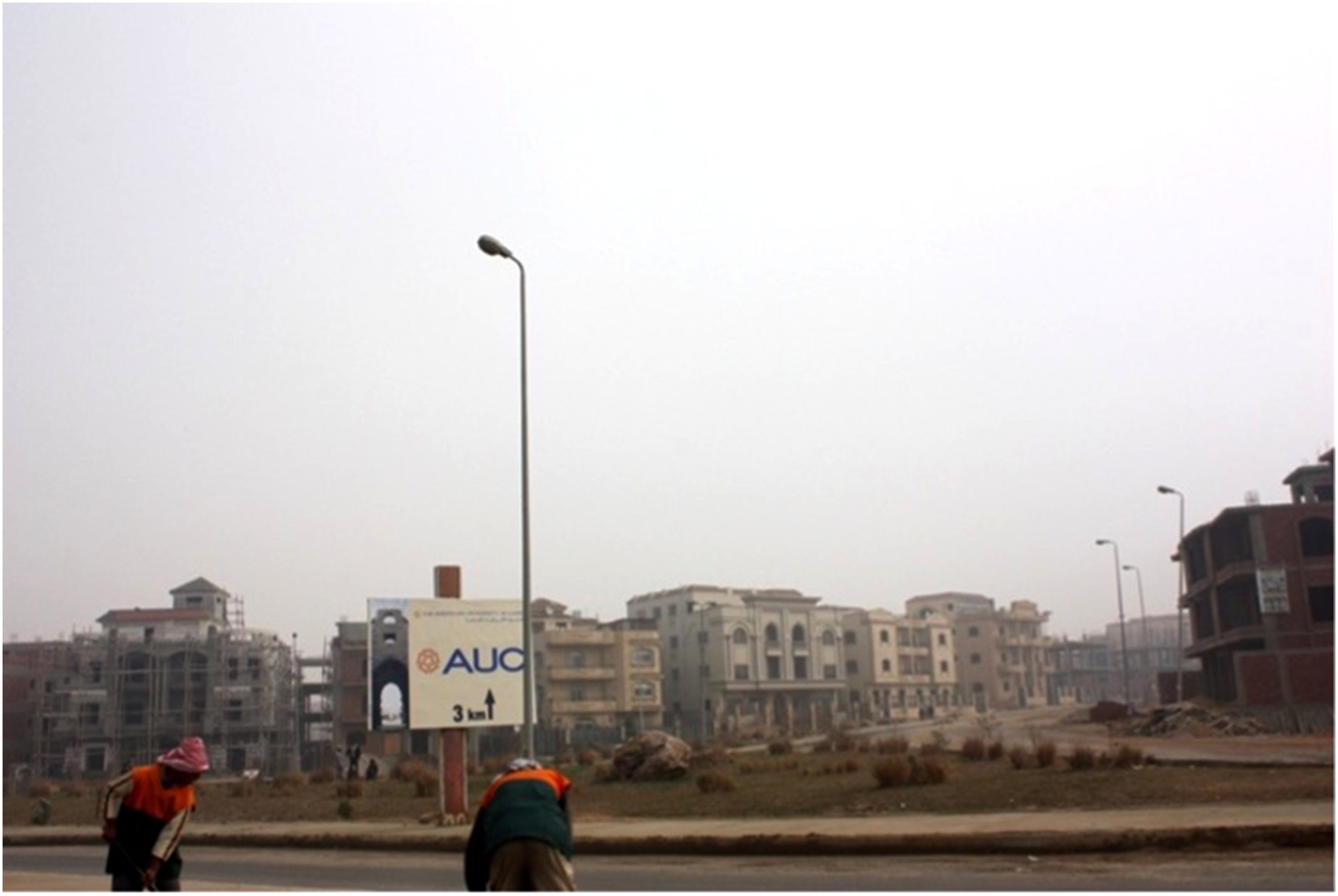
Photo of New Cairo development with AUC advertising in the background. Photo taken in 2011 by authors.
AUC's move to New Cairo spurred the demand and altered the scope and shape of this future satellite city. David Arnold, AUC's President who oversaw the plan for AUC's move to New Cairo, explained how after consulting with Egypt's Prime Minister and the Minister of Housing and New Development, the university determined that New Cairo would be a significant new center of development. He stated, “The location of our campus at the center of that development just seemed to make a great deal of sense” (Business Today, April 2008 cited in Al-Saleh and Arefin, 2010). In fact, when AUC first moved to New Cairo, the majority of the satellite city was in the process of being built. With future projects advertising themselves based on proximity to the highly esteemed campus, AUC impacted surrounding real estate development in New Cairo. Arnold himself stated: “I wish we could have captured some of the increase in the property values around us for the benefit of the university. We could have paid for the whole new campus!” (cited in Al-Saleh and Arefin, 2010).
As AUC moved to its New Cairo campus and shaped surrounding land values, the university retooled its educational and research apparatus to promote and support New Cairo's urban desert development. Reflecting on the move in an oral history interview, former university president David Arnold explained how closely the campus was tied to its expanding mission: “the [new campus] enabled us to raise our vision, to elevate our aspirations, and to also kind of raise the bar in terms of what we should aspire to, and what we should try and achieve as an institution.” 31
One prominent institution transformed to support the New Cairo campus was AUC's Desert Development Center (DDC). The DDC, founded in 1978, focused on various environmental, social, and economic dimensions of desert development, with a primary focus on small-scale, high-value agricultural activities, alternative conventional and non-conventional desert agriculture, and architecture for desert farms and communities. The DDC offered a range of services to these communities, including literacy courses and continuing education in desert agriculture.
32
Former director Richard Tutwiler described the Centre's founding director Adli Bishay as having a distinct understanding of the university's relationship to desert development and land: “he had a vision that—and by the way [he] was not alone… the American University in Cairo should make a serious contribution to Egyptian society, and in some ways was uniquely placed to do that, because as a university [we] subscribe to the notion of the integration of the disciplines and solving problems in a holistic fashion… what today we would definitely call sustainable development.”
33
The DDC, which had since its founding been primarily involved in rural agricultural issues, was retooled to support the project of branding the New Cairo campus as sustainable.
Up until the move, the DDC had been self-funded by selling produce from its experimental farm in Sadat City. However, when the lease expired in 2009, they lost the land due to competition with a developer. 34 The DDC was suddenly dependent on AUC for funding. The loss of the Sadat City farm and AUC's move to New Cairo coincided with the DDC's strategic renaming to Research Institute for a Sustainable Environment (RISE). A member of DDC, now called RISE, explained: “And of course, you know, ‘Desert Development Center,’ we had to work in the desert…I think the [AUC] President said that the name was too limited. So RISE gives us the opportunity to work anywhere in Egypt, or even beyond. It doesn't have to be in the desert anymore.” 35 While this allowed the DDC to take up the general cause of “sustainable desert environments” and begin working in urban contexts, this also enabled the center to turn to AUC's campus development as a source of funding. For instance, the DDC was involved, prior to AUC's move, in the new campus construction by growing the campus’ shade—a total of 6970 trees that require individual irrigation. 36
Initially tasked with developing specific urban desert landscape technologies, the DDC's new engagement with the university and wider New Cairo community extended beyond its original responsibilities. As the center conducted post-occupancy research of the campus’ water and electricity consumption, the DDC, previously uninvolved in campus life, began to utilize its research as tools to teach students about sustainable desert development in their New Cairo campus. A member of DDC explained the strategy behind the institute's involvement in AUC curriculum: In South Tahrir you would be training farmers. Here you are training engineers, people from other universities, AUC students… But we have to market it in a completely different way. We have added a whole series of new sources, like solar energy, how to run a sustainable office, hydroponics is new, you know some kind of topics that would interest an urban audience too…so we had to change because there was a necessity for it too. I mean we were going to die otherwise.
The role of AUC and DDC/RISE in promoting this particular discourse of desert development was not merely limited to the campus community. The interactions between the campus and the city were not only merely symbolic, but also official, institutionalized in urban governance. In an oral history reflecting on this pivotal moment, former Director of Planning and Design in the Office of New Campus Development Ashraf Salloum, said: “…we were, from day one, considered by the government as a very important partner in the development of New Cairo city. And we were, the project was a vision by the Ministry of Housing and New Development, and New Developments, as an anchor development for the whole city…. On the local level, the city authorities were always looking at the new campus project as an important project for the whole city. We always had a seat on the city board. We always had a say and advice to the city board on the city development itself…”
37
With AUC representatives sitting on New Cairo's city council, the university has had direct influence over the construction of the city by advising and encouraging housing developments to undertake sustainable development practices. In fact, developers from other projects in New Cairo visited the AUC campus in order to learn how they might better their future developments in New Cairo and other satellite cities (Al-Saleh and Arefin, 2010). Furthermore, AUC representatives have described its landscaping technologies as an intervention in Egyptian culture and interaction with the physical environment. While staff at DDC/RISE did not necessarily envision their campus-focused projects, such as garden plots and recycling initiatives, to entail radical interventions in Egyptian culture, the center has, over the past decade, strategically integrated itself into the university's self-promotion as a force for environmentally sustainable practices in Egypt.
Conclusion
“I never thought a university would foretell the future of our cities.”
–Davarian Baldwin, In the Shadow of the Ivory Tower
In this article, we use historical methods to demonstrate that AUC's suburban campus in New Cairo was an expression of a longstanding orientation to land which sought to position the university as central to development at Cairo's urban periphery and a key actor in the politics of land and land use. To trace the different instantiations of AUC's commitment to use its land holdings and campus to “do something for Egypt,” 38 we begin in 1916 to examine how early attempts to influence land use were attached to the geographical imagination of a suburban desert campus. Across AUC's 1916, 1944, and 2005 plans, the institution worked toward building a suburban desert campus that offered possibilities for its expansion and influence on the use of land in Egypt. While the focus of this article is a re-examination of the university's relationship to land, land use, and its campus over a 100-year period, the article, we argue, offers insights to inform an analysis of the present (Van Sant et al., 2020).
Over the past decade, AUC has increasingly incorporated addressing climate change into its New Cairo campus mandate. Like universities across the world, AUC has focused its efforts—from research and pedagogy to outreach and political influence—on climate change at local, regional, and global scales. AUC's climate change initiative “was established in response to worldwide climate change challenges and the active role academic and research institutions must play in understanding and addressing them” (AUC Climate Change, 2023). AUC is not unique in reconsidering its role in larger issues beyond its walls. But when these initiatives are presented as new efforts to tackle an emerging crisis, they obscure the fact that such efforts are entangled with AUC's long-standing role in Cairo's urban and environmental politics with shifting, but consistent ties to U.S. institutions.
As shown through our analysis, land and urban development at Cairo's periphery is a central and historical part of AUC's influence in Egypt as a private university. It is no surprise then that one of the projects under AUC's climate initiative is an effort to “green” real estate in Egypt. Ahead of the COP27 in Sharm El-Sheikh in 2022, the university hosted a group of senior business leaders, architects, policymakers, urban planners, and researchers to explore the question: “What if real estate accelerates a green transition?” (AUC, 2022). Decades after AUC's board of trustees argued over the importance of a suburban campus to influence the development of desert lands, AUC's campus in New Cairo serves as a hub where those with influence convene to produce market-based solutions to ensure that Egypt's private real estate companies can continue developing desert land in the face of a planetary crisis. As a convener of the event put it: “With Egypt's population doubling every 30 years, the real estate sector is becoming critical in its impact on climate change” (ibid). By connecting the university's present actions with its historical relationship to land, we argue that this situated study of AUC offers broader contributions for theorizing the fraught relationship between universities, knowledge, desert land and ecology, and urbanization.
In the current moment when universities such as AUC are turning their attention to climate justice and action, we see the need for careful and historical work that shows this turn is not unprecedented or benevolent, but rather rooted in deep histories which reveal universities as complicit and sometimes direct actors in shaping their campus, surrounding environments, and beyond in unequal ways. As demonstrated in this paper, AUC's educational and research infrastructure have been developed through its relationship to land's commodification and the desire to shape particular kinds of ideal communities through large landholdings. These historical relationships are the conditions which currently allow AUC to materially shape development practices and urbanization in response to climate change. As Stein argues about the colonial foundations of U.S. universities more broadly: “…while entrenched patterns of institutional violence do have specific starting points, they are not relegated to the past. Rather, they have continued to shape all subsequent higher education developments—never in a deterministic way but nonetheless in a way that suggests different higher education futures will not be possible if we do not first untangle and reckon with these historical and ongoing colonial foundations” (Stein, 2022: 3).
Excavating the continuities in universities’ relationship to land, in this case through AUC's repeated attempts to produce a suburban desert campus, allows for a material analysis of what Stein outlines, particularly in a moment where universities such as AUC are re-scaling their mandate to a national and global stage. AUC's climate action initiatives, such as the project of “greening” real estate, may maintain or deepen circuits for capital accumulation such as the commodification of land, the very systems and processes driving and exacerbating climate change and its uneven impacts. Through a situated study of AUC's foundational orientation to land, we are attuned to questions and modes of analysis about this university's present-day climate action that might otherwise go unnoticed—about community, arid lands, value, student education, and campus extension activities. Thinking the insights of critical university studies and political ecologies of land use together offers a robust set of tools to interrogate the role of an institution from which many of us work in and think from but leave under-examined.
Highlights
We examine the case of the American University in Cairo with a specific focus on its vision for a suburban desert campus over the last century.
We argue that AUC’s recent role in the development of New Cairo is an expression of the institution’s century-long aspirations to acquire land on Cairo’s ever-growing periphery to (1) ensure its long term presence and (2) carry out its educational mission “to do something for Egypt.”
Drawing together insights from political ecology and critical university studies, we offer a historical framework to study the relationship between universities, land, environmental knowledge, urbanization.
Our study connects the emerging role universities play in climate and environmental (in)justice to their historical and ongoing use of land.
Footnotes
Declaration of conflicting interests
The authors declared no potential conflicts of interest with respect to the research, authorship, and/or publication of this article.
Funding
The authors received no financial support for the research, authorship, and/or publication of this article.
