




Abstract
3D bioprinting is an emerging technology that drives us to construct the complicated tissues and organs consisting of various materials and cells, which has been in widespread use in tissue engineering and organ regeneration. However, the protection and accurate distribution of cells are the most urgent problems to achieve tissue and organ reconstruction. In this article, a multinozzle multichannel temperature deposition and manufacturing (MTDM) system is proposed to fabricate a blood vessel with heterogeneous materials and gradient hierarchical porous structures, which enables not only the reconstruction of a blood vessel with an accurate 3D model structure but also the capacity to distribute bioactive materials such as growth factors, nutrient substance, and so on. In addition, a coaxial focusing nozzle is proposed and designed to extrude the biomaterial and encapsulation material, which can protect the cell from damage. In the MTDM system, the tubular structure of a blood vessel was successfully fabricated with the different biomaterials, which proved that the MTDM system has a potential application prospect in tissue engineering and organ regeneration.
Introduction
3D bioprinting is an emerging and interdisciplinary technology that is extensively applied in the field of tissue engineering and organ generation. Due to its versatility, affordability, and ability to reconstruct tissues and organs, 3D bioprinting has been applied by numerous researchers, and this technology has already paved the way to the reconstruction of skin, 1 heart, 2 liver, 3 and vascular tissue. 4 However, many problems are the key factors that affect the regeneration of organs, such as properties of material, cell survival rate, and so on. To improve the cell survival rate, the technology to prepare better materials has become the key point for the successful application of 3D bioprinting.
In the past few decades, many polymer materials (including PEGylated fibrinogen, 5 poly [ethylene glycol] based 6 ) and natural materials (such as chitosan, 7 hyaluronic acid, 8 alginate,9,10 collagen 11 ) were used in the manufacture of organs and biological scaffolds. Compared with other materials, alginate-based hydrogels have revealed similar mechanical properties initially but different degradation rates and cell responses. 8 The reasons why alginate-based hydrogels are suitable for cell printing depend on their important characteristics such as printability, biocompatibility, and degradation.
Traditional approaches such as electrospinning 12 and mold 13 can be used to fabricate a blood vessel with single materials and single cells. With the advances of tissue engineering and organ regeneration, increasing attention has been paid to multimaterial and multicell distribution.13,14 However, it is difficult to control the multimaterial distribution point to point. Along with the evolution of rapid prototyping, approaches such as inkjet printing, laser-assisted printing, 15 and microextrusion printing 16 have been in widespread use in tissue engineering and organ regeneration, which could make it possible for multimaterial accurate distribution in the near future.
In this article, we develop a multinozzle multichannel temperature deposition and manufacture system, which can extrude the different materials to fabricate the tubular structure of a blood vessel. The multichannel temperature deposition and manufacturing (MTDM) system has a multichannel temperature control system, including a high temperature control unit and a low temperature control unit, which could ensure a constant temperature for thermosensitive materials during the printing procedure. This multitemperature control strategy can better solidify the blood vessel structure and control the appearance of a blood vessel. In addition, a coaxial focusing nozzle is proposed and designed to extrude the biomaterial and encapsulation material, in which the control of encapsulation material can protect the cell from damage.
Materials and Methods
As shown in Figure 1 , the MTDM system is composed of a model structure of a blood vessel, slice software, materials preparation, pressure control system, multitemperature control system, multinozzle distribution unit, and rotary printing forming unit. Blood vessel structure with the multimaterial and multicell could be fabricated by the MTDM system.
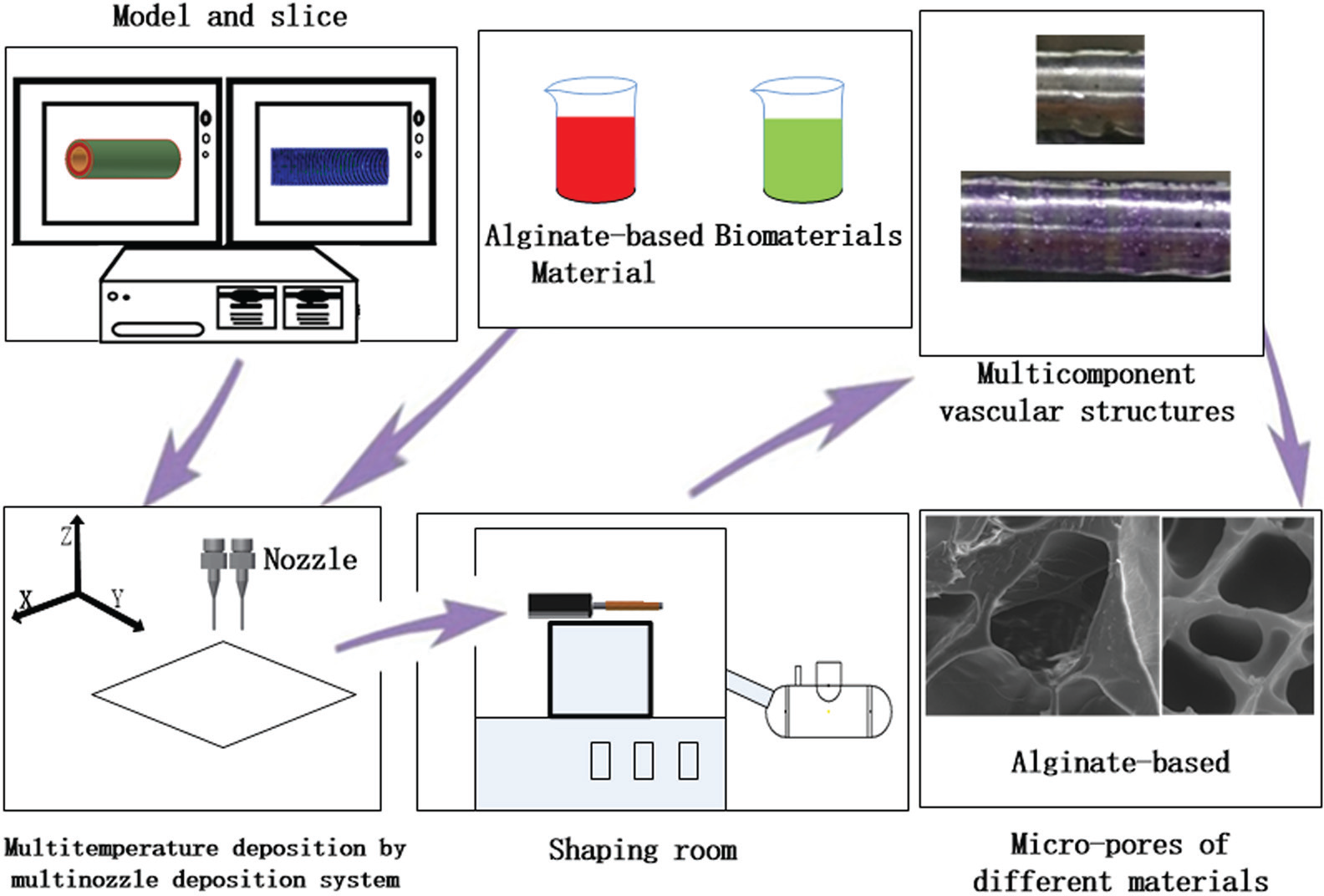
Multinozzle multichannel temperature deposition system for construction of a blood vessel.
Modeling
In the proposed device, the building process of a blood vessel is briefly described in Figure 2 . First, blood vessels are composed of a variety of cells that are arranged in accordance with the specific law generation of the tubular structure. The STL model (a file format which used the triangular mesh to represent the 3D CAD model) can be obtained by computer-aided design and computer-aided manufacturing (CAD/CAM) software. Then the model of the blood vessel was divided into different regions, which were filled with different materials. Next, the STL model was sliced by slicing software, which produced the G code document. Finally, the nozzle was controlled according to the predetermined trajectory, and the pattern of a blood vessel was printed out with the MTDM system.
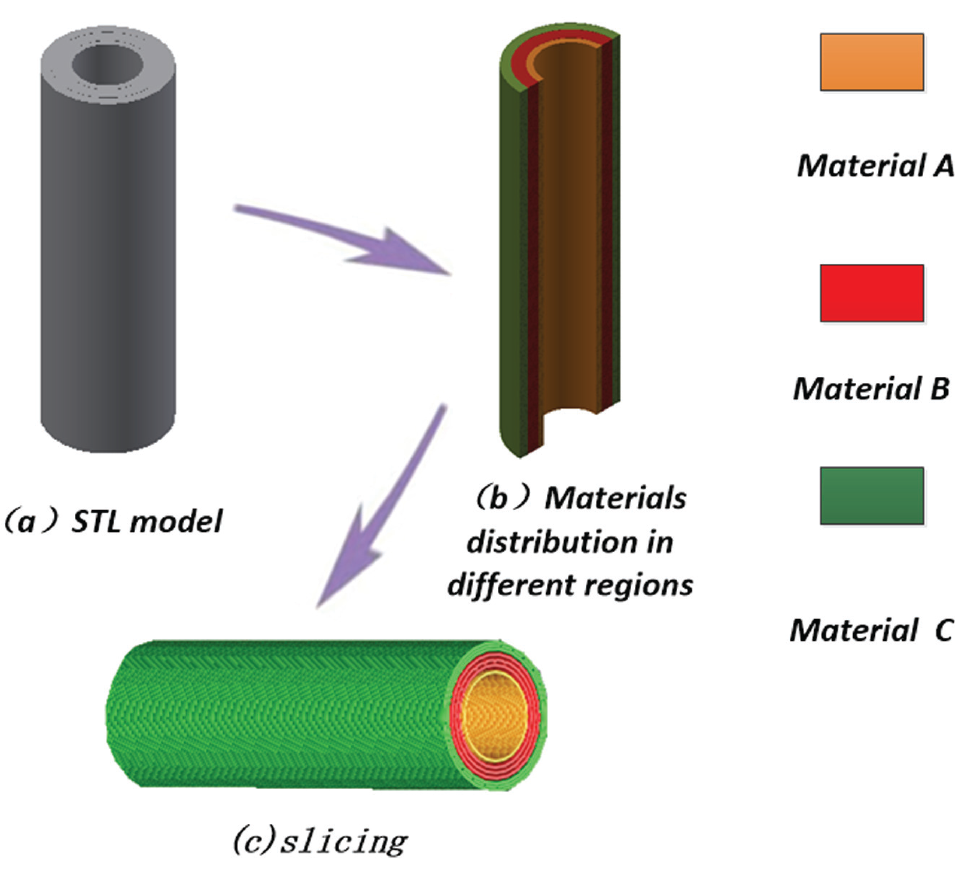
Construction process of the vascular model in the computer-aided design software and slicing software.
Materials Preparation
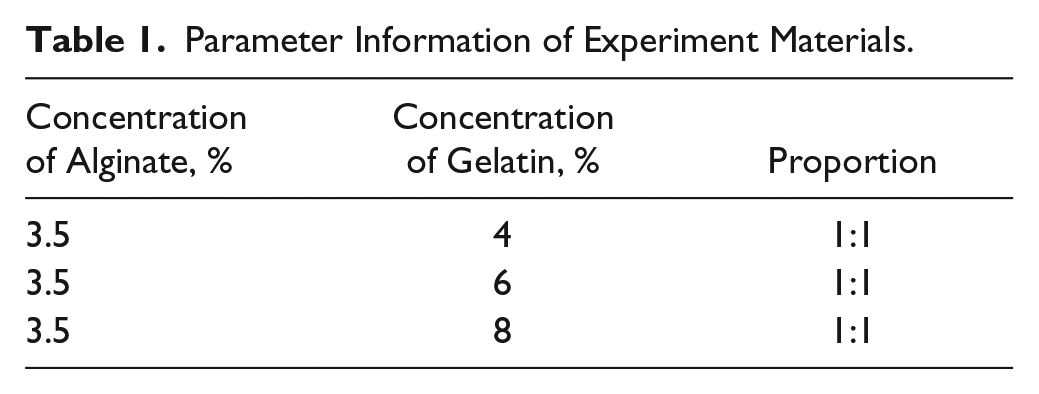
To verify the feasibility of the MTDM system, gelatin solution and alginate solution were chosen as experiment materials, which were formed by dissolving in deionized water. Table 1 shows the related parameters of experiment materials. Gelatin and alginate have excellent biological properties and low cost. Alginate and gelatin were derived from Longood Medicine (Beijing). In this experiment, alginate solution and gelatin solution were mixed in different volume proportions to establish the tubular structure of the blood vessel. The biomaterials were that the droplets with cells were evenly distributed in the alginate-gelatin solution. The density ranged from 150 to 200 droplets in per cubic centimeter.
Parameter Information of Experiment Materials.
Multinozzle Deposition Process
Figure 3 shows a novel extrusion-based (EB) nozzle that was designed to control the material distribution in the process of 3D bioprinting. The encapsulation materials were extruded from the external cavity, while biomaterial was extruded from the central cavity. The pressure in different cavities can be controlled, which can regulate the different material distribution at different speeds. In addition, the nozzle temperature was controlled by the temperature control system.
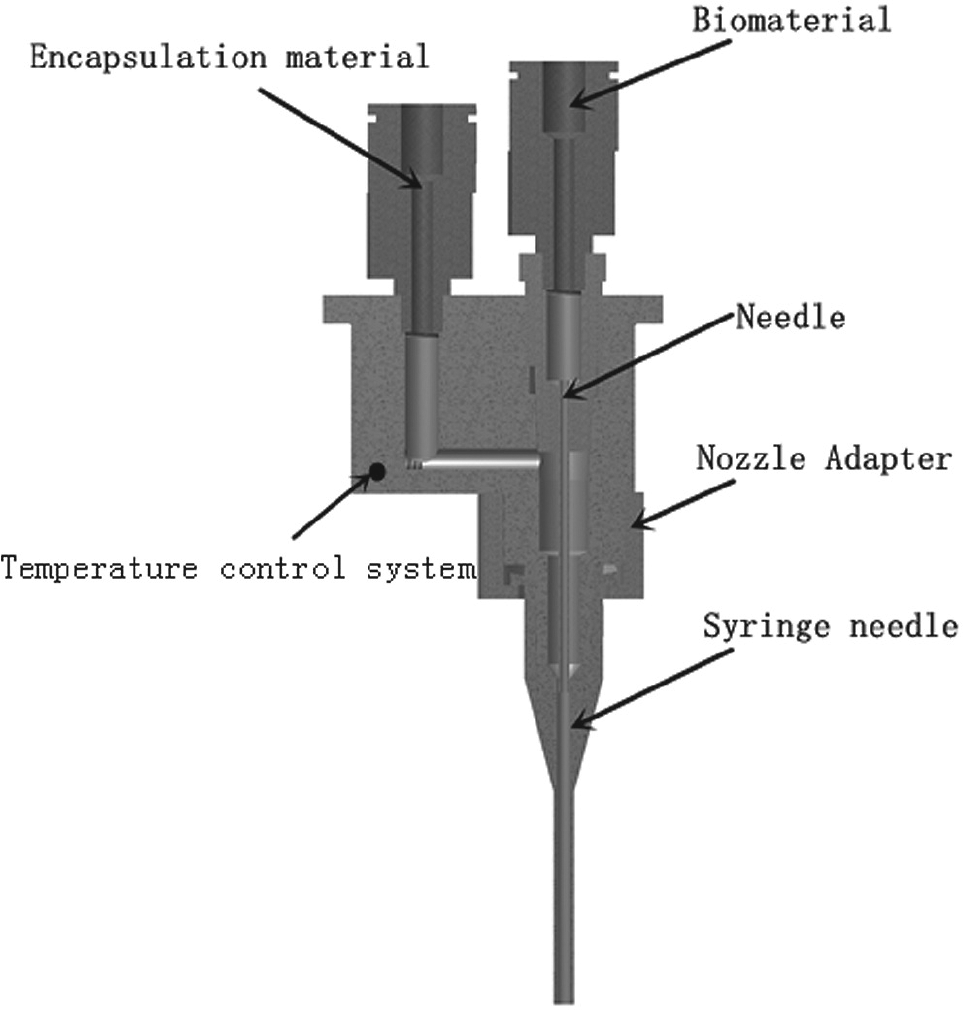
The sections of the coaxial focusing nozzle.
An EB nozzle was manufactured and used for a preliminary study. The EB multinozzles were connected with a disposable syringe, which were fixed on the temperature control system, in which the biomaterial and encapsulation materials could be maintained at the predetermined temperature. Biomaterial and encapsulation materials were extruded from the nozzle by a pneumatic control system.
As illustrated in Figure 4 , the 3D bioprinting platform is composed of a pressure-controlled system, multitemperature control unit, rotary printing unit, and multinozzle distribution unit. This platform was designed to reconstruct the blood vessel through a rotary printing unit. The multinozzle distribution unit can deposit different materials simultaneously. The multitemperature control unit can dominate the material temperature in different regions. In this MTDM system, two disposed syringes are fixed together and connected with a nozzle. The nozzles are fixed in the Z-axis, which can move in the XY-plane and be driven by the linear motor and servo motor. In addition, the platform is fixed in the Y-direction and driven by the linear motor to realize the movement in the Y-direction. This design enables the two nozzles to have an independent motion control unit, and multimaterial synchronous printing can be realized in the MTDM system.
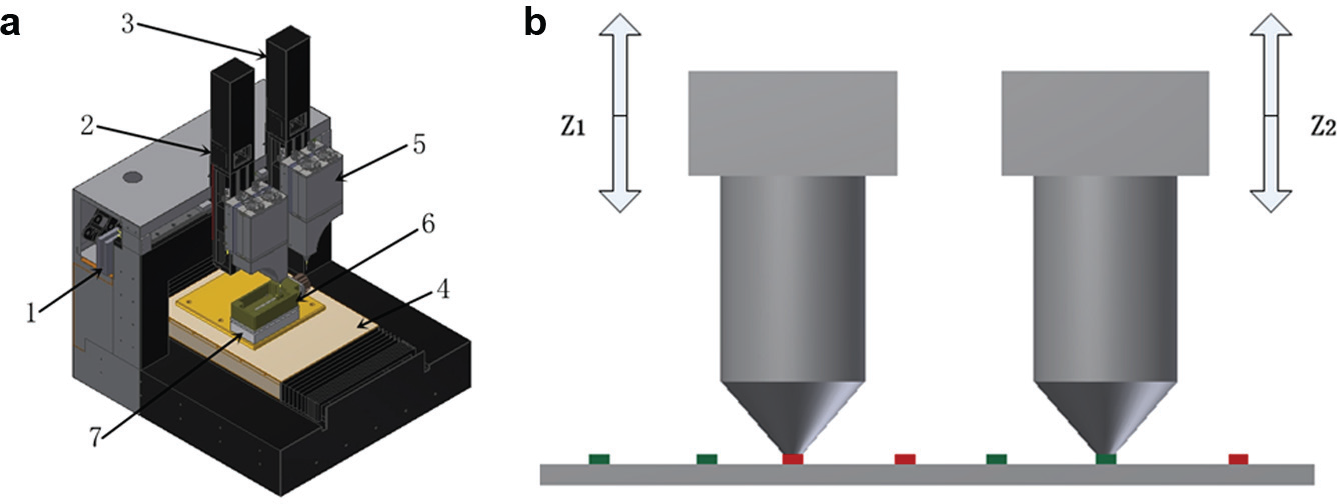
A novel 3D bioprinting system with the rotary printing unit. (
To observe the changes between encapsulation materials and biomaterial, we simulated the pressure distribution between encapsulation materials and biomaterial. The biomaterial in the inner cavity was squeezed out under the pressure of 0.2 Mpa at the same time the encapsulation materials were squeezed out under the pressure of 0.2, 0.3, 0.4, 0.5, 0.6, and 0.7 Mpa. Figure 5 shows the relationship between internal fluid and external fluid under different pressures. With the increase of the external fluid pressure, the diameter of the internal fluid would be reduced gradually, and the joint force of droplets would increase between inner fluid and external fluid. This means that appropriate external fluid pressure would have contributed to the protection of cells.
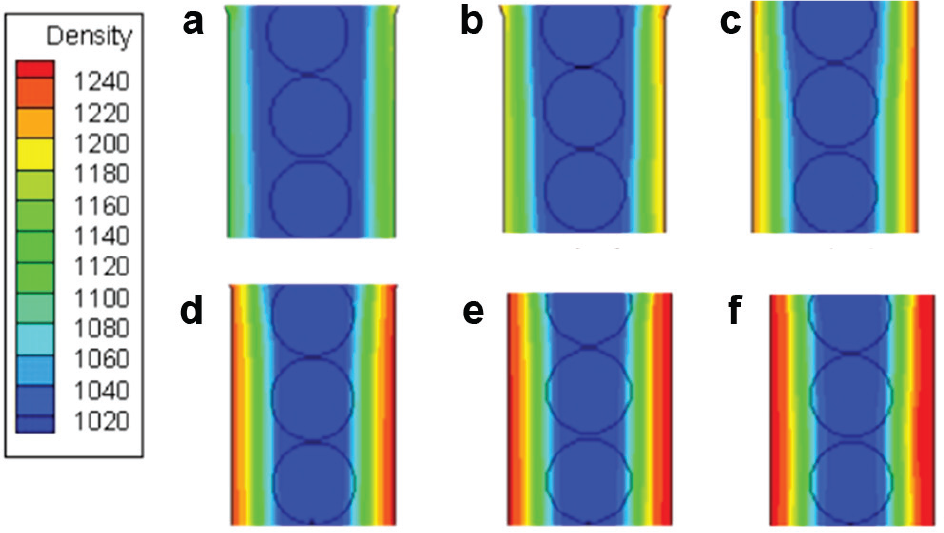
The relationship between internal fluid and external fluid under the pressure of 0.2, 0.3, 0.4, 0.5, 0.6, and 0.7 Mpa.
Temperature Control Process
To realize multichannel temperature control, the MTDM system contains two sets of independent temperature control systems, including a high temperature control unit for material extrusion control and a low temperature control unit for material forming control. The extrusion temperature of materials is about 37 °C, which is dominated by a high temperature control unit in the extrusion area, and the solidification temperature is about 4 °C, which is controlled by a low temperature control unit in the tubular structure forming area.
Freeze-Drying Process
To verify the MTDM system, the volume ratio 1:1 (v/v) of gelatin solution and alginate solution was selected for preliminary study. The tubular structure of a blood vessel was obtained by a rotary printing unit, as shown in Figure 6a , b . The macrotubular structure has a perfect molding effect, such as uniformity and mechanical strength. For the better observation of the blood vessel microstructure, the tubular structure was freeze-dried and immediately moved into an Advantage Pro freeze dryer (VirTis Advantage Pro, which was made in America) and taken out 48 h later. Solvents for the tubular structure were completely removed by sublimating in the vacuum environment, and interconnected micropores were formed, as shown in Figure 6c , d . We can see that the micropores have characteristics of porous and uniform distribution.
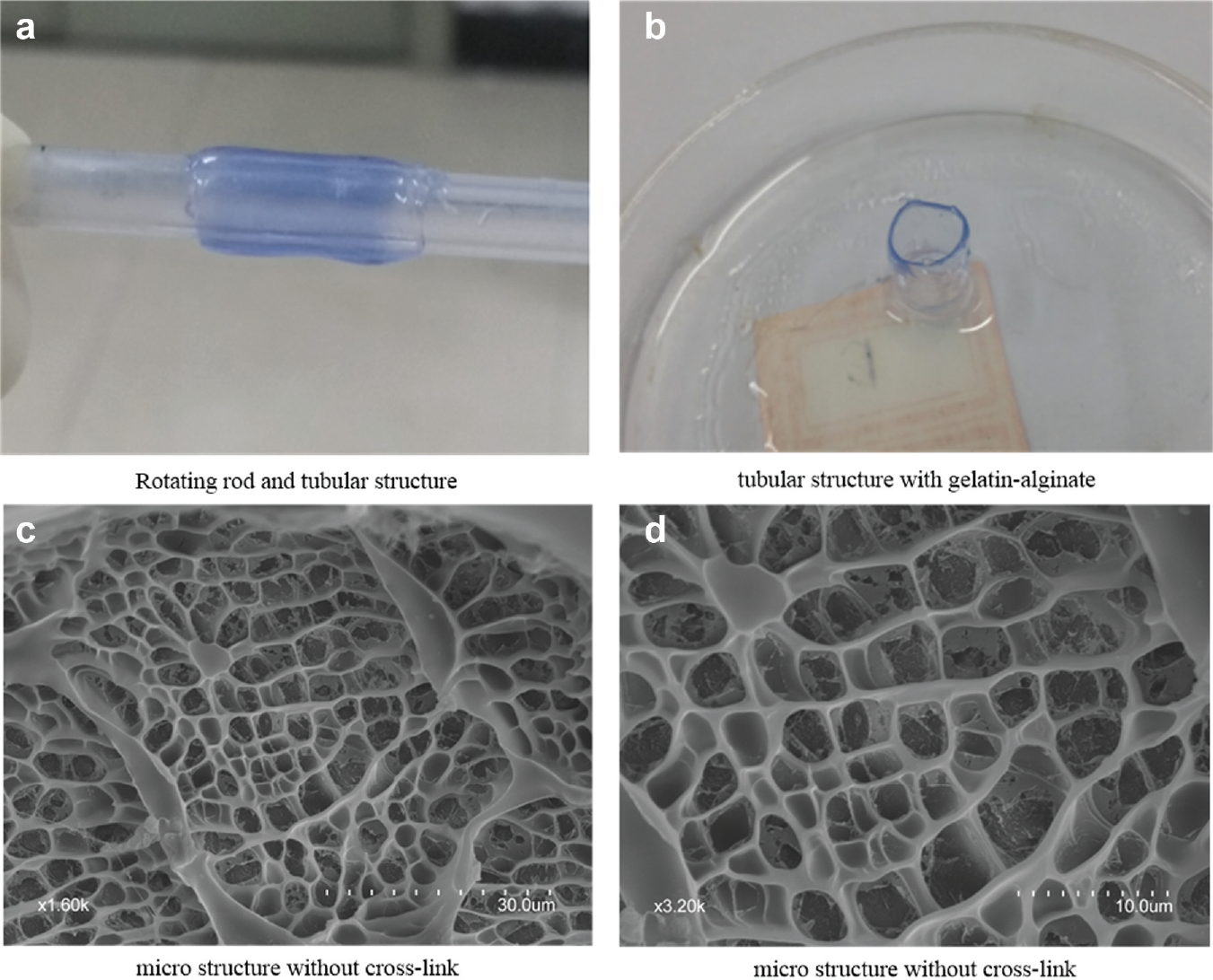
Blood vessel scaffold fabricated by an extrusion-based nozzle. (
Discussion
The tubular structure of a blood vessel needs to have a microporous structure to control the growth of cells and dominate the release of the growth factors. In the proposed device, the MTDM system can realize the multimaterial distribution, which can be squeezed out into the tubular structure forming region at 37 °C, while the formation of the tubular structure is in the lower temperature region (4 °C), which can keep the tubular structure from collapse.
To achieve the reconstruction of a blood vessel, it is necessary to mix different materials in a certain proportion to form a thermosensitive hydrogel, which can exhibit different viscosities at different temperatures, as shown in Figure 7 . The biomaterials’ viscosity declined as temperature gradually increased. In addition, the thermosensitive hydrogel should have an important characteristic that the materials can be rapidly solidified in a low temperature environment. Moreover, the materials are nontoxic and have good biological compatibility.
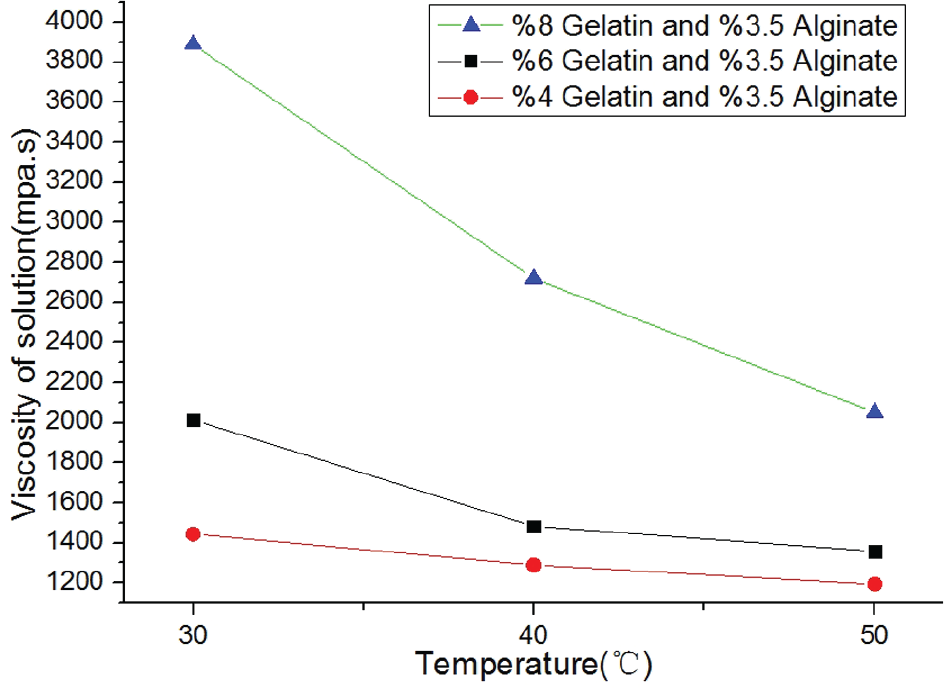
The materials’ viscosity changed with the temperature under different solution concentrations.
For the extrusion of different materials, a variety of nozzle structures have been designed to meet the different functions. The functional nozzles are chiefly divided into pressurized mini-nozzles, solenoid nozzles, piezoelectric nozzles, and pneumatic nozzles. 17 Pressurized mini-nozzles and pneumatic nozzles are suitable for extruding materials with a wide viscosity range, while solenoid nozzles and piezoelectric nozzles are suitable for extruding materials with a lower viscosity range. In the MTMD system, many materials such as alginate and gelatin were extruded in the EB nozzle. The droplets could be protected to reduce fragmentation and deformation by the pressure control of encapsulation materials.
In the nozzle control unit, gas leakage and the liquid leakage phenomenon not only cause the lack of pressure but also lead to biological materials waste, which could affect the extrusion speed and precision of biomaterial distribution. The extrusion of material needs the combination of the pneumatic control system and the nozzle to prevent the leakage problem.
Material selection has a significant impact on maintenance of cell growth in tissue engineering and organ regeneration. Ideal materials for tissue engineering application must possess adequate mechanical strength and biological properties to sustain cell adhesion, proliferation, and differentiation. Single materials cannot meet all the requirements for cell survival. In this MTDM system, we can fabricate a tubular structure composed of several biomaterials in a certain proportion, as shown in Figure 8a . In the case of a gelatin-alginate hybrid scaffold, the blood vessel structure could be accurately designed in the computer and reconstructed by the MTDM system.
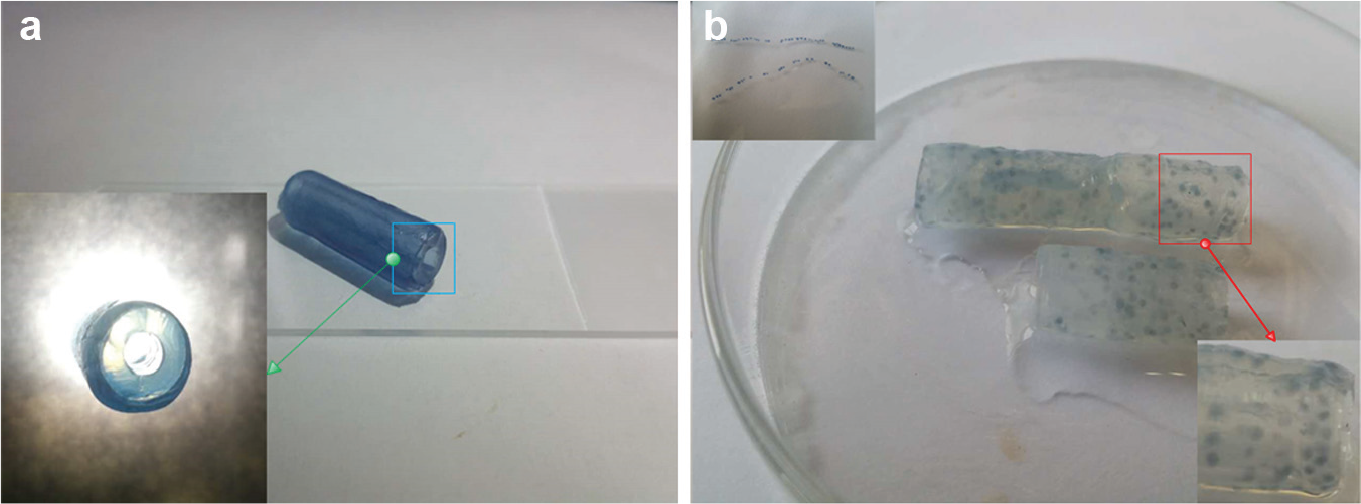
The tubular structure of a blood vessel contains different materials and cells.
The reconstruction of a tubular structure with multimaterials and multicells is an important point to achieve. Take repairing of blood vessel damage, for example. The alginate-based materials are selected to mimic living environments of the different cells. Traditionally, the reconstruction method of the blood vessel is mainly layer-by-layer accumulation, which results in reducing the molding effect and survival ratio. As shown in Figure 8b , 3D bioprinting with a multinozzle and rotary printing unit not only made the different field of the tubular structure be filled with different biomaterials but also improved the molding effect of the blood vessel and mechanical strength. The MTDM system can be successfully used to distribute biomaterials and encapsulation materials and to realize the reconstruction of a blood vessel, which has a potential application background in the field of tissue engineering and organ regeneration.
In conclusion, assisted by a rotary printing forming method, an MTDM system was designed to fabricate a blood vessel with multimaterials and multicells. An EB nozzle was manufactured and adopted for preliminary study. Gelatin-alginate and multicells could be extruded to ensure zero leakage and reconstruct a tubular structure in this system. The multichannel temperature control system was developed to regulate the materials’ temperature in different regions, which can realize the materials’ extrusion and solidification. As the MTDM printing process was carried out under the multitemperature control environment, the tubular structure of the blood vessel could be fabricated successfully. Therefore, it was proved that the MTDM system has potential advantages to reconstruct multitissue and complex organs such as skin, liver, heart, and kidneys. In addition, this system has a drawback of clogging in the coaxial focusing nozzle, which will be optimized in the promotion process of 3D bioprinting.
Footnotes
Declaration of Conflicting Interests
The authors declared no potential conflicts of interest with respect to the research, authorship, and/or publication of this article.
Funding
The authors disclosed receipt of the following financial support for the research, authorship, and/or publication of this article: The work was financially supported by the following projects: the national high technology research and development program of China (863 program) under grant 21075026 and the transverse project under grant 29015001.