




Abstract
In a high-throughput screening (HTS) process, the chemical reactivity of test samples should be carefully examined because such reactive compounds may lead to false-positive results and adverse effects in vivo. Among all natural amino acids, the thiol side chain in cysteine has the highest nucleophilicity; thus, assessment of intrinsic thiol group reactivity in the HTS processes is expected to accelerate drug discovery. In general, kchem (M−1s−1), the secondary reaction rate constant of a compound to thiol, can be evaluated via time course measurements of thiol-compound adducts using liquid chromatography–mass spectroscopy; this requires time-consuming and labor-intensive procedures. To overcome this issue, we developed a fluorescence-based competitive endpoint assay that allows quantitative calculation of the reaction rate of test compounds in an HTS format. Our assay is based on the competitive reaction for a free thiol (e.g., glutathione) between the test compounds and a fluorescent probe, o-maleimide BODIPY. Our assay provides robust data with a satisfactory throughput at an affordable cost. Our kchem evaluation method has advantages over previous assays in terms of higher throughput and quantitativeness. Thus, it contributes to early elimination of reactive compounds as well as quantitative evaluation of the kchem values of covalent inhibitors.
Keywords
Introduction
Over the past few decades, high-throughput screening (HTS) has played an important role in providing a starting point for many drug discovery projects. For identification of hit compounds, chemically reactive compounds should be examined with the greatest care. One of the reasons is their tendency to perturbate biological experimental results due to their promiscuous target inhibition and assay interference.1–4 In an HTS process, not only the test compounds themselves but also reactive impurities in the samples may inhibit the target, 5 resulting in false-positive results and poor outcomes in the following hit confirmation. Another reason is that chemically reactive compounds have the potential for off-target protein modification, leading to adverse effects such as immunotoxicity and idiosyncratic hypersensitivity reactions.6,7 For these reasons, the assessment of the intrinsic chemical reactivity (kchem) of HTS samples is expected to provide important information for early elimination of reactive compounds and accelerate the development of more selective drugs with fewer side effects.
Among the side chains of 20 natural amino acids, the thiol group of cysteine has the highest nucleophilicity, 8 thus being amenable to modification by compounds with electrophilic functional groups, such as Michael acceptors or chloromethyl ketones.1,2 To evaluate the intrinsic chemical reactivity of such compounds, a thiol-containing molecule, such as glutathione (GSH), could be a good surrogate for cysteine residues in physiological proteins. The reactions of test compounds and GSH can be directly monitored using either mass spectrometry or nuclear magnetic resonance (NMR) spectroscopy. 9 Although this method is the standard approach to assess kchem values, it requires laborious and time-consuming procedures. Another widely used method for thiol reactivity assessment is via a fluorescence-based assay. One of them is a competitive binding assay using GSH and fluorescein-5′-maleimide. 10 This assay is very simple and easy to use, but the throughput is not high because it requires a kinetic measurement. Since the number of primary hits is usually beyond the capacity of these methods, thiol reactivity assessment that can be applied to an HTS format is required. Recently, another fluorescence method for assessment of intrinsic chemical reactivity was reported. The assay is based on the direct measurement of the fluorescence change of a thiol-containing probe caused by covalent modification with test compounds. 11 While this assay could be adapted to an endpoint assay and applied to an HTS format, the ratio of the fluorescence change does not have a linear relationship with the reaction rate constant, thus making it difficult to quantitatively evaluate kchem. In addition, the optimization for high reproducibility is challenging because the thiophenol group in the fluorescence probe is easily oxidized and forms a disulfide bond. 11
To overcome these issues, we developed a theory for an assay that allows quantitative kchem determination. The assay is based on the endpoint competitive reaction for a free thiol (e.g., glutathione) between the test compounds and a thiol-reactive fluorescent probe. In this report, we present the results of experimental verification of our theory. Our kchem evaluation method has advantages over previous assays in terms of higher throughput and quantitativeness at an affordable cost. Thus, it contributes to early elimination of reactive compounds as well as quantitative evaluation of the kchem values of covalent inhibitors.
Materials and Methods
Materials
GSH, ethylenediaminetetraacetic acid (EDTA), ammonium acetate, and acetonitrile were purchased from Wako (Osaka, Japan). The solution of 4-(2-hydroxyethyl)-1-piperazineethanesulfonic acid (HEPES) was purchased from Thermo Fisher Scientific (Waltham, MA). The detergent 3-[(3-cholamidopropyl)-dimethylammonio] propanesulfonate (CHAPS) was obtained from Dojindo (Kumamoto, Japan). o-Maleimide BODIPY (BODIPY-MA; Fig. 1A ) was synthesized as described previously. 12 All assays was carried out at room temperature (25 °C) using the assay buffer (25 mM HEPES, pH 7.5, 0.50% (w/v) CHAPS, and 1 mM EDTA).
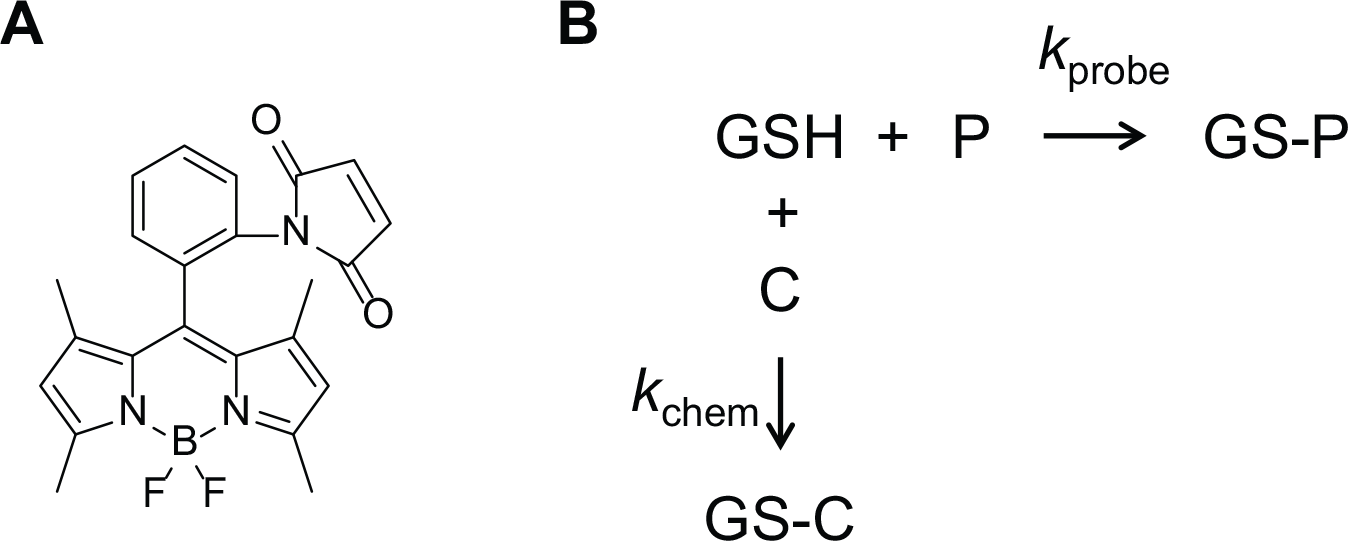
Reaction scheme of the competitive endpoint assay to evaluate thiol reactivity. (
Determination of the Association Rate Constant of BODIPY-MA to GSH
Fluorescence assays were performed in a final volume of 10 µL using 384-well, nonbinding black flat-bottomed plates (ref. 784900; Greiner Bio-One, Frickenhausen, Germany). Fluorescence was measured using an EnVision microplate reader (PerkinElmer, Waltham, MA) using a 485/14-nm FITC excitation filter, a 535-nm/25-nm FITC emission filter, and a D505 FITC optical module (PerkinElmer). To determine the association rate constant, the reaction was initiated by the addition of GSH to the buffer containing BODIPY-MA, and a time course of the fluorescence change was measured at room temperature. The final concentration of GSH and BODIPY-MA was 50 nM and 250 nM, respectively. The specific fluorescence signal from the GSH–BODIPY-MA reaction was obtained by subtraction of the fluorescence in the absence of GSH from the total fluorescence signal. The signal was fitted with a single exponential curve using the GraphPad Prism 5 software (GraphPad Software, La Jolla, CA). Since the reaction between the probe and GSH is irreversible ( Suppl. Fig. S1 ), the observed kinetic rate constant (kobs) was converted to kprobe using the following equation:

Flat Field Test
BODIPY-MA was diluted with assay buffer to 500 nM and dispensed 5 µL to each well in assay plates with a Hornet SA liquid-handling system (Panasonic, Osaka, Japan). Next, 5 µL of 100 nM GSH (for 0% inhibition control) or assay buffer (for 100% inhibition control) was added to the assay plate. The final concentration of BODIPY-MA and GSH was 250 and 50 nM, respectively. To measure the initial fluorescence of BODIPY-MA, the fluorescence signal was measured immediately after the initiation of the reaction. The assay plates were sealed with plate sealer (Eidia, Tokyo, Japan) and incubated at room temperature to help the reaction to proceed. After a 6-h incubation, the fluorescence signal was measured using EnVision. The specific fluorescence signal from the GSH–BODIPY-MA reaction was obtained by subtraction of the fluorescence at the initiation of the reaction from that after 6 h of incubation. The signal-to-background (S/B) ratio and Z′ factor were determined using the corrected fluorescence signal. S/B ratio and Z′ factor were calculated using equations (2) and (3), respectively:
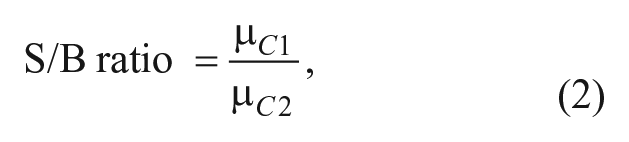
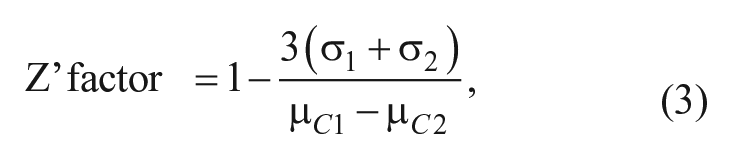
where µc1, µc2, σ1, and σ2 are the mean values and standard deviation of signal from the 0% and 100% inhibition control wells, respectively.
Measurement of Intrinsic Thiol Reactivity of Test Compounds
Assay buffer containing 750 nM BODIPY-MA was dispensed 3.5 µL to each well in assay plates with the Multidrop Combi Reagent Dispenser (Thermo Fisher Scientific). The dispersion of fluorescence signal from each well was measured using EnVision, and uniformly dispensed plates were selected for the subsequent assay. Next, 3.5 µL of 3-fold concentration of test compounds was added to the assay plate using the Hornet SA liquid-handling system or Multi Works 508 (M S TECHNOS Corp., Tokyo, Japan). Subsequently, 3.5 µL of 150 nM GSH was added to the plate and the fluorescence signal was measured immediately to obtain autofluorescence from the test compounds. The final concentrations of BODIPY-MA and GSH were 250 and 50 nM, respectively. The assay plates were sealed with plate sealer and incubated at room temperature to help the reaction to proceed. After a 6-h incubation, the fluorescence signal was measured using EnVision, and the specific fluorescence signal from the GSH–BODIPY-MA reaction was obtained by subtraction of the fluorescence at the initiation of the reaction from that after 6 h of incubation. The fraction of GSH that reacted with test compounds (percentage inhibition) was calculated according to equation (4):

where T is the value of the wells containing the test compounds, and µC1 and µC2 are the mean values of the 0% and 100% inhibition control wells, respectively. The values of the 0% and 100% inhibition controls were the signals obtained in the presence and absence of GSH, respectively. IC50 of the test compounds was determined by fitting the concentration-response curves of the percentage inhibition to equation (5) using GraphPad Prism 5 or XLfit (IDBS, London, UK) software:

where [C] represents the concentration of test compound.
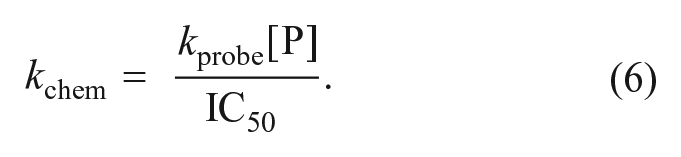
The kchem of test compounds was calculated from the IC50 determined at the probe concentration of [P] using equation (6).
Results and Discussion
Theory Construction
Our strategy for evaluating intrinsic thiol reactivity is based on the competitive reaction for GSH between test compounds and a fluorescent probe. As shown in Figure 1B , we considered a model under the following assumptions: (1) both probe (referred to as P) and test compound (referred to as C) react with GSH irreversibly, and (2) the probe reacts with GSH competitively with the test compound. Here, the simultaneous differential equations can be described as follows:
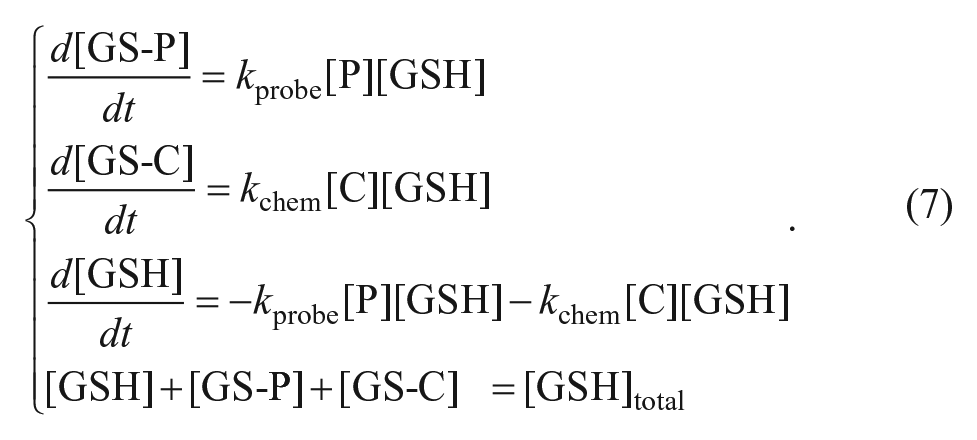
In this model, [P], [C], [GS-P], [GS-C], and [GSH]total represent the concentration of probe, test compound, probe-GSH complex, test compound–GSH complex, and total GSH, respectively. kprobe and kchem are reaction rate constants of the probe and the test compound to GSH, respectively. To solve this equation, we set the simplifying assumptions described as follows: (1) the reaction of the probe and test compounds to GSH was initiated simultaneously, and (2) the concentration of the probe and test compounds is much higher than that of GSH (i.e., no ligand depletion occurs). Under this condition, the concentration of [GS-P] as a function of time is calculated to equation (8):

where kobs represents

After an infinite incubation time, the concentration of [GS-P] can be expressed as a function of [C]:
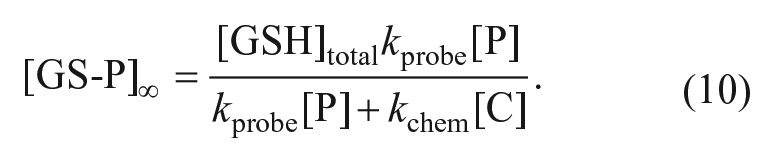
Since fluorescence change is proportional to [GS-P] formation, the ratio of the fluorescence change in the absence (ΔF∞(0)) or presence (ΔF∞([C])) of the test compound at the concentration of [C] after infinite time incubation can be described as follows:
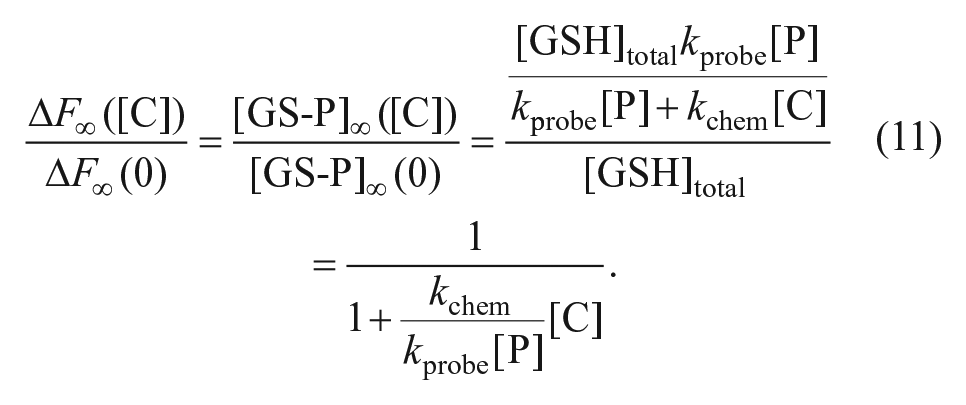
From equation (11), the relationships between IC50 of the assay and kchem are described as equation (6) (see Materials and Methods), that is, kchem can easily be converted from the IC50 value as long as the kprobe value is measured beforehand.
Assay Development
As a thiol detection fluorescence probe, BODIPY-MA 12 ( Fig. 1A ) was selected because its fluorescence enhancement by reacting with thiol is much higher than that of fluorescein-5′-maleimide, 12 thus leading to assay robustness with a satisfactory S/B ratio. In our theory, we hypothesized irreversible binding of the probe to GSH. The irreversibility was confirmed by displacement of BODIPY-MA by addition of an excess amount of N-ethylmaleimide (NEM) to preformed BODIPY-MA and GSH complex. Interaction between BODIPY-MA and GSH was not displaced by a 4000-fold amount of NEM, which indicated irreversible binding of BODIPY-MA to GSH ( Suppl. Fig. S1 ). To determine the kprobe value of BODIPY-MA to GSH, we measured a time course of the fluorescence change after the initiation of the reaction between GSH and BODIPY-MA in the absence of test compounds. The progress curve was fitted with a single exponential, and the observed association rate constant (kobs) in the presence of 250 nM BODIPY-MA was calculated to be (9.8 ± 0.4) × 10−5s−1 (the error represents SEM of the curve fitting). By dividing the kobs value by the concentration of BODIPY-MA (250 nM), the kprobe value of BODIPY-MA to GSH was determined as 390 ± 20 M−1s−1 ( Fig. 2A ). As described above, the theory of the endpoint assay is based on the assumption that the concentrations of BODIPY-MA and a test compound are higher than that of GSH. To satisfy both the assumption and assay robustness for a high-throughput assay, the concentration of BODIPY-MA was set to 250 nM, which was 5-fold higher than the concentration of GSH (50 nM). In this condition, the reaction reached almost completion (~87%) after a 6-h incubation. It should be noted that our theory assumes completion of the irreversible reaction. Despite the incompletion of the reaction, we selected 6 h as an appropriate incubation time because longer incubation time reduces the assay throughput and may cause decomposition of test compounds in aqueous solution. To investigate whether the measurement at the reaction incompletion could affect kchem determination, we performed a numerical simulation analysis (supplementary material). The analysis revealed that kchem values obtained from IC50 at 6 h showed only 1.3- to 1.4-fold differences from those obtained after the reaction completion ( Suppl. Fig. S2 ), suggesting the validity of the assay condition.
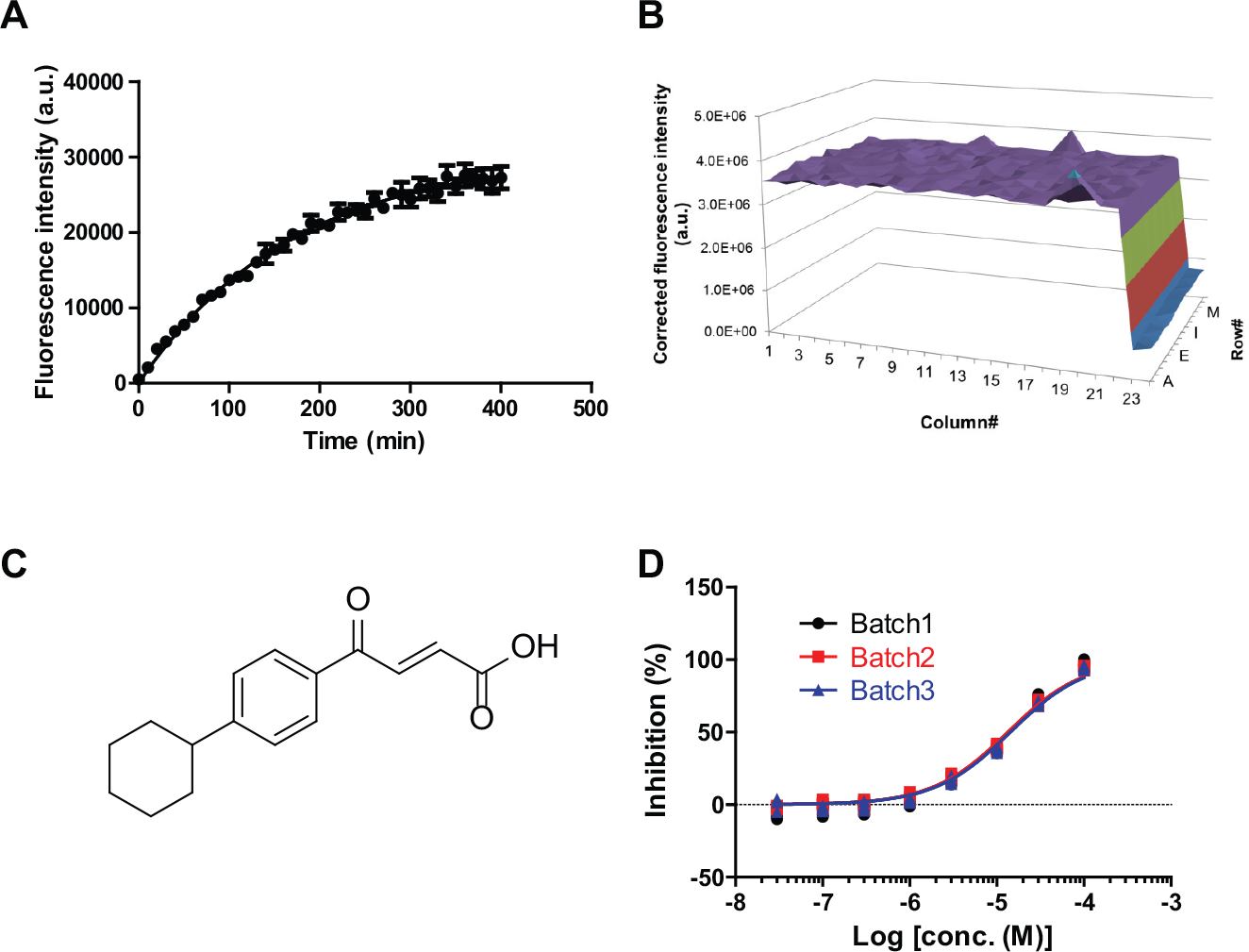
Assay development using an irreversible thiol detection fluorescent probe. (
Some compounds possess intrinsic fluorescence property and might cause assay interference. To avoid such interference, signal specific to the reaction was obtained by subtraction of the fluorescence at initiation from that after a 6-h incubation. From the flat field test, S/B ratio and Z′ factor of the assay were calculated as 4.8 and 0.87, respectively. Since assays providing Z′ factor over 0.5 exhibit a wide separation between signal and background and low data variability, our method can be regarded as an excellent assay for compound evaluation performable in an HTS format ( Fig. 2B ).13,14 Next, we evaluated DMSO tolerance of the assay and confirmed that up to 5% DMSO did not affect the fluorescence signal (data not shown). In addition, coefficient of variation of the pIC50 of the control compound ( Fig. 2C ) was 0.38% ( Fig. 2D ), indicating a high reproducibility of our assay. In this experiment, the concentration of test compound should be less than 100 µM with regard to aqueous solubility; thus, the lower detection limit of the assay was calculated to be 0.98 M−1s−1 of kchem from equation (6).
Evaluation of Intrinsic Chemical Reactivity of Test Compounds
Next, we applied this assay to a structure activity relationship study of intrinsic thiol reactivity. Four structurally related compounds with a Michael acceptor group (
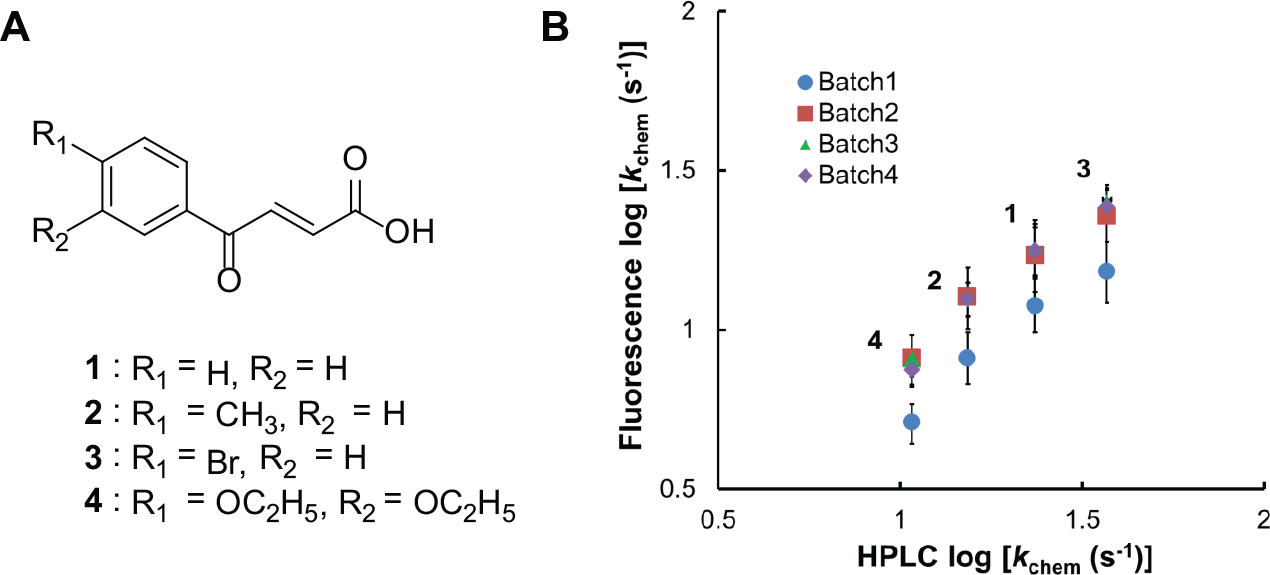
Correlation between the kchem value obtained from the high-performance liquid chromatography (HPLC) and fluorescence method. (
It should be noted that impurities in the test samples could perturbate the results of this assay. Thiol-reactive impurities will react with GSH, which results in the overestimation of kchem. Conversely, contamination of free thiols leads to the underestimation of kchem due to fluorescence emission caused by its reaction to BODIPY-MA. In both cases, HTS samples that show abnormal signals in our assay should be treated with the greatest care, considering the possibility of nonselective inhibition by reactivity of either a library compound itself or coexisting impurities. For a quantitative kchem evaluation, the purity of the test compounds should be confirmed.
Future Perspective for kchem Evaluation
Our method can be performed in an HTS format, unlike HPLC or NMR spectroscopy. The procedure is simply mixing the probe and test compounds with GSH followed by fluorescence measurements using a plate reader after 6 h of incubation at room temperature. As stated above, a highly thiol-reactive compound or sample with a reactive impurity is unsuitable for HTS hits. 1 A conventionally used approach to exclude such reactive compounds is evaluating biological activity of compounds in the presence or absence of thiols, such as GSH or dithiothreitol.4,8 Compounds showing a decrease in inhibitory activity in the presence of thiols can be regarded as a thiol-reactive sample. Although examining the effect of thiols on test compounds is one of the standard approaches in an HTS process, it cannot always be applied because some targets and assays, such as disulfide-containing proteases, are not compatible with thiol compounds. Another strategy to assess the covalency of compounds is to investigate their competitive inhibition mode by performing the assay at various concentrations of substrate or tracer ligand. 16 Despite the simpleness, this approach is only applicable as long as the ligand affinity is sufficiently high to conduct the assay under a wide range of ligand concentrations. In addition, the approach may miss the opportunity to obtain allosteric inhibitor since they are noncompetitive with the ligand or tracer compound. In contrast to these approaches, our assay can be used for any HTS campaign irrespective of the target classes or inhibition mode of the inhibitors.
In addition, this method provides quantitative kchem values of the test compounds of covalent irreversible inhibitors. Recently, covalent inhibitors have been attracting a great deal of interest from the pharmaceutical industry owing to their strong potency and long duration of action. 7 Despite these desirable features, covalent inhibitors have the potential to modify off-target proteins promiscuously, thus leading to adverse effects such as immunotoxicity or hypersensitivity reactions. Since promiscuous covalent modification is related to the potency of intrinsic chemical reactivity (kchem), simultaneous evaluation of the reactivity to target proteins (kinact/KI)2,15 and kchem is important to achieve target selective inhibition. In this sense, our assay will contribute to the rational design of potent covalent inhibitors with fewer side effects.
It should be noted that some factors in our assay will inevitably lead to inaccuracies in the kchem analysis. For example, since lowering the BODIPY-MA concentration increases the sensitivity of this assay, the assay was performed at the concentration of 5-fold excess amount of BODIPY-MA compared with GSH, which might violate the assumption that the concentration of BODIPY-MA is constant throughput the assay. In addition, reversible covalent compounds will lead to an underestimation of kchem because their IC50 values in this assay will increase in a time-dependent manner. Although these factors may lead to inaccurate kchem evaluation, our assay provides at least enough information on compound reactivity at an early research stage with a satisfactory throughput. In conclusion, our evaluation method of intrinsic chemical reactivity provides a high-throughput and quantitative assessment of thiol reactivity, thus contributing to the acceleration of the drug discovery process, including elimination of false-positive samples from HTS hits and lead optimization of covalent inhibitors.
Footnotes
Acknowledgements
We thank Junji Matsui for assisting in this research and his critical reading of the manuscript.
Supplementary material is available online with this article.
Declaration of Conflicting Interests
The authors declared no potential conflicts of interest with respect to the research, authorship, and/or publication of this article.
Funding
The authors received no financial support for the research, authorship, and/or publication of this article.
References
Supplementary Material
Please find the following supplemental material available below.
For Open Access articles published under a Creative Commons License, all supplemental material carries the same license as the article it is associated with.
For non-Open Access articles published, all supplemental material carries a non-exclusive license, and permission requests for re-use of supplemental material or any part of supplemental material shall be sent directly to the copyright owner as specified in the copyright notice associated with the article.
