



Abstract
Aligned with the circular economy framework, this study aims to address pertinent research gaps regarding material and chemical properties of clothing and suitability for closed-loop applications. Primary research questions include: (1) what are the material and chemical properties of post-consumer textile waste from a sustainable fashion take-back program; (2) which natural post-consumer textile waste is most suitable to support the growth of natural dye plants in a hydroponics system; and (3) can the use of post-consumer textile waste in a hydroponics system be scaled to support a circular fashion supply chain? This study focuses on wool, cotton, linen, silk, rayon, and Tencel® lyocell as substrates to nurture the growth of purple basil, a natural dye plant. Vertical hydroponics is a farming method that uses nutrient water to grow plants in place of soil throughout the year. The system can be indoors, making resourceful use of limited space available and the water is recirculated. Standard hydroponic substrates, like peat moss and rockwool, have good porosity for oxygen transport and suitable moisture holding capacity for nutrient delivery. In this study, we compared the performance of the standard hydroponic substrates with various textiles. The impact on water quality, color release, moisture wicking, stability against degradation, and survival rate of the plants was used to evaluate suitability in the application. Wool, silk, and Tencel lyocell demonstrated good durability in the hydroponic system, like peat moss and rockwool, during the first growth cycle. During the second growth cycle, protein fibers—wool and silk—supported plant survival at a greater capacity than Tencel lyocell. Future research can confirm that wool and silk can support the growth of natural dye plants with a larger sample size. This research aligns with several circular economy objectives and provides a model for future research to support circular fashion supply chains.
Introduction
Accelerated fashion cycles and consumption have led to an abundance of secondhand clothing, or post-consumer textile waste (PCTW). The traditional supply chain of mass production has shifted toward quick response and reduced time manufacturing to meet consumer demands. 1 It parallels the linear, “take, make, dispose” supply-chain model in use by many industries. 2 The advent of fast fashion retailers such as Zara, H&M, and Forever 21 further propagates quick turnover rates for instant consumption of limited-edition, inexpensive clothing, which generates excessive PCTW.3–5
The amount of clothing generated as PCTW has large environmental and social impacts in the United States. According to the US Environmental Protection Agency, 6 over 17 million tons of textiles were generated as municipal solid waste in 2018. Approximately 66% entered landfills, 14.7% was reclaimed for recycling, and 19% were combusted with energy recovery. On a broader scale, the amount of secondhand clothes donated to non-profit and for-profit organizations exceeds consumer demand in countries like the United States and the United Kingdom.7–9 Approximately 50–80% of clothing received by these organizations is sorted into different categories, baled, and resold.10,11 In 2015, the United States exported over 700,000 tons of used clothing and textiles throughout the world. 12 Exports from the United States made up the highest percentage (17.2%) of all global trade of used clothes. While export of secondhand clothes reduces the amount of textile waste in the United States, it can potentially become waste in the receiving countries since the clothes may not be suited for the new local environment.7,8 Many independent design and sustainability activists address this issue by upcycling secondhand materials; however, the amount of secondhand clothing is insurmountable and requires attention at a larger scale.13–15 Some receiving countries are also adopting import bans on secondhand clothing due to the negative impact on domestic industries,16,17 which may require exporting nations to manage and find alternative solutions for more of their own textile waste.
In a shift away from the traditional linear “take, make, dispose” supply-chain model, also known as “cradle-to-grave,” “cradle-to-cradle” proposes a pivotal shift with a closed-loop flow of materials. 18 The aim is to create productive, environmental, and socially responsible design and manufacturing systems that can scale to have a broad impact. Although new materials are being developed with the cradle-to-cradle framework in mind, most products are still manufactured with the traditional flow of cradle-to-grave. The Fashion Positive initiative recently emerged to certify threads, yarns, fabrics, and clothing developed to meet the cradle-to-cradle standards; however, the items available are limited. 19
Diverse industry, academic, and community-based stakeholders are increasingly collaborating to determine opportunities and barriers to a circular fashion supply chain. 20 To address the issue of excessive PCTW, the circular fashion supply chain includes take-back programs for product and environmental stewardship.21,22 Patagonia, an outdoor apparel brand, was first to launch its take-back program, now known as Worn Wear.22,23 It has collected over 95 tons of clothes and repairs clothes for customers. Eileen Fisher, 24 a womens-wear brand, launched its take-back program in 2013 under the Green Eileen nonprofit organization, now called RENEW. The “We’d like our clothes back thanks very much” campaign received over 600,000 garments. Globally, I:COLLECT 25 receives clothing from major brands including Levi’s, The North Face, H&M, and Marks & Spencer. Clothing and footwear are evaluated by I:CO’s partner facilities. They systematically sort based on 350 characteristics to find the best closed-loop option with their current recycling technologies.
These take-back programs receive massive amounts of secondhand clothing, preventing some direct disposal of PCTW into landfills. However, some of these programs also face the challenge of managing waste that cannot be re-sold or re-worn as apparel due to the extent of damage to the garments. This research project developed in response to a sustainable fashion company’s excess, damaged, and unsellable clothing generated as PCTW. It contributes to emerging research about textile recycling to address the environmental impact of textile waste. 26
Interdisciplinary collaboration for this project included both graduate and undergraduate students specializing in apparel design, fiber science and the built environment. Faculty with expertise in global fashion management and sustainability guided the research. The methods align with an emerging practice-based approach developed between industry and the university for progress toward a circular fashion supply chain.27,28
A challenge for textile recyclers and reuse centers is mixed of fiber content and unknown chemistry on fabrics.27,29 Although the mixture of various materials and chemicals in apparel products has specific performance purposes, these mixed materials are also known as “monstrous hybrids.” 18 Analyzing the properties of existing materials is critical to determine the feasibility of using the materials in a closed-loop system. This informed our first research question:
RQ1. What are the material and chemical properties of PCTW from a sustainable fashion take-back program?
Circular design systems, such as biomimicry and cradle-to-cradle, are inspired by nature.18,30 Influence from nature is also part of the sustainable fashion narrative.31–33 Drawing from innovation in agriculture, this study explores the use of PCTW in a hydroponics system which can grow plants without the use of soil. Hydroponics has been practiced for centuries and became commercialized in the 1930s with improvements to develop marketable products by the 1960s. 34 It is practiced on a commercial scale in Japan, the United States, Holland, Israel, Denmark, South Africa, and Australia. Hydroponics is increasingly used to address anticipated population growth and scarcity of land to grow food. 35 Hydroponics, also known as controlled environmental agriculture or a soilless culture technique, can be used in a vertical farming system year-round for a variety of vegetables, fruits, and plants. 36 Hydroponics does not require soil for the growth of plants and uses recycled, nutrient-rich water, and LED lighting as an alternative.
Substrate materials commonly used in the hydroponics industry are rockwool and Sphagnum peat moss.37,38 These materials are favored for their ability to foster root growth through physical support, moisture-holding capacity, aeration, stable pH, and cation-exchange capacity; however, there are significant concerns regarding the substrate’s long-term environmental impact. Rockwool is a fibrous mineral material used globally since the 1970s as a hydroponics substrate. 37 The process of transforming rockwool into a fibrous material is energy-intensive, requiring material inputs to be heated to 1500°C. Although rockwool is ideal because of its ability to absorb and transfer 98% of nutrients directly for crop uptake, it is commonly disposed of in landfills after use in hydroponics. Alternatively, Sphagnum peat moss grows in peat bogs, ecosystems that support biodiversity in a wetland. 39 Although peat bogs are renewable if given time to recuperate, extraction of peat moss for commercial use reduces the ecosystem’s capability to rejuvenate itself.
As hydroponics is increasingly gaining popularity at small and large scales, environmental issues around these substrates pose concerns for the technology’s long-term sustainability.37,39 Finding alternative resources that are widely available can address this issue. There are no studies that evaluate the feasibility of using natural PCTW as a substrate to support plant growth in a hydroponics system. Some studies focus on raw wool or human hair as substrates to support crop growth, though not in a hydroponics system.40–42 A recent study confirmed the viability of using keratin and cellulosic waste materials, such hair, feathers, wood shavings, and vegetable trimmings as a sustainable substrate to support crop growth in a hydroponics system. 43 Findings conveyed success in supporting seed germination, growth, and transfer of nutrients for plant survival.
To determine which plants grow in the hydroponics system, primary issues in the current clothing production process were considered. Several studies highlight dyestuff and chemicals of concern in the textile dye industry in countries that produce clothing.44–46 There is also emerging interest in natural dyeing as an alternative to synthetic dyes.47,48 Natural colorants can be derived from a variety of plants and agricultural byproducts to obtain a range of yellows, reds, purple, blues, browns, and black colors.47,49–51 A recent study compared whether indigo plant growth of Polygonum tinctorium in a field and in a hydroponic system made a difference to indican in the leaves; the results indicated no significant differences and the viability of hydroponics to grow natural dye indigo year-round. 52
This is of interest as companies with take-back programs, including Patagonia and Eileen Fisher, offer clothing and/or accessories that use natural colorants, which informed the choice to grow natural dye plants in the hydroponics system. Growth of natural dye plants is currently limited in scale based on the seasonality of their harvest. To address the research gaps in hydroponics research with PCTW and emerging interests in natural dyeing, this research aims to answer the following additional research questions:
RQ2. Which natural PCTW is most suitable to support the growth of natural dye plants in a hydroponics system?
RQ3. Can the use of PCTW in a hydroponics system be scaled up to support a circular fashion supply chain?
Beyond answering these specific research questions, this study addresses primary circular economy objectives. 53 These include:
(1) the viability and value of increasing the scale of circularity efforts beyond individual case studies, that is identifying when replication and scaling circularity makes sense and when it does not;
(2) careful evaluation of the environmental benefit in the context of material flows, resource use, and product design; and
(3) efforts in innovative business models, institutional change, and informed policy decisions. (p. 476)
Understanding the material and chemical characteristics of the clothing taken back by a sustainable fashion company can lead to greater understanding of underlying factors that companies must consider while re-engineering their systems to be circular. 54 This research can help re-define core problems and identify potential solutions for future development for a truly circular fashion supply chain.
Theoretical Framework: Circular Economy
The circular economy is a relatively new term introduced by the Ellen MacArthur Foundation 55 to address the issue of scarce resources and excessive waste spurred by the linear “take, make, dispose” system of consumption. Ideals of the circular economy come from several ecological and service-based theories dating to the 1970s, such as regenerative design, performance economy, industrial ecology, biomimicry, and cradle-to-cradle. A circular economy is defined as “an industrial system that is restorative by intention and design.” 55 The flow of purely natural or technical materials can positively contribute to scaled-up, circular systems of production and consumption. An output from one process can be an input for another regenerative cycle of life with no generation of waste. There are many examples in natural ecosystems where the waste of one species is a nutrient for another in the food chain. 56 This continuous flow of natural materials in the ecosystem spurs “cycles of birth, decay, and rebirth,” which exemplify “waste equals food” and eco-effectiveness. 54 The goal of the circular economy is to develop a “functional service economy” with attention to resources and to social and economic impacts. Current fashion take-back programs are an example of a “functional service economy” as customers return their unwanted clothing and products are re-manufactured. 21
All materials have important characteristics that determine their optimal reuse in a second or third life. The characteristics are expressed in a material’s “genes”—its chemical composition—and “phenotype”—its observable features. 57 For fashion, fiber content, added dyes, and chemicals are examples of the “genes,” while the physical material appearance such as color and texture are the “phenotype.” Ideally, secondhand materials would be categorized as biological or technical nutrients. One hundred percent natural, biodegradable materials would be “biological nutrients.” One hundred percent synthetic materials would be classified as “technical nutrients” that can re-enter a supply chain as a pure, new product in a second or third life. 18 A major challenge for the circular economy is the uncertainty of hazardous substances in existing materials. 53 Pure classification of PCTW as biological or technical nutrients is not always possible because many clothes are blends or have nondisclosed chemical additives.
Aligned with the circular economy framework for a service economy and eliminating waste, in this study, the natural dye plant, purple basil, in a hydroponics system is grown using damaged PCTW. Natural fiber PCTW in a hydroponics application is an example of “cascading” and exploring new “biologically based loops” for a restorative system. 55 PCTW can eliminate natural resource extraction and energy use involved in manufacturing virgin materials for growing plants in a hydroponics system.
Methodology
Because chemical additives are not currently reported on clothing tags, various experimental tests were conducted to determine whether the natural PCTW is suitable for reuse in a hydroponics system. Dye color release, moisture wicking, material degradation, and porosity of the materials were key measures used to determine the feasibility of using PCTW as substrates in a hydroponics system. These are critical initial measures for assessing the “gene” and “phenotype” characteristics of the materials for proposed use in a circular fashion supply chain. 57 Fabrics that had notable color release or slow moisture uptake or that displayed significant degradation in the immersed hydroponic nutrient and water solution were eliminated.
Developing a Database of PCTW Available
The authors received 272 unsellable and damaged secondhand clothes considered PCTW from a sustainable fashion’s take-back program in summer 2016. A database was developed to describe observable characteristics including garment type, color, fabric structure, and fiber content. Most of the PCTW were tops (83%), and far less were bottoms (16%). In order of decreasing majority, PCTW colors included black, beige, white, gray, blue, purple, green, red, pink, and others. Ninety-five percent of PCTW comprised knits, and 5% was woven fabrics. In terms of fiber content, 4% of PCTW were missing clothing tags that identified the content. Of the 94% of PCTW was fiber content tags, the percentages were as follows: synthetic blends (31%), linen (18%), silk (13%), natural blend (12%), wool (10%), cotton (9%), rayon (2%), and Tencel (1%).
Identifying Natural PCTW for Hydroponics
Safety precautions were considered based on raw material and supplier information, and PCTW performance was evaluated directly in use within the hydroponics system. Material safety considerations were developed based on transparent supply-chain tools from the Zero Discharge of Hazardous Chemicals Program and the Hohenstein Institute, organizations with a mission to improve environmental sustainability of fashion supply chains. This informed follow-up questions about the materials for the sustainable fashion company. PCTW substrates were eliminated based on the following material characterization criteria: (a) chemical release, (b) moisture wickability, and (c) material stability in the hydroponic system.
Of the PCTW materials available, 27 natural and naturally derived fabrics, received by the sustainable fashion company’s take-back program, were selected. Examples of the garments used for these fabrics are presented in Figure 1. PCTW materials chosen included 100% wool, silk, cotton, linen, Tencel, and rayon. Seventy-eight percent of the materials were knit, and 22% were woven fabrics.
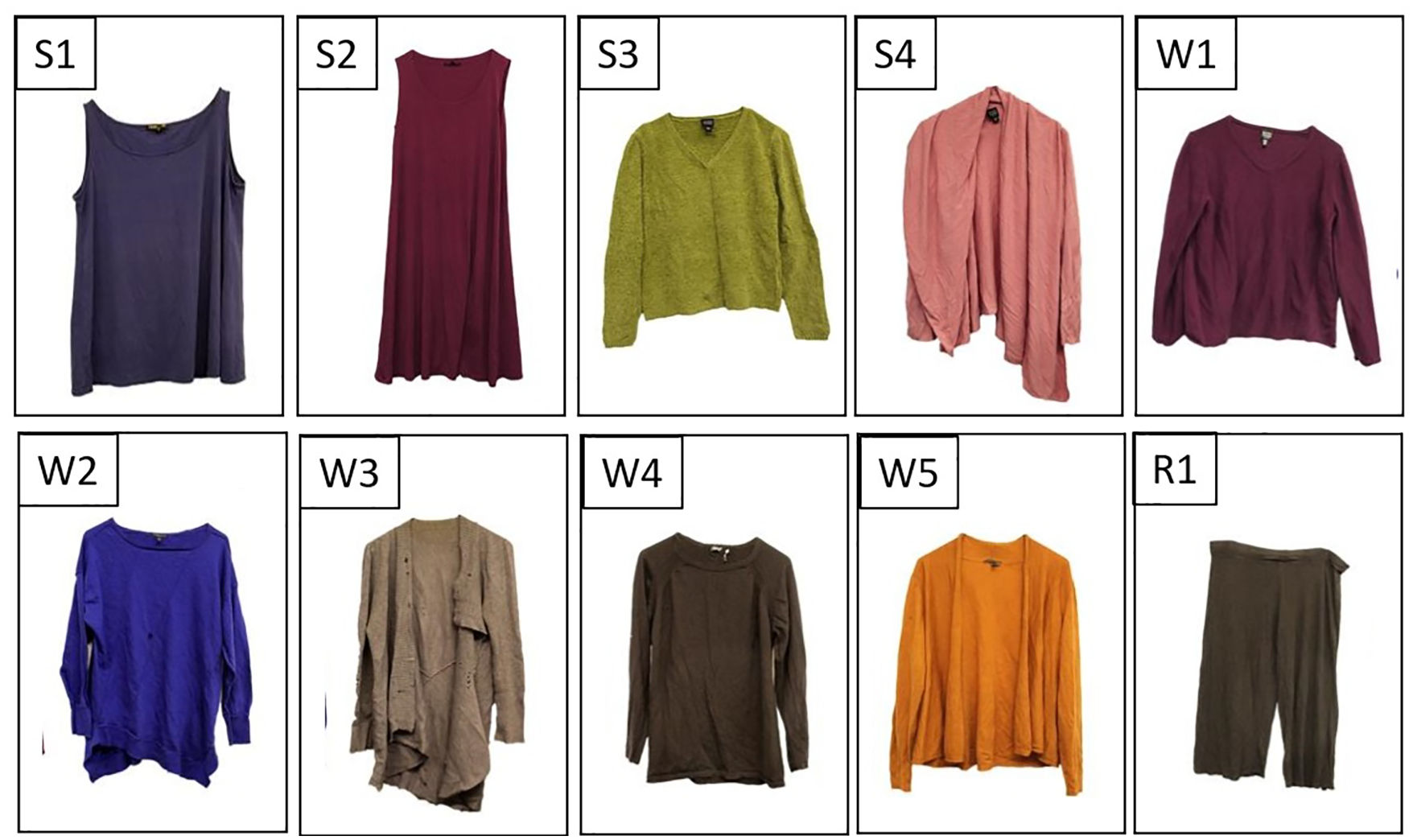
Representative selection of PCTW chosen for the hydroponics study.
To immerse the PCTW in the hydroponic system, the authors prepared the materials using two methods. First, 3″× 3″ fabric squares were cut and randomly layered in sets of three. Second, the fabrics were unraveled into yarns and randomly mixed. The total weight for each fiber type was measured and distributed equally into pots.
Developing the Hydroponic System
The custom-built hydroponic system is presented in Figure 2. Its dimensions are 5′× 2.5′× 5′, and it was designed with wheels for easy mobility indoors. The bottom section houses a portable fan for continuous air flow, a 20-gallon water reservoir, and a water pump (Elemental Solutions; Bloomington, IN). The middle and top sections channel rows with the capacity to hold 152 pots. The rows are positioned in a downward slope to allow water to flow along the channels by force of gravity. Red and blue LED lights supply a total of 432 watts to the system (60 LEDs/meter; Audew, Guangzhou Unique Electronics Co., Ltd; Guangzhou City, China). Building materials for the hydroponics system include reclaimed wood, steel, and PVC piping. A Kern Laser System cut rectangular pieces and pot holes to size (model: HSE 52″× 100″; Wadena, MN, USA). The reclaimed wood was treated with lumber sealant, wood stain, preservative, and adhesives (Agralife, Sacramento, CA; Momentive Performance Materials, Huntersville, NC; Miller-Stephenson Chemical, Danbury, CT; DAP Products, Baltimore, MD).
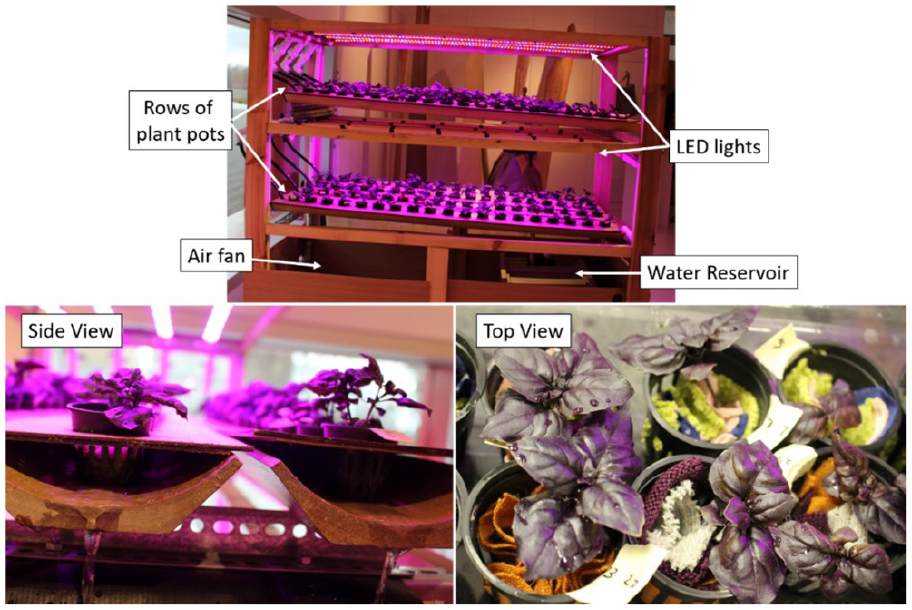
Overview of hydroponic system.
The hydroponic nutrient solution was prepared according to the manufacturer’s recommendations (JR Peters, Allentown, PA). The solution consisted of 20 gallons of local tap water, 0.86 ounces of calcium nitrate, 1.3 ounces of Jack’s Hydroponics with various metal and mineral ions to support effective plant growth, and 1.5 tablespoons of magnesium sulfate as an inorganic fertilizer. The pH of the solution was approximately 6.3, indicating acidity. The solution re-circulated through the system at a flow rate of 8.25 liters per minute, adjusted at the inflow valves. The room temperature was kept between 23°C and 25°C, and the humidity between 39% and 54%.
The basil seeds were germinated in peat moss to provide a benchmark for consistent growth. Once the basil seeds sprouted, they were transplanted into the PCTW substrates or into a rockwool substrate as a control for the experiment. Two growth cycles were conducted to understand how transplanting after 4 weeks and 2 weeks affects the plants. Purple basil—Red Rubin Ocimum basilicum seeds were planted in the first cycle, and green basil—Genovese Ocimum basilicum seeds were available for the second cycle (Johnny’s Selected seeds, Winslow, ME). During the germination period, all pots were placed on a benchtop under LED lights (180 watts).
Testing Material Characteristics for Hydroponics
The following outlines primary steps to characterize materials for the hydroponics system. Studying the morphology of substrates including PCTW, rockwool, and peat moss provided baseline knowledge of the substrates’ physical features for later comparison. The morphology of the materials was analyzed using an electron microscope (LEO-1550-FESEM—voltage: 1–5 kV, WD: 7–8 mm, InLens, aperture: 30 µm).
Color release of PCTW was analyzed using subjective and objective methods. Glass vials were filled with (1) 20 mL of distilled pure water as the control and (2) 20 mL of hydroponic nutrient solution. Twenty-seven PCTW fabric strips (13.5 cm × 2.5 cm) were immersed in the solutions for 72 hours. Photographs documented the visual observations, and a UV-vis Lambda 35 spectrometer (PerkinElmer, Inc; Waltham MA) was used to measure the color released into the pure water and nutrient solution.
PCTW moisture wickability was evaluated using the standard method AATCC TM197-2013 Vertical Wicking of Textiles. Moisture uptake of the PCTW materials was compared with that of rockwool and peat moss. Linen, cotton, rayon, Tencel, and silks were immersed in deionized water and monitored at 0, 2, and 10 minutes. The moisture uptake of the silk and wool fabrics was extended to 12 and 24 hours (1,440 and 2,880 min) due to low moisture wickability after 10 minutes. The test method was modified for the three-dimensional rockwool and peat moss samples. For rockwool, the time for water to reach 3″ was recorded, as were the time and height at which the peat moss reached full expansion. The vertical distance traveled was recorded for all samples, and the wicking rate was calculated (distance/time).
Material stability and degradation were monitored during the two growth cycles. All substrates in the hydroponic system were visually inspected and photographed over time. Figure 3 provides an overview of the primary processes involving the PCTW and hydroponics system.
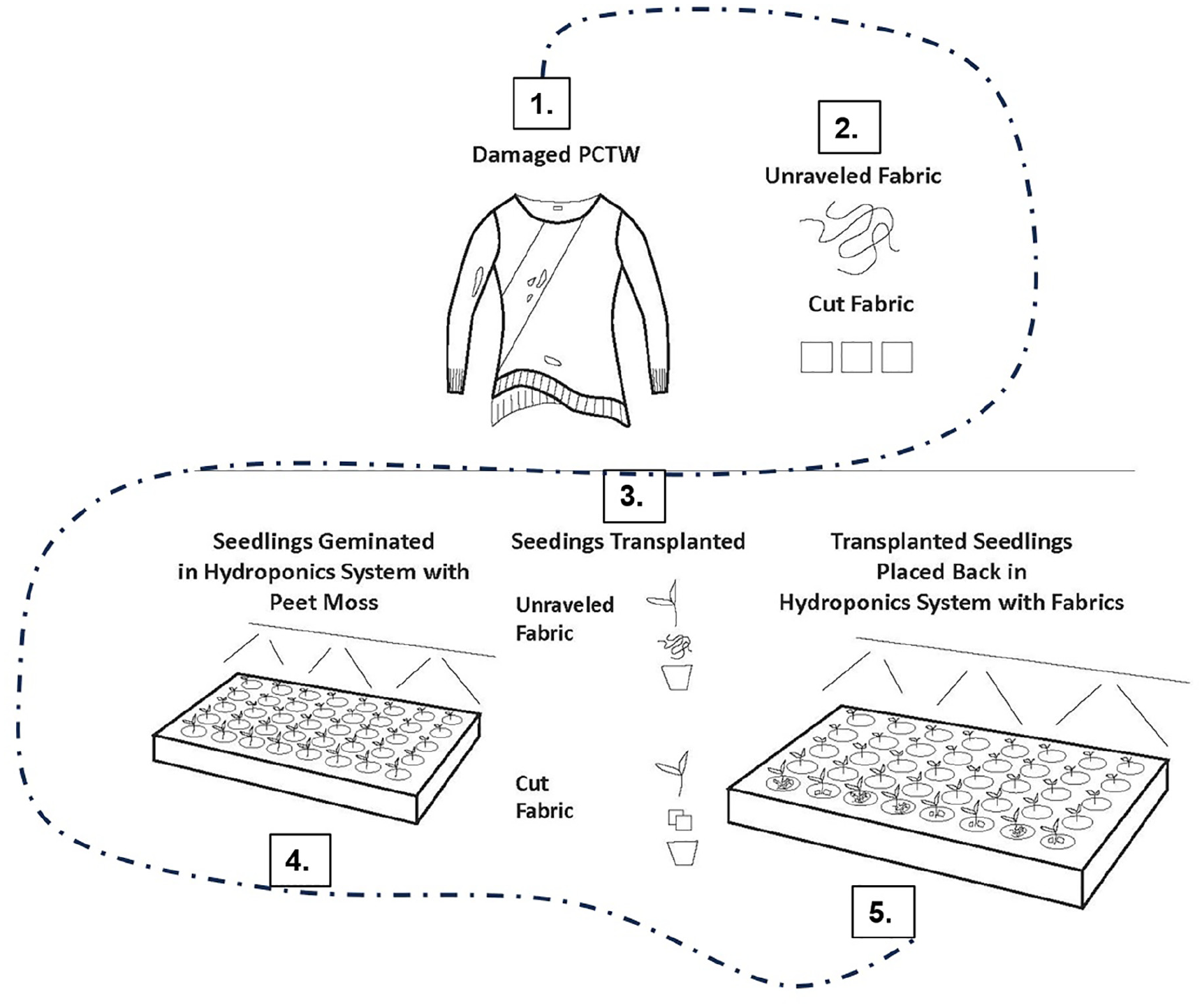
Visual illustration of primary approaches taken with PCTW and experimental plant growth in hydroponics system.
Findings and Discussion
The following presents results to address research question 1: What are the material and chemical characteristics of PCTW from a sustainable fashion take-back program?
Substrate Morphology
The morphologies of the control and PCTW hydroponic substrates are shown in Figure 4. Rockwool fibers are 6.37 ± 2.11 µm. Compared with natural wool fibers, rockwool fibers are very fine and rod-like. Natural wool fibers typically range from 17 to over 70 µm in size. 58 Peat moss particles are irregularly shaped with notable pores within the particles, similar to the morphological structure of soil particles, and unlike any fiber or fabrics. This provides baseline information to understand the structure of fibers considered for hydroponic use.
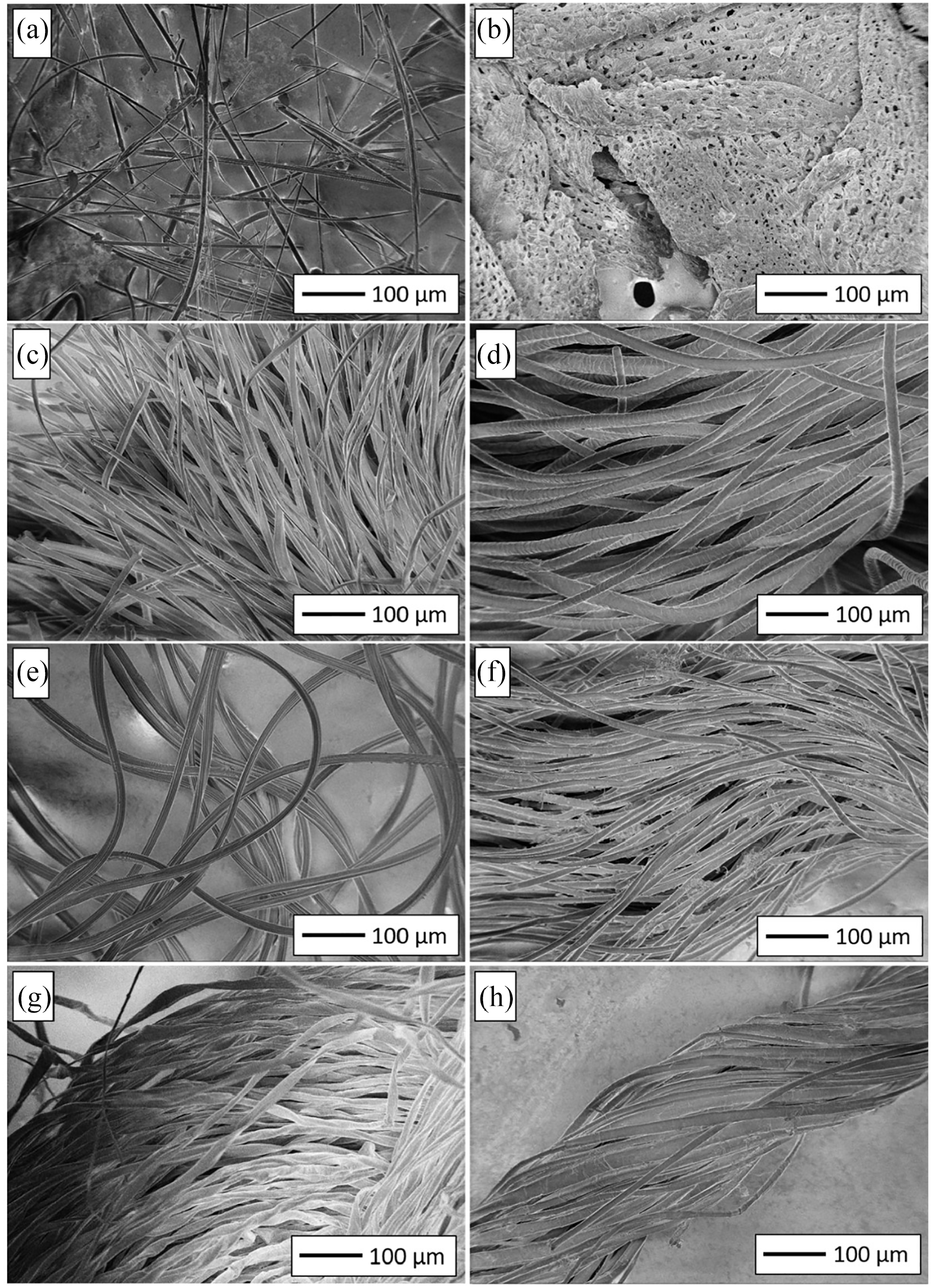
(a) Rockwool fibers, (b) peat moss, (c) silk, (d) wool, (e) rayon, (f) Tencel, (g) cotton, and (h) linen.
Chemical Assessment
According to the sustainable fashion company, only 7% of the PCTW supplied had sustainability certification for safer chemistries from Bluesign® or OEKO-TEX® Standard 100. These textile certifications ensure that garments are safe for consumers and contain no harmful chemicals. Their goal is to eliminate use of harmful chemicals in the supply chain at the raw material and supplier stages.
Dye Color Release and Water Quality
Twenty-seven PCTW fabrics were analyzed to determine their color release when immersed in distilled pure water and in hydroponic nutrient solution. Twenty-six percent of the PCTW had visually observable and UV-vis detectable color release. The fabric in the pure water released more color than the fabric in the hydroponic water. The metal and mineral ions in the hydroponic water act as a fixative or mordant to the dye, which prevents leaching and enables stable retention of color on the fabrics. 59
The color-release trend in distilled pure and hydroponic water was captured with UV-vis measurements of the seven samples. The hydroponic water reduced the liberation of colorants in a range between 10% and 88%. Silk, cotton, rayon, and Tencel fabrics released colors. These fabrics are typically dyed with reactive, direct, and vat dyes. In the reactive dye process for cellulosic materials, up to 40% of the dye is hydrolyzed and can no longer chemically bind to the fabric. 60 The fabrics are subsequently laundered in a multi-step process to remove unbound dyes; however, unbound dyes can remain on the fabric after leaving the production facility and release dye during consumer laundering. Direct dyes have linear, long molecular structures; therefore, unbound dyes can be present on final garments as well. Furthermore, color release can be attributed to poor wash-fastness of the selected dyes that go into garments.
Moisture Wicking and Material Performance
A substrate’s capacity to wick moisture consistently over time can support continual delivery of nutrient solution to the plants in a hydroponic system. The moisture-wicking behavior of linen, cotton, rayon, Tencel, and silk varied. Upward movement of moisture was influenced by the interconnectivity of knit or woven fabric, yarn twist, and thickness. For the 10-min period, the wicking rate decreased over time by more than 50% for linen, cotton, rayon, and silk fabrics. Tencel maintained its wicking rate at over 50%, which suggests it can transport moisture consistently over time.
Wool fabrics and one silk fabric had notably slower wicking rates than the other fabrics. The slower wicking of wool is due to water absorption through radial swelling rather than to length. 61 Silk is a protein fiber, like wool. The silk sample had novelty, fuzzy features that may have affected its water absorption. The slower-wicking fabrics maintained a wicking rate between 50% and 80% in a 24-h period. Given that rockwool has a rapid wicking rate, and peat moss has a slower wicking rate, this suggests that if moisture transport occurs, the substrates are suitable for hydroponics.
The following presents results to answer research question 2: Which natural PCTW is most suitable to support the growth of natural dye plants in a hydroponics system?
First Basil Growth Cycle Using PCTW in Hydroponics
PCTW used for the first growth cycle of purple basil plants in the hydroponic system included silk, linen, Tencel, cotton, rayon, and wool. After the basil seeds germinated, they were transplanted into the substrates after 4 weeks of initial growth. After 22 days in the hydroponic system, several of the PCTW fabrics and unraveled yarns degraded based on continuous exposure to the hydroponic solution, as shown in Figure 5. Most of the cellulose-based materials—cotton, rayon, and linen—became structurally weak, with holes and tears. The decomposition of these cellulose-based materials may be due to the synergistic effect of the pH, metal, and mineral ions of the hydroponic nutrient solution. Cellulose is known to dissolve in ionic solutions. In addition, significant discoloration and algae growth was apparent. Tencel displayed no observable mechanical defects or algae growth, although the unraveled yarns compressed to the bottom of the pot over time.
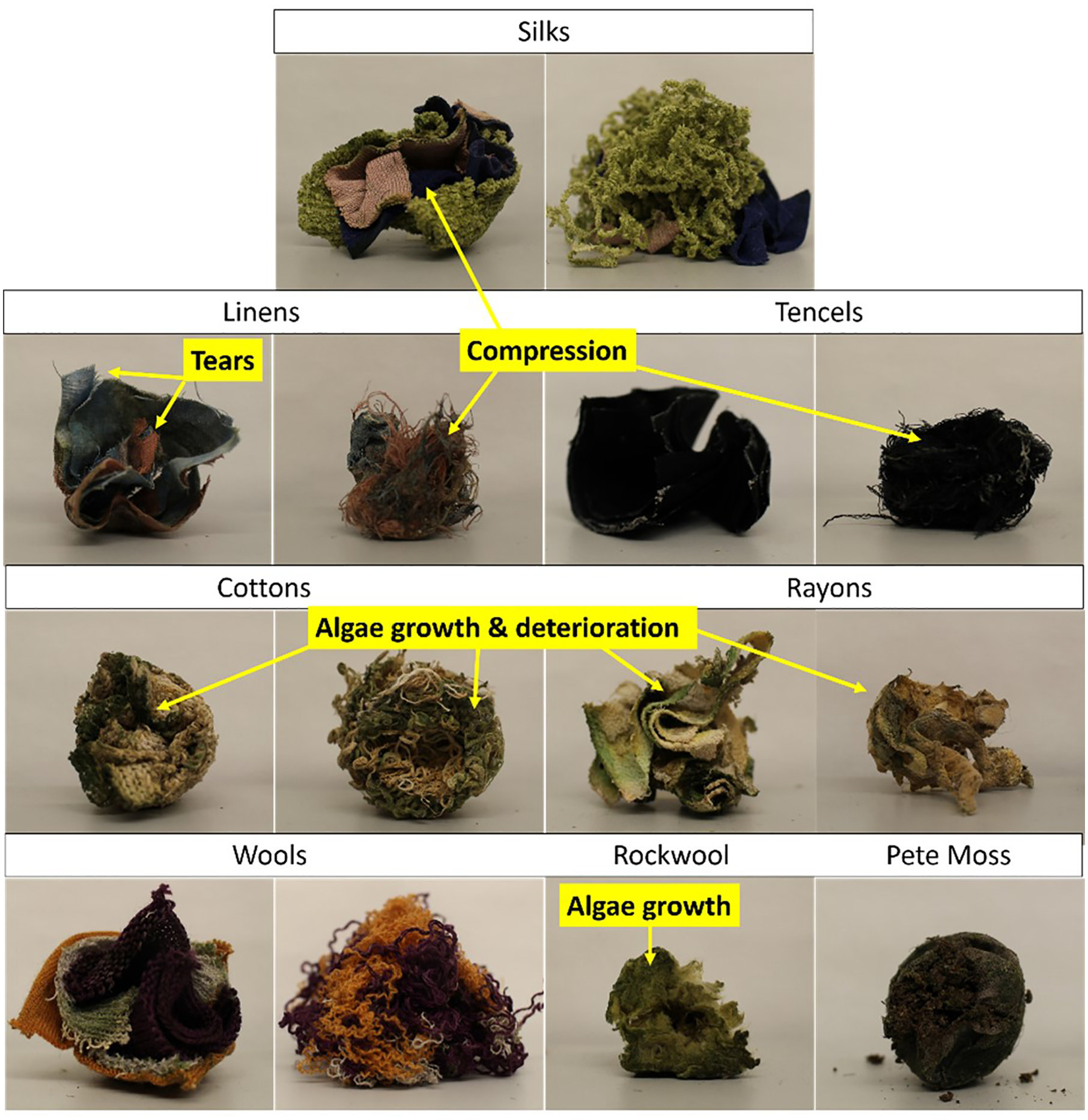
Photographs of substrates after immersion in hydroponic system for 22 days. Silk, linen, Tencel, cotton, rayon, wool materials are in fabric and fiberized form, rock wool and peat moss are as received.
The protein fibers, silk and wool, exhibited robust durability in the hydroponic environment. In addition, no algae growth on the silks and wools was observed. In particular, the unraveled yarns of wools and silk retained their dimensional shape. The undulating wave characteristics of unraveled yarns allowed the plant roots to easily extend into the substrate structure. The thin, tight-knit silk fabrics compressed together over time. The rockwool had some algae growth, while the peat moss had no visible algae growth. These initial results allowed the study to move forward with three durable materials—Tencel, wool, and silk—for the second growth cycle.
Second Basil Growth Cycle Using PCTW in Hydroponics
Thirty purple basil plants were assigned to each substrate type. Peat moss had the highest survival rate, at 60%, after 10 days in the hydroponic system. The basil plants in peat moss were not transplanted; this indicates that parameters of the hydroponic system contributed to the loss of reduced plant survival.
Transplanting the plants at a younger growth stage (2 weeks) may have made the plants less likely to survive. The total survival rates for the silk and wool substrates were much higher (47% and 33%) than for the Tencel (7%) substrate, which indicates that protein fiber substrates can be further studied to determine their suitability in hydroponic applications. No significant conclusions can be drawn for how (1) fabric squares and (2) unraveled yarns influence growth characteristics of plants in protein substrates.
Figure 6 displays images of basil in the various fiber and peat moss substrates at Day 0 and Day 10. The images outlined in blue are of plants that survived from the selected batch to photograph. These results indicate that transplanting at an early growth stage (2 weeks after germination instead of 4 weeks after) may be too extreme an environment change for the plants to survive in a new substrate. The figure also shows the survival of plants in wool and silk substrates.
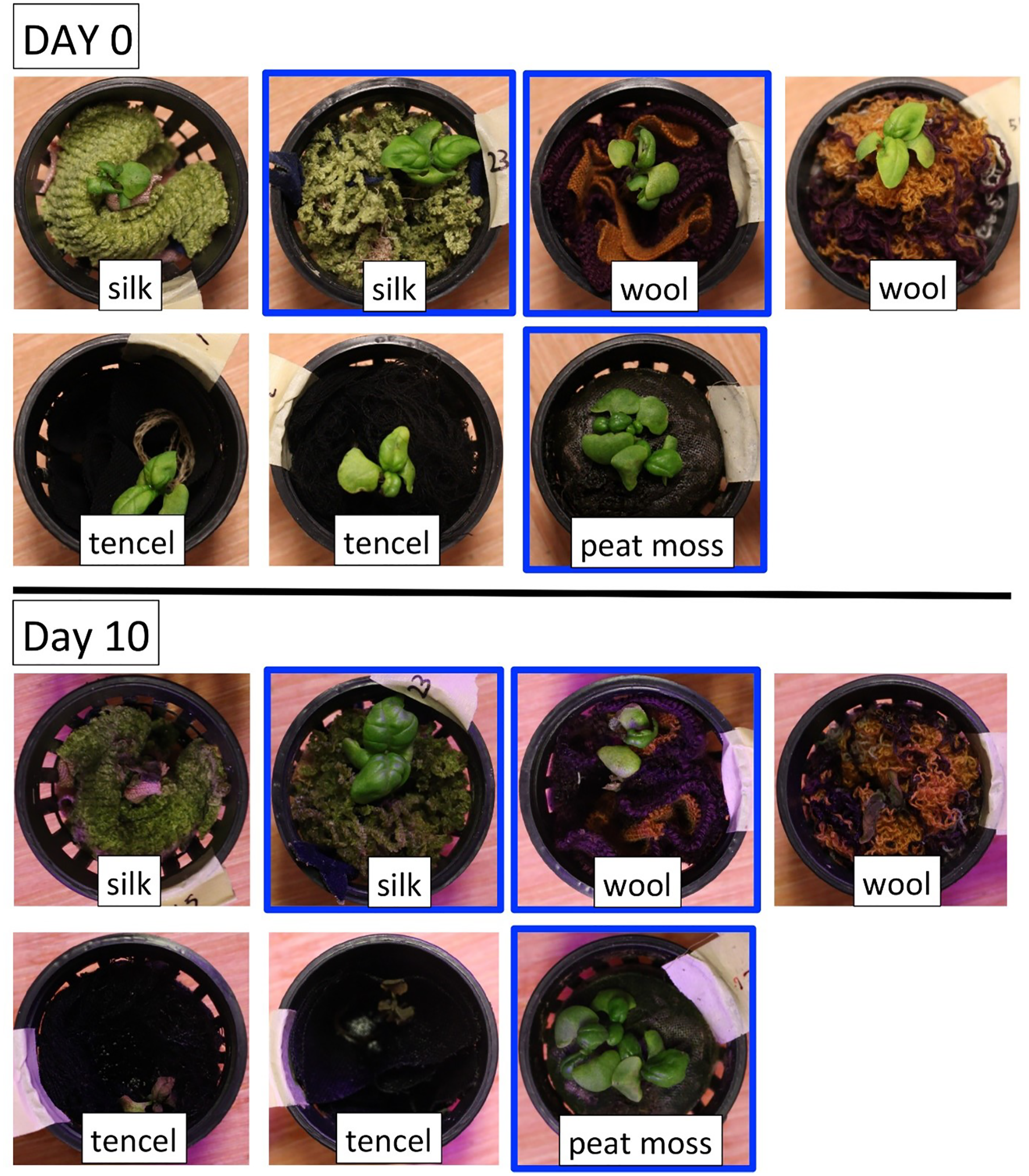
Basil plants in silk, wool, Tencel lyocell, and peat moss substrates at Day 0 and Day 10. Images outlined in blue are of surviving plants.
These experiences informed the findings for research question 3: Can the use of PCTW in a hydroponics system be scaled up to support a circular fashion supply chain?
This research suggests that silk and wool are viable alternative substrates to support natural dye plant growth in a hydroponic system; however, further research is needed with a larger sample size to confirm this finding. Given that silk and wool are individually 13% and 10% of the PCTW provided by the sustainable fashion company, they are approximately 23% of the total randomized PCTW materials received. If further research confirms the viability of silk and wool to support natural plant growth in hydroponics, these materials may have an innovative route for scaled use to support a circular fashion supply chain.
This research expands knowledge about the feasibility of using PCTW as an alternative substrate in hydroponics. However, the study has several limitations. A major challenge was the unexpected finding that the constant flow of hydroponic solution would cause the natural materials to deteriorate and/or grow algae, which may have hindered plant growth during the first growth cycle. Although this led to narrowing down the ideal PCTW for the second growth cycle, 2-weeks for plant transplantation was early, which may have affected results of the second growth cycle. A larger sample size focused on using PCTW wool and silk with peat moss as a control can confirm these preliminary findings.
Conclusion
As an experimental circular economy “cascade” approach, this study explored the feasibility of using PCTW from a sustainable fashion company’s take-back program in hydroponics to grow natural dye plants. The study presents the process of developing a database of secondhand clothing generated as PCTW, providing insight into common clothing, colors, and fiber content. Since chemicals and finishes are unknown, this study provides baseline information about important material characteristics to consider for second- or third-life applications of PCTW. Although the PCTW came from a fashion company committed to environmental sustainability, conducting the color analysis revealed dye release from fabrics at the postconsumer level. After two experimental growth cycles using PCTW, silk and wool were identified as viable alternative substrates to support the growth of natural dye plants in hydroponics. These materials are 23% of the random PCTW received from the sustainable fashion company. A joint venture between a sustainable fashion company and experts in hydroponics can lead to further development of the ideas presented in this study. This research is a benchmark for further studies that use PCTW to support the development of circular fashion supply chains in a shift toward a circular economy.
Further research regarding the feasibility of creating bio-based, green composites from PCTW for hydroponic applications can be explored. Mechanical properties can be evaluated to determine effectiveness of natural composites. 62 Chemical analysis of carbon-to-nitrogen ratio, water holding capacity, electrical conductivity, and substrate acidity can determine appropriateness for hydroponics. 63 Further research can help scale sustainable urban agriculture especially as it relates to upcycling. 43 This can involve determining the impact of PCTW dye effluents, substrate chemicals, metal ions, and auxiliaries on plant growth and health for sustained viability. It is critical to also evaluate the environmental impact of using PCTW in a hydroponics system with a Life Cycle Assessment; this can provide greater insight into the impact of the choice of substrates to grow the natural dye plants, water, energy, as well as carbon footprint. 64 In addition, previous research confirms that plants can be used as a phytoremediation approach to treat synthetic dye; certain plants grown in hydroponics systems have shown to be effective.65,66 Further research is necessary to confirm the viability of using natural dye plants to treat the dye effluent of the PCTW in the hydroponics system for a circular approach.
This research aligns with broader intentions to close the circularity gap of material reuse, as proposed by scholars in the recent Circular Cut report. 67 The Global Circularity Metric indicates that only 9.1% of all raw materials used in today’s industries are reused in a cyclical approach. To roughly estimate the circularity of PCTW used for testing in this study for hydroponics, this study used 0.8% of the materials available. This was due to the small amount of materials used for each pot in the hydroponics system, compared with the 120 pounds of total PCTW donated by the sustainable fashion company for experimentation. Ideally, more materials would have been considered suitable for reuse. Making a larger circular economy impact with hydroponics would require scaling up to potentially create vertical farms focused on natural dye plant growth using wool and silk PCTW.
The limited 23% of materials identified as suitable for use in hydroponics points to larger issues in the fashion industry. This includes greater use of synthetic fibers and dyes based on cost-efficiency. 68 A circular economy report from the fashion industry identifies key steps to create a new textiles economy. This would require the phasing out of harmful substances of concern, greater clothing reuse, improved recycling at a larger scale, and effective use of renewable resources. 69 Recommendations from a circular economy for textiles workshop include developing standardized terms and tools to track progress; greater data collection and access; improvements in product design, recycling, and takeback programs from brands; collaboration and greater communication. 20 At a broad industry scale, this may take multiple decades to accomplish.
Future research that explores circular fashion best practices toward a circular economy and synergistic collaborations can provide greater insight to inform future policy. There is no current U.S. policy to support circular economy efforts. There is, however, an annual “Sustainability and Circular Economy Summit” hosted annually by the U.S. Chamber of Commerce Foundation in Washington, DC; it focuses on business development and implementation of circular economy goals, which aligns with approaches in Europe. 53 Experimenting in interdisciplinary teams to address issues in the fashion industry can inspire the development of more creative ideas to make circular fashion supply chains viable in the 21st century.
Supplemental Material
sj-docx-1-aat-10.1177_24723444241230120 – Supplemental material for Sustaining Natural Dye Plants with Post-Consumer Textile Waste
Supplemental material, sj-docx-1-aat-10.1177_24723444241230120 for Sustaining Natural Dye Plants with Post-Consumer Textile Waste by Helen X Trejo, Nidia K Trejo and Tasha L Lewis in AATCC Journal of Research
Footnotes
Acknowledgements
This work utilized the Cornell Center for Materials Research Shared Facilities, which is supported through the NSF MRSEC program (DMR-1120296). It also make use of the Cornell Fabrication Studio. Special thanks to Schuyler Duffy, Skye Clarke, and Deja Canty.
Declaration of conflicting interests
The author(s) declared no potential conflicts of interest with respect to the research, authorship, and/or publication of this article.
Funding
The author(s) disclosed receipt of the following financial support for the research, authorship, and/or publication of this article: This work was supported by the Walmart Foundation’s U.S. Manufacturing Innovation Fund (grant number 78156).

Supplemental material
Supplemental material for this article is available online.
References
Supplementary Material
Please find the following supplemental material available below.
For Open Access articles published under a Creative Commons License, all supplemental material carries the same license as the article it is associated with.
For non-Open Access articles published, all supplemental material carries a non-exclusive license, and permission requests for re-use of supplemental material or any part of supplemental material shall be sent directly to the copyright owner as specified in the copyright notice associated with the article.
