




Abstract
In this study, a novel composite having a unique three-dimensional structure was investigated. Warp-knitted spacer fabrics with glass fiber woven fabric were chosen as the reinforcement, while polyurethane foam was used as the matrix materials. The glass fiber woven fabric was pretreated with the warp-knitted spacer fabric first, and then a hand lay-up method was used to fabricate the three-dimensional polyurethane-based composites. The mechanical properties of the finished composites were determined. The influence of the fabric thickness, the surface structure of the fabric, and whether the woven fabric is laminated or not on the mechanical properties of the three-dimensional polyurethane composites were determined. The results show that the fabric thickness is positively related to the tensile and compressive properties and inversely related to the bending properties of the three-dimensional knitted/woven hybrid polyurethane matrix composites, provided that the surface structure is the same. The tensile and compressive strengths of the composites were higher when the glass fiber woven fabric was laminated with the spacer fabric than when the three-dimensional knitted/woven hybrid polyurethane matrix composites were not taken. Therefore, the knitted/woven fabric as reinforcement improved the tensile and compressive properties of the composites.
Introduction
Textile composites have the advantages of high strength and specific modulus and low density and, therefore, are gradually replacing traditional metallic materials in many fields. Warp-knitted spacer fabrics (WSF) are widely used as reinforcement materials due to their unique three-dimensional structure, high strength, and variety of tissue structure variations.1,2 WSFs are one of the reinforcement materials used in textile composites and have the advantages of anti-delamination, light weight and high strength, low moisture absorption, corrosion resistance, sound absorption, and heat insulation compared to traditional laminated composites.3–5 Therefore, they have started to enter the manufacturing industry widely. The aim of this study was to develop a good composite material with good mechanical properties and to achieve an optimal configuration of material properties and functional diversity using advanced composite material preparation methods for composite WSFs with polyurethane and two porous materials. Warp-knitted spacer composites are widely used in the apparel industry, construction, aerospace, and many other fields.6–9 For example, in the field of ships, it can be used for hull bulkheads, interior walls, and so on; 10 in the automotive field, composite materials can be used for box truck insulation and box hulls and so on; 11 in the field of construction, they can be used for sound insulation panels, roof heat-absorbing panels, and so on. 12
Chen et al. 13 prepared WSF-reinforced polyurethane matrix composites and investigated the compression properties of composites formed by WSFs with different structural parameters. The results showed that composites based on spacer fabrics with smaller spacer yarn tilt angles, higher fabric thickness, finer spacer yarns, and larger mesh holes in the outer layer had better energy absorption performance at lower stress levels, while the best energy absorption capacity was obtained at higher stress levels for spacer fabrics consisting of larger spacer yarn tilt angles, lower fabric thickness, coarser spacer yarns, and smaller mesh holes in the outer layer. Masih Yousefpour et al. 14 prepared WSFs with different thicknesses, fabric structures, and spacer yarn densities by a hand-forming method and laminated them with polyurethane elastomers to form polyurethane-reinforced composites. The resulting specimens were subjected to static compression, in-plane and spherical compression, three-point bending, and flexural fatigue tests. The results show that the WSF significantly improves the compressive strength, flexural strength, and fatigue resistance of the composite. The effects of fiber mass fraction, thickness, outer fabric structure, and spacer yarn density on the properties of the composites were also discussed. Qian et al. 15 simulated the effect of the structure of WSFs on the compressibility by ANSYS. The resulting computer simulations showed that the finite element model was in agreement with the simulation results. Computer simulations provide a fundamental tool in this area and can help researchers to determine the compression pressure at different structural parameters. Rajan et al. 16 studied spacer fabrics with warp flat, diamond mesh, and hexagonal mesh face layer structures with different fabric thicknesses; and investigated the effect of fabric structure and thickness on fabric properties, respectively. The experimental results show that the mechanical properties of warp flat spacer fabrics with a tight structure are superior to those of thicker fabrics. However, fabrics with open mesh structures with higher fabric thickness reduce the tensile properties. A 3.1 mm fabric thickness and hexagonal mesh structures show good compression properties and reasonable effects on mechanical properties against other stresses. Xiao fang Guo et al. 17 investigated the effects of different surface stitches, fabric thickness, and spacer yarn diameters on the impact and post-impact compression properties of warp flat spacer fabrics. The effect of different surface stitches, fabric thickness, and spacer yarn diameter on the impact and post-impact compression properties of WSFs was studied. It was found that fabrics with a closed surface structure and thicker spacer yarns had lower peak forces, higher energy absorption capacity, lower damage depth, and higher residual strength loss rates. Thicker fabrics also had these characteristics, but they did have lower strength loss rates.
In this study, a new attempt was made to incorporate glass fiber woven fabric as an outer layer into a WSF (glass fiber woven fabric/WSF/glass fiber woven fabric) to form a sandwich structure, and then a three-dimensional hybrid polyurethane-based composite was prepared by mixing it with a polyurethane slurry using a hand-paste method. The bending, tensile, and compression properties of the resulting composites were also tested. The effects of the fabric thickness, the surface structure of the fabric, and whether the woven fabric was laminated or not on the mechanical properties of the three-dimensional hybrid polyurethane matrix composites were investigated. The aim is to provide theoretical guidance and experimental support for the optimum design of the mechanical properties of the composites.
Material and Method
Materials
The resin selected for this article is polyurethane resin (W-718) produced by Shanghai Steady Ink Waterproof Material Co. A density of 1.19 g/cm and a strength of 24 MPa were used in the eight warp-knitting spacer fabric by Changzhou Wu yang Textile Co., Ltd, in the machine number E18 warp knitting machine production. The type of spacer yarn and the structural parameters of the spacer fabric are shown in Table 1. PET compound yarn of 300D/96f was used for the surface tissue and a PET monofilament of 300D/96F diameter was used for the compound spacer yarn with a breaking strength of 7.9 cN/dtex and an elongation at break of 11.2%. The surface structures of the spacer fabrics are small mesh, large mesh, small mesh + braided chain, and large mesh + braided chain. The surface structure of the spacer fabric is shown in Figure 1.
Structure and parameters of warp-knitted spacer fabrics.
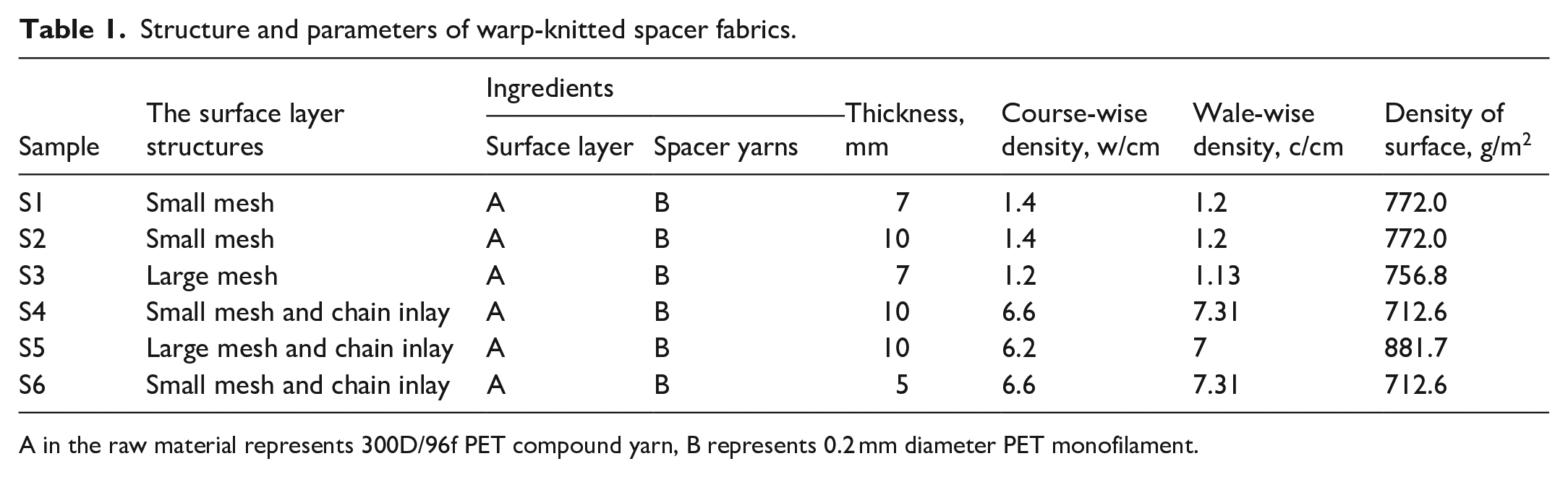
A in the raw material represents 300D/96f PET compound yarn, B represents 0.2 mm diameter PET monofilament.
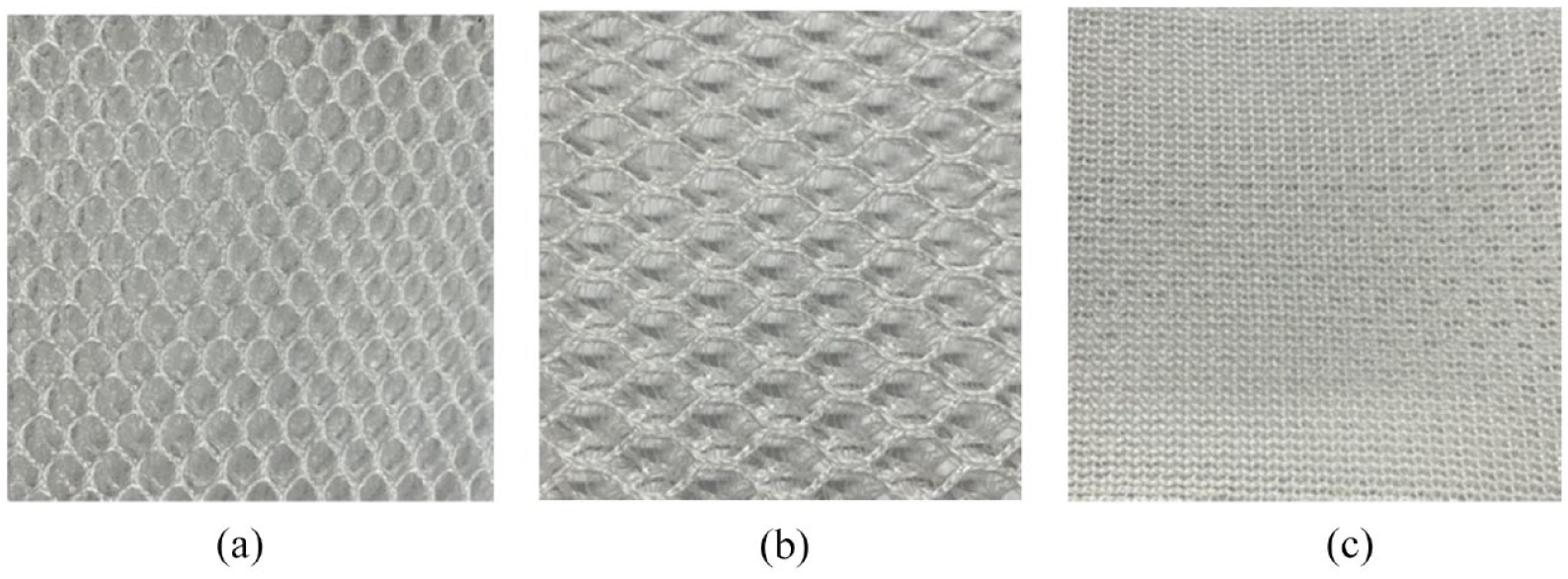
Surface structure of spacer fabric: (a) small mesh, (b) large mesh, and (c) chain inlay.
Method
The WSF and glass fiber woven fabric were selected as the reinforcement in this study. The matrix material used for the composites was polyurethane foam consisting of isocyanate and polyether polyol.
The polyurethane resin was used to uniformly coat the glass fiber woven fabric to make sure the woven fabric can firmly bond to the WSF. And then, the polyurethane foam liquid was filled into woven-spacer fabrics in the wale direction. The foaming and filling process was fulfilled in a mound, and the surface layers were stuck with thin film to avoid the polyurethane foam covering the surface layers of the WSFs. The foaming work can be done at room temperature. The parameters of the glass fiber woven fabric are shown in Table 2. The schematic of the composites fabricated process is shown in Figure 2, and the structural parameters of the three-dimensional polyurethane composites are shown in Table 3.
Structure and parameters of glass fiber woven fabrics.


Schematic and physical diagram of the three-dimensional polyurethane composite.
The details of the 3D polyurethane matrix composite.
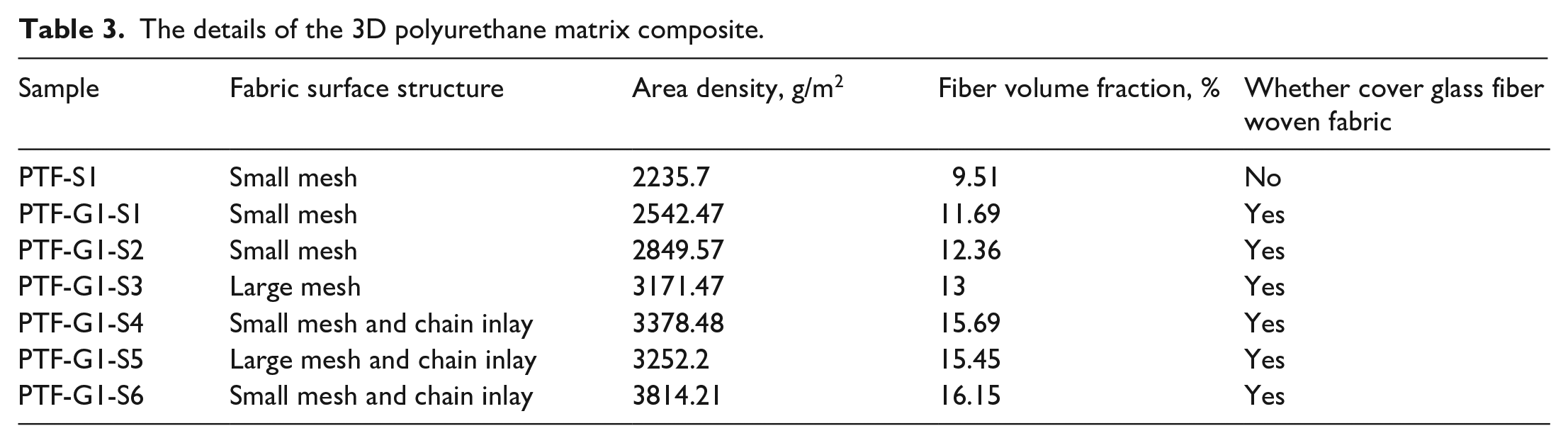
The sample nomenclature of a three-dimensional polyurethane matrix composite can be explained by the example PTF-G1-S1, where PTF represents the polyurethane slurry involved in the composite, G1 represents the glass fiber fabric laminated to the spacer fabric, and S1 represents the number of the spacer fabric used.
Experimental Testing
Tensile Test
In accordance with the standard GB/T1447-2005, the three-dimensional polyurethane composite was tested for tensile properties using a precision electronic universal testing machine Shimadzu AutographAGS-X100KN, as shown in Figure 3. A sample with dimensions of 250 mm × 25 mm × 10 mm was used for tensile test. The end reinforcement part was 50 mm and the clamping part was 40 mm during the test process. The loading speed was set to 2 mm/min during the test. Three specimens of each type of composite were tested and the tensile load was measured.
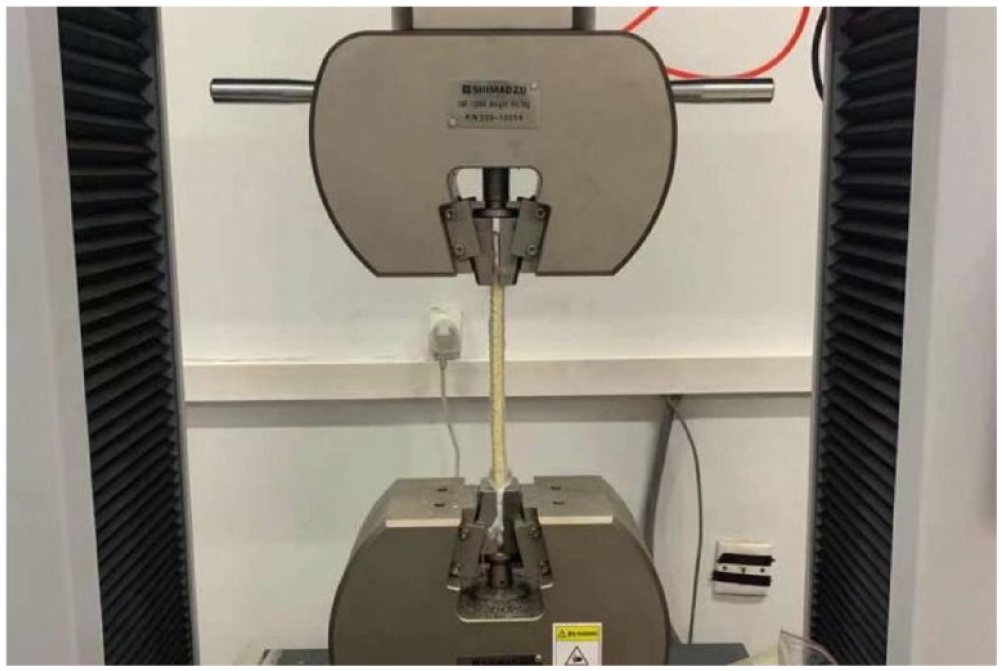
The tensile test of 3D polyurethane composites.
Bending Test
A precision electronic universal testing machine, Shimadzu AutographAGS-X100KN, was used to perform a three-point bending test on the composite materials based on the standard GB/T1456-2005, as shown in Figure 4. The specimen size was set to 12.7 mm × 10 mm × 160 mm and the clamping spacing was set to 120 mm, while the loading speed during the test was set to 2 mm/min. Three specimens of each type of composite were tested and the bending load was measured.
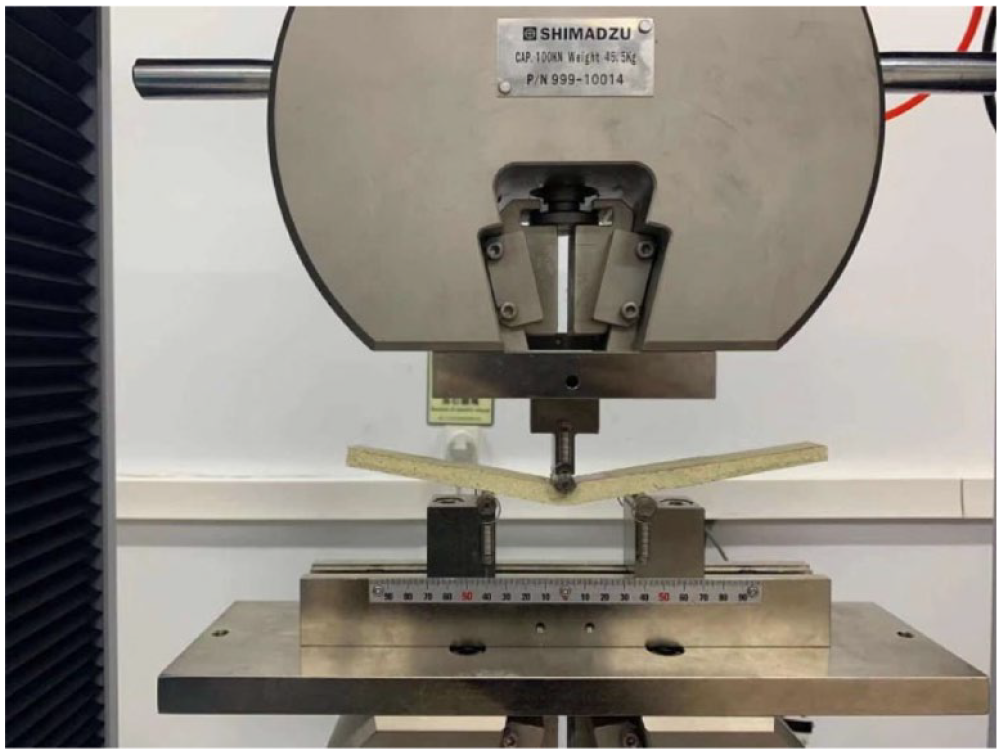
The bending test of 3D polyurethane composites.
Compression TEST
The compression test of composites was conducted using the precision electronic universal testing machine Shimadzu AutographAGS-X100KN according to standard GB/T1453-2005, as shown in Figure 5. The specimen size was set to 50 mm × 50 mm × 10 mm with a positioning shift of 4 mm. The loading speed during the test was set to 2 mm/min. Three specimens of each type of composite were tested and the compression resistance load was measured.
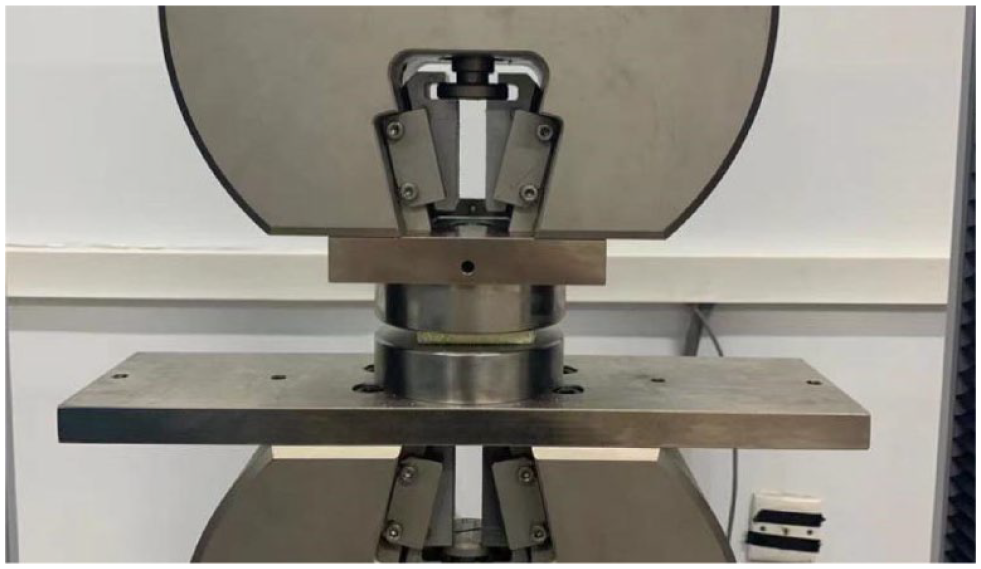
The compression test of 3D polyurethane composites.
Results and Discussion
Tensile Test
Figure 6 shows the tensile stress–strain curves for the three-dimensional knitted/woven polyurethane matrix composites. The curves all show a similar linear region at the initial stage and all curves show a slow decline when the end of the linear region is reached, that is, when the strain reaches its peak. The lower stress value of PTF-S1 indicates that PTF-S1 exhibited poor tensile properties in the three-point tensile test, while the tensile strains of the remaining six samples with different fabric parameters did not drop to 0 after the drop, indicating that the composite still has some tensile resistance. The above shows that the overall tensile properties of the composites with glass fiber woven fabrics are improved.
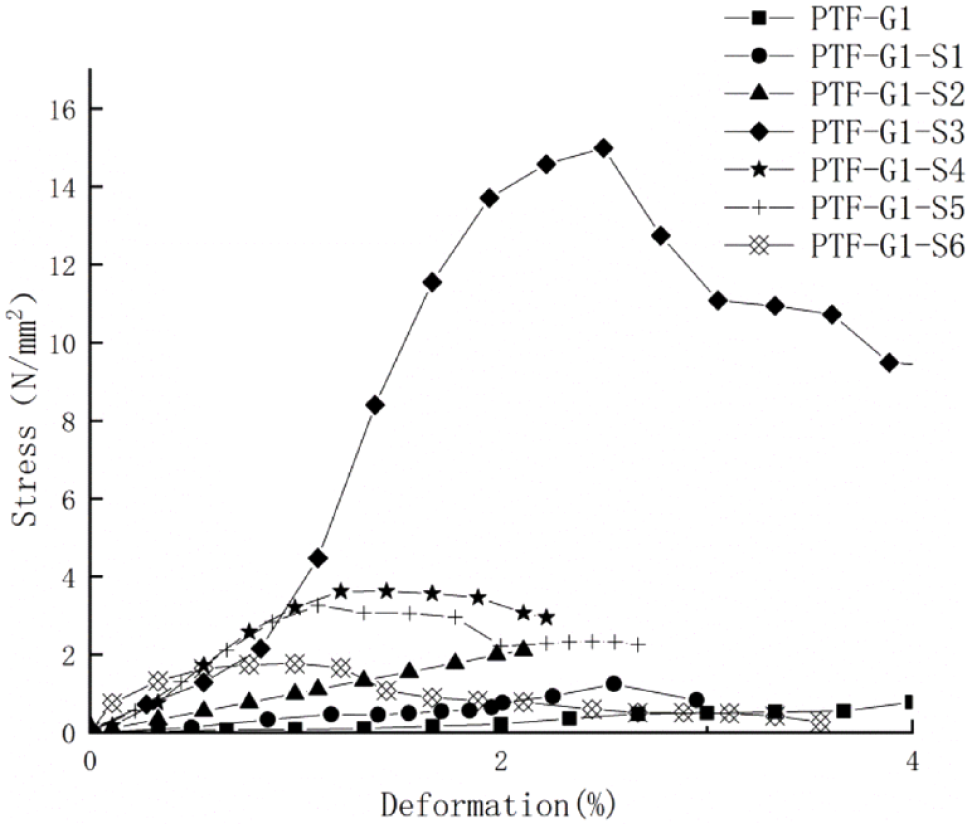
Tensile stress–strain curves of 3D polyurethane composites.
With the same surface structure, PTF-G1-S2 has better tensile properties than PTF-G1-S1. In the process of drawing the composite, the elongation of spacer fabric is greater than that of polyurethane foam matrix, so the polyurethane foam matrix is the main bearing part at the initial stage of drawing. With the increase in displacement, the load on the composite also increases until the polyurethane foam matrix in the composite breaks, the displacement continues to increase, the spacer fabric in the composite continues to be stressed, and the polyurethane foam matrix is separated from the spacer fabric. Because the fabric in PTF-G1-S2 is thicker and has more space, it can be filled with more polyurethane foam, thus providing stronger support. Therefore, it bears a greater load and forms a larger deformation. Therefore, PTF-G1-S2 has better tensile properties.
The tensile properties of PTF-G1-S3 are better than those of PTF-G1-S1 for the same thickness. PTF-G1-S4 and PTF-G1-S5 both have similar tensile properties. This indicates that the tensile properties of the three-dimensional polyurethane matrix composites are better when the thicknesses are equal and the surface structures on both sides are the same, while the tensile properties of the three-dimensional polyurethane matrix composites are not greatly affected by changes in the structure of one side when the surface structures on both sides are different. The tensile properties of PTF-G1-S3 are the best, which is mainly due to the fact that the mesh organization on the surface of the period increases the size of the gap between the coils on the surface of the fabric, which affects the connection between the coils, and the fabric has sufficient space to deform when subjected to external forces, and the obstructing force of the adjacent coils is weakened.
The tensile strengths of the different WSF fabric-reinforced composite samples are shown in Figure 7. It can be seen from the figure that there is a significant increase in the tensile strength of the other six three-dimensional polyurethane matrix composites compared with PTF-S1. Among them, PTF-G1-S3 showed the greatest increase in bending strength, so that the polyurethane composites with a large mesh on surface j among them had the best tensile properties. In this study, the overall tensile properties of the composites with the glass fiber woven fabric attached showed a significant increase, due to the good tensile properties and strength of the glass fiber woven fabric itself during the stretching process. It can therefore be concluded that the addition of glass fiber woven fabric can significantly improve the tensile properties of the composites without basically affecting the material density. And with the S3 fabric’s own structure, the large mesh has a larger deformable area that is easier to fill with polyurethane foam, thus providing stronger support to withstand greater loads. Figure 8 shows the SEM image of the polyurethane after stretching of the three-dimensional hybrid polyurethane matrix composite, which shows the deformation and rupture of the blisters after the tensile load. The fact that each of the bubble pores ruptures to approximately the same extent indicates that the specimens were subjected to uniform forces.
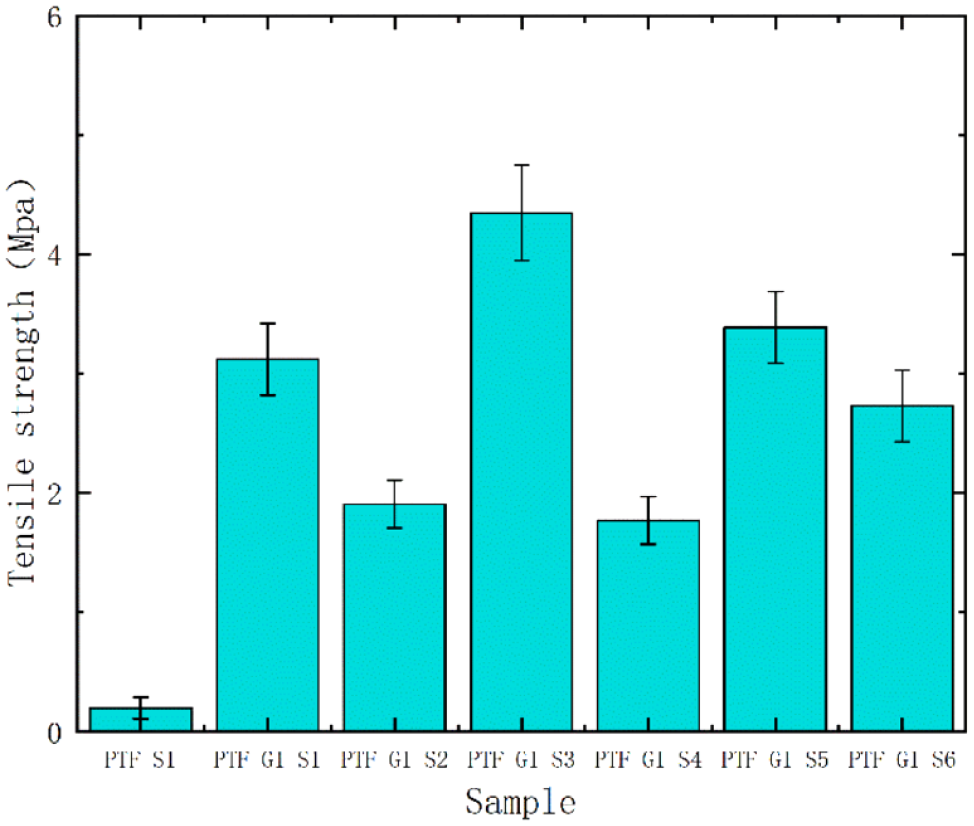
Tensile strength of different three-dimensional polyurethane composites.
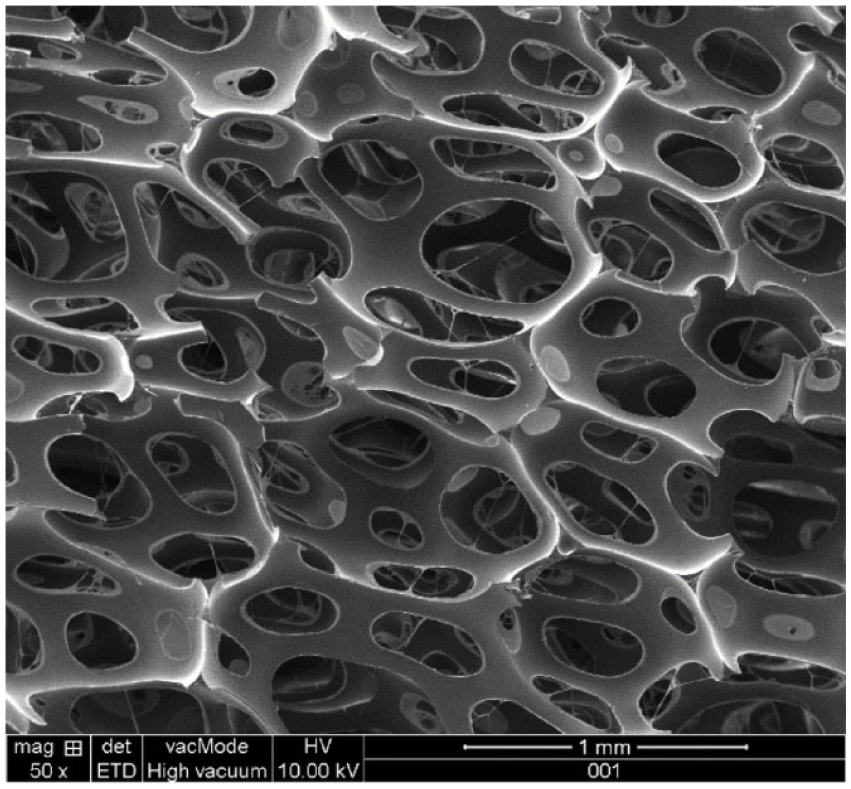
SEM image of polyurethane foam after tensile testing.
Bending Test
Figure 9 displaces the bending test stress–strain curves for the six-dimensional polyurethane matrix composites. As can be seen from Figure 9, the stress–strain curves for all samples show a similar linear region at the initial stage, with all curves showing a slow decline when the load reaches its peak.
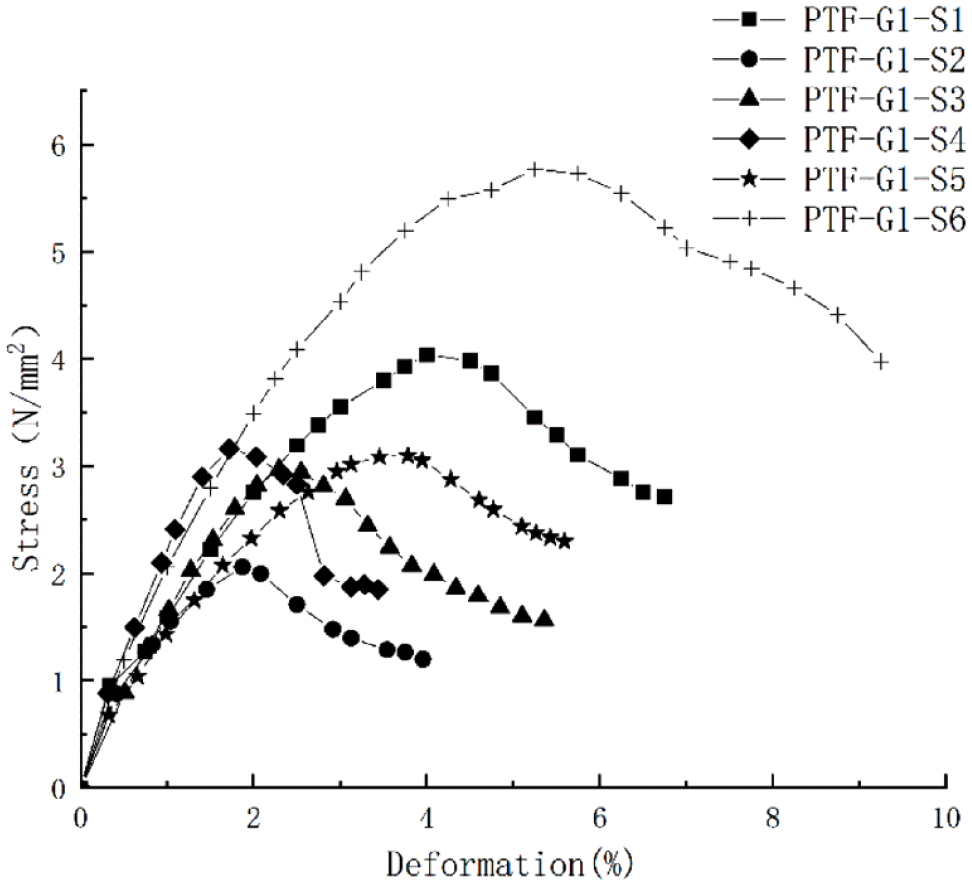
Bending stress–strain curves of 3D polyurethane composites.
With the same surface structure, PTF-G1-S1 has better bending performance than PTF-G1-S2. WSF-reinforced composite foams with a smaller number of traverse stitches on the back of the spacer comb have better bending properties. The distance between the backside of the spacer comb needle of the spacer fabric means that the spacer wire length is shorter in a horizontal row. According to the critical force theory of the press bar, the critical force that the press bar can withstand is inversely proportional to the length of the press bar. Compared with PTF-G1-S2, PTF-G1-S1 had a smaller number of backward traverse needle distances of spaced comb needles. Therefore, the shorter spacer wire in PTF-G1-S1 can withstand a larger critical force value and is less likely to be bent than PTF-G1-S2, thus improving the bending performance of the whole material.
With the same thickness, the entire material is tighter and more internal stress is generated due to the smaller mesh of PTF-G1-S1. The material is mainly stressed by the spacer fabric. PTF-G1-S1 therefore has better bending properties than PTF-G1-S3. PTF-G1-S4 has slightly higher bending properties than PTF-G1-S5. Both have a tighter fabric structure and therefore have similar bending properties. However, the smaller mesh structure of PTF-G1-S4 is more dense, so it can withstand greater loads.
The samples that have been tested for bending properties were also observed using a high-definition microscope BC1000 to determine the delamination of the three-dimensional polyurethane matrix composites. As shown in Figure 10, the composite fabric breaks when suffer bending force, while the glass fiber woven fabric attached to both sides of the spacer fabric does not delaminate from the spacer fabric. Since the polyurethane resin used for adhesion and the polyurethane foam used for filling have a good fusion effect, avoiding delamination phenomenon.
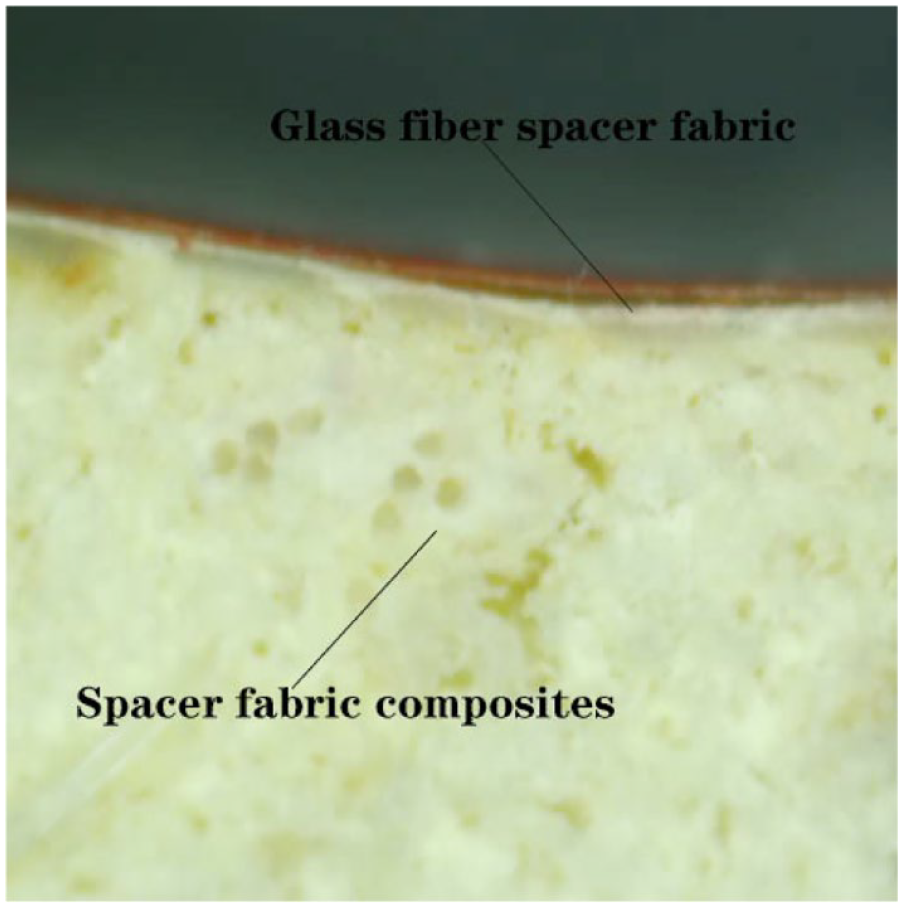
Microscopic view of bent 3D polyurethane composites.
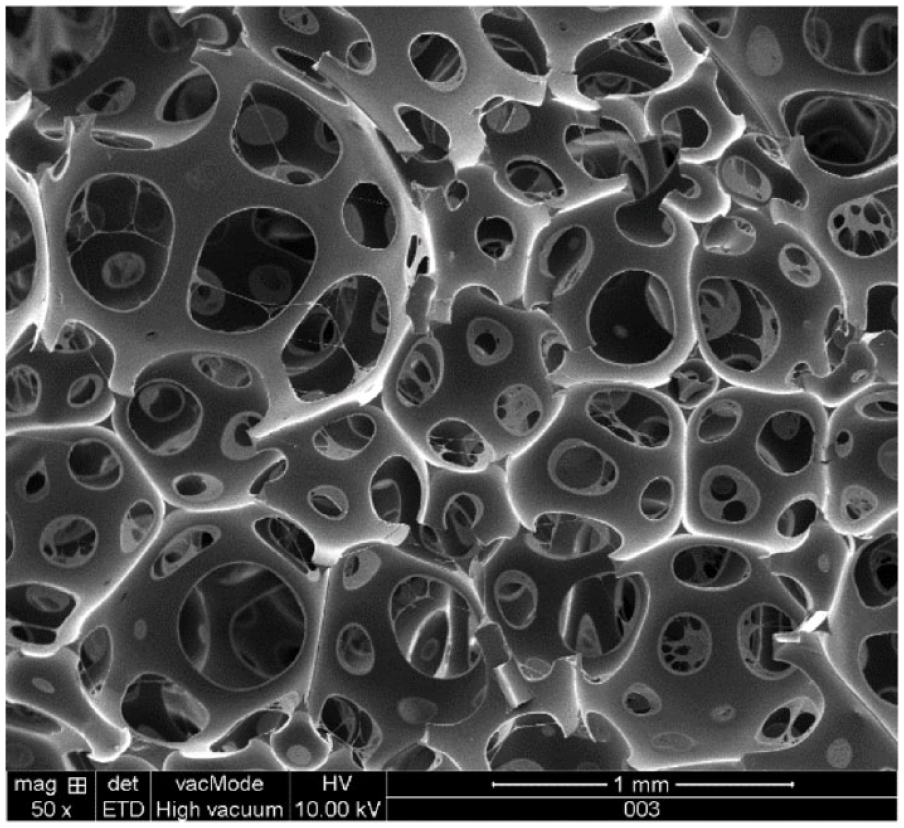
As can be seen in Figure 11, the bending strength of PTF-G1-S1 and PTF-G1-S5 is higher than that of the rest of the composites. S1 and S5 have a smaller number of traverse stitches on the back of the spacer comb, and a smaller number of traverse stitches on the back of the spacer comb means a shorter spacer length in one traverse row, so that the shorter spacers of PTF-G1-S1 and PTF-G1-S5 can withstand greater critical force values. The shorter spacers of PTF-G1-S1 and PTF-G1-S5 can therefore withstand greater critical force values. Both spacers are less likely to be bent and have better bending strength, thus improving the overall bending properties of the material. Figure 12 shows the polyurethane SEM diagram of three-dimensional mixed polyurethane matrix composite after the bending test. It can be seen from the figure that the holes of the sample are broken after being subjected to bending load, and the bubbles are squeezed between each other due to stress. Different positions of the force is not the same, so the damage degree of the bubble hole is not the same.
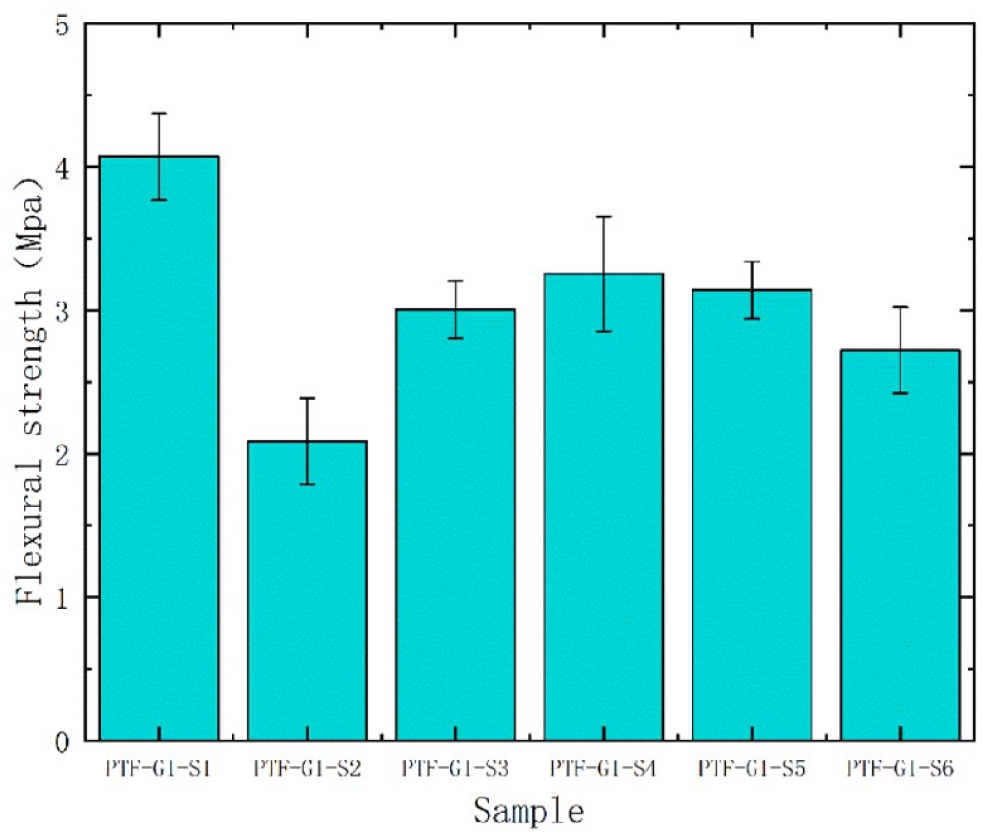
Flexural strength of different 3D polyurethane matrix composites.
SEM image of polyurethane foam after the bending test.
Compression Test
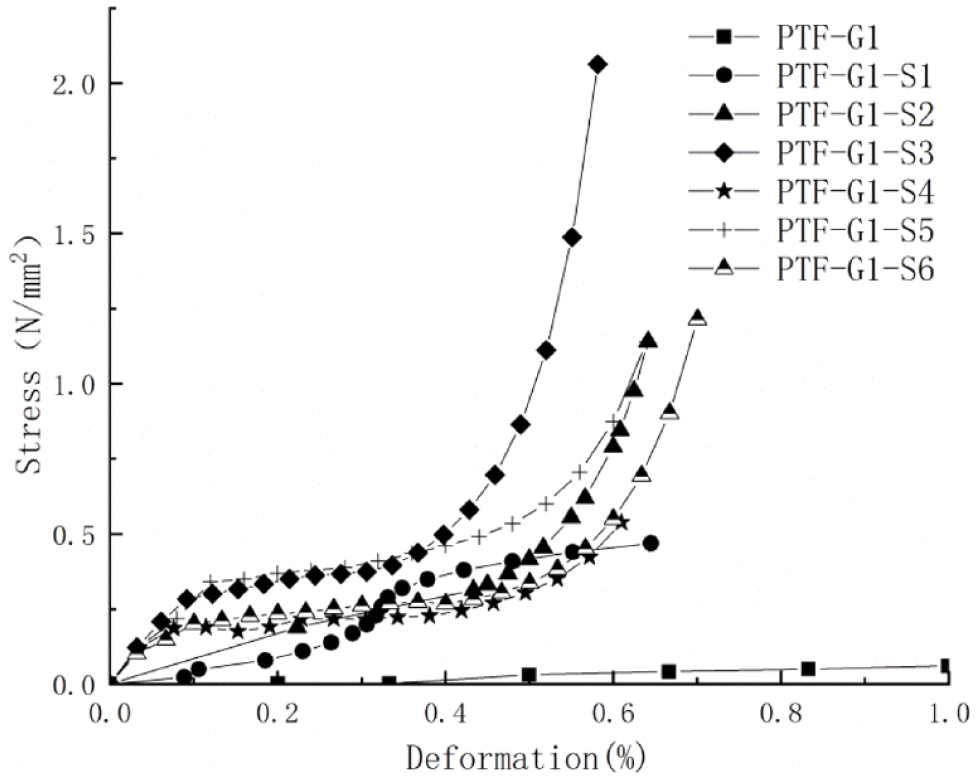
It can be seen from the compression stress–strain curves in Figure 13 that the stress–strain curves for all samples show a similar linear region at the initial stage during compression and all curves show a slow increase as the strain increases.
Compressive stress–strain curves of 3D polyurethane composites.
Under the condition of the same thickness, PTF-G1-S3 has better compression performance than PTF-G1-S1. The polyurethane foam matrix and the spacer wire are the main force parts of composite material. The spacer filaments of PTF-G1-S3 and PTF-G1-S1 have the same diameter and length. Owing to the small surface density of PTF-G1-S3, more space can be filled with more polyurethane foam, so the compression performance is better. Compared with PTF-G1-S4, PTF-G1-S2 has better compression performance. The WSF with proper surface structure can achieve the function of “strengthening the skeleton,” and the WSF can weaken the damage by external force to the material, so as to improve the compression performance of the whole material. However, the surface density of PTF-G1-S4 is small, which will destroy the integrity of the matrix and negatively affect the compressive properties of the material. Therefore, PTF-G1-S2 has good compressive properties.
PTF-G1-S3 has better compression properties compared with PTF-G1-S1 for the same thickness. Although the addition of WSFs improves the yield strength and compression modulus of the polyurethane foam, the small mesh size of S1 weakens the structural integrity of the polyurethane foam to some extent; PTF-G1-S5 has better compression properties compared with PTF-G1-S4. A WSF with an appropriate mesh size is the only way to achieve the “reinforcing skeleton” effect, as the WSF can weaken the damage caused by external forces, thus increasing the compressive and yield strength of the entire material. However, the mesh size of PTF-G1-S4 is too dense and such a structure can have a negative impact on the compressive properties of the material by damaging the integrity of the matrix.
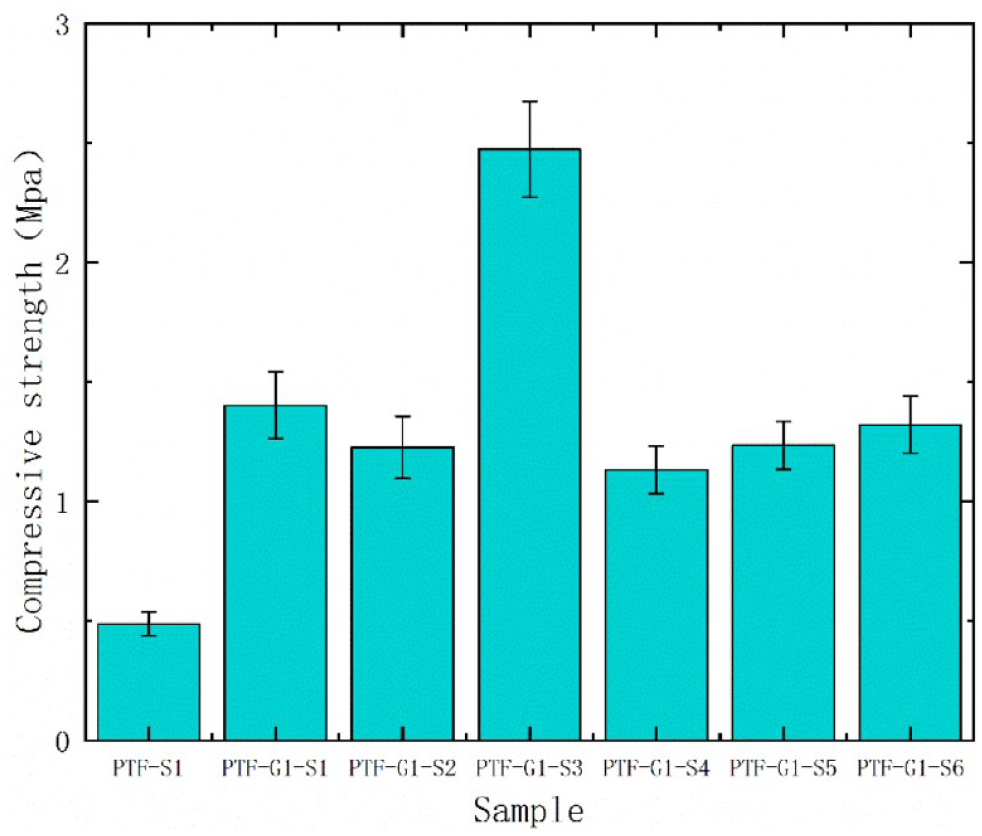
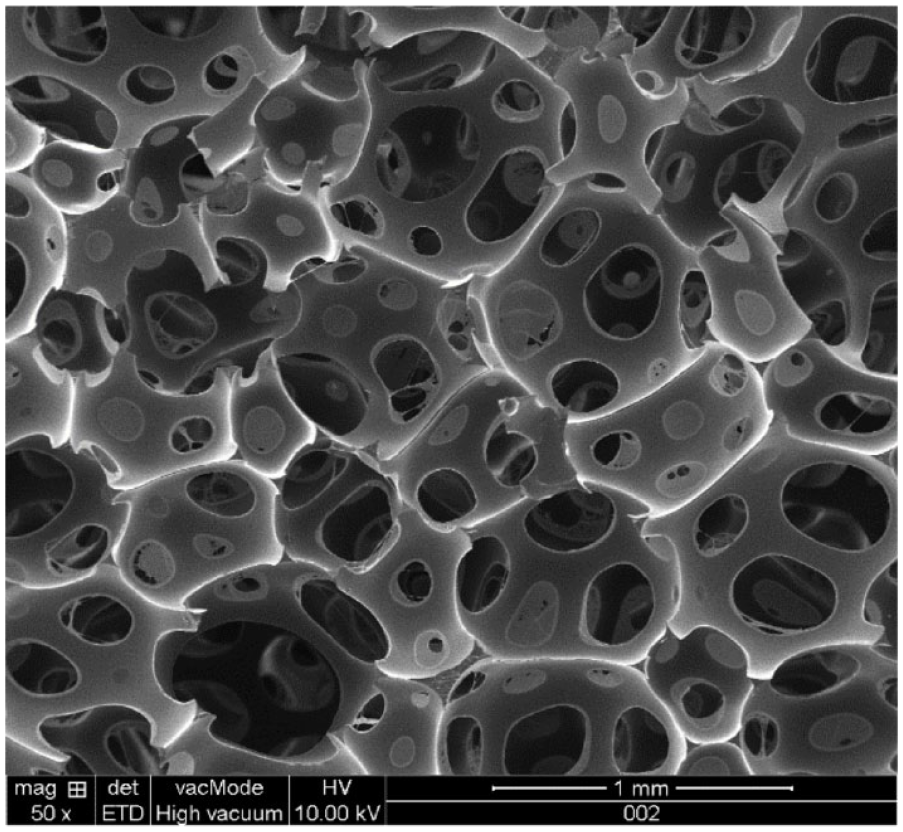
It clearly can be seen from Figure 14 that PTF-S1 has the lowest compressive strength. Therefore, the attachment of the glass fiber woven fabric increases the overall compressive strength of the composite. Thus, the above conclusion is again confirmed. The glass fiber woven fabric does not act as the main load-bearing force during the entire compression process, but does contribute to the compression properties of the composite. This is due to the fact that the WSF S3 has a larger surface structure and the polyurethane foam supports the spacer filaments more strongly and is more compact. Therefore, the compression strength is the best. As can be seen in Figure 15, which shows the SEM image of the polyurethane after compression testing of the three-dimensional hybrid polyurethane matrix composite, the specimen was subjected to a compressive load which resulted in compression between the pores and rupture occurred. The compression in the plane is therefore uniform for each bubble hole and the damage to the bubble holes is approximately the same.
Compression strength of different 3D polyurethane matrix composites.
SEM image of polyurethane foam after compression testing.
Conclusion
This article investigates the mechanics and properties of three-dimensional polyurethane matrix composites and investigates the effects of surface layer structure, fabric thickness, and the presence or absence of a glass fiber woven fabric on the tensile, bending, and compression properties of the composites. Compared with the material without the addition of glass fiber woven fabric composite, the WSF fabric-reinforced composite with glass fiber woven fabric composite has significantly better mechanical properties. Therefore, the three-dimensional composite structure as the reinforcement can improve the tensile and compressive properties of the composites. Under the same surface structure, the fabric thickness is positively proportional to the tensile and compressive properties and inversely proportional to the bending properties of the three-dimensional polyurethane matrix composites. The surface structure surface density is positively proportional to the mechanical properties of the three-dimensional polyurethane matrix composite when the thickness of the spacer fabric is the same. Therefore, the selection of suitable spacer fabric as reinforcement is one of the keys to improving the mechanical properties of composites. This study can provide some theoretical guidance and experimental support for the optimal design of the mechanical properties of the composites.
Footnotes
Declaration of conflicting interests
The author(s) declared no potential conflicts of interest with respect to the research, authorship, and/or publication of this article.
Funding
The author(s) disclosed receipt of the following financial support for the research, authorship, and/or publication of this article: This work was supported by the Inner Mongolia Natural Science Foundation (2020LH01005).