



Abstract
In this study, ultrafine polystyrene fiber membranes with different fiber orientation degrees were prepared by and electrospinning method, and two methods were used to characterize the fiber orientation degree. In addition, the effects of fiber orientation degree on the surface wettability and smoke filtration performance of fiber membrane were studied. The results showed that the water repellency and smoke absorption capacity of the polystyrene fiber membrane decrease with the increasing fiber orientation degree and the porosity. The orientation degree of the fiber has a significant influence on the smoke filtration performance of fiber membrane.
Introduction
In recent years, the index of PM 2.5 (namely, particulate matter with equivalent diameter less than or equal to 2.5 microns) of the air shows an ever-increasing trend and the air quality has seen a sharp decline, resulting in an increase in the incidence of lung cancer, bronchitis, asthma, cardiovascular disease, and other diseases. 1 – 3 Therefore, there is an urgent need to solve the problems for life and health caused by air pollution. 4 – 7 The traditional nonwoven air filter material has a good filtering effect on particles, dust, and other pollutants with a diameter of tens to hundreds of microns; however, filter materials with greater efficiency are required for the purpose of solving the problems related to PM 2.5, viruses, and for other nanoscale particle protection. Based on this, it has been universally acknowledged that research and development on novel filter material with high efficiency will be an important development direction in the future.8,9
Due to low cost, high yield, excellent filtration performance, and many other superior advantages, nonwoven materials which have become the most extensively used filter materials have been more favored by the market rather than knitted and woven filter materials. 10 The development of micro and nano technology has brought great prospects to the field of air filtration, and micro-nano fiber nonwovens exhibit the characteristics of high porosity, high specific surface area, high surface energy and activity, high fiber fineness, and homogeneity, which make them excellent air filter materials. 11 – 16 With the development of electrospinning technology, electrospun micro-nano fiber materials have been extensively used in the field of air filtration. Patanaik et al., 17 who prepared a three-layer composite fiber filter material with a middle layer of polyethylene oxide (PEO) nanofiber and upper and lower layers of nonwoven fabrics, found that the filtration efficiency increases with the increase of the diameter of PEO nanofibers. Matulevicius et al. 18 studied the removal of aerosol particles from airflow by utilizing the electrospun nanofiber media produced from different polymers. Polymeric materials were used as filter media, including polyamides 6 (PA6) and 6/6 (PA6/6), polyvinyl acetate (PVAc), polyacrylonitrile (PAN), and cellulose acetate (CA). The results revealed the high filtration efficiency of the PVAc nanofiber media filter (PVAc_60): 0.055 Pa-1 (98.79%) for 100-nm particles and 0.042 Pa-1 (96.79%) for 300-nm particles accordingly, due to its unique morphology of beaded nanofibers. And besides, the PAN nanofiber media also show relatively high filtration properties, while other nanofiber media (PA and CA) with high-quality factors fail to exceed the filtration efficiency of 91%. Wang et al. 19 prepared porous beaded polylactic acid (PLA) nanofiber membranes (NMS) by electrospinning. At the same time, the fiber morphology was changed to control the filtration efficiency and pressure drop of the PLA membrane. The results showed that the moderate size and number of beads are helpful to reduce the pressure drop, while the small fiber diameter and nanopores on the beads are beneficial to high filtration efficiency.
Micro-nano fiber nonwovens are composed of fibers whose filtration performance is affected by multiple factors; among them, the fiber orientation is an important one affecting the filtration performance of nonwovens. 20 – 22 In addition, the fiber distribution determines the mechanical anisotropy of nonwovens, thus affecting various properties of nonwovens. Therefore, it is of great significance to study the influence of fiber arrangement or orientation distribution on the filtration performance of micro-nano fiber nonwovens. 23 In this study, a polystyrene (PS) microfiber was prepared by electrospinning technology. By adjusting the rotating speed of collecting roller, fiber membranes with different orientation degrees were fabricated. And besides, cigarette smoke exposure gives the highest concentration of PM 2.5 among the sources of air pollution exposure.24,25 Therefore, the effects of fiber orientation degree on the surface wettability and the cigarette smoke filtration performance of fiber membrane were investigated, in a comprehensively designed and correctly implemented way.
Experimental
Materials
Polystyrene (PS, (C8H8) n , average Mw = 350,000, average Mn = 170,000, Sigma-Aldrich Co. Ltd, USA) and N,N-dimethylformamide (DMF, analytical grade, C3H7NO, molecular weight = 73.09; Sinopharm Chemical Reagent Co. Ltd, China) were used as received, without any further processing. The PS powders (7 g) were dissolved in the DMF solution (93 g) at room temperature using an electric mixer (JB90-D; Shanghai Specimen and Model Factory, China) at a constant speed of 500 r/min; in this way, the 7 wt% PS solution was prepared.
Experimental Setups
The electrospinning machine (TH-001; Laizhou Electronic Equipment Co. Ltd, China) adopted in this experiment was as shown in Figure 1, composed of a solution feeding system, a high-voltage supply system, a fiber collecting system, and a temperature and humidity control system. The solution feeding system consists of a micro injection pump and a syringe with a metal needle, which is driven by a motor and can be moved laterally at a speed of 100 cm/min. A positive voltage of 20 kV was applied to both the spinneret and the aluminum foil-grounded collector, with a preset distance between them of 20 cm. The fiber collecting system is composed of a cylinder-shaped collecting roller which is driven by a motor, running at adjustable speed. The temperature and humidity control system consists of a heating device, a temperature and humidity meter, and a humidity controller.
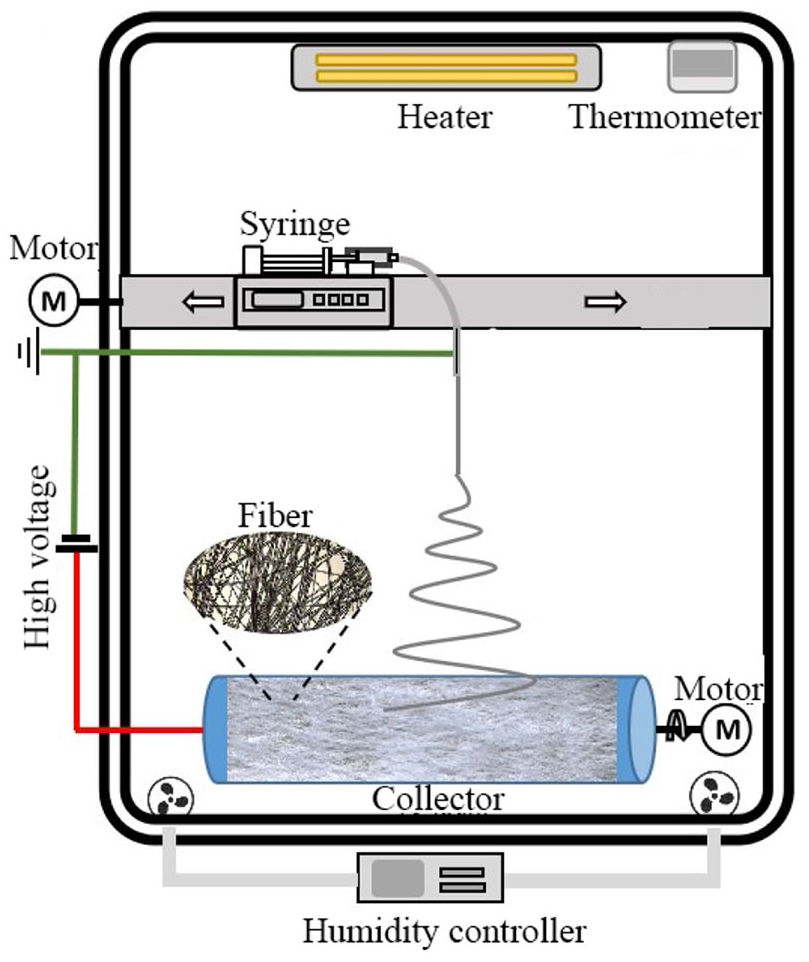
Schematic diagram of the microfiber preparation device used in this experiment.
All experiments were carried out in an environment with temperature of 22 ± 3°C and relative humidity of 40 ± 3% in this study. Under the above conditions, electrospinning for 1 h was carried out to prepare the fiber membranes. The rotating speeds of the collecting roller were set to 30, 40, 50, 60, and 70 r/min.
Characterization
Orientation Degree of PS Fibers
Two methods were used to characterize the fiber orientation degree in this study, as stated below: image measurement method and strength test method.
Image Measurement Method
The morphology of the fiber membrane was observed by an optical electron microscope (BH200M; Ningbo Shunyu Instrument Co. Ltd, China) and a field emission scanning electron microscope (SEM, SU8010; Hitachi, Japan). The fiber orientation degree was measured by ImageJ software (NIH Image, Bethesda, Maryland, USA). The fiber orientation degree was characterized by the fiber angle relative to the horizontal direction. A total of 100 fibers were randomly selected for angle measurement, and the average angle was obtained by the summarize function. The frequencies of fiber orientation degrees at 0°–30°, 30°–60°, 60°–90°, 90°–120°, 120°–150°, and 150°–180° were calculated, and then the fiber orientation degrees were analyzed.
Strength Test Method
The strength of PS fiber membrane was tested to obtain the strength ratio of the fiber membrane along the machine direction to the cross direction (MD:CD). The strength of the fiber membrane was tested using an XS (08) XT-3 strength tester (Shanghai Xusai Instrument Co. Ltd) at a crosshead speed of 100 mm/min. The sizes of samples were set to 10 mm × 30 mm, and each sample was tested five times.
Porosity
The PS fiber membranes were immersed into the n-butanol solution for 5 h until the required equilibrium was achieved at room temperature. The porosities of the membranes were measured by weighing them before and after absorbing of the n-butanol solution, respectively. The porosity (P)(%) can be calculated according to Gnana Kumar et al. 26
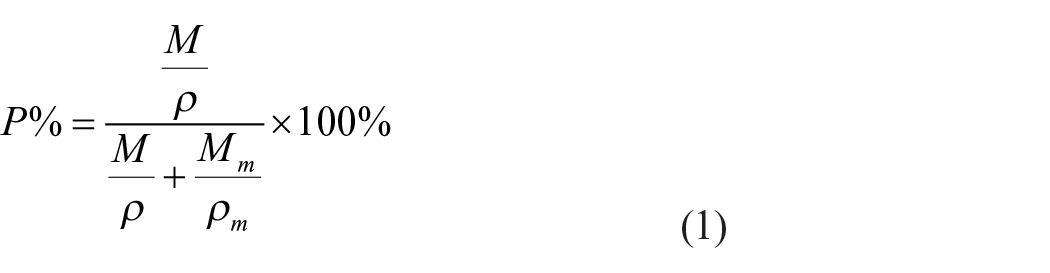
where M is the mass of n-butanol solution absorbed by the soaked fiber membrane, ρ is the density of n-butanol solution, Mm is the mass of the dry fiber membrane, and ρm is the density of the dry fiber membrane.
Surface Wettability
The surface wettability of the sample membrane was examined by a contact angle tester (DSA305, Kruss, Germany). With a size of 5 μL, the water-oil droplets were applied to the electrospun PS membranes. Each sample was measured five times for the purpose of calculating the average value.
Cigarette Smoke Filtration Performance
Figure 2 shows the schematic diagram of the experimental system used for cigarette smoke filtration performance measurements. Made of PS nanofibrous membranes, the filter is placed between two three-necked bottles for smoke transport and related testing. The membrane weight was measured gravimetrically, in such a way that the total mass uptake was calculated after the membrane was exposed to a massive excess of smoke generated by three cigarettes. That is, the mass change of the PS fiber membrane was calculated, by means of measuring the membrane weight difference before and after the filtration (dried in the environment at the temperature of 85°C for 10 h). The burning cigarette is fixed at the nozzle of the inlet tube of the filtration setup, and besides, the outlet tube of the filtration setup is connected to a pump. A digital particulate concentration sensor (PMS7003, Beijing Plantower Co, Ltd) is used to measure the particle concentrations both before and after the filtration. The initial PM 2.5 concentration in the three-necked bottle connected to the cigarette was recorded when the cigarette was burnt out, and the PM 2.5 concentration in the bottle connected to the suction pump was recorded at the time when the cigarette smoke passed through each fiber membrane.
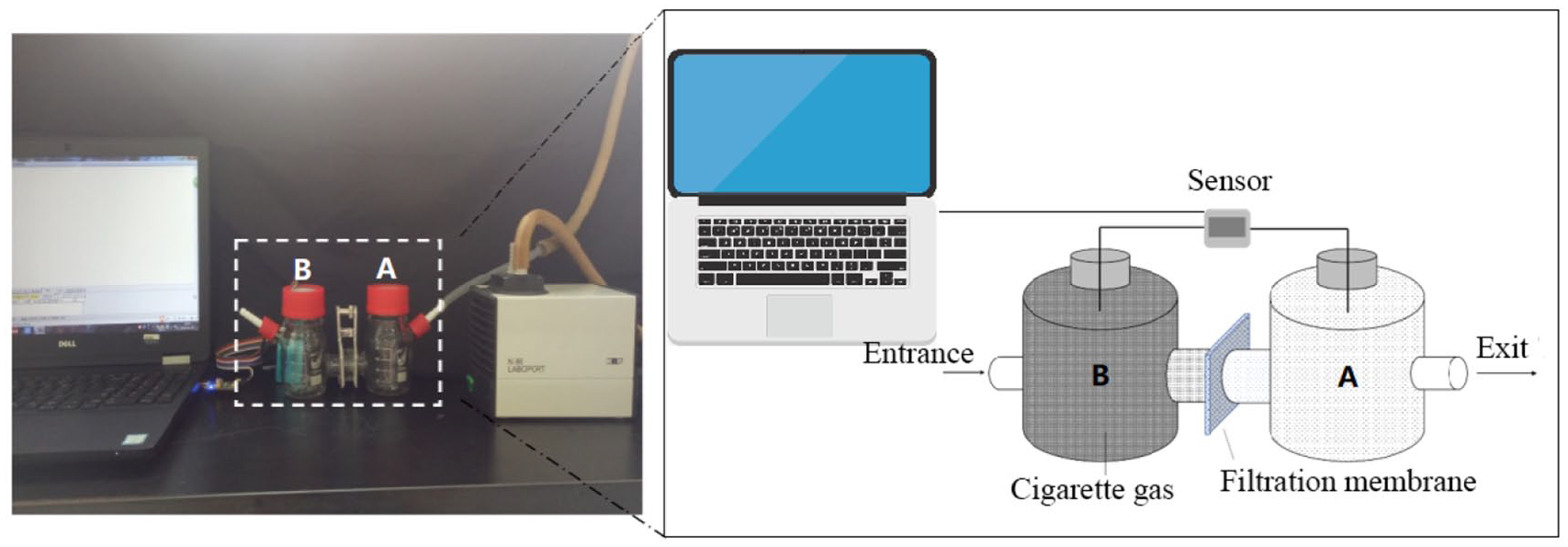
Schematic diagram of experimental setup used for measurements during cigarette smoke filtration process.
The working flow of the digital particulate concentration sensor is shown in Figure 3. The weights of the fiber membrane were recorded before and after the test, and then the mass change of the fiber membrane was obtained. The data were output from the sensor after the calculation, and the filtration performance of the sample under different preparation conditions was analyzed.
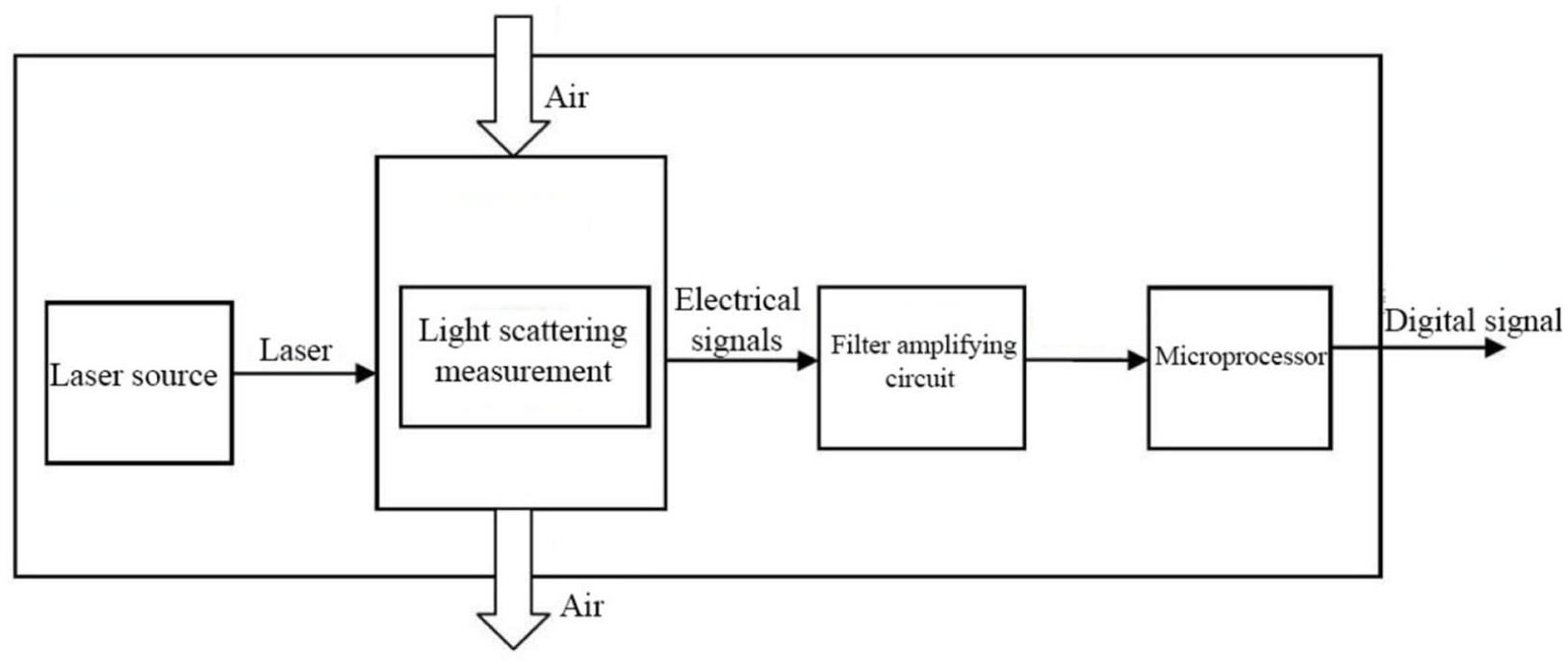
Working flow of the digital particulate concentration sensor.
Results and Discussion
Orientation of PS Fibers
Figure 4 shows the optical microscopies and orientation test results of PS fiber membranes prepared at different rotating speeds of the collecting roller. It can be observed from the figure that when the rotating speed of the collecting roller is set to 30 r/min, the fibers are more disorderly and fiber bundles are presented without obvious orientation. As the rotating speed increases, the number of oriented fibers in the fiber membrane increases gradually. The fiber orientation degree measured from the fiber membrane image also shows that the proportion of oriented fibers increases gradually with the rotating speed of collecting roller, which indicates that the rotating speed of collecting roller has a significant influence on the fiber orientation degree. The faster the speed is, the more obvious the fiber orientation degree is.
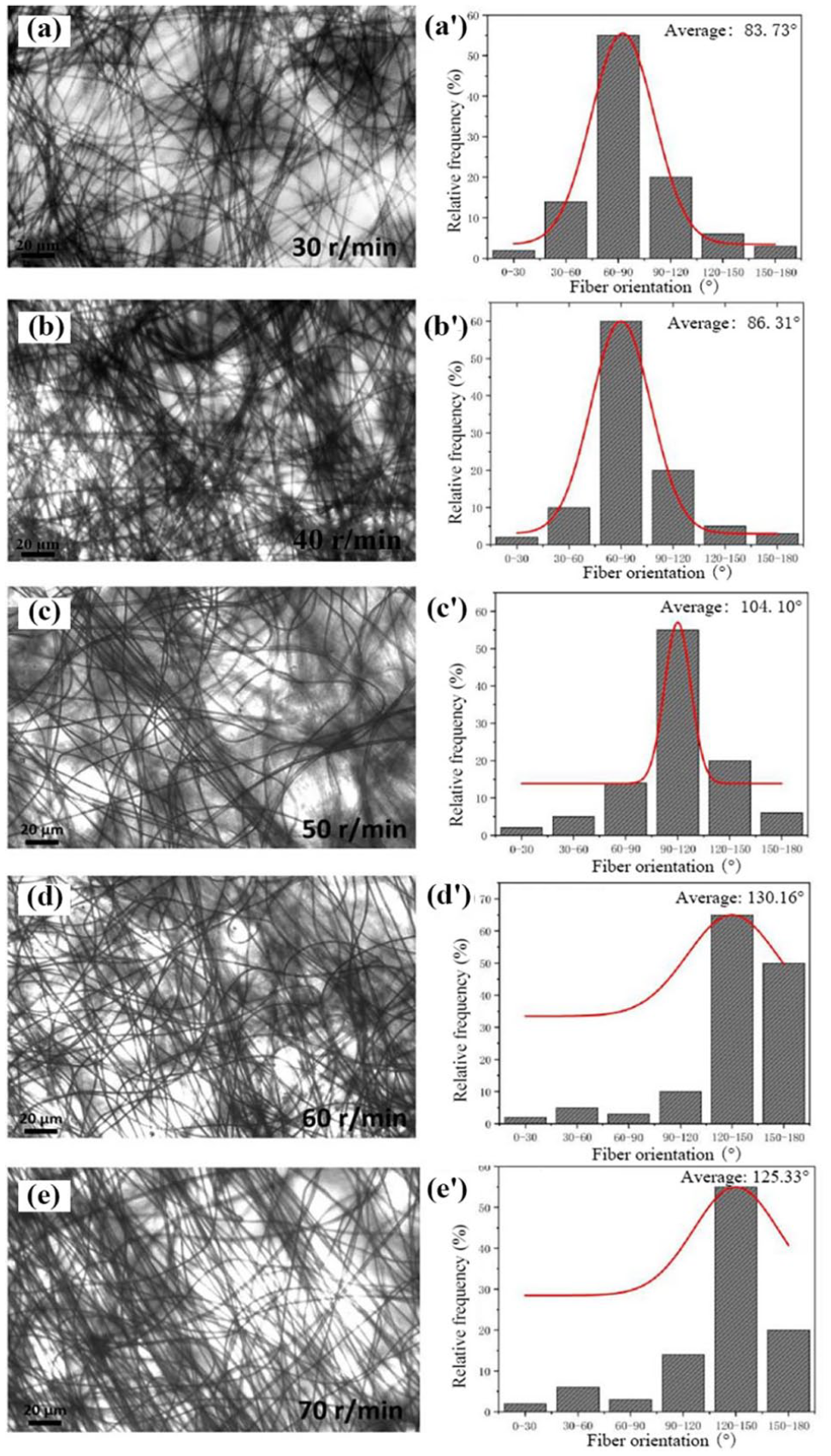
Optical microscope (a–e) and orientation test results (a′–e′) of PS fibers prepared at different rotating speeds of the collecting roller.
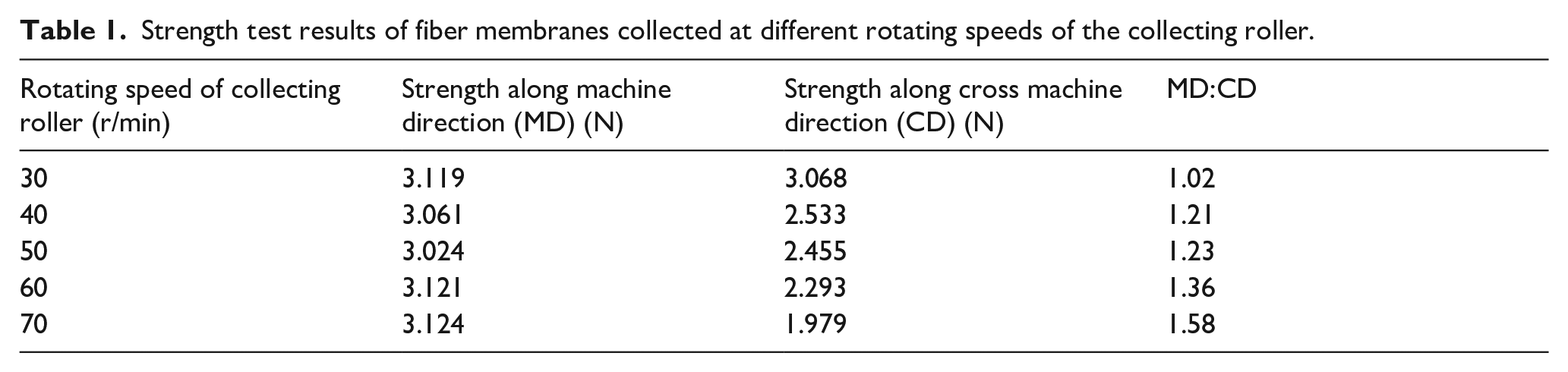
In the nonwoven industry, the strengths of fibers along the machine direction (MD) and the cross direction (CD) of nonwoven materials are usually used to judge the orientation degree and cluttering degree of fiber web. Under the conditions of MD:CD>>1 or MD:CD<<1, the high orientation degree of the fiber membrane can be realized; in the event of MD:CD ≈ 1, the high cluttering degree of the fiber membrane can be achieved. Table 1 shows the strength test results of the fiber membranes prepared at different rotating speeds of the collecting roller. MD:CD = 1.02 can be observed from the figure when the rotating speed of collecting roller is set to 30 r/min, indicating the high cluttering degree of the fiber membrane. The value of MD:CD increases with the rotating speed of collecting roller, which indicates that the orientation degree of the fiber membrane increases and the strength along MD of fiber membrane is greater than that along CD. And the larger strength curve gap appears with the increase of the rotating speed collecting roller, resulting in a larger MD:CD value.
Strength test results of fiber membranes collected at different rotating speeds of the collecting roller.
Porosity
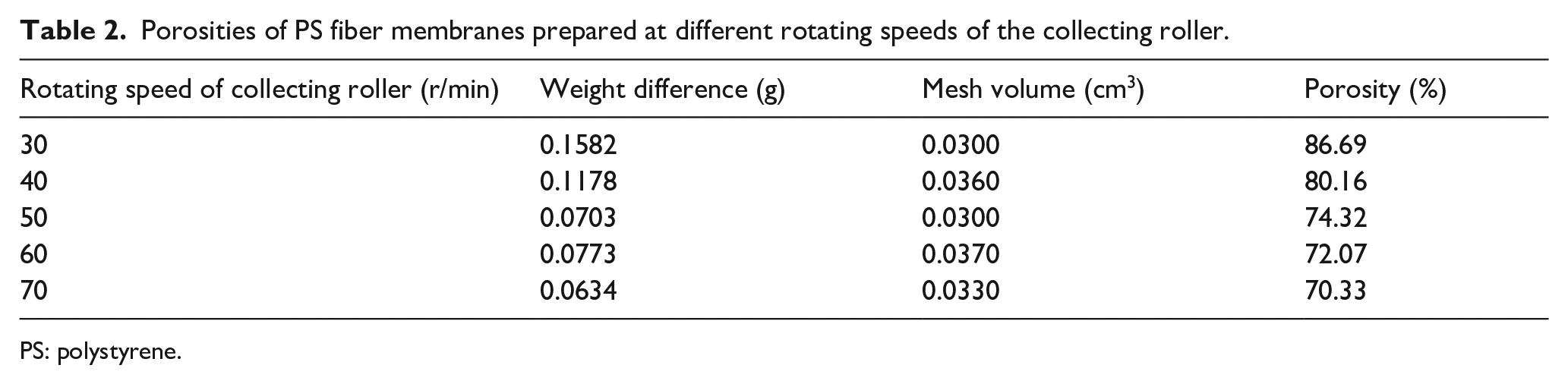
The porosities of the PS fiber membranes prepared at different rotating speeds of the collecting roller were calculated according to equation (1). The results of porosity measurements are presented in Table 2. What can be apparently seen from the table are the relatively high porosities of the PS membranes, and the porosities of PS fibers decline gradually as the rotating speed of the collecting roller increases. That is mainly because the high orientation degree of fibers could result in the compact structure of the membrane.
Porosities of PS fiber membranes prepared at different rotating speeds of the collecting roller.
PS: polystyrene.
Surface Wettability
Figure 5 presents the surface wettability of PS fiber membranes prepared at different rotating speeds of the collecting roller. When the rotating speeds are set to 30, 40, 50, 60, and 70 r/min, the contact angles of the fiber membranes of 135.6°, 130.9°, 130.1°, 121.3°, and 119.9° can be viewed, respectively. All the five kinds of fiber membrane show excellent water repellency. The water contact angle decreases and the angle difference between the two sides of water drop increases with the rotating speeds of the collecting roller. This is mainly because with the increase of the rotating speed of the collecting roller, the fiber orientation degree increases (shown in Figure 4). Lower orientation degree leads to higher uniformity of the fiber membrane, which will provide a better water repellency.
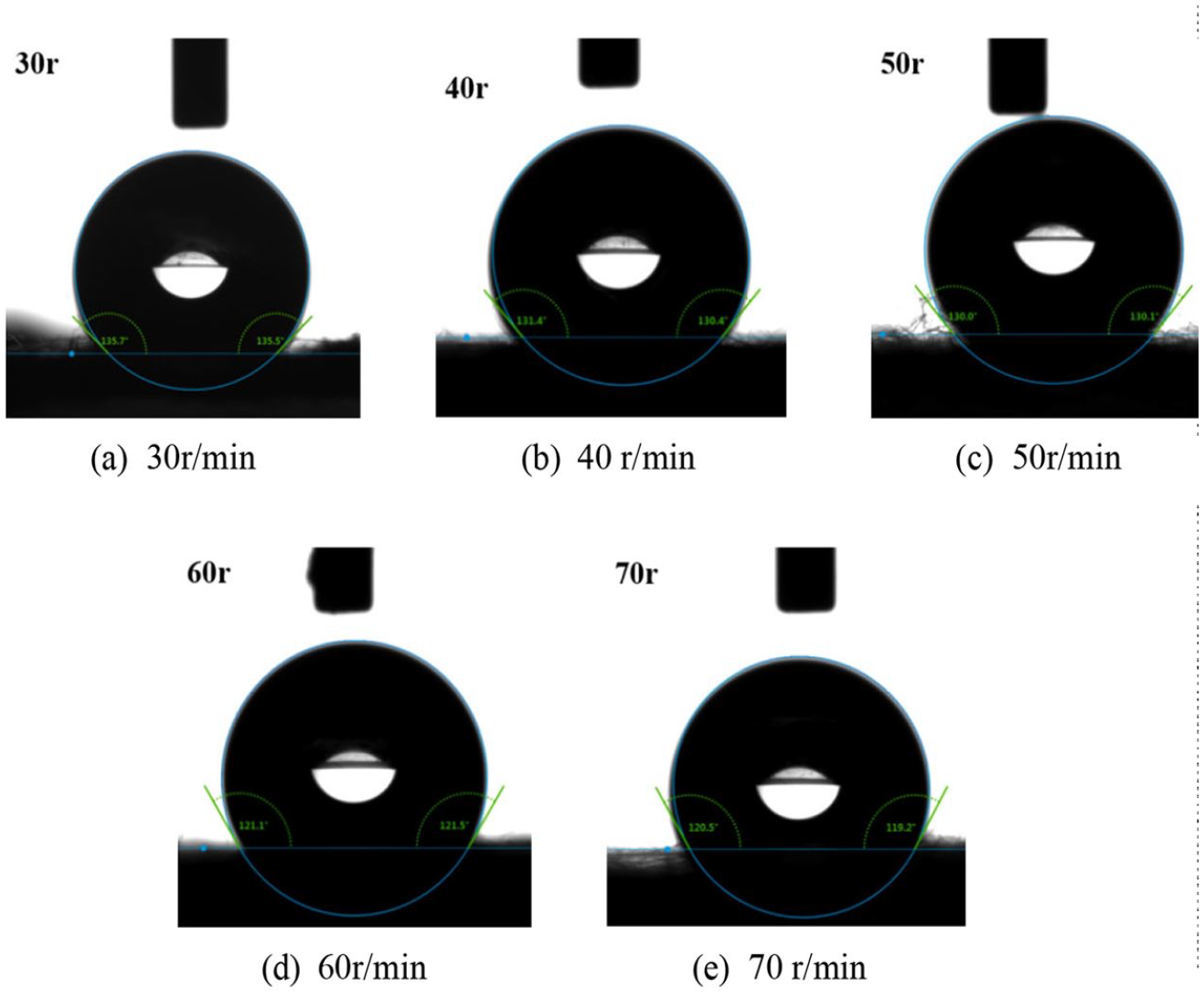
Water contact angles of PS fiber membranes prepared at different rotating speeds of collecting roller: (a) 30 r/min, (b) 40 r/min, (c) 50 r/min, (d) 60 r/min, and (e) 70 r/min.
Filtering Performance
The filtration capabilities of the PS membranes were tested, by using a cigarette as the smoke source. The images of electrospun fiber membranes after smoke filtration are as shown in Figure 6, and the PS membranes are presented in brown-orange color after they are exposed to cigarette smoke. Figure 7 displays the SEM images of morphologies of electrospun PS fibers both before and after the filtration. For the electrospun PS membrane before the filtration, the nanopores can be seen on the fiber surface (shown as Figure 7(a)). After the filtration, the PS membrane is covered by the particles coming from the cigarette smoke (shown as Figure 7(b)), and the porosity of fiber surface significantly inhibits the filtered particles from loosening on the surface of fiber membrane.
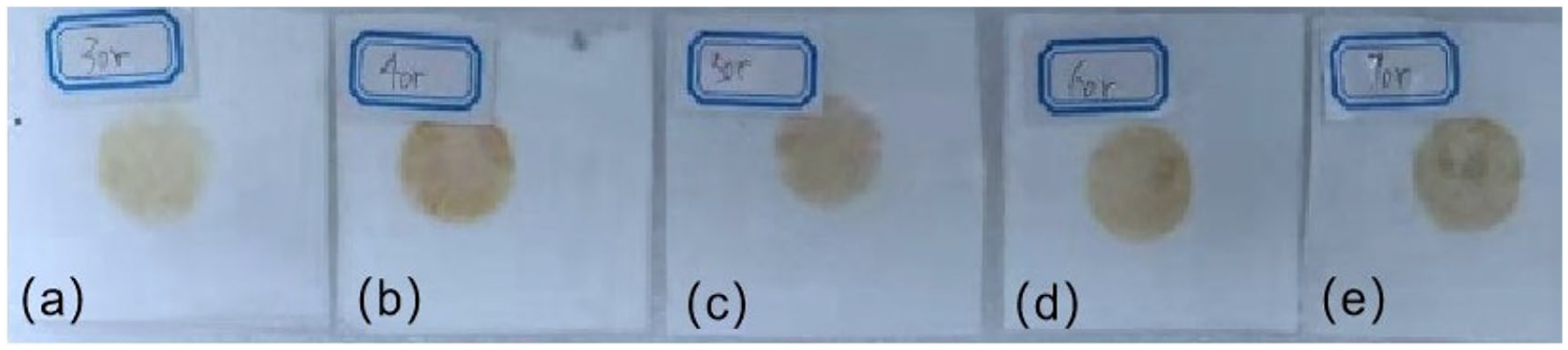
Surface morphologies of PS fiber membranes prepared at different rotating speeds of collecting roller after filtration: (a) 30 r/min, (b) 40 r/min, (c) 50 r/min, (d) 60 r/min, and (e) 70 r/min.
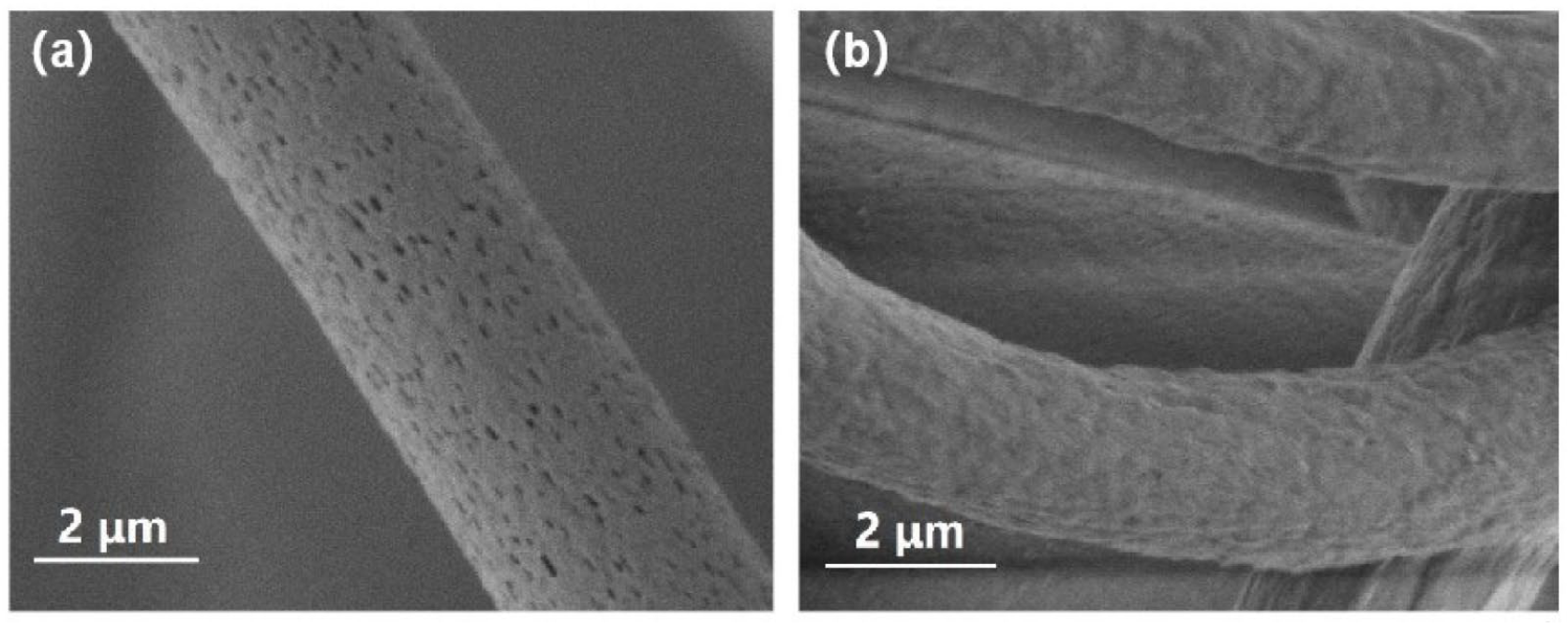
SEM images of PS fibers before and after filtration: (a) before filtration and (b) after filtration.
The filtration capacities of the electrospun PS membranes were evaluated based on the mass change of the filter membrane and the PM 2.5 concentration difference between two three-necked bottles when a substantial excess of cigarette smoke passed through each filtration membrane (shown in Figure 2).
The data in Table 3 show that the mass change of the fiber membrane decreases with the increasing rotating speed of the collecting roller, which means the smoke absorption capacity of the membrane decreases with the rotating speed of the collecting roller. The membrane produced at a high rotating speed of the collecting roller obtains high orientation degree, and the fibers overlap with each other. And also, a large gap between the fibers will be formed when the smoke is exhausted by the pump from the three-necked bottle which influences the absorption capability of the cigarette smoke. In addition, the PM 2.5 concentration difference decreases with the increasing rotating speed of the collecting roller. The main reason is that the membrane collected at a lower rotating speed of the collecting roller absorbs more cigarette smoke due to the higher porosity.
Filtration capacities to cigarette smoke of electrospun PS membranes produced at different rotating speeds of the collecting roller.
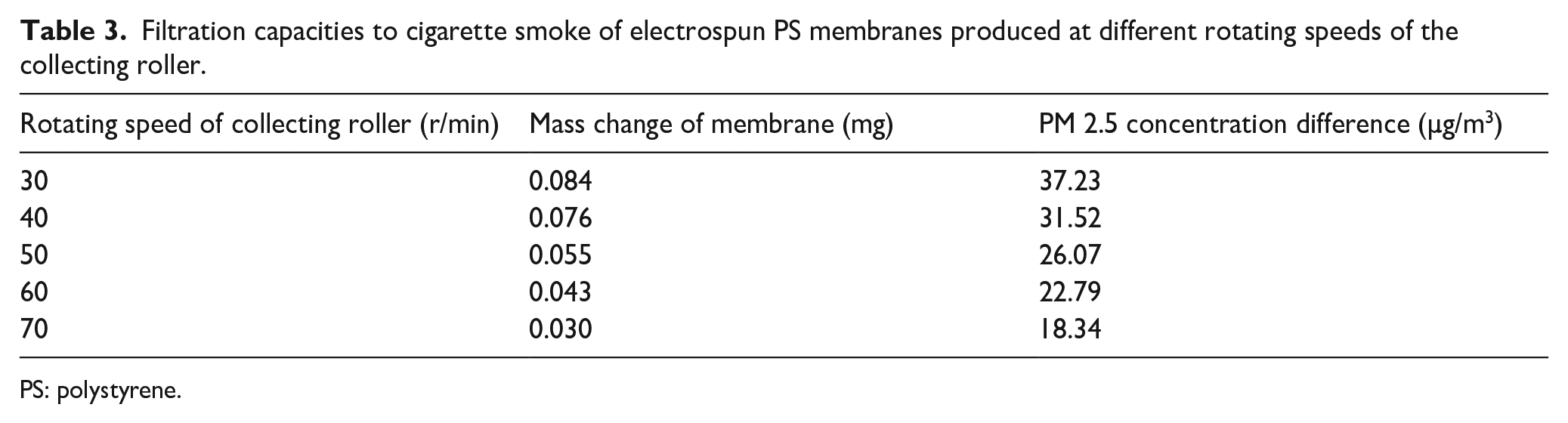
PS: polystyrene.
Conclusion
In this experiment, membranes made of PS microfibers with different orientation degrees which can be controlled by adjusting the rotating speed of collecting roller were fabricated. The influences of orientation degree of the PS microfiber on the porosity, surface wettability, and smoke filtration performance of fiber membrane were explored. The results showed that as the fiber orientation degree increases, the porosity, water repellency, and smoke absorption capacity of the PS fiber membrane decrease, with increasing rotating speed of the collecting roller. The orientation degree of the fiber has a significant influence on smoke filtration performance of fiber membrane due to the large gap caused by the arrangement of fibers in the same direction.
Footnotes
Declaration of conflicting interests
The author(s) declared no potential conflicts of interest with respect to the research, authorship, and/or publication of this article.
Funding
The author(s) received no financial support for the research, authorship, and/or publication of this article.