




Abstract
Inclusive business is regarded as having the potential to improve food security status in the Global South. Despite increased popularity among governments, donors and other development stakeholders, little is known about the approach’s impact on smallholder farmer communities. As such, the above-mentioned inclusive business promise on food security status largely rests on assumptions. This article scrutinises a case of smallholders’ French bean production for export market in Tharaka Nithi County, Kenya. The business model adopted in the initiative is termed inclusive and is intended to enhance food and nutrition security in the community. The empirical findings show that several contextual factors—in particular, access to land and water resources—limit the participation of the majority of farmers in the community. This leads to a notable level of exclusion. Moreover, the company risks negatively influencing local food security when food crops are substituted for an export crop that is not consumed locally. Results of this article demonstrate that while private sector-led development might contribute to higher economic productivity and access to food of better quality, it rarely changes the structural causes of food and nutrition insecurity, which are oftentimes related to access to production resources. We plead for increased scrutiny of the contextual factors when designing and implementing inclusive business models.
Introduction
In 2005 the World Business Council for Sustainable Development (WBCSD) launched the concept of ‘Inclusive Business’ (GIZ, 2013). In the Global South, inclusive business in the agricultural sector entails integrating poor and low-income communities into global and regional value chains as producers, processors, workers and/or other forms of business partners. It is considered integral to enhance local livelihoods and food security (Bonnell & Veglio, 2011; Chevrollier et al., 2012; FAO, 2015; Sjauw-Koen-Fa, 2012). Since its launch, it has been promoted as a way of doing business while contributing to development objectives; presented as a unique opportunity to combine business development and growth, on the one hand, with combating poverty and hunger, on the other. Furthermore, by putting private businesses in the drivers’ seat, Global South’s development should not have to solely rely on exhausted public funding sources. The profit orientation of a business is expected to ensure sustainability as opposed to most donor-supported programmes that invariably depend on temporary public funding. Profit-driven businesses are thought to be able to scale up at speed and to a level unattainable by most other development interventions (Wach, 2012).
Against this backdrop, governments and international donors have gratefully accepted the concept in their pro-poor narratives (Zoomers et al., 2017). International organisations, like the Food and Agricultural Organisation (FAO) of the United Nations, WBCSD, the Word Bank and the African Development Bank have all put inclusive business models in the centre of their market-oriented interventions (da Silva & de Souza Filho, 2007; Gupta et al., 2015; Gupta & Vegelin, 2016; IFC, 2012; Shortall, 2008). Indeed, to facilitate the concept, a multilateral alliance has been established, Business Call to Action (BCtA, 2017), bringing donors together to promote inclusive business models to companies.
The potential of inclusive business to contribute to food security, as highlighted by FAO (2015), rests on a business model’s ability to address low-income smallholders’ bottlenecks to reach the market. This notion leads to our definition of ‘inclusiveness’ for this article. Integration in agricultural value chains is expected to improve farmers’ access to capital, offer risk mitigation tools such as insurance, promote knowledge and technology, and market information. All these are the assumed means to enhance farmers’ income through which food security would be improved (FAO, 2015; Golja & Požega, 2012; Ion et al., 2014; Jenkins et al., 2011; Lundy et al., 2014; WBCSD, 2013).
Despite increased popularity among governments1, donors and other international development stakeholders, little is known about the impact of inclusive business on local communities (Bruni & Santucci, 2016; Chamberlain & Anseeuw, 2017; FAO, 2015; Sjauw-Koen-Fa, 2012; Smith, 2013). Furthermore, while it is presented as a model that contributes to improved local food security, little is known on whether and how it contributes. As such, to better understand the relationship between inclusive business, and food security and nutrition, this study scrutinises a case of a proclaimed inclusive business initiative. The initiative involves smallholders’ French bean production for export market which is intended to enhance household food security in Tharaka Nithi County, Kenya. Guiding the study are the following research questions. First, who are the farmers that participate as producers in the business model? Second, what is the impact of an inclusive business model producing for distant markets on household food and nutrition security for the farmers in the production area?
The next section discusses the evolution of private sector development in policy and cooperation in the Global South, with the aim of providing the background of inclusive business now embraced as a crucial strategy to address food security. The third section introduces the case study and its context. In the fourth section we detail the research methodology employed. The fifth and sixth sections present the findings on both research questions. We conclude the article with a discussion of the findings and policy considerations.
From Private Sector Engagement to Inclusive Business
Private sector involvement in development interventions is not a new phenomenon. In recurring periods since the emergence of development assistance in the 1960s, the private sector has been positioned as an essential agent in promoting development. Most noticeable was the period between 1985 and 1994, the era of structural adjustment programmes, in which global development actors—the World Bank and International Monetary Fund—compelled African states to rigorously ‘roll back’ their involvement in public services such as extension, research in the agricultural sector, and other activities; presuming a private sector takeover. Aid was provided under strict conditions. In the era of ‘good governance’ in the late 1990s, the state was re-appreciated, this time for its role in overseeing globalisation and in facilitating economic growth via promotion and protection of foreign investment and new regimes of property rights. Structural adjustment gave way to poverty reduction strategy programmes that involved the state in tandem with the market (Craig & Porter, 2006).
Following the global financial crisis of 2007–2008, however, the private sector again obtained a central position in development. Development assistance shifted from supporting civil society to collaborate with—oftentimes financing—companies, philanthropists and investors. ‘Trade not aid’ became the new adage of many donors (European Commission, 2016; Mawdsley, 2017; Ploumen, 2013; Richey & Ponte, 2014). Trade was presented as a considerably equal way of achieving change instead of development aid in which the beneficiaries were usually perceived to be dependent on the provider. Against this backdrop, in 2011, the Busan Partnership Agreement for effective development cooperation referred to the private sector as critical for achieving sustainable development (OECD, 2011). Currently, in the so-called era of ‘retro-liberalism’ (Murray & Overton, 2016, p. 248), governments are actively intervening to promote business interests as crucial instruments for development; a clear departure from the preceding neo-liberal stance of rolling back the state to allow the market to do its work. The donor programmes supporting the establishment of cross-border agri-value chains linking smallholders to regional and global markets are seen as the contemporary example.
However, merely engaging the private sector as the lead agent of development does not automatically lead to positive outcomes for local communities. If business growth is to improve the livelihood of the many through production support, employment, market uptake and market outlets for smallholders, then it should look beyond the bottom line and incorporate social objectives of inclusion and sustainability in its business models (Deininger, 2011; European Union, 2013; West & Haug, 2017). Responsible investments that consider the impact on the local population and environment at the very least pursue a ‘do no harm’ principle in their operations (Cotula et al., 2009; Teklemariam et al., 2017). Also, public support to the private sector is often made conditional on ‘doing good', that is, including positive societal impact in the objectives of the business model. Thus, the concept of inclusive business is embraced when a win-win situation for both the company and the local population is guaranteed, which may hamper the scope of their contribution to development.
Agribusiness and Food Security Context in Keanya
Kenya provides a compelling research area to assess the role of inclusive agribusiness in fostering food security. The country, especially communities in the rural areas, relies strongly on agriculture for livelihoods and food security. The agricultural sector employs about 70% of the rural inhabitants and accounts for 26% of Kenya’s gross domestic product (GDP) and 65% of the total export revenue (FAO, 2018b). The primary producers (75%) are smallholders that practice rain-fed agriculture on plots averaging 0.2–0.3 hectare (ha) per household (Mbata, 2013; Mohajan, 2014). The traditional agricultural practices mostly employed by these farmers are understood as the main hindrance to economic growth (von Kimakowitz, 2012). The pathway towards improved food and nutrition, according to the government, is through agricultural modernisation.
In 2008, the country launched its long-term development strategy—Vision 2030, which aims for transformation in the agricultural sector, particularly by attracting foreign investments, as the vehicle to attain an annual GDP growth of 10% (GoK, 2007). Towards this endeavour, the Kenyan government has recently adopted several policies, including the National Agricultural Extension Policy (GoK, 2012b), National Horticulture Policy (GoK, 2012c), Agricultural Sector Development Strategy 2010–2020 (GoK, 2010), and National Agribusiness Strategy (GoK, 2012a). Together, these policies are set to improve agricultural extension services, sectoral knowledge transfers, productivity, commercialisation and competitiveness of smallholder farmers. Building on the same logic, in 2011 the government developed the National Food and Nutrition Security Policy that was adopted a year later (GoK, 2011), to ensure an increase in the production of quality and diverse food accessible to all Kenyans. The increased production and accessibility are to be bolstered by improved storage to minimise post-harvest losses and to facilitate the establishment of well-functioning markets.
Notwithstanding the development efforts in the sector, Kenya still grapples with the problem of food insecurity. In 2011, approximately 10 million Kenyans were chronically food insecure (GoK, 2011). Despite notable improvement, food insecurity remains a significant concern through 2016, considering that an estimated four million people consumed meals lacking in dietary diversity, but made primarily of staples with some green vegetables and oil flavours (WFP, 2016). In 2018, it was reported that approximately 2.4 million people relied on relief food aid (FAO, 2018a). The persistent food crisis in the country has even prompted the government to make food and nutrition security among the crucial target in its ‘Big-Four Agenda’, in which it proposes an increased role of the private actors in the agricultural sector (KEPSA, 2017). In light of these circumstances, several smallholders’ targeted inclusive business initiatives by the Kenyan government and development agencies have been implemented in the recent past, and others are underway across the country.
Materials and Methods
Case Study
This article scrutinises a business case that claims to be inclusive. It concerns a Kenyan company, referred to as Bean in this article, that engages smallholders in the production and supply of French bean, a high-value horticultural crop for export. The company sources French bean from nine counties across Kenya and the produce is destined for Germany and France. French bean is an essential horticultural crop in the country, where it contributes to the livelihoods of approximately 52,000 smallholders (DGICD, 2018). It is also known to account for 19% of the total horticulture value and 25% of the total volume of vegetables exported from Kenya (RSA, 2018).
Bean is supported by the Facility for Sustainable Entrepreneurship and Food Security (FDOV) of the Dutch Ministry of Foreign Affairs, a financing instrument set to stimulate public–private partnerships (PPPs) with an aim to contribute to food security in developing countries (NEA, 2018). The guiding principle for supporting the French bean scheme run by Bean is based on the idea that, given the extremely small farm sizes in the densely populated eastern Kenya, smallholders should be assisted in growing valuable cash crops. It is supposed that high-value cash crops should lead to enhanced income, which in turn should enable the farmers to meet their basic needs such as food and others. In this initiative, Bean collaborates with an international NGO, a Dutch private agricultural service provider, and a Kenyan government export crop regulation agency. Rolled out in 2016 by the consortium, the initiative is expected to run for five years and involves a total budget of about € 5 million, half of which is FDOV’s contribution. Bean contributes by setting up a French bean processing factory at the export processing zone (EPZ) in Kitengela, south of Nairobi. The other partners contribute through expertise provision.
Through the PPP, Bean’s main goal is to provide 48,500 smallholder farmers with production support and a guaranteed market. The company mission is to improve availability and affordability of quality and nutritious food for local and regional consumers, enhancing households’ food security in the context of a private enterprise. The initiative’s theory of change revolves around removing the barriers to food security in the region, including—(a) low production and productivity attributed to poor agricultural practices, post-harvest losses, inaccessibility of improved technologies and lack of extension delivery systems; (b) market inaccessibility due to poor smallholder’s organisation capacity and lack of market information; and (c) cross-cutting issues such as inability to produce within the quality standards essential to meet the market standards, and addressing weak infrastructure. Bean assumes that by improving access to quality inputs, training farmers on good farming practices, and a guaranteed market, farmers should be able to enhance their income, and thereby improving their ability to afford quality food.
The community of Kaanwa in Tharaka Nithi County was purposively sampled. Tharaka Nithi is reported to be among the counties in Kenya where households are forced to adopt coping strategies due to high levels of food insecurity (WFP, 2016). This includes consuming less preferred or borrowed food, reducing the size or number of meals and/or adults skipping their meal to provide for children. According to the government, even with the support of food aid, the households in the county only manage ‘minimally adequate food consumption but are unable to afford some essential non-food expenditures without engaging in irreversible coping strategies’ (GoK, 2017, p. 7). The high food insecurity prevalence compared to other counties where Bean is operating made the county the logical site for this research.
Bean contacts individual farmers and/or groups of farmers with whom it works on pre-agreed prices, quality and delivery dates arrangement. The company provides farmers with input including seeds, chemicals and fertiliser. Several other services are provided by the other project partners including soil testing and analysis at a subsidised price, knowledge on climate-smart technologies such as drip irrigation, training and advice on soil conservations methods and biological pest control. These services are offered in the form of demonstration plots to all farmers (programme participants and non-participants) in the implementation areas. The NGO trains extension service providers—promoter farmers and trainer of trainers on good agricultural practices (GAPs), who in turn train the farmers. The Kenyan government export crop regulation agency is responsible for facilitating the contracting process between the farmers and Bean. It is also in charge of farmers’ training and certification to ensure they are producing within the set standards—KenyaGAP and GlobalGAP.
To be able to research this contemporary phenomenon that is taking place in a dynamic context, a case study method was found to be most suitable. A case study method allows for an ‘up-close or otherwise in-depth understanding of a small number of cases, set in their real-world contexts’ (Yin, 2011, p. 3). It encourages a context-specific analysis (Zainal, 2007). The French bean intervention studied involves both public and private stakeholders, locally and internationally interacting in an environment that is changing in terms of resources, weather, information and interests. Such empirical inquiry necessitates a unique research strategy that provides for extensive research methods, especially with regards to data collection and analysis that a case study provides, fortunately.
Mixed-method data collection tools were employed in this research including surveys, focus group discussions and in-depth interviews. They were considered useful for getting a detailed understanding of fundamental farmers’ dynamics in the research site, especially those triggered by or linked to the intervention. Secondary data sources, including national statistics, reports, policy documents, media sources, blogs and other documentations were consulted to triangulate some findings.
The data collection exercise was conducted from January to April 2017. The survey data were obtained from a clustered sample comprising three categories of farmers. As we are interested in understanding the impact of Bean, we compared the farmers engaged in the company’s business model against those that do not take part. The latter comprised two categories: farmers with access to water for irrigation and those without. This categorization assumed that ability to irrigate is a significant determinant of the type of farming practice, and the resulting household’s livelihood outcome. The category that was composed of farmers without access served as a control group in the research.
The total number of farmers’ households that worked with Bean in Kaanwa during this study was small. Hence, all known participants (25) were recruited for the survey. The second category, comprising households with access to water for irrigation but did not work with Bean was a larger group; a random sample of 29 households was obtained from a list of the members of the irrigation projects. A snowballing sampling method was employed to select 56 households without access to water for irrigation: 28 of the farmers in the first two categories were tasked with providing names of at least four farmers without access to water for irrigation in their neighbourhood. From the list, two households from every four were randomly selected as respondents. The survey data captured households and farming characteristics, value chain relations and economic impact, food security status, savings and credit options, and perceptions on farming.
The focus groups discussions and in-depth interviews involved 60 smallholder households, randomly sampled from the list of 110 survey respondents; 20 households from each category. The interviews focussed on the farm–firm relationship, and farmers’ perception on the impact of Bean on income and food security status. Five key-informants including a representative from Bean, local agricultural expert, and three irrigation project leaders were also interviewed. The intention was to enhance understanding of the local agribusiness context. Respondents in this study were on a voluntary basis, and prior to acquiring any data, consent was requested and confidentiality assured. In total, 175 individuals were engaged in this study. Survey data were cleaned, coded and analysed using STATA (version 13) software. The analysis comprised descriptive statistics and regression tests. the descriptive statistics included summaries of the variables—such as land, farming practice, crops grown and income—that characterise the farming community in the study area. Under the assumption that land is the primary resource base that dictate smallholders’ participation in Bean business initiative, a multinomial logistic regression test was conducted with land as the dependent variable and the three farming groups as predictor variables: farmers without access to water for irrigation—as a control group (0), farmers with access and working with Bean (1) and farmers with access but not working with Bean (2). To isolate the effect of Bean, we assessed the effect of irrigation on income and on the household dietary diversity score (HDDS) of Bean and non-Bean farmers, with the non-irrigation group as control. Two more multinomial logistic regression tests were carried out to assess whether income varied among the groups. This analysis involved a similar model to the above-mentioned but in this case income and HDDS replaced land as the dependent variable.
The qualitative data from interviews and focus group discussions were coded and analysed using NVIVO software. The resulting themes and patterns were used to triangulate and validate the relevant related results obtained from the statistical analysis.
Findings
Research Site and Farmers Characteristics
Farming is the primary means of livelihood in Kaanwa. The households surveyed own an average of 0.8 ha farm size, with the majority (60%) having less than the average. These farms are bound to shrink further in the future as farmers continue to subdivide their parcels to their children; 96% of survey participants plan to do so. Most of the farmers (65%) produce both for subsistence—own food—consumption and for the market. A third (34%) engages only in subsistence farming and only 1% exclusively in commercial agriculture.
Seasonally,2 maize and beans predominate the type of crops cultivated in the community. Of the households surveyed, 85% and 70% produced these crops, respectively, in the previous seasons. Both are primarily produced for home consumption, but in case of surplus are sold locally at farmgate and town centres. The commonly produced horticultural crops include bananas (16%), French bean (13%), Sukuma wiki (7%) and tomatoes (7%). Due to the poor rain condition in Kaanwa, horticulture farming is confined to farmers that have access to water for irrigation. All the fruits and vegetables except for French bean are cultivated for the local markets. Other less common crops cultivated include cowpeas, sunflower, tobacco, Miraa (Khat) and millet. Sunflower and tobacco have been newly introduced in the community.
A minority of households have other means of livelihood, including business ownership, formal employment and wage labour, constituting 20%, 12% and 10% of all the study participants, respectively. The formal employment comprises civil service jobs, such as teaching, police and health care. Wage labour involves working in other households’ farms and/or in construction sites.
Inclusion for All? Who Participates in the French Bean Business?
The first question that this study sought response was: who participates as producers in the Bean initiative? In other words, how inclusive is the business model? The scheme operated by Bean and partners is, in principle, open to every farmer in Kaanwa who wishes to enrol; it does not actively select participants. However, the first prerequisite of participation is access to water for irrigation. French bean cannot be grown in Kaanwa, and most other parts of the country, without water for irrigation. Kaanwa has two irrigation schemes. One of them is Mbwiru-Mwanjati scheme, initiated by a German Development Bank (KFW), and has 250 members. The project draws its water from river Tongo. Of all members that registered at the scheme’s inception, about 7% dropped out because they were unable to repay the loan. According to a key informant—a senior member of the irrigation project—outside of the dry periods of the year each farmer can adequately farm up to 1 acre of land with water from the scheme. The second irrigation scheme is called Ciambaraga. Out of its initial 200 registered members at the inception, about 50 withdrew from the project, claiming they were unable to meet the costs. This higher rate of attrition may relate to the absence of an adequate grace period for loan repayment in the start-up phase. Also, water access from this project is less reliable than in the case of Mbwiru-Mwanjati. Because of the unreliability, Ciambaraga members are often forced to use water in shifts due to scarcity. This situation is attributed to the many irrigation schemes drawing water from the same river, Naka, according to the key-informant from the scheme.
In both irrigation projects, membership was open to everyone in Kaanwa community. However, it was indicated in the focus group discussions and by the informants, only about 20% of the farming households are part of the mentioned irrigation schemes. Lack of financial capability is the main reason for non-participation, as confirmed by key-informants and in the focus group discussions. To become a member of Mbwiru-Mwanjati and Ciambaraga, each farmer was required to pay Ksh.66,000 and Ksh.120,000, respectively, excluding a monthly fee of Ksh.200 which is meant for the project’s maintenance. While the amount was not a one-time payment, other more immediate household needs such as school fees, farming capital and health care, meant meeting the project costs is a major challenge. Irrigation, thus, is shown to be a significant constraint on partaking in the Bean scheme, raising questions about the inclusiveness of the business model, given that most of the vulnerable households are unable to participate. While it is unreasonable to expect all farmers in Kaanwa to participate in the Bean scheme, inclusive or not, when over three-quarters of the farming population is not able to meet the essential requirement—access to water for irrigation—then the business model must be deemed selective. It is not likely that much can be done about this limitation, as rainfall scarcity imposes a ceiling on the expansion of local irrigation schemes, according to no less than 98% of all farmers interviewed.
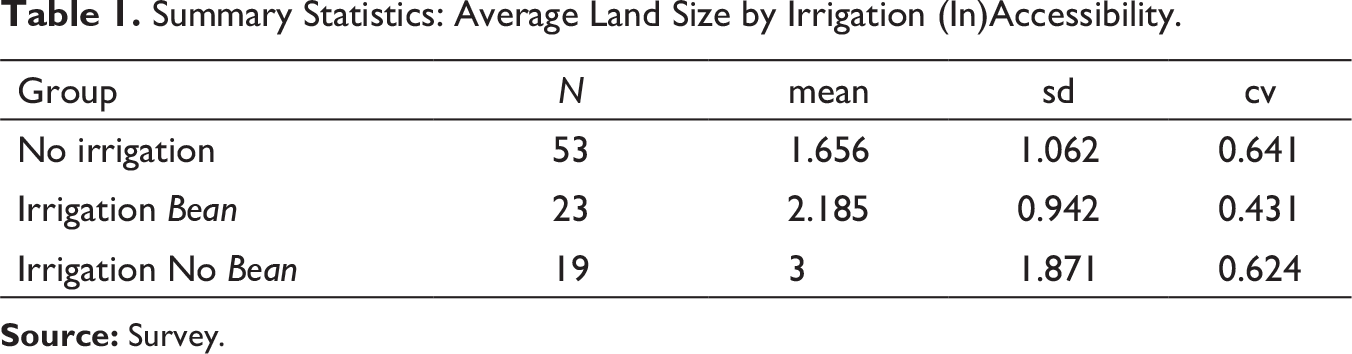
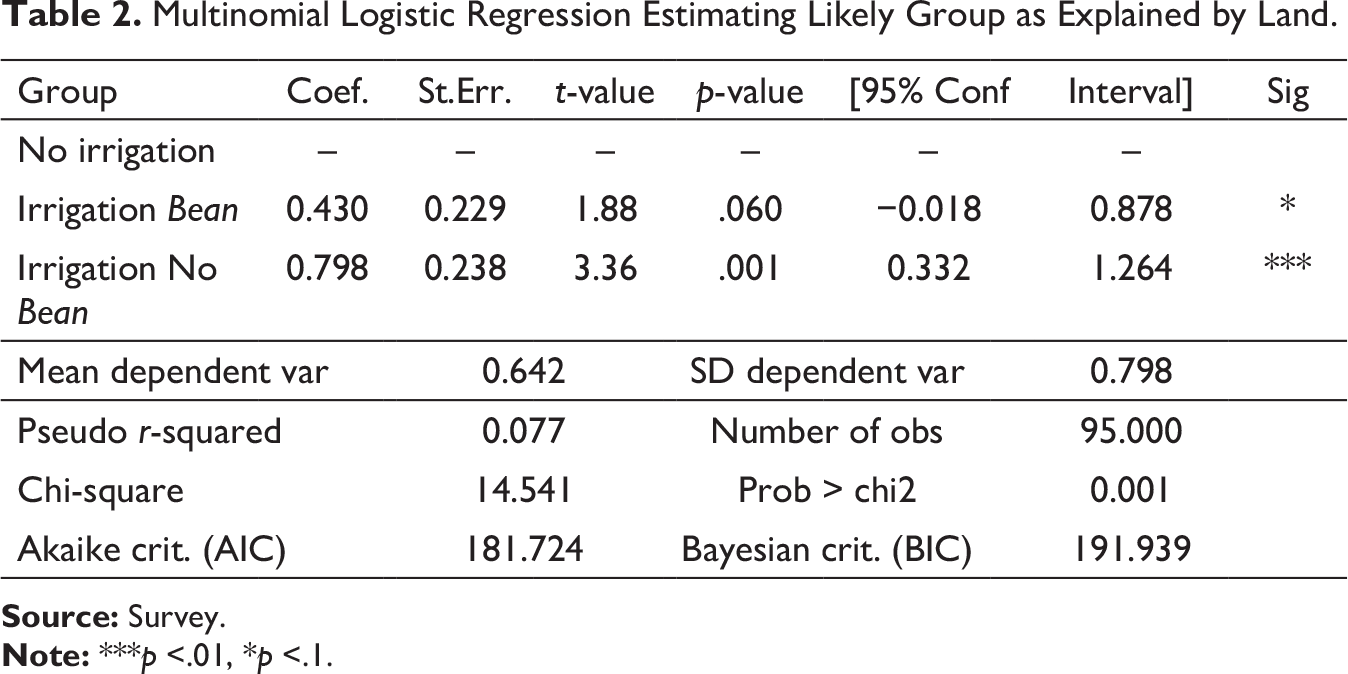
This, however, proves not to be the whole story. Survey data also reveal that Bean farmers have more land than others without access to water for irrigation. On average, farmers working with Bean cultivate on average 2.18 acres, compared to 1.65 acres for those not practising irrigation, as indicated in Table 1. The difference observed is statistically significant, as shown in Table 2.
Summary Statistics: Average Land Size by Irrigation (In)Accessibility.
Source: Survey.
Multinomial Logistic Regression Estimating Likely Group as Explained by Land.
Source: Survey.
Note: ***p <.01, *p <.1.
Our conclusion, therefore, is that the business model is not inclusive. It is understood, however, that such business models cannot reach everybody. Nevertheless, in Kaanwa, the inclusiveness is bound by real constraints, access to water and land resources, that make the French bean scheme significantly selective.
French Bean Business Income Outcome
There may be strong limitations to the business model, but then, does it deliver on its promises to those enrolled? What is the impact of Bean’s activities on income? As outlined, Bean scheme aims to achieve enhanced food security by means of enabling farmers to grow a valuable export crop and thus improving their ability to purchase quality food. The first outcome expected is improved income, and a secondary impact is on food and nutrition security.
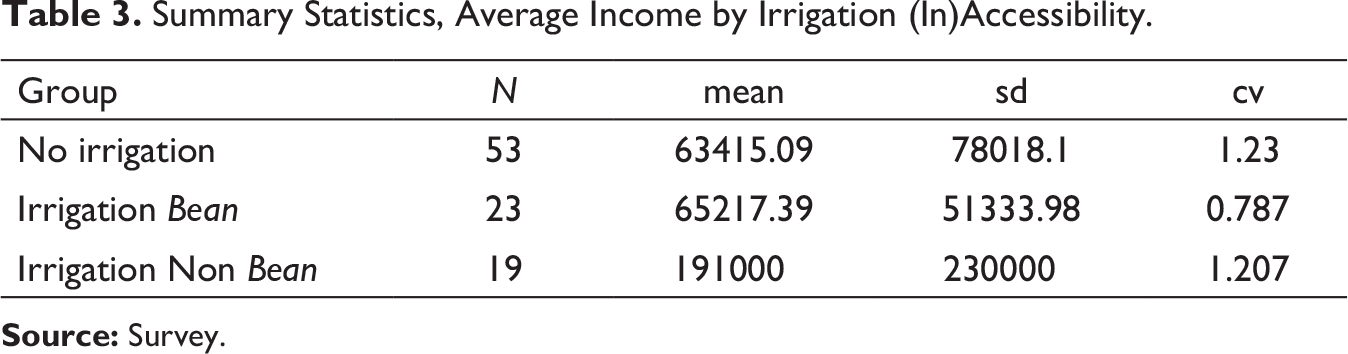
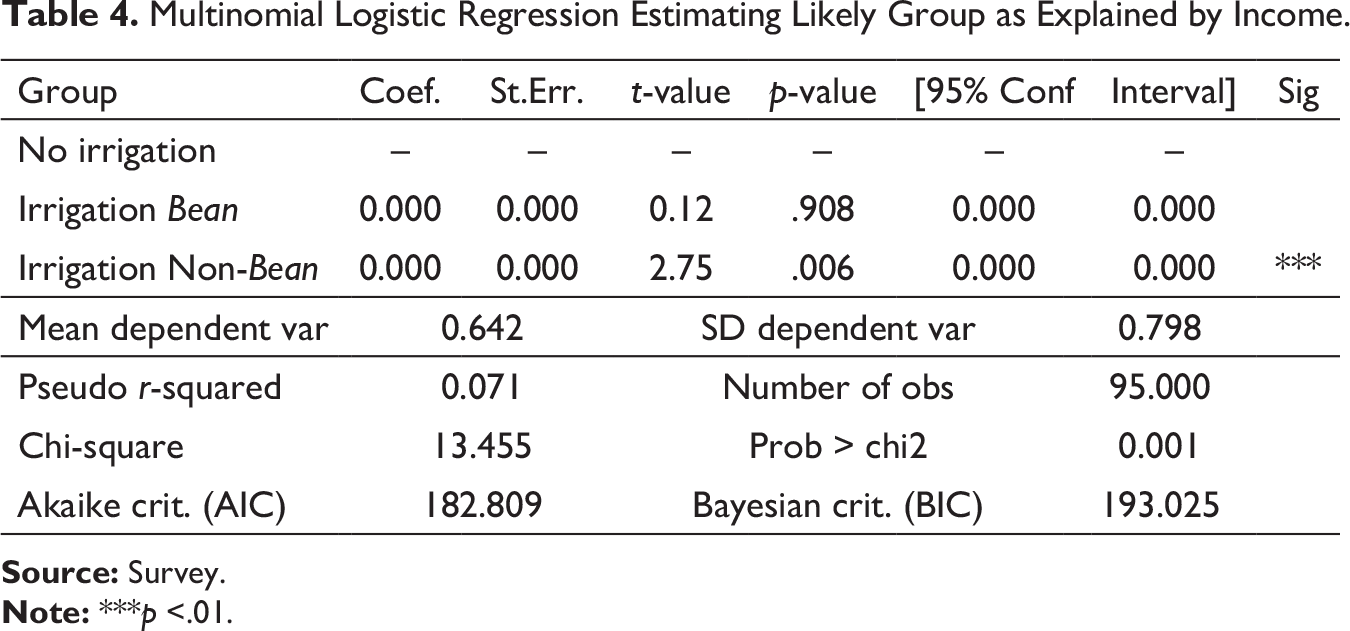
First, we have a look at current annual income levels for the three subgroups of farmers in Kaanwa: Bean participants, non-Bean irrigating farmers and those without irrigation (Table 3). The survey results show a remarkable advantage of the irrigation farmers not engaged in French bean production compared to ‘Beaners’ and the non-irrigating group—a statistically significant difference, and an insignificant difference between the ‘Beaners’ and non-irrigating group (Table 4).
Summary Statistics, Average Income by Irrigation (In)Accessibility.
Source: Survey.
Multinomial Logistic Regression Estimating Likely Group as Explained by Income.
Source: Survey.
Note: ***p <.01.
The difference is such that it cannot be explained by this group’s advantage in land size or by an alternative miracle crop that dwarfs the results of French bean cultivation. Closer scrutiny reveals that the relatively advantaged group of no-Bean irrigation farmers are on average older (52 years, and 43 years for Bean participants), and are more educated (80% as compared to 20% of Bean growers have higher education). This is in line with the decisive differentiating factor—many have formal jobs alongside farming. In fact, 8 out of 19 people in the non-Bean group are employed as teachers or in other government jobs or are enjoying retirement benefits from previous formal employment. For these employees, farming is a side job—a useful addition to salaries that stand out by local standards but are not so generous that they enable a comfortable life. This in addition to older age also explains why this relatively privileged group is less inclined to take up the labour-intensive growing of French bean. Furthermore, their schedules do not make it easy to combine these activities. Bean growers and non-irrigating farmers also tend to have side jobs as a livelihood strategy by combining several income sources, often engaging in informal activities and casual labour.
More ominous for the appraisal of the Bean scheme, however, is the observation that participating farmers barely earn more than the excluded group of farmers without access to water irrigation (Tables 3 and 4). A constraint for our analysis is that our survey gives us a single observation in time, limiting the ability to make a reliable comparison between the situations ex-ante and ex-post introduction of Bean. Yet we can draw conclusions from another perspective, and that is the returns to farmers of the French bean endeavour. The following calculations are quite revealing.
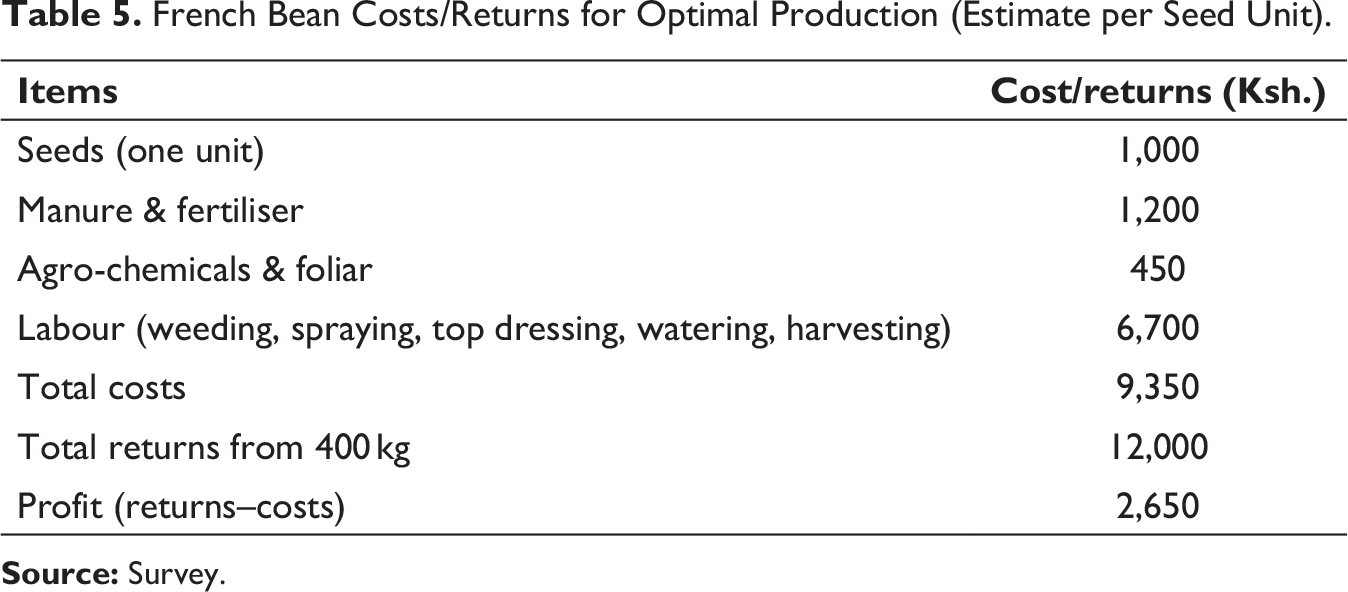
The minimum amount of French bean a farmer is required to cultivate within the Bean scheme is one unit of seeds which is equivalent to 4,000 seedlings. A single unit occupies about 0.06 acre plot size. Depending on the amount of land and water available, farmers are free to plant as many units as they deem possible. According to verified accounts from both key-informants (agronomists and different company representatives working in a French bean business), a farmer should optimally be able to produce up to 400 kilogram (kg) from a single unit of seeds. Assuming they manage to produce 400 kg and have been provided with all the inputs required for production (seeds, fertiliser, agri-chemicals, and possibly advance for harvesting costs) by Bean, 100 kg/25% of the produce per unit is deducted from the final price to cover for these costs. In the case of farmers who only take seeds from the company, the corresponding share would be 10% of the benchmark yield. As confirmed by the Bean representative, few farmers manage to reach the optimal output target. In fact, in the crop cycle prior to this study survey date in Kaanwa, the average yield was 58 kg per unit of seeds, which was bought at Ksh.40 per kg (Ksh.110 ≈ €1). Relative to the cost of production, the average total revenue (Ksh.2,320) per farmer amounted to a loss for the farmer considering the costs of production (see Table 3). In this particular crop cycle, only 20% of the farmers made a profit. The year in question, it should be mentioned, was unfavourable because of drought, so an average year is likely to produce better results. Nonetheless, droughts are not exceptional in the region and can be expected to occur regularly in the future due to the impact of climate change.
French Bean Costs/Returns for Optimal Production (Estimate per Seed Unit).
Source: Survey.
Several factors explain this outcome. First, a lack of consistent and reliable access to water needs to be highlighted again. Bean farmers may have access to water for irrigation, but the erratic rainfall patterns mean they are liable to shortages, as mentioned in the interviews. Second, French bean production is capital intensive, as discussed above, and a lack of funds among farmers translates into inadequate investment in the business, hampering crop productivity. Nevertheless, among all the farmers surveyed, Bean farmers spend notably higher proportion of their income on input than farmers from the other two subgroups. The amount spent on hired labour (Table 5) may vary according to household size, but all French bean growers face the need to hire workers for harvesting, the most labour-intensive part of the production process. This needs to take place in a short period of time to avoid quality issues because of French bean’s highly perishable condition. And finally, shortcomings on the side of Bean and consortium partners play a role in the depressing profitability. All farmers maintained that Bean extension services were poor as exemplified by delayed supply of inputs, and/or unavailability of suggested agro-chemicals. Bean acknowledges this problem and puts the blame to their extension officers.
Given the questionable returns, one may wonder why farmers continue to work with Bean. Participants in the scheme mention the provision of seeds, which they imply eases their capital burden. They state that while they may experience loss in some cycles, they remain positive about getting rewarding returns in other cycles. Furthermore, French bean has a short production cycle (45 days), has a certain market and pays relatively better compared to other horticultural crops such as tomato. Tomato takes longer to mature (60–85 days depending on the variety) and its market is highly volatile, as was stressed in focus group discussions. The short French bean cycle yields quick cash in a lump sum which is helpful in meeting farmers’ financial needs. Indeed, the crop is perceived as having some attractions although overall returns are low. With 80% of farmers not making a profit from French bean production in our survey, it can be stated that the Bean initiative does not significantly contribute to improved income in Kaanwa.
French Bean Business Impact on Food and Nutrition Security
The ultimate goal of the Bean scheme, we should remember, is to increase food security in this food insecure part of eastern Kenya. For this purpose, raising income was an intermediate objective rather than the final goal. Disappointing outcomes in terms of income, as discussed above, imply that not much can be expected from the anticipated initiative’s theory of change, yet it is still worthwhile to check if impacts on food security can be observed.
Source: Survey.
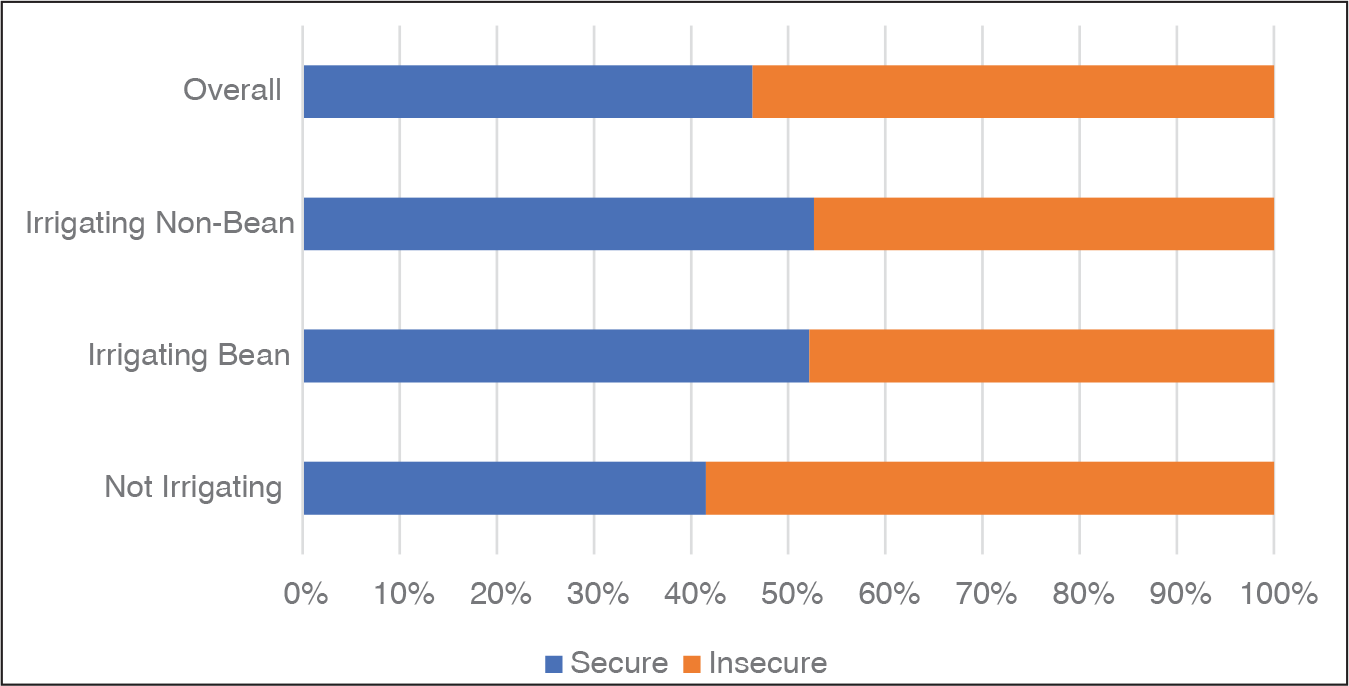
From Figure 1 it becomes clear that overall, the majority of the surveyed farmers in Kaanwa (54%) are ‘food insecure’, as measured by the Household Food Insecurity Access Scale (HFIAS; Coates et al., 2015). HFIAS provides an approximation of a household’s food insecurity prevalence. As Figure 1 indicates, food insecurity is most prevalent among farmers without access to water for irrigation, as can be expected. Among irrigating farmers, slightly more farmers are food secure in the group not working with Bean. This will come as no surprise in view of income data discussed above—their higher income can be expected to translate into better food security status. Figure 1 shows a certain link but does not establish causality between Bean and food security in Kaanwa.
A direct effect of Bean on food security could be expected if farmers would consume part of the French bean they produce. French bean is rich in nutrients and may thus serve as a valuable addition to local diets. The direct impact pathway must be discounted, though, as French bean do not form part of the local dish and are rarely consumed in farmer households. Recently, French bean has found its way to the premium supermarkets shelves, hotels and hospitals in the city (SNV, 2012). In the rural areas, however, people tend to view the vegetable as an immature bean even though local cuisine does recognise the mature seeds of kidney bean and other traditional bean varieties as valuable items for consumption.
A review of the composition of the meals consumed by the households in Kaanwa further details the local nutrition security condition. Much of daily household diets comprise cereals (98% of the households), some dairy products in the form of tea with milk (96%), some vegetables (some kale and tomato; 84%), onions, legumes—primarily bean (66%)—oil and fats (63%) and fruits (50%). As the figures suggest, half of the households do not consume fruits, and those that do can do so only when fruits are in season and available in their individual farms—it is not an item people tend to purchase. Further, nearly half of the households’ meals lack in plant-based proteins (a strength of French bean), and oils and fats. The majority of people hardly consume animal products considering only 23% and 3% can afford meat and eggs, respectively. Spices, condiment and beverages complete the menu (3%). So, a direct contribution of French bean production to local food security must be discounted for cultural reasons (taste), although the vegetable would offer a valuable contribution in terms of nutrition.
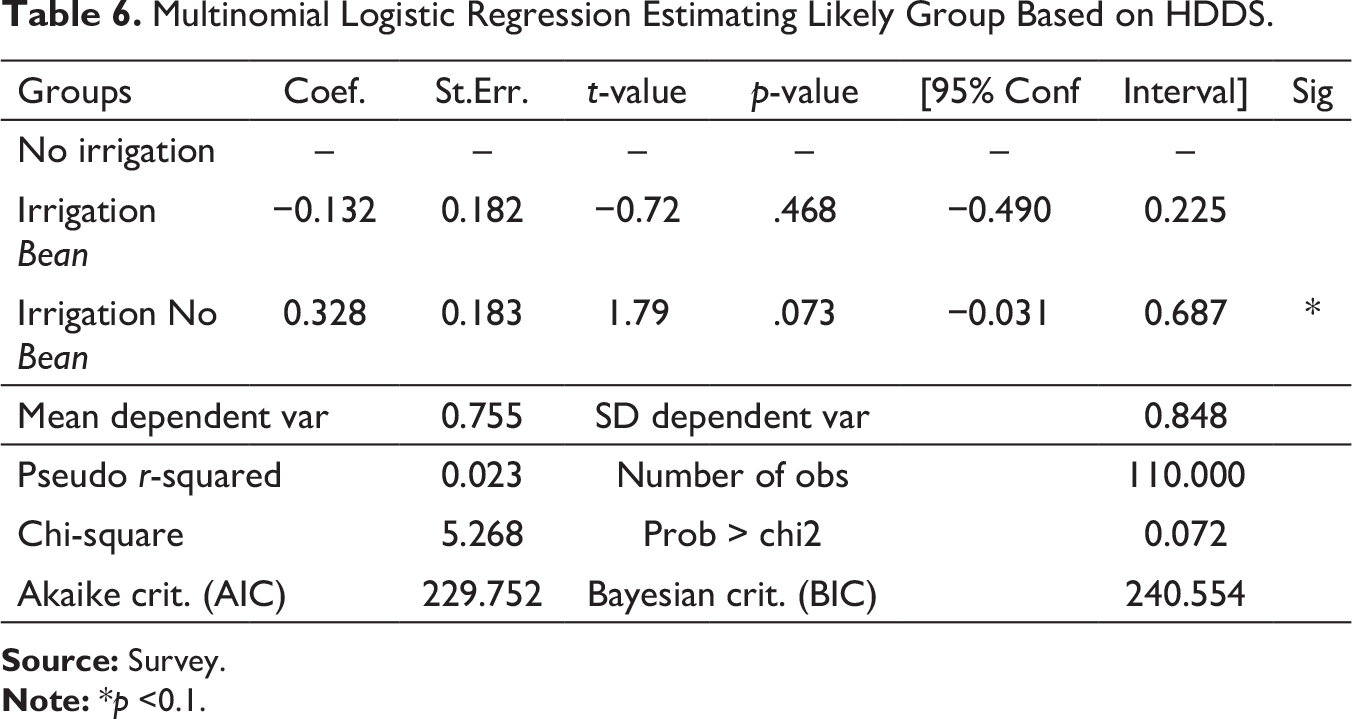
An indirect effect on nutrition security can be mainly expected through income. Table 6 below shows the result of the multinomial logistic regression analysis with the three farmer groups (no irrigation, irrigation participating in Bean and other irrigation) as predictor variables and the household dietary diversity score (HDDS; Kennedy et al., 2011) as the dependent variable. HDDS measure the quality of the diet consumed by a household. The result shows no significant relationship between enrolment in the Bean scheme and HDDS compared to non-irrigating farmers. As we have seen, the Bean scheme has little effect on income and thus it is no surprise that it does not contribute to the nutrition diversity in the community. Non-Bean farmers, however, seem to have a significant difference (at less than 10% significance level) in dietary diversity compared to non-irrigating farmers. In the case where participation in business yielded better income for Bean farmers, it would still have little impact on nutrition security. Based on interviews and focus groups discussions, besides spending their income on basic food items such as sugar, salt, cooking oil, onions and staples in difficult times, much of the money goes to other non-food needs including education, healthcare, clothing, labour and agricultural input. Against these backgrounds, for French bean farmers it is right to claim that the scheme exposes participating households to more risk, in the sense that they are less involved in food production. Such is the case of local staples production—maize and bean. According to the survey, 10% of Bean scheme participants do not grow staples, all other farmers do. This implies they cannot fall back on subsistence, should their harvest fail as already happened in the previous crop cycle.
Multinomial Logistic Regression Estimating Likely Group Based on HDDS.
Source: Survey.
Note: *p <0.1.
Bean Impact in Local Context
This case study shows clear limitations to the increasingly popular strategy of fostering rural development through inclusive business models linking smallholders to corporate agribusiness. Some of these constraints may pertain to specific circumstances of the case. The performance of the Bean company could improve, and local rainfall conditions vary positively in some cases. Yet other limitations point to shortcomings of the approach itself. First, the limit to inclusiveness. There are pre-conditions for participation in the business model that exclude a considerable part of the community involuntarily. Access to water for irrigation is required for a farmer to engage in French bean production; also, those included tend to have more than the average size of land. This points to a mismatch between the rationale of the development strategy and the needs of local farmers. While the inclusive business model is based on the premise that land scarcity and fragmentation must be countered by adopting more remunerative export crops rather than local staples, local farmers tend to prioritise their family’s subsistence needs before considering a cash crop. Results in this study suggest these farmers may well be right, considering the lack of profit for the Bean farmers. In the end, considering not all farmers with irrigation participate in the French bean production—less than 20% of the total local farmers who have taken part in the scheme—it is a severely limited form of inclusiveness. In fact, it is probably realistic to state that any such scheme can reach only part of the community with a reasonable chance of success.
In Kaanwa, the majority of farmers do not have access to water for irrigation—the most food insecure in the community never qualified for being taken on board in the Bean scheme. This again highlights the gap between the offices where development policy on food security and business models are being designed and conditions in the places where these ideas are to be realised. Kaanwa area is prone to drought to make French bean an important crop on which to build local food security, although it may add a useful source of cash income. As shown, luring farmers away from subsistence crops into French bean may increase the risk of food and nutrition insecurity in case of drought or market disruptions, and it is likely that such considerations partially explain why farmers with the smallest plot sizes tend not to join Bean. The implication for policy is that inclusive business models may well be part of a local development strategy but should always be complemented by additional initiatives to take care of those that cannot realistically be integrated into a commercial value chain. There is nothing wrong with inclusive business models as one potential contributor to local rural development. The problem arises when donors and planners stop there and consider the job done by means of this approach alone. In that case, the farmers most in need of the support to improve their households’ food security situation are excluded in such efforts.
What then should be done for those rural people who cannot benefit much from the inclusive business approach—in this case food security? Easy answers are not available, but we may take some leads from Kaanwa case study. We have seen that the most successful farmers (in terms of income generation) are those that combine farming with another revenue source, specifically formal employment. While this is obviously an option open to only some people, it raises the question whether the policy should aim so single-mindedly on encouraging farmers with very small landholdings into agriculture as has implicitly been done in the inclusive business approach and generally in other rural development interventions. Farming has a crucial role in local survival as a fall back option and through subsistence food production. But off-farm employment may eventually offer more opportunities—as in the historical experiences of wealthier countries, where part of rural labour gradually moved to other sectors, in the process also freeing up land that can be consolidated in more sustainable farm units. Tentatively it may be argued that the ambitions of many smallholders in places like Kaanwa are also orientated elsewhere than to local farming. If we take a clue from the expenditure patterns observed in this study, increased income does contribute to better food security, but not as much as one would expect. The reason, as transpired in interviews, was that many people have other priorities, and prefer to invest more in education for their children—perceived as the key to a better life—than in acquiring better food.
The study findings suggest that the interest of the business investment does not align with the intended goal for the farmers, which would entail a guarantee to sufficient and quality food for own consumption, amid scarce water and land resources. Furthermore, for Bean to be able to reach low-income farmers in the French bean business—considered a high-risk investment—public funding is critical. This aligns with Murray and Overton’s (2016) analysis that even though private sector-led development is presented as cost-efficient compared to development aid programmes led by NGOs, in most cases public support is essential. The intervention is packaged as an impact investment expected to enhance food security while being profitable, yet the participation of a private sector actor is primarily made possible due to the promise of public support. Researchers observe a global trend, which as previously referred to as ‘retro-liberalism’, in which public finance is transferred to the private sector to facilitate a role in development. For example, in Western countries, where following the collapse of global capital markets, ‘retro-liberalism’ is the principal means by which markets were reconstructed through large public stimulus packages. Murray and Overton (2016) claim that the intention of such interventions, in general, is not to address social inequalities and injustice but to reignite capitalism. According to these scholars, similar intentions of self-interest underlie current ‘trade not aid’ regime. Although we cannot claim this for Bean, the case study has made clear that the business interests do not align with the priorities of the community. It, therefore, brings into question whether it is ideal for making the private sector responsible for collective societal goals, such as smallholders’ food and nutrition security, that are often not directly in line with company advantage, especially where public funds are involved.
In sum, the study highlights that livelihood diversification is a critical strategy employed by all farming households. Indeed, besides agriculture, each family has (an) additional income source(s) such as wage labour, formal employment, and/or running a business. According to Hakizimana et al. (2017, p. 510), mainly due to meagre farm sizes, smallholder farmers’ livelihood includes a combination of ‘own petty commodity production and wage labour’. To contribute to local food security, policymakers and parties implementing interventions related to Bean scheme should start from the real-life situation in the field. This means ensuring local priorities and contexts as expressed by the communities are strongly considered where such interventions ought to be implemented. Our case study shows that when the business proposition is leading the intervention and the design, improved food and nutrition security is not guaranteed. In Kaanwa, several factors explain this:
The theory of change does not fit the local context, that is, using small parcels of land to cultivate a high-value crop intensively did not provide farmers with a higher income and/or improve their household food and nutrition security status. In fact, this limited them from growing crops that could have bolstered their food security needs.
There is no clear link between export of a high-value vegetable that is not consumed locally and improved local food security.
Part of the community is excluded. Even if a positive effect had been realised, this would have been only for the minority—the relatively well off—possibly contributing to growing inequality.
Private sector-led development may contribute to higher small farms productivity or even access to better quality food. However, rarely does it change the structural causes of food insecurity, which are often fundamental to access to production resources. Increased scrutiny of various structural factors warrants further study, for instance, paying more attention to the local context. Similarly, more effort needs to be directed towards establishing what determines the diversification strategies adopted by smallholder households and how they complement crop production in meeting food and nutrition needs.
Footnotes
Declaration of Conflicting Interests
Funding
The authors disclosed receipt of the following financial support for the research, authorship and/or publication of this article: This work was supported by funding from the Netherlands Organisation for Scientific Research (NWO)—Project Number W 08.250.206.