




Abstract
Biological aging (BA) is a universal process involving vital function deterioration. One of the root causes of BA is epigenetic DNA hypermethylation. Epigenetic age (EA) is defined as the most important risk factor for chronic non-communicable diseases, so its modulation is an exciting emerging field of science. Although there are numerous investigations on the mechanisms of aging, today there are few studies that measure EA in humans after an intervention. The objective of this research study was to evaluate EA and body composition after the consumption of wine enriched with Resveratrol. The results showed a decrease in EA (p 0.011) and a deceleration in epigenetic age acceleration (p 0.006) after three and a half months. Also, we were able to confirm significant improvements in body composition with a 1.6 kg decrease in fat mass, (p 0.0004); and an increase in muscle mass of 300 g (p 0.019). To our knowledge, this is the first time a highly significant EA reduction has been demonstrated in consumers of resveratrol-enriched wine combined with healthy remodeling of body composition. These findings might be relevant to maintain health, increase life expectancy, and prevent the damage caused by aging. The study was registered in ClinicalTrials.gov (NCT05981053).
Keywords
Introduction
As the population ages, it is vital to maintain healthy longevity. According to epidemiological studies, the number of people older than 60 is currently 11% and is expected to increase to 22% by 2050. 1 The increase in longevity is directly related to the increased prevalence of chronic diseases. 2 Therefore, aging has become a growing problem throughout the world and this field of research becomes particularly important, as the accurate measurement of aging, the prediction and identification of risks, and the development of effective interventions are essential.1,3 The aging process involves significant cellular, subcellular, and nuclear modifications.4,5,6 These changes are somehow interconnected, and there is growing interest in understanding the underlying mechanisms.7,8,9,10,11 In recent years, the development of epigenetic clocks has shown that hypermethylation or hypomethylation of specific methylation sites may predict human chronological age with a high degree of accuracy.12,13,14 Epigenetics plays a key role in aging and age-related diseases, with specific variations occurring during aging and functionally associated with the aged phenotype. Thus, the epigenetic clocks with lower stochastic rates would predict biological aging more accurately.15,16
Epigenetics determines which genes are expressed and which are silenced; these modifications in the reading of the genome promote profound changes in phenotypic responses. It is worth clarifying that epigenetic alterations do not imply permanent changes in the DNA sequence.17,18,19 The decline in vital functions and the onset of chronic diseases have been shown to correlate with impaired metabolism and upstream with hypermethylation of active DNA sectors or euchromatin. 12 Epigenetic information is lost, severely affecting the rest of the metabolism phases.20,21,22,23 Maintaining healthy epigenetics will be the first condition for metabolism to develop a healthy cellular life and will also be essential to maintain phenotypic health, whose immediate secondary effect is disease prevention.24,25,26,27,28
The moderate and regular consumption of wine is an ancient habit related to good health since its origins. Since the publication of the French Paradox in 1992, 29 resveratrol (a polyphenol found in Vitis vinifera grapes and wine) has been linked to anti-inflammatory, 30 antioxidant, chemopreventive effects, improvement of fat metabolism, skeletal muscle, 31 endothelial function, 32 prevention of myocardial ferroptosis,33,34 and induction of epigenetic modifications in the DNA sequence. 35
Overweight, obesity, and sarcopenic obesity, prevalent conditions in society, are characterized by a decrease in muscle mass and an increase in fat mass, representing an alteration in body composition that accelerates aging. 36 Sarcopenia is defined by impaired muscle strength, muscle quantity/quality, and physical performance as indicators of severity. Beyond the age of 50, loss of muscle mass (1%–2% per year) and strength (1.5%–5% per year) in the legs have been reported.37,38 The administration of resveratrol impacts on skeletal muscle by increasing mitochondrial biogenesis, reducing oxidative stress, promoting the migration of satellite stem cells of the muscle fiber, and activating myocyte differentiation.39,40 Furthermore, in adipose tissue, resveratrol promotes lipolysis, inhibits stem cell differentiation into adipocytes, and inhibits adipogenesis.41,42 The hypothesis of this research was that the regular consumption of resveratrol-enriched wine decreases the biological age and improves the body composition in individuals with cardiovascular risk factors.
Materials and methods
Volunteers
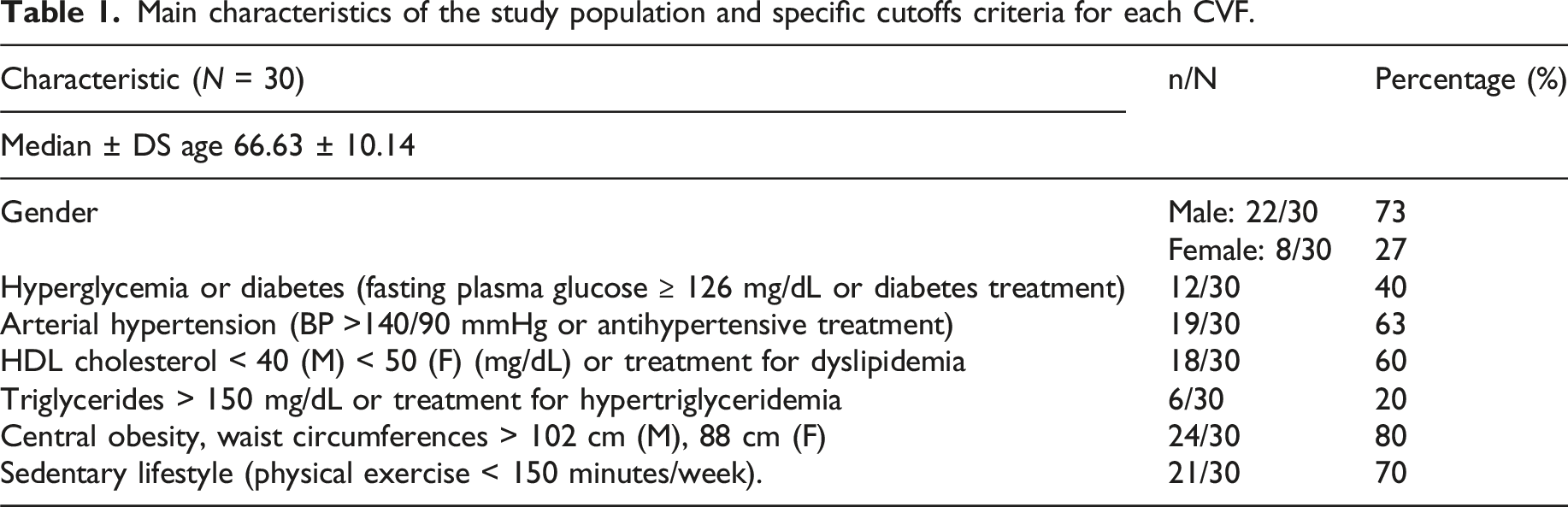
The sample included 30 participants. The inclusion criteria were being a wine consumer, aged between 40 and 80 years old with a history of cardiovascular risk factors, avoiding any dietary supplement with antioxidant effects 2 weeks before taking the investigation wine and during the study, and not modifying the usual diet or physical activity or existing medical treatments for any cardiovascular risk factors (CVFs). We defined CVF as a diagnosis of hyperglycemia or diabetes, arterial hypertension, low HDL cholesterol, high triglycerides, central obesity, or sedentarism.
Study design and intervention
This was a prospective study, before and after a dietary intervention. This design was selected to avoid the interindividual differences in the bioavailability of the active ingredients, determined by the intestinal microbiome and intestinal barrier permeability. 43 This design reduces the potential impact on the results of the biological, environmental, and social variables determining the health phenotype, known as exposome. 44
The intervention consisted in taking 250 mL or 125 mL (for men and women, respectively) of a resveratrol-enriched wine (150 mg/L) with meals. The resveratrol used for the enrichment was VERI-TE Resveratrol of Swiss origin, produced by Evolva AG. The wine used was PINER BODEGA PASTOR MANFREDI (100% pure Malbec red wine from Mendoza, Argentine, 2022 harvest), produced by Tiempo Ganado SRL. The wine used in the study contained 14% alcohol by volume (ABV). The concentration of resveratrol before the enrichment, measured by HPLC-UV, was 2.5 mg/L.
DNAm PhenoAge
In this research, DNAm PhenoAge was used. It is a composite biomarker, developed by Levine et al. 45 The biomarker is based on epigenetic predictors of phenotypic age, which led to substantial improvement in mortality/healthspan predictions over the first generation of DNAm-based biomarkers of chronological age from Hannum and Horvath. 46 The biomarker is associated with activation of pro-inflammatory, interferon, DNAm damage repair, transcriptional/translational signaling, and various markers of immuno-senescence. In addition, it predicts differences in morbidity and mortality associated with epigenetic age in individuals with the same chronological age. 47
Levine et al. 45 described a proportional hazard penalized regression model to narrow from 42 to 9 biomarkers and chronological age. This epigenetic clock measures the aging rate through the estimation of DNA methylation considering ten variables (albumin, creatinine, glucose, ultrasensitive C-reactive protein, percentage of lymphocytes, mean cell volume, red cell distribution width (RDW), alkaline phosphatase, white blood cell count, and chronological age). Consequently, all these variables were measured in our study to obtain the DNAm PhenoAge biomarker. The complete formulation of the biomarker can be found in Levine et al. 45 and the spreadsheet in Supplemental Material (V1).
Medical follow-up
During the first visit, we performed a medical examination, analyzed the inclusion criteria, and obtained the informed consent of the participants. After the second week, we obtained a baseline blood sample, a carotenoids skin scan, and a measurement of the body composition (fat and muscle mass). Then the participants began the intervention of the trial. The participants were instructed to replace the wine they consumed regularly with the resveratrol-enriched wine, no other alcoholic drink was allowed. After 3 months, the body composition measurement, carotenoids skin scan, and blood analysis were repeated.
Diet control
A nutritional survey was carried out at the start and end of the study intervention; the participants were contacted every week to monitor the study interventions and to validate the self-reported information. A non-invasive transdermal scan using a near-infrared scanner (NIRS) BIOZOOM spectrometer to measure carotenoids (an indirect measurement of the consumption of fruit and vegetables) was obtained.48,49,50
Blood chemistry and body composition assessment
Blood tests were performed twice, at the beginning and at the end of the treatment. The variables measured in plasma were albumin, creatinine, glycemia, US-CRP, lymphocytes, mean corpuscular volume, red cell distribution width (RDW), alkaline phosphatase, white blood cells, HDL cholesterol, triglycerides, total cholesterol, and ferritin. Biochemical measurements were obtained using a diagnostic kit from Roche Laboratories, measured with HITACH COVAS C311. Hematological measurements were made using LABIX reactive kits measured with SEAC HECO. Blood test results were the average of three measurements.
The anthropometric measurements of height, weight, body mass index, and abdominal circumference were obtained. The body composition was quantified as skeletal muscle mass (lean mass) and fat mass in absolute values and percentages, and obtained three times for each participant, using a non-invasive bioimpedance analysis INBODY. 51
Statistical analysis
The statistical analysis was performed using the Student t-test for paired samples (Prism 7.0, GraphPad, San Diego, CA, USA). The Student t-test was selected to evaluate a single biomarker at a time in eight series of paired data (D0 vs D105 for chronological age, DNAm PhenoAge, muscle mass and fat mass) for each patient before and after the intervention. Results with p < 0.05 were considered significant. The statistical power of the sample size (30 participants) was calculated using G*Power and had a dz effect value of 1.52,53
Ethical aspects
The study was carried out according to the Declaration of Helsinki and approved by the Ethics Committee of the Hospital of Clinicas of the University of Buenos Aires (protocol ID 26122021). All participants provided a written informed consent after receiving a detailed explanation of the purpose and nature of all the procedures used. The study was registered in ClinicalTrials.gov (NCT05981053).
Results and discussion
Main characteristics of the study population and specific cutoffs criteria for each CVF.
Co-occurrence of cardiovascular risk factors (CVFs), defined as hyperglycemia or diabetes, arterial hypertension, low HDL cholesterol, high triglycerides, and central obesity, in each participant.

After the enrolment, the 30 participants were asked to stop taking any dietary supplement for 2 weeks. Then, blood samples were obtained, and they started drinking the resveratrol-enriched wine with their main meals [125 mL wine (17.5 mL alcohol) for women and 250 mL wine (35 mL alcohol) for men]; the difference in the wine volume was determined based on the recommendations of daily alcohol intake according to gender. 54 The participants replaced the wine they consumed regularly with the resveratrol-enriched wine. In a previous investigation, we demonstrated that resveratrol-enriched wine did not have significant differences in physical and organoleptic characteristics compared to conventional wine. 55 The participants were followed throughout the intervention period. After a median of 105 ± 12.4 days of treatment, 3.5 months, the 30 participants completed the final visit and blood samples were collected. Diet consumption, carotenoid skin scan, epigenetic age, and body composition were evaluated, the following observations were found.
Diet control
The nutritional survey showed no significant differences during the intervention period. The BIOZOOM near-infrared scanner results did not reveal significant differences between the initial and final analyses (5.24 vs 5.22 Reflectance Units, respectively, p-value NS). Those two results confirmed that the diet of the study population did not vary in terms of the fruit and vegetable intake, possible confounders due to the anti-inflammatory effects of carotenoid present in with those two nutritional sources.48,49,50
Epigenetic age (EA)
We analyzed the EA DNAm PhenoAge at the beginning and after 3.5 months of intervention with a paired t-test, the p-value obtained was 0.0111, with a correlation coefficient (r): 0.825 (Figure 1). Median ± SE (standard error) of CA (blue) and DNAm PhenoAge (red) before and after intervention.
We also compared the epigenetic age acceleration (EAA), the difference between EA and chronological age (CA), at the beginning and at the end of the study. We found that the median of EAA was −4.14 years in the first data set and −8.86 years in the second, with a p-value of 0.006 and a correlation coefficient (r) of 0.632 (Figure 2). There was an increase in the difference of EAA −4.72 years more, which represented a post-intervention benefit of 114% (Table 3). Median ± SE (standard error) epigenetic age acceleration (EAA) at before (blue) and after (red) intervention. Chronological age (CA), epigenetic age (EA), and epigenetic age acceleration (EAA) median ± standard error, before and after analysis.

It is necessary to distinguish between chronological age and epigenetic age. Thus, people of different races and genders may be unified within a chronological age. However, the aging status may vary widely among individuals of similar chronological age, possibly due to differences in health conditions, lifestyle and genetic determinants. The epigenetic age calculated by the DNAm PhenoAge biomarker reflects an individual’s physiological and functional state. 45 Biological age may be older or younger than chronological age, reflecting aging and health status. 46 Epigenetic alterations such as histone modification, chromatin remodeling, and DNA methylation occur progressively in cells of aging individuals and are associated with different aging phenotypes and the development of age-related diseases. Therefore, repeated damage to DNA or the repair system lead to cumulative DNA damage, resulting in epigenetic alterations that cause premature aging.56,57,58 Since epigenetic alterations may be reset to a younger configuration, epigenetic age reversal is a potential therapeutical target to delay cell aging. 59 Levine et al. found that for every year of increase in PhenoAge DNAm, the risk of mortality from different causes increases. 45
Resveratrol is a non-flavonoid stilbene polyphenol, shown to act as a direct antioxidant or an agent inducing the synthesis of antioxidants in cells and epigenetic modifications in the DNA sequence. 35 Numerous studies associate resveratrol with a myriad of beneficial properties. 31 In the foodomics era, considering over 25,000 subtances in the human diet, it appears to be obsolete to contemplate one function/compound at a time. Nature is multivariate, and the effect of any molecule will have to be modulated by its carrying matrix, bioavailability, and synergies with other molecules.60,61
Considering this, it is essential to analyze the results of interventions with tools able to measure the phenotypic expressions as DNAm PhenoAge or EAA. Monitoring inflammation through DNAm PhenoAge represents a cost-effective clinical tool. According to the literature, epigenetic age acceleration and Framingham 10‐year risk score were not significantly different than one another and were more strongly associated with incident CVD than all the epigenetic measures. 62 In our research, we decided to use the second-generation epigenetic clock developed by Levine PhenoAge to predict biological aging, morbidity, and mortality. McCrory et al. 63 analyzed three different epigenetic clocks measurements of EAA, Horvath, Hannum, and PhenoAge, with the allostatic load. The PhenoAge demonstrated a higher correlation factor with allostatic load than the others.
We found statistically significant differences in EA as well as in the EAA, when comparing the results before and after the study intervention, towards a younger configuration (Table 3).
Body composition
Muscle mass
The measurement of the muscle mass using bioimpedance showed that the intervention produced a median increase of 300 g (Figure 3). Median of muscle mass (kg) ± standard error, at before (blue) and after (red) analysis. Increase of a median of 300 g (p 0.019), representing 1%, after the study intervention.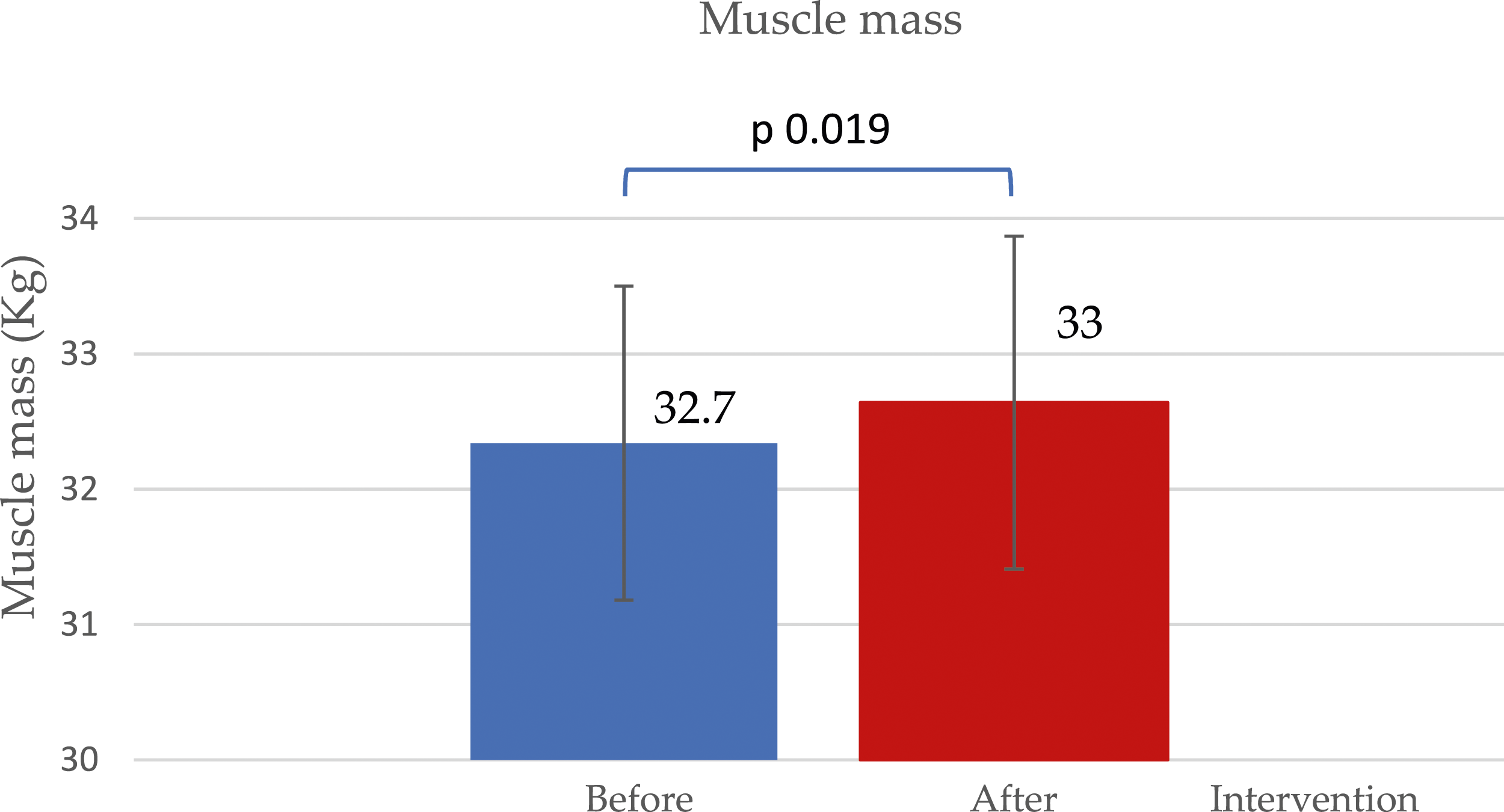
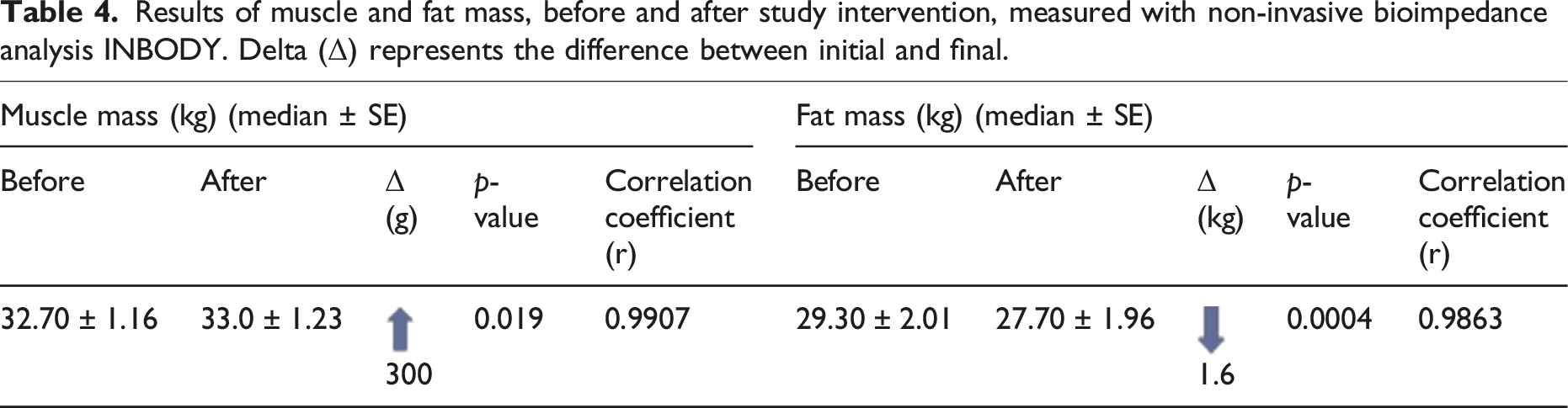
Results of muscle and fat mass, before and after study intervention, measured with non-invasive bioimpedance analysis INBODY. Delta (Δ) represents the difference between initial and final.
Resveratrol has antioxidant, anti-inflammatory, and cytoprotective properties through the activation of SIRT 1 and the promotion of mitochondrial functions. A randomized placebo-controlled trial in middle-aged men with metabolic syndrome found that resveratrol was associated with higher levels of muscle turnover markers.65,66
Fat Mass
The measurement of the fat mass showed a decrease of median of 1.6 kg. after the intervention period (p 0.0004), representing 5.8% (Figure 4; Table 4). The median of fat mass (kg ± standard error) before (blue) and after (red) study intervention. Decrease of an average of 1.6 kg (p-value 0.0004), representing 5.8%.
Figure 4 shows that the median ± standard error baseline fat mass was 29.30 ± 2.01 and 27.70 ± 1.96 kg after treatment, with t paired t-test p-value = 0.0004 and r = 0.9863. According to the literature, resveratrol may affect lipid metabolism by directly inhibiting the peroxisome proliferator-activated receptor gamma (PPARγ), a nuclear receptor expressed in adipose tissue, or indirectly through Sirtuin 1 (SIRT1), leading to decreased adipogenesis and increased lipolysis.40,41 SIRT1 is also known to repress Nuclear Factor kappa-B (NF-κB) activity and thus reduces inflammation. Resveratrol modulates inflammation by directly interacting with cyclooxygenases (COX), which catalyze the formation of prostaglandins, bioactive lipids with hormone-like effects.67,68 Sarcopenia in combination with excess body fat, known as sarcopenic obesity, is increasingly recognized as a major health problem in the aging population due to its association with an increased risk of cardiometabolic abnormalities. 69 General inflammation in response to different stimuli, pathogens, damaged cells, abnormal molecules, nutrients, and dysbiosis of the intestinal microbiota, shares the same activation processes of the innate immune system that occurs in metainflammation, which is the inflammatory response associated with excess nutrients or overfeeding. 70 Our research findings related to a healthier body composition may contribute to reduce the impact of sarcopenic obesity.
Strengths and limitations
To our current understanding, this is the first clinical trial conducted with resveratrol-enriched wine to assess the EA, EAA, and body composition, key aspects of aging and prevention of chronic non-communicable diseases. It is important to highlight that the results of the decrease in EA and EAA are correlated with the improvement in body composition.
We consider that this investigation may open new horizons, to even test the technique in different beverages, according to the preference of the population.
Although the group of participants was heterogeneous in age and risk factors, they all shared common mechanisms of impairment due primarily to chronic inflammation called inflammaging. 70 Therefore, we selected the DNAm PhenoAge (which integrates 60% immuno-inflammatory biomarkers in its equation) to evaluate the phenotypic expressions of aging and did not focus on analyzing the course of the different pathologies separately.
Owing to the study design, the potential presence of a recall bias has been considered due to the collection of some of the data (nutritional aspects) through the nutritional survey. Moreover, a single-center study may bias the results given the population exposome. 71 Nevertheless, currently, in Argentina, this type of study can be conducted in a few centers only. In this context, the Hospital of Clinics is a leading center in the investigation of Polyphenols, Wine, and Human Health. Finally, the small sample size may represent a bias; however the results demonstrated substantial benefits. We hypostatize even better results with a larger number of participants and a longer period of follow-up.
Conclusions
Aging is inherent to all human beings, but why we age is still a highly controversial issue. Most mechanistic explanations postulate that the accumulation of various forms of molecular damage causes aging. Indeed, aging is characterized by several cellular, subcellular, and nuclear changes, one of which is epigenetic aging. Fortunately, we have been able to monitor it through epigenetic clocks in recent years. 7 Although resveratrol has a strong impact on metabolism,72,73 some of its benefits are a consequence of epigenetic modifications.74,75 This research aimed to evaluate the phenotypic expression of epigenetic aging using the DNAm PhenoAge composite biomarker and body composition (muscle mass/fat mass) using a non-invasive bioimpedance analysis in a population with cardiovascular risk factors. The call for participants was public and our objective was to evaluate the consumption of resveratrol-enriched wine in the general population with cardiovascular risk factors. In this study, we proved that the consumption of resveratrol-enriched wine reverses the epigenetic age and decelerates the epigenetic age acceleration −4.72 years, which represents a benefit of 114%. Body composition also improved with the use of the resveratrol-enriched wine, with an increase in muscle mass of 300 g and a decrease in fat mass of 1.6 kg. To the best of our knowledge, this is the first human health clinical trial with resveratrol-enriched wine to assess epigenetic aging and body composition. These findings might be relevant to improve quality of life and reduce the impact of chronic diseases.
Patents
Tiempo Ganado SRL is the sole owner of a provisional patent application of which RFP is the inventor.
Supplemental Material
Supplemental Material - Reversal of epigenetic age and body composition improvement in consumers of resveratrol-enriched wine
Supplemental Material for Reversal of epigenetic age and body composition improvement in consumers of resveratrol-enriched wine by Raúl Francisco Pastor, Roberto Héctor Iermoli, Christian Martín Saporito-Magriña, Isabel Pastor, Elena Pastor, Zulma Manfredi Carabetti, Laura Valeria Iermoli, Fabiana Lairion, Iris Chiesa, Margarita Martinez Sarrasague, Alejandra Cimato, Aldana Rodriguez, Claudia Taborda, Claudio Carbia, Carlos Amadeo Bavasso, Jerónimo Auzmendi, Alberto Lazarowski and Marisa Gabriela Repetto in Nutrition and Healthy Aging.
Statements and declarations
Footnotes
Acknowledgements
The authors are grateful to Ing. Agr. Julia Halupczoc, PhD Pablo G. Marchi, to the study participants, to the Instituto Nacional de Vitivinicultura (I.N.V.), to the Universidad of Buenos Aires (U.B.A.), and to the Consejo Nacional de Investigaciones Científicas y Tecnológicas (CONICET).
Author Contributions
RFP, ZM, IP, and EP wrote the main manuscript text and EP prepared figures 1–3. IP prepared tables 1–5. All authors reviewed the manuscript.
Conflicting interest
The authors declared the following potential conflicts of interest with respect to the research, authorship, and/or publication of this article: RFP is scientific advisor of Tiempo Ganado SRL. The other authors declare no competing interests.
Funding
The authors received no financial support for the research, authorship, and/or publication of this article.
Institutional review board statement
The study was conducted following the Declaration of Helsinki and approved by the Ethics Committee of Hospital of Clinics Universidad de Buenos Aires protocol code and #26122021 date of approval for studies involving humans.

Supplemental Material
Supplemental material for this article is available online.
References
Supplementary Material
Please find the following supplemental material available below.
For Open Access articles published under a Creative Commons License, all supplemental material carries the same license as the article it is associated with.
For non-Open Access articles published, all supplemental material carries a non-exclusive license, and permission requests for re-use of supplemental material or any part of supplemental material shall be sent directly to the copyright owner as specified in the copyright notice associated with the article.
