




Abstract
Human trafficking is a federal crime and a criminal offense in every state. In the 2010s, policymakers began to enlist transportation agencies and businesses in surveillance efforts designed to identify cases of human trafficking. We provide the first documentation and comparative analysis of state government policies and actions in the transportation domain ostensibly aimed to stem human trafficking. Our work deploys critical frameworks from sociology, geography, and feminist theory to anti-trafficking efforts in the transportation sector. By making these connections, we conclude that anti-trafficking measures that heighten surveillance of transportation systems are ill advised. We discuss how such measures invite intrusions on transportation users and their privacy, particularly on mass transit. For any passengeer presumed to be a potential victim or perpetrator, ensuing privacy intrusions carry the threat of harassment, criminalization, detention, and even deportation. These intrusions and their attendant threats — even if unrealized — erode the very mobility that transportation systems are meant to offer their passengers.
Keywords
Introduction
Human trafficking is a federal crime and a criminal offense in every American state. The United States (US) government began its campaign against human trafficking in 2000 with landmark Congressional legislation (Victims of Trafficking and Violence Protection Act [TVPA]) and concurrent diplomacy at the United Nations (UN). This campaign has received bipartisan support from the American public, elected officials in Congress and statehouses, and successive presidential administrations. About a decade after its launch, in the 2010s, Congress and state legislatures began to inscribe anti-trafficking into the policy agenda for domestic, surface transportation. The US Department of Transportation (DOT) Advisory Committee on Human Trafficking (ACHT) paraphrases the crime it seeks to eradicate from the transportation system as ‘a form of modern day slavery that involves the use of force, fraud, or coercion to obtain labor or a commercial sex act; and the commercial sexual exploitation of children under any circumstances’ (US Department of Transportation Advisory Committee on Human Trafficking, 2019: 4). Broad commitments to the issue are visible through the US DOT’s involvement in the President’s Interagency Task Force to Monitor and Combat Trafficking in Persons (PITF) as well as federal and state legislation addressing the issue (US Department of Transportation Advisory Committee on Human Trafficking, 2019, US Department of Transportation Advisory Committee on Human TraffickingAdvisory Committee, 2024).
Transportation-related anti-trafficking initiatives aim to eradicate human trafficking from the transportation system. Over the last decade or so, federal and state policymakers have used legislation, government grants, and task forces to enlist public agencies and private businesses in promoting public awareness of trafficking. Tangible demonstrations of the sector’s anti-trafficking work include training federal and state DOT employees, transit workers, and truck drivers to identify and report human trafficking, in addition to posting signs, making service announcements, and running billboards with instructions for reporting tips in transportation facilities (ACHT, 2019). Anti-trafficking policy has thereby bolstered surveillance as an ostensible transport ‘security safeguard,' further motivating the systematic investigation and monitoring of physical transportation spaces and the people who move through them that emerged in the era of post-9/11 terrorism (Wigan and Clark, 2006).
Evidence of anti-trafficking policies and initiatives saturates many of the public and social spaces central to the transportation system, from highway system rest stops to public bus interiors to airport lavatories (see Figure 1). Yet, such developments have generated seemingly little public debate and have attracted scant attention from transportation or urban scholars. Anti-trafficking activities by US transportation agencies warrant critical scholarly attention given the resonance in the US and other national contexts of contemporary questions surrounding the appropriateness of public surveillance and policing of public transportation (Wigans and Clarke, 2006; Johnson and Patterson, 2022). There has also been little consideration of how anti-trafficking policies might shape the experiences of system users and, by extension, their travel behavior and freedom of movement. ‘Rail passengers and employees are the eyes and ears of America's transportation system' poster to raise public awareness (US DOT, 2025).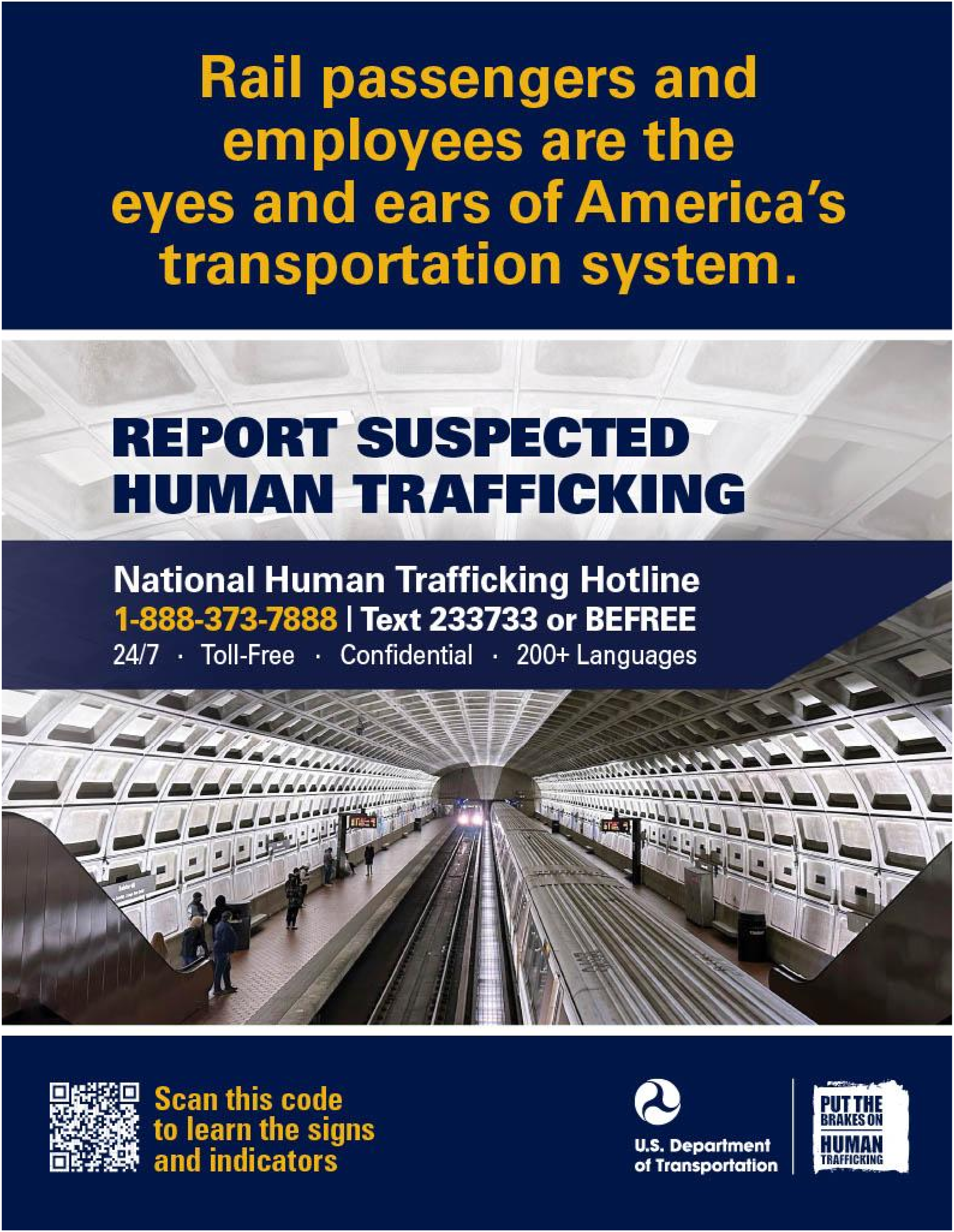
In contrast, legal and jurisprudence researchers, sociologists, and feminist theorists have engaged deeply with anti-trafficking efforts. Their works provide a more critical understanding of anti-trafficking actions and discourse, applying different lenses to call attention to neoliberal and carceral logics at play. These perspectives raise questions for the transportation sector about how anti-trafficking policies have emerged and manifested within US transportation agencies.
This paper makes several contributions towards addressing the gaps we observe. We provide the first documentation and critical, comparative, and in-depth analysis of state governments policies and actions in the transportation domain ostensibly aimed to stem human trafficking. States governments are key partners in the provision of US infrastructure systems and mobility services (Sciara et al., 2024), and federal efforts against human trafficking, as with other crimes, rely on and provide significant funding to state (and local) governments to prosecute the majority of resulting criminal cases (Farrell et al., 2012). Still, little attention has been directed to states’ transportation-related anti-trafficking efforts. Further, our work deploys critical theoretical frameworks from sociology, law, and feminist theory to anti-trafficking efforts in the transportation sector; our work as ‘boundary spanners' bridges the transportation sector with scholarly domains that typically operate on other shores and suggests that taking anti-trafficking efforts in transportation at face value may be ill advised.
Our paper unfolds as follows. In the second section below, we set the stage for our analysis. We describe the landscape of government involvement in anti-trafficking in the US, noting how federal action set the stage for states to criminalize human trafficking and to adopt laws and policies, many in the transportation sphere, attempting to combat it. We highlight theoretical frameworks from adjacent fields that are important for understanding the human trafficking as a phenomenon and government efforts to stem trafficking. In particular, we attend to the direct and indirect expansion of public surveillance, respectively, via criminal and other laws and via increased ‘self-policing' or governmentality. Section three of our paper describes our method for researching how state governments have taken up anti-trafficking policy in transportation, and section four reports the results. Subsequent discussion considers these results in light of the critical theories reviewed earlier, suggesting that the state policies we document perpetuate neoliberal governmentalities and carceral approaches to social issues. We end with concluding observations about potential impacts of these efforts, and if these efforts continue, about research needs on these impacts.
Background and theoretical frameworks
Within transportation: Policy frameworks for anti-trafficking efforts
This section briefly describes the landscape of US government involvement in anti-trafficking in the US. Federal actions set the stage for state legislatures to criminalize human trafficking and to adopt laws and policies, many in the transportation sphere, attempting to combat it. A decade of more general federal government activity in the anti-human trafficking domain preceded anti-trafficking engagement by federal transportation officials at the US DOT and the transportation industry writ-large in the 2010s. In 1998, the US took a leading role in the UN Convention against Transnational Organized Crime and signed the resulting Protocol to Prevent, Suppress and Punish Trafficking 2000 (Palermo Protocol), encouraging nations worldwide to adopt criminal-legal frameworks against trafficking. By 2000, Congress itself had passed landmark legislation, the TVPA, criminalizing acts of human trafficking and leading many state houses to follow suit. A few years later, the Department of Justice (DOJ) published the Model State Anti-Trafficking Criminal Statute (Report on Activities, 2006). Advocacy groups followed suit, publishing their own templates for state legislation (Farrell et al., 2012; Uniform Act, 2013). Between 2003 and 2013, every state passed legislation criminalizing trafficking. The TVPA planted the seeds for a US DOT role in anti-trafficking efforts by calling for the creation of PITF, the interagency task force.
While the TVPA text discussed the ‘transport' of trafficking victims for forced labor or sex to describe the crime of interest, nowhere did it discuss US transportation systems, facilities, or services as potential sites for trafficking or suggest that agencies responsible for those systems should combat trafficking crimes. However, by 2010, the interagency task force was well underway and began to engage the transportation sector, with a US DOT appointee on the body. Soon after the US Department of Homeland Security (DHS) launched the Blue Campaign ‘to combat human trafficking through enhanced public awareness, victim assistance programs, and law enforcement training and initiatives’ (Secretary Napolitano, 2010), US DOT joined as a pivotal agency partner.
Connections to the transportation industry could help the Blue Campaign to extend its reach and potentially generate new case leads for prosecuting trafficking. Critical trafficking scholars recognize that reliable or meaningful estimates of human trafficking are hard to come by (Yea, 2017). Still, other scholars track successful prosecutions of trafficking crimes as a primary metric of anti-trafficking success and show they lag far behind estimates of trafficking cases (Farrell et al., 2012). Farrell et al. point to underlying challenges to prosecutions faced by federal and state law enforcement, ranging from victim reluctance to testify, lack of specialized units dedicated to trafficking, time- and resource-intensive investigations, and organizational and other factors. The transportation sector’s involvement in anti-trafficking emerged as an important step toward addressing this by raising public awareness, a key strategy recommended to the DOJ for enhancing state and local prosecutions (Farrell et al., 2012: 144, 193). The physical facilities and spaces of the transportation system and its workers have been a primary target of the DHS Blue Campaign (n.d.). The PITF (President's Interagency Task Force to Monitor and Combat Trafficking in Persons, 2012, 26) too noted that the DOT was one of the ‘very few government agencies [that] have the authority to include the development and provision of services to victims of human trafficking in their missions.’
Direction from Congress in the 2018 (Combating Human Trafficking in Commerical Vehicles Act, 2018) stimulated broader transportation sector engagement in anti-trafficking across federal, state, and local governments. The original law and reauthorization instructed the US DOT to charter the advisory committe, ACHT, for 3 years to recommend actions that the DOT itself should take and actions that it could encourage state and local governments, as well as non-state transportation stakeholders, to take to combat human trafficking. The ACHT coordinates ‘prevention efforts across DOT modal administrations, with other federal agencies,’ and with state and local transportation stakeholders. The resulting initiatives promote public awareness campaigns across modes, with more stringency where federal jurisdiction allows (ACHT, 2019).
The US DOT has further promoted anti-trafficking work in the transportation industry through its Transportation Leaders Against Human Trafficking initiative. This DOT initiative recruits state and local governments, transit agencies, quasi-government entities like toll authorities, private freight and passenger service operators, oil companies, automakers, rideshare companies, trade and professional associations, labor unions, consulting groups, and organizations that work independently on counter-trafficking, like the National Human Trafficking Hotline operator Polaris, Truckers Against Trafficking, and regional anti-trafficking coalitions, to join its collaborative effort. To date, nearly 600 organizations have pledged to train employees to recognize and report signs of human trafficking, to use common messaging to raise the traveling public’s awareness of trafficking, and to monitor and share trafficking-relevant data (US Department of Transportation Advisory Committee on Human TraffickingAdvisory Committee, 2024). Further, Federal Transit Administration (FTA) funding has contributed to transit-related anti-trafficking programs in at least 12 states through the Human Trafficking Awareness and Public Safety Initiative by awarding $5.4 million USD in 2020 to support employee trainings, public awareness campaigns, technical assistance, and the implementation of digital surveillance and reporting tools (FTA, 2020b).
Beyond transportation: Theoretical frames for studying anti-trafficking
In this section, we consider theoretically informed scholarly works from women and gender studies, sociology, and geography to apply critical perspectives to human trafficking and the efforts to combat it. Literature in these domains begins to illuminate how anti-trafficking and its manifestations in transportation might be understood in connection with neoliberal political agendas, the associated marginalization of vulnerable populations, and the widening embrace of criminal justice and surveillance as tools of social control. This literature offers conceptual frameworks and anchors for our study of states’ transportation-related anti-trafficking measures and potential lenses through which to understand the implications of such policies.
Scholars of women’s and gender studies have connected government efforts against human trafficking to what’s described as the ‘carceral turn' in feminist politics (Bernstein, 2012). The carceral turn represents a shift in the feminist agenda from its focus in the 1970s and ’80s on rights-based liberation from sexual violence and economic systems of male domination to a contemporary focus on criminal justice to advance women’s interests and to punish men who transgress.
Scholars connect this pivot in feminist politics directly to the very 1998 UN convention that placed anti-trafficking in the spotlight, yielded the Palermo Protocol, and prompted the US soon after to make trafficking a federal crime via the TVPA. The Convention against Transnational Organized Crime became a ‘battleground' for competing views on what constituted trafficking and whether someone could consent to selling sex (Goździak and Vogel, 2020). The debate echoed earlier ‘sex wars’ among feminists about whether pornography, prostitution, and other forms of sexual deviance are exploitative or liberatory (Echols, 2016)—and those who rejected the premise altogether as a false binary (Doezema, 1998). While the ‘pro-sex’ faction ultimately prevailed (Walters, 2016), a coalition of ‘abolitionist' feminists (Bernstein, 2007) against prostitution and New Right advocates found a new outlet for their activism in the anti-trafficking movement that re-emerged on the global stage at the UN convention (Weitzer, 2007).
Feminist scholars and sociologists have also applied the lens of governmentality, particularly neoliberal governmentality, to consider government-sponsored anti-trafficking efforts as vehicles for control. The concept of governmentality reflects Foucauldian notions about how governments exert social control beyond the obvious expressions of state power; governmentality marshals not only visible government coercion, such as policing, but also employs less recognizable mechanisms of governing or control, such as broader societal institutions and private individuals, to enforce norms (Bacchi, 2023; Walters, 2012). Further, in the context of human trafficking, scholars have linked neoliberal political agendas (Wacquant, 2009) to underlying drivers of human migration and trafficking. For example, Bernstein (2012: 238) links neoliberal economic strategies to ‘redirect public moneys away from the provision of [material welfare] goods and services' to the collapse of social safety nets, widespread economic deprivation, and displacement and disenfranchisement of marginalized people. Seen in this light, actions to criminalize and combat human and sex trafficking represent neoliberal governmentality expanding the ‘carceral state' to control the strategies used by poor and migrant women to meet their own needs for care and survival (Bernstein, 2012; Yea, 2017).
The connection between anti-trafficking and neoliberal governmentality has drawn critical scholars’ attention to the use of surveillance as a method of social control. Anti-trafficking campaigns exemplify new forms of surveillance that are associated with governmentality and that deputize actors beyond official law enforcement agencies to exact more quotidian and pervasive social controls. Critical trafficking scholars refer to this mix of state and non-state actors as the ‘enforcement apparatus' (Musto, 2016: 20). Whether through film or other media (perhaps placards in airports or train stations), efforts to raise the general public’s awareness of the trafficking problem work to invite or provoke the identification of ‘“suspicious activities” and “victims” through the inculcation of a kind of public surveillance effort' (Yea, 2017: 526). In particular, engagement by regular people—bus passengers, store employees, private security staff, or public workers—in efforts to prevent or detect crime reflect what theoretical criminologists call the ‘penal populist’ orientation to crime that developed in the late 20th century. In the context of countertrafficking campaigns, Shih (2016: 84) refers to the punitive populist approach as ‘vigilante rescue,' acknowledging the ‘overwhelming veneer of humanitarianism and protection that belies contemporary anti-trafficking efforts, [even] though the putative benevolence of anti-trafficking rescue outreach is betrayed by the… goals of [subsequent] carceral redress.' This paradox underscores why feminists against prostitution and feminists against carcerality both lay claim to the term ‘abolition feminism' (Bernstein, 2007; Goodmark, 2022).
Critical trafficking scholars have studied what happens once a supposed or potential victim is identified by the enforcement apparatus and have demonstrated that the provision of protection or care, if provided at all, is carried out with and through carceral tactics, inflicting its own violence against ‘victims' (Musto, 2016). Those deemed to be victims of (alleged) human trafficking crimes, whether or not they identify as such, and those perceived to be potential victims of future crimes are often detained or imprisoned. There are several legal explanations for this confinement: retribution for actions allegedly taken by supposed victims in self-defense; precaution to ensure the supposed victim’s cooperation in the defendant’s criminal prosecution; rehabilitation from trauma; deterrence from selling sex voluntarily; and protection from further abuse (Musto, 2013; Goodmark, 2022; Gruber et al., 2016). Pre-empting future potential crimes, as the latter two ‘justifications’ seek to do, is a throughline in the human trafficking discourse. Mendel and Sharapov’s (2024) contributions in this journal interrogate how anti-trafficking initiatives use the possibility that human trafficking may occur to ‘justify’ the pre-emptive shutdown of online platforms that sex workers rely on. This justification reveals ‘a logic of pre-emption [that] prioritises hypothetical scenarios' over attention and care to actual people with unmet needs (p. 3). The potentiality of trafficking and moral certitude about its ‘wrongness' are thus used to ‘“justify” implausible beliefs and ill-conceived actions', calling such moral certitude and logics of potentiality into question (Mendel and Sharapov, 2024: 12).
Widespread conflations between human trafficking, illegal immigration, and sex work put migrants and sex workers on the receiving end of many ill-conceived pre-emptive actions (Chapkis, 2003; Ditmore, 2005; Fukushima, 2020; Mendel and Sharapov, 2024). Counter-trafficking measures, including actions like calling the police to report a tip, heightens immigrants' risk of detention, deportation, criminalization, and family separation (Goździak, 2021; Fukushima, 2019; Shih, 2021b; Stumpf, 2006). Scholars have also demonstrated how anti-trafficking campaigns harm sex workers' financial, physical, and mental health by increasing their exposure to stigma, criminalization, and sexual and state violence (Weitzer, 2010; Hoefinger et al., 2020; Mendel and Sharapov, 2024; Musto et al., 2021). For instance, the 2018 federal legislation Allow States and Victims to Fight Online Sex Trafficking Act , more commonly known as FOSTA-SESTA, prompted the shutdown of Backpage, an online platform where sex workers had advertised their services and shared pertinent safety information amongst themselves; the removal of Backpage made it more difficult to screen clients who had previously engaged in abusive conduct with sex workers (Blunt and Wolf, 2020). This literature underscores how anti-trafficking campaigns can further harm vulnerable communities while claiming to rescue them. It also amplifies the need to understand and treat the structural conditions that relegate migrant and sexual labor to the margins of society and foreclose their opportunities to organize, advocate for better working conditions, and pursue recourse when exploitation occurs (Chuang, 2010, 2014).
The human trafficking discourse also requires engagement with critical perspectives on borders and surveillance. Geographers have expanded conceptions of borders beyond the physical demarcation between states or nations to include the interior spaces where border controls are enforced and the contingent forms that these bordering activities take (Balibar and Williams, 2002; Brambilla, 2015; Burridge et al., 2017). This new conception accommodates the changes wrought by globalization, which have increased the pace and volume that people and goods move across borders, and concomitant efforts to regulate these flows (Sheller and Urry, 2006). Reading the critical trafficking scholarship (Kempadoo et al., 2005; Chapkis, 2003) through this lens illustrates that the mainstream discourse of human trafficking produces borders by expanding the territory in which restrictions on migrant mobility are applied and enforced (Bhagat, 2022). Human trafficking interventions on transportation can thus be conceived of as a form of ‘everyday border(ing) produced by ‘in-sourcing’ of border controls by diverse types of people into the daily operation of multiple and disparate practices' (Waite et al., 2023: 3).
We call lastly on perspectives from legal geography to help orient this study of anti-trafficking policies in transportation. Legal-geographic approaches draw connections between space, law, and society; they understand law through its spatial context and center ‘how legal rules, practices and governance produce landscapes and places' (Bennett and Layard, 2015: 408). Transportation sector involvement in anti-trafficking efforts depends on the tangible places and spaces comprising the transportation system, from highway rest areas and truck stops to bus and train stations and vehicle interiors to ports, airports, and maritime vessels. Insights from Michalakea's (2023) study of the legal geography of sex work in Greece suggest that transportation-based anti-trafficking policy may similarly shape the physical places and spaces of transportation and the experiences of travelers and system users in them.
Methods: Inventorying state transportation policy on anti-trafficking
We use a purposive sample of states to study how state governments have advanced anti-trafficking policy in the transportation domain. Below we describe how we chose the states included in our analysis; identified provisions relevant to human trafficking and transportation in each state’s legal code; and analyzed and grouped policy provisions by type.
Choosing the sample
In three steps, we identified a sample of six states (California, Florida, Georgia, New York, Ohio, and Texas) for our study. We aimed to collect a large number of policy examples in state law where lawmakers had connected anti-human-trafficking and transportation and to ensure that these examples came from diverse state political, transportation, and geographic contexts.
To choose our sample, we first consulted a state-by-state survey of anti-trafficking statutes and regulations (Lexis-Nexis, 2021), the most current available inventory of state code on trafficking. For each state, the survey recorded discrete references to sections of state code. We counted these entries by state, for a rough measure of anti-trafficking policy codified in law and noted the 10 states with the most entries. These were, in descending order, Wisconsin, Texas, Illinois, Florida, California, New York, Ohio, Kentucky, Washington, and Kansas. Second, we noted states where public agencies had been proactive in anti-human trafficking efforts in public transportation, evidenced by grants from the FTA’s 2020 Human Trafficking Awareness and Public Safety Initiative (FTA, 2020a). The largest awards from this program went to five states: Ohio, California, Georgia, Oklahoma, and Arizona. These two queries yielded a combined shortlist of 13 candidate states, since two, California and Ohio, appeared in both.
Our third and final step was to narrow the 13 states to six, to capture a range of contexts, political contours, transportation systems, and geographic environments. Together, the six states represent different partisan leanings, with the majority of 2024 presidential election voters favoring the Democratic candidate in California and New York and the Republican candidate in the other four. Varied transportation systems and development patterns also characterize these states. New York has the largest legacy transit system, for instance, while Texas’ highway system is the most expansive of all states. Included are states with major Atlantic, Pacific, and Gulf Coast ports, and significant rail infrastructure (Ohio). Each of the major geographic regions of the US are represented, from the Southeast (FL, GA) to the West (CA), as are states that share national borders with Mexico (TX and CA) and Canada (NY).
Collecting relevant provisions in state code
We used a two-pronged approach to collect the policies of interest. First, we relied on keyword searches of each state’s online code repository to identify sections addressing ‘trafficking.' This yielded around 100 results for most states in our sample. We reviewed each result to discern whether its provisions connected transportation issues with anti-trafficking efforts or concerns in some way and created a record of relevant provisions for each state.
Following a second approach, we combed through whole sections of code ourselves, identifying potentially relevant sections using the code’s organizational headers. While states organize their codes differently, they tend to employ a three-tiered structure; code ‘titles' comprise the top unit, ‘chapters' or ‘articles' are typically nested below, and ‘sections’ or ‘parts' are the lowest and most narrow units. We browsed all top (titles) and intermediate levels (chapters and articles) that we judged might pertain to human trafficking, prostitution, transportation, or transit. We erred on the side of inclusiveness, scanning topics such as licensing, occupational standards, morals, and education. In each section of interest, we drilled down as far as needed to determine whether it contained relevant provisions for our study. We worked iteratively; upon discovering something relevant in an unexpected area of one state’s code, we returned to equivalent areas of code for all sample states to confirm we had left no stone unturned. Within ‘sections' or ‘parts' of code that had potential relevance, we searched for mentions of ‘transportation' and ‘trafficking.' Here again, we noted relevant provisions by state. With this two-pronged strategy, we cast a wide net, collecting in all six states trafficking-relevant provisions of code that directly or indirectly impacted transportation stakeholders and facilities or provided important context.
Classifying policy provisions
Following our review of states’ legal codes, we analyzed the provisions collected and classified them by policy type, impacted stakeholders, and impacted facilities. First, we developed categories of policy type, such as requiring posted anti-trafficking signs or employee training. We also noted when these policy types existed in the code but did not apply to transportation workers or facilities, and when they did not exist at all. We inventoried the transportation facilities targeted by the policies, organizing the results by mode, and we classified policies by their intended audience, i.e., which stakeholders were called to action. Finally, we distinguished code provisions by their level of stringency, noting when the actions in question were explicitly required or merely encouraged or implicitly mentioned.
Our approach aims to learn from an active and representative sample of states about how broad concerns about human-trafficking intersect specifically with the transportation sector. We acknowledge still that our approach may have missed some discrete initiatives at this nexus, as we collected data from a sample and not a comprehensive 50-state survey. While the latter tack may have been more assuredly comprehensive, we believe that our methods allowed us to engage more deeply with the legal code of key states likely to represent the range of trafficking-transportation connections being made by state governments today.
Casting a wide net within the legal codes of each of the sampled state allowed us to observe how statutes framed the requirements for transportation in the anti-trafficking arena. Legal codes are succinct and generally do not include attempts to describe the need that they respond to or justify the policy response they dictate. However, reviewing the provisions that mentioned transportation in their entirety provided circumstantial evidence of their intent. When considering patterns in the statutory requirements, we asked, ‘what is the problem represented to be?' (Bacchi, 2012). Policy theory contends that any policy reflects, whether explicitly or implicitly, an understanding of the underlying problem it is designed to address and assumptions about that problem. Examining these representations as they appear in the broader policy discourse can lead to fruitful insights about how the problem definition came about and about gaps in or potential challenges to the problem definition or representation (Bacchi, 2012).
Results: State codes provide for anti-trafficking in transportation
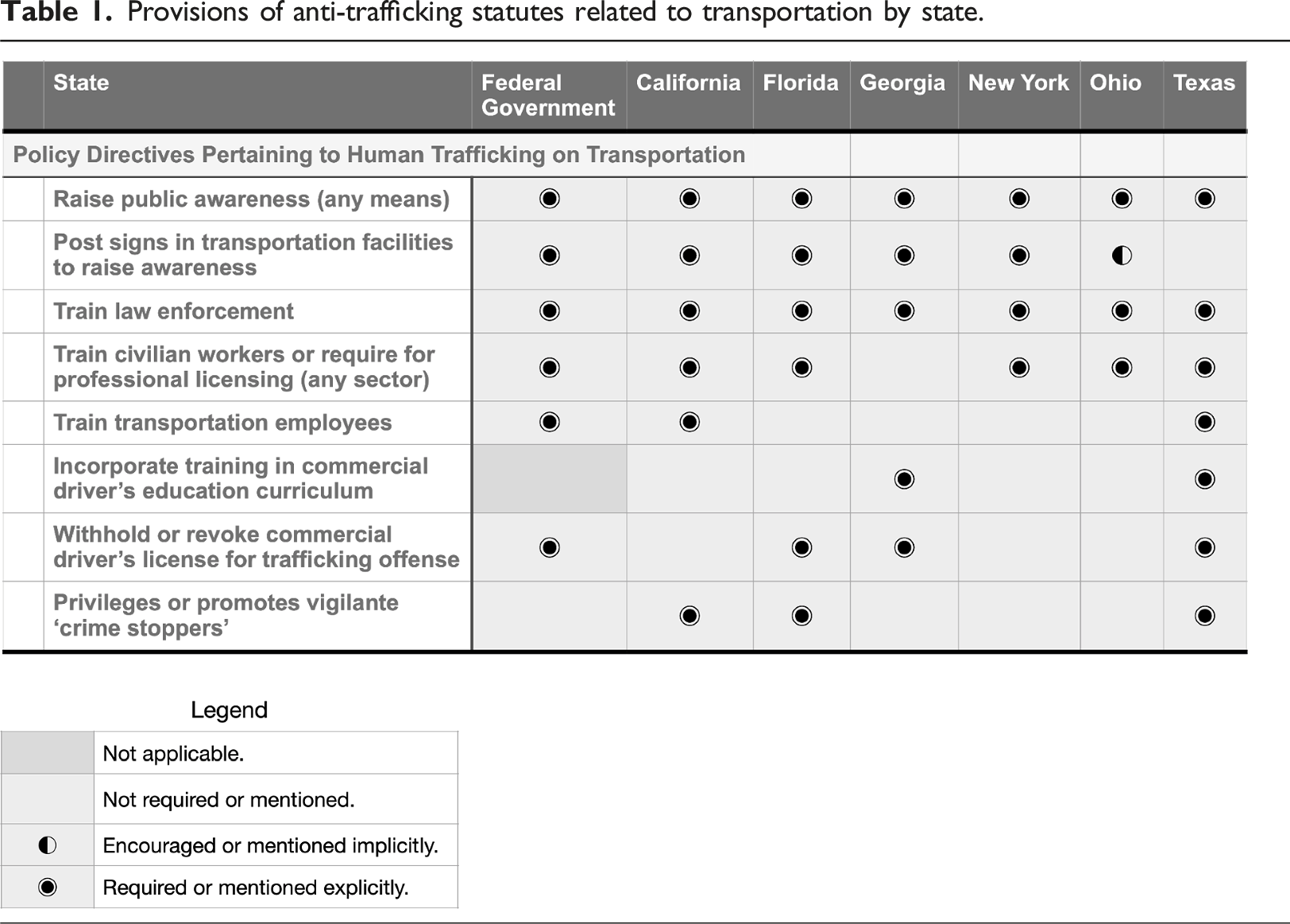
Provisions of anti-trafficking statutes related to transportation by state.
State anti-trafficking policies reach many transportation sector participants.
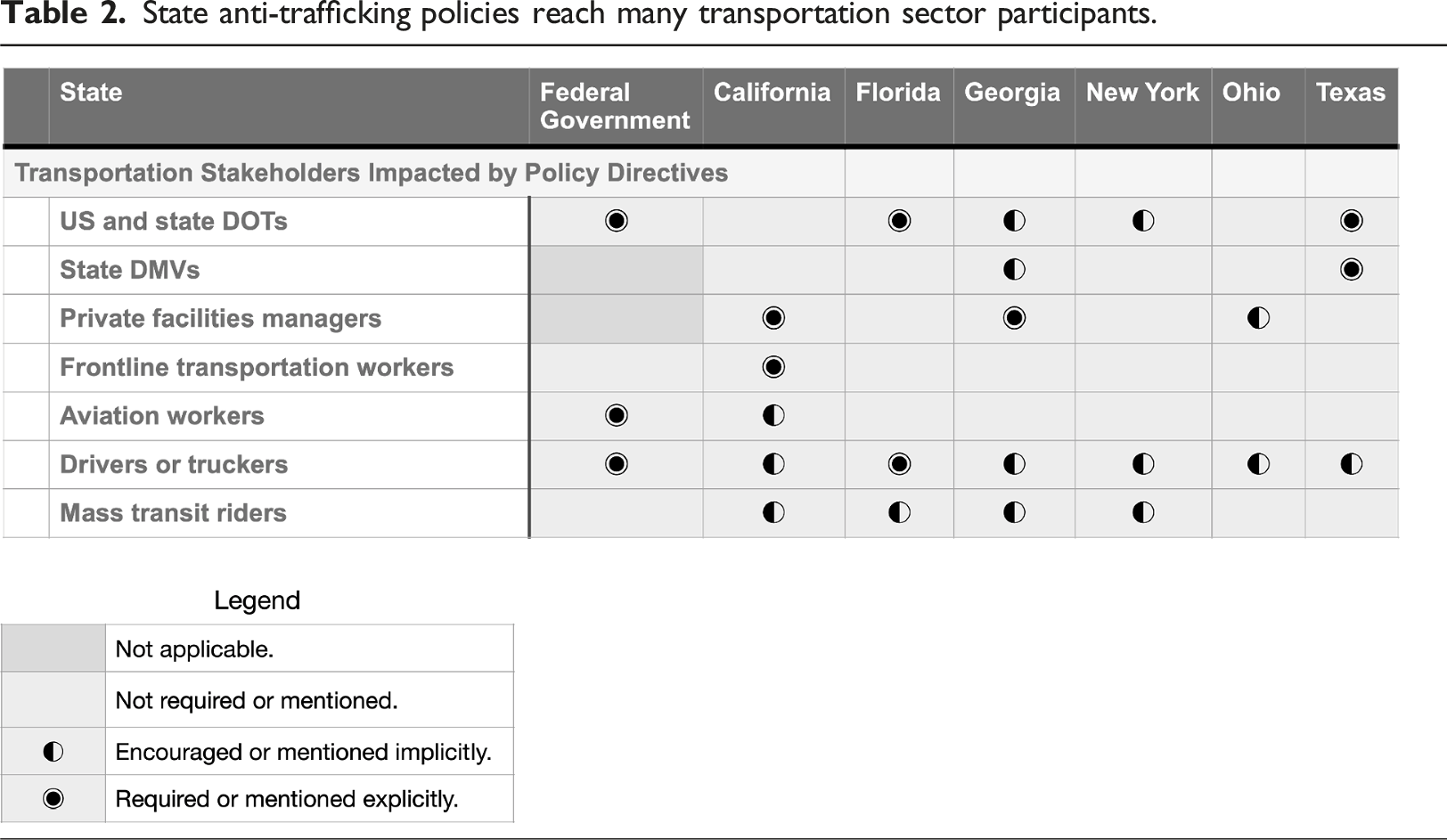
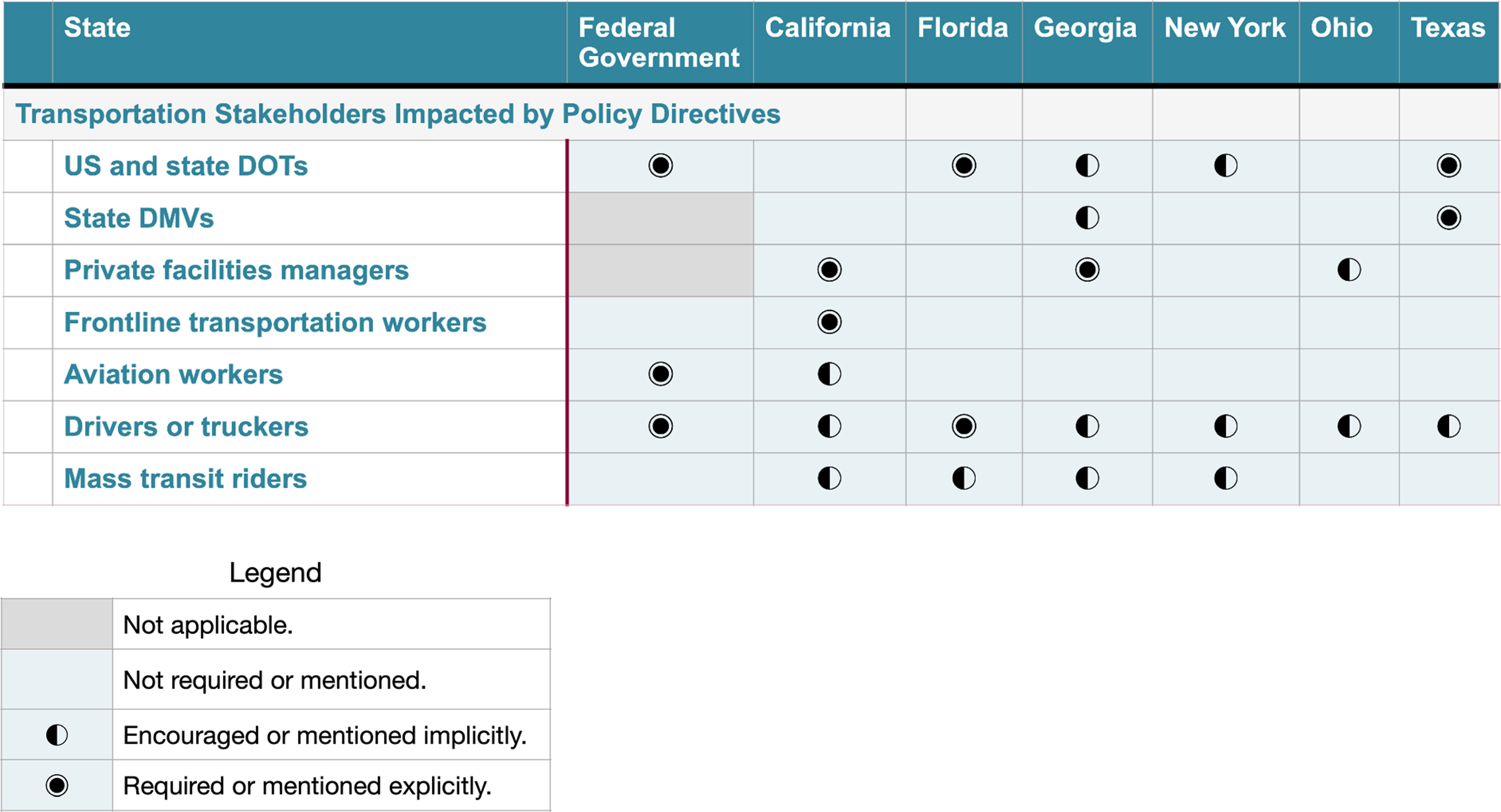
Our review and inventory of state code revealed three types of provisions and policies used by states to make transportation a ‘frontline defense' against trafficking (US Department of Transportation Advisory Committee on Human TraffickingAdvisory Committee, 2024: 8): public awareness campaigns; employee training; and training linked to administrative processes. We described these here.
Broad public awareness campaigns
Transportation facilities included in state anti-trafficking provisions.
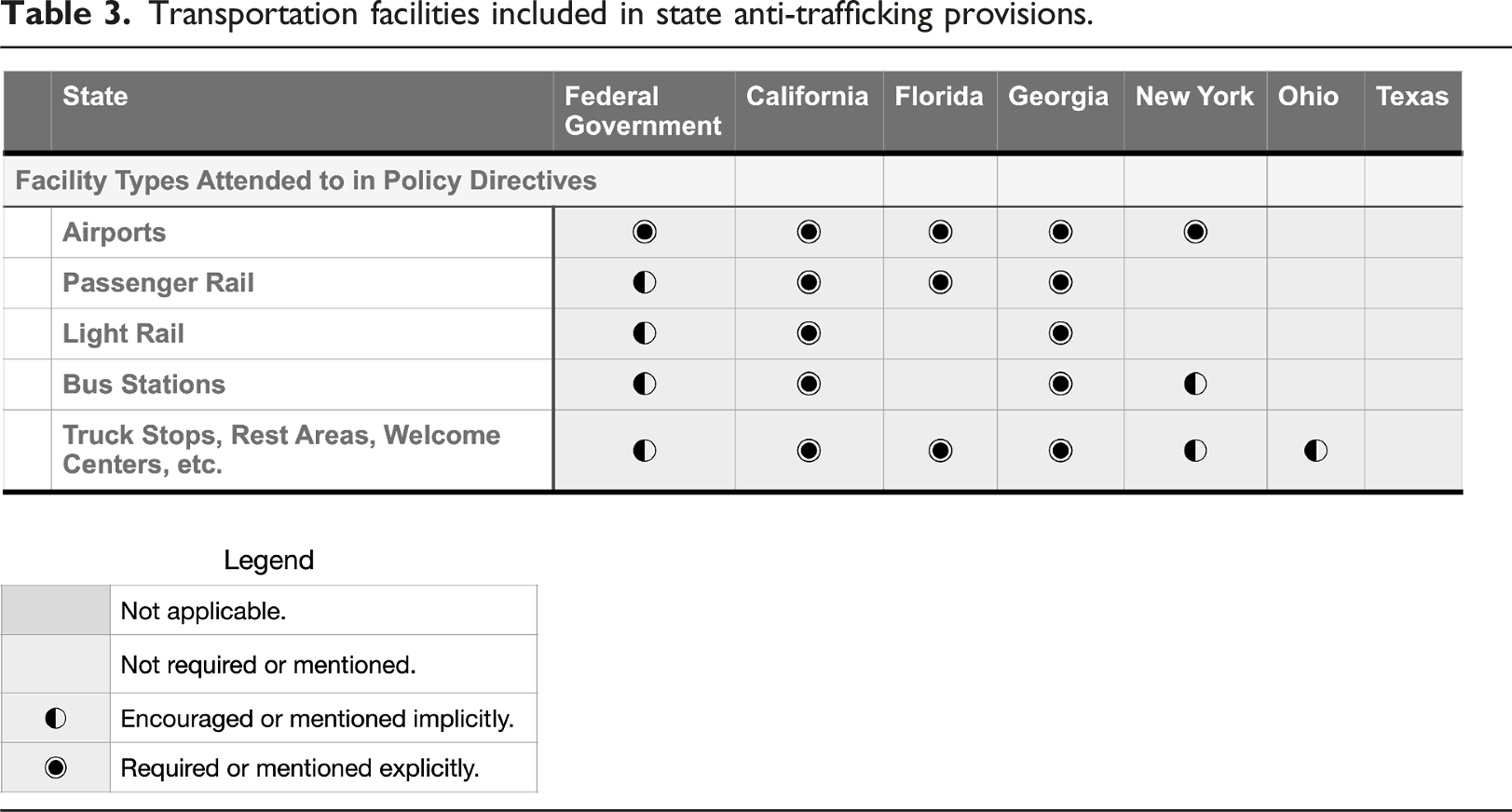
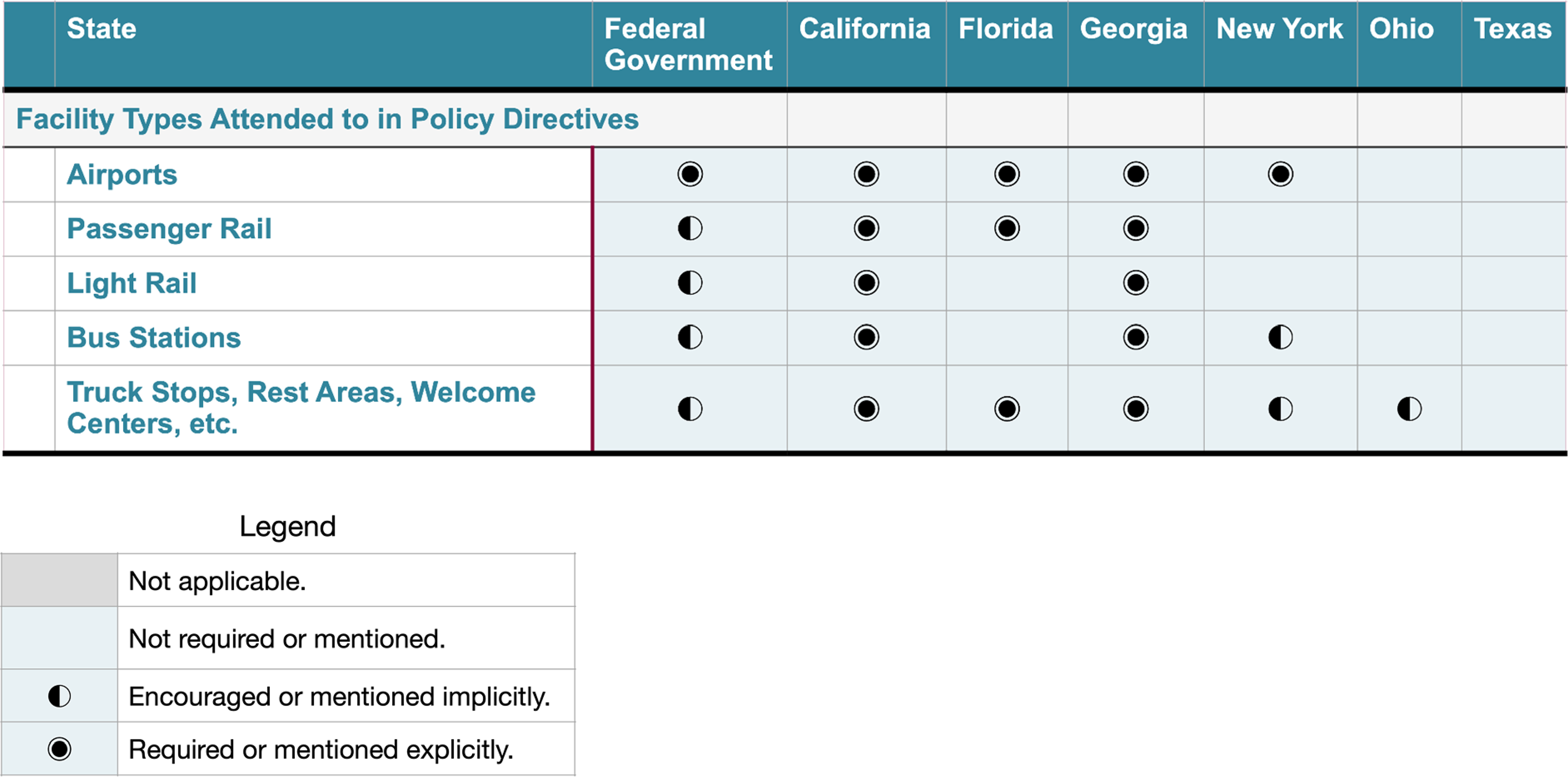

‘What You See Could Set Someone Free' poster to raise public awareness (US DOT, 2025).

‘Everyday Heroes Needed' poster to raise awareness among truckers (Truckers Against Trafficking, 2025).
We noticed the emphasis state statutes place on making required posters conspicuous. The same phrase appeared in California (Civ Code § 52.6) and Georgia (§ 16-5-47), requiring that notices be ‘in a conspicuous place near the public entrance of the establishment or in another conspicuous location in clear view of the public and employees where similar notices are customarily posted.' The purpose of these signs is for them to reach as many people as possible.
Our review of state codes yielded a second form of general awareness raising: ‘crime stopper’ organizations. We found ‘crime stopper' programs in three states—California (Cal. Evid. Code § 1041), Florida (F.S. 16.555), and Texas (Gov’t Code § 414). These code provisions recognize or authorize private not-for-profit (FL) and non-profit (CA and TX) organizations, generally organized by locality or region and sometimes connected by a state-wide association, umbrella organization, or, in Texas, the state-run Texas Crime Stoppers Council. These organizations invite civilian tips about crimes, including human trafficking, and forward them to law enforcement. Crime stopper organizations may promise a financial reward for tips and/or collect a financial reward themselves for performing this intermediary function. Because some states allow for human trafficking data to be shared among local, tribal, state, and federal agencies through so-called ‘fusion centers’ (6 U.S.C. 124h), as is the case in Texas (Gov’t Code § 421), trafficking-relevant tips rendered by civilians to crime stopper programs may pass from local or state offices to federal agencies.
Organizational training for employees
We observed that states also seek to raise awareness of human trafficking among workers, using required workforce training. Required training typically addresses definitions and indicators of human trafficking, as well as protocols for reporting it. Although workforce training requirements are common, existing in every state except Georgia, only California and Texas direct them explicitly to transportation workers. California’s code provisions broadly require training in recognizing trafficking signs and reporting them to law enforcement for ‘employees who may come in contact with a victim of trafficking or who are likely to receive, in the course of their employment, a report from another employee about suspected human trafficking' (Civ Code § 52.6). But further provisions explicitly mandate training in the transportation sector, noting that any entity required to post signs, including transit operators, truck stops, and non-transportation-related establishments, must also ‘provide at least 20 minutes of training’ to employees (Civ Code § 52.6). By contrast, Texas requires that the state's DOT ‘develop and make available’ training to employees but does not set requirements for other transportation workers (Transportation Code § 201.407).
We also found that states commonly require training on human trafficking for law enforcement, including state police, local police, and transit police. While not all such requirements are directly targeted to the transportation infrastructure or facilities, they do affect the sector. Every state in the sample required general law enforcement training. This has implications for public transport, given that transit agencies very often rely on and coordinate with local law enforcement to varying degrees for providing transit security (Bye et al., 2020). Large or major transit agencies, especially those operating across state lines, are visible exceptions, as they typically have their own transit police force. For this reason, personnel patrolling transit are likely to have received countertrafficking training, even if bus drivers and other transit employees have not.
Training linked to administrative processes
We found several instances in state codes of provisions that embed anti-trafficking training requirements by piggy-backing on existing state administrative processes, typically those involving professional licensure or skills certification. States may recommend that all license- or certification-granting government bodies require anti-trafficking training, as happens in Ohio (§ 4743.07). Or, legislators may apply such requirements only to occupations that are both subject to licensing requirements and, it is assumed, likely to involve encounters with human trafficking in the course of work activities. In Florida, for specific professions—including, for example, nursing, midwifery, pharmacy, and podiatry, but excluding architecture, landscape design, and pest control—the state tasks the governing board or license-granting entity responsible with ensuring that trafficking training is completed as a condition for license issue or renewal.
Some states anchor human trafficking awareness training to broader state administrative processes around obtaining a drivers’ license or registering a vehicle. Others target professional drivers or truckers specifically, like Georgia (Rule 375-5-3-.17) and Texas (Education Code § 132.006; Transportation Code § 522.035) requirements to build training into commercial drivers’ education. Together, such approaches make drivers and truckers among the most broadly targeted stakeholder group for training requirements. We also observed cases where state code provided for withholding or revoking commercial driver’s licenses for a trafficking offense. Finally, one state even requires its Department of Motor Vehicles to solicit donations to an anti-trafficking fund while collecting fees for administration functions (Texas Gov’t Code § 2054.252). For each of these practices, states use existing administrative processes to extend the reach of human trafficking trainings.
Discussion
We chose at the outset to examine the phenomenon of anti-trafficking initiatives in transportation policy using critical theories and perspectives on trafficking as conceptual frames. In this section, we put the state transportation policies targeting human trafficking that we have documented into conversation with these theoretical insights, connecting the dots between our findings and this critical scholarship and unpacking how the policies we document reflect throughlines in contemporary politics.
Human trafficking literature in fields beyond transportation teaches us that purported or presumed trafficking victims can and do suffer real personal harm from exposure to anti-trafficking activities and the carceral tactics they employ. Such insights are central for considering the impacts of the state policies and initiatives we have studied, yet they are absent from the transportation literature on human trafficking. Critical interdisciplinary scholarship on trafficking provides rich qualitative data showing how the criminalization of human trafficking impacts people’s lives (Goździak, 2021; Chapkis, 2003; Fukushima, 2019; Shih, 2021b; Stumpf, 2006). Anti-trafficking enforcement activities and campaigns often result in presumed victims, who may include migrant laborers and sex workers, entering the criminal justice system and being detained or incarcerated, even when faultless. These campaigns may thus put immigrant communities at risk of detention, deportation, and criminalization, and can cause cascading problems, extending from family separation and loss of income to residential instability, eviction, and more. Such evidence illuminates the irony in statements that justify or advertise anti-trafficking efforts and awareness campaigns as protective measures, as seen in Figures 2 and 3.
The anti-trafficking policies we document enhance the surveillance of transportation systems and the people who use or pass through them; expanded surveillance is accomplished by marshalling both people (law enforcement, transportation workers, and the broader public) and transportation system places and spaces (terminals, stations, public buildings, vehicles) in the anti-trafficking effort. General public awareness campaigns and focused trainings for security officers and transportation workers feature prominently in the state anti-trafficking policy initiatives we studied. Such policies invite the very modes of surveillance recommended by criminologists, including ‘formal surveillance' by law enforcement or security personnel; ‘surveillance by employees' including ‘conductors, station attendants, and drivers'; and ‘natural surveillance' in the form of ‘supervision exercised by people going about their everyday business whether as travelers or passersby' (Smith and Clarke, 2000: 220). Further, such initiatives appropriate transportation system facilities and infrastructure for anti-trafficking objectives, capitalizing on system features designed deliberately to enhance visibility.
Transportation systems make a convenient target for more pervasive surveillance. For one, legal institutions attenuate the privacy protections of travelers and transportation system users, easing formal surveillance by law enforcement. While the Supreme Court ruled in 1967 that Fourth Amendment protections from ‘unreasonable search and seizures’ entitled individuals to a ‘reasonable expectation of privacy’ (
Katz v. United States
), it later clarified that such expectations of privacy are lower in public places, including on highways and mass transit: One has a lesser expectation of privacy in a motor vehicle because its function is transportation and it seldom serves as one’s residence or as the repository of personal effects. A car has little capacity for escaping public scrutiny. It travels public thoroughfares where both its occupants and its contents are in plain view. (Cardwell, 1974: 112-113)
This ‘plain view doctrine’ thus allows law enforcement to search for and seize evidence more liberally on public highways, thoroughfares and mass transit than in homes, offices, and other private spaces.
Further, many transportation facilities are by design easily utilized for anti-trafficking surveillance. Criminologists have long advocated strategies to reduce so-called ‘situational crime' in transportation and public transit facilities; recommended measures include active surveillance and high-visibility facility designs to reduce potential offenders’ opportunities for committing crimes and to increase their risk of getting caught (LaVigne, 1996; Smith and Clarke, 2000). Such approaches embed in transportation facility and transit vehicle design the ‘defensible space’ principles traced to Newman’s (1976, 1996) ideas about public housing project plans and aimed expressly to facilitate natural surveillance. Any potential intruder can be made to anticipate that his presence will be questioned and challenged, to the extent that he will be deterred from even contemplating entry into defined areas. (Newman, 1976: 5)
Though later sharply critiqued for their conceptual ambiguities and weak empirical basis (Reynald and Elffers, 2009; Cozens and Love, 2015), these ideas about crime prevention through design have penetrated transit and transportation facilities. These transportation spaces are often convenient physical places for encouraging natural surveillance because many have already been designed to enable it.
The policies we document have spatial implications. States may encourage or require the use of transportation facilities as a platform for broadcasting trafficking awareness campaigns and promoting reporting. State mandates for signage with human trafficking ‘hotline' telephone numbers extend across truck stops, airports, and stations for bus, passenger rail, and light rail transit; they require transportation agencies to use the physical spaces and places they operate in service of anti-trafficking efforts. The high visibility of such spaces and the captive audience of travelers and passengers they provide allow such campaigns to reach many people. When such policies also include state transportation departments, which own and operate state and interstate highway systems and other public assets, an even wider range of physical resources may be leveraged for counter-trafficking efforts, ‘including [Department of Motor Vehicles] buildings, vehicle fleets, and signage that can be deployed towards raising public awareness' (ACHT, 2019: 17). Such initiatives threaten to transform the nature of such infrastructure; transportation assets designed in the first instance to serve individual mobility, goods movement, and commerce are thereby transformed into places where transportation system users’ identities may be suspect or questioned and where border enforcement occurs, regardless of how far removed that station, truck stop, or facility may be from the US’ actual northern or southern border.
Although we did not set out to explain how geographic and political factors influence anti-trafficking policies in transportation, our results confirm that these factors are not deterministic of trafficking policy. States in our sample took up policies against anti-trafficking regardless of whether they share a land border with Mexico, of their partisan politics, and of their development patterns. The similar policy platforms we observe across states attest to the effective coordination of strategic alliances, political pressure, and policy guidance by the anti-trafficking coalition and its partners in the federal government (Weitzer, 2007).
The anti-trafficking transportation policies in our inventory correspond to the neoliberal governmentalities described by critical feminists and scholars of human trafficking policy (Bacchi 2023; Bernstein 2012; Walters 2012; Yea 2017). The states in our sample have adopted multiple provisions to deputize actors beyond the formal state—from truck drivers to transit station workers to bus passengers—to recognize and report to law enforcement signs of suspected trafficking. We also observe states using their administrative apparatus to extend the reach of such controls into a broad range of occupational spheres, from manicurists to midwives, by overlaying routine licensing and certification procedures with requirements for training on trafficking recognition and reporting.
Together, state training programs and public awareness campaigns invite what Shih (2016, 2021a) calls ‘vigilante rescue' and subject people to pervasive criminal supervision. These approaches illustrate and encourage what some critical feminists and sociologists call carceral or punitive populist strategies to govern and control disenfranchised populations. Indeed, public awareness efforts help law enforcement to capture information collected by non-state actors through natural surveillance or surveillance by employees. Bouche et al. (2016) examine the connection between discrete anti-trafficking interventions (e.g. law enforcement trainings, posters with the hotline number, investments in investigative tools and victim assistance) and numbers of trafficking arrests and prosecutions; they conclude that: Requiring the National Human Trafficking Hotline number to be posted in public places is the most important provision for increasing the number of human trafficking arrests (though mandating the posting of the national hotline does not predict prosecution). (p. 17)
Public awareness programs produce tips, and tips produce arrests for human trafficking crimes. However, as Bouche et al. reveal, tip-driven arrests are seldom substantiated with sufficiently meritorious allegations to prosecute human trafficking crimes. These findings undermine claims by proponents of anti-trafficking policies that transportation interventions can provide ‘frontline defense' against human trafficking by identifying cases.
Any deterrent effects of surveillance on human trafficking activity are poorly understood. This is particularly troubling in the case of surveillance on public transit, which provides an essential service, particularly for car-less households, but offers minimal privacy. Where anti-trafficking campaigns succeed in heightening surveillance, they may have a chilling effect on ridership among people already regularly subjected to the gaze of law enforcement and the ‘digitally efficient investigative state' (Rushin, 2013). People wary of attracting police attention are attuned to which places are heavily-supervised so they can avoid exposure to police contact (Brayne, 2014; Fader, 2021; Stuart, 2016). Further, the deterrent impact of surveillance on transit ridership could reverberate into the future, as children learn, imitate, and acquire the travel habits of friends, family, and their broader social networks (Baslington, 2008; Brunson, 2007; Smart and Klein, 2018). Such ridership deterrence may disparately impact communities of color, since Black and brown individuals are subjected to more frequent stops, frisks, and searches even when controlling for several other variables (Carroll and Gonzalez, 2014; Gelman et al., 2007; Hannon, 2020), and wariness of surveillance can develop from an accumulation of petty and indirect racial antagonisms (Feagin, 1991).
Our engagement with the literature on defensible space principles, transportation security measures, and the anti-trafficking policies has revealed a common emphasis on natural surveillance and an underlying logic of neoliberal governmentality. State anti-trafficking policies deputize non-state actors in territorial control of transportation facilities as a means of regulating society. Below, we consider the implications of these dynamics for the future of anti-trafficking policy in the transportation sector and for future trafficking research.
Conclusion
The insights we gain by examining state-level anti-trafficking policies in transportation and considering them in light of critical human trafficking scholarship lead us to favor wholesale reappraisal of transportation sector involvement in anti-trafficking. We conclude that locating such initiatives in transportation spaces and places may serve more to accomplish neoliberal aims regarding migrants, sex workers, and other marginalized populations than to protect trafficking victims. Further, we see legitimate grounds for concern that such efforts may inadvertently erode the very individual mobility that transportation systems are meant to facilitate.
Others have written about the need to understand and treat the structural causes that lead people into precarious arrangements in the first instance (Chuang, 2010, 2014; Mahdavi, 2014). Anti-trafficking efforts in the transportation sector by contrast leave the structural conditions unchallenged, enlisting individuals in trafficking surveillance and reporting, not human aid. Some may reason that, because trafficking’s root causes are so great and seemingly insurmountable, interim efforts by transportation agencies to raise awareness and enforcement are appropriate. We contend they are not, and we see few positive outcomes from this.
Our own inventory shows that transportation-based anti-trafficking efforts called for in state policy use new forms of surveillance to police those who have been disenfranchised by migratory processes. Yet, the evidence that such public awareness programs and employee trainings are effective at identifying victims, or that victims are well-served by being identified, is weak. Instead, such strategies put marginalized communities at greater risk of criminalization, incarceration, and deportation.
We also reason that these policies stand to negatively impact individual travel behavior and traveler experiences, particularly on public transit. Such efforts stand to exacerbate harassment and harm experienced by vulnerable populations who, in the course of making personal or work trips, are presumed to be trafficking victims. Anti-trafficking initiatives that deploy transportation system users and workers and the very facilities and spaces they occupy encourage suspicion and attendant infringements on privacy of travelers and transit users. These infringements—from staring to occupying someone’s time and attention with condescending and unsolicited counsel to challenging the virtue of their relationship(s) to humiliating them with a police interrogation in the presence of curious onlookers—are by their nature ‘intrusive and demeaning,' (Wigan and Clarke, 2006: 390). Extensive evidence of individuals’ behavioral responses to criminal surveillance suggest that such enhanced surveillance may deter individual travel and erode the societal benefits that flow from personal mobility.
In sum, our research underscores that state anti-trafficking policies geared towards the transportation sector are a perilous gamble. They encourage public scrutiny of people already subjected to hyper-policing to more pervasive forms of surveillance, potentially risking their security, deteriorating their travel experience, and deterring their use of transportation that would enable or enhance their mobility. We see little reason to continue instituting and expanding crime control and surveillance measures on transportation in the name of anti-trafficking. However, if such programs remain a feature of state policy or new motivations for surveillance campaigns emerge in the coming years, further research on how they impact the experience of travelers, their sense of security, and their travel behaviors is warranted.
Footnotes
Acknowledgements
The authors are grateful for valuable research support from the Cooperative Mobility for Competitive Megaregions (CM2) consortium, the US Department of Transportation Tier 1 University Transportation Center housed at The University of Texas at Austin School of Architecture. Insights and comments from Dr. Sandra Rosenbloom and anonymous reviewers aided development of this work.

Funding
The author(s) disclosed receipt of the following financial support for the research, authorship, and/or publication of this article: This work was supported by the Cooperative Mobility for Competitive Megaregions under Grant 69A3551747135.
Declaration of conflicting interests
The author(s) declared no potential conflicts of interest with respect to the research, authorship, and/or publication of this article.