



Abstract
The article draws on labour and migration bans in Nepal as a case study to advance nascent, yet growing attention towards trafficking borders in critical geographical research on anti-trafficking. It does so by highlighting a relational geography of carceral protectionist spaces which are encountered, navigated, and sometimes escaped by women citizens on the move who are pre-emptively rescued/‘saved’ from the possibility of being ‘trafficked.’ Specifically, we aim to extend these critical interventions on carceral protectionism in two interconnected ways. First, whilst extant research mainly focuses on institutions and actors within migrant destination states, we examine the operations of carceral protectionist spaces within the home countries of migrant women. Second, we tease out the ways carceral protectionist spaces can actively produce the very subjects they seek to deter or eradicate as they navigate and challenge these institutional spaces. Through the discussion, we develop threads of the conceptualisation of a carceral protectionist territory to indicate the multiple and diffuse, yet interconnected, sites through which women’s mobility aspirations are constrained by anti-trafficking infrastructures.
Introduction
“Human trafficking” in Nepal was sensationalised during the late 1990s, a consequence of Mumbai brothel raids and rescue of more than two hundred Nepalese sex workers and increased reporting of HIV/AIDS among its female migrant citizens (see: Simkhada and Bagley, 2008; Shah, 2014; Asman, 2018). During the same time, the negotiations for the first legal definition of trafficking at the United Nations was taking place (see: Ditmoreen and Wijers, 2003). Whilst the Coalition Against Trafficking in Women (CATW) advocated an abolitionist stance, defining all prostitution as trafficking, the International Human Rights Law Group (IHRLG) and the Global Alliance Against Trafficking in Women (GAATW) regarded sex work as a legitimate industry, emphasising the need to address forced labour across all sectors (see: Wijers, 2015). Critical scholars and activists saw the first legal definition of trafficking as an ‘historical compromise’ (GAATW, 2007; Gallagher, 2010) for its failure to directly address questions of voluntary migrant sex work. Nepal, which ratified the convention in 2020, adopts a carceral feminist approach to female sex trafficking (Bernstein, 2007), viewing trafficking as crime, a public health threat, and an issue of irregular migration, adopted by criminalising labour and migration of sex work (Shukla, 2010a). Consequent to these events and the media coverage that followed Nepal’s legal framing of human trafficking, several villages in Nepal – where women had historically migrated for sex work in India – were stigmatised as ‘hotspots’ of trafficking (Bhagat, 2023b; Laurie and Richardson, 2020). To resist such stigma, Bhagat (2022a, 2022b) documented how several families stopped revealing information about their migration journeys, sometimes resisting the borders encountered along the way. Many started looking for alternative job prospects in Gulf countries. As the migration patterns of Nepalese women shifted towards Gulf country destinations in the late 1990s, primarily within the domestic work sector media reports highlighting instances of severe labour abuse and exploitation began to surface (O’Neill, 2001; Pyakurel, 2018). In response, the Nepalese government implemented various migration bans (see: ILO, 2015), culminating in a total prohibition on domestic work migration in several Gulf countries since 2017 (Bhagat, 2022a).
Anti-trafficking NGOs in Nepal enforce these labour and migration bans, pre-emptively seeking to protect female Nepalese citizens from trafficking by controlling their mobility and labour through various anti-migration initiatives (Bhagat, 2022c), representing what Musto (2010, 2016) refers to as ‘Carceral Protectionism’. Advancing Bernstein’s work on Carceral Feminism (Bernstein, 2007), Musto considers Carceral Protectionism as ‘professional protective praxis’, undertaken by several state and non-state actors, which constrains long-term protection of the ‘victims’ (Musto, 2010). Two interrelated arguments are made by Musto and others. First, carceral protectionism is associated with conservative/abolitionist impulses of government and non-government organisations, including religious organisations (Hoang, 2016; Liu, 2020). Second, carceral protectionism bolsters discourses and practices associated with deportability (Plambech, 2017; Shih, 2021). Hence, the existing theorisation not only blurs the boundaries between state and non-state authorities, but complicates the boundaries between punishment and protection, and victim and offender, adversely impacting migrant women (Musto, 2016). These arguments rest on a broader contention that such carceral protectionist measures remove the agency of migrant women (Bernstein, 2010; Hoang, 2016; Musto, 2016; Rodriguez et al., 2020) primarily in relation to migrant workers’ receiving state institutions and policies. Comparatively, little attention has been directed towards the production and multiplication of carceral protectionist spaces with/in migrant-sending states like Nepal (for exception, see: (Hoang, 2016; Lavmo, 2020; Vanderhurst, 2022).
The article draws on labour and migration bans in Nepal as a case study to advance nascent, yet growing critical studies’ attention towards trafficking borders (Bhagat, 2022b; Laurie et al., 2015; Yea, 2020). It does so by highlighting a relational geography of carceral protectionist spaces which are encountered, navigated and sometimes escaped by women citizens on the move who are pre-emptively rescued/‘saved’ from being ‘trafficked’. Specifically, we aim to extend these critical interventions on carceral protectionism in two interconnected ways. First, we extend the critical literature on carceral protectionism which focuses on state and NGO-run institutions within the migration receiving and/or transit state (Andrijasevic, 2003; Bernstein, 2010; Musto, 2016; Plambech, 2017; Shih, 2021), by examining the operations of carceral protectionism in women’s home countries (in this case Nepal). We argue that the production and multiplicity of carceral spaces in emigration regimes have not been fully subjected to critical examination within an otherwise vibrant carceral geography literature (see: Moran, 2016). We believe there can be some different considerations at play when discussing home country/co-ethnic run institutions of protection, including gendered discourses of morality. Drawing on Laurie and Richardson’s (2020) and Yea’s (2016) argument that gendered discourses of sexuality constrain survivors’ post-trafficking lives in a range of ways that continue to undermine their dignity, autonomy and mobility, we argue that these gendered moral discourses around mobility, labour, and sexuality are reproduced in a variety of sites of carceral protectionism.
Second, we tease out the ways carceral protectionist spaces can actively produce the very subjects they seek to deter or eradicate as they navigate these institutional spaces. In Nepal, gendered labour and migration restrictions are an offshoot of patriarchal Hindu conceptions of women’s bodies, labour, mobility, couple with the involvement of ideologically charged anti-trafficking NGOs. These conceptions shape policies that primarily target Buddhist and Hindu women, stigmatising every female body on the move as unsafe and threatening. Hence, Nepalese women who seek labour employment in India or abroad in other states, including Gulf States encounter, experience and escape borders they along several entwined carceral protectionists spaces (Bhagat 2022a, 2022b). We argue that the encounters between carceral protectionist spaces and women on the move produces and intensifies agentic projects to restore mobility aspirations.
What follows is a brief review of geographical and related literature on carceral protectionism as it has emerged in the Nepali context. We then provide an overview of the study that informs discussion in the paper, including methodologies. The main part of the paper examines sites/spaces of carceral protection, focusing on how the participants navigated these.
Carceral protectionism and anti-trafficking in Nepal
In 2008, the government of Nepal implemented new legislation on human trafficking, expanding its definition to include the ‘selling and purchasing of a person for any purpose’ (GoN, 2007). This legislation conflates trafficking and migrant sex work, criminalises causing another person to go in for prostitution, and penalises ‘victims’ under certain circumstances (Shukla, 2010a). In a similar vein, the government has intermittently adopted various forms and degrees of migration bans to protect its female citizens since it started allowing them to migrate abroad for domestic work in 1997 (Bajracharya and Sijapati, 2012; ILO, 2015). Since 2017, the government, implemented a total migration ban for female citizens to Gulf countries unless a bilateral labour agreement (BLA) on domestic work is signed to ensure the protection of Nepalese workers abroad (see: Bhagat, 2022a, 2022b). Whilst the government has imposed labour and migration bans, lack of sustainable employment opportunities resulting in many poor family members seeking to migrate abroad via irregular channels. Since there is no way to determine whether the person is going for sex work or for domestic work, anti-trafficking NGOs often conflate these two policies (i.e. sex work ban and domestic work ban) in their initiatives like awareness generation (Konrad, 2019), pre-departure trainings (Zimmerman et al., 2021), border patrolling (Deane, 2010), and rehabilitation centres (Davis, 2023). While these initiatives in Nepal have received positive attention in the literature for their role in pre-emptively protecting female citizens and assisting trafficking victims (Dhungel, 2017; Ghimire, 2012; Hudlow, 2015; Locke, 2010; Simkhada and Bagley, 2008), others have shown that the targets of such interventions perceive anti trafficking measures as anti-migration interventions (Bhagat, 2022c), underscoring a carceral feminist approach to trafficking, impacting citizens migrating for sex and domestic work.
The term carceral feminism is often used to indicate, discuss, critique and sometimes defend feminists’ support of punitive policies to address sexual and gender-based violence resulting in incarceration (Bernstein, 2007; Gotell, 2015; Masson, 2020; Tapia, 2022; Taylor, 2018; Terwiel, 2020). Rooted in the premise of the antirape movement in the 1970s (Sweet, 2016), Carceral feminism highlights “cultural and political formations in which justice and liberation struggles are recast in carceral terms” (Bernstein, 2012: 237). Bernstein develops an argument around carceral feminism’ to highlight a dominant epistemic paradigm of the anti-trafficking industry which fastens abolitionist feminists to the law enforcement apparatus (Bernstein, 2007: 143). For her, this ironic, complex and productive entanglement of neoliberalism, feminist alliance with the evangelical church, and conservative gender norms offer a critique of transnationalisation of carceral politics (Bernstein, 2007). Abolitionists’ endorsement of incarceration as the solution to address sexual violence overlooks, if not justifies, the violence embedded during processes of policing, surveillance, prosecution, and incarceration. Law (2014) argues that carceral feminism ignores ways in which race, class, gender identity, sexual orientations, and immigration status increases vulnerability of women towards the state violence and focus on prisons as carceral space diverts attention from whether and how migrant women encounter, navigate, and escape from spaces such as shelters, public housing, and welfare.
Building on these arguments against Carceral Feminism, critical anti-trafficking scholars have highlighted and problematised the production of carceral spaces in restricting, detaining, and locking of mobility, labour, choices, projects and possibilities of migrant workers (Hoang, 2016; Lebaron and Roberts, 2010; Liu, 2020; Plambech, 2017; Shih, 2021; Ward and Wylie, 2017). For example, Jennifer Musto, after studying several carceral sites, problematises carceral protection in the United States used to protect, manage, control, rehabilitate, and sometimes punish, women, young adults, and underaged girls engaged in/opting for sex work (Musto, 2010, 2016). For her, ‘carceral protectionism’ relies on misguided neoliberal compulsions, which fastens non-state actors (religious bodies, NGO workers, shelter managers) to law enforcement officials to solve the problem of sex work in the underage population (Musto, 2016). Musto problematises such carceral protectionism of measures, by suggesting that it not only distracts from the racist immigration regimes but also exacerbates the conditions of structurally disadvantaged people in such exclusionary regimes (Musto, 2010). Building on this, critical anti-trafficking literature problematises carceral feminists’ endorsement of carceral protectionism in the immigration states (Lewis et al., 2015; O’Connell Davidson, 2015; Vigneswaran, 2020), which promotes surveillance and deportation (Plambech, 2017; Yea, 2016) over grassroots social movement for racial justice and workers’ rights (Beutin, 2023).
While much focus and attention on the production and multiplication of carceral protectionist spaces is concentrated on the immigration regime, and scholars have begun to shift towards the emigration regime, we argue that the majority of attention is directed at rehabilitation centres. For example, building on Musto’s work, Hoang (2016) makes a case against carceral protectionism by highlighting the adverse impacts of collaboration between non-governmental organizations (NGOs) and the police force to raid and rescue brothels of Vietnam. Post-rescue, these sex workers face: (a) criminal categorisation, sent to state-run “rehabilitation” centres; (b) up to 18 months of detention without due process, mandatory classes, and vocational training; (c) classification as “victims,” sent to NGOs for market-based rehabilitation before reintegration into society without a criminal record. Shih (2018), similarly, uses examples of rescued sex workers in two rehabilitation programs in China and Thailand to unpack this market-based rehabilitation. Her participants were taught jewellery-making skills, which provide them with significantly lower earnings compared to their previous involvement in sex work. A further example highlights the case of the Philippines, where Parmanand (2021) highlights how state and non-state actors provide a conditionality of protection – exiting sex work, cooperation in prosecution – to rescued internal migrant women in rehabilitation centres. This moral regulation and disciplinary practices by the home country state create room for shelter managers to further discipline women by making them do everyday chores in the rehabilitation centres. Vanderhurst (2022) argues that due to such disciplinary measures, many migrant female citizens of Nigeria, are often pre-emptively detained, protest their detention, and demand release.
Whilst highly nuanced, this literature on carceral protectionism in emigration states focuses mostly on rehabilitation centres which in a way advances fixed notion of space, that could be delineated and demarcated to confine and discipline migrants. We contend that we must move beyond what Moran et al. (2018) call a compact model of carceral space, and begin considering their diffuse nature, exploring how these spaces are connected to each other through a variety of practices. This article advances the critical literature on carceral protectionism in emigration states by drawing on empirical findings from a participatory action research conducted by the first author in Nepal in two ways: it engages with the geographical question of ‘where’ migrant women encounter such carceral spaces of protectionism and how they navigate their lives in these spaces; and then offers insights on how carceral protectionism contributes to the fortifying of migrant women’s subjectivities in mobility.
Methodology
The discussion in this paper is based on the findings of a Participatory Action Research (PAR), conducted by the first author during his doctoral studies between 2016–2020. That researchfocused on the experiences of migrant women as they negotiate anti-trafficking and migrant protection infrastructures, institutions and practices in/from Nepal. Inspired by Geographers work on PAR (Cahill et al., 2007; Kesby et al., 2007; Kindon et al., 2007; Pain, 2004) and frustrated by his own policy and practice experiences of being an anti-trafficker, the author decided to adopt PAR as an approach to conduct a research with the targets of anti-trafficking in a post-disaster site in Nepal. The project revealed Nepali women’s experiences of encountering, experiencing and escaping restrictive migration and labour policy and anti-trafficking measures at several sites.
Initially, the author conducted a scoping study involving various migration and anti-trafficking stakeholders in Nepal. The study allowed him to hone research questions and locate the research site, a post disaster Himalayan village in Nepal. The author trekked to the village and secured the permission to conduct the research after staying there for several days. Upon returning to the university, the author sought ethics approval before revisiting the site for an extended stay of over 100 days. During this period, various activities unfolded, including general meetings, the selection of research companions, a 2.5-days training session, negotiation for a safe space for action and reflection, focused group discussions facilitated by research companions, and interviews conducted by the first author. The entire process was characterised by extensive discussions, disagreements and negotiations, such as salary discussions with research companions and decisions like refusing to interview agents or establish a ‘migration information centre’ or to anonymise the entire site. More than 150 community members participated in the research, through interviews, focused group discussions, and participatory exercises like diagramming, ranking, and mapping. During the process, 48 stories of mobility were captured, and migration routes were mapped. In a later phase of the study, the first author navigated 17 anti-trafficking/migration check posts along national highways of Nepal, four Indo-Nepal open border sites, two rehabilitation centres in Kathmandu, and two emigration detention centres (often known as ‘transit homes’, ‘safe heavens’, ‘emergency shelters’ etc.) located in Indo-Nepal borders, and four international airports – Kathmandu, New Delhi, Colombo, and Kuwait. The findings were taken back to the community in the month of July, 2022 which resulted in the production of policy brief which was presented to Nepalese stakeholders (see: Bhagat, 2022a, 2022b). The first author continues to be in touch with several community members via social media (for more information on the methodology, see Bhagat, 2024).
This paper follows an analysis of life, experiences and insights of four research participants on carceral protectionist spaces in Nepal. The excerpts of the life course of these participants were carefully selected not only because of their encounters and experiences of carceral protectionism but because of these participants’ ability to manoeuvre various forms of carceral spaces, underscoring their agency, often denied by anti-trafficking discourse and practice. We allow the case study to portray various ways the encounter between carceral protectionist measures and various agentic practices of citizens produces and intensifies the subject they aim to protect, in the emigration regimes.
Geography of carceral protectionist spaces in Nepal
This paper builds on the experience of mobility of four women Nancy, Sukumaya (name changed) and Sanchamaya (name changed), Heidi (name changed) from Nepal with whom the first author developed and sustained this relationship during his fieldwork. All four women are part of the defunct anti-trafficking ‘survivor group’ formed by a well-intended anti-trafficking NGO in Nepal (Bhagat, 2023a). The mobility stories of these four Nepalese women highlight spaces where female citizens of Nepal migrating for sex and domestic work encounter, experience, and sometimes escape carceral protectionist spaces. We first delineate short biography these migrants before presenting a geography of carceral protectionist spaces in Nepal.
The experiences and insights of these four women who are legally recognised as trafficked victims in Nepal due to their associations with sex work in India, highlights multiplication of relational carceral protectionist spaces they, and several female citizens of Nepal, have encountered, experienced and escaped. Their classification as victims and attendant protectionist measures imposed as part of Nepal’s emerging anti-trafficking infrastructure situates these women as subjects of an emerging carceral protectionist state in Nepal.
A carceral protectionist territory of trafficking
Nepal has a long history of banning labour and migration of women (Grossman-Thompson, 2019; Pyakurel, 2018; Shukla, 2010b; Sijapati and Limbu, 2017). This has resulted in the penetration of trafficking borders, spaces of control and restrictions structured by trafficking discourse, across a variety of sites (Bhagat, 2022c), including households, villages, government offices at national, districts and locality levels, national highways, rehabilitation centres, shelter homes, check posts along ‘open’ Nepal-India borders and domestic and international airports. The relationality of these carceral protectionists spaces produces what Painter (2010) calls a ‘territory effect’, an outcome of networked material, legal and social practices of protectionism, thereby structuring a carceral protectionist territory of trafficking. Here, we describe the breadth and impact of this carceral protectionist territory within the history of mobility from the research site.
The research site was once well known for the employment of concubines, courtesans, entertainers, domestic workers in the palaces of Nepal during the 103 years long Rana rule in Nepal (March, 2002). Historically, women from the research area were either sent by their parents or ordered by Rana’s administration members (Asman, 2018). Once the Rana rule ended in 1951, many courtiers escaped to India along with their young concubines and servants, and as these women aged, and Ranas became bankrupt, their concubines moved into sex work in Indian Brothels (Joshi and Swahnberg, 2012). Joshi and Swahnberg (2012) argue that over time these prostitutes opened brothels in India, established connections with agents and started to recruit women from their villages for sex work in their brothels. Sex work soon became a legitimate form of work for people residing in the village, and for decades they moved without any major restrictions. However, parallel events during the 1990s like the Mumbai brothel raid (Kharel et al., 2022), extensive media reporting against human trafficking (Asman, 2018; Shah, 2014), and increased HIV AIDS cases sensationalised human trafficking in Nepal and stigmatised several villages as ‘trafficking prone’. During those times, community members created a youth group, which began surveillance and patrolling within the community. The initial idea to prohibit ‘agents’ who were not from the community to facilitate migration of women from the community soon escalated into physical restriction. Due to these developments, people residing in the community initially devised ways to undo the stigma. For example, they violently fought with members of the youth group, refrained from discussing their migration projects with anyone, sought assistance from friends and local agents to support their migration projects, but eventually began migrating to the Middle East/Gulf for domestic work. However, due to the increased cases of labour exploitation, and physical, sexual and psychological abuse in the Gulf States, the government of Nepal imposed mobility bans (ILO, 2015), and anti-sex work NGOs began to conflate human trafficking with domestic work in the Gulf in their interventions (Bajracharya and Sijapati, 2012).
For community members, despite instances of exploitation of various degrees in the Gulf States, the majority of narratives were positive, with labour migration of female members serving as a crucial component of the livelihood strategy of families. However, the conflation of domestic work and sex work by NGOs, historically concentrated on conflating sex work with trafficking, forces them to evade the stigma of being rescued by such NGOs. Moreover, certain agents argued that engaging in the facilitation of illicit migration for women would inevitably lead to stringent consequences under anti-trafficking legislation. These Anti-Trafficking NGOs use various means surveillance and policing at various sites, including villages, schools, government offices, national highways, Indo-Nepal borders, airports and so on. They utilise media channels (some examples include, news, newspapers, radio, songs, movies, billboards, wall paintings and posters), along with their awareness generation programmes in villages, to discourage migration, to make people aware of the harms of trafficking. Community members commonly consider these interventions as anti-migration initiatives. Consider this excerpt from one research participant: “They [Anti-trafficking NGOs] say don’t go. I attend all their [awareness generation] sessions in the community. They check everyone along the borders. Doesn’t matter whether you are migrating illegally or legally, they will give you a hard time. I was going to India with my family to visit a friend, and they thought I was taking them to sell them. It was a nightmare, and it happens to everyone.”
This quote highlights the production of carceral protectionist territory which considers the international migration of Nepalese female citizens as unsafe. The migration and labour bans not only effectively immobilise female citizens in their territory without their consent, but legitimise and multiply the presence of various forms of diffused and compact carceral protectionist spaces like households, villages, rehabilitation shelters, internal detention and deportation centres.
Production and multiplication of carceral protectionist spaces
Structurally marginalised female citizens of Nepal engage in strategies to escape or subvert the carceral protectionist territory structured to actualise their labour migration projects. The ‘territorial effect’ of trafficking discourse in Nepal, described above, transforms several sites into carceral protectionist spaces. For example, both Heidi and Sukumaya highlighted that their families were very clear about not migrating for labour due to the fear of sex-trafficking. This was the era of 1990s and early 2000s when the trafficking debate was dominated by anti-sex work migration in Nepal (Asman, 2018; Kaufman and Crawford, 2011). Both were clearly instructed that they were not supposed to migrate for any form of work, with any agent, irrespective of their household conditions. Their situations are echoed by several other participants who either decided not migrate, or negotiated their decisions, or subverted these carceral protectionist spaces. In this part of the paper, we consider the mobility negotiations women undertake within these emerging carceral spaces.
Household
As female household members began migrating for domestic work at the same time as anti-trafficking NGOs started conflating sex work with domestic work, and intensified by migration bans, households of those wanting to migrate for domestic work became carceral protectionist spaces. Almost every woman interviewed who migrated for domestic work in the study site suggested that the moment they expressed their decision to migrate for domestic work to their family members, the initial response was a refusal. As a result, while some women became stuck in that protectionist space and never migrated, several women, after negotiations, either convinced their household members to facilitate their migration or arranged the entire illicit migration journeys without any form of support from their household members. Sanchamaya explains how when she decided to tell her first migration decision to her family members and friends, everyone was concerned that she would end up in a brothel. She suggests, “I was married immediately [after the rescue]. I had two children – 2 years and 1 year old – before I decided to go to Kuwait. I have to leave my kids in order to go to Kuwait. Primarily because of no money. My husband told me not to go because of the kids, but I wanted to earn money. Friends told me about the language, and religious issues, but I know that I had to go because I did not have any money. So, I went to an agent, and he told me to make a passport. I went to my own.”
Whilst Sukumaya suggests that whenever someone wants to migrate via unauthorised channels everyone in the community fears that women might end up in prostitution, Heidi elaborates “they [migrant domestic workers] never talk about their experiences [in Kuwait]. Rumour says that they do dirty jobs there”. While people do not know the extent of sex work in the gulf countries, many of them are concerned with the exploitation that took place in Arabic households. Many women like Sanchamaya try to convince their family members for a long time before deciding to take the matter in their own hands. This liminal situation creates an enormous amount of stress amongst women, which sometimes leads to domestic violence. Several participants like Sanchamaya suggested that fights are very common in the household whenever women express their desire to migrate. However, most of the participants were determined to leave with or without the support of their family members.
Community
Women not only negotiate carceral protectionist space at household level, but must avoid them at community level. All four participants highlight how several overlapping social structures intersect with anti-trafficking discourse in Nepal and transform their villages into carceral protectionist space for those who want to migrate via illicit channels, where they must evade surveillance and policing by various actors. Sukumaya suggested that in the past, male community members used to police and restrict sex work mobility in the community. Heidi was one of their prime victims. In the late 1990s, when she returned from an Indian brothel, she encountered a ‘youth club’ in the community that did not allow her to re-migrate for work, despite her resistance.
Sukumaya suggested that recently the mantle has been passed to the trafficking victims to perform the job of surveillance on behalf of anti-trafficking NGOs. Several anti-trafficking NGOs ask the victims to report against the women who migrate via irregular channels. Even one anti-trafficking NGO started a, now defunct, survivor group comprising of legally recognised trafficking victims, and asked them to pay attention to the activities of prospective migrants and agents (Bhagat, 2023a). These anti-trafficking NGOs have their focal/nodal person in the community who is tasked to report any cases of unauthorised migration to them. Further, several anti-trafficking NGOs conduct awareness generation sessions in the community, where, as per the participants, immobility is encouraged over migration via illicit channels. Several participants mentioned that since it is very difficult to determine who in the community is an anti-trafficker, the best option for prospective migrants is either not to disclose their migration decision to anyone or to stay put. For example, while Nancy and Sanchamaya decided to migrate via irregular channels, Sukumaya and Heidi decided never to undertake international migration after returning from Indian brothels.
Highways and Indo-Nepal borders
All four participants suggest that they encountered and escaped ‘anti-trafficking transit monitoring’ (Hudlow, 2015) along the national highways and Indo-Nepal open borders. Every Nepalese woman who uses these two sites to migrate necessarily encounters anti-traffickers conducting surveillance along these national border sites. Sanchamaya related that, “They check every form of transport – bus, car, van – before we even arrive at the [Indo-Nepal] borders. We need to wear good clothes, buy expensive clothes, and get tickets from air conditioning buses to avoid them.”
National highways and Indo-Nepal borders are patrolled by several anti-trafficking NGOs (Laurie et al., 2015). During border ethnography, the first author noticed that representatives of up to eight anti-trafficking NGOs were conducting the surveillance. These personnel, mostly women in brightly coloured uniforms scan every woman who moves into their range of sight. The first author was able to meet and talk to one NGO personal who referred to themselves as “counsellor”, along a national highway used by all four participants at some point in their migratory journeys. This NGO representative highlighted a complex tension between the necessity of such carceral protectionism and the lack of employment opportunities for women like Sanchamaya and Nancy in Nepal. She offered the following insight: “These women are migrating because they have lost everything after the earthquake [in 2015], but it’s my moral duty to protect them from traffickers. Most of them have no idea where they are going.”
Whilst migrant women might not anticipate the severity of exploitation, most interviewees had an idea where exactly they would be working. However, the NGO representative, who was once rescued by the organisation she was working for, mentioned that it is her moral duty to police the mobility of every Nepalese female citizen. The NGO considers every woman crossing along highways and Indo-Nepal borders as a potential trafficking victim. Whilst there are no structured procedures to conduct policing, the counsellor mentioned that the system is based on a ‘hunch’ where those conducting surveillance look for signs of vulnerability and trafficking inside every public and private mode of transportation.
The encounter between women on the move and anti-trafficking NGOs produces carceral protectionist spaces in transit which they must subvert. Sanchamaya, along with her agent, multiple times devised several creative ways to escape such spaces. However, if these NGO members are successful in intercepting Nepalese citizens based on a hunch and racial profiling, the prospective victims are taken to the makeshift camps, or chokepoints, for further questioning (see Figure 1, below). Hence diffused carceral protectionist spaces start taking a compact shape. Makeshift choke point with three detained women.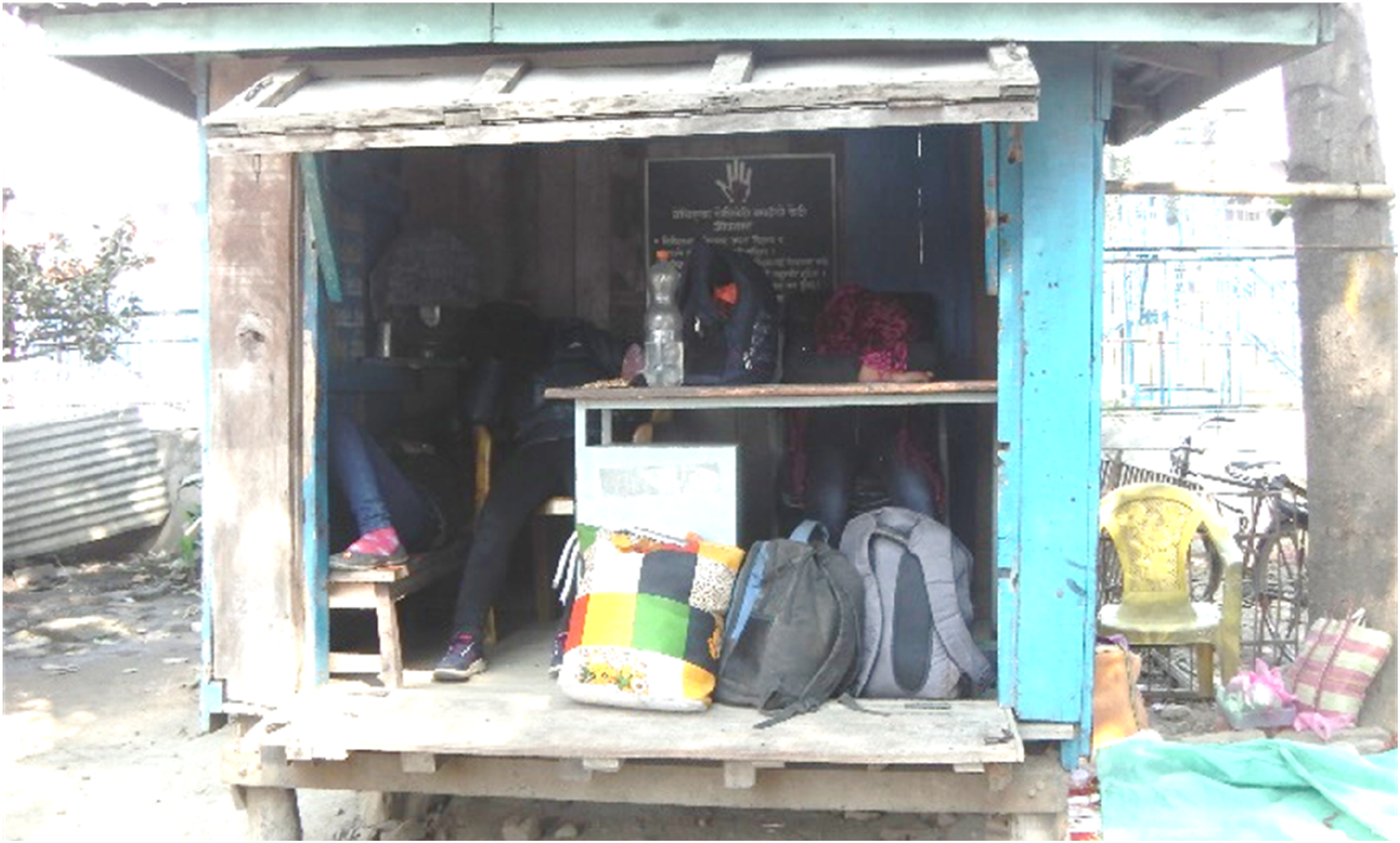
While these anti-trafficking surveillance efforts have failed to detain any of the participants, several Nepalese women participants have been intercepted along the open Indo-Nepal border in the name of preventative protection, a situation akin to a human rights violation (Deane, 2010). During the border ethnography phase, the first author witnessed the entire process of intercepting women on the move. Once the ‘counsellor’ has doubts, they ask the women to step aside and enter their makeshift camps. In these camps, women are thoroughly interrogated, their documents are checked, and sometimes their family members are called to justify the purpose of their migration, just to ensure that they are not being trafficked. If these women fail to justify the purpose of migration or refuse to cooperate with the anti-trafficking counsellors (in the aforementioned picture, three women are kept along the Indo-Nepal borders, primarily because they refused to cooperate with anti-trafficking NGOs), these counsellors seek permission from Nepalese border police and transport these women to temporary shelters – a confined carceral protectionist space.
Temporary shelter homes
Several anti-trafficking NGOs run shelters homes (as in Figure 2) along highways and Indo-Nepal borders under various labels - transit monitoring stations, transit homes, rehabilitation centres, shelter homes, transit safe houses, safe heaven, emergency shelters and so on Intercepted women are placed under strict surveillance and are not allowed to leave these shelters. One shelter home along Indo-Nepal borders.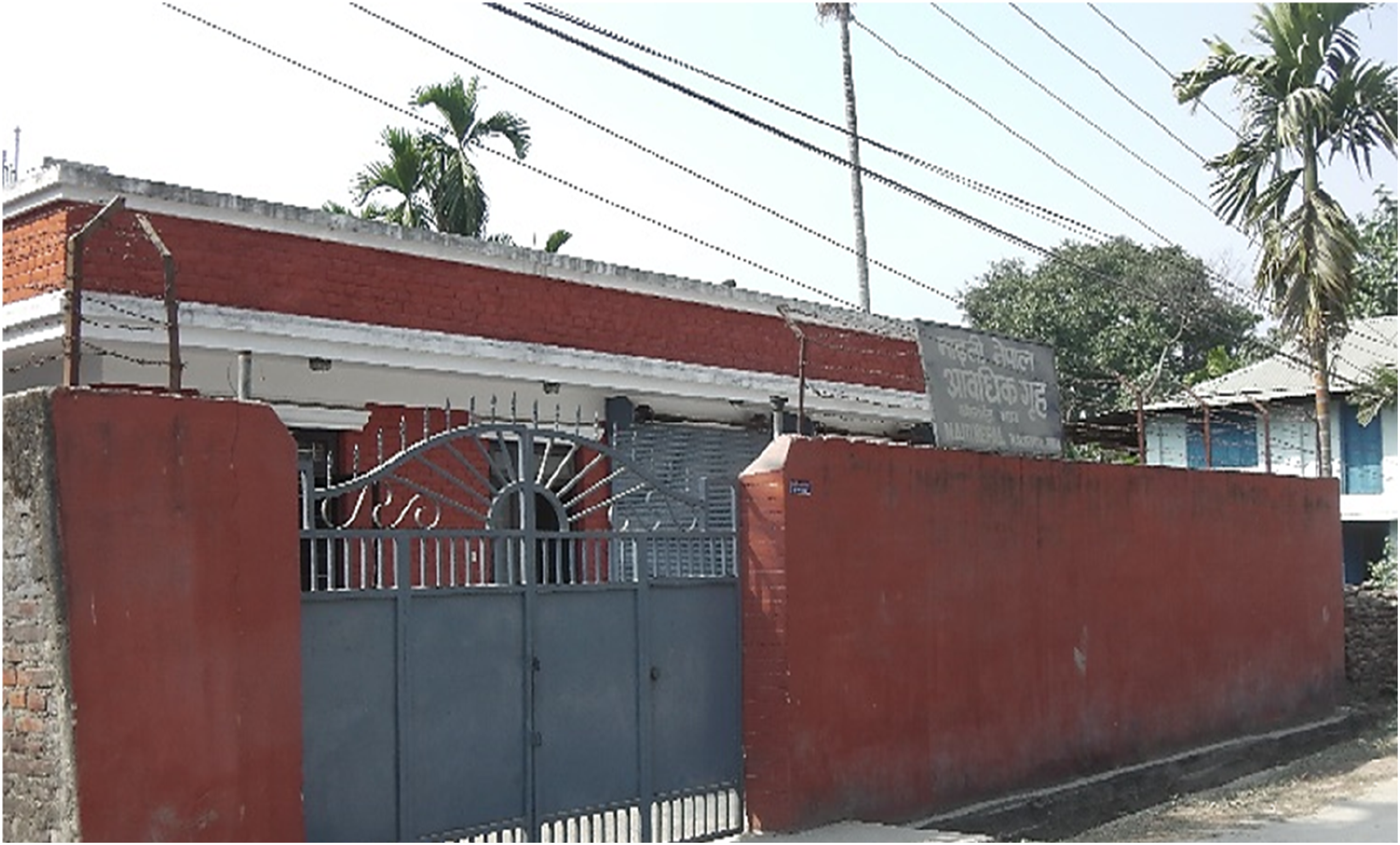
In these barbed institutions, rescued women are kept until someone from their village (guardian or spouse) collects them and accompanies them home. Thus, a woman could remain at such shelters for anywhere between 1 day to 6 months. Interviews with anti-trafficking NGO members highlight the importance of these sites in providing services like counselling, spiritual rehabilitation, health care, legal support and trafficking awareness. These shelters, motivated by abolitionist ideologies about sex trafficking, coordinate with several anti-trafficking NGOs in India (Bhardwaj, 2020). Most of the women rescued in Indian brothels arrive in such spaces before they are sent to rehabilitation centres. In one centre the first author observed that rescued woman was working as a domestic worker, where he was told that until someone comes and claims her from that space, she will receive that ‘training’. There are various ways NGOs running these centres discipline women’s bodies and mobility. For example, women are not allowed to leave the premise and are under strict surveillance. Further, NGOs provide religious indoctrination in such centres to save or civilise the rescued women.
From these shelters, both along the Indo-Nepal borders, women are either deported to their villages or the rehabilitation centres in Kathmandu if none of their family members come to rescue them. Once deported to the villages, anti-trafficking NGOs sometimes coordinate with those whom they pre-emptively save to facilitate anti migration initiatives in their villages. Once deported to rehabilitation centres, these anti-trafficking NGOs attempt to reintegrate them with their family members. Interviews with anti-trafficking NGO members confirmed that women who are held in the rehabilitation centres for extended periods of time are sometimes recycled as anti-trafficking NGOs counsellors to conduct the surveillance and policing.
Rehabilitation centres
Anti-trafficking NGO-run rehabilitation centres are one of the most visible anti trafficking carceral protectionist spaces (Ghimire, 2012; Shigekane, 2007; Shih, 2018). In Nepal these centres receive rescued women through two means: (a) internal detention and deportation from shelter homes, and (b) rehabilitation centres from India and other countries. They are held at these centres for an extended period of time. Several Nepalese NGOs, irrespective of their abolitionist or rights-based ideologies, run such rehabilitation centres where women are supported with counselling services, legal aid, vocational training, medical support, and formal and non-formal education. Several anti-trafficking actors in Nepal consider these centres as critical for the rehabilitation and reintegration of women and girls rescued from exploitative circumstances (Dhungel, 2017). For example, Nancy suggests that the Indian anti-trafficking NGO which coordinated with the Nepalese anti-trafficking NGO for her transfer does not run any centres along the borders. Hence, she was taken directly to the NGOs rehabilitation centre in Kathmandu. She says, “You know, when we came back, I found that shakti’s office was really more amazing than Deonar’s home. We realise the things we were missing there […] When we arrived in the centre, we found the place to be really beautiful. There were so many people present there to welcome us with Nepali Dohri. It was like a big party. We felt really good.[…] They used to ask what do you want to eat, where do you want to visit. They used to take us to movies. I felt that I was flying on the top of the clouds […] No one was asking us difficult question as they did in India.”
Nancy’s testimonial offers comparative insights into two carceral protectionist spaces. Whilst structured by similar abolitionist ideologies, the degree of humiliation she faced in the Indian rehabilitation centre was much higher than in the Nepalese centre. Nonetheless, Nancy highlights the attempts made in the Nepalese rehabilitation centre to discipline the bodies of those residing in the shelter homes, stating that if someone breaks the rules, they have to clean dishes and toilets for a month. The rescued trafficking victims were made to conduct domestic work in the Nepalese shelters as a punishment. Arguably could also be understood as an attempt to stigmatise domestic work, so discouraging women from migrating for this type of job.
Anti-trafficking rehabilitation centres often position themselves as sites of vocational training. The idea that women would find this skill training as empowering and will eventually help them to integrate to the larger community drives these initiatives (Basu, 2022; Davis, 2023; Locke, 2010). However, Nancy suggest that she never used the skills, which included computers and clothes design, that she learnt in both the rehabilitation centres. Rather she chose migration for domestic work via illicit channels as a profitable enterprise. This type of experience raises important questions about the enormous amount of funding spent on rehabilitation of rescued women. While critical scholars have questioned the usefulness and effectiveness of such training, which compels women to accept lower salaries (Shih, 2023), we contribute to these arguments through the suggestion that, post-training, these women are placed in highly intensive and hazardous work environments as part of a rehabilitation program. Nancy explains: “That life was not very easy. We used to get up at 5 am, then go to school at 6 am. After studying there for 3 hours, we used to go to work. After working for 9 hours, we used to return at 7 pm back to the hostel. It was tough, to be honest. I used to work a lot. You know when you handle a sewing machine then you have to put a lot of stress on your hands and then you need to do homework with the same hands […] I never wanted to work there, to be honest. The factory was inside a basement. Though there was an air conditioner it was very weird to see machines and people working like machines every time I entered that place. All the time, I used to hear these machine voices, and that annoyed me and gave me a headache. Ah! It was a nightmare. Worse than anything I have experienced beforehand. Once it became really unbearable. I was sick and did not go to the factory for four-five days.[...] Then I left the job, and never returned to it.”
Clearly, this testimonial highlight that the very notion of acceptable and unacceptable exploitation is determined by anti-trafficking NGOs. Most importantly, the exploitation of Nancy took place in a carceral protectionist space. Nancy highlights that due to the intense process of training and placement she decided to drop out from the placement. Once Nancy was ‘integrated’ into the community, though she faced the stigma of being labelled as a ‘trafficked victim’. She attempted to start her tailoring business, which, according to her, never took off. She then joined the local ‘survivor group’ and was one of the most active members until she got married and the group became defunct. Nancy later left all anti-trafficking work and went to Kuwait via illicit channels, transgressing the carceral protectionist territory of Nepal.
Airport
Airports are perhaps the least studied carceral protectionist space. Whilst one can see a desk of an anti-trafficking NGO at Tribhuvan International Airport in Kathmandu, most of my participants use this airport solely for their return from labour employment. They never use this airport for out-migration, as there is no feasible way for them to migrate through this airport via illicit channels. For example, both Nancy and Sanchamaya crossed Indo-Nepal borders by escaping carceral protectionists spaces. Reaching New Delhi, they then used the Indira Gandhi International (IGI) Airport for their migration to Gulf countries. During the field work, it was found that several women who opted for illicit migration channels, considered IGI Delhi airport as a crucial point of departure. While none of the participants in this research study were held at the airport, several Nepalese citizens are detained and deported to transit spaces or rehabilitation centres in Nepal from here (Namboodiri, 2023)
The first author observed IGI’s immigration gates and engaged in discussions about the migration process with immigration officers during his field work. The officers shared that they were aware of women migrating illicitly, but since they were an international subject, their ability to intervene was limited. However, a significant development occurred since the field work. Currently, the Nepalese government implemented a directive that all Nepalese women crossing Indian immigration gates must present a No Objection Certificate (NOC) issued by the Nepali Embassy to be permitted to depart from the airport (Khadka, 2020; Mishra, 2023). For example, recently six individuals, including two Nepalese women, were detained by immigration authorities in India for attempting to use “fraudulent NOCs” (Namboodiri, 2023). This requirement applies irrespective of the validity of their visas and passports, which raises concerns about the violation of human rights within a carceral protectionist framework. Further, the example illustrates that the carceral protectionist territory of trafficking in Nepal extends to Indian airports.
Conclusion: Subjects in making
Under regimes of carceral protectionism in anti-trafficking, women and girls who migrate for domestic and sexual labour, or who are deemed as vulnerable to entry into these two sectors, are subjected to protectionist interventions which immobilise them in multiple and intersecting ways. Extant literature critiquing carceral protectionism as an anti-trafficking response has tended to restrict its focus to carceral spaces within migrant destination countries, including government and NGO run shelters and rehabilitation centres. In building on this critical literature, in this paper we have turned our focus to protectionist spaces operating in the interior spaces and at the borders of migrants’ home countries. Our case study of migrant women and girls in/from Nepal illustrates the ways these governance institutions and civil society actors produce protectionist immobilities along various routes and sites of movement for work abroad. What does the foregoing case study add to our understanding of carceral protectionism as bordering practice in anti-trafficking? We offer three insights in concluding this paper.
First, the case study enables a reading of protectionism which is mobilised and enacted through registers of morality. Gendered and religious norms relating to the position of women and girls within Nepalese society provide a lens through which to examine the invocation of patriarchal discourses of protection within counter trafficking. Whilst moral frames certainly operate within destination countries for trafficked women and girls, they are not necessarily expressed in the same way as through anti-trafficking institutions and actors ‘at home’. Identifying and examining these differences in further detail may yield important insights into the moral geographies of protection, in particular the ways regimes and spaces of carceral protection interpolate with citizenship and with markers of religious and cultural identities.
The preventative interception of women and girls has been a recurrent theme in critical literature on bordering and anti-trafficking. The location of interception – literately and figuratively – at the border of the migrant destination has arguably been driven not only by protectionist agendas, but also by the desire to control and repel unauthorised migration and/or unwanted migrant bodies from sovereign territory. Our second contribution engages with these concerns. The discussion in this paper demonstrates the importance of considering sites of interception/intervention which occur within the migrants’ home country. What discourses of victimhood and profiles of ‘the vulnerable’ operate in spaces and amongst institutions that are not tied to (anti-)immigration agendas? And how does this affect the geographies of carceral protectionism. The infrastructures of containment that were described in the case study here illustrate the makeshift assemblages of protection that characterise the immobilisation of would-be migrants within their own borders. These spaces operate as sites not only of protection, but as collection points, where family members or other authorities are able to remove and relocate clients, so that protectionism become fluid, distributed across a variety of spaces often transcending the home country of migrants. Rather than expulsion and refusal, we can instead see continued containment and circulation within relational spaces of protection producing what we conceptualise as carceral protectionist territory of trafficking.
Finally, we hoped to demonstrate in the paper that carceral protectionism can be productive of identities and subjectivities for those contained. Recognising this draws our attention to the possibility that protectionist infrastructures are never totalising. The possibilities for the exertion of agency within protectionist institutions are also often causally tied to unfulfilled migration goals – often relating to money or social capital – with protectionism magnifying and extending these migration deficits. The inability to work, earn money, repay loans, remit savings, and extend social networks and capital, tells us that carceral protectionism is not only physically, but also socio-economically immobilising. Escaping or overcoming protection is often manifest as an attempt to realise the original goals of migration, rather than to continue to remain in place. Many of the Nepalese women in the case study attempted to move on, try to re-migrate and otherwise strategies for ways to craft mobile futures away from the gaze and disciplining of anti-trafficking. We see empowerment, in other words, not necessarily occurring as a result of protectionism and its therapeutic impulses, but in spite of these impulses. Dislodging the mutability of victims is thus an important step in realising the limits of carceral protectionism, in all its forms.
Footnotes
Declaration of conflicting interests
The author(s) declared no potential conflicts of interest with respect to the research, authorship, and/or publication of this article.
Funding
The author(s) received no financial support for the research, authorship, and/or publication of this article.