




Abstract
There has been growing awareness across the world of the negative health effects of air pollution. Poland is the European country that is worst affected by this problem, and the Polish government has in recent years adopted a number of measures designed to reduce coal use. This paper explores the role of civil society activism in this shift, investigating the extent to which local activists played a catalytic role in shaping popular awareness of air pollution and accounting for policy developments in this area. We draw on individual-level data from two Eurobarometer surveys together with qualitative data from a series of original elite interviews and the analysis of related policy documents, and we find little evidence that activism was a driver of variations in local popular awareness of air pollution, but support for the supposition that activism played a major role in shaping policy change at local level.
Introduction
Air pollution has in recent years risen up the agenda of many national and international actors, as its close link with fossil fuel consumption and its direct health impacts have enhanced concern about air quality in countries around the world. Attention has focused on both changing popular understandings of pollution and evolving policy responses to the problem. This paper investigates the drivers of recent shifts in citizen awareness of air pollution and air quality policy in Poland, both of which have undergone noteworthy transformations since 2010.
Poland is a substantively important context in which to study air pollution policy change. Given that 36 of Europe’s 50 most air polluted cities are located there (World Bank, 2019), and an estimated 46,000 premature deaths occur annually due to air pollution, costing the economy equivalent to 2.9% of GDP (WBJ, 2019), it is perhaps not surprising that a 2019 survey found that 62% of Poles considered air pollution to be one of the top three environmental issues against a global average of 35% (Ipsos, 2019). In December 2017, a speech by the Polish Prime Minister set out tackling air pollution as a priority and argued that ‘clean air is a civilisation challenge’ (TVN24, 2017). The main source of air pollution in Poland is residential heating using coal (European Commission, 2019). A national Clean Air Programme was launched the following year, and Poland has begun phasing out coal for domestic heating purposes. Interestingly, this has taken place in a country that has become increasingly illiberal politically (Tworzecki, 2019).
The puzzle that frames this paper is that concern about and mobilisation around air pollution both took place at a time when pollution levels were already falling. Whilst there was little change in air quality between 2000 and 2011, air quality has been gradually improving in the past decade, as shown in Figure 1.
1
Mean PM2.5 levels in Poland, 2000–2019. Source: Constructed from the OECD Air Pollution dataset (OECD, 2022).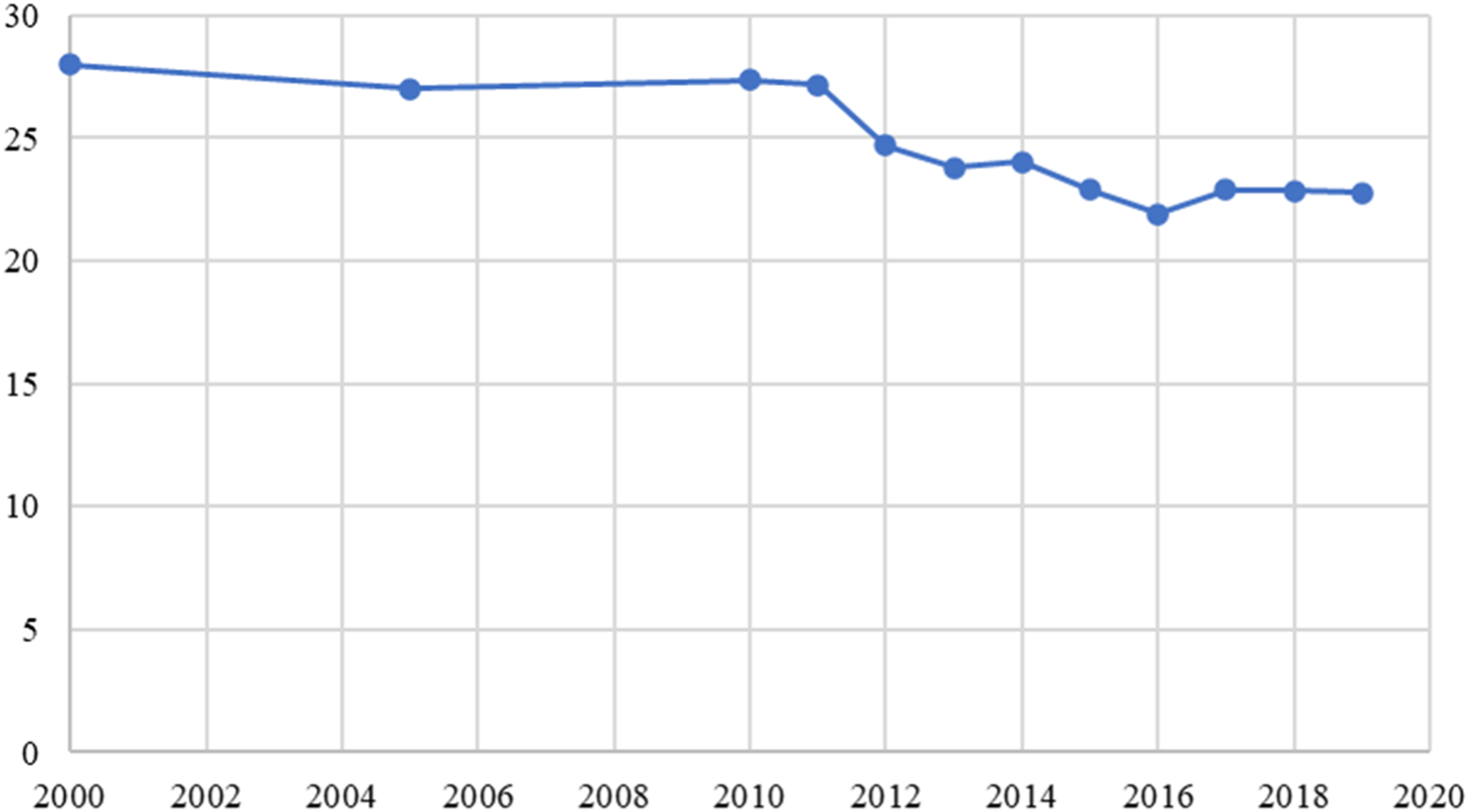
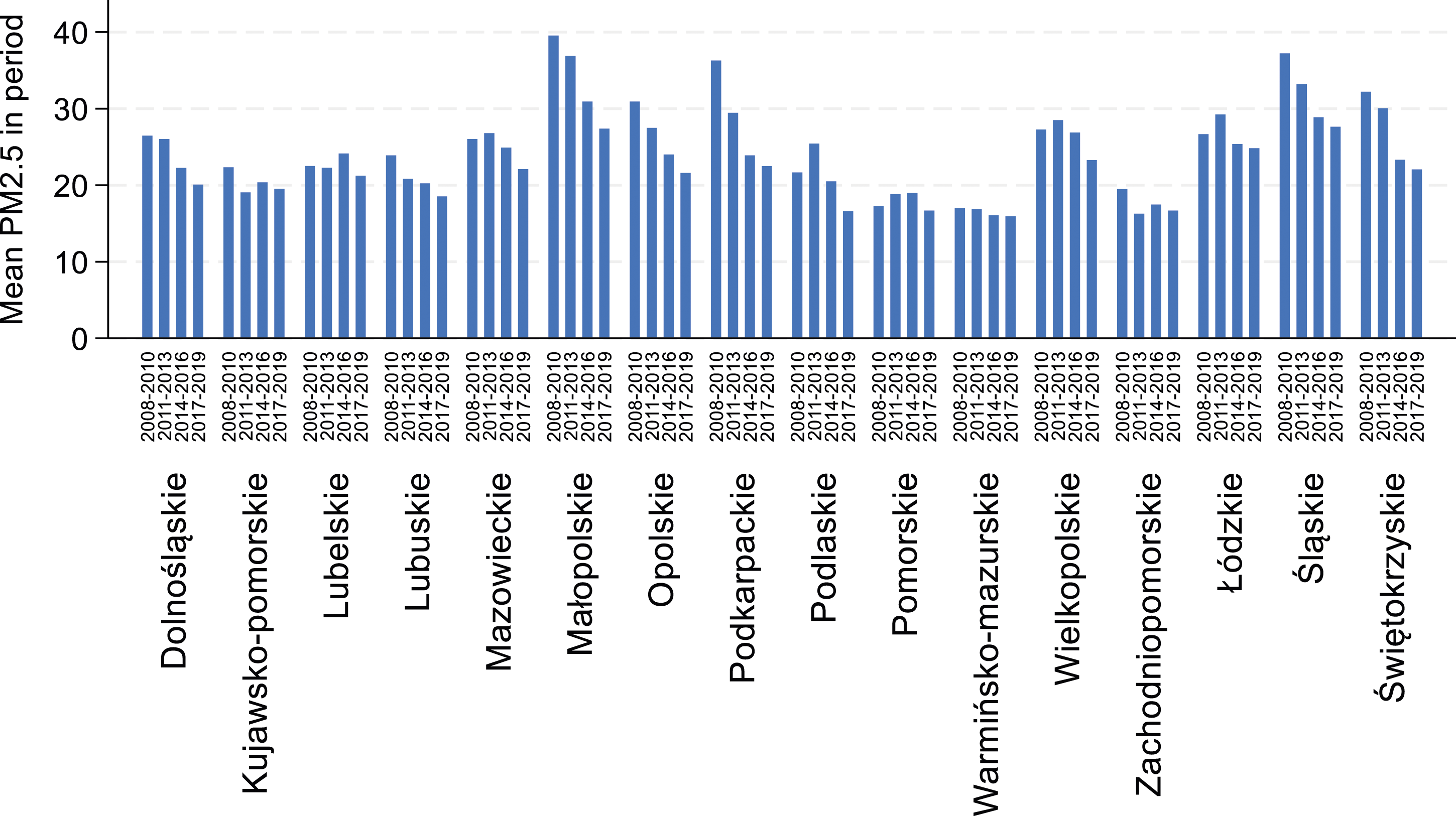
If air pollution has remained relatively high in Poland compared to the rest of Europe (European Environment Agency, 2021), the problem is considerably more acute in some parts of the country than in others, particularly the south, where use of coal and wood for domestic heating and cooking is common (see Figure 2). At the same time, air quality improved in all Polish regions (voivodeships) over the course of the period under analysis, and it improved most in the regions that were most polluted initially (see Figure 3). Mean PM2.5 2008–2019 by Voivodeship. Source: Constructed from data on the Polish Chief Inspectorate of Environmental Protection website at powietrze.gios.gov.plpjparchives. PM2.5 levels by Voivodeship and by period, 2008–2019. Source: Constructed from data on the Polish Chief Inspectorate of Environmental Protection website at powietrze.gios.gov.plpjparchives.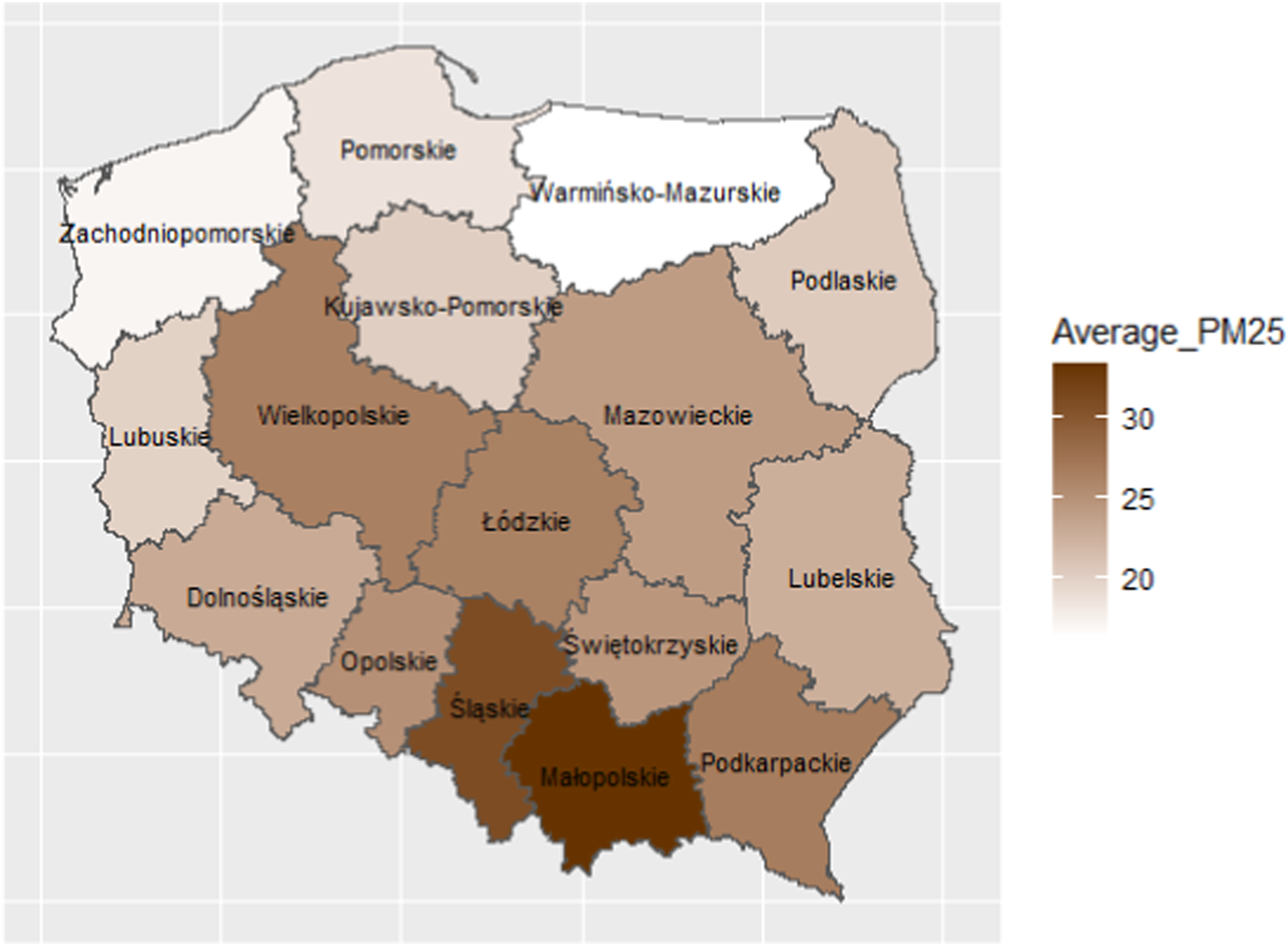
In addition to objective trends, scientific evidence of the scale of harm caused by air pollution was emerging during this period. In 2012 the WHO reclassified diesel exhaust from ‘probably’ to ‘definitely’ carcinogenic (Kelland, 2012). A series of reports from 2013 began to link air pollution to a wide range of health problems including diabetes, asthma, and lung cancer (Kelly and Fussell, 2015). A 2014 WHO report concluded that air pollution was the world’s largest single environmental health risk (WHO, 2014).
Thus, the increased availability of information about both pollution levels and the adverse health effects of air pollution may well account for rising pollution concern; news coverage of the high levels of pollution in Poland in comparison to other European countries and an uptick in scientific evidence linking pollution to health conditions may have prompted citizen awareness of the problem, even as objectively levels of particulate matter were in decline. Popular concern could well have put further pressure on policymakers to address the problem.
It is also possible that the air pollution civil society groups that have emerged in Poland over the past decade have raised consciousness of the issue, thereby playing an important role in moderating popular concern and shaping policy change. The ‘value added’ of such groups is the main focus of our analysis.
Environmental problems including river and soil pollution, and environmental damage related to the Chernobyl disaster played a key role in the collapse of communism in 1989 (Charkiewicz, 2008: 16; Kenney, 2002: 254; Szulecka and Szulecki, 2019). As was the case elsewhere in Eastern Europe, environmental activists were central actors within dissident movements that contributed to regime change and democratisation (Carmin and Fagan, 2010; Charkiewicz, 2008; Szulecka and Szulecki, 2019). The contemporary Polish environmental movement has its roots in the late communist period (Chimiak, 2022; Cole, 1991; Lillevik, 2019; Ostolski, 2020; Szulecka and Szulecki, 2019), and in the post-communist era, a proliferation of environmental NGOs (ENGOs) became synonymous with the burgeoning civil society funded and supported by international organisations (Carmin and Fagan, 2010). The period leading up to the 2015 elections was one in which environmental causes became associated with left-liberal political views and declined in importance for many Polish citizens and politicians (Marcinkiewicz and Tosun, 2015; Szulecka and Szulecki, 2019). Whilst the post-2015 political regime created by the ruling Law and Justice (Prawo i Sprawiedliwość, PiS) party has placed constraints on civil society and dissenting voices, grassroots environmental activism has increased (Polanska and Chimiak, 2017), particularly in urban areas (Domaradzka, 2018; Pluciński, 2018; Jezierska and Polanska, 2018; Kravchenko et al., 2022: 165).
Air pollution activist organisation Kraków Smog Alert (Krakowski Alarm Smogowy) was formed in late 2012, registered as a group in 2013, and began publicising poor air quality (Frankowski, 2020; Lillevik, 2019; Szulecka and Szulecki, 2019). Other branches of the group formed in 2014 and 2015, particularly in urban areas with poor air quality, such that by the latter part of the decade the umbrella Polish Smog Alert was coming close to being a national movement, and the largest organisation fighting air pollution in Poland (Lillevik, 2019). In addition to advocacy and activities designed to raise awareness of the problem, the group has also undertaken research showing that a majority of local residents would welcome more information on air quality, and it has also been involved in practical efforts to encourage residents to replace polluting domestic heating systems (Lillevik, 2019; Szulecka and Szulecki, 2019). It has also at times collaborated with public sector law group ClientEarth Poland to bring about legal reform (Lillevik, 2019).
In short, we are interested in how popular concern about air pollution translated into policy change, and the role that civil society groups such as Polish Smog Alert played in this. This paper sets out to investigate this question using a mixed-methods approach that leverages Eurobarometer survey data in combination with a series of original stakeholder interviews carried out in 2020-2021 by the authors and the analysis of associated documentary evidence. We find that whilst air pollution activists played little role in accounting for local variations in popular awareness, they likely had a significant effect on national awareness of the problem and played a substantial role in working with policymakers to formulate and implement policy solutions.
Theoretical perspectives
The ‘value added’ of civil society activism in air pollution politics can be considered from two principal perspectives, which accord with the stated objectives of activist groups: raising awareness of air pollution among the population, and bringing about legislative reform. In other words, activists seek to increase citizen demand for action on pollution by heightening popular concern, and they try to work with other stakeholders to formulate solutions and facilitate their adoption.
On the demand side, activism is but one factor that has the potential to shape citizen awareness of air pollution as a problem. Objective levels of air pollution have been found in comparative research to be associated with air pollution awareness among citizens (Amundsen et al., 2008; Buchanan, 2022; Cisneros et al., 2017; Cori et al., 2020; Kim et al., 2020; Rotko et al., 2002). Yet citizen knowledge and perceptions of air quality are not always well predicted by objective pollution levels, as people are more likely to respond to sensory cues, which may not always be accurate indicators of objective pollution levels (Huang and Yang, 2018; Johnson, 2012; Otro and Sala, 2014). Previous research has also found that public awareness of air pollution is sensitive to the availability of information on air pollution, even if this information is not always accepted as completely reliable (Bickerstaff and Walker, 1999; Buchanan, 2022). The air-quality data offers the potential for more citizen-centred and participatory sensing and activism (Marzecova and Husberg, 2022). We would therefore anticipate that an increase in available information about harmful airborne pollutants would result in increased awareness of the problem.
At the same time, whilst awareness of air pollution does not always translate directly into concern or a demand for policy change (Kim et al., 2020). The ways in which people make sense of the air pollution is highly contextualised and subjective – individuals tend not to associate air pollution with health issues, and if they do, only partial and generalised knowledge and understanding is effectively communicated, especially in relation to vulnerable communities (Loopmans et al., 2022; Noël et al., 2022). Moreover, the perceptions of their local atmosphere among citizens might persist or change across communities over different timescales (Roberts et al., 2023). Additionally, citizen demand does not always translate into actual policy change.
Environmental activism has been found in some studies to shape public concern for, and opinion on environmental policy (Sisco et al., 2021). Moreover, it appears that local government response to air pollution issues is determined by the level of support among the community – where the support for clean air is high, implemented policies tend to be more restrictive and/or coercive (Eckersley et al., 2023). Yet many factors condition concern about the environment, and there is considerable cross-national variation in the factors that matter most (Dorsch, 2014; Franzen and Vogl, 2013; Kvaløy et al., 2012; Lee et al., 2015). While there is a recognition that the data politics of air quality is a necessary part of the struggle against the uneven impacts of air pollution (Marzecova and Husberg, 2022) the causal chain linking objective air pollution levels to citizen awareness of pollution and citizen awareness of pollution to a demand for legislative action is therefore unclear. Building public awareness about pollution through quantitative data regarding air quality can also be oriented towards the responsibility of citizens, reframing human-air relations as a site of managing individual exposures rather than requiring different policy outputs.
Nevertheless, once citizens do form negative views of environmental degradation, those views can often have political consequences. The wider literature on environmental policy finds that public opinion can and often does influence policy outcomes (Agnone, 2007; Anderson et al., 2017; Bakaki et al., 2020). Environmental activism can also help shape policy on the environment (Agnone, 2007; Evans and Kay, 2008; Piggot, 2018), and there is evidence of a synergistic relationship between public opinion and activism on pro-environmental policy outcomes (Agnone, 2007).
Though the casual link between public opinion and policy change cannot be taken for granted, public opinion on air quality has been found to play a role in influencing local air quality policy (Buchanan, 2022). Civil society groups are influential in shaping air pollution behaviours and policies at local level in some contexts, especially through efforts to mobilise citizens to measure air pollution directly with the use of sensors (Gabrys and Pritchard, 2018; Mahajan et al., 2020; Tu, 2019; Valencia and Fonseca, 2019; Van Brussel and Huyse, 2019; Ward et al., 2022). Civil society groups and social movements can act as important ‘knowledge brokers’ who can disseminate air pollution information and mobilise a public response (Loopmans et al., 2022), and also have a role as ‘problem brokers’ framing air quality issues as ‘urgent’ problems requiring a policy response (Maltby, 2022). The proliferation of technologies for measuring air pollution has contributed to shifts from government-led scientific monitoring to participatory modes of data collection and analysis (Kenis and Loopmans, 2022). Online information has been demonstrated to amplify public perceptions of risk owing to the technological advantages of the Internet, and the effect could be more significant when the information is designed to cause affective responses (Guo and Yiwei, 2018). Research has highlighted that ‘critical moments’ can drive increased interest in environmental problems, with a significant role for the media in amplifying such key air quality events (Kenis and Barratt, 2022).
In Poland, local air quality activist groups have emerged in recent years alongside established NGOs (Chimiak, 2022: 227) and in response to locally experienced environmental issues (Domaradzka, 2018; Pluciński, 2018; Szulecka and Szulecki, 2013). Those who support these newly-emerging forms of activism perceive local initiatives to be less bureaucratised, financially unburdened, and more trustworthy than institutionalised civil society organisations (Chimiak, 2022; Pazderski and Walczak, 2015). It may also be that it is easier to gain meaningful access to the policymaking process at local level, and the local focus of many groups working in Poland on air pollution is a distinctive feature that could be expected to afford them greater policy leverage. Previous research has found that Polish Smog Alert, the largest and best known of such groups, has consciously sought to alter both citizen awareness and public policy (Frankowski, 2020; Lillevik, 2019), although the group is committed to partisan neutrality (Frankowski, 2020).
Taking this evidence together, it appears that both objective levels of pollution and information about pollution could work in distinct ways shape citizen awareness of the problem, and that citizen awareness could in turn pressure politicians to take policy action to improve air quality. In addition, previous research also suggests a more complex set of causal pathways whereby air pollution activist groups both enhance citizen awareness of poor air quality and act directly on policymakers to address the problem. The next section details the data and methods that we employ to test these alternative accounts.
Data and methods
We probe the politics of air pollution in Poland via analysis of bespoke Eurobarometer survey modules conducted in 2012 and 2019 as well as by means of a series of original stakeholder interviews analysed in conjunction with policy documents. The Eurobarometer data are employed to assess the correlates of popular air pollution awareness, whereas the stakeholder interviews and document analysis serve to evaluate the factors that have conditioned policy evolution in the domain of air quality.
The Eurobarometer air quality module includes items that can be used to gauge the impact of air quality on knowledge of air pollution and preferences for different policy options that might be adopted to combat the problem. These items were fielded in virtually identical form in the two surveys, making them appropriate for our research. The 2012 survey was conducted at the start of a popular mobilisation around the issue, and by 2019 was a major area of civil society activism, and societal understanding of the problem had increased considerably. In comparing 2012 and 2019, we map changes over time in public awareness and policy preferences in response to the mobilisation and the awareness-raising activities of activists as well as in response to objective changes in air quality. To these individual-level datasets we add regional aggregate-level data on fine particulates (PM2.5), those responsible for most premature deaths from air pollution (Burchard-Dziubińska, 2019; World Bank, 2019). We analyse the data via multilevel (mixed effects) logit and ordered logit models. Details of data sources and variable construction are included in the Appendix.
The first of the two surveys we use was conducted in 2012 at start of popular mobilisation around the issue. As noted above, air pollution was by 2019 a major area of civil society activism and popular understanding of the problem had increased considerably. In comparing 2012 and 2019, we are able to map changes over time in public awareness and policy preferences in response to the mobilisation and the awareness-raising activities of activists as well as in response to objective changes in air quality.
We also assess the views of those working for civil society organisations, local authority officials and elected politicians by means of a series of semi-structured in-depth interviews with 30 actors undertaken in 2020-2021 using the snowballing technique (see Table A1 of the Appendix). These interviews explored issues related to civil society activism, policy responses, and public and political understandings of the issue and they are intended both to add texture to and to extend the analysis we are able to accomplish on the basis of survey data. Specifically, the interviews offer detailed information on the policy process at local level, the actors involved in shaping policy options and the considerations that were raised at different points in the process. 2 We combine interview findings with the analysis of documentary evidence linked to the policy process at local and national levels to provide a detailed understanding of the factors that influenced policy change.
Empirical analysis
As detailed in the previous sections, air pollution awareness and air pollution policy are our twin concerns. We are interested in tracing the ‘value added’ of activist groups in both consciousness raising and bringing about policy change.
Air pollution awareness
Descriptive data from the Eurobarometer surveys shed light on overall levels of air pollution awareness in 2012 and 2019. There are questions in the Eurobarometer air quality module related to both objective and subjective knowledge. The objective knowledge question asks: ‘Do you think that, over the last 10 years, the air quality in Poland has … improved, stayed the same or deteriorated’. Answers are coded for the purposes of analysis as a dummy variable with 1 representing correct responses that air quality has improved in recent years and 0 reflecting incorrect responses. The subjective knowledge question asks: ‘How informed do you feel about air quality problems in Poland?’, and responses are coded on a four-point scale from ‘Very well informed’ to ‘Not informed at all’. 3
Subjective and Objective Knowledge of Air Pollution, 2012 and 2019.
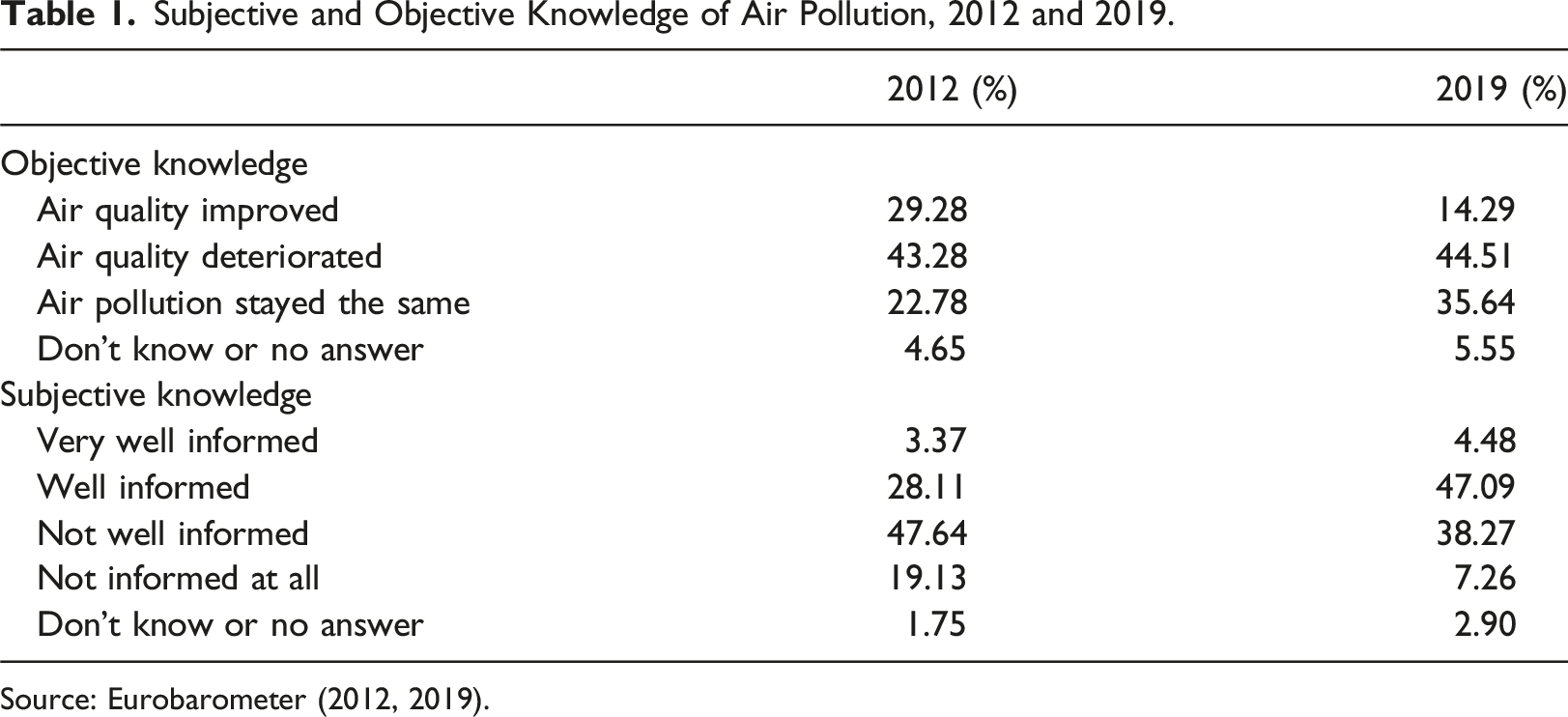
Source: Eurobarometer (2012, 2019).
In considering the role that activist groups may have played in causing this increase in air pollution awareness, it is important to be attentive to timing. Prior to 2012, there was minimal activism focused specifically on air quality. The origins of problem-specific activism begin with Smog Alert, which expanded from a single group initially of three people operating in Kraków in 2012 (interview 9, 2021), coinciding with a public consultation on an air quality programme for the Małopolska [“Lesser Poland”] region (Region, 2016a), which provided the opportunity to lobby for a solid fuel burning ban (interview 9, 2021). The first large Kraków demonstration in 2012 influenced the emergence of other groups (interview 26, 2021). Beyond Kraków, branches formed in Wrocław (run by another CSO/NGO, Eko-Unia) and one in Zakopane (run by ClientEarth, later Polska Zielona Sieć, then independently) (interview 9, 2021). The early branches then were organised by those with experience working in environmental NGOs, but the network of Polish Smog Alerts broadened out to those with no such experience (interview 9, 2021).
Large protests were an important strategy pursued in Kraków initially but have been rare outside the city. 4 In Kraków, the initial campaign included fortnightly protest marches (interview 9, 2020). This direct action was accompanied by a media campaign. Until 2013 reporting on air quality was infrequent, and the protests included the use of funeral marches and billboards that captured the attention of the national media (interview 9, 2020; interview 30, 2021). Media campaigns in this period became more sophisticated and targeted, for example in 2014, Kraków Smog Alert ran a campaign that included English language billboards to highlight that tourist resorts would harm not heal lungs (interviews 16 and 2, 2020). This was aided by a PR firm supporting the campaign (interview 9, 2020).
The largest broadsheet newspaper, Gazeta Wyborcza, was considered influential in highlighting the issue, with news coverage moving from local/regional and a focus on Kraków, to a greater national focus by 2015 (interview 16, 2021). There have been close ties between Gazeta Wyborcza and Smog Alert, with the editor-in-chief previously working for Client Earth (interview 17, 2021). In addition to reporting on emerging scientific evidence, concern about health issues increased following the severe January 2017 smog episode (interview 11, 2020), which highlighted the national scope of the problem as well as its scale (interview 16, 2021; interview 12, 2020), and served to provide momentum to clean air campaigns (interview 13, 2020). Social media has also been important, with Kraków Smog Alert and subsequent branches prominently using Facebook to organise (interview 17, 2020) and to amplify air quality warnings also being produced by new apps (interview 16, 2021): ‘when we started our campaign in Kraków, the first thing that we did was to have a nice logo and a Facebook group, and…we just we started to inform in an easy language… to publish information on how bad air quality is’ (interview 15, 2020).
Raising awareness of the issue in recent years was also facilitated by air quality apps, and the emergence across the country of ‘hyperlocal and multi dense networks of sensors’ (interview 17, 2020). For example, a lack of comprehensive information and real-time monitoring was a prime motivation for establishing the Airly app and sensor programme in 2016 by three graduates of Kraków Technical University. Concerned about the effect of air pollution when preparing for the Kraków marathon and with backing from the university and other funding 100 sensors were located in Kraków (interview 17, 2020). Regional authority interviewees highlighted the role of such air quality apps in raising awareness of the problem beyond Kraków (interview 5, 2021). By 2020 22% of respondents nationally received information alerts about high air pollution through their phones (Polish Government, 2020). New sensors have also been considered critical: ‘the smaller the town, where there are no sensors, for example, they say that they do not have this problem…[now] everyone can look at it…It turned out very quickly on the first winter that the whole city was black. This argument began to hit the public’ (interview 30, 2021).
This is also related to the emerging scientific evidence of the problem. Several interviewees highlighted that a key challenge to campaigning for change was the lack of awareness around the health effects regarding the issue: ‘For many years, there was no well-established belief in society that the state of health or disease was a derivative of air quality [but because of] Smog alerts…this awareness is dominant’ (interview 27, 2021; also, interview 15, 2020). One politician pointed to 2014 as ‘the moment when the awareness and interest of Polish residents in air quality issues increased significantly [when] reports and analyses show[ed] a direct societal link between this issue and home heating’ (interview 29, 2021).
In 2015 the European Environment Agency produced an influential report concluding that 44,600 early deaths in Poland were attributable to PM2.5 air pollution – from fossil fuel burning, predominantly in households (European Environment Agency, 2015: 44). A politician argued that quantifying health costs associated with using fossil fuel heating and cooking was important in generating awareness of the scale of the problem (interview 30, 2021). Scientific research was deliberately used by Smog Alert to raise awareness in the public, and the earliest supporters in Kraków, engaged through social media ‘was a group of young adults, young parents who were concerned about the future of their children’ (interview 9, 2020). A collaboration with the University of Science and Technology in Kraków analysed Smog Alert’s air quality meter data, which the group then publicised (interview 9, 2020).
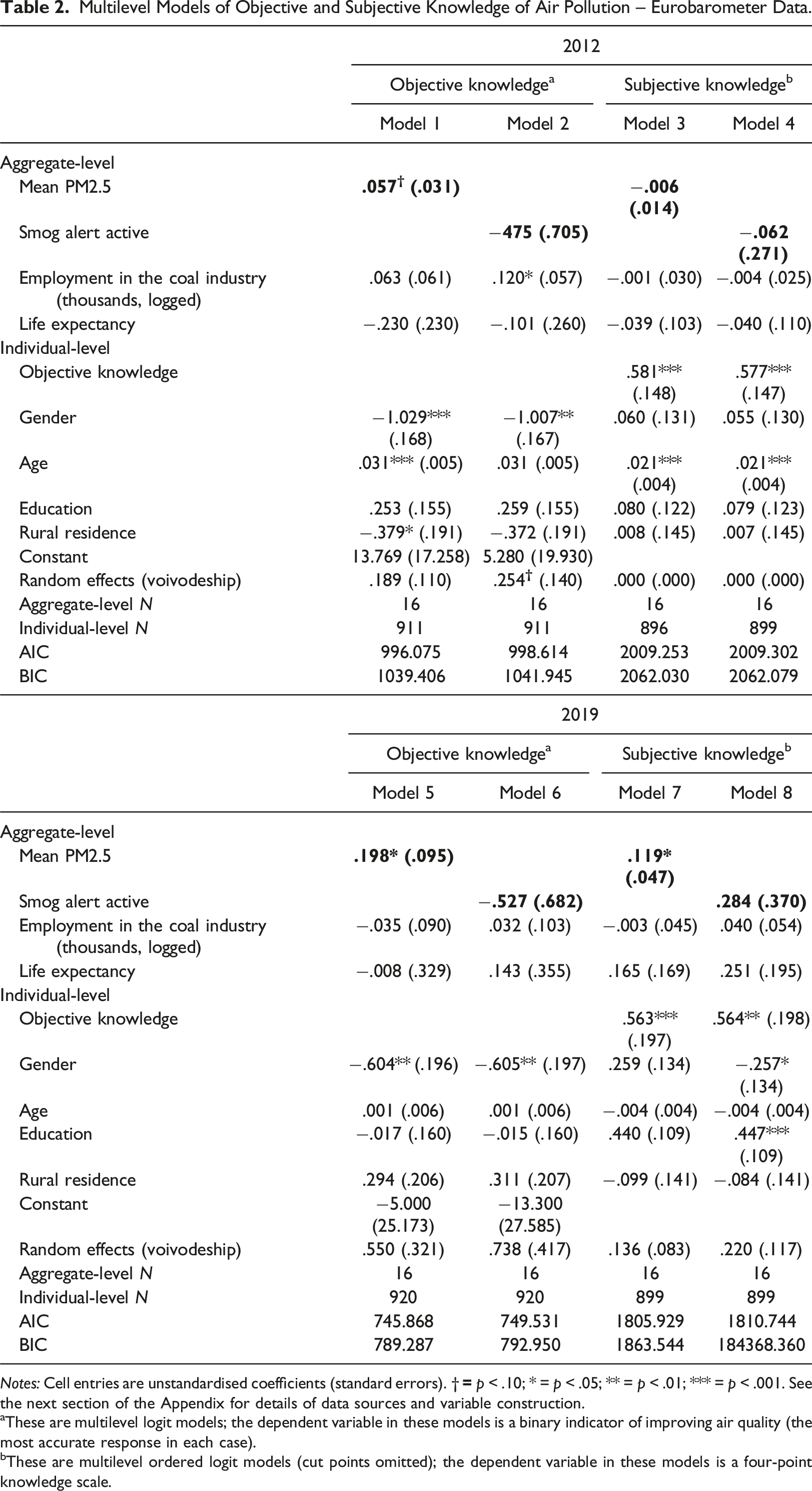
Multilevel Models of Objective and Subjective Knowledge of Air Pollution – Eurobarometer Data.
Notes: Cell entries are unstandardised coefficients (standard errors). †
aThese are multilevel logit models; the dependent variable in these models is a binary indicator of improving air quality (the most accurate response in each case).
bThese are multilevel ordered logit models (cut points omitted); the dependent variable in these models is a four-point knowledge scale.
The models in Table 2 provide evidence of an association between objective levels of air pollution and accurate knowledge of the issue; those living in voivodeships with the highest levels of air pollution were at both points in time significantly more likely to report that air quality was improving, possibly because the regions where pollution was initially highest were those that witnessed the greatest improvements over time, as indicated in Figure 3 above. It is noteworthy that the significance of this effect increases over time, such that by 2019 there is a stronger association between air pollution levels and accurate objective knowledge. There is no evidence that subjective knowledge was associated with air pollution levels in 2012, but by 2019 the situation had changed; in the later survey, those living in more polluted areas were indeed more likely to report that they were well-informed about the problem.
By contrast, there is no association at any point in time between the presence of a Smog Alert group in a region and either objective or subjective knowledge, suggesting that if the presence of the group was increasing awareness, it was through the efforts of Smog Alert to sway national-level public discourse or elite policy debates rather than local citizen understanding.
The group’s local impact may be hard to isolate after the issue reached a mass audience with 2015’s national press coverage and 2017’s air pollution episode and adoption as a priority by the government. By 2019, it had become a national issue, with widespread consensus developing across Poland as to the problem as well as its source (interview 5, 2021; interview 13, 2020); ‘This shows the social change, there is no longer any contestation of this problem’ (interview 26, 2021). There has been a rapid and significant increase in knowledge about the most significant cause of air pollution, from domestic emissions related to the use of fossil fuel burning for heating and cooking. In 2013 23% of the public were aware of this, and 32% attributed the main cause to industry (Polish Government, 2014). By 2019 this was 53%/28% (Polish Government, 2019), and by 2021 67%/17% (Polish Government, 2021).
A key success perceived by civil society organisations has been that ‘for the last few years, nobody’s neglecting the topic of smoke anymore…nobody’s refusing to believe that we have an air pollution problem’ (interview 11, 2020). Thus local consciousness-raising efforts appear to have percolated up to generate national-level citizen awareness, but there is little indication that local variations in citizen awareness can be explained by activism at local level.
Legislative change
If there is scant reason to believe that the activities of Poland Smog Alert and other smaller local groups account for variations across regions in citizen awareness of air pollution, it is clear from our stakeholder interviews and document analysis that such groups, and Poland Smog Alert in particular, were actively involved in shaping local legislative change and were through this route successful in bringing about policy reform in many local areas.
Local/regional level
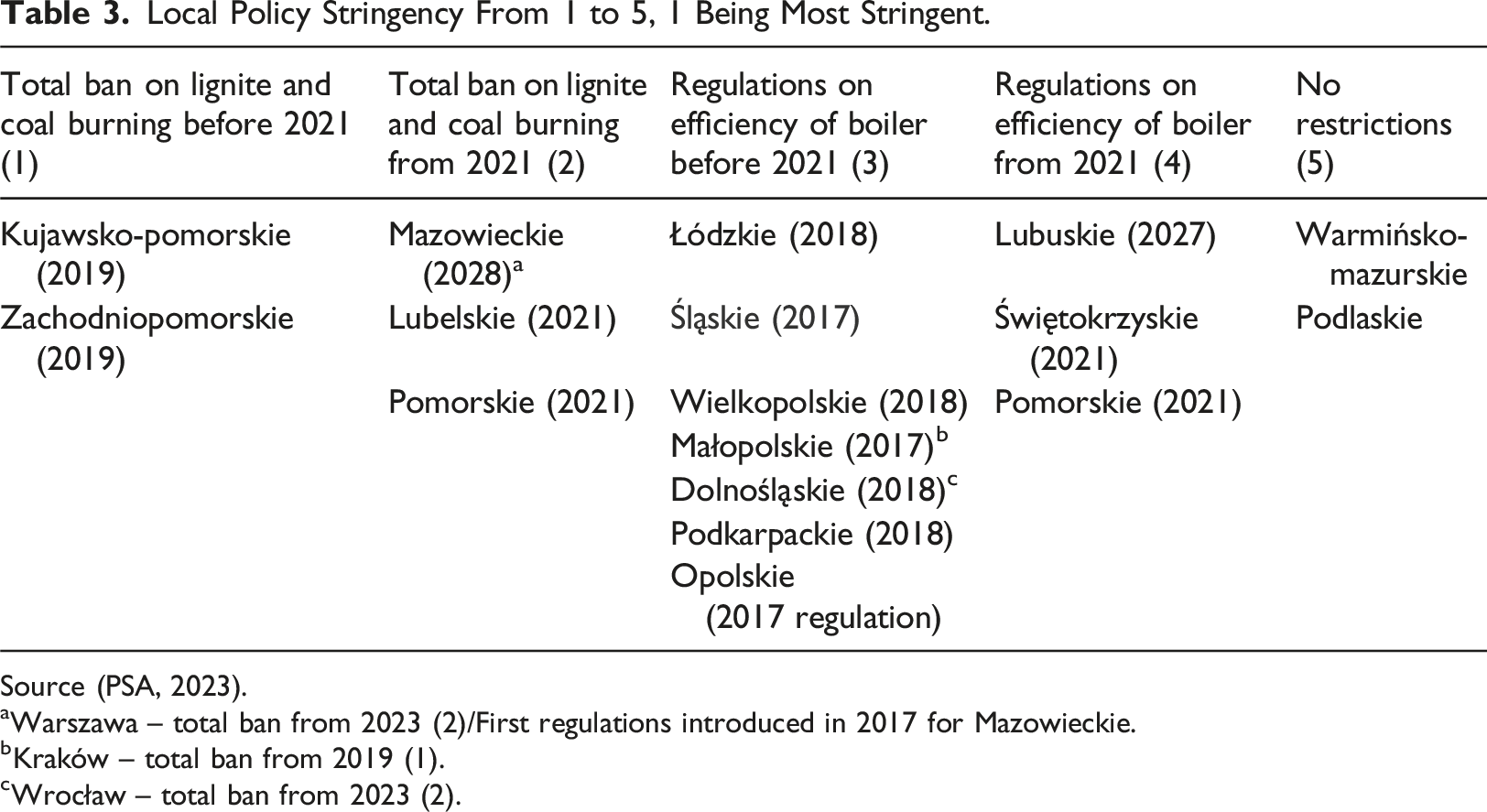
Local Policy Stringency From 1 to 5, 1 Being Most Stringent.
Source (PSA, 2023).
aWarszawa – total ban from 2023 (2)/First regulations introduced in 2017 for Mazowieckie.
bKraków – total ban from 2019 (1).
cWrocław – total ban from 2023 (2).
The Śląskie region adopted its regulations following a request from the city mayor after poor air quality led to the suspension of schools and free public transport as policy responses, and in April 2017 became the second region to introduce anti-smog regulations. This banned the use of boilers over 10 years old from 2022. In 2017 similar resolutions that included boiler standards (EU Ecodesign standards) and banning (poorer quality) coal were introduced in other regions. By early-2023 14/16 Polish regions had passed anti-smog resolutions (PSA, 2023).
Cooperation between Smog Alert and local authorities is notable: ‘the city [of Kraków] also made in cooperation with us [Smog Alert] quite a lot of media campaigns around the ban’ (interview 15, 2020). In Warszawa (Warsaw) in 2010 the City is Ours group gained one councillor in the District Council, doubling this in the following election and later gaining a member of the local government and with one member appointed by the Warszawa mayor in a key position as a Deputy Mayor and Director and Coordinator for Sustainable Development (interviews 1 and 11, 2020). In May 2022, a ban on coal burning in Warszawa from October 2023 was agreed (and in the rest of the Mazowieckie region from 2028).
National level
There has been far less legislative action at the national level. The European Commission started to act against Poland in 2009, referring the country to the European Court of Justice (ECJ) in 2016 and in February 2018 the ECJ found Poland in violation of air pollution Directives. This has been considered influential in eliciting a policy response (interviews 21 and 22, 2021). Only in the late 2010s ‘Polish politicians began to take it seriously at the central level’ (interview 26, 2021). A local politician argued that ‘Politicians today are not denying the problem, but don’t care about the problem too much’ (interview 13, 2020), and others pointed to the national response to local government action, and ‘how to catalyse that and to not be left behind’ (interview 19, 2021).
In September 2018, a regulation for solid fuel standards phased out poor quality coal (waste coal and lignite/brown coal) by June 2020. The main national government response has been a Clean Air Programme (CAP). Planning began in 2017, with the assistance of the European Commission and World Bank 5 (interviews 29 and 21, 2021). A draft was produced in the summer of 2018, the programme was launched ahead of regional elections in October 2018.
The CAP was considered a ‘milestone’ (interview 16, 2021), with a ‘special envoy’ to implement the programme and EU funding, with some limited regional government contribution (interview 6, 2021). The programme offered grants and loans to households to replace an aimed for three million boilers by the end of 2028. The Prime Minister announced an expansion in his 2018 post-election speech. A 2019 EU report stated that ‘While first steps have been taken, so far there has been no progress in improving air quality’ (European Commission, 2019: 3) and the programme was criticised for the early pace of implementation (interview 15, 2021). The available data suggests 165,867 boiler replacement contracts were signed between September 2018 and January 2021 (of which 65,987 were completed) and since then (until August 2022) an additional 238,914 contracts were signed (NFEPWM, 2021: 12; Program Czyste Powietrze, 2022). The pace of implementation then increased, the CAP became part of the approved recovery and resilience plan for Poland (European Commission, 2022; Gov.pl, 2021), and ‘Air quality is one of the main priorities of the Morawiecki government’ (interview 29, 2021; also Ministry of Climate and Environment, 2022).
At the national level, Smog Alert were by the end of the decade closely involved with government policymaking and implementation. They were considered within government to be ‘a constructive critic of all the activities of the Ministry [of Climate and Environment]…We meet with them regularly, the minister of climate environment does that periodically, every 2-3 months…we have very good relations and we cooperate’ (interview 29, 2021). The government highlights a ranking of local authorities’ implementation of boiler upgrades through the Clean Air Programme, a ranking carried out and hosted by Smog Alert and linked to from the government’s website (PSA, 2022).
From this analysis it is clear that many of Poland’s most important policy reforms in that area of air pollution have taken place at the local level, and that air pollution civil society organisations worked actively and successfully with local officials to bring about changes that have improved air quality in many Polish cities and regions. Catalysed by local action and pressured by the EU, the national-level government in Poland had by 2021 finally begun to take serious measures to address air pollution, but reform at this level lagged several years behind what was taking place in many of Poland’s regions.
Conclusion
Air pollution has risen in perceived importance among policymakers as more information on its negative health impacts has become available. For environmentalists, focusing on air pollution is a way of making the negative effects of fossil fuel consumption salient to people. Poland is an interesting context in which to study the politics of air quality: on the one hand, it is a laggard within the EU on environmental policy goals (Skjærseth, 2018) and it has unusually poor air quality by European standards. On the other hand, air pollution appears to be an issue that has gained resonance of Poles across the political divide even as air quality was improving, making it an attractive target for environmental activists (Rogala, 2021; Szulecka and Szulecki, 2019).
This study has sought to pinpoint the efficacy of air pollution activist groups in relation to other factors such as information availability. Our analysis has shown that between 2012 and 2019, popular attitudes towards air pollution appear to have crystallised to an extent, with air pollution itself exerting a greater effect on knowledge, but it is not obvious that local air pollution groups played a major role in shaping local-level variations in awareness of the problem. It appears, by contrast, that local-level activism was resulting in national-level changes in awareness. There is also evidence that activists were instrumental in shaping the policy response at local level.
These findings help to pinpoint the causal channels through which environmental activism affects politics. High-profile anti-pollution campaigns in Poland gained the attention of a national audience, even if not all areas of Poland are strongly affected by the problem. The combination of activism and increased information from scientific sources raised the issue of air pollution up the national agenda and shaped the appetite for change among both citizens and political leaders alike. At the same time, there appear to be clear channels of causal influence between activist groups and local policy-makers. In other words, anti-pollution groups were working simultaneously on two levels, and achieving different results through each channel of activity.
It is also worth noting that local-level policy change has advantages for a right-wing national-level government seeking to balance the competing demands of an ever-more environmentally conscious citizenry and an economy that remains dependent on fossil fuels. Policy shifts at local level can be tacitly condoned but at the same time not fully ‘owned’ by the national government.
These findings help us to resolve the puzzle of effective environmental activism in a context of falling objective pollution levels and high levels of citizen support for a right-wing government in Poland. The findings also have relevance for environmental scholarship as well as for activism in general. For scholars, they caution against overly optimistic readings of the actual effect of efforts by local groups to inform citizens of the risk of pollutants. For activists, they indicate that local groups many well be advised to focus on working with stakeholders and curating their message through media coverage.
Further research could usefully address the impact of the Russian invasion of Ukraine and resulting energy price fluctuations on the phenomena we have studied here, both in relation to Poland and in comparative perspective. It would also be useful to trace the potential role of air pollution activism in the shaping youth mobilisation and the resulting decline in right-wing party vote share at the time of the 2023 parliamentary elections in Poland. With energy use and health high on the policy agendas of most countries, air pollution concern is set to remain an important political phenomenon around the world, and understanding the dynamics of activism in this sphere an important research topic.
Supplemental Material
Supplemental Material - What is the role of activism in air pollution politics? Understanding policy change in Poland
Supplemental Material for What is the role of activism in air pollution politics? Understanding policy change in Poland by Tomas Maltby, Sarah Birch and Adam Fagan Mate Subašić in Environment and Planning C: Politics and Space.
Footnotes
Acknowledgements
We would like to thank Jakub Bodziony, Kris De Meyer, Erik Paessler, Cristina Parau, Gabriella Rundblad, Jakub Bodziony and our interviewees. We are also grateful to King's Together for supporting this research.
Declaration of conflicting interests
The author(s) declared no potential conflicts of interest with respect to the research, authorship, and/or publication of this article.
Funding
The author(s) received no financial support for the research, authorship, and/or publication of this article.

Supplemental Material
Supplemental material for this article is available online.
Notes
References
Supplementary Material
Please find the following supplemental material available below.
For Open Access articles published under a Creative Commons License, all supplemental material carries the same license as the article it is associated with.
For non-Open Access articles published, all supplemental material carries a non-exclusive license, and permission requests for re-use of supplemental material or any part of supplemental material shall be sent directly to the copyright owner as specified in the copyright notice associated with the article.
