




Abstract
Air pollution in the UK has recently re-emerged as a major policy problem. Insights from the agenda-setting literature are used here to explain the extent to which air quality has become a national political issue, and a local issue in London. The article explores the development of a problem stream in which scientific experts and non-governmental actors have since the late 2000s, provided evidence related to the economic and particularly health costs of air pollution, and increasingly framed the problem as urgent. Key focusing events have also contributed to increasing media coverage and public concern. Explanations are offered for the limited policy response at the national level compared to London. The research is based on primary data which includes 16 elite interviews with key actors, manifestos from London Mayoral and UK general elections, and local and national government policy documents. In London there is broad cross-party consensus and relatively high public concern, and a mayor acting as a policy entrepreneur, able to build upon pre-existing congestion charging policy. In contrast, at the national level there is a shared understanding that air pollution constitutes a problem, but less consensus on its scale amongst the public and across political parties, fragmented policy making and responsibility for the issue and little agreement on the appropriate policy response.
Introduction
Two years after London’s 1952 ‘Great Smog’, the government’s report concluded that “air pollution on the scale with which we are familiar in this country today is a social and economic evil which should no longer be tolerated”, and in 1956 a Clean Air Act was passed with cross-party support (cited in Ashby and Anderson, 1981: 107). This led to widespread, though inconsistent, air pollution monitoring throughout the UK and was the first attempt to control both domestic and industrial sources of air pollution (Brimblecoombe, 2011). Whilst air quality in the UK has been improving year on year since 1990 (DEFRA, 2019a), this progress had largely stalled by the 2010s. Around this time evidence regarding the health effects began to emerge. By 2018 the World Health Organization (WHO) had concluded that outdoor air pollution caused 4.2 m global premature deaths per year 1 (WHO, 2018). Estimating 400,000 annual deaths, the European Court of Auditors similarly concluded that “air pollution is the biggest environmental risk to health in the European Union” (2018: 5). This article explores the extent to which air quality has emerged as policy problem, and priority, in the UK as evidence about the high health and economic costs became available and actors attempted to frame the issue as requiring an urgent policy response.
Despite a proliferation of literature examining the effects of air pollution, there is a gap related to the politics of air quality. This article seeks to help address this by examining how the issue has emerged as a policy problem in the UK and applying insights on agenda-setting from the multiple streams framework literature. It proceeds to explore the role of knowledge brokers in the emergence of the problem stream, as evidence has continually revised upwards the economic and health costs of air pollution. The article then examines the extent to which problem brokers have framed the evidence to propose that poor air quality is an urgent crisis requiring a policy response. The article argues that whilst a window of opportunity for action has opened, this was partial at the national level. Here, consensus had formed only on the identification of the problem and its cause, but not on the scale of the problem nor the type required policy response. There are three main reasons for this at the national level: Decision-making and responsibility for the issue is fragmented, the issue has been emerged onto the agenda as a political priority and major public concern later, and there is a lack of agreement about the appropriate policy response particularly due to a reluctance in government to tax motorists. In contrast, in London the opportunity has been seized because of greater cross-party support, higher levels of public concern and the policy entrepreneurship of the London mayor; who has actively framed an urgent response as necessary and using delegated authority has built on pre-existing congestion charging policy.
Agenda-setting and the multiple stream framework
This research considers the multiple stream framework and focuses on agenda-setting and the problem stream, primarily the role of knowledge and problem brokers, and the London mayor as an example of a policy entrepreneur. Kingdon’s work on policy entrepreneurship and multiple streams argued that issues become established on the policy agenda when three streams were coupled: The problem – issues identified as policy problems; politics – here the interaction of political developments such as focusing events, media coverage, and public opinion that draws attention to the problem; and policy – when policymakers have the motive and opportunity to adopt policy solutions (2014).
Kingdon highlighted the importance of policy entrepreneurs and activists in highlighting problems to those in government (2014: 145), including by categorising issues as problems (Baumgartner et al., 2009; Becker, 2019: 150; Kingdon, 2014: 90). Policy entrepreneurs are key to a process of championing new ideas and persuading others (Berman, 2013: 228), particularly through influencing policymakers or as policymakers attempting to implement policy (Blum, 2018; Cairney, 2018; Mallet and Cherniak, 2018). Here there is a role for knowledge brokers and problem brokers (Knaggard, 2015, 2016) contributing to defining the problem of air pollution. In doing so they potentially contribute to a paradigm “when ideas are widely shared by an entire policy community” (Baumgartner, 2013: 251), an intersubjective understanding of the character of a policy issue (Yee, 1996: 98). As Knaggard argues “problems do not exist but have to be defined by someone. Before they become problems, they are only conditions” (2015: 452), and this is a role knowledge brokers can perform often by not directly producing evidence but reviewing and reframing research “to make it understandable in the political world” (2016: 113). It will be shown that key knowledge brokers have frequently reviewed wide bodies of scientific evidence and produced simplified headline figures of the health effects (such as the number of premature deaths) which are widely understood and disseminated by policymakers and other actors.
Knaggard differentiates knowledge brokers who refrain from recommending policy solutions to problems they identify, and problem brokers acting as policy entrepreneurs who identify problems and frame them as requiring a political response; framing “what the problem is about, who is responsible (the public or someone else) and why we should do something about it” (2015: 454; also Aviram et al., 2020: 16). Problem brokers attempt to strategically reframe how an issue is understood and raise the salience of it (Baumgartner et al., 2009: 167) with Blum (2018) discussing the ‘argumentative coupling’ of a problem’s nature and policy recommendations and Herweg et al. (2015: 436) arguing that the construction of a condition is important to it becoming considered a problem. Cairney has drawn attention to the importance of framing a problem through “combin[ing] evidence and emotional appeals” (2018: 203) and Knaggard also highlights how problem brokers frame issues in emotive terms in order that they appear “more urgent […] which can move issues higher on the agenda” (2015: 452). Actors can attempt to generate awareness of a problem through the strategy of amplifying its urgent nature and the necessity of developing swift policy responses (Boasson and Wettestad, 2014: 410), and those with power and/or credibility can present evidence and frame arguments which are considered legitimate (Knaggard, 2015: 450; 2016: 116; Turnpenny et al., 2013: 589). There is overlap here with the literature on securitisation which assumes that threats, risks, and security issues are not objective and fixed but are socially constructed and emerge and dissolve over time (Judge and Maltby, 2017). As Fischhendler and Nathan note, here ‘existential language’ is a securitisation indicator – “a sense of urgency, prioritization, and/or survival, [expressions] centred on threat and risk” (2014: 156). A successful securitisation process involving those with the authority to speak security leads to a high degree of consensus on the form and scale of the problem, as urgent and of the highest priority, and a context in which extraordinary measures are possible, facilitating the development and implementation of responses to address such ‘crises’ (Judge et al., 2018; Szulecki and Heinrich, 2018).
Policy entrepreneurs can drive policy change by framing a problem successfully enough to generate attention and link to policy solution(s), often during a window of opportunity (Cairney, 2018: 202; Maltby, 2013). Kingdon’s work suggested that focusing events or ‘crises’ could lead to such policy windows in which policy entrepreneurs could couple the problem, politics and policy streams (Kingdon, 2014; Zahariadis and Exadaktylos, 2016); linking the problem they frame as urgent to events demonstrating the problem’s importance, to generate public and political support to implement policy change (Mallet and Cherniak, 2018). Problems will attract the attention of policy makers, though a policy response is not guaranteed, and is often a “cumulative, long-term development…the slow progress of an idea towards acceptability within the policy community” (Cairney and Jones, 2016: 41). However, this research will demonstrate that an intersubjective understanding of the cause of air pollution has emerged, particularly in the 2010s, but that there is less consensus on the scale of the problem or the appropriate policy response at the national level relative to London.
An objective of the research is to highlight how air pollution in the UK has emerged as an issue, and later as a policy problem, and how the problem has been framed. The main research questions are: How has scientific evidence on the costs of poor air quality emerged through knowledge brokers? How have problem brokers attempted to frame this evidence as an urgent problem? Why has there been only very limited national air pollution policy in contrast to London? A qualitative research design utilises a wide range of primary data, including the Factiva news database to trace the reporting of air pollution, public opinion polling, party manifestos from five general (2005, 2010, 2015, 2017 and 2019) and three London mayoral (2008, 2012 and 2016) elections, national and mayoral air quality and environmental strategies, and primary documents produced by scientific experts and government committees. Between 2017 and 2018, 16 semi-structured elite interviews were conducted with key policymakers, central and local government actors, NGOs, and scientific experts.
The problem stream: The evolution of scientific evidence
This section examines the historical and contemporary development of research into the effect of air pollution, both in terms of health and economic costs. In doing so it considers the problem stream of agenda-setting.
Firstly, the role of knowledge brokers in identifying the air quality as a problem is considered. The first commission to investigate air pollution linked to coal burning in London was set up in 1285 (Brimblecoombe, 2011: 9); still, in 1659 Evelyn wrote that the air in London appeared “as a cloud of sea-coal, as if there be a resemblance of hell upon earth” (2011[1659]). An estimated 600 deaths were caused by an air pollution episode in 1873, and 2,500 in 1880 (Ashby and Anderson, 1981: 33). The 5-day ‘Great Smog of London’ in 1952 caused between 4,000–12,000 excess deaths (Kelly and Fussell, 2015: 632), and a 3-day smog in 1991 caused 160 deaths (Whitehead, 2009: 164). Whilst smog can be seen, and particularly poor air quality can be noticed, it is largely an invisible problem. For environmental issues this is not unusual, as Alexander argued (1996 cited in 2009: 65) “perceptions of ecological crises or of environmental problems […] are not sensorially experienced. It is the many-voiced discourse of scientists that is the source of our knowledge of such issues”, and similarly Whitehead noted that “in order to become [air] pollution, contaminates […] have to produce culturally, biologically and politically unacceptable/intolerable air conditions” (2009: 2). Only since the late-2000s has evidence of high health and economic costs emerged. Turner (2014: 23–26) discusses the cognitive authority of scientific experts, with testimony accepted by the public conferring legitimacy upon them and their evidence, and it will be shown that in the UK the scientific data has not been contested.
The government estimated in 1998 that air pollution was responsible for 8,100 premature deaths each year (Department of Health, 1998). However, until the mid to late 2000s air pollution was not on the public or political agenda, or widely covered in the media (interviews 2; 3; 14; Figure 1). Rather, attention focused only on poor air quality linked to extraordinary weather events such as the 2003 summer heatwave (DEFRA, 2004). Knowledge brokers have been key in making the issue more visible. In 2006 an official report was highlighted in broadsheet newspapers in which ministers noted the ‘marked effect on health’ of air pollution thought to result in a reduction in average lifespan of 8 months (Russell, 2006) and the London Mayor’s 2006 Air Quality Strategy report estimated 1,031 premature deaths in the city (cited in London Councils, 2007: 2). In the following years scientific evidence regarding the costs of air pollution became clearer.
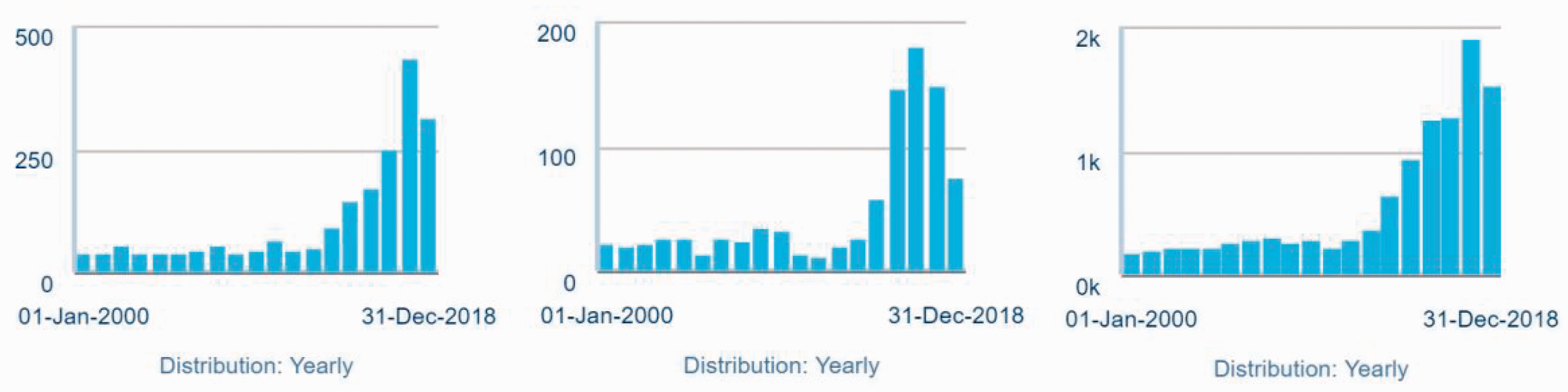
Reporting of air pollution in the UK (left to right: London Evening Standard, UK tabloid newspapers, UK broadsheet newspapersa).
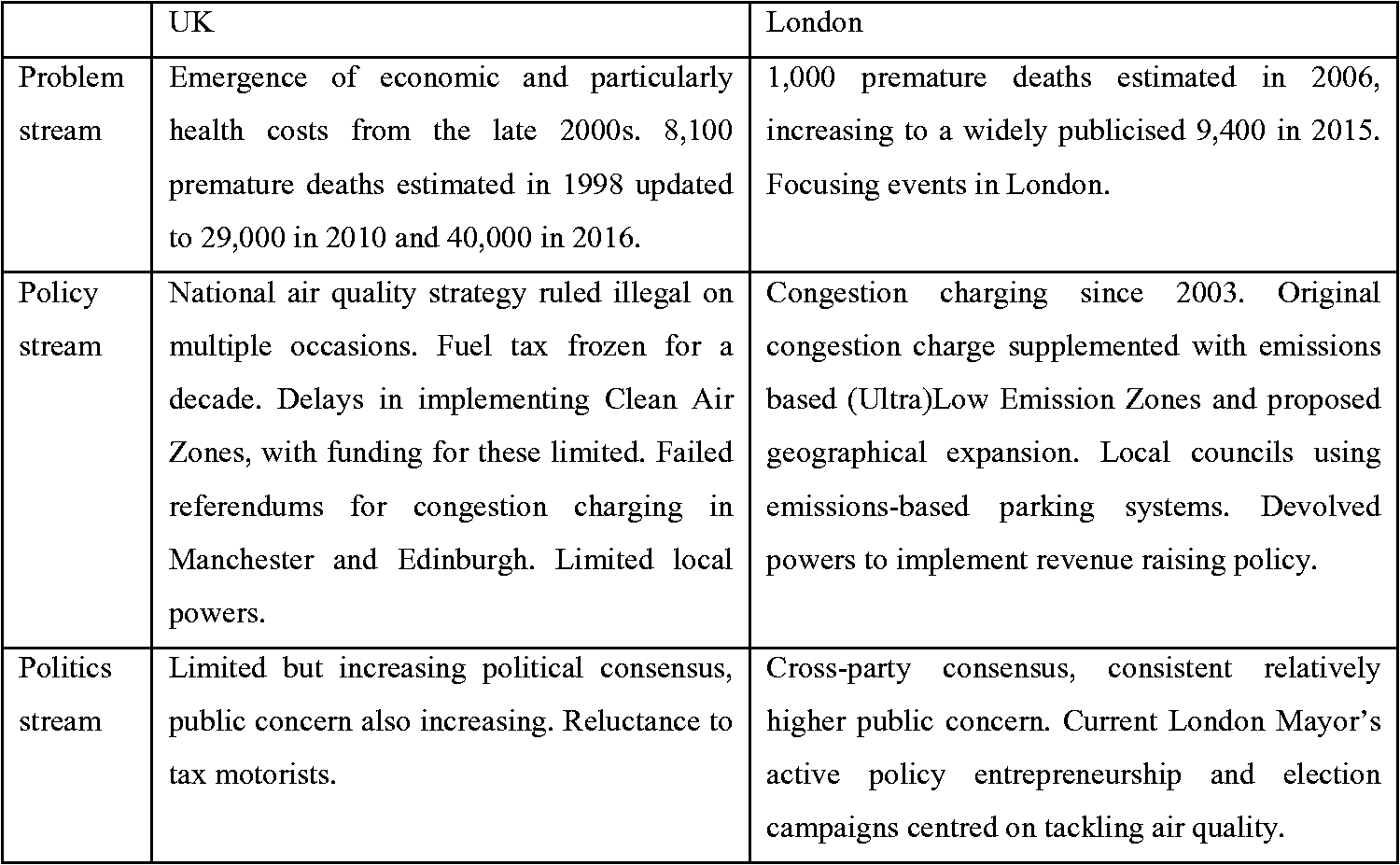
A summary of the multiple streams in the UK and London.
The Environmental Audit Committee (EAC) is an influential actor with the role of scrutinising the work of UK government departments, and often contributes to shaping the political debate (Turnpenny et al., 2013: 595). In March 2010, the Committee stated that premature deaths associated with air pollution were double that of road accidents and passive smoking combined, and that premature deaths had been “underestimated” (EAC, 2010: online). Interviewees noted the significance of being “able to quantify the health effects of what we are breathing […] to put into context with these other challenges” (interview 2). In the same year, the government’s advisory Committee on the Medical Effects of Air Pollutants estimated 29,000 annual premature deaths (COMEAP, 2010: 2) and a separate report estimated 4,267 deaths in London (Mayor of London, 2010). These were significant; both represented a quadrupling of previous estimates. 2 Internationally, in 2012 the World Health Organisation (WHO) reclassified diesel exhaust from probably to definitely carcinogenic (Kelland, 2012) 3 and a raft of reports from 2013 began to link air pollution to health problems including diabetes, asthma and lung cancer (Kelly and Fussell, 2015). A follow up WHO report concluded that air pollution was the world’s largest single environmental health risk (WHO, 2014).
For the public, the issue also became more visible. Whilst in 2011 there were only a handful of actors acting as problem brokers and actively campaigning on air pollution in the UK, 4 this has significantly increased since 5 to a number focusing events, such as the 2012 London Olympics and front page news about Oxford Street being the most polluted in the world in 2014 (Kenis and Barratt, forthcoming; interviews 1, 3, 6). Also in 2014 the Meteorological Office began to provide air pollution data for the BBC’s weather forecasts, and a Saharan dust storm that year received widespread media coverage; Garnett argues that the visible dust contributed to making “air pollution a tangible problem and legitimate concern for the public” (2015: 15). Another significant focusing event was the 2015 ‘Dieselgate’ scandal, which revealed a significant gap between ‘real world’ and official diesel emissions in Volkswagen vehicles, and received wide press coverage (Brand, 2016: 1–2; Figure 1). This affected 1.2 m diesel vehicles in the UK and led to a ‘step change’ in the policy debate (interview 13; also interviews 2, 3 and 6), as well as an increased engagement of scientists communicating the effects of air pollution through the media (interview 3). In July 2015, a report estimated that 9,416 deaths were caused by air pollution in London, and 35,000 in the UK (ERG, 2015). This figure for London was a doubling of the 2010 estimate, a nine-fold increase on the 2006 estimate, and became widely accepted and used. In September 2015 the official national estimate increased to 23,500 (DEFRA, 2015) and a February 2016 report raised the estimate of deaths in the UK further still, to 40,000 (and noting a range of economic cost of £23bn p.a.) (Royal College of Physicians, 2016: 82). A number of interviewees highlighted the ‘totemic’ nature of this 40,000 figure (interview 5) particularly given that its credibility was linked to the widely respected Royal Colleges (interviews 11, 13) which contributed to a greater acceptance within government (interview 12). Alongside presenting complex data relating to limitations of scientific findings and ranges of estimates, credible actors have provided easy to understand headline figures. One key scientific expert explained the importance of “distill[ing] that down to a message that you want to communicate to politicians or the public, you have to simplify it” (interview 3), making knowledge understandable to policymakers (Knaggard, 2016: 113).
A high degree of consensus has been reached in the UK on the existence of air pollution as a major policy problem and with diesel vehicles playing a significant role in the cause. Whilst it is worth noting that “economic costs are not as embedded in discussion [as the health costs]” (interview 16), there is no contestation of the scientific evidence; “there are no air pollution deniers” (interview 1).
The article now considers how problem brokers have framed the problem as urgent. The strategic framing of the problem using emotive language has been a deliberate strategy of NGOs in communications to the public and policy makers, using the language of urgency to increase awareness and frame the problem as requiring government action (interviews 1, 5, 6, 8). There are parallels with Cairney’s (2018) findings related to UK smoke control as problem brokers have combined scientific evidence on health costs produced by knowledge brokers with “emotive rhetoric” (interview 9) and “emotive appeal” (interview 11); by drawing upon the evidence quantifying the economic costs of air pollution; by stressing the ‘right to clean air’, and generating a sense of urgency by framing air pollution as a ‘crisis’, ‘emergency’ or ‘threat’ to people’s health. For example, in 2015, Client Earth was describing air pollution as a “national health emergency” (Ward, 2015) and a “national public health crisis” (Client Earth, 2015). Friends of the Earth and Greenpeace were amongst those also using the latter phrase in 2016 (Mackay, 2016; Vidal, 2016). In 2015 the Supreme Court stated that air pollution resulted in a “clear and grave hazard to human health” (2015: 9) and in April 2016 the House of Commons Environment, Food and Rural Affairs Committee declared the issue was a “public health emergency” and that the “government must act now” (EFRA, 2016: 3). This followed a WHO statement using the same language three months before (Bolton, 2016).
A joint report of four Select Committees in March 2018, including the EAC, came to the same conclusion, with the chair discussing the government’s failure to effectively respond to “the scale of the air quality catastrophe in the UK” (EFRA, 2018: online). Similar language was used in January 2018 by a UN special rapporteur who concluded that “air pollution plagues the UK…a silent pandemic…[a] crisis” (UNHR, 2018). A UNICEF report also argued that the UK’s children face a long-term “health crisis” and a “serious and dangerous threat” (UNICEF, 2018: 12), and Public Health England’s health protection and medical director said in 2019 that it was “an urgent and serious threat to the public’s health” (Otte, 2019). The head of NHS England also warned of a “health emergency” in October 2019 (Dalton, 2019).
There is widespread consensus that there is a problem requiring a policy response; “no one is making an argument against tackling air pollution” (interview 16; also interview 1).The high health cost has become established, which is important for a problem broker’s objective of “fram[ing] the problem so that the audience can understand it” (Knaggard, 2015: 459), including the message that it is urgent. There is some evidence that this has influenced government understanding of the issue. Annual Department for Environment reports on air quality published under the Labour government in 2004 and 2006–2009 noted that “air pollution can pose a significant risk to health, something absent in those published under the Conservative-Liberal Democrat coalition between 2010–2015 (DEFRA, 2020).2016’s noted “a significant challenge to public health” (DEFRA, 2016: 7), and subsequent reports upgraded this to “the greatest environmental risk to public health in the UK” (DEFRA, 2017b: 7; 2018b: 7; 2019b: 7). The health secretary launched the 2019 Clean Air Strategy by stating that “air pollution is a health emergency” (UK Government, 2019).
Cairney (2018: 211) argues that successful policy entrepreneurs “tell a persuasive story to frame a policy problem”. The London mayor since 2016, Sadiq Khan, has been an active and influential problem broker, also acting as a policy entrepreneur with the power to implement policy. In November 2016, the issue was described by Khan as an “air pollution crisis” (Mayor of London, 2016a), and there have been frequent references to “a public health emergency” (e.g. Cecil, 2017). The mayor’s 2018 London Environmental Strategy argues that “air quality is the most pressing environmental threat to the future health of London” (Mayor of London, 2018: 13, emphasis added). Khan has also engaged much more with NGOs and scientific experts than his predecessor in office (interviews 9, 11), constituting a “total sea change” (interview 2). This enhanced access to policy makers enables scientific evidence to be communicated by knowledge brokers, and for problem brokers to frame the problem as urgent and lobby for action (Kingdon, 2014: 56; Knaggard, 2016: 114). Khan consistently highlighted the 9,500 premature deaths figure and language stressing the problem’s urgency which has been widely reported in national and particularly local media. 6 For example, the London Evening Standard launched a Clean London campaign promoting air pollution policy. A high air pollution alert system on public transport has also been active since shortly the 2016 election and also received local press coverage (Lydall, 2018).
Increasingly, Khan framed clean air not only as a determinant of health, but as “right” (GLA, 2016: 59) and a “matter of social justice” (Gillett, 2017). The 2018 London Environmental Strategy repeatedly notes the link between deprivation and air pollution, and the risk to school children (GLA, 2018), as do repeated statements by the mayor (interviews 6, 7, 8, 11, 13, 15). A Mayor of London report two months after the election showed that 443 London schools were exposed to illegal levels of air pollution (Mayor of London, 2016b). 7
The policy stream
The national policy response has been characterised by a failure to reduce air pollution to legally binding levels. In 2007 the UK received a warning from the EU for breaching air quality limits (Tighe and Bounds, 2008). This was followed in 2009 by the start of legal proceedings, and further legal action in 2014 due to the failure of the UK to develop a national policy response (Johnston, 2014). In April 2015, the UK Supreme Court ruled in favour of the environmental NGO Client Earth, and mandated Air Quality Plans wherever there were illegal air pollution levels, including a timetable for implementation. Five policy responses were considered relevant: traffic planning and management; congestion pricing; differentiated parking fees; establishing low emission zones; other economic incentives (Supreme Court, 2015: 3). This led to the government requiring five cities to establish Clean Air Zones (CAZs): Birmingham, Leeds, Southampton, Nottingham and Derby.
However, government inaction followed. In November 2016 Client Earth won the first of three High Court cases against the government (High Court, 2016), a ruling that the UK government’s 2015 air quality strategy was illegal and requiring a revised plan which “reduces exposure as quickly as possible” to EU limits (High Court, 2016). A second major legal defeat to Client Earth forced the earlier publication of an Air Quality Plan (Nelsen, 2017), having been accused of merely having “a plan for a plan” (interview 3). Following a final warning in 2017, in 2018 the EU referred the UK government to the European Court of Justice over the failure to meet air quality standards (BBC, 2018).
A draft UK Air Quality Plan was published in 2018 (DEFRA, 2018a), but failed to incorporate policy solutions advocated by problem brokers; increased regulatory powers for local authorities (including to charge motorists), changes in national transport policy to reduce diesel emissions, or the funding for local authorities from central government in order to implement local air quality plans (interviews 3, 7, 12, 14). A sense of urgency commensurate with the problem as it had been framed was not present, and the government strategy lacked “definite commitments” or a “timescale” for national action (interviews 14, 15). The 2019 Clean Air Strategy was criticised for the same lack of urgency, national and local funding, and local powers (Taylor, 2019). No CAZs had been set up outside of London by August 2020 and charging CAZs had been rejected by several councils including Southampton, Nottingham, and Derby. As a local government official argued, “there is a consensus that there is a problem, but not a consensus on the solution” (interview 7; also interview 5). In June 2020 the cross-party Environment, Food and Rural Affairs (EFRA) Select Committee launched a new air quality inquiry, examining delays in the rollout of CAZs (UK Parliament, 2020). In 2020 fuel duty was frozen for a tenth consecutive year (UK Government, 2020), despite the government’s statutory advisor, the Committee on Climate Change’s (CCC), recommendation that this be ‘reconsidered’ (CCC, 2018).
In contrast, in London the mayor has capitalised on related previous policy entrepreneurship and implementation, coupling the problem of air pollution to the solution of congestion charging. The London Mayor between 2000 and 2008, Ken Livingstone (independent, then Labour), was able to build upon a history of considering congestion charging in the Greater London Council where in the 1980s he was responsible for public transport. He introduced the congestion charge in 2003, framing it as a win-win for all residents, providing less congested roads and increased public transport investment (Dudley, 2013: 1148), and expanding it Westwards in 2007. In February 2008, a Low Emission Zone (LEZ) was introduced in central London charging commercial vehicles, 8 and the new Conservative mayor Boris Johnson maintained the LEZ and congestion charge, though delivered on a campaign pledge to cancel the latter’s Western expansion in 2010. However, Johnson also proposed replacing the LEZ with an Ultra LEZ (ULEZ) that would apply to most vehicles. Khan put air quality at the centre of his Mayoral election campaign, as one of 10 priorities (2016: 7) and the ULEZ as a policy solution. He was able to build on the history of cross-party policies, and to increase their ambition.
The politics stream
The first explanation for a lack of national policy relates to decision-making and responsibility for the issue. The UK government is responsible for meeting EU air quality standards (set by a 2008 Directive) and putting strategies in place to achieve this. However, several interviewees highlighted the lack of coordination and unclear responsibility for improving air quality (interviews 3, 4, 5). DEFRA have the main responsibility for targets and for the national Air Quality Strategies, but the Treasury is responsible for taxation and reluctant to increase taxes, and the Department for Transport is considered as keen to promote the expansion of road and air traffic (interview 8).
The 1995 UK Environment Act established a system of local air quality management and set air quality standards. Local authorities monitor and assess in their area, and if they do not meet national objectives, must draw up action plans; it is for local authorities to develop innovative local plans that will achieve [limits] within the shortest possible time” (DEFRA and Department for Transport, 2017: 31). But at the same time there is no obligation at the local level to meet them (interviews 8 and 9). However, it is has been argued that by partially devolving the issue to local authorities, they then “take the stick for failing” (interview 8), and the interpretation of what is required varies significantly (interview 11). This is also considered a delaying tactic, with CAZs devolved to local authorities without giving them the power or funding to implement them effectively (Barrett, 2019; interviews 9, 14, 15), which is particularly significant in the context of significant cuts to local authority budgets since 2010 (interview 3; Eckersley, 2018). The government’s third court defeat, in February 2018, was for failing to ensure local authorities were implementing effective action plans to reduce air pollution (Client Earth, 2018). Government guidance states that charging CAZs like London’s LEZ should only be used as a last resort (DEFRA and Department for Transport, 2017: 3). Such charging CAZs are expensive to set up, but then generate funding for their maintenance. However, the government in 2019 committed only £20 m in funding for local authorities to enable them to meet air quality obligations; in contrast the national road fund received £29bn (Laville and Taylor, 2019). Funding was increased in 2020, but when Greater Manchester requested £166 m from the government to introduce a charging CAZ, it received only £41 m (LaVille, 2020).
There is less fragmentation of decision-making in London, as the 1999 Greater London Authority Act devolved powers and provided the legal responsibility for the London Mayor to address air quality (interview 4) and the power to create road user charging areas which require national government approval elsewhere (UK Government, 1999).
The second explanation for the lack of national policy relates to the public and political agenda. Problem brokers have shifted public and political opinion regarding the nature and scale of the problem, but more slowly nationally than in London. No major parties mentioned air pollution in their 2005 general election manifestos, and only the Liberal Democrats did, briefly, in 2010 (Liberal Democrats, 2010). In 2014 the Conservative Prime Minister argued that air pollution events, such as one related to Saharan dust, were natural and could not be addressed by policy action (Cameron cited in Mason and Halliday, 2014). 9 By the time of the 2015 general election political actors started to adopt the same language of urgency as non-governmental actors, and two parties discussed air pollution as a major issue - the Green Party (2015: 63) argued that it was contributing to a public health ‘crisis’, and the Liberal Democrats (2015: 87) framed it as a “significant health problem” and called for the creation of LEZs. The Labour Party (2015: 56) mentioned the issue once, that it was a problem that required more power being given to local authorities, and the Conservative Party manifesto (2015: 54) committed in general terms to doing more to tackle the issue.
Air quality was higher on the political agenda for opposition parties in 2017. The Labour Party (2017: 93) highlighted “illegal air quality”; the Liberal Democrats (2017: 48) discussed “killer” air pollution contributing to 40,000 deaths and a £15bn cost to the NHS; and the Green Party (2017: 23) stated that it was a “public health crisis”. Importantly though, the governing and re-elected Conservative Party (2017) focused relatively little on the issue, and officials in local authorities in London argued that the issue was not prioritised by government (interviews 5; 9; 14; 15). The 2019 Conservative Party manifesto (2019: 43; 55) mentioned the issue directly on only two occasions, related only to setting new legal targets (2019: 43; 55). In contrast, the Labour Party’s (2019: 20; 22–23) and Liberal Democrats’ (2019: 46–47) manifestos both referred to 40,000 premature deaths and discuss specific policy proposals including vehicle scrappage, CAZs and a New Clean Air Act. The Green Party (2019) did not use this figure, but prominently focused on the problem and potential policy solutions, including promoting low traffic neighbourhoods, regulations on vehicle emissions and also highlighted support for a New Clean Air Act.
In London there has also been greater political consensus that the issue is a major problem in London, with the issue emerging onto the political agenda earlier than at the national level. Candidates for all four main parties in the 2008 and 2012 London Mayoral elections discussed air pollution as a major problem, with the Labour Party highlighting the 4,000 annual deaths figure in 2012 (Friends of the Earth, 2008; Labour Party, 2012: 65, Green Party, Conservative Party, Liberal Democrats, 2012). Ahead of the 2016 London mayoral elections all four main party candidates again discussed air pollution, this time in stronger terms, with corresponding local media coverage. The Labour Party manifesto discussed “dangerously polluted air” at three points (2016: 5; 63; 74) and campaigned to expand the planned ULEZ and to introduce it earlier. The Green Party proposed similar policies and referred to “deadly air pollution” (2016: 12). The Liberal Democrats, highlighted the “huge problem” of air pollution, and all parties except the Conservatives highlighted London’s 9,500 annual premature deaths (Liberal Democrats, 2016: 78; Green Party, 2016: 12; Labour Party, 2016: 63). The Conservative Party (2016: 23) also discussed improving air quality as one of five commitments, and air pollution as a ‘threat’ to young people.
In terms of the ‘national mood’, public concern has been increasing in line with press coverage. Focusing events and campaigns by problem brokers have been reported, including Client Earth’s court cases in 2015, 2016 and 2018 as part of the mobilisation of support for a policy response (Figure 1; Kenis and Barratt, forthcoming). Public concern in London has been relatively higher. In June 2014 80% of regional British cities were satisfied with air quality compared with 63% in London (YouGov, 2014). By February 2017 58% of the UK population thought air pollution was (very)harmful, compared to 73% in London (Davis, 2017). Similarly, in 2020 55% of UK respondents thought local air quality was bad, compared to 79% in London (YouGov, 2020). There has been a corresponding change in consumer behaviour. In 2015 half of vehicles sold in the UK were diesel, by 2019 only a quarter were (SMMT, 2016, 2020). Despite a trend of growing public concern, national policy makers did not perceive the national mood to be sufficiently in favour of policy solutions which would lead to high profile ‘losers’ – drivers. There is also a consistent divide in public concern along party lines. For example, in both 2014 and 2020 approximately double the number of Labour party voters were concerned as Conservative voters: 2014, 17% Labour/9% Conservative; 2020, 58% Labour/31% Conservative (YouGov, 2014, 2020). In London since 2016 the Labour mayor has had the motive and opportunity to act as a policy entrepreneur reflecting and shaping increasing public concern about air pollution.
A third explanation for national policymakers failing to implement policy is a disagreement on policy responses and a greater reluctance to charge motorists than in London. Since the 2003 introduction of the congestion charge there have been a string of failures to expand this beyond London, with referendums in Edinburgh in 2005 and Manchester in 2008 voting against, and Boris Johnson’s successful Conservative Party mayoral campaign in 2008 pledging to cancel a planned increase in the charge and western expansion (cancelled in 2010) (Dudley, 2013: 1151). Before switching to support for the congestion zone Johnson described it as “the most punitive, draconian fining regime in the whole of Europe” (cited in Taylor and Milmo, 2008). Dudley highlights “the extreme sensitivity caused by charging motorists”, particularly beyond London (2013: 1146). This has contributed to ‘resistance to interventionist solutions’ that involve taxing motorists due to the legacy of the defeats in the 2000s and perception of the political capital required to change policy and absorb short term costs of implementation and potential congestion (interviews 5, 8), with memories of a 2000 protest against rising fuel prices which led to blockages of refineries and more than 90% of petrol stations running dry (BBC, 2000). It is considered that there is a “fear of being seen as anti-motoring…The solution is really something that politicians don’t want to grasp” (interview 9; also interview 8). A press release accompanying the May 2017 government air quality plan draft included the steer that local authorities should avoid “undue impact on the motorist” (UK Government, 2017). Ahead of the revised July 2017 air quality plan several Conservative MPs warned the government against “punishing” motorists and taxing diesel drivers (Rayner, 2017). The government and many MPs more generally are reluctant to discuss a key policy response - increasing tax on diesel (interviews 8, 9, 13), and this fits with findings by Carter and Clements that “introducing new regulations or imposing green taxes – frequently confront some of the most powerful shibboleths of the modern Conservative Party” (2015: 221).
Where there has been recent interventionist policy this has actively promoted diesel vehicles. Whilst as early as 1993, the Department of Environment (1993: ii) concluded that “the impact of diesel vehicles on urban air quality is a serious one”, in the 2000s the environmental policy focus, including staff resources and funding, was on climate change (interviews 2, 3 and 4). A sliding scale for car tax came into effect in 2001, reducing tax for cars with lower C02 emissions. As a result diesel was “incentivised for climate purposes” (interview 3), with a former Labour science minister claimed this was because of the lack of scientific evidence regarding the health effects of diesel (Drayson cited in Cellan-Jones, 2015). This incentive was effective; diesel vehicles increased from 14% of new car registrations in 2000 to 46% in 2010 (SMMT, 2011: 2).
In July 2017, the government committed to a 2040 deadline for ending sales of diesel vehicles (Asthana and Taylor, 2017). In July 2019 this was criticised by the CCC as “too late and plans to deliver it are too vague” (CCC, 2019). The subsequent 2019 Conservative manifesto mentioned consulting on bringing this forward (Conservative Party, 2019), but this followed the rejection of a request from the Business, Energy and Industrial Strategy (BEIS) Committee to set 2032 as the deadline (BEIS, 2019). In contrast the 2019 Green Party, Labour and Liberal Democrat 10 manifestos all committed to a 2030 deadline (Green Party, 2019: 17; Labour Party, 2019: 20; Liberal Democrats 2019: 47). Following the election, the CCC’s 2035 recommendation was accepted by the government (Campbell, 2020).
In London the mayor brought forward the start of the ULEZ by a year to April 2019 and has committed in 2021 to expand the zone to an area 18 times larger than the central London ULEZ proposed by Johnson (Labour Party, 2020). In addition, in October 2017 the central London congestion charge was almost doubled with the introduction of the £10 Toxicity Charge for diesel and older petrol vehicles in the centre of London. There was little opposition to the ULEZ as the congestion charge zone “had got people used to the idea” (interview 9), and like the forerunner LEZ is designed to become progressively more stringent over time (interview 3). The mayor also mandated zero emission only black taxis and single-decker buses, from 2017 and 2020 respectively (GLA, 2018). Mayoral policy is in line with London borough councils, a number of which have pursued emissions-based parking systems to disincentivise the use of diesel vehicles (Skeete, 2017: 375–376), including with the explicit objective of improving health (Islington Council, 2020). There are indications that policy in London is effective. A 2020 report found that in all parts of London in air quality improvement (of NO2, linked to diesel vehicles) “exceeded the national average reduction” since Khan became mayor in 2016. Within the ULEZ the reduction was five times the national average between 2016 and 2019 (Mayor of London, 2020: 34–35).
Conclusion
Problem brokers have combined scientific evidence on health costs produced by knowledge brokers with language stressing the need to urgently addressing a major problem. Credible knowledge brokers have significantly contributed to widely recognised, and understood, premature death figures of 9,000 in London and 40,000 in the UK. There has been a partial coupling of the problem and politics streams (see Table 1); the growing body of scientific evidence has emerged at the same time as a series of focusing events, highlighted by increasing media coverage, and this has drawn attention to air pollution with public concern increasing as a result and opening a policy window. Yet the coupling with a policy stream is incomplete, and there is little evidence of paradigm shift at the national level. Whilst the evidence of harm caused by poor air quality is not disputed, the scale of the problem and policy response is, and political and public concern is relatively lower than in London. Several court defeats for the UK government has demonstrated a lack of prioritisation of the issue or urgent policy response, and fragmented decision making and responsibility for the issue remains a problem. National policymakers have proved reluctant to increase the costs for motorists through, for example, increasing fuel taxes or promoting congestion charges.
In contrast there have been significant policy developments in London. The London mayor has had the motive and opportunity to act as a policy entrepreneur closely associated with tackling air pollution, and this has been provided by cross-party prioritisation consensus that is lacking at the national level, and higher public concern in London. He has reflected, and influenced, this public concern and the issue is central to his election campaigns. Khan has been a policy entrepreneur who has implemented new policy and has been active in framing the need for a policy response. In doing so he has regularly used a simple to understand premature death figure produced by knowledge brokers and echoed the language of urgency of other problem brokers. Importantly he has been able to build upon long-standing policy that has charged motorists, and incrementally increase its stringency and scope. Further research is required to assess the policy entrepreneurship of actors in other major cities outside London, the effect of Brexit on regulating air quality legislation, and whether the UK government’s 2019 clean air strategy reflects a shift in understanding of the problem and will result in more timely and effective policy implementation.
Interviews: NGO, 28.04.2017. NGO, 28.04.2017. Scientific expert and member of government committees, 05.07.2017. Scientific expert and former member of government committees, 25.07.2017. NGO, 10.07.2018 NGO, 01.08.2018. Local government politician. 08.08.2018. NGO, 09.08.2018. NGO, 21.08.2018. NGO, 21.08.2018. Local government air quality expert. 30.08.2018. MP, 05.09.2018. MP, 13.09.2018. Local government air quality expert, 26.09.2018. Government advisor, 27.09.2018. Scientific advisor, 04.10.18.
Footnotes
Acknowledgements
I am grateful for the feedback and constructive comments of the anonymous reviewers and from Anneleen Kenis and Maarten Loopmans, and to Lily Nowroz for her research assistance.
Declaration of conflicting interests
The author(s) declared no potential conflicts of interest with respect to the research, authorship, and/or publication of this article.
Funding
The author(s) received no financial support for the research, authorship, and/or publication of this article.
