




Abstract
This year’s British Neuroscience Association (BNA) International Festival of Neuroscience, held from 27 to 30 April 2025 at the iconic ACC Liverpool, offered a remarkable convergence of scientific enthusiasm and professional networking. With over 1000 delegates from across the world, BNA2025 was not simply a scientific meeting – it was a vibrant, living reflection of the state of neuroscience in the UK and beyond. Across 4 days, the festival integrated cutting-edge research, collaborative initiatives, career development, and wide-reaching public engagement.

Scientific programme: from molecules to minds
At the heart of BNA2025 was a rich scientific programme. The content spanned the full arc of neuroscience, from cellular mechanisms to clinical and translational work that directly impacts lives.
The plenary sessions offered deep insights from internationally renowned speakers:
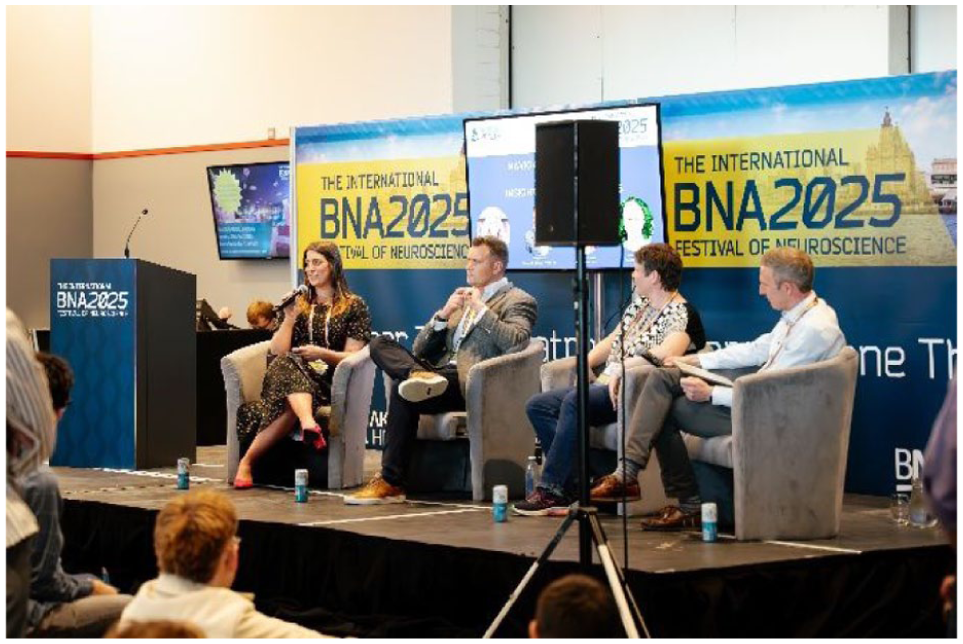
Prof Sir Adrian Bird traced the trajectory from fundamental research in Rett syndrome to real-world clinical trials. Prof Christine Klein delivered an insightful lecture on the genetics of Parkinson’s disease, highlighting the need for genetic diversity in neuroscience. Prof Julie Williams explored collaborative efforts in Alzheimer’s disease research, exemplifying the power of data-sharing consortia. Dr Geoffrey Kerchner brought an industry lens to therapeutic innovation, later joining a panel discussion with Prof Paresh Malhotra, Dr Prabu Velusami, Prof Tara Spires-Jones, and Prof Julie Williams that bridged academia and the pharmaceutical sector. Prof Barbara Sahakian illuminated how reading might support brain health, forming the basis of a unique public session co-hosted with The Queen’s Reading Room. Prof Masud Husain unpacked the neurological basis of apathy, drawing from stroke and small vessel disease research. Prof Tony Marson concluded the series with practical insights into epilepsy treatment, bookending the conference with both clinical relevance and musical flair.
Left to right: Prof Sir Adrian Bird, Prof Julie Williams and Prof Tony Marson.

Beyond the plenaries, the programme featured a dynamic array of symposia, engaging flash talks by early career researchers (ECRs), and over 350 posters presented across 16 thematic areas. This diverse format captured the extraordinary breadth and depth of neuroscience today, fostering vigorous discussion and knowledge exchange.
Poster prizes celebrated excellence across multiple categories, including traditional research projects, preregistered studies (promoting transparency), open science practices (recognising transparency, reproducibility, and data sharing), and flash poster presentations (rewarding concise communication). The quality of the posters was extremely high. Engagement was notably high, particularly among ECRs, who brought fresh perspectives and enthusiasm to the scientific discussions, indicating a vibrant future for the field.

ECR and student opportunities: empowering the next generation
BNA2025 maintained a strong and deliberate focus on students and ECRs, offering opportunities not only for visibility but for tangible professional growth and career development. The festival recognised the critical importance of nurturing the next generation of neuroscientists.
Key initiatives included:
These opportunities collectively created a vibrant learning environment, empowering emerging neuroscientists with the tools and confidence necessary for their professional journeys. The dynamic poster sessions were particularly beneficial in fostering dialogue, facilitating new connections, and sparking potential collaborations, serving as a genuine launchpad for aspiring researchers.
Inform, connect, influence: strategic pillars in action
Three interactive areas welcomed delegates and encouraged engagement with the BNA’s strategic aims:
The Inform zone featured a photography gallery exploring everyday neuroscience, with delegates voting for their favourite submissions.
The Connect area enabled delegates to meet BNA Local Groups and explore opportunities for regional collaboration.
The Influence station asked attendees to reflect on neuroscience’s policy impact, combining serious engagement with light-hearted creativity.
Delegates who visited all three stands received a custom-designed academic calendar featuring selected photo entries. The central ‘Donut Hub’ provided a warm welcome, helping delegates navigate the festival and connect with the BNA’s broader activities.

Partner and exhibitor showcase: enabling innovation
The bustling exhibition hall at BNA2025 featured nearly 50 exhibitors, each contributing essential tools, services, or resources that underpin and advance neuroscience research and practice. This dynamic space was central to the festival’s mission, fostering meaningful interactions and synergistic relationships between delegates and industry partners.
The diverse range of exhibitors showcased innovations spanning cutting-edge laboratory equipment, advanced computational software, specialised reagents, publishing platforms, and policy initiatives. It was also a pleasure to welcome the Executive Director of the Federation of European Neuroscience Societies (FENS), Tasia Asakawa, whose presence reinforced international support for BNA2025.
These interactions enabled direct engagement, allowing researchers to explore new technologies, discuss specific needs, and identify collaborative opportunities that can accelerate scientific discovery and translation. The strong exhibitor presence underscored the festival’s cross-sector appeal and reinforced the collaborative spirit that drives progress in neuroscience.

Social programme: building community
BNA2025’s social events notably elevated the standard for generating inclusive and memorable experiences, thereby enhancing the integration of the neuroscience community beyond the structured scientific agenda.
Welcome Reception: Held on Sunday evening, this reception brought together over 500 delegates to officially launch the festival. The evening was enhanced by live music from a local brass band, which included a performance by plenary speaker Professor Tony Marson, imparting a distinctive local character and fostering an inviting atmosphere.

Boom Battle Bar Event: Monday evening’s event at Boom Battle Bar in the heart of Liverpool encouraged informal interaction through a variety of games such as shuffleboard and darts and shared experiences. Attracting approximately 400 participants, this setting facilitated spontaneous networking and allowed delegates to relax and connect in a dynamic, fun environment.

Gala Dinner: Tuesday’s Gala Dinner provided a touch of elegance and grandeur, hosted at the magnificent Liverpool Anglican Cathedral – one of Europe’s largest. Set beneath the striking Helios light installation by Luke Jerram and the cathedral’s awe-inspiring arches, delegates enjoyed a three-course meal in truly spectacular surroundings.

A significant aspect of this year’s social programme was its conscious shift towards inclusivity, with all evening events open to every delegate, regardless of career stage. This reinforced the BNA’s commitment to community and shared experience, allowing undergraduates, postgraduates, ECRs, and senior researchers to share the same spaces and build connections.
Public engagement: bring your own brain
The ‘Bring Your Own Brain (BYOB)’ public programme significantly expanded the festival’s reach into the city of Liverpool, demonstrating the BNA’s commitment to wider societal engagement. This initiative was launched 6 weeks prior to the main event by the Liverpool Neuroscience Group (LNG), which comprises Liverpool John Moores University (LJMU), the University of Liverpool, Edge Hill University, and The Walton Centre. It aimed to make brain science accessible and engaging for the local community. This series of events was curated by Dr Susannah Walker from LJMU.
With the support of community partnerships, notably LJMU and The Walton Centre, the BYOB initiative brought neuroscience to the public through a series of exhibitions, interactive talks, and engaging stands. Local charities, including the Brain Charity and Pain Relief Foundation, contributed significantly to the exhibition hall presence, fostering direct interaction between the public and organisations dedicated to neurological health.
A highlight of the BYOB programme was when 18 A-level Biology students from local schools were invited to a bespoke educational session. This session explored various aspects of neuroscience research and careers, inspiring the next generation of scientists. The students also had the invaluable opportunity to attend a plenary lecture and a poster session, providing them with a direct glimpse into the world of academic neuroscience. The programme concluded with a Silent Symposium on the final day, which offered a dedicated space to reflect on the public programme’s broad reach and impact on community understanding of neuroscience. This strand effectively embedded the festival within its host city, exemplifying how neuroscience can connect with and enrich diverse communities.
Meet the scientists
This interactive family science day invited children and adults to explore how the brain works through hands-on activities, games, and experiments. From building neurons and racing to send signals, to popping bubbles to discover how brain cells communicate. The booth, which drew inspiration from Inside Out, transformed complex neuroscience into a tactile and engaging experience. Designed to spark curiosity and confidence, it encouraged children to see themselves as future scientists while learning how their brain helps them think, feel, and react to the world around them.
Neuroscience taster days at LJMU
Sixth-form students visited university labs to explore sensory neuroscience touch, pain, and temperature and got experience with real research tools and techniques. It demystified neuroscience careers and gave students a rare chance to experience research firsthand, potentially inspiring the next generation of scientists.
Public lecture – history of neuroscience in Liverpool
A public talk at the Liverpool Medical Institution traced the city’s neuroscience history through figures like Caton and Sherrington. The session illustrated Liverpool’s rich scientific legacy dating back 150 years.
In touch with the body
This hands-on session explored how we process pain, vibration, and gentle touch, with a focus on the somatosensory system. Encouraging physical interaction with neuroscience concepts helped deepen understanding of body-brain connections in a relatable and engaging way.
Eureka! Science + discovery
Developed for British Science Week, this classroom-based event delivered neuroscience activities tailored for school groups. It brought complex scientific ideas into education settings, expanding access for young learners and linking brain science to the school curriculum in a meaningful way.
Brain charity coffee morning and talks
Community gatherings blended informal talks on topics like sleep, ageing, empathy, and pain with refreshments and open conversation. They created a safe, welcoming space for people affected by neurological conditions to learn, connect, and feel supported while engaging with neuroscience in an everyday setting.
Minds reimagined – art in science exhibition
An interactive art exhibition co-created by artist and neuroscientist showcased ‘Neuro-Hats’. Each hat showed a creative response to interesting aspects of neuroscience and neurodiversity.
Move your body, boost your brain
These participatory sessions explored how physical movement supports brain health, mood and cognition. The event promoted lifestyle neuroscience, connecting everyday behaviours like exercise to cognitive wellbeing in a fun, accessible way.
NeuroNights: neuroscience meets comedy
NeuroNights mixed science with stand-up, as researchers and comedians took to the stage to explore the brain through humour, storytelling, and sharp insights. All proceeds going to local charities, The Brain Charity and The Pain Relief Foundation, and featuring performances from Liverpool-based comedy troupe Disability. It offered a fresh, inclusive way for audiences to engage with neuroscience while supporting meaningful causes.
What is blindness? The world unseen
This multi-event concept used art, workshops, talks, and lived experiences centred around blindness and visual impairment to challenge public assumptions. Highlighting the voices of blind and partially sighted individuals and using multisensory formats to build empathy and understanding.
Words beyond vision – inclusive reading event
This group reading session included both printed and Braille texts, and participants shared different sensory experiences of reading. It celebrated reading as a shared and inclusive activity and showed how literature can support brain function, emotional connection, and mental wellbeing.
Remember me: memory and the brain
A memory-themed public event held outside the Museum of Liverpool, in partnership with House of Memories, showcasing short films, personal storytelling, and interactive brain games. It brought the science of memory to life in an emotionally resonant way, helping people connect research topics with their lived experiences and identities.
Pockets of joy – music participation
Research talks and live performances explored the role of music in dementia care. It highlighted how collaborative creativity can enhance wellbeing and showcased powerful partnerships between science, art, and healthcare practice.

The queen’s reading room: culture meets cognition
A unique and enriching addition to this year’s programme was a notable collaboration with The Queen’s Reading Room. This partnership explored the intersection of neuroscience and reading, demonstrating the BNA’s commitment to interdisciplinary engagement and broader societal relevance.
A public panel session brought together experts from neuroscience and the humanities to discuss the role of reading in promoting brain health, cognitive function, and emotional wellbeing. This discussion transcended traditional scientific discourse, engaging with the cultural and personal dimensions of reading. The partnership highlighted the potential of neuroscience to inform cultural practice, enrich public understanding of cognitive health, and foster a deeper appreciation for the brain’s remarkable capabilities.
The BNA2025 AGM: strengthening the foundation
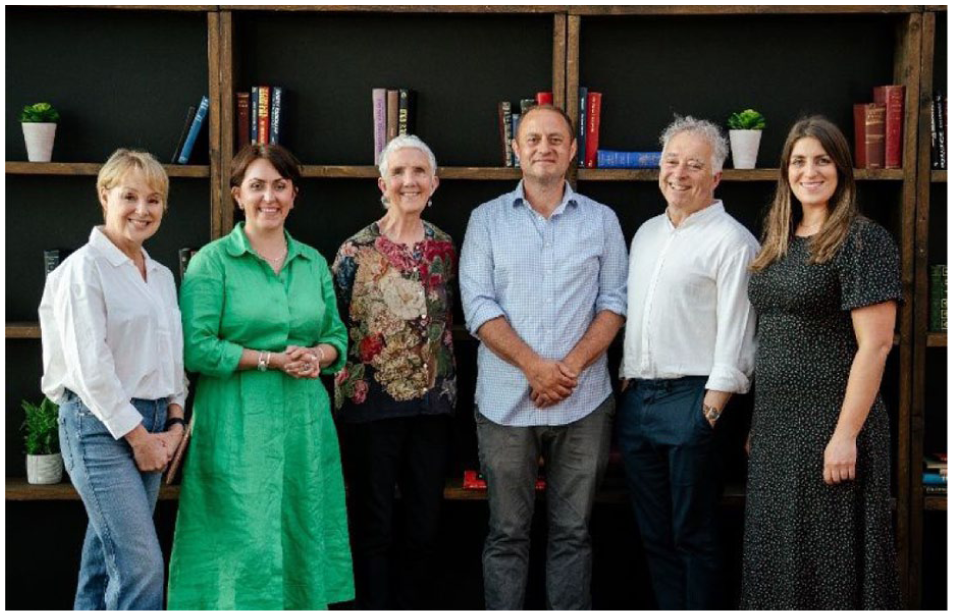
The Annual General Meeting (AGM) offered a crucial moment for reflection on the BNA’s trajectory and reaffirmed its strategic vision for the future. The organisation reported a stable financial position and continued growth in membership – key indicators of its robust health and increasing influence within the neuroscience community.
The AGM also served as a formal opportunity to express gratitude and acknowledge the invaluable contributions of BNA leadership – past, present, and future. Special thanks were extended to past President Professor Tara Spires-Jones (University of Edinburgh) and current President Professor Narender Ramnani (Royal Holloway, University of London). Their dedication and strategic guidance have been instrumental in shaping the BNA’s success and its ongoing development as a leading professional body. We were also delighted to welcome President-Elect Professor Julie Williams (Cardiff University) to the BNA Council.
The BNA continues to actively develop its multifaceted role in scientific advocacy, public engagement, and community building – all anchored in transparency, ambition, and a forward-looking perspective.

A shared future
The BNA2025 Festival of Neuroscience was defined by its warmth, vibrant energy, and a sense of shared purpose. Whether within the formal settings of plenary halls and poster sessions, or the more informal environments of workshops and social spaces, there was a consistent feeling of momentum and a strong, cohesive community. The gathering underscored the collective dedication to advancing neuroscience and translating discoveries for societal benefit.
The co-chairs of the meeting, Dr Dayne Beccano-Kelly (Cardiff University) and Dr Dorothy Tse (Edge Hill University), shared: We would like to thank everyone who joined BNA2025 and extend our appreciation to the BNA Executive Team, Programme Organising Committee, BNA2025 social media ambassadors, and the LNG for their efforts in making this event a success! To inform, connect, and influence is what the BNA values – we are committed to making connections, between academia and industry, researchers and clinicians, science and society. We are looking forward to seeing everyone at BNA2027 in Belfast!
As the BNA looks ahead to its next Festival in Belfast in 2027, the spirit and successes of BNA2025 will undoubtedly continue to inspire. This gathering affirmed that neuroscience is not only a rigorous scientific endeavour but a deeply human one – driven by curiosity, fostered through collaboration, and evolving to address today’s most complex questions about the brain and mind.

For more information, visit: https://meetings.bna.org.uk/bna2025/
Footnotes

Funding
The authors received no financial support for the research, authorship, and/or publication of this article.
Declaration of conflicting interests
The authors declared no potential conflicts of interest with respect to the research, authorship, and/or publication of this article.