




Abstract
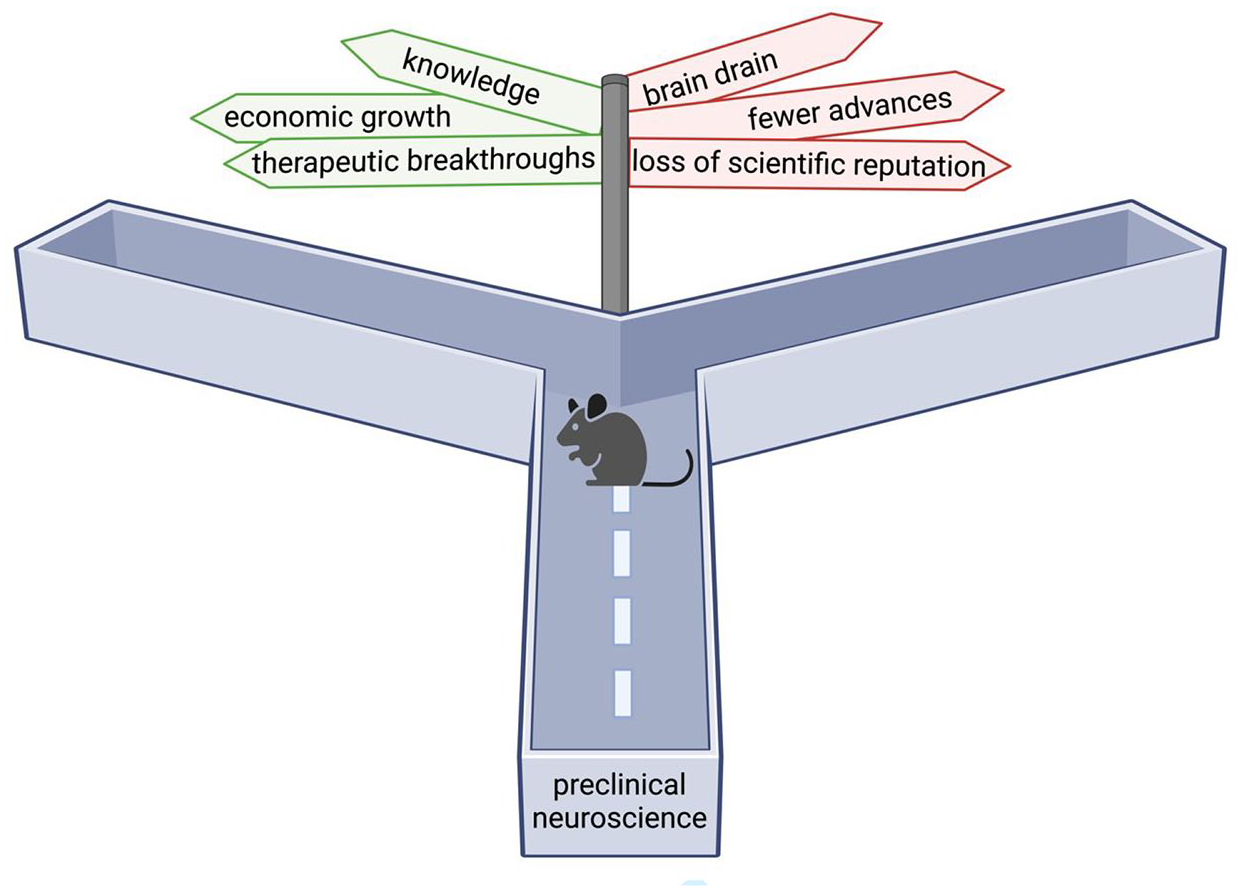
Created in BioRender. Spires-Jones, T. (2025) https://BioRender.com/g78w361
Over the past decade, there has been a prevailing move by funders, both in the United Kingdom and abroad, to focus science towards tackling particular health and societal challenges. The reasons behind this might, at first glance, seem entirely understandable. Mental health illnesses account for ~13% of the global burden of disease and are a leading cause of disability worldwide (see GBD 2019 Mental Disorders Collaborators, 2022; Holmes et al., 2018), and it is estimated that 1 in 2 people born in the United Kingdom today risk developing dementia and/or becoming a carer (Besley et al., 2023). Developing effective therapeutic strategies for these and other neurological and psychiatric conditions is therefore a research imperative, and the United Kingdom has been at the forefront of this endeavour.
Yet, experience has repeatedly shown us that key breakthroughs are often built on decades of fundamental preclinical research, driven by curiosity to understand basic biological mechanisms and without foreknowledge of what use they might bring in the future. Several vaccines that protected countless people from COVID-19 were founded on years of careful work in virology and structural biology to understand messenger RNA (Dolgin, 2021). Many of today’s most promising and innovative clinical treatments for brain and nervous system conditions, including neuroprosthetics, gene therapies and immunotherapies (e.g. Hochberg et al., 2012; Neul et al., 2023; Sahel et al., 2021), are the result of years of meticulous, basic discovery science. It is highly probable that some aspect of preclinical neuroscience research today will be the foundation for some future treatment.
The United Kingdom has a distinguished record of cultivating foundational preclinical neuroscience, a field spanning from basic research characterising fundamental processes in healthy animals through to research focused on identifying and testing potential treatments. However, there is a prevailing sentiment that this research area is being eroded by funding insufficiencies, career insecurity and excessive bureaucracy. These issues risk undermining morale and jeopardising the United Kingdom’s long-standing status as a global leader in this critical field.
To better understand the current landscape for UK preclinical neuroscience, in 2023 the British Neuroscience Association (BNA) invited responses from the research community to a survey covering their perceptions on how this field is supported, funded and regulated. The results, from 122 researchers, set out in our report (doi: https://doi.org/10.6084/m9.figshare.28044572), make for sobering reading: while most indicate a desire to stay working in preclinical neuroscience, there is widespread concern about the cumulative challenges that are undermining their ability to sustain research programmes. These concerns focus on three keys areas: (1) a need for prioritised research funding that accurately reflects the costs of state-of-the-art research, (2) supporting viable and sustainable career paths, and (3) reducing regulatory and bureaucratic burdens.
The BNA is committed to supporting the breadth of the preclinical community, and will continue to work with policymakers, foster partnerships between preclinical researchers with clinicians and industry, and promote best practices in this area. However, to sustain the United Kingdom as a leading global location for preclinical neuroscience, there is a need for concerted action from institutions, funders and the UK Government. Specifically, we call for them to implement the following 10 recommendations:
Research funders should provide prioritised funding for preclinical research – including basic discovery studies–within their existing neuroscience research funding calls, which reflects the increased costs of this work.
UK Research and Innovation (UKRI) should align and clarify their neuroscience funding calls and application processes so that preclinical neuroscience research proposals can be directed towards the grant panels with most relevant expertise.
Research funders should streamline the application processes to reduce administrative burdens, and implement resubmission options for strong proposals that are not initially funded.
Institutions should ensure that researchers have dedicated time within their job roles to prepare competitive funding applications.
Research funders and institutions should prioritise the development of programmes to support a range of long-term, sustainable careers for skilled preclinical neuroscience researchers, including schemes providing core funding for key technical staff.
UKRI should expedite its review of stipends for postgraduate researchers to ensure additional support is provided that better reflects their contribution to UK research.
The UK Government should develop a visa system that enables the United Kingdom to attract and retain preclinical research expertise, and reduce the disproportionate visa costs for talented international researchers.
The UK Home Office should increase its in-house expertise in preclinical neuroscience to ensure its licencing and regulatory decisions are consistently evidence-based.
The animal project licence application process should be streamlined to reduce administrative burdens that do not benefit animal welfare.
The inspectorate and institutions should work together to foster a more supportive, collaborative regulatory environment to reduce stresses and scrutiny felt by researchers while retaining the highest welfare standards.
Cutting-edge neuroscience research relies on highly specialised expertise developed through years of training, meaning any erosion of research infrastructure will have lasting ramifications for the United Kingdom’s leadership in this area. To remain at the forefront of this field and ensure we can catalyse the discoveries of tomorrow, we therefore must act now to shore up the foundations of UK preclinical neuroscience.
Footnotes
Acknowledgements
We would like to thank Joseph Clift and Grace Cooper for preparing the survey and processing the data.
Declaration of conflicting interests
The author(s) declared no potential conflicts of interest with respect to the research, authorship, and/or publication of this article.
Funding
The author(s) received no financial support for the research, authorship, and/or publication of this article.
