



Abstract
The purpose of this research is to explore how disabled social entrepreneurs deal with uncertainty, the role of technology in entrepreneurial activities, and gendered implications on social entrepreneurship with uncertainty.
The data are from understanding different secondary research that already exists on social entrepreneurship and disability, and the use of technology for the disabled. The discourse on social entrepreneurship and uncertainty, a mixed method of narrative and thematic analysis was chosen. The qualitative data have been analysed from peer-reviewed research papers, newspaper articles, journals and quantitative data from the global UN websites, and government.
Entrepreneurs with disabilities (EwDs) have links to higher resilience in uncertainties and competencies that attribute to the development of their social enterprise. Technology also acts as a catalyst for EwDs in the face of uncertainty.
An overarching limitation that emerged is the lack of data, and literature available on the implication of uncertainty in the context of disabled entrepreneurs.
Information on disabled women is also limited.
A social implication of this article is the empowerment of EwDs. They are equipped with entrepreneurial skills despite their disabilities. Besides, advocacy of technology can serve as a boon for the disabled community in the face of uncertainty. This research paper has been written using authentic data emerging from secondary research.
Introduction
‘Social entrepreneurship’ is a process by which an entrepreneur develops and finds solutions to issues that impact society directly. Social entrepreneurship is therefore an area that explores business opportunities that have a positive impact on marginalised communities, at large in the world (Peek, 2020). The term ‘social entrepreneurship’ starts with entrepreneurship. The prefix ‘social’ modifies the meaning of entrepreneurship, so entrepreneurship should have a crystal-clear meaning first. French economist Jean-Baptiste Say, in the early nineteenth century, defined an entrepreneur as one who shifts economic resources from a lesser zone into a zone of higher productivity and greater yield, translating from French as a person who undertakes a role to incorporate the concept of value creation (Menudo, O’Kean, 2015). The role of social capital in the formation of economic development consists of three dimensions that are ‘embeddedness, accessibility, and use’ (Leung & Xu, 2012). Opportunities available in social and official structures are influenced by the development of entrepreneurship. The first dimension ‘embeddedness’ is a state of social structure where a community of entrepreneurs embeds in the market completely. ‘Accessibility’ at the microeconomic level helps in the development of resources. ‘Use’ is defined as the action plan required by entrepreneurs to embed the resources from their networking and utilise it. If social capital is a precious resource of assets in an enterprise, then there is a strong connection between networking and action (Leung & Xu, 2012).
Social entrepreneurship is a novel idea in the field of entrepreneurship. The core idea of this is ‘opportunity identification, idea generation and innovation’ (Mair & Martí, 2006). In this context, recognition of opportunities is important and since social entrepreneurship is a newer concept, opportunity availability is in the primary stages. For a social entrepreneur, value recognition and integration are a must. To run a social venture, there is a necessity for relevant research and literature in the area, and an entrepreneur must be well-equipped with all the tools before starting a venture. One of the key aspects of social entrepreneurship is finding and adhering to ethical values with a social mindset, which differentiates it from commercial ventures. Skoll Foundation (2016) says that social entrepreneurship is a way to recognise opportunities to potentially bring transformative social change. A hybrid of entrepreneurship and government association, social ventures address problems that are slender in the scope of ‘legislative activism’ or attract private capital (Osberg & Martin, 2015). For success, these endeavours should adhere to their social goals and financial restrictions. The enterprise aims to benefit vulnerable groups of people, permanently transform their lives, and alter a prevailing socio-economic equilibrium that disadvantages those people. Often the target is an economically challenged group or segment of society that does not have any means to transform themselves into economic prospects without external help (Osberg & Martin, 2015). The inference from this is that the social enterprise must be financially sustainable and work towards the socio-economic equilibrium of the society. To attain financial sustainability, the enterprise should have costs that fall with a rise in beneficiaries, to allow ventures to reduce dependence on philanthropy.
In the study ‘The Social Context of Entrepreneurship’, a new way of social entrepreneurship research is presented, which emphasises the idea of development and nourishment of entrepreneurship in social spirit and on the social ground (Sheth, 2010). Social entrepreneurship is important for the skill development and economic development of socially disadvantaged groups of society. According to Prof. Muhammad Yunus, a social business entrepreneur, businesses are created and designed to address a social problem (Cosic, 2017). It is a no-loss, non-dividend company. It recalls the business model, emphasising that businesses are financially self-sustainable, and profits generated by the business must be reinvested within the enterprise itself increasing social impact. He distinguishes between a social business and a social enterprise because businesses do not seek profit whereas enterprises seek profit (Cosic, 2017).
The question arises, how?
Disability has always been considered as a shortcoming and drawback. When the topic of social entrepreneurship is discussed, one rarely thinks of a person with a disability. Within this discourse, if uncertainty or technology is associated, then there is a dire need to know ‘how or why’ they intersect with each other.
This article is aimed at briefly understanding social entrepreneurs with disability (EwD) in the context of uncertainty with nuanced discussion on technology and gender. In the literature review, the basic elements of entrepreneurship and uncertainty have been defined with identified relevant theories, methods and gaps in the existing research.
Literature Review
The Entrepreneurial Element
Entrepreneurs have been known to support the ‘economic equilibrium’ of society (Ekelund & Kirzner, 1974). The fundamental concept of entrepreneurship is awareness and understanding of the elements of business in the labour market. This concept of awareness is active, driven and conscious. It defines clearly the role of an entrepreneur in the labour market. This role consists of rational judgement, sourcing of useful resources and proper decision-making. Entrepreneurs are highly motivated to operate their enterprises to maximise returns. The maximisation of one’s endeavour results in maximum returns. An Austrian economist, Joseph Schumpeter, built on this basic notion of value creation contributing to the most significant idea of entrepreneurship (Vaz-Curado & Mueller, 2019). He identified that an entrepreneur drives economic progress, the absence of which will lead to static economies, immobilisation and decay. He identifies any commercial opportunity, material, product, business or service to be a venture that requires implementation. A successful entrepreneur contends, acts as a catalyst in the propagation of innovation to a point of ‘creative destruction: a state at which the new venture and all its related ventures effectively render existing products, services, and business models obsolete’ (Vaz-Curado & Mueller, 2019, p. 3). One can argue here that if an entrepreneur drives economic progress, thus a disabled entrepreneur is equally involved in the same.
Entrepreneurship is a sequence of administrative actions that are oriented to management. The six steps to good entrepreneurship are as follows: ‘opportunity identification, business orientation, resource identification, control over resources, management expertise and policy formation’ (BSCAL, 1997, p. 1). The traits with which an entrepreneur functions constitute the core nature and behaviour of their enterprise. Organisation creation undertakes the process of innovation and creativity on the part of an entrepreneur. An organisation is formed on the prospect of return; however, this prospect may/may not be only financial. A social entrepreneur analysis returns based on the social change, or ‘Theory of Change (TOC)’ 1 (Center for Theory of Change, 2011). When an entrepreneur creates a non-profit organisation, networking becomes the most crucial competency to survive in the economic market. The essence of social entrepreneurship is the expectation of value creation (Hans, 2021). However, there is dearth of understanding this notion of value creation for a disabled social entrepreneur. The Theory of Change relies solely on an umbrella term of social entrepreneurship, yet there is a lack of epistemology of social EwDs and their level of value creation.
Features of Social Entrepreneurship
Innovation is a tool used by entrepreneurs with which they explore changes as prospects, and learn from them to practice social entrepreneurship. Social entrepreneurs look for innovation in their opportunity identification to apply the principles of their core beliefs. As researchers search for processes outside of the traditional entrepreneurship models, they are keenly interested in finding more social models that impact society. Although the field is characterised by manifold paradigms, social impact opportunities are the defining element of social entrepreneurship (Mair & Marti Lanuza, 2005). Many researchers have shifted their focus on the personality of the social entrepreneur, their specific behaviour, or progression involved, and/or opportunity explored for social change. One of the other traits of social entrepreneurship is also focused on the personality of a social entrepreneur. However, the personality of an abled social entrepreneur versus a disabled entrepreneur is a key aspect of understanding their ecosystem for social change. The levels of motivation may differ based on the paradigm with which they have created their social enterprise. Researchers need to dissect the nuances of a social entrepreneur with a disability to go in-depth into the problem statement.
The fundamental principle of social entrepreneurship is that if this field must become a structured research area, efforts must be made to clarify and describe key concepts (Certo & Miller, 2008). From this notion, social entrepreneurship can identify and elaborate the changes required in society yet the structures are lacking chunks of data on disabled entrepreneurs, and the roles of their disability in their ventures. Does social entrepreneurship understand diverse disabilities? Or the ideas of invisible disabilities? These are a must explore topics that still remain a gap in the current academic sectors.
According to a study, this sociological perspective has not been widely used in entrepreneurship, so there is a dearth of interpretation on the topic of social entrepreneurship, hence, the relevance of this point of view is missing for varied minorities (Ortiz García & Olaz Capitán, 2021).
Social Entrepreneurship in Transforming Society
Social entrepreneurship is a course of change, development of the economy and sustainable livelihood. It is used as a tool for growth in inclusion and diversity. It has an important role to play in society concerning economic and social context. With the concept of value creation, social entrepreneurs help marginalised sections of society that have been neglected. This expansion of social services in developing nations is offering the utmost opportunities for creating systemic change. The most common aspect of social entrepreneurship is the social mission it is based on. It creates newer models for the establishment of products and services in a way that contributes rightly to basic human needs, the ones that go unfulfilled in current economic structures (Cosic, 2017). For example, an institution based on a medical model can deliver medicines to those in need in poorer nations. A more practical example is ‘Grameen Bank’, a private bank created for removing poverty in Bangladesh by Muhammad Yunus, to particularly focus on women. Through the programs created by this bank, women who were excluded socially are now able to partake in their communities and feel empowered (Cosic, 2017). Therefore, if there is a blind entrepreneur running an enterprise, it becomes essential to know their economic/social structure for the right understanding of value creation. Perhaps a person with a rare disability is hiring only people with rare disabilities. This consideration leads one to know the depth of the entrepreneur’s capacity and ideology.
It can be argued that if social entrepreneurship provides help in social transformation, changes norms and creates new ways of empowerment through social capital then one must know the role of every type of disabled entrepreneur and their motivation factor.
Social Entrepreneurship in the Context of Disability
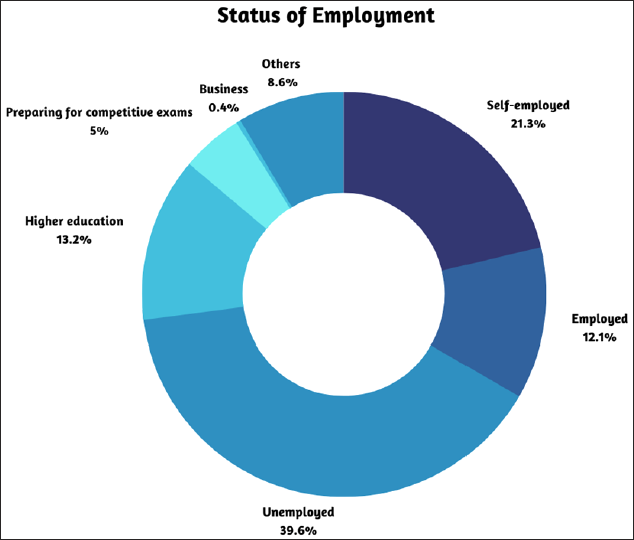
A person with a disability may be affected by a wide range of socio-economic consequences, which include labour market participation. People with disabilities (PwDs) face many blocks in accessing the labour market and their disability is considered to have a constant negative effect on market outcomes, including the rate of employment and incomes (Horemykina & Kotenko, 2020). The variation in the type of disability concerning type or severity influences entrepreneur participation rates, types of profession and earnings (Horemykina & Kotenko, 2020). For example, locomotor disability may restrict mobility that impacts employment prospects, mental health may put challenges with understanding and learning. Disabled people also face difficulties from discrimination, as perceptions of people about individuals’ capacity to work may be very different from their actual capacities to work (IDEA, 2022). From the survey done by the Inclusive Divyangjan Entrepreneur Association (IDEA), from a sample size of 1,111 people, the total percentage of self-employed people is 21.3%, whereas the unemployed disabled population is 39.6%, 12.1% employed, 17.2% in education and rest others (IDEA, 2022) (Figure 1). From this dataset, it is evident that a relatively good number of people are opting for self-employment yet it remains unknown as to why or how? If it is due to lack of job opportunities then the same can be correlated to ‘helplessness’ in starting ventures/micro businesses. The ambiguity of self-employed versus employed is a gap that needs to be analysed.
Research shows that out of 13.4 million disabled people in India, only 3.4 million PwDs are the employable age holding any type of job in India. In total, 74% of persons with physical disabilities and 94% of persons with mental disabilities are unemployed (United Nations, n.d.). Any individual’s choice to entrepreneurship is influenced by various factors. One of the factors is the calculation of opportunity costs. For example, if being self-employed has more benefits than being unemployed or employed by an organisation, then decisions will be accordingly made towards self-employment (Arum & Müller, 2004). This leads to the creation of a social entrepreneur with a disability yet the research arguments only reflect the ‘choice’ of starting a venture by a disabled person, and there is a lack of data on ‘the social compulsion’ of starting a business. The most important factor for becoming an entrepreneur is the level of self-motivation, as it leads to positive results. If self-motivation is not driven by a proper mindset, a social entrepreneur with a disability may fail. If Csikszentmihalyi’s ‘flow theory’ is referred to, motivation is achieved or maintained through a person’s capabilities to deal with the wants of the specific situation. If the person is not capable of performing the task, they are likely to abandon it (Csikszentmihalyi, 1990, p. 3).
If it is assumed that the data are only of social entrepreneurs who have chosen entrepreneurship then, proper advocacy of EwDs can diminish disadvantages for many PwDs. In this context, technology also plays a vital role to achieve and maintain labour market participation. Assistive technologies (ATs), accessible applications and websites, enable disabled people to be an economically contributing part of society. For example, a prosthetic leg or artificial limbs can enhance the capabilities and self-esteem of a person with a disability, and they can start their ventures.
Social enterprises help to ensure that people can fully participate in the economy without difficulties. A societal problem that is prevalent in the disability sector is the failure to acknowledge the complexity of physical conditions and income. From Divyangjan Aspiration Study, 2021–2022, it is concluded that disability has both cause and effect, and disabled entrepreneurs often face challenges in other people’s attitudes rather than their own physical/mental shortcomings (IDEA, 2022). Any cause has its effects and based on this notion; the social entrepreneur creates more ways to form an egalitarian society through their social ventures. This notion is related to the social entrepreneurship pedagogy that identifies opportunities in our postcolonial society through intersections of caste, class and gender (IDEA, 2022). Hence, EwDs tend to create more social roles through their ventures than the rest of the abled population, effectively providing services in empowering individuals or groups. Social EwDs discover opportunities, analyse the public service system, and lack of resources for marginalised groups, and address these issues with much rigour and ferocity. They understand that their discrimination is part of a deep-rooted mindset problem, and their social undertaking is intertwined with the solution. Entrepreneurship is a nexus of prospect and agency, where one is not a singular phenomenon distinctive to one, it works as a duality of social opportunity and entrepreneurship. This dualism gives rise to various exploration possibilities and says that two constructs cannot exist without another (Sarason et al., 2006).
Role of Gender in Social Entrepreneurs’ Enterprise Structure
Female entrepreneurship and gendered implications on social entrepreneurship are an area that is considered to be an untapped source of economic progression. Within the economic market, women entrepreneurs are a minority as compared to other entrepreneurs, considering that women with disabilities who become social entrepreneurs are among the rarest in the pool of entrepreneurs who are non-disabled (Balarin, 2011). Balarin stops their study after stating that disabled women social entrepreneurs are scarce. Their market failure and neglect shown towards them is not addressed by stakeholders and the economic contributions of women with disabilities are not holistically advocated.
Women who become entrepreneurs and pursue the field of social entrepreneurship continuously shatter the gender inequalities existing within this field. The sector of social entrepreneurship has immensely proven to be highly capable of having empowered women social entrepreneurs who are working on empowering the lives of non-disabled and disabled women (Balarin, 2011). However, there is a continuous lack of data surrounding this and not enough analysis furthers this argument.
From the Divyangjan Aspiration study, 2021–2022, it is found that there is a large disparity in women with disabilities in each of the 21 defined categories of disabilities. It is not that women with disabilities do not exist, rather, they have skewed participation in every survey, work, or marketplace because of the existing gender statuses (Figure 2).
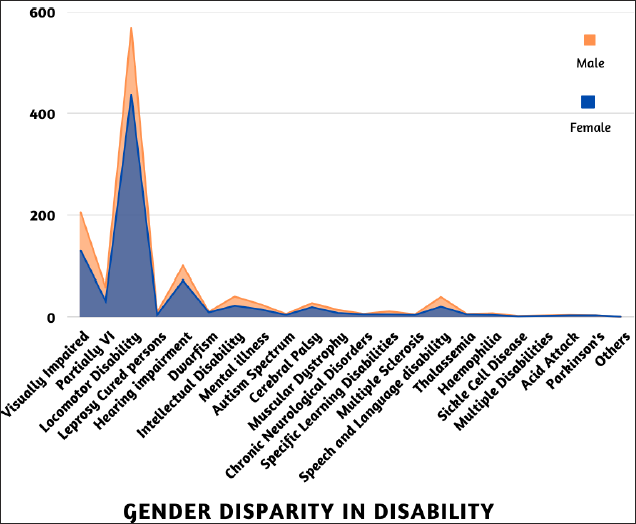
Discussion around women, entrepreneurship and disability centres around the position and role of women within society and the role and relevance are given to entrepreneurship in the context of women or otherwise. Women with disabilities undergo numerous challenges both familial and societal to have access to the same opportunities as others or non-disabled per se. Equal participation of non-disabled women has to be imperative for ameliorating the role of disabled and non-disabled women as self-employed individuals. Women social entrepreneurs and their technology usage and inclusive business practices are highly common, often aimed at benefiting the life of those neglected (Rosca et al., 2020). The ‘role’ of women social entrepreneurs with a disability can establish their motives for their ventures and help in value creation yet the lack of data is astonishing.
Entrepreneurship of women in the marketplace or workplace involves gendered aspects of equal rights, accessibility and capability of women who are non-disabled also to develop and open their ventures (Rosca et al., 2020). Entrepreneurship is often seen as an arduous path for persons with disabilities, especially for disabled women. In the context of women entrepreneurs in uncertainties especially in developing and low-income economies, they display adjustments between cause-and-effect factors in their business venture process. Therefore, to erase the gender and disability inequalities that exist in social entrepreneurship the need for a gender-balanced social innovation ecosystem has to be made that addresses systemic needs in social entrepreneurship (Ali et al., 2018).
Defining Uncertainty
Uncertainty refers to a state of being uncertain or not aware of future situations (Chen et al., 2010). In the context of disability, it is important to analyse the influences of uncertainty on the psychological, physical and socioeconomic being of PwDs. In situations of uncertainty, an unknown crisis causes circumstances that have a massive impact on the disabled community. The sudden shift in the economic, political and social condition of society needs radical adjustment for disabled entrepreneurs to adapt and grow.
Uncertainty is a fundamental aspect of human life. Everything can be uncertain from the weather to emotions to the lifespan of a human. With uncertainty, affective feelings are associated that say that people experience feelings and reactions according to uncertainty. For example, anger, happiness, anxiety, etc., related to social interaction, perhaps traffic or a movie (Anderson et al., 2019). There are layers to uncertainty and people’s reactions associated with it. Typically, uncertainty is associated with aversion, however, sometimes, people find it to be attractive in an adrenaline-inducing way. For example, watching a thriller movie or sports. Researchers from the field of psychology are trying to understand why and how people react to uncertainty and have offered some explanations that may or may not be widely accepted (Anderson et al., 2019). It can especially be daunting for a person with a disability, it can be argued that uncertainty exists as conscious awareness in human beings. Every person is aware of unexpected events in their life and has some basic level of preparedness. The primary goal is to understand the relationship between the effect and consequential experiences of a person during uncertainty. This can be understood by what is uncertainty in a person’s life and to what degree it inconveniences them.
There are three clear markers to distinguish sources of uncertainty. First is the probability or risk factor, which arises due to the indeterminacy of the future (Anderson et al., 2019). Second is the ambiguity from lack of information, indeterminacy and risk factors. Third is the complexity of uncertainty that arises from the possibilities of different outcomes (Anderson et al., 2019). These three factors intertwine and create an environment of conscious awareness in a person towards uncertainty or unmet situations. There are some gaps in the existing literature regarding the business/entrepreneurial aspects of uncertainty, and most studies focus on the psychological manifestations rather.
It is evident from the literature review that there are glaring gaps in current datasets on disabled social entrepreneurs with disability, and their role in uncertain times. One can perhaps map out the themes from some areas, but they are widely unsubstantiated. The central themes that have been deduced from the review of the secondary literature is that there is need for nuanced discussion on social enterprises owned PwDs, and peripheral factors that make up such an entrepreneur cannot be ignored.
Research Questions/Objectives
Mapping the intersection of social EwDs during uncertainties.
Role of gender in social entrepreneurs’ enterprise structure, system and process in uncertain situations.
How does technology intersect with a person with disabilities’ social enterprise in uncertain situations?
Uncertainty and Disability: Understanding Frameworks
The most important function of a social entrepreneur is their independence of work and their ability to undertake risks. Their innovation, with their ability to act on said innovation, is unusual. The reason for the development of collective behaviour is the internalisation of social prejudices and for persons with disability to create businesses and work, such internalisation must be eradicated (Chen et al., 2010). Entrepreneur with a disability faces more obstacles than their abled counterpart in the expansion of business relationships, even though networking is an important aspect of their entrepreneurial projects.
In the analysis of uncertainty and disability, the social role valorisation (SRV) framework and theory of change is an important tool. A social entrepreneur with a disability faces a higher degree of inconvenience in an unforeseen event, hence it is necessary to analyse their socially valued roles.
Social Role Valorisation
SRV is a diverse set of ideas that are used to bring positive changes in the lives of disadvantaged people in society (Thomas, 2019). SRV is specifically used in making provisions for people with impairments, however, it can be used to uplift any person or marginalised community. A fundamental tenet of SRV is role theory, which is the role-valorising that describes the role of a person in a social environment. SRV model defines that good things happen to those who have valued social roles as opposed to those having devalued social roles, which usually persons with disabilities face. People with devalued social roles have a difficult time accessing better opportunities in life and achieving a positive social status. The key to obtaining societal benefits in any culture depends on an individual’s social status (Thomas, 2019). SRV is easily implemented by a motivated person on all levels, and this model taps into all existing practices in social science research. Formulated by Wolf Wolfensberger, PhD, in 1983, this model was a successor of the principle of normalisation (Wolfensberger, 1972, 1983). The principle of normalisation in human services is a provision of patterns of intellectually challenged individuals in their everyday lives concerning mainstream society (Wolfensberger, 1972, 1983). SRV model argues that persons with disabilities, specifically social EwDs, struggle with their valued roles in society. Therefore, an entrepreneur with a disability is better prepared in uncertain situations as they have struggled to achieve those valued roles. If an EwD taps into all existing practices in social science based on this framework, then they must have tapped into provisions for unforeseen situations as they know the value of an unforeseen disaster because of their disability. Another aspect of SRV is that disabled person holds various roles in their social life, which can include a father, entrepreneur, teacher, musician, son, painter, etc., which is an essential tool in understanding their need for stability and value creation (IDEA, 2022). Entrepreneur with a disability works extremely hard to attend these valued roles and set up their social enterprise so knowing the importance of their struggle they are extremely cautious and prepared for uncertainty.
Theory of Change
Another framework for analysing uncertainty and disability is the ‘theory of change’. The theory of change helps social entrepreneurs identify the pathways and interventions for an enterprise’s success and is a widely used tool for social entrepreneurs. It helps them to map out ways that lead the organisation to intended positive change in society (Center for Theory of Change, 2011). It can be understood as a robust solution that measures and outlines contextualised ways in which an organisation can bring social change. In the context of disability, entrepreneurs use the theory of change to form a relationship that transforms any problematic scenario into the desired pathway of change. This process is built on a strong set of past data, which is supported by current data and future assumptions in the relevant socio-economic context. This framework has specific indicators that indicate progress towards social goals. Hence, the theory of change is an important tool in uncertainties for disabled entrepreneurs as it maps the changing political and economic climate, which may also predict uncertainty (Yolles & Frieden, 2005).
If the losses of a social entrepreneur with a disability are to be calculated, it can be asserted that due to their own unique experiences with physical/mental pain and loss, oftentimes, they have more insight into an unmet situation, which reflects onto their entrepreneurial activities. Thus, one can assume that if more social EwDs pursue social ventures, more societal ills that plague society can be addressed and eradicated. The unmet situations that are being spoken of are any uncertainties that a social entrepreneur with a disability may face.
Economic Model of Disability
Another important aspect of uncertainty is the financial implications of an unforeseen event. In the economic model of disability, a person’s inability to work is described (Models of Disability: Key to Perspective, 2019). It assesses the degree of impairment that affects a person’s ability to be productive and the economic consequences to the individual, their organisation, and the state. Such consequences are stated as loss of earnings, lower profit margins or any other sudden payments. This model is used in purely economic terms for understanding the labour market and its implications for disabled people. The value of labour is based on marginal costs, which work when employees make equal contributions. In situations of uncertainty, the economic model is used by the disabled for bearing the loss of earnings. The benefits of social security are not designed to uplift the disabled population from poverty. A balance set in equity and efficiency is the true value of an economic model (Models of Disability: Key to Perspective, 2019). Hence, in the macroeconomic context and any extraordinary event, this model maintains balance for PwDs. To explore an opportunity, an entrepreneur must believe that the value of profit from the venture will be enough to reimburse for the cost of other alternatives, like the premium for uncertainty. Does this concept apply to PwDs in this context? If there a social uncertainty or an endeavour, what will PwDs do? What are their feasible options? To answer this question, it is important to understand that the higher the joblessness or ‘no work’ among PwDs, the higher the stigma/discrimination attached to them. Also, during the face of uncertainty, PwDs face increased poverty and other social challenges that other people do not. What is the value of a social EwD? The answer is that their social endeavour gain is much higher than any specific personal benefit they may get. Social EwD have a much higher responsibility than usual entrepreneurs, as they are not only accountable to their stakeholders but to society at large (IDEA, 2022).
Role of Technology in Disability Inclusion
Technological advancements have led to the emergence of hope among the disabled community. Despite multiple obstacles, several interventions have been taken to use information and communications technology to overcome uncertainties faced by persons with disabilities (IDEA, 2022).
AT has paved the way for opening new avenues for the social inclusion of persons with disabilities since many of them need AT to carry out their daily activities as compared to the non-disabled community. AT is nowadays used by everyone irrespective of whether being disabled or non-disabled; therefore, it is imperative that everyone can equally benefit from Information and Communications Technology and participate in a barrier-free and accessible technology and information society (Eid, n.d.).
The rapid development and use of AT are a boon for society. Though AT does not directly aim towards entrepreneurship development, the technology comes in handy in any venture creation in several ways. First, improving an individual’s potential to equally function in society increases their chances of becoming an entrepreneur (Saleem et al., 2020).
The second benefit of AT for disabled social entrepreneurs is that networking and communication with clients, market suppliers and business partners would become easier for them and enable them to grow their businesses. Since there are diverse disabilities, every disabled person will adopt a channel depending on their suitability. For example, a disabled entrepreneur in a wheelchair will want to use emails instead of calls and face-to-face communication especially if they are needed to visit someone in an unknown or inaccessible location for them. Technology can also enable a person with a disability to control and manage the business and continuously evolve it. Efforts and management of data are required with monitoring and evaluation, which can be done only when the software’s data management systems are compatible (Vaziri et al., 2014) Additionally, AT and information technology can facilitate entrepreneurship for persons with diverse disabilities.
Technology and innovation are both inevitably included in entrepreneurship. While innovation helps in bringing new services and products to market, an entrepreneur who also plays the role of an innovator introduces various production techniques to improve and expand their businesses (Shirvani, 2016). Researchers view innovation as a prime organisational process for survival and regular performance in evolving market conditions (Saleem et al., 2020).
Technological change is a major impetus for long-term economic growth. Uncertainty is often used interchangeably with risk, then refers to adverse events or consequences of the decision. Risk and uncertainty are perceived and seen differently by diverse communities with risk as a narrow spectrum (van der Keur et al., 2016). There is an increased level of uncertainty that surrounds economic growth. In the face of uncertainty, therefore, the argument around investing more in technology in improving internal processes should be extremely necessary. Diverse technologies allow for streamlining and improving processes and functions (Kande, 2019).
Digital technologies enable us to develop economies and provide opportunities to create resilience and make efficient delivery of outcomes across every policy area such as disaster management, accessibility to the internet, smartphones, artificial intelligence and other technologies that can contribute towards reduced risk analysis. Evidence from many countries indicates that technology and innovation are contributing to a comprehensive, accurate and timely intervention for disaster risk management. The uncertainty regarding the level of risk can result in many funding strategies and increase the cost of disasters in financial and societal terms (ADB, 2020). Thus, increased public acceptance towards technologies such as AT becomes crucial to create datasets necessary for applying these technologies. Developing diverse strategies and interventions in the ever-changing domain of digital transformation requires a foresight approach.
Social EwDs can thus use technology in uncertain situations to tackle the circumstance. One example that the whole world saw was the COVID-19 pandemic and its effect on the world. It was a man-made unforeseen uncertainty that affected everyone, especially EwDs. The digital transformation combined has led to the growth of online work, learning and politics (Boot et al., 2019).
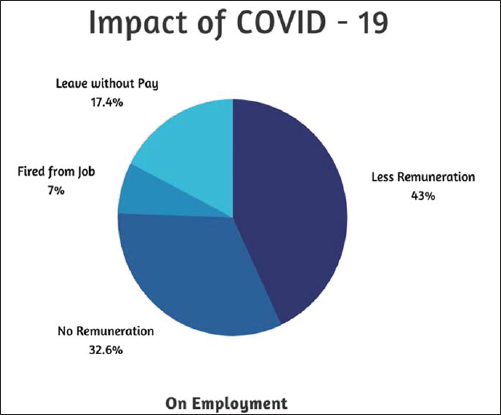
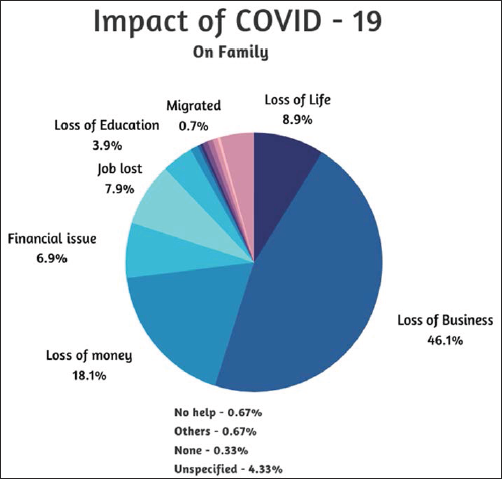
COVID-19 caused various problems for PwDs, such as access to information about COVID-19 and government policies, and the government’s inefficiency to fulfil their needs. During the pandemic, there have been positive impacts for persons with disabilities such as internet access during COVID-19, and the ability to participate in society (Shakespeare et al., 2021). Without access to computers and the internet, persons with disabilities are unable to receive the same opportunities, which can be social, economic or educational. This disparity in the accessibility of technology increases the gap further (Moist, 2013). A literature review on technology and disability has brought to light that most computers helped persons with disabilities to carry out different tasks. But technology has also enabled persons with disabilities to perform tasks and communicate independently without assistance. Although every individual was affected by the pandemic, EwDs were the worst. Many lost their businesses, as analysed from the Divyangjan Aspiration study, 2021–2022, with 46.1% losing their businesses. This concludes that uncertainty hits harder on entrepreneurs, especially the ones in the social sector. However, from the case study analysis done with many social EwDs, it is evident that most of them tackled COVID-19 pandemic’s distress with larger rigour, and understanding. For example, Sumit Agarwal, an entrepreneur from West Bengal noted that he was able to employ more people in his venture due to digital transformation and work-from-home opportunities. Similarly, Samarthanam Trust explained that they were able to open digital libraries and provide many students with laptops/smartphones which increased their enterprises’ productivity (IDEA, 2022). EwDs have faced challenges to achieve their social status, thus they are always prepared for an uncertain situation and with technology, they can turn ideas into action. Thus, in situations of uncertainty, it can be inferred that technology has helped social EwDs (Figures 3 and 4).
Methodology
The aim of this research was to map the intersection of social EwDs during uncertainties, understand the role of gender plays in social entrepreneurs’ enterprise structure and system, and how technology intersects with a person with disabilities’ social enterprise in uncertain situations.
Conceptual Framework
The research method that was chosen is secondary data analysis and mainly used data that was collected by IDEA in 2021–2022 for the ‘Divyangjan Aspiration Study’. For the discourse on social entrepreneurship and uncertainty, a mixed method of narrative and thematic analysis was chosen (Figure 5). The qualitative data have been analysed from peer-reviewed research papers, newspaper articles, journals and quantitative data from the global UN websites and government databases. A mix of qualitative and quantitative data was taken from ‘Divyangjan Aspiration Study’ on disability, social entrepreneurship and current business examples. One unique approach that was taken was to extract data from case studies conducted by IDEA on 21 different organisations representing 21 diverse disabilities to understand the role of technology during uncertain situations, and how different disabilities are affected. The data collected on the framework came from four in-depth seminars on SRV, five expert sessions on the Theory of Change and two peer-reviewed papers on the Economic Model of Disability. The frameworks were used to validate the hypothesis of uncertainty and disability.
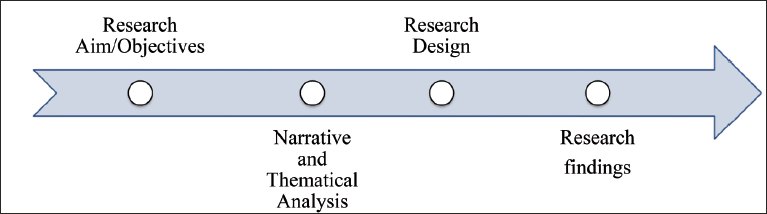
In total, 28 research papers, 21 case studies, 5 FDGs that were a part of the Divyangjan Aspiration Study and 3 frameworks to deduce the findings were analysed.
The analysis was done through Word Excel, Survey results from IDEA’s data, keen observation and perceiving trend analysis on disability/social entrepreneurship from past datasets.
This method of data analysis was chosen to understand countable or measurable patterns or more interpretive ones to come to our conclusion.
Limitations
There was not enough data on disability, gender and social entrepreneurship. The data on disabled social entrepreneurs during uncertain situations were also limited.
Findings
The following are the findings from our data analysis:
PwDs are psychologically more equipped to handle uncertainties as their disability gives them resilience, however, in uncertain situations, it is physically more challenging than an able-bodied entrepreneur to cope with the situation. The nuances of different disabilities also play a factor in facing different challenges during uncertainties. Women EwDs find it much harder to tackle uncertainties since they are already double discriminated against on the grounds of their gender and physical conditions. Generally, women face barriers due to their social standing in society to entrepreneurship, and technology. Hence, in situations of uncertainty, women social entrepreneurs face huge difficulties. Taking COVID-19 as a database to identify the lives of EwDs during uncertainties showed that technology played a major role in furthering and sustaining their venture. Most social enterprises led by PwDs during COVID-19 have emerged as quite successful for micro- and nano-social entrepreneurs due to the digitalisation of working platforms. During uncertain situations technology is a boon for PwDs, especially people who have a visual impairment, locomotor disability and/or any disability that limits their mobility or action. Technology acts as a catalyst for EwDs in the face of uncertainty.
Discussion
Our findings, which are consistent with the number of studies conducted on social entrepreneurship, disability and uncertainty, suggest that a person’s decision to delve into social entrepreneurship is highly influenced by internal and external factors and for persons with disabilities this choice of venturing towards self-employment mostly comes out of extreme uncertainties and the dire necessity to support themselves and their families. Oftentimes, many of the Divyangjan entrepreneurs through their businesses transform into social entrepreneurs by opening avenues for other persons with disabilities either by recruiting them in their work or empowering them to start their entrepreneurial journey despite the uncertainties that come their way. By doing this they are not only empowering and creating change in their lives but also creating a social change for other persons with disabilities and their livelihoods.
Our findings also display that persons with disabilities have greater resilience to overcome uncertainties, case study results indicate that many persons with disabilities are forthcoming to become entrepreneurs in the face of adversities, such as COVID-19 and loss of job, but there continue to exist factors, such as gender, degree and types of disability, that can greatly impact the decision of a person becoming a social entrepreneur.
Existing research also indicates that the most important factor for becoming self-employed might be self-motivation, as it is the driver which results from factors like opportunity costs or independence (Wickham, 2006). Referring to Csikszentmihalyi’s flow theory, motivation can be achieved or maintained if a person’s capabilities are sufficient to cope with the demands of a specific situation.
Interesting findings from the Divyangjan Aspiration Study, 2021–2022, also reveal that COVID-19 and the role of technology towards social entrepreneurship was a boon as it enabled them in furthering and sustaining their venture.
If some examples are taken, social entrepreneurs from Miti Cafe were able to create change in their society by providing relief and support in kind who needed it most during COVID-19. Other social entrepreneurs like Sumit Agarwal, a person with cerebral palsy through his marketing and social media and technological skills were supporting other companies in their work by working from home, thus proving the fact that despite uncertain times, technology and work-from-home opportunities made it accessible for persons with disabilities to continue their entrepreneurial journey (IDEA, 2022). Supporting evidence also points towards the positive outcome of technology for the disabled, that is, improving an individual’s ability to participate in society increases their self-esteem and confidence, increasing the likelihood of starting a business (Seelman, 2008). Collecting and managing information is critical for full participation in today’s society and various ATs enable people with different kinds of disabilities to have access to computer systems.
The strength of our research is the emphasis on the lives and experiences of disabled social entrepreneurs because persons with disabilities constitute about 2.1% of India’s population (Census, 2011) and the percentage is likely to have increased over the years. Being the most underrepresented and marginalised in terms of equal and full participation focusing on persons with disabilities as social entrepreneurs is a space that is not emphasised by many, therefore to view disability, social entrepreneurship and uncertainty through an entrepreneurial lens and perspective will bring into per view the relevance of persons with disabilities as economic assets and contributors towards country’s growth. Besides, persons with disabilities should not be perceived as a liability when faced with uncertain situations but as individuals who can overcome adversities and generate livelihood opportunities for themselves and the disabled community.
In an evolving developing society like India, the contribution of disabled social entrepreneurs would create an impetus for growth in multiple sectors, especially in uncertain situations, with COVID-19 serving as the perfect example for this statement.
Conclusion
This article aimed at understanding and analyse the intersection of social EwDs during uncertain situations and the impact of technology in enabling PwDs to overcome challenges. Based on our analysis from our research and existing literature review it can be concluded technology plays a crucial role for persons with diverse disabilities to achieve and maintain their businesses/ventures.
Persons with disabilities are never perceived as social entrepreneurs but on the contrary, they have the potential to transform into brilliant social entrepreneurs. Social entrepreneurs are known as ‘change agents’ (Nicholls, 2006). During uncertainties persons with disabilities go through the process of resolving the hurdles and by this sometimes, they also initiate entrepreneurship to address the problem created by the uncertain situation.
As an organisation, the IDEA brings together persons with disabilities who want to become social entrepreneurs and provides the disabled community with the ‘power of economic independence’ by developing credible entrepreneurship opportunities for them.
Uncertainty is inevitable, and it comes with its limitations but, if handled smartly, it can open up possibilities for the public in the areas of innovation and technology to elevate social change in situations of crisis. Technology and innovative ideas are key points in addressing changes created by uncertainty, and they especially are beneficial to social EwDs in elevating their businesses.
Footnotes
Acknowledgements
We would like to thank Inclusive Divyangjan Entrepreneur Association (IDEA) for the knowledge and support received from its Incubation, Placement, Communication and Accessibility team for contributing their insights into the aspects of disability, uncertainty and social entrepreneurship.
Our sincere gratitude also to the esteemed organisations; The Hans Foundation, SAKSHAM (Samadrishti Kshamata Vikas Evam Anusandhan Mandal) and RIST (Rural India Support Trust), and Humanity and Inclusion for supporting us throughout the trajectory of contributing towards the Divyangjan Aspiration Study.
Declaration of Conflicting Interests
The authors declared no potential conflicts of interest with respect to the research, authorship and/or publication of this article.
Funding
The authors received no financial support for the research, authorship and/or publication of this article.
