



Abstract
Evidence yields gender effects in entrepreneurial intention formation. Particularly, findings suggest that men show higher commercial, that is, financially driven intentions (CEI) while women favour social, that is, mission-driven entrepreneurial intention (SEI). Gender self-stereotyping (GSS) as the tendency to self-attribute typical masculine/feminine characteristics correspondently with one’s sex, is proposed as one reason for these differences. However, current research falls short of a comprehensive empirical examination. Our study combines GSS, CEI and SEI in one integrative model postulating direct and indirect GSS effects on CEI and SEI via two pathways (perceived ability-misfit and perceived identity-misfit). Furthermore, we explore mentoring as a moderator. Statistically examining 214 nascent entrepreneurs with structural equation modelling indicates a full mediation of GSS effects via perceived ability-misfit pathway for CEI. For males, this effect was moderated by mentoring. No GSS effects for the other pathway or SEI emerged. Despite acknowledgeable limitations, our study deepens knowledge on how GSS affects entrepreneurial intention formation.
Keywords
Entrepreneurship is considered a driver of innovativeness, job creation and national economic development (van Praag & Versloot, 2007). Traditionally, entrepreneurial activity was almost exclusively seen as a means to generate revenue and wealth for the entrepreneur and his or her stakeholders (see Murphy et al., 2006 for an overview). However, starting in the 1980s, the scope of entrepreneurial behaviour widened (cf. Young, 1983). Social entrepreneurship is a new entrepreneurial form combining the creation of social and financial value. It is driven by a social mission, yet, in contrast to traditional donor-financed non-profit organisations, pursues this mission based on an elaborated income strategy (Austin et al., 2006; Stephan et al., 2016). Thus, social entrepreneurship is conceptualised as ‘hybrid’ (Kruse, 2020; Tracey & Phillips, 2007) and considered an essential tool to achieve a socially sustainable economy, for example, by contributing to the United Nations Sustainable Development Goals (George et al., 2016; Howard-Grenville et al., 2019).
One central antecedent of every entrepreneurial activity is the existence of an entrepreneurial intention (EI). Due to the innate complexity of founding one’s own enterprise, an intention alone does not guarantee the creation of an enterprise (Meoli et al., 2020). However, it is a necessary pre-condition as ‘before there can be entrepreneurship, there must be the potential for entrepreneurship’ (Krueger & Brazeal, 1994, p. 91). Acknowledging the vital role of EI in the entrepreneurial process, a growing number of studies emerged exploring potential antecedents of commercial (CEI) and social entrepreneurial intention (SEI) (Kruse et al., 2021; Schlaegel & Koenig, 2014; Zhao et al., 2010). This led to a consolidating knowledge base and uncovered notable differences among antecedents of CEI and SEI (Wach et al., 2023). One of the most consistent differences lies in higher levels of CEI among men and higher levels of SEI among women (see Chipeta et al., 2016, 2020; Lopes et al. (in press) for examples).
Looking for reasons for this difference beyond chromosome-based biological sex, gender has been put forward (cf. Bergner et al., 2022; Laguía et al., 2019; Vercruysse & Birkner, 2021). Gender is a socially constructed identity that refers to an individual’s identification with cultural and social roles. In fact, there is growing empirical evidence that gender self-stereotyping (GSS) as the tendency of individuals to more or less identify with traditional gender role characteristics, impacts their EI formation (BarNir, 2021; Gupta et al., 2008; Sweida & Reichard, 2013). Commercial and social entrepreneurship has been identified as ‘gendered career paths’ (Chipeta et al., 2020, p. 27). Considering solid findings on a stereotypical perception of commercial entrepreneurs as ‘more masculine’ and social entrepreneurs as ‘more feminine’ among active and nascent entrepreneurs (Bönte & Piegeler, 2013; Gupta et al., 2019; Swail & Marlow, 2018), GSS seems a promising candidate to explain differences in CEI and SEI among men and women. However, three central shortcomings limit further progress:
First, to the best of our knowledge, no empirical studies linking GSS, CEI and SEI exist. As research on GSS and general EI alone falls short of acknowledging the apparent differences between the two entrepreneurial forms, a more fine-grained investigation is needed.
Second, the mechanisms on how GSS relates to CEI and SEI remain ill-understood. Conceptually, scholars propose that GSS may affect EI formation through two mediators: Perceived ability misfit (e.g. women with high GSS believe to be less competitive than men and have lower self-efficacy to become a commercial entrepreneur; Muldoon et al., 2019) and perceived identity misfit (e.g. men disregard a career as a social entrepreneur as their stereotypical identity does not involve caring about others as a stereotypically female task; Vercruysse & Birkner, 2021). However, an integrative empirical examination of these proposed GSS mechanisms is still pending.
Third, no insights on moderators that could alleviate potentially negative GSS effects on CEI and SEI exist. As GSS is a socially constructed perception, mentoring, as a social learning opportunity, could turn out as a suitable candidate to alter stereotypes. This could be done by positive reinforcement or a critical reflection of stereotyped self-perceptions (Muldoon et al., 2019; St-Jean & Mathieu, 2015).
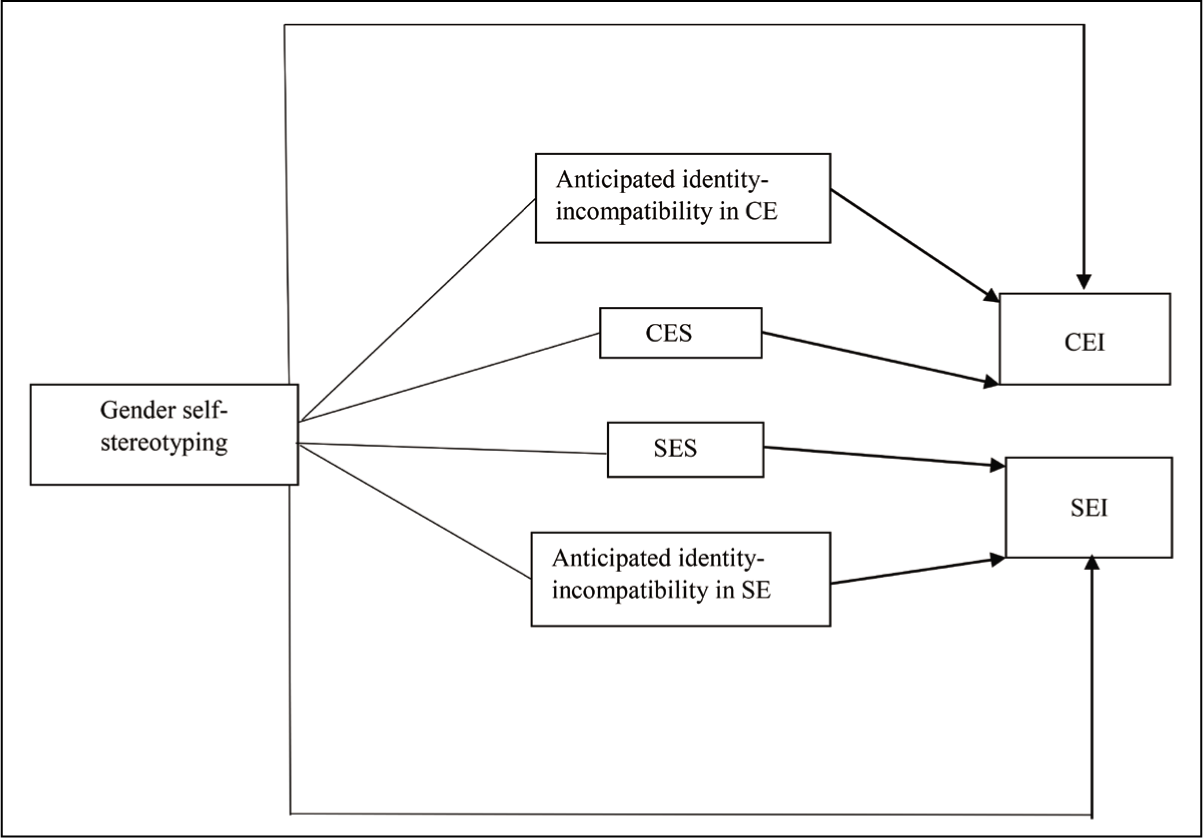
The current study addresses these shortcomings based on four central research questions (RQs). First, we investigate whether GSS directly affects the formation of CEI and SEI among men and women (RQ1). Second, we explore self-efficacy as a potential mediator of GSS effects on CEI and SEI on the perceived ability-misfit pathway (RQ2). Third, examining the existence of a perceived identity misfit pathway, we investigate anticipated identity incompatibility as another mediator linking GSS with CEI and SEI (RQ3). Finally, in RQ4, we explore whether mentoring moderates the effects of GSS on entrepreneurial self-efficacy and anticipated identity incompatibility. Addressing these four RQs with a quantitative methodology (structural equation modelling) applied to a sample of N = 214 nascent entrepreneurs, we contribute to current research in two central ways. First, we combine GSS, CEI, SEI and two potential mediators (entrepreneurial self-efficacy and anticipated identity incompatibility) in one integrative research model. Second, we outline and empirically test the potentially moderating effects of mentoring in this process.
The remainder of this manuscript is structured as follows: In the Theoretical Background, we conceptualise commercial and social entrepreneurship, outline the central role of intentions and build our integrative research model guided by our four RQs. Subsequently, the study’s methodology and sample are presented and the empirical results are shown. Finally, the results are discussed and implications and limitations of our work are highlighted.
Theoretical Background
Commercial and Social Entrepreneurship
When the Irish economist Cantillon (1756) pioneered the modern entrepreneurial thought, his conceptualisation of entrepreneurship was purely commercial. He described it as a behaviour encompassing the acquisition of goods and their disposition with the aspiration to make financial profit. Over the years, several other features of entrepreneurs, such as their ability to recognise opportunities and their motivational drivers, such as a personal need for achievement, were put forward (see Murphy et al., 2006 for a comprehensive overview). However, what remained was a clearly commercial nature of the concept. When Young (1983) pointed towards the possibility to apply entrepreneurial behaviour to the solution of social problems such as poverty, social marginalisation, or disparity, he paved the way for a new form of entrepreneurship coined social entrepreneurship (Austin et al., 2006). Driven by a social mission, social entrepreneurs aim for the creation of social value (Kruse et al., 2024). However, as they apply entrepreneurial means to achieve their goal, they build on an elaborated business plan and intent also to generate profits (Kruse et al., 2021; Stephan et al., 2016). This combination of social and financial value creation in social entrepreneurship differentiates the concept from traditional non-profit organisations and makes it a hybrid form of entrepreneurship (Battilana & Lee, 2014; Kruse & Rosing, 2023).
In the last 30 years, several propositions were made of what defines social entrepreneurship (cf. Lee et al., 2014; Mair et al., 2012; Sassmannshausen & Volkmann, 2018; Waddock & Post, 1991). In our work, we follow the integrative definition by Kruse (2020). He defines a social enterprise as ‘an enterprise whose business model is to address unmet socio-economic needs in communities in an innovative and financially sustainable way by creating social value and generating revenue for the enterprise and its stakeholders’ (p. 644).
Entrepreneurial Intention and Its Antecedents
EI, defined as ‘a state of mind directing a person´s attention […] toward a specific object […] or a path in order to achieve something’ (Bird, 1988, p. 442), is an essential motivational pre-condition for an entrepreneurial career. Due to the innate complexity of an entrepreneurial founding process (Frese & Gielnik, 2023; Stephan et al., 2015), high EI levels do not guarantee actual founding (see Meoli et al., 2020). However, the existence of an EI equals the potential of future entrepreneurial activity (cf. Krueger & Brazeal, 1994). Consequently, one way to foster (social) entrepreneurial activity is the promotion of individuals’ CEI and SEI (Kruse et al., in press; Wegner et al., 2020). Reviewing pertinent literature on antecedents of CEI and SEI yields a large set of predictors. These include antecedents in personality, cognition, experience and social norms (cf. Kruse et al., 2021; Schlaegel & Koenig, 2014; Zhao et al., 2010). Furthermore, several models have been proposed and empirically tested to shed light on the underlying mechanisms of the EI formation process (see Hockerts, 2017; Kruse, 2020; Lortie & Castogiovanni, 2015). Comparing insights from CEI and SEI formation literature yields notable differences, for example, higher CEI levels among males and higher SEI levels among females.
There is growing evidence that entrepreneurship is ‘a rather gendered career path’ (Chipeta et al., 2020, p. 27). On the one hand, commercial entrepreneurship is associated with stereotypically masculine characteristics such as competitiveness and strength (cf. Laguía et al., 2019). On the other hand, social entrepreneurs are stereotypically linked to female characteristics such as being altruistic and caring (cf. Gupta et al., 2019). Consequently, using gender as a moderator in EI research became popular and brought notable insights (see Chipeta et al., 2022 or Haus et al., 2013 as examples). In the realm of this research stream, one construct, GSS, is attracting growing attention.
Linking GSS with CEI and SEI
GSS can be defined as the tendency to self-attribute typical masculine and feminine characteristics correspondently with one’s sex (Bem, 1974). Following the Social Role Theory (Eagly, 1987), there are widely shared societal beliefs regarding sex-specific dispositions and ‘gender-adequate’ patterns of behaviour. Correspondingly, during socialisation, children learn and internalise the role of males as agentic, independent and decisive while women are expected to be communal, altruistic and helpful. As ‘gender-inadequate’ behaviour for men and women is often socially punished (cf. Rudman & Phelan, 2008), it can affect one’s career choice (Heilman, 2001). In entrepreneurship, GSS has been shown to affect EI formation. To exemplify, Gupta et al. (2008) could show that societal gender stereotypes about entrepreneurship positively affect the aspiration of male students but negatively affect the aspiration of female students to strive for an entrepreneurial career. BarNir (2021) uncovered that high levels of GSS drive women away from the intention to found commercial high-growth ventures, towards a more communal EI.
Drawing from these insights, we argue that GSS affects EI formation. More specifically, we postulate that high GSS levels among men result in higher levels of CEI and lower levels of SEI. For women scoring high on GSS, reverse effects are expected. Correspondingly, to answer our first research question, RQ1 we hypothesise as follows:
H1a: Men scoring high on gendered self-stereotyping show (a) a higher commercial entrepreneurial intention and (b) a lower SEI. H1b: Women scoring high on gendered self-stereotyping show (a) a lower commercial entrepreneurial intention and (b) a higher SEI.
Reviewing pertinent literature yields two promising variables that could emerge as important mediators exerting their influences via different pathways and corresponding GSS-triggered perceived misfits:
First, on the perceived ability-misfit pathway, entrepreneurial self-efficacy, one of the strongest predictors of CEI and SEI (Kruse et al., 2021; Zhao et al., 2005), can be influenced by gender stereotypes. In their career self-efficacy theory, Betz and Hackett (1981) point out that gender sex role socialisation causes some men to have less confidence in their abilities in female-typed career domains and some women in male-typed career domains. Convincing evidence suggests an influence of gender-stereotyped self-views on self-efficacy. To illustrate, in a study by Mueller and Conway Dato-on (2013), commercial entrepreneurial self-efficacy was high for males with a stereotypically masculine gender role orientation and low for females with a stereotypically feminine orientation. While, for SEI, empirical evidence on GSS effects is rare, first findings point towards higher social entrepreneurial self-efficacy among women (Hossain et al., 2024). Muldoon et al. (2019) propose that women possess higher social entrepreneurial self-efficacy. Lortie et al. (2017) even argue that ‘women with a female gender-self schema have a natural inclination to create organizations with social goals’ (p. 155).
As the above evidence yields (a) an effect of commercial and social entrepreneurial self-efficacy on CEI and SEI and (b) an effect of GSS on commercial and social entrepreneurial self-efficacy, we combine these insights. This allows us to explore whether GSS effects on CEI and SEI are mediated by commercial and social entrepreneurial self-efficacy in RQ2. Thus, we hypothesise:
H2a: The effect of GSS on commercial entrepreneurial intention is mediated by commercial entrepreneurial self-efficacy. H2b: The effect of GSS on SEI is mediated by social entrepreneurial self-efficacy.
Second, on the perceived identity-misfit pathway, anticipated identity incompatibility could mediate the effects of GSS on CEI and SEI. As mentioned, men are stereotypically considered agentic, competitive and strong, while women are seen as communal, caring and altruistic. This means that men and women with high levels of GSS have a high identification with these traditional male and female roles. As a result, one would expect differences in the perceived identity misfit concerning a career as a commercial and social entrepreneur. On the one hand, a career as a commercial entrepreneur involves stereotypically masculine and agentic attributes. This fits to a male identity (Laguía et al., 2019). In line with this reasoning, Giazitzoglu and Down (2017) showed that, for male entrepreneurs, commercial entrepreneurial activity and success (e.g. status symbols) are experienced as essential parts of their male identity. Conversely, work by García and Welter (2013) and Wannamakok and Chang (2020) yields that many female commercial entrepreneurs struggle to align their identity as agentic entrepreneurs with their identity as a wife and a mother. On the other hand, social entrepreneurship fits better with a stereotypical female identity as social entrepreneurs are expected to be caring, altruistic and empathetic (Bacq & Alt, 2018; Tan et al., 2005). Thus, highly self-stereotyping women experience their feminine gender identity to be more compatible with social entrepreneurial identity (Muntean & Ozkazanc-Pan, 2016). In contrast, stereotypically male values such as power and achievement have been shown to reduce the motivation to become a social entrepreneur (Kruse et al., 2021).
In conclusion, we argue that GSS effects on CEI and SEI are mediated by anticipated identity incompatibility. To answer RQ3, we hypothesise as follows:
H3a: The effect of GSS on commercial entrepreneurial intention is mediated by anticipated identity incompatibility. H3b: The effect of GSS on SEI is mediated by anticipated identity incompatibility.
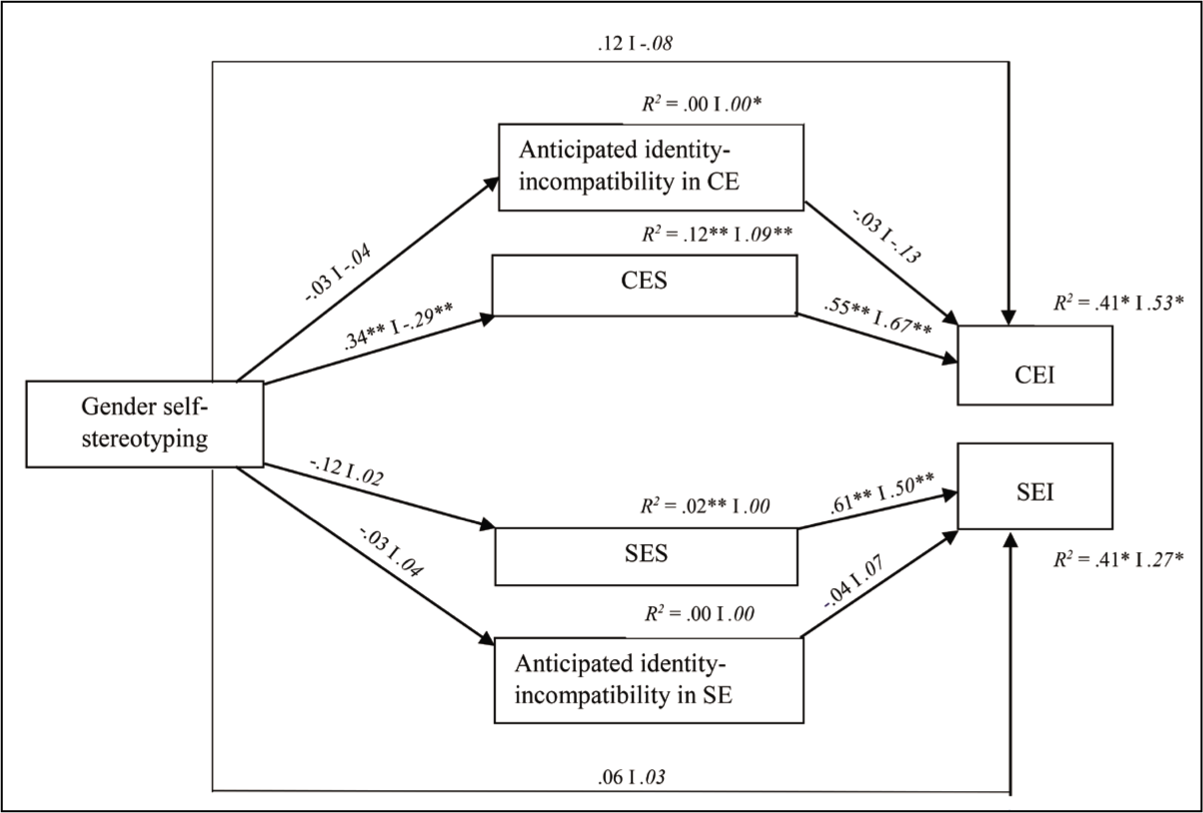
An integrative summary of our proposed effects of GSS on CEI and SEI can be seen in our research model (Figure 1).
Entrepreneurial Mentoring as a Moderating Variable
Mentoring in the entrepreneurial context can be defined as ‘a means of supporting new-start entrepreneurs through the provision of “expert” help and assistance in overcoming problems’ (Sullivan, 2000, p. 163). Mentoring content can be diverse and include resource provision, access to networks, or professional and private advice (St-Jean & Audet, 2009). Regardless of these differences, all mentoring activities are rooted in social learning theory (Bandura & Walters, 1977). Accordingly, mentees consider their mentor a role model and learn by imitating successful and avoiding unsuccessful behaviour. Several studies highlight the beneficial effects of mentoring for entrepreneurial mentees such as higher levels of career satisfaction and financial success (St-Jean & Audet, 2013; Sullivan, 2000). First insights suggest that mentoring can also be a success factor for nascent social entrepreneurs (Artcer et al., 2016; Raman & Vijayalakshmi, 2015).
One key element for mentoring success is the boost of mentees’ self-efficacy. In a longitudinal study of an entrepreneurial mentoring process, St-Jean and Tremblay (2020) show that mentees gained a more realistic image of their actual capabilities, resulting in a sustainable boost of entrepreneurial self-efficacy. Muldoon et al. (2019) argued that mentoring could also be applied to reduce detrimental GSS effects on entrepreneurial self-efficacy. A nascent female commercial entrepreneur with a mentor will experience higher commercial entrepreneurial self-efficacy through ‘verbal persuasion, enactive mastery opportunities, and vicarious experience’ (Muldoon et al., 2019, p. 116). Thus, mentoring is postulated as a moderator on the perceived ability-misfit pathway.
Also, mentoring could exert moderating effects on the perceived identity misfit pathway. Drawing from social psychology, research suggests that individuals getting in touch with similar people who succeed in a certain domain develop more positive attitudes concerning their own success (Dasgupta, 2011; Morgenroth et al., 2021; Rosenthal et al., 2013). More specifically, male nascent entrepreneurs being mentored by successful social entrepreneurs similar to themselves, and female nascent entrepreneurs being mentored by successful commercial entrepreneurs similar to themselves should experience a decrease in their anticipated identity incompatibility. In the case of already compatible identities (male—commercial entrepreneur; female—social entrepreneur), mentoring could further enhance the perception of identity compatibility.
Consequently, mentoring could moderate GSS effects on entrepreneurial self-efficacy (perceived ability-misfit pathway) and anticipated identity incompatibility (perceived identity misfit pathway). Thus, we will explore RQ4 as follows:
RQ4: Does mentoring moderate the effects of GSS on entrepreneurial self-efficacy and anticipated identity-incompatibility?
In the next section, we describe the sample, the sampling and study procedure as well as the scales used for the empirical examination of our RQs. The statistical analyses for all RQs are also outlined.
Methods
Sample Recruitment
A non-probability convenience sampling technique was applied, drawing a purposive sample from the target population of nascent commercial or social entrepreneurs. To recruit the sample, we applied the following strategies. First, local and nation-wide enterprise hubs promoting commercial and/or social entrepreneurial activity and entrepreneurship mentoring programmes were contacted via mail or phone. They were informed about our study plans and, in case they showed interest, asked to spread information on our study and the link to the online survey (cf. the ‘Study Procedure and Sample Description’ section). Second, we used the alumni networks of two German universities to contact alumni who founded an enterprise after graduation. Alumni were retrieved from the university’s alumni database and contacted directly via mail. Third, our study was advertised on social media platforms such as Facebook or yoweedoo to attract individuals eligible for our study. We did so using postings and group entries in entrepreneurship-related groups and chats asking interested persons to get in touch. All recruiting channels were either directly or indirectly affiliated to universities or other higher education facilities. This was done to secure a substantial proportion of individuals participating in mentoring programmes that are most frequently found in university contexts (cf. Gimmon, 2014).
Study Procedure and Sample Description
Data was acquired using an online survey. The programme LimeSurvey (Schmitz, 2012) was applied. After participants were informed about the study purpose, the duration of their participation and data protection in accordance with European General Data Protection Regulation, they were asked to confirm their eligibility for the study, that is, their current position as a nascent entrepreneur. Subsequently, participants provided informed consent for study participation by ticking the corresponding box on the first page and the survey started.
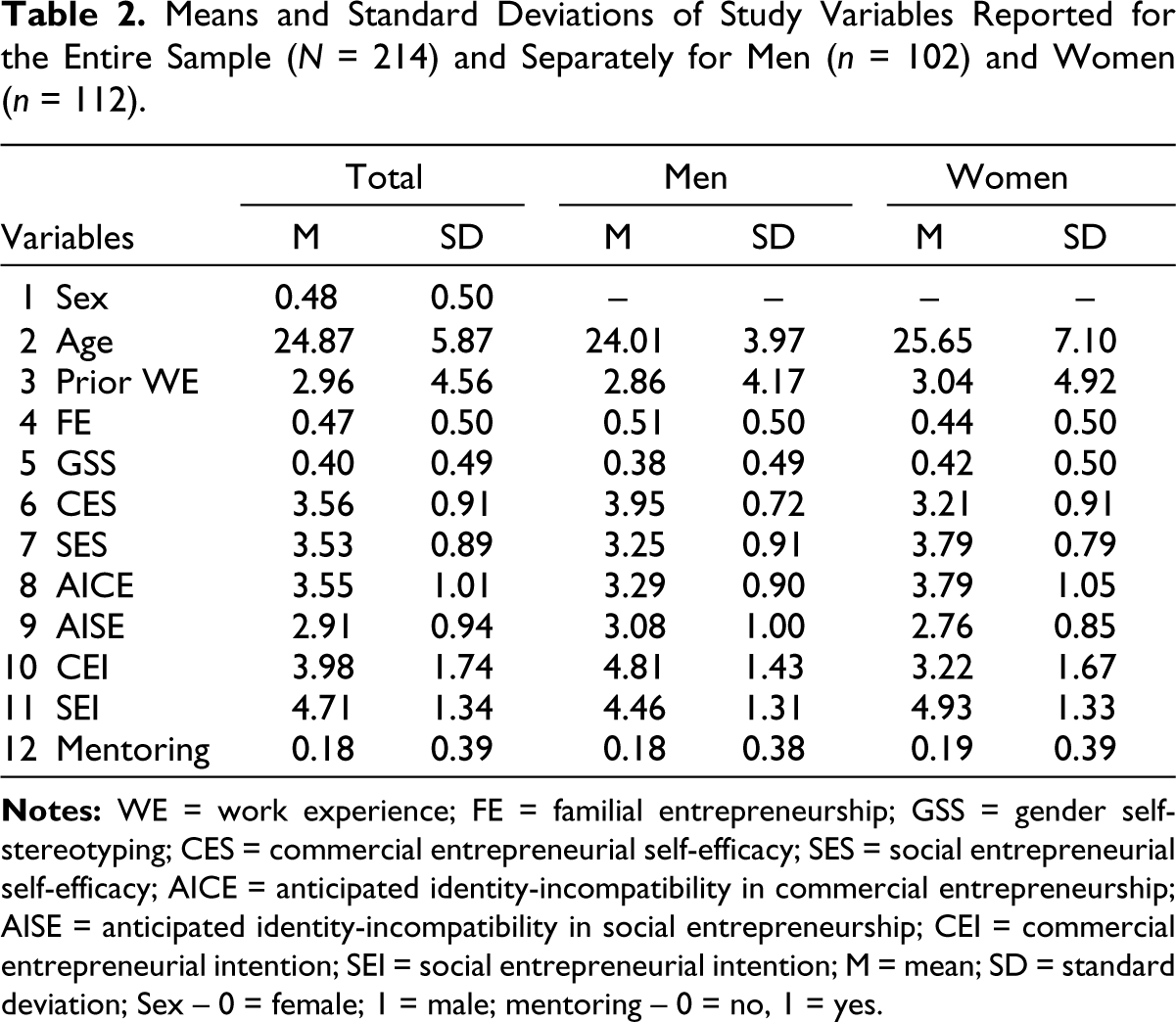
In total, 225 participants completed the survey. Two participants stated that they had a diverse gender orientation. They had to be excluded from further analyses, as the aim of this study was to capture the effects of an identification with a heteronormative binary gender order and associated stereotypical characteristics. Of the remaining 223 participants, nine were excluded as they turned out as multivariate outliers, reducing the number of eligible data sets to 214 (cf. Common Method Bias, Normality, and Outliers). Our final sample consisted of n = 102 males and n = 112 females. On average, participants were 24.87 years old (SD = 5.87), with the youngest respondent aged 19 and the oldest respondent aged 52. Concerning prior work experience, participants’ mean value was 2.96 years (SD = 4.56) and 47.20% of participants reported having an entrepreneur in their close family. The proportion of subjects participating in a mentoring programme was 18.20% (18 men; 21 women). That proportion was perceived as a sufficient base for further statistical analyses (Baluku et al., 2021). As our recruitment process was conducted in the context of higher education facilities, all participants either pursue or have already obtained an academic degree (Bachelor, Master, PhD).
Scales and Measurement
Table 1 displays all scales used to assess our study constructs including item examples. Furthermore, internal consistencies (Cronbach’s α) from the original validation studies and α values calculated for our data are presented. In case, no validated German version of the scales was eligible, we applied the translation-back-translation-method to craft German items on our own (Brislin, 1986).
Overview of Applied Scales, Item Examples (German Translation in Italics), and Internal Consistencies.
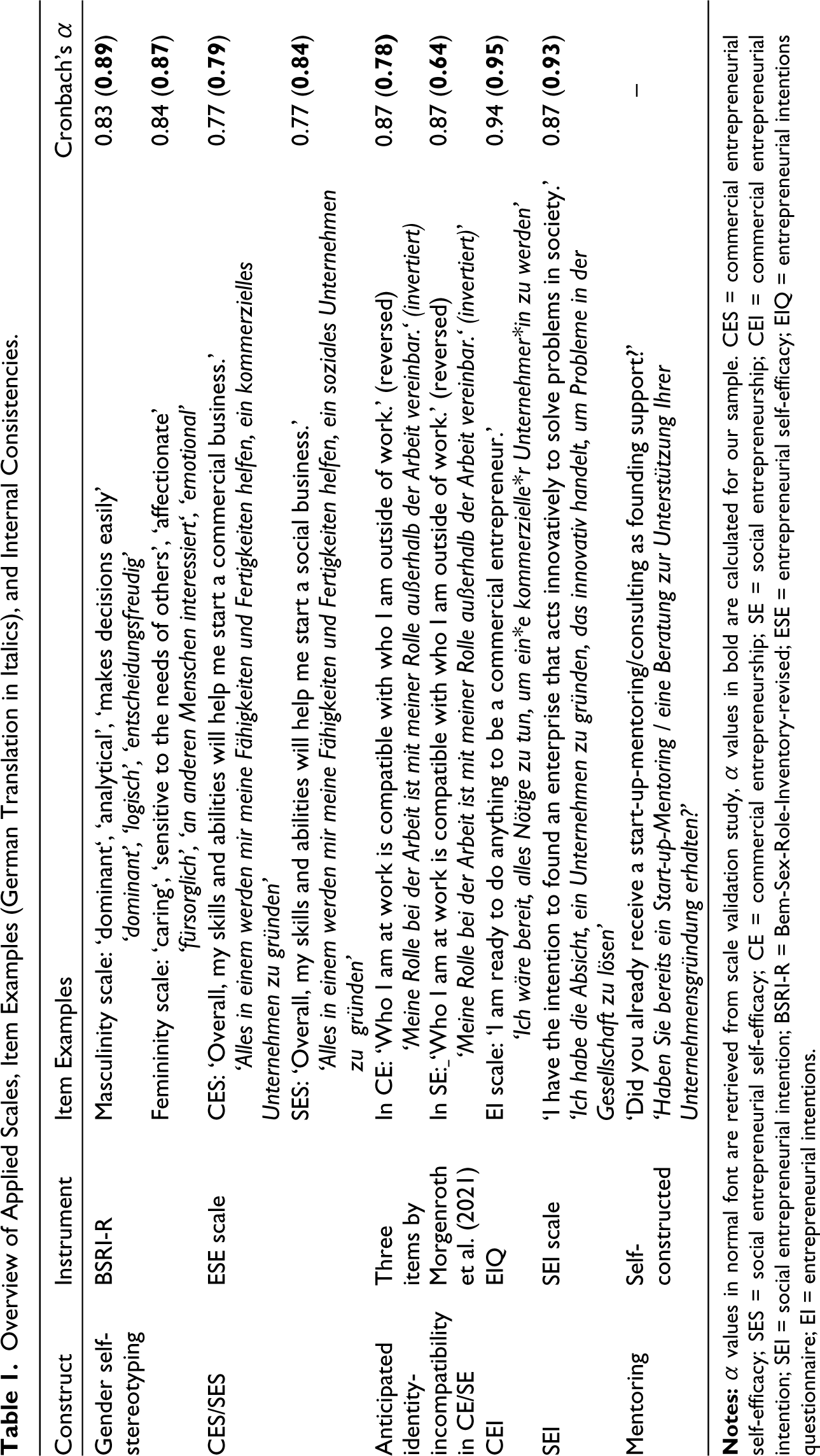
Gender self-stereotyping, that is, participants’ tendency to identify with characteristics correspondent to traditional sex roles, was measured with the validated German revised version of the Bem-Sex-Role-Inventory (BSRI-R; Troche & Rammsayer, 2011). Masculinity (M) and femininity (F) scales each comprised 15 items. M items reflect masculine characteristics more socially desirable for men than women, whereas F items comprise feminine characteristics more socially desirable for women than men. Respondents reported how often they exhibit the respective stereotypical M and F characteristics on a 7-point Likert scale from 1 (never) to 7 (always). For the exact assessment of GSS, we followed a multi-step procedure combining recommendations by Bem (1974) and Donaghue and Fallon (2003). First, Bem’s median split technique was applied, separating all participants into four different groups, which reflected their gender role orientation. Second, participants were classified along these medians. Participants underscoring both medians were categorised as gender indifferent (23.83%). Participants whose M and F scores were above or equal to the medians were categorised as androgynous (21.50%). Participants with masculinity above the median, but femininity below the median were categorised as masculine (29.44%). Correspondingly, participants were categorised as feminine (25.23%) who indicated masculinity below the median but femininity above the median. This technique is established and frequently used in similar pieces of research (cf. Liñán et al., 2022; Mueller & Conway Dato-on, 2013; Perez-Quintana et al., 2017). Third, following Donaghue and Fallon (2003) we further refined the classification by also considering the simultaneous differentiation from other groups. Each respondent’s score on the scale socially more desirable for the other gender got subtracted from their score on the scale socially more desirable for their own gender (women: F minus M; men: M minus F).
Commercial and social entrepreneurial self-efficacy, that is, the extent to which individuals believe that they possess the abilities to successfully run their own enterprise, were assessed with the entrepreneurial-self-efficacy-scale (ESE scale; Schjoedt & Craig, 2017). As ESE is domain-specific, it can differ depending on a career as a commercial or social entrepreneur (Kruse et al., 2021; Muldoon et al., 2019; Sweida & Reichard, 2013). To account for this, we separately asked for ESE concerning commercial and social entrepreneurship. Therefore, established vignettes describing central features of commercial and social enterprises were applied (Kruse et al., 2019; Wach et al., 2023). Items were rated on a 5-point-Likert scale ranging from 1 (not applicable at all) to 5 (applies completely).
Anticipated identity-incompatibility in commercial and social entrepreneurship, that is, the perceived fit of individuals’ gender identity with their entrepreneurial identity was operationalised based on three items developed by Morgenroth et al. (2021) which were adapted to the context of commercial and social entrepreneurship (cf. above paragraph). All items were answered on a 7-point-Likert-scale ranging from 1 (not applicable at all) to 7 (applies completely).
Commercial entrepreneurial intention, that is, participants’ level of willingness to become a commercial entrepreneur, was measured with the entrepreneurial-intention scale (EI scale) by Liñán and Chen (2009) based on a 7-point Likert scale ranging from 1 (I totally agree) to 7 (I totally disagree).
Social entrepreneurial intention, that is participants’ motivation to found a social enterprise, was captured using the German version of the social-entrepreneurial-intention scale (SEI scale) developed and validated by Kruse et al. (in press). The scaling encompassed a 7-point Likert scale ranging from 1 (I totally agree) to 7 (I totally disagree).
Mentoring experience, that is, participation in an entrepreneurial mentoring programme was assessed in a two-step-procedure. First, an introductory text briefly explained the concept of entrepreneurial mentoring. This ensured a common understanding among all participants and emphasised the importance of mentees’ identification with the mentor. Second, participants indicated if they had already participated in such a mentoring programme (yes/no question).
As control variables, participants’ age, previous work experience and the existence of entrepreneurs in the participants’ close families were acquired. These variables were assessed as previous studies yielded notable influences on EI (cf. Kruse et al., 2021; Palmer et al., 2015; Quan, 2012; Vercruysse & Birkner, 2021).
Statistical Procedure
We analysed our data by applying a multi-step procedure. First, we calculated means, standard deviations and inter-correlations for all variables to gain an overview and identify potential indications of multicollinearity (Vatcheva et al., 2016) using IBM SPSS 28. Second, to check the suitability of our data for structural equation modelling, we examined common method bias (Fuller et al., 2016), univariate and multivariate normality (Kline, 2005) and outliers using Mahalanobis distances D2 (Leys et al., 2018). Third, to test our RQs, we crafted structural equation models with IBM SPSS Amos 28 based on our research model (Figure 1). For hypotheses H1a and H1b (RQ1) direct effects were calculated. Indirect effects were computed by investigating RQ2 (H2a/b) and RQ3 (H3a/b). In line with recommendations by Nevitt and Hancock (2001), we used bootstrapping (95% confidence interval) with bias-corrected percentile estimations for higher accuracy. Following MacCallum and Austin (2000) and Weiber and Mühlhaus (2014), when fitting our final model, co-variance modifications regarding error terms and control variables were made based on theoretical considerations and Lagrange multipliers. In the last step, a multi-group analysis with mentoring as a moderator was computed to explore RQ4. The conditional indirect effect was tested utilising critical ratios of z tests in pairwise comparisons of relevant coefficients (Afthanorhan et al., 2015). All steps, except for common method bias examination, were conducted separately for male and female subsamples.
Results
Means, Standard Deviations and Inter-correlations
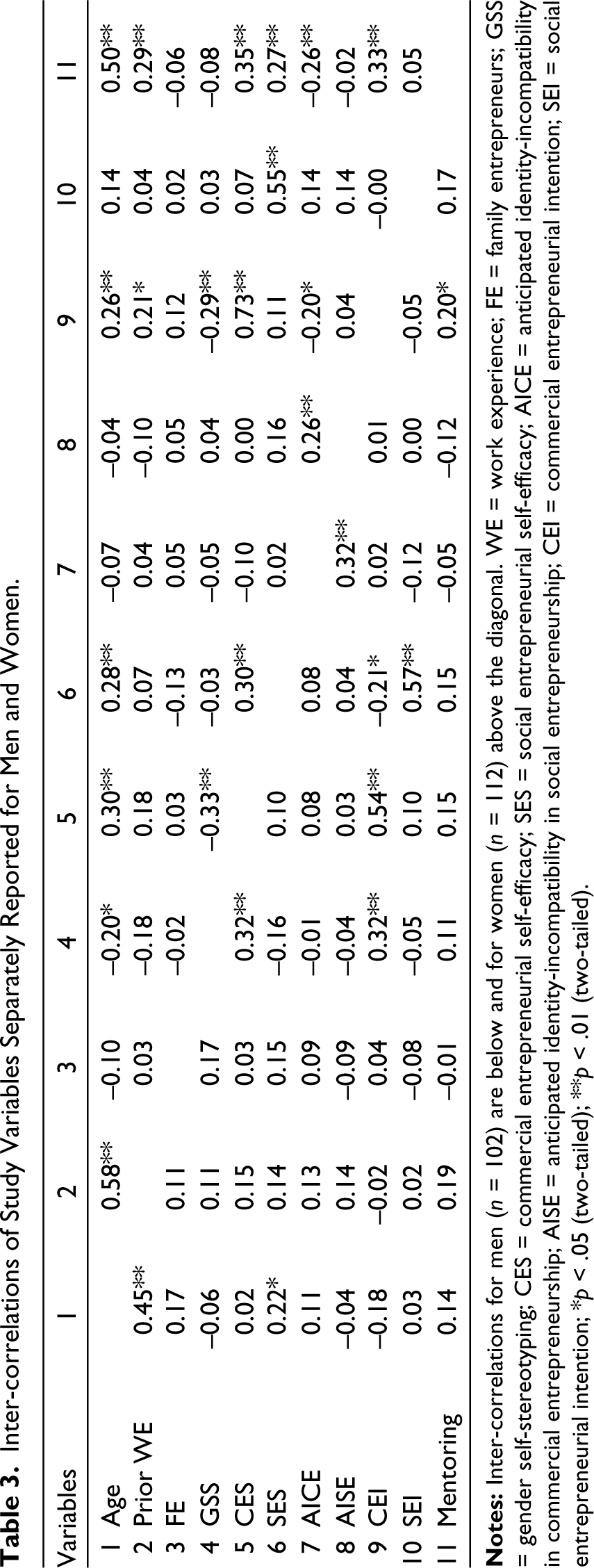
Tables 2 and 3 provide an overview of descriptive statistics and all variable inter-correlations, respectively. As Table 3 shows, almost all inter-correlations are below the threshold of 0.60, indicating low levels of multicollinearity (Kruse et al., in press; Shrestha, 2020). The only exception is a correlation of r = 0.73 between commercial entrepreneurial self-efficacy and CEI in the female sample. However, as the corresponding correlation in the male sample (r = 0.54) lies below the threshold, we expect no serious multicollinearity issues.
Means and Standard Deviations of Study Variables Reported for the Entire Sample (N = 214) and Separately for Men (n = 102) and Women (n = 112).
Inter-correlations of Study Variables Separately Reported for Men and Women.
Common Method Bias, Normality and Outliers
Common method bias is a bias that can occur when all data is acquired using one source only (Fuller et al., 2016). As we assessed all constructs in the same questionnaire, we checked for common method bias using Harman’s single-factor test (Kock, 2020). In this test, all study variables were loaded on one single factor in a factor analysis. As for our data, the result of variance explained by this single factor (19.77%) was below the proposed threshold of 50%, so we concluded that common method bias was not a serious problem in our data.
Normality was assessed based on univariate and multivariate kurtosis values (Byrne, 2010). Regarding univariate normality, no variable in either subsample exceeded the critical threshold of seven, indicating no violation of the assumption of univariate normality (West et al., 1995). For multivariate normality, multivariate kurtosis values indicated that both subsamples (male: 8.14; female: 10.62) exceeded the critical threshold of five proposed by Bentler (2005). This suggests multivariate non-normality. However, as this can be due to outliers in the data, we re-ran the analyses after the outlier analysis.
Outlier analysis was conducted by calculating Mahalanobis distances (D2). Following recommendations by Arbuckle (1997), subjects with exceptionally large and significant D2 values were eliminated, leading to the exclusion of nine subjects and the reduction of our sample to N = 214. Re-calculating multivariate kurtosis values with this sample yielded no violation of the assumption of multivariate normality (male: 3.72; female: 4.76).
Research Questions and Hypotheses
A summary of our SEM results can be seen in Figure 2 and Table 4.
Standardised Regression Coefficients for the Subsamples of Men and Women.
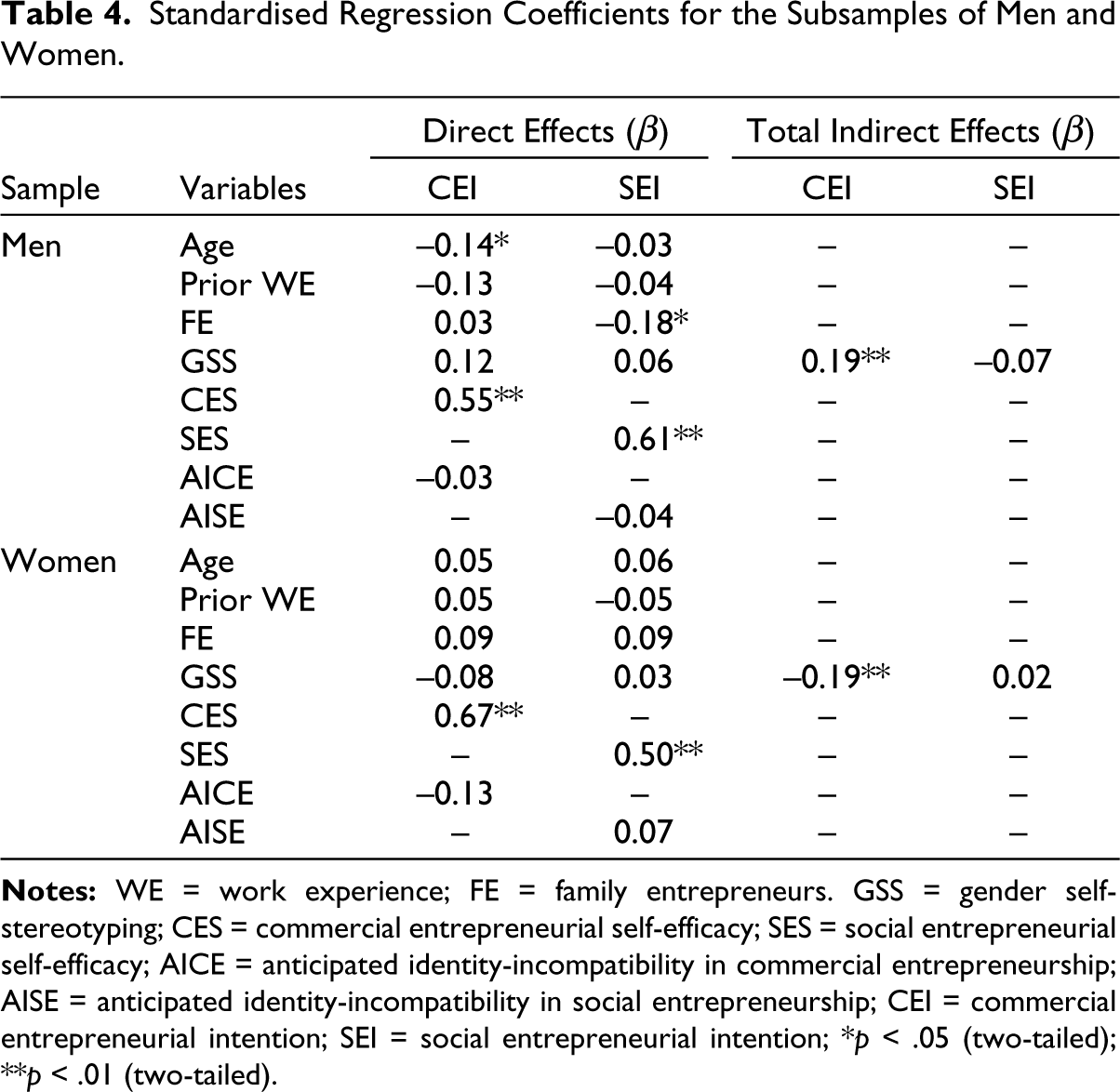
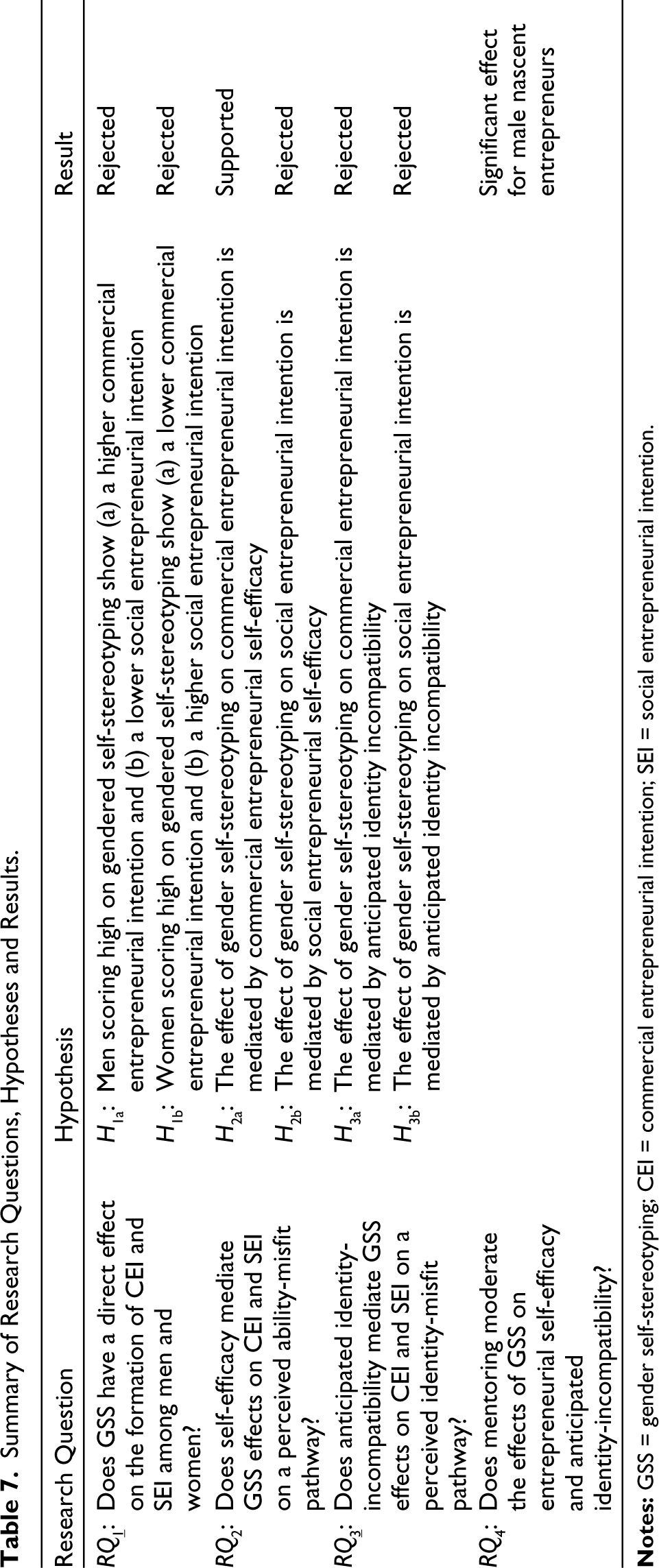
Investigating RQ1, hypothesis H1a suggest that men scoring high on gendered self-stereotyping show a higher CEI and a lower SEI was not confirmed. Neither for CEI nor SEI, significant effects occurred (Table 4). The same pattern applies to the impact of GSS on women’s CEI and SEI (H1b, Table 4). Thus, also hypothesis H1b was rejected.
Examining RQ2, hypothesis H2a postulating that the effect of GSS on CEI is mediated by commercial entrepreneurial self-efficacy is confirmed for males and females. As Table 4 displays, we found a positive total indirect effect in the male (β = 0.19, p < .01) and a negative total indirect effect in the female sample (β = −0.19, p < .01). Going more into detail (cf. Figure 2) yielded that these indirect effects solely originated from a significant mediation via commercial entrepreneurial self-efficacy (male: β = 0.19, p < .01; female: β = −0.19, p < .01). This mediation suggests that men scoring high on GSS have a higher commercial entrepreneurial self-efficacy and CEI. In contrast, women with high levels of GSS have less commercial entrepreneurial self-efficacy and, as a result, score lower on CEI (cf. single path coefficients in Figure 2). For the corresponding hypothesis H2b on SEI, no significant effects occurred. Thus, this hypothesis was rejected (Table 4).
For RQ3 and hypotheses H3a and H3b proposing a mediation effect of GSS on CEI and SEI via anticipated identity incompatibility no significant effects emerged (Table 4). Consequently, both hypotheses were not confirmed.
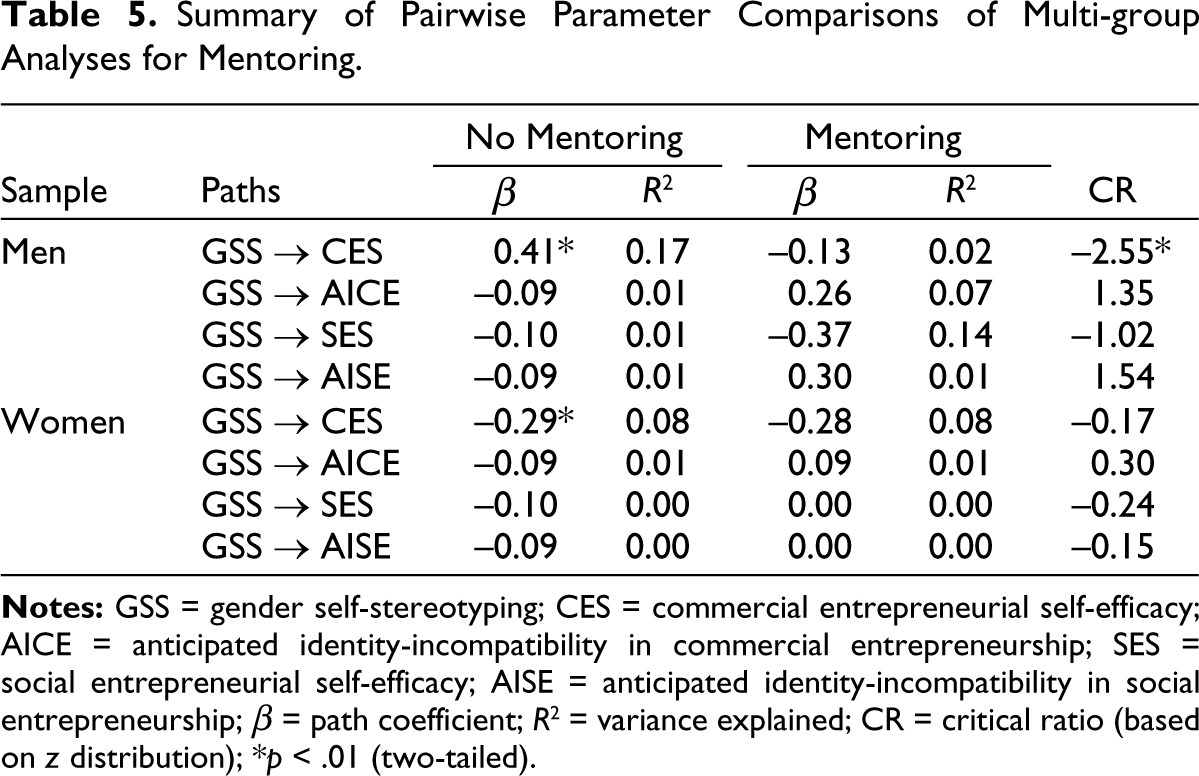
Exploring RQ4 on mentoring as a moderator of GSS effects, we computed our research model (Figure 1) separately for mentoring and no-mentoring groups using multi-group analysis. The corresponding results shown in Table 5 indicate a significant effect of GSS on commercial entrepreneurial self-efficacy in the no-mentoring group (male: β = 0.41, p < .01; female: β = −0.29, p < .01) but insignificant effects in the mentoring group. This yields a first descriptive indication of a moderating effect. Further analyses using pairwise comparisons of these coefficients with critical ratios (CRs) yields that differences in the male sample (CR = −2.55) exceeded the threshold of |1.96| confirming a significant moderation effect. For females, pairwise comparisons remained insignificant as the critical ratio (CR = −0.17) remained below the threshold. This means that, for men, mentoring significantly reduces the positive effect of GSS on CEI. The reduction of the negative GSS/CEI effect for women could only be confirmed on the descriptive level.
Summary of Pairwise Parameter Comparisons of Multi-group Analyses for Mentoring.
Summary and Overall Model Fit
To conclude, we find (a) no significant direct effect of GSS on CEI and SEI, (b) a significant full mediation effect of GSS on CEI via commercial entrepreneurial self-efficacy for males and females, (c) no such effects for social entrepreneurship, (d) no significant effects of anticipated identity incompatibility and (e) a significant moderation effect for mentoring on the GSS/commercial entrepreneurial self-efficacy relationship for males.
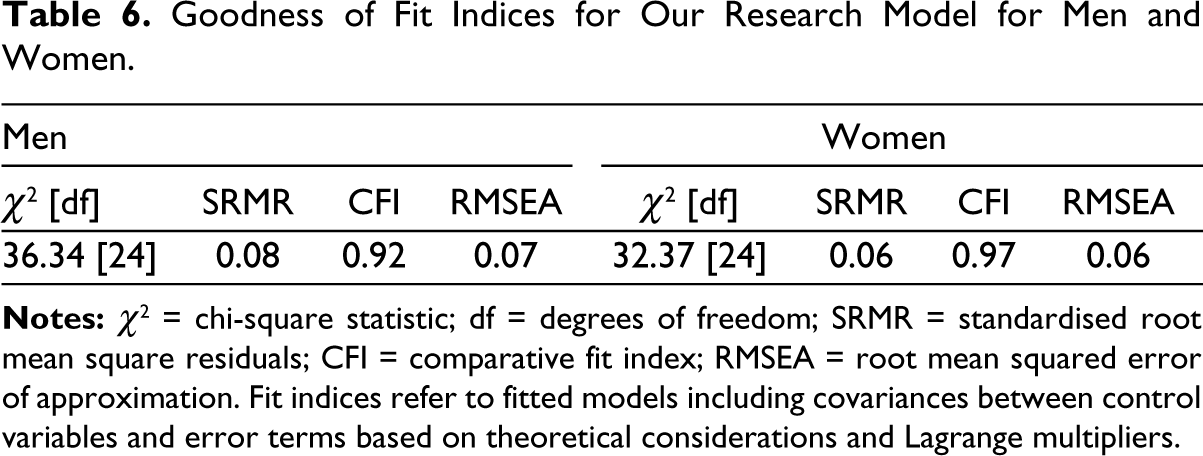
Overall, as can be seen in Table 6, the model fit indices yield a good to excellent fit of our final model (cf. Hooper et al., 2008). Also, the amount of variance explained for CEI and SEI (0.27 ≤ R2 ≤ 0.53) emerges as substantial and significant for all samples. A structured overview summarising all RQs, hypotheses and main findings at a glance can be found in Table 7.
Goodness of Fit Indices for Our Research Model for Men and Women.
Summary of Research Questions, Hypotheses and Results.
Discussion
The goal of our study was two-fold. First, we examined how GSS affects the formation of CEI and SEI directly (RQ1) and indirectly via two different pathways. We labelled these two pathways perceived ability-misfit pathway (via commercial and social entrepreneurial self-efficacy, investigated in RQ2) and perceived identity-misfit pathway (via anticipated identity incompatibility investigated in RQ3). Second, we explored whether entrepreneurial mentoring impacts these effects in RQ4. To do so, we recruited a sample of 214 nascent German entrepreneurs and used multi-group structural equation modelling for statistical investigation.
Exploring RQ1, hypotheses H1a and H1b postulating direct effects of GSS on CEI and SEI for men and women were rejected. Thus, men scoring high on GSS did not show higher levels of CEI and lower levels of SEI (H1a). Also, we could not confirm the assumption that women with high levels of GSS favour SEI over CEI (H1b). At first glance, this finding contradicts existing literature (cf. BarNir, 2021; Chipeta et al., 2020; Gupta et al., 2008). However, regarding RQ2, we find support for hypothesis H2a, suggesting a mediation effect of commercial entrepreneurial self-efficacy on the GSS/CEI path. Thus, our study also yields positive GSS effects. For men, scoring high on GSS leads to an increase in commercial entrepreneurial self-efficacy. Women scoring high on GSS have lower levels of commercial entrepreneurial self-efficacy. This confirms the ‘Think-entrepreneur-think-male’ stereotype (Gupta et al., 2019; Laguía et al., 2019) for commercial entrepreneurs. Furthermore, and as an important extension of previous literature, we show that this effect of GSS is fully mediated via a perceived ability-misfit pathway. Considering H2b, no such effects occurred for SEI. One reason for this could be that, as Gupta et al. (2019) highlight, social entrepreneurship may contain stereotypically female and stereotypically male elements. As GEM data shows, among social entrepreneurs, the gender ratio is almost equal (GEM, 2023). This could indicate that a career as a social entrepreneur is less ‘gender-biased’ than a commercial entrepreneurial career.
Concerning RQ3 on mediation effects for GSS via anticipated identity incompatibility (hypotheses H3a and H3b), neither effects for CEI nor SEI were found. Thus, we find no indication of a perceived identity-misfit pathway. For social entrepreneurship, the notion that this entrepreneurial career might be less ‘gender-biased’ offers a possible explanation. For commercial entrepreneurship, however, convincing qualitative evidence on positive identity relationships for men (Giazitzoglu & Down, 2017) and negative ones for women (García & Welter, 2013; Welter, 2011) exists. Notwithstanding these findings, they are all based on established entrepreneurs. Our sample consists of nascent entrepreneurs in the early stage of the founding process. Probably, due to this nascent status, their identification with the role as a commercial entrepreneur was too weak. Usually, role identification takes some time after newly taking a role (see Greco et al., 2022). Also, given the relatively young mean age of our sample, potential identity conflicts (parenthood etc.) might not be as frequent as for established mid-age entrepreneurs (Morgenroth et al., 2021).
Exploring RQ4 on moderation effects of mentoring yielded a significant effect for male nascent entrepreneurs. Positive effects of GSS on commercial entrepreneurial self-efficacy in the no-mentoring group vanished in the mentoring group. This corresponds to studies suggesting that, generally, mentoring in entrepreneurship may impact mentees’ assets and behaviour (St-Jean & Audet, 2013; St-Jean & Tremblay, 2020; Sullivan, 2000). What is more, we extend the literature by highlighting that (gender) stereotype effects can be reduced by entrepreneurial mentoring. The reduced GSS effect could originate from gaining more information on the diversity and breadth of an entrepreneurial career and required skills through mentoring. As social psychology literature shows, more detailed and broad information usually reduces stereotypical influences (see Macrae & Bodenhausen, 2000 for an overview). For social entrepreneurship and the perceived ability-misfit pathway, no effects were found.
Implications for Research and Practice
The current study yields several implications for researchers and practitioners:
First, we confirm previous research that gender stereotypes may influence EI formation processes. Additionally, we extend this literature by showing that, for commercial entrepreneurship, this effect is fully mediated via entrepreneurial self-efficacy on a perceived ability-misfit pathway. Thus, our findings point towards a complex interplay of GSS and other variables relevant to EI formation. Future research could explore GSS effects on other constructs such as attitudes or values as important motivational antecedents in (social) entrepreneurship (Kruse et al., 2019; Schlaegel & Koenig, 2014).
Second, differences in GSS effects comparing CEI and SEI formation emerge. While GSS affected commercial entrepreneurial self-efficacy, no such effect occurred for social entrepreneurial self-efficacy. This may point towards social entrepreneurship as a less ‘gender-biased’ entrepreneurial career but it requires additional research. Furthermore, our finding supports the assumption that commercial and social entrepreneurship should be treated as conceptually different constructs and two separate career paths (Austin et al., 2006).
Third, as our results yield mentoring effects in the GSS/commercial entrepreneurial self-efficacy relationship, we argue that more effort needs to be invested in the exploration of mentoring as a tool to reduce (gender) stereotypes in entrepreneurship. For women, the reduction of negative stereotypes in commercial entrepreneurship only occurred on a descriptive level. Thus, we hope that future studies shed more light on the existence/solidity of this effect.
Fourth, while no significant effects on the perceived identity-misfit pathway occurred, our overall research model yielded a good to excellent model fit. As our work has limitations (cf. Limitations), a replication of this study with a sample (a) at a different stage of an entrepreneurial career (e.g. established entrepreneurs) and (b) in other cultural and economic surroundings could be feasible to test the robustness of the model and/ or identify potential modifications.
Fifth, entrepreneurial educators should be more aware of gender stereotypes among nascent (commercial) entrepreneurs and incorporate related content in their educational programmes. Stereotypical perceptions of one’s entrepreneurial career merely based on social gender expectations can be harmful by pushing less-skilled men into commercial entrepreneurship or preventing highly skilled women from pursuing such a career (cf. Marlow & Martinez Dy, 2018). Information about stereotypes such as ‘Think-entrepreneur-think-male’ (Laguía et al., 2019) and specific actions such as mentoring can contribute to a more rational decision about which entrepreneurial career is best for each individual.
Limitations
Our study has acknowledgeable limitations:
First, our sample does not represent the whole population of nascent entrepreneurs. We examined a relatively young sample with an above-average educational background in which all participants either pursued or have already obtained an academic degree. Pertinent literature yields that age (Hatak et al., 2015) and educational background (Qudsia Yousaf et al., 2022) are noteworthy influences on EI. Thus, findings in this study cannot be generalised and their solidity remains to be seen in future investigations with more diverse samples.
Second, only nascent entrepreneurs in Germany were examined. On the one hand, nascent entrepreneurs might be less suited for investigations regarding an entrepreneurial identity, as they have yet to consolidate their identities as social or commercial entrepreneurs. On the other hand, Germany only covers one cultural and socio-normative cluster. This could have biased our results, as evidence shows that gender stereotype content may differ depending on cultural backgrounds (Cuddy et al., 2015). Moreover, the German economy is one of the most developed economies worldwide offering notable support for nascent entrepreneurs. Previous research highlights the substantial influences of a country’s economic stage on (nascent) entrepreneurial motivation and activity (Cao & Shi, 2021; Kruse et al., 2021; Wagner, 2007; Wennekers et al., 2005). This further limits the generalisability of our work.
Third, only 18.20% of our sample received mentoring. Thus, the proportion of mentees versus non-mentees was relatively low and unevenly distributed which could have blurred our statistical results. Consequently, they should be treated carefully.
Fourth, the scope of our study was limited in multiple ways. We only included entrepreneurial self-efficacy and anticipated identity incompatibility in our model and disregarded other potential mediators such as entrepreneurial attitudes and values. Also, we entirely focused on the individual. External aspects impacting entrepreneurial career decisions such as the existence of a suitable entrepreneurial infrastructure (Cao & Shi, 2021) or the level of economic development in general (Kruse et al., 2021) have been neglected.
Summary
Examining a sample of 214 nascent German entrepreneurs, we investigate how GSS affects commercial and SEI formation. Doing so, we postulate the existence of direct and indirect effects via two different pathways (perceived ability-misfit and perceived identity-misfit). Furthermore, we explore mentoring as a moderator of these effects. Structural equation analyses yield a positive effect of GSS on males’ commercial entrepreneurial intention—fully mediated via entrepreneurial self-efficacy on the perceived ability-misfit pathway—and a corresponding negative effect for females. No effects occur on the perceived identity-misfit pathway and for SEI. Mentoring was shown to reduce GSS in the male sample significantly. The same effect for women was less solid. Despite acknowledgeable study restrictions such as a non-representative sample or a limited number of constructs investigated, our work extends current literature by (a) demonstrating the underlying mechanism of how GSS affects entrepreneurial intention formation and (b) highlighting mentoring as a potentially suitable tool to alter these effects.
Footnotes
Declaration of Conflicting Interests
The authors declared no potential conflicts of interest with respect to the research, authorship and/or publication of this article.
Funding
The authors received no financial support for the research, authorship and/or publication of this article. Open Acces was financed by The Saxon State and University Library Dresden (SLUB).