



Abstract
Digital entrepreneurship (DE) is transforming traditional entrepreneurship (TE). This article investigates how social network interactions underpin DE development by harvesting knowledge for venture growth. A review of DE literature revealed few empirical social interaction studies exploring strategies for DE development. This study focused on that knowledge gap, using social network and social capital theories for the conceptual framework. Forty-one interviews with experienced DEs were analysed using a novel application of social network and social capital theory as an analytical framework with an iterative grounded theory approach. The findings validated a social interaction research approach. The evidence indicated that DE is primarily a product of the knowledge harvested from network relations with the digital technologies as critical, enabling tools. The nuanced findings also indicated how different DE networks generated different forms of social capital. Knowledge that flows from social interactions appears to fuel DE innovation. Finally, an eight-stage agenda was constructed for DEs to enable them to capitalise on their own future social networks.
Keywords
Introduction
Digital entrepreneurship (DE) is an emerging research field and reflects how digital technologies are changing TE models through the production, distribution and exchange of knowledge (Abubakre et al., 2022). In the past decade, social and economic realignment towards knowledge products, a knowledge and sharing economy, and a gig market, has disrupted previous business relations, models and social expectations (Dessers et al., 2023). Therefore, DE is a critical focus for business research because such knowledge can be used to inform DEs about how to exploit these current opportunities (Purbasari et al., 2021). This is the primary focus of this research study and paper.
Current DE literature is diverse. Many studies indicate that digital technologies have had a significant impact on DE growth, accelerating the identification of business opportunities and venture creation (Nambisan, 2017; Paul et al., 2023; Yetis-Larsson et al., 2015). Indeed, they provide the ‘appropriate technologies’ that underpin the fast, low-cost global patterns of digital entrepreneurship (Régnier, 2023). While research indicates a range of DE characteristics, this study focused on a specific stream that indicates a high dependence on social network relations for venture development (Conole & Dyke, 2004; Elia et al., 2020). This web of online and offline social networks transcends the previous constraints of local TE (Lyu et al., 2022). The conceptual framework focused on these DE social relationships, which are instrumental in DE development, to increase understanding and accelerate DE growth. The study explores DE interactions through two linked research questions: How do digital entrepreneurs use social networks to exploit business opportunities to build their ventures, and how do social networks impact and mediate the performance and outcomes of DE ventures?
The critical nature of digital business in the economy makes the understanding of the components and processes of DE an imperative. As DE is still an emerging phenomenon (Nambisan, 2017), an explorative approach was appropriate to investigate the relations between social relational network and DE venture growth (Steininger, 2019). Forty-one interviews with experienced DEs in diverse locations and industries were conducted by an experienced multi-disciplinary team with supporting observation and web searching. The theoretical foundation of this study was based on social network and social capital theory, which were used to guide the data collection and analysis processes, providing a ‘bridge’ to translate how DEs take knowledge from others and turn it into venture benefits.
This study shows that an empirical social interaction perspective illuminates how social interactions mediate DE development and then translates the findings into a practitioner agenda. Without studies that focus on implications for practitioners, DEs will be disadvantaged in venture building. In addition, academically, the novel conceptual framework built from social network/capital theory provides a resource for future researchers.
Literature Review
This literature review explores and maps DE research streams. It then contests the current technological focus and privileges a social network perspective. Entrepreneurship began as those with the personal capability pursued possible business opportunities. Three centuries ago, Cantillon (1931) defined entrepreneurs as those prepared to take the personal risk of unknown ventures over employment. Entrepreneurs brought resilience and problem-solving to their ventures but required suitable business opportunities and social acceptance to succeed (Alvarez et al., 2013; Drucker, 1985; Marshall, 1920). Entrepreneurship subsequently expanded to encompass social ventures (Weber, 1947). The advent of a digital business environment has given rise to different forms and practices in venture building. This review will focus on DE research, exploring what DE consists of, how it develops and what it produces. Any review is problematised by DE not being a discrete entity. A continuum of ‘digitalisation’ exists, stretching from TE towards full DE with differing levels of ‘virtuality’ (Hair et al., 2012; Hull et al., 2007). The next section provides an overview of empirical studies and meta-desk reviews, subsequently tabulating this domain (Table 1). The literature review is segmented into three overlapping categories with subsections.
Categorising Digital Entrepreneur Studies.
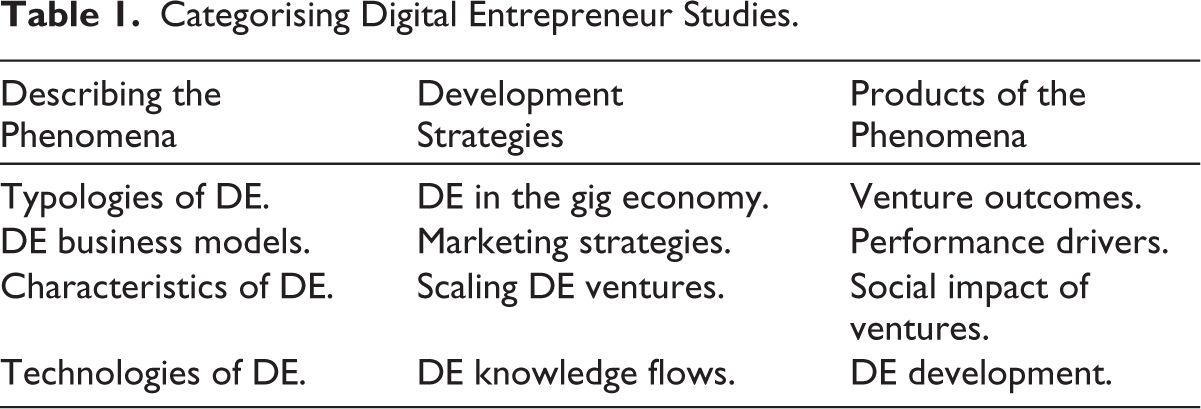
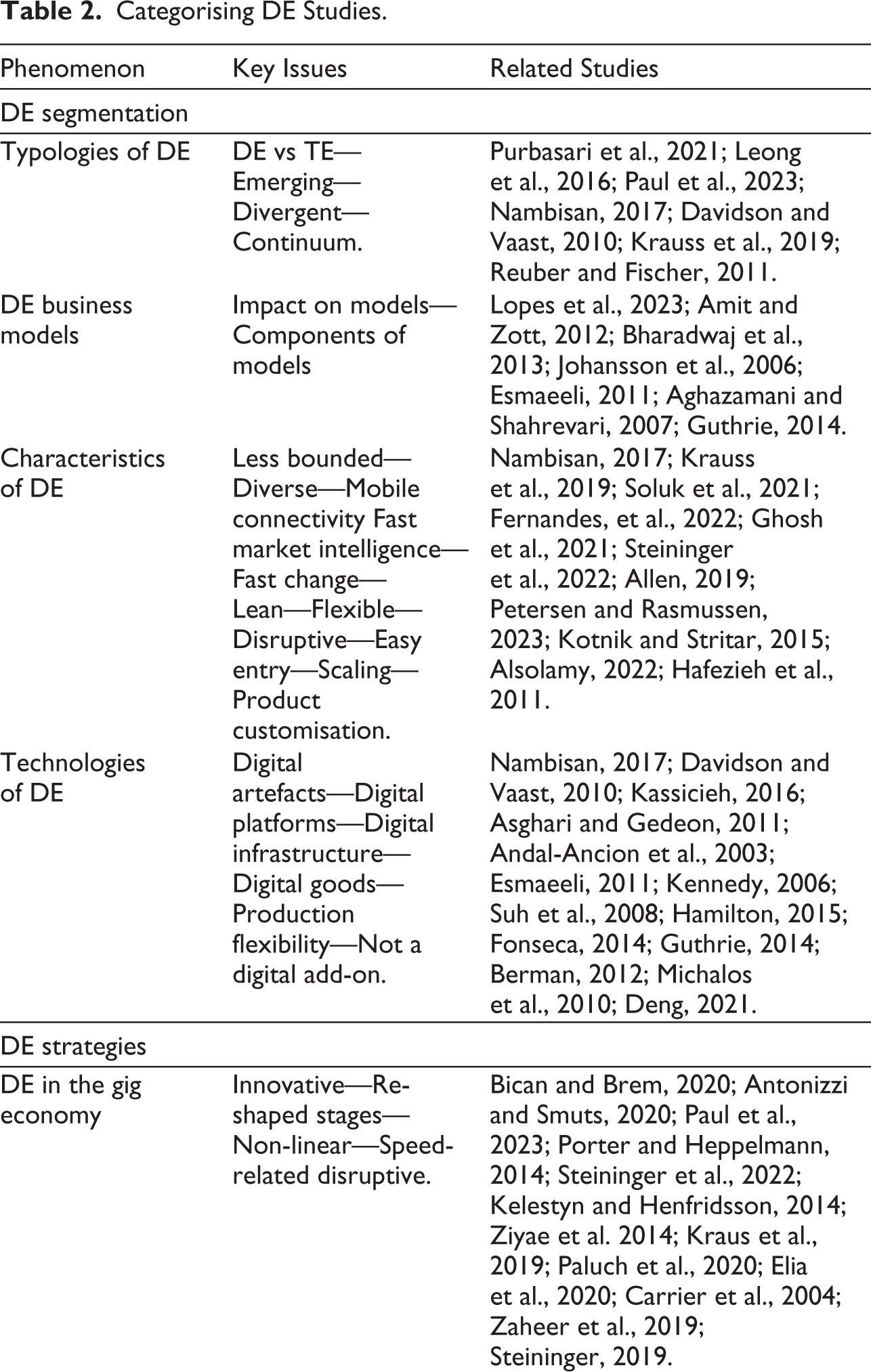
DE is an emerging but divergent field (Leong et al., 2016; Purbasari et al., 2021), where studies attempt to generate DE typologies (Davidson & Vaast, 2010; Nambisan, 2017; Paul et al., 2023). Many authors allude to the differences between DE and TE (Kraus et al., 2019; Reuber & Fischer, 2011). Others propose a continuum exists (Hull et al., 2007), segmenting digital ventures into mild, moderate and extreme categories. In addition, there is a strong research focus on how DE impacts business models (Amit & Zott, 2012; Bharadwaj et al., 2013; Lopes et al., 2023) and on the components of those models (Aghazamani & Shahrevari, 2007; Esmaeeli, 2011; Guthrie, 2014; Johansson et al., 2006).
Several authors focus on the emerging characteristics of DE, with Nambisan’s (2017) review indicating processes that are less bound by past practices with more diverse components (ECEIDG, 2015; Kraus et al., 2019). Several studies confirm the importance of mobile social connectivity (Fernandes et al., 2022; Ghosh et al., 2021; Soluk et al., 2021). This fast knowledge acquisition enables greater opportunity identification (Ghosh et al., 2021). In an editorial review, Steininger et al. (2022) confirm that DE generates disruption, gig economies, with fast and lean ventures requiring new management skills. There is a unified perspective that instantaneous, direct global market intelligence enables low-cost, quick and flexible innovative marketing (Allen, 2019; Kotnik & Stritar, 2015; Petersen & Rasmussen, 2023). This facilitates swifter market entry and rapid business scaling (Alsolamy, 2022), with greater flexibility in DE products, storage, distribution and staffing (Hafezieh et al., 2011).
Nambisan (2017) proposes three critical digital technology components: digital artefacts, platforms and infrastructure, forming the products, services and tools for collaboration. Similar research streams trace how such digital technologies mediate the entrepreneurship process (Andal-Ancion et al., 2003; Asghari & Gedeon, 2011; Esmaeeli, 2011; Kassicieh, 2016), generating new venture configurations (Fonseca, 2014; Hamilton, 2015; Kennedy, 2006; Suh et al., 2008).
Some studies focus on the production of digital goods (Guthrie, 2014). Berman (2012) and Michalos et al. (2010) indicate how digital software controlling 3D printing and robotics enables unlimited production flexibility, customisation and cost reduction. However, Deng (2021) cautions that the ever-changing nature of the social media platforms that DEs use can disrupt and inhibit their virtual interactions. Others assert that using digital technology to leverage existing TE business ventures differs considerably from the use in pure DE ventures (Andal-Ancion et al., 2003).
In terms of development strategies, Bican and Brem (2020) and Antonizzi and Smuts (2020) indicate that innovative DE practices radically reshape development patterns (Paul et al., 2023; Porter & Heppelmann, 2014). Indeed, Steininger et al. (2022), Kelestyn and Henfridsson (2014) and Ziyae et al. (2014) indicate that the speed and disruptive power of DE ventures generate random development phases. Kraus et al. (2019), Paluch et al. (2020) and Elia et al. (2020) confirm that the incremental pace and phases of TE are being displaced by fast and irregular DE patterns. Carrier et al. (2004) identify different stages in the DE process, which Zaheer et al. (2019) and Steininger (2019) broadly confirm, but indicate a need for further research. Studies also focus on the impact of DE on marketing strategies (Hair et al., 2012; Stokes, 2000; Wymbs, 2011). They explore how digital technologies generate diverse entrepreneurial marketing strategies, value creation and competitiveness (Hafezieh et al., 2011; Porter & Heppelmann, 2014; Ziyae et al., 2014). DE enables greater and quicker market intelligence through direct market connections, producing faster, low-cost, innovative marketing with greater subsequent product flexibility (Kotnik & Stritar, 2015).
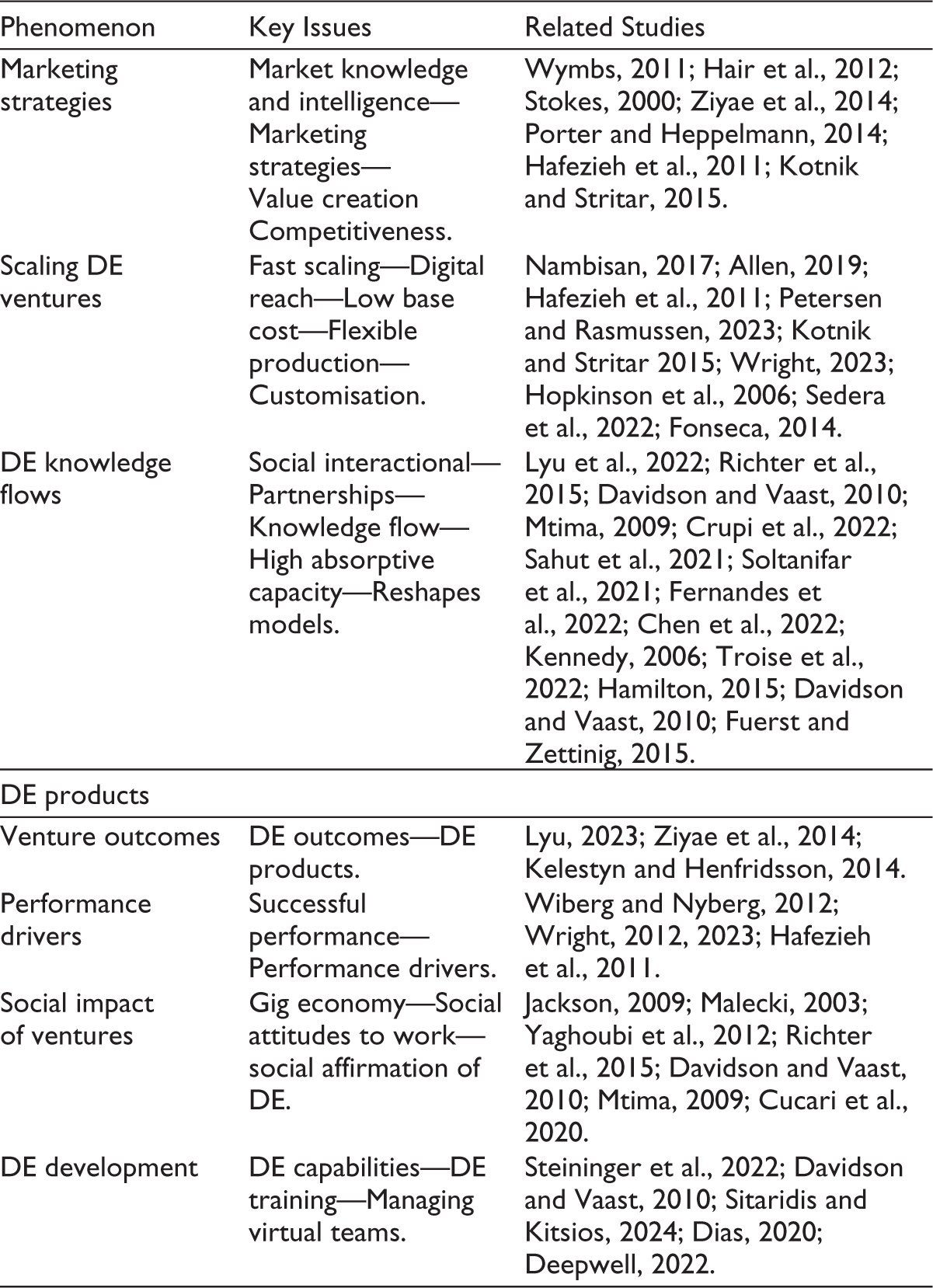
Many studies indicate that the key DE footprint is fast scaling due to limited local ties and a low-cost base (Allen, 2019; Hafezieh et al., 2011; Nambisan, 2017). Digital connectivity enables global reach and international partnerships for scaling (Petersen & Rasmussen, 2023). Digitisation also enhances product flexibility and differentiation during scaling (Kotnik & Stritar, 2015). Digital technologies reshape the scaling production process through previously impossible direct customer engagement, enabling just-in-time customisation (Fonseca, 2014; Hopkinson et al., 2006; Sedera et al., 2022; Wright, 2023).
Several studies focus on the social interactional nature of DE (Lyu et al., 2022; Mtima, 2009; Richter et al., 2015). Crupi et al. (2022) emphasise that while the technology is important, it is the knowledge that flows from social interactions that underpins DE innovation, enabling a higher absorptive capacity. Digital technology produces fast knowledge flows, making DE processes different from TE (Fernandes et al., 2022; Sahut et al., 2021; Soltanifar et al., 2021). A Mexican field study by Fuerst and Zettinig (2015) demonstrated how such digital partnerships generated critical knowledge flows for venture development. DEs utilise knowledge from their social contacts to build their ventures (Chen et al., 2022; Kennedy, 2006). Initially, social media shapes ventures through crowd sourcing, and then reshapes products through social feedback (Hamilton, 2015; Troise et al., 2022). Digital interactions also generate multiple business partnerships as customers become product testers and ambassadors (Davidson & Vaast, 2010).
In terms of the products of the phenomena, there is a focus on DE outcomes (Kelestyn & Henfridsson, 2014; Lyu, 2023; Ziyae et al., 2014), exploring what determines successful performance (Wiberg & Nyberg, 2012), and the factors that underpin performance (Hafezieh et al., 2011; Wright, 2023). Research also focuses on how DE impacts wider society (Jackson, 2009; Malecki, 2003; Yaghoubi et al., 2012), with DE generating gig economies (Richter et al., 2015) and restructuring social attitudes to work (Mtima, 2009). In the reverse relationship, society also mediates how DEs are perceived or affirmed (Cucari et al., 2020), with DEs sometimes generating celebrity status. Finally, with DE being so different, DEs now require new capabilities (Davidson & Vaast, 2010; Steininger et al., 2022), like the ability to manage virtual teams (Deepwell, 2022; Dias, 2020). How DEs can acquire these skills is also explored (Sitaridis & Kitsios, 2024). Table 2 categorises current DE research streams.
Categorising DE Studies.
The Research Focus and Knowledge Gap
Previous studies are diverse in focus and broad in outcomes. Researchers approached DE from differing perspectives and with different purposes. Over time, research will mature and converge, forming a coherent knowledge platform with best practice models (Al-Debei et al., 2008). Understandably, a major focus is on the impact of digital technologies on entrepreneurial processes. This study contests much of this current technological focus of DE research, taking the perspective with others (Chen et al., 2022), that privileging a social network perspective will be important in advancing DE knowledge. Social interactions lie at the heart of DE, with the continual flow of knowledge from constant global interactions underpinning DE and displacing TE. The technologies are indeed a critical tool. However, it is how these technologies are used that is decisive for new ventures. The knowledge gained through social network interactions is the instrumental mediator, driver and unique watermark of DE. The knowledge DEs gain from their social network interactions is the critical and defining difference between DE and TE. However, digital technologies are the enabling infrastructure, and it would be wrong not to recognise the symbiotic nature of these two critical DE process components (Maiolini et al., 2016). Indeed, the domain of actor network theory (ANT) has for some decades indicated that innovation and change in organisations is not due to actors or machines, but the complex relations between them (Law & Hassard, 1999). ANT, and subsequent socio-material perspectives view them as inseparable, and address them as ‘actants’, a collective noun for all the people, machines and indeed also the ecosystems within organisations, continually reshaping each other by their actions and subsequent reactions (Rose & Jones, 2005).
The rationale for privileging this social interaction approach is based on three premises. First, current research has established DE as an increasingly social and relational construct (Davidson & Vaast, 2010; Sedera et al., 2022). Second, recent studies have displaced perceptions of entrepreneurs as isolated lone wolves with perceptions of them as social butterflies, extracting knowledge from multiple network interactions (Anderson et al., 2017; Cowden et al., 2022). Third, despite the focus on technology (Fonseca, 2014; Rusonis, 2015), others insist that knowledge from social connectivity fuels DE (Conole & Dyke, 2004; Sedera et al., 2022; Wiberg & Nyberg, 2012). Digital technologies may indeed be driving the fourth industrial revolution (Avent, 2014; Elliot, 2016), but in essence, it is a knowledge-based revolution. Digital technologies enable the flow of knowledge to be almost instantaneous. Therefore, the research team decided that using a combination of social network and social capital theory would be an appropriate base for exploring how DEs harvest and utilise knowledge.
Social network theory is well established and describes the social structures formed by actors and organisations at the individual, institutional and societal levels (Borgatti et al., 2009; Wasserman & Robins, 2012; Williams & Durrance, 2008). Social capital theory explains how the norms, identities and knowledge people develop through their social relations mediate their subsequent social interactions from structural, relational and cognitive perspectives (Lyu et al., 2022; Nahapiet & Ghoshal, 1998; Tsai & Ghoshal, 1998). These theories model how DE network interactions generate social capital, such as relations, information and knowledge resources. DEs then then leverage these resources to develop ventures (Burt, 1992; Granovetter, 1985; Lin, 1999). Together, these theories provide a unified platform framework for researching DE from a social interaction perspective (Sajuria et al., 2015; Yetis-Larsson et al., 2015), and led the research team to the following linked assumptions.
DEs use social networks at the individual, institutional and societal levels for venture building.
DEs’ on and offline social networks, generate structural, relational and cognitive social capital.
Social capital knowledge significantly impacts the developmental process of DE.
Digital social connectivity generates social capital as knowledge, which redefines entrepreneurship.
The literature indicates that a social interactional perspective focusing on DE social networks and the social capital they generate is well-founded, but complex and contested (Aarstad et al., 2010; Light & Dana, 2014; Lyu et al., 2022; Stam et al., 2014). For instance, Gedajlovic et al. (2013) insist that social network relations do not necessarily generate enhanced social capital, with Kwon and Adler (2014) indicating that such interactions require high levels of trust before knowledge flows. De Carolis and Saparito (2006) suggest that the translation of such knowledge into venture benefits is a complex mix of social opportunity and DE capability. To improve understanding of these complex relationships, it appeared that an empirical study based on multiple DE interviews, with observations and web exploration of their ventures, would be appropriate.
Studies taking a social network perspective have often been desk-based literature reviews or focused on building conceptual knowledge (Davidson & Vaast, 2010; Sedera et al., 2022). While this is important, few have been empirical social interactional studies focusing on developing strategies for practitioners. The unique focus of this investigation is an empirical social interactional investigation. In addition, by gathering data from ventures in a developed major economy distributed across an area larger than Western Europe, the study aimed to increase the generalisation of the findings and simultaneously contribute Australasian data, mainly absent from DE research.
The Conceptual Framework
This conceptual framework (Figure 1) assumes that in DE, technology is a critical enabling tool, and that how the entrepreneurs use technology for social connectivity defines subsequent business performance (Hamilton, 2015). This privileges a social interaction perspective, as social connectivity is instrumental in changing the nature of DE entrepreneurship (Hansen, 1995).
Conceptual Framework.
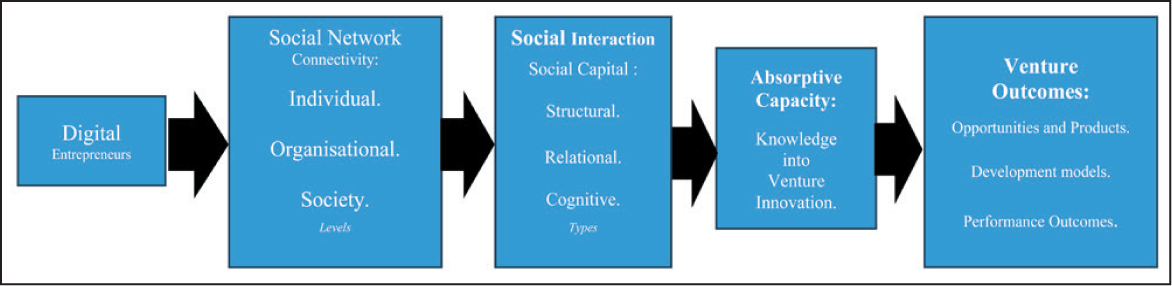
The conceptual framework was constructed to explore DE by investigating how digital social interactivity changes TE practices. As the framework shows, DEs establish social networks, gaining social capital and adapting knowledge into venture innovation. This process occurs at a variety of levels with differing outcomes, depending on DE capability and network vitality. This novel application of these established frameworks was constructed to address a specific knowledge gap in DE research by exploring the research questions: how do digital entrepreneurs use social networks to exploit business opportunities to build their ventures, and how do social networks impact and mediate the performance and outcomes of DE ventures? In terms of this article, the focus is particularly on the implications for practitioners—and what are the messages for practitioners? The next sections explain how this intention was operationalised, data collected and analysed, and then how the outcomes extend current knowledge.
Research Method
Design
Given the emergent nature of DE, this study took an exploratory, inductive and qualitative investigative approach, one appropriate for studying an evolving phenomenon (Flick, 2006). Qualitative case study approaches are often used in TE research, allowing deeper study of individual experiences and perspectives (Fuerst & Zettinig, 2015; Hanage et al., 2016; Serarols, 2008; Yin, 2011). The aim was to gain in-depth insight into DE networking practices and the subsequent impact on ventures (Yin, 2011). A purposive sample of cases was selected from the researchers’ personal networks to incorporate diversity while illuminating the focal phenomenon (Eisenhardt, 1989). The sample was segmented according to metropolitan versus regional, gender, age, size and business maturity. While category equality was unfeasible (see Table 1), this approach produced a diverse sample of DEs and DE ventures. Data were collected through semi-structured interviews, providing a consistent approach with flexibility. As an exploratory study, the generalisability of the findings would be subject to a subsequent quantitative study (Eisenhardt, 1989; Yin, 2011).
Participants
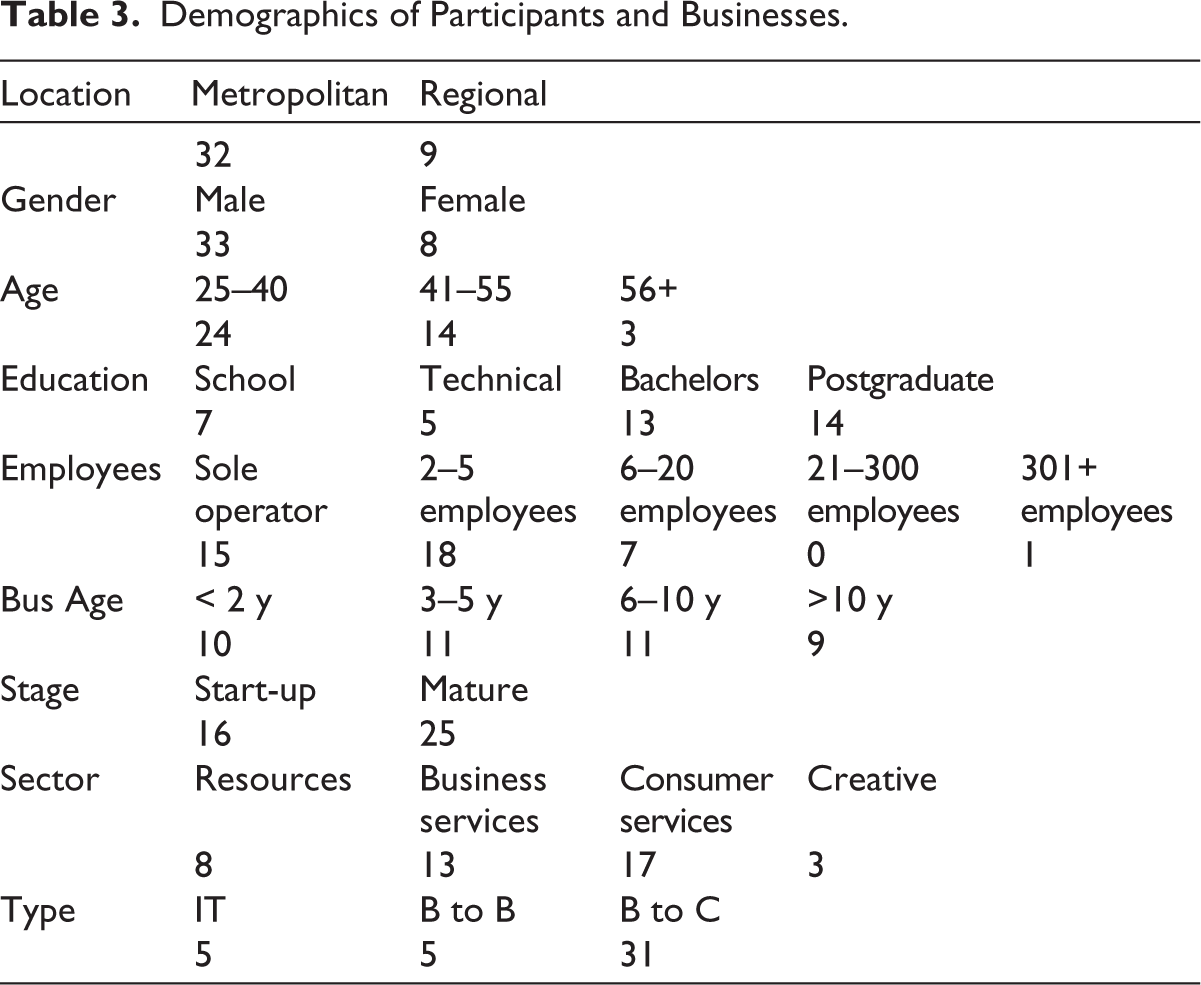
No studies have defined the broad characteristics of the DE population, so this study gathered a representative sample based on two principal criteria. First, a focus on willing, experienced DEs recruited from existing researcher networks who could provide revelatory information. Second, the continual referencing of each prospective participant to a central matrix so an appropriate mix of genders, ages, educational backgrounds, locations, business experience, business types and business stages was gained. The sample of 41 DE subjects had broad TE and DE knowledge from running and developing mature businesses, often simultaneously trialling additional DE ventures (Table 3 shows the sample demographics). Participants were more often males, city dwellers, with university qualifications. Businesses were more often small, a mix of start-ups and mature businesses, with up to a decade of venture history.
Demographics of Participants and Businesses.
Interview Format and Questions
Following institutional ethical approval and informed consent, the study conducted face-to-face, hour-long recorded interviews at workplaces, using video conferencing for remote locations. The questions reflected the study’s social interaction framework and probed: development stages, opportunity recognition, resource acquisition, venture scaling, perception of DE, use of technologies, role of social media, use of strategy and venture issues. Each question explored DE relations and interactions with: business partners, staff, customers, suppliers, co-entrepreneurs, funders and mentors. Participants often provide influential web links.
Data Analysis
The unit of analysis was the DEs rather than their ventures. The protocols were developed to enable the respondent’s broad interpretation and pursue diverse reflections to expand data scope and knowledge about practices. A collaborative analysis process used five experienced researchers, all versed in a grounded theory approach based on the tenets of Glaser and Strauss (1967) and Braun and Clarke’s (2006) six-stage process. This used the advantages of blending individual analysis with team collaboration to reduce subjectivity and increase the reliability of the analysis. First, individuals without collaboration used open coding to locate key concepts in the data. However, this individual analysis was guided by the shared perceptions of the social network and capital theory framework jointly constructed. This was a stage of familiarisation with the data, giving tentative labels to key concepts. A collaborative review seminar was held to review and moderate the individual coding analysis. The researchers then exchanged data for the second axial coding phase, where grouping and mapping relationships between the initial concepts began to develop an understanding. Following a further collaborative session, each researcher took responsibility for developing specific emerging overarching themes, defining the characteristics and limitations of each thematic area. Finally, the team agreed on the key emerging findings and related the evidence to specific sections of the conceptual matrix, with each researcher drafting specific sections of the report findings and implications. Using elements of network and social capital theory, the research team also constructed a nine-component analytical framework consisting of three ‘worlds’ (SNT), with three levels (SCT), within each world as follows to segment the evidence from the study as illustrated in Table 4.
Analytical Framework Based on Network and Social Capital Theory.
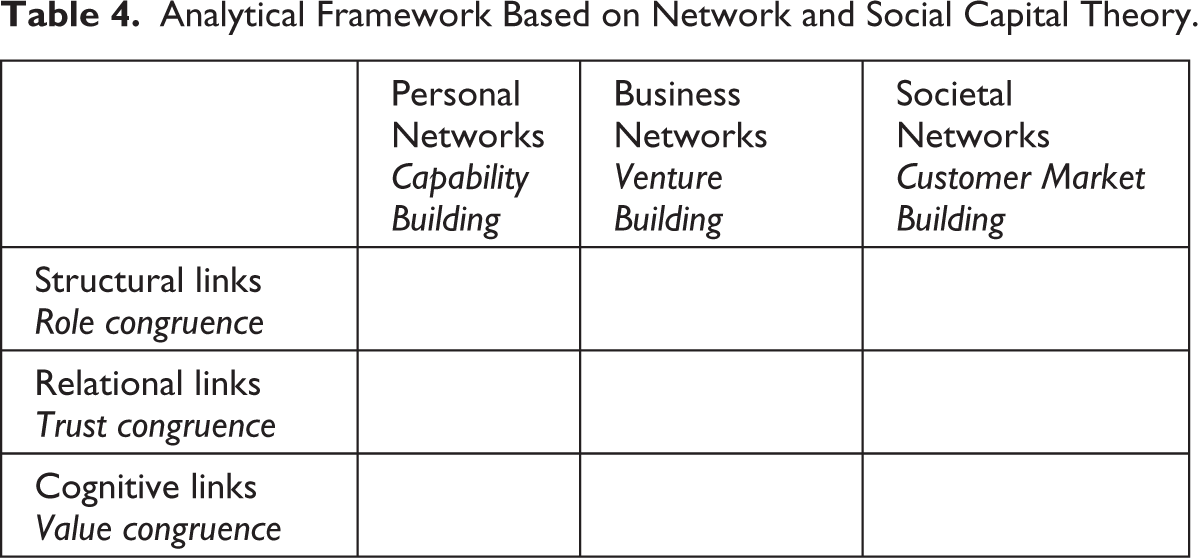
The three worlds of each digital entrepreneur are:
Individual network—of family and educational learning relationships. Business building network—of co-owners, co-workers, colleagues and mentors. Customers and wider network—of societal relations.
The three levels of the digital entrepreneur’s network relations are:
The structural network links—who they relate to for imperative network interactions. The relational links of those network links—those that generate trust and interactivity. The cognitive links within those networks—links where there is value congruence.
Data Validity, Reliability and Limitations
As a new and emerging field, DE exhibits great diversity with no clear segmentation between DE and TE ventures, as many entrepreneurs operate across the current continuum of venture activity. This problematised the selection of participants, but also diversified the data collected, with most respondents having previous TE experience. The interview protocols, interview length, interviewers’ experience and personal transcription ensured consistency, reliability and generated robust quality data. Resources were focused on gathering rich, revelatory data from respondents at the centre of DE venture building. The 41 alternative perceptions build a broad picture of the process with generally collaborative evidence between subjects. What supports the authenticity of the data collected is the lack of competing narratives. There was no area where DEs produced conflicting accounts. Indeed, often other respondents collaborated and supported statements made by other DEs. In addition, each researcher prepared for the interviews by gathering data on the ventures being run by the DEs, thus being in a position to understand and to some extent validate the claims of each DE. Many of the interactions occurred within digital hubs and co-working spaces where researchers spent considerable time and discussed business issues and stories with other unrelated entrepreneurs. This additional observation and document/web scanning enabled members of the research team to collaborate on the accuracy, reliability and trustworthiness of most DE statements, triangulating DE responses with corroborating evidence from web searches and commentary from other DEs.
Naturally, there were limitations to the study design and, therefore, for the subsequent interpretation of the evidence gathered and analysed. As the study was designed to explore how DEs were developing their ventures, the fieldwork focused resources on depth rather than quantity of interviewees. While the sample of participants was less than 50, the deep conversations reached the point of data saturation and redundancy. While data from one location limits the generalisability of the study outcomes, the study does provide clear findings which a wider qualitative study could utilise to confirm, extend or contest the results.
Findings
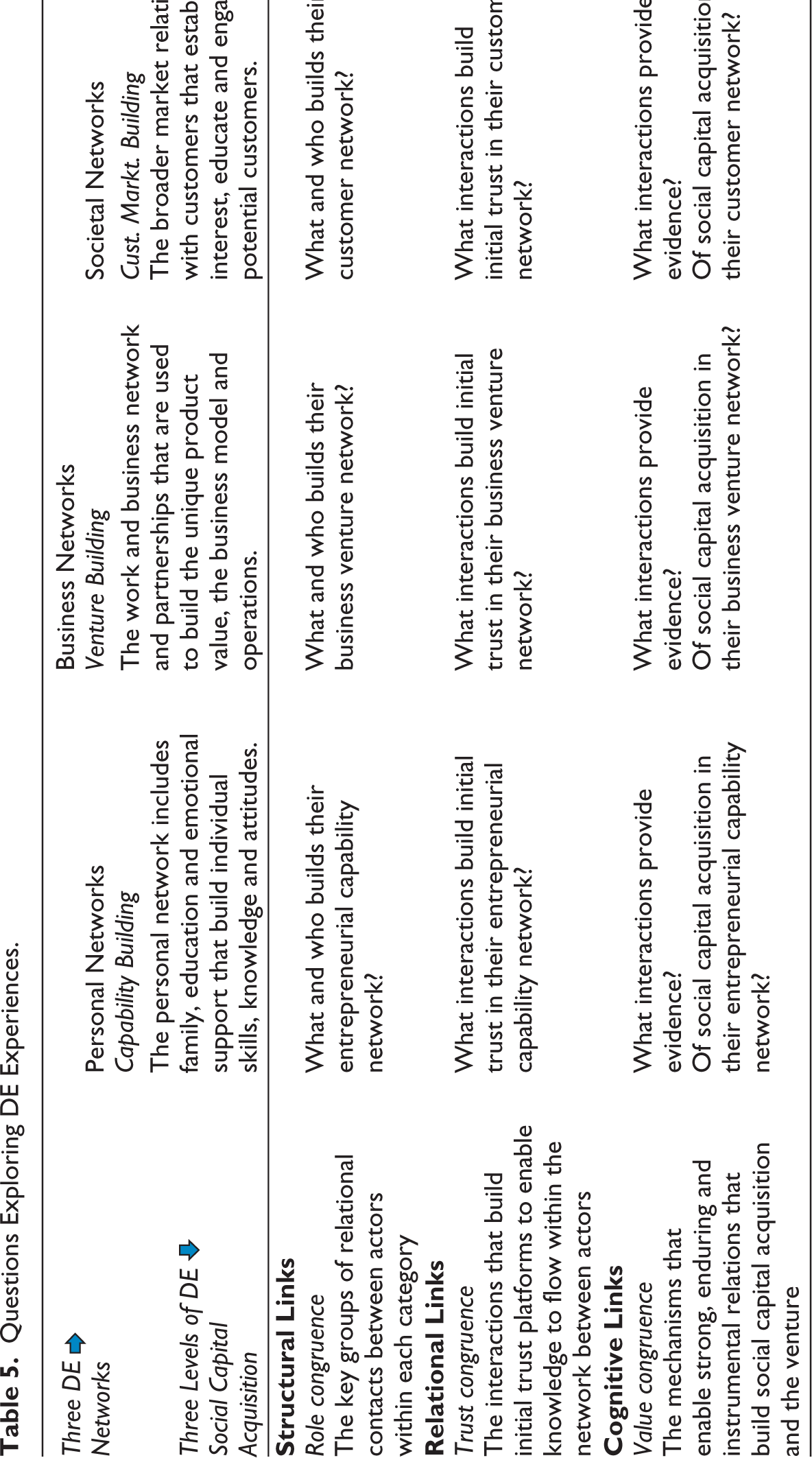
The key findings from the participant responses were subsequently matched to the appropriate sections of the analytical framework, focusing on the personal and structural. and social networks and their structural, relational and cognitive links as illustrated in Table 5.
Questions Exploring DE Experiences.
The following sections present an overview of the study evidence in terms of the variety of social capital generated through the personal, business and societal networks of the DEs (with a dash indicating each new respondent phrase).
The personal networks of the DE illustrated the structural importance of family and educational connections, building personal capability, venture knowledge and project management skills. These experiences instilled a desire to self-manage and engage with digital problems. Mentoring relations helped deal with isolation and resilience.
My Dad a couple of businesses along the way—it was in my family. I had just finished an MBA. Thought I might have to try this on my own… segregation and isolation of the technical focus is a killer. — I don’t think you will ever see a digital entrepreneur reading the Courier Mail or the Australian. To see what’s going on in the world they will leverage their friends & influencers with Headlines that need sharing to get news & market intelligence. They are far more bold in asking industry gurus, high level investors—far more bold in approaching key influencers or key people who can help. — So, my strategy was to build my networks in my fields of expertise as much as I could. — That is digital entrepreneurialism coming from 2 ways…. I’m using it to sell something but I’m also using it to learn something. I identify what I need to know and then teach myself.… allows you to make informed decisions.
The relational links were important, especially in the start-up phase when laptop isolation was interspersed with partnerships that bridged existing capability gaps and fuelled motivation during often long and hard journeys to the market phase.
I certainly use LinkedIn to build my network — there is never a day without a request to connect on that; the website itself usually gets accessed from LinkedIn. — The other strategy is the pop-up exhibitions & having a space at Maker + Co [a Creatives co-working space] which complemented the online gallery.
Recently joined the Entrepreneurs Institute and went to their iLab in May and could see the power of them — they used the power of all the social networks so now following what they are doing in that space.
The network relations generated specific value when partnerships were forged with people with complementary skills that DEs respected and admired. These relationships were sustained over time and time zones. They often sustained business building and individual learning during times of personal dilemma. It was an environment that often frightened non-DE.
But for China, we use WeChat all the time. Run it for the productions all the time. We’ve got the internet from Ciphertel which gives fast speed upload for when we are working with China. We have a special program developed by MIT for working between the studios in China and here and we use WeChat to have an open conversation in real time. WeChat is like a combination of Facebook, Twitter & Skype. — At school, we were taught not to cheat by looking at the kid next door’s homework, but in order to be an entrepreneurial success you not only want to look at the kids’ next-door homework, but you actually want to learn from it! — My biggest thing is that a lot of people don’t realize that you don’t need to have technical skills to get into the digital space. I in fact have no technical skills whatsoever but I know how to source the right people who do. People obsessed with the mechanisms of their business and work in their business – but they do not work ON their business. — Spent a lot of time learning about these platforms and trying to find an idea.
In terms of business networks, the participants agreed that it was an imperative to establish a clear and agreed purpose, especially when working over distances. Co-working spaces often generated external partners and funding relationships.
Know your purpose – everything else changes over time. — You can Google people in another country rather than getting on a plane to meet your customers & clients. The contamination of ideas is happening a lot faster. — I didn’t want to spend all weekend dealing with people so the online business meant we could manage the business from home or from wherever we were.
DEs indicated that effective relationships enabled more flexible business models to be generated due to broader business capability with networks making bootstrapping, part-time venture building and scaling easier.
So, I run my life from a laptop—and drop box—a community around you is good – but some companies have many employees with none in the same country. — Work with people you like and admire and want to be … be happy to be the dumbest person in the room … but we have four people in a living room … searching… burning money. — The app is not the hard part – the business is — spend less on the product and more on the model. — There are a large number of models you can apply if you are digitally based — I am not tied to location – the whole value chain is different.
These business networks made digital research more effective and generated data that could drive team decisions. As trust was established, it became possible to work over distances and split workloads.
Establishing trust is the main barrier to telecommuting. Internally, the partners are separated in different cities—makes life more difficult. Paul in Brisbane & Alex in Newcastle. — People have different skills and need different environments and partnerships—my special power is to be able to talk to tech guys about business. — Heated conversations about what is right— everything is measurable—all decisions are data-driven. It’s easier because you can do digital research…. — Because you can literally look everywhere else and you can see what’s the trend in Europe and New York, how are people advertising, look at shops that sells similar stuff to you, to a similar type of person and stalk their websites. Stalk how they’re doing it because they’re at the pinnacle … they’re at the front of the race.
In terms of societal networks and linking with customers, there was strong evidence that a focus on customer feedback and gaining knowledge was critical to venture building. The digital environment provided limitless modes of customer engagement, where making choices and continual reassessment were crucial. Clarity of goals for social networks was important to gain initial market attention.
Who are your customers? Fall in love with your customers not your product development—ask customers before the prototype. — Social networking is about getting attention—depends on what you are trying to do and what demographic you want to interact with. The idea was to get a reputation, get it popular, to monetise it to some degree. — What you find with social media is that it isn’t so much a generator of sales, but it certainly builds up awareness. … so as far as using digital technology for something that’s never been done before—we are actually building something completely new, and we are having to educate our clients about the benefits of doing business differently to what they’ve been doing over the last however many years. — Educating the customer is probably our biggest thing. Education for our industry is probably the biggest barrier but that’s not unlike anything that’s being created that’s brand new. — We are training people to focus on the market—who they could be—how they behave—where they are—you have to know how to find them—what holds them back—what they really want.
Linking with the audience to find out who they were through appropriate social media would enable initial interest to move towards education and then to engaging potential customers. Strong network relations enabled product validation and knowledge to follow customers through the right type of social media.
We use Skype, but largely driven by what the client can use. — As an agency we use all the social medias to experiment with because from a business perspective we need to understand how it works for clients. — It can’t be designed in isolation you need advice and feedback. People get scared about what to do next, so they just leave things as they are. They do the website and then get worried—they wonder if they change things if it will explode.
Customers who built trusting relationships with the venture would feed in data that enabled product development and customisation. This, in turn, would act to continue the relationship. Tracking behaviours was a major business benefit and a low-cost feedback mechanism.
(It) gives us statistics & the status of projects; it has all the information on the clients which then goes into GTP Hub—most of it is automated; only had this in the last 5 years. necessitated by the growth of the company. Let’s you know where your business is at any moment in time. — On top of my web browser there’d be a minimum of about 40 tools used in some shape or form all SAS products and all have a very specific need for us whether it’s our CRM that has built-in sales automation and marketing to our customer support system that tracks all emails our customers send; there’s tools that allow for in application Chat for our customers. — To actually find strategic business relationships and customers who are going to pay $40,000 to develop another App for them for their own region you’re going to have to have a long-term relationship with. — But… want a twist to make it work better—and they may be differences the founder has not envisaged. Validation is critical and feedback loop. — The best marketing strategy is to develop a product that people love enough to share.
In summary, returning to the research questions, these participant responses provide strong evidence that DE use social networks to exploit business opportunities and build their ventures. In addition, in relation to the second research question, the evidence of the finding is nuanced and indicates that those social network interactions impact on and mediate the performance and outcomes of DE ventures in a variety of ways, as the Implications section will explain.
While this study has gathered evidence that DEs assemble knowledge from their social network interactions and this benefits their venture building, it is only possible to assert that there is a correlation, and not a causal relationship between these two phenomena. Effective DEs may indeed be both good networkers and good venture builders. It is possible that their personal capability enables them to both generate valuable network relations and effective ventures. To establish causality, another study gathering evidence from a controlled study using additional evidence could explore the strength and consistency of this association. This should be part of future research in this area and might be able to confirm directionality between the phenomena and rule out alternative confounding variable explanations. However, having experienced the stories from the DEs and explored their venture development, all researchers felt that the participant evidence points towards a strong connection between social network interactions, the gathering of new knowledge and subsequent venture benefits.
Implications
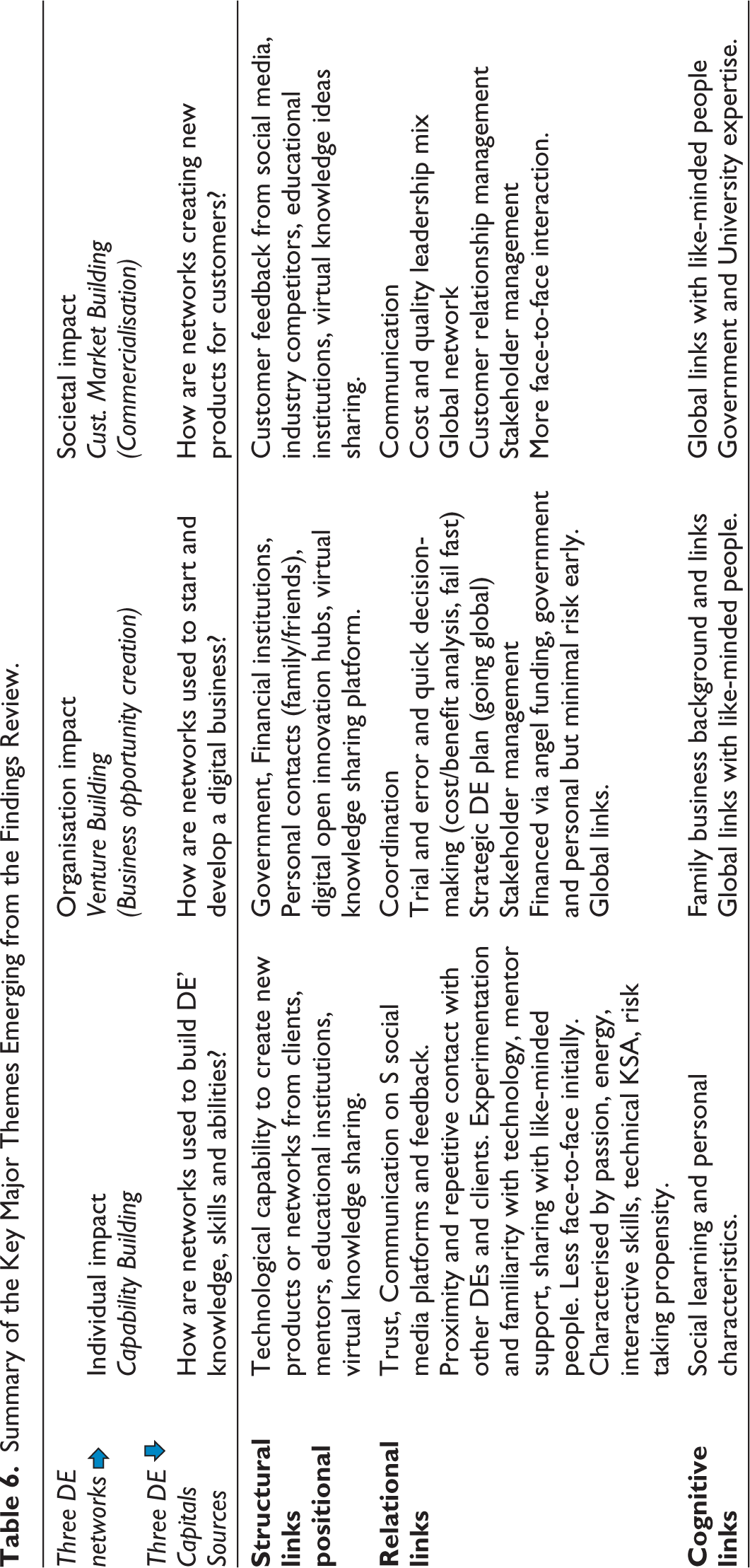
These findings provide persuasive and enduring evidence that DE is underpinned by pervasive social networking. Networks that are instrumental in building the capability of the DEs and the business venture as illustrated in Table 6. This supports and extends the assertion made previously about the role of social networks in the wider domain of entrepreneurship (Kwon & Adler, 2014). The conceptual framework for this study outlined four assumptions generated from the literature review that indicated (a) that social networks were used for venture building, (b) that social connectivity produced social capital for the DE process, (c) that social capital knowledge significantly impacted on the DE developmental and (d) that Digital social connectivity generates social capital knowledge that redefines entrepreneurship. This article will now address the evidence of this study in relation to those assumptions.
Summary of the Key Major Themes Emerging from the Findings Review.
In terms of these assumptions guiding this investigation, the evidence from the study broadly confirms the relevance of the study approach and the critical nature of social interactions in DE business building. In terms of the first assumption, that social networks at individual, institutional and societal levels have a significant impact on DE development, participants were vocal about how their social networks both sustained them personally and helped to build their ventures. This confirms and provides evidence to support previous speculation by Sedera et al. (2022). In terms of the second assumption that structural, relational and cognitive social capital contributes significantly to the developmental process of DE, the evidence of this study broadly supports the assertions of Aarstad et al. (2010) and Khoury et al. (2013) that social relations provide relevant social capital. In terms of the third assumption that social capital underpins DE and DEs’ development, the evidence is confirmatory, but also nuanced. This supports the sometimes-contradictory evidence from the field where some studies confirm the link between knowledge from social networking and DE development (Lyu et al., 2022), while others (Gedajlovic et al., 2013) contest the relationship. While all DEs attribute business and personal growth to their social connectivity, they indicate that knowledge from online relations mainly feeds their ventures, while their local relations are particularly important for their own personal stability and growth. This adds to the current understanding of DEs and their social networks (Lyu et al., 2022). In terms of the final assumption that DE social connectivity and social capital redefine the entrepreneurship process, the evidence from this study was strong and pervasive. It supports the assertion that digitally networked DEs may share the risk and resilience characteristics of their TE counterparts, but they pursue different opportunities, through different strategies, development generating different outcomes, confirming Kwon and Adler’s (2014) previous assertions.
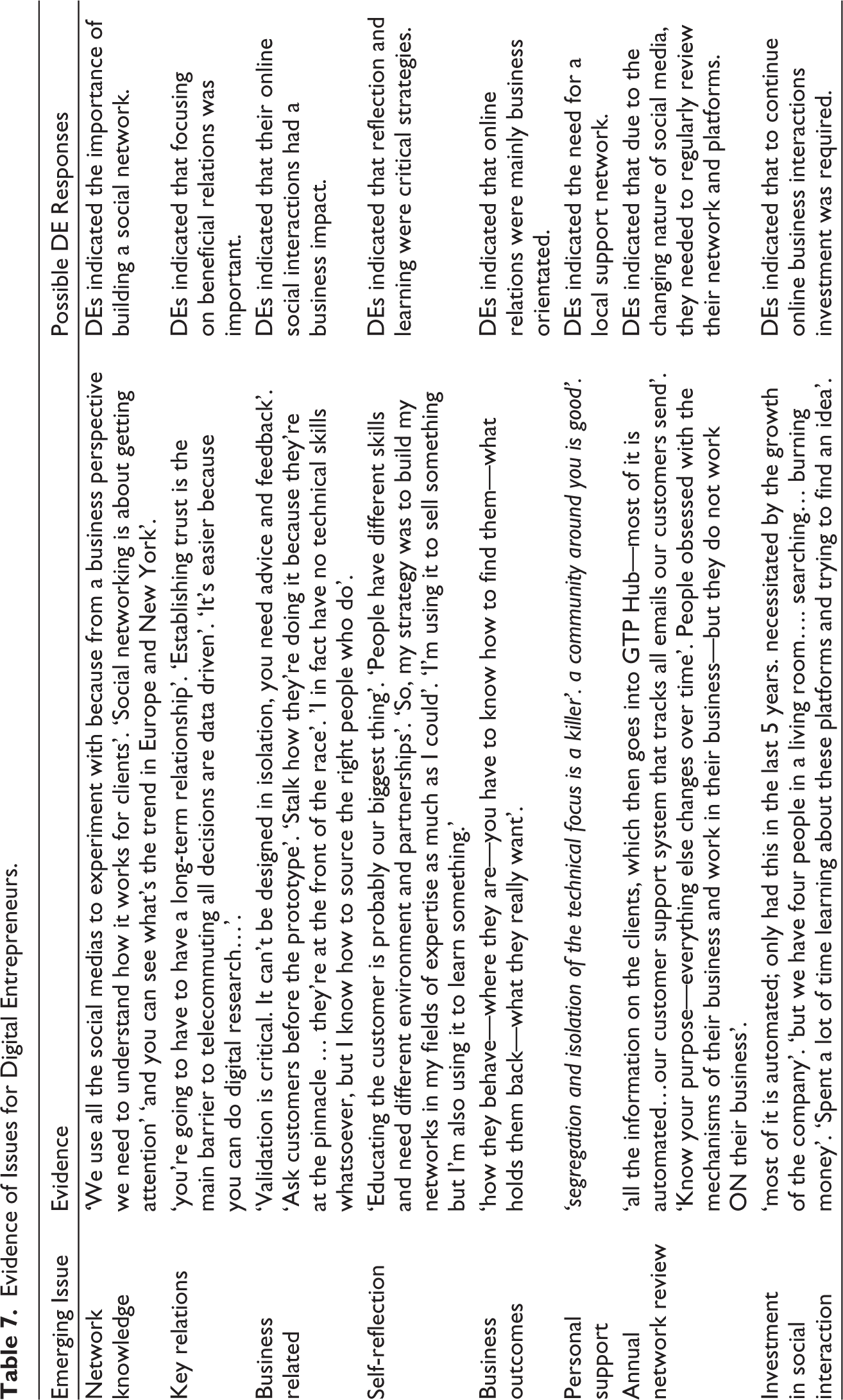
This study highlights the critical importance of social network interactions for DE development and provides first-hand knowledge about how such interactions mediate DE ventures. While a limited exploratory study, it produced persuasive and persistent evidence. Subsequently, the research team focused on the strongest and most enduring emerging issues for DEs. There were eight key issues identified. Eight key patterns of behaviour that DEs would be well advised to explore and action (Zhang & Ravishankar, 2023). Subsequent consultations with DEs from the study confirmed the face validity of the issues tabulated below.
These digital entrepreneur narratives emphasise the relational nature of their world and practice. It is evident that digital networks are far easier to create, more numerous, more pervasive, more global, more 24/7 and more critical than in TE. In the early phases, social networks locate partners, staff, mentors, advisers, technical specialists, funders, suppliers, distributors and market knowledge. In later phases, they enable advertising, customer feedback, focus and product customisation and build venture loyalty. However, face-to-face networks were often as important in the early stages as they generated personal support. Many DEs indicated that generating relational trust was a prerequisite to mutual knowledge flows. While the study data provides an academic conceptualisation of DE, it also provides important information for DEs. Table 8 indicates how the issues in Table 7 can inform future DEs as critical stakeholders.
Evidence of Issues for Digital Entrepreneurs.
Agenda Strategies for Digital Entrepreneurs.
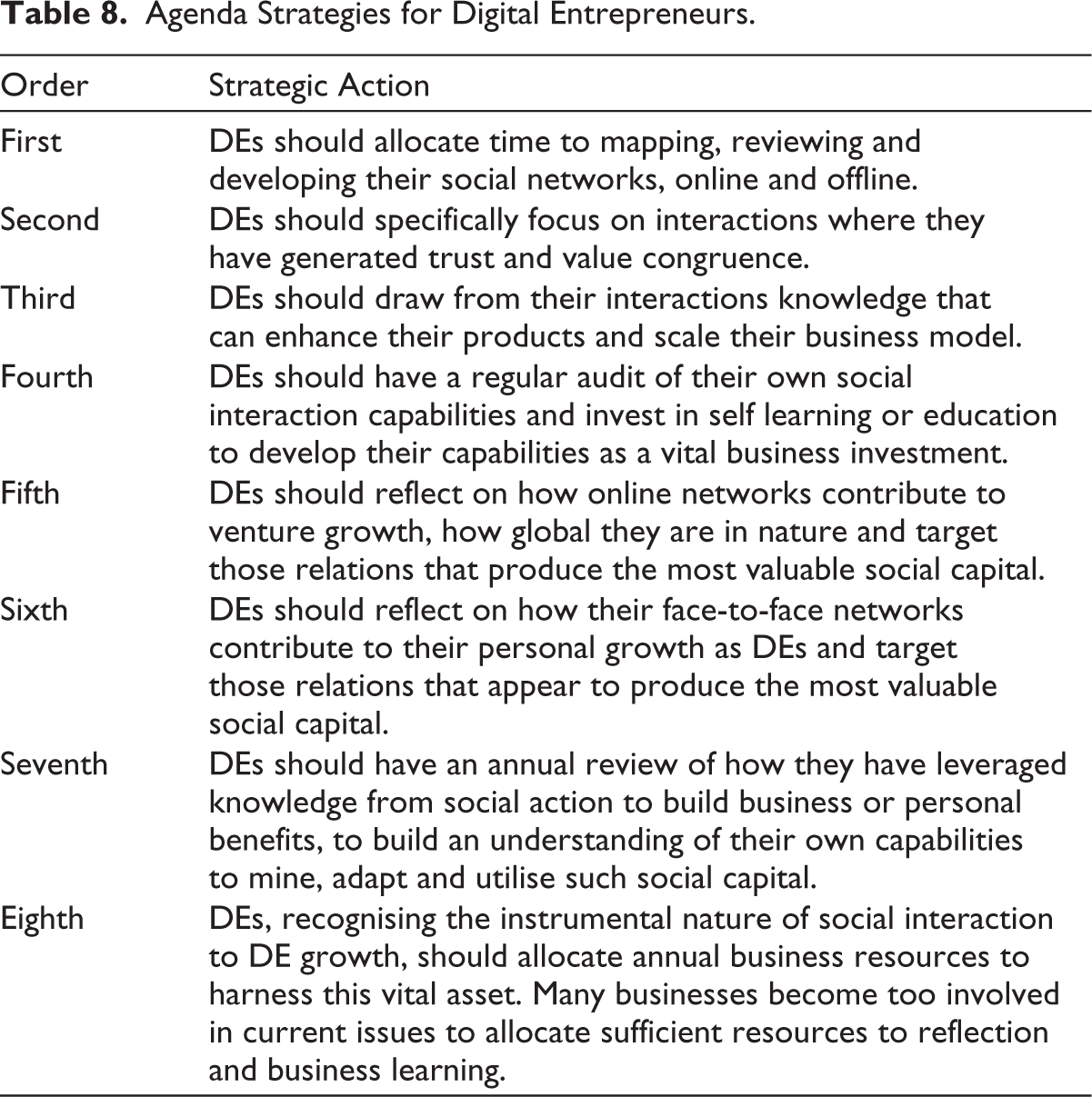
When DEs take such action, they integrate learning and work so they can be learning while they are working and working while they are learning. For DEs, the synergy of working and learning lies within every network and interaction they pursue. Customer feedback can simultaneously be positive reinforcement for the DE, the building of brand loyalty, provide cultural awareness, advice for product development or enhancement, the start of a new product or venture idea, a potential business collaborator or a future funding prospect or product tester.
This investigation has provided substantial evidence that DE is constructed by social network interaction, and that this lies at the heart of the digital entrepreneurial business models and practices. However, it is just the start of the exploration required in this domain. First, while it is evident that social network relations impact on DE venture construction, there is a lack of clarity about which relations, what interactions and what knowledge flows and associations impact upon subsequent business performance. Some authors have already indicated this as a complex and contested area and dispute the assumption that just because a social relationship exists, social capital will subsequently flow, and venture development will benefit (De Carolis & Saparito, 2006). Second, while this study provides evidence of the instrumental nature of network relations for DE development, this study did not address the issues of which relations appeared most instrumental during the differing phases of development. Indeed, it may be that such an investigation may develop a very different typology of DE growth and development phases that contrasts with those currently accepted in broader entrepreneurial research. Third, the evidence indicates that DE is primarily a product of the knowledge harvested from network relations with digital technologies as the enabling underpinning tools. The knowledge that flows from these social interactions appears to fuel DE innovation. Digital technologies change the conversational reach of DEs, the depth of their potential discussions, and extend the options and rules of business communication and venture creation. As Maiolini et al. (2016) suggest, there is a symbiotic relationship between the technologies and the social networks DEs utilise. This study provides a platform for further research. However, which should be the preferred technological platforms? This study has established a conceptual and analytical framework based on network and social capital theories that can be a foundation for future studies. Wider and larger quantitative studies should build from these findings to confirm the centrality of social networks for DEs, simultaneously exploring which platforms and interactions, and what conditions and knowledge are most instrumental in developing DE ventures.
Conclusion
The findings show that social networking appears increasingly instrumental in mediating DE venture opportunities and development, and that it is the social interaction that technology provides that is changing the nature of entrepreneurial activity. Nambisan (2017) has provided a model to conceptualise DE development from a technological perspective. This study provides an approach to explore DE from a social interactional perspective for future research agendas. In terms of future research, the evidence suggests that the relations between social interaction and venture building should be a primary perspective for understanding DE development. How social capital is translated into business advantage and how such transactions may be measured are critical questions for this research field. While the narratives of DE indicate the undoubted value of social interaction for business development, as yet, the nebulous nature of social capital makes the investigation of how social interaction and social capital impact upon business building and venture performance a complex and contested domain.
There are few empirical social interaction studies that focus on the strategies DEs use for business development. This article addresses this research gap. It extends current research into digital entrepreneurship through a research-based argument and empirical evidence that supports the use of a social interactional perspective for research into DE, rather than a technological focus. Concurrently, this study demonstrates how a social network and social capital theory approach is applicable for data collection and analysis. While technologies are vital, it is the way that DEs are using them that is critical for DE development. Seeking and harvesting the ideas and options from social interactions fuel DE development. In addition, while there is much advice offered to practitioners, this study has distilled from the evidence of practice an agenda for DEs to take and adapt to their own unique contexts.
DEs are the primary beneficiaries of DE research, and this study aimed to provide them with an agenda that can benefit venture development. This study provides strong evidence that investment in social networking is directly correlated with business growth. Further, DEs need to invest in both online and face-to-face interactions and use knowledge from the former to continually adjust their business product and model through customer feedback, and from the latter to build their own knowledge and resilience to survive and thrive in challenging times. In addition, the evidence suggests that DEs should be allocated business resources to build their own skills and capabilities in this area and monitoring the process and progress as an integrated part of their own business auditing and re-strategising. This article provides them with an agenda. What we are witnessing is the change from the traditional reclusive, self-reliant entrepreneur to the globally interconnected digital entrepreneur, from lone wolf to social butterfly, where continued learning is now obligatory.
Footnotes
Acknowledgements
The research team would like to thank the anonymous reviewers for their valuable suggestions about the appropriate interpretation of the evidence from the study. In addition, the researchers would like to thank the DEs who gave their valuable time to reflect on their working practices and without whom there would be no study, paper or improved knowledge of the process to share.
Declaration of Conflicting Interests
The authors declared no potential conflicts of interest with respect to the research, authorship and/or publication of this article.
Funding
The authors received no financial support for the research, authorship and/or publication of this article.