



Abstract
BACKGROUND
Evaluating the oral histology curriculum offers critical insights into effective teaching strategies and curriculum design to optimize learning outcomes. This study examines the strengths and weaknesses of the current oral histology curriculum and explores teaching and learning methods employed in a Saudi dental school from the students’ perspective, offering recommendations for future curriculum enhancements.
MATERIALS AND METHODS
This cross-sectional study involved 80 students (40 males and 40 females) who attended oral histology lectures and lab sessions at the Faculty of Dentistry, King Abdulaziz University, during the 2022-2023 academic year. A pre-structured and pre-tested online questionnaire comprising 24 questions, divided into 7 sections to cover different aspects of the oral histology course, was used. Descriptive statistical analysis of responses was conducted using SPSS version 26.
RESULTS
The study revealed a strong consensus on the importance of the course, with high levels of agreement regarding the clarity of objectives (72%) and course organization (69%). High engagement levels were noted in both class and lab sessions, with a preference for diverse teaching methods. Male and female participants agreed on the difficulty but recognized the critical importance of the oral histology course. However, opinions varied on teaching methods that encourage participation (P = .0001), continuous assessments (P = .004), and class attendance (P = .030). Most aspects of the course showed no significant gender differences.
CONCLUSION
This study highlights the need for refinement in the oral histology curriculum, focusing on enhanced teaching methods and gender-specific participation and assessment needs. Improving continuous assessments, attendance strategies, and interactive learning approaches can further boost student engagement and optimize educational outcomes.
Introduction
As dental education evolves continually, dental school curricula are regularly reviewed to ensure compliance with quality standards. Dental educators face the challenge of implementing contemporary, evidence-based curricula that meet the expectations of the dental workforce. 1 Evaluating the dental curriculum is essential to pinpoint areas for enhancement, such as refining the curriculum to cover challenging topics comprehensively or aligning assessment strategies with intended learning outcomes. 2
An integral subject in Bachelor Dental Programs worldwide is the oral histology (OH) course. This course equips students with a comprehensive understanding of dental, paradental, and oral tissues’ structure, function, and development. 3 It plays a crucial role in educating and training dental students to diagnose, treat, and prevent oral diseases effectively. Despite offering comprehensive courses in OH, concerns have been raised about the effectiveness of the OH curriculum in Saudi dental schools. 4 Various evaluation methods, including surveys, focus groups, and interviews, can be utilized to identify areas of improvement in the curriculum and teaching methods. 5
Perceptions from recent studies indicate that students find the OH course challenging and seemingly irrelevant to their future careers, possibly due to a lack of understanding regarding the clinical relevance of OH content. 4 Several studies have explored challenges faced by dental students and proposed strategies to enhance their learning outcomes. For example, incorporating visual aids like microscopes and digital images has been shown to significantly improve students’ understanding of the subject. 6 Additionally, the integration of problem-based learning (PBL) and computer-assisted learning (CAL) in the OH curriculum has enhanced academic performance and engagement among students. 7
Similar to other dental courses at King Abdulaziz University, the OH course emphasizes student-centered learning, employing a range of teaching strategies to foster interactive learning that enables the development of knowledge, skills, and values.8–10 Innovative teaching methods like case-based learning, flipped classroom and gamification, alongside evidence-based learning and critical thinking, have contributed to significant advancements in dental education, strengthening students’ foundation and critical thinking abilities.11–13 We hypothesize in this study that the current OH curriculum is ineffective in meeting the established learning objectives and does not adequately prepare students for clinical practice. This cross-sectional study aims to evaluate the strengths and weaknesses in the OH curriculum and teaching methods currently used, providing a baseline understanding of their effectiveness. The findings will highlight areas for improvement and inform future curriculum development in Saudi dental schools. Ongoing evaluation of the OH curriculum is crucial for maintaining relevance, ensuring efficacy, and meeting the evolving needs of students and the dental profession.
Materials and Methods
Study design and participants
This study was conducted as a cross-sectional survey involving 80 third-year dental students (40 males and 40 females) from the Faculty of Dentistry at King Abdulaziz University. The students were completing the OH course during the 2022-2023 academic year and attended both the course lectures and lab sessions.
Ethical considerations
The study protocol was reviewed and approved by the Research Ethical Committee (REC) at the Faculty of Dentistry, King Abdulaziz University, with approval number 083-04-23. Ethical guidelines were followed meticulously, ensuring adherence to both institutional and national standards for research involving human participants. Measures were taken to minimize any potential risks, and participant privacy and confidentiality were strictly maintained throughout the research process.
Informed consent
Participation in the study was voluntary, with students fully briefed on the study's objectives and their rights, including the ability to withdraw from the study at any time without repercussions. Data were anonymized to ensure the confidentiality and privacy of participants. A total of 80 third-year dental students (40 males and 40 females) who attended the OH course during the 2022-2023 academic year were included. Students who did not attend course lectures or laboratory sessions during this period were excluded from the study.
Questionnaire validity and reliability
The questionnaire was meticulously developed by 2 OH professors to align with the specific objectives of the study. It consisted of 24 questions that addressed various aspects of the course, including content coverage, integration with other courses, attendance in lectures and laboratories, teaching methodologies, learning resources, assessment practices, and potential areas for improvement.
To enhance content validity, 14 the questionnaire underwent a thorough review process involving 2 assistant professors with expertise in dental education and 6 dental students—3 from the final year and 3 from the third year. This collaborative evaluation was structured to ensure that the questions were not only clear and relevant but also comprehensive and reflective of the intended constructs. The faculty reviewers provided insights into the academic rigor and appropriateness of the content, while the student participants offered critical feedback on the clarity and relevance of individual items to their educational experiences.
Following the expert and student reviews, the questionnaire was piloted with a larger group of students from the third year, which allowed for a more robust assessment of the questions’ effectiveness. Feedback from this pilot study was systematically analyzed, and necessary revisions were made to improve item clarity, relevance, and overall quality prior to the final submission.
Data collection
The questionnaire was distributed via a Google Form with an introductory section explaining the study's purpose and the confidentiality of responses. To ensure respondent anonymity, no identifying information (such as names or email addresses) was collected. The survey was disseminated through email and social media platforms, including Facebook and WhatsApp. Responses were compiled in an Excel spreadsheet for subsequent analysis.
Statistical analysis
Descriptive statistics were used to summarize the data, with categorical variables expressed as proportions and percentages. Statistical analysis was performed using SPSS software (version 26; SPSS Inc., Chicago, IL, USA). Associations between variables were examined using cross-tabulation and the Chi-square test, with a P-value threshold of <.005 for statistical significance.
Results
A total of 80 students participated in this study.
Course importance and objectives
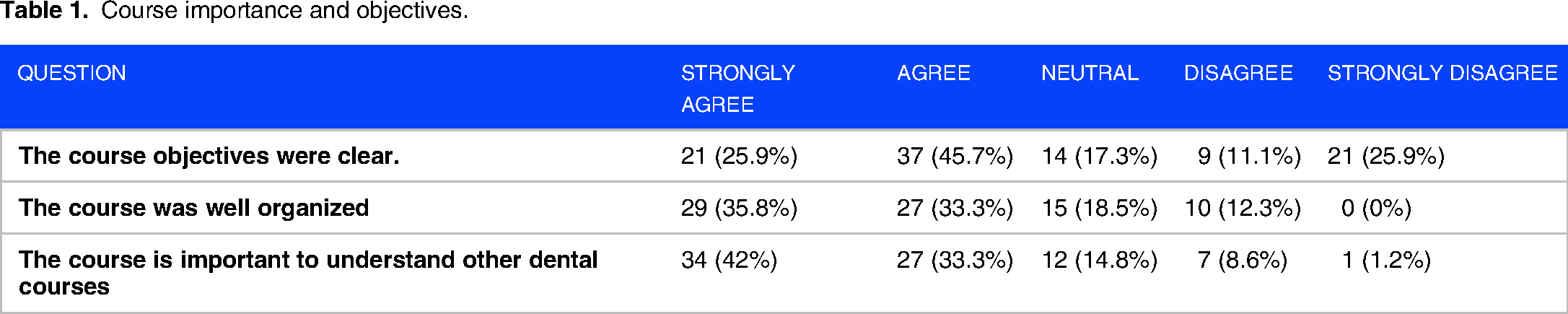
About 45.7% of respondents affirmed the clarity of course objectives, while 11.1% disagreed (Table 1). Additionally, 33.3% agreed and 35.8% strongly agreed that the course was well-structured, with 12.3% disagreeing. The majority recognized the course's role in enhancing understanding of other dental courses, with 42% strongly agreeing and 8.6% disagreeing. Both male and female participants found the course well-organized, with a slight male preference.
Course importance and objectives.
Course organization
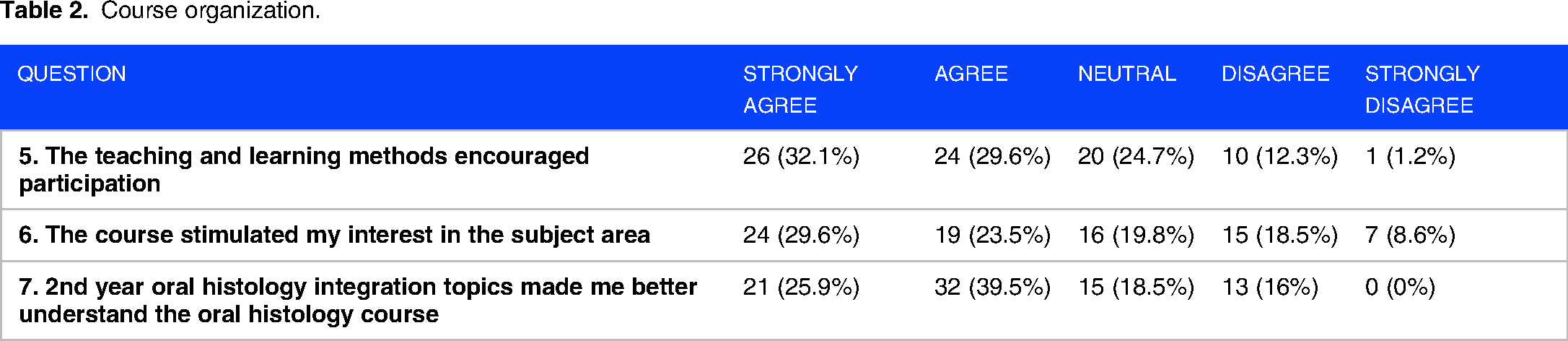
About 32.1% strongly agreed that teaching methods fostered engagement, and 29.6% noted increased interest in the subject (Table 2). About 39.5% agreed that integrating OH topics improved comprehension.
Course organization.
Attendance and engagement
About 70.4% consistently attended lectures, 24.7% attended frequently, and a small group attended moderately (Table 3). Only 1.2% reported rare or no attendance. Laboratory attendance was higher, with 79% consistently attending.
Attendance and engagement.

Teaching methods and Preferences
About 40.7% agreed and 35.8% strongly agreed that teaching methods were effective. About 28.4% strongly agreed on the benefits of classroom interactions (Table 4). Lab hours were positively evaluated, with 27.2% agreeing and 44.4% strongly agreeing. About 42% strongly agreed that the course content enhanced understanding of Oral Pathology, while 11.1% disagreed. About 85.2% found CBL and SPP sessions useful, with 33.8% reporting improved topic understanding and 16.3% enhanced research skills. Preferences varied: 42% favored individual work, while 58% preferred teamwork. Study resources included PowerPoint presentations (53.1%), PDF files (28.4%), electronic resources (9.9%), and the Ten Cate textbook (8.6%). The most favored teaching approach combined lectures and labs (43.2%), while online teaching was less preferred (13.6%).
Teaching methods and preferences.

Course assessment and feedback
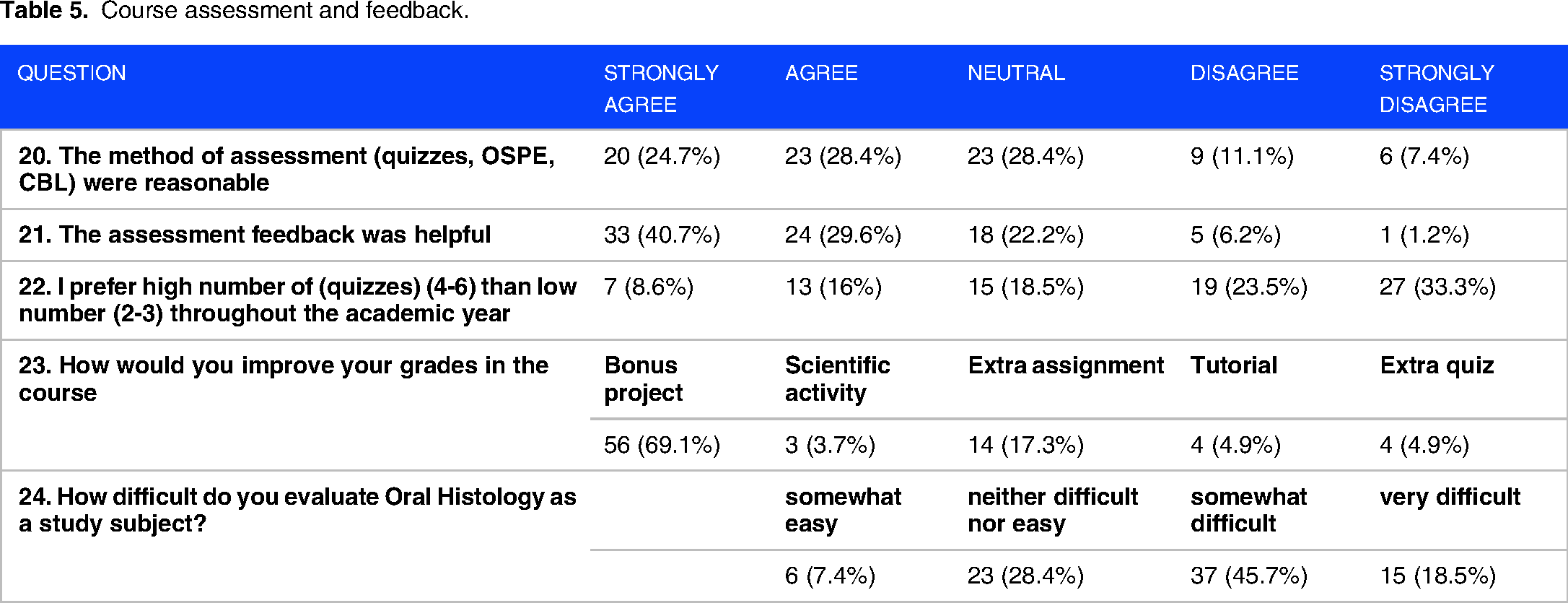
Assessment methods, including quizzes, OSPE, and CBL assessments, were viewed positively by 53.1% of students, with 24.4% neutral and 18.5% disagreeing (Table 5). Feedback was helpful to 70.3% of participants. Continuous assessments were less favored, with 56.8% disagreeing with quiz frequency. Only 24.6% supported the current quiz frequency. To improve grades, 69.1% suggested bonus projects, followed by additional assignments (17.3%), extra quizzes (4.9%), scientific activities (3.7%), and tutorials (4.9%). Perceptions of course difficulty varied: 45.7% found it moderately difficult, 28.4% neutral, 18.5% challenging, and 7.4% easy.
Course assessment and feedback.
General consistency across genders
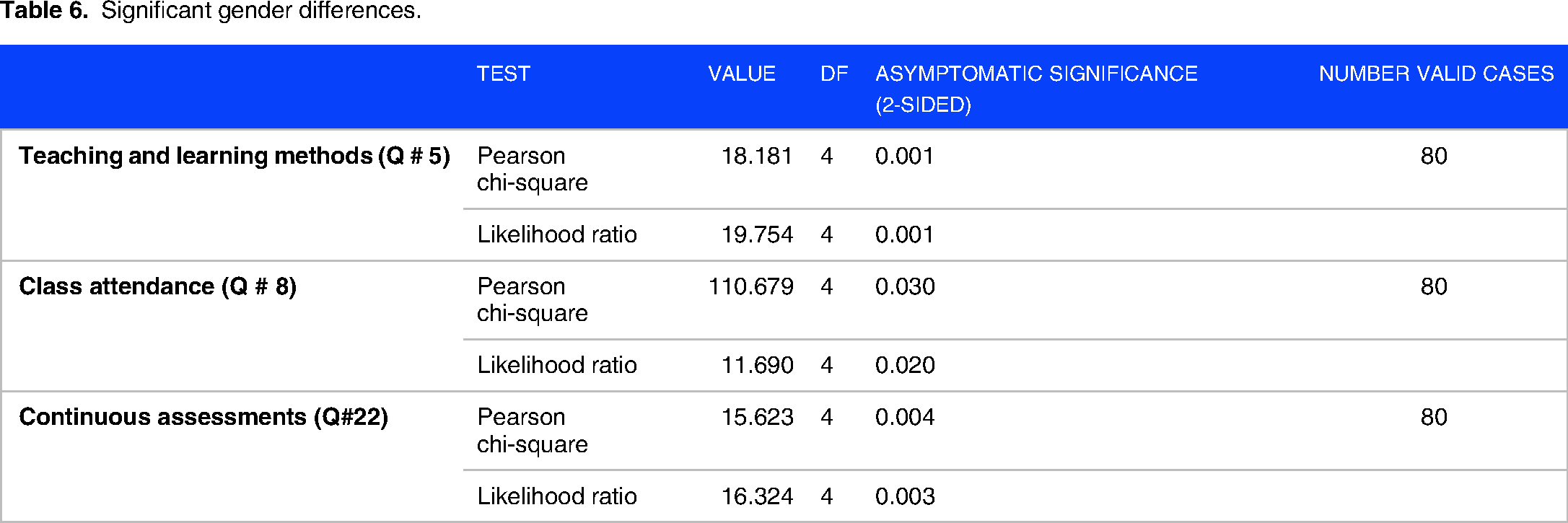
Course elements such as objectives clarity, organization, and teaching efficacy showed no significant gender differences (Table 6). However, differences were noted in teaching methods (Q#5), attendance (Q#8), and continuous assessments (Q#22).
Significant gender differences.
Discussion
The importance of aligning course objectives with the broader curriculum context, particularly for professional fields such as dentistry, has been established as a key driver for student success and comprehension. 15 This study demonstrates that a significant proportion of students agreed that the course objectives were clear. This overall agreement suggests a well-articulated objective structure, though a minority were neutral and a minority disagreed indicating room for improvement in clarity. The feedback on course objectives and organization provides several discussion points to consider in refining and enhancing the curriculum.
First, the relatively high level of agreement regarding the clarity of objectives supports the alignment of course aims with the broader academic and professional needs of dental education. Such alignment is vital as it ensures that foundational concepts are well understood, promoting a continuum of learning that strengthens future courses. 15 However, the presence of neutral and negative responses implies that certain students may perceive gaps in communication or relevance. Addressing these gaps through targeted instructional design changes—such as clearer articulation of learning goals or interactive components—may enhance perceived clarity. 16
Regarding course organization, the strong positive response aligns with findings by Shulman 17 regarding the correlation between structural clarity and student engagement. Notably, a significant proportion of students strongly agreed, indicating that well-organized content facilitated better comprehension. This result suggests that organizational strategies employed in the course—possibly including modular design, thematic integration, or systematic sequencing of content—are effective. Yet, a minority of students indicates a need for further investigation into potential barriers to optimal engagement. Additionally, the positive response to teaching methods encouraging participation highlights the impact of active learning methodologies. Active participation in learning has been shown to deepen comprehension and foster critical thinking, aligning with constructivist educational theories. 18
The integration of OH topics in the second year, which a significant proportion agreed helped their understanding, emphasizes the value of curricular cohesion across years. Future improvements could include more inclusive strategies that target underrepresented student experiences, utilize diverse teaching methodologies, and incorporate regular feedback loops to ensure course objectives remain comprehensible and aligned with student needs. 19
The high attendance rates for both OH classes and lab sessions provide a strong indicator of student engagement and perceived value of these activities. Attendance data, particularly in practical-oriented courses, has been consistently linked to positive academic outcomes. 20 The findings of this study align with such assertions, demonstrating that the majority of students “always” or “frequently” attend both classes and labs. This engagement can be attributed to various factors, such as the perceived relevance of course material to students’ future professional practice, effective teaching methodologies, and the integration of theoretical and practical content.
The stronger attendance observed in lab sessions as compared to lecture-based classes supports that hands-on and interactive learning formats are highly effective in fostering student interest and engagement. 21 The presence of a small percentage of students who “rarely” or “never” attend classes and labs warrants further exploration. Factors such as external commitments, health, perceived relevance, or teaching styles may influence these lower attendance rates. Addressing these issues through flexible scheduling, personalized support, and adaptable teaching strategies could further enhance engagement and learning outcomes. 19 The students’ positive perception of the teaching methods used in the course, particularly the integration of lectures and lab sessions, is consistent with recent research advocating for blended teaching approaches in dental education. While lectures and lab sessions were generally well-received, the study highlighted the need for further diversification of teaching methods to enhance engagement, particularly for students who may struggle with traditional formats. PBL and CBL have been widely recognized as effective alternatives or supplements to traditional lectures due to their capacity to promote active student participation and the development of critical thinking skills.22,23 This study's findings align with the existing literature that emphasizes the value of incorporating PBL and CBL in dental education to better prepare students for clinical decision-making and problem-solving. Several studies have reported improved student performance and engagement in OH through PBL sessions, advocating for the integration of these methodologies into the curriculum. For instance, it has been found that PBL significantly enhanced dental students’ self-learning abilities and interest in oral mucosal diseases. 24 Similarly, it is concluded that PBL fosters superior professional skills and more effective learning compared to traditional teaching methods in dental education. 25 These findings support the incorporation of PBL into dental curricula to enhance student outcomes. Despite the positive reception of existing teaching strategies, some students expressed a preference for more interactive and technologically enhanced learning approaches. The increasing integration of CAL and virtual microscopy has proven beneficial, as digital tools allow students to explore histological slides independently and revisit complex concepts outside traditional classrooms. 26 Literature indicates that CAL not only boosts student engagement but also enhances comprehension of intricate tissue structures. This suggests that greater inclusion of digital resources in the OH curriculum could provide a more flexible and enriched educational experience. A clear preference among students for PowerPoint presentations and PDF materials as primary study tools corroborates previous research highlighting the value of visually engaging resources in histology education. 26 Visual aids, including diagrams, digital slides, and multimedia, have been shown to substantially enhance student understanding of histological concepts by offering clear representations of microscopic structures. 27 It has been also observed that students who combined textbook study with visual resources exhibited higher retention rates and improved exam performance. However, limited utilization of textbooks and online learning platforms highlights an area for potential enhancement. Research suggests that while digital resources and presentations facilitate immediate understanding, textbooks and comprehensive online content provide necessary depth and context for mastering complex subjects. 27 Encouraging students to engage with a broader range of educational materials, including peer-reviewed literature, textbooks, and interactive e-learning platforms, may further increase their comprehension and academic success. 28
The diversity in student opinions regarding the course's assessment methods reflects the complexity of designing fair and effective evaluations in dental education. While many students appreciated the feedback provided through continuous assessments, there was notable variation in preferences for the frequency and type of assessments used. These findings align with educational literature highlighting the benefits of formative assessments, such as quizzes and continuous evaluations, which offer students regular feedback and opportunities for improvement. 29 The formative assessment helps students become more reflective and self-regulated learners, which is crucial for their long-term academic development. However, dissatisfaction with the number of continuous assessments was also evident, as a significant portion of students expressed a preference for fewer quizzes and more opportunities for extra assignments or bonus projects, indicating a need for a balanced approach between formative and summative assessments. 30 Recent research underscores the importance of varied assessment strategies that combine objective assessments, such as quizzes and exams, with subjective methods, including projects and presentations, to accommodate different learning styles and promote critical thinking. 31
The absence of significant gender differences in the clarity of objectives, organization, and overall teaching efficacy suggests that these elements may be universally well-received. For instance, it has found that while there were some differences in how male and female students evaluated instructors, both groups valued pedagogical characteristics such as organization and preparedness. This suggests that clarity and organization in course design are universally appreciated by students, regardless of gender. 32
Previous studies support this notion, indicating that clear and well-organized courses provide a stable foundation for learning and engagement across all demographics. 33 Such consistency may be attributed to inclusive curriculum design practices that prioritize transparency and structured pedagogical approaches. The data reveal significant gender-based differences in responses to teaching and learning methods. This suggests that male and female students, for example, may differ in how they perceive and engage with various teaching strategies. Research indicates that female students may benefit more from collaborative and participative approaches, whereas male students often prefer competitive or PBL environments. 34 Tailoring teaching practices to accommodate these differences could lead to more effective learning experiences for all students. Literature suggests that external factors, such as caregiving responsibilities and societal expectations, may disproportionately affect class attendance among certain genders. Flexible attendance policies, hybrid learning options, and support systems could mitigate these barriers and promote more consistent engagement among all students. Differences in responses regarding continuous assessments highlight the need for equitable assessment methods. Studies have shown that female students, for instance, often excel in continuous assessments due to strong organizational and time-management skills. 35
Limitations
Sample size and diversity: The study includes 80 participants, with an equal number of males and females, which might be considered a relatively small sample size for generalizing the findings across all Saudi dental schools. The sample is limited to a single institution, which could limit the applicability of the findings to other dental schools with different curriculum structures and teaching methods.
Conclusion
Insights from this study can guide further refinement and enhancements in the OH course. The findings highlight the effectiveness of current teaching methods and resources while underscore the importance of considering gender-specific needs and perceptions, especially in participation and assessment preferences. In addition, adjustments in areas like continuous assessments and class attendance strategies could further optimize student engagement and educational outcomes. Aligning teaching methodologies with effective assessment practices and promoting student engagement through interactive learning activities are pivotal in enhancing the educational journey of students in the OH course.
Footnotes
Acknowledgment
We would like to extend our heartfelt thanks to the dental students at King Abdulaziz University who participated in this study, without whom this research would not have been possible. We also express our gratitude to future dentists Abdullah Khalid Aleissa and Raghad Emad Alismael for their invaluable assistance in data collection. Lastly, we thank the Faculty of Dentistry, King Abdulaziz University, for their support throughout this research.
Author contributions
Conceptualization: Madawi Faisal Alkeheli, Ibrahim Saleh Akeel, Osamah Abdulelah Alsulimani, Khadijah Bagazi, Alaa Jameel Kabbarah, Hisham I. Othman, Aliaa O. Lotfy. Methodology: Madawi Faisal Alkeheli, Ibrahim Saleh Akeel, Osamah Abdulelah Alsulimani, Khadijah Bagazi, Alaa Jameel Kabbarah, Hisham I. Othman, Aliaa O. Lotfy. Formal analysis: Madawi Faisal Alkeheli, Ibrahim Saleh Akeel, Osamah Abdulelah Alsulimani. Investigation: Khadijah Bagazi, Alaa Jameel Kabbarah, Hisham I. Othman, Aliaa O. Lotfy. Resources: Madawi Faisal Alkeheli, Ibrahim Saleh Akeel, Osamah Abdulelah Alsulimani, Khadijah Bagazi, Alaa Jameel Kabbarah, Hisham I. Othman, Aliaa O. Lotfy. Writing—original draft preparation: Madawi Faisal Alkeheli, Ibrahim Saleh Akeel, Hisham I. Othman, Aliaa O. Lotfy. Writing—review, and editing: Osamah Abdulelah Alsulimani, Khadijah Bagazi, Alaa Jameel Kabbarah. Visualization: Madawi Faisal Alkeheli, Ibrahim Saleh Akeel, Hisham I. Othman, Aliaa O. Lotfy. Supervision: Madawi Faisal Alkeheli. All authors have read and agreed to the published version of the manuscript.
DECLARATION OF CONFLICTING INTERESTS
The authors declared no potential conflicts of interest with respect to the research, authorship, and/or publication of this article.
FUNDING
The authors received no financial support for the research, authorship, and/or publication of this article.
Data availability
Data will be provided upon request.
Ethical approval
The Research Ethical Committee (REC), Faculty of Dentistry, King Abdulaziz University, reviewed and approved an informed consent form under number 083-04-23.
