



Abstract
OBJECTIVES
Determining the level of satisfaction in each field will help to examine and eliminate the existing problems and shortcomings. Using this information, students’ satisfaction can be provided as much as possible while strengthening the positive factors and correcting the negative factors. The aim of this study was to evaluate the Student's Satisfaction with externship Education in the Academic Departments of the Medical School of Kermanshah University of Medical Sciences in 2021.
METHODS
This descriptive cross-sectional study, was performed in the medical school of Kermanshah University of Medical Sciences. The statistical population was all externship students. The validity of the questionnaire's content was determined by consulting experts, and its reliability was obtained by Cronbach's alpha method based on a sample of 20 students. The questionnaires were completed virtually on the Google site using the Google Form. Data analysis was performed Stata V14.2 software using descriptive statistics, t-test, and chi-square, and the significant level was considered 0.05.
RESULTS
The results showed that 55% of the participants were female and 45% were male. The level of students ‘satisfaction with the quality of supervisors’ education was moderate to high and in other cases was moderate to low. Students were more satisfied with teaching anesthesia than other departments and were dissatisfied with the infectious department. No statistically significant difference was found between people's satisfaction with the overall clinical education process in terms of age.
CONCLUSION
The results of this study showed that students have moderate to poor satisfaction with externship education in educational groups.
Introduction
Clinical education is the procedure by which medical students steadily expand their knowledge by calling patients regularly.1–3 This externship is one of the considerable steps of medical education and recreates a so much part in the expansion of students’ skilled abilities. 4 Learners in the clinical step must earn adequate learning and skillfulness and be capable of utilizing this knowledge. To reach favorable outcomes in clinical teaching, it is urgent to evaluate clinical training. According to research, paying attention to students’ opinions and continuously improving the quality of educational services increases student satisfaction.5,6 The low quality of education leads to the poverty of skilled manpower, and as a result, the goals of economic, social, and cultural growth and development of countries face many problems and question higher education. 7 It is necessary to consider the quality of clinical training from the point of view of the medical trainees and interns who are considered the chief customer of the education process. Students are always dissatisfied with the low quality of teaching and assessment processes, the inability to teach independently and actively, the lack of participation in the learning process, and the lack of transparency of standards. 8 According to new approaches, continuous quality improvement requires continuous evaluation of education and identification of perceptions and expectations of university students. Therefore, an assessment can be created by inquiring about clinical professors’ opinions and medical trainees and interns. 1 This goal needs criteria that are continually evaluated and revised. Also, it is urgent to check the surrounding, learning facilities, students, professors, and their relations.9,10 Due to this issue, the need to increase education quality becomes clear and research in this field is felt more. The aim of this study was to evaluate the level of student satisfaction with externship education in the departments of Kermanshah University of Medical Sciences in July and August 2021.
Materials and methods
This descriptive cross-sectional study was performed in the medical school of Kermanshah University of Medical Sciences in July and August 2021. This research was carried out after the approval of the ethics committee of Kermanshah University of Medical Sciences and after receiving the ethical code number IR.KUMS.REC.1400.017-1400/07/03. After advice from a statistical consultant, 251 externship students were selected using a simple random sampling method with an error rate of 5% and a confidence interval of 90%. The statistical population included all externship students in all wards and in hospital rotations. Inclusion criteria included the student studying in an externship in the relevant group who participated in the study with satisfaction. Also, passing at least one semester in the externship courses and passing at least half of the rotation of the desired ward or course were the entry criteria. Individuals who did not want to participate in the study and also had incomplete questionnaires were excluded from the study. The data measurement tool was a checklist containing 45 written questions from students regarding the implementation of clinical training standards introduced by the Ministry of Health and Medical Education of Iran, including morning report standards, clinical training standards, clinical round standards, round standards, etc. were included. In addition, a questionnaire was designed based on the educational needs and expectations of learners and using existing articles. The content validity of the questionnaire was determined with the advice of experts including clinical teachers, psychologists, biostatistics and students, and its reliability was obtained by Cronbach's alpha method based on a sample of 20 students. The questionnaires were completed virtually on the Google site using the Google Form.
Statistical analysis
In order to analyze the information, after collecting the questionnaires, the information was coded and entered into Stata software. Data analysis was performed using Stata V14.2 software and the significance level was considered 0.05. To describe the research population, descriptive statistical indices including mean, median and mode were used and in the analytical part, according to the conditions, appropriate tests including t-test, chi-square or analysis of variance were used. Kolmogorov-Smirnov tests were also used to assess the normality of the data (K-S test p-value = 0.001). Pearson correlation was used if the study data were normal and Spearman correlation was used to evaluate the correlation between the data if the normality hypothesis was not established.
Results
In this study, 251 medical students with a mean age of 23.74 ± 1.54 olds participated. In terms of gender, 55% of the participants were female and 45% were male. Students with an age range of 25–19 olds with 92.8% had the highest frequency in the present study. Also, incoming students in 2016 and 2017 had the highest frequency with more than 87% (Table 1). Among the hospital wards, the highest participation was allocated to internal medicine students, children and women, and the lowest participation was related to orthopedic students (Figure 1). The validity of the content of the questionnaire was checked and confirmed through consultation with teachers and education experts. Also, the reliability coefficient of the questionnaire was calculated by calculating the internal cohesion index (Cronbach's alpha) for students’ satisfaction in different parts of education and for the whole questionnaire. The lowest Cronbach's alpha for satisfaction with clinical education was 0.856 and the highest Cronbach's alpha for virtual education was 0.931. Cronbach's alpha for the whole questionnaire was 0.986 (Table 2 and Table 3).

Frequency of participants in different hospital wards.
Demographic information of the participants.

Reliability of the designed questionnaire from the perspective of medical students.

Overall student satisfaction with morning report.

The viewpoints of Kermanshah University of Medical Sciences medical students regarding the educational round are shown in Table 4. The level of satisfaction with the educational round of the group, the duration of the educational round, the performance of professors in the educational round, and the quality of materials presented in the educational round was between 26.4% and 37.3%.
The level of students’ satisfaction with the educational round.

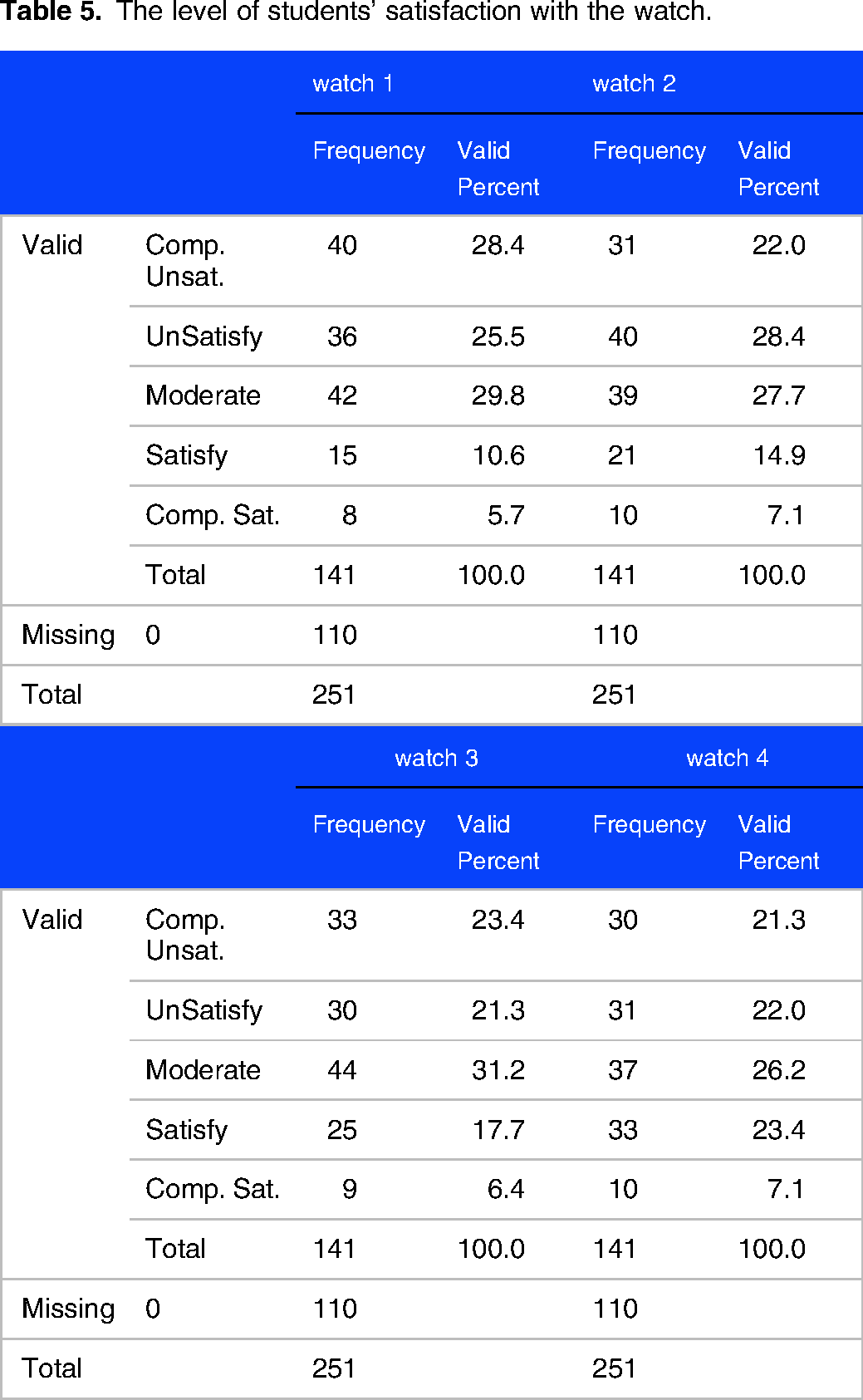
Regarding data analysis, the level of satisfaction with the externship watch in the educational department, the number of externship watches, training by assistants during the watch, and the adequacy of the time of each watch was between 16.3% and 30.5% (Table 5).
The level of students’ satisfaction with the watch.
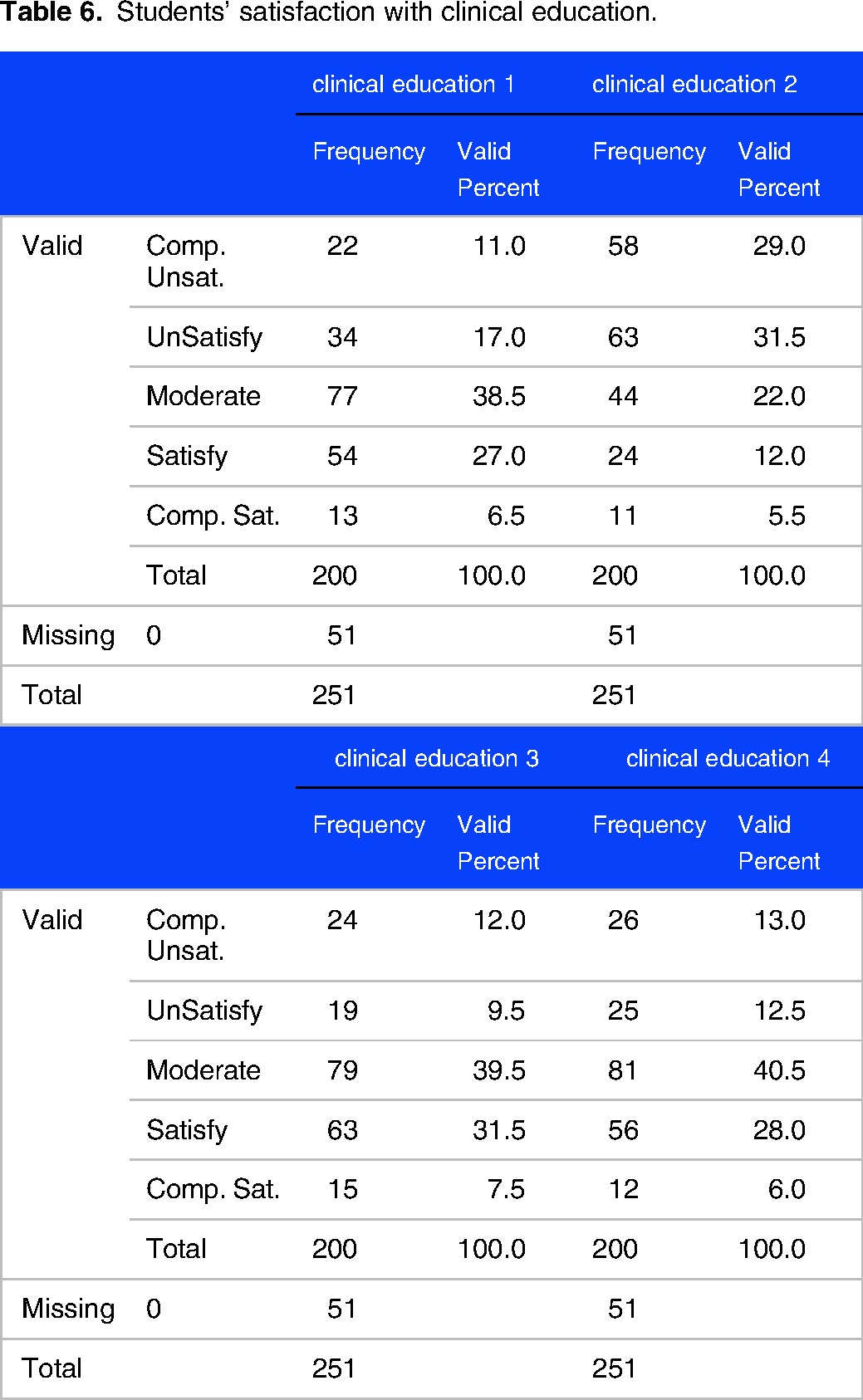
The level of satisfaction with outpatient clinic training, adequacy of outpatient training in the clinic, gaining the skills of taking a history and examination in the clinic, and the environment and equipment of the outpatient clinic were between 17.5% and 39% (Table 6).
Students’ satisfaction with clinical education.
The findings indicated that the level of satisfaction with clinical skills training, group use of clinical skills centers, practical skills training on the patient's bedside and practical skills training in the educational department was between 13.3% and 19.6% (Table 7).
The level of students’ satisfaction with practical education.

The results of the present study showed that the level of satisfaction with the group's virtual training method, the files uploaded in the virtual training, the suitability of the training group's cyberspace platform, and the amount of virtual training used compared to the total training was between 13.3% and 19.6% (Table 8).
Students’ satisfaction with virtual education.

Table 9 shows the level of the satisfaction rate of the final evaluation, standardization of the final questions, evaluation factors and compliance of the questions with the training and reference was between 22.1% and 32.5%.
Students’ satisfaction with the final exam.

According to the students, the learning environment was not appropriate because of the lack of educational facilities, the quantity and quality of the books in the library were not new, and there was no easy availability of the necessary references. There was also a lack of resources such as the internet, bulletin boards and magazines, an information center in the hospital, an insufficient number of computers, and an insufficient supply of up-to-date journals. The quality of educational equipment was between 25.1% and 34.8% (Table 10).
Students’ satisfaction with educational space and equipment.

Examining the results of the education quality and satisfaction with the performance of educational supervisors, respect for students by academic supervisors, how supervisors set educational programs, and the method of briefing and informing supervisors’ meetings was between 34.3% and 56.9% (Table 11)
Students’ satisfaction with the supervisor.

According to the parameter of students’ satisfaction with professors, the level of satisfaction with teachers’ teaching performance, quality of teachers’ training, the quantity of teachers’ training, and respect for students by professors was between 12.5% and 63.7% (Table 12).
Students’ satisfaction with professors.

In teaching, the option of satisfaction with the educational performance of residents, the quality of education by residents, the quantity of education by residents, and respect for students by residents was between 11.4% and 58.7% (Table 13).
The level of students’ satisfaction with the residents.

Data analysis showed that the overall satisfaction with the education sector was 25.1% (Table 14).
Satisfaction of students from all sectors.

According to the results presented in Table 15 and Figure 2, the highest level of satisfaction according to the obtained averages was related to the performance of supervisors and the lowest level of satisfaction with clinical training.

The satisfaction rate of various parameters.
Mean satisfaction of different parameters (minimum score 1 and maximum score 5).

The results of Kolmogorov-Smirnov test for all variables showed that the p-value is less than 0.001 and none of the variables follows the normal distribution. After instability tests such as Kruskal-Wallis were used. The results of Cross Cal Wallis test also showed that the p-value for all variables is less than 0.05, and based on this, the following results were obtained, which are also shown in Figure 3.
1- The highest satisfaction of Morning Report was obtained in psychiatry, pediatrics, orthopedics, heart, ENT, infectious, gynecology, neurology, surgery and internal medicine, respectively. 2- The highest satisfaction from the educational round was obtained in the fields of anesthesia, health, dermatology, neurology, psychiatry, ophthalmology, radiology, pediatrics, gynecology, emergency medicine, infectious diseases, surgery, ENT, internal medicine and heart. 3- The highest satisfaction of the watch was obtained in the departments of emergency medicine, ophthalmology, pediatrics, neurosurgery, ENT, internal medicine and surgery, respectively. 4- The highest satisfaction with the training in the clinic was obtained in health, eye, gynecology, internal medicine, neurology, psychiatry, urology, pediatrics, surgery, skin, ENT, orthopedics, heart and infection, respectively. 5- The highest satisfaction from practical training in the clinic was obtained in anesthesiology, dermatology, health, psychiatry, emergency medicine, pediatrics, ophthalmology, neurology, surgery, gynecology, infectious, heart, ENT, internal medicine, neurosurgery, orthopedics and urology, respectively. 6- Most satisfied with the final exam was obtained in anesthesiology, neurology, health, ophthalmology, psychiatry, urology, gynecology, pediatrics, infectious, dermatology, cardiology, emergency medicine, surgery, radiology, ENT, internal medicine, orthopedics and urology, respectively. 7- The highest satisfaction with the educational environment was obtained in anesthesiology, dermatology, psychiatry, radiology, heart, eye, pediatrics, orthopedics, health, neurology, emergency medicine, ENT, neurosurgery, gynecology, urology, internal medicine and infectious diseases, respectively. 8- The highest satisfaction with educational supervisors was in anesthesiology, psychiatry, neurology, pediatrics, ophthalmology, urology, gynecology, cardiology, dermatology, infectious diseases, surgery, ENT, internal medicine, orthopedics, neurosurgery and emergency medicine, respectively. 9- The highest satisfaction of professors according to the measured parameters related to anesthesia, ophthalmology, radiology, psychiatry, pediatrics and urology, neurology, orthopedics, infectious diseases, gynecology, emergency medicine, dermatology, ENT, internal, surgical, neurosurgery and heart, respectively. 10- The highest satisfaction of residents according to the measured parameters was obtained in psychiatry, ophthalmology, neurosurgery, anesthesia, pediatrics, ENT, neurology, radiology, dermatology, cardiology, gynecology, infectious, internal medicine, surgery and orthopedics, respectively. 11- The highest satisfaction from practical training in the clinic according to the measured parameters was obtained in psychiatry, pediatrics, infectious, heart, ENT, neurology, ophthalmology, gynecology, dermatology, surgery and internal medicine, respectively.

Average satisfaction of students from different educational departments.
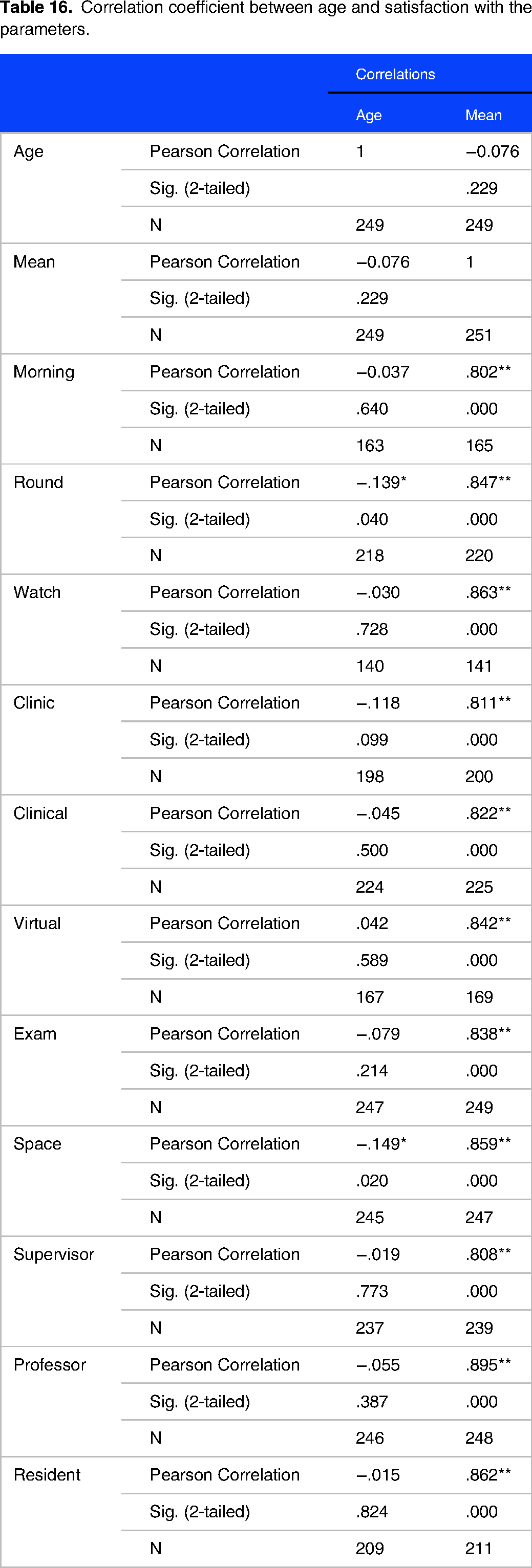
According to the table of correlation coefficient between age and satisfaction with the parameters (Table 16), there was a significant difference only in two cases of round and educational space and in other cases there was no significant difference.
Correlation coefficient between age and satisfaction with the parameters.
Discussion
According to most of the students, parameters related to the quantity and quality of clinical education were considered unfavorable. The results of data analysis on students’ overall satisfaction with the morning report showed that most students were not satisfied with the quality of the content presented in the morning report. However, in 2017, Taybi et al Reported that students’ satisfaction with the pediatric ward in the morning report was satisfactory, which is not in line with our results. 11
Also, a report in Shahrekord, Iran offered that students’ satisfaction with the ENT ward was more than in other wards. Also, there was no significant correlation between satisfaction rate with clinical training and age, and sex parameters. 12 The outcomes of another investigation that studied the satisfaction of nursing and midwifery students with the status of clinical education in Zahedan education hospitals indicated that students’ satisfaction was down. 13
Regarding clinical education, the results of data analysis showed that the overall satisfaction rate was less than 40% and most students were dissatisfied with the adequacy of outpatient education in the clinic. The results of this study are similar to the results of Khorasani et al and do not agree with the results of Khazaei et al.14,15
The results of data analysis showed that in general less than 20% of students are satisfied with practical and clinical education. Regarding satisfaction with virtual education, the results showed that less than 30% of students are completely satisfied with the quality and implementation of virtual education. Most of these people were dissatisfied with the amount of use of virtual education in relation to the whole education. In Golchai's study, the effectiveness of virtual education depends on the type of software and educational content provided in virtual education, and this issue can be concluded in our study considering the nascent nature of the system and its infrastructural problems. 16
The results of data analysis showed that the overall satisfaction with the final evaluation was below 30% and most of the participating students were dissatisfied with the non-standardization of the final questions. Planned working time handling was another aspect of progress in the present research, with some students feeling that their given workload did not give them adequate time to train for them provide, study, or examination. However, Kermanshah, Iran medical school must produce and perform a rotation-special schedule to optimize the externship workload. These plans would enable the medical students with adequate time to be ready for their studies, and examinations and could also aid in the reduction of the psychological extra load said by some of the interns. Stress management can also be helped by using counseling and psychosocial support services.
Most of the students had small satisfaction with the condition of the educational environment. In this consideration, the outcomes of an investigation on satisfaction status in the learners of Saddleback College are as follows: education services, current college possibilities (66%), security of academy conditions (70%), and references existing in the library (72%). 17 The outcomes of this investigation are not in identical line with those of the current study; maybe the cause of this contrast is different study conditions. Among the limitations in this field, one can mention the lack of up-to-date books in the library, access to scientific resources and Internet use, lack of sufficient computers in the hospital, and up-to-date magazines.
The results of data analysis showed that the level of satisfaction with the supervisors was moderate to high and most students were dissatisfied with the way the supervisors set up educational programs. The outcomes of the study conducted about student satisfaction at the college of Liverpool in 2006 indicate the student's standpoints; the most and the least significant aspects where teaching, learning, and physical facilities respectively and the level of satisfaction regarding the significant parts was less than parts with the lower importance which the outcomes of the study are in the identical line with those of the current study. 18 Moreover, in the research, the students indicated no satisfaction with the educational schedule and the coaches’ performance; this accords with the outcomes of the current study. 18 In a study, the deficit of qualified trainers and the use of trainers irrespective of their degrees and expertise have been mentioned as clinical academic crises. 19 Communication between students and their coach is another critical aspect and can positively or negatively shape the complete student's understanding. Regrettably, Yasser et al showed that resident supervisors formed the most prevalent source of insult and mishandling of interns at Umm Alqura University. 6
Regarding the satisfaction of the professors, the results showed that about 60% of the students were satisfied with the respect of the students by the professors and over 80% of the participants were dissatisfied with the amount of training of the professors. The results of this study are consistent with the results of Avijegan et al. 20 The consequences of the next investigation performed on medical students of Shahed University, Tehran indicated that in general, these students were rather satisfied with the performance of their supervisor. 21 The outcomes of this investigation weren't agreeing with the current investigation.
Conclusion
In general, it can be said that the level of student satisfaction among the various parameters was more about the supervisors and the quality provided by them, and in other cases, the satisfaction was almost moderate and low. In the case of educational departments, the anesthesia department was the best department and the infectious department was the weakest department in providing educational topics to the trainees.
Footnotes
Acknowledgments
The authors gratefully acknowledge the financial support of Kermanshah University of Medical Sciences, Kermanshah, Iran.
DECLARATION OF CONFLICTING INTERESTS
The author(s) declared no potential conflicts of interest with respect to the research, authorship, and/or publication of this article.
FUNDING
The author(s) disclosed receipt of the following financial support for the research, authorship, and/or publication of this article: This work was supported by Kermanshah University of Medical Sciences (Grant number: 99022), Kermanshah, Iran.
Ethics approval and consent to participate
All precipitants signed a written consent form. Also, the study protocol was approved by the local ethics committee of Kermanshah University of Medical Sciences (IR.KUMS.REC.1400.017-1400/07/03).
