




Abstract
Most discussion of the police–public relationship focuses on the public’s lack of trust in police. Our research suggests that police trust in the public is another important factor in this relationship and that addressing trust concerns on both sides may improve it. We conducted two studies of police trust in the public. The results suggested that the more police trust the public, the more constructive risks they take in performing their jobs. Based on our results, we highlight the importance of reciprocity and attempting to simultaneously increase both police and public trust to improve their relationship. Measures developed for these studies may inform future research on police trust in the public and develop interventions to improve it.
The relationship between the police and the public has reached a critical juncture, marked by extreme tension and strain and widespread calls for reform. High-profile incidents, such as the deaths of George Floyd and Breonna Taylor, have ignited civil unrest across the United States and globally, bringing into focus the deep-seated difficulties in this vital relationship.1–4 Public perceptions of police are far from monolithic, with significant disparities observed across various demographic segments. For instance, research indicates that African Americans and Hispanics often hold more negative views of the police and their treatment than other groups, while African Americans, even when feeling protected, are also likely to feel threatened by the police. 5
A strong police–public relationship is indispensable for the proper functioning of the police. 6 When the public distrusts the police, they are less likely to offer support, cooperate with investigations, or report crimes, thereby undermining public safety and order. 7 While extensive attention has been devoted to understanding and addressing the public’s lack of trust in the police, particularly among communities that feel threatened, a crucial dimension in this relationship has received much less attention: police trust in the public.
Considering the police–public relationship from the perspective of police trust in the public offers a more complete, holistic understanding of the challenges and potential solutions to improving this vital relationship. Police trust in the public is essential because it directly influences officer behavior. When officers trust the public, they are more likely to treat people with fairness and respect, actively listen to their concerns, and become more receptive to implementing critical police reforms, such as community-oriented policing.6–9 Conversely, police officers’ lack of trust in the public may increase their negative emotions when facing perceived aggressors, 10 which can increase the probability of their using deadly force. Moreover, low public trust likely significantly increases officer stress, which can result in reduced efficiency, increased absenteeism, early retirement, and various other detrimental outcomes, including aggression, substance use disorders, and mental and physical health problems.11,12 In much of the United States, it is difficult to recruit and retain officers, in large part because of the problems in the police–public relationship.13–17
Because trust is a reciprocal relationship, a lack of police trust in the public is likely to adversely affect efforts to increase public trust in the police.9,18 This means policymakers and administrators are much more likely to improve the police–public relationship by adopting approaches that simultaneously address the trust concerns of both the police and public, rather than focusing on only one side of the relationship. Accordingly, policymakers and administrators need to focus more attention on training, awareness, and structural changes that also enhance police trust in the public.
The capacity to measure police trust in the public did not exist until recently. In the two studies described next, we developed measures to assess both police trust in the public and whether the main factors that affect trust in business relationships are also applicable to police trust in the public.14,15 Our intent was to provide tools that policymakers, administrators, and researchers can use to assess the level of police trust in the public, evaluate whether the dominant model of trust in business can help clarify police trust in the public, and assess if police trust in the public is related to officers taking personal risks in performing their jobs. 19
The MDS Model of Trust
To understand and build trust within the police–public relationship, this research used the Mayer, Davis, and Schoorman (MDS) model of trust. 20 This widely supported theoretical framework posits that a trustor’s—in this context, a police officer’s—trust in a trustee—the public—is shaped by two primary factors: the trustor’s general willingness to trust other people, known as propensity to trust, and the trustor’s perceptions of the trustee’s trustworthiness, which consists of the trustee’s ability, benevolence, and integrity.19,21,22 Figure 1 depicts the main components of police trust in the public to illuminate how this trust is formed. Trustworthiness, from the perspective of a police officer, comprises three distinct dimensions:
Ability. This refers to the officer’s perception that the public possesses the necessary knowledge and skills to act appropriately in their interactions. It addresses the question, “Can you do what I need you to do?”
Benevolence. This dimension reflects the officer’s perception that the public is genuinely concerned about the officer’s best interests. It asks, “How much do you care about me?”
Integrity. This involves the officer’s perception that the public consistently adheres to an acceptable set of values. It considers, “Do I like what I hear about and see you doing?”
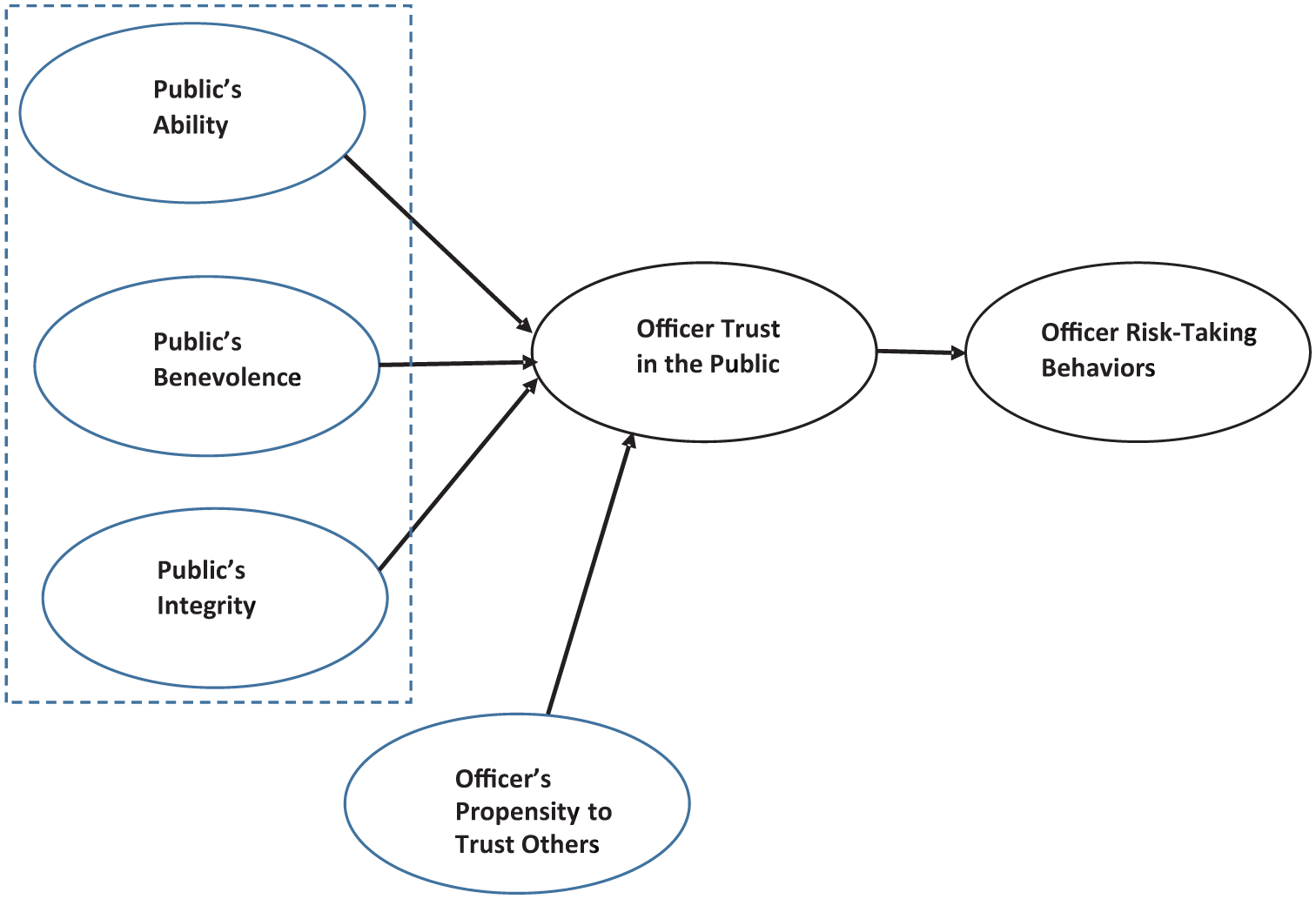
Model of police trust in the public
A critical distinction in the MDS model is the differentiation between trust itself—defined as a willingness to be vulnerable to a party one cannot fully monitor or control—and actual risk-taking behaviors in the relationship. This distinction is crucial for understanding how police officers’ trust in the public translates into their on-the-job actions. The MDS model also serves as a practical diagnostic tool for policymakers. By assessing officers’ perceptions of the public’s ability, benevolence, and integrity, administrators can gain an understanding of the specific underlying reasons for low levels of police trust.
Our Research on Police Trust in the Public
Our research, comprising two studies, aimed to advance the understanding of police trust in the public. The primary goal was to develop reliable measures for this construct and its underlying trustworthiness dimensions and, subsequently, to empirically examine how police trust in the public influences officers’ job performance and willingness to take risks.
Study 1: Measure Development & Model Applicability
The initial study focused on developing reliable multi-item scales to measure police officers’ trust in the public and their perceptions of the public’s trustworthiness (ability, benevolence, and integrity). It also determined whether these measures and an existing measure of propensity to trust 23 (i.e., general willingness to trust others) were related to police officers’ trust in the public. In other words, does the MDS model of trust appear to be relevant in this context? Prior to this research, the capacity to empirically measure police trust in the public with validated tools was limited, making this a foundational step for future inquiry and policy intervention.
The study involved an extensive literature review and detailed discussions with a convenience sample of eight police officers with varied job duties and experiences from a large police department. A coauthor of the present article, a former deputy chief of police with 20 years of law enforcement experience, was also consulted. A questionnaire was distributed to police officers across the United States through 145 police departments and organizations, yielding 990 valid responses. To increase the number and honesty of responses, we did not collect information that could identify the respondents. 24 Therefore, we could not determine a response rate.
Statistical analyses confirmed that the four measures of trust and trustworthiness dimensions were reliable. An exploratory factor analysis on the items measuring police trust in the public revealed two distinct scales: an eight-item Engagement scale and a four-item Proactive scale, measuring willingness to engage in public interactions beyond job requirements and willingness to initiate investigations, respectively. All four trustworthiness measures were significantly correlated with both the Engagement and Proactive trust scales. (See the Supplemental Material for more information about the statistical analyses referred to in this article.)
These findings suggest that the MDS model of trust is applicable to understanding police trust in the public. Furthermore, policymakers and police administrators can use these measures and this model to (a) assess officers’ trust in the public, (b) help them understand the reasons for their current level of trust, and (c) identify and evaluate interventions to improve police trust in the public by targeting the specific dimension of trustworthiness that is perceived to be low.
Study 2: Police Trust & Risk-Taking Behaviors
Building upon the validated measures from the first study, the second study investigated whether police officers’ trust in the public is related to how they carry out their job responsibilities, specifically their willingness to take constructive risks. This study focused on patrol officers from a large urban police department in the western United States, chosen for their frequent public interactions and ability to use discretion. Questionnaires were distributed to 151 officers, yielding a high response rate of 91.4%.
Two independent data sources were used to evaluate officers’ job duties: sergeant evaluations of officer performance on 20 job functions and objective archival performance data collected for three months following the survey administration. The archival data included measures such as the number of proactive cases generated, reports written, and arrests made. These actions were considered forms of risk-taking for officers, as they increase exposure to public complaints, negative publicity, and violence.
Proactive police work and written communication skills both significantly correlated with the Proactive trust scale, and performance under stress significantly correlated with the Engagement trust scale, though the correlations were modest. Proactive police work, number of supplemental reports, and number of arrests significantly correlated with the Proactive measure of trust. The initial responding officer on a call, number of initial reports written, number of arrests made, and an officer’s job attendance significantly correlated with the Engagement scale. In short, six of the seven archival measures correlated with at least one of the two trust scales.
In sum, the police officers with greater trust in the public engaged in more behaviors that put themselves at risk. These results suggest that the more trust the police have in the public, the more personal risks officers are willing to take, which may make the public safer. 19
Limitations & Reflections
While this research provides valuable insights, several important limitations warrant discussion. The data collected are correlational. Although police trust was measured prior to the officers’ actions, the possibility remains that other unmeasured factors influenced the observed behaviors. The second study was confined to a single urban police department in the western United States. Given the significant contextual variations among urban areas nationwide, further research is necessary to ascertain the generalizability of these findings.
While the development of the scales involved an extensive literature review, consultation with knowledgeable police officers, confirmatory and exploratory analysis, and multiple regression, we did not conduct pilot testing, assess test–retest reliability, or have outside experts evaluate our trust items and performance measures. Furthermore, the police officers we consulted about our measures were a sample of convenience rather than a random sample, which may have introduced biases in their assessments of our measures’ conceptual clarity and face validity.
An inherent ambiguity lies in the interpretation of “the public” by the responding officers. It is unclear whether officers conceptualized this term as referring to individuals in their city, state, or the broader U.S. population. Future research is needed to explore officers’ varying conceptualizations of the public and their relative impacts on trust. Because of respondent confidentiality and the small proportion of African American respondents in the initial study, the assumptions for statistical testing of between-group differences were not met. Thus, a significant limitation of this research is its inability to contribute to the critical discussion regarding the role of race in police–public trust.
Furthermore, it is important to acknowledge the nuanced nature of “performance” as measured by proactive policing and arrests. While historically considered indicators of strong performance, contemporary discussions around “overpolicing” highlight how excessive arrests, particularly those disproportionately affecting minority groups for nonviolent crimes, can damage police–public relations. 25 This study found that greater police trust was associated with more proactive policing and more arrests. But the determination of whether these behaviors are positive or negative is context dependent, relying on factors such as crime rates, types of crimes, and the nature of arrests.
Finally, it is important to note that the two studies summarized in this paper were conducted in late 2015 and early 2016. While the fundamental mechanisms underlying trust in the police–public relationship have likely not changed, the broader societal and governmental contexts have undoubtedly evolved over the past decade. Changes in government policies at various levels and well-publicized court decisions are examples of factors that may have influenced this critical trust relationship, underscoring the ongoing need for more research.
How This Research Can Improve Police–Public Trust
The findings of this research underscore the critical importance of police trust in the public, a dimension often overlooked in discussions surrounding the strained police–public relationship. Neglecting this vital aspect means overlooking significant contributors to the problem and, consequently, potential solutions. The measurement tools developed and validated in these studies offer potentially valuable instruments for police departments, governmental agencies, policymakers, and researchers to assess police trust in the public, diagnose its underlying causes, and identify and evaluate effective interventions. Additional measures of police performance that assess such behaviors as conflict de-escalation are also needed.
Key Intervention Area: Fostering Organizational Justice in Police Departments
Research shows that a police department’s commitment to organizational justice is a significant avenue for improving police trust in the public.9,11,26,27 This is because fair treatment by supervisors and in the department sets a tone that fosters officers’ generalized trust in others, including the public.9,11 While the implementation of these principles may challenge traditional police culture, these reforms are financially inexpensive to implement. This means all police departments can and should prioritize developing practices that treat their officers fairly, as these efforts are highly likely to significantly enhance police treating the public fairly. The relationship among officers and how departmental policy is applied are also important factors. 9 Because of the scarcity of research on interventions to improve police trust in the public, we next make some additional recommendations for improving trust within this relationship.
Multipronged Approaches for Reciprocal Trust Building
Our overall recommendation is using multipronged approaches that simultaneously address and enhance both police trust in the public and public trust in the police. Such strategies are designed to create mutually reinforcing gains in trust. While these interventions require scientific testing to validate their efficacy, they offer promising avenues for significant improvement in the police–public relationship.
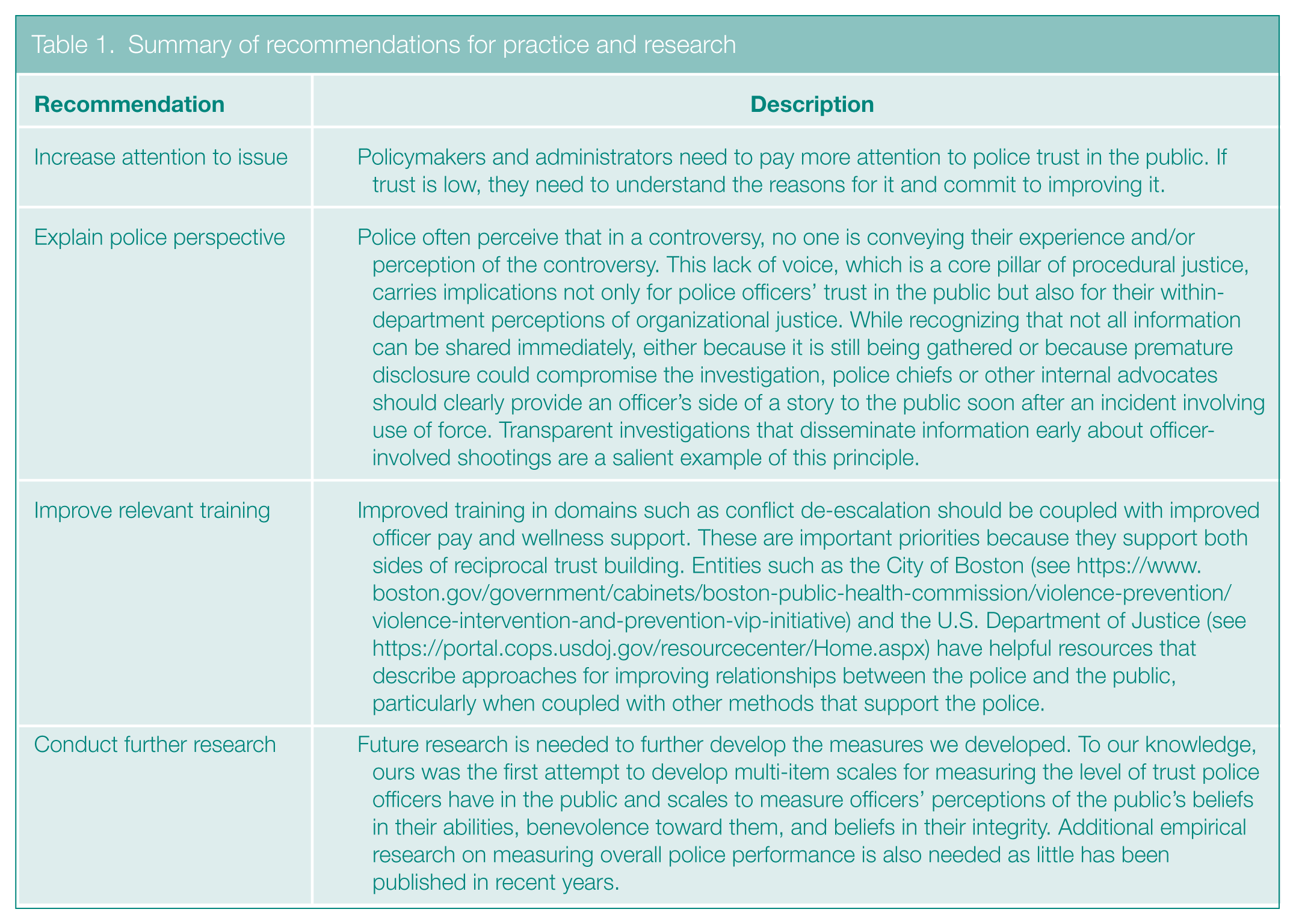
Table 1 summarizes key recommendations for both practice and future research, integrating insights from our studies and the broader literature. Beyond the summary provided in the table, additional multipronged recommendations include the following:
Fair use of force policies and de-escalation training. Arguably, police use of force, particularly the use of deadly force, appears to be the most critical issue leading to public distrust of the police. Collaborative efforts between police unions and administrators are essential to establish use-of-force policies that are equitable for officers while ensuring accountability for misuse of force. This must be complemented by thorough and ongoing training in conflict de-escalation techniques. Such reforms are anticipated to enhance public perceptions of police trustworthiness across all three dimensions—ability, benevolence, and integrity—thereby increasing overall public trust.
Transparent officer-involved shooting investigations. Rapid and transparent dissemination of information regarding officer-involved shootings is crucial. 28 This approach provides the public with a clearer and more complete understanding of these incidents, potentially reducing negative cognitive biases and educating them on appropriate interactions with law enforcement. 29 Concurrently, it ensures that officers involved feel their perspective is adequately communicated, thereby fostering their trust in the system and the fairness of investigations.
Citizen advisory boards. Existing mechanisms like citizen advisory boards, which traditionally focused on gathering public input on police policies, should be adapted to also include an intentional focus on educating board members about police needs and vulnerabilities. 30 By leveraging these informed board members to educate the broader public, police perceptions of the public’s ability and overall trustworthiness can be improved. This adaptation aims to build trust from both sides of the relationship, rather than solely from one side.
Addressing broader community factors. Police–public relations do not operate in isolation. Departmental policies that generate community tension, negative or unfair media portrayals of the police, and systemic injustices such as racial discrimination in the criminal justice system will diminish police trust in the public. Effectively identifying and addressing these broader societal issues, alongside ensuring adequate funding and training for police to enhance public safety, is paramount. 9
Cultivating public procedural justice. Just as police adherence to procedural justice promotes public trust in law enforcement, the public’s consistent application of procedural justice—treating officers fairly, politely, respectfully, and with dignity—will likely foster police trust in the public. 31 Community leaders, political officials, and members of the media have a vital role in modeling these behaviors and communicating their importance to the public, especially during periods of heightened tension. Furthermore, the public’s consistent use of procedural justice with the police is likely to reinforce and increase the police’s use of procedural justice with the public, creating a positive feedback loop.
The primary reason we believe the above recommendations may be helpful is because collectively they address both sides of the reciprocal trust relationship simultaneously. Therefore, the gains in trust on both sides reinforce each other.
Summary of recommendations for practice and research
Conclusion
This research highlights the vital, yet frequently overlooked, role of police trust in the public within the broader police–public relationship. Empirical support is provided for the applicability of the MDS theory of trust to this context, demonstrating that police trust in the public significantly influences officers’ on-the-job behaviors, specifically their willingness to take constructive risks. The measures developed in this study offer potentially valuable tools for assessing police trust in the public, diagnosing its underlying causes, and evaluating the efficacy of interventions designed to improve trust within this critical relationship. Nonetheless, further research is needed, including ensuring that our items only measure discretionary police risk-taking rather than officers’ general willingness to take risk.
The inherent reciprocity of trust dictates that policymakers and researchers should consider adopting multipronged approaches that simultaneously address the trust concerns of both police officers and the public. A fundamental shift from a unilateral focus on public trust to a reciprocal, two-sided approach appears essential for achieving sustainable improvements. By neglecting the vital aspect of police trust in the public, prior policymaking and research efforts may have overlooked significant contributors to the ongoing challenges in the relationship, and consequently, potential solutions. Therefore, continued research is needed to validate these findings, explore contextual nuances, and build a more comprehensive understanding of this vital relationship, thereby reorienting future research and policy efforts toward more holistic and effective strategies.
Supplemental Material
sj-docx-1-bsx-10.1177_23794607251384491 – Supplemental material for Police–public trust: Toward a more complete perspective
Supplemental material, sj-docx-1-bsx-10.1177_23794607251384491 for Police–public trust: Toward a more complete perspective by Richard A. Wise, Roger C. Mayer and Scott M. Mourtgos in Behavioral Science & Policy
Footnotes
Declaration of Conflicting Interests
The authors declared no potential conflicts of interest with respect to the research, authorship, and/or publication of this article.
Funding
The authors received no financial support for the research, authorship, and/or publication of this article.

References
Supplementary Material
Please find the following supplemental material available below.
For Open Access articles published under a Creative Commons License, all supplemental material carries the same license as the article it is associated with.
For non-Open Access articles published, all supplemental material carries a non-exclusive license, and permission requests for re-use of supplemental material or any part of supplemental material shall be sent directly to the copyright owner as specified in the copyright notice associated with the article.
