



Abstract
The field of behavioral public policy (BPP) has grown rapidly in the past 10 years, as is indicated by the rising numbers of BPP bodies that routinely apply insights and methods from behavioral science to improving the effectiveness and efficiency of public policy. This article reports on a count showing that between 2018 and 2024, the number of BPP bodies grew worldwide from 201 to 631 and increased on all continents. The article also summarizes results from a survey that asked representatives from 10 BPP bodies that varied by locale, political and cultural environment, and longevity to describe their group’s mission, functions, policy areas, challenges, and lessons for others. Common challenges include setting expectations, sustainability, and bridging the research–policy gap. Results from both the global analysis and the survey highlight that being in an “ecosystem” that includes outside advisors with experience in applying behavioral science and running local programs can enhance efficacy. Other lessons from the survey include the importance of focusing on solving problems rather than on applying a particular kind of intervention, being multidisciplinary (for example, by involving people with expertise in project management), designing for scale, presenting data in the context of a larger narrative, and formalizing operating procedures.
Keywords
Governments constantly look for ways to make their policies more effective at encouraging or discouraging certain behaviors. One relatively recent—and increasingly recognized as key—innovation is the development of entities committed to behavioral public policy (BPP).1,2 These BPP bodies apply insights and methods from behavioral science to improve the design, implementation, evaluation, and revision of laws, policies, regulations, and other government-approved initiatives, such as information provision and the delivery of public services. They work from the premise that policymakers wishing to effectively influence people’s behavior must understand the factors that shape the public’s decision making. BPP bodies draw on research from many fields that examine the psychological and social factors affecting behavior, such as behavioral economics, psychology, organizational behavior, decision and cognitive science, sociology, and political science.3–5
The application of behavioral science to public policy is not new. In 2007, for instance, New Zealand began automatically enrolling people into pension plans on the basis of the behavioral science finding that people tend to stick with defaults presented to them rather than opting out or taking the initiative to opt in . 6 But behavioral science has been widely institutionalized as a policy tool in the form of BPP bodies only in the past 10 years or so. In many cases, governments have established their own BPP capacities. Other times, governments take advice from or collaborate with external BPP bodies, such as academic units, private nonprofit or for-profit consultancies, and international organizations set up to recommend or carry out programs for the public good.
In this article, I update prior counts of the number, types, and geographical distribution of BPP bodies in existence worldwide and the activities they engage in to provide an idea of how the field of BPP has evolved over time. I then report on a survey I conducted with representatives of 10 BPP bodies to gain a better understanding of their experiences on the ground, the challenges they face, and lessons they can offer to other BPP bodies.
A Brief History of BPP Bodies
The first BPP bodies emerged in the late 2000s and early 2010s, primarily in the United States and Western Europe. A few were established in other parts of the world, including Australia, 7 Canada, Singapore, 8 and South Africa. 9 Government policymakers began adopting a behavioral science perspective largely because of the behavioral science field’s growing credibility as a source of methods of enacting change and because events of the time raised the need for new ideas on how to address their constituents’ problems.
The field’s credibility increased in part because of the publication of several best-selling books that described the potential and achievements of behavioral science research.10–15 Especially notable is the 2008 book Nudge: Improving Decisions About Health, Wealth, and Happiness, 16 by Richard H. Thaler and Cass R. Sunstein. 17 (See note A.) Nudges are among the best-known tools in the behavioral science arsenal: Without taking away freedom of choice, policymakers or others alter choice architectures (that is, the way information is presented or structured) to encourage people to behave in a particular way.
Among the behavioral science research achievements described in these books was pioneering work by Thaler and others showing that firms and governments could increase savings and pensions—which provided proof of the relevance and impact of behavioral science in policymaking.18,19 For people worried about climate change, the value of applying behavioral science to a major problem was underscored when, in 2007, a company called Opower used behavioral science insights from Robert B. Cialdini and others20,21—such as the powerful influence of social norms and the salience of information—to convince utility customers to conserve energy.
The field’s credibility also grew over the years as leaders in behavioral science amassed highly prestigious awards for their work. After conferring a Nobel Prize on Herbert Simon in 1978, 22 the Nobel Foundation granted the prize to Daniel Kahneman in 2002;23,24 Thaler in 2017; 25 and Abhijit Banerjee, Esther Duflo, and Michael Kremer in 2019. 26 Sunstein won another prestigious honor, the Holberg Prize, in 2018. 27
As appreciation of the behavioral science field grew outside of government in the first decade of the 2000s, some governments began hiring key figures to advise them on applying behavioral science in policymaking. In 2009, Sunstein became the administrator of the Office for Information and Regulatory Affairs in the White House. Soon after, David Halpern, who had served as chief strategist in the United Kingdom’s Prime Ministers Strategy Unit (from 2001 to 2007), launched the first central government “nudge unit,” the Behavioural Insights Team. 28 Thaler, who by then had advised a number of countries on behavioral science topics, was also involved in advising about the setup of the Behavioural Insights Team.29,30
As for timing, the 2008 financial crisis played a part in encouraging the use of BPP and the expansion of BPP bodies. Governments of the Global North, facing the consequences of the financial crisis, sought new policy tools and ideas. 31 They soon noticed that researchers had established an intellectual foundation for the application of behavioral science, had evidence of its value, had developed a systematic approach to its use, and were prepared to collaborate with governments in their policymaking efforts. By 2018, research conducted by the Organisation for Economic Cooperation and Development (OECD) found that the number of BPP bodies had grown from a handful to at least 201 worldwide.4,32,33
Method
My new count and analysis of BPP bodies provides a global snapshot of the situation as it stood in May 2024 and highlights changes that occurred after 2018. To count, map, and describe the practices of BPP bodies, I used a methodology and criteria consistent with those applied in a similar effort carried out by the OECD in 2018,32,33 which itself had updated a preliminary scoping of BPP practices and institutions it had conducted in 2017. 4 Use of similar criteria makes it possible to track the field’s evolution over time. I began collecting the data in August 2023 and last updated it on May 30, 2024. The number of BPP bodies I counted is not exhaustive: I may well have missed some. In addition, the numbers change constantly, as new bodies form and others disband or experience changes in their organizations.
To be included in the count, an entity had to have institutionalized the application of BPP practices, in that it (a) had a unit or a staff member responsible for applying behavioral science to public policy (or was itself wholly devoted to applying behavioral insights to public policy) and (b) applied (or, if the entity was new, intended to apply) these insights regularly, not just occasionally. In addition, in some instances, I required concrete evidence of the application of behavioral insights to public policy. The BPP bodies did not necessarily have to be a component of a government as long as they collaborated with or advised governments about public policy, were involved in government policy, or conducted programs meant for public policy adoption.
Although behavioral science teams can be found in many domains, including in corporations, 34 to improve groups’ internal management or communications,35–38 I did not include an entity in my count unless it worked on influencing public policy. Other researchers have also examined the development of BPP bodies around the world.17,39–41 Some reviewed bodies inside government,17,39 but others cast a wider net. 40 The count described in this article differs from these other counting efforts in its scope and approach to capturing BPP bodies.
I began identifying BPP bodies by consulting with networks of experts in the field and conducting online searches. Once I had a preliminary list, I verified the existence and relevance of the entries by searching for descriptions of their work on the internet and in reports about them in published literature. I next assessed publicly available evidence of contributions to BPP, such as the materials identified in references 4, 8, and 42–46. If I found no public evidence of a BPP body, I contacted the group or its beneficiaries directly; in some instances, I interviewed relevant individuals.
The bodies included in the final list have been grouped into five categories: governmental, academic or research, private, international, and other. See Table 1 and the Results section for more details about the categories.
Categorization of behavioral public policy bodies
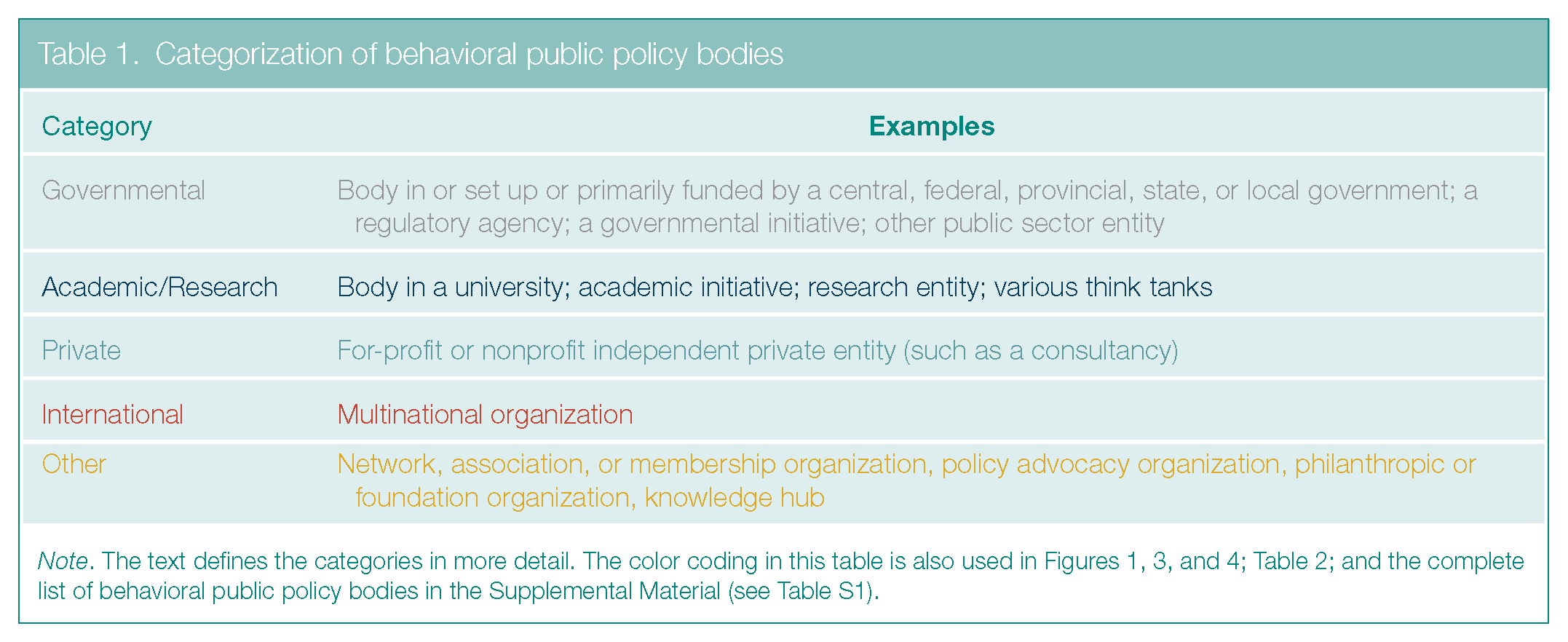
Note. The text defines the categories in more detail. The color coding in this table is also used in Figures 1, 3, and 4; Table 2; and the complete list of behavioral public policy bodies in the Supplemental Material (see Table S1).
For the second component of this study—a deeper dive into the activities and challenges faced by a subset of the bodies—I asked representatives of the selected bodies to fill out an online survey about such factors as their longevity, location, size, activities, challenges, and lessons learned. I also conducted follow-up interviews when needed. See the survey itself in Figure S1 of the Supplemental Material.
Because I conducted this survey to gain new insights into the experiences of BPP bodies, I wanted to hear from a broad mix of organizations whose stories were not already well-known. I selected for the survey groups of different levels of maturity (that is, both early and recent adopters of BPP), bodies from the Global North and South, and a range of types. I also tried to choose groups that operated in different political environments. Although I did not do a comprehensive assessment of all BPP bodies, this deep dive with the select group provides interesting and diverse lessons for practitioners and points to avenues for further research.
Results
BPP Numbers Have Increased Around the Globe
As of May 2024, the number of BPP bodies across the world was 631, up from 201 in 2018 (an overall increase of 214%). See Table S1 in the Supplemental Material for a list of all 631, Figure 1 for a map of their locations, and Figure 2 for a count by continent.
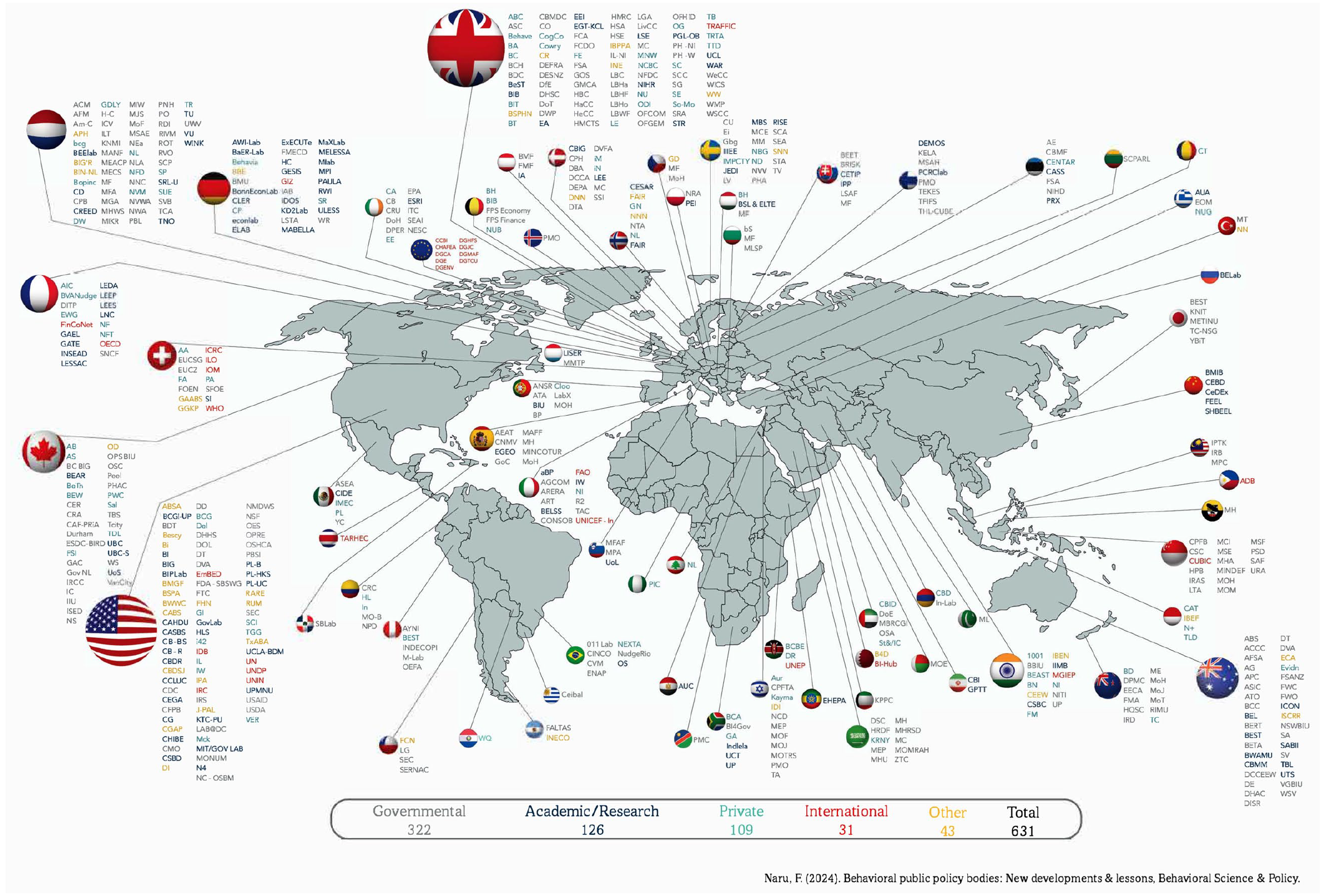
Distribution of behavioral public policy bodies worldwide
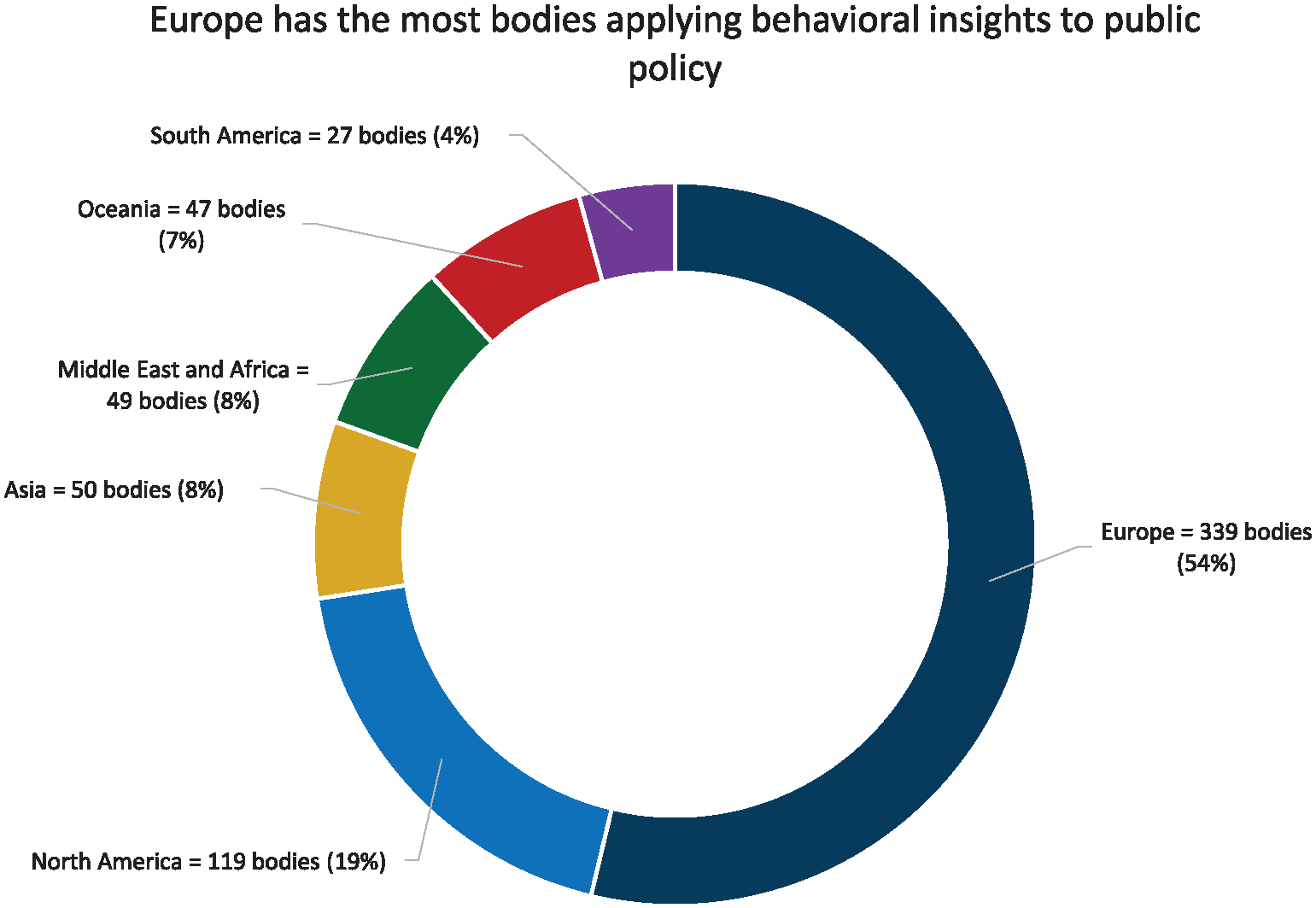
Number of behavioral public policy bodies by continent
After 2018, BPP bodies made inroads into new geographical locations: The number of countries with BPP bodies grew from 47 to 68. The bodies also became more abundant in places where some number already existed.
An analysis of early-adopter regions by continent showed the most dramatic rise in Europe (339, up from 94); increases also occurred in North America (119, up from 50) and Oceania (47, up from 24). Of the countries that were early adopters, the United Kingdom showed the most growth in absolute numbers (83, up from 13), followed by The Netherlands (57, up from seven), the United States (80, up from 37), Canada (34, up from nine), New Zealand (12, up from one), and Singapore (16, up from eight). Among countries that had zero to two BPP bodies in 2018—that is, among recent adopters (which are mostly in the Global South)—substantial growth occurred in Brazil (seven, up from two), Estonia (seven, up from one), India (13, up from zero), Saudi Arabia (10, up from one), and Slovak Republic (six, up from two).
The emergence and spread of BPP bodies in early-adopter regions seems to have been facilitated in many cases by a hospitable environment, as is indicated by the variety of BPP bodies in those areas. The variety suggests that a BPP “ecosystem” existed from the start, consisting of experts in various areas who could help to bridge differences in the knowledge, capabilities, and practices of nongovernmental actors and governmental entities. The nongovernmental actors were mainly at academic institutions, as was the case in Denmark (for example, the University of Copenhagen and Copenhagen Business School), the United Kingdom (for example, the London School of Economics and the University of Warwick) and the United States (for example, Harvard University and the University of Chicago). One reason Europe continues to host the most BPP bodies is probably that it now has a mature ecosystem that supports the governmental application of behavioral science to policy.
Governmental BPP Bodies Are the Most Abundant Types
The majority of BPP bodies are governmental: That is, they are a part of government at some level (be it central, federal, state, provincial, city, or local) or are funded by government. There are 322 governmental bodies, making up 51% of the BPP bodies counted; most of them include agencies that promulgate or carry out regulations (see Figure 3). Growth has been strongest at the state, city, and local levels (65 BPP bodies, up from 17). For example, the Local Government Association in the United Kingdom supports behavioral projects and initiatives in local governments across the United Kingdom; India has established units in Uttar Pradesh and Bihar and plans to have others in Assam, Rajasthan, and Telangana; and, in Brazil, 011 Innovation Lab in São Paulo and CINCO (Coordenação-Geral de Inovação e Ciências Comportamentais, or the Innovation and Behavioral Sciences Unit) in Brasília apply behavioral insights to different policy fields at the city level.
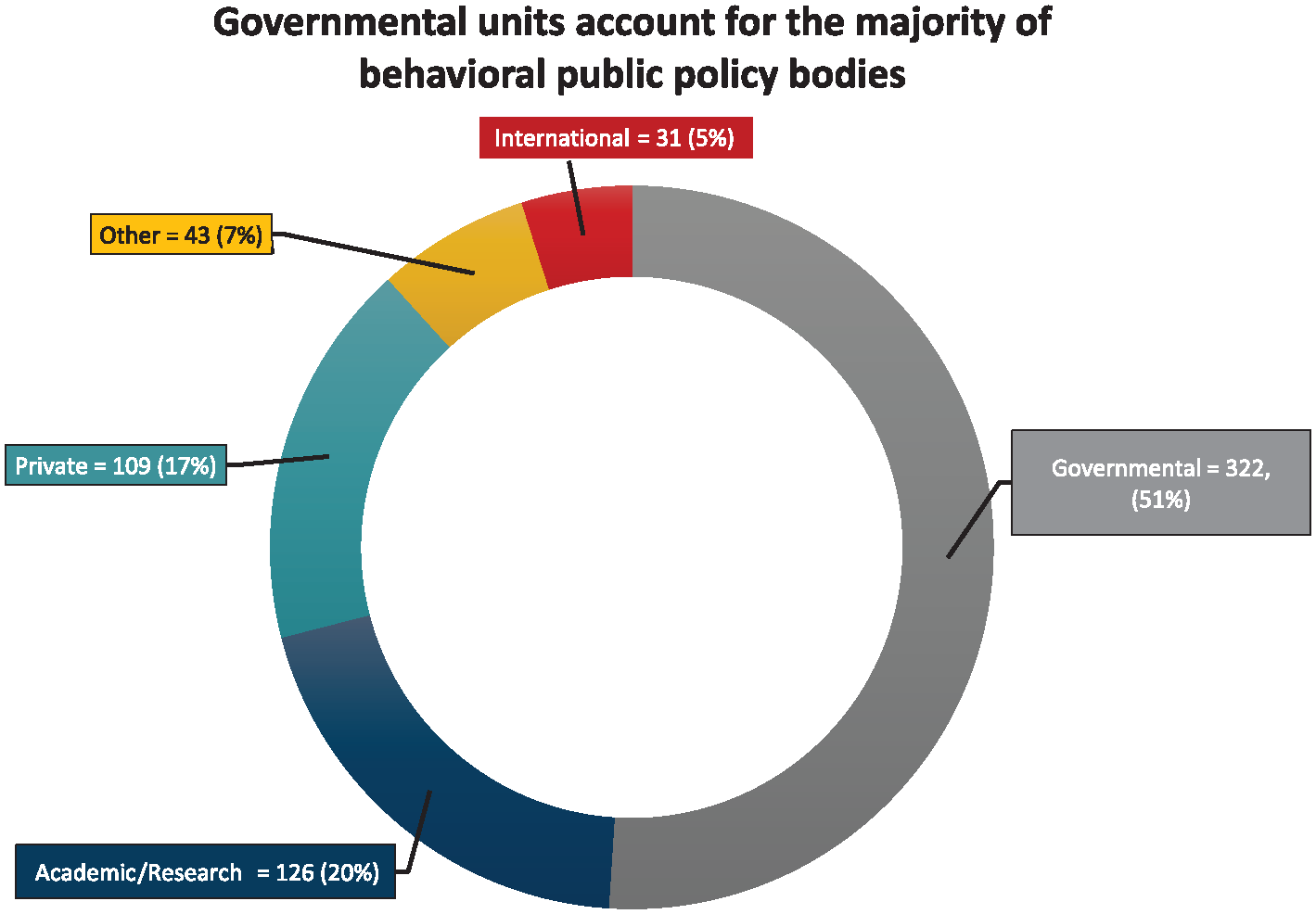
Number of behavioral public policy bodies by institution
There are 126 BPP bodies in the academic or research category, up from 12, composing 20% of the total. Universities with behavioral scientists fall into this category, as do various research bodies, think tanks, and organizations that focus on research related to policy—for example, Praxis in Estonia or the Economic and Social Research Institute in Ireland.
The next most common BPP body type is private: independent, nongovernmental, and nonacademic organizations, such as consultancies. There are 109 in this category, composing 17% of the units counted. The number has increased more than twentyfold since 2018 (up from five; see note B). The bodies in this category can be (for example, the United Kingdom’s Behavioural Insights Team, which is now a social purpose company) or nonprofit (for example, Busara Centre for Behavioural Economics, ideas42, and Nudge Lebanon) or can take the form of other independent private organizations involved in public policy (such as the Policy Innovation Centre in Nigeria). Some of the consultancies are large; many others are boutique firms.
Thirty-one BPP bodies, representing 5% of the total, are categorized as international, up from 17. These are bodies that are supported by multiple nations or have multilateral representation. They may apply behavioral science in a particular sector (as is the case for the World Health Organization and Save the Children) or serve as an external resource for public policy in countries around the globe, such as by providing guidance, research, or assistance with implementing programs (as is true of eMBeD at World Bank and OECD). (For other examples of international BPP bodies, see references 37, 43, and 47.)
The category of other contains 43 bodies, up from seven, which represents 7% of the total. These are mainly paid or nonpaid membership networks or associations that convene to share insights about applying behavioral science to public policy. Some networks are the Behavioural Insights Group Rotterdam, the Indonesia Behavioural Economics Forum, and Bescy. Among the associations are a number that are formally or informally working on standards for applied behavioral science (for example, the Behavioral Science & Policy Association, the Global Association of Applied Behavioural Scientists, the International Behavioural Public Policy Association, and the Applied Behavioral Science Association). This category also includes advocacy or philanthropic organizations that operate nationally (like the Energy Consumers Australia) or globally (such as the Bill and Melinda Gates Foundation and Consultative Group to Assist the Poor).
In many cases, government bodies seem to need to form alliances with partners in other parts of the government and outside of government to begin (and continue) applying behavioral science to policy. From my own observations and experience working with governments around the world, I would argue that such alliances help to compensate for any initial deficits in expertise in applying behavioral science to policy.
Dramatic Growth in the Global South
A major trend in the data was a significant increase in BPP bodies in the Global South—a rise from 32 in 2018 to 126 in 2024—although the total number there is still lower than the number in the Global North (505). The trend held in all regions of the Global South: in Asia (50, up from nine), the Middle East (37, up from six), South America (27, up from 12), and Africa (12, up from five). India, with 13 BPP bodies, and Singapore, with 16, account for the majority of the BPP bodies in Asia. Israel, with 11, and Saudi Arabia, with 10, account for the most bodies in the Middle East, and Saudi Arabia is thought to possibly have others in the pipeline. Brazil (seven), Colombia (five), Chile (four), and Peru (five) have the most BPP bodies in South America. In Africa, South Africa accounted for half of the new bodies. Many of the BPP bodies active in Africa are international organizations and philanthropies that are running specific projects there, as is the case with USAID, J-PAL, and the Bill and Melinda Gates Foundation.
Differences in BPP Bodies in Early-Adopter & Recent-Adopter Regions
Governmental BPP bodies are the most abundant type on all continents, but the overall mix of types differs between early-adopter and recent-adopter areas. In the early-adopter regions—Europe, North America, and Oceania—the governmental bodies are mostly supported in their work (such as being helped to conduct experiments or to base decisions on relevant research) by academia and, to a lesser degree, the private-sector members of their BPP ecosystem. See Figure 4.
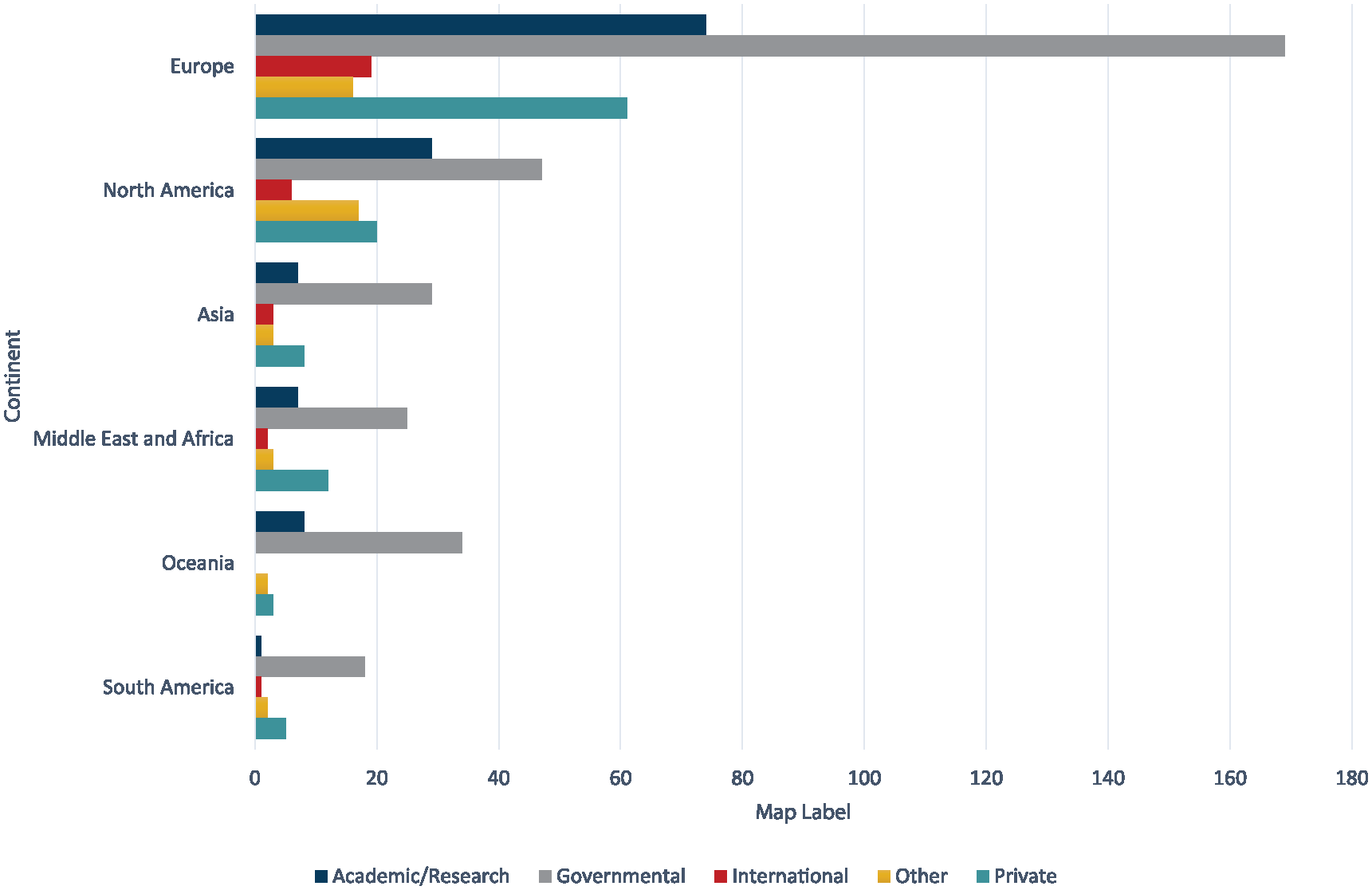
Type of behavioral public policy bodies by continent
In recent-adopter regions, mainly in the Global South, the private sector takes on a greater role than academia in supporting governmental bodies’ work. Efforts are underway to strengthen the ecosystem in the Global South, but doing so will take time, as it did in the Global North.
A Deeper Dive: Lessons From Case Studies of BPP Bodies
Although the growth in the number of BPP bodies across the world reflects the success of BPPs, these bodies nonetheless face challenges in their ongoing operations and, for some, to their continued existence. My survey of early and more recent adopters of different sizes and from different locations revealed new details about their experiences on the ground and suggests lessons for other BPP bodies. See Table 2 for a list of the 10 survey participants and Table S2 in the Supplemental Material for the survey questions.
Behavioral public policy (BPP) bodies in the in-depth survey
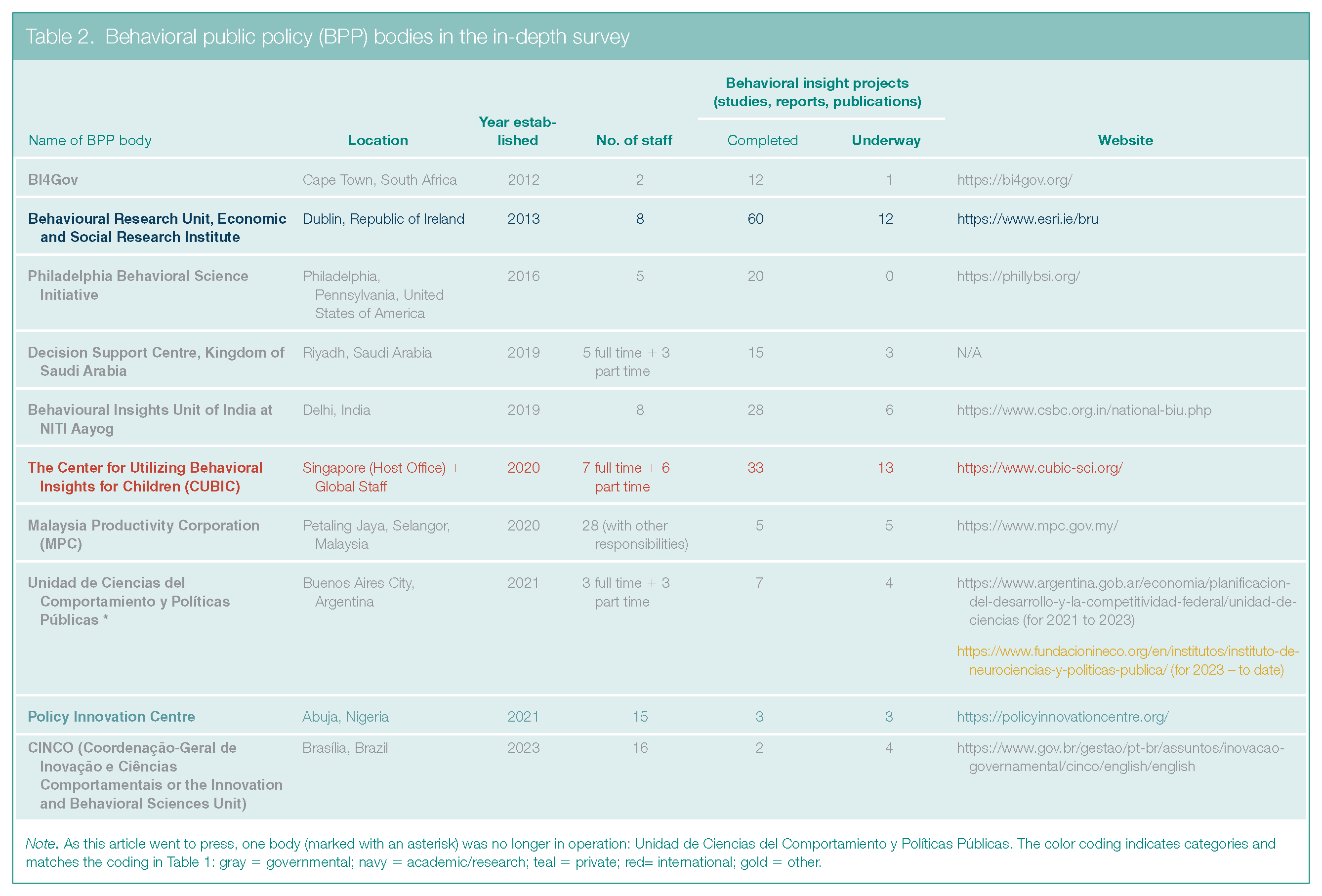
Survey Findings
The BPP Bodies Have Similar Missions
Three common elements appeared in respondents’ descriptions of their BPP bodies’ missions or mandates. One is a commitment to conducting, furthering, improving, or directly contributing to the greater use of evidence-based practices. The BPP movement’s insistence on using scientific methods to develop and test interventions has raised the standard for the evidence governments use in making policy decisions.
A second element is a focus on outcomes, such as improving lives, helping people make better decisions, or otherwise having a positive effect on society. Respondents indicated that they did not aim to apply behavioral science per se or conduct a given number of experiments per year. Rather, they aimed to apply behavioral insights in the service of achieving policy objectives. In one case, for instance, a respondent noted that the application of behavioral insights was “seen as a pathway to finding new ways to accelerate the movement of development indicators and sustain social change on the ground.”
The final common element in the missions is an orientation toward identifying and understanding problems before attempting to find creative solutions. Some respondents said they deliberately avoided calling themselves a “nudge unit” because this characterization was misunderstood by their leadership, affected their organization’s scope and ability to generate varied solutions, and limited their influence on other policymakers.
In other words, although an outsider might expect a behavioral science body to be biased toward applying preconceived behavioral practices to any problem, the respondents said their organizations adopted a problem driven approach. That is, they devised potential solutions on the basis of a realistic understanding of human behavior in a given context. 48
The BPP Bodies Combine Behavioral Expertise With Institutional Knowledge
All respondents said their BPP bodies were multidisciplinary. They had behavioral scientists working with experts in other disciplines (such as economics, law, communications, psychology, sociology, and health) and with experts in general public policy or in working within the relevant bureaucracy or institution.
The BPP Bodies Apply Behavioral Science in All Stages of the Policy Cycle
Most of the respondents indicated their organizations applied behavioral science to the early part of the policy cycle—to diagnose situations, assess existing policies and programs, and design new ones, even testing ideas for elements of policies or programs before governments commit to incorporating them. Somewhat fewer said they applied behavioral science to enhance policy and program implementation, for instance, by improving the effectiveness of communication. Still fewer respondents said they worked on evaluating new policies and programs and building in plans from the start to conduct follow-up assessments of implementations.
The application of behavioral science in diagnostics, design, and experimentation would be expected of BPP bodies and is not surprising. But if the relative lack of evaluations of policy and program success reflects a general trend in BPP bodies, the finding reveals a missed opportunity: Follow-up tests provide an important evidence base indicating what works and what does not, which can then help to guide future decision making. Although evaluation is usually seen as the final chapter in an intervention, planning for evaluation from the start should be done whenever possible.
The BPP Bodies All Carry Out Multiple Functions
Regarding the identified functions of the surveyed organizations, respondents pointed most frequently to policy research and experimentation and to building capacity to carry out research in a policy setting. Other functions cited less frequently included innovation, raising awareness of behavioral science, providing policy advice, developing policy, and consulting with and enhancing the engagement of stakeholders (such as people involved directly or indirectly in making or implementing policies, politicians, and people affected by policies). Oversight and policy coordination were listed least frequently, probably because those functions are not typically handled by BPP bodies. See Figure 5.
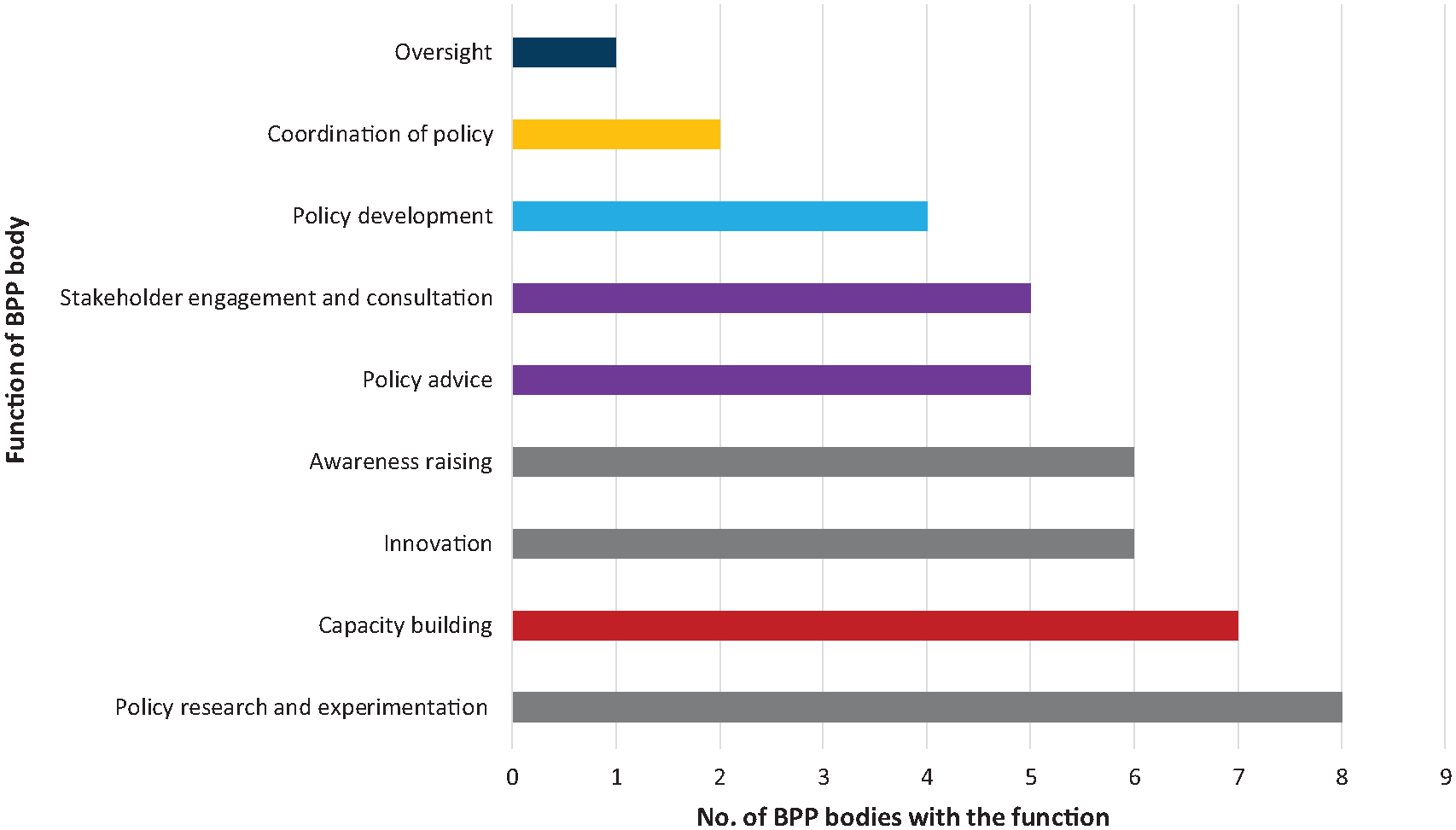
Reported functions of the 10 behavioral public policy (BPP) bodies in the in-depth survey
The BPP Bodies Work in Multiple Policy Areas
All but one respondent reported working on health policy. Many also said their bodies worked on what has been described as “wicked problems” 49 or, as one respondent called them, “problems of our time”—among them problems relating to social policy (for instance, domestic or youth violence), the environment and climate change, energy, digital policy, agriculture, transportation, and equality and inclusion. See Figure 6. This emphasis on wicked problems did not differ dramatically according to whether the BPP body was an early or recent adopter of BPP or whether it was located in the Global North or Global South, although BPP bodies in the Global South tended to be more concerned about agricultural issues than those in the Global North were.
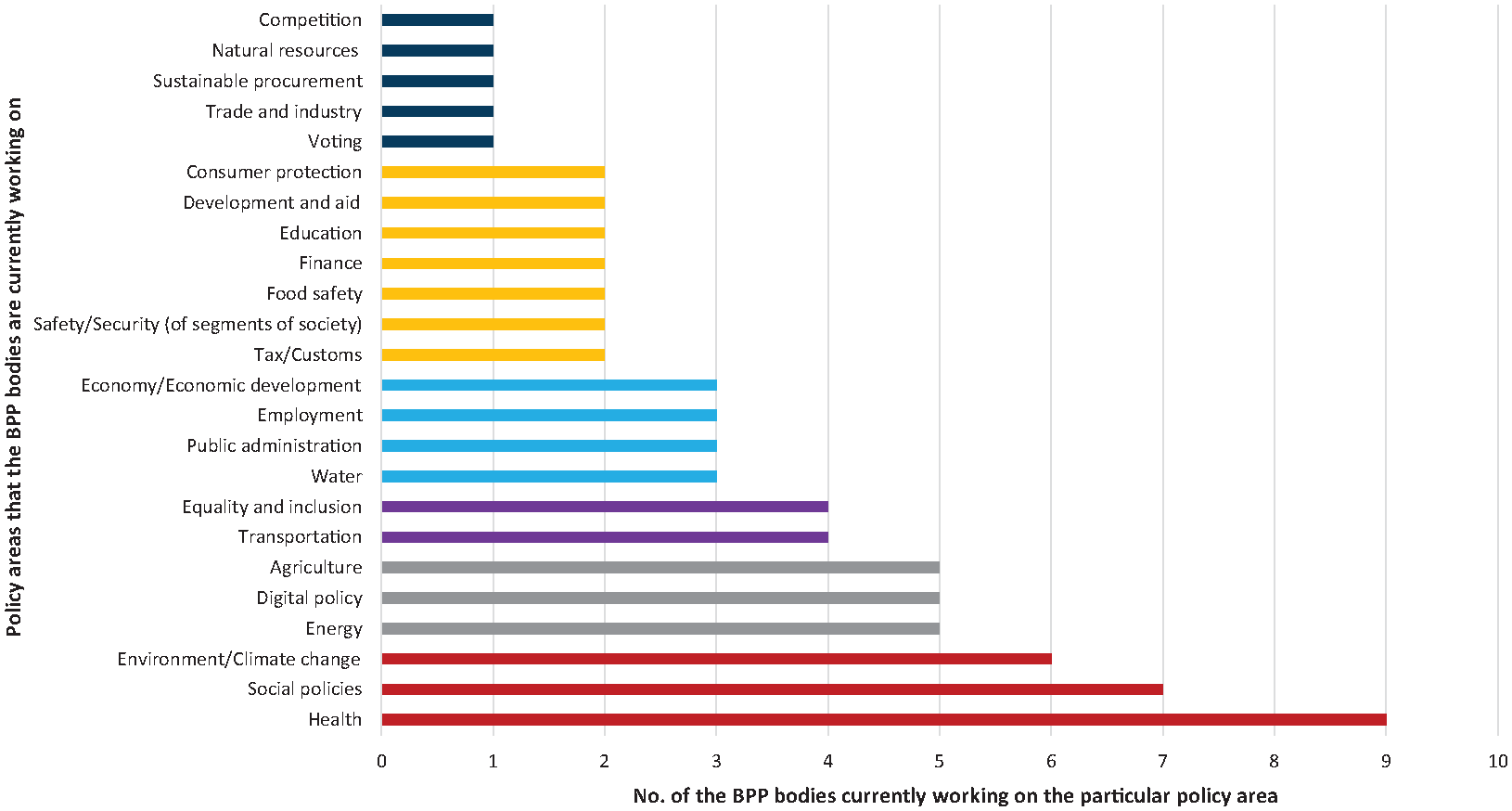
Policy areas worked in by the behavioral public policy (BPP) bodies in the in-depth survey
Challenges Abound
The challenge most cited as key by respondents was setting and managing expectations (see Figure 7). They reported, for instance, that behavioral scientists often differed from their organization’s leadership or other stakeholders in their view of what BPP is. One of the biggest misalignments was the mistaken view that BPP is mainly about better communications and marketing. As one respondent put it, The popular understanding of behaviour science and behaviour change programs is [that they are] limited to the use of behavioural insights in communication. However, behaviour change can be elicited through many pathways beyond communication. Some of these pathways may be: - Modification of choice architecture (ex: changing the physical placement of items and their salience to citizens) - Physical or digital product design (ex: UI/UX [user interface/user experience] interventions which increase attractiveness of target behaviour, increasing the perceived salience and importance of target behaviour) - Intervening in citizen and administrative procedures, reducing sludge (ex: reducing and increasing perceived effort to perform target behaviour and undesired behaviour respectively). It is important to broaden the understanding of behavioural interventions beyond communications in order to harness the power of behaviour science on a large scale.
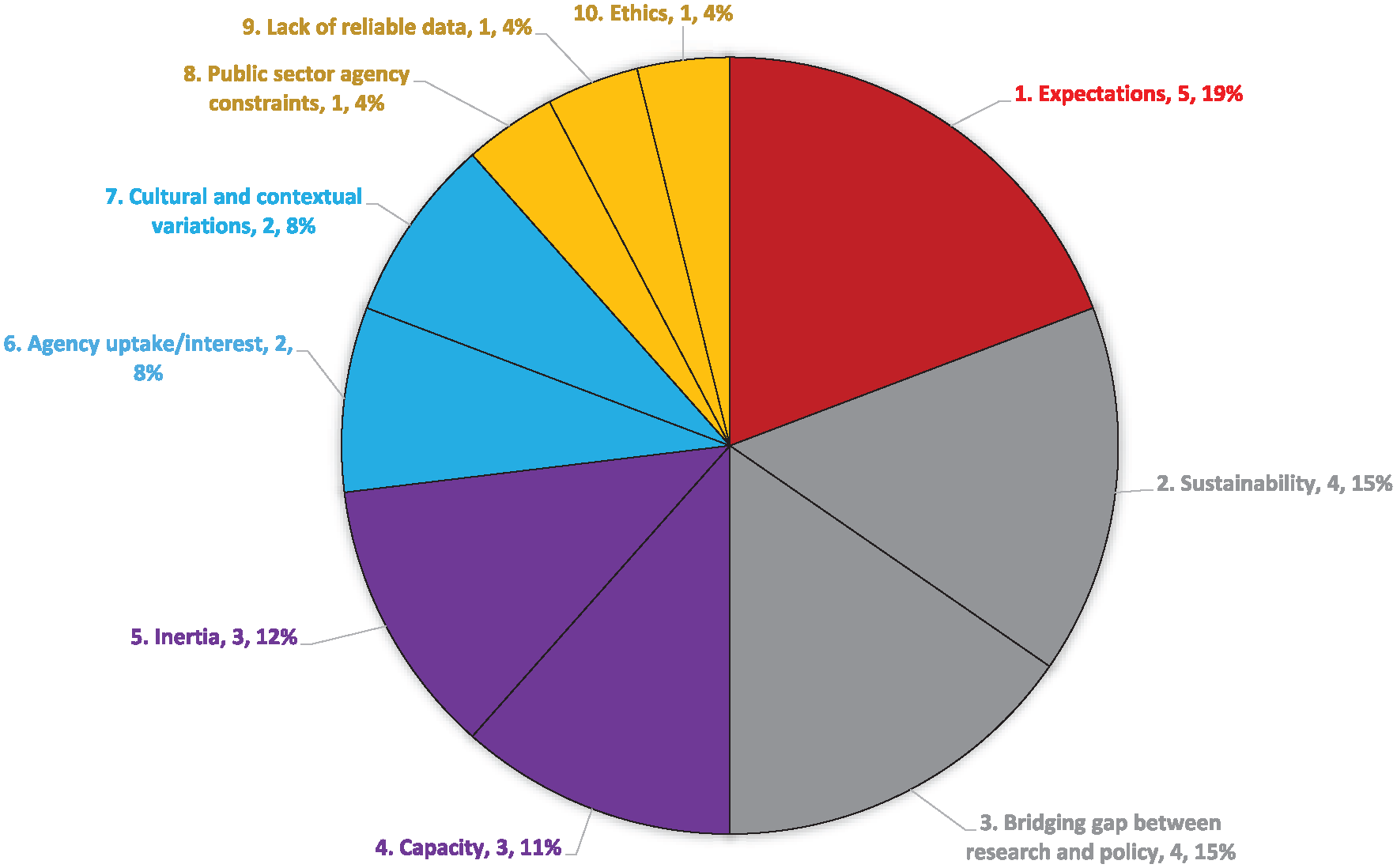
Key challenges for behavioral public policy bodies
An even more troubling misunderstanding noted by respondents was the view that behavioral science is about brainwashing or manipulation. Respondents also found misalignments between their views and leadership’s and stakeholders’ expectations of how fast and easily behavioral science interventions could help solve the problems governments were facing. For instance, a respondent reported difficulty “getting policymakers to understand that a good intervention requires a good diagnosis of the problem, which takes time” as opposed to quick-fire intervention testing. Similarly, in the context of emerging and developing economies, a respondent noted that an intervention intended to modify a behavior of individuals may not be sufficient to achieve long-term change: A demand-side intervention (or traditional “behavioural intervention” that focuses on the inputs and modification of recipients[’] behaviour) may not be sufficient to tackle an issue or “wicked problem,” but rather “supply-side” or “structural” change is often required in tandem for “sustained behaviour change.”
The misaligned expectations speak to the broader point that both new and established BPP bodies need to define their added value and measurably demonstrate it to key stakeholders.
Four respondents cited the bodies’ sustainability as a key challenge, and four pointed to bridging the gap between researchers and policymakers. I think of these as second-tier challenges, because they were cited slightly less often than the difficulty of managing expectations was. Worry over sustainability arises because the creation and persistence of the bodies often relies on the drive of an individual or a few officials within an organization; once those individuals are gone, the bodies may have difficulty continuing.
The challenge of bridging the gap between researchers and policymakers relates in part to the difficulty of convincing policymakers that the design of helpful and scalable interventions requires testing of potential interventions more scientifically than is often done, such as with randomized controlled trials or with a mix of research methods. In addition, the choice of behavioral science experts can affect how well researchers and policymakers collaborate. One respondent noted that, in addition to having behavioral science champions in the government, BPP bodies “need academics with humility and flexibility to meet policymakers where they are and in the areas they are interested in, to build enduring trust and partnerships.”
Third-tier challenges include building the capacity to conduct behavioral science in a policy setting and institutional inertia. Capacity issues in some instances arise from a lack of expertise not only inside the BPP body but more widely in the local labor market. In other cases, the people who have experimentation skills have difficulty functioning in an environment in which organizational leaders or government policymakers do not have a culture of experimentation or policy evaluation. The leadership and government cultures may view completing activities as a major end goal, whereas behavioral scientists value measuring the effects of activities systematically or with at least some amount of rigor.
The respondents who identified inertia as a challenge to applying behavioral science to policy saw several potential reasons for the stasis. Policymakers in public sector agencies can fear the unknown, especially when they lack a culture of experimentation, or they may worry that assessments will show that existing policies or programs are not working well. This concern again highlights the importance of setting the right expectations and establishing a culture in which negative results are appreciated as valuable information about what will not work or what was an incorrect assumption, thereby helping to avoid the potential waste of public resources. Inertia can also stem from the perceived complexity of applying behavioral science policymaking with rigor and with a regard for solid evidence, particularly when policymakers are accustomed to establishing policies on the basis of less rigorous evidence or assumptions or even to making policy on the fly.
Addressing this point, one respondent said, Applying BI [behavioral insights] requires cultural change, and effective, lasting cultural change is by nature slow. BI (rightly) tells us that making something easier makes a difference to adoption. Unfortunately, the more accurate “real world” approach BI offers policymakers is inevitably more complex than the neat theoretical models used in assumption-based policy.
Two respondents cited as key challenges a lack of interest in or uptake of their bodies’ plans by leaders of their agencies or of buy-in from other policymakers. The disinterest was attributed to an initial lack of demand for the bodies’ services, followed by strong demand but not enough capacity to meet it.
Two respondents spoke of challenges that one conceptualized as “cultural and contextual variations,” meaning that they could not merely apply behavioral science techniques and findings that were derived from research using “WEIRD” samples—White, educated, industrialized, rich, and democratic. They needed the expertise that would enable them to take the local context into account, including how local culture might shape the ways of working.
One respondent reported being challenged by constraints that are typical of the public sector, such as uncertainty of funding, a tendency for organizational change and restructuring to occur, and recurring changes in political or administrative leadership. All of these factors can threaten the sustainability and future of a BPP body.
Finally, one respondent cited a lack of reliable data as a key challenge, and another identified ethical concerns.
That only one respondent cited ethics is a testament to the success that people in the field of BPP have had in regulating themselves. In the case of governmental BPP bodies, maintenance of high ethical standards probably stems in part from the checks and balances that public institutions have in place to navigate ethical issues that arise in policymaking and from the mechanisms that keep agencies open to scrutiny and accountability. Such mechanisms are not always present in a commercial or private setting. The applied BPP field should be congratulated for maintaining good ethical standards to date; I know of no notable breaches. Of course, this good track record does not mean that it is unimportant for BPP bodies to have formal ethical standards. Complacency should not set in, and BPP bodies will need to manage political urges that could compromise the ethics of behavioral practitioners. (The OECD has published guidelines for the ethical use of behavioral science in government.) 50
Advice From Survey Respondents
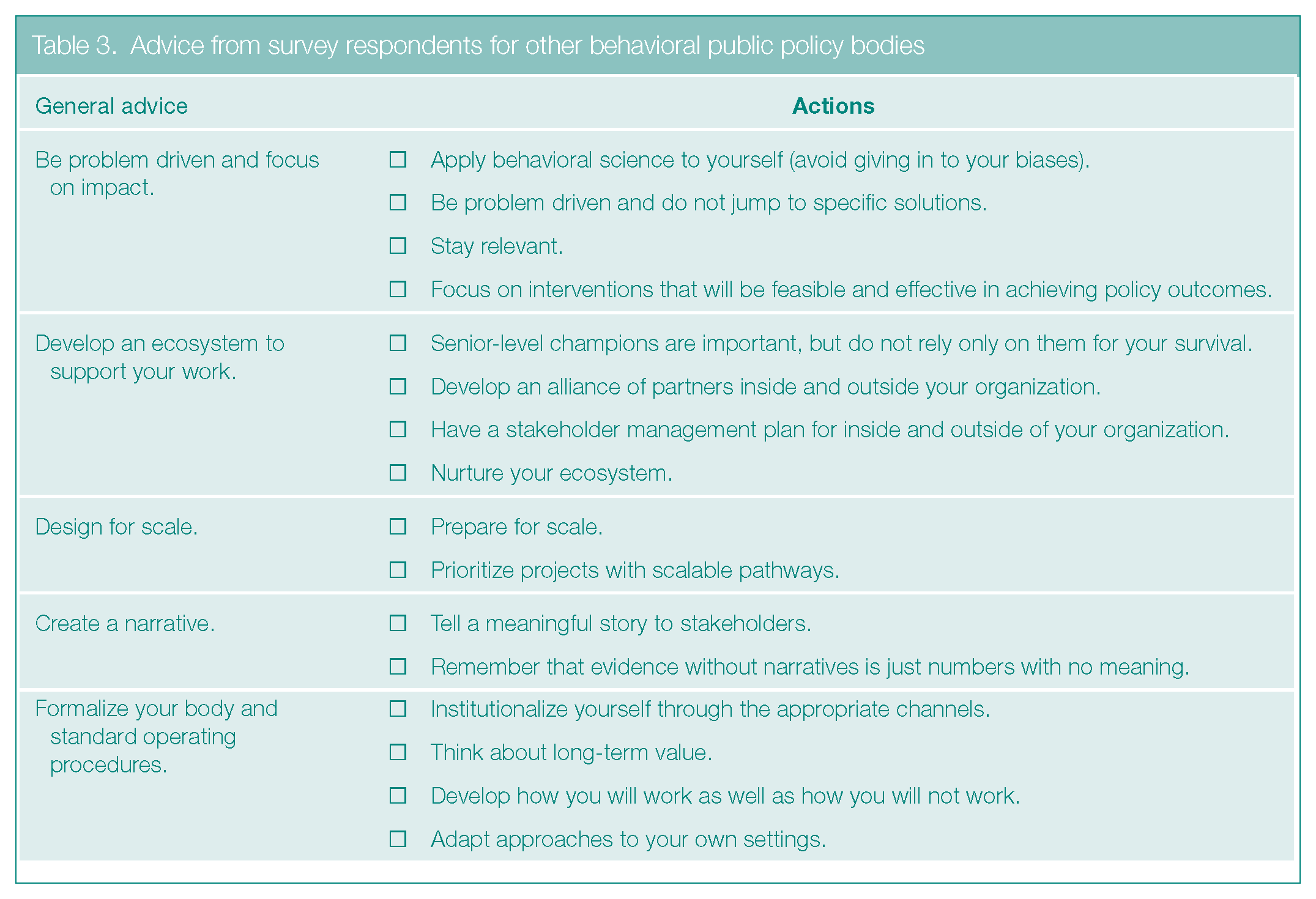
Together, the survey respondents had the following recommendations for improving the effectiveness of BPP bodies and increasing their chances of success. See Table 3.
Advice from survey respondents for other behavioral public policy bodies
Be Problem Driven & Focus on Having an Impact
The majority of respondents felt that BPP bodies should carefully diagnose the problem to be solved before jumping to any intervention ideas or deciding to intervene at all. Adopting this approach means, as one person said, being “behavioral for real”—that is, applying behavioral insights to one’s own activities, such as eliminating the common bias toward using a particular intervention or tool regardless of the problem.
Related to targeting any intervention to a well-defined problem is focusing on having the desired effect and anticipating issues to address in the future. This approach enables BPP bodies to remain impactful and relevant. The goal must take into consideration the broad context: Will altering a behavior in a specific way meet a given policy objective? To be effective, a BPP body must be ready to use a mix of methods for research rather than relying solely on one methodology, especially in situations in which it is hard to obtain useful data. BPP bodies cannot simply apply a “cookie-cutter” or “plug-and-play” approach from abroad.
Be Multidisciplinary & Develop a Supportive Ecosystem
As might be expected from all 10 BPP bodies reporting being multidisciplinary, respondents emphasized the importance of having a diverse team with different skills and backgrounds, including people who know how to overcome bureaucratic, institutional, and other barriers to developing and implementing public policies. 51 Without this integration, a BPP unit within a larger organization may function suboptimally and may even be rejected by the host organization.
Relatedly, many respondents suggested creating a broader ecosystem for BPP. Of course, having senior-level champions of behavioral science within one’s organization or within government can be of great value, but respondents noted that some of the best behavioral work was accomplished through collaborations with multiple partners inside and outside of their organization. BPP bodies are therefore wise to have plans to build and nurture alliances. They are also wise to have plans for how they will manage the expectations of policymakers, funders, and other stakeholders. In addition, as one person put it, they should develop “an advocacy plan to get buy-in from political leadership.”
The need to nurture an ecosystem and conduct advocacy work is an important lesson. Nurturing can be accomplished informally, such as through regular catch-up meetings and get-togethers, during which connections can potentially be made for future partnerships. Or members of BPP bodies can engage in more formal activities, such as establishing steering or advisory groups or partnership arrangements for conducting joint work.
Design for Scale
If the goal of applying behavioral science to policy is to have a real effect on a problem, then interventions need to have a widespread influence on behavior, which means they must be applied at scale. Scaling is likely to be most successful when it is planned and designed for from the outset, a process that should include collaborating with the people in the public and private sectors who will execute the implementation. One respondent advised thinking about and listing contextual parameters and limitations for scaling in one’s governmental setting—such as political feasibility, the financial resources available, and implementation levers—before designing an intervention.
Create a Narrative
Often scientists mistakenly think the evidence supporting a given approach to a policy or intervention will speak for itself regardless of how they present it to government officials or others in leadership. In my experience, to be compelling to nonscientists or decision makers more broadly, data needs to be presented as part of a story that highlights the significance of the problem being addressed and explains what the findings mean for policy goals and for peoples’ everyday lives. Put simply, evidence without narratives is just numbers with no meaning. The story needs to be an honest portrayal of the work or projects done and must make sense not only to those the BPP body is accountable to but also to those whose behavior the BPP body wants to affect. Present all results and findings so that a culture of learning and transparency becomes a part of the organization.
Formalize Your Body
Formalization of the BPP body involves spelling out its mission, objectives, and standard operating procedures. These elements help to put the body on a stable footing while also managing stakeholders’ and others’ expectations of what the body is and what it does and does not do. When adapting international practices to a given context, BPP bodies will benefit from investing in the development of guidelines for action and methodologies appropriate for the local language and culture.
What Is the Immediate Future for the 10?
At the time of my study, a number of the surveyed BPP bodies were unsure whether they would survive. Those fears were not unfounded: At present, at least one no longer exists. I cannot be certain that the rest will persist, because they may be subject to future political changes, organizational changes, or unreliable funding.
As I noted earlier in this article, when individual champions of BPP bodies change roles or leave, the bodies can struggle to continue. Yet in response to a multiple-choice question asking how the respondent’s BPP body was established, the largest number of respondents attributed their group’s creation to the personal drive of an individual official; the next-most-endorsed response was having a senior-level sponsor or champion. Fewer reported that their BPP body was formed as the result of a formal legislated or nonlegislated decision.
To avoid being dependent on an individual champion, most of the respondents’ groups were working on building capacity for carrying out their work, being multidisciplinary, promoting behavioral science as a paradigm shift for developing human-centered policy, and highlighting their value to the organization (such as their ability to provide evidence-based insights). Respondents also suggested becoming or emphasizing the body’s role as a knowledge hub that helps achieve public policy goals rather than as merely a consultancy that charges a fee for service. As part of this focus, some respondents said they were developing frameworks and guidelines for conducting cutting-edge research and designing impactful policies.
Several respondents, especially in emerging and developing economies, said they were working on connecting and building networks relevant to their work because bodies operating in similar contexts can learn from one another and share best practices but often are not well connected. Connections can be beneficial locally at the different levels of government within a country; regionally across a number of countries; or more broadly, such as across the entire Global South. Although the Global North and Global South face similar challenges (albeit to varying degrees)—such as the difficulty of obtaining resources and data and contending with unrealistic expectations—the need for such networks in the Global South is greater, because the ecosystems that are useful for navigating challenges are in a more nascent state.
Representatives of the surveyed bodies said they expected to focus in the future on the wicked problems affecting their societies today. In particular, these include the direct effects of climate change and its consequences on other policy areas (such as energy, water, agriculture, and transport) and, in the more developed economies, the scale and effects of gambling.
Conclusions & Reflections
Although the number of BPP bodies worldwide tells a positive story of the widespread proliferation of behavioral science in public policy, my close examination of a selection of new and old BPP bodies paints a more mixed picture.
Practitioners in BPP bodies find themselves continually explaining what BPP is and is not. There is a diversity of opinion, which is inevitable in a relatively young field. But the deep-dive survey shows that misunderstandings and misalignments of expectations pose challenges that BPP bodies need to address both when the groups first form and as they continue to operate.
The frequent reliance on the drive of individuals or senior champions means BPP bodies can be vulnerable to folding when those people move on. A solution is to develop solid plans for institutionalizing and mainstreaming BPP and BPP bodies; the advice from practitioners enumerated earlier in this article is a good starting point. Also see Table 3.
Overall, the survey respondents advise BPP bodies to be braver, bolder, and broader than is often the case and to avoid the usual path of being niche, specific, and prone to tackling only low-hanging fruit. Being bold is, of course, difficult for behavioral practitioners whose operations lack long-term security. A potential compromise would be to follow a tiered trajectory: being prudent at first but with an eye toward becoming a braver and bolder BPP body that exerts greater influence as it matures. This approach helps BPP bodies not only to organize themselves and get started but also to strategize to solve large-scale and complex social issues through small wins. 52
The many challenges faced by BPP bodies mean that, as I noted earlier in this article, the 631 bodies I counted are likely to change in number, nature, and ways of operating. The BPP world is dynamic and increasingly nuanced. It will adapt to new methods, approaches, 53 and technology, such as AI.54–56 Although BPP bodies are diverse, many of them will likely find the suggestions outlined in this article applicable in some way. Given that context is critical, I strongly urge BPP bodies to cultivate local networks of BPP groups or regional policy communities with whom they can share experiences and trade ideas for adapting and being successful.
As the BPP world has grown, so too have perspectives on its application, direction, and future. For details, see references 57–65. I hope that my snapshot of the BPP world will prompt researchers to undertake further analysis of BPP bodies so that lessons can be learned and mistakes avoided. I also hope that by illuminating the evolution of BPP bodies, this article will contribute to efforts to discuss and chart the field’s future directions.64–66
The BPP world will change. Change is good, 67 as long as it enables the BPP community to enhance the public’s well-being.
Supplemental Material
sj-docx-1-bsx-10.1177_23794607241285614 – Supplemental material for Behavioral public policy bodies: New developments & lessons
Supplemental material, sj-docx-1-bsx-10.1177_23794607241285614 for Behavioral public policy bodies: New developments & lessons by Faisal Naru in Behavioral Science & Policy
Footnotes
Author Note
I thank Lucia Reisch, Sim Sitkin, and Craig Fox for their valuable comments and encouragement in conducting this work. Acknowledgements also go to Luís Henrique D’Andrea, Syon Bhanot, May Binbaz, Iván Budassi, Marizaura Reis de Souza Camões, Osasuyi Dirisu, Antonio Claret Campos Filho, Norhasimah Ibrahim, Izzul Ikhwan Ishak, Pete Lunn, Ammaarah Martinus, Shagata Mukerjee, Mohammed Alamin Rehan, Allison Zelkowitz, and their respective colleagues for their insights and inputs. Thanks go as well to Sana Abushaban for her patience and design work. Finally, a big thanks to the various behavioral insights practitioners and academics who have been part of the behavioral public policy journey and who have contributed to the work that is captured in this article: You are too numerous to mention individually, but you know who you are. The findings and conclusions expressed in this article are solely my own.
Declaration of Conflicting Interests
The author declared no potential conflicts of interest with respect to the research, authorship, and/or publication of this article.
Funding
The author received no financial support for the research, authorship, and/or publication of this article.

Notes
References
Supplementary Material
Please find the following supplemental material available below.
For Open Access articles published under a Creative Commons License, all supplemental material carries the same license as the article it is associated with.
For non-Open Access articles published, all supplemental material carries a non-exclusive license, and permission requests for re-use of supplemental material or any part of supplemental material shall be sent directly to the copyright owner as specified in the copyright notice associated with the article.
