




Abstract
Introduction
Adoption of digital technologies in midwifery education has been slow. Many barriers challenge implementing digital learning technologies in Africa, limiting access, disrupting learning activities and hindering full engagement and adoption of digital tools.
Methods
A scoping review of original research publications from Africa was performed to explore stakeholder perspectives regarding the adoption and effectiveness of digital learning within midwifery education. The review aimed to examine and document stakeholder experiences, perceptions, attitudes, and challenges in existing literature, providing insights crucial to informing future strategies and policy decisions. Data from each study were collected using a custom-designed extraction form tailored specifically for this review.
Results
After searching nine databases, 233 original manuscripts were located. Specific inclusion and exclusion criteria were applied, and nine studies remained for analysis. Content analysis was used to identify three main themes: (1) perceived benefits of digital learning, (2) facilitating factors, and (3) technical and technological challenges, which identified the experiences, perceptions, attitudes, and challenges of stakeholders who have been exposed to using digital technology in midwifery education in Africa.
Conclusion
There is a growing interest in integrating digital learning into midwifery education in Africa; however, this comes with contextual challenges such as limited infrastructure, access, and low digital literacy. Addressing these through targeted investment, comprehensive training, and other localized strategies is key to successfully implementing and scaling up digital education in preservice midwifery education on the continent. Findings can help guide effective program design and policy development.
Introduction
The report “Strengthening Quality Midwifery Education for Universal Health Coverage 2030: Framework for Action” (WHO, 2019) emphasizes the importance of adequately resourced midwifery education programs that offer high-quality learning experiences and are competency-based (WHO, 2021). As part of this global strategy, the WHO has identified prioritizing innovative technology use in educating midwifery students as essential to improving the quality of midwifery education (WHO, 2019). The International Confederation of Midwives (ICM) also supports this, advocating for midwifery programs to use evidence-based instructional methods and up-to-date teaching and learning resources (ICM, 2021).
Digital education is an innovative approach that ensures inclusive and equitable educational opportunities for all midwifery students, especially those cut off by remoteness, aligning with advancing Sustainable Development Goal 4 (Friedman et al., 2020). Digital education, sometimes called online learning, eLearning, or blended learning, refers to using web-based technologies to connect educators and students (Saini et al., 2023). It can be delivered online or combined with traditional in-person teaching (Downer et al., 2021; Geraghty et al., 2019; Janes et al., 2023).
Midwives need digital skills to improve care quality, safety, and communication, while boosting job satisfaction (Nurhayati et al., 2025). This necessity becomes even more pronounced in remote areas, conflict zones, and humanitarian settings, where digital technologies significantly aid in health monitoring, reduce travel times to health facilities, and consequently decrease overall healthcare costs (Geraghty et al., 2019; Guo & Edwards, 2024; Saini et al., 2023; WHO, 2019). Therefore, equipping pre-service midwives with digital competencies is a strategic investment in the future of midwifery, enabling transformative practice and the delivery of high-quality care (Balasubramaniam et al., 2018; Downer et al., 2021). Digital education, therefore, holds great potential, transforming midwifery teaching and learning, reducing inequalities, and promoting inclusive, efficient education systems (Ndayisenga et al., 2021).
Digital education shifts from traditional educational models and offers diverse, authentic, and complementary teaching and learning opportunities such as virtual simulations, realistic scenario-based tasks, and interactive evaluations (Edwards & Parsons, 2023; Geraghty et al., 2019; Ndayisenga et al., 2021; Shikuku et al., 2024). This shift facilitates continuous quality improvement (Mlinar Reljić et al., 2023), boosts student engagement, and overcomes barriers like isolation and limited resources (Downer et al., 2021; Fealy et al., 2019; Janes et al., 2023; Lin et al., 2017). Ultimately, the integration of digital education within midwifery programs promotes a responsive and adaptable learning environment, essential for preparing competent midwives capable of delivering high-quality maternal and newborn care in diverse healthcare settings.
During the COVID-19 pandemic, digital education took center stage even in contexts where its use was limited (Downer et al., 2021; Janes et al., 2023; McKay et al., 2022; Mlinar Reljić et al., 2023). In advanced countries, digital technologies existed pre-pandemic (Akalin et al., 2025; Downer et al., 2021; Fealy et al., 2019); however, countries in Africa have experienced much slower adoption rates (Ndayisenga et al., 2022). Factors contributing to this disparity in digital technology use include high implementation costs (Appiagyei et al., 2015; Ndayisenga et al., 2021; Ujoh et al., 2024), limited accessibility, inadequate training opportunities (Essel et al., 2020), and scepticism about the practical utility of digital technologies (Lamniai et al., 2021). It is important to note that pre-service midwifery education in Africa continues to grapple with multiple challenges, such as insufficient infrastructure, limited teaching capacity, inadequacy of teaching resources, inadequately equipped clinical demonstration facilities, and a shortage of qualified preceptors (Warren et al., 2023). These issues hinder traditional teaching methods and also pose significant barriers to the effective implementation of digital education.
Evidence from a few African countries highlights the promise of digital education, with some nations successfully adopting digital platforms for both pre-service midwifery training and continuing professional development for practicing midwives (Ndayisenga et al., 2021; Nukunu et al., 2024; Ujoh et al., 2024), yet a critical gap remains in understanding the contextual factors that influence the adoption and sustained implementation of digital education in Africa (Ndayisenga et al., 2021). While some research exists, it has primarily focused on nursing rather than midwifery, with most studies reporting on outcomes, usage patterns, and knowledge acquisition, without deeply exploring contextual acceptance, feasibility, and cultural appropriateness (Adamu et al., 2021; Owoeye et al., 2025; Ujoh et al., 2024). Recognizing Africa's unique contexts and needs, strategies and approaches successful elsewhere may not automatically translate effectively into African settings. Moreover, effective integration of digital technologies into midwifery education requires significant pedagogical adaptations, curriculum revisions, aligned assessments, and ongoing evaluation to monitor impacts (Ndayisenga et al., 2021). Successful implementation of digital education relies on the active involvement of key stakeholders, including midwifery students, educators, administrators, and policymakers, all of whom play essential roles in shaping and sustaining effective learning environments. For example, midwifery educators also require support to identify suitable technological tools and resources, potentially necessitating policy revisions at institutional and governmental levels. Unfortunately, these critical areas remain largely unexplored in African contexts (Ndayisenga et al., 2021).
A preliminary search revealed no existing scoping reviews specifically examining digital education in African midwifery education, highlighting a notable gap in current literature, making this paper more urgent. To address these issues comprehensively, the following research question has been formulated and explored: What are stakeholder perspectives regarding the adoption and effectiveness of digital education within midwifery education across Africa? This scoping review aims to explore and document stakeholder experiences, perceptions, attitudes, and challenges on digital education in midwifery education in Africa, as identified in the existing literature, providing insights crucial to informing future strategies and policy decisions.
Methods
The format suggested by the Joana Briggs Institute (JBI) was adhered to in this scoping review (Peters et al., 2020). The extension for Scoping Reviews was applied to this review for coherent and transparent reporting.
Identification of Relevant Studies
Literature was found using a thorough search approach. To find pertinent articles, specific keywords were searched across several databases (Mak & Thomas, 2022). In February 2025, nine databases were searched, including CINAHL, Health Science, Medline, PsycInfo, PubMed, Science Direct, Scopus, Web of Science, and Google Scholar. Wildcards were used to create a variety of search words. The search phrases were combined into search strings using Boolean operators. The entire procedure involved revising and clarifying the research question. The search was extended by manually reviewing the reference lists of relevant studies to identify additional eligible research (Appendix A: Search algorithm for PubMed).
Study Selection
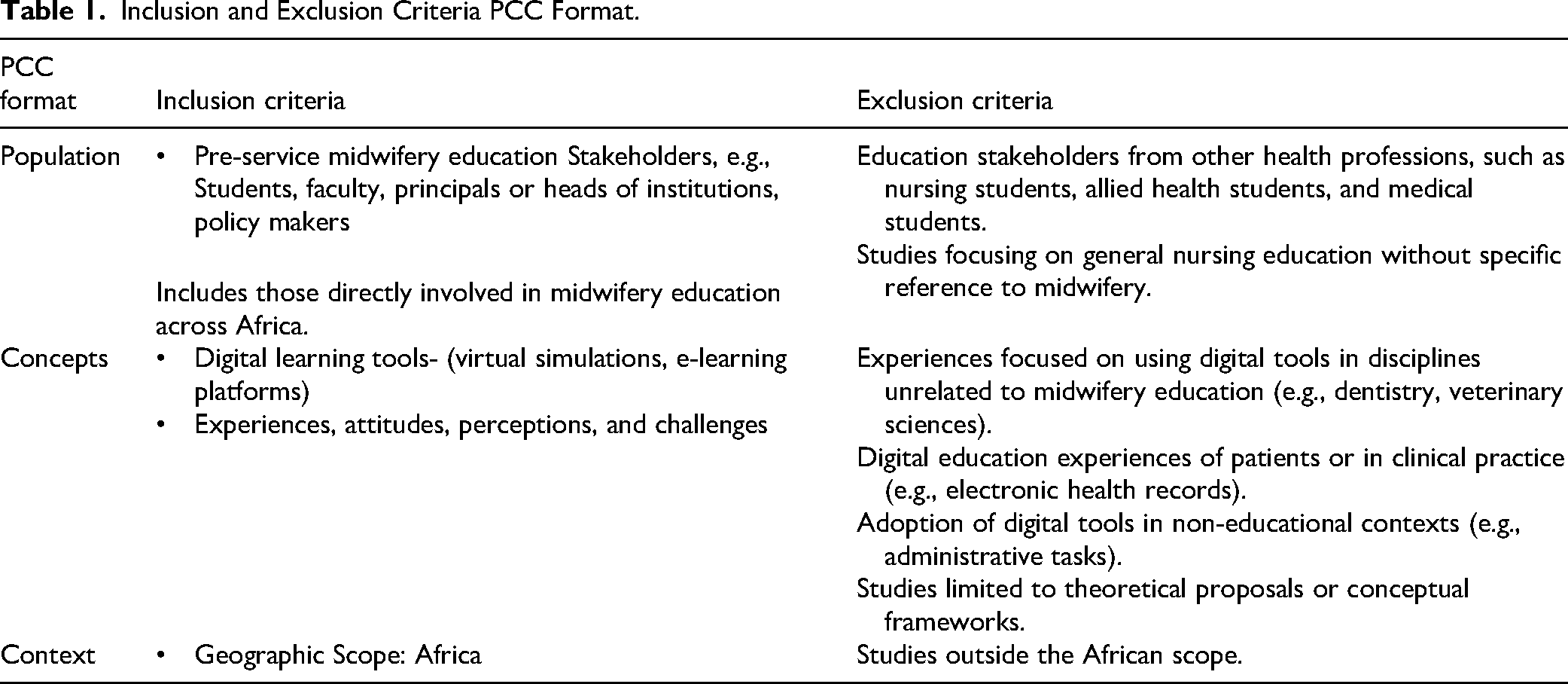
Eligible studies were included in this scoping review based on the predefined inclusion criteria of the Participants, Concept, and Context (PCC) framework. The search limit included documents published in English, from 2015 up to the current search period (February 2025). Empirical study designs, including experimental, quasi-experimental, and observational studies, were eligible if they had a qualitative component or reported on any of the concepts. However, empirical study designs that did not report on the study concepts and systematic and narrative reviews were excluded.
See Table 1 for inclusion and exclusion criteria.
Inclusion and Exclusion Criteria PCC Format.
Screening
Two-hundred and thirty-three primary research papers were retrieved from the databases and exported into EndNote for data management. A total of 78 duplicates were identified in EndNote and deleted. Following de-duplication, the remaining 155 papers were reviewed by three reviewers independently of one another. Papers were initially screened by their titles and abstracts to assess inclusion criteria, and then two reviewers conducted a full-text review of each manuscript. Disagreements during the selection process were resolved through discussion with the third reviewer.
Of the remaining 155 papers, 143 were marked ineligible as they were unrelated to the topic or aims of the review or were conducted outside African countries. In some studies, the participants were mainly nursing students, and it was challenging to extract data specific to midwifery students, as the available data were often aggregated with those of the nursing students. Twelve records were retrieved for full-text analysis, with three articles being excluded. Finally, a total sample of nine studies was included in this scoping review.
An outline of the screening process is provided in Figure 1.
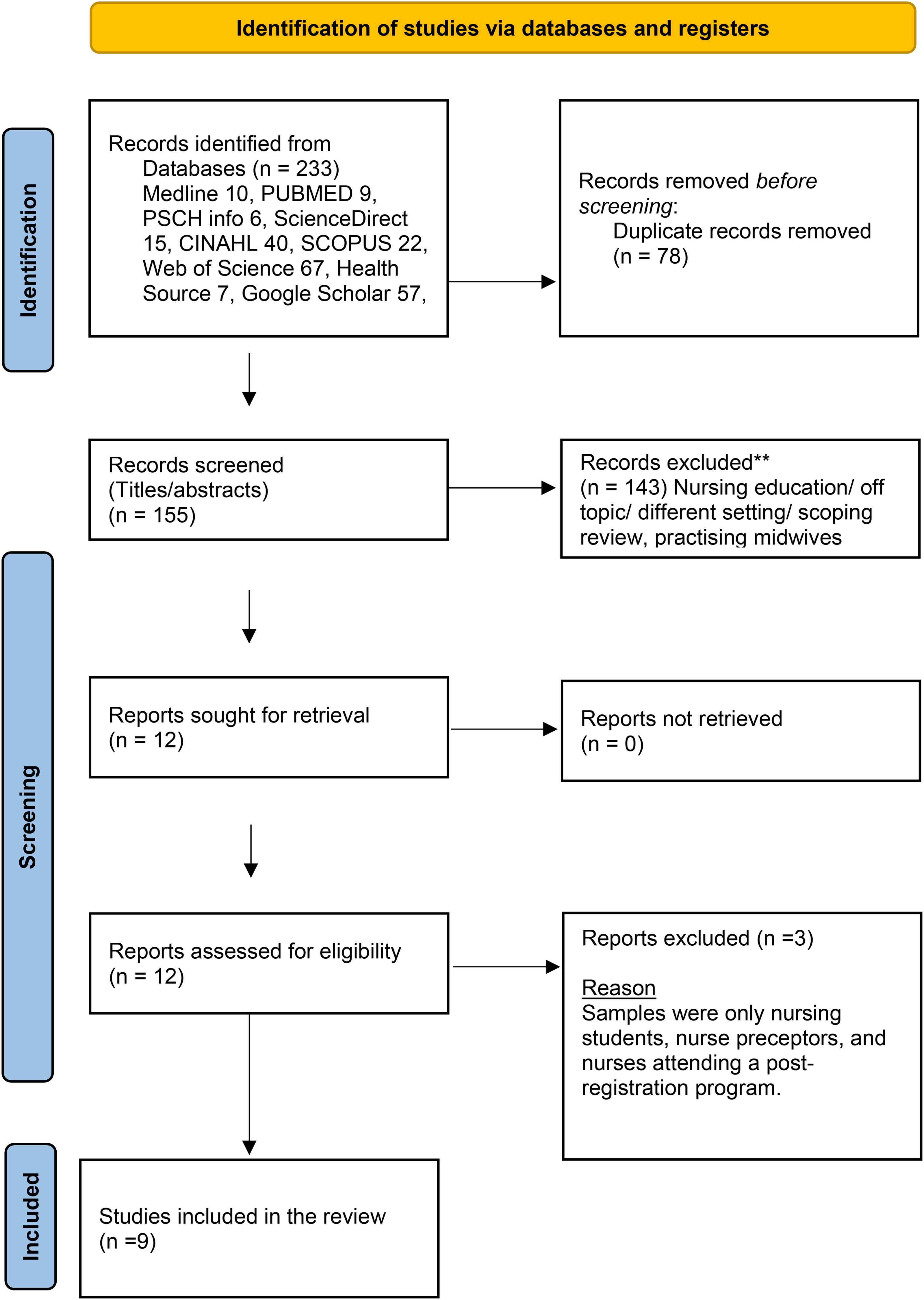
Screening Process.
Data Extraction and Analysis
During the data charting process, a data extraction tool (Appendix B) was used to record key information from included studies (title, author, year, country, aims, methods, and summary of findings), and the third author, NS, extracted the data, which was cross-checked by the review team. Using an iterative approach, three reviewers independently coded the data, with consensus subsequently reached among all authors.
Data Reporting
Qualitative content analysis (Pollock et al., 2023) was used in the analysis of the papers. A descriptive overview of the key findings following the PRISMA-Scr (Preferred Reporting Items for Systematic reviews and Meta-Analyses extension for Scoping Reviews) format (Peters et al., 2020; Tricco et al., 2018) is presented (Appendix C).
Results
Characteristics of Included Studies
Nine studies (Addae et al., 2022; Alhassan, 2020; Appiagyei et al., 2015; Bigirwa et al., 2020a, 2020b; Essel et al., 2020; Lamniai et al., 2021; Ndayisenga et al., 2022; Nsemo et al., 2022) have explored the adoption of e-learning and digital technologies in midwifery education across Africa, particularly in Ghana (n = 5) and Uganda (n = 2), with one paper (n = 1) each from Rwanda (Ndayisenga et al., 2022) and Morocco (n = 1) (Lamniai et al., 2021).
The collection included four cross-sectional quantitative studies (Addae et al., 2022; Alhassan, 2020; Essel et al., 2020; Nsemo et al., 2022), four mixed-method studies (Appiagyei et al., 2015; Bigirwa et al., 2020a, 2020b; Lamniai et al., 2021) and one qualitative study employing focus groups (Ndayisenga et al., 2022), all published between 2015 and 2022. Some studies explicitly referenced COVID-19 in their titles (Addae et al., 2022; Nsemo et al., 2022), highlighting the pandemic as a key catalyst for the emergence and accelerated adoption of digital technology in midwifery education in Africa.
The stakeholders located in the final papers included midwifery students, midwifery faculty, and administrators. Two studies focused exclusively on midwifery students (Lamniai et al., 2021; Nsemo et al., 2022), while the remaining included a broader range of participants, such as combinations of midwifery faculty and students (Appiagyei et al., 2015) and, in some cases, additional stakeholders such as administrative staff (Bigirwa et al., 2020a, 2020b; Essel et al., 2020). Some studies had mixed data of nursing and midwifery students; however, specific sample sizes were clearly identified (Addae et al., 2022; Alhassan, 2020; Ndayisenga et al., 2022).
Various digital education modalities were employed across the studies, combining face-to-face instruction with digital tools (Addae et al., 2022; Alhassan, 2020; Appiagyei et al., 2015; Bigirwa et al., 2020a, 2020b; Essel et al., 2020; Lamniai et al., 2021; Ndayisenga et al., 2022; Nsemo et al., 2022). Learning Management platforms like Moodle were hardly used or referred to (Appiagyei et al., 2015; Bigirwa et al., 2020b); instead, networking platforms (Alhassan, 2020; Bigirwa et al., 2020a; Nsemo et al., 2022), communication and content delivery tools such as Zoom, Google Meet, Microsoft PowerPoint, WhatsApp, YouTube (Addae et al., 2022; Alhassan, 2020; Essel et al., 2020; Nsemo et al., 2022) and e-books were the most used technologies (Essel et al., 2020; Lamniai et al., 2021). Interactive, case-based modules were also used (Appiagyei et al., 2015). Learners accessed materials mainly via mobile phones, laptops, and desktops (Alhassan, 2020; Nsemo et al., 2022).
Synthesis of Results
Content analysis identified three main themes regarding the experiences of midwifery faculty, students, and stakeholders with the adoption and effectiveness of digital midwifery education in Africa. The themes were: (1) Perceived benefits of digital learning, (2) facilitating factors, and (3) technical and technological challenges.
Theme 1: Perceived Benefits of Digital Learning
Studies highlighted the potential benefits of digital technology use, noting improvements in academic performance (Essel et al., 2020), increased flexibility (Ndayisenga et al., 2022; Nsemo et al., 2022), time efficiency, cost-effectiveness (Addae et al., 2022), and enhancements to classroom-based teaching (Appiagyei et al., 2015; Essel et al., 2020). Ghanaian studies reported that midwifery students and faculty perceived digital learning as more valuable and effective (Nsemo et al., 2022), enhancing teaching outcomes and knowledge acquisition (Alhassan, 2020; Appiagyei et al., 2015; Essel et al., 2020; Nsemo et al., 2022). Students reported that with online learning, they felt less anxious and preferred this method to attending classes daily (Addae et al., 2022). Similarly, other students also found digital education resources user-friendly and reported feeling less stressed and more confident (Nsemo et al., 2022). In Uganda, students expressed overall satisfaction with their e-learning program and found it exciting (Bigirwa et al., 2020b). In Rwanda, midwifery students preferred digital education as a cost-saving approach because daily commutes to school were reduced, and they could access educational materials wherever they were (Ndayisenga et al., 2022). This also meant that during the COVID-19 pandemic, they felt safe from contracting the disease.
These perceived benefits were highlighted in the strong enthusiasm and willingness of faculty and students to use digital teaching and learning resources (Appiagyei et al., 2015; Ndayisenga et al., 2022; Nsemo et al., 2022). Studies reported that midwifery students were ready for the digital learning experience (Alhassan, 2020) and were well-prepared through smartphone ownership, regularly using their mobile devices for learning purposes (Alhassan, 2020). One study reported how students’ interest did not wane as there were more logins onto the platforms over time (Bigirwa et al., 2020a).
Faculty members recognized the value of incorporating digital resources in teaching, making lessons more interactive and engaging (Appiagyei et al., 2015; Bigirwa et al., 2020a; Essel et al., 2020). They also noted that digital tools supported soft skill development, such as communication and promoted greater collaboration among peers (Bigirwa et al., 2020a; Essel et al., 2020). Faculty members were particularly encouraged by the growing number of students adopting e-learning as their primary mode for acquiring knowledge and skills, viewing it as a positive shift in the educational landscape, which is acceptable and useful (Bigirwa et al., 2020a). Similar optimism about the benefits of digital education was expressed by Information Technology (IT) tutors and other midwifery education stakeholders, acknowledging the long-term value of integrating technology into training (Appiagyei et al., 2015).
Theme 2: Facilitating Factors
A user-centric design emerged as a critical factor for successfully adopting digital learning, further driving positive experiences of faculty and students (Appiagyei et al., 2015; Bigirwa et al., 2020a; Essel et al., 2020). Students’ satisfaction with digital learning tools increased when they felt confident, supported, and understood how to navigate the system (Nsemo et al., 2022). Including videos and audio files as part of the digital experience significantly enhanced student satisfaction (Appiagyei et al., 2015; Bigirwa et al., 2020a). Regular two-way feedback between faculty and students, resources co-developed with learners or faculty, and engaging students in diverse e-learning activities were found to enhance adoption and overall learning effectiveness (Bigirwa et al., 2020a).
Other key success factors identified include strong stakeholder support, a well-structured curriculum, active engagement from students and tutors, and a phased roll-out of digital education (Appiagyei et al., 2015; Essel et al., 2020). Additionally, students reported more positive online learning experiences when they had access to reliable internet connectivity on campus (Addae et al., 2022) and the ability to own and use their communication devices (Alhassan, 2020), and access materials offline (Ndayisenga et al., 2022). These enablers created a more seamless and engaging digital learning environment.
Pre-implementation training and ongoing capacity-building throughout the learning process were strongly recommended across studies to foster confidence, build competence, enhance uptake, maintain interest, and reduce resistance (Lamniai et al., 2021; Nsemo et al., 2022). For example, in Morocco, midwifery teachers participated in training before the launch of an Electronic Learning Booklet, which helped strengthen adoption and effectiveness. Initial resistance from the faculty was effectively addressed through targeted training sessions delivered in collaboration with administrative staff and internship tutors (Lamniai et al., 2021). This structured intervention led to a significant rise in adoption from 88% to 98% within 4 months.
Theme 3: Technical and Technological Challenges
All the studies identified various challenges impacting the effective implementation of digital learning. Common issues included poor internet connectivity, limited ICT skills, and inadequate infrastructure (Alhassan, 2020; Appiagyei et al., 2015; Bigirwa et al., 2020b; Essel et al., 2020; Ndayisenga et al., 2022; Nsemo et al., 2022). Instructional design elements such as appropriate learning models and collaborative content development were often lacking, with many institutions relying on traditional, teacher-centered approaches (Bigirwa et al., 2020a). In one study, participants raised serious concerns about the quality management of online learning, including unreliable CD-ROMs and malfunctioning learning management systems, which led to frequent technical issues, restricted content access, and difficulties in communication with instructors and peers (Bigirwa et al., 2020b). These factors contributed to negative perceptions of the e-learning experience.
Training was identified as a dual challenge; teachers lacked competence to effectively use digital technologies (Essel et al., 2020), while midwifery students also faced limited training and struggled to collaborate with instructors and peers (Bigirwa et al., 2020b; Ndayisenga et al., 2022). In Ghana, some midwifery students reported generally negative experiences with online learning. Online learning felt unfamiliar, did not augment theoretical and practical understanding, offered no clinical interaction, and made group discussions difficult (Addae et al., 2022). As most students accessed the materials from home, competing demands and distractions frequently reduced the effectiveness of their learning (Addae et al., 2022). Other studies also reported midwifery trainees lacked formal support and structures from the training institution to fully integrate digital tools into their learning, often due to time constraints and poor attitudes towards digital learning by the faculty (Alhassan, 2020; Bigirwa et al., 2020b; Essel et al., 2020; Nsemo et al., 2022). Advanced features like lecture recordings were rarely used, often due to device limitations, especially on smartphones (Alhassan, 2020).
Student dissatisfaction was also linked to high internet data costs, inconsistent internet access, household distractions, and unengaging lectures and difficulty grasping the practical components, as there was no clinical interaction (Addae et al., 2022; Alhassan, 2020; Bigirwa et al., 2020b; Ndayisenga et al., 2022; Nsemo et al., 2022). Additional challenges included inadequate infrastructure for computer laboratories, overcrowded classrooms, and increased educator workloads (Appiagyei et al., 2015; Nsemo et al., 2022). While midwifery school principals generally supported the digital learning initiatives, they also acknowledged persistent challenges, such as limited computer availability, unstable electricity supply, and outdated antivirus software, which hindered smooth implementation (Appiagyei et al., 2015).
Discussion
This review sought to explore stakeholder perspectives on the adoption and effectiveness of digital learning within midwifery education in Africa. The findings revealed that research on the digital education experiences of faculty and midwifery students in Africa remains limited. The findings also show that significant challenges persist despite enthusiasm for digital education (Essel et al., 2020; Ndayisenga et al., 2021). These include poor internet connectivity, lack of access to digital devices, limited digital skills and training, inadequate infrastructure, and increased workloads for educators and support staff (Alhassan, 2020; Appiagyei et al., 2015; Essel et al., 2020; Ndayisenga et al., 2022; Nsemo et al., 2022). Midwifery students often faced additional barriers, such as the high cost of internet data, distractions at home, and limited institutional support and potential isolation (Addae et al., 2022; Nsemo et al., 2022), requiring targeted training interventions to enhance engagement, promote peer collaboration, and provide regular feedback and support (Janes et al., 2023; Mlinar Reljić et al., 2023).
Global Strategic Directions for Midwifery underline that midwifery curricula should be intentionally designed around competencies, incorporate effective educational methodologies, and adhere to established quality standards (WHO, 2021). Notably, the WHO stresses the necessity of adequately preparing faculty with modern pedagogical approaches and technological skills. Digital education enhances competency-based education by providing a dynamic and accessible learning experience aligned with global quality standards (Fealy et al., 2019). This focus on digital competencies underscores the significance of transitioning from traditional methods toward innovative digital learning environments in midwifery education, equipping graduates with strong digital capabilities. So, the current situation whereby digital learning is underutilized in African countries is suboptimal, and there is an urgent need to align education with international expectations.
Advancements in digital technology used in midwifery appear to lag in research and investment (Ndayisenga et al., 2021; Vivilaki et al., 2021). The COVID-19 pandemic accelerated the global shift toward digital education (Janes et al., 2025), but progress has been slow in many parts of Africa. To optimize the benefits of digital education in midwifery education and maximize the return on investment, it is essential to prioritize collaborative design processes, user-friendly platforms, and a strong focus on competency development, ensuring that digital solutions are both effective and sustainable within the midwifery education ecosystem (Downer et al., 2021; Janes et al., 2023; Mlinar Reljić et al., 2023; Ndayisenga et al., 2021). A multi-level response strategy is required to improve the quality of existing digital learning, enhance digital capacity, and successfully integrate digital technologies (Janes et al., 2023). At the institutional level, school administrators should support digital learning through commitment to ongoing training for midwifery faculty and students. Training should not be a one-off activity, but as part of a continuous learning and peer-support strategy (Ndayisenga et al., 2022). For midwifery educators and students, capacity building is critical for meaningful engagement and sustained use of digital learning platforms (Owoeye et al., 2025; Shikuku et al., 2024).
Since technical issues were commonly reported in the reviewed studies and have been previously documented (Downer et al., 2021), African institutions should invest in reliable infrastructure, allocate dedicated budgets for digital learning, enhance ICT infrastructure, and ensure that human resources are in place to manage and sustain digital learning systems (Janes et al., 2023). At the policy level, governments should explore partnerships with telecommunication companies to improve and provide robust internet infrastructure and reduce the cost of connectivity and devices for midwifery students and faculty (Mlinar Reljić et al., 2023; Ndayisenga et al., 2021). Well-established policies in digital midwifery education can offer clear guidance and shape the direction of future advancements (Ndayisenga et al., 2021).
Finally, the integration of digital learning should not be treated as supplementary, but as a core component of midwifery education reform. The findings of this review support that digital education should not merely replicate traditional teaching but requires intentional pedagogical design, curriculum, and inclusive assessment aligned with student learning (Janes et al., 2023). The key to successful adoption is ensuring that e-learning platforms are user-friendly, interactive, reliable, and accessible. Instructional design must prioritize usability, effective modalities (Mlinar Reljić et al., 2023), and regular feedback mechanisms to meet learners’ evolving needs (Downer et al., 2021; Mlinar Reljić et al., 2023). A dynamic and adaptable curriculum is essential to integrate digital tools into midwifery education effectively. Collaboration between students and tutors in updating e-learning materials can further enhance relevance and ownership. Some African institutions have already piloted e-learning programs with promising results (Ujoh et al., 2024), suggesting strong potential for broader adoption across pre-service health education. Instructional designers, policymakers, and education leaders must consider the factors that drive user acceptance, such as digital competence, access, and motivation, to create systems that are equitable, effective, and sustainable.
Implications for Practice
Midwifery students and faculty have shown a strong willingness to adopt digital learning tools, mainly due to their accessibility, flexibility, cost-effectiveness, and other benefits also noted in broader nursing education research. Africa is a large continent containing 54 countries, some of which are poorly resourced. Thus, to maximize the potential benefits of digital technologies in midwifery education, policy efforts should prioritize adapting and tailoring digital educational platforms to the local context and developing co-designed digital materials that reflect local users’ cultural, linguistic, and educational needs. Overreliance on foreign or generic content reduces learner engagement and undermines educational outcomes. Therefore, investment in locally relevant, African-based digital learning resources is essential to ensure the effectiveness and sustainability of digital midwifery education initiatives.
Strengths and Limitations
The search strategy was conducted in English, meaning literature published in other languages was excluded. While additional databases may have yielded further studies, those selected are the most widely used in nursing and midwifery research to ensure relevance and quality. The review was intentionally limited to Africa, reflecting the focus of our study. Although a broader geographical scope could have been informative, comparatively less evidence is available from Africa, making this focus both necessary and valuable. Studies were screened manually rather than using specialized tools such as Rayyan. While Rayyan can facilitate blinded and more efficient screening, the manual approach used enabled detailed reviewer discussions at each step, ensuring careful consideration of contextual relevance and transparency in decision-making.
Conclusions
Although midwifery faculty and students generally view digital learning as appropriate and valuable, their actual user experiences remain largely underexplored, possibly due to the relatively recent introduction of these technologies in midwifery settings in Africa. Successful digital education in midwifery depends on addressing contextual issues identified by this review. The focus should be on an integrated approach aligning pedagogy, technology, and support systems to meet academic and practical training needs. Digital education developers should engage stakeholders in co-designing user-friendly systems with expanded access to diverse learning resources. For digital learning platforms to achieve scale and equity in Africa, they must be optimized for mobile phone use, recognizing that most learners access the internet primarily through mobile phones. Africa also needs greater financial investment in the economic and social set-up, implementation and ongoing monitoring and evaluation of digital education in midwifery. Training investment is also essential to equip midwifery faculty and students with the skills and confidence to embrace digital technologies, enhance digital competencies, and support the creation of innovative digital learning resources. More qualitative studies are needed to explore how stakeholder experiences shape integration, use and outputs of digital learning in midwifery education in Africa, providing deeper insights into context-specific challenges, enablers, and opportunities for sustainable implementation.
Supplemental Material
sj-docx-1-son-10.1177_23779608251380333 - Supplemental material for Stakeholder Perspectives of the Adoption and Effectiveness of Digital Learning in Midwifery Education in Africa: A Scoping Review
Supplemental material, sj-docx-1-son-10.1177_23779608251380333 for Stakeholder Perspectives of the Adoption and Effectiveness of Digital Learning in Midwifery Education in Africa: A Scoping Review by Isabella Garti, Ophelia Serwah Tonto, Nadyen Jordan Shikpup and Michelle Gray in SAGE Open Nursing
Supplemental Material
sj-docx-2-son-10.1177_23779608251380333 - Supplemental material for Stakeholder Perspectives of the Adoption and Effectiveness of Digital Learning in Midwifery Education in Africa: A Scoping Review
Supplemental material, sj-docx-2-son-10.1177_23779608251380333 for Stakeholder Perspectives of the Adoption and Effectiveness of Digital Learning in Midwifery Education in Africa: A Scoping Review by Isabella Garti, Ophelia Serwah Tonto, Nadyen Jordan Shikpup and Michelle Gray in SAGE Open Nursing
Supplemental Material
sj-docx-3-son-10.1177_23779608251380333 - Supplemental material for Stakeholder Perspectives of the Adoption and Effectiveness of Digital Learning in Midwifery Education in Africa: A Scoping Review
Supplemental material, sj-docx-3-son-10.1177_23779608251380333 for Stakeholder Perspectives of the Adoption and Effectiveness of Digital Learning in Midwifery Education in Africa: A Scoping Review by Isabella Garti, Ophelia Serwah Tonto, Nadyen Jordan Shikpup and Michelle Gray in SAGE Open Nursing
Footnotes

Author Contributions
IG and MG conceived the presented idea. IG: methodology, investigation, data curation, visualization, writing original draft; OST: analysis, writing—reviewing and editing; NJS: analysis, writing—reviewing and editing; MG: conceptualization, writing—reviewing and editing. All authors discussed the results and contributed to the final manuscript. All authors agreed on the final version and met the authorship criteria according to the guidelines of the International Committee of Medical Journal Editors.
Funding
The authors disclosed receipt of the following financial support for the research, authorship, and/or publication of this article: This work was supported by the Gates Foundation [INV-073479]. The conclusions and opinions expressed in this work are those of the authors alone and shall not be attributed to the Foundation. Under the grant conditions of the Foundation, a Creative Commons Attribution 4.0 License has already been assigned to the Author Accepted Manuscript version that might arise from this submission.
Declaration of Conflicting Interests
The authors declared no potential conflicts of interest with respect to the research, authorship, and/or publication of this article.
Data Availability
All data analyzed during this scoping review are derived from publicly available sources and have been cited appropriately in the manuscript. No new primary data were collected. Extracted data supporting the findings are included in this manuscript submission.
Supplemental Material
Supplemental material for this paper is available online.
References
Supplementary Material
Please find the following supplemental material available below.
For Open Access articles published under a Creative Commons License, all supplemental material carries the same license as the article it is associated with.
For non-Open Access articles published, all supplemental material carries a non-exclusive license, and permission requests for re-use of supplemental material or any part of supplemental material shall be sent directly to the copyright owner as specified in the copyright notice associated with the article.
