




Abstract
Background
Human papillomavirus infection (HPV) is a highly prevalent sexually transmitted infection worldwide. HPV is responsible for about 70% of all worldwide cervical cancer incidence. Culture plays a critical role in shaping female perceptions and awareness of the HPV vaccine, influencing both individual and community-level health behaviors. There were only a few studies that had the subject in the place of study. The purpose of the study was to determine female students’ awareness and perception of the human papillomavirus vaccine.
Methods
A descriptive cross-sectional quantitative study was used. A convenient sampling technique was used following selection from the colleges of universities; 439 female students completed an online questionnaire. Structured interview questionnaire included three parts: demographic characteristics and medical history, awareness and knowledge questionnaire, and perception questionnaire.
Results
The studied female sample was 71.1% in the age range of 21 to 24 years old, 93.6% and 96.6% had not performed a Pap smear in the previous 3 years, and had not received the papillomavirus vaccine. And 58.8% of the total female study group had an accepted level of awareness regarding HPV and vaccines, 54.9% of the female study group had an accepted level of knowledge, and 36.4% of medical female students, as opposed to 18.5% of nonmedical students.
Conclusion
Female students lacked awareness, knowledge, and perception about the human papillomavirus.
Introduction/Background
Human papillomavirus (HPV) is a highly prevalent sexually transmitted infection worldwide. Persistent genital infection with high-risk HPV types can lead to the development of anogenital precancers and cancers. It also seems to be the primary factor in sexually transmitted diseases (STDs). Based on the type, infection with HPV causes many health problems, such as anogenital, vulvar anal cancers, and recurrent vaginal problems in females (Centers for Disease Control and Prevention, 2021). Every year, in girls between the ages of 15 and 24, HPV infections account for around half of all new cases, as this age group represents the school and university students (Rezq et al., 2023).
HPV is responsible for about 70% of all worldwide cervical cancer incidence. HPV genital infections are high-risk, persistent infections that might lead to malignancy at the infection site (World Health Organization, 2023). About 40 strains of more than 150 different types of HPV are known to infect the genital region (Alfarhan et al., 2018).
Cultural beliefs and practices shape perceptions of health and vaccination. In many communities, discussing reproductive health is considered taboo, limiting the dissemination of health-accurate information about HPV and its prevention. A 2023 study in Ethiopia showed that cultural and religious beliefs often act as barriers, leading to reluctance to vaccinate daughters (Sendekie et al., 2025).
In transcultural nursing practices, understanding the cultural determinants is important for enhancing equitable health outcomes. Delivering health education that respects cultural diversity and misconceptions. Integrating cultural sensitivity into healthcare strategies can empower female students to make informed decisions about HPV vaccination and contribute to reducing HPV-related diseases. There is a lack of information regarding the knowledge of HPV and its vaccine across different age groups and genders in Saudi Arabia (Lee et al., 2022).
Review of Literature
Cancers affect females more frequently, the prevalence being approximately five times that in males. Would be aware of the student's awareness and overall level of knowledge (Muzaheed, 2023). Furthermore, a variety of factors affected women's acceptance of vaccines, including information about the vaccine and their perception of it (Wubu et al., 2023).
Perceived benefits will increase the acceptance, concerns, and positive attitudes toward safety of HPV vaccination and enhance female acceptability of HPV vaccination (Alsous et al., 2021). Education and enhancing awareness will remove rumors and fears about HPV vaccination (Alrajeh & Alshammari, 2020).
Medical professionals have a significant impact on public health and can influence vaccination rates and disease prevention in their communities. Female medical students will be responsible for educating patients about various health topics, including the importance of vaccination. Their level of understanding and ability to effectively communicate this information can directly impact patient knowledge, acceptance, and uptake of the HPV vaccine (Yam et al., 2017).
Studies have shown that identifying and addressing any gaps in knowledge or misconceptions among nonmedical female students can be important for promoting overall public health literacy and vaccine acceptance (Radwan et al., 2023).
This article's purpose is to present a thorough analysis of the contribution of HPV vaccination to women's health empowerment and the prevention of invasive cervical cancer, through exploring the different aspects of HPV, cervical cancer, and vaccination. Additionally, the article seeks to explore the significance of increasing awareness and, resolving obstacles to female modesty related to Eastern culture, furthermore permits for assessing the awareness and knowledge of vaccination among female university students, as participant will be the mothers of the future and women's health, to understand the level of awareness.
Significance of the Study
Globally, according to predictions, HPV was the cause of 620,000 new cancer cases in women worldwide in 2019 (World Health Organization, 2019). Of all the cancers that affect Saudi Arabian women, cervical cancer ranks as the eighth most common type. In 2020, in addition to four new cases and two deaths from penile cancer, Saudi Arabia recorded 358 new instances of cervical cancer and 179 deaths from its consequences (Rezq et al., 2023). In Saudi Arabia, cervical cancer was classified as the ninth most prevalent malignancy in women between the ages of 15 and 44 and the sixth most common cancer among Saudi Arabian women across all age groups (Saudi Arabia Cancer Incidence Report 2019 & Akkour et al., 2021).
The study aimed to determine female students’ awareness and perception regarding the human papillomavirus Vaccine.
Study objectives:
Assess awareness levels among medical and nonmedical female students regarding HPV. Identify the knowledge level among medical and nonmedical female students regarding HPV. Examine the perception level among female students toward the HPV vaccine.
Methods and Materials
Design
A descriptive cross-sectional research design was adopted. With the use of this research methodology, it was possible to give an overview of their traits, actions, or circumstances. The study employed a cross-sectional approach to provide insights into patterns within the population under study, as well as to capture a transient snapshot of the variables of interest. This method provided the researchers with a picture that shed light on patterns, behaviors, and interactions within the study's context, enabling them to gain important insights into the subject matter as it currently stands.
Study setting:
The existing study was conducted at all colleges of Price Sattam Ben Abdelaziz University.
Study subjects and sampling
The participants of this study were female undergraduate students from various academic years and departments in the setting mentioned above. A convenient sampling technique was used to select the study participants.
Inclusion criteria: Female undergraduate students enrolled in any college program from the first academic level to the fourth academic level at Price Sattam Ben Abdelaziz University.
Exclusion criteria: Female students currently in internship programs, as well as those pursuing diplomas or master's degrees, and individuals who declined to participate in the study.
Tools of Data Collection
The researcher used a structured interview questionnaire. It was adopted from previously published literature. The questionnaire was translated into Arabic, as it was the native language of Saudi Arabia. It was divided into three parts:
Part 1: Demographic Characteristics and Medical History of Female Students.
These covered key background information, including age, study year, marital status, medical faculty, nonmedical faculty, family medical history, GPA (grade point average), history of undergoing a Pap smear within the past three years, and the number of HPV vaccine doses previously received, among other relevant details.
Part II: Awareness and knowledge questionnaire was used to evaluate students’ awareness and knowledge of HPV. It was adapted from validated tools in previous studies by Almaghlouth et al. (2022) and Alshammari and Khan (2022) was used to assess the female students’ awareness and knowledge, answered with yes or no responses divided into four sections: The first section assesses the females’ awareness of the effects of HPV 10 items; the second section: test the general information and source of it about HPV with seven items; the third section test regarding symptoms of HPV with five items; the fourth section tests regarding female knowledge about the vaccination role in preventing virus infection with four items. Responses were scored as follows: correct answers received a score of “1,” and incorrect answers were scored “0.” The total possible score was 26. Knowledge levels were classified based on percentage scores. The score for female student knowledge was subdivided into two categories depending on female student percentage scores that achieved the following: accepted level, <60%, and unaccepted level, more than 60%.
Part III: Perception questionnaire: it was developed to evaluate students’ perceptions of HPV, it was adopted from Chew et al. (2021) and Alshammari and Khan (2022). The instrument included questions interrelated to perception, using a five-point Likert scale, ranging from strongly agree = 5 to strongly disagree = 1.
Data were collected between October 2023 and January 2024 by using the internet link for online surveys. Before participation, students were informed of the confidentiality and privacy of their responses through a consent statement included in the survey introduction. The Google Forms link (https://docs.google.com/forms/d/1GmaNaPp0nCJyzazxyFjjzGNWcifm) was prepared, then it was distributed by WhatsApp and Telegram groups. Participants, all of whom were female students, were invited to complete the questionnaire, which took approximately 15 min. All female students were asked to complete an online questionnaire on awareness, knowledge, and perceptions regarding the human papillomavirus. Furthermore, academic colleagues assisted in distributing the surveys. Collaborative efforts between researchers and colleagues to distribute the questionnaire postlecture. Only responses from students who agreed to participate were included in the final analysis. Data from individuals involved in the pilot study were excluded from the main study results.
Tools Validity and Reliability
An examination of a relevant tool by three experts was conducted for revision served as the foundation for the questionnaire's formulation. For validation, experts evaluated the tool to ensure its clarity, relevance, and completeness, focusing on the specificity, utility, and comprehensiveness of the questionnaire items. Since colloquial Arabic was the native tongue of the participants, an Arabic-validated questionnaire version was used. A pilot study was conducted with 41 female students to test the clarity and effectiveness of the questionnaire. The content of the questionnaire and its ability to gather the information needed to address the research issue of the study had previously been assessed. Consistency and reliability of the questionnaire, three professionals reviewed it. Internal consistency was measured using Cronbach's alpha, a value of 0.784 for the knowledge section and 0.718 for the perception section, both indicating acceptable levels of reliability. This rigorous validation process reflected the study's commitment to methodological soundness and the generation of accurate, meaningful insights into female students’ knowledge and perceptions of HPV.
Data Processing and Analysis
The collected raw data were organized, analyzed, and presented using appropriate statistical analysis tests. Version 23 of IBM SPSS AMOS was utilized for all statistical analyses. While inferential statistics, such as the Student's t-test and analysis of variance (ANOVA), were used to compare differences between groups based on sociodemographic characteristics, descriptive statistics, such as frequency, percentages, means, and standard deviations, were used. The study employed the correlation coefficient to examine the association among the variables within the study population. In compliance with statistical practices, threshold significance of P-value < .05 was detected.
Ethical Considerations
Official permission was obtained from the ethics committee at Price Sattam Ben Abdelaziz University, and ethical research proposal approval. The research proposal was obtained as it meets the ethical standard of the Deanship of Scientific Research at Price Sattam Ben Abdelaziz University (approval no. 009/2023) granted in October 2023. Also, informed consent was obtained from all the participants before data collection, following a clear explanation of the study's purpose, and agreement for student participation was obtained. The participants were informed that, had the option to decline participation and could withdraw at any time during the data collection interviews. Measures were established to improve student confidentiality and avoid identity disclosure in research outputs, also confirmed that the information was kept private and only used for research.
Results
A total of 439 universities had a female study group, 273 of which enrolled in medical faculties and 166 in nonmedical, which showed a higher medical student response.
Table 1 shows the personal characteristics of the female study group; 71.1% were in the age group ranging from 21 to 24 years old. And 93.6% of the studied group lived with their family, and 27.3% of them were enrolled in the second academic year. And 42.1% of them had a GPA of more than 4, which is considered an elevated level.
Personal Characteristics of the Female Study Group (n = 439).
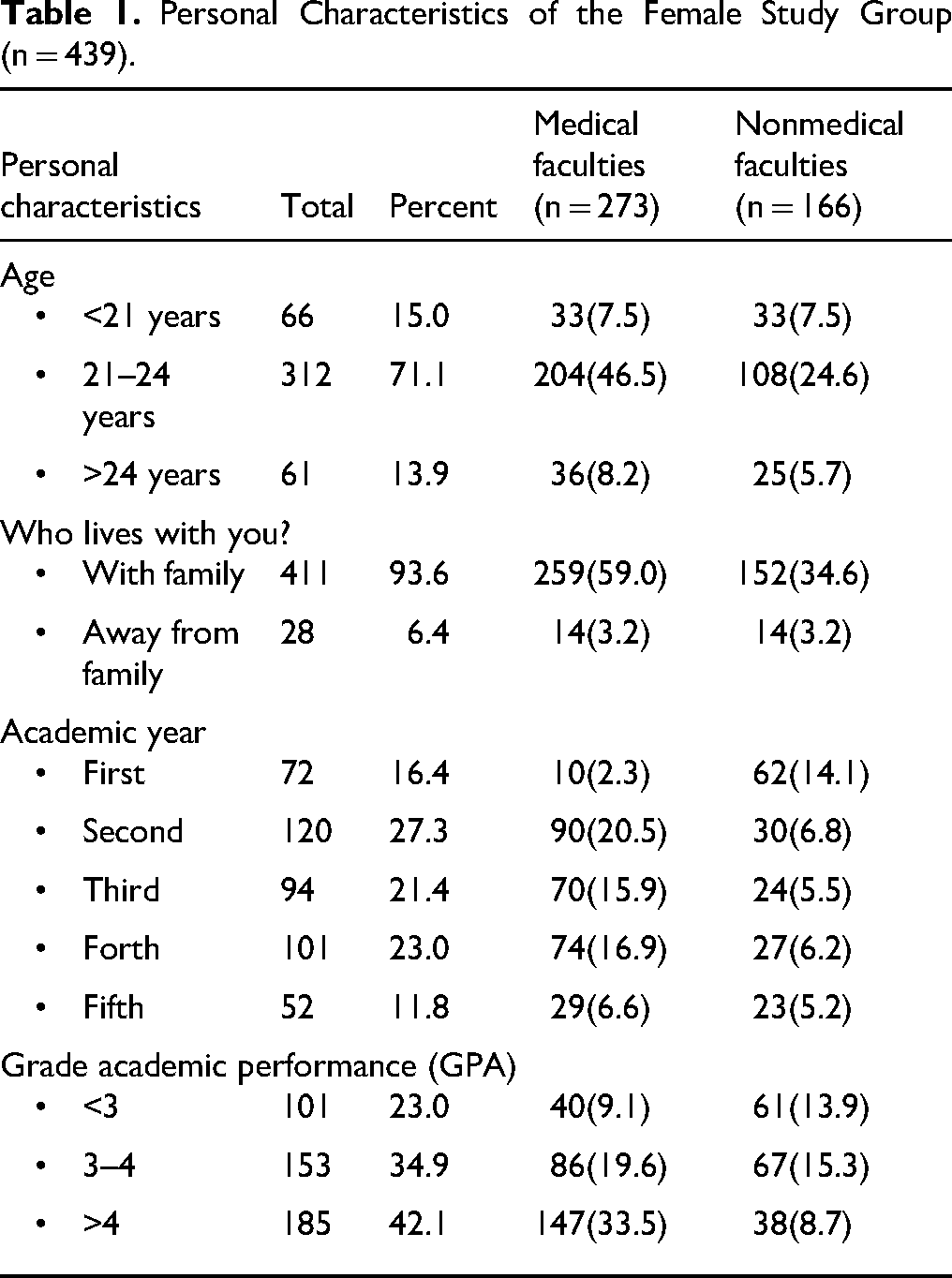
Table 2 finds that 93.6%, 96.6%, and 92% of the female study group didn’t have a family history of cervical cancer, had not had a Pap smear test in the previous 3 years, and hadn’t received the papillomavirus vaccination, respectively.
Family and Medical History Characteristics of the Female Study Group (n = 439).
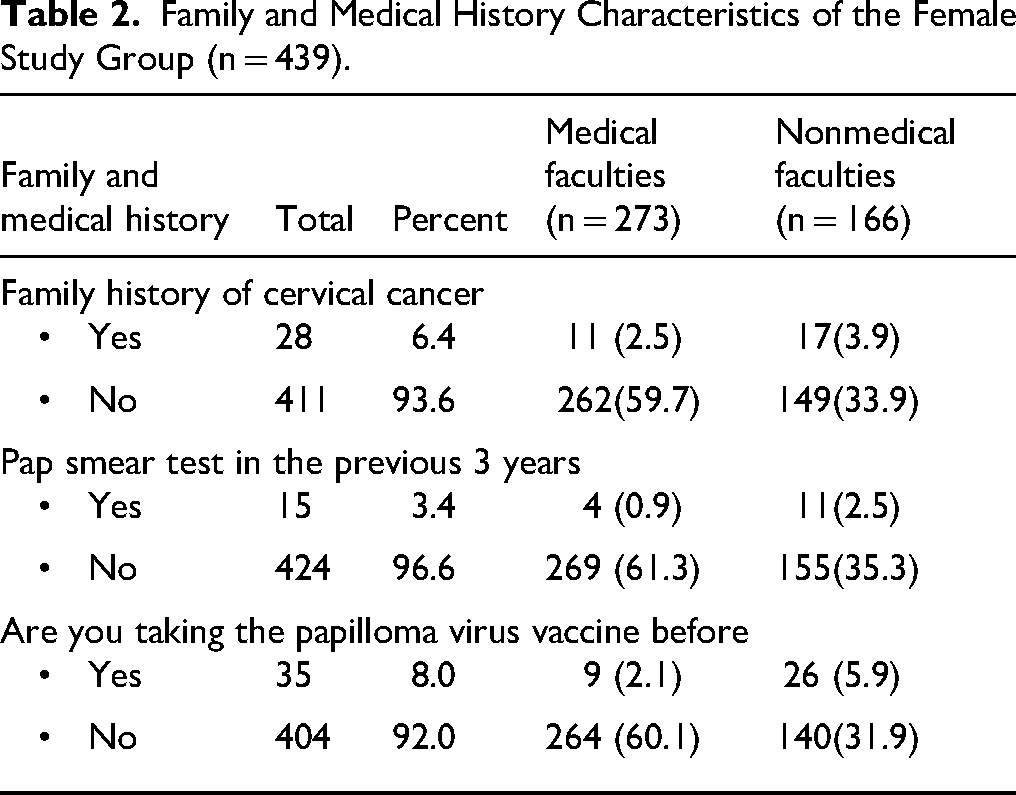
Table 3 reveals that 58.8% of the total female study group had an accepted level of awareness regarding HPV and vaccines, with a mean of 5.68. However, only 17.5% of nonmedical female students had accepted the level of awareness compared to 41.2% of medical female students who had accepted the awareness level, with a highly significant relation at P .001.
Awareness Level of Female Study Group Regarding HPV and Vaccine (n = 439).

*Significant (P < .05). HPV=human papillomavirus infection.
Table 4 shows that, regarding the knowledge sections of the females’ study group about infection with HPV, 69% had an acceptable knowledge level. Also, 67.7% of the females’ study group had accepted their level of knowledge regarding symptoms of human papillomavirus infection. However, regarding their knowledge about vaccination's role in the prevention of infection, 54% of the female study group had an unacceptable level of knowledge. Regarding the total knowledge level, 54.9% of the female study group had an acceptable level, 36.4% of medical female students, compared to 18.5% of nonmedical students, also had an acceptable level of knowledge. There was a significant relation with the total accepted level of knowledge at P-value .028.
Dimensions of Knowledge Among the Female Study Group Regarding HPV (n = 439).

*Significant (P < .05). HPV=human papillomavirus infection.
Concerning the perception of the studied group regarding HPV and its vaccination, Table 5 indicates that 69.3% of females had a positive perception regarding vaccination against papillomavirus, with a mean score of 18.214 and a highly statistically significant relationship with positive response perception of a female student at P = .001.
Perception of the Female Study Group Regarding HPV and Vaccine (n = 439).

*Significant (P < .05). HPV=human papillomavirus infection.
Table 6 provides a correlation matrix with thorough explanations of the statistical relationships the study explicated, showing that strong positive correlation between the knowledge section score of HPV infection with total perception and awareness score, with a significance level at P = .001. Also, there were statistically significant differences between the total level of knowledge and awareness female level at r = 0.096. Moreover, a positive correlation was found between female students’ overall perception and awareness level at P-value = .001.
Correlation Matrix Between Perception, Awareness, and Knowledge of the Study Female Group Regarding HPV and Vaccine (n = 439).

*Significant level (P < .05). HPV=human papillomavirus infection.
Table 7 expounds the analysis of the relationship between female students’ knowledge awareness and perception and personal characteristics of students; particularly, the table states that there was no statistically significant association between the total knowledge and awareness score of the female sample and their age. However, an alternative finding was noted about the mean score of knowledge, awareness, and perception of the studied student sample and second academic student, a highly significant relation was recognized at the level of P < .001, which reflects the effectiveness of health information in their academic study. Also, there was a statistically significant association between female students’ academic grade performance (GPA), 3 up to 4, and their mean score of awareness and perception. Furthermore, no significant relation was detected between the last test of Pap smear test, previous virus vaccine, and Family history of cervical cancer, with female students’ knowledge and awareness.
Relation Between Personal Characteristics of Study Females and Mean Scores of Knowledge, Awareness, and Perception (n = 439).

Discussion
HPV seems to be one of the most widespread STDs in the world. The vaccine is most effective when taken before engaging in sexual activity. The influence of cultural norms affects personal beliefs, especially in females. It shapes attitudes toward preventive health measures such as vaccination. It reflected that health promotion must be conducted to raise the perception and knowledge regarding HPV and its vaccination, especially for young women and men (Yang et al., 2020).
A study in Saudi Arabia reported that religious concerns represented 30% of opposition to the vaccine (Darraj et al., 2022). The study findings established an accurate comprehension of university female students’ awareness, perceptions, and knowledge regarding HPV. This current study can be utilized to increase understanding by creating a successful general health teaching plan.
In the current study, the results reported that nearly two-thirds of the study age group were aged 21 to 24 years, and most of the females studied were single and lived with their families. This study's demographics align with those of Abdelaliem et al. (2023), who surveyed students in Saudi Arabia, stated that the study sample included students and that the majority belonged to the 18 to 20 age group, with a GPA between 3.5 and 4.50. Moreover, the result of the current study was matched with Regasa et al.'s (2023) study entitled “HPV Knowledge and Willingness to Receive Vaccination Among Female Students at Addis Ababa University,” which showed similar findings regarding the education level, that is, more than one-third were enrolled in the second level of the academic year.
Concerning the study finding mentioned in Table 2, nearly all of the females in the study group didn’t have a family cervical cancer history and didn’t do Pap smears. This was matched with Almaghlouth et al. (2022), which revealed that 95% of their study participants stated that no history of performing Pap smear. Additionally, the female sample studied almost didn’t take the vaccines. Also, the finding was confirmed by Ebu et al. (2015), who reported that 97.7% of the sample did not hear about the Pap smear investigation test. Out of 392 women, just three had a Pap smear performed. However, it contradicted Alissa (2021) expressed that more than two-thirds of Saudi women understood that cervical cancer can be detected with a Pap smear. From the researcher's perspective, findings reflected the minimal public attention from female youth about vaccination and the demand for more health awareness programs for the enhancement of information about the importance and minimal public attention from females.
Concerning the female awareness level, around half of the current study accepted the awareness level about the virus. The findings showed that more public awareness initiatives are required, focusing on important themes within a public health framework. These results were contradicted by Radwan et al. (2023), who stated that less than half were aware of HPV vaccination. Additionally, the studied participants’ mean of 5.68 ± 2.216 contemplated the deficiency in awareness of the studied sample regarding papillomavirus.
As concerning the current study outcomes, which revealed a low percentage (17.5%) of nonmedical female awareness compared to medical female student percentages, this comes in agreement with Aldawood et al. (202), Zhang et al. (2022), and Liu et al. (2020), reported that almost all of their study participants had a high level of awareness of HPV and vaccination, which was closely attributed to their educational background. From the researcher's point of view, possibly due to the frequent exposure to meticulous, comprehensive curricula, and clinical settings. Furthermore, it was approved that the finding of the P-value was highly significant (P-value = .001). The results also come under Rashid et al. (2016) and Aldawood et al. (2023), which confirmed that students from the Medicine College had a significantly higher statically relation.
With the present study, the results revealed that slightly around two-thirds of female students had accepted knowledge level related to general information about infection of HPV and its symptoms of infection; this is consistent with recorded data demonstrated by Voidăzan et al. (2022), titled “Assessing, Knowledge, Beliefs, and Acceptance of Vaccine.” Their investigation determined that half of the studied girls had sufficient information with an understanding of the clinical symptoms, modes of transmission, infection location, risk factors, and consequences of infection. Contrary to these findings, Alshammari and Khan (2022), and Fernández et al. (2023) reported that half of the study didn’t know the spread of human papillomavirus; HPV infection wasn’t the primary reason causing cervical cancer, and women who were not vaccinated knew very little about HPV or the vaccine. Also, the present study observed that more than half of the females studied had an unacceptable level of vaccination's role in the prevention of infection, which aligns with the observation identified by Al-Shaikh et al. (2014), who stated that around 30% only knew the early detection methods of cervical cancer as vaccination. Moreover, Smolarczyk et al. (2021) added that all genders, ages, and specializations of their study showed insufficient knowledge and inaccurate information for infection prevention. It was illustrated the imperative need to establish programs and initiatives focused on increasing awareness campaigns among all females about cervical cancer prevention.
In the current study, the observation illustrated that more than half of female medical students had an accepted level of total knowledge in variance with less than one-quarter of female nonmedical students, with a statistically significant relation robustly lined with a study conducted by Borlu et al. (2016). The study entitled Knowledge and Attitudes of Non-Medical and Medical Turkish Students about HPV Vaccination similarly concluded that there was satisfactory knowledge among medical male and female students regarding papillomavirus cervical cancer prevention. Still, it was poor among females and males. Also, Bal-Yılmaz and Griffin (2017), and Yam et al. (2017) reported that, according to several studies, most of the participants’ studies knew a great deal about the risk factors and HPV transmission methods and showed a significant relationship between higher educational levels and wellness information. From the perspective of the researcher, that reduced total level of knowledge could be due to many factors, including the fact that female students participate in unhealthy colleagues’ science in the present study; furthermore, various individual, societal, and cultural beliefs, norms, and Saudi public health information could provide a better explanation for the deficiency of vaccination information; open communication can improve health information, especially for female youth.
As concerning the study results outcomes about females’ perception demonstrated a noteworthy significant statistical relationship with a high positive perception level, it was contrary to Rezq et al. (2023) and Alnafisah et al. (2019) who stated that their participants responded negatively about their perception compared to just 1.9% who had a positive perception. This indicates that people's perceptions of HPV vaccination are more positive when there are more educational opportunities available, which is reflected in the current study. This may be because the current studied sample was educated more and enrolled in health collogues. As the researchers view, in light of societal culture and norms, it is critical to promote the active HPV vaccination of women of the right age and to increase their understanding of the virus to decrease the illogical vaccination of women.
The study findings illustrated that correlation matrix explanations, as mentioned in Table 6 by Hu et al. (2024), supported the study findings, which reported in their study that medical Chinese student awareness was raised and had a positive statistical relation with knowledge. Also, the current study's correlation outcomes were consistent with the results of the study by Darraj et al. (2022), who reported that participants who had higher HPV knowledge were more likely to have a more positive perception and attitude toward HPV vaccination. However, Hussain et al. (2016) showed findings that contradicted the noted correlation, affirming that there was not a statistically significant relation between awareness level and participants’ knowledge of HPV infection.
The outcomes of the present study detected no significant association between the total knowledge and awareness score of the female sample and their age. This observation, by the findings of Patel et al.'s (2016) study, reported that adolescents of limited age had awareness of the HPV vaccine. Furthermore, the findings of this study were also aligned with those of Shetty et al. (2019), who expound that participants below the age of 22 were more likely to accept the HPV vaccine than participants over the age of 22. From a researcher's perspective, these compiled results showed that the youth can be educated at any age, and there is no limitation on health information except its availability and access, which is not dependent on age. The study also interpreted the statistically significant relation between the academic level and elevated GPA of female students and the mean score of knowledge, awareness, and perception of the studied female sample. This is in accordance with Abdelaliem et al. (2023), who reflected a significant relation between the GPA of nurse students and their HPV knowledge. This outcome can be explained by the students’ curiosity about the subjects was studying.
The current finding also agrees with Shakurnia et al. (2022), who highlighted that nursing and medical students with a higher GPA had greater knowledge and awareness of (HPV) than students with lower academic achievements, additionally, reported that, nursing, medical and midwifery students with better GPAs had more knowledge and awareness of HPV than those with less educational achievement. That reflects a substantial correlation between the GPA score and the awareness of HPV among medical students. However, the present results conflicted with those of Shetty et al. (2019), who mentioned that participants’ academic performance did not significantly correlate with HPV perception, awareness, willingness, and knowledge.
The study findings emphasized that no significant relation was detected between the last Pap smear test, previous virus vaccine, and family history of cervical cancer with female students’ knowledge and awareness. This result was contrary to D’Errico et al.'s (2021) finding that students who had a history of cervical cancer in their families had a higher perception of HPV and its vaccination. It reflects insufficient information on Saudi girls, which may be due to cultural norms. It indicates the need for greater education, knowledge, and awareness of HPV infection and its relationship with genital warts and cervical cancer to increase the rate of HPV vaccinations.
Strengths and Limitations
The study has theoretical implications and practical significance; it also has some challenges that should be addressed in future research. Self-administered questionnaires are considered. One advantage of the study, it permits the females to answer without restraint. The current study addresses HPV health information among female students and offers a comprehensive understanding of the college students’ views around the virus that will be used later on by the government decision-makers to design public health plans. Address HPV health literacy among female students and offer a comprehensive understanding of the students’ views on the virus. The results might be utilized to raise awareness about viruses by creating an efficient method of instruction. It is important to acknowledge the study limitations inherent in it, which impact the interpretation and generalizability of the findings. Moreover, Eastern and Muslim female modesty affects their awareness of sexually area diseases. The various proportions of respondents in different colleges, from nonmedical colleges to medical health colleges, are represented. This limited the study's ability to generalize its findings. Finally, the study did not investigate the religious and different subcultural perspectives of females.
Implications for Practice
The study's result reveals a critical gap in awareness and knowledge about HPV and its vaccine among female university students, particularly those in nonmedical disciplines. This disparity has significant implications for public health education and disease prevention efforts. To address these gaps, culturally and religiously sensitive, the study recommend that educational strategies must be implemented within university settings. Such programs should be designed to confront misconceptions, respect cultural norms around modesty and sexual health, and promote a scientifically accurate understanding of HPV transmission and prevention. More efforts are needed in the struggle against old culture and the empowerment of virus screening and the uptake of vaccination. Comprehensive national campaigns can play a key role in raising HPV awareness and encouraging higher vaccination coverage, ultimately protecting public health.
The results of the current study illustrate valuable insights that can direct the development of health promotion and prevention approaches for females, mainly for papillomavirus vaccination and prevention of cervical cancer. It is crucial to understand the current knowledge gaps and negative perceptions identified between modesty, cultural norms, and sexual health perceptions among Eastern and Muslim females, highlighting the need for tailored approaches to HPV awareness and vaccination programs. Addressing these challenges requires culturally and religiously sensitive health education that respects modesty while dispelling myths. By involving community leaders and providing female-centered healthcare environments, medical and nonmedical, among female students, as participants, they represent potential future mothers and wives who can transmit the infection to their husbands. This emphasizes the necessity of continually attaining educational competence and educational interventions in college curricula to guarantee the advanced practice of medical students. The researchers recommend routine scheduling vaccination for young girls at the early age of 11 or 12 years as female protection against anogenital warts. The future study should be a longitudinal study with large sample selected the public. Saudi Arabia's female and youth as target groups, malignancies, and chronic HPV infections, integrating religious values into health campaigns, have been shown to increase acceptance of health interventions in Muslim communities.
Conclusion
The study findings exposed that female university students lack awareness and knowledge, especially nonmedical female students, compared to medical female students. It was observed that more than half of the female studies had an unacceptable level of vaccination's role in the prevention of infection. The current study emphasizes the potential role of the necessity of culturally tailored educational and intervention programs to address barriers, dispel misconceptions, and foster acceptance of HPV vaccine education in cultivating positive perception and focused educational programs to bridge the obvious inequalities in female students’ knowledge about HPV and its vaccination. For medical students to appropriately inform the public as future healthcare practitioners, should have complete information and understanding of the HPV vaccine.
Footnotes
Abbreviations
Acknowledgements
The authors express their appreciation to the Deputyship for Research & Innovations, Prince Sattam Bin Abdulaziz University, for funding the research work through the project number PSAU2023/03/25691.

Ethical Considerations
Official permission was obtained from the ethics committee in Prince Sattam ben Abdulaziz University, and ethical research proposal approval had number 153/2023.
Consent to Participate
Informed consent was collected from all the participants as per the ethical guidelines. After a complete explanation about the aim of the current study occurs agreement for participation from students will be taken. Female participants will be given the opportunity to refuse the participation, and they will be informed that they have the option to decline participation and that they can withdraw at any time during the data collecting interviews.
Consent for Publication
All researcher agrees for publication in the vulnerable magazine.
Author Contributions
NAM contributed to formulating the research idea and designing the study; preparing the theoretical framework and reviewing related literature; writing the introduction and main parts of the research; coordinated with the rest of the authors and review drafts and amendments; and contributed to the discussion and interact with reviewers and editors. HRA was involved in collected the data and conduct experiments; contributed to the data analysis and interpretation of results; coordinated with the rest of the authors and review drafts and amendments; and contributed to the discussion and interact with reviewers and editors. MGE was involved in participated in the writing results and coordination; reviewed drafts and provided modifications and feedback; and analyze data and interpret results.
Funding
The authors disclosed receipt of the following financial support for the research, authorship, and/or publication of this article: Deputyship for Research & Innovations, Prince Sattam ben Abdelaziz University funded the research work through the project number (PSAU2023/03/25691).
Declaration of Conflicting Interests
The authors declared no potential conflicts of interest with respect to the research, authorship, and/or publication of this article.
Data Availability Statement
Data will be available on request by the corresponding author.