



Abstract
Introduction
College presents students with various new challenges, including changes in environment, learning methods, friendships, and other unfamiliar situations, potentially triggering mental health issues. Recent epidemiological data show that the prevalence of depression and stress among college students aged 18–24 years is 37.2% and 23.7%, respectively.
Objective
This study aimed to determine the circumstances and factors affecting the quality of life, self-esteem, and stress of first-year undergraduate nursing students in Indonesia.
Methods
In total, 300 nursing students were recruited to participate in a quantitative descriptive cross-sectional mental health survey to determine the quality of life, self-esteem, and stress levels of first-semester students across multiple nursing education centers. The instruments used in this study were the WHOQOL-BREF, Rosenberg Self-Esteem Scale (RSES), and Perceived Stress Scale (PSS). Multiple linear regression was conducted to identify significant relationships between the variables. Data were analyzed using univariate and bivariate analyses with Microsoft Excel and SPSS, presenting results as regression coefficients and 95% confidence intervals.
Results
The results of bivariate analysis in this study showed that health status, relevance of expectations, goals, and standards had a significant influence on quality of life (p < .05). In addition, our study found that self-esteem had a significant relationship with quality of life in first-semester student nurses (p = .010).
Conclusion
Based on the findings that first-semester nursing students experience moderate stress yet generally exhibit good self-esteem and quality of life, universities should prioritize assessments of students’ physical and psychological well-being during their adaptation period. It is recommended to implement counseling services, enhance support from guardian lecturers, and foster positive engagement with parents to address the expectations and goals influencing students’ quality of life. These strategies aim to improve overall well-being and academic success among new nursing students.
Introduction
Higher education represents the advanced stage of formal learning, preparing students for professional and academic growth. College students are generally aged 18–24 years and, the new conditions they face can prove an interesting experience for them. However, now a few adolescents also feel anxiety when facing these new conditions (Pine et al., 1998). When entering college, students will be faced with various new circumstances, such as the environment, learning methods, friends, and other problems that they may not have previously encountered. In their implementation, students must be prepared to accept all demands, both socially and psychologically. The demands on these early-level students aim to enable them to adjust to the lecture environment they face (Zhang et al., 2023).
The implementation of various activities during the college transition period needs to be supported by good physical and psychological conditions. Some important mediators in this case include aspects of quality of life and self-esteem. The World Health Organization (WHO) defines quality of life as an individual's understanding of their role in life, related to their aspirations, ambitions, standards, interests, and desires while considering the cultural background and value system in which they are located (Grande et al., 2021). As they get older, the pressure faced by new students as an adolescent age group is greater than what they experienced as children. Situations such as increased academic, emotional, and social pressure can affect their quality of life. However, when someone has a good quality of life, they feel confident, happy, grateful, and enthusiastic about their future (McKay et al., 2021; Rogi et al., 2021).
Self-esteem is an indicator of how people feel about themselves, which is formed from acceptance, appreciation, and good responses from society. High self-esteem refers to a positive sense of self, while low self-esteem refers to a negative sense of self (Sandha et al., 2012; Zhang et al., 2023). For individuals, especially students, high self-esteem is crucial for overcoming various challenges, including those in academic settings (Meliawati, 2020). Individuals with high self-esteem are more likely to develop self-trust and confidence in their abilities. With high self-esteem, they are driven to pursue their goals with determination and focus (Berkman, 2018). This self-belief fosters resilience and motivation, enabling them to work seriously toward achieving their aspirations (Refnadi, 2018). Meliawati's research (2020) also shows that self-esteem affects learning achievement, where the higher the self-esteem, the higher the learning achievement. Low self-esteem can make a person tend to have a defeatist attitude and read signs of rejection from others, which can lead to disruption of the adjustment process both in psychological and behavioral aspects (Meliawati, 2020)
Low self-esteem may lead individuals to adopt a defensive attitude and misinterpret social cues as rejection (Schaan et al., 2020). In their research on the quality of life of nursing students, Araujo et al. (2014) found that first-year students still show a more theoretical performance. Students who were initially passive listeners in high school and elementary school began to engage progressively and emotionally with their experiences in the field of practice. A person's prior quality of life can significantly influence their levels of anxiety, distress, and frustration (Hohls et al., 2021).
Self-esteem is a protective factor against the development of psychosomatic symptoms and psychological problems, such as depression (Zhao et al., 2021). The results of research by Gao et al. (2015) investigating the relationship between mental health and self-esteem in university students in China show that self-esteem is an important protective factor against mental health problems, especially depression, interpersonal sensitivity, and anxiety. Most nursing students typically exhibit self-esteem levels that fall within the low to moderate range (Almansour, 2023). This can occur because the new lecture conditions faced are perceived as one of the difficult phases, thus affecting their self-esteem.
Nursing education is consistently associated with depression or stress in students. This can occur due to various things, such as heavy course loads, pressure to achieve high grades, rigorous exams, new environments, parental expectations, living far from parents, and various forms of exams faced (Araujo et al., 2014). Stress experienced can affect the student learning process, such as by reducing concentration. Therefore, one needs to know what effective steps can be taken to reduce stress levels and improve self-esteem and quality of life so that the learning process can be carried out optimally. Based on the above explanation, it is evident that quality of life, self-esteem, and stress are interconnected factors that can significantly influence the effectiveness of the teaching and learning process during lectures. Therefore, assessing the quality of life, self-esteem, and stress levels of nursing students is very important to determine the views, comfort, and psychological conditions experienced by students during the lecture process.
Literature Review
Quality of life, self-esteem, and stress are critical variables influencing the well-being of nursing students. Quality of life encompasses physical, psychological, and social dimensions, all of which significantly impact students’ learning experiences. Research has consistently shown that higher self-esteem correlates positively with quality of life, while elevated stress levels pose a substantial barrier to achieving well-being (Mofatteh, 2021). Multiple studies have examined the roles of first-semester nursing students concerning stress, self-esteem, and quality of life. A cross-sectional study from Nepal reported that approximately 61.2% of nursing students had low self-esteem, with first-semester students experiencing higher stress levels than their senior counterparts. Over time, these students developed better coping mechanisms, resulting in improved well-being (Mishra et al., 2019). These findings underscore the importance of understanding the specific challenges faced by first-semester nursing students as they transition into academic life.
Similarly, Acharya Pandey and Chalise (2017) found that younger nursing students exhibited higher academic stress and lower self-esteem. In Indonesia, Sarfika et al. (2023) demonstrated that stress among nursing students is strongly associated with coping strategies, health status, social support, and self-esteem. Arslan and Akkas (2014) further highlighted the relationship between academic achievement motivation and quality of life, particularly in the psychological domain. Other studies indicate that life satisfaction influences all four domains of quality of life, and that students who entered nursing out of personal interest reported better overall well-being.
In light of these findings, the conclusions of this article indicate that self-esteem serves as a mediator in the relationship between academic self-efficacy and depressive symptoms among nursing students. The findings emphasize that enhancing self-esteem may mitigate depressive symptoms, particularly in challenging educational environments. This underscores the significance of interventions focused on fostering self-esteem to improve the mental well-being of nursing students.
While existing research provides evidence of the significant relationship between the roles of first-semester nursing students and quality of life, self-esteem, and stress there remains a gap in comprehensive studies that systematically explore the interconnections among these three psychological variables. Therefore, this study aims to examine the relationships between stress, self-esteem, and quality of life in first-semester nursing students, along with the factors that influence these dynamics.
Methods and Materials
Study Design
This research design uses a quantitative descriptive method with a cross-sectional approach to determine the description of the quality of life, self-esteem, and stress levels of new students in carrying out multicenter nursing lectures.
Research Question
What are the circumstances and factors that may affect quality of life, self-esteem, and stress in first-year nursing students in Indonesia?
What is the relationship between stress, self-esteem, and quality of life in nursing freshmen?
Inclusion and Exclusion Criteria
The inclusion criteria in this study are: (1) active first-year undergraduate nursing students, (2) coming from three selected universities. The exclusion criterion in this study is not willing to be respondents.
Data Collection and Measurements
The questionnaire distribution and data collection were performed over a period of 63 days from 13 August to 15 October 2023 using the Google Forms platform. The questionnaire link was sent through WhatsApp groups by the responsible coordinators at each university, ensuring that all first-semester undergraduate nursing students received access to the survey.
Sample
This cross-sectional study utilized a total sampling strategy, where the sample size was equivalent to the entire population of interest. The targeted sample comprised 300 first-semester undergraduate nursing students from three distinct universities in Indonesia. This figure was selected based on the overall enrollment of first-semester nursing students at these institutions, aiming for thorough representation to reflect the diverse experiences of students. By choosing three universities, researchers aimed to gather a more representative sample from a range of geographic and demographic backgrounds. The inclusion of multiple universities was intended to capture variations in quality of life, self-esteem, and stress levels across different educational settings. Throughout the data collection period, 260 new nursing students completed the research survey, resulting in a response rate of 86.67%. This substantial response rate indicates strong participant engagement, which bolsters the reliability and validity of the findings.
Study Variables
The variables used in this study are quality of life, self-esteem, and stress levels of nursing students.
Study Tool Validation and Reliability
In this study, a structured approach to data collection was implemented to investigate the relationships between demographic characteristics and psychological variables, including quality of life, self-esteem, and stress among first-semester nursing students. Demographic data were categorized into relevant variables, specifically gender and priority of nursing major, while additional characteristics such as age and year of study were analyzed as continuous or categorical variables. This categorization allowed for a clearer understanding of how these demographic factors influence the outcomes measured. The study utilized three standardized instruments: the WHOQOL-BREF to assess quality of life, the Rosenberg Self-Esteem Scale (RSES) for measuring self-esteem, and the Perceived Stress Scale (PSS) to evaluate stress levels. Each instrument was selected based on its established validity and reliability, ensuring accurate measurement of the constructs of interest. By integrating these demographic variables with psychological assessments, the study aimed to elucidate the complex interactions that affect the well-being of nursing students during their initial academic experience.
The WHOQOL-BREF is a standardized instrument developed based on WHOQOL-100 by the WHO and consists of 26 questions with four domains, namely physical, domain, social relationship, and environmental. It has also been translated into various languages including Indonesian, so that this instrument can be used to measure a person's quality of life. The scores obtained are then transformed following the formula set by the WHO (2004) as follows:

The RSES is a widely recognized instrument utilized to measure individual self-esteem, comprising a 10-item questionnaire that evaluates feelings of self-worth and self-acceptance. Each item is rated on a four-point Likert scale, ranging from “strongly agree” to “strongly disagree.” Higher total scores, which can range from 10 to 40, indicate a greater level of self-esteem. However, the RSES has limitations; it may not encompass all dimensions of self-esteem, particularly in the context of cultural variations, and is susceptible to social desirability bias. Despite these limitations, the RSES is straightforward to administer, has been extensively validated across diverse populations, and provides a reliable measure of self-esteem. Maroqi's (2019) research confirmed the construct validity of the Indonesian-language RSES, demonstrating that it effectively measures a unidimensional construct, with seven out of 10 items meeting the criteria for acceptability. Additionally, Artika et al. (2021) reported that the RSES showed valid results (KMO = 0.733, significance < .05) and reliable internal consistency (Cronbach's alpha = .562 for self-acceptance and .609 for self-respect).
The PSS, developed by Cohen et al. (1983), serves as a psychological instrument designed to assess individual perceptions of stress, focusing on the extent to which individuals perceive their lives as unpredictable and uncontrollable. The PSS consists of 10 items rated on a five-point Likert scale, where higher scores signify greater levels of perceived stress. Total scores range from 0 to 40, with elevated scores reflecting heightened perceived stress levels. However, similar to the RSES, the PSS relies on subjective perceptions, which can differ significantly among individuals and may not capture all stressors encountered in daily life. Nonetheless, the PSS is easy to administer and interpret, possesses robust psychometric properties, and has been widely utilized in research to evaluate stress across various populations.
By integrating these demographic variables with psychological assessments, the study aimed to elucidate the complex interactions that affect the well-being of nursing students during their initial academic experience.
Statistical Analysis
The data obtained were then grouped according to the variables studied. Researchers grouped data based on variables, namely quality of life, self-esteem, and stress. The tools or programs used to process data in this study are Microsoft Excel and SPSS. Then, the data in this study were analyzed using a univariate analysis approach to describe the research variables. With univariate descriptive analysis, this study will obtain a description of the value of the variables or parameters measured by data distribution and interpretation of categorical data for ordinal data.
Bivariate analysis is carried out to measure two variables that are suspected of having a relationship or correlation. The data owned can first be analyzed with the stages of proportion and percentage analysis, by comparing the cross-distribution between the two variables concerned, namely variables in demographic data with quality of life, self-esteem, and stress. Furthermore, the analysis was conducted using multiple linear regression to examine the relationships between demographic data and the variables of quality of life, self-esteem, and stress. All tests were two-tailed, with statistical significance set at p < .05. Results were presented as regression coefficients and 95% confidence intervals (95% CI).
Ethical Approval
This study received ethical approval from the Health Research Ethics Commission of Universitas Aisyiyah Bandung under reference number 672/KEP.01/UNISA-BANDUNG/VIII/2023. The research was guided by several ethical principles, including respect for autonomy, beneficence, veracity, confidentiality, and justice. Informed consent was obtained from each participant before data collection. The confidentiality of all the information obtained from the participants was assured throughout the study.
Results
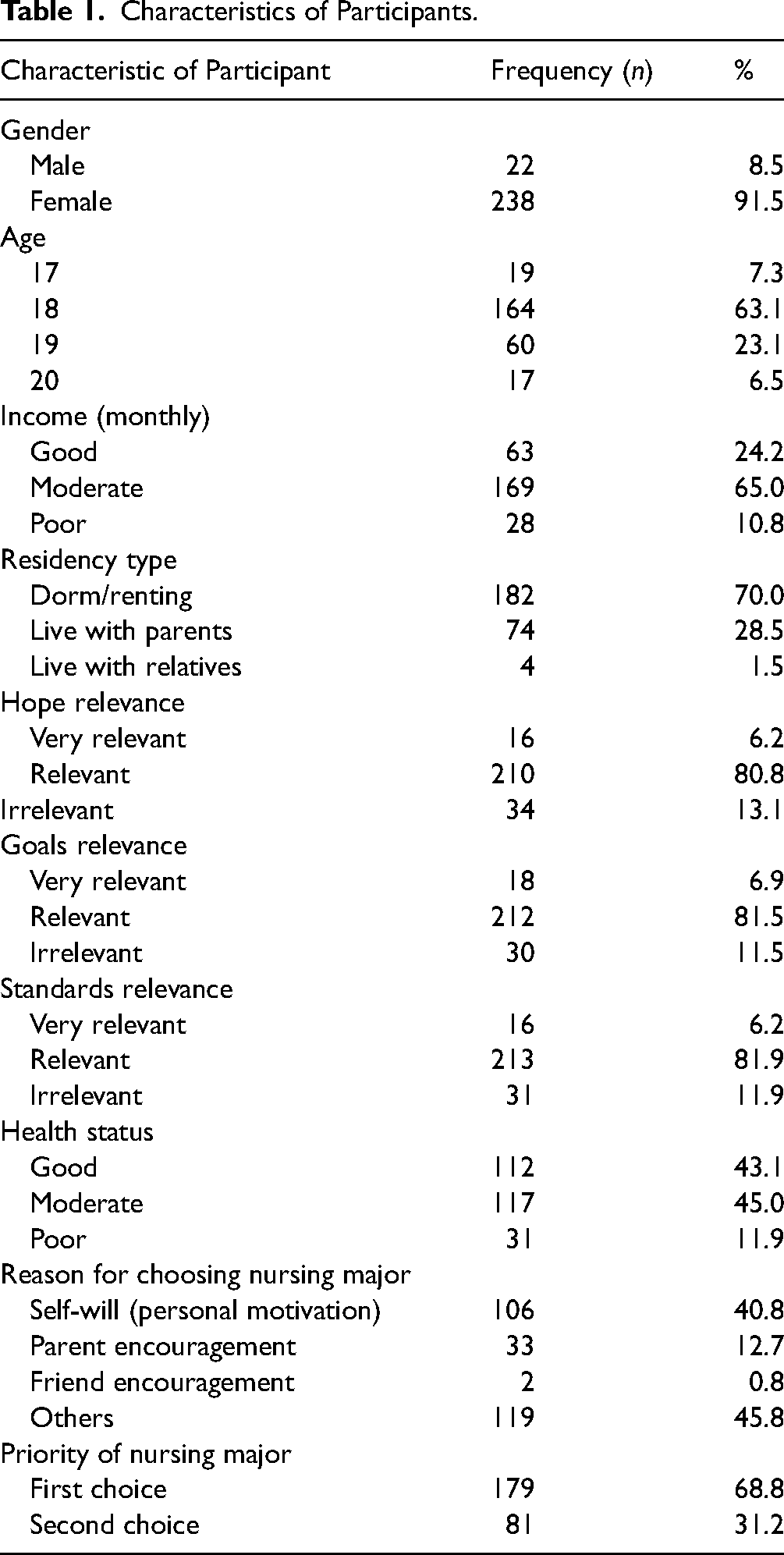
A total of 260 out of 300 new nursing students from three universities completed the research survey (86.67%). Based on Table 1, the majority of respondents in this study were female (91.5%) and 18 years old (63.1%). A total of 65% respondents reported having a moderate income, and 70% respondents lived alone in boarding houses or rented accommodations. Additionally, 13.1% of respondents had irrelevant hopes, 11.5% had irrelevant goals, and 11.9% had irrelevant standards. Furthermore, 11.9% of respondents indicated that they had poor health conditions, and 59.2% chose the nursing major not out of personal preference.
Characteristics of Participants.
Based on Table 2, it can be seen that the average transformation score of respondents from the WHOQOL-BREF overall instrument was 59.4 with the lowest average score being 56.9 and the highest being 62.3. The psychological domain has the lowest transformation value, which is 12.5 and the social and psychological domain has the highest transformation value, which is 83.3. Based on the results of the average WHOQOL-BREF transformation score, it is known that the psychological domain has the lowest score, 56.9 with a standard deviation of 16.1 and the physical domain has the highest score, 62.3 with a standard deviation of 12.6 (Table 2). These results indicate that the physical domain has the greatest influence on quality of life.
Students’ Quality of Life, Self-Esteem, and Stress.
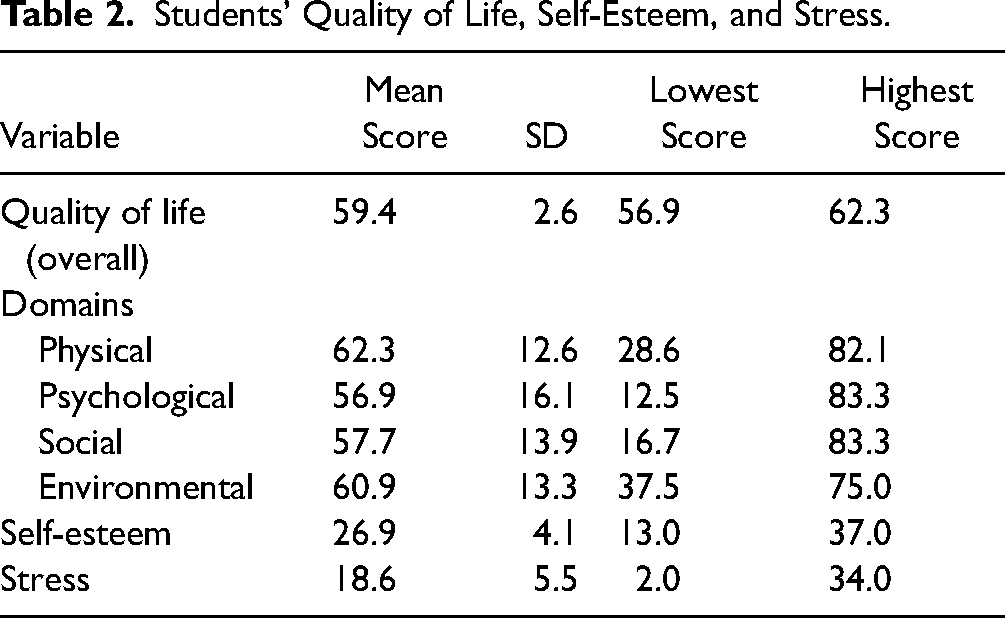
The results of the analysis on the RSES instrument to measure self-esteem obtained the average score of respondents, which is 26.9 with the lowest value of 13.0 and the highest of 37.0. The higher the result (score 10–40), the more it shows low self-esteem. So, based on the results of this analysis, it is known that the average respondent has a good level of self-esteem (>15). Furthermore, based on the results of the analysis on the PSS instrument, the average score is 18.6 with the lowest value of 2.0 and the highest of 34.0 from the maximum total score of 40 (Table 2). So, based on the average score results, it is known that respondents are at a moderate level of stress (14–26).
Based on Table 3, the correlation analysis between quality of life, self-esteem, and stress demographic characteristics of students revealed several important findings. In general, demographic variables such as gender, age, income, and type of residence did not show a significant correlation with the three main variables analyzed. For example, gender did not have a significant relationship with quality of life (p = .580, r = –.034), stress (p = .687, r = –.025), or self-esteem (p = .503, r = .042), indicating no meaningful relationship between these variables.
Correlation for Students’ Quality of Life, Self-Esteem, and Stress Demographic Characteristics.

*p < .05.
However, some non-demographic factors showed significant relationships. Hope relevance had a significant negative correlation with quality of life (p = .002, r = –.191), indicating that the more relevant a person's hopes, the lower their quality of life. Additionally, goals relevance (p = .021, r = –.143) and standards relevance (p = .008, r = –.164) were also significantly negatively correlated with quality of life, suggesting that the higher the relevance of personal goals and standards, the lower the quality of life experienced by the students.
Health factors also played an important role in influencing quality of life, where health status showed a significant negative relationship with quality of life (p = .023, r = –.141). This suggests that the worse a person's health status, the lower their perceived quality of life. Conversely, no significant relationship was found between demographic variables and stress or self-esteem, except for a few variables that approached significance, such as income and self-esteem (p = .109, r = –.100) and type of residence (p = .094, r = –.104).
Overall, while most demographic variables did not significantly correlate with quality of life, self-esteem, and stress, these findings highlight the importance of factors such as hope, goals, personal standards, and health status in influencing students’ quality of life.
Based on Table 4, the table presents the results of multiple linear regression analysis, examining the correlation between students’ quality of life, self-esteem, and stress. The model accounts for 16% of the variance in the students’ well-being, as indicated by an R² value of .0256. Among the predictors, quality of life shows the strongest and most significant association with the outcome variable (estimate = 43.762, SE = 7.402, p < .001), indicating that higher quality of life is strongly correlated with positive outcomes. Self-esteem also demonstrates a significant positive relationship (estimate = 0.388, SE = 0.149, p = .010), suggesting that higher self-esteem levels are associated with better outcomes. However, stress, although positively related, did not reach statistical significance (estimate = 0.315, SE = 0.203, p = .121), indicating that stress may not be a significant predictor in this model. Then, the results of the correlation analysis between stress, self-esteem, and quality of life showed that there was a significant correlation between self-esteem (as a predictor) and quality of life (as a response), indicated by a p <.05. Meanwhile, stress did not show a correlation with quality of life (p > .05). These findings highlight the critical role of quality of life and self-esteem in influencing students’ overall well-being, while the role of stress requires further exploration.
Correlation for Students’ Stress, Self-Esteem, and Quality of Life.

*p < .05.
R = .160; R2 = .0256.
Discussion
The transition from high school to university represents a critical period that significantly impacts students’ mental health and well-being. This study aims to identify the factors influencing the quality of life among first-semester nursing students, who often encounter new challenges related to increased academic demands, changes in social environments, and heightened levels of autonomy. Our findings indicate that health status, relevance of aspirations, goals, and standards have a significant influence on students’ quality of life, with a p-value of <.05. These results suggest that good physical and mental health, along with clear goals, can positively contribute to quality of life.
Furthermore, our analysis reveals a significant relationship between self-esteem and quality of life among first-semester nursing students, with a p-value of .010. This finding indicates that students with higher self-esteem tend to report better quality of life. Self-esteem serves as an important indicator of how individuals evaluate themselves and can affect their ability to cope with stress and academic challenges. Previous research has also shown that positive self-esteem acts as a protective factor against mental health issues, including depression and anxiety (Gao et al., 2015). Therefore, the results of this study underscore the importance of supporting the development of self-esteem and maintaining good health conditions to enhance students’ quality of life, particularly during this critical transitional phase.
The role transition from high school student to university student is an important time for psychological conditions. Most students have to leave their hometowns to continue their education at universities in other cities, resulting in the loss of their first refuge, the family. Difficulties in forming intimate relationships between students are often found due to the infrequent meetings between students. Teaching characteristics distinguish the high school environment from the college environment. When in high school, the teaching system emphasizes teacher supervision, whereas in college the teaching system emphasizes the autonomy of individual students. This can be a factor that makes it difficult for students to adapt due to changes in the environment and campus policies. In addition, students also need to become more independent in managing finances and interpersonal relationships.
The implementation of various activities in the college transition period needs to be supported by good physical and psychological conditions. Some important mediators in this regard are aspects of quality of life and self-esteem. Quality of life has been increasingly linked to health, and the latter is defined by the WHO as “a state of complete physical, mental and social well-being and not merely the absence of disease or infirmity”. Meanwhile, self-esteem is an indicator of how people feel about themselves, which is formed from acceptance, appreciation, and a good response from society (Nunes de Araujo et al., 2014; Sandha et al., 2012). Research by Nunes de Araujo et al. (2014) shows that the quality of life of nursing students in the first year is more theoretical, because in this year various major changes occur. This can cause feelings of depression/stress and anxiety over the situation at hand. Likewise for self-esteem, which is in line with research by Gao et al. (2015) investigating the relationship between mental health and self-esteem in university students in China which showed that self-esteem is an important protective factor against mental health problems, especially depression, interpersonal sensitivity, and anxiety.
Low quality of life and self-esteem can exacerbate stress experienced by first-year university students. A cross-sectional study involving 506 university students in Malaysia, aged between 18 and 24 years, found prevalence rates of moderate-to-severe depression, anxiety, and stress at 37.2%, 63%, and 23.7%, respectively (Shamsuddin et al., 2013). Another study conducted by Bayram & Bilgel, 2008) on 1,617 university students in Turkey, aged between 17 and 26 years, also indicated moderate to severe levels of depression, anxiety, and stress at 27.1%, 47.1%, and 27%, respectively (Cheung et al., 2016).
This research identifies several factors influencing quality of life, self-esteem, and stress among first-semester nursing students. A primary factor is the transition from high school to university, which often leads to feelings of isolation due to leaving home and family support. Additionally, the autonomy required in the university environment contrasts with the stricter supervision in high school, potentially complicating the adaptation process. Financial independence and the ability to establish intimate relationships also contribute to the psychological well-being of students.
The data collected reveal that the majority of respondents possess moderate levels of quality of life and self-esteem. This suggests that, while many students face challenges, a significant number also manage to maintain a positive outlook. The analysis indicates a significant correlation between self-esteem and quality of life, wherein higher self-esteem is associated with better quality of life among nursing students. However, the findings also suggest that moderate levels of stress are common among students, and that poor quality of life and self-esteem can exacerbate feelings of stress.
Statistical analyses, including multivariate regression, support this relationship and highlight the importance of self-esteem as a protective factor against stress and its impact on overall quality of life. The findings of this study contrast significantly with previous research, which indicated that, among 260 new nursing students from three universities in Indonesia, the average level of self-esteem was good (mean score 26.9 with a standard deviation of 4.1). Furthermore, their average stress level was moderate (mean score 18.6 with a standard deviation of 5.5), and their average quality of life was also moderate (mean score 59.4 with a standard deviation of 2.6).
Based on the results of the analysis, the average transformation score of the WHOQOL-BREF overall instrument is 59.4 with the lowest average score of 56.9 and the highest of 62.3. These data show that all respondents in the study had a moderate level of quality of life. This is related to the survey data which show that 169 respondents (65%) have moderate income, 63 respondents (24.2%) have good income, and only 10.8% of respondents have low income. This is in line with research from Beck et al. (2014) which shows that poor economic conditions correlate with worse quality of life scores in the physical, psychological, and environment domains.
Data on the research sample also showed that 40.8% of respondents chose the nursing major of their own accord and for 68.8% of respondents it was their first choice. Only about 11.5%–13.1% of the total respondents had expectations, goals, and standards that were not in accordance with their wishes. This is in line with our findings, where the results of multivariate logistic regression analysis showed that hope relevance (p = .002), goal relevance (p = .021), and standard relevance (p = .008) significantly affected quality of life (p < .05). So, the more hope, goals, and standards are fulfilled, the better the quality of life will be. Previous research has reported that hope was associated with health indicators, such as coping, self-esteem, and quality of life (Cantrell & Lupinacci, 2008; Folkman, 2012; Pipe et al., 2008). Hope also has been identified as a protective factor that contributes to achieving a better quality to life (Mardhiyah et al., 2020).
In WHOQOL-BREF there are four domains, namely psychological, physical, social, and environment. Based on the results of the analysis, it is known that the psychological domain has the lowest transformation value, namely 12.5, and the social and psychological domains have the highest transformation value, namely 83.3. Based on the results of the average WHOQOL-BREF transformation score, it is known that the psychological domain has the lowest score, namely 56.9 with a standard deviation of 16.1 and the physical domain has the highest score, namely 62.3 with a standard deviation of 12.6 (Table 2). These results indicate that the physical domain has the greatest influence on quality of life. Our findings based on the results of multivariate logistic regression analysis showed that health status significantly influenced the level of quality of life (p = .023).
Furthermore, other studies have also shown that students with chronic diseases such as respiratory diseases, endocrine disorders, cardiovascular diseases, psoriasis, or cancer have poorer quality of life (Azevedo et al., 2014; Owczarek & Jaworski, 2016; Pinto-Gouveia et al., 2014). This results in pain, discomfort, and uncertainty that can impact daily life including lectures, level of independence, and interpersonal relationships.
The analysis of the RSES instrument, used to measure self-esteem, revealed an average respondent score of 26.9, with the lowest score being 13.0 and the highest score being 37.0. On this scale (ranging from 10 to 40), higher scores indicate lower self-esteem. Therefore, the results suggest that the average respondent demonstrates a healthy level of self-esteem (>15). We speculate that this correlates with a moderate level of quality of life for all respondents. This is evidenced by the findings from the multivariate analysis of the dependent variables in this study that self-esteem (as a predictor) and quality of life (as a response) have a significant correlation indicated by a p-value of .010 (Table 4). This is in line with the research of Özsin et al. (2018), which shows that self-esteem correlates with quality of life. When students’ quality of life is at a poor level, it can cause various psychosocial problems, such as poor interpersonal relationships, depression, and low self-esteem (Özsin et al., 2018).
Based on the results of the analysis on the PSS instrument, the average score was 18.6 with the lowest score of 2.0 and the highest score of 34.0 from a maximum total score of 40 (Table 2). So, based on the results of the average score, it is known that respondents are at a moderate level of stress (14–26). This result is in line with other studies which show that most nursing students are at a moderate level of stress (Zheng et al., 2022). Several factors can affect stress in nursing students, namely academic, clinical, and personal–environmental stress. Academic stress can be in the form of continuous pressure to meet deadlines for assessment, fear of academic failure, resources to perform academic work, class workload, and long class hours during study day. However, based on the research by Basnet et al. (2018), it is known that the most common causes of academic stress are high learning loads, fear of academic failure, and continuous pressure to meet deadlines.
Stress in nursing students can also be caused by personal–environmental stress, such as health status and clinical stress. Based on the research by Basnet et al. (2018), it is known that clinical stress most often occurs in nursing students due to maintaining a balance between clinical work and study, work load and practical assignments, and unfamiliar situations in clinical areas (Wu et al., 2021). This is also in line with a cross-sectional study conducted by Cheung et al. (2016), which states that stress was significantly associated with year of study, academic failure, financial difficulty, a lack of sleep/exercise/entertainment/hobbies/quiet time. Students who experienced financial difficulties were 1.8 times (cOR: 1.79, 95% CI: 1.25–2.56) more likely to report stress than those who had no money worries (Cheung et al., 2016).
The findings of this study indicate that quality of life and self-esteem exert a significant influence on stress levels among first-semester nursing students in Indonesia. These results corroborate the research conducted by Nunes de Araujo et al. (2014), which demonstrates a positive correlation between elevated self-esteem and enhanced quality of life. This relationship can be elucidated by the propensity of students with higher self-esteem to adeptly navigate academic challenges and pressures, thereby mitigating the experience of stress. Conversely, our findings diverge from those of Gao et al. (2015) who posited that self-esteem does not consistently function as a protective factor against stress within student populations. This disparity may be attributed to variations in cultural and social contexts, suggesting that students in China may encounter different stressors compared to their Indonesian counterparts. Consequently, it is imperative to contextualize these results within local frameworks to derive accurate interpretations.
Furthermore, the analysis highlights the necessity for interventions aimed at enhancing self-esteem and quality of life, as these factors may serve as crucial protective mechanisms against stress, ultimately fostering improved psychological well-being among nursing students. It is recommended that future research investigate the multifaceted influences on the interplay between quality of life, self-esteem, and stress in nursing students, particularly regarding social and economic dimensions that may account for the discrepancies observed in existing literature.
Strength and Limitations
One of the potential strengths of this study is its utilization of a total sampling method, which allows for a comprehensive examination of the relevant variables among first-semester nursing students. The effective analysis of the interrelationships among these variables provides valuable insights. However, it is important to acknowledge that the cross-sectional nature of this research limits its ability to elucidate causal processes and assess the consistency of the variables over time. Additionally, the uniqueness of the variables studied is significant, especially given the absence of similar research in the existing literature. While sensitivity analyses were not conducted, the combination of a total sampling strategy and validated instruments suggests that the results are robust. Future research could further explore the potential impact of different demographic groupings or missing data on the study's outcomes.
Implication for Practice
The findings of this study indicate that health status, relevance of expectations, goals, and standards significantly influence quality of life. Additionally, self-esteem has a significant relationship with the quality of life of new nursing students. Therefore, universities should pay attention to the physical and psychological conditions of new nursing students during the adaptation period to the new environment. This can be achieved by assessing their physical and psychological well-being and providing opportunities for counseling for those identified as needing support.
Each academic advisor can also motivate their students to successfully navigate the adaptation period. Furthermore, universities are encouraged to build positive relationships with students’ parents to enhance awareness of external factors that may affect quality of life, such as the expectations, goals, and standards held by new students. However, it is important to note that the generalization of these findings should be approached with caution, considering the specific context of the studied population and the varying factors that may differ across other university environments.
Conclusion
Our research found that first-semester nursing students experience moderate stress levels, yet almost all demonstrate good self-esteem and a moderate quality of life. These outcomes are likely related to the respondents’ characteristics, including stable income and a personal desire to pursue nursing as their primary choice in college. In light of these findings, universities should prioritize the assessment of students’ physical and psychological well-being during their transition period by implementing counseling services, enhancing support from academic advisors, and fostering positive interactions with parents. These measures aim to address the expectations and goals that influence students’ quality of life, ultimately enhancing their overall well-being and academic success.
Footnotes
Acknowledgments
The authors would like to thank all those who contributed, including all researchers and the participants in this study.
Authors Contributions
MK contributed to conceptualization; writing‒original draft; and project administration. LR contributed to investigation; writing‒review and editing; and visualization. TE contributed to investigation; writing‒original draft; and data curation. HRA contributed to methodology; writing‒original draft; and validation. FN contributed to formal analysis; software; writing‒review and editing. IS contributed to formal analysis; software; and writing‒review and editing. SGQ contributed to investigation; resources; and writing‒original draft. AJ contributed to investigation; writing‒review and editing; and validation. NG contributed to formal analysis; writing‒review and editing; and supervision. All authors read and approved the final manuscript.
Availability of Data and Materials
The datasets used and analyzed for the current study are available from the corresponding author (MK) upon reasonable request.
Declaration of Conflicting Interests
The authors declared no potential conflicts of interest with respect to the research, authorship, and/or publication of this article.
Ethics Approval and Consent to Participate
The study protocol was approved by the Ethics Commission of Universitas Aisyiyah Bandung (No.672/KEP.01/UNISA-BANDUNG/VIII/2023) after obtaining the required permit for the research. The participants provided written informed consent and were assured of confident. All procedures performed in studies involving human participants were in accordance with the ethical standards of the institutional research committee with the Helsinki declaration.
Funding
The authors received no financial support for the research, authorship, and/or publication of this article.
