




Abstract
Introduction
Healthcare professionals are in an optimal position to deliver exercise information to pregnant women, yet previous research suggests this seldom happens. Midwives and nurse practitioners, who may have more time with pregnant women, are particularly well suited for this role.
Objectives
This qualitative study examined the exercise advice and counseling provided by midwives and nurse practitioners in Kentucky, focusing on the barriers they face.
Methods
Twenty-one midwives and nurse practitioners were recruited until the sample size reached saturation. A survey with open-ended questions was distributed to potential participants in regional hospitals, universities, and professional associations. The framework method was employed to identify common themes in the responses from participants.
Results
Five main themes emerged: nature of advice, discussing exercise benefits, safety concerns, barriers to counseling, and suggestions for improvement. Findings revealed that midwives and nurse practitioners recommend moderate exercise, aiming for 150 min weekly, monitoring heart rate for intensity, continuing prepregnancy exercise routines, starting low-intensity exercise during pregnancy such as walking, slowing down as pregnancy advances, and avoiding heavy lifting and vigorous activities. Many midwives and nurse practitioners in our sample took a reactive approach to exercise counseling, providing exercise advice if pregnant women asked questions or if they were at high risk for hypokinetic diseases. It was also observed that midwives and nurse practitioners discussed the maternal benefits of exercise more than the fetal benefits. Only a few nurse practitioners and midwives were content with their counseling, while the majority did not feel their counseling was effective.
Conclusions
Many midwives and nurse practitioners in Kentucky provided comprehensive and accurate physical activity guidelines to pregnant women. However, there is room for them to improve: proactive counseling should include discussions on fetal benefits and using the “talk test” for exercise intensity. Advising patients to slow down as pregnancy progresses should be reconsidered, and evidence-based guidance on specific exercises should be prioritized.
Introduction
Exercising during pregnancy can benefit both the mother and child, promoting healthier outcomes for two generations. Exercising during pregnancy reduces the risk for many complications, including excessive gestational weight gain, gestational diabetes mellitus, gestational hypertension, depression, macrosomia, and preterm birth (Aune et al., 2016; Davenport et al., 2018; Kołomańska et al., 2019; Magro-Malosso et al., 2017; Ruchat et al., 2018). Exercise during pregnancy attenuates the fetal programming of hypokinetic diseases and improves both short- and long-term health of mothers and newborns (Barker, 1990; Tinius et al., 2017). Pregnant women should aim for at least 150 min of moderate-intensity aerobic physical activity weekly to maximize health benefits (American College of Obstetricians and Gynecologists, 2020; Bull et al., 2020; U.S. Department of Health and Human Services, 2018). Despite recommendations, most pregnant women avoid exercising for a myriad of reasons, some of which include fear of miscarriage, discomfort, societal pressure, and conflicting advice (Harrison et al., 2018; Poudevigne & O’Connor, 2006).
Obstetric providers such as obstetricians, nurse practitioners, and midwives can potentially influence and improve pregnant women's exercise participation because most pregnant women are receptive to the advice provided by health professionals to improve the health and well-being of the growing fetus (Phelan, 2010; Stotland et al., 2010; Whitaker et al., 2016). Regular visits to maternal clinics increase the opportunity to follow-up and provide continuous feedback (Phelan, 2010). Thus, pregnancy is often seen as a powerful “teachable moment” to start making positive lifestyle changes (Phelan, 2010).
Review of Literature
The communication between pregnant women and providers regarding exercise during pregnancy is not comprehensive and does not meet the expectations of pregnant women (Tinius et al., 2020). Previous research suggests that pregnant women assume lifestyle counseling is not a priority for obstetric providers and seek advice only for clinically significant issues within the limited time available for consultations (Stengel et al., 2012). In contrast, providers assume pregnant women have a lack of interest in exercising during pregnancy and may try to avoid additional topics (Whitaker et al., 2016). Lack of knowledge about exercise among health professionals is also a reason not to initiate such discussions on exercise during pregnancy at maternal clinics (Stengel et al., 2012; Stotland et al., 2010; Whitaker et al., 2016), where, if started, pregnant women often get confused due to vague or conflicting advice received from their obstetric providers (Stengel et al., 2012). As a result, pregnant women usually remain inactive during pregnancy, following nonprofessional advice from family and friends (Wagnild & Pollard, 2020). Thus, it is crucial to provide maternal physical activity and exercise counseling in maternal clinics to reduce sedentary time and promote physical activity and exercise during pregnancy, thereby impacting the health of two generations.
The content and quality of advice regarding maternal physical activity and exercise pregnant women receive from their obstetric providers are not clear (Stengel et al., 2012). Information about barriers to advising on maternal physical activity and exercise is also lacking and should be further investigated (Phelan, 2010). Such evidence is more limited in rural regions where the prevalence of physical inactivity and healthcare disparities are high (American College of Obstetricians and Gynecologists, 2014; Patterson et al., 2004). Such studies are vital in rural settings because healthcare providers in rural areas have more responsibility for identifying and advising inactive people to help them become more active (Patterson et al., 2004). Highlighting disparities in patient–provider communication on the topic in rural areas, a study in rural Kentucky found that although all providers self-reported discussing exercise habits with their obstetric patients, nearly half of the patients did not recall receiving counseling about exercise from their obstetric providers (Blankenship et al., 2020). However, that study included five obstetricians and one nurse practitioner from a single obstetrics clinic, whereas no midwives were included (Blankenship et al., 2020). Due to the shortage of obstetricians and time constraints in busy maternal clinics in rural areas, obstetricians may need the help of midwives and nurse practitioners in nonclinical aspects of pregnancy, such as providing lifestyle advice (Avery et al., 2020; Kramer et al., 2022; Probst et al., 2002). Midwives and nurse practitioners are more aware of counseling techniques (Bauer et al., 2010; Stotland et al., 2010; Yankou et al., 1993), have more frequent contact with pregnant women, and tend to spend more time on lifestyle counseling (Bauer et al., 2010; Stotland et al., 2010; Weir et al., 2010). Thus, exploring the content and quality of advice midwives and nurse practitioners provide regarding exercising during pregnancy is warranted.
Purpose/Objectives
A qualitative study was designed to explore the advice and counseling provided by midwives and nurse practitioners in Kentucky regarding exercising during pregnancy and the barriers to discussing exercise with pregnant women.
Methods
Design
This qualitative study utilized an online survey that included open-ended questions to understand the perspectives of midwives and nurse practitioners towards exercise counseling during pregnancy and barriers to counseling at prenatal clinics. The study procedures and findings are presented in accordance with the Standards for Reporting Qualitative Research (O’Brien et al., 2014).
Sample
Midwives and nurse practitioners working with pregnant women at any healthcare facility in Kentucky were solicited to participate in the study. Ten participants were recruited for the initial sample using the snowball sampling method (Moser & Korstjens, 2018). However, since the stopping criterion for data saturation had not been reached with this sample size, we continued data collection until we reached a total of 18 participants. To ensure that we had reached the point of data saturation, we subsequently recruited three additional participants, but no new themes emerged from their responses (Francis et al., 2010).
Inclusion and Exclusion Criteria
Nurse practitioners and midwives who agreed to participate and work with pregnant women at healthcare facilities in Kentucky were included in the sample. Conversely, those not working with pregnant women and not working in Kentucky at the time of the study invitation were excluded.
Data Collection
The investigators emailed the study invite to potential participants at regional hospitals and universities utilizing professional networks. Additionally, members of a mid-south state organization for nurse practitioners and nurse midwives were asked to complete the survey. A recruitment flyer was also posted on various social media platforms to reach a wider audience. Interested subjects responded to two screening questions by clicking a link or scanning the QR code in the email invite or recruitment flyer. The two screening questions verified whether the respondents were currently practicing midwives or nurse practitioners in the state of Kentucky and if they were currently treating obstetric patients (Supplementary Appendix A). Eligible individuals were then directed to an implied consent document. Consented participants proceeded to an online qualitative survey distributed to participants through the Qualtrics software (Qualtrics, Provo, UT, United States). Upon completing the online qualitative survey, participants received a $20 Amazon Gift card as a token of appreciation for their time. The study was conducted from 16 February to 19 April 2024.
Online Survey
The online survey included open- and closed-ended questions (Supplementary Appendix A). Questions and prompts used in the survey were selected based on previous qualitative and quantitative studies on the same topic (Bauer et al., 2010; Blankenship et al., 2020; Tinius et al., 2020). Each closed-ended question was followed by open-ended questions asking participants to elaborate on their answers. Open-ended surveys are more suitable for busy healthcare providers than face-to-face interviews, where participants can respond conveniently, reducing the responses’ socially desirable bias due to high anonymity (Terry & Braun, 2017). This method also reduces transcription errors and misinterpretation of participants’ ideas (Terry & Braun, 2017). Each open-ended question was carefully designed to ask only one fact at a time, where clear instructions and prompts with examples were provided to encourage participants to provide complete and comprehensive answers (Terry & Braun, 2017). At the end of the survey, a question was included for participants to describe anything else they could not discuss throughout the survey, but that is important and relevant to the topic (Terry & Braun, 2017). Three exercise physiologists and an advanced practice registered nurse competent in qualitative research validated the survey at face level.
Data Analysis
The open-ended questions were analyzed using the framework method, which included familiarizing with data, coding, constructing an analytical framework, and developing a framework matrix (Gale et al., 2013). The framework method was employed because it is the best to identify recurring themes in textual data using a combination of deductive and inductive approaches, checks if there is sufficient evidence for a proposed theme, and the framework method best aligns with our sampling technique (Gale et al., 2013). The lead author carefully reviewed the responses to open-ended questions multiple times to become familiar with the content. Two coders independently coded a sample of open-ended questions and developed a descriptive–analytical framework (Gale et al., 2013), where this framework also considered themes of previous similar studies (Chang et al., 2013; Hopkinson et al., 2018; Okafor & Goon, 2021; Stotland et al., 2010). The principal investigator coded the remaining surveys according to the analytical framework, refined codes, and organized the codes in a hierarchical structure using the NVivo qualitative data analysis software, Version 14, 2023 (Lumivero, LLC, Denver, CO, United States). All new codes were discussed with the second coder and approved by a third coder who independently coded a random subset of transcripts. All three coders are graduate students with expertise in qualitative data analysis techniques. Two of the coders are exercise physiologists, and the other one is an information systems specialist. The information systems specialist was involved in the data analysis to offer impartial insights into the process.
Institutional Review Board Approval
The study protocol was approved by the Institutional Review Board at Western Kentucky University (IRB# 24-192). Implied consent was obtained from participants before the data collection, providing information about the study's nature and purpose, procedure, potential risks, benefits, confidentiality, and withdrawal of participation.
Results
Thirty-three participants responded to the survey, and after removal of respondents who were ineligible (n = 8), did not respond to questions (n = 3), and repeated responses (n = 1), 21 respondents remained and were included in the study.
Sample Characteristics
The sample included midwives and nurse practitioners with a mean age of 41.86 ± 8.86 years. Table 1 summarizes other sociodemographic characteristics of the sample.
Sociodemographic Characteristics of Midwives and Nurse Practitioners.
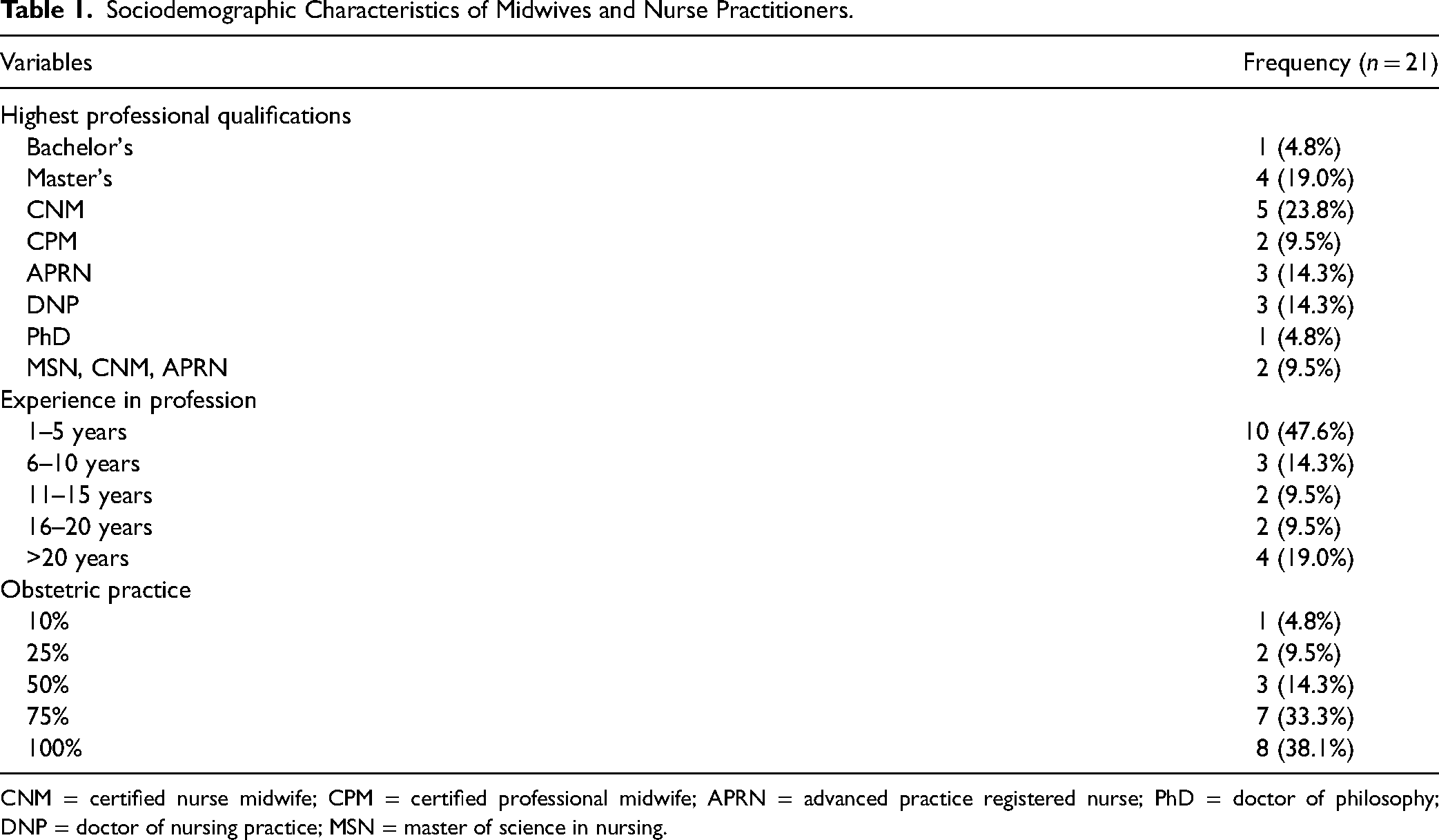
CNM = certified nurse midwife; CPM = certified professional midwife; APRN = advanced practice registered nurse; PhD = doctor of philosophy; DNP = doctor of nursing practice; MSN = master of science in nursing.
Research Question Results
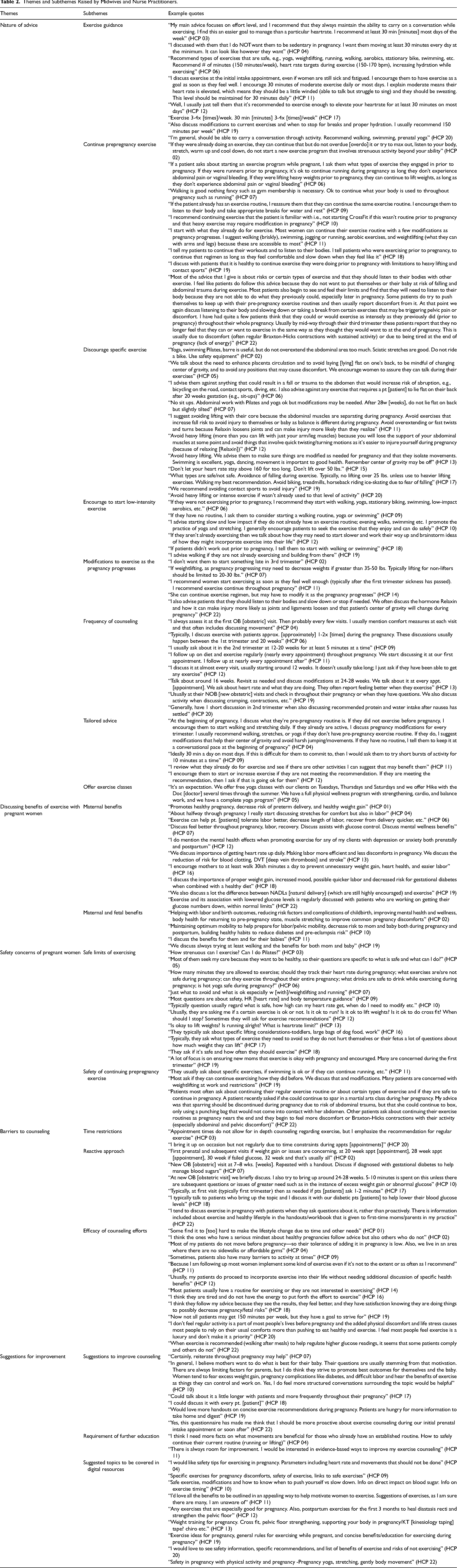
All midwives and nurse practitioners acknowledged the maternal, fetal, and newborn benefits of exercising during pregnancy. Many midwives and nurse practitioners (n = 20; 95.2%) discussed these benefits with pregnant women and advised them (n = 21; 100%) to exercise during pregnancy. Many midwives and nurse practitioners (n = 18; 85.7%) also claimed that pregnant women asked questions about exercising during pregnancy. Almost all midwives and nurse practitioners (n = 20; 95.2%) recognized the necessity of digital tools for exercise counseling at prenatal clinics. The responses of the midwives and nurse practitioners to open-ended questions were categorized into themes and subthemes and are presented in Table 2.
Themes and Subthemes Raised by Midwives and Nurse Practitioners.
Nature of Advice
Many nurse practitioners and midwives in our sample provided comprehensive information about physical activity guidelines to pregnant women, including information about the frequency and intensity of exercise, while some even gave examples of safe types of exercise in pregnancy. For example, one participant's quote included information about frequency, intensity, and type of exercise they recommend to their obstetric patients: “Recommend types of exercises that are safe, e.g., yoga, weightlifting, running, walking, aerobics, stationary bike, swimming, etc. Recommend # of minutes (150 minutes/week), heart rate targets during exercise (150-170 bpm), increasing hydration while exercising” (HCP 06). Nurse practitioners and midwives encouraged the accumulation of 30 min of moderate exercise daily or 3–5 days a week, which is roughly equal to 150 min per week of physical activity. Many nurse practitioners and midwives referred to heart rate as their primary method for exercise intensity, while only a few referred to potentially more appropriate tests (e.g., the talk test) to monitor exercise intensity during pregnancy. For example, one of our participants strongly recommended using the talk test instead of monitoring heart rate: “My main advice focuses on effort level, and I recommend that they always maintain the ability to carry on a conversation while exercising. I find this an easier goal to manage than a particular heart rate” (HCP 03). Yet, some nurse practitioners and midwives in the sample only provided information about the exercise duration (e.g., “Ideally 30 minutes a day x 5 days”) without including details about the intensity and examples of safe exercise. Although some nurse practitioners and midwives encouraged pregnant women to continue their prepregnancy exercise regimen, many suggested avoiding heavy lifting and vigorous-intensity exercise, listening to their bodies, and stopping exercise if they feel like stopping. For example, “Don’t let your heart rate stay above 160 for too long. Don’t lift over 50 lbs” (HCP 15). Only one provider advised pregnant women to maintain their prepregnancy exercise routine, regardless of intensity, if they do not experience any warning signs to stop exercise: “If they were runners prior to pregnancy, it's ok to continue running during pregnancy as long they don’t experience abdominal pain or vaginal bleeding. If they were lifting heavy weights prior to pregnancy, they can continue to lift weights, as long as they don’t experience abdominal pain or vaginal bleeding” (HCP 06). In addition to avoiding heavy lifting and intense exercise, some nurse practitioners and midwives also advised pregnant women to refrain from any activity that increases fall risk and abdominal trauma. A few nurse practitioners and midwives also prescribed not to be involved in activities that need lying flat on the back (i.e., sit-ups) and avoid fast twists. Some nurse practitioners and midwives encouraged pregnant women to start low-impact exercise during pregnancy if they were not exercising before conception. One provider specifically encouraged pregnant women to continue exercising from the first trimester to childbirth without decreasing intensity, while many others recommended slowing down as the pregnancy progressed. Many nurse practitioners and midwives, including those offering exercise classes, advised pregnant women about exercise at every prenatal visit. Many of them also spent sufficient time providing tailored advice by reviewing the pregnant women's exercise habits. However, a few discussed exercising with pregnant women only once or twice, limiting the discussions to the early stages of gestation, where they increased the counseling frequency only if the client had been diagnosed with any hypokinetic disease.
Discussing the Benefits of Exercise With Pregnant Women
Almost all nurse practitioners and midwives in our sample acknowledged maternal, fetal, and newborn benefits of prenatal exercises. However, most of them only discussed maternal benefits of prenatal exercise with pregnant women, such as the impact of exercise on the type of delivery and length of labor, lowering blood glucose, and reducing risk factors for chronic diseases. For example, one of our participants discussed the maternal benefits of exercise, especially when it is combined with a proper diet: “I discuss the importance of proper weight gain, increased mood, possible quicker labor and decreased risk for gestational diabetes when combined with a healthy diet” (HCP 18). Although one provider suggested discussing the fetal and newborn benefits of exercising at counseling sessions, only a few providers highlighted the fetal benefits of maternal exercise in their sessions.
Safety Concerns of Pregnant Women
According to nurse practitioners and midwives, many women are worried about the safety of exercising during pregnancy. Women inquired about the safety limits of exercising during pregnancy, such as recommended intensity, duration, safe types of exercise, and lifting recommendations. Some women also wanted to continue their prepregnancy exercise routines during pregnancy and sought advice from their providers on the safety of continuing their prepregnancy exercise (i.e., “They usually ask about specific exercises, if swimming is ok or if they can continue running, etc.”).
Barriers to Counseling
Only a few nurse practitioners and midwives were satisfied with the outcomes of their counseling efforts. In contrast, the majority gave up counseling due to the ambiguity of the efficacy of counseling, which is the primary barrier to exercise counseling in our sample. For example, one of our participants mentioned, “I think they are tired and do not have the energy to put forth the effort to exercise” (HCP 16). Many nurse practitioners and midwives in our sample followed a reactive approach to exercise counseling that provided exercise advice only if pregnant women asked questions about exercising during pregnancy or if pregnant women were at high risk for hypokinetic diseases. This practice was clearly reflected by a quote from one of our participants: “I typically talk to patients who bring up the topic and I discuss it with our diabetic pts [patients] to help lower their blood glucose levels” (HCP 18). Time constraints during prenatal appointments were not a significant barrier to providing exercise counseling, as only two providers expressed concerns about time limitations for counseling.
Suggestions for Improvement
To enhance their counseling efforts, many providers recommended reiterating physical activity guidelines and the benefits, particularly the fetal benefits of exercising at each stage of pregnancy, to all pregnant women, not just those with hypokinetic diseases (i.e., “I could discuss it with every patient”). Although only a few nurse practitioners and midwives emphasized the need for further education regarding exercising during pregnancy, a considerable proportion noted the need for handy tools to aid exercise counseling. Providers expect such tools to include links to safe aerobic, yoga, and strength exercises tailored to pregnant and postpartum women. Such tools should also provide information about movements to avoid during pregnancy, safety tips, and contraindications to exercise during pregnancy.
Discussion
Despite limited resources and time constraints in busy maternal clinics, midwives and nurse practitioners in our sample appear to provide sufficient information about physical activity guidelines to pregnant women. Most of the providers’ advice regarding physical activity guidelines at least included information about frequency and intensity, whereas some even suggested safe types of exercise during pregnancy. In previous studies (Nelson et al., 2022; Stengel et al., 2012), many pregnant women were not provided with sufficient information about physical activity guidelines during pregnancy; especially since they had not received information about frequency and intensity of exercise, pregnant women had difficulties comprehending and practically following exercise advice during pregnancy (Stengel et al., 2012). However, one of the above studies was conducted among women after childbirth and asked for their perceptions of the obstetric providers’ advice regarding exercising during pregnancy; thus, their responses are susceptible to recall bias (Stengel et al., 2012). The second study was conducted among obstetric physicians (Nelson et al., 2022), who usually focus more on clinical aspects of pregnancy than lifestyle counseling (McGee et al., 2018), compared to midwives and nurse practitioners who are also trained, have more experience, and could spend more time in lifestyle counseling (Bauer et al., 2010; Stotland et al., 2010; Yankou et al., 1993). Per the latest ACOG recommendations (American College of Obstetricians and Gynecologists, 2020), a considerable proportion of nurse practitioners and midwives in our sample advised pregnant women to be involved in at least 150 min of physical activity a week or 30 min on most days. In addition to discussing the guidelines, providers are encouraged to highlight that the 30-min per day target can be reached by engaging in short exercise bouts (e.g., 3 bouts of 10 min). Similarly, it is crucial to emphasize that any physical activity, including activities of daily living, not just structured exercise, contributes to the 150-min target and offers significant health benefits (Bull et al., 2020). Midwives and nurse practitioners in our study encouraged nonexercisers to start exercising during pregnancy, at least with low-intensity activities such as walking or yoga, which was rarely observed in previous similar studies (Entin & Munhall, 2006; Hopkinson et al., 2018), but in line with the latest ACOG recommendations (American College of Obstetricians and Gynecologists, 2020). In a previous similar study, where the sample also included pregnant women, although providers said similar things regarding their exercise counseling, the pregnant women did not “agree” and reported that these conversations are not happening in clinical settings (Blankenship et al., 2020). However, this study was conducted by recruiting five obstetric physicians and one advanced practice registered nurse without midwives in the sample (Blankenship et al., 2020), which may not reflect midwives’ and nurse practitioners’ practice in Kentucky.
Similar to previous studies among obstetric providers in the United States (Bauer et al., 2010; Entin & Munhall, 2006), yet discordant to the latest guidelines (American College of Obstetricians and Gynecologists, 2020), many midwives and nurse practitioners in our sample referred to heart rate to monitor exercise intensity, whereas ACOG recommends the “talk test” because heart rate becomes less sharp due to cardiodynamic changes in pregnancy (American College of Obstetricians and Gynecologists, 2020; McMurray et al., 1993). Conforming with other studies (Evenson & Pompeii, 2010; Hopkinson et al., 2018), many nurse practitioners and midwives in our sample encouraged pregnant women to continue their prepregnancy exercise routines yet listen to their bodies and discouraged vigorous exercise without sufficient empirical evidence (Beetham et al., 2019). Obstetric providers in previous studies (Hopkinson et al., 2018) and providers in our sample advised pregnant women to slow down as the pregnancy progresses, which is discordant with ACOG's latest guidelines that recommend continuing exercise until childbirth, as pregnant women tolerate (American College of Obstetricians and Gynecologists, 2020). Like many other studies in the literature (Blankenship et al., 2020; Stotland et al., 2010), nurse practitioners and midwives in our sample also demonstrated a reactive approach to exercise counseling, emphasizing the need to empower pregnant women to ask questions from their providers regarding exercising during pregnancy. In line with prior evidence (Chang et al., 2013; Stotland et al., 2010), midwives and nurse practitioners in our sample also believed that their counseling had little or no impact on changing the exercise behavior of pregnant women, which stressed the need to demonstrate providers’ role in promoting exercise during pregnancy.
Studies have claimed that obstetric providers do not spend sufficient time on lifestyle counseling and provide inappropriate advice to pregnant women regarding exercising during pregnancy (Evins et al., 2021; Lindsay et al., 2017; Okafor & Goon, 2021). However, our study found that many midwives and nurse practitioners give appropriate advice regarding maternal exercise with only minor issues and spend sufficient time on exercise counseling at maternal clinics. The study emphasized the necessity of investigating whether pregnant women are implementing the exercise advice they received from obstetric providers in their day-to-day lives. Midwives and nurse practitioners in our study also emphasized the necessity of having tools to offer safe exercise options during pregnancy.
Our findings show that even among practitioners who value and discuss exercising during pregnancy with pregnant women, there is a lack of specific resources for exercise prescriptions given to pregnant women. Previous work from the pregnant women's perspective suggests that even with provider support for exercise, there is a clear lack of specific coaching on which exercises to do, how much to do, and how to do them correctly (Blankenship et al., 2020), and often the result is the pregnant woman not being sufficiently active. Thus, additional resources are needed to help providers give pregnant women safe, effective, and appropriate exercise guidance for each stage of pregnancy and postpartum.
Strengths and Limitations
Although the study has numerous strengths, it also has a few limitations that are worth considering when interpreting the findings. Unlike in-person interviews or focus groups, online surveys may not capture in-depth qualitative information such as facial expressions (Terry & Braun, 2017). Despite our efforts to reach potential participants through different channels, only a few providers responded to our survey. This led to a biased sample, suggesting that midwives and nurse practitioners offering better exercise counseling to pregnant women are more likely to respond to requests to participate in the study. However, the potential limitations of the open-ended survey used in this study are outweighed by the less social desirability bias of responses due to high anonymity and the ability to capture perceptions of geographically spread participants (Terry & Braun, 2017).
Implications for Practice
Our study is one of the few that explored the content and quality of exercise advice provided to pregnant women by midwives and nurse practitioners in the Southern United States. Our findings revealed that the majority of midwives and nurse practitioners in our sample committed to providing comprehensive and reliable exercise counseling with sufficient information about physical activity guidelines. This highlights the role of midwives and nurse practitioners in promoting exercise during pregnancy and reinforces the importance of having a midwife or nurse practitioner competent in lifestyle counseling in the obstetric team. Moreover, the study findings help to identify weak areas in lifestyle counseling and to design midwifery and obstetric training programs that address current public health needs, extending beyond just obstetrics. Healthcare administrators can utilize our findings to identify barriers to exercise counseling in maternal clinics and formulate effective policies to mitigate those barriers. The findings also provided evidence to expand the role of midwives and nurse practitioners beyond helping childbirth and to create a physically active nation.
Conclusions
This study revealed that midwives and nurse practitioners in our sample have dedicated time to providing exercise counseling. They also give pregnant women comprehensive and accurate information about physical activity guidelines, including details on frequency and intensity, along with examples of safe exercises for pregnant women. However, midwives and nurse practitioners should be encouraged to start exercise counseling proactively and train more on how to continue exercising throughout pregnancy, maintaining a sufficient intensity rather than advising to slow down as the pregnancy progresses. Midwives and nurse practitioners should encourage pregnant women to safely continue vigorous exercise during pregnancy, if they were doing vigorous exercise before pregnancy, and use the “talk test” to monitor exercise intensity. We recommend that midwives and nurse practitioners emphasize the safety of exercising during pregnancy and the fetal and newborn benefits of exercise in their lifestyle counseling sessions.
Supplemental Material
sj-docx-1-son-10.1177_23779608251313895 - Supplemental material for Perspectives of Midwives and Nurse Practitioners in Kentucky on Exercise Counseling During Pregnancy: A Qualitative Study
Supplemental material, sj-docx-1-son-10.1177_23779608251313895 for Perspectives of Midwives and Nurse Practitioners in Kentucky on Exercise Counseling During Pregnancy: A Qualitative Study by Madhawa Perera, Taniya S. Nagpal, Maire M. Blankenship, Danilo V. Tolusso, Jordyn M. Cox, Dilini Prashadika, Mark Schafer and Rachel A. Tinius in SAGE Open Nursing
Supplemental Material
sj-docx-2-son-10.1177_23779608251313895 - Supplemental material for Perspectives of Midwives and Nurse Practitioners in Kentucky on Exercise Counseling During Pregnancy: A Qualitative Study
Supplemental material, sj-docx-2-son-10.1177_23779608251313895 for Perspectives of Midwives and Nurse Practitioners in Kentucky on Exercise Counseling During Pregnancy: A Qualitative Study by Madhawa Perera, Taniya S. Nagpal, Maire M. Blankenship, Danilo V. Tolusso, Jordyn M. Cox, Dilini Prashadika, Mark Schafer and Rachel A. Tinius in SAGE Open Nursing
Footnotes
Acknowledgments
We highly appreciate midwives and nurse practitioners who participated in our study and those who shared the survey with their colleagues, staff, and members of their professional organizations.
Author Contributions
Conceptualization: MP, TSN, MMB, DVT, MS, DP, and RAT; methodology: MP, TSN, MMB, DVT, and RAT; validation: MP, TSN, MMB, and RAT; formal analysis: MP, DP, and JMC; investigation: MP, TSN, MMB, DVT, DP, and RAT; data curation: MP and DP; writing—original draft preparation: MP and DP; writing—review and editing: MP, TSN, MMB, JMC, DVT, DP, MS, and RAT; supervision: DVT, MS, and RAT; project administration: MP and DP; funding acquisition: MP and RAT. All authors have read and agreed to the published version of the manuscript.
Data Availability
The original contributions presented in the study are included in the article; further inquiries can be directed to the corresponding author.
Declaration of Conflicting Interests
The authors declared no potential conflicts of interest with respect to the research, authorship, and/or publication of this article.
Ethical Approval
The study was conducted in accordance with the Declaration of Helsinki and approved by the Institutional Review Board of Western Kentucky University on 15 February 2024 (IRB# 24-192).
Funding
The authors disclosed receipt of the following financial support for the research, authorship, and/or publication of this article: This research was funded by the Western Kentucky University Graduate School.
Informed Consent
Implied consent was obtained from all subjects involved in the study.

Supplemental Material
Supplemental material for this paper is available online.
References
Supplementary Material
Please find the following supplemental material available below.
For Open Access articles published under a Creative Commons License, all supplemental material carries the same license as the article it is associated with.
For non-Open Access articles published, all supplemental material carries a non-exclusive license, and permission requests for re-use of supplemental material or any part of supplemental material shall be sent directly to the copyright owner as specified in the copyright notice associated with the article.
