




Abstract
Introduction
Academic achievement in nursing students is significantly influenced by their self-esteem and goal orientation. Defensive pessimism, a strategy where students set low expectations to prepare for potential failure, helps them stay motivated and focused. While this cognitive strategy can boost effort and performance, its relationship with self-esteem and goal orientation remains underexplored among nursing students, revealing a gap in understanding how these factors interact to influence academic success.
Objective
Assess the level and relationship between defensive pessimism, goal orientation, and self-esteem among nursing students at the Faculty of Nursing.
Method
Four hundred students were included in the research using a stratified sampling method followed by a simple randomization sampling technique to select 100 students from each academic year. Tools: The Defensive Pessimism Questionnaire, the Goal Orientation Scale, and the Self-Esteem Scale were used.
Results
56.28% of participants had a low level of defensive pessimism, about two-thirds (62.30%) had a low level of goal orientation, and 70.0% of the students had a mild level of self-esteem. In addition, higher levels of defensive pessimism are significantly associated with stronger goal orientation (r = .291, p < .001) but lower self-esteem (r = −.246, p < .001). Additionally, self-esteem is significantly positively correlated with mastery-performance approach goals (r = .335, p < .001; r = .142, p < .001) and significantly negatively correlated with mastery-performance avoidance goals (r = −.351, p < .001; r = −.041, p < .001).
Conclusion
These findings highlight the complex interplay between defensive pessimism, goal orientation, and self-esteem in nursing students. Understanding these relationships is crucial for developing targeted interventions to enhance academic achievement and psychological well-being among nursing students, potentially by fostering adaptive goal-setting strategies and addressing the impacts of defensive pessimism on self-esteem.
Introduction
Education is a foundational element in personal and professional development, particularly in academic settings where students must cultivate intellectual and personal qualities to succeed (Gamage et al., 2021). Among these qualities, motivation, goal orientation, and self-esteem are essential for navigating the challenges of academic life (Frumos et al., 2024). These personal qualities are even more critical for nursing students facing rigorous academic and clinical demands. Examining the interplay between defensive pessimism, goal orientation, and self-esteem among nursing students is crucial for developing strategies that promote healthier motivational approaches, enhancing educational outcomes and overall well-being.
The field of education aims to promote lifelong learning and personal development. Educational psychology is essential for educators to promote students to develop their cognitive, psychomotor, and affective capabilities (Christy & Sidhu, 2022). Furthermore, academic success is closely related to students’ self-worth and ability to focus on their goals (Fairlamb, 2022). Students’ self-improvement can protect their goal orientation and prevent pessimism (Ferradás et al., 2020).
Personality traits such as character, confidence, competence, connection, and caring have been explored to determine their impact on encouraging positive development in students facing difficulties (Noddings, 2013). Self-esteem is the perception students hold regarding their competence in dealing with fundamental challenges in life, as well as their sense of worth and value (Branden, 2021). Consequently, self-esteem is crucial in motivating students to achieve academic goals (Skaalvik & Federici, 2014). Students with positive self-esteem are likely to strive for higher academic achievements and, in turn, increase their self-esteem (Rushdan et al., 2024; Zhao et al., 2021).
Literature Review
Defensive pessimism is a mental tactic employed by students whereby they set uncharacteristically low expectations to motivate themselves to work diligently to prevent failure. Defensive pessimism can protect self-worth from possible failure and aid in managing anxiety related to potential failure by prompting students to consider and prepare for all conceivable outcomes associated with future events, motivating them to think critically and plan (Forsha, 2021). As defensive pessimists become more goal-oriented, they experience substantial improvements in their self-esteem and overall satisfaction, perform better academically, and make more significant progress toward achieving their objectives over time (Peel & Ward, 2022).
Goal orientation is essential in motivating students and is classified as either mastery or performance-focused. Mastery goal orientation emphasizes the development of one's abilities, the acquisition of new skills, and the pursuit of challenging goals to understand the learning materials. On the other hand, performance goal orientation is centered around demonstrating superior abilities compared to others and using social comparison as a standard to evaluate performance. The achievement goal theory is a widely recognized motivational theory used to examine how various classroom structures and school environments affect student learning and motivation (Urdan & Kaplan, 2020).
Furthermore, Students who experience higher levels of anxiety are more likely to adopt defensive pessimism as a strategy. By envisioning the worst possible outcomes before undertaking a task, they can achieve similar performance levels as individuals who do not experience anxiety initially (Guth, 2018). Therefore, they need psychological support to adopt positive thinking to overcome their anxiety. Positive psychology is the scientific study that enhances positive experiences and positive individual traits, which facilitates their development (Allen et al., 2022). Hence, this paper assesses positive psychology variables, defensive pessimism, self-esteem, and goal orientation toward academic success.
Despite the evidence that defensive pessimism is effective in the short term but detrimental to emotional well-being in the long run (Atta et al., 2024a; Thomas, 2020), there remains considerable controversy regarding the role of self-esteem in the functioning of this strategy. While some studies have suggested that the self-esteem of defensive pessimists is generally lower than that of individuals who use strategic optimism (Shimizu & Nakashima, 2018), it is not necessarily lower than those who employ other self-protective strategies like self-handicapping (Ferradás et al., 2017). From this perspective, defensive pessimists harbor negative thoughts about the tasks they face and themselves. Additionally, highlighted that the relationship between self-esteem and defensive pessimism is not linear, with high self-esteem associated with greater use of defensive pessimism in males, while in females, this strategy is more common when self-esteem is low. Moreover, the literature documented that students’ achievement cannot be addressed without positive self-esteem, and both are closely tied to their pessimistic prediction and goal orientation (Elliot & Thrash, 2002; Zogmaister & Maricutoiu, 2022).
These inconsistent findings, coupled with the limited research on this topic within specific cultural contexts, especially concerning nursing students in Egypt, underscore a critical gap in the existing literature. This gap necessitates a deeper exploration of the factors influencing these outcomes, including the study design, settings, and cultural dynamics that may shape the experiences and perceptions of nursing students in this region. Therefore, conducting a study on the relationship between defensive pessimism, goal orientation, and self-esteem among nursing students” in Egypt would be the first of its kind, addressing this gap and offering valuable insights into how these dynamics play out in a population that is essential to the healthcare system. Nursing Faculty students are responsible for preparing competent nursing care, meeting the growing demands of the healthcare system, and shaping the future of the nursing profession.
Defensive pessimism, self-worth, and academic goal achievement among nursing students are significant as they can offer valuable perspectives on their academic performance and well-being. Therefore, understanding the relationships between these factors can develop interventions to improve nursing students’ academic performance and overall well-being (Zogmaister & Maricutoiu, 2022).
The role of nurses is paramount, and their competence and self-esteem level are crucial in ensuring patient safety and reducing errors in the clinical environment (Elliot & Thrash, 2002; Yeager & Dweck, 2012). Thus, research that investigates nursing faculty students’ self-esteem, goal orientation, and defensive pessimism significantly reinforces their self-esteem, enhances goal achievement, and empowers optimistic prediction toward their performance. The results of this study have the potential to aid in creating initiatives aimed at enhancing the performance of nursing students and improving the standard of nursing care given to patients. Therefore, our study aimed to Assess the level and relationship between defensive pessimism, goal orientation, and self-esteem among nursing students at the Faculty of Nursing.
Research Question(s)
What is the level of defensive pessimism, goal orientation, and self-esteem among nursing students at the Faculty of Nursing?
Is there a relationship between defensive pessimism, goal orientation, and self-esteem among nursing students at the Faculty of Nursing?
Method
Study Design
The study was conducted using a descriptive and correlational framework following the guidelines of STROBE (Supplementary 1). This study was carried out at the College of Nursing, Damanhour University. The college was established in 2007. It has nine scientific departments: medical-surgical nursing, critical care nursing, pediatric nursing, obstetric and gynecological nursing, nursing education, community health nursing, gerontological nursing, nursing administration, psychiatric nursing, and mental health. Courses are provided over four years (eight semesters). It offers both undergraduate and postgraduate educational nursing programs.
Inclusion/Exclusion Criteria
A statistical power (G* power) analysis was used to determine the sample size, with an effect size of 0.03, power level of 0.90, and alpha of .05, accounting for an anticipated 20% nonresponse rate. The analysis yielded a minimum sample size of 340, but the researchers decided to recruit 400 students. The eligibility criteria for this study required students of both sexes to display consistent attendance and be willing to engage in research activities. Additionally, exclusion criteria were students with physical or psychological illness, irregular attendance, and those over 30 years old to maintain a more homogeneous age group within the sample and control variation in life experiences. Researchers used an equal allocation stratified sampling technique to reduce sampling variability bias and ensure that all strata were adequately represented. Researchers selected 100 participants from each academic year stratum. The sample selection process utilized a blind approach, incorporating a systematic randomized technique to identify participants from the overall pool of nursing nurses. The steps involved were as follows:
A comprehensive list containing all nursing students’ names for each academic year and relevant data was compiled and digitized into a computer-generated randomization list program (550 first-year students, 1162 s-year students, 778 third-year students, and 440 fourth-year students). This randomization program randomly sampled 100 students from this list each academic year to ensure fairness and minimize bias. Each randomly selected student was screened to identify those meeting the predetermined inclusion criteria and contacted to assess their willingness to participate. 52 students refused to participate and did not match the inclusion criteria, so replacements were selected using randomization to complete the stratum. Participants were assigned to participate (400), with an equal distribution of 100 students each academic year (Figure 1).

CONSORTn sample graph.
Instruments
This study employed four different instruments to gather data:
Tool I: A questionnaire was divided into two parts: Part 1: collected sociodemographic data, such as the student's gender, age, place of residence, marital status, monthly expenses, and whether they worked while studying. Part 2: collected academic data, including the year of enrollment, the student's grades in the previous academic year, and their academic and social activities.
Tool II: Defensive Pessimism Questionnaire: Norem (2002)[17] created the Defensive Pessimism Questionnaire, which consists of twelve self-report statements to gauge individuals’ methods to safeguard their self-worth from potential failure by setting lower expectations. The questionnaire encompasses two factors referred to as negative expectations and reflection. Respondents rate their responses to each statement on a seven-point Likert scale ranging from 1 to 7, with 1 indicating “Not at all true of me” and seven indicating “Very true of me.” The total score is obtained by adding all the items and ranges from 12 to 84. Higher scores indicate a greater degree of defensive pessimism. Individuals with a total score ranging from 12 to 41 are classified as having a low level of defensive pessimism, those with scores ranging from 42 to 62 indicate a moderate level, and individuals with scores from 63 to 84 reflect a high level of defensive pessimism.
Tool III: Goal Orientation Scale (GOS): Skaalvik (1997)[18] developed the Goal Orientation Scale, which consists of twenty-one items designed to measure four types of achievement goals. The first subscale, “mastery-approach goals,” is assessed by items 3, 5, 9, 11, 15, and 18. This subscale measures the extent to which individuals focus on learning, increasing their knowledge, and developing their abilities. The second subscale, “performance-approach goals,” is assessed by items 1, 4, 13, 16, and 19. This subscale indicates the extent to which individuals strive to prove that they are more capable and have accomplished more than others. The third subscale, “mastery-avoidance goals,” is assessed by items 6, 8, 10, 14, 17, and 20. It assesses the degree to which individuals are concerned with avoiding the appearance of incompetence or receiving negative evaluations from others. Finally, the fourth subscale, “performance-avoidance goals,” is assessed by items 2, 7, 12, and 21. This subscale evaluates the degree to which individuals prioritize avoiding academic tasks and exerting effort.
Participants assess their level of agreement with each statement using a five-point Likert scale, where a score of 1 signifies “never” and a score of 5 indicates “always.” The overall score is calculated by adding the scores of all items, ranging from 21 to 105. A higher total score indicates a stronger orientation towards achievement goals. Scores between 21 and 52 indicate a low level of goal orientation, while scores between 53 and 78 suggest a moderate level. Scores ranging from 79 to 105 reflect a high level of goal orientation.
Tool IV: The Rosenberg Self-Esteem Scale (RSE): RSE was initially developed by Rosenberg in 1965 and was later translated into Damanhour[19]. This self-report scale consists of ten items and measures global self-esteem. Participants indicate their level of agreement with each statement using a four-point Likert scale, where a score of 4 signifies “strongly agree” and a score of 1 signifies “strongly disagree” for items 1, 2, 4, 6, and 7. However, the scoring is reversed for items 3, 5, 8, 9, and 10. The scale's total score is 40 points, divided into three levels: low, moderate, and high self-esteem. Scores of 22 or less indicate low self-esteem, and scores between 23 and 33 indicate moderate self-esteem. According to[19], the scale was valid and had acceptable internal consistency using test–retest reliability.
Procedures
Official permissions to conduct the study were obtained from the responsible authorities of the Faculty of Nursing, Damanhour University. These included the dean of the Faculty of Nursing and chairpersons of academic nursing departments. The researchers developed Tool I after a thorough review of the existing literature.
A panel of five experts evaluated the instruments (Defensive Pessimism Questionnaire and the Goal Orientation Scale) for face validity, confirming their suitability for the study. Tools II, III, and IV were administered to a sample of 40 nursing students to assess internal consistency and reliability, yielding Cronbach's alpha values of 0.855 for Tool II, 0.806 for Tool III, and 0.871 for Tool IV. Additionally, a pilot study involving 40 nursing students not part of the primary research was conducted to identify potential biases. The pilot study results indicated that the research tools were clear, understandable, and feasible for data collection. This approach ensured the instruments were valid and reliable, minimizing biases during the primary data collection phase. The researchers collected data by visiting selected students in their classroom lectures and clinical laboratories, and it took approximately 15–20 min to complete the study tools. Data was collected over three months, from November 2022 to January 2023.
Ethical Consideration
The research received approval from the Damanhour Research Ethics Committee (53-b) in February 2022. The researchers obtained written informed consent from each student, explaining the significance and objectives of the study. The confidentiality of any received data was maintained, and student privacy and anonymity were respected throughout the research. The students had the right to opt out of the study without facing any negative consequences.
Statistical Analysis
The data were analyzed using IBM SPSS software package version 20.0 (Armonk, NY: IBM Corp). The normality of distribution was assessed using the Kolmogorov–Smirnov test. Quantitative data were described using various statistical measures, such as range (minimum and maximum), mean, standard deviation, median, and interquartile range (IQR). The significance of the obtained results was evaluated at the 5% significance level. The following statistical tests were employed: the Pearson coefficient to determine the correlation between two normally distributed quantitative variables, the Mann–Whitney test to compare two groups for abnormally distributed quantitative variables, and the Kruskal–Wallis test to compare more than two groups for abnormally distributed quantitative variables.
Results
Participants Characteristics
Table 1 illustrates the sociodemographic characteristics of the study participants. Most students (77.5%) were female, with an age range of 18–24 and a mean age of 20.02 ± 1.35. Most students (75.5%) were from rural areas, and most (91.8%) were single. The study also found that 73.0% of the students perceive their monthly expenses as adequate.
Distribution of the Students According to Social and Demographic Characteristics (n = 400).
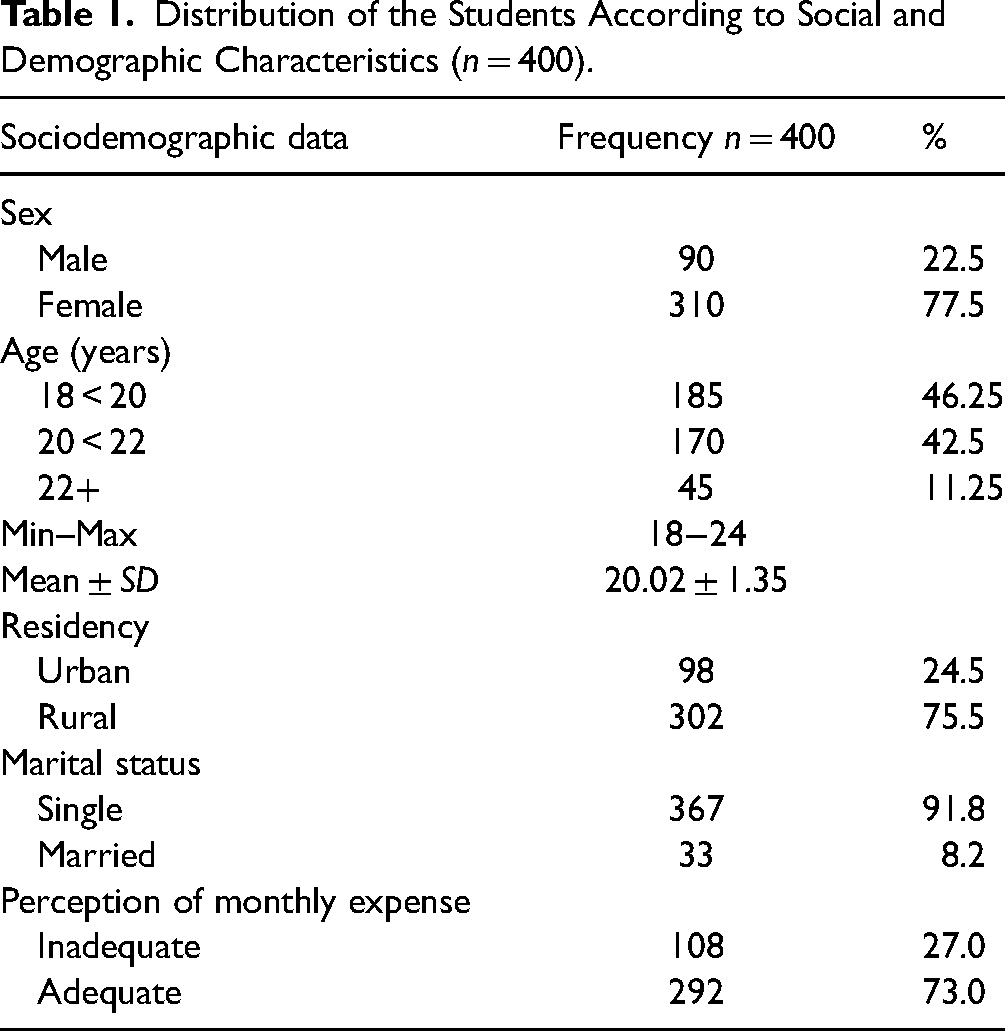
Table 2 presents the students’ academic characteristics. Nearly half of the students (45.0%) obtained excellent grades in the previous academic year. Most students (82.80%) did not participate in educational or social activities.
Distribution of Students According to Academic Properties.

The first year was not among the students’ grades in the previous academic year.
Levels of Defensive Pessimism, Goal Orientation, and Self-Esteem Among Nursing Students
Figure 2 shows the distribution of the students according to their total score of defensive pessimism. More than half of the students (56.28%) had a low level of defensive pessimism, while nearly a quarter (24.52%) had a high level, and the rest (19.20%) had a moderate level.

Distribution of students according to a total score of defensive pessimism (n = 400).
Figure 3 illustrates the distribution of the students according to their total score of goal orientation. Most students (62.30%) had a low level of goal orientation, while 30.50% had a high level, and only 7.20% had a moderate level.

Distribution of students according to a total score of goal orientation (n = 400).
Figure 4 shows the distribution of the students according to their total self-esteem score. 70.0% of the students had a moderate level of self-esteem, 21.8% had a high level, and only 8.30% had a low level.

Distribution of students according to total score of self-esteem (n = 400).
Relation Between Defensive Pessimism, Goal Orientation, and Self-Esteem
Table 3 presents the correlations between defensive pessimism, goal orientation, and self-esteem among nursing students. The results show a positive significant correlation between defensive pessimism and goal orientation (r = .291, p < .001) and a positive significant correlation between self-esteem and mastery-performance approach goals (r = .335, p < .001, r = .142, p < .001, respectively) and a negative significant correlation between self-esteem and mastery-performance avoidance goals (r = −.351, p < .001, r = −.041, p < .001, respectively). The table also illustrates a negative significant correlation between defensive pessimism and self-esteem (r = −.246, p < .001). This suggests that a high level of defensive pessimism indicates a higher level of goal orientation and a lower level of self-esteem.
Correlation Between Defensive Pessimism, Goal Orientation, and Self-Esteem Among Studied Students (n = 400).

r: Pearson coefficient.
: Statistically significant at p ≤ .05.
Relation Between Study Variables, Sociodemographic, and Academic Characteristics
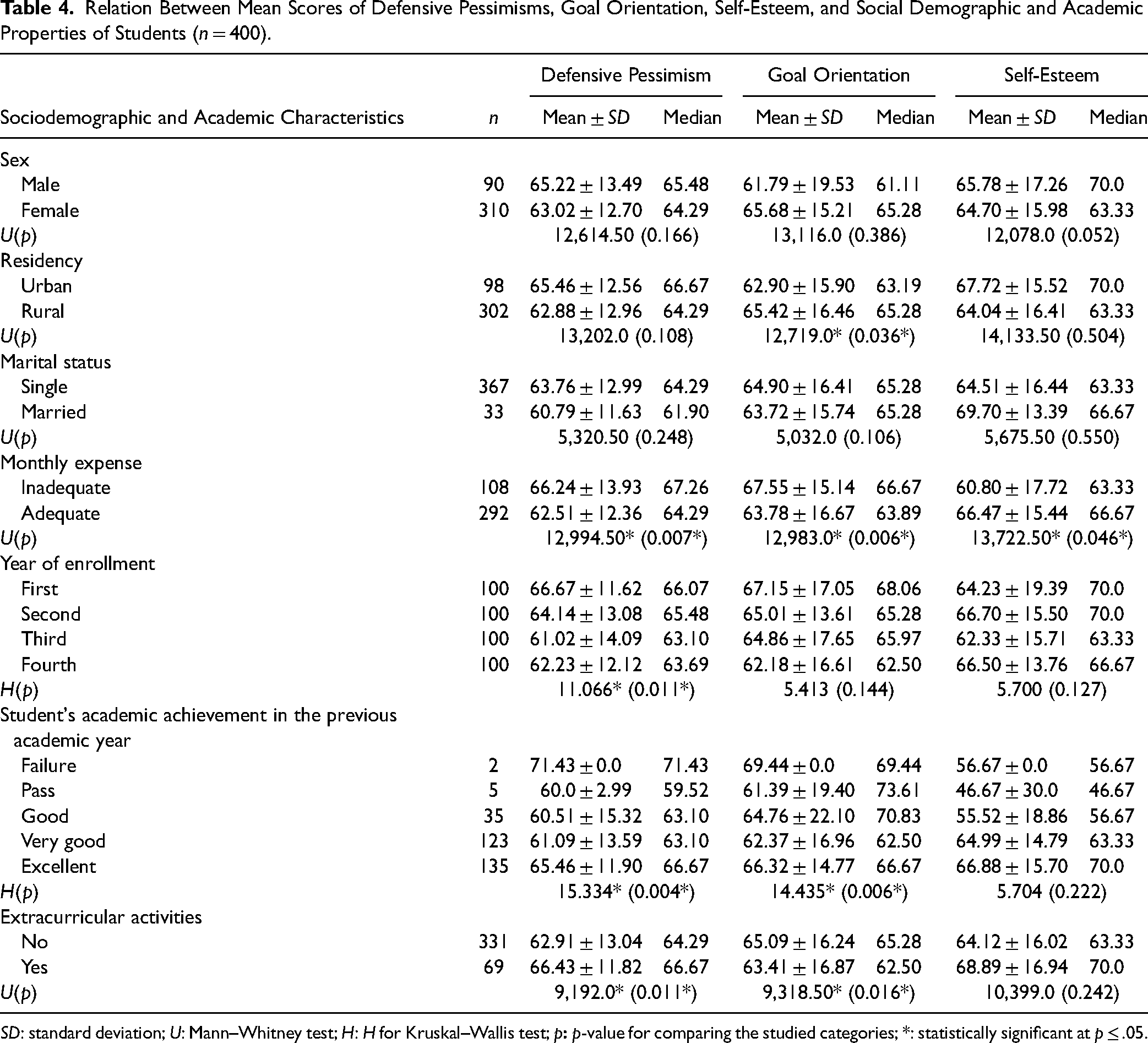
Table 4 presents the relation between the mean scores of defensive pessimism, goal orientation, self-esteem, and the sociodemographic and academic characteristics of the studied students. The results show that students who had inadequate monthly expenses, enrolled in the first year, and those who failed in the previous academic year or participated in extracurricular activities had the highest mean score of defensive pessimism. A statistically significant relation was observed between monthly expenses, year of enrollment, student's grade in the previous academic year, and participation in extracurricular activities about the mean score of defensive pessimism (p = .007, p = .011, p = .004, and p = .011, respectively).
Relation Between Mean Scores of Defensive Pessimisms, Goal Orientation, Self-Esteem, and Social Demographic and Academic Properties of Students (n = 400).
SD: standard deviation; U: Mann–Whitney test; H: H for Kruskal–Wallis test
p
Regarding goal orientation, the results indicate that students who lived in rural areas had inadequate family income, failed in the previous academic year, or did not participate in extracurricular activities had the highest mean score. A statistically significant relation was observed between residence, monthly expense, year of enrollment, student's academic achievement in the previous academic year, and participation in extracurricular activities about the mean score of goal orientation (p = .036, p = .006, p = .006, and p = .016, respectively).
Finally, the results show that students with adequate monthly expenses obtained the highest mean self-esteem score. A statistically significant correlation was observed between family income and the mean self-esteem score.
Discussion
Educational researchers are increasingly aware of the importance of students’ motivational approaches in the academic learning environment. In this context, self-esteem and defensive pessimism are crucial factors influencing goal attainment. Students may utilize defensive pessimism to pursue their objectives while safeguarding their self-esteem (Canedo et al., 2018; Ferradás et al., 2020; Rahmani, 2011)
In this study, the researchers aimed to assess the nursing students’ defensive pessimism, goal orientation, and self-esteem and determine the relationship between defensive pessimism, goal orientation, and self-esteem. The present study's findings indicate a statistically significant positive correlation between goal orientation and defensive pessimism. It is plausible that students who exhibit defensive pessimism may use their negative self-talk as a motivational tool to work hard and prevent failure that they anticipate. This could help to explain why these students tend to use defensive pessimism and focus on performance-approach goals. This could be supported by Yamawaki et al. (2004), who found evidence that students who exhibit defensive pessimism may leverage their negative thoughts to drive themselves to work harder and avoid potential failure. From the researcher's perspective, self-handicapping can explain the positive significant correlation between goal orientation and defensive pessimism (Yamawaki et al., 2004). The strategy of self-handicapping that students use to create excuses for failure before even attempting a task. This can involve engaging in behaviors that undermine performance, such as procrastination or not giving one's best effort, to have a ready-made excuse for failure. While self-handicapping may initially protect one's self-esteem, it ultimately hinders goal achievement and can lead to a cycle of self-fulfilling prophecies of failure (Schwinger et al., 2014). On the other hand, the current study results showed that students who participated in academic and extracurricular activities had a significant relationship with defensive pessimism and goal orientation, possibly due to their spending time on activities and trying their best in the remaining time. The study outcomes align with earlier research that discovered that low self-esteem reduces students’ inclination to engage in academic activities with a learning-focused approach (Norem & Smith, 2006; Rahmani, 2011). Finally, students who participated in extracurricular activities had higher academic performance and achievement, as indicated by their higher GPA and lower absenteeism.
Moreover, the results of the present study indicate a statistically significant negative correlation between self-esteem and defensive pessimism. Thus, students with lower self-esteem are more likely to utilize defensive pessimism as a strategy, while those with higher self-esteem tend to use it less frequently. Conversely, students who exhibit defensive pessimism often have lower levels of self-esteem. This outcome may be because a significant number of the study sample had low to moderate self-esteem. Students with low self-esteem tended to be self-critical, avoid social exposure, and perceive themselves as incompetent. In contrast, students with high self-esteem tended to actively engage in academic and extracurricular activities and strive to improve their skills and abilities. This outcome is in line with earlier studies conducted by Ferradás et al. (2020) and Lim (2009), which found that students with lower levels of self-esteem were more prone to utilizing the defensive pessimism approach (Ferradás et al., 2020; Lim, 2009). Moreover, Yamawaki and colleagues conducted a study where they found that individuals using defensive pessimism as a strategy would have a higher proportion of negative-to-positive self-thoughts related to academics, and these thoughts would be associated with high self-esteem instability. However, the study also found that the differences in self-esteem between defensive pessimists and optimists explained part of the mediated effects.
Adding to support the study, Ferradás et al. (2020) suggest that defensive pessimism plays a role in the association between self-esteem and approach goals, particularly in the learning and performance dimensions. Another study conceptualized that defensive pessimistic students may be more inclined towards performance-avoidance goals and less inclined towards mastery in academic settings than optimists. These findings indicate that defensive pessimism can be a valuable strategy for promoting motivation toward goal orientation among students in academic contexts (Ferradás et al., 2020).
The study's results imply that defensive pessimism can be a strategic tool for students with low self-esteem to approach academic work to improve their skills. The findings also support the notion that defensive pessimism plays a role in the relationship between self-esteem and motivational orientation, especially regarding performance-approach goals. Low self-esteem may encourage students to engage in their academic work to stand out directly and by leveraging defensive pessimism.
Furthermore, the research discovered that self-esteem is positively correlated with mastery approach and performance-approach goals and negatively correlated with mastery-avoidance and performance-avoidance goals, consistent with previous studies (Ferradás et al., 2019; Zhao et al., 2021). Students who have low self-esteem might assess their academic competence by comparing themselves to their peers, which may result in doubts about their ability to outperform others and, as a result, prioritize performance-avoidance goals. Conversely, students who set high-performance goals may fear failure due to their inclination to tie their self-worth to their ability to demonstrate competence. So, students with low self-esteem may judge their academic competence based on interpersonal standards, leading to doubt about their ability to be evaluated as better than others and redirecting their priorities to focus on performance-avoidance goals (Atta et al., 2024b; Korn & Elliot, 2016).
The study also found a significant relationship between insufficient monthly expenses and defensive pessimism, goal orientation, and self-esteem, suggesting that low-income students may have lower self-esteem, which motivates them to prove their intellectual abilities and improve their financial situation.
The study found that first-year university students exhibited higher levels of defensive pessimism than those in later academic years. This may be due to their enthusiasm for embarking on a new educational journey and their motivation to achieve independence and improve their performance. Tables also showed that participants with previous academic failure had higher levels of defensive pessimism and goal orientation. This may be due to their disappointment from the last failure and their desire to avoid repeating it.
Finally, the current study highlights the complex relationships between defensive pessimism, goal orientation, and self-esteem in nursing students. While defensive pessimism may be an effective strategy for some students, it is essential to consider the potential impact on students’ self-worth and motivation.
Strength and Limitation
Despite the present study revealing the relationship between defensive pessimism, goal orientation, and self-esteem among university nursing students, it is important to acknowledge its limitations. The study's reliance on self-reported measures may have introduced subjectivity and bias, potentially skewing the accuracy of participants’ reported attitudes and behaviors. Additionally, since the research was conducted at a single institution, the findings may not be generalizable to other nursing programs with different student populations or academic cultures. Moreover, the exclusive focus on nursing students leaves it uncertain whether these results would be applicable to students in other healthcare programs, other academic fields, or practicing professionals. Another limitation is the lack of study covariates, which could have provided a more nuanced understanding of the relationships examined. Furthermore, the absence of linear regression analysis limits the study's ability to determine the predictive value of defensive pessimism and goal orientation on self-esteem.
To address the limitations identified in this study, it is recommended that future research be replicated across various nursing schools and healthcare programs to enhance the generalizability of the findings. Additionally, future studies should incorporate covariates and employ linear regression analysis to gain a deeper understanding of the predictive relationships between defensive pessimism, goal orientation, and self-esteem. It is also suggested that workshops be conducted for nursing educators and administrators to raise awareness of these psychological factors and their impact on student well-being and academic performance. Furthermore, developing and implementing targeted workshops to equip students with effective coping strategies for managing stress and anxiety is crucial. Creating a conducive learning environment that reduces stressors and fosters self-esteem among students should be a priority for educators and faculty administrators. Last, longitudinal studies are recommended to follow up on students’ levels of defensive pessimism, goal orientation, and self-esteem throughout their academic journey, providing valuable insights into how these factors evolve and influence academic and professional outcomes over time.
Implication for Practice
Defensive pessimism is a coping mechanism that involves setting low self-expectations to manage anxiety and stress. At the same time, goal orientation refers to individuals’ motivation to achieve their objectives. The study found a negative correlation between defensive pessimism and self-esteem, while goal orientation had a positive association with self-esteem among nursing students. These results suggest that nursing educators should promote a positive goal orientation and discourage defensive pessimism as a coping mechanism among nursing students. Doing so could enhance students’ self-esteem and well-being, leading to better academic and clinical performance.
Additionally, the research highlights the significant role of self-esteem in nursing education and practice. Nursing students with high self-esteem may be more motivated to learn and achieve their goals, resulting in improved patient outcomes and better quality of care. Therefore, nursing educators should strive to create an environment that fosters self-esteem and encourages goal-oriented behavior among nursing students.
Conclusion
In conclusion, the study revealed that more than half of the nursing students exhibited low levels of defensive pessimism and goal orientation, along with moderate levels of self-esteem. The findings also highlighted a positive significant correlation between defensive pessimism and goal orientation, indicating that students who engage in defensive pessimism may use it as a strategy to motivate themselves toward achieving their academic goals. However, the negative significant correlations found between defensive pessimism and self-esteem, as well as between self-esteem and goal orientation, suggest that low self-esteem may undermine both goal-setting and the effective use of defensive pessimism as a coping mechanism. These findings have important implications for nursing education, suggesting the need for targeted interventions to enhance self-esteem and promote healthy goal-setting strategies among nursing students. By addressing these psychological factors, educators can better support students’ academic success and overall well-being.
Supplemental Material
sj-docx-1-son-10.1177_23779608241293662 - Supplemental material for The Relationship Between Defensive Pessimism, Goal Orientation, and Self-Esteem Among Nursing Students
Supplemental material, sj-docx-1-son-10.1177_23779608241293662 for The Relationship Between Defensive Pessimism, Goal Orientation, and Self-Esteem Among Nursing Students by Mohamed Hussein Ramadan Atta, Esraa Elsayed Rushdan and Nadia Waheed Elzohairy in SAGE Open Nursing
Footnotes
Acknowledgment
This study is supported via funding from Prince Sattam bin Abdulaziz University project number (PSAU/2024/R/1445).
Author Contributions
Study design: MHRA, NWE. Data collection: MHRA, NWE. Data analysis: MHRA, NWE. Study supervision: MHRA. Manuscript writing: MHRA, NEW, EER. Critical revisions for important intellectual content: MHRA, NEW, EER. We express our heartfelt gratitude to all individuals who took part in the study.
All authors have agreed on the final version and meet at least one of the following criteria (recommended by the ICMJE [ Substantial contributions to conception and design, acquisition of data, or analysis and interpretation of data. Drafting the article or revising it critically for important intellectual content. mje.org/recommendations/]:
Availability of Data and Materials
Upon request for scientific purposes, the researcher of correspondence will provide researchable information of the research.
Declaration of Conflicting Interests
The authors declared no potential conflicts of interest with respect to the research, authorship, and/or publication of this article.
Ethical Approval and Consent to Participate
All methods were carried out according to the relevant guidelines and regulations of the Declaration of Helsinki (DoH-Oct2008). Study procedures were revised and approved by the research ethics committee of the faculty of nursing, Damnhour University. After explaining the purpose and nature of the study, informed written consent was obtained from all patients who agreed to participate in the study.
Funding
The authors received no financial support for the research, authorship, and/or publication of this article.
Supplemental Material
Supplemental material for this article is available online.
References
Supplementary Material
Please find the following supplemental material available below.
For Open Access articles published under a Creative Commons License, all supplemental material carries the same license as the article it is associated with.
For non-Open Access articles published, all supplemental material carries a non-exclusive license, and permission requests for re-use of supplemental material or any part of supplemental material shall be sent directly to the copyright owner as specified in the copyright notice associated with the article.
