




Abstract
Introduction
Poor nursing performance is considered a threat to patient safety, affecting the quality of care provided and ultimately impacting patient outcomes.
Objectives
The main aim of this study was to identify the predictors of nursing performance.
Methods
A cross-sectional predictive design was used. A convenient sampling technique was used to recruit 251 emergency nurses in three health sectors. They were assessed using the secondary traumatic stress scale and the nursing performance scale. Data were collected between June and August 2022.
Results
Nurses experienced severe levels of secondary traumatic stress (M = 57.9, SD = 14.94). The nursing performance level was below average (M = 27.48, SD = 9.36), and the mental performance subscale received the lowest rating (M = 5.82, SD = 2.69). There was a strong negative association between the secondary traumatic stress total score and the total score of nursing performance (r = −.77). Additionally, factors such as high body mass index, smoking, the presence of chronic diseases, working overtime, and high levels of secondary traumatic stress were identified as significant predictors of nursing performance.
Conclusion
It is recommended that emergency nurses be provided with treatment programs and interventions to reduce their secondary traumatic stress to improve their performance, thereby ensuring high-quality patient care.
Introduction
Nursing performance (NP) is a key indicator of workplace effectiveness and patient safety (Sagherian et al., 2018). Nursing performance has been defined as a set of nursing activities or behaviors that are performed by nurses that are directed toward the recovery and well-being of the patients assigned to their care (Sagherian et al., 2018). Nurses who experience high levels of stress may have decreased performance during work hours, compromising the quality and timeliness of patient care (Isfahani et al., 2021). Poor NP is considered a threat to patient safety, affecting the quality of care provided and ultimately impacting patient outcomes (Liu et al., 2019).
Job stress can have a negative impact on employee performance and productivity, leading to unhealthy lifestyle habits such as smoking, unhealthy eating habits, and alcoholism, as well as serious chronic illnesses such as hypertension and heart disease (Daniel, 2019). Job stress in nursing can also lead to medical errors or malpractice that may affect patient safety.
Work-related stress has been reported to be viewed as a health threat, particularly among healthcare providers working in the emergency department (ED) (Basu et al., 2020). This department has highly stressful nursing work that taxes the physical, mental, and perceptual abilities of the individual (Isfahani et al., 2021). Additionally, ED nurses suffering from secondary traumatic stress (STS) showed decreased work productivity and performance (Jobe et al., 2021).
The term (STS) can be defined as the natural, predictable behaviors and emotions that result from learning about a traumatic event experienced by a significant other (Sprang et al., 2019). The consequences of STS can have negative impacts, including decreased job performance and productivity (Bock et al., 2020). In addition, STS can impede an individual's ability to provide optimal care (Ratrout & Hamdan-Mansour, 2020).
Review of the Literature
Few studies were found that examined the relationship between STS and nursing performance, despite it being a highly prevalent and alarming issue that has a wide variety of adverse effects on nurses themselves and the care they provide to patients (Robinson et al., 2022). There are gaps in research on this topic worldwide.
A study by Wolf et al. (2020) reported a high prevalence of STS among ED nurses. This in turn may negatively impact the physical and mental statuses of ED nurses, which may affect their overall well-being. This can subsequently adversely affect their job performance (Ratrout & Hamdan-Mansour, 2020). On the other hand, some studies have reported that ED nurses experience little to moderate symptoms of STS (Machado, 2018; Ogińska-Bulik et al., 2021). In Jordan, Ratrout and Hamdan-Mansour (2020) reported that almost half of the sampled Jordanian ED nurses suffered high to severe levels of STS. However, El-Shahrouri (2021) reported moderate levels of STS in nurses.
Two studies have demonstrated a negative correlation between STS and work productivity. Bock et al. (2020) reported that nurses with STS (25.3%) reported significantly reduced workability. In the USA, Jobe et al. (2021) found that around 38% of respondents reported high STS, and 29% reported decreased work productivity.
A systematic review by Mergal et al. (2018) identified predictors of nurses’ clinical performance based on recent studies performed in Southeast Asia. Of the 16 research papers included, nine predictors of clinical performance were found, namely: emotional intelligence; self-efficacy; stress; social support; personal characteristics; academic performance; self-concept; work environment; and affective commitment. Stress was found to be the most studied predictor, while self-efficacy had the strongest relationship with clinical performance. The literature showed that emotional intelligence, social support, self-efficacy, self-concept, academic performance, and personal characteristics have a significant positive relationship with clinical performance, while stress has a significantly negative relationship.
Shin and Kim (2015) identified factors that affect the work of ED nurses in South Korea. Their multiple regression analysis found that education level, position, and hospital size are predictors of nursing job performance in the ED. In Jordan, Al-Khasawneh and Futa (2013) reported a significant positive relationship between organizational climate and performance, and to a lesser extent with economic factors, job difficulty, and peer competition. Similarly, Al-Makhaita et al. (2014) reported that variables that stress, shifts, and department of work all had a significant predictive effect on the performance of nurses working in secondary healthcare.
Previous studies have shown a negative relationship between sociodemographic characteristics and nursing performance. Barker and Nussbaum (2011) found that night shift work and long working hours correlated with decreased physical and mental nursing performance.
This study will be the first of its kind to address this issue in Jordan, and one of the few globally to explore the predictors of ED nursing performance. The aim of this study is to assess the levels of NP and its relationship with the sociodemographic variables; and to identify the predictors of NP among Jordanian ED nurses.
This study is guided by the following research questions:
- What are the levels of NP among Jordanian ED nurses? - What are the relationships between sociodemographic, work-related variables, secondary traumatic stress, and the NP among Jordanian ED nurses? - What are the predictors of NP among Jordanian ED nurses?
Methodology
Study Design
A cross-sectional predictive design was used in this study.
Sampling and Settings
This study used a convenience sampling technique to collect data from Jordanian ED registered nurses. The targeted hospitals were purposefully selected because they are the main hospitals that provide medical services to trauma cases.
The G*Power (version 3.1.9.7) program was used to calculate the sample size, based on the regression test. The minimum sample size required was 215 (power = 0.90, α = .05, medium effect size 0.10, predictors = 10). A total of 300 questionnaires were distributed to eligible nurses, and 251 questionnaires were returned completely filled, giving a response rate of 89%. The inclusion criteria for this study were as follows: (a) Jordanian registered nurses working in an ED, providing direct patient care, and (b) experience in ED for a minimum of 6 months. Administrative nurses who did not provide direct care for ED patients were excluded.
Study Measurements
This study used a structured questionnaire in Arabic composed of three parts: sociodemographic variables; the Secondary Traumatic Stress Scale (STSS); and the nursing performance instrument. The sociodemographic variables were developed by researchers based on the literature and there were 12 items, including gender, age, education level, marital status, and monthly income. Work-related variables included years of experience, type of shift, type of hospital, and overtime. Clinical variables included the presence of comorbidities such as hypertension, diabetes mellitus, or cancer; body mass index (BMI); and smoking status.
The Arabic version of the Secondary Traumatic Stress Scale (STSS), created and verified by El-Shahrouri (2021), was utilized. The tool was originally developed by Bride et al. (2004). The STSS contains 17 items measuring the frequency of STS symptoms and comprises three subscales: intrusion, avoidance, and arousal (Bride et al., 2004). Intrusion symptoms include the following: intrusive thoughts as recurrent, involuntary memories; distressing dreams; and flashbacks of a traumatic event. Avoidance symptoms encompass avoiding reminders of the traumatic event and may include avoiding people, places, activities, objects, and situations that could trigger distressing memories, thoughts, or feelings associated with the trauma. They may also resist talking about what happened or how they feel about it. Symptoms related to alterations in arousal and reactivity may include being irritable and having angry outbursts; behaving recklessly or in a self-destructive way; being watchful of one's surroundings in an overly vigilant way; being easily startled; or having problems concentrating or sleeping.
Responses were recorded on a 5-point Likert scale (1 = Never to 5 = Very often). Scores were obtained by summing the items assigned to each subscale. Scores lower than 28 indicate little or no STS; 28 to 37 indicate mild STS; 38 to 43 indicate moderate STS; 44 to 48 indicate high STS; and greater than or equal to 49 indicate severe STS. The STSS in the Arabic version has a high degree of reliability, with a Cronbach alpha of around 0.87. It also has a good content validity index (CVI) of 0.94 (El-Shahrouri, 2021). In this study, reliability measured by Cronbach alpha was also high (0.87).
The Nursing Performance instrument was originally developed by Sagherian et al. (2018). Because Arabic is the native language of Jordan, the translation was performed by a panel of experts consisting of two clinical nurse specialists who work in ED, and two laypeople who are proficient in both the Arabic and English languages. They used forward and backward translation techniques to translate the nursing performance instrument. Following this, the panel reviewed any discrepancies that emerged between the original version and the translated version of the survey until consensus was reached and a final version of the Arabic NP was produced.
The NP instrument was developed based on a conceptual framework of work performance that consists of task and contextual performance dimensions. Nursing task performance is focused on direct and indirect nursing tasks or activities that are geared toward or contribute the most to the care and recovery of the patients. These activities are either physical and/or mental in nature. In nursing, contextual performance includes a set of behaviors or practices that are common across nursing units and hospitals. Nurses perform general practices to maintain nursing standards and support the safety and quality of patient care. The factor structure of the NPI was hypothesized to consist of three domains: physical (Items 1, 4, and 8) and mental (Items 5 and 7) nursing tasks that are concept mapped to task performance; and general performance tasks (Items 2, 3, 6, and 9) that are concept mapped to contextual performance.
Items 1, 2, 5, 7, and 9 were reverse coded. Scores were calculated by finding the mean: the higher the mean of the sum, the better the nursing performance, with a cut-off point of 3.5 (Segherian et al., 2018). The tool showed good reliability (Cronbach α = .8) in the original tool (Sagherian et al., 2018), while in this study it was 0.62. The validity of the translated tool was assessed using the content validity index (CVI). A panel including three clinical nursing experts was consulted regarding its relevance, from not relevant to very relevant. The CVI for the tool was found to be 1.
Data Collection Procedure and Ethical Considerations
Ethical approval was granted by Al Zaytoonah University of Jordan IRB (No. 3/485/2021-2022). Then, after permission was obtained from hospital managers, ED head nurses provided the researchers with a list of nurses who matched the eligibility criteria. The researchers approached potential volunteers and distributed the questionnaires. Participants were informed about the study’s objectives. Nurses were given the choice of filling out the survey and returning it straight away or saving it for the next day. Returning the filled questionnaire is considered implied consent. The data collection period was between June and August 2021.
Data Analysis
The Statistical Program for Social Sciences version 26 was used. Descriptive statistics were used to describe participants’ demographic data using central tendency and dispersion measures and to measure the prevalence of STS and levels of NP. The Pearson correlation test was used to explore the relationships between NP and STS; and NP with demographic variables (e.g., age and years of experience). Point biserial correlation was used for the other variables. Multiple linear regression was used to find predictors of NP. A p-value ≤ .05 was considered to be statistically significant.
Results
Participant Demographic Characteristics
A total of 251 subjects were included in the study. Of these, 51.8% were female, 64.5% were married, and 90.4% reported having a bachelor's degree. The study participants’ average age was 31.94 years (SD = 5.20); with a range of 22–44 years. The average monthly income (in Jordanian dinar) was 511.51 JD (1 JD = 1.41 US). The mean BMI was 25.11 kg\m2 (SD = 3.51) (Table 1). Regarding work-related variables, the majority of the participants (49.8%) worked 8-hr shifts; 61.4% did not have a second job or overtime duties; and 47.4% were employed in government hospitals. The average number of years of experience in the ED was 4.92 (SD = 3.03) with a range of 1−15 years. Regarding clinical variables, 59.8% (n = 150) of participants were smokers, and 31.9% (n = 80) of the participants reported at least one chronic disease. (Table 1).
Participant's Sociodemographic Characteristics (N = 251).

N = number, % = percentage, M = mean, SD = standard deviation.
Levels of NP and STS
The mean STS was 57.98 (SD = 14.94), indicating severe levels of STS, while the mean NP was 27.48 (SD = 9.36), which is below average (Table 2). The mean (SD) of physical performance was 9.32 (3.47); the mean mental performance score was 5.85 (2.69); and the mean general tasks score was 12.30 (4.54). The NP mental performance subscale had the lowest mean value. The overall mean NP item score was 3.05 (1.6), which was below the cut-off point of 3.5, indicating that nursing performance was below average (Table 2).
Mean Values of STS and NPI Subscales Among ED Jordanian Nurses (N = 251).

M: mean, SD: standard deviation.
Relationship Between NP, STS, and Sociodemographic Variables
Age, years of experience, BMI, marital status, and overtime were significantly negatively correlated with total NP. Conversely, monthly income, smoking status, and presence of chronic disease were significantly positively correlated with total NP. The findings revealed a strong negative association between the overall STS score and the total NP score of NP (r = −.77, p = .001), implying that raised STS was associated with reduced NP (Table 3).
Correlation NP and Selected Sociodemographic Variables (N = 251).

*Correlation is significant at the p≤.01.**Correlation is significant at the p≤.05.*** Correlation is significant at the p≤.001.
Predictors of NP Among ED Jordanian Nurses
The full model that included all predictors of NP was statistically significant (F = 33.7; p < .001; R = 0.702; R2 = 0.493; adjusted R2 = 0.478) (Table 4). This means that the entire model explained 49.3% of the variance in NP. BMI (t = −4.30; p < .001), smoking status (t = 2.91; p = .004), chronic disease (t = 5.96; p < .001), overtime (t = −3.18; p = .002) and total STSS score (t = −18.95; p < .001) were the significant predictors of NP. Moreover, the beta coefficient for the total STSS score was −0.77, meaning that a one-point increment in the STSS score was correlated with a −0.77 decrement of the NP. (Table 4)
Multivariable Linear Regression Analysis for Predictors of NP.

b = unstandardized beta; B = standardized beta; CI = confidence interval.
Discussion
Levels of NP
The ED nurses surveyed had a high level of STS, suggesting that Jordanian ED nurses have been exposed to numerous stressors or traumatic events, which can have a negative impact on their mental and physical well-being (Ratrout & Hamdan-Mansour, 2017). These results are in line with a previous study of Jordanian emergency nurses, who view the ED as a high-stress workplace and experience more workplace-related stress compared to other work locations (Hamaideh & Ammouri, 2011). Al Hadid et al. (2022) have also reported moderate to high levels of stress among nurses in general units. However, these results are in contrast with those of Subih et al. (2023) who found moderate levels of STS among their participants.
Results found that ED nurses were below average in NP, with the best performance in the general task domain, followed by physical performance and mental performance. A potential explanation for this is that high levels of STS significantly impact their performance. It is widely acknowledged that job stress can endanger the physical and mental health of nurses and decrease energy and work efficiency. This leads to inadequate nursing care, which ultimately affects patient outcomes (Babapour et al., 2022). This supports study findings, which were also consistent with a previous study by Tesfaye et al. (2015) which found that nurses rated their overall performance as poor. However, they contradict the findings of Al-Makhaita et al. (2014), who reported that half of the nurses surveyed rated their performance as satisfactory. Some studies have reported moderate levels of NP, such as Vand Tamadoni et al. (2020), while others have found high levels of NP, such as Sagherian et al. (2018).
NP Relationships and Predictors Among Jordanian ED Nurses
There was a strong significant negative correlation between STS and NP. This indicates that an increase in STS would lead to a decrease in the NP of ED nurses, and vice-versa. This can be explained by the findings of Wolf et al. (2020) who surveyed emergency nurses and found that stress can result in difficulties with job performance; poor professional judgment; medical errors; decreased emotional connection with patients and families; and increased absenteeism. The study’s results are consistent with other studies such as that concluded that STS decreases the productivity of ED nurses (Bock et al., 2020; Jobe et al., 2021; Khan et al., 2011). Decreased work efficiency due to job stressors and reduced satisfaction can negatively impact patient safety. It also affects the quality of care provided, and hence clinical outcomes and patient experience (Al-Makhaita et al., 2014).
In this study, lower nursing performance was associated with being older; married; more experienced; having a high BMI; and longer shift working hours. These results are in line with the results of Rypicz et al. (2021), who also reported that the ability to work decreases with age and seniority. The study supports other findings that higher BMI nurses, longer shifts, and number of hours worked per week lead to increased physical and total fatigue levels, which lead to decreased NP (Barker & Nussbaum, 2011; Power et al., 2017).
Al-Makhaita et al. (2014) reported that at the secondary level of care, several factors were found to have a significant relationship with job performance, such as qualification, nationality, work shifts, and work department. Also, they found that nurses with nonbachelor qualifications performed better than those with bachelor's degrees. On the other hand, age, gender, and marital status were found to have no significant relationship with performance.
The study identified BMI, smoking status, chronic disease, overtime, and STS as predictors of nursing performance, explaining 49.3% of the variance in NP. Notably, obesity, associated with many chronic diseases, increases the risk of temporary work loss, such as sick leave and reduced productivity while at work (Goettler et al., 2017).
The study’s findings agree with the common notion that working extra hours results in stress, burnout, low levels of productivity, job dissatisfaction, and distraction, which can ultimately have a negative impact on the health and safety of both nurses and their patients (Rajan, 2017). Other studies have noted a decrease in job performance among nurses with preexisting chronic diseases, indicating that these health conditions can have a negative impact on workers’ performance (Shirazi et al., 2011). Furthermore, the literature has established chronic diseases such as hypertension to have a deleterious effect on human physical and mental capacities (Dempsey et al., 2020).
Study results suggested that the work experience period was a key indicator of NP, which is consistent with Kahya and Oral (2018). Substantial evidence from research on smoking and physical activity demonstrates the detrimental effect of smoking on physical activity, which has an adverse effect on long-term health outcomes (Firth et al., 2020). These findings are in line with study results that demonstrated smoking to be a predictor of nursing performance.
It is worth noting that STS is frequently used to assess the productivity of nurses (Hayes et al., 2015), and it has often been reported as a key predictor of NP. Another study by Al-Makhaita et al. (2014) found that stress, shifts, and area of employment had a major influence on the performance of nurses working in secondary healthcare.
The prevention of STS is not the sole responsibility of the individual but of the entire organizational structure (Duffy et al., 2015). Administrators must be aware of the presence and repercussions of STS among ED nurses. As a result, they must develop assessment methods and referral protocols for vulnerable ED nurses. Approaches include screening and mentoring high-risk nurses for STS and building skills for coping with stress (Renkiewicz & Hubble, 2021). Supportive and anticipatory leadership is also important (Johnson & Jones, 2018). It is advised that ED nurses get familiar with the underlying variables and manifestations of STS so that they can regulate the causes and recognize early symptoms. They must also manage work and personal responsibilities to preserve their physical and psychological well-being.
Strengths and Limitations
Assessing nursing performance, especially in critical care units like DE, is highly crucial, and more research is needed on the implications for ED performance and patients’ clinical and psychosocial outcomes. This study came up with five predictors of clinical performance with high prediction variance (49%). Also, this study showed the importance of the psychological aspect of patients on nurses’ performance which policymakers should intervene to decrease.
However; certain limitations of this study should be noted. For example, this was a cross-sectional study: the variables have only been examined during a limited period and consequently, the replies depended primarily on the participants’ assessments of STS and NP only during the time of data collection, which may also contribute to selection bias. This study's generalizability is restricted because the sample was not selected randomly. Furthermore, because it was a cross-sectional study, inferences about cause-and-effect relationships. Additionally, data were collected via self-reported questionnaires, which could have impacted the respondents’ social desirability and caused response bias.
Implications for Practice
Continuing academic research is recommended with larger sample sizes and different demographics to better understand the aforementioned concerns. Also, recommend setting clear strategies for recognizing nurses’ achievements, enhancing motivation, and rewarding high performance with continuous feedback. In addition, implementing interventions centered on STS, in particular among ED nurses owing to the shown significance of it in predicting nursing performance, will lead to quantifiable returns in both patient outcomes and nurse health, as well as the overall efficiency and image of organizations.
Conclusion
This study found that the surveyed ED nurses’ NP was less than optimum, especially in the mental domain, reflecting a logical consequence of severe STS levels. There was a significant relationship between selected sociodemographic variables and NP. In addition, BMI, smoking status, chronic disease, over time, and STS were significant predictors of NP. As a consequence, programs and actions for ED nurses should be implemented to treat and prevent STS to enhance NP, which will ensure a high quality of safe patient care.
Footnotes
Authors’ Contributions
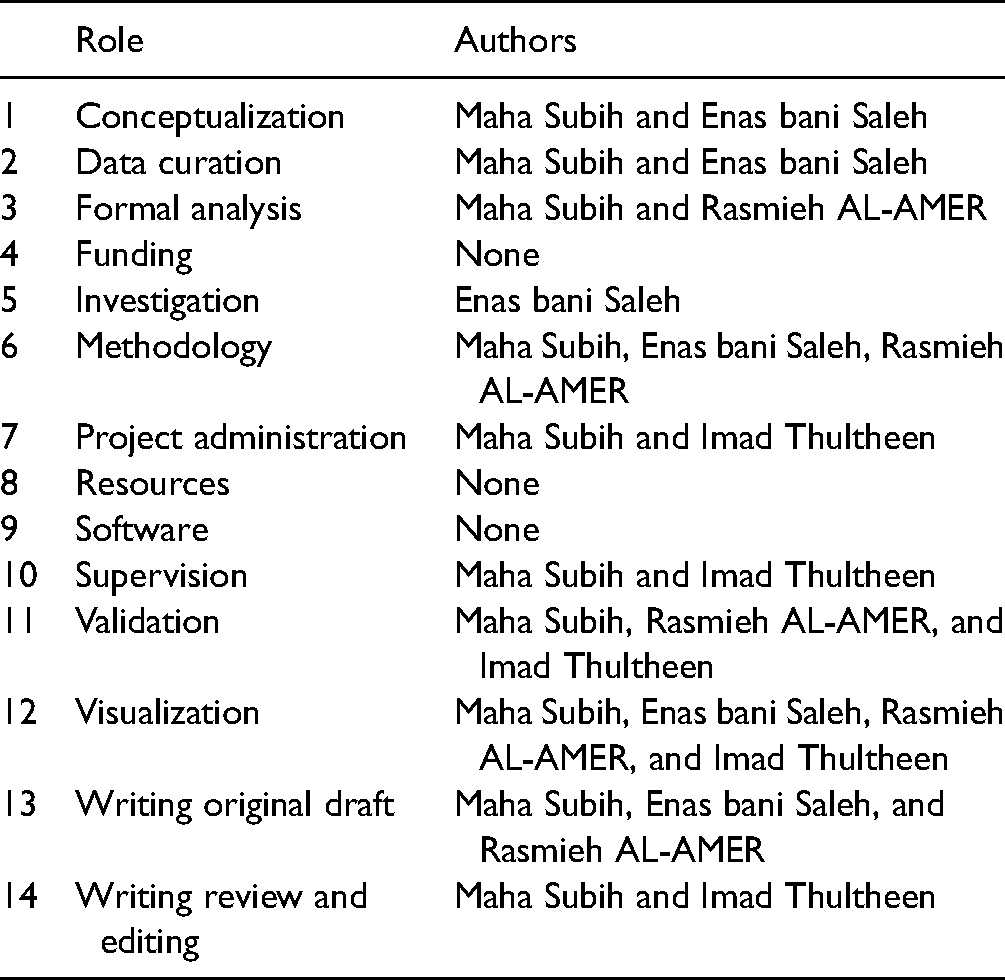
|
Role |
Authors |
|
|---|---|---|
|
1 |
Conceptualization |
Maha Subih and Enas bani Saleh |
|
2 |
Data curation |
Maha Subih and Enas bani Saleh |
|
3 |
Formal analysis |
Maha Subih and Rasmieh AL-AMER |
|
4 |
Funding |
None |
|
5 |
Investigation |
Enas bani Saleh |
|
6 |
Methodology |
Maha Subih, Enas bani Saleh, Rasmieh AL-AMER |
|
7 |
Project administration |
Maha Subih and Imad Thultheen |
|
8 |
Resources |
None |
|
9 |
Software |
None |
|
10 |
Supervision |
Maha Subih and Imad Thultheen |
|
11 |
Validation |
Maha Subih, Rasmieh AL-AMER, and Imad Thultheen |
|
12 |
Visualization |
Maha Subih, Enas bani Saleh, Rasmieh AL-AMER, and Imad Thultheen |
|
13 |
Writing original draft |
Maha Subih, Enas bani Saleh, and Rasmieh AL-AMER |
|
14 |
Writing review and editing |
Maha Subih and Imad Thultheen |
Availability of Data and Materials
Upon request available.
Consent for Publication
Written informed consent was obtained from each participant prior to the study for publication of this research.
Declaration of Conflicting Interests
The authors declared no potential conflicts of interest with respect to the research, authorship, and/or publication of this article.
Funding
The authors received no financial support for the research, authorship, and/or publication of this article.
Human and Animal Rights
No animals were used for studies that are the basis of this research. The study complies with the Helsinki declaration.
Ethical Approval
Ethics approval and consent to participate: ethical approval conducted from Al Zaytoonah University of Jordan study approval no: 3/485/2021-2022.
Standards of Reporting
STROBE guidelines and methodologies were followed in this study.
