



Abstract
Background
Sepsis is a major cause of mortality worldwide and an important public health problem. The quality of patient care is negatively impacted when nurses lack adequate knowledge regarding the management of sepsis. On the other hand, little is known regarding Ethiopian nurses’ knowledge of sepsis management.
Objective
To assess the level of knowledge and the associated factors towards sepsis management among nurses working in emergency departments in public hospitals in Addis Ababa, Ethiopia.
Method
From March 18 to April 18, 2022, a health facility-based cross-sectional study was conducted. A simple sampling technique (lottery method) was used to select the hospitals. The data was analyzed using SPSS version 25. The study employed logistic regression analysis to examine the association between the independent variables and the level of knowledge. Variables were significantly associated with a level of knowledge if they had a p-value of less than 0.05 and a 95% confidence interval.
Result
Of the 127 participants, more than half (56.7%) had poor knowledge. Nurses’ knowledge of managing sepsis was significantly associated with not having regular training, a low level of education, and working experience of less than five years. The findings of the multivariable regression analysis revealed that the following variables were associated with a nurse's knowledge of sepsis management: low level of education (AOR = 3.2 (95% CI, 1.16–8.77), lack of training adjusted odd ratio (AOR = 2.5 (95% CI, 1.07–5.93), and less than five years of work experience (AOR = 3.6 (95% CI, 1. 29–9.830).
Conclusion
The majority of nurses had inadequate knowledge of managing sepsis. On the other hand, the majority of nurses had a favourable attitude toward sepsis management. Lack of prior training, a low level of education, and less than five years of work experience were all significantly associated with nurses’ poor knowledge regarding sepsis management. This study recommends that hospital managers should provide on-the-job and long-term training for nurses working in the emergency department to enhance the level of nurses’ knowledge towards sepsis management at their institutions.
Background
Sepsis is described as “a life-threatening organ failure induced by a dysregulated host response to infection” in the Sepsis 3 definition (Fernando et al., 2018; Verdonk et al., 2017). The most prevalent signs include feeling lethargic, experiencing chills or a fever, hypothermia, nausea, low blood pressure, and a fast heartbeat. Sepsis patients may experience shock, multiple organ failure, decreased urine output, acute shortness of breath, difficulty standing or walking alone, confusion or loss of consciousness, and death if the illness progresses (Heneine et al., 2019; Singer et al., 2016).
Sepsis is one of the common global health problems, causing significant morbidity and a mortality rate of 54% (Kempker & Martin, 2016; Rahman et al., 2019; Rudd et al., 2020; Storozuk et al., 2019). According to current estimates, there are approximately 49 million cases of sepsis globally and 11 million deaths from sepsis-related causes, demonstrating a 20% mortality rate from the disease (Harley et al., 2019; Rudd et al., 2020). A recent study revealed that the annual cost of hospital patient care related to sepsis imposes a huge financial burden on the community; for example, hospital care for sepsis patients is expected to cost more than US$24 billion in the United States of America (Paoli et al., 2018; Van den Berg et al., 2022). Sepsis management is a complex clinical problem that requires early detection and management of infection, hemodynamic issues, and other organ dysfunctions (Nucera et al., 2018). Sepsis became the 10th most significant cause of death worldwide, surpassing bowel and breast cancer (Perkins, 2007).
However, data are scarce in Africa regarding nurses’ knowledge of sepsis management. The purpose of this study is to explore the level of nurses’ knowledge about sepsis management and associated factors at public hospitals in Addis Ababa, Ethiopia. The results of this study are significant in increasing the level of nurses’ knowledge of sepsis management. The administrative manager of each hospital will apply evidence-based practice and training to take corrective measures based on the identified factors to design appropriate strategies to increase knowledge among nursing staff. Once more, the findings of this study will encourage the researchers to provide baseline information to conduct a large-scale study in the area.
Review of Literature
Literature has demonstrated that the sepsis-related mortality rate remains high, particularly in developing countries, from neonates to the adult population (Hunchak et al., 2015; Marshall-Brown et al., 2016; Mulatu et al., 2021). Literature also indicates that the incidence of sepsis and septic shock in Ethiopia is one of the major public health problems (Belay et al., 2022; Kiya et al., 2023; Legese et al., 2022; Mulatu et al., 2021). A study conducted in Ethiopia about the incidence of sepsis and septic shock was reported at 26.5 per 100 (Mulatu et al., 2021). Studies indicated that lack of knowledge, insufficient staff training, a lack of desire to advance current standards, not enough knowledge of the guidelines, a lack of awareness of the medical condition, disagreements in workplace instructions, and shortcomings in the use of the sepsis screening form during emergency triage are some of the challenges to sepsis management, particularly in developing countries (Harley et al., 2019; Hung et al., 2018; Rahman et al., 2019; Reich et al., 2018). Emergency nurses are in a prime position to detect sepsis early by doing sepsis screenings on patients, a skill that should be embedded in their daily routine care of patients (McCaffery et al., 2016).
Methods and Materials
Study Area
The study was conducted in four selected public hospitals in Addis Ababa. Addis Ababa is the capital city of Ethiopia and is located in central Ethiopia. There are five federal administrative and ten Addis Ababa administrative public hospitals in the city. The public hospitals in the city provide different types of services for the community and there are specialists, general practitioners, nurses, and other health professionals working in the hospitals. The study was carried out in four randomly selected hospitals: Tikur Anbesa Specialized Hospital, Menilik II Referral Hospital, Zewditu Memorial Hospital, and Saint Peter Specialized Hospital, all located in the city. These hospitals were selected by a simple random sampling procedure (lottery method) from the list of public hospitals found in Addis Ababa.
Study Design
A hospital-based cross-sectional study was conducted from March 18 to April 18, 2022, among nurses working in the emergency departments in selected public hospitals in Addis Ababa.
Source of Population
All nurses who were working in the emergency department of public hospitals in Addis Ababa.
Study Population
All nurses who were working in the emergency department of selected public hospitals in Addis Ababa and were available during data collection were included in the study.
Inclusion and Exclusion Criteria
Nurses with six months or more of work experience during the data-collecting period were all included in the study. On the other hand, nurses who were seriously ill during the data collection period and provided free service, yearly leave, or maternity leave were excluded.
Sample Size Determination and Sampling Procedure
Initially, we compiled a list of every hospital in the city that we wished to include in our study sample. Next, we assigned a unique number to every hospital in the sample frame and placed paper slips for every hospital in the container with their unique number. In the final stage, we pulled slips of paper from a container to choose hospitals randomly. All nurses working in the emergency department of randomly selected public hospitals who fulfil the inclusion criteria were included in the study using the census sampling method. There were 159 nurses in the emergency departments of selected hospitals. Due to the small number of participants we included, all nurses (159) were included without using sample size determination in the study from four hospitals, and 32 of them were excluded based on the eligibility criteria (Figure 1).

Diagrammatic presentation for sampling procedure of Knowledge about sepsis management among nurses who were working at public hospitals in Addis Ababa, Ethiopia, 2021.
Data Collection Method and Instrument
The questionnaires from cross-sectional studies carried out in Wales, the UK, and Gabon were adapted and modified to collect data (Adegbite et al., 2021; Edwards & Jones, 2021; Nakiganda et al., 2022). The questionnaire was developed in the English language. There were 36 questions overall, divided into 5 sections: sociodemographic, knowledge-related, attitude-related, practice-related, and connected aspects. Ten modified Likert scales and 25 multiple-choice questions were used to collect the response. The data collection period was from March 18 to April 18, 2022. Four Bachelor of Science (BSc) nurses collected the data after receiving training. The nurses working in the emergency departments of those chosen Addis Ababa hospitals were given a self-administered structured questionnaire, to which they were asked to anonymously respond. The questionnaire was pre-tested on ten participants before the actual data collection at Yekatit 12 Hospital to check the consistency of the data collection instrument. The pre-test findings were discussed, and modifications were made to the questionnaire. A one-day training on the purpose of the study, obtaining informed permission, and administering questionnaires was provided to all data collectors. The primary investigator verified that the questionnaires were completed and fulfilled after each data-collecting day. The study reported a Cronbach's alpha was 0.77 with (95% CI: 0.750, 0.791) for nurses’ knowledge measurement questionnaires about sepsis management.
Operational Definitions
Good Knowledge – Refers to an emergency department nurse's knowledge score on diagnosis and management of sepsis that was greater than 75% or 18 up to 23 scores out of 23 (Nucera et al., 2018).
Poor Knowledge - Refers to an emergency department nurse's knowledge score on diagnosis and management of sepsis that was less than 75% or 0 to 17 out of 23 (Nucera et al., 2018).
Favourable attitude: Those nurses who achieved a mean or higher score on the questions on attitude (Storozuk et al., 2019).
Unfavourable attitude: Nurses who responded to questions on attitude with a score below the mean (Storozuk et al., 2019).
Data Processing and Analysis
Coded numeric data from completed questionnaires were manually entered into Epi-data version 4.6.0 and transferred to SPSS version 25.0 for data analysis. Continuous variables were categorized and analyzed. Closed-ended questions included multiple-choice and Likert scale responses. The codes for “correct answer” and “incorrect answer” were 1 and 0, respectively. The ‘Correct answer’ to knowledge variables was added and categorized and the level of nurses’ knowledge was identified. To find the attitude level of the nurses the Likert scales were coded and grouped into five levels: strongly disagree, disagree, neither agree nor disagree, agree and strongly agree, and 1–5 grades were given respectively and then transferred to Excel, summed and the mean attitude found after that the level of attitude was explored. Also for the practice variables, ‘Yes’ was coded as 1, and ‘No’ was coded as 0 and then added and the level of nurses’ practice was identified. To calculate proportions, mean, median, standard deviation, and frequency, descriptive analysis was used. Bivariate analysis, binary logistic regression, a crude odds ratio with a 95% confidence interval, and an estimated p-value of 0.05 were used to determine the basic association between each independent variable and the dependent variable. Variables in the bivariable analysis with a p-value less than 0.25 were fitted to the multivariable analysis, taking into consideration this cut-off point in order not to overlook significant candidate variables for confounder adjustment. The variables included in the multi-variable analysis were sex, level of education, training in sepsis management, work experience, and the level of nurses’ attitude. Lastly, Variables were deemed to be substantially linked with outcome variables if they had a p-value of less than 0.05 with a 95% confidence range. To present the processed data, simple frequency, summary metrics, tables, and figures were employed.
Ethical Consideration
The study was conducted after approval by the Institutional Review Board (IRB) of the College of Medicine and Health Sciences. A letter of cooperation was received from the Department of Emergency Medicine, and permission was obtained from the chief clinical directors of the selected public hospitals. The study was conducted per the Declaration of Helsinki. Before data collection, the purpose and objective of the study, confidentiality, and benefit, as well as possible harms (if any), were described appropriately to the study participants, and written informed consent was obtained.
Result
Socio-Demographic Characteristics
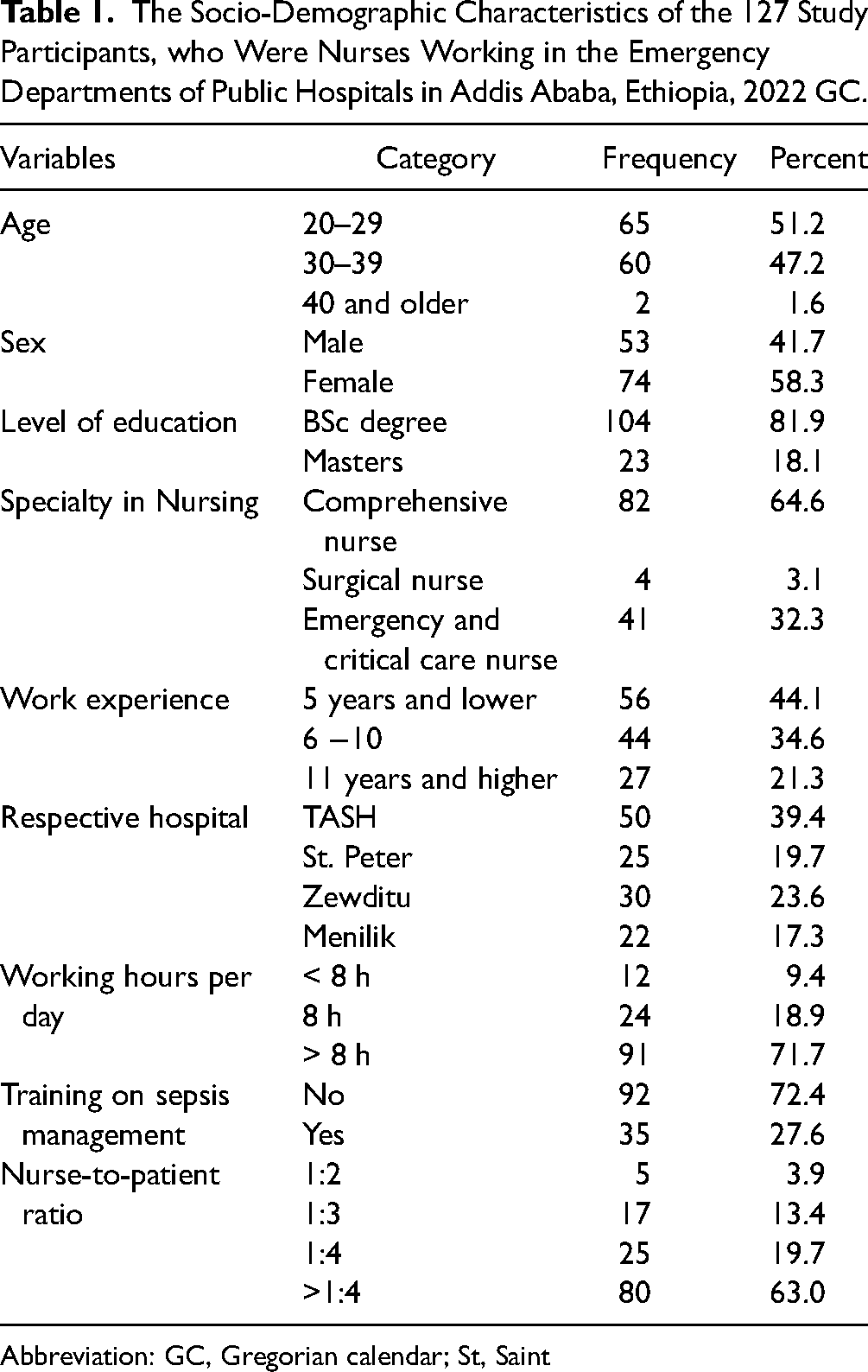
Of the 137 participants, 127 were included in the study, yielding a 93% response rate. The majority of 74 (58.3%) participants were female. More than half 65 (51.2%) of respondents were found in the age category of 20–29 with a mean age of 29.63 years (± 3.73). Regarding the level of education, the majority of participants 104(81.9%) had BSc degrees in their level of education and the remaining were8.1%) had master's degrees concerning the speciality of the nurse the majority of the participants 82(64.6%) were comprehensive nurses. Regarding work experience, the majority of the participants 56 (44.1%) had work experience of 5 years. Concerning the training related to sepsis management 35 (27.6%) participants took the training. Ninety-one (71.7%) nurses revealed that their working hours were > 8 h per day and the majority of the participants 80 (63%) responded their nurse-to-patient ratio was > 1:4. (Table 1)
The Socio-Demographic Characteristics of the 127 Study Participants, who Were Nurses Working in the Emergency Departments of Public Hospitals in Addis Ababa, Ethiopia, 2022 GC.
Abbreviation: GC, Gregorian calendar; St, Saint
Knowledge of Nurses Regarding Sepsis Management
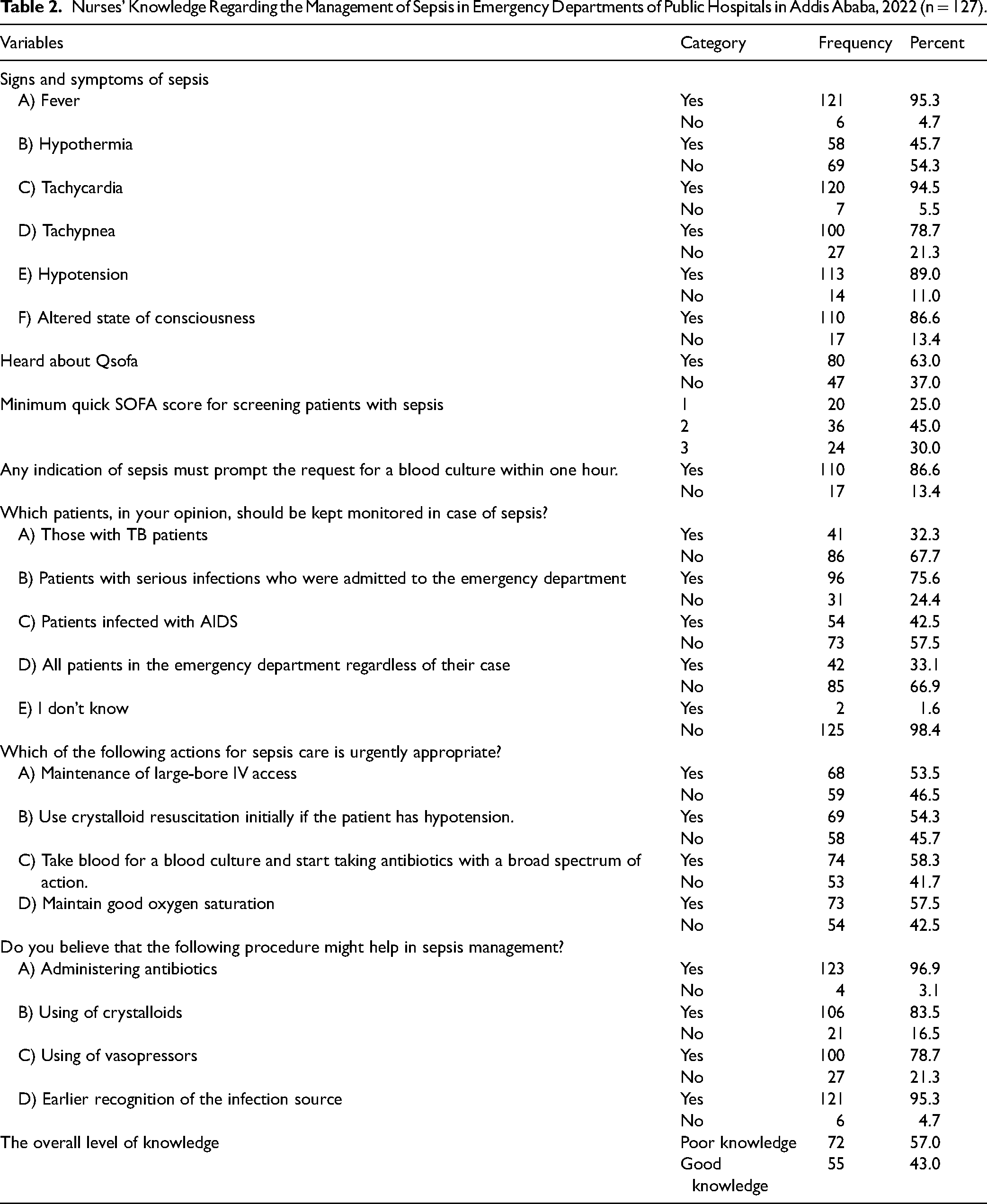
Overall, 57% of nurses had poor knowledge about sepsis management, with a 95% CI (47.6–65.5) (Figure 2). The mean score of knowledge was 15.30 (± 3.04) and the median score of knowledge of nurses towards sepsis management was 15 [IQR, 13–17]. Of 127 study participants, 121 (95.3%) of participants responded to fever as a sign and symptom of sepsis, 120 (94.5%) of participants responded to tachycardia, and 113(89%) participants responded to hypotension as a sign and symptom of sepsis. More than half of the participants 69 (54.3%) did not respond to hypothermia as a sign and symptom of sepsis. Out of the total participant nurses, 80 (63%) nurses previously heard about qSOFA from them only 22 (27.5%) nurses differentiated as not a component of qSOFA. Less than half of the participants 58 (45.7%) did not know about fluid resuscitation as the management of sepsis (Table 2).

Level of knowledge of nurses working in the emergency departments of selected public hospitals of Addis Ababa regarding Sepsis management, 2022.
Nurses’ Knowledge Regarding the Management of Sepsis in Emergency Departments of Public Hospitals in Addis Ababa, 2022 (n = 127).
The Attitude of Nurses Toward Sepsis Management
The mean score of the attitude of nurses was 34.69 (±5.50). Of the total participant nurses, 72 (56.7%) had a favourable attitude with a range of 20 to 50 (Figure 3). The statements with the highest mean score were ‘It is part of my job to initiate sepsis management’ and ‘If I had a sick patient with possible sepsis I would refer to a doctor to perform a sepsis screen’ were 3.94 and 3.91 respectively but the statements with lowest mean score were ‘I often feel it is not possible to carry out sepsis management on septic patients within an hour and ‘Do you think you have got adequate training on sepsis management’ were 2.99 and 2.91 respectively. 32 (25.2%) nurses strongly agreed with the statement ‘If I had a sick patient with possible sepsis I would refer to a doctor to perform a sepsis screen’ and 77 (60.6%) nurses agreed with the statement ‘It is part of my job to initiate sepsis management. Fourty-nine (38.6%) disagreed with the statement ‘Do you think there is a delay in prescribing medications when patients are septic in the emergency department’ and 19 (15%) strongly disagreed with the statement ‘Do you think you have adequate training on sepsis management (Table 3).
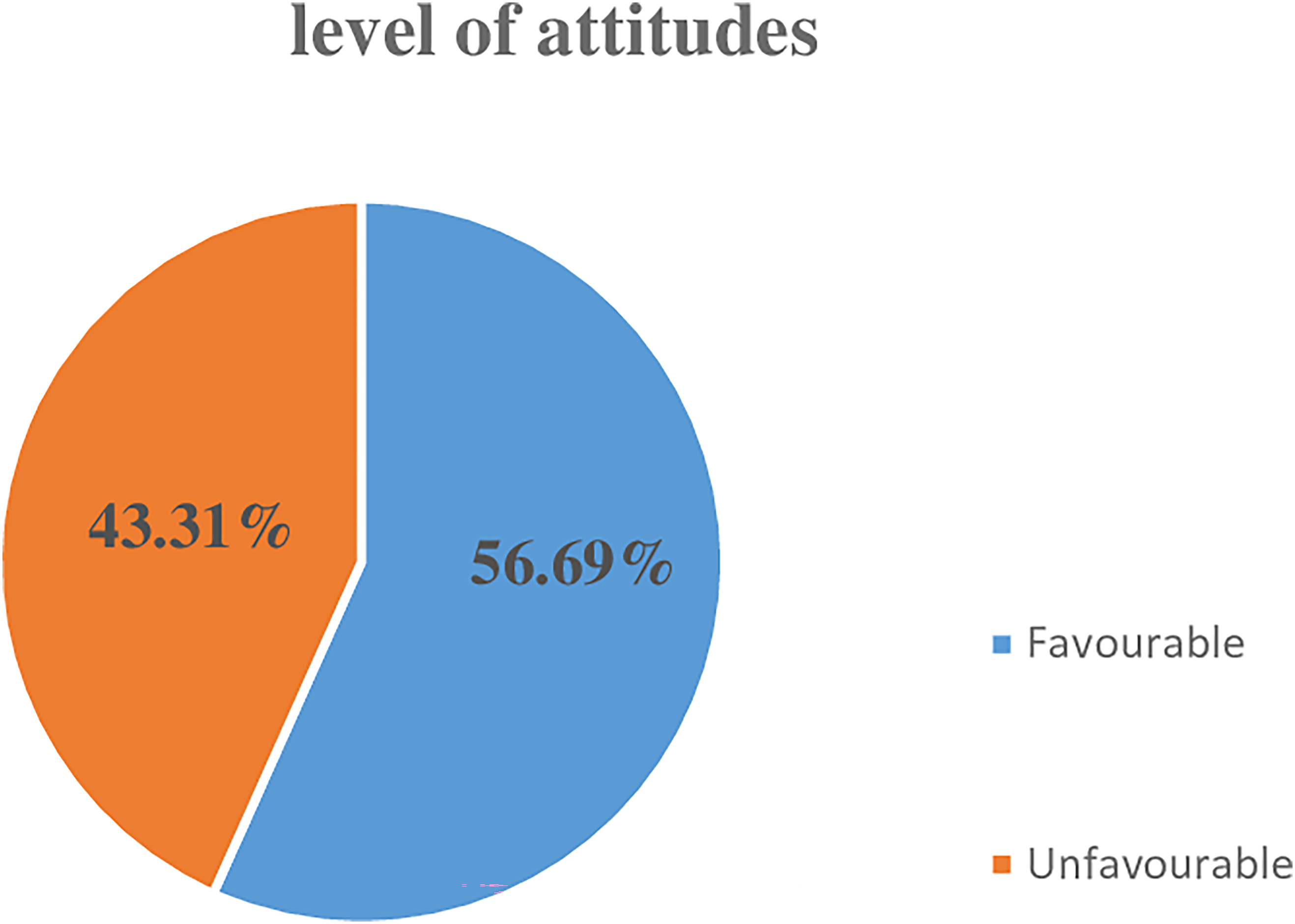
Attitudes of nurses towards sepsis management working in the emergency departments of selected public hospitals of Addis Ababa, 2022.
Attitude of the Nurses on Sepsis Management in Emergency Departments of Public Hospitals in Addis Ababa, 2022 (n = 127).

Factors Associated with Nurses’ Knowledge of Sepsis Management
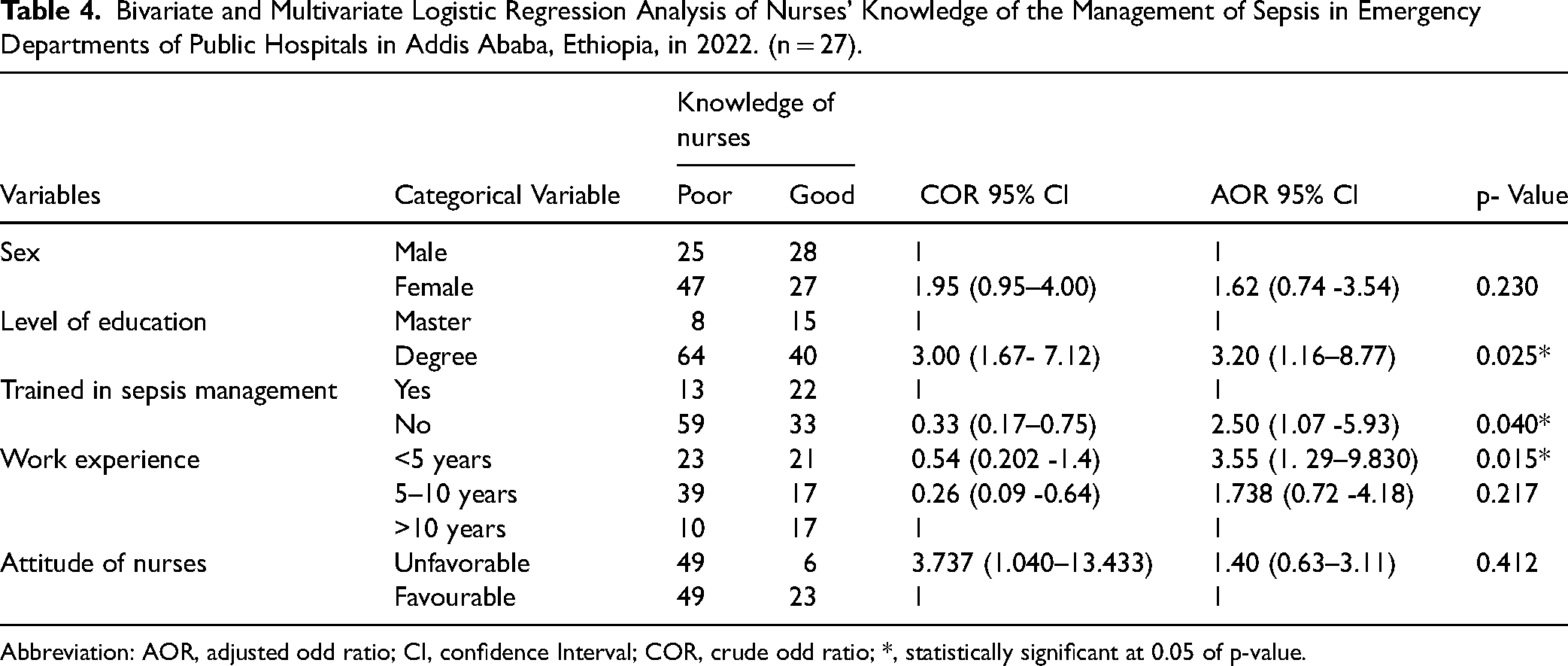
Three factors have been found to have a significant association with nurses’ knowledge regarding sepsis management in multivariable regression analysis: work experience, education level, and formal training. The c study found that odds of poor knowledge were 3.20 times more likely (AOR = 3.20, 95% CI (1.16–8.77)) in having degree nurses as compared to having master's degree. There was a 2.5-fold increase in the odds of having poor knowledge as compared to those who had received training on the management of sepsis (AOR = 2.50, 95%CI (1.07 −5.93)). The odds of having poor knowledge were 3.55 times higher for individuals with less than five years of work experience (AOR = 3.55, 95% CI (1. 29–9.83)) than for those having more than five years of experience (Table 4).
Bivariate and Multivariate Logistic Regression Analysis of Nurses’ Knowledge of the Management of Sepsis in Emergency Departments of Public Hospitals in Addis Ababa, Ethiopia, in 2022. (n = 27).
Abbreviation: AOR, adjusted odd ratio; CI, confidence Interval; COR, crude odd ratio; *, statistically significant at 0.05 of p-value.
Discussion
This study aimed to determine the knowledge of nurses toward sepsis management and its associated factors among nurses working in the emergency department of public hospitals in Addis Ababa. According to this study, 57% of nurses had poor knowledge of sepsis management, with a 95% confidence interval (CI) of 47.6 to 65.5. This result was lower than that of the study conducted in Jordan (Rababa et al., 2022) 82.9% of participants had inadequate knowledge about sepsis management. The difference might be due to the small sample size applied in the previous study, which included only 70 nurses. In addition, the current result is also lower than the study done in Egypt (Zanaty et al., 2016) 68% of the participants had an unsatisfactory level of knowledge about sepsis management. The reason might be due to a variation in the area of study, sample size, and study population, which includes Intensive Care Units healthcare providers in the previous study. However, the present study is higher than the study conducted in Palestine (Salameh & Aboamash, 2022) (47.7%) of the participants had poor knowledge about sepsis management. This discrepancy might be due to the different levels of education, the training gap related to sepsis management in different study areas, work exposure to the emergency unit, the difference in the health systems of the nations, and the different study populations, which applied to both nurses and physicians. The current study is also comparable with previous studies conducted in Canada (Storozuk et al., 2019), Malaysia (Rahman et al., 2019) and Gabon (Adegbite et al., 2021) that reported a lack of knowledge regarding sepsis management.
Compared to nurses with master's degrees, those with baccalaureate degrees were shown to be three times more likely to have poor knowledge regarding sepsis management. This is in line with a study conducted in Iraq (Hasan et al., 2020) demonstrated that educational status is significantly associated with nurses’ knowledge related to sepsis management. The possible explanation might be because of an increased educational status of nurses, and the increased tendency to update knowledge and experience by reading updated protocols regarding sepsis management. However, a study conducted in Palestine (Salameh & Aboamash, 2022) showed no significance in the relation of nurses’ knowledge about sepsis management with socio-demographic characteristics. The possible explanation might be there is a huge difference in socio-demographics between Ethiopia and Palestine.
In the present study, respondents who had not received formal training on sepsis management were 2.5 times more likely to have poor knowledge compared to those who received such training. This is supported by different literature (Adegbite et al., 2021; Edwards & Jones, 2021) indicating that providing formal training towards sepsis management could have a positive relation with increasing nurses’ knowledge. The possible explanation might be due to providing training towards recent guidelines of sepsis management will improve the knowledge of nurses in the emergency department, which is a significant contribution to the provision of quality care in the unit. However, a study conducted in Palestine (Salameh & Aboamash, 2022) showed that there was no significant association of training with nurses’ level of knowledge related to sepsis management. This discrepancy might be due to the variation in the healthcare system between the two countries and the availability of different nursing specialities.
The results of this study found that nurses with less than five years of work experience were 3.5 times more likely than their counterparts to have poor knowledge of sepsis management. This conclusion is supported by a study conducted in Palestine (Salameh & Aboamash, 2022) indicated that there was a positive relation between increased work experience in the emergency with level of nurses’ knowledge towards sepsis management. The possible justification might be due to more exposure of nurses to particular works will increase their knowledge of nurses.
Limitations of This Study
This research was new in Ethiopia and is used as a benchmark for further investigations. The lack of comparable studies to make a more comparative discussion and verified level of practice evaluation methods was the study's limitation. As a result of participants’ self-reporting of their responses to the questionnaire, recall bias was yet another issue in our study. The study's cross-sectional design makes it unable to determine a cause-and-effect relationship. Therefore, more research is required to address the limitations of this study.
Implications for Nurses in Sepsis Management
For nurses managing sepsis, it's essential to provide education and training that results in an increasing level of nursing knowledge. Training on sepsis management is crucial for nurses, as it equips them with the knowledge and skills to effectively recognize and treat sepsis, a life-threatening condition. This is essential for acute and life-threatening emergency patients because it brings care decisions and provision in a limited time. This study has indicated that updating a lower level of education and training on sepsis management can significantly improve the knowledge and skills of nurses in the emergency department. To transform practice and improve patient care overall, strengthening supporting training and exposure to emergency sepsis treatment has consequences for health policy and quality care in the emergency department.
Conclusion and Recommendation
The majority of nurses were not knowledgeable in managing sepsis. The majority of nurses, however, had a positive outlook and competent sepsis care procedures. Poor knowledge about sepsis and its management in the emergency department was shown to be much more common among nurses with less than five years of work experience, no prior training, and low educational attainment. We recommended adopting the most recent recommendations for sepsis care to implement continuous educational programs and on-the-job training for nurses working in the emergency department. Raising the educational level of nurses is crucial to providing high-quality care in the emergency department.
Supplemental Material
sj-pdf-1-son-10.1177_23779608241274224 - Supplemental material for Knowledge and Associated Factors Towards Sepsis Management Among Nurses Working in the Emergency Department of Public Hospitals in Addis Ababa
Supplemental material, sj-pdf-1-son-10.1177_23779608241274224 for Knowledge and Associated Factors Towards Sepsis Management Among Nurses Working in the Emergency Department of Public Hospitals in Addis Ababa by Michael Geletu Alaro, Taye Mezgebu Ashine, Sofia Kebede, Heyria Hussien, Melaku Geletu Alaro and Temesgen Kechine Tibore in SAGE Open Nursing
Footnotes
Abbreviations
Acknowledgment
We would like to thank data collectors, supervisors, and study participants for their openness to participate kindly provision of the necessary information, and for the scarification of their valuable time. We also thank Addis Ababa University for providing this chance.
Authors' Contribution
All authors made a significant contribution to the work reported, whether that is in the conception, study design, execution, acquisition of data, analysis, and interpretation, or all areas; took part in drafting, revising, and critically reviewing the article; gave final approval of the version to be published; have agreed on the journal to which the article has been submitted; and agreed to be accountable for all aspects of the work.
Availability of Data
The data used for analysis are available on secure and reasonable request.
Declaration of Conflicting Interests
The authors declared no potential conflicts of interest with respect to the research, authorship, and/or publication of this article.
Ethical Consideration and Informed Consent
Ethical clearance was approved by the Addis Ababa University institutional review committee (ref = EM/SM/542/2014). A formal cooperation letter was written by Addis Ababa University and submitted to the hospital's Administrative to obtain their cooperation. The purpose of the study and confidentiality were explained to the study subjects. The study was conducted per the declaration of Helsinki. At the time of data collection, verbal consent was taken from the participants to confirm whether they were willing to participate. Those not willing to participate were given the right to do so. Confidentiality of responses was also ensured throughout the research process.
Funding
The authors received no financial support for the research, authorship, and/or publication of this article.

Supplemental Material
Supplemental material for this article is available online.
References
Supplementary Material
Please find the following supplemental material available below.
For Open Access articles published under a Creative Commons License, all supplemental material carries the same license as the article it is associated with.
For non-Open Access articles published, all supplemental material carries a non-exclusive license, and permission requests for re-use of supplemental material or any part of supplemental material shall be sent directly to the copyright owner as specified in the copyright notice associated with the article.
