




Abstract
Introduction
Adolescents with epilepsy are highly stigmatized and discriminated in schools, more than 36% of children and 6% of adolescents with epilepsy have never attended schools, as a result of episodes of seizures, drop-out their education permanently.
Objective
To assess knowledge and practice toward epilepsy and its associated factors among teachers’, in Hossana town administration, Southern Ethiopia, 2020.
Methodology
Institutional-based cross-sectional study design was conducted from October 1 to 25/2020. A total of 338 samples size estimated for the study. To allocate a sample for each randomly selected school, proportionate to population size was applied. Finally, the study units were selected by applying a simple random sampling method. To test internal consistency for knowledge assessment questions reliability test (Cronbach alpha) was performed. Data was entered into Epi-Info software, considering variables that have statistical significance in bivariate logistic regression as candidate variable multivariable logistic regressions was done to identify determinants of teachers’ level of knowledge and first aid practice.
Result
Totally, of 310 school teachers participated in the study which gave a respondent rate of 92%. Participants whose ages ranged from 21 to 69 years took part in the study, with a mean age of 33.69 (SD + 9.39) years. Based on the weighted scores, only 39.4% of participants had good knowledge whereas only 40.2% of participants gave at least one expected/appropriate first aid which was confirmed by cross-checked questions. Being female AOR = 1.65 (95% CI 1.05, 2.72), year of teaching experience AOR = 2.67 (95% CI 1.49, 4.81), and teachers who ever heard about epilepsy were 46% less likely knowledgeable and teachers who married 41.7% the higher first aid provision practices as compared their counterparty.
Conclusion
Teachers’ knowledge toward epilepsy is lower than previous studies. Participants’ years of teaching experiences, having awareness about epilepsy, and sex were found determinants of the school teacher's level of knowledge.
Recommendation
Clinical as well as community nurses should have look for and promote school communities and governing bodies to incorporate knowledge improvement activities in education curriculum.
Introduction
Epilepsy is the most common chronic neurologic disorder that occurs worldwide. Principally characterized by episodes of recurrent convulsive attacks or seizures, which occurred as a result of disorderly sudden excessive discharge of the cerebral neurons (Asadi & Torabi, 2012; Engel, 2013; Hickey, 2013). To this end, an abnormal discharge of the neurons results in a disturbance of sensation, temporary loss of consciousness, and convulsive movement or combinations of those. Furthermore, it is one of the neuropsychiatric problems that account for more than one-fourth of the global burden of disease (Ali Akbar & Mohammad, 2012; Goronga et al., 2013; Sönmez et al., 2014).
However, epilepsy is more predominant among the school-age population, it affects people in all age groups worldwide (Akpan et al., 2013; Leonardi & Ustun, 2002). Even though there are three types of epilepsy, an epileptic seizure is a key manifestation for all which is characterized by predominant features of cognitive, psychological, and social consequences (Goronga et al., 2013; Oka et al., 2006). Therefore, epilepsy is not only a medical problem but also has significant public impacts, which influences emotional, behavioral, self-esteem, sociological, economic, and cultural domains (Organization, 2019). According to the World Health Organization (WHO) recommendation of the 68th World Health Assembly (WHA), epilepsy was identified as one of the major burden, and recommended that the SDG intervention gave due attention to promote mental health and well-being. On top of this, the WHO/WH/SDG urge countries to take a country-level coordination to address the health, psychosocial, economic, and public knowledge toward epilepsy (Fong et al., 2018).
The global prevalence of epilepsy ranges from 2.8 to 19.5 in developed and 5 to 10 per 1000 people in developing countries annually (Thapa et al., 2017) whereas new occurrences of epilepsy per year vary from country to country. For instance, in Norway, Italy, and the United Kingdom it was estimated at 11, 33, and 48 per 100,000 respectively, the incidence was 140 to 230/1000 per year in developing countries. Similarly, incidence and prevalence in Sub-Saharan Africa (SSA) are estimated to be 63 to 158/100,000, 15/1000 people per year, respectively (Alqahtani, 2015; Preux & Druet-Cabanac, 2005). Surprisingly, available evidence shows that the incidence of epilepsy in Ethiopia is very high, 64/100,000 and its prevalence is 5.2% (Tekle-Haimanot et al., 1990; Teshome et al., 2022).
In addition to its incidence and prevalence, epilepsy's consequences are more devastating than its magnitude since it exposes victims to multidimensional disparities. As a result of misconception and lack of adequate knowledge, people's failure is to understand its forms as well as impact (Kathomi Mbuba, 2011; Thacker et al., 2008). According to the complied report from different articles across a globe, the level of inadequate knowledge toward epilepsy ranges from 40% to 86% (Wubetu et al., 2020). Even though epilepsy had no social, ethical, and geographical boundaries worldwide, historical trends have confirmed that epilepsy has been a culturally devalued condition. People affected by epilepsy are considered as they were believed to be possessed by evil spirits, witchcraft, and the consequence of punishment by God/supernatural power and these beliefs yet persist in most cultures and regions of the world (Alkhamra et al., 2012; Beghi, 2020). Besides school teachers’ knowledge, attitudes and practices: school setups, advancement of service delivery, and societal awareness have a dramatic role in reducing the impact of epilepsy (Karimi & Heidari, 2015). Moreover, having adequate knowledge and first aid practice of teachers toward epilepsy has direct positive impact on the life of the students in several ways like reducing school dropout, improving school performance, enhancing social networking, and improving trauma management during an attack. As far school teachers, implementing mitigation strategies for people affected by epilepsy also play a great role in school success (Adewuya et al., 2006; Bishop & Boag, 2006; Karimi & Heidari, 2015).
Epilepsy accounts for 10% of mental disorder worldwide, which causes about 13 million disabilities that mainly results in, fracture, trauma, burn and traffic accidents per year (Mula & Kaufman, 2020; Organization, 2019). Globally, an estimated 70 million people live with epilepsy, and 80% of them live in low and middle-income countries (Gedefa et al., 2012; Yemadje et al., 2011). Across the globe 3.5 million people develop epilepsy every year, an estimated 33 million children live with epilepsy, and children and adolescents constitutes 40% of the total global epilepsy burden (Rabie et al., 2016). Furthermore, the consequences of epilepsy complication is very serious, for instance, 6.3% of patient with epilepsy die within every 2 years (Ashenafi et al., 2019). And they are always at higher risk of multidimensional health and related problems. For instance, they faces experience educational underachievement, learning difficulties, mental health problems, social isolation, and poor self-esteem than their counter healthy matches (Khanal et al., 2015; Williams, 2003). Evidences revealed that, epileptic children have 2.5 times more chance to present with behavioral, emotional, and psychiatric problems when compared with healthy children (Saleh et al., 2019). In turn, their school period has a significant impact on child's quality of life and future adulthood roles (Abulhamail et al., 2014; Savarese et al., 2015).
Ultimately, the impact of epilepsy is more devastating than disease itself. Furthermore, people who live with epilepsy (PLWE) have been suffered by epilepsy related stigma and discrimination (Babikar & Abbas, 2011; Baker et al., 2000; Fong et al., 2018). Stigma (either social or perceived) and discrimination are the two worst forms of the public impacts of epilepsy that have been documented as the most devastating form (Bhesania et al., 2014; Gedefa et al., 2012; Khan, 2015). In addition to psychological and economic burdens PLWE who suffered from social stigmatization face psychological problems such as depression, anxiety and psychosis. And also this problem, leads to civil and human right violation, poor adherence to treatment and decrease access to healthcare (Luna et al., 2017; Mula & Kaufman, 2020). Adolescents with epilepsy are highly stigmatized and discriminated in schools, more than 36% of children and 6% of adolescents with epilepsy have never attended schools, whereas adolescents with epilepsy who yet attending school, as a result of episodes of seizures, drop-out their education permanently. Similarly, they are more likely to lose their job and face difficulties in finding friends (Fitts et al., 2019; Mustapha et al., 2013).
Epilepsy-related social stigmatization is one of the dominant factors throughout the world and in today's society; it is accompanied by psychopathological consequences of varying prevalence. For instance in Australia 65.7% had reported perceived stigma (Tegegne & Awoke, 2017). In the Benin, 68.7% of PLWE are victims of discrimination (Fanta et al., 2015). Surprisingly, in Persia (Tehran) epileptic individuals are prohibited from offering sacrifices (Ghanean et al., 2013). In Ethiopia, students with epilepsy reported significantly higher levels of stigma (perceived stigma) with a proportion of 81% (Adal & Abebe, 2022).
Teachers as well as students unable to witness the sudden loss of self-control result in a social rejection which proceeds stigma, and it is the most serious and persistent negative aspect of epilepsy (Atadzhanov et al., 2010; Başkan & Güneş). Despite social withdrawal, highly stigmatized victims experience increased episodes of, epilepsy, children are banned from school, adults are always excluded from marriage and many of them get challenged by employment denial (Chomba et al., 2007; Teferi & Shewangizaw, 2015). Epileptic pupils can fear teachers and others being discriminated, which end up in reluctance to attend school. Moreover, there is a general tendency by teachers to react impulsively whenever a student in their class is suddenly under an epileptic attack (Bishop & Slevin, 2004).
Literature Review
Even though the occurrence of epilepsy throughout the world is common regardless of geographical distribution, its prevalence may vary from country to country and currently it is recognized by many countries as one of leading public health problem (Amudhan et al., 2015). Different studies reveled that epilepsy affects people in all age groups but, is more prevalent in school-age children. Epilepsy is just one of the public health problems it needs general public education campaign and continuous medical care. A study done in Brazil neurocysticerosis reflects an important sanitary problems related to the insufficiency of basic health basic health educative problem found as a major case for high prevalence (Fehintola et al., 2019).
According to the study done in Madagascar, epilepsy not only affects the cognitive development of the children but also results in academic difficulties. Thus, different studies have shown that epilepsy in children is one of the roots causes of school failure, in turn 30% to 40% of children affected by epilepsy face difficulties in their education (Zodaly et al., 2020). A study done on knowledge in Ethiopia revealed that shown that 90% of participants knew epilepsy as a disease and 26.8% of students live with epilepsy (Hassen & Beyene, 2020).
School society practices and attitudes toward epilepsy are influenced by the degree of school teachers’ knowledge. School teachers are the point of entry to create a generation with a positive attitude and better practice as well as for narrowing gaps in the school community and also they can play a central role in school enrolment of children, performance, and social skill development. In this regard, they can positively change school pupils’, teachers and other community's knowledge, attitudes and practices. Eventually, they can make the overall environment quite helpful for the victims (Alharthi et al., 2020; Owolabi et al., 2014). Therefore, the purpose of study is to assess level of school teachers’ knowledge, practice toward epilepsy and its associated factors in Hossana town administration, southern Ethiopia.
Method and Materials
Study Design and Setup
An institutional based cross-sectional study design was conducted from October 1 to 25/2020 in Hosanna Town Administration which is the capital town of Hadiya zone. It is located 232 km to the South of Addis Ababa (AA) (capital city of Ethiopia). Hossana town consists of four administrative districts/kifle ketema, within it there are 10 kebeles (smallest administrative structure). The total population of the town administration was 105,371, and the female population constitute 53,779 whereas 51,632 were males (according to, Hadiya Zone Finance, economic and development department, 2019 physical year) population projection report.
In the town, there is one public referral hospital, one private surgical hospital, three public health centers, one public university, and three colleges. In the town there are 11 primary primaries to secondary and 4 high schools governed by public sector, and 38, primary to secondary and 9 private high schools. Totally there are 22,356 students registered for the (2020/2021 G.C.) physical year and there are 1032 and 2508 full-time employed teachers in the public and private sectors, respectively.
Source and Sample Population
The target population of the study was all teachers, who have been working in Hosanna Town administration schools in 2020 academic year. The study population encompasses all randomly selected teachers by using a simple random sampling technique from randomly selected schools in Hosanna Town Administration.
Sample Size Determination and Sampling Procedures
Sample Size for First Specific Objective
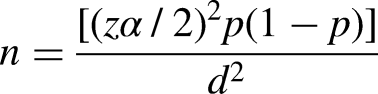
A single population proportion formula was used to estimate a needed sample size for the first specific objective by using the following assumption: 95% confidence level (for standard normal distribution with a corresponding value for α = 0.05, Zα/2 = 1.95), 5% margin of error and authors considered the proportion of the level of teachers’ knowledge 70% from a study done somewhere else (Mustapha et al., 2013), and the following statistical formula was used to do so:
Sample Size Estimated by Using Software, Epi-Info
For the first specific objective a sample size was also calculated by using Epi-info Software version 7.0, considering the total number of teachers (surveyed population) actively working in Hossana town administration schools 3,540, population proportion 24.3% (the study conducted in AA and confidence limit 5%. Then the final estimated size by using the aforementioned assumptions is 262. Finally, comparing the two estimated sample sizes, the first sample size (338) was considered for the study as being larger sample.
Sampling Procedure
To select the study participants, first, 13 of the total 62 schools were selected randomly by lottery method. Secondly, the total number of teachers in each randomly selected school was obtained from each school, and then the sample size was proportionally allocated to each school based on the number of teachers available in each school.
Thirdly, the total estimated sample size (n = 338) was divided by the total number of teachers (N = 898) in the selected schools which yield a proportionate value (P). Fourthly, to get the number of the participants from each selected school, the proportionate value (P) was multiplied by the total number of teachers in the respective schools which gave proportional sample size for each selected schools. Finally, the study participants were randomly selected from each school through applying a computer based random selection technique until its allocated sample size was reached (Figure 1).

Sampling procedures to select teachers' from randomly selected schools in Hossana town administration, Hadiya Zone, Southern Ethiopia, 2020.
Schematic Presentation of Sampling Procedure
Inclusion and Exclusion Criteria
Teachers who have been working in the selected schools during the current academic year at least for the last six months were included in the study. The study excluded teachers who previously had taken training on epilepsy, and/or ever been diagnosed with epilepsy, and those who were working in the selected schools as contractual/part-time based teaching from universities and colleges.
Institutional Review Board Approval
A study protocol of this study was reviewed by the Institutional Review Board (IRB) and they assure that there was no body part (tissue, organ and any sample) taken from the participants. The ethical clearance was obtained from the IRB of the College of Medicine and Health Science. A cooperation letter was written for respective units (schools) from the research and vice-president office.
A head of data collection the purpose of the study as well as confidentiality including the benefit and right to withdraw from the study was explained appropriately for each study participant and then informed consent was taken from all participants, no personal identifiers were written on the data collection tools and the raw data was assessed only by the principal investigators and kept anonymous.
Variable and Terms of Definition
Outcome variable is teachers’ knowledge and practice whereas dependent variables include sociodemographic, environmental, and experience with epilepsy.
Operational Definition
Data Collection Tools, Techniques, and Quality Control
A structured questionnaire was carefully designed and prepared by reviewing literatures used in this study. First, it was developed in English and translated to Amharic then back to English again by another person to determine its consistency. A study tool consists four main parts: background/sociodemography characteristics were assessed by 8 items, epilepsy related issues by 6 items, and knowledge of participants measured by using 15 items coded as (1 = yes, 0 = no and recoded for those multiple questions: all right responses recoded as 1, all incorrect responses recoded as 0), and teachers first aid practice assessed by 6 cross check items. Based on the given proportion for the respective schools a structured self-administered questionnaire was distributed to randomly selected teachers. Data were collected by grade 12 complete trained students after assuring their confidentialities and competencies.
Data quality and study tool validation from the inception of research to analysis were performed in each steps like pre-test, orientation, and reliability test. Pre-training was given to data collectors and supervisors before the commencement of the data collection on, the study tools that included how to ensure quality, explained the objective of the study, how to adhere to collection ethics and keep confidentiality by principal investigators. A head of data collection date commenced, the study tool was pre-tested for necessary amendment in Gimbichu public High school (another town in the same zone). In addition, to determine internal consistency, the reliability test (Cronbach's alpha test) was performed on a study tool for those questions that were designed to assess the level of participants’ knowledge and its corresponding value was 0.74. On the daily bases of the data collection, all collected data were checked for consistency and completeness, and then coded by the principal researcher. Then, however, questionnaires, which not fit the above criteria, were discarded and overall to ensure the quality of the study authors strictly undertook strong supervision and monitoring throughout the study work.
Statistical Methods and Data Analysis
Coded and cross checked data were entered into the Epi-Info software version 7 and exported to Statistical Package for Social Science (SPSS) Software for further data cleaning and analysis. And then authors followed stepwise data analyses. First, descriptive statistics that included, frequencies, percentages, mean, and standard deviations were estimated and used to describe the findings. All the questionnaires designed to measure level of knowledge labeled as 1-yes (correct answer), 0-no (incorrect answer) and for those questions that have multiple choice again re-coded into two, all correct answer as “1” and incorrect answer as “0.”
Then based on the mean score level of knowledge categorized into two as knowledgeable and inadequate knowledge.
Second, model fitness was preformed through applying Hosmer Lemshow goodness of fit and for those variables fulfills statistical assumption cross-tabulation and logistic regression was done. To identify variables statistically significant with the outcome variable Chi-squared test and bivariate logistic regression were employed. Third, considering those variables statistically significant in bivariate logistic regression at 95% CI at P-value < .25 as a candidate, multivariate analysis was done to determine predictors of teachers’ knowledge and practice toward epilepsy.
Result
Socio Demographic Characteristics
Out of the total estimated sample, 10 questionnaires were discarded due to incompleteness, and 18 of the respondents did not return the self-administered questionnaire whereas 310 of the respondents returned a questionnaire that gave a response rate of 92%. The majority, 189 (70%) of the respondents were Hadiya, but 40 (12.9%) of the respondents refused to report their ethnicity. Their age ranged from 21 to 69 years participated in the study (minimum vs. maximum), with a mean age of 33.69 years (SD ± 9.39). Generally, all types of school teachers (kindergarten to high school) participated in the study, out of the total participants 3.5% of them were school directors. The upper limit of the teaching experience was 45 years, with a median of 10.00 years (Table 1).
Sociodemographic Characters of Participants, in Hossana Town Administration, Southern Ethiopia, 2020.

Legend: ETB = Ethiopian Birr, Others = Silte, tigre, Gamo, sidama.
Teachers Experience on Epilepsy/Familiarity With Epilepsy
There were nine items designed to assess familiarity of teachers toward epilepsy. Out of the total participants, 42 (13.5%) had never heard about epilepsy. The majority 119 (44.6%) reported the source of the information was peers or friends whereas the least 7.5% reported newspaper. Nearly three-fourths of the participants had heard from a single source, but only 7 respondents had information exposure to more than five sources. Apart from sources, 42.6% of participants had negative beliefs about the causes of epilepsy. Surprisingly, 29%, 7.4%, and 6.1% of them believed that epilepsy is caused by evil spirits, as punishment of supernatural force/possession, and parent or genetically, respectively. Only 26 (8.4%) respondents had a family member who was a victim of epilepsy. However, 215 respondents had awareness of the clinical features of epilepsy and more than fifty per cent of the respondents listed three and above clinical features. The majority, 182 (84%) of the participants reported that epileptic victims possessed foam while on attack. In this study, 69.9% of the respondents taught for the last 6 and above years in different schools and they reported that only 82 (26.6%) parents communicated with them as their children are victims of epilepsy. Furthermore, 58 (18.8%) teachers had discussed with an individual who had an epilepsy case before this study.
Knowledge and First-Aid Measure Practice of School Teachers About Epilepsy
Participants’ level of knowledge was measured using fourteen items that contained “Yes” or “No” and multiple-choice choices with cross-checked responses with a minimum and maximum expected score of 0 and 14, respectively. To determine internal consistency the reliability test (Cronbach's alpha) was done, which gave a score of 0.74. Secondly, questions which eligible to assess the level of knowledge were filtered accordingly. Thirdly, weighted sums of the item responses were performed for each respondent. Finally, Based on the weighted scores level of knowledge is categorized into two. Participants who responded to 75% and above questions, categorized as knowledgeable/good knowledge and who scored below the cut-off point are inadequate knowledge. Hence, 39.4% with [95% CI (34.5%, 45.2%)] of participants had good knowledge.
Participants were interviewed about exposure to first aid provisions for the epilepsy victim. Out of the total participants, 175 of them reported they observed an epileptic victim during an attack in their school compound. Descriptive and correlation analysis was done on practice/first aid exposure. However, 102 (58.3%) participants thought that they gave first aid to the victims during an attack, only 40.2% of participants gave at least one expected/appropriate first aid which was confirmed by cross-checked questions. Participants who couldn’t give first aid to the victims when they saw during the attack reported the main reason was lack of first aid materials 40.5% followed by inadequate knowledge 31.1% to identify either epilepsy or others (Figure 2),
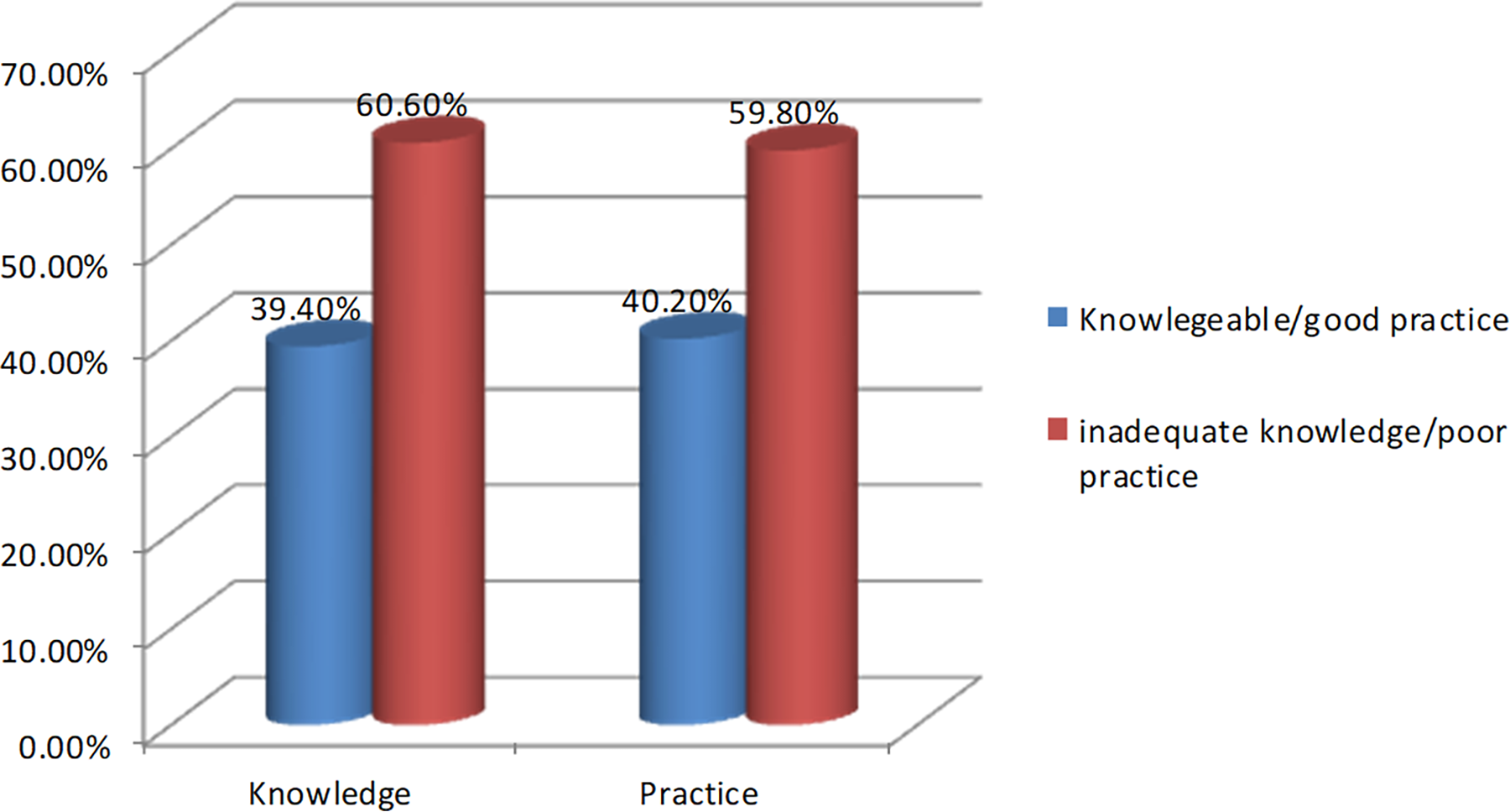
Knowledge and practice level of the school teachers toward epilepsy, in Hossana Town Administration, Southern Ethiopia, 2020.
A descriptive finding of this study reported that as the professional status of teachers increased, their knowledge and provision of first aid measures were seen to decrease. Participants who heard information from more than one source had better first-aid practice than their counterparties (Figure 3).

Level of knowledge and practice toward epilepsy among school teachers against with educational status, in Hossana Town Administration, Southern Ethiopia, 2020.
Determinants of Knowledge and Practice
Bivariate Logistic Regression
Binary logistic regression was conducted to select candidate variables for multivariate regression. All variables at P < .25 with a 95% confidence level were selected as statistically significant and entered into the model then their relationship against with level of teachers’ knowledge and first-aid practice was done one by one and identified for the next model. Hosmer Lemeshow's goodness-of-fit is also done to determine model fitness. Among background variables: ethnicity, age, and educational status were not statistically significant whereas sex marital status, salary, length of work experience, ever-heard information about epilepsy, and having awareness of clinical features of epilepsy were statistically significant.
Multivariate Analysis
To identify predictors of teachers’ knowledge and first-aid practice: after control of other confounding variables multivariate analysis was performed for those variables fit statistical significance in bivariate logistic regression at P < .05. Accordingly, female teachers were 1.6 times more likely knowledgeable than male AOR = 1.65 (95% CI 1.05, 2.72), when the number of working years/experience increases, the teacher's level of knowledge increased by 2 folds as compared to their counterparties’ AOR = 2.67 (95% CI 1.49, 4.81). Teachers who ever heard about epilepsy from any source AOR = 0.54 (95% CI 0.24, 0.95) lower odds of knowledge as compared to their counterparties. However, marital status, educational level, and participant's income hadn’t association with the level of teachers’ knowledge and practice of first-aid measures. Whereas school teachers age, 46–61 years is 1.4 AOR = 1.36 (95 CI 1.052, 8.74) times more likely to provide first aid for the victims than teachers age below (Table 2).
Multivariate Analysis for the Predictors of Teachers’ Knowledge and Practice Toward Epilepsy, in HTA, Hadiya Zone, Southern Ethiopia, 2020.
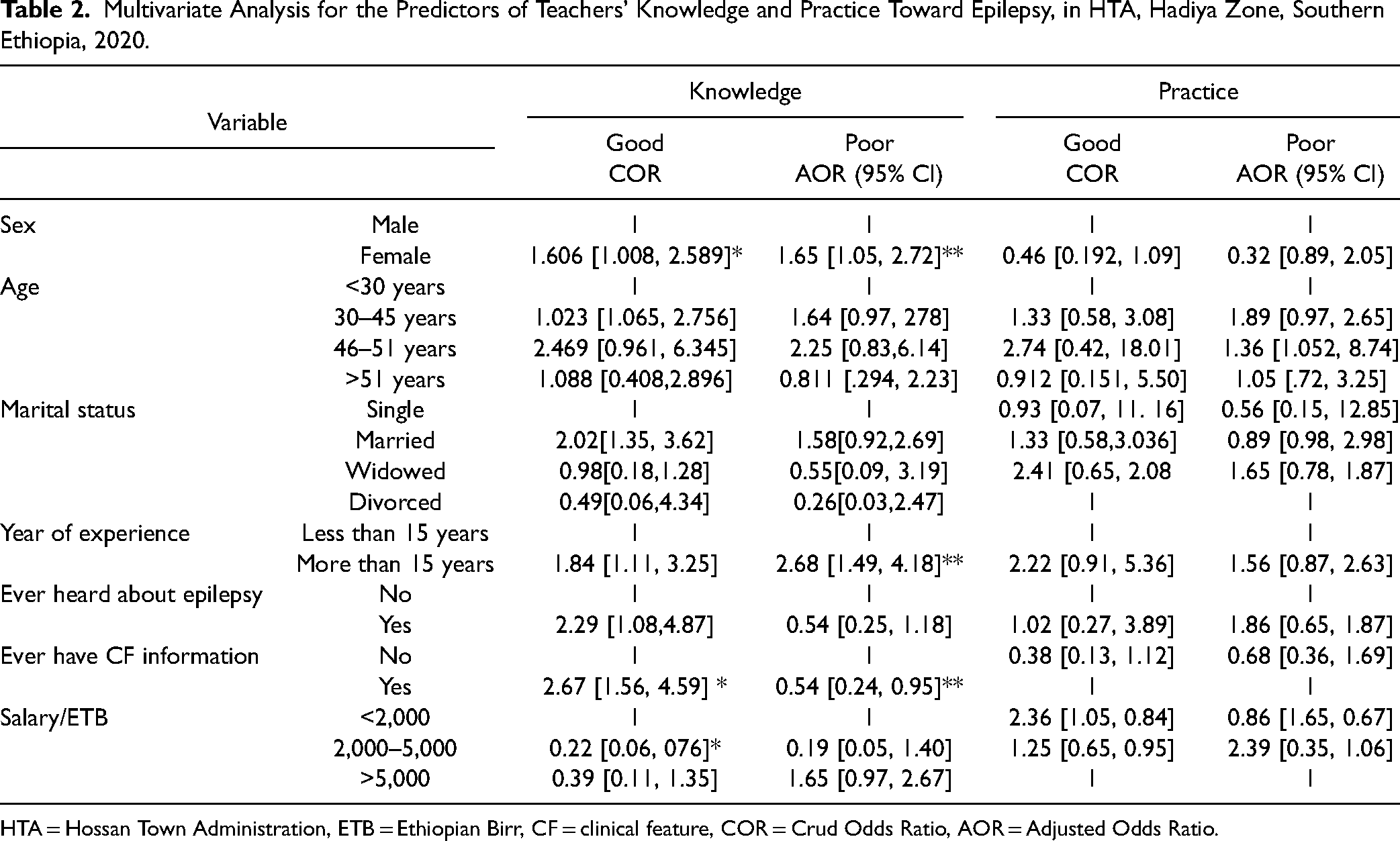
HTA = Hossan Town Administration, ETB = Ethiopian Birr, CF = clinical feature, COR = Crud Odds Ratio, AOR = Adjusted Odds Ratio.
Discussion
Despite having information regarding epilepsy, the provision of first aid is a crucial indicator to ensure sustained enrolment and improve the performance of school children. On top of this, if school teachers have good knowledge and first aid practice, it will help students to decrease drop-out and avert community miss perception. This study helps to obtain information about the level of teachers’ knowledge and first-aid measures practices toward epilepsy. The study found that years of long duration of teaching experience, being female, and having information about signs and symptoms were identified as the predictors of knowledge. This study provides pertained information about the level of teachers’ knowledge and first-aid measures practices toward epilepsy. The study found that years of long duration of teaching experience, being female, and having information about signs and symptoms were identified as the predictors of knowledge.
In this study the most 86.5% of teachers heard about epilepsy from different sources, the proportion of this finding is lower than a study done in India 97% (Thacker et al., 2008). The difference may be the availability of different media and governing body interest as of having a high prevalence in a country may increase awareness creation activities thorough out the nation. But, the current study findings revealed that school teachers’ knowledge toward epilepsy was low as compared with previous studies.
The current study revealed that school teachers’ level of knowledge (good knowledge) was 39.4%, the finding is lower than the studies done in Ghana 73.9% (Ahmed et al., 2020), Nepal metropolitan city, 86% (Khanal et al., 2015), Saudi Arabia, 55% (Abulhamail et al., 2014), and Lay-Armachiho district, Northwest Ethiopia (Oumer et al., 2020) school teachers. But, it is higher than a study done in Iran, 17.7% (ریاسی, کاهنی & زاده, 2014), the possible reason for the lower level might be the set-up where the study done and the counters’ economic level may not avail opportunities to provide on-job training for school teachers. Those studies were done in public schools only which may give a conducive environment to integrate various governing as well as other implementing partners’ activities. In turn, it increases information access about epilepsy
The result of the current study revealed that 25% of respondents had an awareness of epilepsy as it is hereditary. On the other hand, previously conducted studies reported a comparable prevalence of awareness of epilepsy in Nepal (Khanal et al., 2015) and Iran (Asadi & Torabi, 2012) 19.3% and 41% of respondents, respectively, believed that epilepsy is hereditary. Many studies done in Africa (Millogo & Siranyan, 2004; Nnebue et al., 2023) also support these findings. In contrast study conducted in Iraq 37.5% (Abdulla, 2014) of the participants believed that epilepsy was contagious disease. A possible reason for higher prevalence might be most Persians traditionally consider majority of disease have genetically related.
However, 58.3% of school teachers in this study thought as gave first aid measures for victims during attack, but only 40.2% of them were provided proper first aid measures for the victim like turning to the side, head support, worn-out clothes, and avoid purring water. This finding is in line with the study done in Lay-Armachiho district, Northwest Ethiopia, 44.7% (Oumer et al., 2020). But, this was a lot far higher than the percentage found in the study done in southern Saudi Arabia 35.9% (Alqahtani, 2015), Ghana, 19.3% (Ahmed et al., 2020) and India 16.3% (Thacker et al., 2008). The possible reason for the difference might be the social context of the community, a study done in Saudi Arabia is among only male teachers, and there may have religious restrictions to come in touch with female students. In addition, Indian and Ghanaian peoples more practice traditional healers than medical treatment and most of the societies believed a case is happen as a result of punishment and superstition as well as it is contagious. In our study teachers’ year of teaching experience is positively associated with the level of knowledge toward epilepsy. This study finding demonstrated that teachers’ who had more years of teaching experience (>15 years), 59% were knowledgeable.
Above 15 years teaching experience is increases level of knowledge about epilepsy by 3 folds. This study finding is in-line with a study done by Mohammed Oumer among school teachers in Lay-Armachiho district, Northwest Ethiopia, there 14 and above years teaching experience increases teachers’ knowledge by two folds (Oumer et al., 2020). But this finding is not supported by study done in Ghana, there is no statistical association between teachers years of teaching experience and knowledge (Ahmed et al., 2020). The possible reason for the discrepancy is selection of reference during analysis.
Participants’ sex was positively associated with knowledge level while negatively associated with first aid measure practice. Forty-six percent of females had good knowledge, the proportion is comparable with the study done in Jeddha, Saudi Arabia, (Kanjo et al., 2021). The possible justification for the variation is biological parameters. Females are more prone to care for the children than males as a result of this they can get information from varies source and highly imitate to put into the ground.
Strength and Limitation of the Study
When compare with previous studies done in different part of the country more strong because majority of studies were focused on epidemiology and descriptive study of epilepsy whereas this study attempt to identify factors affects provision of first aid for epileptic victim. Furthermore, participant response for practice is not assessed by yes or no response but also measured by others six cross-check questions.
Limitation of the study is a quantitative finding is not supported by qualitative approach especially to explore participants’ perception toward epilepsy.
Implication for Education and Practice
Minimizing the gap between teachers’ knowledge and practice, particularly in the way of providing first-aid provision is a critical issue. Despite teachers attempt to delivery first aid measures for the victims, special attention should be taken to capacitate them to enhance how they can deliver proper first aid practices while victim encounter attack. Thus, any concerning bodies including implementing partners, governing bodies and humanitarian societies must provide capacity building training on the first aid practice about epilepsy to the school teachers.
To improve of teacher level of knowledge education bureau and respective schools should have work in-collaboration in preparing on job training as well as sensitization training for schools communities. Furthermore, governing bodies should have prepared guidelines and packages to deliver as well as support epileptic pupils in the school and create communication channels with parents. Clinical as well as community nurses should have look for and influence school communities as well as governing bodies to incorporate knowledge improvement activities in education curriculum.
Conclusion
This study finding revealed that, teachers’ knowledge toward epilepsy is lower than different studies conducted in country and abroad. However, high proportion of teachers who were look for epileptic victim in the school compound and they had provided first aid measures during the attack or when a child seizes, but the cross check items results suggested that they couldn’t provide appropriate measures (expected first aid measures). Participants’ years of teaching experience, sex, and had awareness toward epilepsy were found determinant of the school teacher knowledge.
Supplemental Material
sj-doc-1-son-10.1177_23779608241272584 - Supplemental material for Knowledge and Practice Toward Epilepsy and its Associated Factors Among Teachers, in Hossana Town Administration, Southern Ethiopia, 2020
Supplemental material, sj-doc-1-son-10.1177_23779608241272584 for Knowledge and Practice Toward Epilepsy and its Associated Factors Among Teachers, in Hossana Town Administration, Southern Ethiopia, 2020 by Getachew Ossabo Babore, Teshome Tesfaye Habebo, Taye Mezgebu Ashine, Asnakech Zekiwos Helizo and Dawit Gebremichael Anshebo in SAGE Open Nursing
Supplemental Material
sj-docx-2-son-10.1177_23779608241272584 - Supplemental material for Knowledge and Practice Toward Epilepsy and its Associated Factors Among Teachers, in Hossana Town Administration, Southern Ethiopia, 2020
Supplemental material, sj-docx-2-son-10.1177_23779608241272584 for Knowledge and Practice Toward Epilepsy and its Associated Factors Among Teachers, in Hossana Town Administration, Southern Ethiopia, 2020 by Getachew Ossabo Babore, Teshome Tesfaye Habebo, Taye Mezgebu Ashine, Asnakech Zekiwos Helizo and Dawit Gebremichael Anshebo in SAGE Open Nursing
Footnotes
Acknowledgments
Authors would like to thank data collectors, supervisors, and study participants for their openness to participate kindly provision of the necessary information, and for the scarification of their valuable time. Authors also would like to thank respective school directors and unit leaders for their cooperation and facilitation.
Author Contributions
Getachew Ossabo Babore: Conceptualization, formal analysis, and writing original draft. Teshome Tesfaye Habebo: Methodology, writing review and editing. Taye Mezgebu Ashine: Investigation and review documents. Asnakech Zekiwos Heliso: Supervision and writing original draft. Dawit Gebremichael Anshebo: Conceptualization and reviewing.
Availability of Data and Materials
The raw data (SPSS, questionnaire) used for analysis and data collection are available and secured, it will be submitted for reasonable request.
The university approved was “Wachemo University.”
Wachemo University was approved the study after reviewing the overall protocol of the study as stated in main manuscript.
Ethical clearance was obtained from Wachemo University IRB of the College of Medicine and health science indicated in under a ref no. WCU/R/V/P 215/23.
Consent for Publication
In fact, this manuscript can provide a lot contribution for the scientific environment especially, researchers and clinicians who had been working in mental health. Thus, if it accepted and published in SAGE journal, it will contribute a lot for clinical as well as public intervention. All authors of this manuscript warrant that this article is original, does not infringe on any copyright or other proprietary right of any third party, is not under consideration by another journal and has not been previously published. Knowing the fact that SAGE is an open access journal, we agree if published the article to be distributed for scientific environment for REUSE FOR NON-COMMERCIAL PURPOSE.
Declaration of Conflicting Interests
The authors declared no potential conflicts of interest with respect to the research, authorship, and/or publication of this article.
Funding
The authors received no financial support for the research, authorship, and/or publication of this article.

Use of all Software
The authors of this manuscript used Epi-info for data entry and management, SPSS for further data cleaning and analysis, and its model to check model fitness and identify predictors.
Supplemental Material
Supplemental material for this article is available online.
References
Supplementary Material
Please find the following supplemental material available below.
For Open Access articles published under a Creative Commons License, all supplemental material carries the same license as the article it is associated with.
For non-Open Access articles published, all supplemental material carries a non-exclusive license, and permission requests for re-use of supplemental material or any part of supplemental material shall be sent directly to the copyright owner as specified in the copyright notice associated with the article.
