




Abstract
Introduction
Enhancing nursing students’ professional knowledge and integrating simulation and clinical training into students’ education may affect their career planning and development.
Objectives
This study aimed to explore how managerial and leadership training and simulation affect career planning knowledge, career choice, and self-efficacy among senior nursing students. Additionally, it explored how students perceived the training they received.
Methods
This study employed a mixed methods design for collecting quantitative and qualitative data about the training. A quasi-experimental design using a pretest and posttest with a convenience sample of senior nursing students (N = 80) at a Saudi nursing college guided the quantitative part. Nursing students were introduced to a managerial and leadership training and simulation intervention focused on career knowledge. The career planning questionnaire and a self-efficacy scale were used to collect quantitative data before and after the intervention, and the open-ended questions were used for qualitative data about the training they received. For the quantitative data, we used descriptive and inferential statistics, and for the qualitative data, we used content analysis.
Results
After the training sessions, nursing students’ career planning knowledge and self-efficacy scores were considerably enhanced, with a significant difference and positive associations (p < .001). Four themes were driven from the qualitative analysis: student engagement, experiential learning and reflection, the teacher's role as facilitator, and teamwork.
Conclusions
Knowledge and preparedness are essential elements for career planning and development. Nursing curricula should provide students with ongoing educational opportunities to help them enhance their career planning and self-efficacy. As well, nurse managers play an important role in shaping the career paths of senior undergraduates and internship nurses. Career counseling sessions and career activities can be scheduled frequently before graduation and during the internship year, which is essential for prelicensure and orientation.
Introduction
Recently, more attention has been paid to nursing students’ career development competencies and talent development, which are important for them to grow as professionals (Abou Hashish, 2019; Khalil and Abou Hashish, 2022). Nonetheless, there are ample concerns about new nursing graduates’ readiness to practice in the workplace (AlMekkawi & El Khalil, 2020). Nursing students must plan their careers and make essential professional career choices. Colleges can greatly assist students with these duties by providing them with the appropriate career courses (Amiet et al., 2020). Career course intervention can help students overcome decision-making challenges, increase their career self-efficacy, and make career decisions easier (Gu et al., 2020).
Hence, the education sector should pay more attention to this problem of undergraduates not getting enough help with career planning and development (Wei, 2022). Knowledge of career planning and enhancement of self-efficacy are critical components in preparing nursing students to transition from student to practitioner roles (Seth, 2016). It has been reported that if undergraduates chose their majors based on their personal and career goals, they would be much more committed to their academic studies and growth. In turn, this leads to higher career self-efficacy and readiness to make career decisions (Liao & Ji 2015). Therefore, their clinical training should prepare them to work in new and challenging environments (Seth, 2016; Spence et al., 2019). Career planning and knowledge, career choices, and self-efficacy are vital aspects of students’ professional development for their future roles (Abou Hashish, 2019; Khalil and Abou Hashish, 2022). Career planning is an ongoing, iterative process that includes getting to know oneself, desires, and expectations, setting career goals, revising skills, and searching for the right career fit (Seren, Bacaksiz, & Baykal, 2017). Career planning can be crucial at every stage of a nurse's career. It is something that students, new practitioners, and experienced professionals can use to enhance their current roles or to help them transition into new roles. Giving students career guidance through nursing curricula allows them to consider their future career choices and avoid early reality shock and burnout in their future professional lives (Abou Hashish, 2019; Seren et al., 2017).
Career choice refers to a person's preference for a profession or work area best suited to his or her personality, characteristics, and abilities (Alkaya et al., 2018). Students’ perceptions of nursing and their reasons for choosing the profession inspire them throughout their education, working life, and job performance (Yilmaz et al., 2016). Students may face difficulty making career decisions because they are inadequately prepared, have received conflicting information, or lack the necessary information to make an informed decision. Clinical training and placement can influence students’ career choices and help them make informed decisions about their future careers (Yilmaz et al., 2016). Therefore, educators are challenged to work with nursing students on career awareness activities that will prepare them and enhance their self-efficacy to provide high-quality care once they become nurses (Abou Hashish, 2019).
Significance and Context of the Study
The current and pressing needs of the workforce that demand nursing graduates be prepared and planned to practice within a challenging and complex clinical and professional environment (Tutticci, 2017) underline the importance of this study. Nursing students need to develop a wide range of qualities, attitudes, and behaviors that are necessary to cultivate their commitment and responsibility for their profession, patients, supervisors, and society (Poorgholami et al., 2016). Career planning as a strategic approach begins with building awareness and career choice and needs to be developed during education. Nursing educators should help students to realize the career opportunities related to the nursing profession and support them to plan their careers consciously during their education (Yilmaz et al., 2016). By paying attention to students’ values, interests, and goals, educators can help students to use their experiences to develop appropriate and marketable skills and to position themselves for future job and career opportunities. Determining whether the nursing students have any career needs to design their career path/plan and knowing whether the college provides learning content that meets and satisfies nursing students’ career needs is crucial to be investigated (Balyacı & Özsoy, 2011).
The Role of Nursing Management and Leadership Training and Simulation in Building Career Knowledge
Clinical training and simulation in nursing education have been gaining momentum for the last four decades. Their role in increasing the competence of nursing students have been frequently investigated (Kimhi et al., 2016). For nursing students to succeed in the ever-changing field of health care, they need a wide range of managerial and leadership skills and behaviors. Aside from these requirements, they should be able to work well with other healthcare team members and be capable of facilitating change while also exercising critical thinking and decision-making skills (Abou Hashish & Bajbeir, 2018; Alnajjar and Abou Hashish, 2022). Additionally, the American Association of Colleges of Nursing (AACN, 2011) recommended clinical simulation/training as a helpful tool for students aspiring to leadership positions in the field of nursing. An AACN report says that students in nursing management and leadership courses should be able to improve their professional and career skills (AACN, 2011).
Likewise, within the current study’s context, the nursing college at King Saud bin Abdul Aziz University in Saudi Arabia offers nursing management and leadership course to senior nursing students. This course focuses on the theories, principles, and knowledge of fundamental management concepts and competencies. All these skills and facts are important for preparing nursing graduates for their jobs in the future.
Many previous studies reported the effect of leadership clinical training and/or simulation on students’ clinical performance in leadership and management skills (Hendricks et al., 2010; Kaplan & Ura, 2010; Meyer et al., 2011; Sharpnack et al., 2013). Also, in a mixed-method study with nursing students, Kirkman et al. (2018) found increased levels of confidence, together with decision-making skills, interprofessional communication, and level of preparedness, as the essential competencies necessary for the transition to practice through training. But there has not been a study done before on how leadership clinical training affects nursing students’ planning for their careers. Also, previous research has found that students are unaware of career planning (Arslan et al., 2013) and are concerned about finding work (Shoqirat & Abu-Qamar, 2015). Moreover, educational programs provide theoretical background and information to nursing students, but they may not adequately prepare them for actual clinical practice (Poorgholami et al., 2016). The extent to which nursing students are aware of their career choices is unknown (Arslan et al., 2013; Yildirim et al., 2011). As a result, it is critical to figure out what the students want from their careers. Educational institutions play a vital role in making sure that nursing students are ready to graduate (Seren, et al., 2017). Therefore, training and simulation that could help students improve their management and leadership skills and prepare them for clinical practice should also be studied.
In particular, there is a lack of empirical evidence on the effectiveness of nursing management and leadership training and simulation on senior nursing students’ knowledge of career planning and how this knowledge influences their career preparation and self-efficacy. To the best of the current researchers’ knowledge, no study in the kingdom of Saudi Arabia has been conducted to assess the possible effect of the learning material provided in this course on students’ knowledge of career planning, career choices, and self-efficacy.
The study may shed light on whether training would make a significant improvement in students’ career planning. Considering this knowledge, this study aims to fill the research gap and answer the following research questions:
How do nursing students perceive their career planning knowledge, career choices, and self-efficacy pre-managerial and post-managerial and leadership training and simulation intervention? What is the relationship between nursing students’ career planning knowledge, career choices, and self-efficacy?
Theoretical Framework
There is no previous framework that has been cited to find the association between the study outcomes in terms of career planning knowledge, career choice, and self-efficacy. However, this study was guided by two conceptualizations: Situated learning theory (SLT) (Lave & Wenger, 1991) and social learning theory (Bandura, 1977). The conceptual framework underlying the current study builds on measuring these variables with managerial and leadership clinical training and simulation. The researchers’ aim is to find a linkage between these variables among nursing students.
Lave and Wenger (1991) introduced SLT, which explains the process and development of learning when individuals have the chance to participate in a community of practice. According to SLT, students’ engagement, and actual experience with real or virtual learning settings presented by their teachers can help them attain their learning objectives more efficiently (Lave & Wenger, 1991). This approach is known as “situated teaching,” and it stresses the integration of knowledge with real-world circumstances to increase learning motivation. When students identify with the topics and concepts, an excess of knowledge stimulates their cognition, making the learning process more engaging and enjoyable (Wei, 2022).
A significant variable that can influence career choices is self-efficacy, which can be developed through training and knowledge building. Based on Bandura's (1977) social learning theory, self-efficacy refers to an individual's belief in their ability to learn and perform actions at predetermined performance levels. Bandura (1977) identified self-efficacy as a cognitive factor that influences whether individuals engage in specified activities and the sustained performance of associated behaviors. Based on the self-efficacy perspective of Bandura's (1977) social learning theory, the career self-efficacy idea applies to career choice and development concerns (Wei, 2022). Individuals with a prominent level of self-efficacy are more confident in their ability to achieve specified goals and take the required steps to ensure that these goals are attained. In terms of career development, self-efficacy refers to making career choices and resolving future career problems. When individuals have such strong views, they are more motivated to engage in professional development activities, hence achieving better success (Bandura, 1977). According to Mao et al. (2017), career self-efficacy is the precursor for individuals to lower their career anxiety and achieve greater career development.
Likewise, self-efficacy was identified as a good indicator of nursing students’ clinical performance. It helps them feel competent in meeting the entry-level clinical field requirements and accept this challenging role. The literature reports that simulation-based training has been shown to improve self-efficacy in nursing students after participating in simulation scenarios (Chernikova et al., 2020; Mohamed & Fashafsheh, 2019). Therefore, the level of self-efficacy among nursing students must be understood to assist nurse educators and managers in taking measures to develop self-efficacy beliefs in student nurses (Zhang et al., 2015).
Based on this conceptualization, we assume that providing students with situational learning activities that focus on career planning can improve their career knowledge and improve their self-efficacy, which enables them to make a sound career choice.
Hence, this study aimed to determine how managerial and leadership training and simulation affect senior nursing students’ career planning knowledge, career choice, and self-efficacy. Additionally, it explored how students perceived the training they received.
Methods
Study Setting and Design
The study took place at the College of Nursing-Jeddah (CON-J), King Saud bin Abdul-Aziz University for Health Sciences, National Guard Health Affairs, Saudi Arabia, where the researchers teach the course. This study used a mixed-methods approach, including quantitative and qualitative data gathering and analysis (Creswell and Clark, 2011). Both quantitative and qualitative data were collected to create a comprehensive picture of the effect of the research intervention (leadership and management training and simulation). For the quantitative data, a quasi-experimental, single-group, pretest-posttest design was employed to examine the effect of the intervention (managerial and leadership training and simulation) on the outcomes of senior nursing students (career planning knowledge, career choice, and self-efficacy). As a result, the researchers used the course learning material as an intervention to assess its effectiveness. For the qualitative data, an exploratory approach was used by asking the participants for responding to two open-ended questions about their clinical experience in the course and how to improve (see “Study instruments” section).
Participants and Inclusion/Exclusion Criteria
All undergraduate senior nursing students who are enrolled in the eighth academic level per nursing management and leadership course, spring semester, 2020–2021 academic year, over the age of 19, and willing to participate in the study were invited (N = 80). The reason for selecting 8th-level students was their closeness to graduation, hence the expectancy to have professional future/career plans defined. Exclusion criteria include junior nursing students from previous semesters and those who are unwilling to respond to the questionnaires. The leadership training and simulation were provided to all students enrolled in the course. Most of the students (n = 77, 96.25%) agreed to participate in this study and responded to questionnaires, but three of them refused to answer the study questionnaires.
Study Instruments
For quantitative data.
Career Planning Questionnaire
The current researchers developed this questionnaire based on the review of related literature and learning materials provided to nursing students in the nursing management and leadership course. It includes two parts.
First Part: Demographics and Career Choice Questions
This part includes nine questions asking about the students’ demographics (age and grade point verage [GPA]) and career choice information after graduation: do they want to work as a nurse; their preferences regarding institution type, position where they want to work; where do nursing students imagine themselves in 5–10 years after graduation; do they know about career planning; do they need training and education about career planning; and why do they need this training?. Responses were scored using Yes-No and multiple-choice formats and presented using frequency and percentage.
Second Part: Career Planning Knowledge
This part includes 20 items asking about students’ knowledge of career planning categorized under five aspects: knowledge of managerial, leadership, career-preparation, work environment, and quality-safety aspects with four items per aspect. Responses were given in a yes (1) or no (0) format. The total score ranged from 0 to 20. The scores for knowledge were divided into two categories: inadequate knowledge (<11) and adequate knowledge (12–20).
Self-Efficacy Scale
The general self-efficacy measure (Schwarzer & Jerusalem, 2013), a widely used tool globally, was used to assess students’ self-efficacy. The Self-efficacy Scale (SES) was a 10-item self-reported scale with 4-point Likert-type format, with “1” indicating not true and “4” indicating exactly true. The overall score ranged from 10 to 40 based on the sum of the items. A higher score was shown to indicate more efficacy beliefs. A median split could be used to divide the sample into two groups, such as at the cut-off point of 30, to label the participants as either highly self-efficacious or lowly self-efficacious.
For Qualitative Data:
Students were asked the following two open-ended questions to reflect on their clinical experience in the nursing management and leadership course:
Tell me about your clinical experience in the nursing management and leadership courses, as well as your likes and dislikes using your own words:
− Likes: What was the most important thing that students learned and enjoyed the most about the simulation experience? − Dislikes: What aspect of the simulation experience did students dislike the most? What are your suggestions for future scenarios/sessions to improve the quality of leadership and management clinical experience?
Based on the content analysis, the responses were presented as frequencies and percentages
Validity and Reliability
Academic experts in the study setting reviewed the questionnaires for content validity. Also, the instruments demonstrated acceptable internal consistency, with Cronbach's alpha correlation coefficients of 0.770 and 0.804 for the career planning questionnaire and SES, respectively. Also, the tools were pretested on a 5% sample of nursing students, which led to some minor word changes.
Intervention and Data Collection Procedure
After receiving Institutional Review Board (IRB) approval, the researchers collected data using the study questionnaires, which were distributed individually to nursing students before and after the simulation and training sessions. The research was conducted in three stages: pretest, intervention, post-test, and data analysis.
Upon students’ enrollment in the course, the researchers explained the study's aim to all volunteered nursing students, who were then requested to sign an informed consent form before beginning the intervention. A pre-assessment of career planning knowledge, career choice, and self-efficacy was conducted before the intervention began. Nursing students delivered educational sessions in the second stage (learning–teaching materials (intervention)). The intervention consisted of 12 scheduled sessions (six clinical sessions and six simulation sessions) that took place throughout the spring semester of 2020–2021. Each session lasted for five hours, followed by a 30–60-min feedback and debriefing about what was learned.
The six clinical sessions included management processes; managerial levels; organizational structure and chart; planning levels and tools; communication channels; principles of management and delegation skills; staffing and scheduling; quality and accreditation process topics. Through these sessions, students were exposed to different clinical papers, hands-on experience, and work scenarios that showed how nurse managers used their management and communication skills and how to recognize and apply them. Also, students practiced how to draw an organizational chart and highlighted the different managerial communication channels. Through organizational structure and charts, students discussed the 14 principles of management (Edwards, 2018). During the staffing and scheduling sessions, students learned how to figure out the unit's workload, calculate staffing ratio, occupancy rate, and the number of hours of nursing care that are needed. They also learned how to critique staff nurses’ time schedules (shift schedules). Some of these activities require students to turn in practical assignments that show how well they understand the topics and apply them.
The six simulation sessions (interaction with peers, role play, and simulated students) included topics about leadership styles, critical thinking, problem-solving and decision-making techniques, change management processes and techniques, employment processes, job descriptions, how to write a curriculum vitae (CV), how to select a suitable job advertisement, how to prepare for a hiring interview, safety issues, and writing an incident report. Students developed clinical scenarios about classical leadership styles, and then the students applied role plays to differentiate among the styles. So, students practiced writing the leadership scenarios and demonstrating the leadership roles. Moreover, students assessed their leadership styles through a simple leadership assessment survey. For change management simulation, students were required to brainstorm a clinical problem and practice the cause-and-effect diagram quality tool to identify its causes and how to develop practical solutions to solve it. Then they present a clinical assignment entitled "Change Project."
The hiring interview session was focused on career readiness skills; students were introduced to job advertising topics, then they practiced writing or revising their CV with the course instructors after introducing them to how to write an appropriate CV. They were introduced to the principles of effective hiring interviews; watched simulated videos about effective and ineffective hiring interviews; and then role-played conducting interviews (as interviewer and interviewee). For safety issues, they were introduced to the international patient safety goals and how to maintain them and discussed with the instructors the safety and infection control guidelines and related policies, emergency codes and colors, and PASS and RACE rules. Also, they watched simulated videos of fire evacuation drills and discussed the role of nurse managers in fire drills and evacuations. Students are also asked to write a report on clinical incidents in the hospital, such as patient falls, staff problems, security issues, equipment damage, etc., based on a given clinical model.
All of these sessions started with the theoretical background of each topic, followed by the practical application and simulation of the related competencies. Interactive lectures, brainstorming, problem-based learning, group discussion, hands-on experience, classroom activities, video analysis, student experience-sharing, clinical scenarios, role-play, modeling, self-assessment, debriefing, and discussion were among the teaching methods used. Also, students practiced game-based learning in some sessions and answering questions through playing the Mentimeter and Kahoot apps. After sessions (debriefing): After each clinical or simulation session, a debriefing as a reflective practice was conducted. Students spent 30–60 min discussing and debriefing about what they had learned and how they would use it in their practice. They were also asked if they had any suggestions for how the sessions could be improved in the future.
Post-test and data analysis: After completing all the sessions, the students were asked to complete the postquestionnaires and give their feedback using open-ended questions. The questionnaires took about 25 min for each student to complete. The data was collected over four months in 2021.
Data Analysis
The quantitative data was analyzed using the Statistical Package for the Social Sciences, version 25. The Shapiro-Wilk test was used to determine the normality of the data. The researchers presented the data using frequencies, percentages, and descriptive statistics (means and standard deviation). The difference between pre-and post-test career planning and self-efficacy scores was determined, and the Z-test was used to compare the scores. A Pearson correlation coefficient analysis (r) was used to investigate the relationship between career planning and self-efficacy. The p-value had a significance level of .05. Based on the participants’ responses to open-ended questions, the qualitative data was analyzed using response analysis, and the results were presented in frequencies and percentages.
Ethical Considerations
Institutional Review Board (IRB) from King Abdullah International Medical Research Center (KAIMRC) approved the study with approval number (NRJ21J/021/01). Regardless of their participation in the study, all students received all the learning content as part of their curriculum. Students were informed that their participation in the study is entirely voluntary and that they can opt out of completing the questionnaires at any time without incurring any penalties or affecting their classes or grades. The researchers obtained informed consent from participants and assured data privacy and confidentiality, as well as that no specific data would be disclosed and would be kept confidential with the researchers.
Results
Participants’ Characteristics
The mean age of the participants was 23.12 years (SD = 1.18), with the highest percentage (70.1%) belonging to the age group ≥ 22 years. The median GPA was 3.79 (Min.–Max: 2.40–4.80). Nearly half of the nursing students (48.1%) had a GPA higher than 4. The majority of them (79.2%) did not work before graduation. Most of them (96.1%) will continue as nurses after graduation. The highest percentage of them (59.7%) prefer to work in the government sector after graduation. About one-third (35.1%) wanted to work as a bedside nurse at the hospital, followed by an academician at a university (32.5%) and a head nurse (23.4%). After 5–10 years of graduation, students imagine seeing themselves as head nurses (35.1%) and academicians (32.5%). Only 9.09% wanted to leave their nursing jobs. Most of them (93.5%) did not know about career planning, and all of them reported that they needed training and education about career planning because it would help them overcome transition shock (100.0%), improve their professional development (96.1%), and market themselves and find a better job opportunity (79.2%). See Supplemental Table 1 for more values.
Students’ Knowledge of Career Planning and Self-Efficacy Preleadership and Postleadership Training and Simulation.

SD: standard deviation, overall, knowledge score (0–20), inadequate knowledge (<11), and adequate knowledge (12–20). Self-efficacy score (10–40); self-efficacious (>30) Z: Wilcoxon signed-ranks test.
Between preintervention and postintervention time.
*Statistically significant at p ≤.05.
Effects of a Leadership Training and Simulation on Students’ Career Planning Knowledge and Self-Efficacy
Table 1 displays statistically significant differences between the overall mean score of knowledge of career planning and related dimensions and overall self-efficacy before and after the leadership training and simulation provided (p < .001). The overall mean score of knowledge of career planning was increased significantly from 1.82 to 19.55 (p < .001), representing an adequate knowledge score. On the posttest, the increase was reflected more in managerial, leadership, and career preparation. Furthermore, the overall mean self-efficacy score increased significantly from 27.70 to 33.66 (p < .001), indicating that students became more self-efficacious.
Correlation Between Knowledge of Career Planning and Self-Efficacy Before and After Leadership Simulation and Training
After conducting the intervention, the results showed a statistically significant positive correlation between knowledge of career planning and self-efficacy (r = .301, p = .005). Knowledge of managerial, leadership, and career-preparation aspects showed significant correlations with students’ self-efficacy (p = .013, .035, and .038), respectively (Table 2).
Correlation Between Knowledge of Career Planning and Self-Efficacy After Leadership Training and Simulation.

r: Pearson coefficient
*Statistically significant at p ≤ .05.
Qualitative Data: Responses to Open-Ended Questions
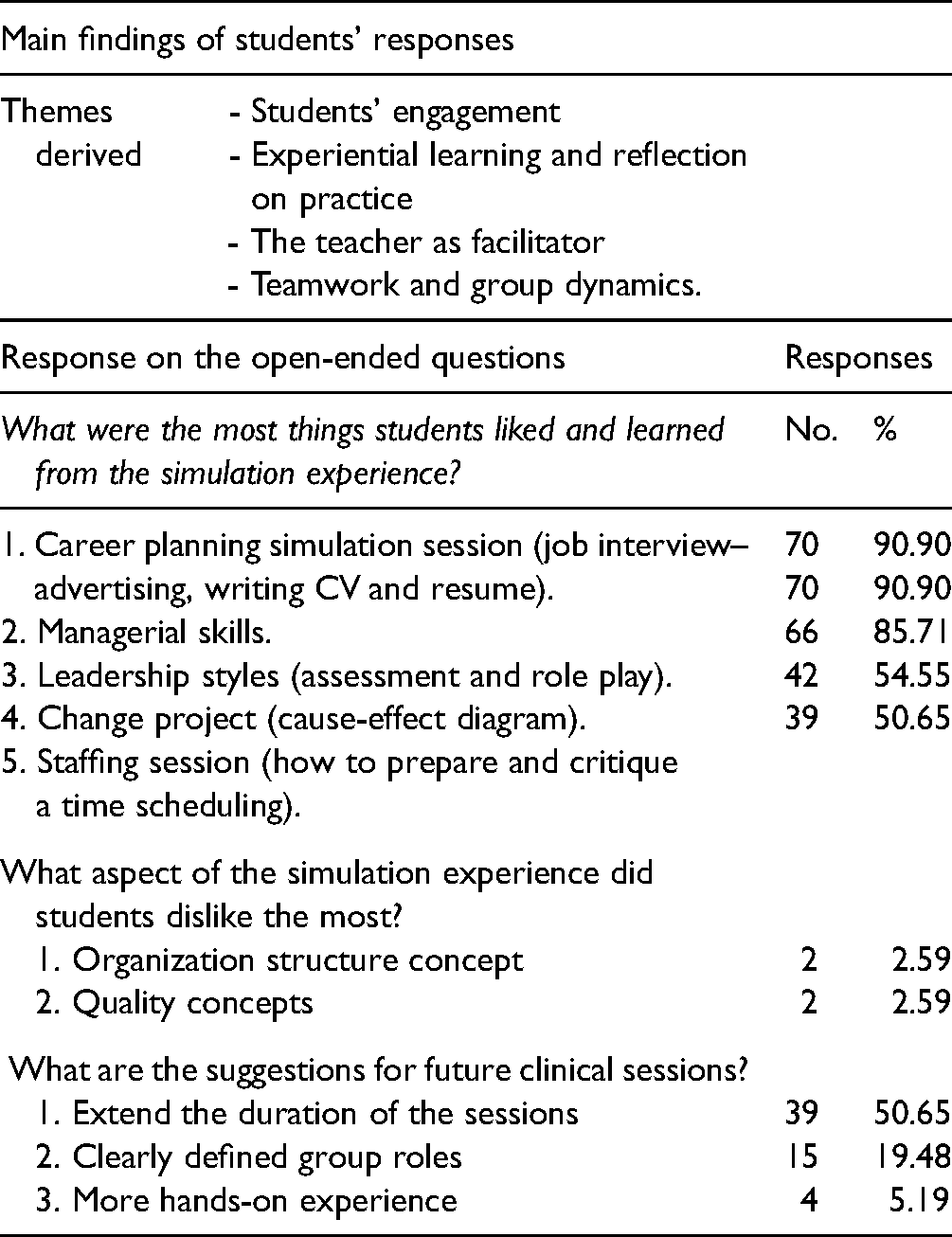
Out of the 77 students, 70 (90.90%) answered the open-ended questions on the postquestionnaire and wrote their thoughts. The written comments of the students were put into three categories: their experiences and feelings about leadership and management training, the skills, and topics they liked and learned from this experience, dislikes, and suggestions for improvement. Table 3 summarizes responses to the questions as described by students after clinical training and simulation experiences. Some students’ comments were added and referred to student as participant (Px).
Summary of Qualitative Data Described by Students After Leadership and Management Training and Simulation Experiences.
Students’ Experiences and Liked Sessions
In response to students’ experiences and feelings about the leadership and management course, four themes were identified from students’ comments and sentences: 1-students’ engagement; 2-experiential learning and reflective practice; 3-teacher as a facilitator; and 4-teamwork and group dynamics. In addition, they mostly liked managerial skills, leadership styles, change projects, and staffing sessions.
Students’ Engagement
During training and simulation sessions, students were encouraged to actively participate in all clinical and simulation activities. They were guided in their groups to find work problems and work on them in projects. Here are some of the students’ words: Our clinical training and simulations were motivating, exciting, and entertaining and increased my sense of engagement. (P35)
We learned how to act, think, build a team, solve problems, and manage conflict as leaders. I felt engaged in all the clinical sessions as it gives us more self-confidence. (P75)
Also, they revealed the most liked sessions. For example, The career-planning session was an amazing learning experience. We played Mentimeter, acted out and watched bad and good interviews, wrote our CVs, and revised them with our teachers. (P5, P45, and many students)
Experiential Learning and Reflective Practice
Incorporating reflection into practice can assist students in developing a sense of power and agency, cultivating critical thinking skills, and developing professionally. Students were provided with time to debrief and reflect on their learning. The participants’ group discussions about their training and applying what they had learned to their clinical placements were rich and reflective. Active participation and engagement in simulation and debriefing following each clinical session provides us with an incredible opportunity to express our thoughts, ideas, and feelings while also sharing our learning experience. (P52) Through this training, we learned through experiential learning, we think and reflect about what we're doing and how to get better. (P55)
Teamwork and Group Dynamics
Students discovered the importance of communication and team collaboration in a clinical context, which boosted their confidence and self-efficacy: This course emphasized teamwork, and I learned through the theoretical presentation and group assignment as a team. (P24)
This course helped us to work in teams, as we had defined roles within groups, tasks were distributed among us, and each student felt like a valuable person in the team. (P24). "We enjoyed role plays as we worked as groups and divided between nurse managers’ and staff nurses’ roles. (P47)
The Teacher as a Facilitator
The facilitator's constructive and encouraging attitude during the current simulation and training was much appreciated by many students. My teachers act as facilitators; they support us to be engaged and practice in role plays and presenting our work. (P38) I remember Dr. XXX saying to us, "My senior students, soon you will be our graduates. I participated in a great training program, not just an academic course." (P71). I liked the simulation experience because it prepared me for my future career. Our teachers really inspired us. (P76)
Dislikes and students’ suggestions for improvement.
Students reported few dislikes and recommendations in the qualitative part. Two students stated that organizational structure and quality concepts were their least liked concepts, in addition to the domination and passiveness of some students during presentations of group work: Some concepts were learned for the first time, such as organization structure and its types and quality concepts. I found difficulty in studying them. However, the session of drawing the chart helped me. (P65) I disliked how some students dominated or were passive in their group roles. (P24)
They suggest increasing the time and number of clinical sessions and clearly defining roles within the group. Other ideas include more hands-on exercises and inviting managers to career planning and leadership sessions, which would bring more benefits and improvements: Fair role allocation and more time to practice would be helpful. (P24) I think inviting nurse managers and experts from the hospital, especially during career planning and leadership sessions, would enhance our experiential learning. (P41)
Discussion
Enhancing nursing students’ professional knowledge and integrating clinical training and simulations into students’ education may affect their career planning and development. This study aimed to explore how managerial and leadership training and simulation in a nursing course affect career planning knowledge, career choice, and self-efficacy among senior nursing students. In terms of career choice, the current study's findings revealed that most students would continue working as nurses after graduation, particularly in the government sector. About one-third of nursing students wanted to be a bedside nurse in a hospital, followed by an academician at a university and a head nurse. After 5–10 years, students envision themselves as head nurses and academicians rather than bedside nurses. Positive conceptualizations of the nursing profession and knowledge of society's need for a nursing workforce may prevent Saudi students from developing unrealistic expectations and goals in their early career planning. Therefore, after 5–10 years, they identified positions requiring at least 5–10 years of professional experience, knowledge, abilities, and advanced education beyond the baccalaureate degree. Similarly, Yilmaz et al. (2016) found students desired to work as nurses after graduation, followed by directors of nursing services or university academicians. Also, students claimed that they wanted to work in education and administrative areas (Nazik and Arslan, 2014; Yildirim et al., 2011). In this respect, Gu et al. (2020) recommend that completing a career course can help younger individuals feel more secure about their future and make better professional choices.
In relation to career planning, most nursing students had no awareness of career planning at the beginning of the course, and all said they needed training and instruction. They believe this training will help them overcome the transition shock, advance their careers, market themselves, and get better jobs. Correspondingly, Yilmaz et al. (2016) found that most students never received career guidance and they expressed a desire for career help and counseling. Lack of career planning information may cause students’ anxiety and limit their career prospects. Also, Arslan et al. (2013) found that students lacked knowledge about career planning and were concerned about careers (Shoqirat and Abu-Qamar, 2015). Therefore, career advisers, decision-making tools, and events like career days help students to plan for their future career (Zhang & Huang, 2018).
Generally, the current study found that leadership training and simulation activities might contribute to improvement in the perceived study variables. The overall mean score of knowledge of career planning and its dimensions, particularly the dimensions of managerial, leadership, and career preparation, increased after the intervention. The positive association between career planning knowledge and self-efficacy post intervention could support this improvement. The result could be explained as the more knowledge students obtain from training and learning experiences, the more self-confidence and self-efficacy they believe they might have. At the end of the course, participants learned about the management skills and career paths available in the nursing field. They may also have been affected by how the course instructors felt about nursing.
This study confirms previous findings (Gu et al., 2020; Lam & Santos, 2018; Seren, et al., 2017) that career counseling and courses are vital for undergraduates’ career development and can improve their self-efficacy. Also, pretest and post-test results of Yilmaz et al. (2016), showed a statistically significant difference in knowledge about career planning, having career plans, with participants believing they would have no problems finding work after graduation and a desire to continue in postgraduate education. Although the quasi-experimental design in the current study demonstrates improvements in the self-reported variables, the design limitations may preclude any inferences of effectiveness of the intervention and provides no evidence of change over time. Also, because those students are expected to participate in the intervention as part of their academic study, random allocation of the intervention may not be possible or fully under the control of investigators (Handley et al., 2018). Due to the limitation of sample size and lacking a true experimental design, we recommend replicating the intervention with more sample size and comparison between experimental and control groups to validate the effect of such an intervention. Khalil and Abou Hashish (2022) recommended using true experimental studies and longitudinal design to assess the effectiveness of the intervention in enhancing students’ future professional practice.
Leadership Training and Simulation Learning Experience: Integration of Quantitative and Qualitative Findings
From the students’ perspective and written words, the current study revealed four important themes that should be emphasized in all clinical training: students’ engagement; experiential learning and reflective practice; the role of the teacher as a facilitator; and building teamwork and group dynamics. Students reflected on what they needed in their training and simulation. The participants’ initial uncertainty and fear of criticism might be reduced by their peers’ and teachers’ interaction, support, and recognition, as well as the positive feedback that might increase their self-efficacy. The facilitator's constructive and encouraging attitude during the current simulation and training, especially during debriefing, matches the students’ positive changes in attitude and experience as they reported. This result concurs with the findings of Pinar et al. (2015), who reported that nursing students perceived the simulation to be a positive learning experience, which was necessary for their engagement in learning. Also, qualitative data from their study revealed five emerging themes: satisfaction, skills/knowledge, confidence/critical thinking, cooperation/communication, and fidelity. These findings corroborate numerous earlier studies (Hustad et al., 2019; Kim et al., 2015; Kimhi et al., 2016; Solvik and Struksnes, 2018). They assert that during simulation sessions, support, problem-solving, reflective communication, and guided reflection all contribute to increased self-confidence. Also, Mohamed and Fashafsheh (2019) found that participants had more self-efficacy and communication skills after the simulation than before it.
Similarly, Kirkman et al. (2018) and Kim et al. (2015) found that most students agreed that the simulated experiences helped them reflect on their own experiences, solve problems, think critically, and become able to communicate more openly about their simulation experiences during debriefing. Chernikova et al. (2020) stated that critical thinking, problem solving, communication, and collaboration seem to be the most relevant skills that students should acquire during their education, in addition to domain-specific knowledge and skills to be able to make professional decisions and implement solutions. Likewise, recently, Khalil and Abou Hashish (2022) acknowledged reflective practice as a vital component of nursing practice and an essential aspect of experiential learning, with the potential to bridge the gap between theory and practice and promote students and nurses’ personal and professional development. They found that after reflective practice training, the overall mean scores for certainty, critical thinking disposition, and interpersonal communication competency were significantly higher than before the training.
Moreover, the current qualitative findings revealed that clinical training and simulation had a significant impact on career preparation and readiness aspects, and they were among the most liked sessions. Their personal portfolios and job applications were taught, and the teachers helped them develop and display their CVs. Students with past work experience share their distinct job interview experiences. Job interviews were also demonstrated through simulated videos and role-plays. Similarly, Balyac and Zsoy (2011) found that career awareness teaches nursing students the value of a CV in effectively presenting themselves to potential employers, and a career preparation program can help make job interviews less stressful and even enjoyable. They emphasized that clinical nurse educators can assist students in preparing for job interviews. Also, Giannone, Gagnon, and Ko (2018) stated that peer and role model mentoring can help students think about their professional goals and follow their career interests.
Furthermore, both quantitative and qualitative findings showed that student feedback on leadership abilities and styles was among the most liked sessions. Simulation and role-plays on the classic leadership styles of autocratic, democratic, and lassies-fair were given and practiced. In the same way, previous studies have shown that clinical training and simulations in leadership improve students’ leadership and managerial skills in the clinical setting. Sharpnack, et al., (2013) found that students who were taught leadership competencies using scenarios reported enhancement of their ability to apply leadership principles. Also, students with debriefing reported the experience was well organized, prompted realistic expectations, and increased their understanding (Kaplan & Ura, 2010; Meyer et al., 2011). Furthermore, students reported more confidence in prioritizing and delegating care, improvement in interprofessional teamwork and collaboration (Kaplan & Ura, 2010). Another study reported leadership course was implemented on an undergraduate nursing degree in Australia showed a statistically significant change in leadership behaviors after the completion of the course (Hendricks et al., 2010). It is recommended that leadership education should be consistently provided throughout the nursing curricula.
Dislikes and Students’ Suggestions for Improvement
Two students stated that organizational structure and quality concepts were their least liked topics. Also, they disliked some students’ dominance or passiveness during group work or assignments. The perception of the students toward clinical simulation is incredibly important and is associated with the success of the learning experience (Pinar et al., 2015). Hence, it was important for the course instructors as researchers to identify their dislikes and recommendations. Our students suggest increasing the time and number of clinical sessions; clearly defining roles within the group. Other ideas include more hands-on exercises and inviting managers to career-preparation and leadership sessions. These recommendations would be helpful for improvement in the future course preparation and applications.
In line with this finding, Zhen et al. (2021) recommended that participants wanted more time to be ready for and become accustomed to the simulation environment and be given the chance to do more practice. Participants also hoped to incorporate more simulation-based training into the curriculum to broaden their exposure to and understanding of a variety of clinical concerns and topics. So, it is important to produce a lot of simulated scenarios that give students a sense of confidence and responsibility as nurses and future nurse managers. Also, Mohamed and Fashafsheh (2019) stated that simulated learning should teach students how to improve patient safety and reduce risks and harm to patients, so attention should be paid more to organizational and quality concepts.
Study Limitations
This study has some significant limitations, including the design, sample, and instrument. As previously delineated in the discussion, the design limitations, as the participants were not chosen at random, and there was no control study due to the training and simulations being a required part of the nursing course and the lack of control over variables such as individual students’ experiences and characteristics, make it difficult to generalize the findings (Handley et al., 2018). Another limitation was the small sample of baccalaureate senior nursing students from a single college and the data reliance on students’ self-report of their perception of improvements in knowledge and clinical skills, which may have biased the results. A larger sample recruited across several sites and the use of a control group for comparison could assist in reducing potential bias (Khalil and Abou Hashish, 2022).
Implications of the Study
This study's findings have pedagogical and clinical significance. Clinical practice is a critical yet complex and challenging component of students’ professional development. Nursing curricula should prepare nursing students by providing continuous educational opportunities to help them improve their career planning and self-efficacy, which are required for their professional roles and to overcome potential career challenges (Abou Hashish, 2019; Spence et al., 2019). As a result, some implications and recommendations were emphasized in our study:
Implications for Nursing Education and Practice
− Nurse educators should continue to invest in relevant educational activities. They could use the reflective and clinical debriefing as a strategy to move from the traditional-based teaching format to immersive learning, which is more engaging for students and teachers (Khalil and Abou Hashish, 2022). − Nurses and nursing students should be encouraged to participate in career programs. Career counseling/awareness sessions and career day/week activities can be scheduled frequently before graduation and during the internship year, which is essential for prelicensure and orientation. − In the clinical setting, nurse managers play a significant role in shaping the career paths of senior undergraduates and internship nurses. It is an innovative idea to have senior nurses, nurse managers, and leaders in the classroom to help students learn how to build a more practical and professional portfolio and how to prepare for effective job interviews based on real experience.
Implications for Future Research
− Replicating the study with larger sample size and multiple sites with a longer longitudinal design produces a more diverse subject pool and increases the study's generalizability (Khalil and Abou Hashish, 2022; Mohamed and Fashafsheh, 2019).
− Multidisciplinary simulation activities could be suggested to encourage student collaboration, problem solving, comprehension, and confidence.
− Further empirical research should be conducted to assess learning retention, decay, and the transferability of knowledge, skills, and simulation experience into real-world situations.
− Research on collaborations between higher education and hospital managers can also help clarify the role of simulation-based training in nursing education.
Conclusion
To prepare nursing students for today’s demanding health care environment, nurse educators can no longer rely solely on traditional clinical experiences to develop higher-order thinking skills. Nursing programs should continue to invest in simulation to meet the challenges of educating nurses (Anderson, 2015) This study provides ongoing information on the use of leadership and management training and simulations in prelicensure and orientation programs.
The findings indicated that managerial and leadership training and simulation might have a significant contribution to students’ learning, career planning knowledge, self-efficacy, and clinical experience after training through course content and instructional methods. The more likely it is that nursing students can practice leadership, management, problem solving, and critical thinking during training and simulation sessions, the more their self-efficacy, communication skills, and confidence will improve.
Furthermore, students were provided with a career preparation session in which they practiced writing their CVs and resume, as well as preparing for job interviews. Obtaining constructive feedback, support, time for reflection, and sharing individual experiences during simulation and training enhances communication and students’ engagement in learning (Abou Hashish, 2019; Chernikova et al., 2020; Khalil and Abou Hashish, 2022). Moreover, the quantitative findings in this study were supported by the qualitative data, which provides a more in-depth understanding of students’ perspectives about leadership and management training; the skills and issues that they most liked and learned from this experience; and dislikes and suggestions for improvement from their perspectives. The experiences of the students led to four themes: student engagement, experiential learning and reflection, the teacher's role as a facilitator, teamwork, and the importance of group dynamics in clinical training and simulation. that should be accentuated in clinical training and simulation.
Supplemental Material
sj-docx-1-son-10.1177_23779608221127952 - Supplemental material for The Effect of Managerial and Leadership Training and Simulation on Senior Nursing Students’ Career Planning and Self-Efficacy
Supplemental material, sj-docx-1-son-10.1177_23779608221127952 for The Effect of Managerial and Leadership Training and Simulation on Senior Nursing Students’ Career Planning and Self-Efficacy by Ebtsam A Abou Hashish and Erada F Bajbeir in SAGE Open Nursing
Footnotes
Acknowledgments
Thanks to all the nursing students who agreed to and completed our questionnaires.
Authors’ Contributions
All authors have substantial contributions to Conceptualization, Methodology, Software, Data curation, Writing—Original draft preparation. All authors discussed the results and contributed to the final manuscript. Abou Hashish E contributed to the final manuscript draft and correspondence.
Declaration of Conflicting Interests
The authors declared no potential conflicts of interest with respect to the research, authorship, and/or publication of this article.
Ethical Approval
Institutional Review Board (IRB) from the King Abdullah International Medical Research Center (KAIMRC) approved the study with approval number (NRJ21J/021/01).
Funding
The authors received no financial support for the research, authorship, and/or publication of this article.
Informed Consent
The researchers obtained informed consent from participants and assured data privacy and confidentiality, as well as that no specific data would be disclosed and would be kept confidential with the researchers.

Supplemental Material
Supplemental material for this article is available online.
References
Supplementary Material
Please find the following supplemental material available below.
For Open Access articles published under a Creative Commons License, all supplemental material carries the same license as the article it is associated with.
For non-Open Access articles published, all supplemental material carries a non-exclusive license, and permission requests for re-use of supplemental material or any part of supplemental material shall be sent directly to the copyright owner as specified in the copyright notice associated with the article.
