




Abstract
The proportion of the aging population living with multiple chronic conditions (MCC) is increasing. Self-management is valuable in helping individuals manage MCC. The purpose of this study was to conduct a concept analysis of self-management in community-dwelling older adults with MCC using Walker and Avant’s method. The review included 30 articles published between 2000 and 2017. The following attributes were identified: (a) using financial resources for chronic disease management, (b) acquiring health- and disease-related education, (c) making use of ongoing social supports, (d) responding positively to health changes, (e) ongoing engagement with the health system, and (f) actively participating in sustained disease management. Self-management is a complex process; the presence of these attributes increases the likelihood that an older adult will be successful in managing the symptoms of MCC.
Introduction
The proportion of older adults with multiple chronic conditions (MCC) has increased globally in both the adult and older adult populations in recent years (Banerjee, 2015; Harrison, Britt, Miller, & Henderson, 2014; Uijen & van de Lisdonk, 2008). MCC can be defined as the co-occurrence of two or more chronic conditions that require ongoing medical care or monitoring and persist for a year or more (Hwang, Weller, Ireys, & Anderson, 2001; Vogeli et al., 2007). Older adults are uniquely affected by MCC because of the vulnerability and frailty that are associated with aging, which may exacerbate the complexity of MCC (Schoenberg, Leach, & Edwards, 2009; Upshur & Tracey, 2008).
Community health nurses are ideally situated to help individuals with chronic conditions to maintain or improve their health (Community Health Nurses of Canada, 2011). The community health nursing role entails providing education, feedback, and support, all of which are key factors required for clients to maintain, change, or develop healthful behaviors, particularly when supported by self-management interventions (Coates & Boore, 1995; Lorig & Holman, 2003). Given the increase in older adults with MCC, it is important to optimize applications of self-management in this population. A more thorough understanding of the concept than is presently available will inform this process (Banerjee, 2015; Smith, Soubhi, Fortin, Hudon, & O’Dowd, 2016). Therefore, the primary purpose of this article is to present a concept analysis of self-management in relation to community-dwelling older adults with MCC. Walker and Avant’s (2011) approach to concept analysis will be used to identify the uses, define attributes, empirical referents, antecedents, and consequences.
Background
Community-dwelling older adults with MCC, hereafter to be referred to as older adults, may face more challenges engaging in self-management of their health compared to younger adults because of the additional vulnerability, frailty, and complexity that is commonly associated with aging (Schoenberg et al., 2009; Upshur & Tracey, 2008). Frailty, the state whereby a person has decreased physiologic reserves and therefore greater susceptibility to systemic stressors, may make an individual more susceptible to the effects of chronic disease, injury, or acute ailments (Fried, Ferrucci, Darer, Williamson, & Anderson, 2004). Older adults are often more vulnerable than younger adults due to factors such as having fewer resources to support their health, social isolation, age-related factors such as hearing or vision limitations, potentially limited access to services, and limited funds to pay for out-of-pocket expenses (Fried et al., 2004; Schoenberg et al., 2009). The complexity associated with MCC stems in part from the additional time necessary for health-care providers to manage more MCC, the tendency of the health system to function under a one-visit-one-condition paradigm, and the limited availability of interprofessional health teams and evidence-based research on older adults to inform clinical practice and manage MCC (Sells et al., 2009; Sinnot, McHugh, Browne, & Bradley, 2013; Upshur & Tracey, 2008).
Although individual countries report varying statistics, many older adults are affected by MCC. In developed countries such as Canada, for example, 24% of adults older than 65 years have been reported to have three or more chronic conditions and as high as 98% have been reported to have two or more chronic conditions (Canadian Institute for Health Information [CIHI], 2011; Fortin, Bravo, Hudon, Vanasse, & Lapointe, 2005). Other Westernized countries report similarly high percentages such as 55% in the Netherlands (for people older than 75 having four or more chronic conditions) and up to 80% in Australia (for people older than 65 years having three or more chronic conditions; Caughey, Vitry, Gilbert, & Roughead, 2008; Glynn et al., 2011; Uijen & van de Lisdonk, 2008; Vogeli et al., 2007).
The number of chronic conditions in older adults with MCC is positively associated with frequency of hospitalization, odds of adverse treatment-related events and health-related costs and is negatively associated with quality of life (CIHI, 2011; Lehnert et al., 2011; Tooth, Hockey, Byles, & Dobson, 2008; Wolff, Starfield, & Anderson, 2002). The increased difficulty older adults with MCC have in performing health-care tasks may necessitate greater assistance from a formal or informal caregiver to complete activities of daily living, attend medical appointments, and manage their medications. This ongoing need for assistance may also place the caregiver at risk of developing caregiver burden (Bardach, Tarasenko, & Schoenberg, 2011; Giovannetti et al., 2012; Shahly et al., 2013).
Chronic conditions such as cardiovascular disease, diabetes, and arthritis are influenced by modifiable risk factors such as diet, symptom management, medication adherence, and positive health habits such as physical activity and avoidance of smoking (Liddy, Blazkho, & Mill, 2014; World Health Organization, 2005). Self-management, broadly defined as a process whereby clients and health-care professionals work together to help clients assume control of managing their care, may be important in affecting modifiable risk factors and health habits (Audulv, 2013; Dattalo et al., 2012; Lawn, McMillan, & Pulvirenti, 2011). Self-management programs may result in health improvements in older adults with MCC, for example, by improving blood glucose levels, lowering blood pressure, reducing pain, and maintaining levels of physical function (Barlow, Williams, & Wright, 1997; Chodosh et al., 2005). Self-management strategies used by older adults with MCC may also decrease their health-care use, its associated costs, and improve their health outcomes (Bodenheimer, Lorig, Holman, & Grumbach, 2002; Lorig et al., 2001a; Norris, Engelgau, & Narayan, 2001; Wheeler, Janz, & Dodge, 2003).
With increasing recognition of the challenges experienced by people living with MCC, greater emphasis was placed on the importance of research and management strategies on this topic. In 2001, the Institute of Medicine published a landmark report emphasizing the complex needs of those living with MCC (U.S. Department of Health and Human Services, 2010). But little progress in the development of effective care models for this population and recent data suggest that the challenge of health management for this population continues to grow (CIHI, 2011).
The term self-management is often associated with Corbin and Strauss’ (1988) work on managing chronic illness at home, in which they identified three main areas for chronic disease management: medical guidance, behavior/role management, and emotional management (Corbin & Strauss, 1988; Lorig & Holman, 2003). Self-management is defined as the process of an individual assuming responsibility for his own behavior and welfare (Oxford Dictionary, 2014). This concept developed further particularly in populations with chronic diseases. Consequently, various disease-specific definitions of self-management are in use for specific discrete conditions such as arthritis, asthma, cancer, and type 2 diabetes (Barlow, Wright, Sheasby, Turner, & Hainsworth, 2002; Foster, Brown, & Killen, 2007; Schilling, Grey, & Knafl, 2002; Stewart, Schofield, Elliot, Torrance, & Leveille, 2014). Common features of disease-specific definitions of self-management include symptom awareness and disease knowledge; lifestyle changes and behavioral management (e.g., medications, exercise); and psychology and stress management (Barlow et al., 2002; Foster et al., 2007; Newman, Steed, & Mulligan, 2004; Schilling et al., 2002; Song & Lipman, 2008; Stewart et al., 2014).
In addition, there are definitions of self-management that are less specific to particular diseases but may be applied to a variety of diseases or chronic conditions, as well as to a variety of clients (Barlow et al., 2002). These definitions of self-management usually include common elements such as (a) the development of a plan of health management with the assistance of a health-care provider or health-care team; (b) the use of behavioral strategies to manage disease such as exercising, engaging in healthy eating, and managing emotions; (c) adherence to medication regimens; (d) participation in education programs; (e) client goal setting and participation in care planning; and (f) client self-efficacy (Audulv, 2013; Bodenheimer et al., 2002; Coates & Boore, 1995; Dattalo et al., 2012; Kawi, 2012; Lawn et al., 2011). However, scholarly literature that adequately captures the conceptual dimensions of self-management in older adults with MCC is lacking. It is not known whether the aforementioned components of disease-specific and broader definitions of self-management may be effectively applied to the older adult population with MCC. The purpose of this article is to fill this gap.
Walker and Avant’s (2011) method of concept analysis guided this analysis and entailed the following eight steps: (a) select a concept, (b) determine the aims or purpose of the analysis, (c) find all possible uses of the concept, (d) determine the defining attributes, (e) pinpoint a model case, (f) identify additional cases (e.g., borderline), (g) identify antecedents and consequences, and (h) define empirical referents. The authors chose this method for its logic, clarity, and facilitation of a clear understanding of how a definition evolves through application in the clinical environment.
Methods
A concept analysis is a detailed investigation of a word, its meanings, and uses. The process of completing the analysis enables one to clearly differentiate a concept from other concepts that may be similar although subtly different from the concept in question. Concepts are not static, evolving and changing over time with use, context, or as knowledge changes. However, carrying out a concept analyses is a valuable process that can be used to clarify a concept, develop an operational definition, and develop tools for further research (Walker & Avant, 2011). Conducting a concept analysis using Walker and Avant’s (2011) method entails completing the following eight steps: (a) select a concept; (b) deciding on the purpose of the analysis; (c) recalling as many uses of the concept as possible; (d) discerning the defining attributes; (e) determining a model case; (f) determining borderline, related, contrary, invented, and illegitimate cases; (g) determining antecedents and consequences; and finally (h) determining the empirical referents of the concept. For the purposes of brevity, we include only the model and contrary cases in the current article. Importantly, the model case is a “pure exemplar” of the concept that demonstrates each of the defining attributes of the concept, while the contrary case is the antithesis of the model case (Walker & Avant, 2011, p. 163). The antecedents and consequences, as their names suggest, both precede or must be in place for the concept to occur and are the result of the concept. The “empirical referents are classes or categories of actual phenomena that by their existence demonstrate the occurrence of the concept itself” (Walker & Avant, 2011, p. 168).
In accord with Walker and Avant’s (2011) method, we identified as many uses of the concept as possible. “[If] the analysis is done well, the defining characteristics should immediately call the concept to mind” (Walker & Avant 2011, p. 162). To achieve this, dictionaries, thesauruses, and available literature may be utilized (Walker & Avant, 2011). The authors conducted a literature search with broadly defined inclusion criteria because studies have shown that the incidence of MCC in older adults may be high before the official retirement age of 65 years (Sampali, Fox, Dickson, & Fox, 2012; Van Oostrom et al., 2012). To ensure full representation of the literature on self-management of MCC in older adults, inclusion criteria required a minimum average age of 60 years and two or more chronic conditions.
Journal articles were identified in electronic literature databases using the following search terms—self-management, patient centered, self-monitoring, self-care, self-efficacy, older adult, elder, retiree, MCC, multimorbidity, comorbidity, community, home, and family (equivalent terms were searched using wildcards)—and published between 2000 and 2017. This time period was chosen to ensure a comprehensive amount of information, which is necessary to perform a concept analysis with sufficient depth. The searched databases were as follows: Web of Science, MEDLINE, Cumulative Index of Nursing and Allied Health Literature, and AgeLine; Google Scholar was used as an additional search tool. The search was limited to articles that were (a) in English, (b) focused on subjects residing at home or a retirement home, (c) focused on self-management of chronic conditions, and (d) focused on studies of older adults with an average age of at least 60 years. We further refined the retrieved articles by excluding those articles that did not focus explicitly on community-dwelling older adults with MCC. Articles were removed if they did not focus on self-care or self-management or patient-centered care or self-efficacy. Ad hoc searching and handsearching of reference lists led to the inclusion of a further seven articles to result in a final selection of 30 articles (Figure 1). Identified articles, including original research articles (qualitative, quantitative, and mixed methods) and review articles, were reviewed in detail to ensure a self-management focus.
Article selection flow chart—2000–2017.
Results
Uses of Self-Management
Walker and Avant’s (2011) method entails identifying as many uses of the selected concept as possible. Therefore, a broad array of examples in which self-management is operationalized within nursing and beyond was explored and is described below. Earliest uses of self-management are grounded in social learning theory, developed by Albert Bandura in the 1960s, and in the concept of self-control, which originates from the notion that individuals have the ability to alter their immediate behavior in order to affect the long-term consequences of that behavior (Bandura, 1971). According to social learning theory, the process of self-management is motivated by the achievement of a desired goal and is influenced by internal (under the control of the individual) and external (not under control of the individual) influences (Manz & Sims, 1980). However, within the health sector, the term self-management has arisen relatively recently. This comes as recognition has grown for the need to shift from a model of illness care to a model of health promotion and maintenance in order for health-care systems to be sustainable (Bandura, 2005). Earliest applications of this concept in the health sector came from the field of asthma management in children where it was recognized that they could be actively engaged in handling their own health conditions (Lorig & Holman, 2003).
Within the context of mental health, the World Health Organization (2008) has proposed that clients work toward overseeing their own health by using self-management. This may serve to facilitate their social inclusion within society, foster their ability to live with mental illness, and reduce the dominance of the health professional within the client/health professional relationship (World Health Organization, 2008).
In the field of nursing and chronic illness management, self-management empowers clients to take charge of their health and manage their chronic conditions rather than relying solely on the health professional to oversee their health maintenance (Richard & Shea, 2011). Consequently, responsibility has shifted from a paternalistic model of health-care provision to one of more balance between health professional and client. Importantly, self-management is expected to improve overall health at the individual level and reduce cost to the health-care system (Lorig, Sobel, Ritter, Laurent, & Hobbs, 2001b).
Looking beyond the realm of health care, self-management is used as a means to improve employee attendance within the context of a unionized government organization and also as a means to guide, control, and influence career growth and development (Frayne & Latham, 1987; King, 2004). Self-management programs focused on biopsychosocial training were studied for potential application to the military as a means of helping soldiers to cope with the emotional stress and anxiety associated with their positions (Crawford et al., 2013). Furthermore, self-management training is used in educational settings to help students with disabilities improve their scholastic capabilities (McDougal, 1998).
Defining Attributes
Sources of Defining Attributes.

Note. MCC = multiple chronic conditions.
Following identification of the list of self-management attributes, those attributes that share important commonalities are grouped together. Subsequently, attributes within groups are ranked, and those attributes that appear most frequently become defining attributes of the groups. Lesser mentioned attributes of the group are not defining but contribute as necessary to further enrich the understanding of the concept (Table 1). The emerging defining attributes of self-management (not ranked by importance) include the following:
using financial resources to manage chronic disease, acquiring health- and disease-related education from health professionals, making use of a variety of ongoing social supports, responding in psychologically and emotionally positive ways to variations in health status, continuing engagement with the health system, and actively participating in sustained disease monitoring and management.
These key defining attributes reflect components of self-management at the individual, societal, and systems levels. They are also strongly connected and often reinforcing one another. A prominent defining attribute of self-management in older adults with MCC emerging from the literature is using financial resources to manage chronic diseases. For example, financial independence is demonstrated through adequate income, and access to appropriate housing is discussed as a stable starting point for an older adult to self-manage MCC (Quandt et al., 2012; Riegel & Carlson, 2002). Furthermore, research demonstrates that some older adults prioritize their disease management based on financial constraints and identify a lack of insurance as a barrier to their ability to self-mange (Bayliss, Ellis, & Steiner, 2007; Beverly, Wray, Chiu, & Weinger, 2011). Low or fixed incomes may also limit access to supplies, medications, healthy foods, and supportive equipment such as assistive devices or exercise equipment and facilities (Bell et al., 2010).
Older adults who experience financial limitations may choose to selectively manage chronic conditions based on their perceived importance (Beverly et al., 2011). Research demonstrates that some physicians prescribe medications without fully reviewing the associated cost to the patient, which may unnecessarily increase financial stress (Beverly et al., 2011; Haverhals et al., 2011). An additional complication may arise from public and private insurance-driven fee-for-service payments. This model of reimbursements for care tends to focus health practitioners on individual services instead of the holistic provisioning of multiple health and social services necessary for managing MCC which results in higher numbers of visits and associated costs for patients (Boult & Wieland, 2010).
The second defining attribute emerging from the analysis is the importance of acquiring health- and disease-related education from health professionals in order for older adults to self-manage MCC. Acquiring education in self-management may take many forms, but greatest success is achieved when education is combined with strong client engagement components, ongoing support, accessible options, feedback, facilitation, and individual tailoring (Bell et al., 2010; Loeb, Penrod, Falkenstern, Gueldner, & Poon, 2003; Norris et al., 2001). Importantly, education provision in this population should include opportunities to clarify information, correct misconceptions, and emphasize behavioral change to ensure that older adults with MCC are making informed decisions and are able to attain the best quality of life possible (Bodenheimer et al., 2002; Laforest et al., 2007; Riegel & Carlson, 2002). Research demonstrates that health-care providers should recognize the need to include caregivers in educational initiatives to optimize client outcomes (Bell et al., 2010; Boult & Wieland, 2010). Overall, educational initiatives that are an integral part of chronic disease self-management programs have demonstrated success in reducing health-related costs, improving subjective and objective measures of health, increasing perceived self-efficacy, improving disease-related knowledge and behavior, and understanding and symptom management while also providing an avenue for peer support and alleviating social isolation (Chao et al., 2012; Chodosh et al., 2005; Harvey et al., 2008; Lorig et al., 2001a; O’Toole, Connolly, & Smith, 2013).
Making use of a variety of ongoing social supports is another characteristic of self-management of MCC by older adults. Social support may take many forms and be either informal such as the support provided by friends, family, caregivers, and spiritual or religious groups or be formal in nature such as an organized support group. Research has demonstrated that using strong social support networks are inherent in enabling older adults with MCCs to lead fulfilled and active lives (Loeb et al., 2003; Masters et al., 2013; Quandt et al., 2012; Riegel & Carlson, 2002). Research also suggests that lower levels of social activity are associated with lower perceived health status among older adults with MCC (Bayliss et al., 2007). In situations when immediate family members are absent, neighbors and social connections through communities such as church congregations may provide meaningful informal support and motivation for the older adult with MCC to engage in positive self-management behaviors (McCauley, Bixby, & Naylor, 2006).
Formal self-management programs are successful, for example, Laforest et al. (2007) delivered a program in the home environment that had a very high retention rate despite the mean age of participants being 77 years. Study findings speak to the need for adaptability and flexibility in the structure of such programs, but they also reflect the positive outcomes for participants such as contributing to their overall levels of social engagement (Laforest et al., 2007). Lifestyle interventions for self-management were more successful when implemented in a formalized group setting, pointing to the importance of peer support (Norris et al., 2001).
Another important attribute of self-management in older adults with MCC is responding in psychologically and emotionally positive ways to variations in health status. This attribute refers to the ability of older adults to manage the health fluctuations that are often inherent to MCCs while helping them cope with feelings around disease progression or symptom exacerbation (Bayliss et al., 2007; Clark et al., 1991; Haverhals et al., 2011). Taking proactive steps such as seeking emotional support from family, friends, or health-care providers when necessary also demonstrates older adults’ psychological and emotional ability to respond appropriately and positively to their changing health status (Barlow et al., 2002; Laforest et al., 2007). When older adults with MCC are willing to engage in behavioral modification—often a fundamental part of successful self-management—research demonstrates clear benefits such as reduced emergency room visits, improved symptom control, and maintaining independence (Laforest et al., 2007; Riegel & Carlson, 2002).
Other examples of positive psychological responses to health changes includes goal setting, engaging with peers, and a sense of increased security to share personal experiences and challenges within a group of similar peers (O’Toole et al., 2013). Older adults, who have compromised psychological health such as depression, may have limited success in self-management programs. Given the high prevalence of depression in older adults with chronic diseases such as diabetes, this condition should be assessed for treatment and seen as a potentially limiting factor for clients’ suitability for self-management (Bayliss et al., 2007; Bell et al., 2010; Laforest et al., 2007).
In conjunction with the aforementioned attributes, continuing client engagement with the health system is considered throughout the literature as fundamental for MCC self-management in older adults. Regular interactions with health professionals facilitates (a) continued monitoring of MCCs, (b) an opportunity to engage in dialogue around disease management, (c) documentation of new symptoms, and (d) opportunities to initiate referrals before a health issue becomes critical (Boult & Wieland, 2010; Boyd et al., 2008; Chao et al., 2012; Dattalo et al., 2012). Formalized health programs may facilitate peer support and interaction, receipt of health- or disease-related education, development of individual goals, or participation in physical activity under the guidance of professionals (Hurd Clarke & Bennett, 2012; McCauley et al., 2006). In this context, the “self” in self-management of MCC may be deceiving because, importantly, clients who are effective at self-management do not handle their health alone. In reality, good self-management necessitates a team approach between the individual, their social network, and their associated health-care providers with continued feedback and tailoring of care plans to meet individual needs (Harvey et al., 2008). Also salient is the establishment of a trusting relationship between client and health-care provider, thereby facilitating openness and encouraging older adults with MCC to proactively voice their concerns around medications or changing symptoms (Meranius & Engstrom, 2015). Finally, research has demonstrated that in cases of disease progression that may result in cognitive impairment, such as type 2 diabetes, older adults’ ability to manage and monitor symptoms may be compromised, thereby emphasizing the importance of regular engagement with health-care providers (Feil, Zhu, & Sultzer, 2012).
A final attribute of self-management of MCC by older adults is that they are actively participating in chronic disease management and monitoring. Active participation in disease management also includes taking responsibility for regular communication and feedback with their health-care provider, thereby facilitating ongoing dialogue, increasing their health knowledge, and reducing the likelihood of misunderstandings or adverse events (Meranius & Hammar, 2016). Participation in disease management includes personal health monitoring and supporting behaviors such as (a) engaging in regular physical activity, (b) monitoring of health conditions such as blood glucose monitoring and foot checks, (c) taking medications as prescribed, (d) making dietary modifications such as lowering intake of sodium or saturated fats, (e) resting as necessary, or (f) prioritizing health conditions to avoid becoming overwhelmed (Beverly et al., 2011; Bodenheimer et al., 2002; Harvey et al., 2008; Quandt et al., 2012). Actively participating in chronic disease management enables older adults to consult a health professional as soon as they experience a significant change in health status or develop an adverse reaction to a medication, thereby reducing their likelihood of developing a health crisis or culminating in an unexpected trip to an emergency room and increasing their perceived health status (Chao et al., 2012).
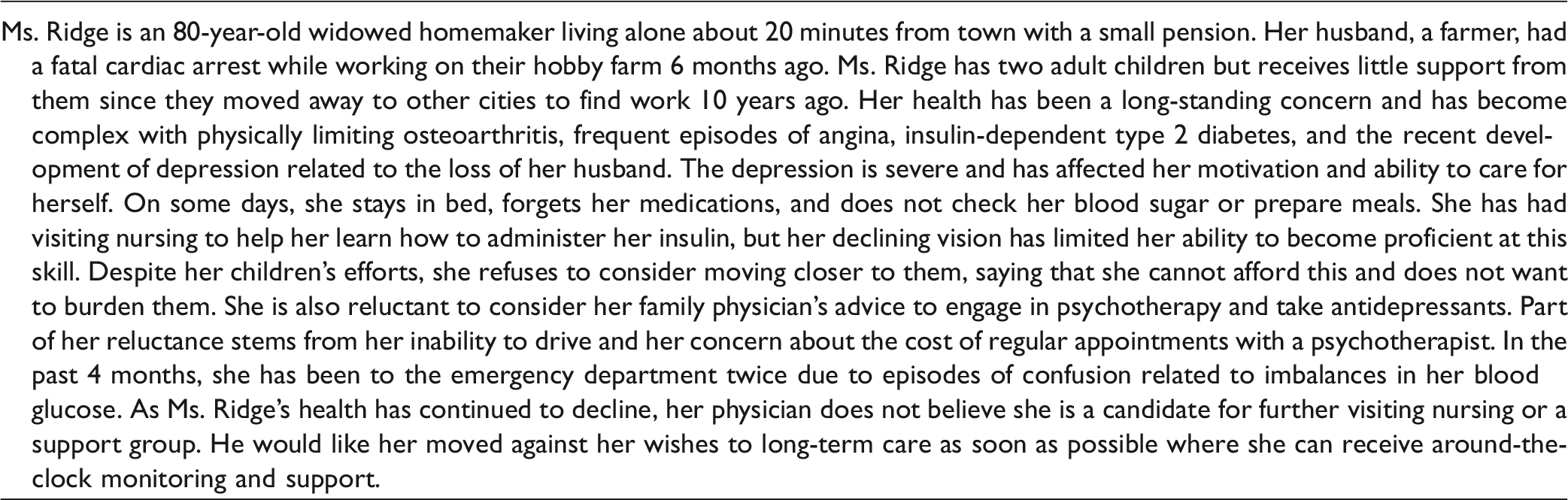
Model Case and Contrary Case of Self-Management in Older Adults With MCC
Model case.

Contrary case.
Empirical Referents
Empirical Referents and Sources.

Note. MCC = multiple chronic conditions.
Antecedents
Antecedents are “events or incidents that must be in place prior to the occurrence of the concept” (Walker & Avant 2011, p. 166). In the current analysis, antecedents refer to precursors of self-management of MCC by older adults. The following antecedents emerged after reviewing the literature. For the purposes of this analysis, we separated the antecedents into internal and external antecedents. Internal antecedents are those factors that are under the control of the older adult who is engaging in self-management, and external antecedents are those antecedents that are not under direct control of the older adult (Manz & Sims, 1980). For example, internal to the older adults includes the physical capability and cognitive competence to perform specific actions that would allow engagement in activities required for self-management (Bayliss et al., 2007; Coventry, Fisher, Kenning, Bee, & Bower, 2014; Laforest et al., 2007). Prior stable employment with good income or strong program of benefits is required as it leads to the accumulation of financial capital or ongoing income through insurance or retirement pensions (Coventry et al., 2014; Nam, Chesla, Stotts, Kroon, & Janson, 2011). Finally, older adults must have the desire to remain independent which contributes to tenacity and a positive outlook on their situation (Holman & Lorig, 2000; Nam et al., 2011).
External antecedents include an enabling physical environment, here defined as the geographic proximity and access to built infrastructure (e.g., transportation networks, phone, Internet), which is necessary to facilitate access to services and to make cultural and social connections with a network of friends, family, and community supports (Schulman-Green, Jaser, Park, & Whittemore, 2016; Winters, Cudney, Sullivan, & Thuesen, 2006). Similarly, a stable social environment is required that enables sustained engagement with people and social networks to establish positive and reliable relationships (Clark, 2003).
Consequences
Consequences are the outcomes of the manifestation of the concept (Walker & Avant, 2011). In the current concept analysis, consequences refer to the outcomes of self-management of MCC by older adults (Figure 1). Consequences of self-management include (a) client empowerment to engage in and participate as a valued contributor to their disease management, care goals, and development of care plans (Registered Nurses Association of Ontario, 2010; Schulman-Green et al., 2016); (b) reductions in caregiver burden such as decrease in the stress or psychosocial burden experienced people caring for older adults with MCC (Grey, Knafl, & McCrokle, 2006); (c) reduced dependency of the older adults on the health system, such as a reduction in number of visits to the emergency department (Lorig et al., 2001a); (d) improved health outcomes for older adults with MCC (Ofman et al., 2004); and (e) reduced cost to the health system that stem from caring for older adults with MCC (Bodenheimer et al., 2002; Lorig et al., 2001a; Ministry of Health and Long-Term Care, 2007; Ofman et al., 2004; Figure 2).
Antecedents, defining attributes, empirical referents, and consequences of self-management of MCC by community-dwelling older adults.
Definition of Self-Management of MCC in Older Adults
Based on the findings of the current concept analysis, the following operational definition is proposed: Self-management of MCC in older adults is a multidimensional construct that entails using financial resources to manage chronic disease, acquiring health- and disease-related education from health professionals, receiving a variety of ongoing social supports, responding in psychologically and emotionally positive ways to variations in health status, continuing engagement with the health system (e.g., consulting with medical team about new symptoms or health changes such as elevated blood glucose), and actively participating in sustained disease monitoring and management.
Discussion
This article provides an important new understanding of the concept of self-management of MCC by older adults as a complex process of interactions, processes, and behaviors that requires the alignment of many factors to be successful. Similarities and differences are evident when comparing the proposed definition of self-management of MCC in older adults with previous disease-specific and broader definitions of self-management (Audulv, 2013; Barlow et al., 2002; Bodenheimer et al., 2002; Foster et al., 2007; Newman et al., 2004; Schilling et al., 2002; Song & Lipman, 2008; Stewart et al., 2014). Similarities include acquiring education related to symptom and disease management, development of health management plans, and active motivation and engagement in disease monitoring and management (Audulv, 2013; Bodenheimer et al., 2002; Coates & Boore, 1995; Dattalo et al., 2012; Kawi, 2012; Lawn et al., 2011). Differences include (a) stipulating the importance of financial resources, (b) the importance of ongoing use of social supports, (c) responding in psychologically and emotionally positive ways to variations in health, and (d) the necessity of continuing engagement with the health system in order to increase the opportunities for successful self-management (Bayliss et al., 2007; Beverly et al., 2011; Boult & Wieland, 2010; Dattalo et al., 2012; Hurd Clarke & Bennett, 2012; Loeb et al., 2003; Masters et al., 2013; Quandt et al., 2012; Riegel & Carlson, 2002).
In accordance with the current definition’s emphasis on financial resources, the cost to the individual of managing MCC cannot be underestimated. Individuals may face considerable out-of-pocket expenses to attend appointments, receive noninsured therapies, and make lifestyle choices such as following strict dietary regimens that facilitate effective self-management (Koch, Wakefield, & Wakefield, 2015; Schulman-Green et al., 2012). Noteworthy is that lower income older adults often experience higher disease burden, and those who are financially vulnerable are less likely to be successful in self-management (Audulv, 2013; Schoenberg, Kim, Edwards, & Fleming, 2007).
Few studies have addressed the influence of informal social networks, including caregivers, in MCC self-management, but the results from this analysis indicate that these supports should feature prominently in definitions applicable to older adults with MCC (Barlow et al., 2002; Harvey et al., 2008). This result is corroborated by other studies that found that self-management cannot occur in isolation but involves a team that includes friends and family members, in addition to health and allied professionals (Harvey et al., 2008). Furthermore, given that opportunity for group interaction and education are important components of self-management programs, it seems appropriate for the concept to have a broad scope that also encompasses general social, economic, and system factors (Health Council of Canada, 2012).
Self-management requires a collaborative effort to be successful, but it is the older adult who bears the main burden of responsibility for managing their chronic conditions. This speaks to the importance of providing prompt and continuing education so that the older adult has the necessary knowledge to recognize and understand symptoms, make informed lifestyle choices, administer medications, monitor disease progress, and contact health-care professionals when required. Although clinical practice guidelines are available for older adults with individual conditions, there is the need for clinical practice guidelines that take into account the MCC context (Fortin et al., 2012; Gill et al., 2014). In line with the findings from this review, research has determined that isolated disease self-management studies cannot adequately inform self-management of MCC by older adults (Schoenberg et al., 2007). Furthermore, research suggests that applying multiple single disease focus guidelines to the MCC context could complicate disease management and potentially result in the overmedicalization of disease management (Upshur & Tracy, 2008).
Community Health Nurses and Self-Management
Community health nurses are ideally situated to assist clients and their families to implement self-management strategies. They provide education, promote behavioral modifications, refer clients to community-based skill development programs, and are sounding boards for clients’ questions regarding the management of chronic conditions (Davies, 2010). Importantly, these nurses may play a crucial part in emphasizing options for clients’ active role in areas that traditionally might not be viewed in this manner, for example, in situations where they can support clients who are actively seeking out new knowledge to support healthy behaviors and chronic disease management. In addition, nurses are well positioned to provide support if clients cannot accept their chronic illness or if the client exhibits declining adherence to self-management programs (McCauley et al., 2006). Nurses should also acknowledge and provide information to clients who may wish to use complementary strategies such as naturopathic or alternative therapies to manage their condition because these are self-management strategies consistently used by older adults (Quandt et al., 2012). In sum, community health nurses play a key role in empowering clients to manage the health changes that are inherent in living with MCC.
Strengths and Limitations
Strengths of Walker and Avant’s (2011) method for a concept analysis include its straightforward and uncomplicated utility. Implementation of the method produces results that are theoretically precise, empirically well grounded, and useful for the subsequent development of tools and instruments. Limitations include the method’s limited guidance on the exact process of information searching and little direction on prioritizing or classifying the defining attributes identified in the literature. In response to these limitations, we chose a systematic literature review approach to examine the academic literature, and we used the frequency and consistency with which attributes were encountered in the literature as the criteria to prioritize defining attributes. In addition to counter criticism by Weaver and Mitcham (2008) that cases described by Walker and Avant (2011) risk being unrelated to nursing practice, the illustrative cases in this analysis were corroborated using information from the scientific literature, face validity, and relevance to real scenarios in nursing practice.
The following are the strengths of the current concept analysis: The analysis is based on a comprehensive search of databases that incorporate the nursing, older adult, and medical literature as well as an ad hoc search to ensure inclusion of all relative articles. Search terms were broad and of sufficient heterogeneity to capture as many instances of self-management as possible. However, exclusion criteria were applied that ensured that only those articles that focused on older adults residing in community settings were included. The key defining attributes identified are interrelated and complementary, accurately demonstrating the interconnected nature of the various factors involved in the self-management of MCC in older adults. Limitations of the current concept analysis include the following: The search was limited to articles written in English potentially restricting the global application of the study findings. Other timeframes for article searches could have been chosen, potentially affecting the study findings. Here, the choice was made to increase the timeframe of the search to strengthen the analysis by increasing the number of available articles for inclusion. A concept analysis contains both objective and subjective elements. To ensure the reproducibility of the study findings, a consistent approach to article selection, data abstraction, and classification of the findings was used across all articles included in the analysis.
Conclusion
This concept analysis defines self-management of MCC in older adults as the process of using financial resources to manage chronic disease, acquiring health- and disease-related education from health professionals, receiving a variety of ongoing social supports, responding in psychologically and emotionally positive ways to variations in health status, continuing to engage with the health system, and actively participating in sustained disease monitoring and management. Self-management of MCC in older adults is well situated to improve and maintain older adults with MCC in their communities with the support of their friends, family, and the health system. However, self-management may be underutilized in populations without adequate financial resources, shortfalls in enabling physical environments, weak social support networks, and lacking access to a health-care team. Future research could address the exact role of these shortcomings in limiting self-management of MCC in older adults and possible avenues to overcome them. This concept analysis could be used to inform policy and the development of practice guidelines for the self-management of MCC in older adults. This concept analysis has produced a broad and holistic perspective on self-management of MCC in older adults. The defining attributes and their empirical referents are comprehensive yet specific, adding to the theoretical basis of self-management, and are well situated to facilitate the development of tools to assess the degree of self-management capacity in older adults with MCC.
Footnotes
Acknowledgments
The views expressed in this article are those of the authors and do not necessarily reflect the views of McMaster University.
Declaration of Conflicting Interests
The author(s) declared no potential conflicts of interest with respect to the research, authorship, and/or publication of this article.
Funding
The author(s) received no financial support for the research, authorship, and/or publication of this article.