




Abstract
Patient engagement (PE) is a well-known strategy introduced and implemented by pharmaceutical and medical device companies for patient compliance and adherence to treatment protocols during clinical trials and care processes. This can affect a wider range of outcomes such as the quality of treatment decisions and quality of care outcomes. Few studies have paid attention to it. The involvement of patient is one of the crucial stakeholders of health care in their treatment that makes controversial opinions about the potential outcomes of their engagement in various aspects of healthcare. This scoping review was conducted in 2022 to collect the results of PE. The search was performed in the MEDLINE and Web of Sciences databases. The selected documents were categorized and reported by the direct content analysis method. Out of 3974 published documents, 17 articles were selected. Findings are categorized into 4 groups: (1) Health outcome, (2) patient compliance, (3) self-efficiency, and (4) return on investment. PE can improve both treatment outcomes and consequently patient satisfaction and health, as well as the productivity of the service provider. However, increasing self-care and patient adherence are among the positive effects of this engagement on the patient, and return on investment is still a challenge for PE.
Keywords
Introduction
Healthcare industry players, mostly treatment and solution providers, address patient engagement (PE) as an imperative strategy. Access to information has increased with the advancement of technology so patients are more aware of their care conditions and options than ever before (1). PE in health care has turned into a worldwide priority because evidence shows that it improves patient adherence and compliance with clinical protocols (2). According to healthcare quality concepts patient centeredness, patient education, and empowerment are recognized as key component in improving the quality and delivery of health services (3). So, PE can be considered a quality driver in addition to the initial purposes by concept developers.
Patients are defined as one of the crucial stakeholders of health care and decision-making, and this shows the need for involving them in the treatment process (4). It is an ideal healthcare situation in which patients are well informed and motivated to be involved in their own medical care, and it is a means of ensuring that patients are provided the right care appropriate to the individual characteristics, needs, preferences, and conditions of the patients (5).
In addition to the patient, other stakeholders also influence this engagement. In Marzban et al. study, a model for PE leadership was presented by considering and combining all stakeholders: data and technology partners, providers and delivery roles, healthcare organizations, patients/families, and payor organizations. An appropriate interaction between these stakeholders and their capacity is effective in shaping PE (6).
Over the past 2 decades, the use of patient experiences in assessing the quality of care from a patient perspective has received more attention, which shows that it is not only possible to involve patients in delivery or redesign of health care, but such engagement can lead to a reduction in the number of hospitalizations, improved effectiveness, efficiency, quality of health services, quality of life, and responsiveness (7). It increase patient awareness and health literacy, so patients satisfaction are improved(8). Engagement in health improves patients’ behaviors and improves health outcomes (5, 6). Also, PE can affect the costs and other aspects (7). Engaged patients can improve health outcomes and transform health care. Patients have several expectations of the health system in regard to value, responsibility, transparency, choice, and engagement (9).
Despite the mentioned advantages, some studies showed different results. Findings of a study on patient-reported outcome measures showed that giving feedback to patients did not have a clinically significant effect on patient empowerment or satisfaction (10). In low-income settings, patients and providers are less supportive of PE in long-term chronic care because their financial and emotional problems outweigh their illness (11).
Many documents provide helpful guidelines for conducting PE and quality assessments (12–14). Evaluation studies focus mainly on qualitative methods and are only occasionally linked to specific results or outcomes (15–18). Then, due to the growing importance of PE and the gap in studies on the effects and outcomes of Engaging, in this study, we seek to identify the impact of PE by conducting a scoping review. Our scoping review implies a knowledge synthesis that addresses how PE impacts quality in healthcare aiming to highlight key concepts, types of evidence, and gaps in this research field.
Methods
This scoping review was conducted from January to September 2021 to identify the PE impact. We conducted the review through Arksey and O’Malley's original framework. This method helps to identify key characters and factors that are crucial in decision making. Mapping the topic and highlighting the gaps in existing knowledge will be possible by this method (19).
There are 6 steps in this framework including the following: (1) identification of research questions, (2) identification of related studies, (3) study selection, (4) data extraction, (5) summary and synthesis, and (6) optional consultation with experts (due to the optionality of this step, it was not done in this research) (20, 21).
Our research question was “What is the effect or consequence of PE?”. The question is designed to cover a large body of literature to avoid missing valuable documents.
Databases searched were MEDLINE (PubMed) and Web of Sciences. We used the following search MeSH terms “patient engagement” and/or “patient participation” and/or “patient involvement” and “impact or consequence or outcome” The search terms were kept broad to encompass all possibilities for relevant studies. The search was conducted in title and abstract. The search yielded 1992 results. A total of 9 studies were included in our review.
The selection criteria are (1) English language, (2) open access, (3) did address the study's question (what is the effect or consequence of PE?), (4) articles that have been published between 2010 and August 2021, and (5) All types of research including qualitative, quantitative, mixed methods, and review. Table 1 shows the search strategy in the database.
Search Strategy.

The screening of titles and abstracts and the selection of articles from retrieved potentially relevant full manuscripts were conducted by 2 independent reviewers (MN and SM) using the selection criteria described above. Disagreements were resolved through discussion by all authors. All selected papers were transferred to Endnote software where their title and abstract were screened by the reviewer (MN) based on the selection criteria.
From all 3974 published documents, only 48 studies satisfied our study criteria. The full texts of articles regarded as potentially eligible for consideration were extracted and screened for further analysis based on the predefined inclusion and exclusion criteria. After all text review 17 articles were selected for this study . While writing this paper, we looked at the references used by the 17 selected articles when required. The screening process and search results are shown in Figure 1.

Flowchart of the study selection process.
Data Extraction and Analysis
In the fourth step, data related to the effect or consequence of PE was extracted and tabulated based on the type of effect.Content analysis was performed to classify key themes in the selecting documents . This method starts with a predefined coding framework, but then allows new code to be used as the analysis progresses (22).
Initial codes were developed by a reviewer (SM) through regular discussion with the second reviewer (MN). If there was a disagreement about the coding, it was done in consultation with the third reviewer (EA) and by a majority decision. The content analysis of the texts was performed using MAXQDA20.
Summary and Synthesis
Finally, we summarized and reported the findings. The selection of documents was categorized according to the consequent, effect, and impact of PE (Table 2).
Summary of Selected Articles.

Ethical considerations such as the risk of bias assessment during document selection, data extraction, and data analysis were observed at all stages.
Results
Our search revealed a total of 3974 published documents. After screening the titles and abstracts, only 48 documents remained. After all the authors reviewed the included full-text articles, only 17 articles were selected for this study. Figure 2 shows that studies related to PE have been on the rise over the past 10 years, however, still studies on this topic are few. The most studies had published between 2019 and 2022.
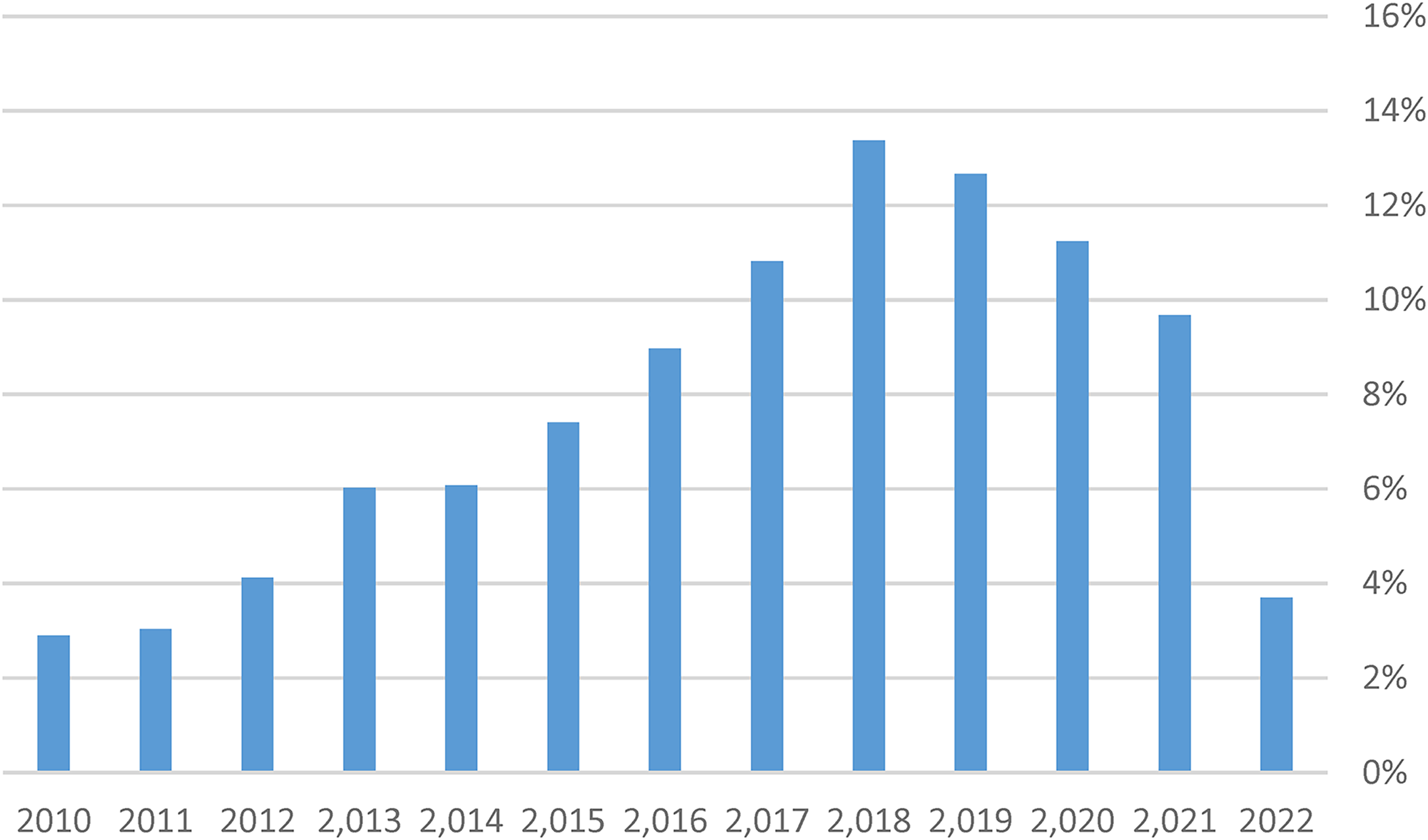
Patient engagement (PE) consequences study by publication year.
Based on Table 3, findings are categorized into 4 groups: (1) Health outcome/effectiveness: improving the quality of care (16, 3 23, 24, 26–28), the likelihood of achieving treatment results (30), patient satisfaction, and reducing depression and anxiety (25, 31), (2) patient compliance: improving patient adherence to treatment process (32), (3) self-efficiency: increasing patient responsibility and motivates people can take more control of their health management (2, 12–14, 23, 33), and (4) return on investment: cost-effectiveness determined by time and resources, and timing is the biggest barrier to PE so it is more likely care outcomes improve through provider engagement rather than PE(2, 15).
Classification of Consequences of Patient Engagement (PE).

Discussion
This review showed that studies related to PE have been on the rise over the past 10 years. According to Bhati et al. (34), patients engaged in 3 primary care research studies found the experience to be positive and felt good that they had contributed to the research. In addition the last pandemic, it is thought to cause the US hospitals to face between $53 billion and $122 billion in missed revenue in 2021. It is reported that currently 897 hospitals are at risk of closing and many are being forced to reduce staffing (34). Studies show that patients with the lowest activation have the most expensive costs and vice versa. When examining the causal factors that contribute to the association between PE and costs, highly engaged patients are more likely to perform health-improving behaviors that correlate with better outcomes and lower long-term costs. Results of a study showed that highly engaged patients can have a better control on high-density lipoproteins cholesterol, and triglycerides and are less likely to smoke or be obese. They are more likely to get pap smears and mammograms, have their depression better controlled and have fewer emergency visits and hospitalizations (35). Furthermore, PE can be very beneficial in 4 different ways:
Health Outcome/Effectiveness
Improving the quality of care, the likelihood of achieving treatment results, patient satisfaction, and reducing depression and anxiety: PE can improve the quality of care by informing patients and providers and enhancing governance and service delivery (16). Geramita's study showed that 11% of participants with the highest engagement levels have significant improvements in anxiety (17).
There are several strategies for patient and family engagement to reduce anxiety and depression. The results of a review study showed that the most common strategies were patient education and self-management support. Individual care planning shared decision-making, and family or peer support were also common strategies (18).
An engaged patient is more likely to take their medications as prescribed by their doctors, resulting in fewer complications, minimizing unnecessary visits, and emergency admissions in the hospital. There is a high chance that these patients engage more in preventative behaviors such as immunizations, mammograms, regular health checkups, healthy eating, or STI/STD screenings (36).
Patient Compliance
Improving patient adherence to the treatment process: To improve the quality of healthcare, patients must adhere to treatment recommendations. In addition to a threat to health and the effectiveness of treatment, patient noncompliance can also have a significant economic burden. misunderstanding, forgetting, or ignoring care recommendations can put more than 40% of patients at significant risk. Engaging between physician and patient when choosing a treatment option can maximize patient commitment and adherence. This interaction reduces the risks of noncompliance by increasing patient satisfaction and improve health outcomes (20). In Danielson's study, the core components for adherence to treatment in patients were identified; motivation, cohesion, commitment, and empowerment. (21).
Self-Efficacy
Increasing patient responsibility and motivating people to take more control of their health management. Patient self-efficacy is defined as the confidence and ability to take the necessary steps to achieve their goals. Self-efficacy provides a roadmap for using the power of patients to engage in their care (37). The results of Hoffman study showed that oncology nurses can use perceived self-efficacy to improve patients’ quality of life (38). Patients with multiple diseases and with low self-efficacy have a lower quality of life. Awareness of the level of self-efficacy among patients with multiple diseases may help identify patients who need more support. Supporting self-management in patients with chronic diseases is one of the important features of good care (39).
Return on Investment
Return on investment is one of the methods of evaluating alternative solutions. This method tries to quantify the financial benefits and costs of the solutions (40). That is determined by time and resources, and selected documents showed time is the biggest barrier to PE, so it is more likely care outcomes improve through provider engagement rather than PE. PE efforts should focus on supporting and encouraging health workers to ensure patients’ experience is based on interaction with them (41). Although patients, service providers, and sponsors are increasingly considering PE, sponsors are often reluctant to engage with patients because of uncertainty about return on investment (42). The Return on Investment (ROI) is also a well-recognized and trusted method of evaluation. The main benefit of PE for the healthcare team is increased productivity (43). In order to check the progress, it is essential to be aware of every investment's returns in different campaigns and advertisements that focus on PE. Measuring the return of investment is complicated, however, there are certain parameters that can assist us and make the process easier. Important parameters that can help us understand the ROI might be the number of outpatient visits, number of visitors to online portals, an increased messages database, and an increased number of patient admissions. ROI is the most important factor in successfully managing a business and healthcare is no exception. In this perspective, assessing the working techniques and continuously improving them is essential (29). Le et al., in their review, found that the impacts of PE can be better determined using a coherent set of measures versus single indicators (7).
Health care is experiencing patients that have expectations for value, transparency, choice, and engagement (9). However, PE studies are still limited (35) and, meaningfully engaging patients has often proven to be difficult (9). Patient advisors have provided the clinical research team with insight into objective issues that can cause a patient's reluctance to participate in a clinical trial. Among other factors, they mention time, expense, and prior beliefs and attitudes about clinical trials. Patients may fear that they might not be seen as persons but rather as research subjects and sometimes they don't understand what clinical research means (44). In addition, for rare diseases because of the low number of patients available for collaboration researchers struggle to gain the insights they need to understand these uncommon illnesses (45)
PE aims to strengthen and support patients’ abilities and self-care responsibilities and then collaborate with their healthcare providers to improve their health and achieve the maximum values of healthcare services (50).
PE helps healthcare professionals to collaborate with patients to work together to improve health outcomes. Recent studies indicated that improving PE could bring a positive influence on the healthcare quality of care. However, the relationship might be deeply influenced by an individual's psychological, and physical or social characteristics (51).
Limitations of Study
Some weaknesses of the present research are denoted here. First, Studies about PE impacting on quality of care were limited. PE is a relatively new concept and lack of prior research studies on the topic is noted. Second, we have only included papers written in English language and conducted the search in 2 databases. Third, more investigations are necessary to discover the magnitude in which PE can impact the quality of health care services.
Conclusions
PE and impact on healthcare is relatively a new concept and only a few studies have assessed the outcomes and impacts of various PE interventions. This might be due to heterogeneous strategies that engage patients mostly through clinical research rather than routine healthcare services or might be related to a gap in the evidence. Further research is required to improve the knowledge on how PE can advance the quality of care in the health industry. Our findings suggest that PE might be beneficial to patients and service providers alike. Patients can be apprehensive about participating in clinical trials, but it is imperative to have the patient's perspective when designing, and implementing trials to ensure that their perspective is at the forefront (52).
Footnotes
Acknowledgements
The author(s) also extend their gratitude and appreciation to the esteemed reviewers who provided constructive and valuable suggestions for improving the quality of this article.
Author’s Contribution
SM and MN conceptualized this scoping review. MN and EA searched across databases and selected relevant articles or documents for this scoping review. SM, MN, and EA reviewed the articles. MN and AA wrote the manuscript. All authors read and approved the final manuscript.
Declaration of Conflicting Interests
The author(s) declared no potential conflicts of interest with respect to the research, authorship, and/or publication of this article.
Funding
The author(s) received no financial support for the research, authorship, and/or publication of this article.
Ethics Approval and Consent to Participate
Not applicable.
Consent for Publication
Not applicable.
Availability of Data and Materials
All data generated or analyzed during this study are included in this manuscript.
