




Abstract
Introduction. Neonatal death is still alarming in low-income countries including Ethiopia, accounts 30 death per 1000 alive births. Birth trauma is the second most common contributing factors for the death. Nevertheless, there is no aggregate evidence on the prevalence and patterns of neonatal birth trauma in Ethiopia. Therefore, this study aimed to assess the pooled prevalence and patterns of neonatal birth trauma in Ethiopia. Methods. Searching databases including PubMed, MEDLINE, Popline, SCOPUS, Web of Science, EMBASE, CINHAL (EBSCO), Google, Google Scholar, and lists of references were used to search literatures in Ethiopia. STATA version 14 was used for analysis, and the odds ratios of the outcome variable were determined using the random-effects model. Heterogeneity among the studies was assessed by computing values for I2 and P-values. Also, sensitivity analysis and funnel plot were done to assess the stability of pooled values to outliers and publication bias. Results. A total of 6 studies with a sample size of 3663 were included in this study. The overall prevalence of neonatal birth trauma was 15% (95% CI: 13-16). Subgaleal hemorrhage (39%), cephalohematoma (27%), and caput succedaneum (24%) were the most common neonatal birth trauma in Ethiopia. Meta-analyses and sensitivity analyses showed the stability of the pooled odds ratios, and the funnel plots did not show publication bias. Conclusion. This systematic review and meta-analysis revealed a high prevalence of neonatal birth trauma in Ethiopia. Moreover, most of the neonatal birth injuries were severe and life-threatening that need medical attention to safe the neonates and its life long complications.
Introduction
Globally, an estimated 2.4 million neonatal deaths occur every year. 1 Eventhough neonatal mortality reduction remains a priority agenda of sustainable development goal (SDG-2), 2 neonatal mortality has remained stable for the last half-decade in Ethiopia, accounts 30 death per 1000 alive births. 3 Birth trauma is the second most common cause of neonatal morbidity and mortality. 4
Neonatal birth trauma is the mechanical destruction or functional deterioration of the neonate’s body that mostly occurred during the birth process. 5 It ranges from self-limited to severe and long-lasting complications. 6 The prevalence of neonatal birth trauma varies with the socio-economic status of the countries, health coverage, and feto-maternal health seeking behavior. For instance, it is high in low socio-economic countries and poor quality of obstetric care.5,7
Mechanical types of neonatal birth trauma are frequently reported to occur during delivery and the incidence can differ across regions, according to a multitude of sources. Its prevalence ranges from 12.3% to 16.7% in Ethiopia.8,9 Moreover, the types of birth trauma varies among the existing studies.8-13
The existing studies in Ethiopia are limited to specific geographical areas; hence, they could not represent the prevalence and patterns of birth trauma among neonates at the national level. Moreover, the available data have not been systematically combined to generate a precise understanding of the prevalence and patterns of birth trauma among neonates. A pooled prevalence and patterns of neonatal birth trauma would help policy makers and health managers to make evidence-based decisions and in adopting suitable measures to reduce its incidence and related complications. Thus, we aimed to determine the pooled prevalence and patterns of neonatal birth trauma in Ethiopia.
Methods
Study Protocol and Registration
This systematic review and meta-analysis was conducted to determine the overall prevalence and patterns of neonatal birth trauma in Ethiopia. The findings of this review were reported following the Preferred Reporting Items for Systematic Review and Meta-Analysis (PRISMA) guidelines. 14 We also used the Meta-analysis Of Observational Studies in Epidemiology (MOOSE) guidelines to conduct the meta-analysis and to report the results. 15 The review was registered under on the PROSPERO with ID number of CRD42023406765.
Eligibility Criteria
All observational studies on the prevalence and patterns of neonatal birth trauma in Ethiopia were included. Similarly, all unpublished and published studies written in the English language were included in the study irrespective of their publication year. However, we excluded the studies that did not report our primary outcome of interest, studies that failed to fulfill the quality criteria, experimental studies, reviews, commentaries, and editorials.
Search Strategy
Searching databases including PubMed, MEDLINE, Popline, SCOPUS, Web of Science, EMBASE, CINHAL (EBSCO), Google, Google Scholar, and lists of references were used to find out literatures that fit our study objectives. Moreover, experts in the field were consulted to retrieve unpublished studies, and the bibliography of selected articles was reviewed for additional relevant studies.
We used Boolean logic operators (AND, OR, NOT) with Mesh terms, keywords, and word variants for the neonatal birth trauma and newborn birth injury in the search strategy. Depending on the specific requirement of the databases search strings were modified. For instance, PubMed search: (((((“prevalence” AND (“neonate” OR (“newborn” AND (“birth trauma”[All Fields]))[All Fields]))[All Fields]))[All Fields])) OR (“birth injury”[All Fields])) AND (“Ethiopia”[All Fields]). The search strategy is outlined in Supplemental File 1.
Study Selection
All the articles obtained from the selected databases were exported to the EndNote X6 version library, and exact duplicates were removed. Then, the EndNote library was shared between the reviewers (BB, ADH, and ML), and the initial screening of the articles was performed independently using the title and abstract. Any disagreements between the reviewers were solved through discussion, and after a consensus was reached the full text was reviewed. The overall study selection process is presented using the PRISMA statement flow diagram (Figure 1).
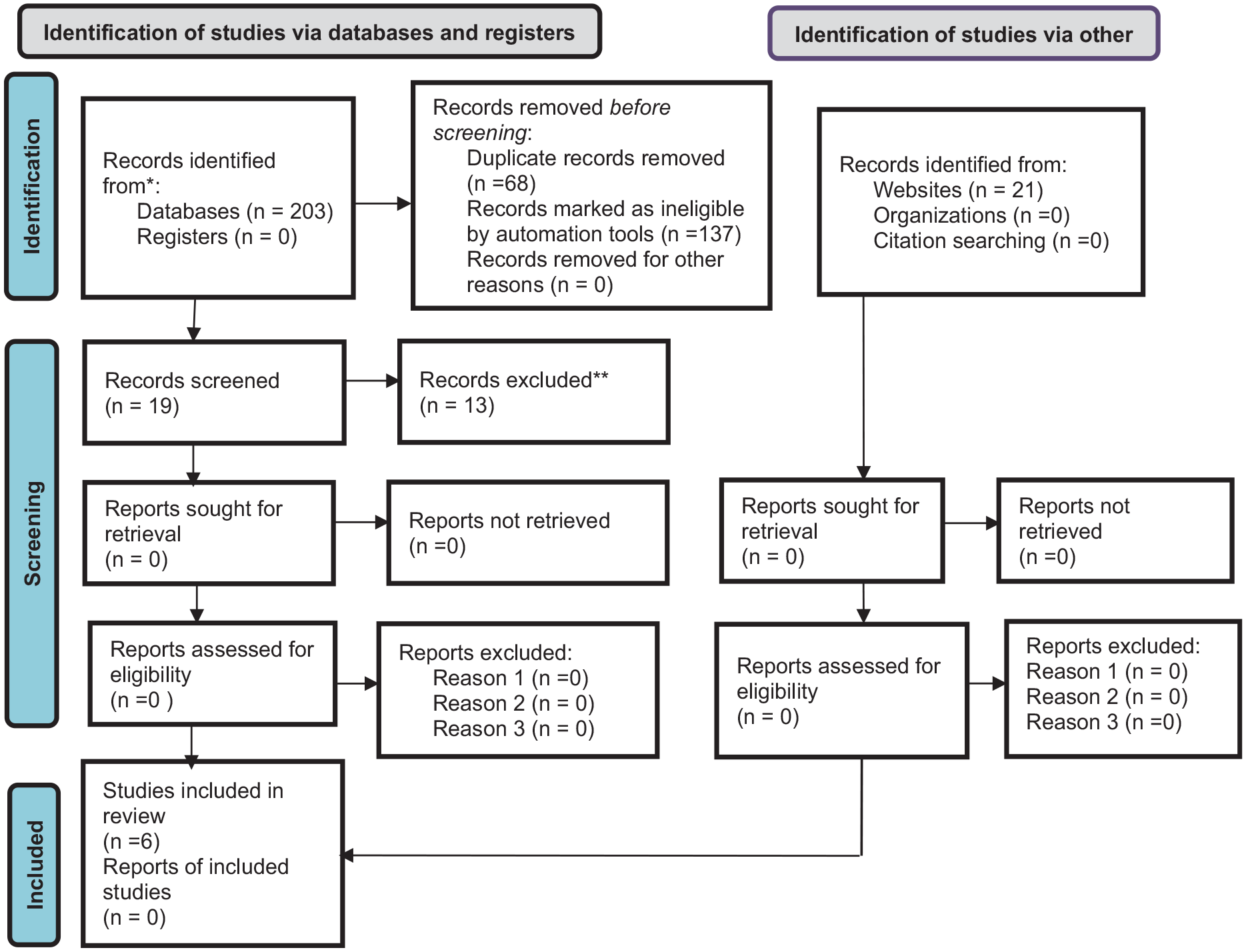
PRISMA statement presentation for systematic review and meta-analysis of neonatal birth trauma in Ethiopia, 2023.
Data Extraction
The 2 reviewers (BB and ML) independently extracted the data from the full text of the retained articles. A pre-defined Microsoft excels 2010 was used to extract the data from selected studies under the following heading: author, publication year, setting, region, study design, study subject, and primary outcomes of interest (Table 1). The accuracy of the data extraction was verified by comparing the results of the independently extracted data.
General Characteristics of Studies Included in the Systematic Reviews and Meta-Analysis in Ethiopia, 2023.

Abbreviations: IB, institutional based; SNNPR, Southern Nation, Nationality and People Region; CS, cross-sectional.
Quality and Risk of Bias Assessment
The quality of the retained articles was appraised independently by the 2 reviewers (BB and ML) using Newcastle–Ottawa Scale (NOS) I2 since all articles that fulfilled the inclusion criteria were observational studies. The mean score of the author’s assessment was taken for a final decision, and any difference was solved by consensus. The included studies were evaluated against each indicator of the tools and categorized as high quality (>80%), moderate quality (60%-80%), and low quality (<60%). Articles with high to moderate quality were included in the review.
This critical appraisal was conducted to assess the internal validity (systematic error) and external validity (generalizability) of the studies and to reduce the risk of biases. Quality scores for each article were presented in Supplemental File 2.
Outcome Measures and Statistical Analysis
The primary outcome variable of this review was the prevalence of neonatal birth trauma which was measured based on the absence or presence of the trauma during the labor and delivery process based on physician diagnosis. The pooled prevalence and patterns of neonatal birth trauma were computed from a report of the included articles. The random effect meta-analysis model was employed using STATA 14 software to consider the study-specific true effects across the included studies. A random-effects model for the reported proportion was used to present the pooled prevalence and patterns of neonatal birth trauma in Ethiopia. Forest plots were used to show the prevalence and patterns of neonatal birth trauma in Ethiopia. Also, subgroup analyses were conducted using the regions and publication year of the studies. Also, sensitivity analyses were computed to assess the stability of pooled values to outliers.
The authors checked for potential publication bias using visual inspection of a funnel plot and Egger’s regression test. Also, the P-value of <.05 for I2 statistics was used to determine the presence of heterogeneity. Similarly, low, moderate, and marked heterogeneity was assigned to I2 test statistics results of 25%, 50%, and 75%, respectively. The results of the review were reported according to the PRISMA guidelines and presented using a narrative synthesis. 14
Results
Description of the Studies
A total of 224 papers were found by all searching methods (electronic databases, non-electronic databases, and lists of references). All papers were exported to the endnote library and duplicates (68 papers) were removed. Also, a total of 137 unrelated papers were excluded after titles and abstracts were reviewed. Then, 19 papers were retrieved for detailed examination, and after a full-text review of those papers, 13 papers were excluded due to different populations and outcomes of interest not being reported. Finally, full texts of the remaining 6 papers were selected for the methodological quality assessment using JBI critical appraisal tools. All appraised papers met the inclusion criteria and were included in the final review (Figure 1).
Characteristics of Included Studies
Six cross-sectional studies with a sample size of 3663 were used to determine the patterns and pooled prevalence of neonatal birth trauma in Ethiopia. The prevalence of neonatal birth trauma included in the reviews ranged from 12.3% to 16.7%.8,9 Of those included studies, 2 were conducted in AA and the other 4 studies were conducted outside of AA (Oromia, Harari/Dire Dawa, Amhara, and SNNPR) (Table 1).
The Pooled Prevalence of Neonatal Birth Trauma
The overall pooled prevalence of neonatal birth trauma among newborns in Ethiopia was 15% (95% CI: 13-16) with I2 = 58.19% and a P-value ≤.04. The prevalence of neonatal birth trauma ranges from 12% (95% CI: 10-15) 9 to 17% (95% CI: 15-19) 8 (Figure 2).

Forest plot of the pooled prevalence of neonatal birth trauma in Ethiopia, 2023.
Publication Bias
To observe publication bias, the Egger regression test revealed no evidence of publication bias among the included studies (P = .182) in addition a visual inspection of the funnel plot was done and presented in the figure below (Figure 3).

Funnel plot for neonatal birth trauma in Ethiopia, 2023.
Meta-Regression to Check the Heterogeneity
A meta-regression analysis was conducted since there was statistically significant heterogeneity, with I-square test statistics less than 0.05. The purpose of the analysis was to identify the source of heterogeneity so that the correct interpretation of the findings is made. However, the meta-regression analysis found no significant variable which can explain the heterogeneity. There was no statistically significant study level covariate: sample size and publication year of included studies. Therefore, the heterogeneity can be explained by other factors not included in this review (Table 2).
Meta-Regression Analysis to Check Heterogeneity on Neonatal Birth Trauma in Ethiopia, 2023.

Subgroup Analysis
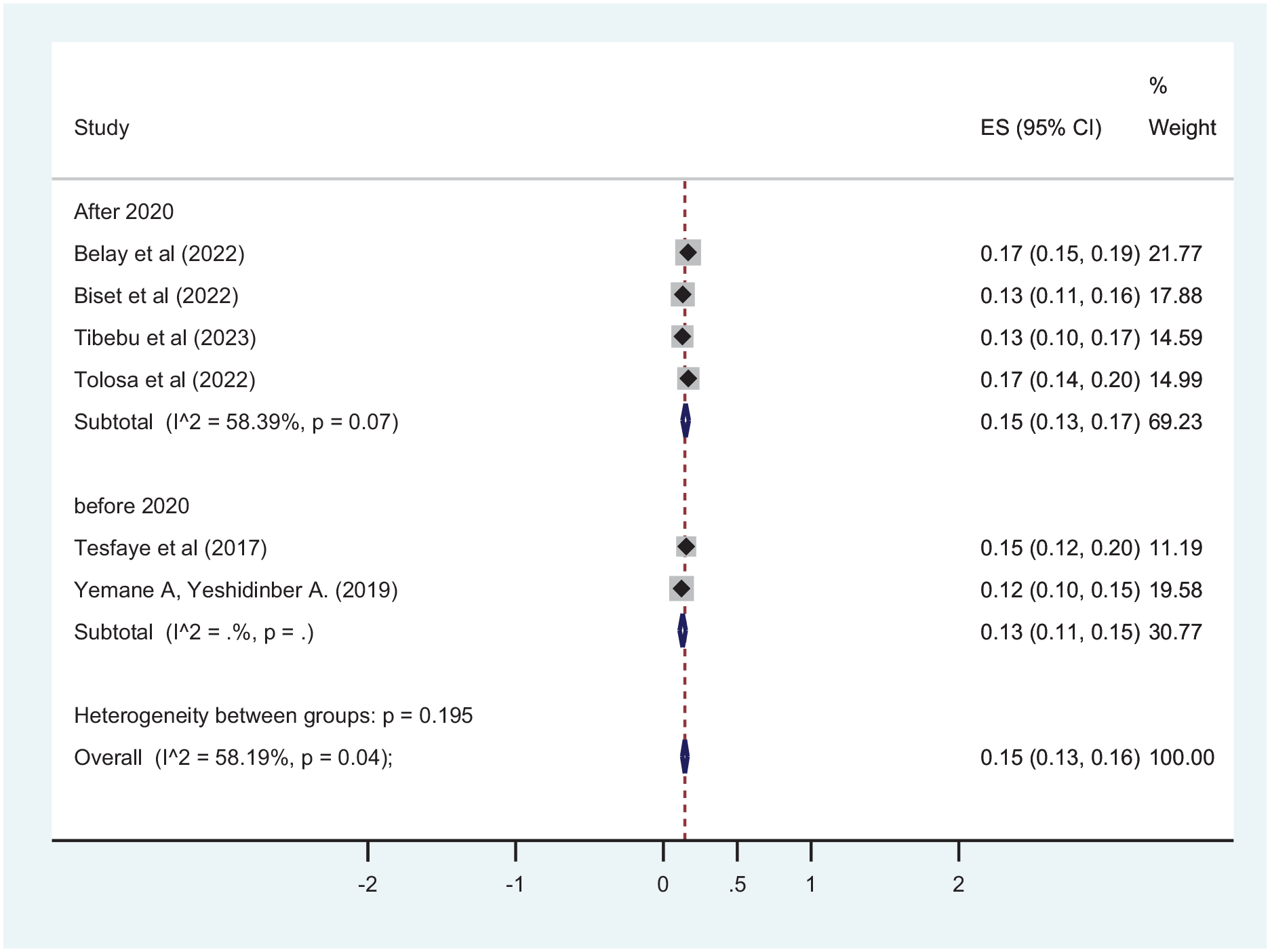
Subgroup analysis was computed with the evidence of heterogeneity. Hence the Cochrane I2 statistic = 59.88%, P = .04) showed the presence of marked heterogeneity in this study. Therefore subgroup analysis was implemented using the study area (region) and year of publications using random model effect analysis. Regarding the study area (region), the prevalence of neonatal birth trauma was highest out of AA (Oromia, Harari/Dire Dawa, Amhara, and SNNPR) accounting for 16% (95% CI: 14-17) whereas the prevalence of neonatal birth trauma was higher among studies published after 2020, accounting for 15% (95% CI: 13-17) (Figures 4 and 5).

Forest plot of the subgroup analysis by publication year of neonatal birth trauma in Ethiopia, 2023.
Forest plot of the subgroup analysis based on the region of neonatal birth trauma in Ethiopia, 2023.
Patterns of Neonatal Birth Trauma
Regarding patterns of neonatal birth trauma, sub-galeal hemorrhage (39%) was the most common followed by cephalohematoma (27%) and caput succedaneum (24%) respectively (Table 3).
Patterns of Neonatal Birth Trauma in Ethiopia, 2023.

Sensitivity Analysis
Sensitivity analysis was done by removing outliers and inliers, and no significant difference was investigated. While removing outliers, we noticed that the pooled prevalence of neonatal birth trauma was 15% (95% CI 12-18), and after removing inliers, the pooled prevalence was 14% (95% CI 12-15), so we can say this meta-analysis result is not sensitive.
Discussion
This systematic review and meta-analysis tried to investigate the prevalence and patterns of neonatal birth trauma in Ethiopia. Accordingly, a pooled prevalence of neonatal birth trauma was 15% (95% CI: 13-16). The finding was higher than a systematic review and meta-analysis report from Iran (2.7%). 17 Similarly, it was higher than the studies finding in Nigeria (5.7%), 18 India (1.4%), 19 and Cameroon (1.8%). 20
The discrepancy might be related to the availability and accessability of quality obstetrics care and the continuum of maternal care across the nations. For instance, only 43% and 48% mother attended the fourth antenatal care and skilled birth attendants respectively in Ethiopia. 3 Moreover, instrumental deliveries (forceps and vacuums) which are the most contributors for neonatal birth trauma are commonly practiced in Ethiopia. 21 The difference in socio-demographics, socio-economics, sample size, sampling methods, and gender inequality play a vital role for the discrepancy of neonatal birth trauma across the countries.5,18,19,22 In addition, early childbirth and childhood malnutrition of a mother influence pelvic diameters.23,24
Subgaleal hemorrhage (41%), caput succedaneum (29%), cephalohematoma (21%), skeletal fractures (18%), soft tissue injuries (14%), and peripheral nerve injuries (13%) were the types of birth trauma. Most of those neonatal birth traumas are severe and life-threatening. Continuum of maternal care, early identification of obstructed labor and interventions, limiting instrumental deliveries, and timely referral and treatment of life-threatening types of birth traumas are crucial to save the life of newborns and to prevent life long complications. Moreover, training of staffs on safe instrumental delivery and early neonatal assessment is crucial to minimize the prevalence and severity of birth trauma.
This systematic review and meta-analysis was tried to investigate a pooled prevalence of newborns birth trauma and its pattern using all primary studies conducted in Ethiopia. However, it did not assess the predictors of neonatal birth trauma. Another limitation of the review was it included only neonatal birth trauma happened at health institutions without considering home delivery.
Conclusion
This systematic review and meta-analysis revealed that a pooled prevalence of neonatal birth trauma was relatively high in Ethiopia. Majority of neonatal birth injuries were severe and life-threatening medical attention which need the adherence to national obstetrics guidelines to minimize neonatal birth trauma and its life long complications. Moreover, since the number of existing studies did not assess the trends, it needs surveillance and routine reporting systems on newborn birth trauma in Ethiopia.
Supplemental Material
sj-docx-1-gph-10.1177_2333794X231191982 – Supplemental material for Prevalence and Patterns of Neonatal Birth Trauma in Ethiopia: Systematic Review and Meta-Analysis
Supplemental material, sj-docx-1-gph-10.1177_2333794X231191982 for Prevalence and Patterns of Neonatal Birth Trauma in Ethiopia: Systematic Review and Meta-Analysis by Bikila Balis, Aboma Diriba Hunde and Magarsa Lami in Global Pediatric Health
Supplemental Material
sj-docx-2-gph-10.1177_2333794X231191982 – Supplemental material for Prevalence and Patterns of Neonatal Birth Trauma in Ethiopia: Systematic Review and Meta-Analysis
Supplemental material, sj-docx-2-gph-10.1177_2333794X231191982 for Prevalence and Patterns of Neonatal Birth Trauma in Ethiopia: Systematic Review and Meta-Analysis by Bikila Balis, Aboma Diriba Hunde and Magarsa Lami in Global Pediatric Health
Footnotes
Acknowledgements
Not applicable.
Author Contributions
BB and LM conceived and designed the review. BB, ADH, and ML carried out the draft of the manuscript, and BB is the PI of the review. BB and ML developed the search strings. The two reviewers (BB and ML) screened and selected studies. Also, BB, ADH, and ML extracted the data and evaluated the quality of the studies. BB carried out the analysis and interpretation. All authors rigorously reviewed, read, and approved the final version of the manuscript.
Availability of Data and Materials
All related data has been presented within the manuscript. The dataset supporting the conclusions of this article is available from the corresponding author upon request.
Consent for Publication
Not applicable.
Declaration of Conflicting Interests
The author(s) declared no potential conflicts of interest with respect to the research, authorship, and/or publication of this article.
Funding
The author(s) received no financial support for the research, authorship, and/or publication of this article.
Ethics Approval and Consent to Participate
Not applicable.

Supplemental Material
Supplemental material for this article is available online.
References
Supplementary Material
Please find the following supplemental material available below.
For Open Access articles published under a Creative Commons License, all supplemental material carries the same license as the article it is associated with.
For non-Open Access articles published, all supplemental material carries a non-exclusive license, and permission requests for re-use of supplemental material or any part of supplemental material shall be sent directly to the copyright owner as specified in the copyright notice associated with the article.
