




Abstract
Background. Substances mainly khat, alcohol and cigarette are used during pregnancy in Ethiopia. However, to this date, there is no pooled evidence about the burden of adverse neonatal outcomes among the substance users during pregnancy in the country. Methods. Eligible primary studies were accessed from 4 international data bases (Google Scholar, Science Direct, Scopus, and PubMed). The required data were extracted from these studies and then exported to stata version 14 for analysis. Subgroup analyses were conducted for evidence of heterogeneity. Results. A total of 2298 neonates were included from 7 studies. Among these neonates, 530(23.06%) were those whose mothers used substance during pregnancy (exposed group) whereas 1768 neonates were those whose mothers didn’t use substance during pregnancy (controls group). The pooled prevalence of adverse neonatal outcome among the exposed mothers was 38.32% (95% CI: 29.48%, 47.16%; I2 = 76.3%) whereas it was 16.29% (95% CI: 9.45%, 23.13%) among the controls. Adverse neonatal outcome was most burdensome among cigarette smokers 45.20% (95% CI: 37.68%, 52.73%; I2 = .00%) when compared with khat chewers 34.00% (95% CI: 20.87%, 47.13%) and alcohol drinkers 38.47% (95% CI: 17.96%, 58.98%). Low birth weight 42.00% (95% CI: 18.01%, 65.99%; I2 = 91.8%) was the most common adverse birth outcome. Conclusion. It was found that adverse neonatal outcomes were much more burdensome among antenatal substance users than the controls. Therefore, mothers should be enabled to quit using substance before pregnancy. Besides, strict comprehensive screening of every pregnant mother should be made at antenatal care clinics for early identification and management of antenatal substance use.
Background
As of prior global evidence, the use of different substances during pregnancy results in several worse fetal consequences.1-3 For example, studies in Brazil, 4 China, 5 and Turkey 6 showed positive association of cigarette smoking during pregnancy with low birth weight. Further studies about the effect of antenatal tobacco use in the United States of America (USA) 7 and Jordan 8 revealed its strong associations with preterm birth and congenital malformation.
Increased rates of fetal demise have been reported among women who drink alcohol during pregnancy. For instance, studies in Japan 9 and Boston 10 disclosed significant association of alcohol use during pregnancy with increased risk of preterm birth and low birth weight. Moreover, evidence shows neonates born to mothers drinking alcohol are prone to develop fetal alcohol effects including Fetal Alcohol Syndrome, Alcohol-Related Neurodevelopmental Disorder and Alcohol Related Birth Defects.11,12
In Ethiopia, khat is highly cultivated and marketed mainly in eastern part of the country. 13 As of a study in the country, 14 the pooled burden of khat use among pregnant mothers was 20%. According to a study about substance use among antenatal care users in Eastern Ethiopia, 15 khat was most used 74.1% followed by alcohol drinking 35.6% and tobacco use 8.9%. Moreover, its use was reported from Jimma (29.7%), 16 Butajira 10.0%, 17 Gedeo zone 9.9%, 18 and Bahir Dar town. 19
In Ethiopia, there are multiple primary studies20-26 showing the delivery of preterm, low birth weight, low fifth minute Apgar (appearance, pulse, grimace, activity, respiration) score and congenitally malformed neonates among alcohol drinkers, khat chewers, and cigarette smokers during pregnancy. However, there is no pooled prior evidence regarding the burden of adverse neonatal outcome among mothers who used these substances during pregnancy. Therefore, this study was aimed to estimate the pooled burden of adverse neonatal outcome among antenatal substance users in Ethiopia. As findings are the first in kind in the country, this study would provide clinicians and policy makers with comprehensive up-to-date information toward developing plans for optimizing birth outcomes among reproductive age group women.
Methods
This systematic review and meta-analysis was conducted based on the methodology of Preferred Reporting Items for Systematic Review and Meta-analysis (PRISMA) checklist (Supplemental File 1]. 27 It was undertaken through systematic synthesis of the eligible primary studies on the adverse birth outcome of substance use during pregnancy in Ethiopia. The review protocol has been sent for registration in an international prospective register of systematic Review, and currently labeled as “review ongoing.”
Search Strategy
For explicit presentation of our review question and clear specification of the inclusion and exclusion criteria, we considered using adapted PICO questions, that is, “PEO” (Population, Exposure, Outcome) format was followed. These questions were developed from the following search key words and/or Medical Subject Headings (MeSH) which were combined using the “OR” and “AND” Boolean operators:
a.
b.
c.
d.
e.
Using the above adapted PICO format, we developed the following review question which was focused to retrieve as many relevant primary studies as possible:
Then, considering the aforementioned review questions, searching of primary studies was done using Google scholar, science direct, Scopus, and PubMed. Each database was searched independently with some modifications of the search strategy (eg, human subject and English language was applied as limiters of the search). The type of searching strategy was line by line and it was done through title (TI), abstract (Ab) and full text categories. Search operators such as truncation (*), Boolean operators (“OR” and “AND”), and phrase searching (“. . .”) were considered. Synonyms were also used for further searching of primary studies. We extended our search from systematic database searching to retrieving reference lists of eligible articles. Besides, the “cited by” and “related articles” functions of PubMed were considered for further literature searching. Literature search was conducted from January 20/2019 to February 20/2019. Finally, all studies which were in agreement with the review question were retrieved and screened for inclusion criteria. The literature search was performed by 2 independent authors, with discrepancies resolved by discussion and consensus. A sample of the primary search string including the truncation (*), phrase searching (“. . .”) and synonyms has been provided as a supplemental File for Pub MED database search (Supplemental File 2).
Outcome Variable Measurement
Inclusion and Exclusion Criteria
Primary studies of any design that reported magnitude/proportion/prevalence of adverse birth outcome among substance users during pregnancy were eligible. However, primary studies were excluded due to any of the following reasons: (a) no report on the prevalence of adverse birth outcome, (b) articles without full text, (c) articles with poor quality score, (d) articles whose full text not availed after 3 times of email contact with the corresponding author, and (e) narrative reviews, editorials, correspondence, abstracts, and methodological studies. Two authors (W.A.B and B.M.B) evaluated the eligibility of all retrieved studies independently, and any disagreement and inconsistencies were resolved through participation of a tie breaking third author (D.M.B).
Study Screening and Selection
Search results were first downloaded into Endnote version IX and duplicates were removed. Then, selection of studies was conducted in 2 stages. First, title and abstract screening was conducted. Then, full-text reviewing was done. Through title and abstract screening by 2 independent authors (MT and BK), studies that mentioned the prevalence /magnitude/proportion of adverse birth outcome among antenatal substance users were selected for full text review. Then, from full-text reviewing, any article classified as potentially eligible by either author was considered as a full text and screened by both authors independently. At times of disagreement where a consensus could not be reached between the authors, a third author (GYY) reviewed and resolved the disagreements.
Critical Appraisal and Reliability Check
After screening was over, selected primary studies were critically appraised for their methodological validity. The appraisal was done using the Joanna Briggs Institute (JBI) appraisal tool for prevalence studies. 30 The tool had a total of 9 questions (Q1-Q9), and those studies with positive answers (yes) for more than 50% of the questions in the tool (ie, “yes” for 5 or more questions) were included in this meta-analysis. The scoring was done by 2 authors (MM and EMA) with discrepancies resolved through discussion and consensus. When disagreements between the 2 authors were not resolved by discussion, a third author (EFA) was involved as a tie breaker. The statistics (quality scores) that measured the level of agreement for the independent reviews is reported (Supplemental File 3). During critical appraisal of each primary study, more emphasis was given to the appropriateness of the study objectives, study design, sampling technique, data collection technique, statistical analysis, any sources of bias and its management technique.
Data Extraction
First of all, a data extraction format was prepared on Microsoft excel spreadsheet and validated through extracting sample data from some eligible primary studies after which important modifications were made for actual data extraction. The variables on which data were extracted included first author name, year of the study, region of the study, study design, sample size, type of substance used during pregnancy and proportion or prevalence of adverse birth outcome among the substance users. Two authors (TK and MYA) completed data extraction on the aforementioned components of each primary study and then the extracted data were crosschecked for any discrepancies. Discrepancies were resolved by the involvement of a third author (KDA) as a tie breaker. During extraction, data transformation was undertaken as necessary.
Statistical Analysis
The extracted data were exported to Stata version 14 for meta-analysis. Given the high level of statistical heterogeneity of adverse birth outcome among antenatal substance users between the included primary studies (I2 = 76.3%; P < .001), we pooled the magnitude of adverse birth outcome using random effects model and presented using forest plot at 95% confidence interval (CI).31,32 In response to the aforementioned heterogeneity, we performed subgroup analyses by study region, substance type and sample size. Finally, we performed a sensitivity analysis to describe whether the pooled effect size was influenced by individual studies. Regarding the evaluation of publication bias, a minimum of 10 studies is needed. 33 However, it was not possible to assess publication bias because there were only 7 studies included, which under-power the above method. A summary list of the proportion or prevalence of adverse birth outcomes among substance users during pregnancy was reported using text and table.
Patient and Public Involvement
In this study, no study participants were involved because the study was conducted based on data extracted from primary studies.
Results
Literature Search Findings
Our exhaustive searching of both published and unpublished sources yielded a total of 867 articles. From the overall 867 articles, 865 were obtained through database searching whereas the rest 2 articles were retrieved from Addis Ababa and Haramaya Universities institutional online repositories. Among 865 articles accessed from data base searching, 159 articles were obtained using Google scholar, 586 articles were from PubMed, 78 from science direct, and 45 from Scopus. A total of 791 duplicate articles were excluded. The remaining 76 articles were screened for their title and abstract based on which 66 articles were excluded for not being topics of interest because the objective of this study was to include only empirical primary studies that reported prevalence of adverse birth outcome among substance users during pregnancy in Ethiopia. Then, the rest 10 articles were considered for the presence of full text, and only 8 of which had full text content. After full text review of the 8 articles, 1 article was excluded for not having a clearly defined outcome. Finally, a total of 7 empirical primary studies20-26 were included in this systematic review and meta-analysis (Supplemental File 4).
Characteristics of the Included Studies
In this systematic review and meta-analysis, 7 studies20-26 with sample size ranging from 220 21 to 472 24 were considered from different regions of Ethiopia. In the study, a total of 2298 neonates were included. Among these neonates, 530(23.06%) were those whose mothers used substance during pregnancy (exposed group) whereas 1768 neonates were those whose mothers didn’t use substance during pregnancy (controls group). Alcohol, khat, and cigarette were the reported substance types. Low birth weight, congenital anomaly, preterm birth, and low fifth minute Apgar score were the observed adverse neonatal outcomes of substance use during pregnancy. All the studies were of crossectional in design and had good quality score (≥ 6) of the critical appraisal. There was only one study 20 that reported 37.13% prevalence of congenital anomaly among women drinking alcohol during pregnancy compared to the 27.27% prevalence among the non drinkers. The most frequent types of birth defect were neural tube defects (32.5%), followed by oro-facial clefts (27.1%), cardiovascular system defects (12%), and upper and lower limb defects (8.8%). As of another study, 26 the prevalence of low fifth minute Apgar score among khat chewers was 30.36% compared to the 7.88% prevalence among the non-chewers (Table 1).
Characteristics of the Included Studies.

Meta-analysis
Pooled prevalence of adverse neonatal outcome among substance users during pregnancy
Before meta-analyzing effect sizes about magnitude of adverse neonatal outcome among substance users during pregnancy, we checked whether there was statistical variability between the included primary studies. The checking was done using both visual inspection of forest plot and statistical tests of variation. From visual inspection of the forest plot, there were outlier studies and poor overlap between the confidence intervals for the magnitude of adverse neonatal outcome on the forest plot suggesting possible statistical heterogeneity between the primary studies. More objectively, we checked the variability based on the Stata generated statistical tests of variation (I squared statistics = 76.3% and Chi-squared = 25.31 (d.f. = 6); P < .001) indicating high heterogeneity. Therefore, a random effect meta-analysis model was employed for pooling the effect sizes (magnitude) of adverse neonatal outcome among antenatal substance users. From the random effects model, the overall pooled estimate of adverse neonatal outcome among antenatal substance users (exposed group) was 38.32% (95% CI: 29.48%-47.16%; I2 = 76.3%, P < .001) (Table 2) whereas it was 16.29% (95% CI: 9.45%, 23.13%) among the non-substance users during pregnancy (controls) (Table 3). Moreover, similar output can be noticed from the forest plot of pooled adverse neonatal outcome among the substance users (exposed group) (Figure 1) and non users (control group) (Figure 2) during pregnancy in Ethiopia. Among the adverse neonatal outcome categories, low birth weight accounted for the highest proportion 42.00% (95% CI: 18.01%-65.99%; I2 = 91.8%) whereas low Apgar score 34.00% (95% CI: 20.87%-47.13%; I2 = 99.3%) accounted for the least burden of the pooled estimate (Figure 3).
Stata Output of the Pooled Seven Pocket Studies on the Burden of Adverse Neonatal Outcome among Substance Users During Pregnancy (exposed group) in Ethiopia, 2020.

Heterogeneity Chi-squared = 25.31 (d.f. = 6) P = .000.
I-squared (variation in ES attributable to heterogeneity) = 76.3%.
Estimate of between-study variance Tau-squared = 102.3729.
Stata Output of the Pooled Seven Pocket Studies on the Burden of Adverse Neonatal Outcome among Non-Substance Users During Pregnancy (Controls) in Ethiopia, 2020.
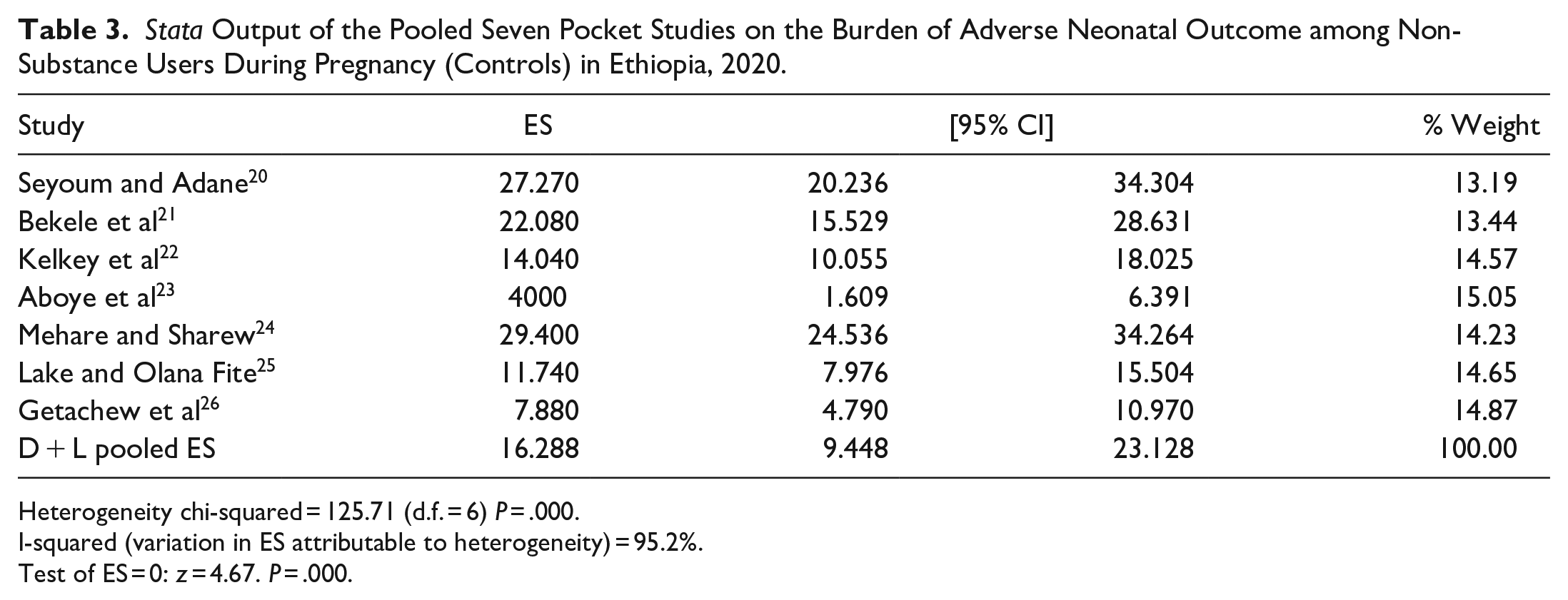
Heterogeneity chi-squared = 125.71 (d.f. = 6) P = .000.
I-squared (variation in ES attributable to heterogeneity) = 95.2%.
Test of ES = 0: z = 4.67. P = .000.

The pooled burden of adverse neonatal outcome among substance users during pregnancy, 2020, Ethiopia.

The pooled burden of adverse neonatal outcome among non-substance users (controls) during pregnancy, 2020, Ethiopia.
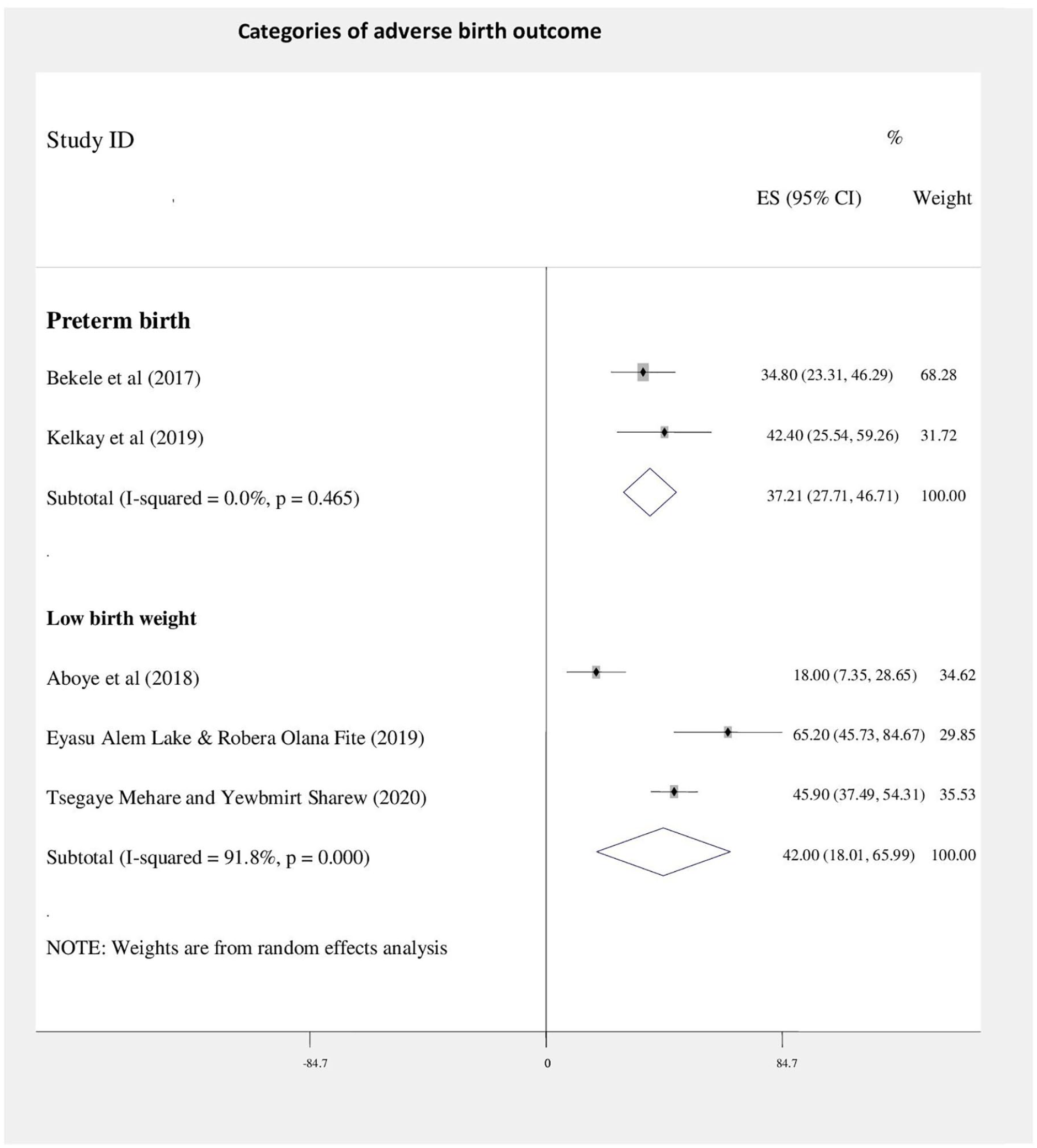
Categories of adverse neonatal outcome among substance users during pregnancy, 2020, Ethiopia.
Investigation of Heterogeneity
Given the statistical heterogeneity of magnitude of adverse birth outcome between the included primary studies (I2 statistics = 76.3%), we performed subgroup analyses based on the following criteria: (a) the subgroup analysis hypothesis was pre-specified (a priori) in the review protocol under consideration in PROSPERO; (b) there were large subgroup effect sizes; (c) Consistent interaction across the effect sizes (magnitude) of adverse birth outcome; and (d) the sub-grouping factors (region of study, substance type, and sample size were characteristics of interest measured at baseline across the studies. All the aforementioned criteria enabled us to place high confidence on the results of our subgroup analyses.
Subgroup analysis by study region
From regional subgroup analysis, the highest prevalence of adverse neonatal outcome among antenatal substance users was observed in Southern Ethiopia 53.47% (95% CI: 35.00%-71.94%; I2 = 68.6%) whereas the lowest prevalence was reported from Tigray region 29.29% (95% CI: 5.44%-53.13%; I2 = 82.6%) (Figure 4).

Regional subgroup analysis of the pooled burden of adverse neonatal outcome among substance users during pregnancy, 2020, Ethiopia.
Subgroup analysis by substance type
The pooled adverse birth outcome was most burdensome among antenatal cigarette smokers 45.20% (95% CI: 37.68%-52.73%; I2 = 0.00%) when compared with antenatal khat chewers 34.00% (95% CI: 20.87%-47.13%) and antenatal alcohol drinkers 38.47% (95% CI: 17.96%-58.98%) (Figure 5).

Subgroup analysis of the pooled burden of adverse neonatal outcome among substance users during pregnancy by substance type, 2020, Ethiopia.
Sensitivity Analysis
Using random effects model, the result of sensitivity analyses suggested that omission of 2 studies (Aboye et al and Eyasu Alem Lake & Robera Olana Fite) influenced the overall estimate significantly. From the sensitivity analysis, omission of Aboye et al significantly increased the pooled prevalence of adverse birth outcome to 41.37% (34.49%-48.25%) whereas omission of Eyasu Alem Lake & Robera Olana Fite decreased the pooled prevalence to 35.31% (95% CI: 27.28%-43.34%) (Table 4). Besides, the aforementioned outlier articles can be diagrammatically appreciated from Figure 6.
Sensitivity Analysis of the Pooled Seven Primary Studies About Prevalence of Adverse Birth Outcome among Substance Users During Pregnancy in Ethiopia.

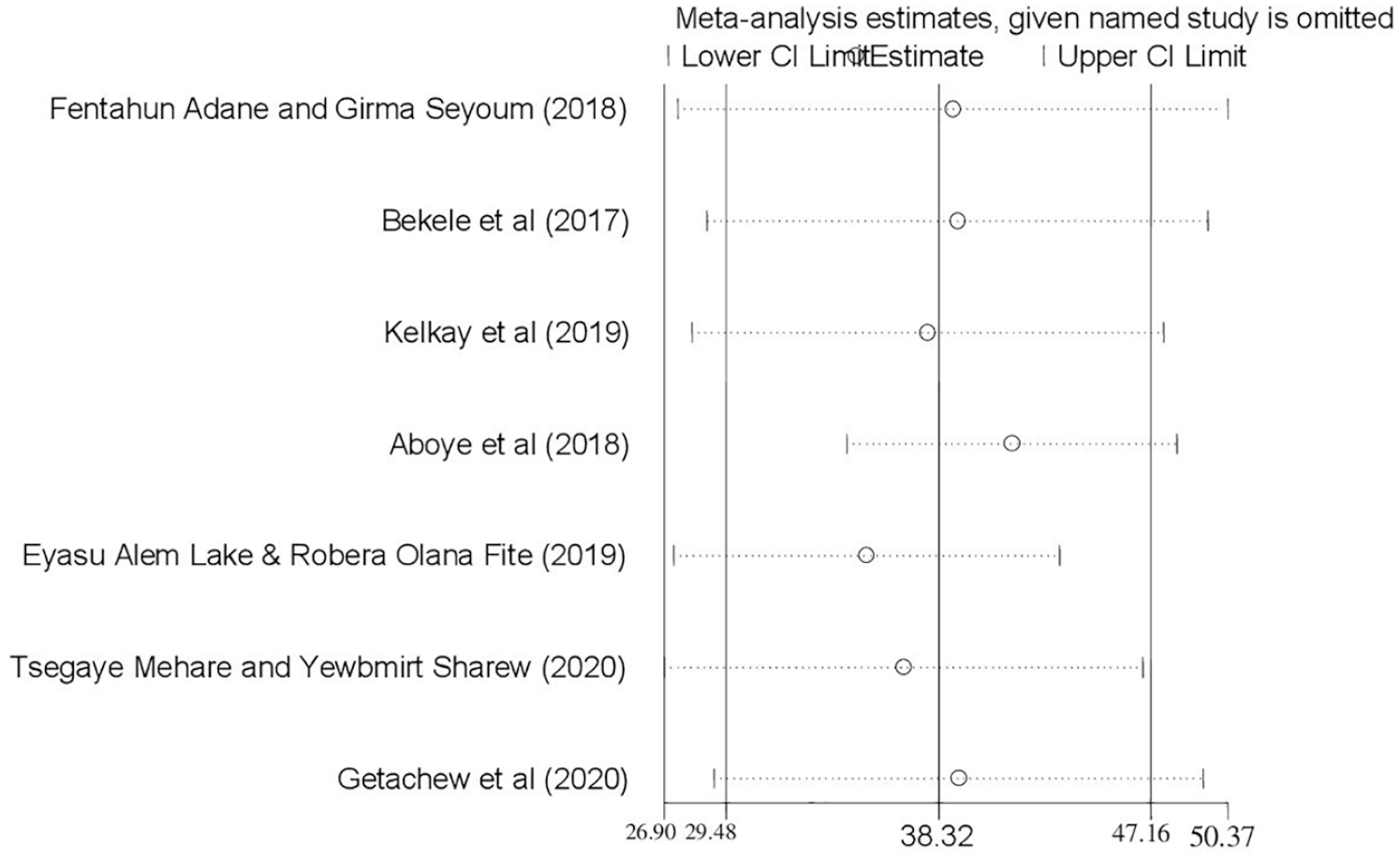
Sensitivity analysis of the pooled burden of adverse neonatal outcome among substance users during pregnancy, 2020, Ethiopia.
Discussion
Several adverse neonatal outcomes (low birth weight, prematurity, congenital defect, and low Apgar score) can be resulted from substance use during pregnancy.1-3,10-12 In this meta-analysis, the pooled prevalence of adverse birth outcome among antenatal substance users in Ethiopia was 38.32% (95% CI: 29.48%, 47.16%; I2 = 76.3%) which was more than 2 folds of the magnitude among the non-substance users 16.29% (95% CI: 9.45%, 23.13%) indicating the severity of substance use during pregnancy on birth outcome. Moreover, low birth weight 42.00% (95% CI: 18.01%, 65.99%; I2 = 91.8%) and preterm birth 37.21% (95% CI: 27.71%, 46.71%) were the most common adverse birth outcome categories among antenatal substance users in the country.
From this study, the pooled prevalence of adverse birth outcome 38.32% (29.48%, 47.16%) was far higher than the finding from a prior pooled report of adverse fetal outcomes in Ethiopia, 26.88% (20.73%-33.04%). 34 This significant variation may be due to the difference in study population, that is, our study involved adverse birth outcome among mothers who used substance during pregnancy whereas that of the prior Ethiopian study involved the general deliveries. Moreover, a multitude of evidence suggests higher likelihood of low birth weight,4-7 preterm birth,6-9 and congenital malformation8,35-39 among antenatal alcohol drinkers, khat chewers, and cigarette smokers than the non users.
Low birth weight (42.00%) and preterm birth (37.21%) were the commonly reported adverse birth outcomes among substance users during pregnancy in Ethiopia. Consistent with these estimates, report of the WHO Expert Committee on Drug Dependence, 40 studies from Africa and Middle East,41-43 Turkey, 6 Japan, 9 Boston, 10 USA, 7 and Jordan 8 revealed higher burden of low birth weight and preterm babies among antenatal alcohol drinking and tobacco smoking mothers. The consistency may be due to the sympathomimetic activity of the ingredients in alcohol and tobacco which are responsible for the vasoconstrictive effects thus complicating pregnancy and birth outcome. The vasoconstrictive effects reduce placental blood flow with concomitant fetal hypo-perfusion leading to restricted fetal growth and preterm labor. 44
The prevalence of congenital anomaly among alcohol users during pregnancy was 37.10% (95% CI: 29.77%-44.43%). This finding was in accordance with other settings,8,35-39 which may be due to the fact that alcohol can disturb fetal development especially affecting the fetal central nervous system, with potentially severe lifelong consequences.45,46 The teratogenic effects of alcohol on the developing embryo have been explained to result from different mechanisms including (1) Increased oxidative stress; (2) Disturbed glucose, protein, lipid, and DNA metabolism; (3) Impaired neurogenesis and increased cellular apoptosis, especially of neural crest cells; (4) Endocrine effects; and (5) Effects on gene expression.38-40,47
Furthermore, the prevalence of low fifth minute Apgar score among khat users during pregnancy was 34.00% (95% CI: 20.87%, 47.13%). Despite no study done so far to explain this association, the probable cause may be khat chewing during pregnancy plays role in disrupting the fetal neural tube development, undifferentiating brain vesicles, and causing incomplete closure of the brain flexures. 48 Moreover, the sympathomimetic activity of cathinone, the active ingredient of khat, could be responsible for intrauterine fetal hypoxia and low Apgar score.45,49
From subgroup analysis by substance type, adverse neonatal outcome was most burdensome among cigarette smokers 45.20% (95% CI: 37.68%, 52.73%) which accords with findings from studies in Brazil, 4 China, 5 and Turkey. 6 Such worse adversity of smoking cigarette could be due to the fact that when a woman smokes tobacco during pregnancy, her fetus is risked to hypoxia from the following reasons. Firstly, structural and functional integrity of the placenta becomes disrupted by different harmful chemicals within tobacco thus impairing gas exchange. 37 Secondly, nicotine substrate of tobacco can cross the placenta and harm the fetus through constriction of fetal blood vessels resulting in fetal hypo-perfusion.50-52 Thirdly, carbon mono oxide of the tobacco smoke causes feto-maternal hypoxemia due to higher affinity of red blood cells (hemoglobin) to carbon mono oxide than oxygen; thus, the red blood cells transport carbon monoxide (fetotoxic) to the fetus. Besides, smoking during pregnancy has been shown to result in decreased transfer of amino acids across the placenta which in turn causes symmetrical fetal growth impairment and low birth weight.53,54
Limitations of the Study
Despite strengths of the study in synthesizing national evidence about the prevalence of adverse neonatal outcome among substance users during pregnancy in Ethiopia, there are some limitations that need to be considered in future studies. The main limitation was lack of primary studies from Benishangul Gumuz, Harari, Dire Dawa, Somali, Gambela, and Afar regions of the country. Besides, some of the primary studies accessed from other regions had smaller sample size. The use of the random effects model might have overestimated the true magnitude of adverse birth outcome among antenatal substance users. Because of the above mentioned reasons, our pooled estimate may not actually represent the national figure of adverse birth outcome among antenatal substance users in Ethiopia. Therefore, we would like to forward our earnest reminder for the readers to be mindful of interpreting and using this finding in the context of both inherent limitations of the included primary studies and the current meta-analysis. Moreover, a dose-response relationship between the quantity of substance consumed prenatally and its effect on birth outcome wasn’t addressed. We did not also assess the long-term outcomes of antenatal substance use on childhood growth and neurodevelopment (the risk of hypertension, diabetic mellitus and other chronic illnesses during childhood career). Besides, the physical and mental health implications beyond childhood were not investigated. Overall, since this meta-analysis has systematically identified all the aforementioned limitations, the design of future studies can be substantially improved.
Conclusion
Adverse neonatal outcomes were more burdensome among khat chewers, tobacoo smokers, and alcohol drinkers during pregnancy than among non users of the respective substances in Ethiopia. From the study, low birth weight was the most burdensome adverse neonatal outcome among the antenatal substance users. Therefore, the existing public health efforts of combating substance use among women of reproductive age group should be further encouraged to help them completely stop using the aforementioned substances before pregnancy. Moreover, increasing public awareness about the potential negative impacts of antenatal substance use on birth outcome would be of greatest importance for comprehensive prevention of the problem. Every pregnant mother should also be carefully screened for antenatal substance use at the earliest time of her antenatal care. Overall, a copy of this paper was sent to the Ethiopian Federal Ministry of Health for preventive actions to be taken ahead of further worse fetal outcomes.
Supplemental Material
sj-pdf-1-gph-10.1177_2333794X211019699 – Supplemental material for The Burden of Adverse Neonatal Outcome among Antenatal Substance Users in Ethiopia: A Systematic Review and Meta-Analysis
Supplemental material, sj-pdf-1-gph-10.1177_2333794X211019699 for The Burden of Adverse Neonatal Outcome among Antenatal Substance Users in Ethiopia: A Systematic Review and Meta-Analysis by Wubet Alebachew Bayih, Metadel Yibeltal Ayalew, Melaku Tadege, Maru Mekie, Teklehaimanot Kiros, Eshetie Molla Alemu, Efrem Fenta Alemnew, Lemma Getacher, Demeke Mesfin Belay, Binyam Minuye Birhane, Dr Kassaw Demilie Alemu, Getachew Yideg Yitbarek and Belayneh Kefale in Global Pediatric Health
Supplemental Material
sj-pdf-2-gph-10.1177_2333794X211019699 – Supplemental material for The Burden of Adverse Neonatal Outcome among Antenatal Substance Users in Ethiopia: A Systematic Review and Meta-Analysis
Supplemental material, sj-pdf-2-gph-10.1177_2333794X211019699 for The Burden of Adverse Neonatal Outcome among Antenatal Substance Users in Ethiopia: A Systematic Review and Meta-Analysis by Wubet Alebachew Bayih, Metadel Yibeltal Ayalew, Melaku Tadege, Maru Mekie, Teklehaimanot Kiros, Eshetie Molla Alemu, Efrem Fenta Alemnew, Lemma Getacher, Demeke Mesfin Belay, Binyam Minuye Birhane, Dr Kassaw Demilie Alemu, Getachew Yideg Yitbarek and Belayneh Kefale in Global Pediatric Health
Supplemental Material
sj-pdf-3-gph-10.1177_2333794X211019699 – Supplemental material for The Burden of Adverse Neonatal Outcome among Antenatal Substance Users in Ethiopia: A Systematic Review and Meta-Analysis
Supplemental material, sj-pdf-3-gph-10.1177_2333794X211019699 for The Burden of Adverse Neonatal Outcome among Antenatal Substance Users in Ethiopia: A Systematic Review and Meta-Analysis by Wubet Alebachew Bayih, Metadel Yibeltal Ayalew, Melaku Tadege, Maru Mekie, Teklehaimanot Kiros, Eshetie Molla Alemu, Efrem Fenta Alemnew, Lemma Getacher, Demeke Mesfin Belay, Binyam Minuye Birhane, Dr Kassaw Demilie Alemu, Getachew Yideg Yitbarek and Belayneh Kefale in Global Pediatric Health
Supplemental Material
sj-pdf-4-gph-10.1177_2333794X211019699 – Supplemental material for The Burden of Adverse Neonatal Outcome among Antenatal Substance Users in Ethiopia: A Systematic Review and Meta-Analysis
Supplemental material, sj-pdf-4-gph-10.1177_2333794X211019699 for The Burden of Adverse Neonatal Outcome among Antenatal Substance Users in Ethiopia: A Systematic Review and Meta-Analysis by Wubet Alebachew Bayih, Metadel Yibeltal Ayalew, Melaku Tadege, Maru Mekie, Teklehaimanot Kiros, Eshetie Molla Alemu, Efrem Fenta Alemnew, Lemma Getacher, Demeke Mesfin Belay, Binyam Minuye Birhane, Dr Kassaw Demilie Alemu, Getachew Yideg Yitbarek and Belayneh Kefale in Global Pediatric Health
Footnotes
Acknowledgements
We would like to thank all authors of the studies included in this systematic review and meta-analysis.
Authors’ Contributions
Wubet Alebachew Bayih, Demeke Mesfin Belay and Metadel Yibeltal Ayalew developed the protocol and involved in the design and searching of literature. Lemma Getacher, Eshetie Molla Alemu, Binyam Minuye Birhanie and Belayneh Kefale contributed in screening and selection of articles. Kassaw Demilie Alemu, Efrem Fenta Alemnew, Getachew Yideg Yitbarek and Teklehaimanot Kiros extracted data from the included studies. Melaku Tadege and MM analyzed the extracted data and developed initial draft of the manuscript. All authors prepared, read and approved the final draft of the manuscript.
Declaration of Conflicting Interests
The author(s) declared no potential conflicts of interest with respect to the research, authorship, and/or publication of this article.
Funding
The author(s) received no financial support for the research, authorship, and/or publication of this article.

Availability of data and materials
The data analyzed during the current systematic review and meta-analysis is public and contained within the manuscript.
Supplemental Material
Supplemental material for this article is available online.
References
Supplementary Material
Please find the following supplemental material available below.
For Open Access articles published under a Creative Commons License, all supplemental material carries the same license as the article it is associated with.
For non-Open Access articles published, all supplemental material carries a non-exclusive license, and permission requests for re-use of supplemental material or any part of supplemental material shall be sent directly to the copyright owner as specified in the copyright notice associated with the article.
