



Abstract
Introduction
Dairy products are implicated as part of a healthy diet, and across various stages of life, they have been linked to numerous health benefits such as improving bone and tooth health 1 ; reducing the risk of developing obesity, 2 high blood pressure, 3 cardiovascular disease, and type 2 diabetes 4 ; and providing hydration and muscle repair after exercise.5-8 Canadian national survey data suggest that dairy products are grossly underconsumed in children and adolescents, as 61% of boys and 83% of girls aged 10 to 16 years do not meet the minimum recommended three servings of dairy foods per day. 9 The same trends are seen in the United States, as only 15% of Americans aged 2 and older meet the recommended servings of dairy products, and they consume only 1.9 servings of dairy products per day. 10 This falls well short of the Dietary Guidelines for Americans’ recommended three servings of dairy products a day for adolescents. 10 Dairy consumption continues to decline with increasing age. 10 As dairy can be a food to help combat weight gain and obesity,11-16 this is a concern for younger populations such as children and adolescents who are developing eating habits that will carry into adulthood and whose body composition during childhood are associated with adult adiposity and body mass. 17
With respect to dairy consumption, previous research has identified several barriers and facilitators to intake.18-25 Studies have identified demographic factors that are associated with low dairy intake including ethnicity, low socioeconomic status, increased body weight, and older age.22,23,25 Both qualitative and quantitative studies among children and adolescents have reported other factors that influence dairy intake.18-25 Weight-related behaviors or concerns change dairy consumption differently in males and females, as boys want to impress girls and be strong, while girls are more concerned about dairy being a fattening food. Family environment and parental influence can affect dairy consumption both positively or negatively as parents or family dynamics may encourage or discourage dairy product consumption. Making dairy products part of a routine for children and incorporating dairy into meal patterns can encourage dairy consumption. Finally, taste preferences, lactose intolerance, and soft drink intake have been identified as factors influencing dairy intake, all of which vary based on gender.18-25
Due to the various facilitators and barriers that may affect dairy intake, results have not been consistent between studies in children and adolescents. Within these factors, gender differences are frequently apparent as boys and girls like to receive information in different ways. 21 Moreover, there has been limited exploration of the differences between individuals across different levels of dairy product consumption, such as those who meet and those who fail to meet intake requirements. It is expected that those meeting dairy requirements and those not meeting dairy requirements would have different facilitators and barriers affecting their intake. It is therefore predicted that children will have specific factors affecting their dairy intake that will differ depending on both gender and consumption levels.
As such, the present study sought to investigate the barriers and facilitators to dairy product consumption in Grade 7 children as stratified by gender and level of habitual dairy product intake, with the goal of identifying factors that are both common and unique to each group. Grade 7 was chosen due to their age range falling within the specified children/preadolescents and their ability to communicate and participate in verbal focus group research. These findings may be relevant as they could be used to guide the development of interventions tailored specifically to different populations, genders, or intake levels of dairy.
Methods
Study Sample
To be eligible, students had to be enrolled in a Grade 7 class in Guelph, Ontario. Of the 199 eligible students aged 10 to 12 years, 67% consented to participate (n = 134; 61 males, 73 females). Students were enrolled in eight Grade 7 classes in five elementary schools in Guelph, Ontario. The median household income of participating schools was within the middle three quintiles of the provincial range. Racial/ethnic breakdown of the participants was not determined. Lack of participation was mainly due to failure to return signed consent forms or absenteeism on either study day.
Procedures
Students were invited to participate in the study through invitation letters distributed by the classroom teacher. Both parent and children were required to give informed consent. All students participated in the activities, regardless of consent; however, data were only analyzed for consenting participants. Nonrecorded focus groups were conducted with nonconsenting students in order to allow for inclusion of all students in the activity and limit any feelings of exclusion. This study was approved by the Research Ethics Board at the University of Guelph and by the Upper Grand District School Board.
Prior to conducting the focus groups, a researcher visited the classrooms and facilitated completion of the Youth Adolescent Questionnaire (YAQ), a valid and reliable food frequency questionnaire developed at Harvard University. 26 In order to determine the approximate daily intake of dairy products, the dairy section of the YAQ as well as other dairy foods and dairy alternatives found throughout the YAQ were used to calculate the average daily intake of dairy foods in servings/day. 19 Students were then divided into groups based on gender and dairy consumption, resulting in the following five groups: females do not meet dairy requirements (n = 6), females meet dairy requirements (n = 7), males do not meet dairy requirements (n = 6), males meet dairy requirements (n = 8), and a mixed gender group for the nonconsenting students and students who were absent for the first visit and therefore had no YAQ data. A minimum of two students in each group was needed to keep gender separate in consenting groups. If this condition was not met, the gender division was collapsed (n = 3); however, researchers were able to separate the male and female students in the transcript analysis.
Approximately one week following intake analysis and division of students into groups based on intake and gender, focus groups were conducted in the classroom setting. In total, thirty 50-minute-long focus groups were conducted between October 2014 and January 2015. Facilitators were trained in September and October 2014. Focus group questions were developed based on the theory of planned behavior and social cognitive theory, and previous research,18-25 and final questions were agreed upon by consensus with experts in the field (see Supplementary Material, available at http://gph.sagepub.com/supplemental). The questions targeted subjects’ behavioral capabilities and attitudes, barriers and impediments, social norms and perceived control, environment and observational learning, and self-efficacy and perceived control. Probing was used in the case of close-ended questions. Students were not told how the groups were split in order to minimize bias. Facilitators were assigned to same sex groups and same dairy intake group category at each school (eg, female facilitator led a females do not meet requirements group in every school) in order to ensure consistency in facilitation from class to class. Each focus group lasted approximately 50 minutes, and consenting groups were audio-recorded.
Data Analysis
Recorded data were transcribed by an external company and scripts were analyzed using the ATLAS.ti (ATLAS.ti Scientific Software Development, Berlin, Germany) qualitative analysis software. Transcripts were checked against the original audio-recordings for accuracy. Factors influencing dairy intake in males and females were determined based on the analysis procedures described by Braun and Clarke. 27 Like the focus group questions, factors that influenced dairy product consumption were coded, based on theory, as being associated with an individual’s attitudes/knowledge, perceived control/self-efficacy, environment/reinforcement, and social norms/observations. These refined categories related to an individual’s source of information, personal knowledge, food characteristics, personal behaviors, and economic, physical, and social environment. The factors influencing dairy product intake were further evaluated to determine whether there were differences related to level of dairy intake in each gender. For this analysis, only factors that were coded for in the transcripts more than five times were considered in an attempt to focus primarily on factors discussed with greater frequency. The number of times a factor was coded was compared between the two intake groups in each gender and a ratio was determined. Factors were considered predominant for a single group if the ratio was greater than two, while factors were considered as being important for both groups if the ratio was between 0.8 and 1.2. Coding was done by three researchers, first individually, and then as a group.
Results
Participant Dairy Intake
Participants’ average age was 11.97 years (±0.03 SEM). The average daily intake of dairy in the females meet requirements group was 4.64 servings of dairy and alternatives/day (n = 33), while in the females do not meet requirements group the average intake was 1.78 servings of dairy and alternatives/day (n = 40). The average daily intake of dairy in the males meet requirements group was 4.76 servings of dairy and alternatives/day (n = 30), while in the males do not meet requirements group the average intake was 2.10 servings of dairy and alternatives/day (n = 31).
Factors Affecting Dairy Intake
Overall, we found that barriers and facilitators affecting dairy intake in both males and females were associated with the themes of attitudes and knowledge, perceived control and self-efficacy, environment and reinforcement, and social norms and observational learning, with considerable overlap between these categories. All barriers and facilitators were categorized into these themes, which consisted of more than 75 subcategories, in an attempt to not miss any information stated by participants.
The factors influencing dairy intake in females and males as categorized into attitudes/knowledge, perceived control/self-efficacy, environment/reinforcement, and social norms/observations are illustrated in Figures 1 and 2, respectively. These figures illustrate all of the factors that were identified in the thematic transcript analysis. Following analysis of the frequency of responses, predominant factors influencing dairy product consumption in groups with different levels of intake for each gender were identified, and are illustrated in Figure 3 for females and Figure 4 for males. The lateral portions of these diagrams represent factors that were unique to groups with different levels of dairy intake, with shared factors represented in the middle circle.
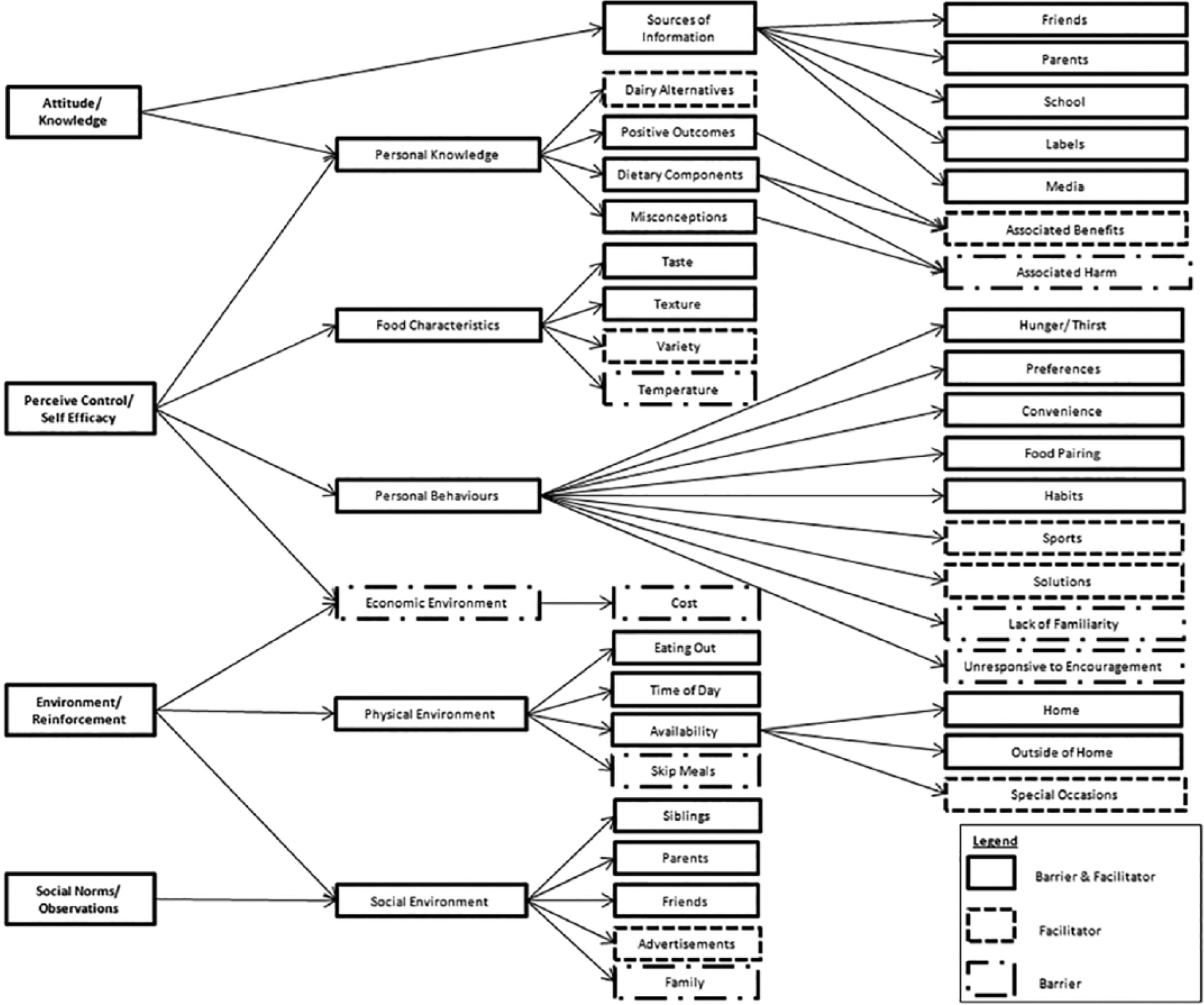
Flow chart illustrating the barriers and facilitators identified from thematic analysis of the females’ focus group transcriptions.

Flow chart illustrating the barriers and facilitators identified from thematic analysis of the males’ focus group transcriptions.

Comparison of similarities and differences in females between consumption groups of the predominant facilitators and barriers to dairy consumption in Grade 7 youth. Differences are shown on the right and left regions of each circle while the similarities are indicated by the overlap.
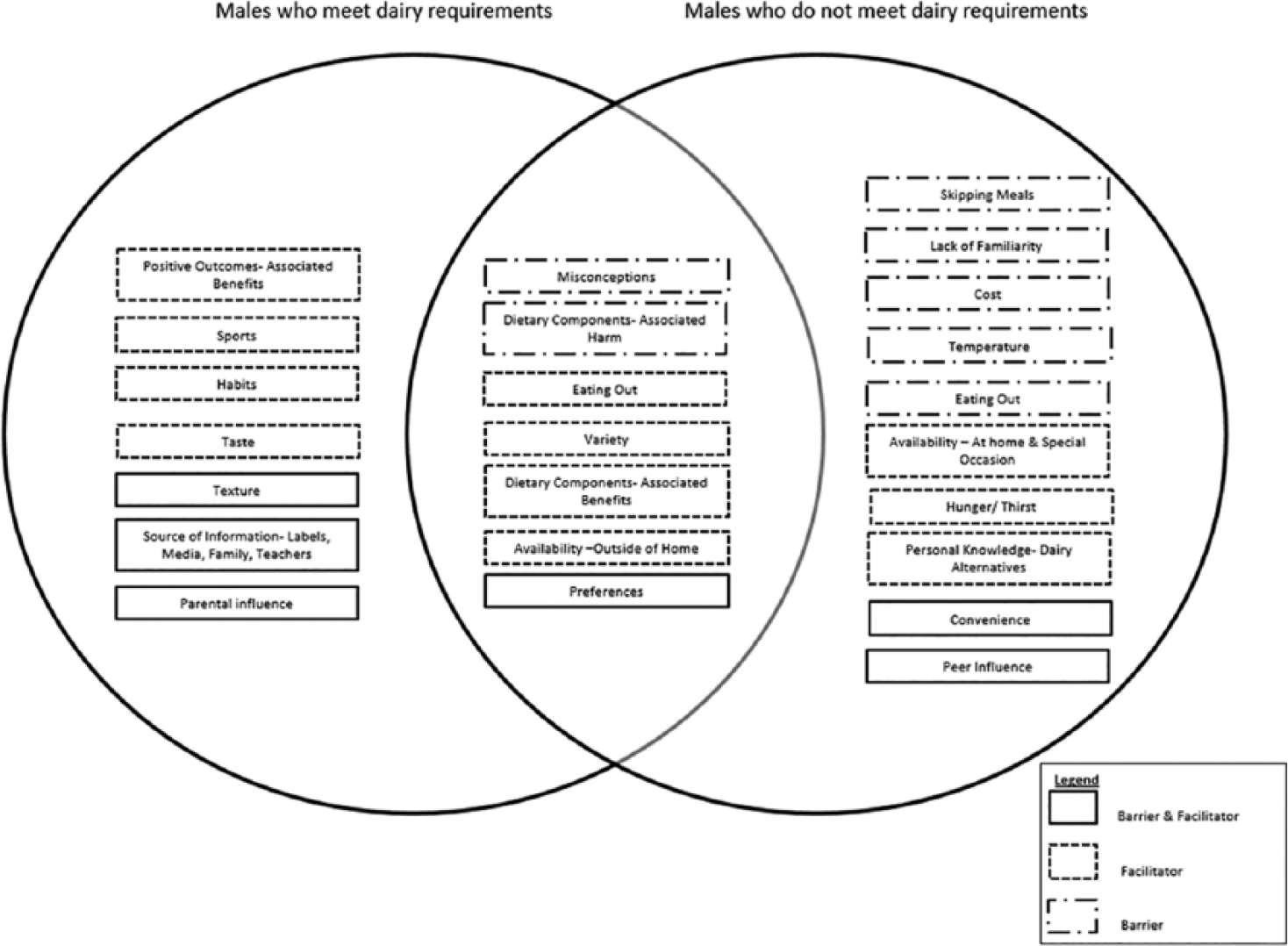
Comparison of similarities and differences in males between consumption groups of the predominant facilitators and barriers to dairy consumption in Grade 7 youth. Differences are shown on the right and left regions of each circle while the similarities are indicated by the overlap.
A majority of the factors influencing dairy intake were similar between both females and males, although some gender differences were noted. Sports was a predominant facilitator for dairy product consumption in males only. Also, eating out was a facilitator for all males as they more specifically referenced asking for milk or getting to choose dairy products at restaurants. Females were less likely to discuss availability of dairy products outside of the home and more frequently mentioned not having access to dairy products. Variety of dairy products available was identified as a facilitator in females, while it was both a facilitator and barrier in males. Males stated not liking or not willing to try different varieties of dairy products, such as different types of cheese; however, both genders stated liking choice and variety of dairy products such as types of milk, yogurt, or ice cream or the versatility of dairy products. Specifically, one female participant said they “like how you can just eat it with anything and like every time you try it, like a dairy product, even though it’s like the same ingredients, it always tastes different.” Females talked mostly about the lack of convenience of dairy products, while male students noted that dairy products could be convenient or not convenient. For instance, with regard to transporting or bringing dairy products to school, males felt it was “too much work.” But if dairy products were provided by the school, such as the Elementary School Milk Program, some male students said dairy products would be more convenient in this case.
Both males and females across consumption groups noted similar facilitators affecting dairy product intake. Knowledge of the benefits of dairy products and positive health outcomes were strong facilitators in both males and females meet requirements groups, although all consumption groups showed knowledge of the individual components of dairy products and their influence on health. The students’ daily routine and habits that instilled dairy product consumption, such as cereal and milk at every breakfast, also helped facilitate dairy product consumption. Not surprisingly, taste was a major factor that influenced dairy product consumption in both genders. Also, barriers to dairy product intake that were similar between genders and consumption groups included skipping meals that would have normally contained a dairy product or alternative and misconceptions regarding the perceived negative health effects of dairy products. Related to level of habitual intake, home availability between consumption groups appeared to be reduced in those not meeting dairy requirements. However, in our analysis we were unable to make a clear distinction between availability of dairy products (eg, available or not available) and the location in which dairy products are available (eg, at home, at school, or special occasions). Finally, both peers and parents were important social environment factors that could act as a facilitator or barrier in both genders, depending on the situation.
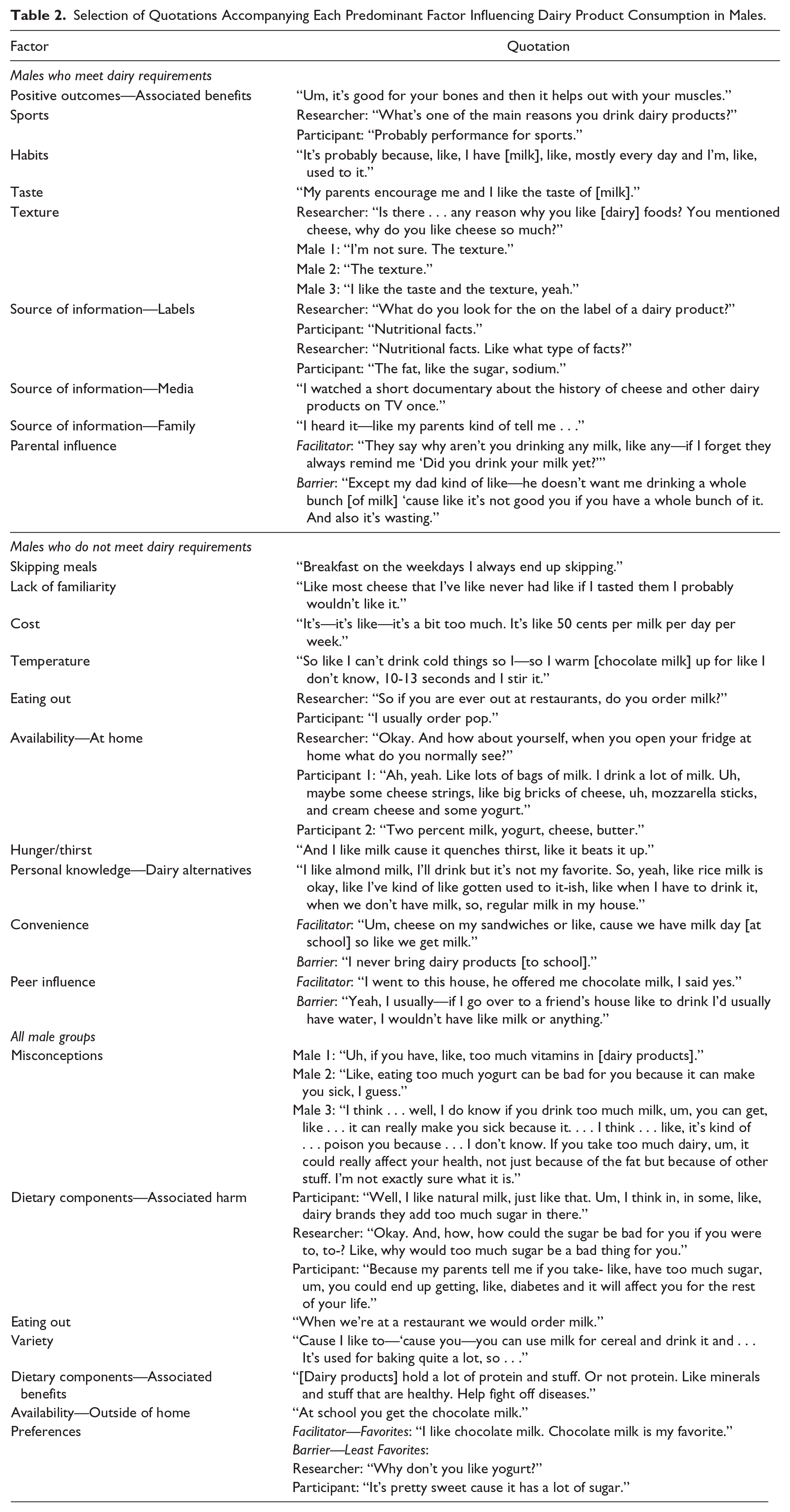
To further clarify the above factors, Tables 1 and 2 present participant quotations that illustrate each predominant factor influencing dairy product consumption in females and males, respectively.
Selection of Quotations Accompanying Each Predominant Factor Influencing Dairy Product Consumption in Females.

Selection of Quotations Accompanying Each Predominant Factor Influencing Dairy Product Consumption in Males.
Discussion
This study assessed the barriers and facilitators to dairy product consumption in Grade 7 children as stratified by gender and level of habitual dairy product intake, with the goal of identifying factors that were both common and unique to each group. A majority of the factors influencing dairy intake were similar between both females and males, although some gender differences were noted. Similarly, we observed overlap in the barriers and facilitators that influenced both genders across different levels of habitual intake. This information may be used in the development of interventions tailored specifically to different populations.
Many similarities exist between the predominant facilitators affecting dairy product intake in both males and females and across consumption groups, including knowledge, routine habits, peers, and taste, which is consistent with previous research in children and adolescents.18-25 Higher nutritional knowledge has been associated with consumption of an overall healthier diet, 28 and a lack of knowledge about the association between dairy/calcium and health has also been found to be a barrier to calcium intake. 29 Habits, or routines, have also been found to affect dairy intake in children in previous research,25,30 which is important as it has shown that when food and beverage choices are taught in childhood and further developed in adolescence, they persist into adulthood. 5 In addition to knowledge and habits, taste was also a strong facilitator for dairy product consumption in all females and for males meeting requirements. Having a taste preference for dairy products has been noted as one of the greatest influences to dairy product consumption, 22 and studies have frequently noted food preferences or taste as a factor influencing food choices.22,25,30,31
Males and females also showed similarities in the predominant barriers to dairy product intake. Skipping meals, especially breakfast, was an important barrier in both genders not meeting dairy requirements. Eating breakfast, particularly cereal at breakfast, has been shown to facilitate milk consumption. 32 Often, when meals were skipped that would typically have contained a dairy product, students reported grabbing a convenient snack or more transportable meal, such as toast, instead; however, these snacks or meals often did not contain the dairy products or alternatives that would have been consumed regularly. Furthermore, when asked whether the students would make up for this lost dairy serving from breakfast at another point during the day, many reported they would not. Another common barrier influencing dairy intake in both males and females was misconceptions. These misconceptions were typically regarding negative health outcomes that students associated with dairy product consumption. Research has shown that children and adolescents negatively associate the fat in dairy products with obesity, body fat, and body composition,25,29,33,34 and this was also seen in the current study. In contrast to this false belief, recent systematic reviews have shown no association between dairy and increased body weight or body fat.11,35 Research has actually shown that dairy products and alternatives have a positive influence on adiposity, body mass index, waist circumference, and lean body mass in children and adolescents who reach dairy recommendations11-16 mainly due to the nutritional components within dairy products as well as the replacement of sugar-sweetened beverages and other high-calorie foods with dairy products. The findings regarding misconceptions in children are critical as they suggest that interventions that target these gaps in knowledge, specifically with regard to the potential harm and benefits associated with dairy product consumption, might effectively improve dairy consumption in children. 36
In both genders, peers had a strong influence, acting as both a barrier and facilitator in different circumstances, in male and females not meeting requirements. In previous research, peers’ personal food choices and encouragement, or lack thereof, have been reported to have a significant impact on the food choices children and adolescents make. 19 Previous research has also noted the importance of peers’ attitudes or choices and its effect on adolescent dietary intake.25,31,33,37 Therefore, the observation of both positive and negative influences on dairy intake behavior in this study is not surprising.
Similar to peers, parental influence was observed to act as both a barrier and a facilitator to dairy product intake. Parents were found to be an important facilitator in the “meets requirements” group of both genders, although males meeting requirements also noted that parents could be a barrier to consumption. In contrast, males not meeting requirements did not discuss parents as influencing dairy intake, while females not meeting requirements noted parents as both a barrier and a facilitator (see Tables 1 and 2). Regardless of these between-group differences, parents in general were clearly noted as an important influence, which is not surprising, as social cognitive theory notes the importance of the environment, including having appropriate role models and expectations, to shape behaviour.38,39 Previous research in children also supports the important impact parents can have on their food choices25,30,31 and specifically the influence that maternal milk consumption can have on their daughters. 40 These results, along with other research, 19 suggest that parents may continue to play a role in determining their child’s consumption of dairy foods during adolescence.
Previous interventions have addressed some of these factors, including parents,41-44 knowledge of dairy products,36,44-47 taste,42,48 and peers41,42,45 with mixed success. 49 The findings of the present study should contribute to the development of future interventions by highlighting several potential targets to address when aiming to change dairy intake in adolescents and the potential difficulties in addressing these factors.
There are several limitations to this study that must be considered. First, although the sample size was moderate, it was limited to a single geographical region. Following this, we did note that in comparison to the previously published national averages, 9 more of our population appeared to meet the recommended dairy requirements. This may be due to reasons such as the close proximity to rural farm land and the strong agricultural influence on the city, both of which can increase milk consumption.34,50 Racial or ethnic breakdown was not measured in this study, so the specific demographics of the subjects are unknown. In general, Guelph is a relatively fast growing, rural-influenced, prosperous city in southern Ontario. Recent census data of the city of Guelph found that 84.3% of the total population was white, 51 so it can be assumed that the ethnic breakdown of subjects was relatively homogeneous. Focus groups also have limitations as facilitators may have poor control over what is said, participants may not be expressing their own individual view in an attempt to impress their peers or facilitators, and participants may be uncomfortable discussing personal or sensitive topics, such as body image. 52 To mitigate this limitation, researchers were formally trained, and facilitators of the focus groups remained with the same group across each school (eg, males who do not meet requirements or females who meet requirements). Overall, however, these limitations are not likely to have had an appreciable impact on the reliability of results, which is supported by the consistency of the present research findings to previously published studies.
Conclusion
Overall, we found that specific factors considered important by males and females across different levels of habitual intake include personal knowledge about dairy products, misconceptions regarding dairy foods and their associated health benefits, taste, habits or routines, parental and peer influence, availability of dairy products, skipping meals, and the convenience of dairy products. Some gender differences were noted such as sports being a predominant facilitator in choosing to consume dairy in males only and eating out as a facilitator or barrier to dairy product consumption depending on gender. These results suggest several potential targets for interventions that aim to increase dairy consumption, such as increasing knowledge regarding the benefits of dairy consumption, clarifying misconceptions surrounding dairy product consumption and weight gain, making time for breakfast, serving milk or dairy with meals, exposing children to a variety of foods, making dairy tasteful, and suggesting strategies to consume more dairy in the context of peer pressure and eating out. Addressing these barriers and facilitators as part of intervention development, with tailoring to the needs of the target population, is recommended in order to increase effectiveness.
Author Contributions
Development of focus group scripts was completed by MP, GN, MR. Authors MR, JB, KC, DF, VK, DM all contributed to conducting and recording of focus group sessions. Data analysis was completed by MR, JB, KC. Author MR was responsible for writing of the manuscript with final approval and edits from GN and MP.
Footnotes
Acknowledgements
The authors gratefully acknowledge the adolescents from the schools who provided insight regarding factors affecting dairy intake. The authors also acknowledge the Upper Grand District School Board, the principals, and the teachers for allowing the researchers into their schools.
Authors’ Note
Dairy Farmers of Ontario and Ontario Ministry of Agriculture, Food and Rural Affairs, the funding agencies, had no role in the design, analysis, or writing of this article. This study was approved for ethics by the Research Ethics Board at the University of Guelph.
Declaration of Conflicting Interests
The author(s) declared no potential conflicts of interest with respect to the research, authorship, and/or publication of this article.
Funding
The author(s) disclosed receipt of the following financial support for the research, authorship, and/or publication of this article: This work was supported be the Dairy Farmers of Ontario and the Ontario Ministry of Agriculture and Rural Affairs. Megan Racey is supported by a Highly Qualified Personnel award from the Ontario Ministry of Agriculture, Food and Rural Affairs.
References
Supplementary Material
Please find the following supplemental material available below.
For Open Access articles published under a Creative Commons License, all supplemental material carries the same license as the article it is associated with.
For non-Open Access articles published, all supplemental material carries a non-exclusive license, and permission requests for re-use of supplemental material or any part of supplemental material shall be sent directly to the copyright owner as specified in the copyright notice associated with the article.
