




Abstract
Introduction
Urinary tract infections (UTIs) are relatively common problems encountered in pediatric infants and children, especially more so in infants. By definition, UTI is indicated when a specimen obtained by suprapubic puncture is positive even for single colony, by bladder catheterization >20 colonies of a single bacteria, and by midstream catch >100 000 colonies/dL. There is usually higher incidence of UTIs in male infants <1 year of age, and after infancy, UTIs are more common in girls. The pediatric literature emphasizes the association of UTIs with febrile diarrhea. It is a standard of care to obtain urine specimen mainly for culture, either by suprapubic puncture or by catheterization. If not possible, a well-cleaned midstream specimen may be utilized. In this study, we have not utilized used urine samples collected by bag specimen.
In infants <4 months of age, febrile diarrhea is presumed to have UTIs and is treated like sepsis, and in our hospital, all infants were admitted in the hospital for workup and management.
Our study was conducted basically to determine whether there is need to obtain urine specimen for analysis and mainly for culture after 4 months of age in infants and children with febrile gastroenteritis.
Inclusion Criteria
Patients (4 months to 6 years of age) with febrile diarrhea (fever 101°F and above and diarrhea >3 loose stools)
Parents who sign informed consent forms to enroll in the study
Exclusion Criteria
Infants <4 months of age with febrile diarrhea
Parents who refuse to sign the informed consent forms
Parents who insist on obtaining urine culture by bag specimen
Methods
This was a prospective institutional review board–approved study. After obtaining informed consent, patients were enrolled in the study (between 4 months and 6 years of age) who present to the pediatric emergency room with a complaint of fever (rectal temp 101°F or more) and diarrhea (watery stools 3 times or more). The children were evaluated for state of hydration, and also urine samples were collected. For children who were not toilet trained, urine was collected by bladder catheterization, and for children who were toilet trained, urine specimens were obtained by midstream collection method. The obtained urine samples were sent for analysis and culture.
Results
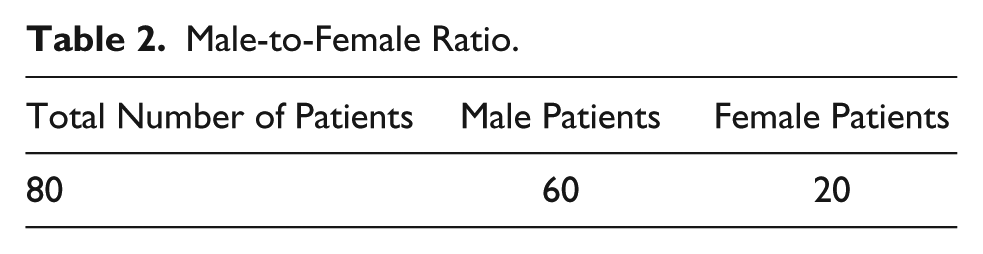
Eighty children enrolled in the study. The male-to-female ratio was 3:1 (60:20). The mean age of the children was 15 months (4 months to 6 years). The number of specimens obtained by clean catch midstream was 20, and the number of specimens obtained by bladder catheterization was 60 (see Tables 1-3 and Figures 1 and 2).
Agewise Distribution of Patients.

Male-to-Female Ratio.
Urine Analysis and Culture Results a .

Abbreviation: LE, leukocyte esterase.
The only urine analysis abnormality noted was LE positive in 2 patients.

Age-wise incidence of UTI(in months).

Chart depicting sex ratio, urine collection methods, urine analysis, and culture results.
The only urine analysis abnormality noted was positive leukocyte esterase (LE) in 2 patients (2/80). None of the urine specimens obtained by either method of collections grew any organism. None of the patients of the study group was admitted as an inpatient. There was no increased incidence of infections in male children whether circumcised (10/60) or uncircumcised (50/60). The mean temperature was 102.8°F (range = 101°F to 105°F).
Statistics
Using in silico online 2 × 2 χ2 test by comparing both the positive and negative urine culture results, the resultant χ2 value was 160, degree of freedom 1, and 2-tailed P value <.0001.
Discussion
Urinary tract infections are a common, potentially serious, and often occult bacterial infection of childhood. The prevalence of UTI in girls may be as high as 8.1%. UTIs also represent the most commonly identified serious bacterial infection in infants presenting with a febrile illness. Of febrile infants aged 2 to 3 months, 3% to 10% have a documented UTI. While the majority of the UTIs are not associated with any significant underlying conditions, the mere presence of a UTI is worrisome to most parents. 1 UTI occurs in 3% to 5% of girls and in 1% in boys. In boys most UTIs occurs during the first year of life, whereas in girls the incidence is up to 10 times more than boys after 2 years of age. 2
The incidence of UTI in infants ranges from 0.1% to 1.0% in newborn infants to as high as 10% in low-birth-weight infants. The most common presenting symptoms in young children are fever, vomiting or diarrhea, irritability or fussiness, poor feeding, and poor weight gain. In children older than 2 years of age, the presenting complaints of UTIs are pain or burning when urinating, frequent need to urinate, pain in the lower abdomen or over the sides of the back, and fever. In neonates the usual route of infection presumed to be hematogenous, whereas in later life, infections are usually caused by bacteria in the urinary tract. According to the American Academy of Pediatrics recommendations, for evaluation of fever one should obtain urine specimens for analysis and culture in all boys younger than 6 months of age, both circumcised or uncircumcised, and up to a year in only uncircumcised male infants, and in all girls up to 2 years of age.
UTIs are classified into 2 major types: upper tract disease, having fever, abdominal or flank pain, and in younger children nonspecific signs of irritability, poor feeding malaise, failure to thrive, or vomiting and diarrhea with elevated C-reactive protein values and positive DMSA scan. Usually lower urinary tract disease does not cause fever. A diagnosis of UTI is indicated by any number of colonies with suprapubic puncture, with a bladder catheterization 10,000, and with a bag specimen 100,000 and above. According to a technical report, 3 test strategies for UTIs are indicated. First the gold standard for evaluation for UTIs is urine culture obtained by suprapubic tap, or bladder catheterizations, which has 100% specificity. Second, obtaining culture from the bag specimen has 70% specificity. The third strategy for UTI diagnosis uses the cheaper but less reliable reagent strip as a test. A positive LE test result, a positive nitrite test result, or both is considered a positive test result. The sensitivity and specificity of this strategy are 92% and 70%, respectively. The incidence of false positive urine culture with bag specimen was roughly 85%, contributing to unnecessary antibiotic usage. Using culture of urine specimens obtained by catheterization or tap offers the lowest risk of death, because all children at risk for urosepsis are identified and there are no unnecessary treatments or treatment-related deaths. The cost for obtaining a urine culture is $21.53 (range = $20 to $26), and the cost of urine analysis is $6.77 (range = $5 to $15) The cost of treatment with standard amoxicillin or Septa costs about $10 for a course, whereas the newer broad-spectrum oral therapy costs about $40 for a 10-day course. And finally, the cost of intramuscular ceftriaxone costs $125 per injection. In addition, the return visit to the physician, if considered, costs approximately $100 per visit.
Diarrhea can be defined by measured stool volume (greater than 10 mL/kg/day), but in a clinical setting a more appropriate definition is the passage of loose or watery stools, usually at least 3 times in 24 hours. 3
The urinary tract impinges directly on the digestive tract, particularly where the bladder is in contact with the lower parts of the colon and rectum. Thus, an inflammatory process in the bladder will directly affect these structures. One theory is that heat resulting from the inflammatory process increases the motility in the intestines at points of contact or mediators of inflammation released in the urinary tract find their way through locally shared blood pools to the digestive tract. The effect in either case will be increased secretions and motility in the intestines, leading to diarrhea. 4
Conclusions
Our prospective study concluded that there is no increased incidence of UTIs in infants and children (4 months to 6 years of age) with febrile diarrhea. Obtaining urine specimens may be unnecessary either by way of midstream clean catch or by bladder catheterization in infants and children (4 months to 6 years of age) with febrile diarrhea, thereby reducing the pain and suffering associated with bladder catheterization, and it also minimizes the expenses incurred.
Footnotes
Acknowledgements
Dr Sukumar and Dr Bharati helped in the preparation of the abstract.
Declaration of Conflicting Interests
The author declared no potential conflicts of interest with respect to the research, authorship, and/or publication of this article.
Funding
The author received no financial support for the research, authorship, and/or publication of this article.