




Abstract
Student absenteeism surged during and after the pandemic, harming engagement and achievement. We evaluate the impact of Washington DC’s High-Impact Tutoring (HIT) Initiative—designed to mitigate learning loss through targeted academic supports—on student absenteeism. Using daily attendance data and a within-student fixed effects design, we find that students were 1.2 percentage points less likely to be absent on days they were scheduled for tutoring, a 7.0% reduction. Bundling key features of high-impact tutoring, such as in-school delivery, smaller tutor–student ratios, and increased frequency of sessions, further amplify the effect. These results highlight HIT’s potential to boost engagement while promoting equitable access to supportive learning environments.
Keywords
Introduction
Student absenteeism is a growing concern in schools nationwide. In the aftermath of the pandemic, chronic absenteeism (i.e., missing 10% or more of the school year) doubled from 14.8% in 2018–2019 to 28.3% during the 2021–2022 school year (Dee, 2024). Post-pandemic, in the 2022–2023 school year, the national chronic absenteeism rate remained persistently high at 26%. These rates have been highest in districts with larger shares of low-income and low-performing students, reflecting how the pandemic further exacerbated pre-existing inequalities (Malkus, 2024).
Districts leverage a range of strategies to reduce absenteeism in their schools. Some of these strategies are light-touch interventions—including mailers, phone calls, and text messages sent to parents of students who missed school—while others are more intensive, such as mentoring initiatives and home visits. While light touch interventions can have positive effects (e.g., Kalil et al., 2021; Lasky-Fink et al., 2021; Robinson et al., 2018), reaching less connected students with the highest absenteeism rates often requires more intensive approaches (Guryan et al., 2021).
Research provides evidence that school-based mentoring relationships can impact student attendance, even for the most disconnected students. As one example, the Check and Connect mentoring program decreased absenteeism rates by 22.9% for fifth through seventh grade students (Guryan et al., 2021). These results indicate that meaningful connections with a caring adult can increase student attendance. Yet, employing mentors is costly for schools and does not necessarily increase student achievement (Guryan et al., 2021). Schools may be put off by the high price tag to invest in initiatives that can only serve a select group of students and are not focused directly on learning. In theory, teachers and other school staff can fill these supportive roles, but these educators face competing demands for their time and schools are not set up to provide individualized instruction or intensive personalized outreach to encourage attendance (Kraft et al., 2016). The confluence of these factors often leaves students without opportunities to connect with a trusted adult who knows them and is invested in their success. This lack of connection is evident from student surveys across the country showing that many students, particularly in middle and high school, report feeling they do not have a close, caring adult in their school (Balfanz et al., 2024).
Schools do have options to increase the likelihood that high-need students have access to a caring adult who can offer structured academic support. For instance, in response to the reduced learning and the increased achievement gaps across groups created by the pandemic, many schools sought to provide high-impact tutoring for struggling students. This intensive, relationship-based instruction has substantial evidence of effectiveness and has long been the choice of families who could afford to pay for tutoring outside of school (Kim et al., 2024). High-impact tutoring may not only improve learning. Like mentoring, it may improve student engagement in school and their attendance. In many ways, the connections between students and their consistent tutor can mirror that of a mentoring relationship, and students may be more likely to attend school because they know they have a caring adult who expects to see them. Moreover, if tutoring improves academic learning, students may see themselves as being able to succeed in school, increasing their self-efficacy (Allensworth & Schwartz, 2020). When students feel that they belong and can succeed in school, they may be more likely to engage positively with school, translating into increased attendance.
Although scholars have hypothesized that tutoring may increase student engagement in school (Nickow et al., 2024; Robinson & Loeb, 2021), little research has rigorously assessed the effects of high-impact tutoring on students’ school attendance. No studies have studied the impact of school-based tutoring on attendance during this post-pandemic wave of high chronic absenteeism. In a pre-pandemic randomized controlled trial testing the impact of a high school math tutoring program, researchers found no detectable effect on student attendance (Bhatt, Guryan, et al., 2024b). However, a recent study by Carlana and La Ferrara (2024) found that middle school students who received out-of-school virtual tutoring were more likely to attend school online during the pandemic, highlighting tutoring’s potential to boost engagement and attendance.
Although prior evidence indicates that certain design features of tutoring programs—such as scheduling sessions during the school day, maintaining low tutor-to-student ratios, and increasing the frequency of sessions—are associated with greater improvements in academic achievement (Nickow et al., 2024), it remains an open question whether these same features influence student attendance. Given the considerable variation in tutoring program design and implementation, it is also unclear whether the presence of multiple effective features yield additive or interactive effects. A recent meta-analysis of the tutoring literature suggests that programs that incorporate a bundle of evidence-based design features may help sustain program effectiveness as they are scaled to broader populations and contexts (Kraft et al., 2024). Understanding how these program features jointly affect outcomes is critical for informing the design and scaling of tutoring interventions.
In this paper, we provide insights into how high-impact tutoring affects students’ school attendance. With leaders nationwide raising concerns about high student absenteeism (Dee, 2024) and ongoing academic struggles (Lewis & Kuhfeld, 2024), understanding how individualized, relationship-based instruction can enhance school engagement and achievement can help school leaders address these challenges. Beginning in 2021, the District of Columbia (DC) Office of the State Superintendent of Education (OSSE) launched a High-Impact Tutoring (HIT) initiative, providing access to math and English Language Arts (ELA) tutoring for K–12 students across DC schools with the greatest concentrations of students identified as at-risk. We study the effects of this tutoring on student attendance during the 2022–2023 school year.
When tutoring is implemented at scale, and not as part of a randomized controlled trial, isolating the effect of tutoring on school attendance can be challenging. Students who receive tutoring differ from those who do not in both observable and unobservable ways. Students who are in school more consistently are generally more likely to attend tutoring sessions, while school staff who are selecting students for tutoring may opt not to include students who are frequently absent, in an effort to reach the least engaged students. So that these selection mechanisms do not bias our estimates of the effects of tutoring on attendance, we compare students to themselves. We combine students’ daily school attendance records with fine-grained tutoring implementation data containing information on when each student’s tutoring sessions were scheduled to occur. Using student and date fixed effects, we estimate the effects of having a tutoring session scheduled on whether the student misses school or not that day. This approach does not provide a summative estimate of the overall effect of tutoring on attendance, but it does provide clear evidence into whether having a scheduled tutoring session affects student attendance on that day, overcoming any potential biases due to unobservable factors that affect students’ participation in tutoring. While our study is not a randomized controlled trial, our within-student fixed effects design that leverages daily data provides compelling causal evidence that having a scheduled tutoring session increases the likelihood of student attendance on that day.
We find that, on average, the probability of being absent is 1.2 percentage points lower on days that a student has a tutoring session scheduled, a 7.0% decrease in students’ overall likelihood of being absent. Middle school students and students with extreme chronic absenteeism rates in the prior year (i.e., missed more than 30% of school days) are 13.7% and 7.0% less likely to be absent when a tutoring session was scheduled, respectively. The effect of tutoring on improving attendance is particularly strong amongst tutoring sessions that were offered during the school day, had smaller (i.e., 1:1 or 1:2) tutor-to-student ratios, or met three or more times per week. Overall, these features lead to a 1.9–3.8 percentage point reduction in student absenteeism. Bundling of these features lead to stronger effects overall: Attending sessions with two such features more than double the magnitude of the effect, while attending sessions with all three of these features increase the magnitude effect by nearly fivefold. In practice, if tutoring programs containing all three features were scheduled as a regular part of every student’s school experience, this could translate into participating students attending 5.9 more days of school over the course of the school year. 1 Overall, this study provides some of the first estimates of the impact of high-impact tutoring on school attendance in the United States across grade levels and subject areas.
Background
High-Impact Tutoring
Tutoring expanded significantly during and after the COVID-19 pandemic as a key strategy to accelerate student learning. During the pandemic, many students, particularly those from marginalized backgrounds, experienced setbacks in their academic progress. In response, districts across the United States implemented tutoring programs aimed at providing personalized, small-group instruction, at least in part due to the strong research base supporting the effectiveness of this approach (Nickow et al., 2024). These efforts often focused on math and literacy skills, providing regular tutoring sessions during the school day with a consistent tutor to ensure accessibility and consistency.
State and federal policies played a key role in the expansion of tutoring at scale. In the United States, the Elementary and Secondary School Emergency Relief (ESSER) funds, provided as part of the federal COVID-19 relief packages, allowed states to allocate substantial resources for tutoring programs. States such as Tennessee and Texas leveraged these funds to develop robust tutoring initiatives. The Biden-Harris administration publicly highlighted high impact tutoring as a key strategy for educational recovery (The White House, 2024). States also enacted their own policies, with some mandating tutoring for students who are performing below grade level to ensure that tutoring is embedded as a key component in school intervention strategies (Hashim et al., 2024; National Student Support Accelerator, 2023).
Research shows that tutoring in reading and math can have strong benefits for students, although the effectiveness of individual programs varies (Heinrich et al., 2010; Nickow et al., 2024; Wanzek et al., 2015). These variations in tutoring-program effectiveness may be, in part, due to the wide range of interventions that people refer to as tutoring. While some tutoring takes the form of homework help and drop-in support, which may not have strong effects on student learning (Robinson et al., 2025), tutoring interventions that provide students with extended one-on-one, personalized instruction embedded into the school day produce consistently strong effects (Cavanaugh et al., 2004; Gersten et al., 2020; Nickow et al., 2024; Robinson et al., 2024; Slavin et al., 2011; Wanzek et al., 2014; Wanzek et al., 2015). The features that characterize effective high impact tutoring include small group size (i.e., no more than four students), regular and frequent sessions (occurring at least three times per week for at least 30 minutes per session), embeddedness during the school day, the provision of a well-trained consistent tutor, the use of data to identify students’ assets and needs, and high-quality instructional materials (see Robinson & Loeb, 2021; Robinson et al., 2024). Ultimately, many hypothesize that the key to effective tutoring lies in regular, consistent interactions between students and tutors, which help build connections that promote stronger self-beliefs and help students engage more deeply in academic settings (Kraft & Goldstein, 2020).
As with other interventions at scale, maintaining the intensity and fidelity of high-dosage tutoring becomes more challenging when tutoring programs are implemented more broadly; as a result, there could be a concern that their effect sizes can become attenuated. In a meta-analysis of 265 randomized trials, Kraft et al. (2024) found that large-scale tutoring initiatives (those that include more than 1,000 students) yielded gains in achievement that were roughly one-third to one-half the size of those observed in more targeted interventions. However, the authors observed that tutoring programs were more likely to maintain their effectiveness during scale-up when they included a bundle of high-impact tutoring design features, such as in-person tutoring during the school day, low tutor-to-student ratios (no more than 3:1), frequent sessions (e.g., three times per week, totaling ≥ 15 hours), and a structured curriculum. Thus, these findings suggest that the typical attenuation of program impacts at scale can be avoided if programs prioritize evidence-based design elements.
Absenteeism
Absenteeism is both a reflection of student engagement in school and the cause behind students’ further disengagement and academic challenges. When students miss school, they miss out on in-class instructional time, as well as opportunities to learn from peer and teacher interactions. Chronic absenteeism is a leading indicator of school disengagement as measured by dropout rates or long-term academic difficulties (Balfanz & Byrnes, 2012). Student absenteeism is negatively associated with standardized test scores (Gottfried, 2014) as well as other long-run outcomes for success (Liu et al., 2021). Absenteeism affects student learning opportunities and outcomes across all grade levels. In the younger grades, missing school can lead to learning gaps in foundational skills such as literacy and numeracy; gaps can compound over time, making it difficult to catch up (Gershenson et al., 2017). In middle and high school, missing school can have long-term consequences like failure to graduate high school and lower college enrollment (Liu et al., 2021).
Multiple factors lead to students missing school. Some factors driving absenteeism are those that push students away from school, such as academic challenges (Romero & Lee, 2007) or poor academic performance (Gottfried, 2014), unsafe school climates (Balfanz & Byrnes, 2012; Gottfried & Hutt, 2019) or an excessively punitive school environment (Holt & Gershenson, 2019). Other external factors pull students away from school, such as economic or family obligations (Gershenson et al., 2017), transportation issues (Romero & Lee, 2007), chronic health issues (Gottfried & Hutt, 2019; Kearney et al., 2023), and neighborhood crime/violence (Gershenson et al., 2017). Often, multiple factors drive student absenteeism; for example, a student experiencing academic challenges in school might also be faced with family responsibilities in the home. Issues like poverty can affect students both within and outside of school walls.
The pandemic exacerbated factors contributing to student absenteeism. COVID-19 contributed to ongoing health concerns while school closures and isolation heightened stress and anxiety among students, making it challenging to engage in schools (Hough, 2021; Kuhfeld et al., 2020). Pre-existing economic pressures intensified, as students from low-income communities experienced unequal access to digital/remote learning resources (Dorn et al., 2020; Lake & Pillow, 2022). As a result, schools faced—and continue to experience—considerable challenges in meeting the mounting academic and relational needs of students. Although chronic absenteeism levels are slowly declining, they still remain much higher than pre-pandemic levels; for instance, 36% of schools nationwide experienced extreme (30% or more of students) chronic absenteeism during the 2022-23 SY, more than double the rate of schools experiencing the same issue in the 2017-18 SY (Chang et al., 2025).
Tutoring as a Potential Approach to Reduce Absenteeism
Returning to in-person instruction, schools struggled to effectively reengage students, particularly those who disengaged or fell off track during remote learning (Center on Reinventing Public Education, 2024). Improving student attendance rates can require a multifaceted approach that addresses the many factors contributing to students missing school. Beyond addressing external factors affecting attendance, schools can reduce absenteeism by creating supportive learning environments that effectively address ongoing academic challenges while fostering positive relationships and stronger connections to the school community (Osher et al., 2016).
Several evidence-based features set apart high-impact tutoring from less effective types of tutoring programs. First, high-impact tutoring is integrated into the school day as opposed to being held before or after school. In one study, sites where tutoring was held during the school day drove math learning gains equivalent to what students would typically learn across two-thirds of a school year; in comparison, sites where tutoring was held after school struggled to gain enough student participation and engagement (Bhatt, Chau, et al., 2024a). Second, high-impact tutoring sessions are personalized to student needs by leveraging small tutor–student ratios. Generally, studies evaluating tutoring with smaller tutor–student ratios lead to greater effects on student outcomes relative to larger tutor–student ratios (e.g., Nickow et al., 2024; Robinson et al., 2024). Third, high-impact tutoring sessions consist of frequent meetings between students and tutors. Tutoring programs where sessions occur three or more days a week leads to greater gains in learning relative to meeting once or twice a week (Nickow et al., 2024). Other features of high-impact tutoring include high-quality training and coaching for tutors, data integration to individualize instruction to the specific needs of students, and use of high-quality instructional materials, although rigorous evidence of the effectiveness of programs containing these features is still under development (Kraft et al., 2024; Robinson & Loeb, 2021).
The features of high-impact tutoring target many of the underlying factors that also drive absenteeism. When students meet with a caring adult frequently over the course of the school year, they can develop supportive connections which can lead to a greater sense of belonging in the classroom (Allen et al., 2018; Goodenow, 1993). Similarly, small tutor-to-student ratios can help tutors cater to the individualized academic needs of struggling students, which can help them feel more connected to one another and to the academic content. When tutoring is integrated into the school day, fewer pull factors affect students’ ability to participate (such as caring for siblings, transportation issues, or other extracurricular commitments that prevent students from getting to school), ensuring a structured and consistent time period for students to receive additional academic support. These features not only provide academic support but also have the potential to mitigate the overall feeling of disengagement from school.
Only a few studies have rigorously studied the impact of tutoring on students’ school attendance, and the results are mixed. In one pre-pandemic study, Bhatt, Guryan, et al. (2024b) found no statistically significant effects of Saga tutoring on high school student absenteeism in Chicago, even though the study found strong positive effects on student math learning. More recently, a study of middle school students found that Italian middle school students randomly assigned to out-of-school time virtual tutoring increased students’ likelihood of attending online classes during the pandemic by 10 percentage points (Carlana & La Ferrara, 2024). In addition, although not focused on school-based attendance, one study of virtual tutoring in the United Kingdom found that when students and tutors received feedback on what they had in common with one another student attendance in tutoring sessions increased by four percentage points, suggesting that improving tutor-student relationships may be one mechanism for increasing student engagement (Tagliaferri et al., 2022).
Despite the potential for high-impact tutoring to improve students’ school attendance, isolating the effect of tutoring on attendance without conducting a randomized controlled trial is difficult. Students who attend tutoring sessions can differ from those who do not on unobserved characteristics. Students who attend tutoring may be those who would have attended school more consistently as well. School staff may opt to exclude students who they think are less likely to attend school in an effort to maximize the number of tutoring sessions provided. Alternatively, they may select students for tutoring who are least engaged in school to build those students’ engagement with the motivating effects of tutoring. Given the range of factors affecting selection into tutoring, a simple comparison of attendance between students who receive tutoring and those who do not would be unlikely to measure the causal effects of tutoring.
To assess whether tutoring can increase attendance in the post-pandemic context, we study the District of Columbia Office of the State Superintendent of Education’s (OSSE) High-Impact Tutoring Initiative (“the OSSE HIT Initiative” or “the Initiative”). This program has the benefit for understanding these effects of reaching many students in a district with high absenteeism rates. However, OSSE did not randomly assign students to tutoring, so the difference in school attendance between tutored and non-tutored students cannot be directly attributed to tutoring itself. Instead, we use detailed student-level data from the district and tutoring programs to conduct a within-student analysis, comparing school attendance on days when students had scheduled tutoring sessions to days when they did not. This approach provides a within-student causal estimate of the impact of having a scheduled tutoring session on the likelihood of attending school that day.
The OSSE High-Impact Tutoring Initiative
In 2021, OSSE launched the OSSE HIT Initiative, a three-year, $33 million investment focused on accelerating learning recovery from the disruptions that students experienced during the COVID-19 pandemic. OSSE includes the 70 local education agencies (LEAs) located within the geographic bounds of Washington, DC; it provides support and oversight for all DC schools as the state education agency. District of Columbia Public Schools (DCPS) students make up approximately 52% of the total student population and 46% of these schools; public charter schools make up the remainder of OSSE students and schools.
On-the-ground implementation of the Initiative consisted of a multipronged approach that combined grant allocation to tutoring providers, community partnerships, an emphasis on at-risk students, and an extensive program evaluation. First, OSSE implemented a series of grant competitions awarded directly to tutoring services across the district. The first round of grants allocated $3.19 million to eight tutoring providers during the 2021–2022 school year, followed by an additional $19.56 million to 11 providers in spring 2022 and $7.19 million to nine providers in the winter of 2023 (OSSE, 2023). Schools were considered eligible for high impact tutoring from these providers if 40% or more of their students were categorized as at risk (i.e., students who are enrolled in social benefit programs such as SNAP, experiencing homelessness or are in the foster care system, or retained one or more grade level by high school; OSSE, 2023).
The grant competition, aligned with partnerships with local and national organizations, led to quick scaling of high-impact tutoring for prioritized students. By the end of the 2022–2023 school year, OSSE awarded grants directly to 14 organizations and 13 tutoring providers to support the incubation of tutoring providers, community-based tutoring hubs in partnership with OSSE, tutoring design sprints, and the development of communities of practice (OSSE, 2023). To be eligible to receive the grant, 2 tutoring providers had to commit to delivering tutoring two or more times per week during or after school, and there was an expectation that the program was grounded in trusting relationships, which included providing a consistent, trained tutor for students. During the 2022–2023 school year, tutoring providers also were expected to provide in-person tutoring. The Initiative also funded 10 school-based high-impact tutoring managers at DCPS middle and high schools to coordinate and support tutoring in their schools. Tutoring providers with grants partnered with eligible schools and at community-based locations (like public libraries) to conduct tutoring programs. By the end of the 2022–2023 school year, OSSE was well underway to meet its original goal of serving 10,000 students across the 3-year duration of the Initiative, in addition to fulfilling its yearly goal to provide expanded access to high-impact math and English Language Arts (ELA) tutoring for K–12 students across DC schools with the greatest concentrations of students identified as at-risk (OSSE, 2023).
This investment was a core part of the city’s strategy to address interrupted schooling as well as the persistent achievement gaps present before the pandemic. Students classified as at-risk accounted for 73% of those participating in OSSE-funded tutoring programs in fall 2022, a significantly higher percentage than the 51% observed across the general DCPS population (OSSE, 2023). Notably, students of color were overrepresented in tutoring programs; Black or African American students comprised 82% of tutored students while 16% were Hispanic. The program prioritized support for students with the greatest academic needs, with 81% of tutored scoring at the bottom two levels of their prior year standardized assessments in math and ELA. Students with disabilities and English Learners were represented in similar proportions relative to their representation in the overall student body.
A program evaluation leveraging OSSE administrative data, tutoring session data, program documentation, and interviews and personal communication with program managers showed that the programs included many evidence-based features of effective tutoring. Across providers, OSSE students met in person with tutors one-on-one or in small groups and saw the same tutor multiple times per week. All tutoring had to occur in-person through the school year. Most organizations collaborated with school leaders to schedule at least some tutoring during the school day while eight providers offered out-of-school time tutoring at community-based sites such as community centers. The grant required tutoring programs to use high-quality instructional materials that were directly aligned to the classroom curriculum and/or were grounded in evidence (e.g., the science of reading). More information about the HIT Initiative in OSSE, detailed implementation characteristics, and exploration of effects on academic outcomes can be found in Pollard et al. (2024).
Data and Methods
Sample
Students from 141 schools participated in OSSE-funded tutoring during the 2022–2023 school year at schools and community hubs; 71 schools provided tutoring during the school day for students. In total, the Initiative served 5,135 students in the 2022–2023 school year, 4,222 of whom are included in our analysis (data from four providers are excluded; see Data section for details). Of the students in our analysis, 2,694 received tutoring in English Language Arts (ELA) and 2,087 received tutoring in math. Participating students were exposed to different types of tutoring. Table 1 shows proportions of students across each grade level who were exposed to various features of high-impact tutoring—for example, tutoring during the school day versus after school, small or large tutor-student ratios, and the number of sessions offered per week by the tutoring provider.
Exposure to Different Types of Tutoring, by Grade Level
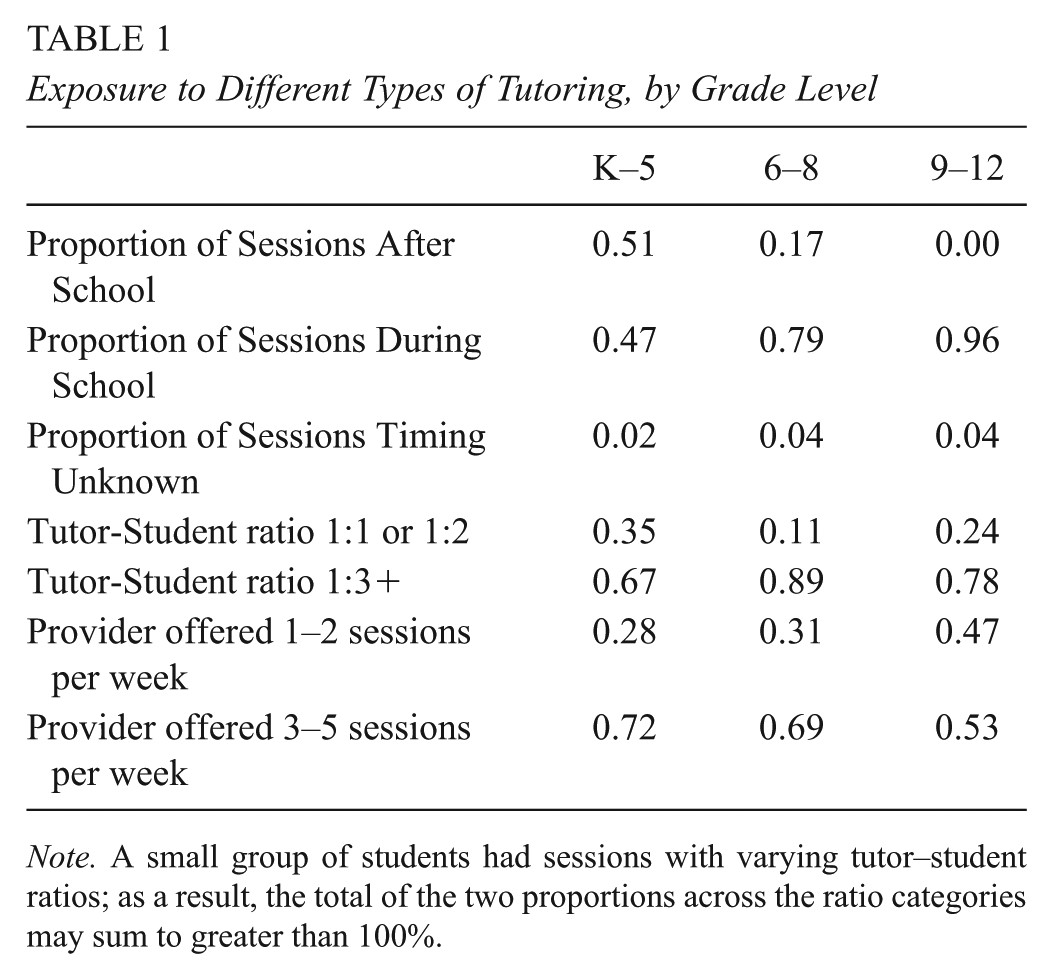
Note. A small group of students had sessions with varying tutor–student ratios; as a result, the total of the two proportions across the ratio categories may sum to greater than 100%.
Students were not randomly selected into tutoring. Instead, the Initiative prioritized giving control to schools to select students with the greatest academic needs. Therefore, the students observed in our analytic sample consist of a non-random, targeted group of students rather than the entirety of the student population. Participation was communicated to students and their families as a mandatory form of supplementary instruction, and tutoring sessions were scheduled at the beginning of the school year.
Methods
Our goal is to assess whether tutoring affects absenteeism. Depending on the approach, estimation of these effects could be subject to selection bias. One approach would be simply to compare the attendance of students who received tutoring to those who did not. These students, however, likely differ on their propensity to attend school regardless of whether they attended tutoring. To address those differences between students prior to starting tutoring, we could control for the prior year’s attendance. However, students may be selected into tutoring not only on these measured attributes but on other factors observed by teachers or school leaders that lead their assignment to tutoring and affect attendance, again regardless of tutoring. As a result, we needed to find a way to accurately assess the effects of tutoring on attendance when we do not observe all the factors affecting attendance that could be correlated with tutoring.
For this estimation we leverage the rich data we have available on daily absenteeism and scheduling of tutoring sessions, taking a fixed-effects approach to compare student absences on the days when they have tutoring scheduled to the days when they do not. This approach includes both student-level and date fixed effects which should account for all unobserved, time-invariant characteristics within students and schools. Equation 1 describes this linear probability model:

where
We run a set of models iteratively for comparison of estimates. We start with a model of scheduled tutoring on a given day predicting absenteeism (Model 1). We then introduce student demographics (Model 2) and then substitute those controls for student fixed effects (Model 3). We then add day-of-the-week fixed effects (Model 4) to account for variation attributable to the day of the week as students, for example, may be less likely to attend school on Fridays. Next, we include both day-of-the-week and month fixed effects (Model 5) to account for time of year specific variations, like how absences spike around the winter holidays. Model 6, which replaces day-of-the-week and month fixed effects with a date fixed effect, is our primary model and the most conservative model described in Equation 1.
We estimate this full set of models both for the full sample of students attending any public or charter school within OSSE, and for students who attend DCPS schools. We run the model on a more restricted sample (i.e., DCPS schools only) to consider what effects may look like for a conventional local educational agency as opposed to a broader group of schools including charter networks.
In addition to estimating the average effects of having tutoring scheduled on daily absenteeism, we also look at how the effects might differ by student characteristics and tutoring program characteristics. In particular, we assess effects separately based on key student characteristics that may be related to absenteeism such as prior year absences (10% or less, 10%–30%, and more than 30%, as defined by Chang et al., 2025), grade level (K–5, 6–8, and 9–12) and demographic characteristics for students. In addition, we examine the effects of tutoring on attendance by key program characteristics, including timing when tutoring was provided (during the school day or after school), tutor-student ratio (1:1 or 1:2 vs. 1:3 or 1:4), and the subject area in which tutoring was provided (Math, ELA, or both).
Data
The data for this study come from OSSE. OSSE grantees were required to submit student-level data on a quarterly basis to the agency with information on student enrollment, program features, session scheduling, and student attendance. These data are unusually rich in their detail of attendance—including daily attendance for each student—and in their detail on the scheduling and attendance of students for each tutoring session. In addition to student-level data, grantees were required to provide information on how their program met various features of high-impact tutoring, including whether sessions were offered during or after the school day; tutor–student ratios offered at each grade level; number of tutoring sessions offered per week; and number of weeks in the program curriculum. While 26 providers were involved in the tutoring initiative as grantees, we exclude data from four providers. Two of these providers administered fewer than 15 sessions total during the entire school year. The other two excluded providers did not pre-schedule their sessions and, instead, chose students to receive tutoring if they were in attendance that day. As a result, we are missing the data necessary for our empirical approach from those two providers. We provide a specification check that examines this variation across all providers (see Appendix Table A1).
Table 2 describes the sample. The full dataset consists of all students who attended schools that participated in the OSSE HIT Initiative (Columns 1–2, Table 2). A select number of students from those schools received some type of tutoring. The sample of students we use in our main analyses are students who received any tutoring (Columns 3–4, Table 2). Table 2 also includes the demographic characteristics of students who did not receive any tutoring in the overall dataset for a full illustration of how the analytic sample compares to the rest of the student body (Columns 5–6).
Student Demographic Breakdown by Sample

Note. ELA = English Language Arts. Our initial dataset consists of students who attended schools that participated in the OSSE HIT Initiative excluding the four providers mentioned previously (Columns 1 and 2). A subset of students from those schools received some type of tutoring (Columns 3 and 4), and this is the sample we use to estimate our main model and effects by subgroups. We include a breakdown of demographic characteristics on students who did not receive any tutoring in the overall dataset (Columns 5 and 6) for a full illustration of how the sample compares to the rest of the student body. The number of students falling into each achievement category does not sum to the full analytic sample as test scores are only available for students who were enrolled in OSSE schools in the prior year in Grades 3–8 (roughly 54% of the sample).
Overall, we see that across the samples, approximately half of students are female, one-fifth are classified as a student with disabilities (SWD), and 13% are classified as an English Learner. While the full sample is predominantly Black (71%) and economically disadvantaged (60%), the sample of students who received tutoring has an even higher proportion of Black (82%) and economically disadvantaged students (74%). Students who received tutoring were also more likely to have low scores in math (26% vs. 19%) and ELA (23% vs. 17%), and to be considered “At Risk” (77% vs. 63%).
The goal of this paper is to understand the effects of tutoring on student attendance, which is particularly relevant given the very high rates of absenteeism in DC schools. A total of 62% of the students in our sample were chronically absent (i.e., missed 10% or more of the school year) in the prior year (see Appendix Table A2). In all, 17% of students were absent more than 30% of the prior year.
Results
Table 3 displays our main results. Using Model 6, our most conservative approach accounting for student and date fixed effects, we observe that students are 1.2 percentage points less likely to be absent from school on a day when they have tutoring scheduled (Table 3). Given the average absenteeism rate on a day with no scheduled tutoring session is 17.2%, this translates to a 7.0% decrease in the likelihood of being absent. This estimate is statistically different from zero (p < .001). Which model we use moderately affects the estimates. With no controls (Model 1), the effect is −0.014. Accounting for demographics, prior scores, and attendance (Model 2) reduces the magnitude of the effect to −0.010. Swapping out student demographics with student fixed effects reverts the magnitude of the effect to what we observed in the null model. While it appears that accounting for month fixed effects increases the magnitude of the effect (B = −0.019; Model 5), this may be due to slight variation across months, though we estimated the effects separately by month (see Appendix Table A3) and found substantial consistency in estimates across months. To understand how tutoring at scale may affect absenteeism in traditional local educational agencies, we replicate the main analysis using only data on DCPS, finding slightly larger estimates (see Appendix Table A4).
Average Effect of Tutoring Session Scheduled on Absence
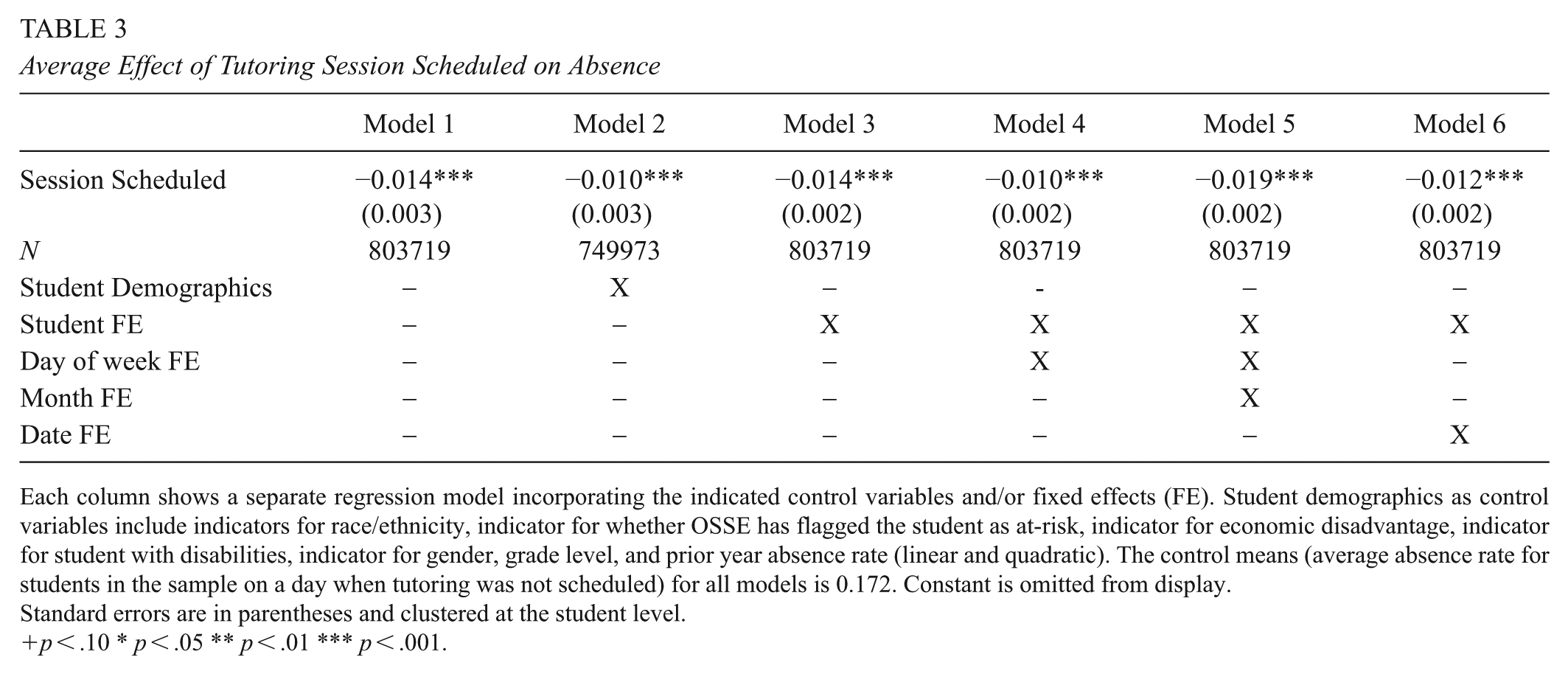
Each column shows a separate regression model incorporating the indicated control variables and/or fixed effects (FE). Student demographics as control variables include indicators for race/ethnicity, indicator for whether OSSE has flagged the student as at-risk, indicator for economic disadvantage, indicator for student with disabilities, indicator for gender, grade level, and prior year absence rate (linear and quadratic). The control means (average absence rate for students in the sample on a day when tutoring was not scheduled) for all models is 0.172. Constant is omitted from display.
Standard errors are in parentheses and clustered at the student level.
p < .10 * p < .05 ** p < .01 *** p < .001.
These results have the benefit of adjusting for unobserved characteristics of both students and days of the year. For comparison, if we had just estimated the yearly absenteeism rate as a function of receiving tutoring, controlling for prior absenteeism, prior scores and demographics, our estimate would have been −0.018 (see Appendix Table A5). That is, students who received tutoring had yearly absence rates that were 1.8 percentage points lower than their peers who did not receive tutoring. This naive analysis in Table A5, like Models 1 and 2, is likely subject to omitted variable bias; however, we see that this association between receiving tutoring and overall school year absence rate is surprisingly similar in magnitude to the effect of having tutoring scheduled on daily attendance.
By Student Characteristics
Table 4 provides the results separately by prior year absences and by grade level. The effects of a scheduled session are substantially greater for students with higher prior year absences. While the estimates are statistically significant regardless of prior year absences, for those with an extreme chronic absenteeism rate of over 30%, the estimate more than doubles to −0.026. The estimates are also higher for middle school students (−0.019), than they are for elementary (−0.012) or high school students (−0.002). Estimates are significant at the p < .001 level for all groups except high school students (Table 4). The next section dives into how tutoring program features may affect student attendance, and provides some insight into why we do not see an effect on absenteeism among high school students.
Heterogeneity Analysis by Student Characteristics (Prior Year Absence, Grade Level)
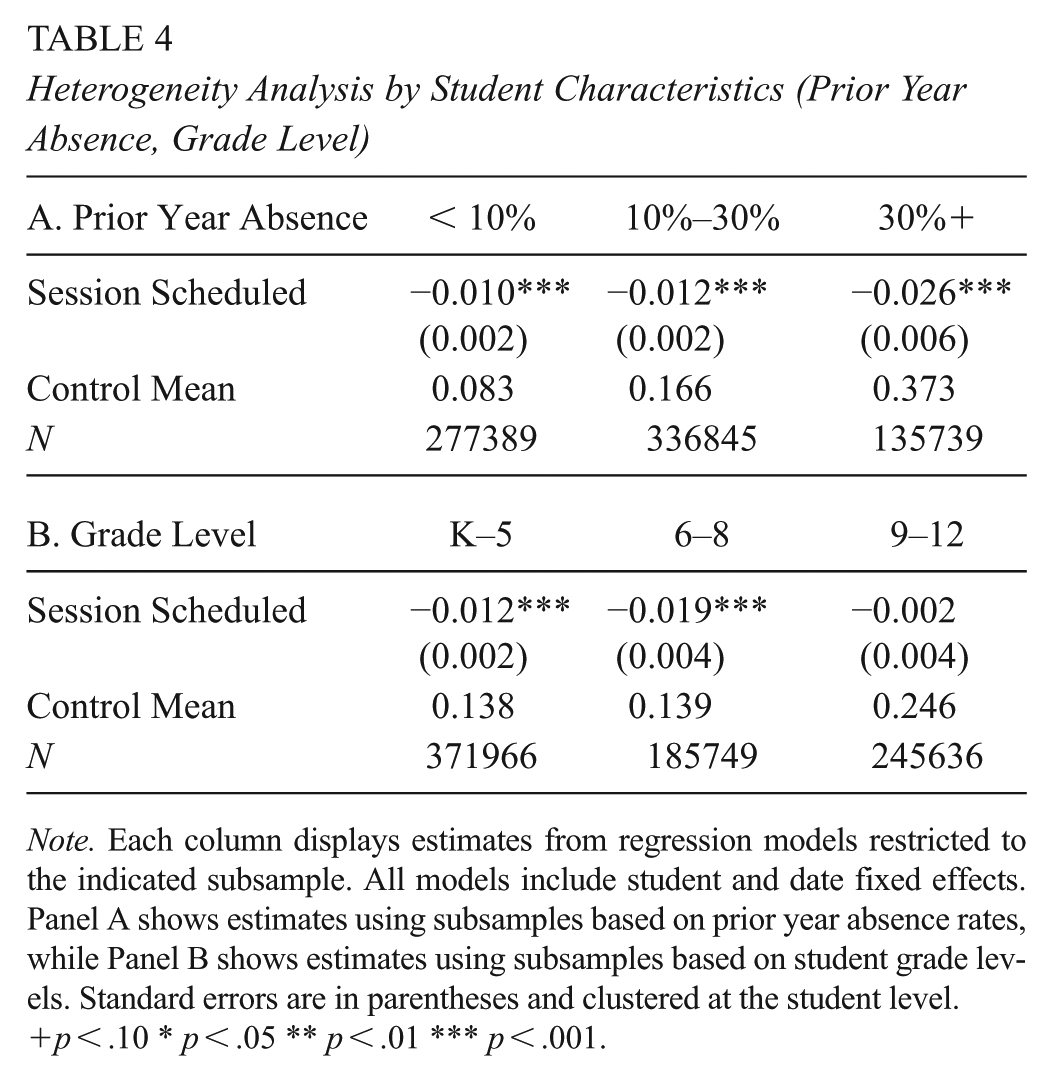
Note. Each column displays estimates from regression models restricted to the indicated subsample. All models include student and date fixed effects. Panel A shows estimates using subsamples based on prior year absence rates, while Panel B shows estimates using subsamples based on student grade levels. Standard errors are in parentheses and clustered at the student level.
p < .10 * p < .05 ** p < .01 *** p < .001.
By Features of High-Impact Tutoring
Knowing that students across different grade levels were exposed to different types of tutoring programs (see Table 1), we investigate how the effects of tutoring on absenteeism could also differ based on the characteristics of the tutoring program itself. Table 5 explores this variation based on several key elements of what makes tutoring effective—when the tutoring occurs, the number of students per tutor in the sessions, and the number of sessions offered per week. We further break down the effects by student grade level to explore students’ patterns of school attendance across different grade levels as a result of having a scheduled tutoring session.
Effects by Features of High Impact Tutoring
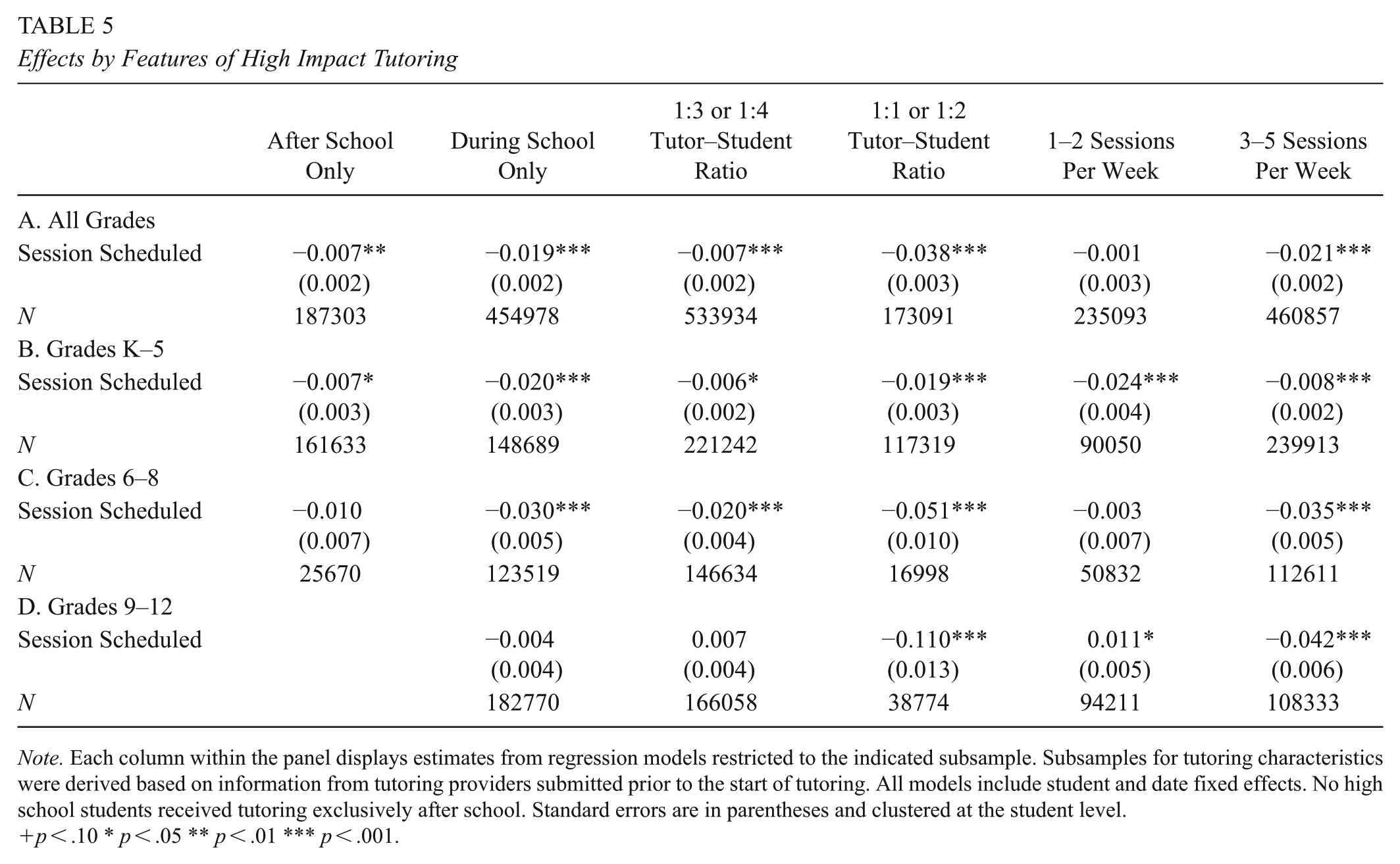
Note. Each column within the panel displays estimates from regression models restricted to the indicated subsample. Subsamples for tutoring characteristics were derived based on information from tutoring providers submitted prior to the start of tutoring. All models include student and date fixed effects. No high school students received tutoring exclusively after school. Standard errors are in parentheses and clustered at the student level.
p < .10 * p < .05 ** p < .01 *** p < .001.
The results are, in some ways, predictable. The effects are substantially larger for programs operating during the school day (−0.019) than after school (−0.007), and they are substantially larger for smaller tutor–student ratios (1:1 or 1:2; −0.038) than for bigger ones (1:3 or larger; −0.007). On average, students who are offered higher frequencies of tutoring sessions (i.e., 3–5 sessions per week) experience large effects on their absenteeism (−0.021), whereas there is no effect of tutoring sessions on student absenteeism among those offered more infrequent tutoring sessions (1–2 sessions per week; −0.001).
Some, but not all, of these effects remain consistent across different grade levels. For instance, tutoring during the school day is superior in its potential ability to reduce absenteeism across the board relative to tutoring after school. Likewise, tutoring with smaller ratios predict greater reductions in absenteeism for all grade levels; even high school students, who on average did not experience significant effects of tutoring (see Table 4), benefit from smaller ratios. On the other hand, tutoring session frequency is more consequential for middle and high school students’ attendance relative to elementary school students.
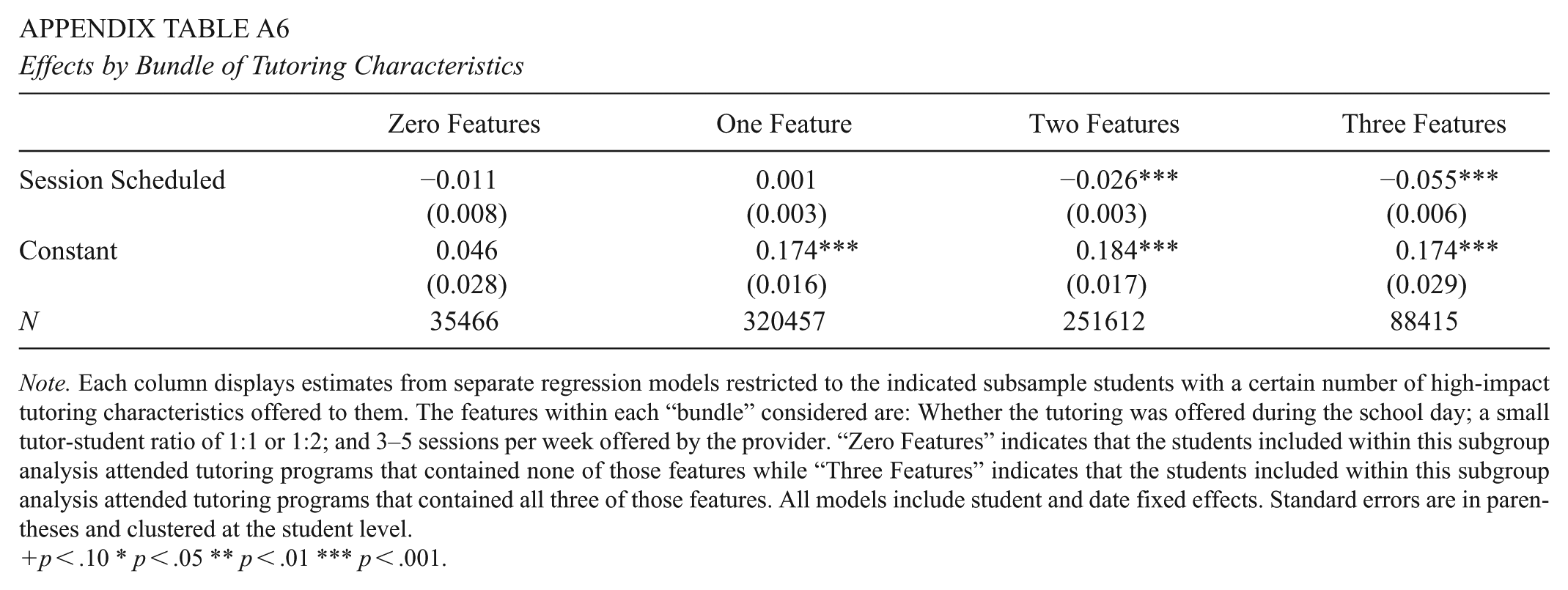
We further explore the effects of having a tutoring session scheduled on student absenteeism when students are exposed to programs bundling multiple features of high-impact tutoring. We count the number of high-impact tutoring characteristics reported by each tutoring provider. These characteristics are the same as the ones examined in Table 5. We then estimate the within-student impact of having a tutoring session scheduled for students who received tutoring from providers, separately by the size of the “bundle” of high-impact tutoring characteristics they contain. Figure 1 (and corresponding estimates in Appendix Table A6) show the effects of each bundle of tutoring characteristics on absenteeism. We observe that amongst students who engaged with tutoring providers who offered none or only one of the characteristics of high-impact tutoring mentioned previously, the effect of having a tutoring session on their likelihood of being absent is not significantly different from zero. Amongst those who experienced tutoring containing a bundle of two features, we observe an effect of −0.026, which is more than double the overall average effect noted in Table 3. Amongst those who experienced tutoring containing a bundle of all three features, we observe an effect of −0.055, more than double the magnitude of programs with a bundle of two features and nearly five times the overall effect.
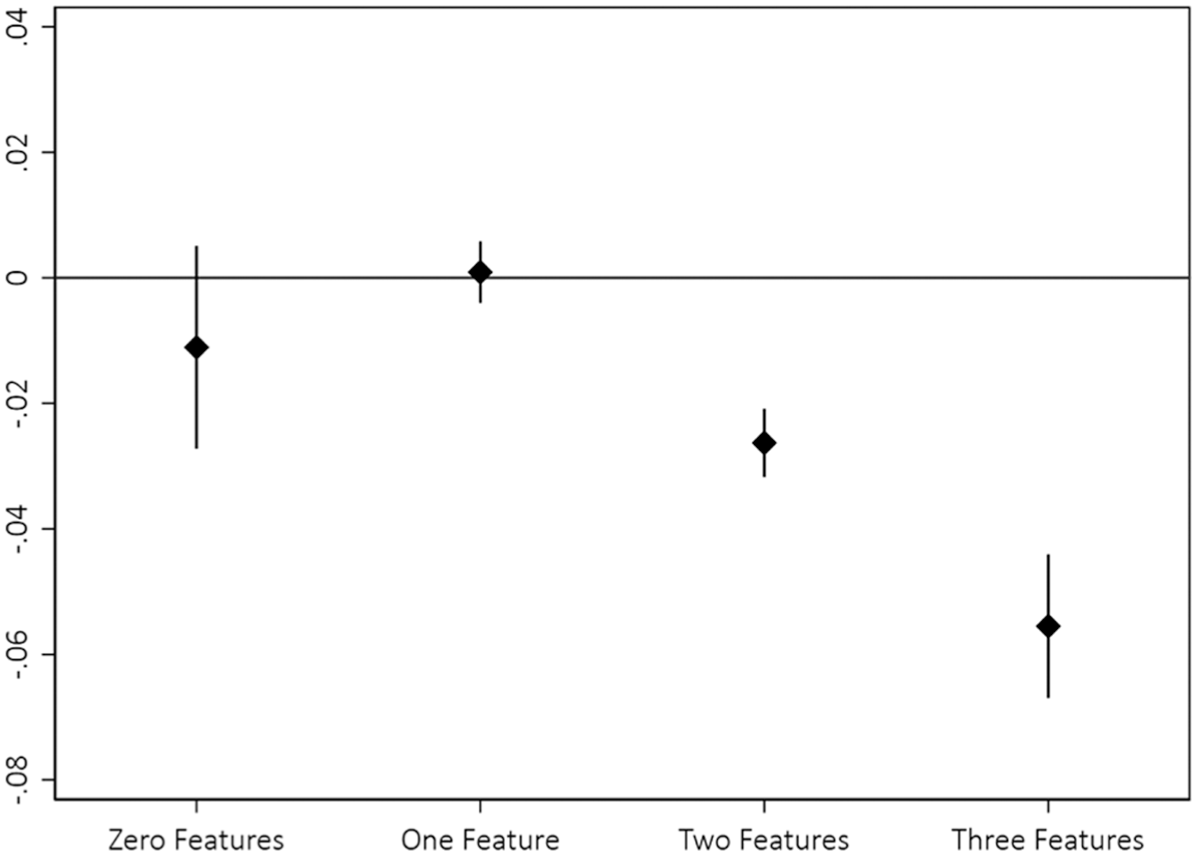
Coefficient plot of effects by bundle of tutoring characteristics.
Discussion
This study shows that having a scheduled tutoring session reduces the likelihood of student absenteeism for that day by 1.2 percentage points, translating to a 7.0% overall reduction in absenteeism. Students were more likely to attend school on days when tutoring sessions were scheduled, suggesting that they are motivated to participate in tutoring.
We find differences in the size of this effect across student groups, which provide information on how to best direct tutoring to increase student engagement in school. First, middle school students and students who experienced extreme chronic absenteeism during the previous year benefited the most from having tutoring, with scheduled tutoring reducing their likelihood of being absent on a given day by 1.9 percentage points and 2.6 percentage points, respectively, relative to a day with no tutoring scheduled. These findings suggest that tutoring can be a valuable tool for reducing absenteeism, particularly among middle school students in urban school settings who can be particularly vulnerable to disengagement.
More directly informative for practice, we observe meaningful variation in the impact of tutoring across program characteristics. These findings provide insights into the mechanisms by which tutoring might contribute to improving student attendance. A larger effect for scheduled in-school tutoring compared to after school tutoring suggests that it is not simply receiving tutoring that increases engagement in school—having tutoring embedded into the school day likely positively changes students’ school experience leading to decreased absenteeism. Also, the largest effects were observed among students who received tutoring in 1:1 or 1:2 tutor-student ratios, indicating that the opportunity to receive individualized attention and build relationships with their tutors may be particularly motivating for students. The intended frequency of sessions also appeared to matter, as students and tutors have more opportunities to build on previous sessions with more frequent chances to meet for tutoring. When students were scheduled to attend tutoring sessions that contained any two of these features, their likelihood of missing school fell by 2.6 percentage points; when scheduled to attend tutoring sessions containing all three of these features of high-impact tutoring, their likelihood of missing school fell by 5.5 percentage points, nearly fivefold the average effect across all types of tutoring programs.
These variations in effects, as well as the effects we observe of tutoring programs that contain multiple design features, suggest that tutoring programs that offer opportunities to show up in school, engage with others, connect with a supportive adult, and receive meaningful attention maximize their effectiveness in terms of not only academic outcomes, but also student engagement and attendance. Our findings, in line with Kraft et al. (2024), suggest that programs intentionally designed to prioritize evidence-based characteristics have the potential to improve student engagement and sustain positive effects on academic outcomes.
Limitations and Future Research
There are several limitations worth mentioning about our study. First, selection into tutoring was not random. Like the majority of tutoring interventions that seek to support students that need the most support, the HIT Initiative prioritized schools and students struggling the most. Therefore, our findings apply primarily to students who would be eligible to receive tutoring, limiting the generalizability of our findings. It is possible that the effect of scheduled tutoring on attendance may differ if tutoring were assigned to all students, regardless of prior achievement. Second, although our within-student and date fixed effects approach reduces bias by comparing each student to themselves and accounting for date-specific shocks, it may not address all potential sources of bias, such as unobserved student by time factors that may impact outcomes. We do adjust for both time and student differences, but not the interaction of the two. Our identification strategy strengthens the plausibility of causal interpretation, but the design remains a quasi-experimental rather than a randomized controlled trial. Accordingly, we view our findings as providing credible evidence that approximates the causal effect, while acknowledging potential limitations. Future research could build upon this work by examining the impact of tutoring on student attendance in settings where students are randomly assigned to participate.
Third, although the tutoring providers had to demonstrate they intended to pair students with a consistent tutor, we are unable to observe whether students were consistently paired with the same tutor in our data. Thus, we are limited in our ability to formally test whether meeting with a single, consistent adult led to the observed improvements in student attendance. While we hypothesize that may fosters supportive relationships based on prior research, our data in and of itself cannot confirm whether students consistently saw the same tutor. We also recognize that several mechanisms could be contributing to the observed effects. Even without a single consistent adult assigned to each student, tutoring may have improved attendance by embedding structured academic support within the school day. Another possibility is that tutoring sessions introduced a form of accountability, motivating students to attend on days when tutoring was scheduled. This accountability could stem from several factors, including an opportunity to build meaningful connections with an adult; a desire to receive support in a subject the student was struggling in; or because tutoring boosted academic self-efficacy and skill mastery. The most likely scenario is that multiple mechanisms operated simultaneously to produce the effects observed in our study.
Finally, our findings reflect phenomena observed from a single location and we do not know how generalizable they might be to different contexts. We focus on the HIT Initiative which took place in a single state agency, with very specific conditions for policy design, implementation, and funding. Effects may vary across other states and districts based on the local context, including the fidelity with which high-impact tutoring is implemented and the composition of its student population. In particular, effects may not necessarily extrapolate to settings where districts that are unable to fund tutoring at scale to the same extent as the HIT Initiative, which received a nontrivial amount of financial investment and resource allocation at the local and state levels.
Implications for Practice and Policy
Our findings hold several implications for education policy and practice. First, a critical element highlighted by this study is the importance of relationships in promoting student engagement, learning, and attendance. The consistent presence of a caring adult to support academic outcomes, such as a tutor, can significantly enhance students’ sense of belonging and connection to school. One of our findings indicate that high-impact tutoring most positively influenced middle school students’ engagement. This differential effect is especially important given that student engagement commonly starts to decline in middle school (Eccles & Roeser, 2011), so expanding tutoring offerings for this age group may be a key priority for future interventions that seek to reduce absenteeism. Moreover, the large effects on attendance for this age level mirror those found in middle school with the Check and Connect program (Guryan et al., 2021), suggesting that built-in individualized attention from a caring adult in students’ early adolescence may be particularly important.
Most importantly, the results point to the importance of incorporating certain features in tutoring programs we now know to have strong positive effects on not only achievement, but also student attendance. Embedding tutoring within the school day, offering repeated opportunities to build a connection and offer academic supports, and maintaining small tutor-to-student ratios are critical components for success. Policies prioritizing funding for tutoring programs that integrate these features, particularly in schools serving high-risk students, could lend themselves to meaningful reductions in absenteeism.
Ultimately, these results indicate that a relationship-based, individualized approach to learning may be especially crucial for students who often miss school. The bond that students form with their tutors may be motivating them to attend school more regularly, because they feel seen, supported, and understood. Expanding the focus of high-impact tutoring beyond academic support to include relationship-building can foster greater student engagement, ultimately reducing absenteeism and supporting student success overall.
Footnotes
Appendix
Effects by Bundle of Tutoring Characteristics
| Zero Features | One Feature | Two Features | Three Features | |
|---|---|---|---|---|
| Session Scheduled | −0.011 (0.008) |
0.001 (0.003) |
−0.026***
(0.003) |
−0.055***
(0.006) |
| Constant | 0.046 (0.028) |
0.174***
(0.016) |
0.184***
(0.017) |
0.174***
(0.029) |
| N | 35466 | 320457 | 251612 | 88415 |
Note. Each column displays estimates from separate regression models restricted to the indicated subsample students with a certain number of high-impact tutoring characteristics offered to them. The features within each “bundle” considered are: Whether the tutoring was offered during the school day; a small tutor-student ratio of 1:1 or 1:2; and 3–5 sessions per week offered by the provider. “Zero Features” indicates that the students included within this subgroup analysis attended tutoring programs that contained none of those features while “Three Features” indicates that the students included within this subgroup analysis attended tutoring programs that contained all three of those features. All models include student and date fixed effects. Standard errors are in parentheses and clustered at the student level.
p < .10 * p < .05 ** p < .01 *** p < .001.
Acknowledgements
We are grateful to our partners in this research, the District of Columbia Office of the State Superintendent of Education. We especially thank Sam Angileri, Alethia Hinds, Sarah Martin, and Jess Sobin for their invaluable contribution to project implementation. We received insightful feedback and support from the National Student Support Accelerator team, in particular Kristine Gaffaney, Demetra Kalogrides, and Nancy Waymack, as well as Amanda Lu, Cynthia Pollard, and Amirpasha Zandieh. For helpful comments, the authors thank participants of the Society for Research on Educational Effectiveness 2024 Conference, the Association for Public Policy Analysis & Management Annual Meeting in 2024, and the Association for Education Finance and Policy Conference in 2025.
Author Note
The findings, interpretations, and conclusions expressed in this paper are those of the authors and do not necessarily represent the views of the District of Columbia Public Schools, the DC Office of the State Superintendent of Education, funders, or Stanford University.
Declaration of Conflicting Interests
The authors declared no potential conflicts of interest with respect to the research, authorship, and/or publication of this article.
Funding
The authors disclosed receipt of the following financial support for the research, authorship, and/or publication of this article: We thank the Smith Richardson Foundation (#2021-2497) as well as Arnold Ventures/Accelerate (#292303) for their support of our full research program.
Ethical Considerations
This study was approved under Stanford University’s IRB Protocol “National Student Support Accelerator: Effects of tutoring at school district test sites” (68027).

Notes
Authors
MONICA G. LEE is senior research associate at Stanford University (485 Lasuen Mall, Stanford CA 94305); email:
SUSANNA LOEB is a professor of education at Stanford University. Her research examines the design, implementation, and effectiveness of education policies and how to scale the most promising educational practices across contexts.
CARLY D. ROBINSON is the Director of Research for the SCALE Initiative at Stanford University. Her research sits at the intersection of education, policy, and psychology and spans several domains, including educator-student relationships, family engagement, tutoring, and AI.