



Abstract
With increased tensions and political rhetoric surrounding immigration enforcement in the United States, schools are facing greater challenges in ensuring support for their students of immigrant and Latinx origin. This study examined the associations between county-level immigration arrests and academic achievement, absenteeism, and measures of school climate and safety for students in the California CORE districts. Using ordinary least squares regression analyses with year, grade, school, and student fixed effects, we found that immigration arrests corresponded to declines in academic achievement, attendance, and various measures of school climate and safety for Latinx students and Latinx students who were English learners. We also find small declines in measures of school climate and safety for students who ever received special education services via an Individualized Education Program. Associations were strongest for arrests that occurred during the Trump administration compared with those that occurred during the second term of the Obama administration. Policy implications are discussed.
On his first day in office, President Biden signed a series of Executive Orders to dismantle the robust legal machinery the Trump Administration had built to systematically block migration and asylum seeking to the United States, limit the rights of immigrants and their dependents, and pursue large-scale immigrant detention and deportation (Pierce & Bolter, 2020). Biden’s efforts represent a step forward in seeking to rectify the expansive anti-immigrant legal actions pursed by former President Trump, although some immigrant rights advocates have critiqued the pace and scope of the changes as insufficient. Even with a reversal of Trump-era policies, 4 years of xenophobic rhetoric and punitive immigration enforcement actions have significantly affected the lives of millions of immigrant families living in the United States today (Barajas-Gonzalez, 2019; Grace et al., 2018; Lopez, Gonzalez-Barrera, & Krogstad, 2018; Roche et al., 2020). The extent of these effects is largely unknown at present given the lag time between these events, data collection, and publication. To understand how to best respond to the consequences of Trump-era immigration policies and practices, there is an urgent need for research that examines how these policies, practices, and the broader environment of anti-immigrant sentiment in which they were enacted have influenced people’s social, economic, physical, mental, and educational well-being, including that of young people (see Capps et al., 2020 for recent work).
Children in immigrant families are among the multiple segments of U.S. society whose lives were dramatically disrupted by the social and political changes wrought under the Trump Presidency. The most recent data show that more than 18 million children in the United States have at least one immigrant parent (Kids Count Data Center, n.d.), and the majority of these children are themselves native-born, U.S. citizens (Lou et al., 2019). At the same time, roughly 5 million children or 7% of all children enrolled in public and private K–12 schools in the United States are living with at least one undocumented parent (Passel & Cohn, 2018) and approximately 675,000 children younger than 18 years are counted among the 10.5 million undocumented people living in the United States today (Budiman, 2020; Passel & Cohn, 2018). Thus, Trump’s stance toward immigration and immigrants themselves, and the actions associated with his anti-immigrant stance, reverberated inside millions of homes and thousands of schools nationwide.
There is growing evidence of the implications of restrictive immigration policies, immigration enforcement activities, and xenophobic speech for children in immigrant families. Some of this research has focused specifically on young people living in undocumented or mixed-status families. These studies have identified some of the major developmental, educational, and mental and physical health–related consequences for children and youth living in conditions of intense fear and legal uncertainty (Amuedo-Dorantes & Lopez, 2015; Chaudry et al., 2010; Dreby, 2012, 2015; Gonzales, 2015; Gonzales et al., 2013; Hainmueller et al., 2017; Suárez-Orozco et al., 2011; Valdivia, 2019; Vargas, 2015; Yoshikawa et al., 2017).
Other research on the impacts of immigration policy and enforcement for young people has included a broader swath of population, expanding the sample beyond students with “likely unauthorized” parents or immediate family members to include all Hispanic/Latinx students, with “Hispanic” often serving as a proxy for immigrant origin. 1 Work investigating the consequences of immigration enforcement actions and policies for a larger group of students has also found large, negative effects for Latinx students in terms of school mobility (Dee & Murphy, 2020), academic performance (Bellows, 2019; Kirksey et al., 2020), absenteeism (Kirksey, 2020b), and teacher reports of student social-emotional well-being (Ee & Gándara, 2020; Pollock, 2017). The evidence produced by these studies underscores the relevance of considering the vast and heterogeneous population of people whose lives may be substantially upended by punitive immigration enforcement approaches.
To date, most studies of the relationship between immigration enforcement and student outcomes have relied on data collected before the Trump administration’s implementation of increasingly harsh enforcement tactics and restrictive immigration and asylum policies. Research using more recent data is needed to understand the magnitude of the traumas resulting from Trump-era approaches to immigration policy and enforcement. To that end, in this study, we explored the associations between immigration enforcement and educational outcomes for students in seven of the eight California CORE districts, which comprise eight of the largest school districts in California that serve more than 1 million students collectively across six counties. With data spanning the years 2014–2018 (President Obama’s second term through the first year of the Trump administration), we examined how changes in county-level immigration arrests by the U.S. Immigration and Customs Enforcement (ICE), published by the Transactional Records Access Clearinghouse (TRAC), associated with changes in students’ math and English language arts achievement and absenteeism. We also analyzed scales of school culture and climate, including measures of student perception of school climate, supports for academic learning, sense of belonging, lack of school safety, and bullying.
We find significant, negative associations between increased immigration arrests and Latinx students’ math achievement at the secondary school level along with their perceptions of school culture, climate, and sense of safety. We also find strong, positive associations with absenteeism. These results were most consistent with the Latinx students and Latinx-English learner students in the sample; no significant relationships consistently emerged for the non-Latinx comparison groups (White, Black, and Asian students), non-Latinx Asian students who were English learners, or other subgroups. Moreover, the strength of these relationships was greater in the years when Trump was in office. Our findings indicate that heightened immigration enforcement effectuated in a national context of expanded xenophobia may be tied to strong and pervasive educational damage for Latinx students, the long-term consequences of which remain to be seen.
Changing Immigration Policies and Immigration Enforcement Approaches
With nearly 5.3 million people deported between 2009 and 2016 under President Obama’s leadership, his nickname “Deporter in Chief” was well-earned (Chishti et al., 2017). These deportation rates reflect the Department of Homeland Security’s (DHS) use of policy tools such as Secure Communities and 287(g) agreements to locate and remove large numbers of unauthorized immigrants from the country, particularly in the early years of the Obama administration. The Secure Communities policy, which was in place between 2008 and 2013, required local and state law enforcement agencies to automatically submit the fingerprints of arrested individuals to DHS’s Automated Biometric Identification System (IDENT) to identify people who were “unlawfully present in the U.S. or otherwise removable” (U.S. Immigration and Customs Enforcement, 2018); 287(g) agreements, which are signed between DHS and state and local police departments, deputize state and local law enforcement officers to perform the functions of federal immigration agents. These were among the most powerful legal weapons that ICE agents employed against immigrants during the Obama presidency.
In his second term, Obama took steps to reverse course from this more punitive approach to immigration enforcement. First, in August 2013, the policy of “prosecutorial discretion” was instituted to encourage ICE officers to take into consideration family ties in the United States (including U.S. citizen children) and prioritize deportation of individuals who posed risks to national security of public safety (Zatz & Rodriguez, 2015). Then, in November 2014, the Secure Communities program was suspended and replaced with the 2014 Priority Enforcement Program, which more narrowly targeted unauthorized immigrants who had been convicted of serious crimes and modified the local and state reporting requirements for people they had detained (L. Rodríguez et al., 2014). Even with these substantial changes to immigration enforcement policies and practices, more immigrants were arrested and deported under Obama than under any other president, causing significant, long-term suffering and trauma for millions of families—including U.S. citizen children (Capps et al., 2015; Yoshikawa et al., 2017).
Donald Trump ran on a campaign of anti-immigrant invective and promises of tougher immigration enforcement. Early in his presidency, he made decisive moves to convert campaign promises into action by restoring some of the Obama administration’s most invasive programs and by implementing new, harsher policies. To start, DHS immediately reinstated the Secure Communities policy and eliminated “prosecutorial discretion.” There was also a vast increase in the number of 287(g) agreements signed between DHS and state and local police departments during Trump’s time in office (Pierce & Bolter, 2020).
Despite the high rates of deportation that occurred under Obama’s presidency, particularly in his first term, the Trump Administration’s abandonment of prosecutorial discretion and the Priorities Enforcement Program and the resumption of Secure Communities, starting in 2017 signaled an embrace of more widespread, indiscriminate approach to immigration enforcement. A report from the Migration Policy Institute catalogued more than 400 immigration-related executive actions taken by President Trump that included a travel ban for visitors from Muslim-majority countries, major restrictions on asylum claims, family separations at the border, ending the Deferred Action for Childhood Arrivals program, and limits on legal immigration and access to public benefits for immigrants (Pierce & Bolter, 2020). On top of this, ICE ramped up the number of arrests of undocumented immigrant parents occurring near school grounds and other formerly sensitive locations such as hospitals and court houses (Burnett, 2017; Meltzer, 2017; Nieto-Munoz, 2018), and the Department of Justice repeatedly threatened to withhold federal funding to “sanctuary cities” that failed to release information about arrests to federal agents (U.S. Department of Justice, 2018), although the Trump Administration faced legal obstacles to do so (Valverde, 2020). Researchers at the Migration Policy Institute also found that lack of local cooperation with ICE in multiple places across the country served to impede the Trump administration’s efforts to increase removals in many areas (Capps et al., 2018), providing evidence of the power of local resistance.
Changes in rates of interior arrests and deportations, as well as the proportion of deportations resulting from interior arrests, provide additional indicators of how immigration enforcement changed between Obama’s second term and Trump’s presidency. These data also give a sense of the shifts in the larger enforcement context in which children in immigrant families were living and going to school—one in which protections for noncriminals and people with long-standing ties in the country were rescinded and arrests and deportations could reach a wider population. They provide a foundation to understand how the varying national and local conditions (under Obama and Trump) influence young people in schools—a key goal of this study.
In the terminology used by ICE, an “administrative arrest” is an arrest of “an alien for a civil violation of U.S. immigration laws, which is subsequently adjudicated by an immigration judge or through other administrative processes” (U.S. Immigration and Customs Enforcement, 2018). Data on ICE arrests and removals from fiscal years (FY) 2017 and 2018 show a large and sustained increase in the number of administrative arrests and in the proportion of the total annual population of deportees who were “interior removals” (as opposed to border apprehension). In FY 2017, ICE conducted 143,470 overall administrative arrests, which was the highest number in the previous 3 fiscal years and a 30% increase from FY 2016. Of the 226,119 people deported in FY 2017, 36% of them resulted from interior arrests compared with 27% in FY 2016. These trends continued in 2018 when ICE Enforcement and Removal Operations made 158,581 administrative arrests, an 11% increase from the prior year and the highest number since FY 2014. Moreover, the total number of people deported in FY 2018 increased to 256,086, representing a 13% increase from FY 2017, and administrative arrests in FY 2018 resulted in a larger number of deportations in the category of “interior removals” as well. While these numbers are below the peak of above 300,000 annual deportations reached during2009 to 2011, taken together, data on ICE operations show the Trump administration’s systematic pursuit of its mission to deter immigration and asylum-seeking and punish undocumented immigrants already living in the country, with little regard to community ties or contributions.
Theoretical Frameworks
The shifting policy terrain under Presidents Obama and Trump alongside stark differences in expressed attitudes toward immigrants provides the background for this empirical examination of the relationship between immigration arrests and student outcomes. We focus on three domains of student experience: academic achievement (as measured by English language arts [ELA] and math test scores); rates of absenteeism, and student reports of school climate, sense of safety and belonging in school to explore how immigration arrests influence multiple aspects of student well-being, whether the broader policy context changes how immigration arrests influence student well-being; and how students with different background characteristics may respond differently following immigration arrests. To guide our analysis, we combine a community violence framework (Barajas-Gonzalez et al., 2018) with the notion of a pyramid of enforcement effects on children of immigrants (Dreby, 2012), and we extend the pyramid to include non-Latinx students who attend schools with predominantly Latinx student populations.
Researchers across social science disciplines and public health have long been concerned with understanding and accurately measuring the impacts of exposure to community violence on children’s development (American Academy of Pediatrics, 2014; Kessler et al., 2010). Recently, Barajas-Gonzalez et al. (2018) asserted that the 2016 presidential election and concomitant transformation in U.S. immigration policies constituted a “dramatic societal event” (Williams & Medlock, 2017 cited in Barajas-Gonzalez et al., 2018) with potentially serious long-term public health and child development impacts given that “the threat of parental deportation and chronic uncertainty regarding familial safety is . . . experienced by many [Latinx] children as a form of psychological violence” (Barajas-Gonzalez et al., 2018, p. 13). Drawing on ecological-transactional theory, which considers the multiple, overlapping environments in which an individual exists (Bronfenbrenner, 1977; Cicchetti & Lynch, 1993), Barajas-Gonzalez and colleagues advanced a conceptual model that showed how immigration enforcement and immigration policies—as forms of community violence—could be analyzed as salient contextual factors that influence students in multiple contexts (home, school, community) and in multiple ways (socially, academically, health). We ground our analytic models in their conceptualization of immigration enforcement actions and policies as a form of community violence that may have direct impacts on students in schools.
The pyramid of immigration enforcement effects is another public health concept adapted to questions about the individual- and societal-level consequences of immigration enforcement (Dreby, 2012). This framework considers the heterogeneous effects that immigration enforcement can have on people as a function of their own immigration status, that of their family members, and proximity to friends, peers, colleagues, and community members in precarious legal positions. It emphasizes the importance of considering consequences for individuals who may not be immediately, personally affected by deportation (those at the top of the pyramid) and of identifying various types and intensity of effects. Informed by this framework, our study analyzes the academic outcomes, absenteeism, and reported perceptions of school culture and climate of the full student population attending schools in the California CORE districts. We explicitly compare the strength of the relationships between immigration arrests and these measures for students of distinct racial/ethnic backgrounds (who may be more or less directly affected by enforcement).
There are multiple compelling reasons to empirically examine how immigration enforcement activities affect students beyond just those with family members who may be directly targeted (due to undocumented status). First, data limitations often make it difficult to accurately identify undocumented immigrants in large data sets, although some researchers have developed innovative ways to attempt to do so (Amuedo-Dorantes et al., 2018; Amuedo-Dorantes & Lopez, 2015, 2017; Hainmueller et al., 2017; Kuka et al., 2020). Next, studies that have included a broader population of subjects have found large and meaningful effects of restrictive immigration policies, immigration enforcement activities, and anti-immigrant rhetoric on members of the wider communities in which immigrants live, including nonimmigrant citizens and their families (Brietzke & Perreira, 2017; Sanchez & Masuoka, 2010; Vargas et al., 2017). Moreover, identifying the full reach of the consequences associated with immigration enforcement actions may draw attention to the extent of the harm inflicted by such policies and accompanying xenophobic speech. Finally, understanding how the nature and intensity of the effects may vary across different groups of people may facilitate the development of more tailored, and potentially more efficacious, responses to these issues.
In what follows, we briefly discuss the empirical evidence on the ways in which immigration enforcement activities influence student achievement and absenteeism as well as current research on the implications of the growth in anti-immigrant policies and rhetoric under Trump for students’ well-being and school climate. We include studies that restrict their focus to the effects of enforcement policies and actions on children in undocumented or mixed-status families as well as studies that measure outcomes for a larger population of young people.
Student Achievement and Attendance
The volatile immigration policy landscape over the course of the past decade has provided fertile ground for empirical examination of the relationship between immigration arrests and deportations and student achievement and attendance in school. The resultant body of work provides convincing evidence of the power of immigration enforcement activities to dramatically affect how students perform academically and how families perceive the safety of sending their children to school under conditions of heightened enforcement. Amuedo-Dorantes and Lopez (2015, 2017) conducted a series of studies examining the educational costs of immigration enforcement for children of “likely unauthorized immigrants.” They constructed a measure of “intensity of interior immigration enforcement” by combining data on the enactment of E-Verify mandates, omnibus immigration laws at the state level, implementation of 287(g) agreements, and local participation in the Secure Communities program and found that the probability of repeating a grade increased by 6% with increases in interior immigration enforcement and the probability of dropping out increased by 25.2% (Amuedo-Dorantes & Lopez, 2015). In a separate study, Amuedo-Dorantes and Lopez (2017) analyzed data from the Current Population Survey from 2000 to 2013 and found that intensified enforcement raised the probability of repeating a grade for children of “unlikely unauthorized immigrants” aged 6 to 13 years by 14% and the likelihood of dropping out of school for young people aged 14 to 17 years by 18%.
Whereas Amuedo-Dorantes and Lopez sought to simultaneously measure the effects of multiple parts in the immigration enforcement machinery, other scholars have focused on evaluating the educational impacts of specific policies or practices such as Secure Communities and 287(g) agreements. For example, a recent study by Bellows (2019) exploited the staggered rollout of Secure Communities to analyze its impact on student test scores. Using nationally representative test score data from Stanford Education Data Archive (SEDA), she found that local implementation of Secure Communities and associated deportations were associated with lower test scores in ELA for Latinx and non-Latinx Black as well as lower scores in math for non-Latinx Black students. In a different study also using SEDA data, Kirksey et al. (2020) showed larger gaps in math achievement and rates of absenteeism between White and Latinx students in years in which more deportations occurred near school districts. Using a nationally representative sample of elementary students, Kirksey (2021) also showed that increases in deportation proceedings that occurred in a student’s county were associated with small declines in math achievement. Finally, Dee and Murphy (2020) examined how local adoption of 287(g) agreements between 2000 and 2011 (agreements between ICE and local police department to enforce immigration laws) affected Latinx student mobility. They found that county adoption of 287(g) agreements reduced the number of Latinx students enrolled in elementary schools in that county by almost 10% in a 2-year period with no similar changes in enrollment for non-Latinx students. Taken together, this body of work establishes that immigration enforcement that occurred during Obama directly influenced student achievement, persistence in school, attendance, and mobility. It sets an empirical foundation for studies that examine similar relationships during the Trump era.
Measures of student well-being in the years of Trump’s presidency offer some insight into how expanded enforcement priorities and vitriolic anti-immigrant speech have affected immigrant-origin youth, their peers, and school personnel. Researchers at the Institute for Democracy, Education, and Access (Rogers et al., 2019) conducted an online survey of a nationally representative sample of roughly 500 high school principals in the summer of 2018 to explore the effects of multiple “societal challenges” during the 2017–2018 school year, including “the threat of immigration enforcement.” Principals reported extensive, wide-ranging fallout associated with the “climate of fear” caused by Trump’s immigration enforcement policies. Over two thirds of principals reported that enforcement policies and the associated political rhetoric had harmed students and children of immigrant families experienced challenges focusing in class or were absent due to immigration policies. The survey also documented pervasive racism and xenophobia in schools, with 60% of principals reporting that their students had made derogatory remarks about immigrants, the most of common of which was echoing Trump’s “Build the Wall” refrain. These findings confirm an earlier survey by Rogers et al. (2017) of more than 1,500 teachers that captured growing polarization and incivility, particularly in majority-White high schools.
Other studies using both surveys and administrative data have identified powerful effects of Trump’s election, immigration and enforcement policies, and the broader anti-immigrant ethos he promoted. Ee and Gándara (2020) administered a national survey to more than 3,600 school personnel twice between October 2017 and September 2018 to explore educators’ reports of immigrant students’ school experiences post-Trump election. Nearly 85% of respondents said that they had observed students exhibiting fear of an ICE-related event, and almost 80% reported emotional and behavioral issues among their immigrant students. The study also showed variation in the size of the negative effects of enforcement by school and student characteristics, with Title I schools experiencing larger consequences and educators in schools with higher percentages of White students reporting more hostile, anti-immigrant environments. Kirksey (2020a) surveyed a cohort of preservice teachers in California about their experiences with witnessing the impacts of enforcement on their students after a full year in service. Similar to Ee and Gándara (2020), Kirksey (2020a) found that a majority of teachers witness negative impacts of immigration enforcement on their students, and many reported that immigration enforcement also negatively affected their job satisfaction. In a related vein, Huang and Cornell (2019) found that student rates of reporting bullying incidents and being teased “because of their race or ethnicity” were 18% and 9% higher, respectively, in school localities in Virginia, in which a majority of voters had voted for Trump in the 2016 election.
Few studies incorporate students’ perspectives and reports about how attending school under conditions of increased hostility and fear, particularly in the years after Trump took office, may affect them (see Valdivia, 2019, 2020 and Capps et al., 2020 for some exceptions). Prior work that centers the voices and experiences of undocumented immigrant youth and children in mixed-status families has revealed some of their struggles and resilience in the face of unwelcoming environments and major obstacles (Canizales, 2021; Gonzales, 2015; Mangual Figueroa, 2017; S. Rodriguez, 2020).
We contribute to the research literature by leveraging student surveys on school climate to expand understandings of how students’ perceptions of school safety and sense of belonging relate to rates of immigration arrests occurring in their county and the broader political environment under which they are enacted. We also examine how the impacts of immigration enforcement may differ for important student subgroups that have not been explored in previous research, such as distinguishing between non-Latinx English learners and Latinx English learners, using rich student-level longitudinal data from California.
Method
Data
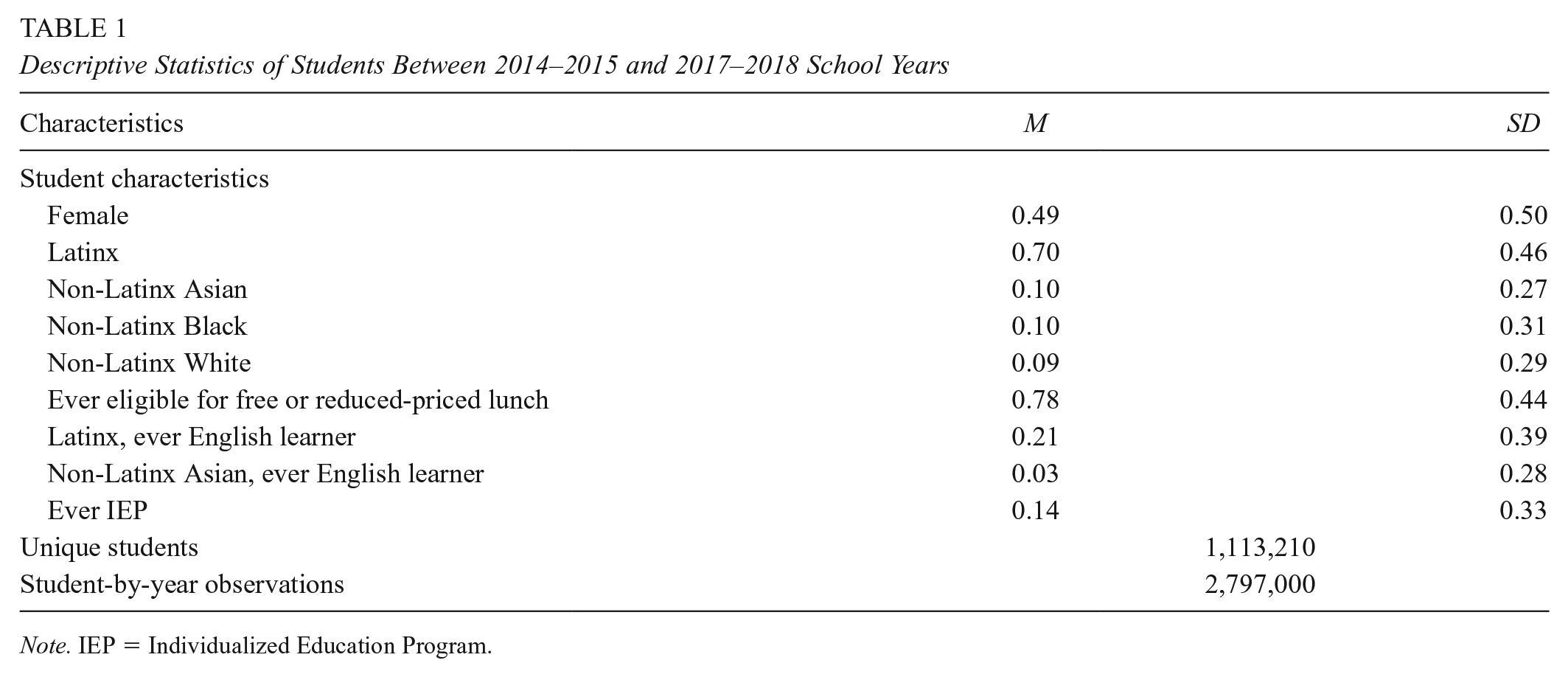
We use data from seven of the eight California CORE districts, 2 which are eight of the largest school districts in California. The eight CORE districts include Los Angeles Unified, Long Beach Unified, Santa Ana Unified, Garden Grove Unified, Fresno Unified, San Francisco Unified, Oakland Unified, and Sacramento City Unified. Together, these eight districts educate over 1 million students in 1,600 schools in areas with some of the largest immigrant-origin student populations. These districts participate in a shared data and accountability system that includes student-level information on demographics, academics, student attendance, school climate and safety measures, school characteristics, and blind identifiers to follow students over time and connect them to each data set. Descriptive statistics of students in our sample are outlined in Table 1.
Descriptive Statistics of Students Between 2014–2015 and 2017–2018 School Years
Note. IEP = Individualized Education Program.
We use administrative and survey data collected from students from the 2014–2015 to the 2017–2018 school year. In constructing our analytic sample, students were dropped from the analysis if they were missing information on the key student characteristics outlined in Table 1, if they were missing information on the school they attended, or if they were missing information on their grade level. This constituted an initial analytic sample of N = 2,797,000 students, or just more than a million unique students. From this sample, the number of students examined varied based on available information on the outcomes observed. For instance, the biggest difference in final sample size was due to the fact that not all schools in the CORE districts administered school climate and safety surveys to all students, so the analyses examining these outcomes have a smaller sample size compared with the samples for achievement and attendance.
Outcomes
To understand the potential consequences of immigration arrests occurring near the CORE districts, we examined three sets of outcomes. The first is student achievement, which includes elementary and secondary students’ achievement in ELA and math. In California, students are assessed in Grades 3 to 8 and Grade 11 using the California Assessment of Student Performance and Progress (CAASPP). Additional information, including properties related to the validity and reliability of the assessment, can be found on the CAASPP website: https://www.caaspp.org. Given the 3-year gap between eighth and 11th grades, we opted to focus our analysis of the impact of immigration arrests on student achievement to the students in Grades 3–8.
The second outcome we examined is student absenteeism. The CORE data set contains information on the number of days students were absent from school in addition to the number of days they were enrolled. Based on the reported number of absences and the number of days enrolled, we constructed a measure for students’ annual absenteeism rate, which we calculated as the number of days a student missed school divided by the number of days a student was enrolled.
The last set of outcomes were derived from students’ responses to the School Culture-Climate (SSC) surveys developed by WestEd for the California Department of Education. SSC surveys were administered to students in Grades 6–12 to assess their perceptions of school culture, climate, and safety. 3 The surveys had four focus areas: teaching and learning, interpersonal relationships, safety, and school–community engagement. More details on the development and psychometric qualities of the SSC surveys can be found on the CORE website: https://coredistricts.org/. Following these guidelines, we condensed survey item responses into the five assessed constructs: one measure of Climate of Support for Academic Learning (Academic Learning; α = .89; My teachers work hard to help me with my schoolwork when I need it), one measure of Sense of Belonging and School Connectedness (Belonging; α = .83; I am happy to be at this school), two measures of Knowledge and Fairness of Discipline, Rules and Norms (Rule Clarity; α = .85; Students know what the rules are; Respectful and Fair; α = .82; Students treat teachers with respect), and one measure of Sense of Safety and Bullying (Bullying; α = .80; During the past 12 months, how many times on school property have you been made fun of because of your looks or the way you talk?).
U.S. Immigration and Customs Enforcement Arrests
Data on the number of immigration arrests occurring in the United States between October 2014 and May 2018 were derived from the TRAC, which is a research and data distribution organization based at Syracuse University. TRAC requested the number of arrests conducted by the U.S. Immigration and Customs Enforcement using Freedom of Information Act requests. The data were reported by month and county where an immigration arrest occurred. Arrests were aggregated from August to June each school year. As data were only available from October 2014 through May 2018, the number of arrests that occurred during the first and last school year are slightly underestimated.
From this continuous variable, the following steps were taken to combine with the CORE data. First, these aggregates were scaled using county-level foreign-born population estimates that were merged into the TRAC data set from the 2013 American Community Survey from the U.S. Census Bureau. We scaled using data from 2013, as the number of immigration arrests affect the current or future years’ estimates of the foreign-born population. This scaling procedure has been used in prior works to account for the correlation between enforcement actions and policies to a county’s total population and foreign-born population (Amuedo-Dorantes et al., 2018). Second, this figure was mapped onto students’ information in the CORE data based on the county where their school was located. This generates the key variable of interest for this study: Arrests that occurred in each county each year scaled by the 2013 foreign-born population.
In Table 2, we show the variation in the frequency of immigration arrests over time and across counties alongside 2013 population estimates for each county served by the CORE districts. While there is clear variation in terms of general increases and decreases in immigration arrests from year to year, immigration arrests appear to slightly uptick in most counties in the 2016–2017 and the 2017–2018 school years.
Population Estimates and Number of Immigration Customs and Enforcement Arrests in Counties Served by California CORE Districts

Note. Population estimates come from the 2013 American Community Survey. Arrest data were aggregated using “Immigration Customs and Enforcement Arrests” from the Transactional Records Access Clearinghouse website: https://trac.syr.edu/phptools/immigration/arrest/.
Additional Covariates
The analysis described below accounts for potential confounders that do not vary over time, which means that all covariates must be time-variant. This significantly limits the number of covariates that can be included, which in turn alleviates concern of having large proportions of data with missing values. Drawing from standard sets of control variables included in the CORE data set, we included time-varying student characteristics, which includes free or reduced-priced lunch eligibility, English learner status, and whether the student was receiving special education services via an Individualized Education Program (IEP). All time-varying covariates along with means and standard deviations are listed in Table 1.
Analysis
To examine how frequencies of immigration arrests relate to student outcomes, we exploit the cross-sectional, longitudinal structure of the data by mapping the varying frequencies of immigration arrests in counties served by schools in the CORE districts in the years when they occurred. We also control for year, school, grade, and student confounding variation by including fixed effects at these levels. This identification strategy exploits the variation observed in educational outcomes and frequency of immigration arrests based on a student’s county where they attend school and the year observed. This modeling approach is outlined as follows:

where Y is the student outcome for student i in school j in year t. The key predictor is A, which represents the number of immigration arrests that occurred in the county of school j in year t scaled by the county’s estimated foreign-born population in 2013. The covariates are represented by D, which is a vector of time-varying student demographic characteristics for student i in year t. To control for the time-invariant year, grade, school, and student unobserved variables,
Following approaches used in prior research on the effects of immigration enforcement (Kirksey, 2020a; Sattin-Bajaj & Kirksey, 2019) as well as other studies exploiting the longitudinal nature of the CORE data (Santibañez & Guarino, 2021), we employed the model above for specific subgroups of students. These subgroups included samples of students who were Latinx, non-Latinx Asian, non-Latinx Black, and non-Latinx White. We also constructed subgroups based on whether students were ever eligible to receive free or reduced-priced lunch, Latinx students who were ever designated English learners, non-Latinx Asian students who were ever designated English learners, and students who ever received special education services via an IEP. Our construction of two samples of English learners was motivated by the fact that Latinx and Asian students make up a majority of English learners in California—over 90%. Additionally, historical trends of authorized and unauthorized immigration patterns for Latinx and Asian populations could mean that these two groups of students might experience differential impacts from immigration enforcement (Capps et al., 2020).
To examine differences by presidential administration, we separate the key immigration arrests variable into two variables: arrests that occurred during the Obama administration—October 2014 to January 2016—and arrests that occurred during the Trump administration—January 2016 to May 2018. Each variable is scaled with the 2013 county estimates of the foreign-born population. By parsing our key predictor in this way, we allow the estimated effect of immigration arrests to vary by administration, while still accounting for year, grade, school, and student confounding variation.
Results
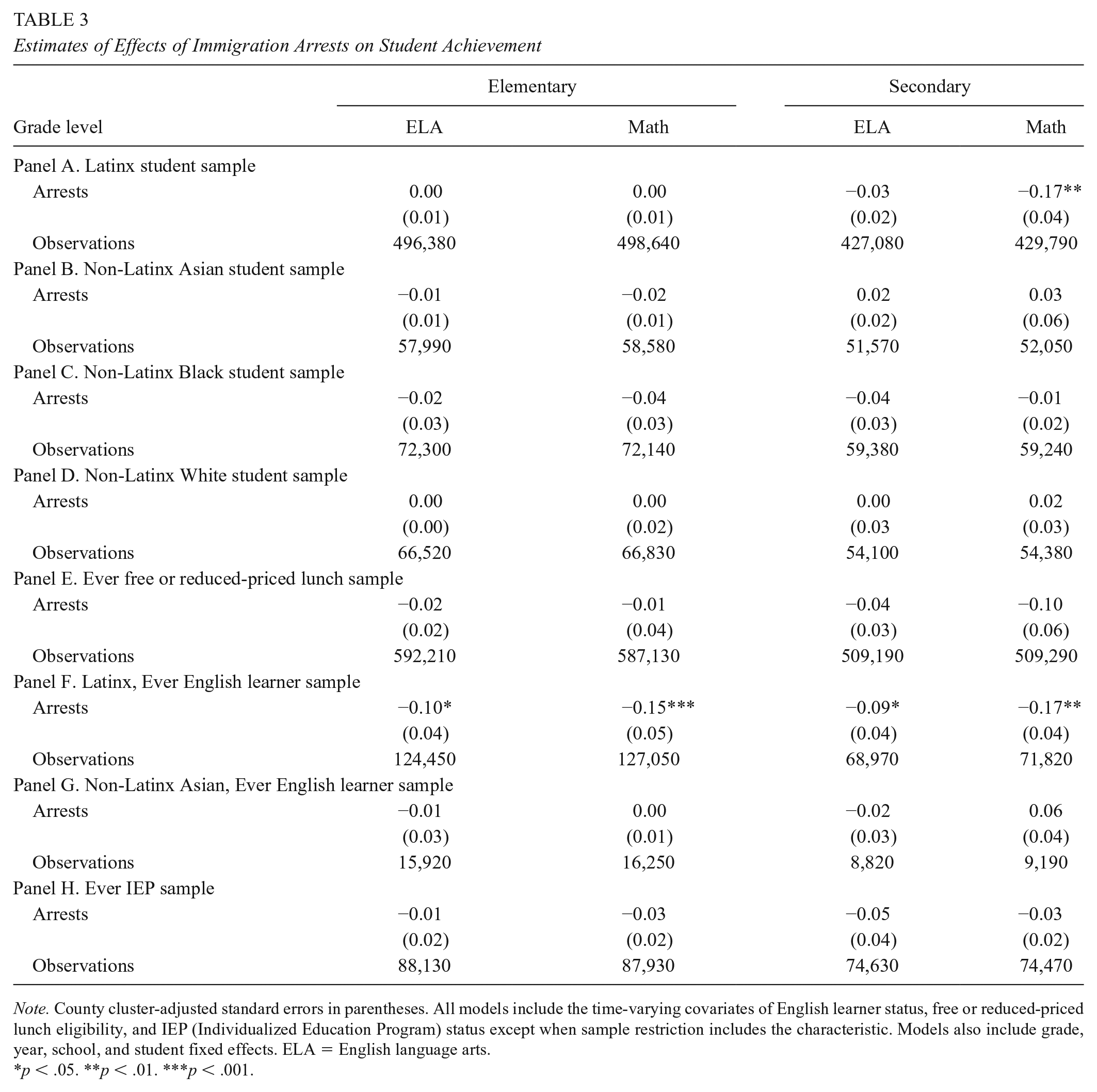
Table 3 presents estimates of the effect of immigration arrests on ELA and math achievement for elementary (third–fifth grades) and secondary (sixth–eighth grades) students. For ease of interpretation, we standardized the measure of immigration arrests to reflect a mean of 0 and a standard deviation of 1. We also transformed ELA and math achievement into z-scores, which means the standardized beta coefficients in Table 2 represent effect sizes similar to Cohen’s d (Cohen, 1992). Each panel represents a different subgroup that we hypothesize may be affected by immigration arrests differently based on prior research illustrating the heterogeneous impacts of immigration enforcement on populations in the United States (Bellows, 2019; Dee & Murphy, 2020; Kirksey et al., 2020). As such, each cell represents a separate regression that includes the time-varying covariates along with grade, year, school, and student fixed effects.
Estimates of Effects of Immigration Arrests on Student Achievement
Note. County cluster-adjusted standard errors in parentheses. All models include the time-varying covariates of English learner status, free or reduced-priced lunch eligibility, and IEP (Individualized Education Program) status except when sample restriction includes the characteristic. Models also include grade, year, school, and student fixed effects. ELA = English language arts.
p < .05. **p < .01. ***p < .001.
Table 3 shows five statistically significant relationships between immigration arrests and student achievement. As seen from Panel A, we show that secondary math achievement declined by 0.17 standard deviations for every one standard deviation increase in immigration arrests. As seen from Panel F, we find that increases in immigration arrests are associated with declines in elementary and secondary ELA and math achievement for Latinx students who were ever English learners. The magnitude of this association ranged from −0.09 to −0.17 standard deviations in achievement measures, with largest declines in math achievement.
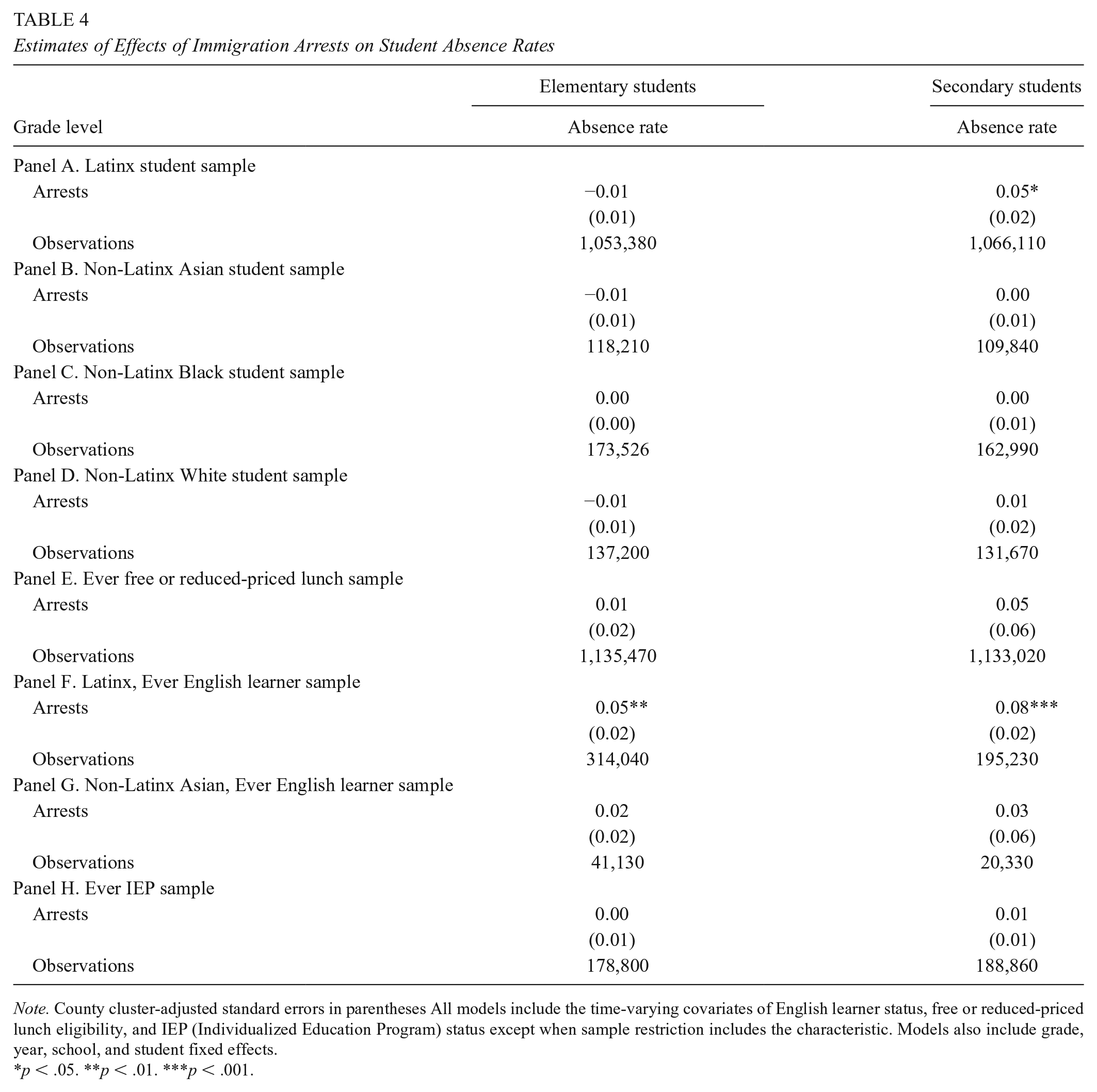
Table 4 presents results from our analysis of student absenteeism rates. Similar to our achievement analyses, we break out our results by elementary (K–fifth grades) and secondary (sixth–12th grades) grade spans for each student subgroup. As before, we standardized our immigration arrest measure prior to employing the regressions. The outcome is the absence rate of students, so coefficients represent marginal shifts in rates of student absenteeism for every one standard deviation increase in immigration arrests in a student’s county. The models include the same covariates and fixed effects detailed above. As seen from Table 3, we find three statistically significant relationships between immigration arrests and student absenteeism rates. Looking at Panel A, a standard deviation increase in county-level immigration arrests corresponded to a 5 percentage point increase in student absenteeism among Latinx students. Similarly, for Latinx students who were ever English learners, we find that a one standard deviation increase in immigration arrests is associated with a 5 percentage point increase absenteeism rates for the elementary sample and an 8 percentage point increase for the secondary sample.
Estimates of Effects of Immigration Arrests on Student Absence Rates
Note. County cluster-adjusted standard errors in parentheses All models include the time-varying covariates of English learner status, free or reduced-priced lunch eligibility, and IEP (Individualized Education Program) status except when sample restriction includes the characteristic. Models also include grade, year, school, and student fixed effects.
p < .05. **p < .01. ***p < .001.
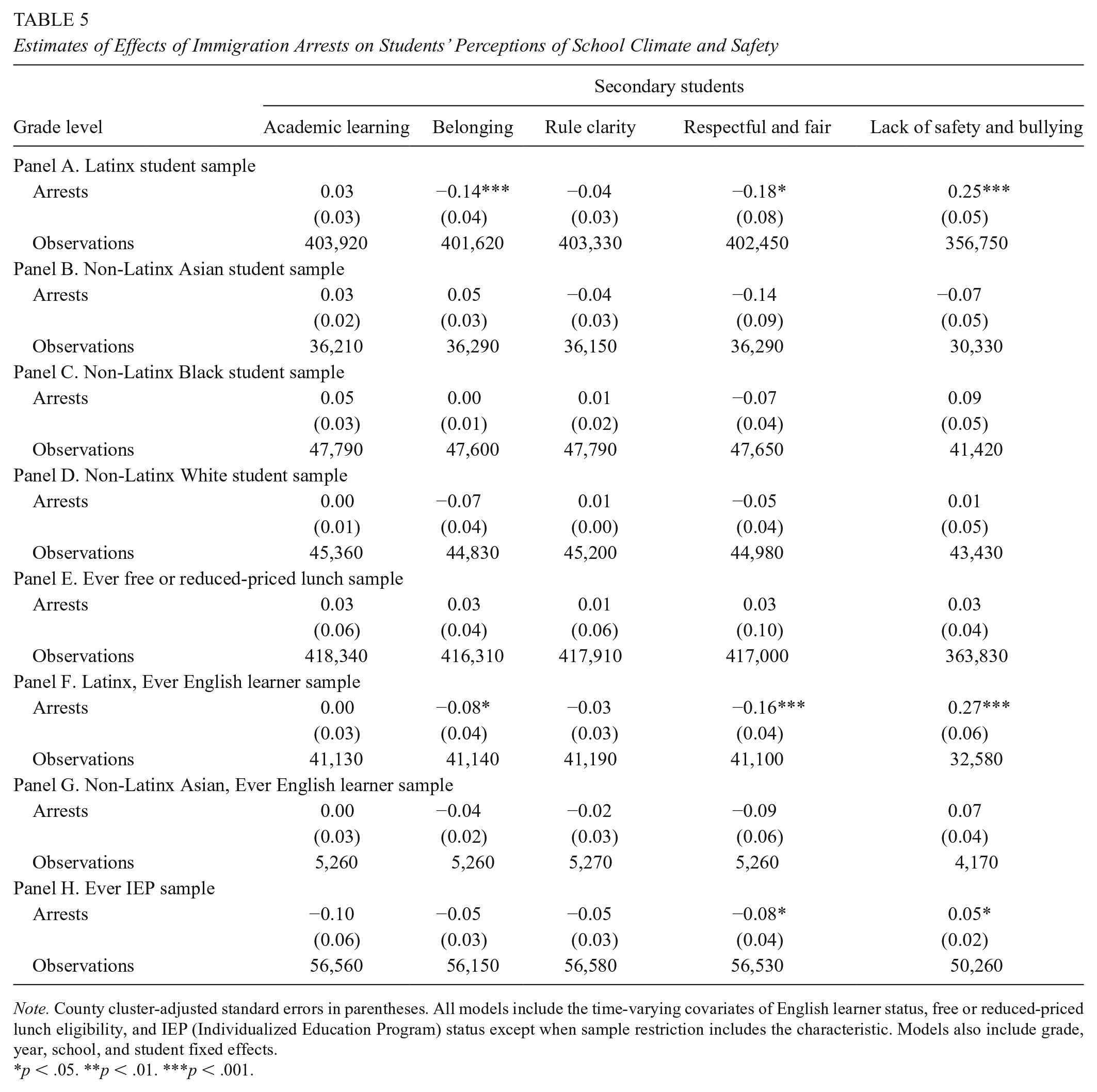
Table 5 presents estimates of the effects of immigration arrests on students’ perceptions of school climate and safety (SCS). Recall the five outcomes are the constructs measured by the surveys administered to students in sixth to 12th grades. Prior to employing the regressions, we standardized these scales, so the standardized beta coefficients listed in Table 5 can also be interpreted as effect sizes or standard deviation shifts in the outcome for every one standard deviation increase in the immigration arrests measure. As shown in Table 5, we find several statistically significant relationships between immigration arrests and students’ perceptions of SCS. For the Latinx student and the Latinx, Ever English learner samples, an increase in immigration arrests associated with declines in students’ perceptions of their sense of belonging and that their school was respectful and fair to students with respect to discipline. Increases in immigration arrests associated with an increase in students’ perceptions that their school had a lack of safety and frequent incidents of bullying. Interestingly, for the sample of students who ever had an IEP, we also show that increases in immigration arrests corresponded to declines in students’ perceptions that their schools were respectful and fair and increases in negative perceptions that their school had a lack of safety and frequent incidents of bullying.
Estimates of Effects of Immigration Arrests on Students’ Perceptions of School Climate and Safety
Note. County cluster-adjusted standard errors in parentheses. All models include the time-varying covariates of English learner status, free or reduced-priced lunch eligibility, and IEP (Individualized Education Program) status except when sample restriction includes the characteristic. Models also include grade, year, school, and student fixed effects.
p < .05. **p < .01. ***p < .001.
Last, Table 6 illustrates differences in the association between immigration arrests and student outcomes with our key predictor separated into arrests that occurred under the Obama and Trump administrations, respectively. We interpret the coefficients as was done in the previous tables. For achievement and the SSC scales, coefficients represent shifts in standard deviation units in the outcome for every one standard deviation increase in immigration arrests in a student’s county, and for attendance, coefficients represent marginal shifts to students’ attendance rates in terms of percentage points for every one standard deviation increase in immigration arrests.
Differences by Presidential Administration

Note. County cluster-adjusted standard errors in parentheses. All models include the time-varying covariates of English learner status, free or reduced-priced lunch eligibility, and IEP (Individualized Education Program) status except when sample restriction includes the characteristic. Models also include grade, year, school, and student fixed effects. ELA = English language arts.
p < .05. **p < .01. ***p < .001.
For brevity, we show results for relationships between immigration arrests and educational outcomes for Latinx students and Latinx students who were ever designated English learners, the most consistently affected populations based on our results from the baseline models. As seen from Table 6, we find that arrests during the Trump administration had a larger impact on student outcomes compared with arrests during the Obama administration. In fact, the association between immigration arrests during the Obama administration and some of the outcomes is not statistically significant. Most notably, the starkest differences in associations between immigration arrests under each administration appeared with the SCS outcomes.
Discussion
In this study, we sought to explore the associations between immigration arrests and student achievement, absenteeism, and perceptions of school climate and culture in seven large school districts in California. Using a unique, longitudinal data set that combined student administrative records with surveys designed to capture students’ perceptions of school climate, we tracked the relationship between immigration enforcement arrests and multiple measures of student well-being in school under two U.S. presidents with divergent approaches to immigration enforcement. We found negative relationships between arrests and Latinx secondary students’ math achievement, absenteeism rates, their reported sense of belonging, views of school as respectful and fair, and perceptions that their school had a lack of safety and frequent bullying. These same relationships emerged for Latinx students were ever designated as an English learner in our sample. Additionally for this subgroup, we also found that immigration arrests associated with declines in elementary ELA and math achievement, secondary ELA achievement, and elementary absence rates.
These relationships were stronger for arrests that occurred when Trump was in office compared with arrests conducted during Obama’s second term. Interestingly for students who ever received an IEP, we also found that immigration arrests associated with more negative perceptions of their school being respectful and fair and greater perceptions of a lack of safety and frequent bullying.
Our results identify a number of important patterns associated with immigration arrests, including evidence of worse outcomes for students when arrests occur under a more vocally xenophobic president who removed deportation protections for noncriminals. First, our findings confirm prior research documenting educational penalties that accompany heightened enforcement activity for Latinx students (Amuedo-Dorantes & Lopez, 2017; Bellows, 2019; Dee & Murphy, 2020; Kirksey et al., 2020). In particular, there is a well-established like between absenteeism and negative short- and long-term outcomes for young people. These include lower academic performance (Morrissey at al., 2014), increased risk of dropping out of school (Allensworth & Easton, 2007; Balfanz & Byrnes, 2013; Kirksey, 2019), greater engagement in risky behavior (Eaton et al., 2008), less pro-social behavior (Gottfried, 2014) along with lower rates of political engagement, and more reported economic hardship (Ansari et al., 2020). The totality of the consequences stemming from immigration arrest-driven school absences remains to be seen, but students tend to suffer when they are not consistently attending school, and immigration enforcement activity and threats have interrupted many students’ regular attendance patterns and ability to learn effectively even when in school.
Next, our findings show potential for larger negative effects on students’ math scores. These results correspond to some earlier work documenting a similar pattern of depressed math scores associated with rises in deportations among national samples of students, but no meaningful impact on their ELA scores (Kirksey, 2021; Kirksey et al., 2020). While other studies have found some evidence of a deportation penalty on students’ ELA performance (Bellows, 2019), our significant findings for math align with research that shows that math achievement tends to be most affected by disruptions to the learning context (Monk & Ibrahim, 1984). Because math instruction tends to be sequential, requiring students to build on concepts and theories taught in prior weeks, missing multiple days of school, or being unable to grasp or retain complex information—even for a short period of time—may produce greater learning gaps.
Additionally, the unambiguous differences in findings for the English learner subgroups of Latinx and Asian students highlight the clear potential for immigration enforcement, and its associated political rhetoric, to disproportionately affect Latinx communities across the United States, regardless of their immigration status (Asad, 2020; Menjívar et al., 2018). As the United States continues to combat the overt racialization of immigration status for Latinx communities (Ngai, 2004), our study draws attention to the ways in which Latinx student populations may be affected in times of heightened immigration enforcement.
Our results also underscore the powerful implications that immigration enforcement may have for diverse aspects of a school’s culture and climate, ranging from students’ perceptions of fairness and respect, to experiences of bullying, sense of safety, and belonging. In this way, our findings demonstrate how immigration enforcement can function as an act of community violence that penetrates deeply into the educational lives of immigrant-origin youth and their peers (Barajas-Gonzalez et al., 2018). The school-wide environmental effects produced by immigration arrests may not be contained to a small subset of the student body whose family members are directly targeted by ICE. Rather, as our results indicate, changes in the feeling and functioning of a school—at least according to the students attending it—may be perceived by unanticipated portions of the student population, showing what can be gained by using a broader analytic lens to measure the consequences of immigration enforcement both empirically and theoretically through the framework of a pyramid of enforcement effects (Dreby, 2012). In fact, we hypothesize that the heightened sense of fear and anxiety in schools stemming from immigration enforcement actions (or threats) explain, at least partly, the unexpectedly large impacts for students with disabilities, who may be particularly sensitive to such changes. These results are also consistent with prior studies of how students with disabilities respond to disasters and terrorism; this work has shown the large, negative outcomes associated with such disruptions for these student populations (Stough et al., 2017)
This study highlights the need for new policies and procedures, as well as greater financial investment, to prepare school personnel to respond to the fallout from immigration-enforcement related events and to reduce their impact on students and school communities. To start, required professional development and trainings for school leaders, teachers, school counselors, and support staff on trauma-informed care could equip these frontline workers with basic skills to engage and support students and families in crisis (Anderson et al., 2015; Carello & Butler, 2015). Districts could also develop policies that allow for more flexible modes of schooling—even short-term—to limit lost learning time if students are afraid to go to school in person due to increased ICE activity. Partnerships between school districts and community-based organizations with strong ties to local immigrant communities could be used to improve home–school connections and facilitate better direct outreach, including those efforts focused on bringing students back to school. Finally, teacher education programs could be encouraged (or mandated) to include a focus on immigrant students’ rights, immigration policies, the impacts of immigration enforcement, and strategies in order to meet students’ needs in the face of migration-related trauma in their coursework and training so that new teachers are prepared for this increasingly salient part of students’ lived realities (Kirksey, 2020a; S. Rodriguez et al., 2020; S. Rodriguez & McCorkle, 2020).
The findings we present also raise multiple questions and directions for further research. To start, the field could benefit from deeper qualitative exploration of immigrant-origin students’ educational experiences in schools with different student- and teacher-demographic compositions and in communities that have shown more or less support for immigrants’ rights. In addition, there is a dearth of data collected from undocumented students and families about the factors that make schools feel more (or less) safe in times of crisis and the specific resources and forms of assistance that students want or need to be able to comfortably attend school. Case studies that identify school-based policies and practices that best support students (and school personnel) faced with threatening enforcement policies and the conditions that help them succeed academically would fill a large gap in the literature. Finally, our findings showing negative associations between increased arrests and students with disabilities’ views on school fairness and safety warrant further investigation.
Limitations and Future Research
While the current study offers several unique contributions to the extant literature on the potential spillover effects of immigration enforcement on students in schools, we acknowledge several limitations. First, as with nearly all existing quantitative research measuring the impacts of immigration enforcement, we cannot claim to have identified causal estimates of the effect of immigration arrests on students in schools. Our estimates should be interpreted as providing evidence of changes in achievement, student absenteeism, and perceptions of school climate and safety occurring alongside changes in immigration arrests, rather than changes caused directly by arrests. There is a need for continued quantitative research that tests various measures of immigration enforcement using different identification strategies in multiple contexts.
A second limitation of this study relates to the varying sample sizes resulting from the way in which data were collected by the CORE districts. For example, not all schools distributed the SCS surveys to all of their students, and some districts did not administer these surveys in all years. This changed our analytic sample (see Table 5) and introduces additional selection bias by not being able to account for why some students in schools were surveyed and others were not. We chose not to limit our analytic sample to students with achievement, absenteeism, and school climate and safety data, as this would reduce the sample size to just 1% to 2% of students in the CORE districts. Consequently, we urge readers to be aware of the limited generalizability of our results and potential implications for additional selection bias in the analyses of school climate and safety measures.
Finally, we only included SCS measures for students in secondary grades in our sample, as the elementary sample was even more limited. Future research should continue to expand our knowledge base of how immigration enforcement may affect students in these younger grades beyond achievement and absenteeism. Social-emotional development is one particularly important area to explore that demands robust data collection using multiple methods.
Footnotes

Notes
Authors
J. JACOB KIRKSEY is an assistant professor in the College of Education at Texas Tech University. His research is broadly focused on issues at the nexus of education and other areas of public policy, which include student absenteeism and truancy, inclusion and special education, the ripple effects of immigration enforcement, and the teacher workforce.
CAROLYN SATTIN-BAJAJ is an associate professor in the Gevirtz Graduate School of Education at the University of California, Santa Barbara. Her research focuses on issues of educational access and equity for immigrant-origin youth and other historically underserved student populations.