




Abstract
Recent scholarship highlights the many benefits of diversity among principals, including improved teacher retention and student outcomes. We use survival analysis to assess the probability and time to promotion for 4,689 assistant principals in Texas from 2001 to 2017. We find that race and gender are associated with the probability of promotion to school leadership. Holding education, experience, school level, and urbanicity constant, Black principals are least likely to be promoted and wait longer for promotion when compared to White assistant principals. Additionally, findings suggest that even though women have over a year more experience on average before being promoted to assistant principal, they are less likely to be promoted to high school principal, and when they are, it is after a longer assistant principalship.
Keywords
Nationally, schools of education and school districts have begun placing greater emphasis on increasing the diversity of educators and leaders (Aguirre & Martinez, 2002; Karanxha et al., 2014). While the teacher workforce has diversified substantially in the past three decades, White women still comprise most of that corps (National Center for Education Statistics, 1999). Conversely, White men tend to hold a greater number of school leadership positions than women relative to the proportion of White men in P–12 instructional positions (U.S. Bureau of Labor Statistics, n.d.). Therefore, the national demography of principals does not yet reflect the recent emphasis on diversity (National Center for Education Statistics, 2016). In the 1987–1988 school year, just 13% of all principals were non-White and that proportion increased to only 20% in the 2011–2012 school year (National Center for Education Statistics, 2016). The lack of diversity in school leadership precludes some students from maximizing educational opportunity (Bartanen & Grissom, 2019; Grissom, Rodriguez et al., 2017). School diversity demands a corps of culturally responsive school leaders equipped to dismantle the inequities faced by students of color (Khalifa et al., 2016) and researchers can identify “no compelling reason that race and gender representation could not or should not be comparable through all stations of educators” (Davis et al., 2017). However, there has been little movement in the racial diversity of leadership nationally.
However, the percentage of female principals increased from 25% to 52%—more than doubling over the past 30 years (U.S. Department of Education, Office of Planning, Evaluation and Policy Development, Policy and Program Studies Service, 2016). Research suggests that, on average, women and people of color teach for longer than their male or White counterparts before becoming principals. The amount of time spent in the classroom before women and people of color become principals has implications for the supply of principals. Researchers and professional organizations alike have sounded alarms regarding the impending national shortage of principals (see, e.g., National Association of Secondary School Principals, 2017; Clifford & Chiang, 2016; Doyle & Locke, 2014; Mendels, 2016; Whitaker, 2003) while also identifying principals as pivotal to school improvement (Bryk et al., 2010). Schools need effective leaders to meet the demands of a growing student population, but questions remain as to whether or not qualified individuals accede to the principalship equitably. In sum, new principal demographics are more rapidly changing in terms of gender than race; however, leadership still fails to reflect either the teaching corps or student body.
Assistant principals and their patterns of promotion are also associated with the supply of principals because they are the primary pool from which future school leaders are drawn (Bryant et al., 2017). Studies based in North Carolina offer some insight into the ways in which educators move through a pipeline to school leadership. Bastian and Henry (2015) examined a sample of 981 novice principals (73% White, 60% women). The vast majority (94%) were previously assistant principals in North Carolina public schools. Importantly, most principals were found to be “homegrown.” That is, 11% of first-time principals assumed a leadership position in the same school where they taught and 75% of individuals in the sample were promoted in the same district where they taught. Most were also promoted to principal at the same school level (e.g., elementary, middle, or secondary) in which they taught. First-time principals are likely to assume leadership in lower performing schools and, specifically, schools in which fewer students pass the state’s standardized assessment, where more students live in poverty, and where fewer teachers are highly qualified (Bastian & Henry, 2015).
Despite the preponderance of homegrown principals, school leadership is not demographically representative of the teacher corps, in terms of either race or gender. The teacher corps, in turn, is not representative of either the nation’s population or student body. The 2012 administration of the Schools and Staffing Survey indicates that most principals in the United States are White (80%) and just over half (52%) are women (Goldring et al., 2014). Teachers are nearly as racially homogenous as principals (80.1% of teachers are White), and more than three quarters of all teachers (77%) are women (Schools and Staffing Survey, 2012). As the nation diversifies, researchers continue to study implications of the lack of diversity among teachers and school leaders.
In this article, we examine the likelihood that women and people of color accede to principalships at rates similar to their White, male peers when they possess equivalent, minimal qualifications for the principalship as required by Texas state law. Earlier studies (Davis et al., 2017; Fuller et al., 2019) examine equity implications of the educator pathway, either by investigating the time it takes a teacher to achieve a principalship or by predicting the overall probability of promotion from assistant principal to principal. This study adds to an emerging literature base both by examining the time to promotion from assistant principal to principal and by accounting for individual qualifications and contextual variables. We investigate, specifically, not just the likelihood of a leadership transition but also whether there are systematic delays for equivalently qualified women and people of color once they have entered the leadership pipeline. Systematic delays in principal promotions have potential implications for individuals’ future opportunities in higher levels of leadership, where research (Wagstaff & Fusarelli, 1995) highlights the lack of diversity among those individuals sufficiently qualified for advancement. The findings extend previous research by focusing on time to promotion once an individual has self-selected into the leadership track and by including school-level (elementary or secondary) analyses that identify the ways in which women are promoted within education careers.
The inquiries driving this article are as follows: Who is promoted from assistant principal to principal? How long do promotions tend to take, and in what contexts do promotions occur? Holding education, experience, and school characteristics constant, we find that there are differential effects for race and gender both in the overall probability of promotion and in the average time to promotion. There are two main findings: Black assistant principals are less likely to receive a promotion to principal, and if that promotion takes place, they are likely to wait longer than their White counterparts. Additionally, while women comprise half of high school assistant principals, they are less likely than men to be promoted to principalships at that level.
Review of the Literature
In order to anchor this study in extant literature, we review research on gender and race and their influences on aspiring leaders’ pathways, including information about the experiences of candidates from groups that are historically underrepresented in education leadership. We then turn to the equity implications of delayed promotions and the negative outcomes schools experience when they lack diverse principals.
In Texas, the site of the current study, principal patterns reflect slightly more progressive patterns of school leader diversity than the nation as a whole: About 65% of principals are women and about 61% are White (Texas Education Agency, 2019a). In Texas, as in the rest of the country, White people are overrepresented in principalships: In the 1987–1988 school year, only 13% of all principals nationwide were non-White. In the 2011–2012 school year, that proportion of non-White principals increased to only 20% (National Center for Education Statistics, 2016). In Texas, nearly 39% of school leaders in 2018 were people of color—up from about 36.5% in 2014 (Texas Education Agency, 2019b). This suggests that the rate at which Texas schools hire principals of color is increasing faster than the national average, although a White/non-White gap still exists (Texas Education Agency, 2019b). Thus, the context of this study likely illustrates a lower bound for gender and race inequity, with greater effects for inequity likely more pronounced in other states.
Race and gender, then, remain salient to the study of principal selection and promotion. Research in human resources indicates that a manager’s race influences hiring. That is, non-Black managers hire more White people and fewer Black people than do Black managers (Giuliano et al., 2009; Pager et al., 2009). Similar patterns hold in schools: Black principals are more likely to hire and retain Black teachers (Bartanen & Grissom, 2019). Because minoritized groups remain underrepresented in the teacher corps, they are in turn underrepresented in school leadership when compared to their White counterparts. This underrepresentation is likely to ripple throughout schools and districts because principals and district leaders tend to identify for promotion other educators of their same race. So the disproportionate promotion of White educators suggests that fewer minority educators are likely to be identified as aspiring leaders (Gardiner et al., 2000; Williams, 2012).
Race and the Principal Pipeline
Black people comprise about one fifth (22%) of teachers nationally while they make up only about 14% of the total workforce (U.S. Equal Employment Opportunity Commission, 2010). People of color are more likely than their White peers to pursue school leadership positions relative to their proportion in the teacher workforce (Williams & Loeb, 2012). However, people of color continue to experience structural obstacles en route to the principalship, as only about 13% of principals are non-White. Extant studies have not conclusively identified the precise mechanisms that promote or obstruct the entrance of people of color into the principalship. But prior research indicates an array of possibilities: a lack of role models and mentors of color, compressed pay, challenging working conditions, and poor retention rates among teachers of color (Burkhauser et al., 2012; Smith & Lemasters, 2010).
The ways in which principals influence student learning tend to be directed through their work recruiting, training, and sustaining strong teachers and simultaneously directing the contexts in which teachers are empowered to teach (Grissom & Loeb, 2011). Since leaders of color are most likely to work in high-poverty urban schools, when they persist in those settings, they are able to exert positive influences on students of color in terms of academic and affective outcomes (Fairchild et al., 2012). Teachers of color are more likely to stay in schools where they work under a principal of the same race, which may result in less turnover and fewer resources allocated to replacing faculty (Grissom & Keiser, 2011; Miller, 2013). Furthermore, instructional management is likely to be strengthened by principals of color who are uniquely positioned to improve teacher retention, especially in hard-to-staff schools. Minoritized teachers, in addition, are most likely to receive encouragement to pursue leadership when they work in urban schools under principals of color (Myung et al., 2011), thereby increasing the diversity of school leadership.
Some studies have explored outcomes of racial matches between principals and students. In a nationally representative study of elementary schools, Grissom, Rodriguez et al. (2017) found that schools with more Black teachers or a Black principal also had greater numbers of Black students in gifted programs. They also found a similar result for Hispanic 1 students, who are likely to be better represented in gifted programs when they are taught by teachers of color. Additionally, Meier (1993) found that where Latino students were in schools with Latino principals, students were less likely to be assigned to special education classes or to experience school discipline and more likely to be assigned to gifted programs than when they were with White principals. These studies indicate that there are clear benefits to students and teachers when there is diversity in school leadership.
Gender and the Principal Pipeline
Characteristics typical of women’s leadership are empirically associated with school improvement, including collaboration, relationship-building, and effective mentoring of emerging educators (Eagly et al., 1992; Urick & Bowers, 2014). While all of these activities are indirectly but positively associated with student achievement (Gipson et al., 2017; Urick & Bowers, 2014), women continue to experience substantial barriers to school leadership positions. Moreover, claims that women do not aspire to leadership at the same rates as men are disproven by the rate at which women obtain principal certification or licensure (DeAngelis & O’Connor, 2012; Fuller et al., 2018). Research is clear: Lower aspirations do not explain the reduced representation of women in school leadership. These studies conclude that women not only aspire to school leadership positions but also prepare for school leadership through the most typical means of promotion: education and instructional experience.
Men’s career trajectories towards the highest levels of school leadership are marked by a relatively linear motion through successive ranks of leadership positions. Eighty percent of all men in Kim and Brunner’s (2009) study had secondary teaching positions and 63% held athletic coaching responsibilities. Women’s careers, on the other hand, tend to represent a different pathway, which Kim and Brunner termed in or out and which comprise a more horizontal than vertical path (p. 76). The authors went on to show that most men moved into assistant secondary principalships or elementary principalships before moving to superintendencies rather than to central office administrative positions as was typical of women. In fact, the pathways most often tread by women include elementary principalships and elementary teaching positions, which have been found to limit rather than expand access to future administrative jobs (Björk, 2000; Brunner & Peyton-Caire, 2000; Glass et al., 2001). Most often, women who work in elementary schools for any amount of time conclude their careers in central office administration rather than in high schools or in district administration.
Garn and Brown (2008) characterize the elementary principalship as “invisible” so its most probable occupants—women—carry the additional burden of making themselves seen by their school and stakeholder communities (p. 66). The authors assert that women pay an additional professional cost to make themselves visible and to ensure for themselves continued upward mobility. Taken together, these findings demonstrate that men’s career advancement is accelerated by 5 or 6 years relative to women. Given the qualitative nature of these inquiries, it is difficult to identify a generalizable theory as to why men’s and women’s career paths differ. However, the position of the secondary principal was identified as a particular access point to superintendencies for men but not for women (Grogan, 1996), who tended to enter a superintendency by way of a central office director or coordinator position (taking into account that only 14.4% of all superintendents are women; Glass et al., 2001). Because women’s pathways are less vertical and visible, opportunities for selection and guidance—essential components of career advancement for principal candidates from underrepresented groups—are harder to find (Eagly & Carli, 2007; Peters, 2010).
Research Questions
Because White men tend to hold more principal positions than women relative to the number of male teachers, the pathway often characterized as typical is typical only for White men (Peters, 2010). A number of solutions have been posited in order to make access to principalships more equitable, but careful examination suggests that even the variant pathways uphold exclusionary practices that will not equalize outcomes for women and people of color (Kim & Brunner, 2009). Leadership selection matters because principals exert immense influence on schools and are referred to as key “drivers” of school improvement (Bryk et al., 2010, p. 62). Often, however, veteran leaders are more likely to use mentoring to replicate themselves rather than to coach diverse candidates (Normore & Jean-Marie, 2008).
A review of the literature summarizes the many benefits of diversity among principals, including their ability to effect significant change for school systems, teachers, and students. But the question remains: How likely are women and people of color to be selected for principalships in which they can engineer change, when they are as qualified as their White, male peers? We seek to inform the literature by conducting a study of similarly qualified candidates with respect to education level and years of experience in order to examine systematic differences in principal promotion based on race and gender.
Our research questions are threefold:
Data and Descriptive Analysis
In order to investigate questions of equity in patterns of promotion, we compiled a unique administrative data set of 4,689 assistant principals based in Texas. Using this data set, we tracked four cohorts of approximately 1,100 assistant principals starting in 2001 to 2004 over the course of 10 years. These data include every new assistant principal in Texas who acceded to that role with a master’s degree from 2001 to 2004. Our research questions focus on the sample of assistant principals who met the Texas requirement of a master’s degree and a principal’s license to minimally qualify for standard promotion to principalship. By selecting only those with master’s degrees, and excluding those with doctoral degrees, all candidates possess equivalent minimal educational credentials to qualify them for promotion. The study is limited to traditional public schools, as there were not enough charter school assistant principals with master’s degrees to warrant inclusion in the analysis. We follow each of the four cohorts through 2017, the last year in which data were available at the time of analysis, in order to determine how long it took each candidate to make principal (provided promotion occurred by 2017).
Over the 16 years of the study, state data were collected in several ways, and at times, the Texas Education Agency renamed the categories. We combined all versions of naming to a new variable Race that contains four categories: White, Black, Hispanic/Latino, and Other. For example, we collapsed “African American” and “Black/African American” into the single category “Black.” We also collapsed “American Indian,” “Native American,” “Native Hawaiian/Other Pacific Islander,” “Asian,” and “Two or more races” into the “Other” category.
We used state classifications for urbanicity, which we collapsed from nine original state designations to four. We combined four classifications of “suburban” into one that encompasses all districts adjacent to a major urban district and those located in a county with a population of at least 100,000. Similarly, “nonmetropolitan” represents the combination of all locales not directly adjacent to a major metroplex and less than 99,999 people. We also employed the state classifications indicating a charter school. Finally, school level (e.g., elementary, middle, and high school) was assigned using the code from the Common Core of Data from the National Center for Education Statistics.
Table 1 describes the sample of assistant principals who acceded to school leadership with a master’s degree, meaning they were qualified at any time thereafter to assume the principalship in Texas.
Characteristics of Assistant Principals With Master’s Degree

There are four total cohorts of assistant principals with each new cohort comprising about 1,100 assistant principals. The first cohort attained assistant principals in 2001 and the last in 2004. The cohorts are relatively evenly distributed, with approximately 25% of the total sample starting in that role in each of the 4 years (the fourth cohort is slightly smaller with 900 new assistant principals). Of the assistant principals in the sample, 66.7% are female and 33.3% are male. For comparison, new teacher cohorts starting at the same time in Texas were 75% female (Guthery & Bailes, 2019).
Assistant principals in the sample who are White, Hispanic, and of other races were approximately equally divided between promotion and nonpromotion to principal. However, almost twice as many Black assistant principals were not promoted (448) as were promoted (242). Interestingly, the years of experience prior to becoming an assistant principal were consistent across White, Black, and Hispanic individuals but people of other races had less experience on average prior to becoming assistant principals (Table 2). White assistant principals comprise the majority of the school leadership pipeline. This is evidenced by the fact that White assistant principals made up nearly two thirds of the sample that was promoted to principal and half of the sample who remained unpromoted.
Mean Years of Prior Experience in First Year as Assistant Principal

p < .05. **p < .01. ***p < .001.
Based on the descriptive statistics, assistant principals starting in an elementary school were promoted to principal most frequently. Assistant principals placed in high schools acceded to the principalship the least frequently. Notably, men attain the assistant principalship with statistically significantly less experience than women: that is, they enter the high school assistant principalship with approximately 15 fewer months (1.25 years) of experience on average. In elementary and middle schools, that gap is about 20 fewer months (1.62 years) of experience on average for men than for women. Table 2 illustrates the gender gap in experience at time of promotion to assistant principal.
Methodology
Given that we conceptualized promotion as a onetime event and measured time to promotion in equally spaced intervals of years, we used survival analysis to answer our research questions. We employed two forms of survival analysis, the Kaplan-Meier method and the Cox hazard method. The Cox model is a mulitvariate form of analysis that estimates a fixed hazard ratio equally over all points in time (Allison, 2014). Similar event history analyses (e.g., hazard models; Davis et al., 2017) have been employed to examine the pipeline from teacher to principal, but this method has not been used to examine the transition from assistant principal to principal. Our interest, then, in the varying lengths of time to promotion for assistant principals based on observable characteristics like race and gender necessitated the use of survival analysis. Using typical notation found in Singer and Willet (2003), this model estimates a conditional probability that an assistant principal will be promoted in any one year, given that they were not already promoted.
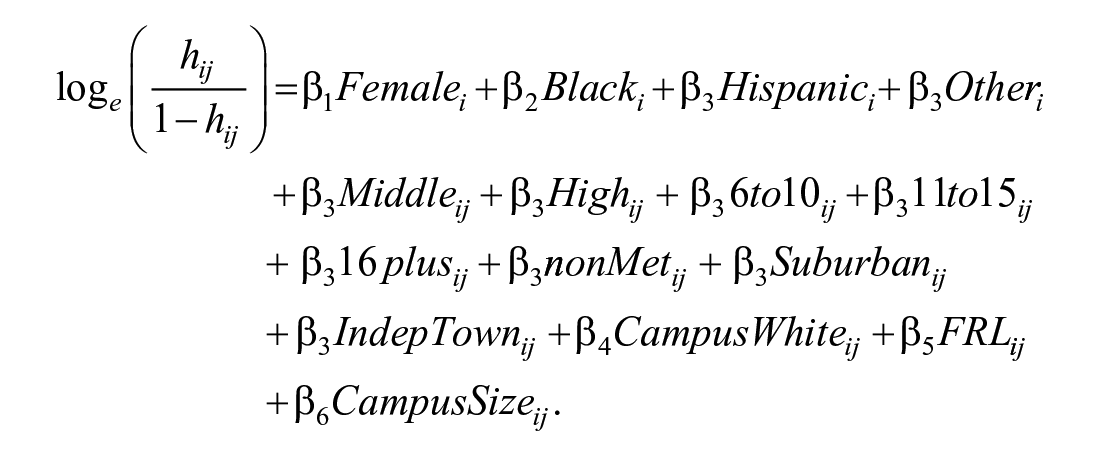
Model 1
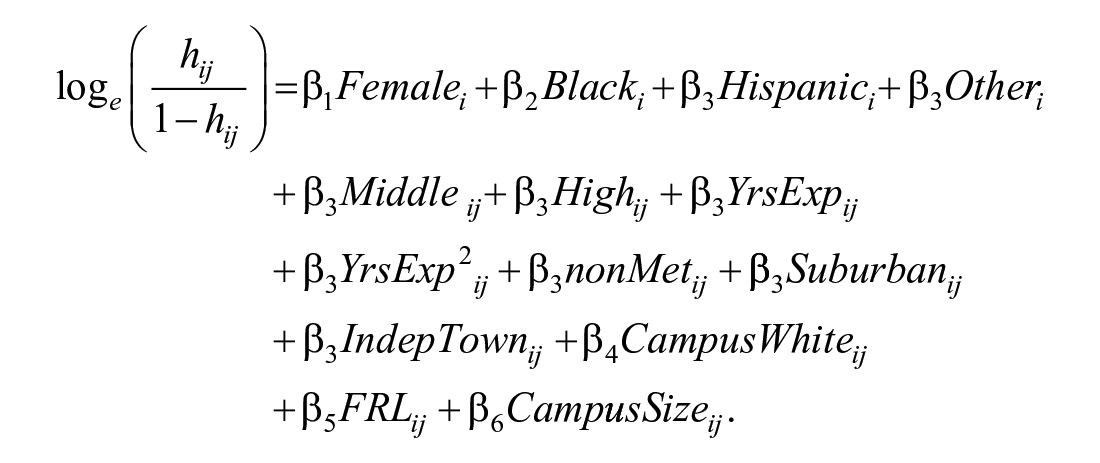
Model 2
Model 3
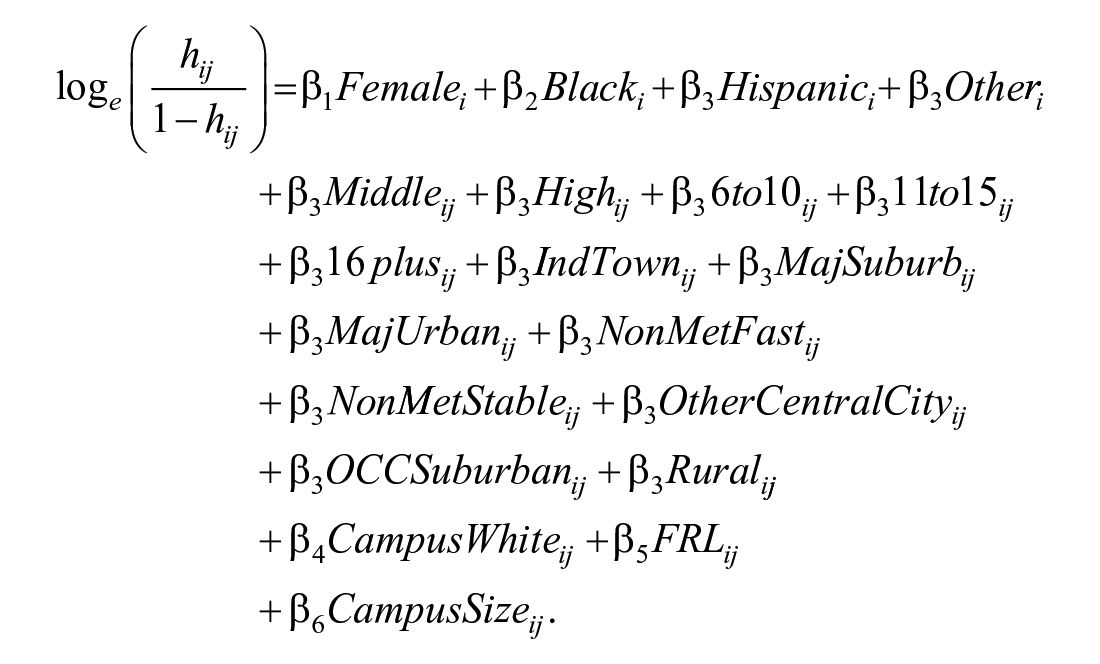
Models 1, 2, and 3 represent the risk in any one time period of promotion for individual i, in the last time period observed j. The three equations include many of the same continuous and dummy coded variables; however, the models differ slightly. Models 1 and 3 measure experience in bands whereas Model 2 measures experience continuously in years and in years square. We included several demographic controls for school, including the proportion of White students in the assistant principal’s first campus, the proportion of students who qualify for free or reduced-price lunches, and the total number of students. Finally, we explored the significance of a school’s locale in two different ways. Models 1 and 2 include the combined urbanicity variables we created as described above. However, Model 3 includes the original state designations as a sensitivity check on the condensed categories.
One benefit to survival analysis is that the method creates a hazard ratio based on the time period observed without biasing the findings with right-censored data. Right-censored data is the term given to observations where the event could still happen but the outcome is unknown because of the termination of the data. Because our data are not historical, there are currently assistant principals who neither left the role nor received a promotion when our study ended in 2017. So, these individuals have what is considered right-censored data. The Cox method handles that bias by using partial likelihood estimation. This method capitalizes on the benefits of maximum likelihood by producing unbiased and normally distributed estimates in large samples. However, partial likelihood estimation is based on the number of events observed and maximum likelihood is based on the number of individuals observed (Allison, 2014). The Cox method allowed us to estimate how long promotion would take without certainty as to whether or not the assistant principals in the sample were ever promoted. That is, we maximized the data available by including cases that could have biased estimates in logistic regression due to right censorship.
We also tested whether or not there are differential waiting times for assistant principals which are attributable to race and gender. By using a Kaplan-Meier model, we could estimate risk in each time period. This method includes all assistant principals in Time Period 1 and then excludes from the set count assistant principals who have left and those who have been promoted each year. This method is best suited to univariate analysis and, unlike the Cox model, allows the risk to vary over time (Allison, 2014). Using these two methods, we estimate the extent to which observable characteristics influence the time to and probability of promotion and if there are systematic differences in wait times based on gender and race.
Results
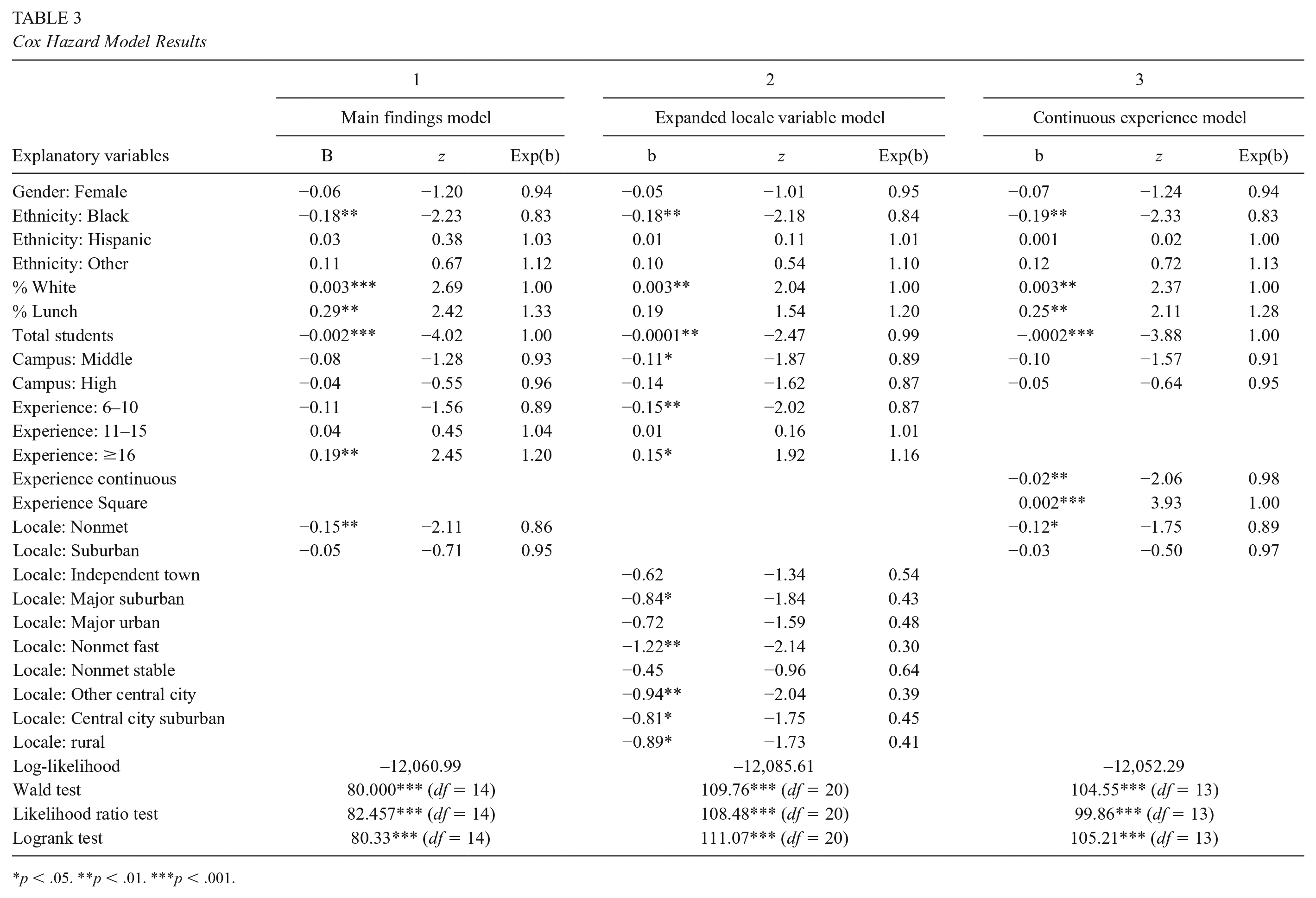
When using the Cox model to estimate the possibility of promotion for individuals in each period of time equally, we find that assistant principals in low-socioeconomic urban schools are more likely to be promoted, while those in wealthier, nonmetropolitan schools are less likely to be promoted to the position of principal (see Table 3). Additionally, we find that Black assistant principals are 18% less likely to be promoted across all time periods relative to White candidates holding education, gender, experience, urbanicity, and school-level constant. Interestingly, the amount of time between promotion from assistant principal to principal for a Hispanic candidate did not differ statistically significantly from White candidates. We suspect that this finding may be contextually specific to Texas (and possibly the southwest) where 52.6% of all students enrolled in Texas public schools are Hispanic (Texas Education Agency, 2019b). The results of the Cox model indicate that gender is not a significant predictor of time to promotion to the principalship controlling for multiple variables and assuming risk is equal over all time periods.
Cox Hazard Model Results
p < .05. **p < .01. ***p < .001.
Models 2 and 3 test assumptions made in the first analysis. In Model 2, we included the original nine state designations for locale. In this model, we found that a higher proportion of free lunch eligibility (a proxy for contextual poverty) was no longer statistically significant when compared to Model 1’s four locales. However, this model affirmed the main findings of Black assistant principals being 18% less likely in every time period to be promoted when compared to White assistant principals. Model 3 provided a sensitivity check on our categorizations of experience. It conceptualized prior years of experience as counted in the first year of the assistant principalship as a continuous variable. The number of years of experience and the square of years of experience replaced the four categorical levels of experience. The main findings on Black assistant principals, including the significance and effect size, were consistent with the findings in Model 1. Finally, we tested the overall model significance and report results for each model in Table 3.
However, when we analyzed the Cox model for possible violations of the assumption that the hazard rate is equal over every time period, race did vary by time. We analyzed the time to promotion with varying risk across multiple time periods using the Kaplan-Meier model. The majority of principal promotions happen in the first 6 years of an assistant principalship. Black assistant principals are 4% to 5% less likely in the first 4 years of an assistant principalship to make principal, but by Years 5 and 6 the gap is widest. They are 9% less likely to be promoted in Year 5. The average time for a Black candidate to make principal is 5.27 years, while White assistant principals wait an average of 4.67 years before promotion for a 0.6-year gap attributable to race (see Figure 1). Notably, the shortest wait is for assistant principals in the Other race category and they wait an average of 4.39 years (see Appendix A).
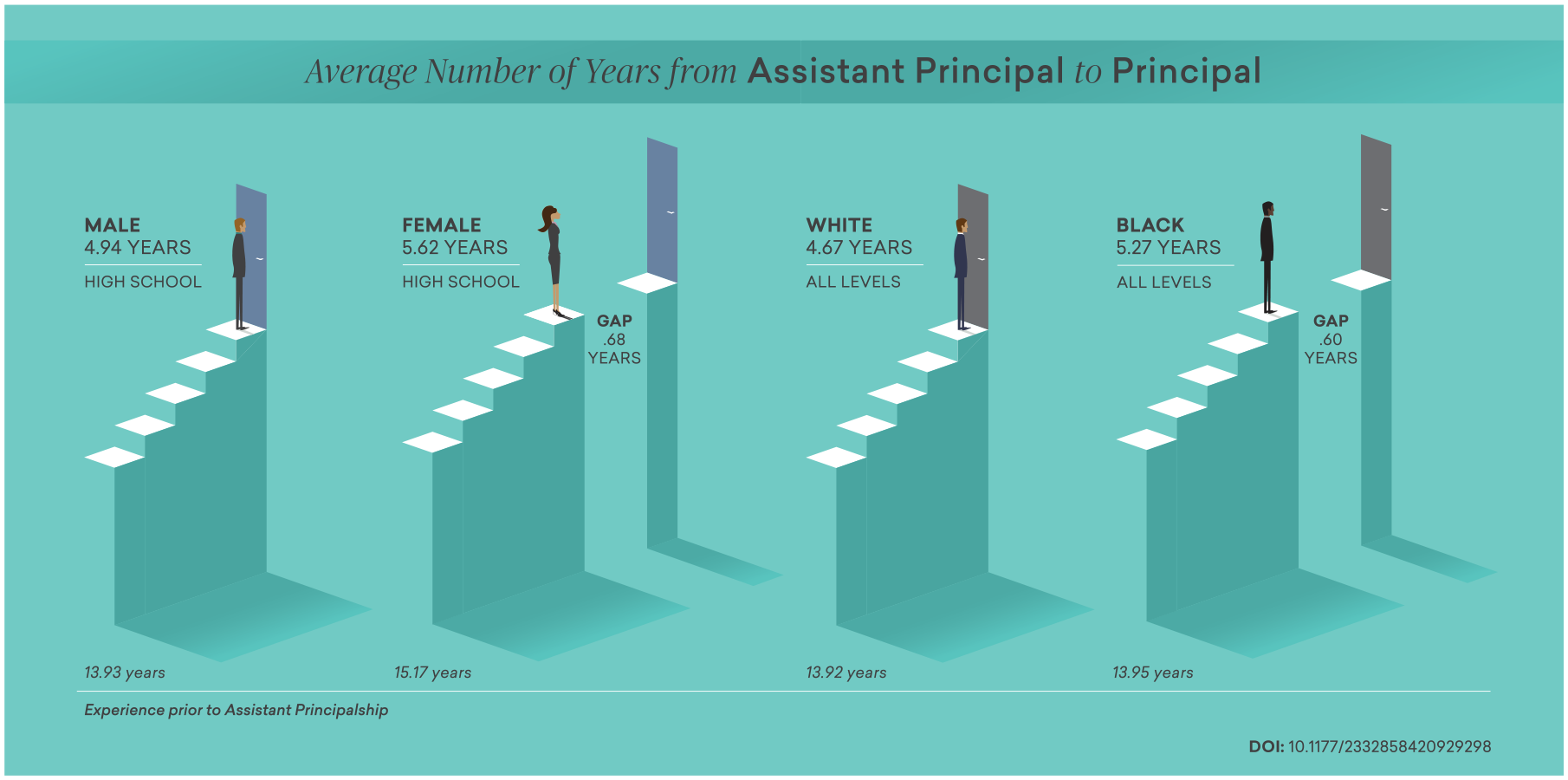
Average number of years from assistant principal to principal.
Based on our findings in the descriptive analyses, we also examined the promotion rates in high school as a subset of the primary analysis. When examining the high school context, a Kaplan-Meier analysis shows that men and women have statistically significantly different hazard risks over time. We found that women spend 5.62 years as an assistant principal versus 4.94 years for men (Appendix B). Women assigned to assistant principal roles in high schools are less likely than men to be promoted to principalships in high schools. As the candidates gain years of experience, the likelihood of promotion for women decreases relative to male assistant principals. Interestingly, the gender gap for promotion in high school widens when individuals have been assistant principals for 5 to 11 years, and during that time, men’s promotion rates are 5% to 7% higher than women’s in every time period. Even controlling for almost a decade of prior experience, men spend an average of 5.06 years as an assistant principal and women spend an average of 6.27 years in that position (an average gap of 1.21 years).
We tested for the possibility that being double-identified (e.g., identifying as both a woman and Black) could further lengthen the average tenure as an assistant principal. We tested this in several ways: one as White male compared to all others; a four-way comparison of White men, White women, Black men, and Black women; and an eight-way comparison of all races and genders. The results were not statistically significantly different for double-identified individuals.
Limitations
There are several limitations in this study. First, we use initial setting (the first school in which individuals are placed as assistant principals) as a control for the urbanicity of the district in which assistant principals first accede to principalships. Bastian and Henry (2015) also found that assistant principals do not experience significant movement during their tenure, which permits us to use initial setting as a sufficient—although imperfect—control. Because we do not annually check each assistant principal’s school assignment during their tenure, there could be movement that is masked from the study. Additionally, controlling for urbanicity and school level of the assistant principal’s initial setting does not address quality of the setting. Ample research has addressed the importance of mentorship and coaching (see, e.g., Normore & Jean-Marie, 2008; Skrla, 2000), but this study does not control for the quality of the assistant principal’s preparation or experience. Furthermore, this study solely focuses on promotion as a binary outcome and does not assess the individual’s success thereafter.
When controlling for experience, we use only the reported years of experience in accredited Texas public schools. For example, men may have outside management or administrative experience not counted on the school step schedule, and therefore, when we control for years of experience, gender may serve as a proxy for experience gained outside the public school system. However, when we observe gender effects by time with the Kaplan-Meier method, gender is significant only in promotions within high schools and the effect is most pronounced at the midpoint of the assistant principalship. If the gender differential actually captured noneducational experience, we would expect the strongest effect of outside experience to appear as a wider gender gap initially and trail off after the first few years. However, we find that the greatest difference in the rates of promotion occurs 5 to 8 years after an individual advances to the assistant principalship, indicating that gender is not solely a proxy for outside experience.
Summary of Findings
This study answers the research questions in the following ways. Research Question 1 asked whether, controlling for individual and school characteristics, all assistant principals were equally likely to be promoted to a principalship. Our second question asked to what extent observable individual characteristics are associated with different rates of promotion. Our findings suggest that White assistant principals have the greatest probability of being promoted, holding constant experience, education, and school level. That is, people of color are less likely to be promoted and those promotions are likely to take longer for them than for White assistant principals (Figure 2). We did not find, in the generalized setting, that women and men face statistically significantly different rates of promotion once they reach the assistant principalship. However, women have, on average, over 1 year of experience more than men before initial movement into the assistant principalship.

Cox hazard proportion model.
In answer to the third research question, we find that systematic differences in wait times for promotion are associated with race (Figure 3). This study indicates that Black assistant principals are both less likely to be promoted to principal positions and more likely to wait longer for promotions, should they ever be awarded. When we analyzed high school promotions, we found that there was a gender differential in both the time to promotion and the overall likelihood of promotion. Women are less likely to be promoted to principalships, and wait longer for promotions in high schools (Figure 4). This is the case even when they served as assistant principals at that level (indicating their equivalent preparedness for and aspiration to leadership in high schools, relative to their male counterparts). We address each of these findings in turn and discuss their implications for policy, practice, and future research.
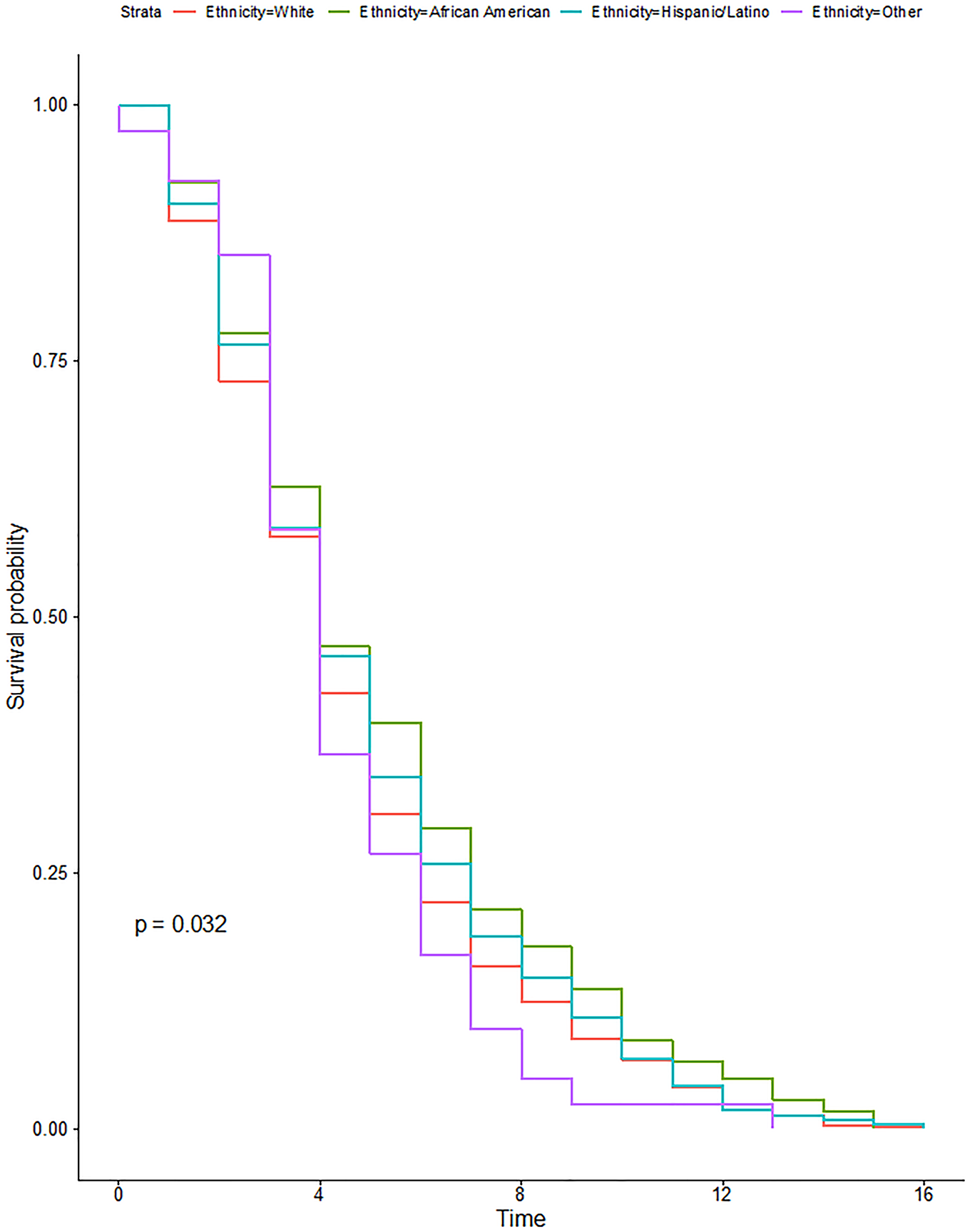
Differential promotion over time based on race.

Differential promotion in high schools over time based on gender.
Implications
We compare time to promotion for assistant principals who possess equivalent qualifications and experience in similar school contexts. This study adds to a coalescing literature base indicating that race and gender systematically influence promotion to school leadership (Davis et al., 2017; Fuller et al., 2019). This study examines a specific transition in an educator’s career as well as the degree to which individual and contextual characteristics influence that transition. Two conclusions emerged, both of which underscore and extend current research.
First, race is a significant predictor of both promotion and time to promotion from assistant principal to principal. There are systemic implications of this finding beyond individuals’ reduced career earning potential. Recent work by Bartanen and Grissom (2019) found that the presence of a Black principal increases the probability of hiring a Black teacher by 5 to 7 percentage points and that, subsequently, Black teacher turnover is also reduced in the presence of a Black principal. Students of color also experience the benefits of both a Black principal and Black teachers. The math achievement of Black students tends to increase when they are taught by Black teachers, and when a school has a majority of Black teachers, more Black students are assigned to gifted and talented programs (Grissom, Rodriguez et al., 2017). The systematic nonpromotion of Black principal candidates, then, has consequences for Black teachers and students throughout the entire school system. Given the dramatic difference in achievement between White and non-White students nationally and the potential benefit to students of color when schools are led by principals of color, hiring Black principals is imperative to closing achievement gaps.
Second, women occupy nearly two thirds of all assistant principalships in Texas, yet gender is a significant predictor of time to promotion when accounting for school level. Notably, women are hired as principals in elementary schools even when they worked as high school assistant principals. This finding suggests that women’s aspirations for leadership are not different from their male colleagues, although their rates of promotion in high schools are statistically significantly different. Despite the fact that classroom teachers are predominantly female, men comprise a disproportionately large percentage of school and district leadership relative to the number of men in teaching positions (National Center for Education Statistics, 2012). This study contributes to an existing body of research (e.g., Joy, 1998): Women are less frequently identified as candidates for administrative positions, spend more time in assistant positions, and are less likely to be promoted from assistant principal to principal.
Moreover, there is a perception gap in the prestige of leading a high school as opposed to an elementary or middle school (Oplatka & Hertz-Lazarowitz, 2006). The pathway to a superintendency or district leadership tends to be through high school principalships because of the organizational management experience attributed to principals at that level (see, e.g., Smulyan, 2000). Women are also more likely to occupy principalships in a district when those districts are headed by female superintendents; female superintendents are more likely to be hired by boards with greater than average female representation (Glass et al., 2001). Thus, while women’s leadership is concentrated in lower schools, from which women are less likely to be tapped for upper school and district leadership, we are unlikely to see rapid growth in the proportion of women in district leadership or board governance.
The likely delay of promotions for people of color and the disproportionate assignation of men to high schools and of women to elementary schools result in a series of pay and prestige disparities that are empirically associated with race and gender. When individuals’ careers conclude in an assistant principal position or in an elementary or middle school principalship, their salaries (and subsequent retirement distributions) are lower on average. A t test of means for the average elementary and high school principal salary (in their first year following promotion) yields a statistically significant difference of $7,070.76 (Texas Education Agency, 2019a). Calculated over a career, an elementary principal’s lifetime earnings are reduced when compared to high school principals’. The resulting wage disparity exists even when both the high and low earners have been assistant principals in a high school.
Superintendents are best positioned to enact practical responses to these findings in their districts. Those who wish to rectify race and gender equity gaps in their districts first need to examine the rates of promotion and the average time to promotion for women and assistant principals of color in their own districts. Additionally, placing more value on elementary principalships as preparatory experiences for district leadership may result in increased equality at higher ranks. Should inequities be identified, research has shown that mentorship can also be a mechanism for increasing diversity among principals (Echols, 2006). There is a base of burgeoning literature that illustrates the positive influence of mentorship for assistant principals, resulting in increased promotion rates when mentors and mentees share characteristics like race and gender (e.g., Ensher & Murphy, 1997).
One practical move, then, to increase the number of women and people of color in principalships may be to assign assistant principals to apprenticeships with principals who have a track record of successfully training and promoting a diverse group of assistant principals. Furthermore, states and districts may reconsider mandatory licensure tests, such as School Leaders Licensure Assessment, that have been shown to reduce access to the pipeline for nonwhite candidates (Grissom, Mitani et al., 2017). Given the small baseline number of principal candidates of color, states may take the initial step of auditing their licensure exams and cutoff scores in order to evaluate whether the requirement of that test continues to eliminate a disproportionate number of Black candidates.
Additionally, further research is necessary to examine issues of promotion by school level. While gender initially appeared not to be a predictor of principal promotion, the disaggregated figures showed that women—who comprised nearly two thirds of all assistant principals—were overwhelmingly promoted to principalships in lower schools (elementary and middle). Finally, more research targeting the principal pipeline in charter schools is needed in order to understand patterns of promotion and their relationship to school choice. We eliminated charter school assistant principals from inclusion in our study because so few held master’s degrees. This is likely to have equity implications for students who attend charter schools and teachers who work in them. It is critical to research these implications, especially as charter schools continue to proliferate throughout Texas.
The findings of this study indicate that there are significant gender and race effects in the probability and timing of promotion for assistant principals. However, the principal pipeline does not start with assistant principals so it is necessary to examine the ways in which instructional pathways increase qualified individuals’ likelihood of success as they pursue school leadership. Further studies may investigate the pathways by which women and candidates of color enter the teaching profession, the structures that facilitate their longevity in the profession, and the rates at which they are promoted into leadership positions. It is also necessary to consider the full instructional pipeline and ways of creating more equitable opportunities for educators interested in school leadership. Even when women and people of color have the education and experience to assume school leadership positions, the first steps to accessing those roles are the steepest. School leadership continues to experience equity gaps attributable to gender and race with lasting, detrimental effects throughout school systems. Closing those gaps is essential. In absence of equitable pathways to leadership, many educators experience careers that are curtailed or truncated. School improvement is an urgent mandate and increasing the diversity of school leadership is likely to result in addressing the academic needs of an increasingly diverse student body.
Footnotes
Appendix
Kaplan-Meier Survival Analysis of High School Assistant Principal Promotion by Gender

| Time period | Men |
Women |
||||||
|---|---|---|---|---|---|---|---|---|
| Risk n | Event n | Survival rate | SE | Risk n | Event n | Survival rate | SE | |
| 1 | 250 | 34 | 0.86 | 0.02 | 222 | 23 | 0.90 | 0.02 |
| 2 | 216 | 31 | 0.74 | 0.03 | 199 | 26 | 0.78 | 0.03 |
| 3 | 185 | 40 | 0.58 | 0.03 | 173 | 32 | 0.64 | 0.03 |
| 4 | 145 | 28 | 0.47 | 0.03 | 141 | 27 | 0.51 | 0.03 |
| 5 | 117 | 30 | 0.35 | 0.03 | 114 | 23 | 0.41 | 0.03 |
| 6 | 87 | 22 | 0.26 | 0.03 | 91 | 18 | 0.33 | 0.03 |
| 7 | 65 | 16 | 0.20 | 0.03 | 73 | 16 | 0.26 | 0.03 |
| 8 | 49 | 7 | 0.17 | 0.02 | 57 | 8 | 0.22 | 0.03 |
| 9 | 42 | 11 | 0.12 | 0.02 | 49 | 10 | 0.17 | 0.03 |
| 10 | 31 | 8 | 0.09 | 0.02 | 39 | 6 | 0.15 | 0.02 |
| 11 | 23 | 11 | 0.05 | 0.01 | 33 | 11 | 0.10 | 0.02 |
| 12 | 12 | 5 | 0.03 | 0.01 | 22 | 6 | 0.07 | 0.02 |
| 13 | 7 | 3 | 0.02 | 0.01 | 16 | 6 | 0.04 | 0.01 |
| 14 | 4 | 2 | 0.01 | 0.01 | 10 | 4 | 0.03 | 0.01 |
| 15 | 2 | 1 | 0.004 | 0.004 | 6 | 4 | 0.01 | 0.002 |
| 16 | 1 | 1 | 0.00 | NA | 2 | 2 | 0.00 | NA |
| Mean wait time for promotion in high school by gender | ||||||||
| Kaplan-Meier summary | ||||||||
| M | SE | Event n | p | |||||
| Men | 4.94 | 0.21 | 250 | .028** | ||||
| Women | 5.62 | 0.25 | 222 | |||||
p < .05. **p < .01. ***p < .001.
Acknowledgements
We wish to sincerely thank the anonymous reviewers whose feedback enhanced the quality of this article. This article utilizes confidential data from the State of Texas provided by the Texas Education Authority. The views expressed in this article are those of the authors and any errors or omissions are attributable to the authors alone.
1.
Throughout the article, we defer to the Texas state designation of “Hispanic,” which, depending on the year, represents individuals who identify as either Hispanic or Latinx. In cases where authors use “Latino” in their studies, we also use that descriptor.