




Abstract
This systematic literature review explored the relationship between hearing loss, the use of hearing aids or cochlear implants, and late-deafened adults' perception and appreciation of, and participation in, music. To identify articles, four databases were searched, MEDLINE, Scopus, Embase, and American Psychological Association (APA) PsycINFO, using terms associated with hearing loss, hearing aids, cochlear implants, music perception, appreciation, or participation. The included studies were empirical, written in English, peer reviewed, used any research method, had no date restrictions, and involved late-deafened adults. A formal risk of bias evaluation was undertaken using the Joanna Briggs Institute (JBI) Critical Appraisal tools. A double-blind review of 2595 articles was completed in June 2023, with a total of 131 studies meeting the inclusion criteria. Typically, the reviewed articles focused on music perception testing. The studies included more than 6900 adult participants with hearing loss. Data relating to the review question were extracted and thematically coded. Only 18 studies reported on music experiences for adults who had hearing loss with or without hearing aids. The remaining 113 articles related to cochlear implant users, and 91 of these focused primarily on identification of musical structural components. The reviewed articles consistently established that hearing loss and hearing devices have a substantial, generally negative, impact on music perception. The psychosocial and emotional need for music was mostly overlooked, with few studies focusing on music appreciation, enjoyment, social connectedness, or participation. Further research is needed to understand the broader context of how hearing loss and hearing devices impact personal experiences including mental and physical well-being and quality of life.
Introduction
Late-deafened adults are individuals who experienced hearing loss (HL) in adult life after living with typical hearing (TH). As their hearing deteriorates, many adopt hearing aids (HAs) or cochlear implants (CIs) for continued access to the hearing world. However, these devices are optimized for speech perception (Fuller et al., 2022), arguably the most important sound of life. Nonetheless, music is also culturally significant and plays an integral part in life and has been referred to as the second most important sound (Bartel et al., 2011; Gfeller, 2001). Despite diminished hearing capabilities, various degrees of HL, and the type of intervention, music holds a similar importance for those with TH. Music may evoke memories or generate feelings that can elicit a positive (or negative) impact on physical, emotional, and social well-being reducing loneliness or increasing motivation (Dritsakis et al., 2017; Kösemihal et al., 2023). In particular, lyrics may resonate with personal feelings (Gfeller et al., 2019) and beliefs, which can help maintain a sense of social connectedness (Dritsakis et al., 2017). Since HL may discourage social participation particularly in musical activities, the benefits of music may also decrease, resulting in psychosocial disadvantages (Nasresfahani et al., 2022).The purpose of this literature review was to understand how HL and the use of HAs or CIs impact perception and appreciation of, and participation in, music among late-deafened adults.
Music perception, in this context, refers to a subjective understanding of sound—what can be heard and identified including music acoustics, music memory of sound, and identification of pitch and intervals [for a review, see Koelsch (2011)]. Independent assessments of perception are carried out, usually in a sound booth environment (Jo et al., 2023), using a variety of test methods to measure pitch (frequency) identification (Gfeller et al., 2007), or melody recognition, (Caldwell et al., 2016) or whether elderly people find wearing a HA improves music sound quality (Leek et al., 2008). Frequently, tests are compared to outcomes between groups–adults with HL, HAs, or CIs, or with TH (Cai et al., 2016) to give a better understanding of the effects of HL and hearing devices on music engagement. The research found that music perception and quality typically deteriorate when HL occurs (Bruns et al., 2016). A study by Looi et al. (2019) investigated the impact of different levels of HL (mild, moderate, severe, profound) among adult HA users, finding that as HL became worse, HAs made music less melodic and often unpleasant. The outcomes of music perception for CI users varies significantly (Maarefvand et al., 2013), because music quality can be compromised by CI technology limitations, making it difficult to identify or appreciate even familiar melodies (D’Onofrio et al., 2020; Fuller et al., 2022). This may result in a loss of enjoyment of music, with diminished pleasure (Greasley et al., 2020), which has implications for continued well-being and quality of life (QoL) (Gfeller et al., 2019).
Music appreciation describes a complex dimension of music that is separate from hearing or identifying musical characteristics. It is not limited to auditory pleasure, but includes esoteric aspects such as cultural influences and appreciation of quality and context of the music while identifying meaning and emotional content (Bruns et al., 2016; Looi et al., 2011). Music appreciation is assessed subjectively usually with multiple-choice, closed-ended questionnaires (Frosolini et al., 2022). Different levels of HL and the hearing devices worn have an impact on music appreciation in individual and subjective ways. This may be due to hearing loss, demographics such as culture, age, or gender, and personal music preferences, listening frequency, or music habits prior to HL. (Adams et al., 2014; Buyens et al., 2018; Gfeller et al., 2019; Lassaletta et al., 2007; Looi et al., 2008b; 2015; 2019). This makes appreciation difficult to measure, but it has been suggested that evaluation could consider the level of enjoyment, the desire for and reaction to music, or whether someone has been musically trained (Nasresfahani et al., 2022).
Music participation refers to the active involvement in musical activities. This may include people who are professional or amateur musicians, music students, music composers, or music producers [for a review, refer Gates (1991)]. These activities are many and varied but include listening to music (Harris et al., 2011; Leek et al., 2008; Madsen & Moore, 2014), playing an instrument, singing (Lassaletta et al., 2008a; Migirov et al., 2009; Philips et al., 2012), or attending music venues (Dritsakis et al., 2017; Meehan et al., 2017). Musicians play an array of instruments, covering a spectrum of genres and musical styles (Gfeller et al., 2019). Nonmusicians are exposed to music in multiple settings (e.g., radio, TV, movies) and engage with music through a variety of activities (Dritsakis et al., 2017) such as family events, attending music venues, or listening at home. Listeners use an assortment of formats (e.g., CDs, tape, vinyl, or the internet) and devices such as headphones or direct streaming through HAs or CIs.
There is a growing demand from HA and CI users for technology to improve musical experiences (D’Onofrio & Gifford, 2021). Studies show that hearing devices are programmed primarily for speech, which covers a limited range of frequencies (Au et al., 2012; Bartel et al., 2011; Crew et al., 2015; D’Onofrio & Gifford, 2021; Fowler et al., 2021; Gfeller, 2001; 2002; 2006; Hossain et al., 2016; Singh et al., 2009). Music is far more complex. It not only has a greater range of frequencies (Buechner et al., 2020; D’Alessandro et al., 2022; D’Onofrio et al., 2020; Maarefvand et al., 2013) but includes the complexity of frequencies being played together, often by multiple instruments (Adams et al., 2014; Buyens et al., 2018; Gfeller et al., 2019; Lassaletta et al., 2007; Looi et al., 2008b; 2015; 2019; Ping et al., 2012). Reduced amplitude, the clipping or flattening of sounds into the speech range (D’Onofrio et al., 2020; Siedenburg et al., 2021), and the reduction of repetitive background noise (Vaisberg et al., 2019) all work to suppress the sounds needed to fully appreciate music. This has led to a number of studies suggesting current hearing technologies do not provide the acuity to allow users to discriminate musical subtleties, often resulting in decreased music enjoyment and reduced participation (Bartel et al., 2011; Buyens et al., 2018; Dritsakis et al., 2017; El Fata et al., 2009; Gu et al., 2017; Kelsall et al., 2017; Lassaletta et al., 2007; Lima et al., 2018; Madsen & Moore, 2014; Mirza et al., 2003; Siedenburg et al., 2021; Spitzer et al., 2021; Wright & Uchanski, 2012). Furthermore, coupled with different types and levels of HL, plus the individual listening variability in HA and CI users, personal experiences of music are disparate (Zhao et al., 2008). Additionally, the diversity of musical experience and engagement before HL onset (Kösemihal et al., 2023), during or after acceptance of HAs or CIs, makes understanding and generalizing the impact of HL on music, and the consequences for individuals, more challenging (Gfeller et al., 2019).
Participation for late-deafened adults with HL (using HAs or CIs) may include changes in the engagement and enjoyment they once had with music (Gfeller et al., 2019; Lassaletta et al., 2008a; Looi et al., 2019; Meehan et al., 2017). This may result in listening less often than before HL and listening with HAs or CIs (Adams et al., 2014; Cai et al., 2016; Cheng et al., 2013; D’Onofrio & Gifford, 2021; Fuller et al., 2022; Gazibegovic et al., 2010; Lassaletta et al., 2008a). It may include a change in music preferences because of poorer sound quality (Choi et al., 2018), or no longer attending social events or music venues where noise interferes with communication (Dritsakis et al., 2017). Some people cease playing an instrument or singing (Greasley et al., 2020; Migirov et al., 2009), and others avoid music altogether (Gfeller et al., 2019; Philips et al., 2012). Musicians may find performing becomes a challenge and can experience performance anxiety (Fulford et al., 2011; Fulford & Ginsborg, 2014).
While there is a significant technical difference between CIs and HAs (particularly perceptually), the purpose of this review is to examine the impacts on music engagement across the range of hearing losses and devices. This systematic literature review examines the research to answer the question: How does HL and the use of HAs or CIs impact late-deafened adults' perception and appreciation of, and participation in, music?
Methods
The review was performed and reported according to the Preferred Reporting Items for Systematic Reviews and Meta-Analysis (PRISMA, 2023), and a registered PROSPERO protocol 2023 CRD42023412393 (Bleckly, 2023). No ethics approval was required.
Inclusion Criteria
There were no limits for the inclusion of studies based on the publication date, methods used, or research design. Publications were included if they were readily accessible, reported on the findings of empirical research, published in peer-reviewed journals, and written in, or translated into, English.
Participants: Late-deafened adults (18 years and over) are people who once experienced what is considered “TH” but were subsequently impacted by HL caused by any etiology. The participants could identify as any gender, live in any country, and have HL for any length of time, with any level of loss. Studies included those who had HL and did not use any assistive devices, as well as those who used HAs or CIs. Testing methods: Testing included different types of music, with and without hearing devices, as well as assessing perception and appreciation of different characteristics and types of music, under laboratory conditions or real-world situations. Outcomes: The outcomes identified how music perception, appreciation, and participation were measured for those who had HL and wore HAs or CIs, as well as studies covering subjective reports on emotional, psychological, and psychosocial impact of HL, HAs, or CIs on music.
Discussion articles, conference abstracts, opinion pieces, theses, literature reviews, and nonempirical research articles were excluded. Other exclusion criteria were studies on topics that did not relate to the research question, including studies on music hallucinations, HL causes, including noise- or music-induced HL, medical issues such as surgical procedures or comorbidities, and studies with a technical, engineering, or neurological focus. Technical- or engineering-based research is primarily concerned with hearing device technologies or brands, functions, or processing strategies, which are outside the scope of this review. To include neurological studies would essentially require a complete systematic review in itself. Studies were also excluded where participants were prelingually deafened, identified as belonging to the Deaf community, or whose main communication was sign language because in general they have not heard music in the same way as TH and the language and experiences of these people are very different to that of late-deafened adults who have lost their hearing (Bleckly, 2022).
Search Terms
To identify articles that explore the relationships among hearing loss, the use of hearing devices, and the participation in, and appreciation and perception of, music, the following four databases were searched: MEDLINE (Ovid), Scopus (Elsevier), Embase (Elsevier), and American Psychological Association (APA) PsycINFO. Search terms were identified as “hearing loss,” “cochlea* implant,” “hearing aid*,” including synonyms such as “acquire* deaf*,” “hearing impair*,” “hard of hearing/hard-of-hearing,” “post-lingual* deaf*” and “music.” An example of the full search string for MEDLINE is contained in the Supplementary Material.
The databases were searched in March 2023 and 2862 identified journal articles were imported into EndNote (2020) where 267 duplicates were removed. The remaining studies (n = 2595) were imported into Rayyan (Ouzzani et al., 2016), where they were independently assessed for inclusion, by three pairs of researchers, all with experience of the process of systematic literature reviews. Following title and abstract review, 2378 journal articles were excluded, and the remaining 217 journal articles underwent full text review. Conflicts for inclusion were resolved at each step through discussion, and consensus was reached for a final list of included articles (n = 131). The PRISMA diagram (see Figure 1) details the selection process and reasons for exclusion.
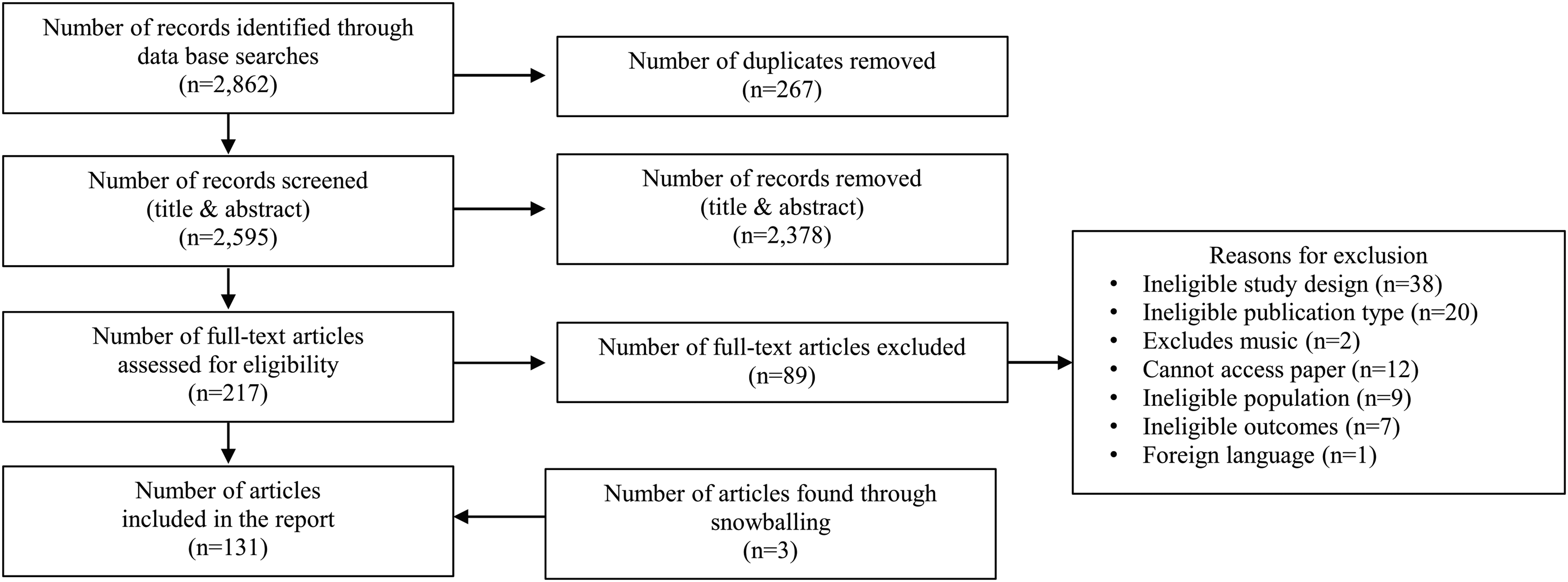
PRISMA diagram.
Selection Process
Journal article characteristics, as well as the methods and tools used in the research and participant characteristics, were captured in a preprepared data extraction form in Excel (Microsoft Office 365, 2023) as follows:
Journal article information—Title, date, authors, discipline and country of primary authors, number of citations, publishing journal, include or exclude with reasons. Assessment of bias, conflicts of interest, funding, and acknowledgements. Methods and tools—Study type (methodology), aims, linkages (clinic records, HL history, or other research studies), questionnaires, tests used, music types tested, or other methods used, comparisons (TH, HL, HA, CI), and research settings. Participants—Total number of participants, gender, age range, musicianship experience, stratified according to hearing status (TH, HL, HA, CI), duration of HL and intervention HA or CI (bimodal–a CI in one ear and HA in the other, bilateral–two HAs or CI, unilateral–one HA or CI), as well as CI brand.
Data Extraction
Following coding in NVivo, data were tabulated in Excel (Microsoft Office 365, 2023) for further analysis with table and graph development. All data were managed by the primary author (FB) and stored digitally on the university's OneDrive site, then shared, reviewed, and approved by all other authors (FR, CI, RC-W).
Synthesis Method
A thematic analytic synthesis (Clarke & Braun, 2017; Thomas & Harden, 2008) was employed to systematically identify and organize themes in the articles to understand what was important and what would answer the research question. Synthesis allowed comparison and contrast between shared characteristics and understandings of music perception, participation, and appreciation for late-deafened adults. Line-by-line coding of included journal articles (Clarke & Braun, 2017) was captured in NVivo (NVIVO, 2020), and patterns in the research were identified to draw meaningful conclusions (refer Supplementary Material for NVivo Coding Tree).
Risk of Bias Assessment
To minimize risk of bias, all authors contributed to the development of the search strategy, and selection of inclusion criteria rigour and trustworthiness was established using the Joanna Briggs Institute (JBI) Critical Appraisal Tool (Briggs, 2023). The Appraisal Tool provides a checklist, tools, and guidance to assess the quality of research that can help reduce bias. A validity assessment was undertaken using cross-sectional, quasi-experimental, qualitative, and cohort study tools (Briggs, 2023; Moola et al., 2020), the results of which are contained in the Supplementary Material and summarized in Tables 1–4. As our study was a scoping review, all studies were ultimately included.
Cross-Sectional Studies, Risk of Bias Analysis (n = 50).

Quasi-Experimental Studies, Risk of Bias Analysis (n = 51).

Cohort Studies, Risk of Bias Analysis (n = 7).

Qualitative Studies, Risk of Bias Analysis (n = 23).

Bias Analysis Summary
Conflicts of interest were examined, and funding statements evaluated to determine whether bias existed in reporting outcomes. The methods used and findings of all sponsored studies aligned with independent research and were therefore included in the review (e.g., Caldwell et al., 2016; Drennan et al., 2015; Fuller et al., 2022). The six studies conducted by a CI branded company or their employees (Adams et al., 2014; Buyens et al., 2018; Calvino et al., 2016; Gazibegovic et al., 2010; Prentiss et al., 2016; Vannson et al., 2015) and the nine studies receiving funding from one or more HA or CI brands reported similar methods and outcomes to independent research and therefore were included in the review (Boeckmann-Barthel et al., 2013; Buechner et al., 2020; Gfeller et al., 2006; Hutter et al., 2015; Kirchberger & Russo, 2015; Laneau et al., 2006; Madsen & Moore, 2014; Spangmose et al., 2019; Won et al., 2010).
To scope the body of literature on HL and hearing devices and the impact this has on music related to individual subjective experiences, it was important to separate studies that explored the experience of listening to music from those that collected data on technical outcomes.
Results
The characteristics of the included studies are reported under the following headings: Journals, Study Designs, Analysis, Topics, Participants, Musicianship, and Settings. Table 5 lists the articles included, study type, participant numbers, participant hearing status, and the outcomes measured and findings.
Characteristics of Included Studies –Answering the Research Question.

Note. AB = Advanced Bionics Questionnaire; AMICI = Appreciation of Music in Cochlear Implantees; AMP = Adaptive Music Perception; APHAB = Abbreviated Profile of Hearing Aid Benefit; CAMP = Clinical Assessment of Music Perception; CI-MUSHRA - CI-adapted Multiple Stimulus with Hidden Reference and Anchor; DMBQ = Dutch Musical Background Questionnaire; DUQ = Device Use Questionnaire; FPT = Frequency Pattern Test; GBI = Glasgow Benefit Inventory; GMSI = Goldsmiths Music Sophistication Index; HISQUI = Hearing Implant Sound Quality Index; IMBQ = Iowa Musical Background Questionnaire; K-CAMP = Korean Clinical Assessment of Music Perception; MASQ = Music Listening Attitudes and Satisfaction Questionnaire; MATLAB = The Mathworks, Natick; MAV = Montreal Effective Voices; MBEA = Montreal Battery for Evaluation of Amusia; MCI = Melodic Contour Identification; MCI = Melodic Contour Identification test; MEB = The Musical Emotional Bursts; MERT = Musical Excerpt Recognition test; MHHI = Musicians' Hearing Handicap Index; M-HINT = Mandarin Hearing in Noise Test; MIQR = Music Instrument Quality Rating; MMN = Mismatch Negativity; MMT = Modified Melodies Test; MRQT = Music Quality Rating Test; MSCS = Multidimensional Self-Concept Scale; MTB = Music Test Battery; Mu.S.I.C = Musical Sounds in CIs Perception Test (Med-El); MuMu = Munich Music Questionnaire (Med-El); MuMuFE MMN = Musical Multifeature Mismatch Negativity; Musi-CI training = Music CI Training; MUSQAV = MuRQoL translated into Italian “Questionario Musica e Qualità della Vita” (MUSQUAV); MWT = Music Perception Test; NCIQ = Nijmegen Cochlear Implant Questionnaire; OMS = Ollen Musical Sophistication index; PMMA = Primary Measures of Music Audiation; POMS = Profile of Mood States; SSQ = Speech, Spatial and Qualities of Hearing Scale; STAI = State and Trait Anxiety Inventory ; UCMLCI/HA = University Canterbury Music Listening for CI users modified for HA users; UW-CAMP = University of Washington Clinical Assessment of Music Perception; VAS = Visual Analogue Scale; WHO QoL-BREF = World Health Organization Quality of Life Brief Version.
Journals
The journals publishing the greatest number of articles were Cochlear Implants International (n = 16), Ear and Hearing (n = 10), Otology and Neurotology (n = 8), Frontiers Group (n = 8), International Journal of Audiology (n = 7), Trends in Hearing (n = 6), Acta OtoLaryngologica (n = 6), Audiology and Neurotology (n = 4), European Archives of Oto-Rhino-Laryngology (n = 4), Hearing Research (n = 4), and PLoS One (n = 4). A further 37 journals published the remaining 54 articles.
Most of the first authors were affiliated with universities in the United States of America (n = 43), followed by the United Kingdom (n = 14), Germany (n = 9), Australia (n = 8), Canada (n = 8), France (n = 8), and South Korea (n = 6) (see Figure 2). Other countries published between two and five articles: Belgium, Brazil, China, Denmark, Italy, The Netherlands, South Africa, Spain, and Switzerland. One study each was published in Austria, Cyprus, Greece, India, Iran, Israel, New Zealand, and Turkey.

Included articles by country.
Study Designs
Most of the research used qualitative (n = 59) or mixed methods (n = 49) (refer Tables 1–6). When mixed methods were used, researchers combined music perception evaluation with a self-assessed subjective experience and a music history questionnaire to appraise musical background, music appreciation, and music participation. The 31 studies that did not test music perception used questionnaires (n = 14), or mixed methods, such as focus groups, open-ended questionnaires, patient-engaged research, clinic records, or observations (n = 17) (refer Table 5). It should be noted that these studies generally relied on participants' self-assessed, subjective beliefs and assessment of their music experiences.
Purpose of Research that Did Not Include Music Perception Testing.
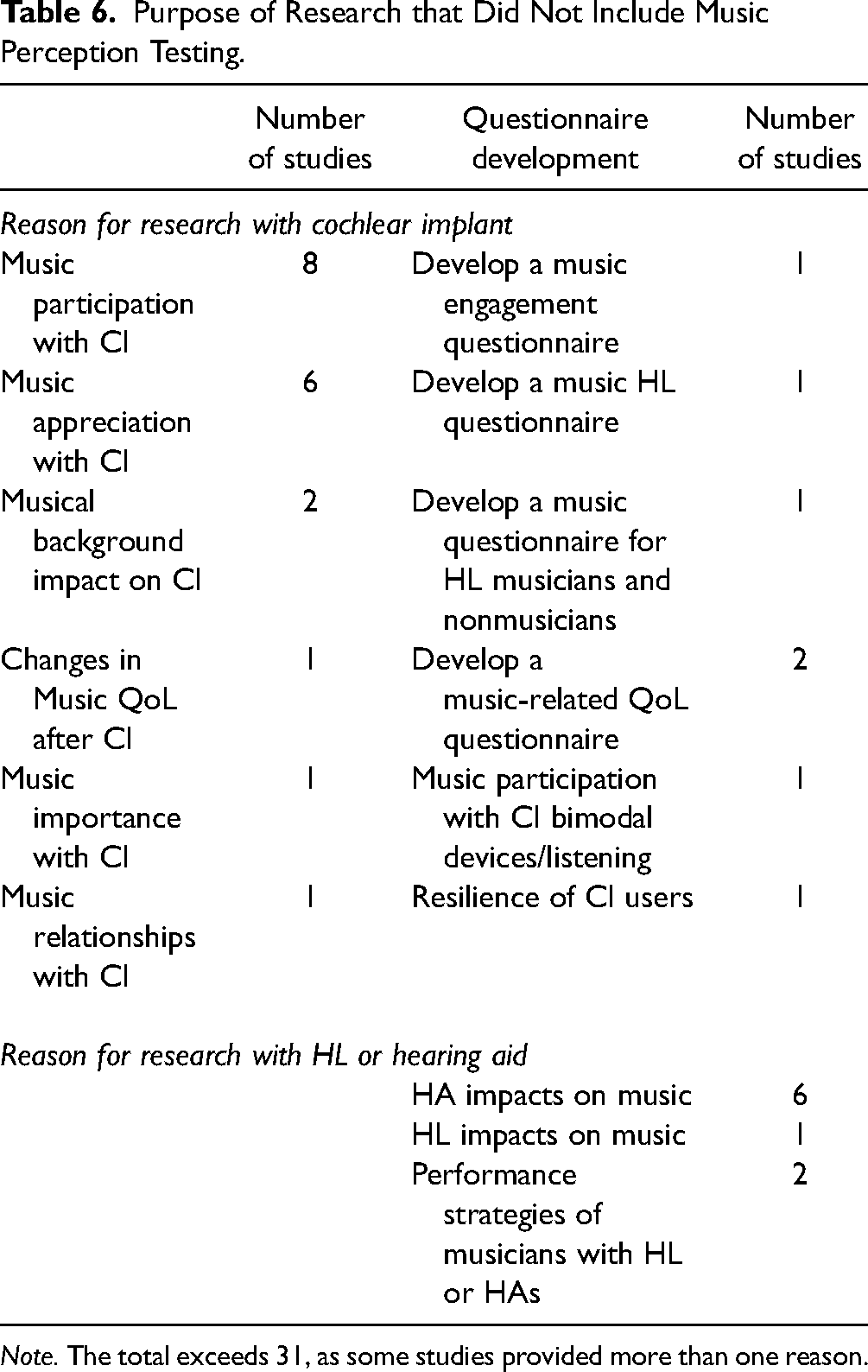
Note. The total exceeds 31, as some studies provided more than one reason.
Nevertheless, 23 articles specifically investigated music and HL using only quantitative methods that included self-administered questionnaires online, posted in the mail, over the telephone, or filled in while at the clinic during routine visits. The questionnaires covered subjective assessment of music listening habits, participation and engagement, enjoyment, quality of sound, instrument identification, and perceived QoL. Two studies used a questionnaire developed by a CI brand (Adams et al., 2014; Gazibegovic et al., 2010). Eleven studies did not report details of the questionnaire except sometimes stating the number of questions (Alexander et al., 2011; Au et al., 2012; Bartel et al., 2011; Buyens et al., 2018; Cai et al., 2016; El Fata et al., 2009; Gfeller et al., 2019; Greasley et al., 2020; Leek et al., 2008; Madsen & Moore, 2014; Zhao et al., 2008). Other studies (n = 18) used tested and validated questionnaires, such as Music Related Quality of Life (MurQoL) (Dritsakis et al., et al., 2017; Frosolini et al., 2022; 2022; Kösemihal et al., 2023), Dutch Musical background (DMI) (Fuller et al., 2012; 2022; Philips et al., 2012), Nijmegen CI (Fuller et al., 2012; 2022), IOWA Musical background (Gfeller et al., 2000; 2003; Laneau et al., 2006; Lassaletta et al., 2007; 2008b), Glasgow Benefit Inventory (GBI) (Calvino et al., 2016; Laneau et al., 2006; Lassaletta et al., 2007), or University of Canterbury Music Listening for CI users modified for HA users (Looi et al., 2019).
Five studies employed a semi-structured interview (Bartel et al., 2011; Dritsakis et al., 2017; Fulford et al., 2011; Vaisberg et al., 2019; Vieira et al., 2018), with a further five stating they conducted interviews either face to face, over the phone, or after therapy or feedback on music quality (Gfeller et al., 2019; Leal et al., 2003; Leek et al., 2008; Uys et al., 2012; Zhao et al., 2008). Other articles mentioned interviewing participants for study participation (Hutter et al., 2015), or in focus groups (Dritsakis et al., 2017; Gfeller et al., 2019; Veltman et al., 2023).
No specific theoretical framework was apparent although Grounded Theory was mentioned in studies by Bartel et al. (2011), Gfeller et al. (2019), and Vieira et al. (2018).
Analysis
Most studies analyzed music perception using statistical methods (n = 120). The nine studies that analyzed data thematically used iterative conceptualization (Gfeller et al., 2019), categorization and integration (Vieira et al., 2018), inductive or deductive coding (Gfeller et al., 2019), interactional process analysis, and item (Uys & Van Dijk, 2011) or content analysis (Vaisberg et al., 2019; Van Besouw et al., 2014; Veltman et al., 2023). Fulford et al. (2011) used thematic network analysis and Fulford and Ginsborg (2014) used interactional process analysis.
Topics
In recent years, a marked growth in research covering HL, HAs, and CIs in relation to music was observed, but this was driven predominantly by CI research (Figure 3). Of the 131 studies that met the inclusion criteria, 113 articles focused on CI users, with most of these studies investigating CI music perception (e.g., pitch, melody, timbre, rhythm) (n = 91). During the last 15 years, it appears only 18 articles investigated either the impact on music engagement for those with HL (musicians n = 5; or nonmusicians n = 7), or the experience of HAs on music engagement (n = 6) (see Figure 3). This paucity of research was supported by Looi et al. (2019) who reported that there was insufficient research on the perception and enjoyment of music among late-deafened adults who use HAs.

Included articles by year of publication and topic.
Despite an increase in music research into HL, HAs, or CIs, the research focused on measuring music perception and not on the broader impacts on QoL. Only two studies were found that focused on the QoL issues related to the impacts of HL, HA, or CI on music (Bartel et al., 2011; Dritsakis et al., 2017). Four articles mentioned that music loss due to HL impacted QoL (Kirchberger & Russo, 2015; Meehan et al., 2017; Vardonikolaki et al., 2020; Wilhelm, 2020). In general, the articles did not elaborate or explain what they meant by QoL, nor point out the association between any impact on music engagement caused by HL, HAs, or CIs and QoL. Nevertheless, 22 articles covering late-deafened adults with CIs indicated that music quality, music listening, or music enjoyment were related to QoL (Alexander et al., 2011; Bartel et al., 2011; Calvino et al., 2016; Drennan et al., 2015; Duret et al., 2021; El Fata et al., 2009; Frederigue-Lopes et al., 2015; Frosolini et al., 2022; Frosolini et al., 2022; Fuller et al., 2022; Gfeller et al., 2000; Jiam et al., 2019; Laneau et al., 2006; Lassaletta et al., 2007; 2008a; Paquette et al., 2018; Sandmann et al., 2010; Seeberg et al., 2023; Veltman et al., 2023; Vieira et al., 2018; Wright & Uchanski, 2012; Zhao et al., 2008). A further five articles mentioned loss of music could impact mental and general health, result in loss of self-esteem, or create low social satisfaction because the emotional reward or expectations of music were not met (Dritsakis et al., 2017; Fulford et al., 2011; Gfeller et al., 2019; Grasmeder & Lutman, 2006; Magele et al., 2022). In addition, three articles stated that those who use HAs may not be able to take full advantage of the QoL benefits associated with music (Crew et al., 2015; Greasley et al., 2020; Uys & Van Dijk, 2011).
When the primary aim of the study was not music perception, study aims were highly variable (Tables 5 and 6). Five studies aimed to develop a new subjective music questionnaire, (or validate an existing one when translated into another language), to assess music sophistication, engagement, and importance (Dritsakis, van Besouw, Kitterick, et al., 2017; Frederigue-Lopes et al., 2015; Frosolini et al., 2022; Frosolini et al., 2022; Vardonikolaki et al., 2020). Uys and Van Dijk (2011) developed a test that could quantify music perception, and another study (Lee et al., 2023) developed a novel music stimulus for testing recognition of emotions in music for people with HL.
Participants
The articles in this review included 6902 participants with TH, HL, using HAs, and having CIs. In addition, one study included both the perspectives of HA users and the perspectives of 99 audiologists. The study reported it was not standard practice to program HAs for music (Greasley et al., 2020).
Table 7 summarizes the number of studies by number of participants and Figure 4 pictorially shows the number of participants in studies demonstrating that the majority of studies (n = 95) included 50 participants or less. A total of 36 studies included more than 50 participants. Although 19 studies involved more than 100 participants, only nine of these implemented music perception testing (Adams et al., 2014; Drennan et al., 2015; Duret et al., 2021; Gfeller et al., 2003; 2005; 2006; 2007; 2010; 2012; Grasmeder & Lutman, 2006; Vardonikolaki et al., 2020).

Number of participants in studies.
Number of Participants per Study.
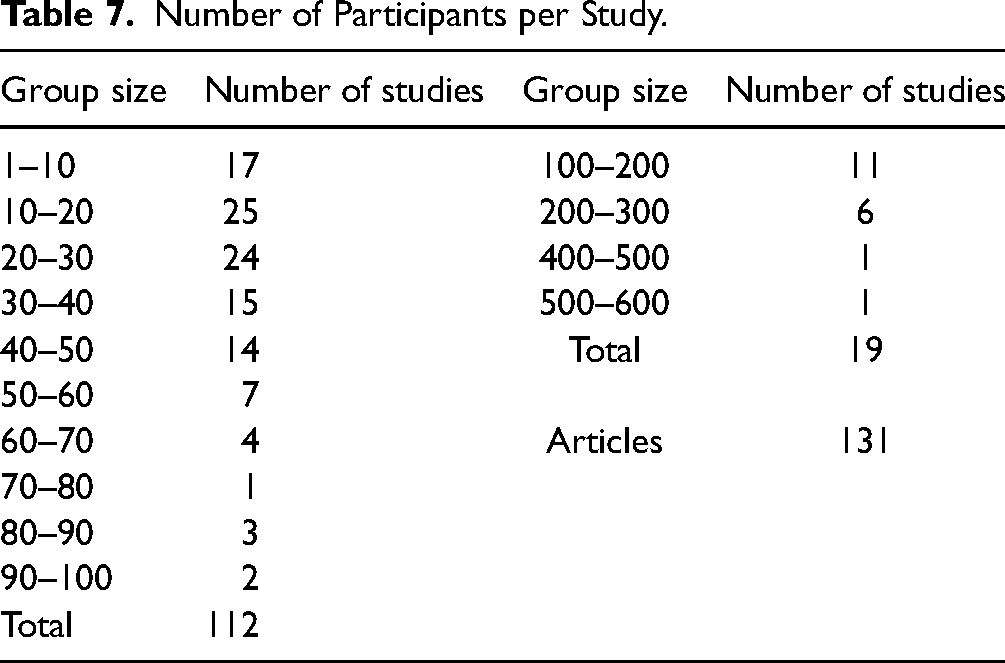
The largest study was undertaken by Madsen and Moore (2014), which used a quantitative design to assess subjective HA impacts on music. More than 500 participants responded and while the study did not specifically state all participants were late-deafened, the majority experienced sensorineural high frequency loss (>50%), which is typically associated with late onset HL.
Studies frequently compared results to measure the differences in music perception between those with TH and CI (n = 57). Fewer studies compared TH with those who experienced HL or used HAs (n = 6). The participants' age in CI studies was more clearly defined than for TH comparisons. As Figure 5 shows, CI users were usually aged between 40 and 70 years whereas TH adults were generally aged between 20 and 50 years. When TH adults were included for comparison, 41 studies did not age-match those with HL, HAs or CIs (see Figure 5) and some stated this was a limitation of the research. However, the majority gave no explanation for age variations besides reporting using a TH convenience sample (Adams et al., 2014; Cooper et al., 2008; Galvin et al., 2008; Grasmeder & Lutman, 2006).

Comparison of age matching.
While many studies (n = 102) reported participants' gender, particularly for CI users, none made any significant correlations between gender and music perception outcomes (Kösemihal et al., 2023).
Musicianship
While 31 studies did not report whether participants were musicians or nonmusicians, 54 studies reported participants were nonmusicians. In addition, 45 studies included both musicians and nonmusicians, and six studies included only musicians.
Most research that reported musicianship did not formally assess it, relying instead on self-reporting by participants of musical ability (n = 35). Nevertheless, six studies included a music background questionnaire to assess musicianship, while another four used validated musical sophistication assessment tools—Goldsmith's Music Sophistication Index (n = 3) (Müllensiefen et al., 2014), or Ollen's Musical Sophistication Index (n = 1) (Ollen, 2006). Although relying on self-reporting, one study assessed musicianship based on those who had at least six years’ formal training (Caldwell et al., 2016). Chung et al. (2022) rated musicians based on level of participation in musical activities, such as playing instruments, singing, attending music lessons, or participating in music ensembles.
At least four studies reported sourcing participants from music groups. Vieira et al. (2018) observed musicians while rehearsing, Vardonikolaki et al. (2020) researched performing musicians, and Gfeller et al. (2019) sourced participants from the Facebook group Association of Adult Musicians with Hearing Loss (Cheng, 2007). It was interesting to note that at least four studies excluded musicians (Cai et al., 2016; Gfeller et al., 2003; 2005; Kösemihal et al., 2023), because musicians might skew perception testing outcomes. With these disparate ways of recruiting and classifying musicians and nonmusicians, comparisons could not be conclusively drawn between outcomes in perception for either group.
Settings
Totally, 89 studies reported the setting for music perception testing. Most research was performed in controlled situations with 44 studies using sound booths such as an audiometric test suite, anechoic chamber, sound proofed room, or a single- or double-walled sound-attenuation chamber. Others reported testing at the clinic (n = 27) or in a quiet room (n = 6). Tests were presented either through speakers or direct connection to the sound source (e.g., headphones or direct streaming). In part, due to the COVID-19 situation, other settings included testing perception during online interviews or through websites (n = 13).
Research Outcomes
This section contains a synthesis of research articles under the following broad categories: (a) Music perception; (b) Music appreciation; and (c) Music participation. Table 5 lists the studies that answer the research questions by these broad categories. A total of 96 studies focused on testing pitch perception, and 86 tested melody identification (often in the same study), usually for CI users. However, a number also compared CI and melody pitch perception with TH (n = 59) and HA (n = 6) users. Music appreciation was highly subjective, and some adopted a qualitative approach when tested alongside perception (n = 51 Table 5). Typically, the level of appreciation and participation in music studies was measured using a self-administered questionnaire.
Music Perception
Music perception was the most researched phenomenon (Table 5). Music is a complex acoustic stimulus (Fowler et al., 2021), but at its most basic, consists of four components, namely, pitch, melody, timbre, and rhythm (Gfeller et al., 2019). Recognizing the synergistic relationship between the four components, each is described under one of the following headings: Pitch and Melody; Timbre and Instruments; and Rhythm–each divided by hearing status—CIs or HL and HAs. Table 8 briefly describes some of the basic music characteristics, shows the number of articles testing these characteristics, gives examples of how they could be tested, plus the outcomes and impacts these may have on music engagement.
Structural Components of Music.

Some studies tested more than one music characteristic.
The first aspect of music perception is the capacity to objectively identify the major structural characteristics of music (melody, pitch, rhythm, timbre) and, as 100 articles demonstrated, these are the most studied. However, 91 of these articles predominately focused on CIs. Due to this prevalence, there is an inherent bias toward understanding perception outcomes for CI users. Therefore, with only 18 studies focusing on HL or HA users and music, not all of which tested music perception, the review can only contribute a limited assessment of the research on perception for those who do not have a CI. Seven of the CI studies compared CI music perception with HA music perception, finding in general that a HA, particularly when used in conjunction with a CI, provided better music quality than a CI alone (Crew et al., 2015; D’Alessandro et al., 2022; Drennan et al., 2015; El Fata et al., 2009; Fitzpatrick et al., 2009; Looi, 2014; Spitzer et al., 2021).
Pitch and Melody
The two most frequently tested music characteristics were pitch and melody. Twenty-two studies tested pitch discrimination and 12 tested melody recognition, with 74 studies investigating both pitch and melody identification. There was little consistency between the tools or methods used or test settings (refer under Study Designs and Supplementary Material). Figure 6 presents the study count of tested music structural characteristics. Pitch is the perceptual correlate related to the frequency of sound and is one of the basic psychoacoustic aspects of both language and music (D’Alessandro et al., 2022). Pitch discrimination requires hearing the differences between small frequency changes and the direction of these changes, that is, does the pitch rise or fall (Fowler et al., 2021). Melodies are made up of pitch changes that contribute to the dissonance and consonance or harmony, evoking pleasure and emotions (Caldwell et al., 2016). If a reduction in hearing a frequency (pitch) occurs, it may become more challenging to identify a melody (Gfeller et al., 2006).
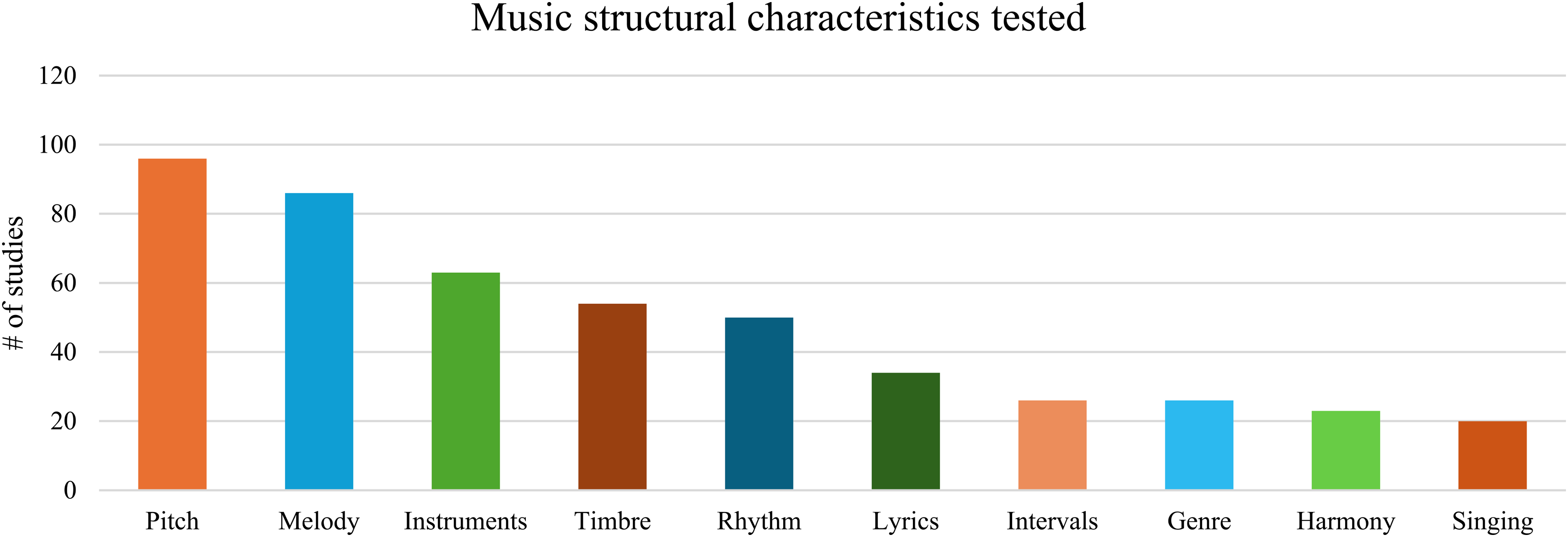
Music perception – structural characteristics tested.
Most CI users, particularly due to technology limitations, find pitch shifts difficult to identify (Au et al., 2012; Bartel et al., 2011; Caldwell et al., 2016). A number of studies measured the pitch shift range a CI user can identify with a large variability in findings. For example, studies reporting on pitch identification found it could be less than one semitone through to more than an octave (Drennan et al., 2015; Duret et al., 2021; Gu et al., 2017; Hossain et al., 2016). However, in these studies, participant numbers, age group, and interventions differed. In the Drennan et al. (2015) (n = 114) study, the age groups were older and included bilateral and unilateral CI users. The Gu et al. (2017) (n = 41) study investigated younger Korean participants and only considered unilateral CI users, while Duret et al. (2021) (n = 41) only assessed older bimodal CI users. This disparity in cohort size, age difference, hearing devices, different testing settings (refer under Settings), and a variety of perception tasks (detailed in the following) means it is difficult to conclusively say why there might be differences in pitch discrimination between CI recipients.
Not being able to hear pitch shifts impacts the ability to identify melody (Gfeller et al., 2005; Gfeller et al., 2019; Kim et al., 2012; Sandmann et al., 2010). Music characteristics were often tested together and when pitch identification was the focus, the study may have also included testing melodies, or musical contours (n = 72).
The form of musical sounds used in the research were real-world music and familiar songs (n = 29), pure tones (similar to those used in a hearing test) (n = 20), melodic contours, and music composed specifically for test usage (n = 12), free tones played on an instrument or computer (n = 10), modified music (n = 9), nursery rhymes (n = 8), different genres such as popular or classical music (n = 5), or unfamiliar music (n = 2). The reasons for the use of specific music types were explained in each of the studies, but these are too numerous to mention here. However, some common reasons were to replicate real-world music listening experiences (e.g., Gfeller et al., 2019), to understand how music is identified (e.g., Grasmeder & Verschuur, 2015), or to isolate features that contribute to music perception (e.g., Camarena et al., 2021; Spitzer et al., 2021).
CIs—Pitch and Melody.
Pitch discrimination for CI users was tested in 78 studies and 41 of these compared CI users' discrimination with TH persons. Pitch perception was well below that of TH persons (Boeckmann-Barthel et al., 2013; Bruns et al., 2016; Cooper et al., 2008). However, due to a variation in the cohort numbers and ages, it was difficult to make direct comparisons between studies. Boeckmann-Barthel et al. (2013) compared 17 CI users (median age = 58) and 11 TH individuals (median age = 35); Bruns et al. (2016) studied 53 CI users and 53 TH individuals, all of whom were age and gender matched; while the Cooper et al. (2008) cohort comprised 12 CI and 30 TH, but the TH were not age matched to the CI users.
Several studies found CI users who undertook music training or therapy after their cochlear implantation had at least a small improvement in pitch discrimination than CI users who did not, but usually poorer than TH listeners (Gfeller, 2001; Hutter et al., 2015; Jiam et al., 2019; Kim et al., 2012; Magele et al., 2022).
Many different listening modes, or comparisons, with CIs, were tested (see examples in Table 9), which made it difficult to directly compare outcomes between studies. As examples; one study had 11 participants of older CI recipients (Magele et al., 2022), another had nine new CI and 13 experienced CI users (Seeberg et al., 2023), another reported on 21 participants who used a self-administered rehabilitative software (Smith et al., 2017).
Some of the Different Modes and Comparisons Used in Music Perception Testing.

Note. Bilateral means a CI in each ear, bimodal means a CI in one ear and an HA in the other, unilateral means a CI in one ear and nothing in the other, Hybrid means a CI and HA in the same ear.
The only consensus in pitch discrimination testing was that there was wide variation of accuracy between individuals (Adams et al., 2014; Buechner et al., 2020; Chung et al., 2022; Cousineau et al., 2010). While many studies (n = 45) reported that pitch and melody perception for most CI users was inaccurate (e.g., Ambert-Dahan et al., 2015; Bartel et al., 2011; Boeckmann-Barthel et al., 2013), Ping et al. (2012) recounted that CI users could recognize a pitch change, but they could not always perceive the direction of the change. Luo et al. (2014a; 2014b) reported that the CI participants in their studies performed similarly to TH individuals.
Comparisons were made in some studies between participants who had a musical background and those who did not. Previous musical training was correlated with improved perception outcomes in a number of studies (Camarena et al., 2021; Cheng et al., 2013; Cooper et al., 2008; Kong et al., 2004; Leal et al., 2003; Siedenburg et al., 2020; Uys & Van Dijk, 2011). However, at least three articles reported training prior to receiving a CI was not highly correlated with pitch perception (Gfeller et al., 2005; Lu et al., 2014; Migirov et al., 2009).
Seventy-five studies tested melody recognition, all of which used different melodies, genres, settings, or delivery methods. Donnelly et al. (2009) maintained that limitations in recognizing melody within harmony significantly impaired music perception. High frequencies, which a CI usually restores (D’Alessandro et al., 2022), helped with melody recognition (Kong et al., 2011).
There is some controversy about the benefits of residual or bimodal hearing (CI in one ear and HA in the other) on music. In one study, speech improved with bimodal hearing but not music (Crew et al., 2015). In other studies, the ability to hear lower pitches either in the implanted ear through preserved residual hearing, or in the contralateral ear (with TH or a HA), improved melody perception (Crew et al., 2015; D’Alessandro et al., 2022; Gfeller et al., 2010; Harris et al., 2011; Singh et al., 2009). However, Hossain et al. (2016) reported that low frequency acoustic information in a simulation for three bimodal users did not consistently provide music perception benefit.
By contrast, D’Alessandro et al. (2022) suggested that CI users with current bimodal technology tested significantly better for music appreciation than those with a CI alone. Kelsall et al. (2017) reported that those who had a hybrid CI (HA and CI in the same ear) were more satisfied with music quality. Outcomes for stereo music enjoyment between bilateral and bimodal CI suggested bimodal CI users could not detect stereo, and thus stereo did not increase music enjoyment, hence there was no significant benefit in stereo listening. (Buechner et al., 2020; Spitzer et al., 2019). Despite this, overall music enjoyment increased with the HA and CI together, confirming findings in earlier research (El Fata et al., 2009; Fitzpatrick et al., 2009; Gfeller et al., 2007; Sucher & McDermott, 2009; Vannson et al., 2015). Veekmans et al. (2009) reported appreciation of music rose after a second CI (bilateral), and that bilateral users demonstrated better perception and were more positive about music.
At least six studies tested pitch perception in music for those with CIs, because of the close relationship between lexical intonation for understanding tonal languages (Gu et al., 2017; Jo et al., 2023; Kim et al., 2012; Petersen et al., 2009; Siedenburg et al., 2020; Wang et al., 2011). Gu et al. (2017) suggested music training should start within the first six months after implantation because in this initial period the brain is undergoing cortical plasticity changes. However, the study researched music impact on tonal language and the authors acknowledged that music and speech rehabilitation are different processes, further qualifying this by saying more investigation was necessary to understand any benefits in early music training on tonal language recognition.
HL or HAs—Pitch and Melody
Increased music perception for HA users has the potential to improve QoL. A recurring theme in this review was that the impact HL or HAs have on music is under researched (Gfeller et al., 2019; Kirchberger & Russo, 2015; Uys et al., 2012; Uys & Van Dijk, 2011). Both Kirchberger and Russo (2015) and Uys and Van Dijk (2011) created a music perception test for HA users.
As previously mentioned, just 18 articles were found that focused on music impact related to HL or HAs. Seven of these studies tested pitch and melody perception with HL or HAs and found participants generally scored lower than those with TH (Cai et al., 2016; Kirchberger & Russo, 2015; Lee et al., 2023; Siedenburg et al., 2020; Uys et al., 2012; Vatti et al., 2014; Wilhelm, 2020). Uys and Van Dijk (2011) observed that while HA wearers could perceive, identify, and appreciate music, those with better outcomes indicated they had previous music training. Nevertheless, in another study, musicians reported HAs distorted melody (Uys et al., 2012).
Pitch and timbre were the main features of the study by Lee et al. (2023). This explored situations where emotion and lexical intonation are based on pitch and where, as a result, it may be important to understand whether those with HL or HAs can recognize prosody, the patterns of rhythm and intonation, in speech.
Timbre and Instruments
Seven studies associated HL and HAs with difficulties in timbre and instrument identification and 63 studies tested CI users on the identification of musical instruments. Timbre is the quality and characteristic sound of an instrument or voice, distinct from pitch, intensity, or volume. Timbre discrimination is described as the ability to distinguish between instruments and segregate sound sources playing at the same pitch (Galvin et al., 2008; Gfeller et al., 1998). Timbre adds “color” and tonality to music, which gives much of the emotion, pleasantness (Gfeller & Lansing, 1991), and dissonance or consonance (Ambert-Dahan et al., 2015; Caldwell et al., 2016; Camarena et al., 2021; Jo et al., 2023; Kirchberger & Russo, 2015). It is particularly important for discerning melody in a multi-instrument setting or picking out a melody line among many singers. It renders music greater than the individual sounds produced and is seen as important for music quality (Prentiss et al., 2015) and perception (Gfeller et al., 2010).
CIs—Timbre and Instruments
Instrument identification is often used as a proxy measure for timbre perception, and the 63 studies that tested CI users on the identification of musical instruments commonly found that CIs degraded sound, making both timbre and instrument perception difficult. For many participants, a greater number of instruments sounded like noise (Gfeller et al., 2019). However, Rahne et al. (2011) indicated timbre identification was feasible, but discrimination of small differences in sound quality or frequencies between instruments was significantly reduced for CI users. Meister et al. (2014) found CI participants could detect small modifications in timbre cues, but other studies reported CI users had a limited ability to discriminate instruments (Fuller et al., 2022; Heng et al., 2011).
HL or HAs—Timbre and Instruments
Seven studies associated HL and HAs with difficulties in timbre and instrument identification. Siedenburg et al. (2020, 2021) tested younger TH adults and older HL listeners, finding younger adults and those with previous music training had some advantage in discriminating timbre and melodies. Looi et al. (2008b) reported that although HA users had better pitch perception than CI users, this did not translate into better timbre perception. With HL, wearing a HA indicates that timbre may be degraded (El Fata et al., 2009; Gfeller et al., 2005), and difficult to identify, and the literature reports that this significantly reduces music pleasantness, appreciation, and enjoyment (Fuller et al., 2022; Gfeller et al., 2019; Gu et al., 2017; Jiam et al., 2019; Jung et al., 2010; Kim et al., 2012; Sandmann et al., 2010; Seeberg et al., 2023).
Rhythm
Rhythm is considered the major musical element CI users focus on to identify melody, but this does not necessarily increase enjoyment. Forty-eight studies tested rhythm for CI users, but only two studies examined rhythm for late-deafened adults with HL or HAs. Rhythm in music is a structured pattern of sound and is evident by a regular pattern of strong and weak beats. This is called the time or meter of a music piece. However, music rhythm also includes the relative spacing, or measured flow, between notes to create movement and keep the music flowing, and the pace (speed) at which the music is played (Levitin et al., 2018). It is a central aspect of all music, often creating feeling, familiarity, emotion (Vannson et al., 2015), and expectation, and may be a principal factor for melody identification (Jung et al., 2010; Peterson & Bergeson, 2015). Rhythm also often denotes the music genre because it can be quite distinctive (Fowler et al., 2021; Gfeller et al., 2005; Jung et al., 2010; Looi et al., 2008b; Luo et al., 2014b; Peterson & Bergeson, 2015).
CIs—Rhythm
Rhythm was the major musical structural component that CI users use to identify a melody (Cooper et al., 2008; El Fata et al., 2009; Gfeller et al., 2005; Jo et al., 2023; Lassaletta et al., 2008b). Nevertheless, being able to identify a rhythm does not necessarily increase enjoyment (Lassaletta et al., 2008b; Leal et al., 2003).
Much of the research found CI users identified rhythm almost as well as TH adults (Bruns et al., 2016; Calvino et al., 2016; Fuller et al., 2022; Kong et al., 2004; Lassaletta et al., 2008a; Magele et al., 2022; Wright & Uchanski, 2012) and could identify rhythm errors (Duret et al., 2021), although they preferred simpler or slower rhythms (Caldwell et al., 2016; El Fata et al., 2009; Gfeller et al., 2019; Kim et al., 2012). Thus, rhythm aided melody identification (Au et al., 2012; Gfeller et al., 2005; Jo et al., 2023; Kong et al., 2011; Looi et al., 2015; Lu et al., 2014; Luo et al., 2014b; Magele et al., 2022; Peterson & Bergeson, 2015; Seeberg et al., 2023; Wright & Uchanski, 2012). Conversely, Lassaletta et al. (2008a) said that despite 78% of CI users being able to identify rhythm there was no association between enjoyment and identifying rhythm, while Leal et al. (2003) reported that identifying rhythm was not associated with identification of any other musical aspects such as pitch or timbre.
Although rhythm identification varied widely at around 40% accuracy (Calvino et al., 2016; Fuller et al., 2022), Bruns et al. (2016) reported 86% of CI users could identify rhythm correctly, and Jo et al.(2023) reported identification was as high as 94%, which is on par with TH (Kong et al., 2004). Six studies removed rhythm from melodies before testing to ascertain whether CI users were utilizing rhythm as a prompt for melody identification. By making all notes the same length and the silence between notes equal, the strong and weak beats were missed, thereby removing rhythmic cues, forcing the identification of melody from sound alone (Kong et al., 2005; Laneau et al., 2006; Lu et al., 2014; Maarefvand et al., 2013; Nimmons et al., 2008; Singh et al., 2009). When rhythm was removed, Kong et al. (2005) found the average identification of melody ranged from 19% to 90%. However, there were only five participants and the results were highly dependent on technology and listening condition such as HA or HA and CI. Lu et al. (2014) found melody identification without rhythm could drop as low as 7%. Thus, when rhythm was removed, these studies found that identification of melodies was considerably harder.
HL or HAs—Rhythm
Studies of children with HL, HAs, and CIs show a significant negative impact on rhythm identification (Gfeller & Lansing, 1991). However, this review found only two studies that investigated rhythm in late-deafened adults with HL or HAs (Cai et al., 2016; Uys & Van Dijk, 2011). There was no seeming difference between HA brands or between HA and CI in identifying rhythm (Looi et al., 2008a), although Uys and Van Dijk (2011) reported HA users could not recognize rhythm as well as TH adults.
Music Appreciation
While music perception testing was the primary focus for almost all the studies (n = 116), 98 studies commented on music appreciation or enjoyment as an ancillary component of testing. Subjective assessments included quality (n = 56) and naturalness of sound (n = 30) or identifying emotion within music (n = 18) (see Figure 7).
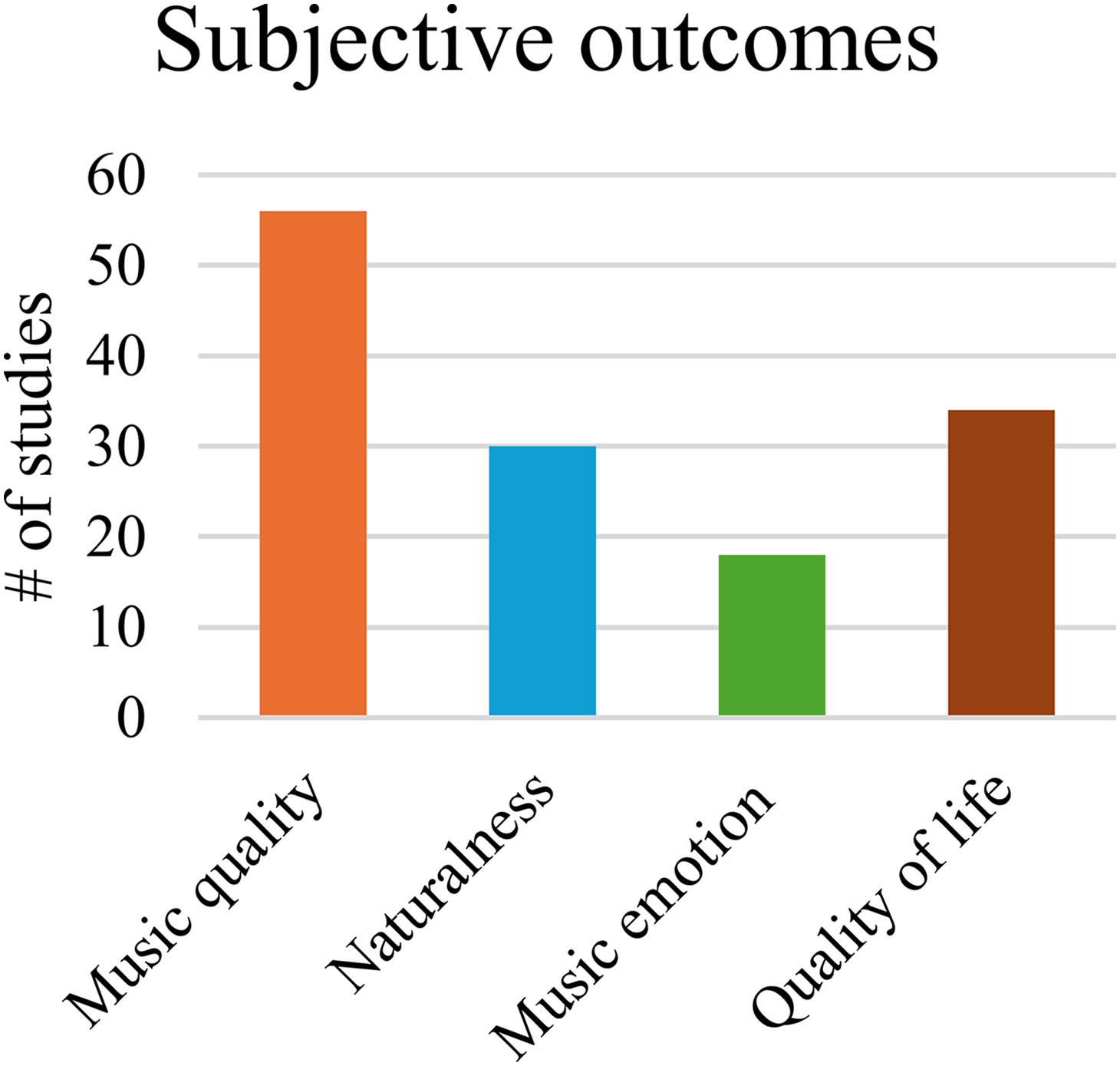
Studies that reported subjective outcomes of music appreciation.
Music appreciation assessment was typically undertaken using a questionnaire such as MuRQoL (described previously) usually incorporated with music perception testing. Music appreciation is subjective (Looi et al., 2019; Madsen & Moore, 2014), and individual (Gfeller et al., 2000; Vaisberg et al., 2019), thus making it difficult to measure.
Enjoyment and appreciation of music are influenced by more than sound (Gfeller et al., 2000). They are based on multiple attributes of music (Vaisberg et al., 2019), not just the structural components but also the feelings conveyed (Uys & Van Dijk, 2011), as well as the emotional reward (Alexander et al., 2011). Siedenburg et al. (2020) suggested music training and background improved appreciation.
CIs—Appreciation.
Thirty-four studies reported that music quality is delivered poorly through current CI technology, making it harder for a CI user to enjoy music (Adams et al., 2014; Alexander et al., 2011; Bartel et al., 2011; Calvino et al., 2016; Cheng et al., 2013; Choi et al., 2018; Cooper et al., 2008; Cousineau et al., 2010; Donnelly et al., 2009; Drennan et al., 2015; Dritsakis et al., 2017; Frosolini et al., 2022; Galvin et al., 2008; Gfeller et al., 2005; 2006; 2007; 2019; Grasmeder & Lutman, 2006; Jung et al., 2010; Kelsall et al., 2017; Kong et al., 2011; Lassaletta et al., 2007; Leal et al., 2003; Looi et al., 2008b; Luo et al., 2014b; Nasresfahani et al., 2022; Prentiss et al., 2016; Roy et al., 2012; Spangmose et al., 2019; Spitzer et al., 2021; Swanson et al., 2009; Vieira et al., 2018; Zeng et al., 2014; Zhao et al., 2008). Seven of these studies found that poor quality perception of music resulted in disappointment and impacted appreciation and enjoyment (Alexander et al., 2011; Caldwell et al., 2016; Camarena et al., 2021; Cheng et al., 2013; Dritsakis et al. 2017; Jo et al., 2023; Mirza et al., 2003).
Perception of musical characteristics does not necessarily indicate that what is heard is good quality (Bartel et al., 2011; Cheng et al., 2013; Wright & Uchanski, 2012). Nevertheless, enjoyment is not necessarily dependent upon quality or accurate music perception. Drennan et al. (2015) reported that CI participants' general attitude to music improved after implantation, although it remained less positive than before HL although many late-deafened adults still found music pleasant (Dritsakis et al., 2017; Duret et al., 2021; Roy et al., 2012; Spangmose et al., 2019).
There are also personal aspects that have an impact on music enjoyment. D’Alessandro et al. (2022) suggested that while music perception was not at the pre-HL standard, enjoyment of CI users was also dependent on each individual's personal situation and emotional responses. Fuller et al. (2022) found subjective music quality was correlated with time spent listening, which increased familiarity and improved enjoyment. Despite this, music was considered less pleasant than by those with TH (Gfeller et al., 2005), in part because of poor balance between music components.
HL or HAs—Appreciation
Looi et al. (2019) examined the impact different levels of HL have on music and claimed that those with a mild to moderate loss still appreciated music, unlike those with a severe to profound loss who had reduced discrimination of melodic and harmonic highlights. As HL progresses, from mild through moderate to severe or profound, music quality is said to degrade and therefore appreciation becomes a subjective experience (Uys & Van Dijk, 2011), and the joy of music may be lost (Leek et al., 2008) as the richness of sound becomes clouded (Fuller et al., 2019). The study by Cai et al. (2016) found familiarity and memory played an important part in subjective assessment of music quality.
HA technology was said to still fall short in conveying music with pitch distortion, missing frequencies, feedback, and sound balance, which made music quality worse (Kelsall et al., 2017; Leek et al., 2008; Madsen & Moore, 2014). Nevertheless, current HAs were reported as providing better quality music than earlier technologies and that had reduced at least some of the problems of music enjoyment (Adams et al., 2014; Madsen & Moore, 2014).
Suggestions for ways HA users could improve music perception were reported in two studies by Buyens et al. (2014, 2018) who found that adjusting the balance of sound, to bring out the melody from the accompaniment, improved music listening. Greasley et al. (2020) compared music experiences of HA users with audiologists' experiences. While a small percentage (13%) of audiologists addressed music for most HA users, the study reported 46% of audiologists found greater than half of the patients did not ask about music.
Single-sided deafness impacted music quality. In principle, single-sided deafness means being deafened in one ear and hearing in the other. Single-sided deaf participants found music with a HA, when compared with their hearing ear, sounded more unnatural, unpleasant, and indistinct, lacked stereo sound, and was confounded by distortion and tinnitus (Cai et al., 2016; Meehan et al., 2017).
Music Participation
Three studies examined how musicians cope with HL, finding they have performance anxiety making performing challenging and fatiguing, and that they face stigma (Fulford et al., 2011; Fulford & Ginsborg, 2014; Uys et al., 2012). Some HA users stopped playing or reduced their participation (Greasley et al., 2020; Madsen & Moore, 2014). While some CI users played instruments (Bartel et al., 2011; Frosolini et al., 2022; Jiam et al., 2019; Lu et al., 2014; Maarefvand et al., 2013), the main participation activity for CI users was listening to music (n = 33). As described previously, music participation can involve listening, playing an instrument, singing, attending music venues, or incidental situations such as listening to music on television, radio, or at the supermarket. In this research, participation in music was generally referred to as music listening, with participation often based on personal attitudes and tenacity to continue to enjoy or regain engagement with music (Gfeller et al., 2019).
CIs—Participation
Listening was the primary music participation but studies which mentioned listening to music showed no consistency in findings for CI users. This included listening more than before cochlear implantation (n = 7), listening less than before cochlear implantation (n = 14), listening the same as before their cochlear implantation (n = 1), listening (n = 1) or not listening as often as TH people (n = 1). Paquette et al. (2022) found a high level of CI users listened to music actively. Nasresfahani et al. (2022) found musical engagement was no different between CI users and TH controls. However, in the study by Leal et al. (2003) 11 CI users did not enjoy listening to music although six did. Dritsakis et al. (2017) found that while music was important for CI users, they still engaged less than TH people. In the research by Adams et al. (2014) older CI users listened to music less frequently and their enjoyment was lower than younger TH people. Wilhelm (2020) found that hearing loss that occurs with aging negatively affects QoL, creating barriers to music listening (while Caldwell et al. (2016) stated CI users spent less time engaging with music than before their HL. Furthermore, after their cochlear implantation, some avoided music, or places where music was playing, altogether (Nasresfahani et al., 2022; Veltman et al., 2023). By contrast, Migirov et al. (2009) reported that despite a decline in music listening, most CI users resumed their musical activities.
There seems to be a relationship between listening to music and enjoyment (Lassaletta et al., 2008b). The more someone listens, the greater the enjoyment (Chung et al., 2022; Lassaletta et al., 2007). A clear rhythm and familiar music increased enjoyment (Lassaletta et al., 2008a), but there was no correlation between enjoyment and participant demographics, although, as also reported by Philips et al. (2012), those with residual hearing found music listening was enhanced. Chung et al. (2022) noted that enjoyment was related to listening hours, but after a cochlear implantation, listening time diminished, particularly in older recipients. According to Philips et al. (2012) it is unclear whether listening more enhances music or whether those who like listening tend to listen more.
Moving away from a tightly controlled test setting, and thus more representative of real-world music experiences, Au et al. (2012) invited TH and CI patrons to attend a concert where the music had been specifically composed for CI users. This experimental music took into consideration some of the limitations of CI processors, such as the need for greater interval discrimination to make pitch changes clearer. At the concert, patrons were asked to fill in a questionnaire after each music piece to rate identification and location of instruments, engagement, and enjoyment. Because of the high number of responses (n = 407), 44 TH and 44 CI users were age matched, and their responses were compared. There were no significant differences between groups when measuring enjoyment and engagement. However, CI users rated understanding, instrument identification, and location significantly lower than those with TH.
When Gfeller et al. (2019) involved CI musicians in their research, it became apparent that an individual’s attitudes to music correlated with persistence. The musicians reported the key to their achievements was perseverance, constant repetition, immersion, and intensity, and staying positive while keeping expectations realistic despite poor quality sound. However, the study indicated that not everyone has the capacity and tenacity to apply themselves in this way. This study, as well as studies by Cooper et al. (2008) and Leal et al. (2003), supported the fact that previous music background may improve CI music outcomes for identification of pitch and melodies. D’Alessandro et al. (2022) suggested that clinicians should consider psychological support for those with CIs and advocate patience and provide motivation for improved music perception.
Perseverance was also a driving factor in seeking the emotional reward from music (Ambert-Dahan et al., 2015), although Paquette et al. (2018) claimed emotion perception in music was impaired for CI users. Drennan et al. (2015) reported that CI participants' general attitude to music improved, although it remained less positive than before HL.
HI or HAs—Participation
Five articles examined the impact, behavior, and ways of coping with HL for musicians who may or may not wear HAs (Fulford et al., 2011; Fulford & Ginsborg, 2014; Uys et al., 2012; Vardonikolaki et al., 2020; Vatti et al., 2014). These studies suggested HAs were not very helpful with music performance, particularly in group situations. Fulford and Ginsborg (2014) observed musicians' verbal and nonverbal communication during music rehearsals for those with various levels of HL, some of whom wore HAs, and found that HL had an impact on their ability to hear the conductor. They utilized a HA to help with communication; however, some reported a HA did not help with discriminating their place in the performance or enjoying the sounds from their fellow musicians. They relied on visual clues such as the raising of an instrument to “show” them their place in the score.
Another study by Fulford et al. (2011) found HL had a tangible influence on music making. Professional musicians found HL created physiological and social challenges, influencing the way they expressed their musicality, their choice of instrument, wearing or not wearing HAs, and ultimately, their careers.
Discussion
This review identified that research in the context of HL, HAs, or CIs focused on testing the accuracy of music perception. Despite late-deafened adults experiencing diminished hearing with different degrees of HL and a variety of interventions, music holds a similar importance to those with TH. This need for music was mostly overlooked in the research, with few studies focusing on music appreciation, enjoyment, social connectedness, or participation. Music is culturally significant and without music late-deafened adults can feel alienated from social connections due to their HL or hearing devices (Dritsakis et al., 2017; Kösemihal et al., 2023). Those who experience HL may withdraw, particularly from music-related activities, resulting in psychosocial disadvantages (Nasresfahani et al., 2022). The diversity of musical experience and engagement before HL onset (Kösemihal et al., 2023), and during or after acceptance of HAs or CIs, makes understanding and generalizing the impact of HL on music, and the consequences for individuals, more challenging (Gfeller et al., 2019).
Music perception is one way to identify what late-deafened adults hear, with the general finding of poor accuracy suggesting the need for technology to improve the music listening experience. However, as the articles in this review demonstrate, the technology of HAs (Kelsall et al., 2017; Leek et al., 2008; Madsen & Moore, 2014) or CIs still falls short of delivering music equal to the quality heard by TH people (Galvin et al., 2008). While recent technological developments for both HAs and CIs have improved music perception, they still stop short of providing a quality music experience (Adams et al., 2014; Madsen & Moore, 2014). Nevertheless, outcomes of some research suggest that despite poor music perception, some CI users enjoyed music although not equal to that of those with TH or before HL (Adams et al., 2014; Alexander et al., 2011; Calvino et al., 2016; Cheng et al., 2013; Duret et al., 2021; Galvin et al., 2008; Gazibegovic et al., 2010; Gfeller et al., 2005). The reason why some CI users enjoy music and others do not has yet to be fully understood. Music is complex and dynamic and auditory testing cannot fully explain the challenges CI recipients face in listening to music (Gfeller et al., 2019). The electric signal dramatically changes music, which sounds very different to natural hearing (Ambert-Dahan et al., 2015; Mo et al., 2022). As described earlier, there is consensus that for most CI users, CI technology is limited in providing sound quality that could be described as beautiful (Au et al., 2012). It is up to the individual's brain to interpret the signal, make sense of it, and enjoy music (Gfeller, 2022).
Most CI users found that over time, and with normal daily living, speech skill improved; however, unlike speech, music perception did not improve with casual every-day listening (Calvino et al., 2016; Gfeller et al., 2010; 2012; Magele et al., 2022). A more intensive approach seems to be required to improve music perception (Gfeller et al., 2019) and many people do not have the resilience or perseverance to pursue an intensive approach. This may lead to giving up music altogether in part because music rehabilitation programs are not readily available. Even so some programs exist, such as Bring back the Beat (Cochlear ANZ, 2024) or the Med-EL (2023) Guide to Music Rehabilitation for Adult CI recipients.
There was a lot of variation across cohorts and test materials, making it difficult to synthesize findings. Despite inconsistencies, the review found the common purpose of CI research was to objectively measure the accuracy of pitch and melody identification, as heard through a CI (n = 91). HA research featured far fewer articles (n = 18) and sought to understand experiences and sound quality with ways to improve music when HL limited perception of frequencies (Greasley et al., 2020; Looi et al., 2019; Madsen & Moore, 2014; Siedenburg et al., 2021; Uys & Van Dijk, 2011; Vaisberg et al., 2019). These HA studies also relied on self-reporting of music perception and experiences (n = 9), but when music perception was tested (n = 7), it usually related to melody recognition and did not focus on pitch discrimination. In addition, the tests often involved HA technologies such as different HA brands, music programs, or HA programming strategies (Chung et al., 2022; Gazibegovic et al., 2010; Lee et al., 2023; Uys et al., 2012). HL is associated with aging (Wilhelm, 2020), and therefore differences in participants' age will impact research outcomes. Significantly, when comparisons were made between TH adults and those with HL, HAs, or CIs, 41 studies did not age-match participants (see Figure 5).
The size of groups, with most utilizing fewer than 50 participants, may have influenced both the research methods as well as outcomes. Only 19 of the 131 studies involved more than 100 participants, and only nine of these implemented music perception testing (Bruns et al., 2016; Drennan et al., 2015; Gfeller et al., 2003; 2005; 2006; 2007; 2010; 2012; Grasmeder & Lutman, 2006). Testing music perception typically requires time and equipment, such as requiring participants to attend a clinic or laboratory, sometimes on multiple occasions, and this could be a reason for the smaller size of studies.
Where a hearing device was associated with favorable or unfavorable perception, contextual influences may have impacted outcomes (e.g., testing in controlled settings, the size of the participant group, the brand of hearing device, the duration of HL, or HA, or CI use), but these were neither consistently described nor correlated across studies. One common complaint by late-deafened adults was “I hate the sound booth” (Bleckly, 2022) because it was a negative experience usually further confirming HL. Because most music perception testing was undertaken in a controlled environment, it does not replicate real-life music experiences (Gfeller et al., 2019) and carrying out experiments that lack ecological validity may, therefore, introduce negativity.
With such heterogeneous research methods and outcomes, pooling of data for analysis and comparison between studies could not be undertaken. This inconsistency in approach, coupled with a lack of suitable data collection instruments, indicates that the subjective importance of music for late-deafened adults has not yet been recognized. Identifying what can be heard (perception) is important, but given how vast and personal music experiences are, this limited scope of investigation does not include someone's personal view of their experience or the impact of music on their QoL. This suggests the impacts of HL and hearing devices on music are not well understood (Gfeller et al., 2019) and future research needs to investigate the personal impacts on QoL.
Limitations
Data were unable to be pooled for analysis due to heterogeneity of studies, demonstrating variability in design and methodologies with incongruity in both number of and type of participants. Participants had different degrees of HL, over different time frames using diverse hearing devices, making it difficult to compare outcomes. Study selection from such a large pool of research that focused mostly on one aspect of music may have introduced a selection bias.
Two studies found there were no suitable music perception tests for HA users (Kirchberger & Russo, 2015; Uys & Van Dijk, 2011), and there were no standard tests or testing procedures for CI music perception. Therefore, numerous research methods were employed with no standardized approach. This resulted in a wide variety of outcomes, seeming contradictions, and a lack of consistency. It is difficult, therefore, to make definitive comparisons between studies, either in methods used or outcomes, because of the high variation in the number and type of studies covering the different technologies.
Conclusion
The purpose of the review was to investigate the current state of knowledge surrounding music, HL, and hearing devices to understand how late-deafened adults feel about the music they can hear and how this impacts their lives. The review highlighted the substantial focus on music perception, in particular in relation to CIs. While the studies described in this review mentioned both music appreciation and music participation, the researchers investigated these aspects in relation to perception. Testing perception is important for technological development, but this is, from the CI users' perspective, less important than overall music experience (Gfeller et al., 2019). As a result, the review found only limited research into the subjective aspects of music–appreciation and participation–suggesting the personal impacts of sound degradation caused by HL are unaddressed. Only two research studies examined QoL and emotional responses to music for those with HL (Bartel et al., 2011; Dritsakis et al., 2017), thus little is known about the psychological, psychosocial, or personal impacts of losing music or music quality.
There were more than 46 different questionnaires or music perception tools used (see Supplementary Material) making it difficult to compare and ascertain whether or if the study design impacted outcomes. However, one strong theme was HL and hearing devices do have an impact on music perception, appreciation, and participation, but how much and in what way varies greatly between individuals.
Future studies would do well to investigate where changes in hearing ability make listening to, enjoying, or engaging with, music a challenge for both musicians and nonmusicians.
Supplemental Material
sj-docx-1-tia-10.1177_23312165241287391 - Supplemental material for Music Perception, Appreciation, and Participation in Postlingually Deafened Adults and Cochlear Implant Users: A Systematic Literature Review
Supplemental material, sj-docx-1-tia-10.1177_23312165241287391 for Music Perception, Appreciation, and Participation in Postlingually Deafened Adults and Cochlear Implant Users: A Systematic Literature Review by Felicity Bleckly, Chi Yhun Lo, Frances Rapport and Robyn Clay-Williams in Trends in Hearing
Supplemental Material
sj-docx-2-tia-10.1177_23312165241287391 - Supplemental material for Music Perception, Appreciation, and Participation in Postlingually Deafened Adults and Cochlear Implant Users: A Systematic Literature Review
Supplemental material, sj-docx-2-tia-10.1177_23312165241287391 for Music Perception, Appreciation, and Participation in Postlingually Deafened Adults and Cochlear Implant Users: A Systematic Literature Review by Felicity Bleckly, Chi Yhun Lo, Frances Rapport and Robyn Clay-Williams in Trends in Hearing
Footnotes
Author Contributions
FB prepared the protocol, designed and performed searches, prepared lists for blind review, conducted a blind review with the other authors, analyzed the final included articles, and wrote this review. RC-W, FR, and CYL made substantial contributions to the review design, performed equal sections of the blind review, oversaw data analysis, reviewed this document for important intellectual content, and revised and gave final approval for publication. FR conducted an audit of 21 articles to ensure rigorous reporting mechanisms were in place before the article was written.
Disclosures
CYL has provided consulting services for Cochlear Limited in the past. This review was conducted as part of a PhD research project whereby the primary author (FB) received a university merit-based scholarship (RTP).
Declaration of Conflicting Interests
The authors declared no potential conflicts of interest with respect to the research, authorship, and/or publication of this article.
Funding
The authors received no financial support for the research, authorship, and/or publication of this article.

Statement of Author Position
FB has an epistemic understanding of HL and CIs related to music; a musician who became a late-deafened adult and, years later, received bilateral cochlear implants and returned to music.
Supplemental material
Supplemental material for this article is available online.
References
Supplementary Material
Please find the following supplemental material available below.
For Open Access articles published under a Creative Commons License, all supplemental material carries the same license as the article it is associated with.
For non-Open Access articles published, all supplemental material carries a non-exclusive license, and permission requests for re-use of supplemental material or any part of supplemental material shall be sent directly to the copyright owner as specified in the copyright notice associated with the article.
