




Abstract
This article aims to investigate the role of cultural differences within the current international business environment affected by technological advances, concentrating on the negotiation procedure and its outcome. The conclusion is based on the analysis of email interviews between top negotiators from the Czech Republic with long-term professional experience worldwide. The authors suggest considering a salesperson culture as a dynamic framework of top-down–bottom-up processes across cultural levels. Research indicates that, despite a reduction in costs thanks to the migration of negotiation meetings to online platforms, negotiators still prefer face-to-face meetings as the primary mode when managing intercultural nuances.
Keywords
Introduction
Globalization is the ongoing integration, convergence and interconnectedness of national economies, political affairs, mutual development, business, and culture. Together with declining trade barriers, business negotiations evolve every day and negotiating across cultures becomes an inevitable part of being competitive when doing business. The current challenge of trade imbalance, trade tensions between countries resulting in trade protections, and a slowdown of the economy are drivers of deglobalization that can be described as the process of diminishing interdependence and integration, typically between countries (Kim et al., 2020). This debate between globalization and deglobalization is not a new development, but recent phenomena since the pandemic in 2020 have revived the trend (Abdal & Ferreira, 2021; Callaghan, 2021). Intercultural specifics are an integral part of international business negotiation and remain present regardless of the current shift in these cyclic forces. Although negotiations held in a domestic or international environment have much in common, cultural specifics among the parties from various cultural backgrounds who do not share the same ways of thinking, feeling, and behaving are the factors behind most of the difficulties in international negotiations creating misunderstandings in communication.
Previous studies (Helmold et al., 2020; Liu et al., 2012) point out two essential types of negotiation in the international context: intracultural and intercultural negotiations. As Kecskes (2018) highlights, intracultural negotiation is based on cultural similarity and fields of experience among partners. Intercultural negotiation is rather about effective intercultural communication, and it encompasses the challenges arising from intracultural communication.
Technology makes communication between long-distance business partners faster and easier in the sense of accessibility as it removes obstacles of distance and time, but it also poses several challenges. Online communication has become generally more direct, but with an international aspect, it may also amplify cultural rhetorical differences and variations in habitual practices.
Despite all the current developments in globalization and technology, it is important not to forget the very essence of trade and the interaction of cultures, especially in its international form. Trade or selling (and purchasing as their mirror image) is the result of a whole process that begins with the creation of a product for the purpose of its commercialization. Its manufacturer or creator is often convinced that the market is waiting for their product with open arms and is then disappointed when this reaction does not transpire. This message is usually brought to a producer by the individual who negotiates the sale and also executes it if an agreement is made.
There is a trader or, even better, a salesperson who undoubtedly plays a role in concluding a successful business deal. The extent of this role is always determined by a lengthy discussion between both parties (producer and seller). However, the need to have a good seller in the process must be almost indisputable now. Who is a salesperson in international trade, though? What is their role and significance for the results of international trade negotiations that are influenced by cultural dimensions? To what extent should the salesperson be competent in the field of intercultural communication? These are questions that are relatively difficult to find answers to in the professional literature. Is it because, in a way, the ability to sell is a distinctive craft that does not seem to require a lot of knowledge or skills? Are personal qualities the only decisive factor? Conversely, is knowledge, especially in the field of intercultural communication, key here? Does it enhance a salesperson and help him or her achieve the desired results in business negotiations?
This article primarily asks the research question of whether, despite all the efforts of globalization, integration, and technological connectivity, intercultural specifics still influence international business negotiation and its result. The impact of the geographical region, the experience gained in the practice of international trade and, last but not least, the role of the pandemic, which changed the approach to negotiation, is investigated.
First, the literature review studies the current knowledge of multilevel dynamics of culture and its implications for the business negotiation process including the factors determining its result. Considerable attention is brought to the issue of transitioning business communication to online platforms, especially due to the COVID-19 pandemic that made face-to-face international communication almost impossible. The questions asked in this article aim at investigating what determines the outcome of business negotiations: whether it is the effort to conclude a good deal at any cost or to ensure the cultural peace of both parties. Second, we examine what cultural differences stand out most in cultural clashes, and finally, whether cultural differences in the online environment are decreasing as a result of eliminated rituals, or, on the contrary, whether this form of communication brings even more misunderstandings because of the inability to perceive the other’s nonverbal communication.
The methodology introduces the primary research conducted among experienced top-salespeople and other key business negotiators in international business all of Czech origin via questionnaires/structured email interviews. Based on the findings, several practical implications are discussed.
This article is divided into several sections. Following the introduction, there is a synopsis of the literature review on levels of culture and the role of culture in business negotiation, with a focus on e-negotiation. The next section outlines the methodology used in the primary research. The results and discussion follow.
Digital Culture in a Multilevel Perspective
In the past two decades, the emergence of new technologies and the digital transformation have together with global market dynamics significantly shaped the role of seller and business interactions in the international environment. According to Ahearne et al. (2022), we can observe three major changes, namely new interactive media, the multiplicity of buyer-seller interactions, and new interaction-support technology.
Widespread digitalization is the most important feature of the current business environment. As Gere (2002, p. 12) states, “digitality can be thought of as a marker of culture because it encompasses both the artefacts and the systems of signification and communication that most clearly demarcate our contemporary way of life from others.”
The digital environment through technology is affecting not only the way people interact but also how they behave and think. By shaping the way organizations interact with their stakeholders, digital culture is focused on leveraging technology to achieve business objectives. The digital environment is known for breaking down hierarchy and power distance, bringing different dynamics into intercultural negotiation. The concept of digital culture is mainly researched in terms of customer relations or building organizational cultures and digital businesses (Ulijn et al., 2001; Wokurka et al., 2017), although not in the context of business negotiations.
We add the dimension of digital culture to the multilevel construct of culture consisting of various dimensions from the global to the individual existing within each one (Erez & Gati, 2004) (see Figure 1).
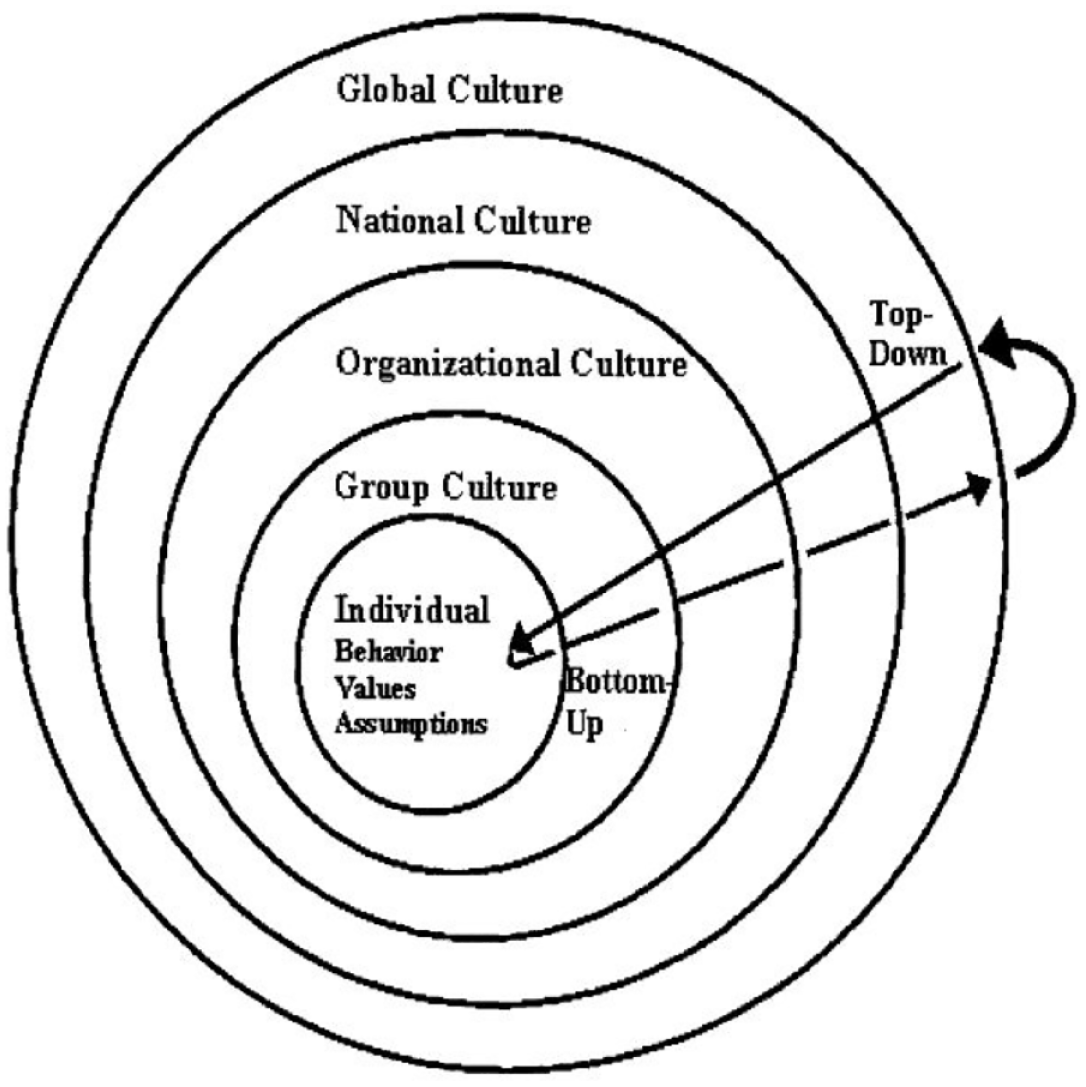
The dynamic of top-down–bottom-up processes across levels of culture.
As Leung et al. (2011) proposes, the construct goes from a global culture, often created by multinational organizations, through national cultures varying within nations and geographic regions. The organizational cultures, determined by the work of salespeople in the industry or by the values of the founders, then represent the preexisting cultural values and assumptions of an organization while sharing common national cultural values (Alofan et al., 2020). The previous research (Schneider et al., 2013) confirms that although national culture is influential, it is not a determinant for organizational culture. Rather than that, organizational culture is embedded in national culture (Knein et al., 2020). Fischer et al. (2005) claim that effects of national culture on work behavior are mediated by organizational culture and practices. An individual level containing cultural values acquired through socialization is found at the bottom. A similar concept distinguishing external layers of artefacts and behaviors and internal layers of values reflecting the level of their visibility was identified by Schein (2010).
According to Erez and Gati (2004), any change first occurs at the most external layer of behavior, and when shared by individuals in the same cultural context, this initial change continuously becomes a shared value that characterizes the unit (such as working groups, organizations, or nations). Similarly, Schein (2010) continues that, with the same behaviors being shared by members of the same group, these acts turn first into norms and finally into values and basic assumptions. That is also the case for the evolving digital culture landscape that operates by fostering the mindsets and behavior to integrate new ways of working. The different pace of change for the cultural levels is incomparable.
Culture and e-Negotiation
Business negotiators are approaching the whole process of negotiation and deal making itself with different attitudes in mind influenced by their culture or so-called collective programming that usually creates certain cultural filters (Vindry & Gervais, 2019; Zhang et al., 2021). Studies have shown that individuals frequently exhibit systematic changes in behavior when operating in cyberspace without revealing their true identity (Amichai-Hamburger & Vinitzky, 2010). Studies also show that cultural differences can influence negotiations in many ways as individuals from different cultural backgrounds adopt various strategies of conflict resolution (Deardorff, 2018). We can generally perceive the goal of negotiation as oriented on the contract (a win-lose competitive strategy) or a relationship in which negotiators aim at a collaborative process of compromise or a problem-solving attitude (Fang et al., 2017). The way in which people think about negotiation has changed dramatically in the last decades. Studies show that while there were visible cultural similarities at the national level, there were also preferences mediated by profession, regardless of nationality. Being from a different culture has no impact on the conflict resolution strategy of the negotiators (Fells & Sheer, 2019; Szkudlarek et al., 2020). For a cultural clash, we provide a definition of a new term, “cultural peace,” which we understand as the agreement between two negotiating parties of different cultural background.
Traditional research on business negotiation and buyer-seller interactions has typically focused on the negotiation process and strategies rather than the types of communication media used by negotiators as a factor affecting the negotiation and its outcome. Face-to-face interactions had been essentially assumed. The digital revolution has profoundly changed the way people around the world communicate and although the use of information technologies in general has grown exponentially in the last two decades, multiformat communications have become the norm (Moffett et al., 2020).
Nadler and Shestowsky (2006) view the relationship between negotiators as an important contextual variable affecting the successful interaction while using information technology. Studies (Parlamis & Geiger, 2015; Singh et al., 2020) provide empirical evidence that an email interaction requires more context (as measured via a concrete, personalized style using politeness markers and metalanguage) to get the other party involved than face-to-face or even telephone interaction. Dennis et al. (2008) considers computer-mediated communication as leaner with fewer contextual cues and flexibility compared with face-to-face communication. A wide range of interpersonal contextual cues and rituals that facilitate understanding help communicate positive emotion and indicate mutual understanding and build trust (Harkiolakis & Halkias, 2016). This verbal and nonverbal information that is being filtered out in e-communication varies in its volume and type. Verbal cues including voice hesitance, tone, and immediacy of response are accompanied by nonverbal cues such as eye contact, body language and facial expression including smiling, and physical appearance (Marinova et al., 2018). Studies (Abebe et al., 2023; Tanis & Postmes, 2003) show that these cues influence the acceptance of the message and correspondingly what is being understood. Online communication also equalizes social status levels. When social cues are removed or changed while interacting online, social rules are less salient. However, in online communication, these cues are absent or less direct, which makes the communication more difficult, thus, claims and disputes can deteriorate quickly. Online communicators tend to rely on longer, more complex messages without being interrupted by the other person (Singh et al., 2020). In a mediation context, this allows for the conveyance of more semantic information in a given message, but at the same time, it does not allow for brief, online verbal interjections to check understanding. The findings of Stuhlmacher et al. (2007) suggest that the interaction of men is relatively more assertive, confident, self-promoted, and dominant compared to women. In terms of online communication, women tend to be significantly more hostile than in face-to-face negotiations.
Other studies (Byron, 2008; Singh et al., 2020) list several benefits of e-negotiations compared to face-to-face communication including accessibility, transparency, diversity in materials, and flatness in terms of professionality of messages. As Nadler and Shestowsky (2006) continue, when business partners have already established a relationship, the consequences of online negotiation without eye contact or gestures are often minimal. According to Agamennone (2022), the cultural background of business executives, “East versus West,” affects the attitudes toward virtual meetings and dispute resolution practices.
The findings of the research investigating the impact of information technology use on social factors, such as relationships between parties, are inconclusive. There are numerous studies confirming higher satisfaction with the outcome and confidence during face-to-face contact as compared to negotiating via electronic devices (Levin & Kurtzberg, 2020; Parlamis & Geiger, 2015).
Methodology
The aim of the research was to investigate the experience of professionals operating in an international environment in business negotiating positions, particularly, whether there is an influence of cultural differences between negotiating business partners on the outcome of international trade negotiations. The following two research question were posed:
Research Question 1: To what extent do cultural factors play a crucial role in the current international business environment?
Research Question 2: What factors influence the preference of face-to-face interaction compared to computer-mediated communication?
The targeted sample was chosen based on the following defined criteria: (a) the position of top negotiators within their companies; (b) long-term experience (from 5 to 30 years of work in the field); (c) age range of 25-60 years. Purposive sampling was employed to identify and select individuals who are proficient in and well informed of the phenomenon of interest (Campbell et al., 2020).
Considering the research topic, a qualitative approach to data collection was chosen. Because of the time constraints of the targeted respondents, a structured email interview was selected (Meho, 2006). A set of 20 questions designed to obtain both quantitative and qualitative responses was divided into three thematic parts. First, questions regarding the respondents’ background information and relevance of the respondent were asked. Second, practical experience in negotiation was investigated. And the third set aimed at communication tools and their usage in three time periods: before the pandemic in 2020, during the pandemic, and the current situation as well as future intentions. A pilot study on a sample of 5 participants was performed before the actual data collection. No changes in questions were suggested.
A total of 50 persons were directly addressed via email with a cover letter and a set of questions. The response rate was 78%. All of the obtained responses, that is, a sample of 39 respondents, were valid and thematically analyzed.
Description of the Sample and Respondents
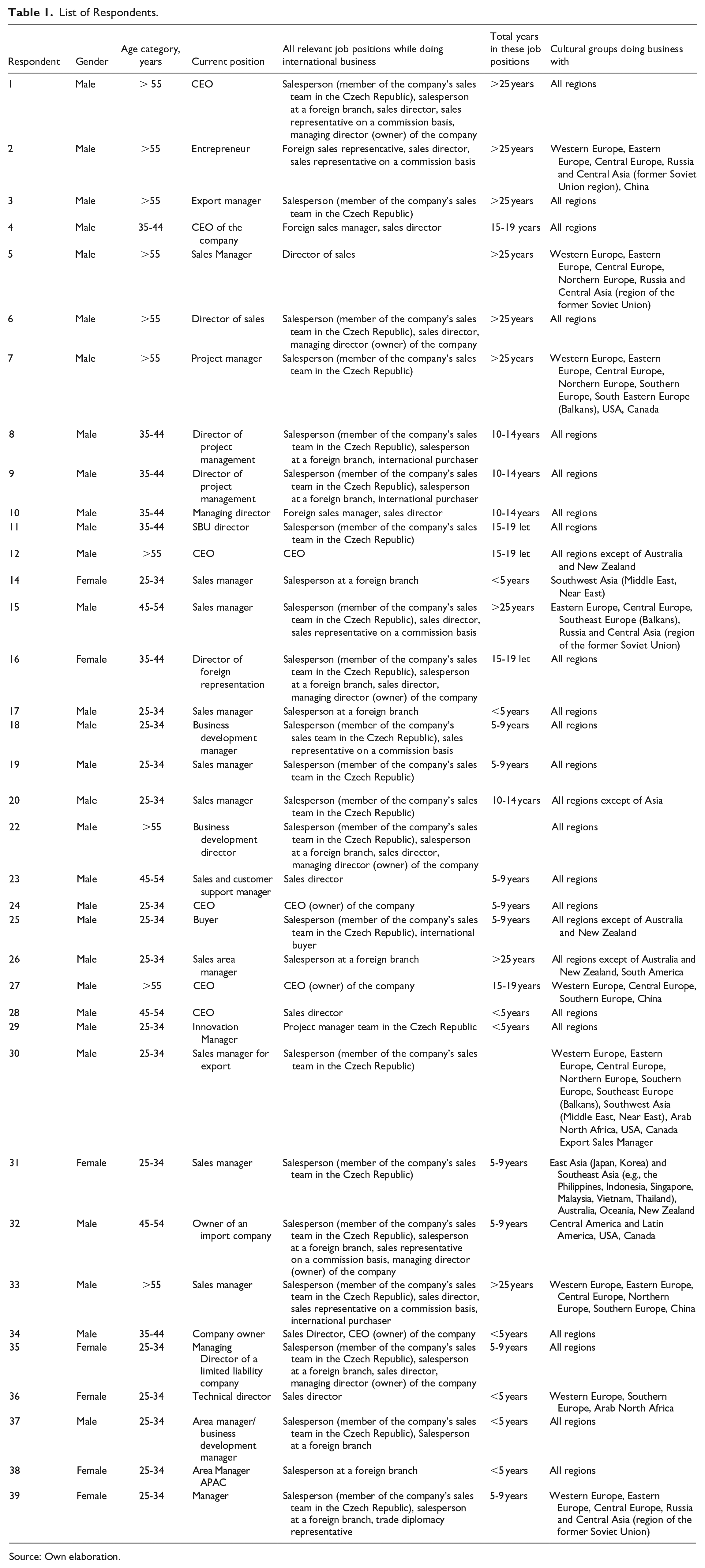
Data for the study presented were extracted from a structured email interview targeted at individually selected and personally addressed salespeople of Czech origin. A full description of the respondents is in Table 1 in the Appendix.
The sample consisted of 72% men. Despite an increasing number of women joining the business environment, which has been traditionally dominated by males, our sample confirms a gender gap in negotiations (Shan et al., 2019). The age range in the largest group of respondents (43.5%) was 25-34 years, in one-fourth (25.5%) it was >55 years, and in the smallest group was 35-44 years (20.5%). This allowed for balanced answers between younger and more experienced salespeople. We can also classify them as Young Sales Guns, Sales Managers in their most productive age, and Sales Doyens.
The sample included professionals of middle but mostly top management (including company owners), specifically with current job positions of export manager, managing director of the company, director of a strategic business unit, business development manager, CEO, and sales (area) manager. Most of them (56.4%) entered international business negotiation from the position of salesperson as a member of a sales department based in the Czech Republic, a salesperson working in a foreign subsidiary (43.5%), and as sales director (38.5%). In most cases, therefore, these are traders who are accustomed to playing a key role in international trade negotiations and often have the competence to decide for their business. The length of the respondents’ experience corresponds to their age. At the same time, the results show an even distribution of years of practical experience in negotiation.
Although the sample group consisted of professionals with negotiation experience in various foreign countries and diverse cultural groups, in total, the respondents cover all geographic regions. The sample covers negotiators that specialize in a certain international region (e.g., the American continent), but also those who are true multicultural negotiators with experience worldwide. The overwhelming majority of respondents have a large intercultural scope. We can observe a gradual shift toward Asia, especially among the Young Sales Gun respondents. In a way, this corresponds to, and is probably influenced by, the regional structure of Czech foreign trade.
Findings
The respondents were asked to evaluate the importance of successfully dealing with the cultural specifics of their business negotiation partners; and second, the importance of intercultural preparation on the Likert scale 1-5 (lowest to highest). In both cases, respondents perceived the importance of intercultural factors to be high, with a median score of 4.
They highlighted the value of their own experience and the sense of partnership to be more important than cultural specifics: Cultural differences need to be understood in depth by personal exposure/presence in the market, not by theoretical study at a distance. Interacting and reading business situations with cultural expressions must be experienced. (R26) Personal ties and partnership settings are even more crucial topics for us than the issue of cultural differences. However, understanding cultural specifics is very important in negotiations. (R22)
On the other hand, some sellers perceive matters of business as superior: Cultural differences should be perceived and respected, but in business they are subdued and certainly not overestimated; in business the most important thing is to get along! (R14) (Cultural differences) used to be quite a crucial factor for negotiations, nowadays maybe a bit less important as the world becomes more uniform and the younger generation is very similar everywhere. (R21)
The observation reflects the changing dynamics of negotiation in an interconnected world that becomes more homogenized.
The next topic revolved around the significance of cultural differences between negotiation partners and whether they might be successfully resolved by salesperson negotiation and “cultural peace” might be achieved. The majority of respondents, as displayed in Figure 2, experienced negotiations where cultural differences played a crucial role but eventually were overcome and business partners reached an agreement.
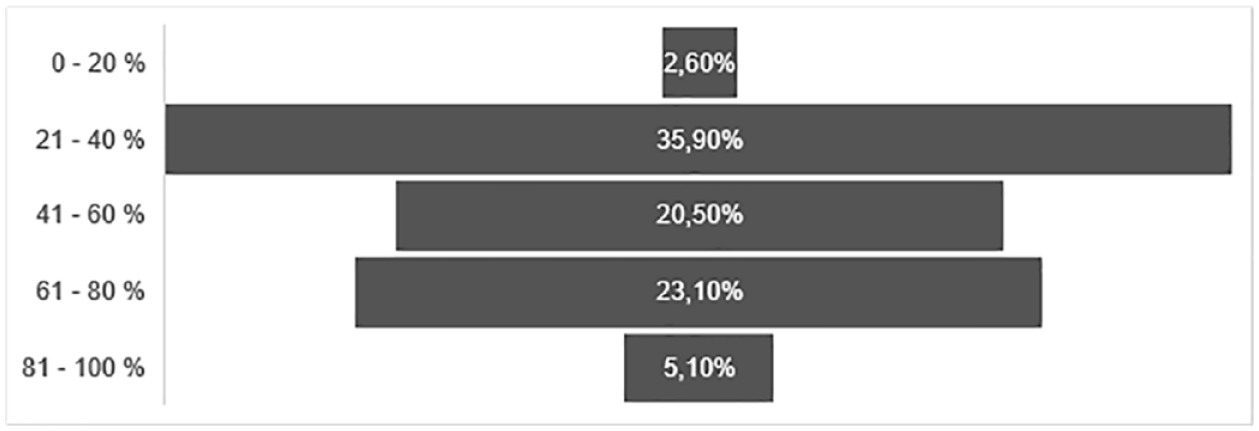
Share of negotiations where cultural differences played a crucial role.
Respondents who had the aforementioned experience in over 60% of their negotiations were under 44 years old. However, the frequency of these behaviors is spread across the spectrum, which means that not everyone experiences them often. No relation between the share of negotiations with a significant role of cultural differences and a specific geographic region has been found. This finding is determined by the characteristics of the respondents, particularly their experience in several different geographic areas.
The most important thing is the will to agree. (R6) It all depends on the level of empathy of the salesperson . . . either adapts to the client, or the business probably doesn’t happen. (R35)
This finding underscored the power of willingness, finding common ground, empathy, and adaptability in achieving successful outcomes.
There are numerous aspects of difference that factored significantly into the intercultural negotiation. As respondents were asked to mark all relevant factors, most commonly they highlighted values and norms; communication, both verbal and nonverbal; time orientation; and different behavior toward men versus women and power distance relationships, such as toward elderly people or superior versus subordinates in the workplace. A full list can be found in Figure 3.
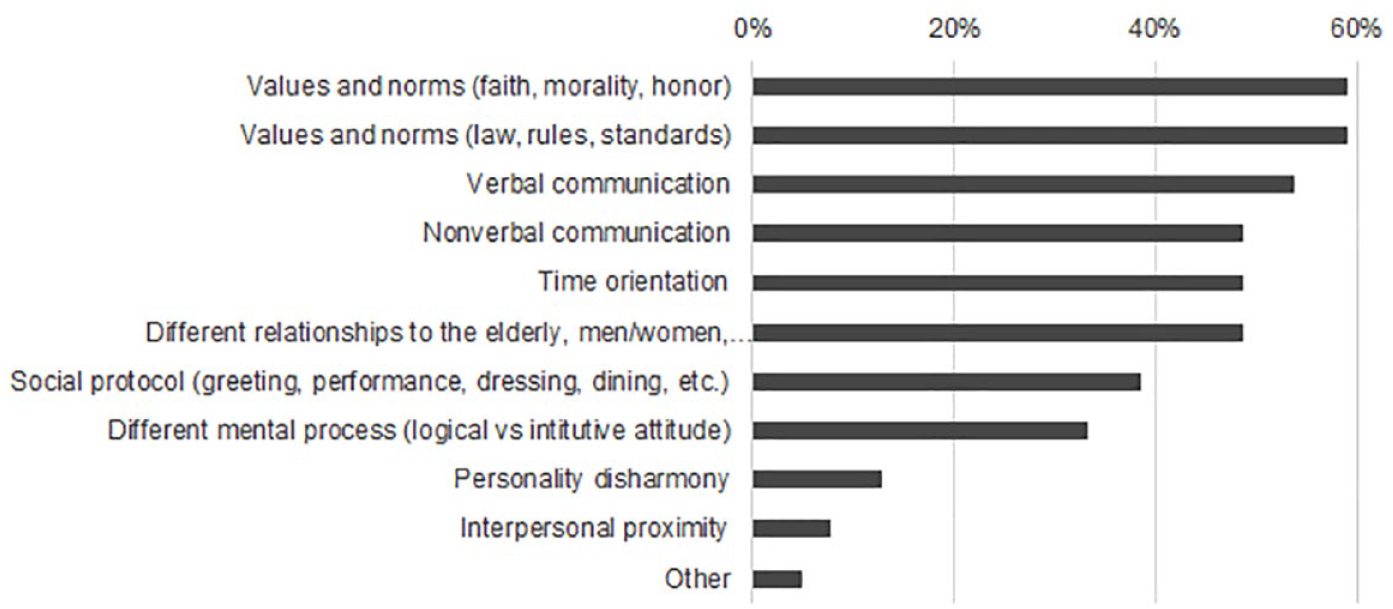
Differences among negotiators’ cultures.
Although almost all of the options offered were selected in the answers, the respondents mostly emphasized cultural differences, including the semantic aspect, in the area of value frameworks and norms resulting in communication noises in their interpretation and understanding. The communication noise can be defined as any kind of barrier that disrupts the clarity of meaning in the communication process (Haven, 2015).
Ninety percent of the respondents see themselves as “the architects” of the final agreement at variance during the negotiation process. Only 5% consider it to be their business partner, and 5% see the role of a third person as the crucial one for the final decision. This is a very subjective point of view. Despite the respondent’s comment emphasizing a cultural origin aspect below, we can argue that the approaches would not necessarily vary across nations.
Across cultures, the approach to the desired outcome of a win-win/win-lose negotiation differs fundamentally; in Asian cultures, where there is a strongly perceived social hierarchy, there is a clear tendency towards win-lose. (R15)
However, Czech people who were the target group of the research are culturally and historically considered to be compromise-oriented people (Hofstede & Hofstede, 2005). Congruently, 95% take the approach of desiring a win-win negotiation outcome. The remaining 5% were respondents of the youngest group, which might show a rise in the competitive nature of the sales culture.
A significant number of professionals (25.5%) consider a cultural conflict as a reason for a lose-lose negotiation outcome, which supports the legitimacy of the research conducted. The same respondents also admitted that, for other cases of misunderstandings that eventually reached a final agreement, “the architect” of the final agreement was either a business partner or a third person.
The third set of questions aimed at international business negotiation in today’s digital age investigating the possible change in the negotiation process and the factor of cultural differences affected by the digital environment. Respondents evaluated the frequency of personal meetings in the presence of business partners; face-to-face negotiations via online platforms (such as ZOOM, G-Meet or MS Teams); using a telephone for business meetings; written communication platforms; or using another means all on a scale of never, almost never (weight 1), sometimes (weight 2), often (weight 3), very often (weight 4). The calculated values of the situation before the COVID-19 pandemic and their comparison with the situation in 2023 along with future predictions are displayed in Figure 4.
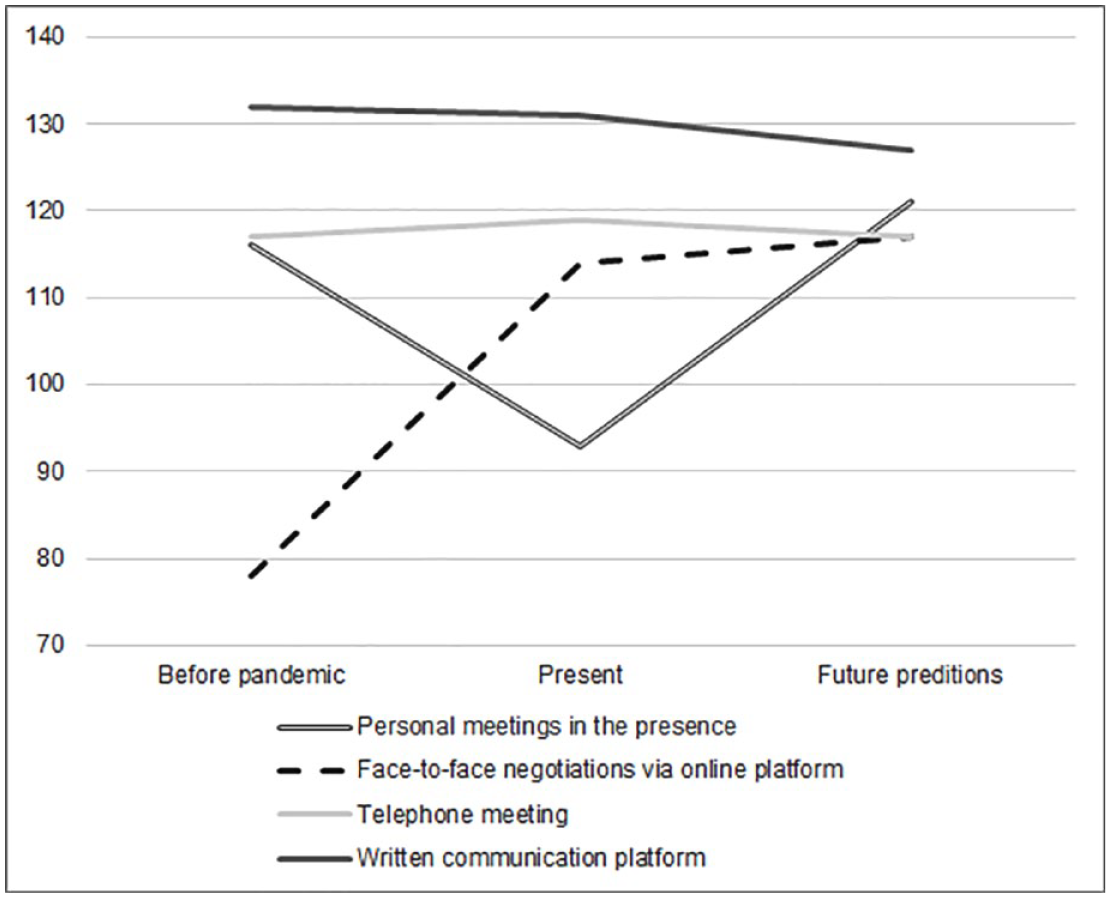
The frequency of communication tools before the pandemic, at present and with future prediction.
While written communication, such as email correspondence, SMS, written network communication platforms, etc., and telephone communication hold the highest frequency before the pandemic and remained the most frequently used forms even after, the business negotiators do not expect this to change in the upcoming years either. In contrast, personal meetings have dropped by 20% as the travel restrictions made them very difficult; however, negotiators are optimistic about its comeback to a pre-pandemic frequency as the most traditional way to conduct business. On the other hand, the negotiations via online software (ZOOM, G-Meet, MS Teams, etc.), thanks to the video option, became a simple, effective, and also authentic way to connect with partners remotely. Face-to-face negotiations via online platforms have increased by 46% since the pandemic hit, and their popularity is expected to maintain an upward trend. The category of other remained unchanged over time and the majority of respondents do not communicate in other ways beyond those specified by the questionnaire.
When comparing the success of current business negotiations using digital means with the pre-COVID-19 situation, the majority (49%) believe that the current process is less successful.
Without personal contact, there will never be a long-term sustainable business partnership. (R33)
Only 13% claim that more negotiations are concluded successfully nowadays. The remaining respondents do not perceive any distinction between business negotiations conducted online or in-person.
By comparison, more salespeople (56%) believe that the influence of cultural specifics does not differ whether the negotiation meetings happen online or offline. The general mindset regarding this issue can be summarized by the following: Personal encounters win negotiations in all cultures, as does a personal approach and keeping one’s word. (R32)
About a third feels that cultural differences are actually less significant during online negotiations when certain cultural aspects are not involved on-screen. These attitudes are displayed in Figure 5.
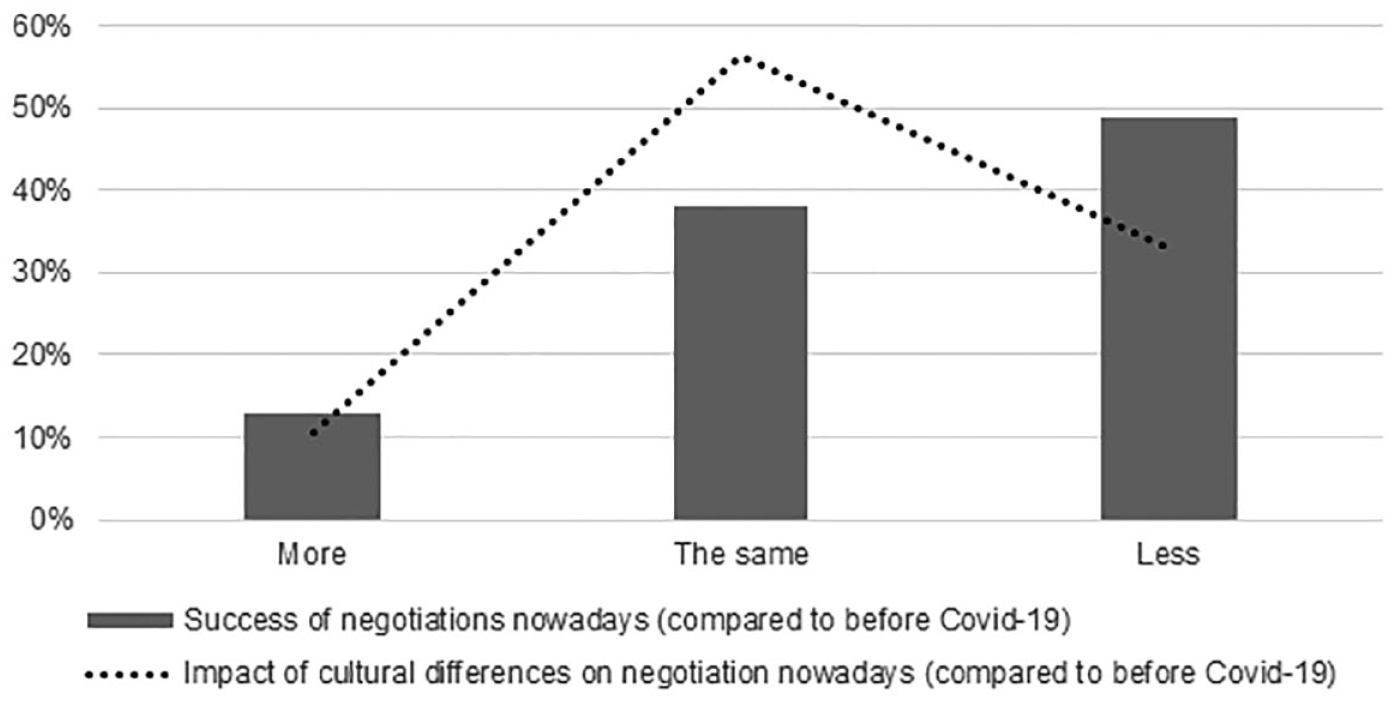
Comparison of the current situation in success of negotiations and impact of cultural differences with the situation before COVID-19.
Discussion
Before evaluating the fulfilment of the main goal of the research, it should be noted that the long history of trade and gradually evolving customs, which in some cases have become norms, have given rise to a group of salespeople in international trade that have many attributes of a particular cultural group, even though, its members come from different national, religious or ethnic/cultural backgrounds. The strength of these customs and the focus on the goal of closing a good deal can, in many cases, suppress or sideline the cultural differences acquired by the salesperson’s origin. In a sense, it is a variant of the dynamic of top-down–bottom-up processes across levels of culture, as shown in Figure 6.
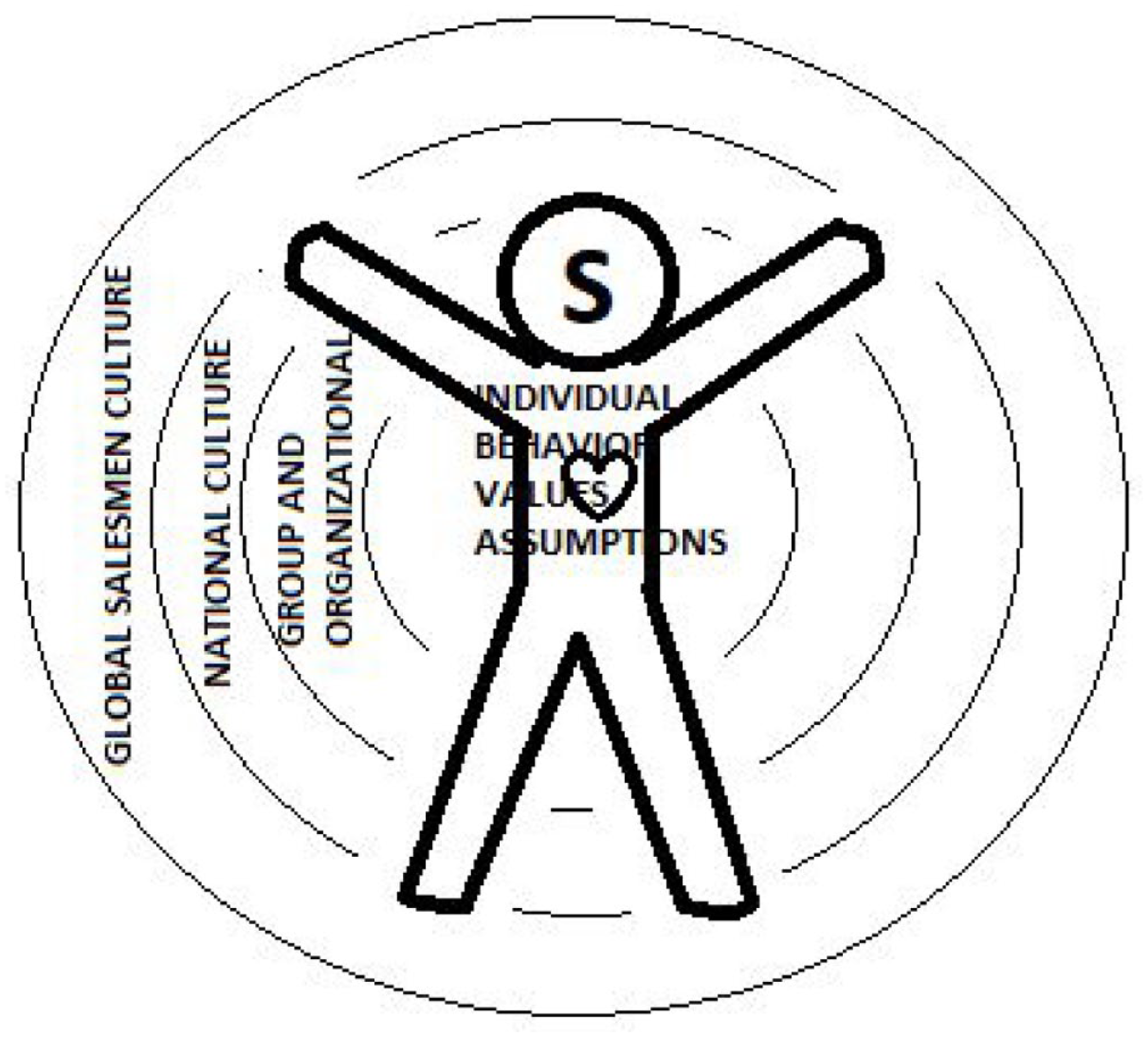
Salesmen culture.
The selected respondents belong within this segment, they are targeted exactly in this way, are proud to be part of the world of international trade, and consider the ability to achieve success in business negotiations as their greatest skill. Therefore, in terms of Research Question 1 on the current role of cultural factors in the international business environment today, the respondents clearly supported the importance of the successful handling of cultural specifics in international business negotiation as well as careful intercultural preparation, regardless of the region, country, or origin of the partner, confirming its vital role in a global market (Ilie, 2019; Poelzl-Hobusch & Reimerth, 2017). Accordingly, a certain universality of procedures and customs in business dealings must be balanced by sufficient intercultural competences. Respondents perceive the basics of intercultural knowledge as important mainly in terms of norms and values, but also in far more practical spheres and means of intercultural contact including nonverbal communication, time orientation, social protocol, etc. The mastery of intercultural skills is perceived as crucial by all three groups of respondents (divided by age, thus also by experience and position). However, the senior respondents or Sales Doyens, do not consider intercultural competence and preparation for negotiations to be absolutely essential, as they rely on their own extensive experience. Several studies (Crowne, 2013; Dias et al., 2020) demonstrate the positive role of cultural exposure in improving intercultural competence and intercultural intelligence. Our study also confirms that the younger generations are gradually becoming much more receptive toward foreign cultures, not only in the direction of the Czech businessperson toward foreigners, but also the other way around. As existing research on cultural sensitivity focuses mainly on a single generation, especially students (Penbek et al., 2012), or expatriates (Finken & Pilz, 2024) where other variables are investigated, this opens an opportunity for future research.
In terms of Research Question 2 on the factors influencing the preference of face-to-face interaction compared to computer-mediated communication, the salespeople interviewed consider face-to-face negotiations will play a leading role in their future, especially in the key interactions where cultural differences and intercultural competences still play a significant role. However, they admit that in both the precontract and postcontract periods, online platforms can be used to negotiate less conflicting business facts. This illustrates previous studies (Moffett et al., 2020; Singh et al., 2020) focusing on the effectiveness and efficiency of virtual buyer-seller negotiations. Depending on the communication tool, for example, email versus phone versus online software, the video option was the most preferred for its effectiveness and authenticity during remote interactions, supporting previous studies (Raveendhran et al., 2022). Despite the cost-saving aspect of moving some meetings online compared to going on business trips, this efficiency does not seem a key factor as, according to respondents, it had a rather negative effect on the successful outcome of business negotiations, notwithstanding the effect of cultural differences.
In line with the findings of Ahearne et al. (2022), we can conclude that salespeople continue to have an important role in negotiation interactions, irrespective of the continuously evolving technological shift.
Conclusion
The main goal of the research this article drew on was to evaluate, based on the experience of professionals working in the international trade environment in predominantly top negotiating positions, whether cultural differences between negotiating partners affect the result of international trade negotiations. Consequently, the research needed to be supported by a thorough theoretical search into not only intercultural studies and business negotiations but also the digital environment.
The COVID-19 pandemic has changed the world in many ways and has affected various areas, including trade. In particular, it significantly reduced the possibility of personal face-to-face negotiations. The research focused mainly on examining the extent to which negotiations shifted from in-person to online, the means of business contact used, and to what extent they were used pre-COVID and then during COVID, and how the opinion of professional traders has developed in this regard.
The respondents were carefully selected to create a truly representative internally uniform sample of statistics. These were professionals from middle, but mostly top, management (including company owners), specifically with current job positions as export manager, company executive, director of a strategic business unit, business development manager, CEO, sales (area) manager, and others. Addressability and an individual approach supported the high response rate.
All the sales negotiators are sensitive to the existence of cultural differences as well as the potential for cultural clashes and conflicts in international business negotiation. They consider them to be a crucial element and confirm the necessity of acquiring intercultural competences.
Recommendations for further research should include a focus on respondents with business negotiation experience in one specific part of the world. Based on this sample group, the ratio between the share of negotiations indicating significant cultural differences and a specific foreign culture could be found. Also, as the respondents presume, or may also wish, face-to-face personal meetings as the main way of conducting business negotiations are anticipated. However, we suggest monitoring this development, especially in relation to the usage of communication software that has partly replaced the need for physical meetings.
Footnotes
Appendix
List of Respondents.
| Respondent | Gender | Age category, years | Current position | All relevant job positions while doing international business | Total years in these job positions | Cultural groups doing business with |
|---|---|---|---|---|---|---|
| 1 | Male | > 55 | CEO | Salesperson (member of the company’s sales team in the Czech Republic), salesperson at a foreign branch, sales director, sales representative on a commission basis, managing director (owner) of the company | >25 years | All regions |
| 2 | Male | >55 | Entrepreneur | Foreign sales representative, sales director, sales representative on a commission basis | >25 years | Western Europe, Eastern Europe, Central Europe, Russia and Central Asia (former Soviet Union region), China |
| 3 | Male | >55 | Export manager | Salesperson (member of the company’s sales team in the Czech Republic) | >25 years | All regions |
| 4 | Male | 35-44 | CEO of the company | Foreign sales manager, sales director | 15-19 years | All regions |
| 5 | Male | >55 | Sales Manager | Director of sales | >25 years | Western Europe, Eastern Europe, Central Europe, Northern Europe, Russia and Central Asia (region of the former Soviet Union) |
| 6 | Male | >55 | Director of sales | Salesperson (member of the company’s sales team in the Czech Republic), sales director, managing director (owner) of the company | >25 years | All regions |
| 7 | Male | >55 | Project manager | Salesperson (member of the company’s sales team in the Czech Republic) | >25 years | Western Europe, Eastern Europe, Central Europe, Northern Europe, Southern Europe, South Eastern Europe (Balkans), USA, Canada |
| 8 | Male | 35-44 | Director of project management | Salesperson (member of the company’s sales team in the Czech Republic), salesperson at a foreign branch, international purchaser | 10-14 years | All regions |
| 9 | Male | 35-44 | Director of project management | Salesperson (member of the company’s sales team in the Czech Republic), salesperson at a foreign branch, international purchaser | 10-14 years | All regions |
| 10 | Male | 35-44 | Managing director | Foreign sales manager, sales director | 10-14 years | All regions |
| 11 | Male | 35-44 | SBU director | Salesperson (member of the company’s sales team in the Czech Republic) | 15-19 let | All regions |
| 12 | Male | >55 | CEO | CEO | 15-19 let | All regions except of Australia and New Zealand |
| 14 | Female | 25-34 | Sales manager | Salesperson at a foreign branch | <5 years | Southwest Asia (Middle East, Near East) |
| 15 | Male | 45-54 | Sales manager | Salesperson (member of the company’s sales team in the Czech Republic), sales director, sales representative on a commission basis | >25 years | Eastern Europe, Central Europe, Southeast Europe (Balkans), Russia and Central Asia (region of the former Soviet Union) |
| 16 | Female | 35-44 | Director of foreign representation | Salesperson (member of the company’s sales team in the Czech Republic), salesperson at a foreign branch, sales director, managing director (owner) of the company | 15-19 let | All regions |
| 17 | Male | 25-34 | Sales manager | Salesperson at a foreign branch | <5 years | All regions |
| 18 | Male | 25-34 | Business development manager | Salesperson (member of the company’s sales team in the Czech Republic), sales representative on a commission basis | 5-9 years | All regions |
| 19 | Male | 25-34 | Sales manager | Salesperson (member of the company’s sales team in the Czech Republic) | 5-9 years | All regions |
| 20 | Male | 25-34 | Sales manager | Salesperson (member of the company’s sales team in the Czech Republic) | 10-14 years | All regions except of Asia |
| 22 | Male | >55 | Business development director | Salesperson (member of the company’s sales team in the Czech Republic), salesperson at a foreign branch, sales director, managing director (owner) of the company | All regions | |
| 23 | Male | 45-54 | Sales and customer support manager | Sales director | 5-9 years | All regions |
| 24 | Male | 25-34 | CEO | CEO (owner) of the company | 5-9 years | All regions |
| 25 | Male | 25-34 | Buyer | Salesperson (member of the company’s sales team in the Czech Republic), international buyer | 5-9 years | All regions except of Australia and New Zealand |
| 26 | Male | 25-34 | Sales area manager | Salesperson at a foreign branch | >25 years | All regions except of Australia and New Zealand, South America |
| 27 | Male | >55 | CEO | CEO (owner) of the company | 15-19 years | Western Europe, Central Europe, Southern Europe, China |
| 28 | Male | 45-54 | CEO | Sales director | <5 years | All regions |
| 29 | Male | 25-34 | Innovation Manager | Project manager team in the Czech Republic | <5 years | All regions |
| 30 | Male | 25-34 | Sales manager for export | Salesperson (member of the company’s sales team in the Czech Republic) | Western Europe, Eastern Europe, Central Europe, Northern Europe, Southern Europe, Southeast Europe (Balkans), Southwest Asia (Middle East, Near East), Arab North Africa, USA, Canada Export Sales Manager | |
| 31 | Female | 25-34 | Sales manager | Salesperson (member of the company’s sales team in the Czech Republic) | 5-9 years | East Asia (Japan, Korea) and Southeast Asia (e.g., the Philippines, Indonesia, Singapore, Malaysia, Vietnam, Thailand), Australia, Oceania, New Zealand |
| 32 | Male | 45-54 | Owner of an import company | Salesperson (member of the company’s sales team in the Czech Republic), salesperson at a foreign branch, sales representative on a commission basis, managing director (owner) of the company | 5-9 years | Central America and Latin America, USA, Canada |
| 33 | Male | >55 | Sales manager | Salesperson (member of the company’s sales team in the Czech Republic), sales director, sales representative on a commission basis, international purchaser | >25 years | Western Europe, Eastern Europe, Central Europe, Northern Europe, Southern Europe, China |
| 34 | Male | 35-44 | Company owner | Sales Director, CEO (owner) of the company | <5 years | All regions |
| 35 | Female | 25-34 | Managing Director of a limited liability company | Salesperson (member of the company’s sales team in the Czech Republic), salesperson at a foreign branch, sales director, managing director (owner) of the company | 5-9 years | All regions |
| 36 | Female | 25-34 | Technical director | Sales director | <5 years | Western Europe, Southern Europe, Arab North Africa |
| 37 | Male | 25-34 | Area manager/ business development manager | Salesperson (member of the company’s sales team in the Czech Republic), Salesperson at a foreign branch | <5 years | All regions |
| 38 | Female | 25-34 | Area Manager APAC | Salesperson at a foreign branch | <5 years | All regions |
| 39 | Female | 25-34 | Manager | Salesperson (member of the company’s sales team in the Czech Republic), salesperson at a foreign branch, trade diplomacy representative | 5-9 years | Western Europe, Eastern Europe, Central Europe, Russia and Central Asia (region of the former Soviet Union) |
Source: Own elaboration.
Declaration of Conflicting Interests
The author(s) declared no potential conflicts of interest with respect to the research, authorship, and/or publication of this article.
Funding
The author(s) disclosed receipt of the following financial support for the research, authorship, and/or publication of this article: Proofreading financed by IGS EF TUL 2024, number 55-ZP, Transformation of International Trade of the Czech Republic and Liberec Region. Open access financed by institutional support of Faculty of Economics and Administration, Masaryk University.
