



Abstract
Background:
Bibliometric citation analyses have been widely used in medicine to help researchers gain foundational knowledge about a topic and identify subtopics of popular interest for further investigations. There is a lack of similar research in collegiate athletics.
Purpose:
To identify the 100 most-cited research publications related to collegiate athletics.
Study Design:
Cross-sectional study.
Methods:
The Clarivate Analytics Web of Knowledge database was used to generate a list of articles relating to collegiate athletics on January 24, 2022. Articles were filtered by the total number of citations, and the 100 most-cited articles were selected. For each article, we identified and analyzed the following: author name, publication year, country of origin, journal name, article type, main research topic area, competitive level, sex of study population, and level of evidence.
Results:
Of the top 100 most-cited articles, 63 were related to medicine. In total, 96% of articles were published in the United States, and 80% were published in the year 2000 or later. Of the top 100 articles, 85 were observational; only 5 were experimental. The sport most represented was soccer, followed by football, baseball, and basketball. Of the top 100 articles, 21 were published in a single journal, the American Journal of Sports Medicine. Ten authors published ≥5 of the top 100 most-cited studies.
Conclusion:
The majority of top 100 articles were published in the United States after 1999 and primarily focused on medicine-related topics. Soccer was studied by more articles than football, baseball, and basketball. An author’s prestige may have influenced the likelihood of citation. The top 100 most-cited studies provide researchers, medical students, residents, and fellows with a foundational list of the most important and influential academic contributions to the literature on collegiate athletics.
Since their organization in the 19th century, collegiate sports have been a source of national attention. 102 The predominate governing body of collegiate athletics, the National Collegiate Athletic Association (NCAA), was founded in 1906 in response to escalating concern over injuries and deaths in collegiate sports. 132 Today, >503,000 students compete in the NCAA and attract a fandom of >180 million people. 98,133 In 2019, the NCAA generated >$18.9 billion in revenue. 131 In addition to the NCAA, 2 smaller divisions of collegiate athletics—the National Association of Intercollegiate Athletics and National Junior College Athletic Association—include >77,000 and >59,000 athletes, respectively. 130,134 Furthermore, many college students participate in nonvarsity sports, with >20% reporting club or intermural sport involvement. 8
With such widespread participation and following, it is no surprise that collegiate athletics have long been a focus of research in the scientific and medical communities. It can be difficult to identify the most significant and influential findings related to collegiate athletics, as topics of interest are ever growing and include students' academic success, 28,123,160 discrimination, 57,61,141 sponsorship, 151,154,163 player mental health, 80,150 injury epidemiology, 2,60 and mechanics of injury. 122,139
Bibliometric analyses provide a helpful way to condense this rapidly evolving research and focus on the most influential scientific articles. Articles with more citations are often considered more influential; as such, bibliometric citation analyses provide quantitative representation of the impact of a specific article. 1,38,75,76,142 Bibliometric citation analyses have been widely used in medicine, § medical education, 14 biomechanics, 92 ecology, 167 biotechnology, 25 and various other fields. 10,58,109 These analyses help researchers gain foundational knowledge about a topic and identify subtopics of popular interest for further investigations. 1,142
Accordingly, the purpose of this study was to identify the 100 most highly cited research publications related to collegiate athletics. Because safety has been a focus of conversation since collegiate athletics’ advent and because injuries remain prevalent today, we hypothesized that medicine-related research would compose the greatest proportion of highly cited publications within the 100 most highly cited publications related to collegiate athletics.
Methods
This study was exempt from institutional review board approval. The methods of our study were conceived from similar bibliometric analyses. 121,124,125 The Clarivate Analytics Web of Knowledge database was used to gather data and article information on January 24, 2022. 42 As the focus of our study relates to the collegiate athlete, our final Boolean search terms were as follows: Topic Sentence [(college athlete OR collegiate athlete OR athlete college)] OR [(college OR collegiate OR university) AND (athlete OR athletic OR athletics OR sport OR sports)]. All years dating back to 1950 and all specialty databases within the Web of Knowledge were selected. Using these search terms, we found 9362 articles, including all languages, journals, dates, and countries of origin.
These results were sorted by citation count. Two authors (J.R.P. and M.L.M.) independently reviewed the title and abstract of each article for final inclusion in this bibliometric analysis. Only studies with direct study of college-enrolled athletes as research participants were included for analysis. There were no restrictions on age of participants, sport, sex, or country. Studies with participants not in college (ie, high school, recreational, semiprofessional, and professional) were included only if collegiate participants were a part of the study. If it remained unclear whether an article met inclusion criteria, the full article was obtained and reviewed by the senior author(A.C.). We excluded studies where collegiate athletes were not the focus or participant group of the study. The final 100 studies that met our inclusion criteria for collegiate sports were found after 2 authors (J.R.P. and M.L.M.) reviewed the first 189 most-cited studies. See Appendix Table A1 for a list of the 100 most-cited articles relating to collegiate sports.
The resulting 100 studies were reviewed by the same 2 authors to obtain relevant article information pertaining to our analysis. The variables were as follows: publication year, times cited, number of citations per year, title, category of research (original research, review article, descriptive/epidemiology, case study, short communication, letter to the editor, editorial, and thesis), main research topic area (sports medicine, physiology, biomechanics, nutrition, training and testing, performance analysis, sport psychology, coaching, and social sciences), level of evidence, type of study (observational, experimental, or review), sex (male, female, male and female, unspecified), competitive level (NCAA Division I, II, III), additional population studied (high school, professional, etc), sports studied, country of origin, authors, and journal title.
The levels of evidence were determined according to the standards set by the Journal of Bone and Joint Surgery and determined by 2 authors (J.R.P. and M.L.M.). 112 If consensus was not reached, the senior author was consulted on the classification of each article. An article simply reviewing a subject was classified as an “expert opinion,” while the classification of “review article” was reserved for those studies involving a systematic assessment of the literature, such as a meta-analysis. The citation density of each article was calculated by dividing the total number of citations by the number of years since the publication. All data collection and analysis were completed using Microsoft Excel (Microsoft Corp).
Results
The 100 most-cited publications related to collegiate athletics are listed in Appendix Table A1, with their rank, number of citations, and citation density. The top 4 articles were cited >1000 times, and the range within the top 100 was 161 to 1265 total citations. The mean number of citations per article was 292.35, while the median was 233.5. Citation densities ranged from 7.3 to 84.3. The average citation density was 17.8, and the median was 13.4. Among the 20 publications with the greatest citation densities, the average citation density was 37.0. Within the top 20 articles, 19 focused on sports medicine, and 8 were published in 2005 or later.
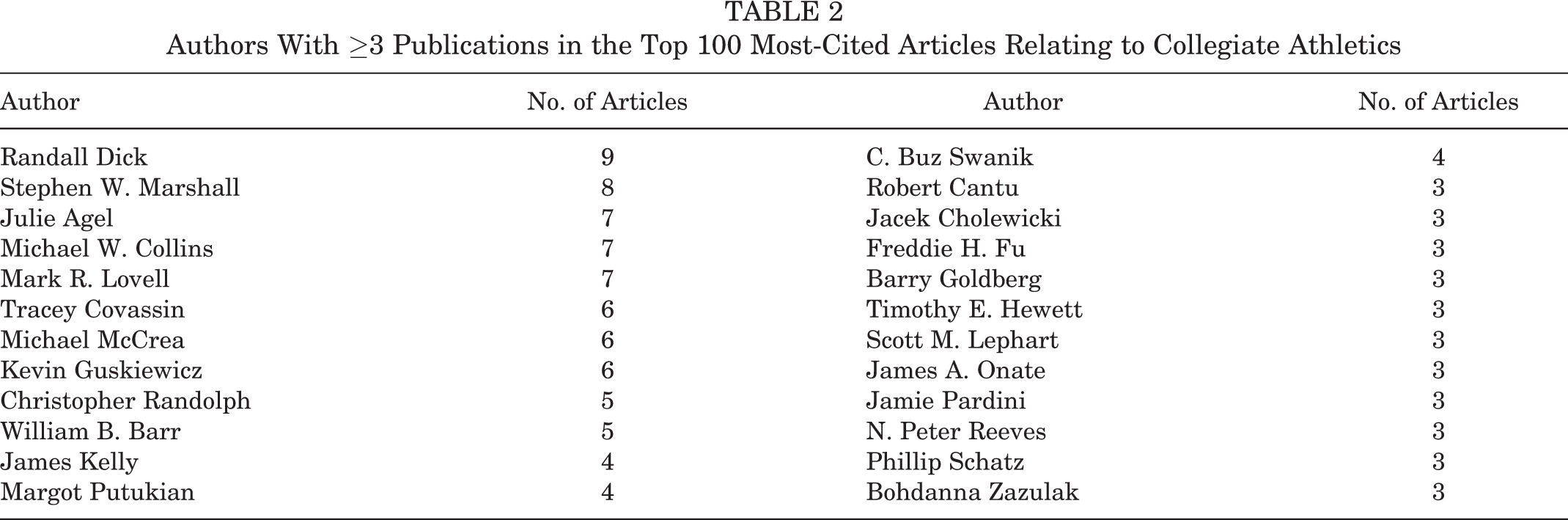
The top 100 articles were published in 42 journals, and the 3 journals with the majority of articles were the American Journal of Sports Medicine (n = 21), Journal of Athletic Training (n = 13), and Medicine and Science in Sports and Exercise (n = 7) (Table 1). Seventeen journals published ≥2 articles. In terms of author impact, 10 authors published ≥5 of the top 100 most-citied articles (Table 2). The 3 authors with the majority of articles from the top 100 were R. Dick (n = 9), S.W. Marshal (n = 8), J. Agel (n = 7), M.W. Collins (n=7), and M.R. Lovell (n=7).
Journal of Publication for the 100 Most-Cited Articles in Collegiate Athletics a

a Only journals with ≥2 articles were included in this table.
Authors With ≥3 Publications in the Top 100 Most-Cited Articles Relating to Collegiate Athletics
Characteristics of the top 100 articles are analyzed in Figures 1 to 4. Publication dates ranged from 1981 to 2015 (Figure 1). Of the top 100 articles, 80 were published in the year 2000 or later. The top 5 cited articles were published in 2007, 2003, 1995, 2003, and 2007. The year 2007 had the largest number of articles in the top 100 (n = 14). The number of citations that each of the top 100 articles received per year ranged from 11 (in 1982) to 1599 (in 2019) (Figure 2). The United States was the country of origin for 96 of the 100 articles (Figure 3). Other countries were Australia, Belgium, the Netherlands, and Taiwan (each with 1 publication). The majority of articles were evidence levels 3 (n = 41) and 4 (n = 52) (Figure 4).

Number of articles by year of publication of the 100 most-cited articles relating to collegiate athletics.

Number of citations generated by the 100 most-cited articles relating to collegiate athletics each year.
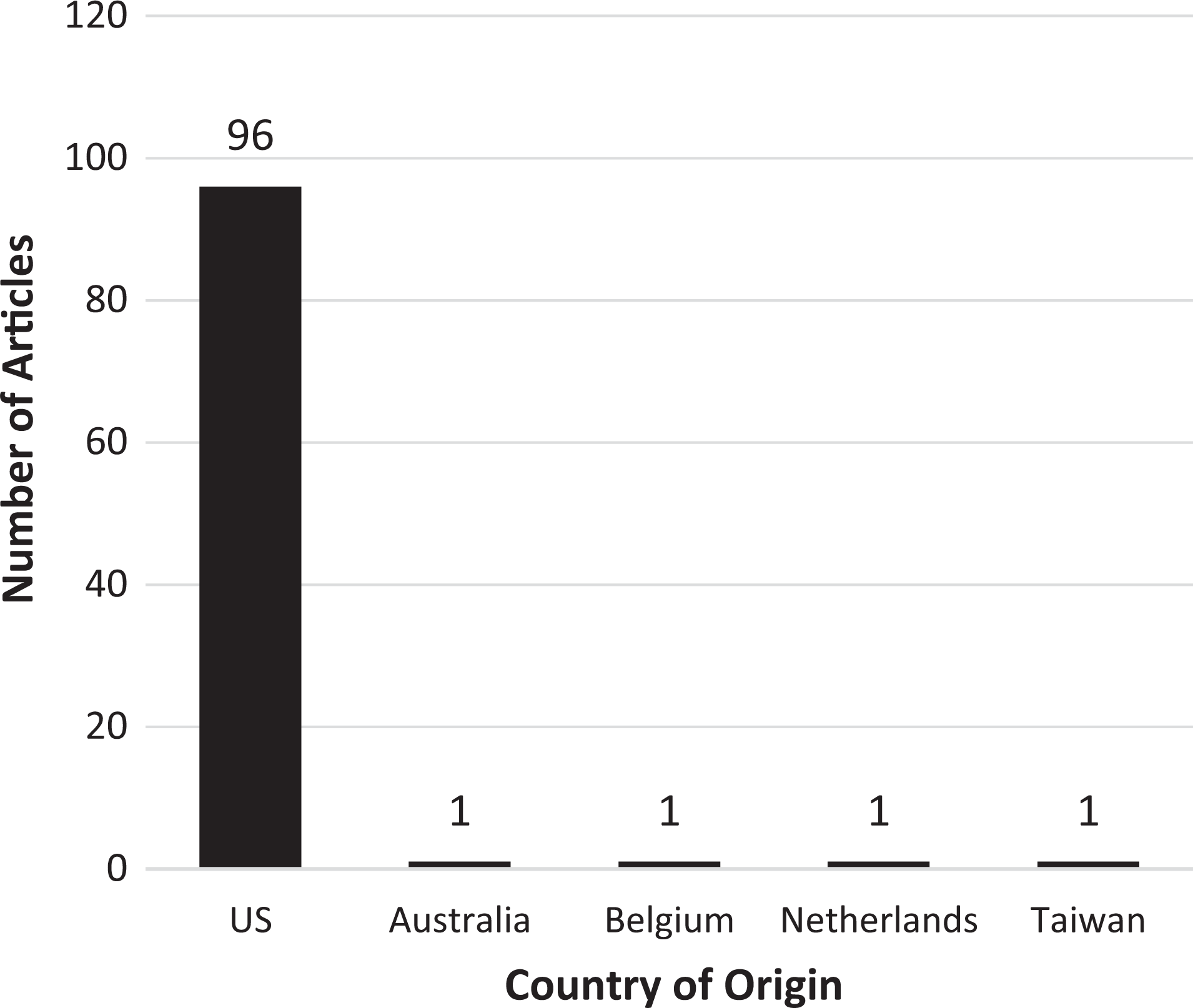
The 100 most-cited articles relating to collegiate athletics by country of origin.

The 100 most-cited articles relating to collegiate athletics by level of evidence.
Of the 100 most-cited publications related to collegiate athletics, 74 were classified as original research; 17, as descriptive/epidemiology research; and 9, as review (Table 3). The research design for the majority of the top 100 articles was observational (n = 85), followed by review (n = 10). Just 5 articles in the top 100 were experimental.
Descriptive Data of Top 100 Most-Cited Articles Relating to Collegiate Athletics a

a NCAA, National Collegiate Athletic Association.
The majority of top 100 articles related to collegiate athletics fell under the topic of sports medicine (n = 63). The second-most common topic of research was training and testing (n = 12), followed by biomechanics (n = 7). Other topics were physiology (n = 6), sports psychology (n = 5), social science (n = 4), performance analysis (n = 2), and nutrition (n = 1).
The majority of articles in the top 100 focused on male and female athletes (n = 56). There were 23 articles focusing on male athletes only, and 14 articles focusing on women only. Seven articles did not explicitly specify whether the study participants were male or female. Of the 100 most-cited publications relating to collegiate sports, 75 focused solely on the collegiate athlete population. Of the articles that included an athlete population in addition to collegiate athletes, 21 included high school athletes, and 8 included professional athletes. The top 100 articles related to collegiate athletics researched a variety of sports (Table 4). The most highly represented sport was soccer (n = 47), followed by football (n = 45) and baseball/softball (n = 40).
Sports Studied in the Top 100 Most-Cited Articles Relating to Collegiate Athletics

Discussion
The purpose of this study was to identify the top 100 most-cited articles and examine which factors predicted an article’s impact within the field of collegiate athletics. As hypothesized, the majority of highly cited publications were medicine related. This trend remained true when analyzing citation density, with 19 of the top 20 articles relating to sports medicine specifically. The dominance of medically related articles may reflect the importance of research related to injury treatment and prevention. With so many of the top 100 articles focusing on medicine, physicians who treat collegiate athletes will benefit from a review of the articles in our analysis: physical therapists, athletic trainers, collegiate coaches, family care physicians, internal medicine physicians, and orthopaedic surgeons who serve student-athletes.
This study was the first to conduct a bibliometric analysis broadly inclusive of all collegiate athletics–related publications, as prior bibliometric analyses related to collegiate athletics included only articles with a medical or scientific focus. 90 The finding that the majority of top articles broadly related to collegiate athletics were medically focused underscores the importance of medicine in the field of collegiate sports. An estimated 210,674 injuries occur in the NCAA per year, 89 and these can have lasting effects on students’ mental and physical well-being. 30,50,80,150 Injury treatment and prevention appear to be at the forefront of discussion. Although other topics of discrimination are a source of frequent discussion in the media today, 57,61,141 such as mental health 80,150 and compensation 151,154,163 of collegiate athletes, no related publications were in the top 100 most-cited articles.
The top-cited article in our list had 1265 citations and was related to the epidemiology of 15 collegiate sports (Appendix Table A1). Comparatively, a bibliometric analysis focused on overhead throwing athletes found that the top-cited article had 471 citations, 111 an analysis on sports and medicine in football found that the top-cited article had 869 citations, 31 and an analysis on the broader field of sports and exercise medicine found that the top-cited article had 7228 citations. 90 As with other citation analyses related to sports medicine, the majority of our top-cited articles were published within the past 2 decades, reflecting rapid growth in research within the field. 31,90,121
In our study, 96 of the top 100 articles were published within the United States. This is somewhat expected, as collegiate sports are very popular in North America, along with the rapidly growing field of sports medicine. However, >20,000 NCAA athletes are international, with the majority from Canada followed by the United Kingdom. The absence of any top publications from these 2 countries may reflect the uniquely American interest in collegiate athletics.
Prior bibliometric analyses found that soccer is the most frequently researched sport across top articles relating to sports and athletics. 77,90 In alignment with these prior works, we found that soccer was the most highly represented sport in the top 100 articles related to collegiate athletics. However, our study focused on collegiate athletics, and unlike other studies, the majority of the top 100 articles in this study were based in the United States. As football, baseball, and basketball predominate in popularity in the United States, it was unexpected that soccer would be the most represented sport in the top articles. 74 Notwithstanding, football, baseball, and basketball were the next-most represented sports in our findings. This may reflect that popularity of a sport is not as influential a factor as ease of research or injury patterns.
Of the top 100 most-cited articles related to collegiate athletics, the American Journal of Sports Medicine published 21, followed by the Journal of Athletic Training with 13 (Table 1). As citation analysis has been used to evaluate journal impact, individuals hoping to stay up-to-date on the most influential publications in collegiate athletics might consider following these journals. 75,76 A recent bibliometric analysis on sports and exercise medicine found that the majority of top-cited sports medicine articles were similarly published in the American Journal of Sports Medicine. 90 Our findings corroborate these results. Interestingly, when compared with broader studies not focused on collegiate athletics, the international participation is much greater in publishing top-cited articles. 10,77,90,96 This difference between our collegiate-focused study and their broader study again demonstrates the American-centric focus of research specific to collegiate athletics.
Ten authors published ≥5 of the top 100 articles, reflecting the dominance of certain researchers in the field of collegiate athletes. This finding may illustrate the prolificity of these authors; it may also suggest that author prestige plays a role in the likelihood that an article is cited. Publications including authors already well established in the field of collegiate athletics may have an easier time gaining recognition and accruing citations.
As seen in Figure 3, the majority of publications were level 3 and 4 evidence, reflecting the predominance of observational studies. Only 7 articles were levels 1 and 2. This finding is similar to that of the most-cited articles in sports and exercise medicine. 90
Limitations
The publications in this study were based on citation numbers alone. This metric, although useful in identifying highly influential articles, is influenced by a variety of factors, such as time since publication. As such, it should not be used as the sole determinate of impact. Citation density, as included in our study, may be useful to researchers as they seek to explore the most current influential research. A related limitation of our findings is the exclusion of newer publications. This is a limitation of bibliometric analyses in general, as newer publications have not had time to accrue citations and prior work has demonstrated that it takes several years for prominent articles to peak in recognition and citation. 6,75,83 An additional limitation is our use of only 1 database, the Web of Knowledge. This database is commonly used in bibliometric analyses, but use of other databases may result in slightly different findings. ∥
Conclusion
Our search found that most publications related to collegiate athletics were medicine related. The majority of articles were level 4 evidence, published after 2005, and from the United States. Soccer was the most studied sport. An author’s prestige may have influenced likelihood of citation, with 10 authors publishing ≥5 of the top 100 most-cited studies in collegiate sports.
Footnotes

Final revision submitted February 8, 2022; accepted April 11, 2022.
One or more of the authors has declared the following potential conflict of interest or source of funding: A.C. has received consulting fees from Arthrex, Trice Medical, and Zimmer Biomet and speaking fees from Arthrex. AOSSM checks author disclosures against the Open Payments Database (OPD). AOSSM has not conducted an independent investigation on the OPD and disclaims any liability or responsibility relating thereto.
Ethical approval was not sought for the present study.
APPENDIX
Top 100 Most-Cited Articles Relating to Collegiate Athletics

| Rank | Article Title | No. of Citations | Citation Density (Citations/Year) |
|---|---|---|---|
| 1 | Epidemiology of collegiate injuries for 15 sports: summary and recommendations for injury prevention initiatives 88 | 1265 | 84.3 |
| 2 | Cumulative effects associated with recurrent concussion in collegiate football players: the NCAA Concussion Study 81 | 1083 | 57.0 |
| 3 | Knee injury patterns among men and women in collegiate basketball and soccer: NCAA data and review of literature 11 | 1023 | 37.9 |
| 4 | Acute effects and recovery time following concussion in collegiate football players: the NCAA Concussion Study 118 | 1001 | 52.7 |
| 5 | Concussions among United States high school and collegiate athletes 78 | 635 | 42.3 |
| 6 | Relationship between concussion and neuropsychological performance in college football players 43 | 571 | 24.8 |
| 7 | Does age play a role in recovery from sports-related concussion? A comparison of high school and collegiate athletes 66 | 563 | 29.6 |
| 8 | Deficits in neuromuscular control of the trunk predict knee injury risk: prospective biomechanical-epidemiologic study 164 | 514 | 34.3 |
| 9 | Anterior cruciate ligament injury in National Collegiate Athletic Association basketball and soccer: a 13-year review 3 | 509 | 29.9 |
| 10 | Prevention, diagnosis, and treatment of the overtraining syndrome: joint consensus statement of the European College of Sport Science and the American College of Sports Medicine 144 | 501 | 55.7 |
| 11 | Postural stability and neuropsychological deficits after concussion in collegiate athletes 82 | 482 | 23.0 |
| 12 | Measurement of symptoms following sports-related concussion: reliability and normative data for the Post-concussion Scale 106 | 442 | 27.6 |
| 13 | Preseason strength and flexibility imbalances associated with athletic injuries in female collegiate athletes 91 | 427 | 13.8 |
| 14 | Nontraumatic sports death in high school and college athletes 157 | 414 | 15.3 |
| 15 | Anterior cruciate ligament injury patterns among collegiate men and women 12 | 407 | 17.7 |
| 16 | Development and preliminary validation of an athlete burnout measure 146 | 386 | 18.4 |
| 17 | Identification, prevention and treatment: a review of individual-focused strategies to reduce problematic alcohol consumption by college students 95 | 370 | 18.5 |
| 18 | The reliability of an instrumented device for measuring components of the star excursion balance test 143 | 367 | 28.2 |
| 19 | Incidence of sudden cardiac death in National Collegiate Athletic Association athletes 84 | 359 | 32.6 |
| 20 | Kinematic and kinetic comparison of baseball pitching among various levels of development 67 | 354 | 15.4 |
| 21 | Delayed menarche and amenorrhea of college athletes in relation to age of onset of training 70 | 348 | 8.5 |
| 22 | Glenohumeral range of motion deficits and posterior shoulder tightness in throwers with pathologic internal impingement 126 | 347 | 21.7 |
| 23 | A randomized controlled trial to prevent noncontact anterior cruciate ligament injury in female collegiate soccer players 79 | 325 | 23.2 |
| 24 | Neuropsychological functioning and recovery after mild head injury in collegiate athletes 107 | 310 | 11.9 |
| 25 | Neuropsychological assessment of the college football player 105 | 301 | 12.5 |
| 26 | Sex differences in outcome following sports-related concussion 33 | 300 | 17.6 |
| 27 | Knee joint laxity and neuromuscular characteristics of male and female soccer and basketball players 149 | 295 | 12.8 |
| 28 | Standardized assessment of concussion (SAC): on-site mental status evaluation of the athlete 119 | 283 | 11.8 |
| 29 | Role of subconcussion in repetitive mild traumatic brain injury: a review 18 | 276 | 30.7 |
| 30 | Lower prevalence of breast cancer and cancers of the reproductive system among former college athletes compared to non-athletes 71 | 274 | 7.4 |
| 31 | Gender differences in strength and lower extremity kinematics during landing 101 | 273 | 13.7 |
| 32 | Cross-validation of three jump power equations 152 | 273 | 11.9 |
| 33 | Incidence, clinical course, and predictors of prolonged recovery time following sport-related concussion in high school and college athletes 117 | 270 | 30.0 |
| 34 | The role of age and sex in symptoms, neurocognitive performance, and postural stability in athletes after concussion 46 | 270 | 27.0 |
| 35 | Use of a functional movement screening tool to determine injury risk in female collegiate athletes 41 | 266 | 22.2 |
| 36 | Operative treatment of ulnar collateral ligament injuries of the elbow in athletes 13 | 264 | 12.0 |
| 37 | Neuropsychological test performance prior to and following sports-related mild traumatic brain injury 59 | 262 | 12.5 |
| 38 | A comparison of bone mineral densities among female athletes in impact loading and active loading sports 65 | 260 | 9.6 |
| 39 | The effects of sleep extension on the athletic performance of collegiate basketball players 108 | 252 | 22.9 |
| 40 | A prospective study of ankle injury risk factors 22 | 250 | 9.3 |
| 41 | Standard regression-based methods for measuring recovery after sport-related concussion 116 | 246 | 14.5 |
| 42 | Incidence, cause, and comparative frequency of sudden cardiac death in National Collegiate Athletic Association athletes: a decade in review 85 | 245 | 35.0 |
| 43 | The effects of core proprioception on knee injury: a prospective biomechanical-epidemiological study 165 | 245 | 16.3 |
| 44 | A high-morbidity outbreak of methicillin-resistant Staphylococcus aureus among players on a college football team, facilitated by cosmetic body shaving and turf burns 23 | 242 | 13.4 |
| 45 | Epidemiology of sports-related concussion in NCAA athletes from 2009-2010 to 2013-2014: incidence, recurrence, and mechanisms 168 | 240 | 34.3 |
| 46 | Role of hope in academic and sport achievement 53 | 240 | 9.6 |
| 47 | Gymnasts exhibit higher bone mass than runners despite similar prevalence of amenorrhea and oligomenorrhea 147 | 240 | 8.9 |
| 48 | Comparison of static and dynamic balance in female collegiate soccer, basketball, and gymnastics athletes 29 | 239 | 15.9 |
| 49 | On-field predictors of neuropsychological and symptom deficit following sports-related concussion 44 | 237 | 12.5 |
| 50 | Delayed trunk muscle reflex responses increase the risk of low back injuries 40 | 235 | 13.8 |
| 51 | Measuring anxiety in athletics: the Revised Competitive State Anxiety Inventory–2 51 | 232 | 12.2 |
| 52 | Medial collateral ligament reconstruction of the elbow using the docking technique 148 | 230 | 11.5 |
| 53 | Sensitivity of the Concussion Assessment Battery 32 | 228 | 15.2 |
| 54 | Effects of plyometric training on muscle-activation strategies and performance in female athletes 39 | 225 | 12.5 |
| 55 | A revised factor structure for the post-concussion symptom scale: baseline and postconcussion factors 93 | 222 | 22.2 |
| 56 | Nutritional supplement use among college athletes and their sources of information 72 | 220 | 12.2 |
| 57 | A meta-analysis of the incidence of anterior cruciate ligament tears as a function of gender, sport, and a knee injury-reduction regimen 145 | 216 | 14.4 |
| 58 | The “value added” of neurocognitive testing after sports-related concussion 158 | 215 | 13.4 |
| 59 | Alcohol and college athletes 135 | 210 | 10.0 |
| 60 | Cardiovascular screening in college athletes with and without electrocardiography: a cross-sectional study 17 | 206 | 17.2 |
| 61 | Descriptive epidemiology of collegiate men’s soccer injuries: National Collegiate Athletic Association Injury Surveillance System, 1988-1989 through 2002-2003 4 | 205 | 13.7 |
| 62 | A clinical method for identifying scapular dyskinesis, part 1: reliability 115 | 203 | 15.6 |
| 63 | Arthroscopic anterior shoulder stabilization of collision and contact athletes 113 | 202 | 11.9 |
| 64 | Alcohol use and related consequences among students with varying levels of involvement in college athletics 100 | 201 | 8.4 |
| 65 | A diffusion tensor imaging study on the white matter skeleton in individuals with sports-related concussion 52 | 200 | 18.2 |
| 66 | Descriptive epidemiology of collegiate men’s football injuries: National Collegiate Athletic Association Injury Surveillance System, 1988-1989 through 2003-2004 55 | 199 | 13.3 |
| 67 | Sex differences in neuropsychological function and post-concussion symptoms of concussed collegiate athletes 47 | 199 | 13.3 |
| 68 | Binge drinking, tobacco, and illicit drug use and involvement in college athletics: a survey of students at 140 American colleges 161 | 197 | 7.9 |
| 69 | High-impact exercise promotes bone gain in well-trained female athletes 155 | 194 | 7.8 |
| 70 | Body mass index as a predictor of percent fat in college athletes and nonathletes 138 | 192 | 12.8 |
| 71 | Sensitivity and specificity of standardized neurocognitive testing immediately following sports concussion 21 | 191 | 9.1 |
| 72 | The King-Devick test and sports-related concussion: study of a rapid visual screening tool in a collegiate cohort 73 | 188 | 17.1 |
| 73 | Combined effects of fatigue and decision making on female lower limb landing postures: central and peripheral contributions to ACL injury risk 27 | 188 | 13.4 |
| 74 | Relationships between sprinting, agility, and jump ability in female athletes 159 | 187 | 13.4 |
| 75 | Recovery from sports concussion in high school and collegiate athletes 114 | 187 | 11.7 |
| 76 | Validity of the Foot and Ankle Ability Measure in athletes with chronic ankle instability 34 | 184 | 13.1 |
| 77 | The relationship between lower extremity injury, low back pain, and hip muscle strength in male and female collegiate athletes 128 | 184 | 8.4 |
| 78 | Determination of functional strength imbalance of the lower extremities 136 | 183 | 11.4 |
| 79 | MR imaging of the distribution and location of acute hamstring injuries in athletes 54 | 183 | 8.3 |
| 80 | Epidemiology of high school and collegiate football injuries in the United States, 2005-2006 153 | 181 | 12.1 |
| 81 | Ankle ligament injury risk factors: a prospective study of college athletes 26 | 181 | 8.6 |
| 82 | Descriptive epidemiology of collegiate women’s soccer injuries: National Collegiate Athletic Association Injury Surveillance System, 1988-1989 through 2002-2003 56 | 179 | 11.9 |
| 83 | Return to high school– and college-level football after anterior cruciate ligament reconstruction: a Multicenter Orthopaedic Outcomes Network (MOON) cohort study 120 | 177 | 17.7 |
| 84 | Immediate effect of forearm Kinesio taping on maximal grip strength and force sense in healthy collegiate athletes 37 | 176 | 14.7 |
| 85 | Detecting altered postural control after cerebral concussion in athletes with normal postural stability 36 | 175 | 10.3 |
| 86 | Consequences of repeated blood-brain barrier disruption in football players 110 | 174 | 19.3 |
| 87 | Neuropsychological performance following a history of multiple self-reported concussions: a meta-analysis 24 | 174 | 14.5 |
| 88 | Sex differences and the incidence of concussions among collegiate athletes 49 | 172 | 9.1 |
| 89 | Cost-effectiveness of preparticipation screening for prevention of sudden cardiac death in young athletes 162 | 171 | 14.3 |
| 90 | Autonomy-supportive coaching and self-determined motivation in high school and college athletes: a test of self-determination theory 9 | 171 | 11.4 |
| 91 | American collegiate men’s ice hockey: an analysis of injuries 68 | 169 | 9.9 |
| 92 | Outcomes after the arthroscopic treatment of femoroacetabular impingement in a mixed group of high-level athletes 137 | 168 | 15.3 |
| 93 | Incidence of glenohumeral instability in collegiate athletics 140 | 168 | 12.9 |
| 94 | Sex differences in baseline neuropsychological function and concussion symptoms of collegiate athletes 48 | 168 | 10.5 |
| 95 | Perceived coaching behaviors and college athletes’ intrinsic motivation: a test of self-determination theory 86 | 168 | 9.9 |
| 96 | Gender comparison of hip muscle activity during single-leg landing 166 | 165 | 9.7 |
| 97 | Hip muscle imbalance and low back pain in athletes: influence of core strengthening 127 | 163 | 8.2 |
| 98 | Mucosal IgA and URTI in American college football players: a year longitudinal study 64 | 161 | 9.5 |
| 99 | Multidimensional fear of failure measurement: the Performance Failure Appraisal Inventory 45 | 161 | 8.1 |
| 100 | The application of isokinetics in testing and rehabilitation of the shoulder complex 62 | 161 | 7.3 |