




Abstract
Aim:
To determine the difference in the reflected color coordinates and to compare the translucency and opacity of different as-received ceramic brackets using a spectrophotometer.
Materials and Methods:
Four types of ceramic brackets were investigated in this in vitro study. A total of 72 ceramic brackets were examined using a spectrophotometer. Reflected color coordinates of the labial side of bracket were measured according to the Commission Internationale de l’Eclairage (CIE) color scale. Color difference between brackets was calculated using the equation: ΔE*ab = [(ΔL*)2 + (Δa*)2 + (Δb*)2] 1/2. Translucency parameter (TP) and opalescence parameter (OP) were calculated to determine translucency and opacity of the brackets, respectively. Data was collected and analyzed using IBM SPSS V25. The significance level was set at p ≤ .05. One-way ANOVA and post hoc multiple comparison tests were utilized.
Results:
The range for CIE L* (lightness) was 62.69 to 58.83, for a* (red–green parameter) −0.33 to −2.9 and for b* (yellow–blue parameter) −2.19 to 2.29. All these color co-ordinates were influenced by bracket brand (p < .05). DISCREET™ showed the highest TP = 16.342 and Symetri™ Clear showed the lowest = 10.823. The OP values ranged between 1.783 and 3.781 and Symetri™ Clear showed the highest OP.
Conclusion:
Color coordinates, TP, and OP of esthetic brackets investigated with a spectrophotometer were significantly different and influenced by the material microstructure and/or manufacturing process.
Introduction
Tooth-colored brackets were invented progressively over the decades to address poor esthetic appearance that accompanies metal brackets, especially with the increase of adult population seeking orthodontic treatment. In the 1980s, ceramic brackets were developed. They showed better esthetics, color stability, and strength. 1
The newly designed Adenta clear hybrid material is composed of α-ceramic compound copolymers as described by the material safety and data sheet (MSDS). It is a combination of different translucent materials including ceramic, released in DISCREET→ brackets. As claimed by the manufacturing company, clear hybrid material offers true long-lasting clarity. However, these claims are not verified yet.
Since the main reason for ceramic brackets’ invention was to improve esthetics, attempts to have the best color match with the underlying teeth continues. The optical properties of esthetic brackets have not only affected its visibility but also the amount of light transmitted within the bracket, which affects the adhesive level of cure.2,3 Previous studies concluded that the color and translucency as well as the color difference between bracket brands has affected the light transmittance.4,5
In dental literature, various methods were used to assess color, light reflectance, light transmittance, and color changes including visual and instrumental assessment.2,6−9 Due to the limited sensitivity of the eye to the minor color difference, the visual methods were considered less accurate. On the other hand, the instrumental valuation is more objective, reliable, and reproducible. This includes colorimetry, spectrophotometer, spectroradiometer, digital analysis, and other color measuring systems.
The Commission Internationale de l’Eclairage (CIE) introduced the main quantitative color match performance systems used in almost all the color studies. Considering the CIE LAB system, color difference (ΔE*) is the standard parameter for color matching perception. However, it only considers the color parameter overlooking the translucency, opalescence, surface texture, and other factors that affect color perception. 10
The greatest benefit obtained from this quantitative color assessment is the perceivable difference to an observer and the clinically acceptable difference. All dental research that evaluates color compares the results to a selected perceptibility and/or acceptability threshold.5,6 According to a review done by Khashayar et al. in 2014, that included 48 articles, more than half (54%) of the studies used ΔE* = 1 as threshold of perceptibility (i.e., visually detectable), and one third (33%) of the studies refer to ΔE* = 3. 7 (ranged between 2.0 and 4.0) as the acceptability threshold (i.e., clinically acceptable). 11
Other parameters reported in former studies to evaluate color and translucency of tooth-colored brackets were direct transmittance of light, 3 the TP, and the contrast ratio (CR). 6
Limited papers were found in literature that studied optical properties of as-received esthetic brackets. Apparently, opalescence was not evaluated previously on brackets despite its impact on visual perception. Furthermore, none of the preceding studies has studied clear hybrid ceramic brackets and compared it to the monocrystalline and polycrystalline brackets. The aim of the study is to evaluate the translucency, opacity of different ceramic brackets using a spectrophotometer, and to determine the difference in the reflected colors of as-received ceramic brackets.
Materials and Methods
Sample Selection
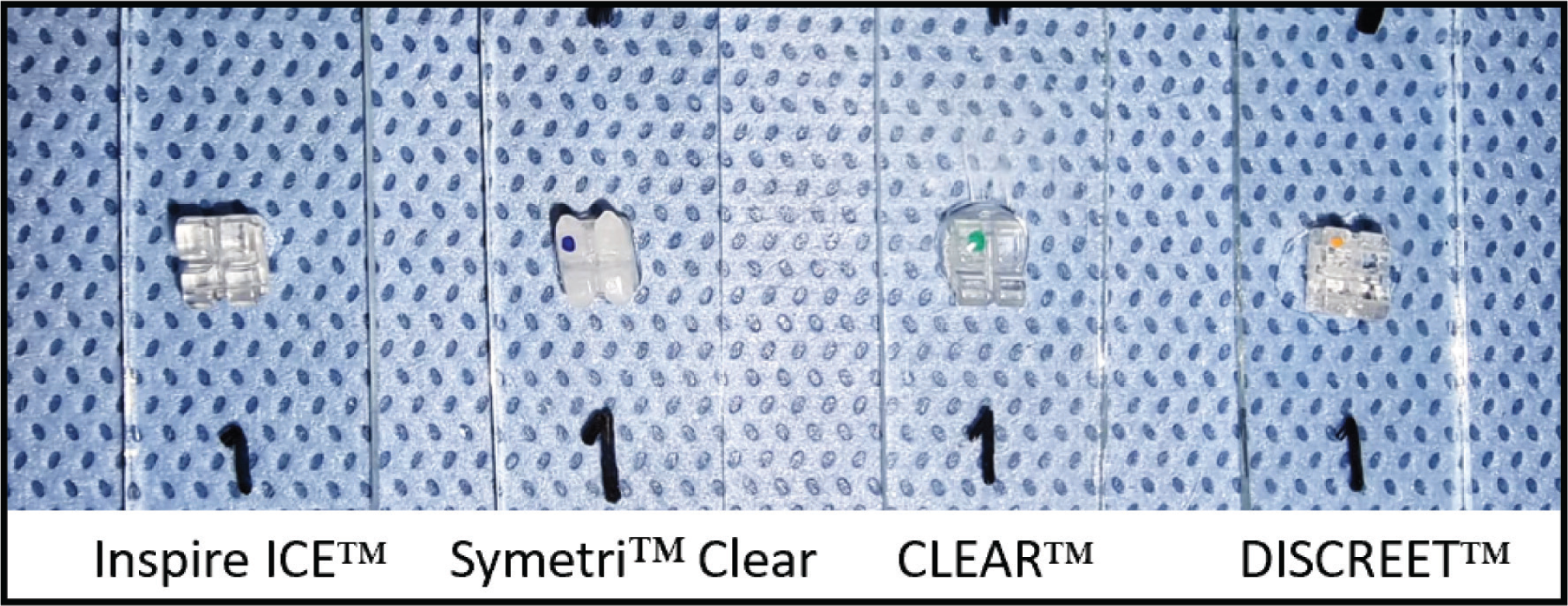
Four different bracket systems were chosen to be tested (two monocrystalline, one polycrystalline, and one hybrid clear esthetic bracket) as presented in Table 1 and Figure 1. At the level of significance of α = 0.05, effect size of 0.4 (20%), and power of 0.85, the total sample should be at least 72; 18 brackets per group.
Brackets to be Tested in the Current Study.

Samples Ready for Testing.
Specimens Preparation
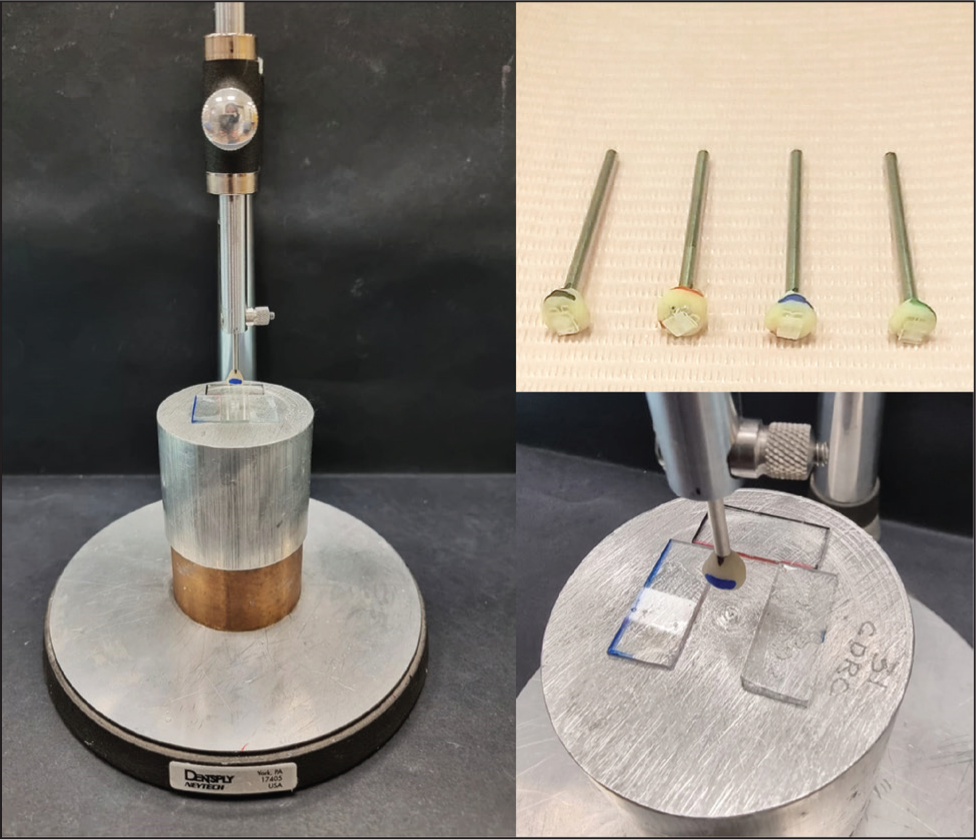
Each bracket was placed on a rectangular glass slide cut with specific dimensions (10 × 25 mm) not to interfere with the spectrophotometer cover during testing. Eighteen glass slides were prepared for each group. A customized holder was fabricated on a surveyor handle (DENSPLY, NEYTECH, York 17405, PA, USA) for each bracket and directing slot for the glass slides on the surveyor table to standardize the placement of each bracket during gluing (Figure 2). Brackets were stabilized using negligible amount of transparent superglue (UHU ultra-fast super glue Bolton adhesives, Rotterdam, Nederland). Numerical numbering was used to distinguish each sample of the group during testing, data recording, and result analysis.
Sample Standardization Apparatus.
Testing Apparatus
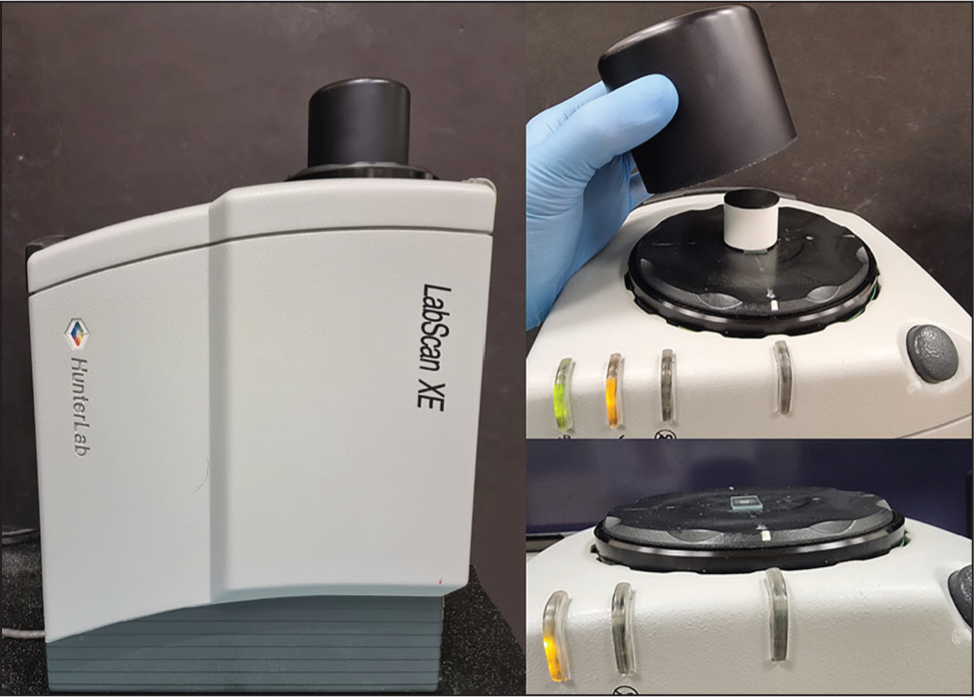
A spectrophotometer (LabScan XE Spectrophotometer, Hunter Associates Laboratory Inc., Reston, VA, USA) was used to obtain the data (Figure 3). The sample port (an opaque black ring with a small central window) was chosen with a diameter of 3 mm aperture that matches the bracket sample. The spectrophotometer was calibrated by using white tile that corresponds to 100, and black glass corresponding to zero, prior to bracket testing. 5 To resemble the visible light wavelength, the analysis was performed at wavelengths of 400 to 700 nm and give readings at intervals of 10 nm, allowing for thorough color data analysis using Easy Match QC software (Hunter Associates Laboratory Inc., Reston, VA, USA). The glass slide was then flipped directly over the sample port. Each bracket drops into the port facing the light beam. This ensures that the beam can only pass through the bracket. Three different backgrounds were used: intraoral mirror, black, and white backgrounds. An intraoral mirror was used over the sample to prevent a background effect. Recordings with black and white backgrounds were taken to compute the TP and opalescence parameter (OP). Then, the sample apparatus was covered with black opaque cover to eliminate the possibility of ambient light affecting the measurement and to conceal any environmental factors. 12 The LabScan spectrophotometer was activated to take three consecutive readings for each sample at 3, 6, and 12o’clock orientation on the port plate (Figure 3). An average of the three readings was taken.
LabScan XE Spectrophotometer, Hunter Associates Laboratory Inc., Reston, VA, USA and sample loading.
Data Recording and Analysis
Reflected Color Co-ordinates of the Tested Brackets
The reflected color was assessed in accordance with the CIE 015 color scale, LAB, relative to an illuminant standard D65. This divides color into three fields using a mathematical colorimetric process. The HunterLab (L, a, b space) was used for analysis. L*, a*, and b* fields: L* measures values from black to white and represents the brightness, the axis a* measures values from green to red, and axis b* measures values from yellow to blue (Figure 4). The mean value of the three readings of each axis was subsequently obtained for each test specimen.
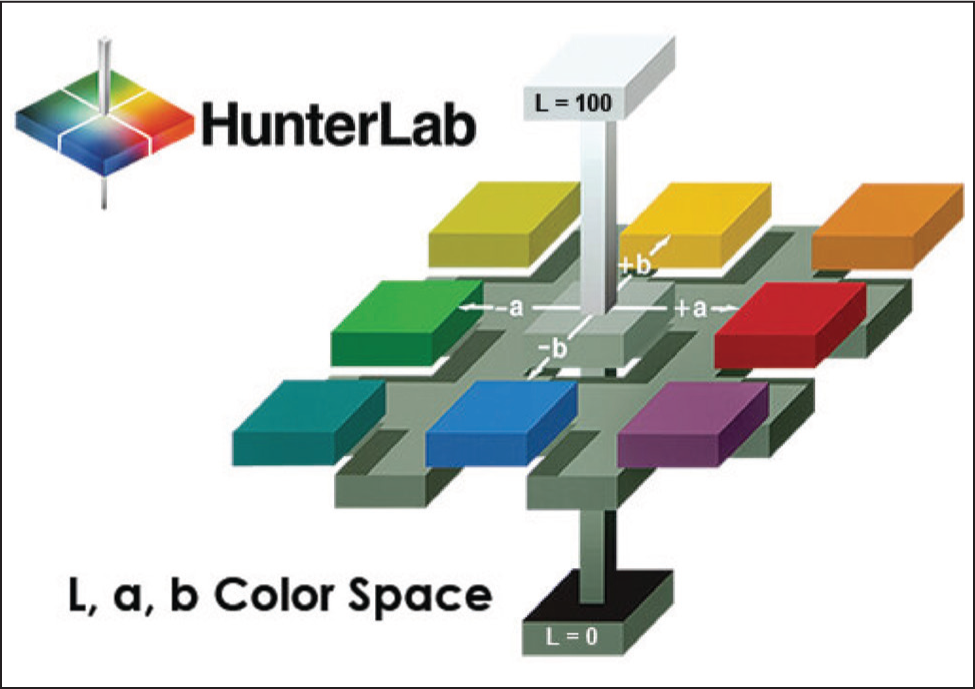
Abbreviation: CIE, Comission Internacional de I’Eclairage.
Tested Variables
Color Difference (ΔE*)5,6,9,13−15
To quantify the color difference between two objects, various color difference formulas exist. The most commonly used (ΔE*) formula in dental research is derived from the CIE-L*a*b* system.

ΔE* is a value that represents the difference in color between two objects. The larger ΔE* value, the greater the difference in color.
Translucency Parameter (TP) 6
The TP was used to analyze the variance in translucency between the brands and brackets of the same crystalline composition/structure (monocrystalline, polycrystalline, and hybrid clear ceramic) and between the three categories.
Values were determined by calculating the color difference between readings of the same sample when placed against black and white backgrounds, applying the following equation.

where (L* B , a* B , b* B ) refers to color coordinates over black backgrounds and (L* W , a* W , b* W ) refers to color coordinates over black backgrounds. The more translucent is the ceramic specimen, the higher the TP value will be obtained.
Opalescence Parameter (OP) 16
To measure the OP, the values of a* and b* coordinates obtained when specimens were placed against black (B) and white (W) backgrounds, were used according to the following equation:

Statistical Analysis
Data was collected and entered to IBM SPSS V25 (Released 2017. IBM SPSS Statistics for windows, version 25.0. Armonk, NY: IBM Corp). The level of significance was set at the level of p ≤ .05. Three variables were tested: the color difference (ΔE*), the TP, and the OP. Because normality was satisfied in all variables, one-way ANOVA and post hoc tests were utilized. To determine the significant difference among the groups, one-way ANOVA test was performed. Following that, Tukey’s post hoc test was used for multiple comparisons between the means of the groups.
Results
Color Difference (ΔE*)
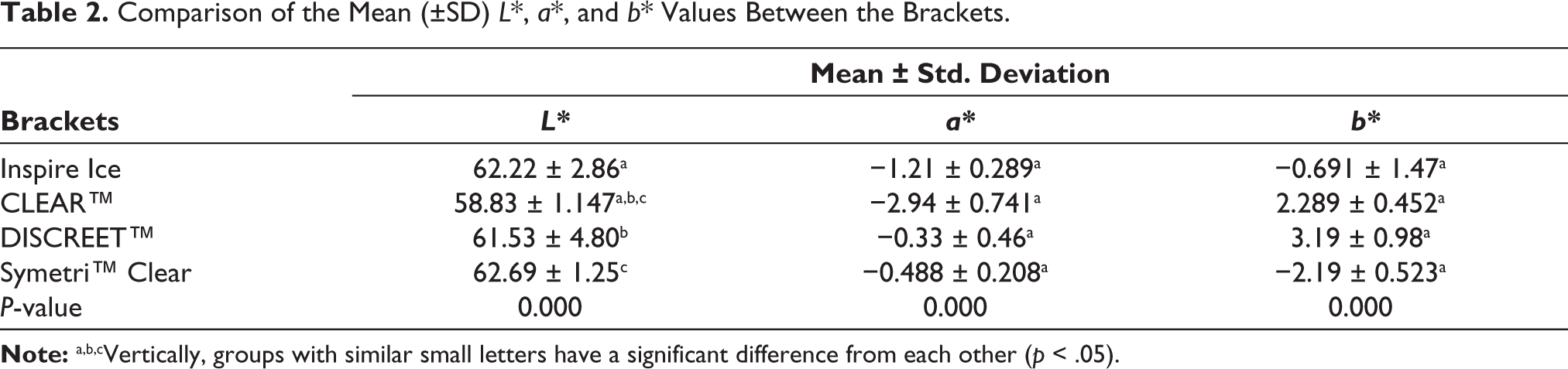
The means and standard deviations of L*, a*, and b* values are shown in Table 2. Symetri™ Clear showed the highest L*, followed by Inspire Ice, DISCREET™, and CLEAR™. DISCREET™ showed the highest a*, followed by Symetri™ Clear, Inspire Ice, and CLEAR™. DISCREET™ showed the highest b*, followed by CLEAR™, Inspire Ice, and Symetri™ Clear. A one-way ANOVA showed a statistically significant difference in the L*, a*, and b* values between the brackets (p < .05). Multiple comparisons with Tukey’s post hoc test showed statistically significant differences in a* and b* values between all the brackets (p < .05). However, L* values were statistically significant only between Inspire Ice and CLEAR™; CLEAR™ and DISCREET™; and CLEAR™ and Symetri™ Clear.
Comparison of the Mean (±SD) L*, a*, and b* Values Between the Brackets.
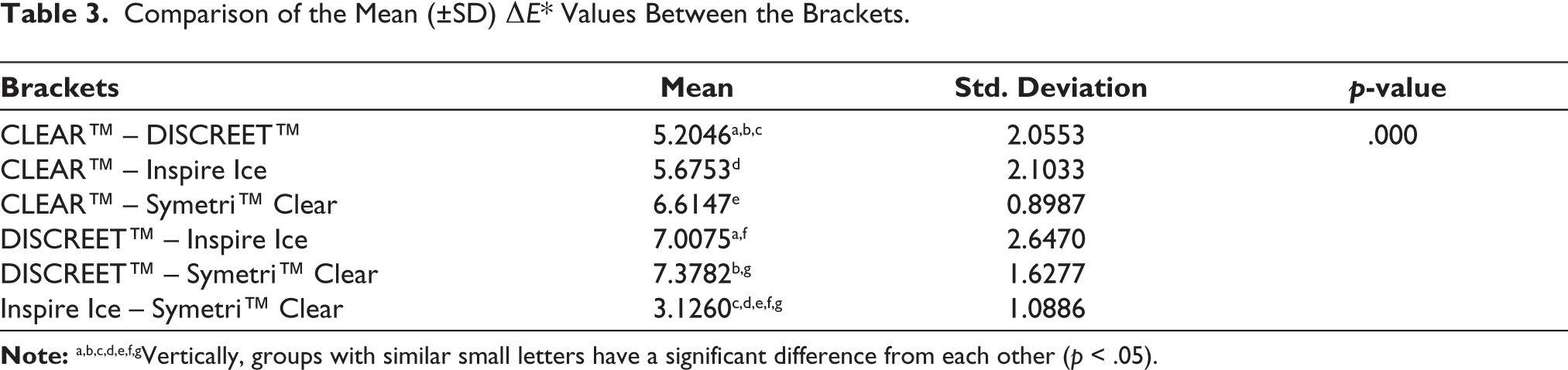
The means and standard deviations of ΔE* values are shown in Table 3. DISCREET™ – Symetri™ Clear showed the highest ΔE*, followed by DISCREET™ – Inspire Ice, CLEAR™ – Symetri™ Clear, CLEAR™ – Inspire Ice, CLEAR™ – DISCREET™, and Inspire Ice – Symetri™ Clear. A one-way ANOVA showed a statistically significant difference in the ΔE* values between all the brackets (p < .05).
Comparison of the Mean (±SD) ΔE* Values Between the Brackets.
Translucency Parameter
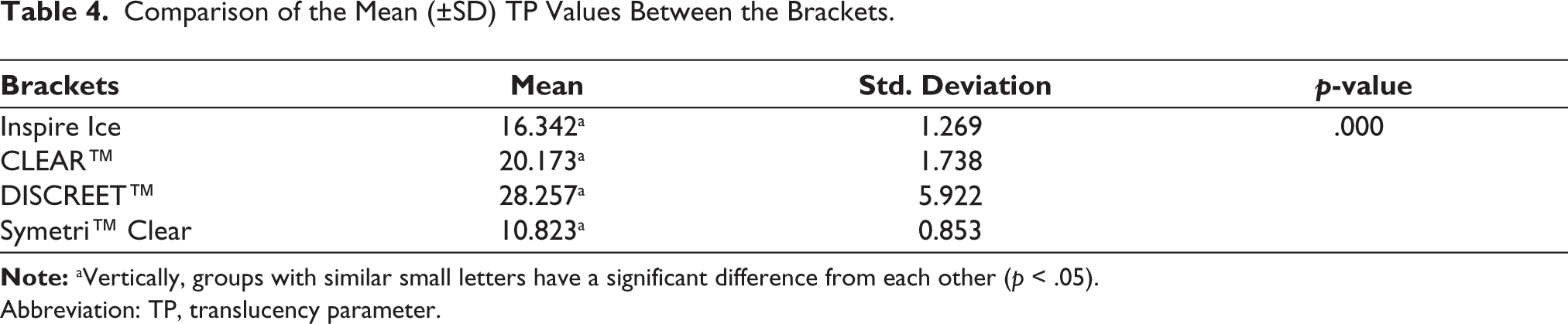
The means and standard deviations of TP values are presented in Table 4. The values ranged from 10.823 ± 0.853 to 28.257 ± 5.922. DISCREET™ bracket showed the highest TP, followed by CLEAR™, Inspire Ice, and Symetri™ Clear, orderly. A one-way ANOVA showed a statistically significant difference in the TP values between the brackets (p < .05). Multiple comparisons with Tukey’s post hoc test showed statistically significant differences in TP values between all the brackets (p < .05).
Comparison of the Mean (±SD) TP Values Between the Brackets.
Abbreviation: TP, translucency parameter.
Opalescence Parameter
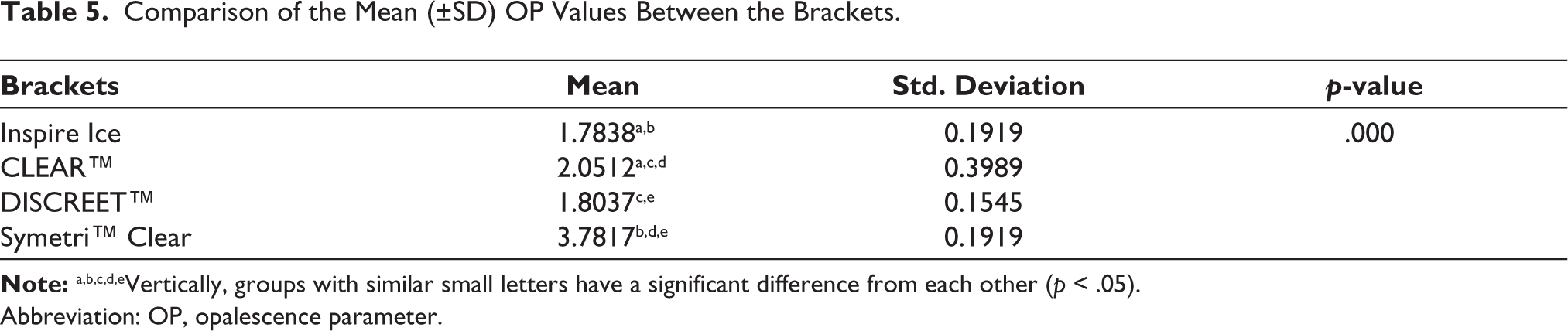
According to the obtained data, Symetri™ Clear has shown the greatest OP. CLEAR™ brackets came second. As for DISCREET™ and Inspire Ice, the OP values were quite comparable measuring (1.8037 ± 0.1545) and (1.7838 ± 0.1919), respectively. A one-way ANOVA showed a statistically significant difference in the OP values between the brackets (p < .05). However, multiple comparisons with Tukey’s post hoc test showed statistically significant differences in OP values between all groups except between DISCREET™ and Inspire Ice, no significant difference was found. All means and standard deviations of OP values are shown in Table 5.
Comparison of the Mean (±SD) OP Values Between the Brackets.
Abbreviation: OP, opalescence parameter.
Discussion
Over the years, the desire to have an esthetic orthodontic treatment option has increased among all age groups. The vast majority of optical analysis studies on esthetic brackets focused on evaluating color change. As far as we know, none of the previous studies have tested the opalescence of the brackets. Nevertheless, it is an important parameter that affects the visual perception significantly. Furthermore, none of the preceding studies has studied clear hybrid ceramic brackets and compared to the monocrystalline and polycrystalline brackets.
In relation to optical analysis, only few number of publications were found. This was attributed to the difficulty of the technique due the bracket geometry. 5 Most of which focused on color stability of the brackets and on the color change due to exogenous stains over period of time, while scarce focused on optical properties and color analysis among different brands of as-received ceramic brackets.3−5,13 Although it was mentioned that monocrystalline ceramic brackets revealed less stain than the polycrystalline ceramic brackets by about 25% 17 , however, these studies have concluded that all tooth-colored orthodontic brackets tend to discolor with varying degrees depending on the kind of food, the immersion time, and according to bracket manufacturing and fabrication.18−20 As a result, all patients treated using ceramic or polymer-based brackets should reduce the consumption of staining foods and drinks to diminish the severity of this sequelae.1,21 Therefore, bracket staining and assessment of color change was not part of this study objectives.
A principal factor during the selection of esthetic material is translucency. The translucency of a material is a property that appears when a ray of light is partly scattered, reflected, and/or passed through the object. 16 The higher the translucency of the material, the greater the amount of light allowed to pass through it. Ceramics can have different composition, microstructure, and crystalline content, which consequently influence its optical performances. The greater the crystalline structure, the higher the strength; however, greater opacity will be subsequently observed. In other words, translucency is a state between transparency and complete opacity. 16
Despite the presence of few previous studies, there is no consensus on the method of choice to measure the translucency of tooth-colored brackets to be able to be compared some of these parameters and show clinical correlation. Except for Inspire ICE, none of the chosen brackets were tested before. The null hypotheses of this in vitro study―there is no significant differences in translucency, opacity, and in the light reflectance between as-received different ceramic brackets that is influenced by bracket ceramic type and/or brand―was rejected because all color coordinates, translucency and opalescence of the investigated brackets were significantly different and influenced by bracket microstructure and production company.
The reflected color was assessed using spectrophotometer according to the (CIE) color scale, LAB as described in the section “Material and Methods.” The axis L* measures color values from black to white. The axis a* measures values from green to red. While axis b* measures values from yellow to blue. There was a significant difference between all brackets on all fields of color coordinates except CIE L*. As shown in Table 2, there was a significant difference between the three brackets (Symetri™ Clear, Inspire ICE, and DISCREET™) and CLEAR™, with CLEAR™ showing the lowest CIE L* coordinate of 58.8. Hence, it can be concluded that among the four tested tooth-colored brackets, CLEAR™ appears to be the darkest. Regarding the CIE a* coordinate, the obtained values ranged between −.33 and −2.9. Although there was significant difference between all the samples, all of which had a negative value resembling a green tint. For the CIE b* coordinate, significant difference among all tested brackets was noticed as well. CLEAR™ and DISCREET™ showed a positive value indicating a yellowish hue. In contrast, brackets manufactured by Ormco (i.e. Symetri™ Clear and Inspire ICE) had negative values representing a more bluish color in comparison to Adenta manufactured brackets. This difference might be brand related.
To analyze the color difference between two objects, ΔE* can be obtained by Eq. (1), where the higher the value the greater the difference in color and hence the more perceptible it is. ΔE* was computed among the four groups. According to Khashayar et al., the threshold of visual perceptibility of ΔE* is 1. 11 In this in-vitro study, ΔE* measured above one between all the groups (ΔE* >1) ranging from 3.12 to 7.37, which is considered visually detectable by the human eye. This difference was visibly noticed during the course of sample preparation. There was a significant difference found between all groups. The greatest ΔE* was seen between DISCREET™ and Symetri™ Clear. Multiple possible explanations for this fact including the structural composition and brand specifications. The lowest color difference (ΔE*) was between Inspire ICE and Symetri™ Clear. Although they have different crystalline structure, the fact of being produced from the same company might explain this result.
Transparency parameter is an analytic tool that is used to check the variance in translucency between the brackets and/or brands of the same crystalline composition/structure. It utilizes measuring the difference in color reflection when white and black backgrounds are used.
It is clear that DISCREET™ showed the highest TP, followed by CLEAR™, Inspire Ice, and Symetri™ Clear. This is attributed to the structural composition of each bracket type. It can be concluded that clear hybrid material showed superior translucency when compared to monocrystalline brackets as claimed by the manufacturing company. Moreover, the monocrystalline/sapphire brackets showed higher translucency when compared to polycrystalline ceramic brackets resembled by Symetri™ Clear in this study. This comes in an agreement with the findings by Mohamed et al. 3 Additionally, it was noted from the experiment that there was significant difference in TP between all groups. Although both CLEAR™ and Inspire Ice have similar crystalline composition and structure, yet great disparity in TP values was seen between them. The former bracket showed greater translucency than the latter (20.173 and 16.342, respectively). This means that within the same crystalline group, the same level of translucency was not met. These differences can be attributed to the manufacturing technique that is unique for each production company. 13 As far as translucency is concerned, DISCREET™ can be the bracket of choice as it presents the highest translucency among all tested brackets. Nevertheless, other characteristics such as its brittleness, surface roughness (level of friction), and abrasiveness are of great importance when it comes to the efficiency of orthodontic treatment. Further studies are needed to have a solid recommendation on using these brackets.
Ideally, the color of esthetic brackets should match those to which it is bonded to. However, the color co-ordinates of natural teeth might differ by race, gender, and age.22,23 Since the shades of natural teeth vary, the more translucent the bracket, the better the esthetic performance is expected. Attempts have been made to provide shade guides and color matching.6,7 This is not clinically practical and adds no value specially if varying degrees of staining of teeth and/or bracket would take place. In addition to the esthetic presentation, these variations in optical properties, and mainly, the translucency influenced the level of curing of the adhesive. 13 Although dental shade guides have been used for many years, the range of shades is sometimes not consistent with natural teeth especially when the tooth is not homogeneous in appearance. 26 Therefore, showing higher TP and lower OP would enhance esthetics and indicate better ability to reflect tooth color through the bracket rather than color matching using a shade guide which is not practical in orthodontics and would require larger inventory.
As shown from previous studies, polycrystalline ceramics had shown higher opacity in comparison to monocrystalline. 24 The clear appearance is attributed to the presence of lesser impurities during the process of manufacturing. 25 Grain boundaries produced during manufacturing refract light and hinder its passage. 19 Symetri™ Clear showed the highest ranking when compared to the tested groups. As seen in the resultant TP values, a significant difference in OP values was noticed between monocrystalline brackets (CLEAR™ and Inspire Ice). This comes in an agreement with the previous studies that found that the dimensions (thickness and geometry) of the tested brackets had a significant influence on the translucency and color of the brackets, which varied according to the brand. 4 Since this study was the first to study the optical properties of clear hybrid brackets, it can be said that this material has shown significantly high translucency and low opacity.
It is important to point out that in this in vitro study, the effect of the underlying bonding shade and tooth color were not taken into consideration. More clinically orientated studies are required to evaluate long-term changes caused by the complex flora and its by-products, in addition to biofilm deposition in the tested material on the optical properties of materials. Simulated models for the evaluation of the degree of adhesive cure through the brackets should also be tested to keep up with orthodontic patients’ needs and demands.
Conclusion
Color coordinates, TP, and OP of esthetic brackets investigated with a spectrophotometer were significantly different and influenced by composition and brand. Color difference by bracket brand was perceptible to humen eye (∆E* > 1). DISCREET showed the highest TP and Symetri™ Clear showed the lowest. For the OP analysis, DISCREET™ and Inspire ICE showed the smallest value while Symetri™ Clear scored the greatest. Therefore, no one bracket can be recommended, brackets with the best performance for each case should be selected considering both esthetic and functional demands.
Footnotes
Acknowledgements
The authors would like to thank the College of dentistry Research Center and the deanship of scientific research at King Saud University, Riyadh, Saudi Arabia for the approval of this research project CDRC (PR#0147). This manuscript is part of the DScD dissertation at king Saud university.
Declaration of Conflicting Interests
The authors declared no potential conflicts of interest with respect to the research, authorship, and/or publication of this article.
Ethical Approval
This study was approved by King Saud University. According to the College of dentistry Research Center and the deanship of scientific research at King Saud University, neither approval from the ethics committee nor informed consent is required for this in-vitro research project CDRC (PR#0147).
Funding
This research received no specific grant from any funding agency in the public, commercial, or not-for-profit sectors.
Informed Consent
Not applicable, as no patients were recruited in the trial.