




Abstract
Aim:
Accumulation of plaque during orthodontic treatment makes oral prophylaxis a regular necessity. The use of esthetic brackets has gained popularity, it becomes necessary to assess the consequences of ultrasonic instrumentation during oral prophylaxis on ceramic bracket’s shear bond strength (SBS).
Materials and Methods:
Fifty-four premolar teeth which were extracted due to therapeutic reasons were divided into six groups with each group containing nine teeth each. Ceramic brackets were bonded onto the labial surfaces using two different adhesive systems (Ormco Enlight and Transbond) and were subjected to ultrasonic scaling at different scaler tip angulations. The samples were then rendered a debonding force in a Universal testing machine and the bond strengths were assessed.
Results:
In terms of angulation of ultrasonic instrumentation, among the groups bonded with the Ormco Enlight, the 45° angulation group had statistically significant higher bond strength values compared to the 0° angulation group. Among the transbond groups, there was no statistically significant difference in the bond strengths even though the 45° angulation group had slightly higher bond strength value than the 0° angulation group.
Conclusion:
Supragingival scaling around the bracket base at 0° around the ceramic brackets for 1 min resulted in the reduction of SBS. Therefore, the clinicians should be cautious during plaque removal, avoid performing extended ultrasonic instrumentation at the bracket base, especially at 0° angulation.
Keywords
Abbreviation
SBS: Shear bond strength
Introduction
Fixed orthodontic appliances make mechanical plaque removal more difficult, predisposing orthodontic patients to plaque accumulation and enamel demineralization. 1 Accumulation of microbial plaque on teeth is a direct cause of gingivitis, periodontitis, and white spot lesions.2, 3 Plaque accumulation was found to be greater in patients with ceramic brackets followed by metal and self-ligating brackets.4–6 Increased plaque accumulation necessitates oral prophylaxis at regular intervals to maintain proper oral hygiene. But ultrasonic instrumentation has also been found to diminish the bonding strength of orthodontic brackets. 7 Bonetti et al. studied shear bond strength (SBS) of brackets after scaling with three various angulations of the scaler tip and found that the bond strength was least affected with 45° angulation. 8 The difference in bond strength between ceramic and metal brackets is still debatable with studies showing ceramic brackets to have higher SBS,9–11 while few studies showed higher SBS values with metallic brackets.12, 13 The fracture resistance of ceramic brackets is 20–40 times less than that of metallic brackets.14, 15 Moreover, with ultrasonic instrumentation being one of the methods for debonding ceramic brackets is enough to prove that ceramic brackets are greatly affected by ultrasonic instrumentation.4, 16, 17
In this study, the effect of angulation of the ultrasonic instrument tip during oral prophylaxis on the SBS of ceramic brackets was investigated.
Materials and Methods
Setting and Design
The study was performed in Saveetha Dental College and Hospitals. The study was conducted with extracted premolar samples. Patient consent was obtained from the respective patients in the Department of Oral and Maxillofacial surgery before the extraction procedure. The study was conducted over a duration of 8 months. Sample size was calculated to be 54 from the reference study by Bonetti et al., wherein he compared the SBS of metal orthodontic brackets when subjected to ultrasonic instrumentation with two different instrument angulations. 8 Sample size calculation was done using G-Power version 3.0 software.8, 9 This sample size calculation was done with an effect size of 0.2 and power of 80%. Fifty-four premolar teeth extracted for therapeutic cause from patients aged 12–26 years were obtained. On the labial surfaces of the teeth, there were no obvious cracks, white spots, hypoplasia, restorations, or cavities. In order to clean them and preserve them in distilled water in a refrigerator under 4°C for 1 to 6 months, they were washed in water. All this was done in compliance with ISO/TS 11405 standards. 18
Grouping and Allocation
The teeth were randomly segregated into six groups with nine specimens in each based on composite used for bonding and ultrasonic instrumentation angle as follows:
Group 1: Bonding is done with 3M Transbond XT (Transbond XT primer; 3M Unitek, Monrovia, CA, USA) and ultrasonic instrumentation with 0° angulation. Group 2: Bonded with 3M Transbond XT and ultrasonic instrumentation with 45° angulation. Group 3: Bonded with Ormco Enlight (Ormco Corporation) and ultrasonic instrumentation at 0° angulation. Group 4: Bonded with Ormco Enlight and ultrasonic instrumentation with 45° angulation. Group 5: Bonded with Transbond XT, no ultrasonic instrumentation. Group 6: Bonded with Ormco Enlight, no ultrasonic instrumentation.
Methodology
The labial surfaces of the enamel were cleaned and polished which were later etched according to the protocols reported by Bonetti et al. 19 A coat of Transbond XT primer was applied thinly and uniformly (Transbond XT primer 3M Unitek, Monrovia, CA, USA) with a microbrush. Ceramic brackets (Ormco ICE clear brackets) were then placed on the teeth, adjusted to their final positions, and pressed in place firmly without distortion. The same procedure was carried out for the Ormco Enlight composite groups. After removing excess resin from the periphery of the bracket base with a dental probe, the adhesive was cured by using a light-emitting diode light source (Woodpecker ILED Light Curing Unit) for 6 sec (3 sec mesially and 3 sec distally), according to the manufacturer’s instruction.
Mounting Procedure
After storage in distilled water at 37°C for 24 h (ISO/TS 11405 8 ; test type 1: short-term test), the teeth were embedded in autopolymerizing acrylic resin in polyvinyl chloride molds (35-mm diameter and 20-mm width and 15 mm high) to ensure that the roots were completely encased in acrylic resin and that the bracket’s bonding surface remained perpendicular to the horizontal plane and parallel to the intended direction of application of force.
Ultrasonic Instrumentation
After Ceramic brackets (Ormco ICE clear brackets) were bonded to the cleaned and polished enamel surfaces with the respective adhesives as mentioned above, they are mounted in auto-polymerizing acrylic resin (also mentioned above). The mounted samples were then subjected to Ultrasonic instrumentation (Guilin Woodpecker ultrasonic scaler) at 0° or 45° for 20 sec each (Figures 1 and 2) on the two proximal surfaces and occlusal surface of the bracket base depending on the group they belonged to. Groups 5 and 6 were not rendered any ultrasonic instrumentation and acted as controls.
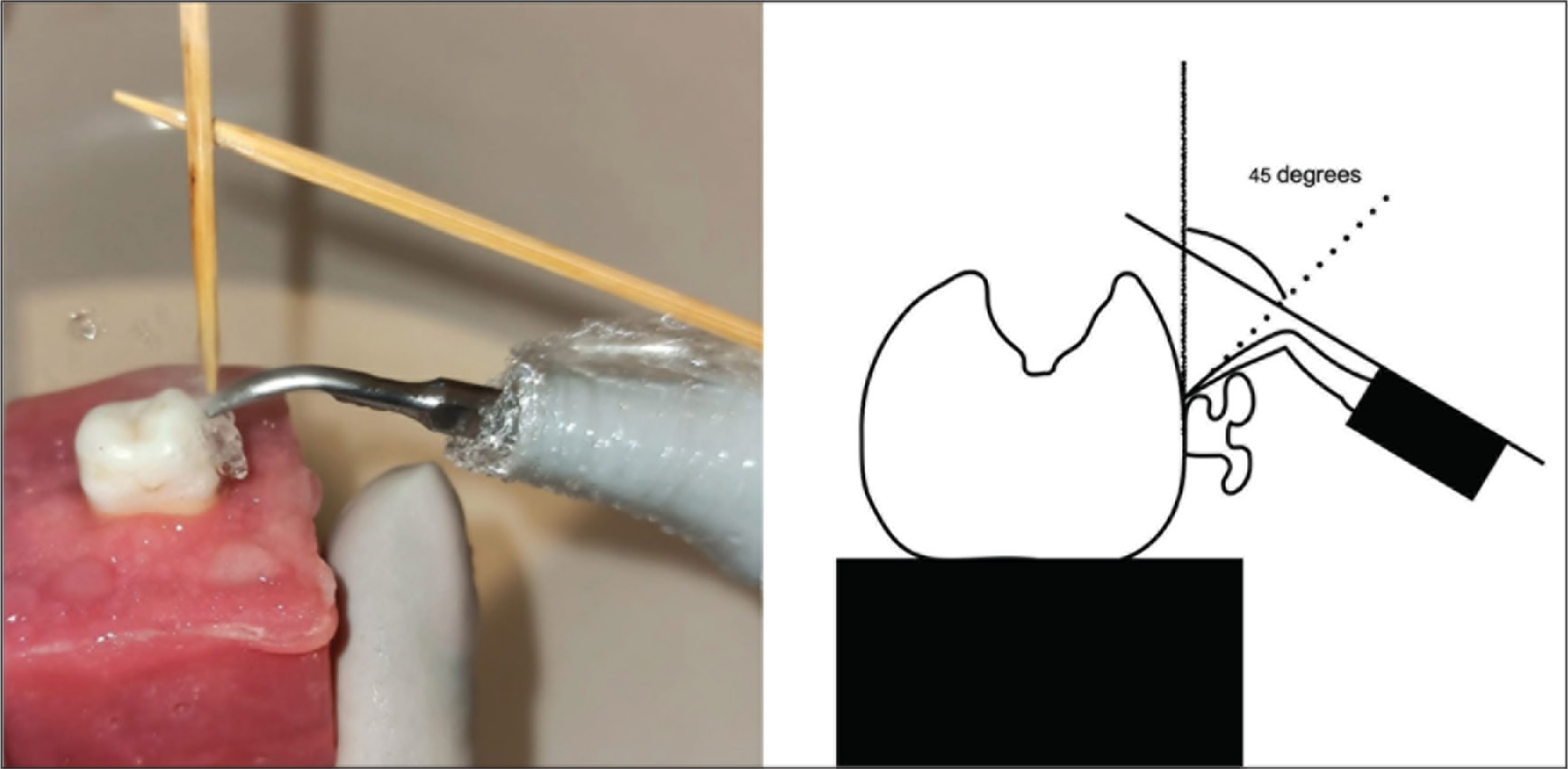
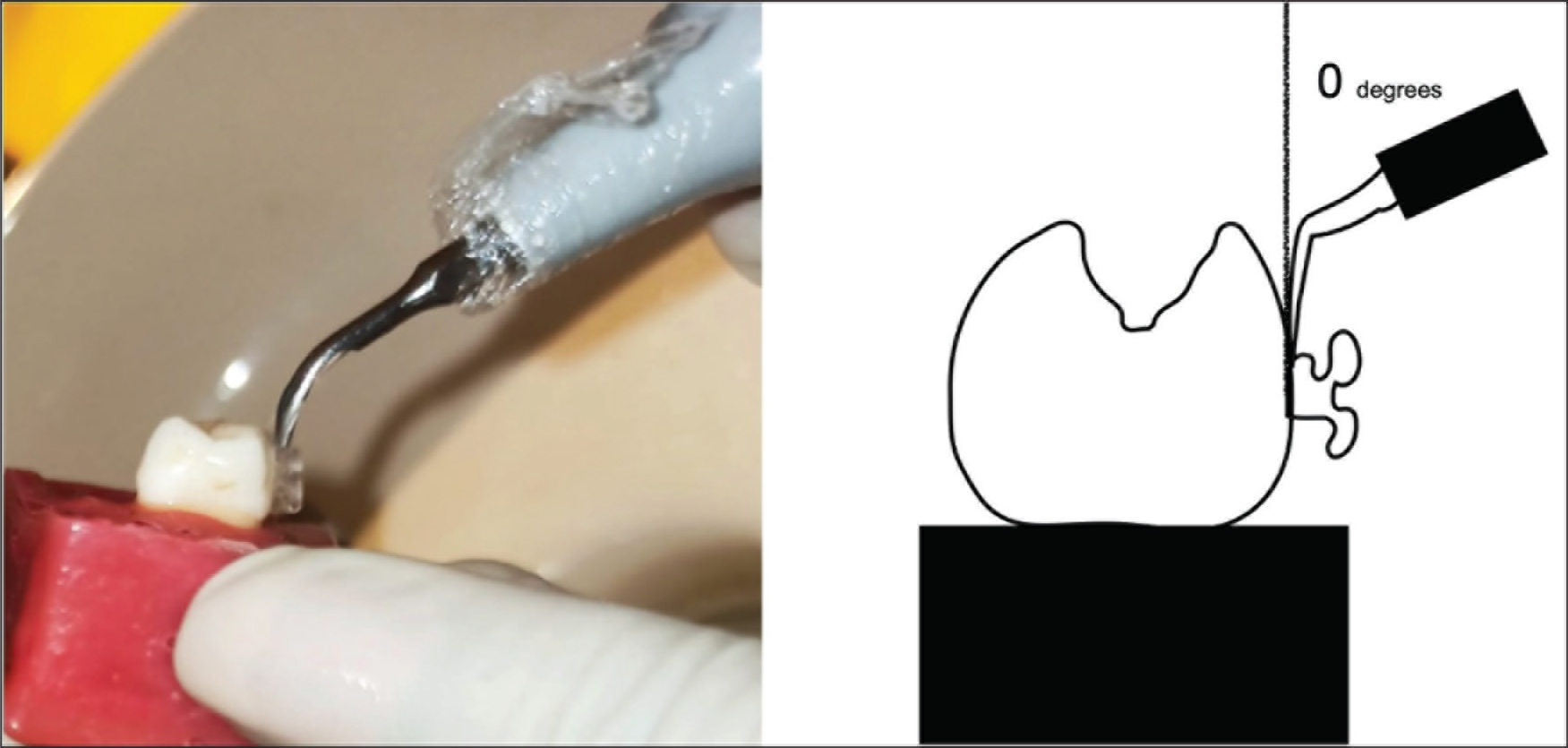
A piezoelectric ultrasonic scaler (Woodpecker) was used with “G2 insert” at a power of 7.5 W set in the scaler. The tap water was delivered as a coolant directly from the dental unit. The bracket base was ultrasonically instrumented for 1 min, 20 sec on the mesial, distal, and occlusal sides. The bracket slot wasn’t instrumented since the wings of the bracket failed to permit the recommended scaler-tip angulations to be instrumented over that surface. All of these treatment procedures were carried out by a single skilled and trained operator.
An external support was set up with a component making a 45° angle to the tip of the scaler. This was fastened to the ultrasonic scaler device and held parallel to the labial surface of the tooth in order to achieve the 45°-angulation. This caused the scaler tip and tooth surface to be at an angle of 45° (Figure 1).
Debonding Procedure
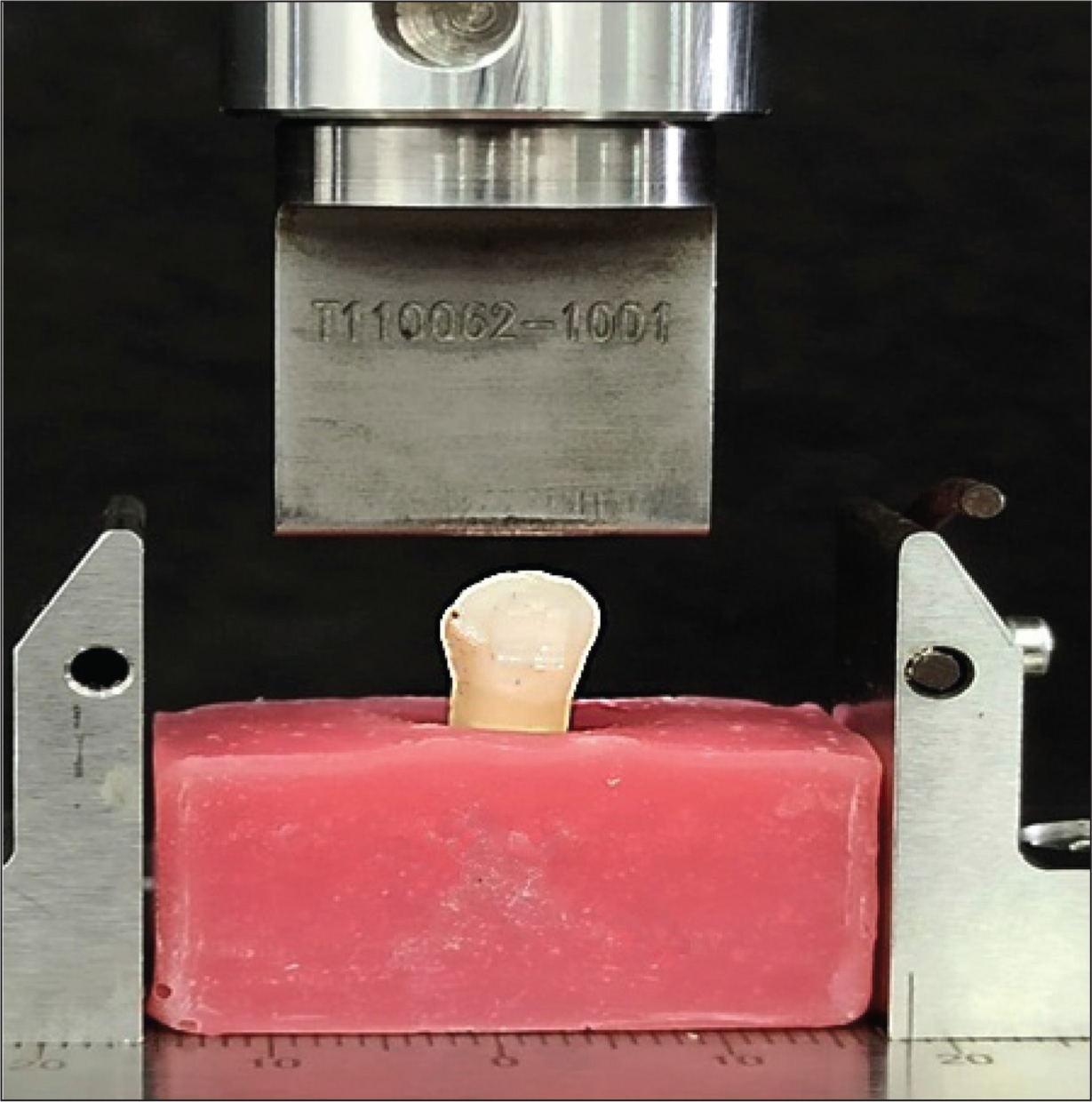
The samples after undergoing the respective ultrasonic treatment were then stored in the distilled water for 24 h at room temperature. The samples were examined in accordance with the ISO/TS 11405 standard to measure the SBS testing by applying a debonding force using an Universal testing machine (Instron, Milan, Italy) in the occluso-gingival direction.
Each acrylic block was loaded into the universal testing machine with the bracket base parallel to the force direction and a chisel-shaped blade on the occlusal side of the ligature groove between the bracket base and the wings. A shear debonding force was applied in the occluso gingival direction at a crosshead speed of 1 mm/min as specified by Bonetti et al., 8 and each bracket’s shear force needed to separate from the tooth surface was measured in newtons (Figure 3).
Statistical Analysis
Statistical Package for the Social Sciences (The SPSS software (Version 23.0; SPSS Inc., Chicago, IL, USA)) was employed for statistical analysis. Power of the study was estimated with the G Power 3.0 software, the power was set at 80% with an effect size of 0.2, and the significance level was set at .05.
Shapiro Wilk test was performed to test the normality of the data and it was found to be parametric as the data were of normal distribution in all the groups. Independent t-test was used when SBS was compared between two groups and ANOVA and Tukey’s post-hoc tests were performed for comparison of multiple groups.
Results
Between the two adhesive groups, Ormco Enlight Showed the highest bond strength values with an average of 15.8 ± 2.1 MPa compared to that of Transbond which is 14.1 ± 2.1 MPa (Table 1).
Descriptive Statistics Comparing the SBS Values of the Six Groups.

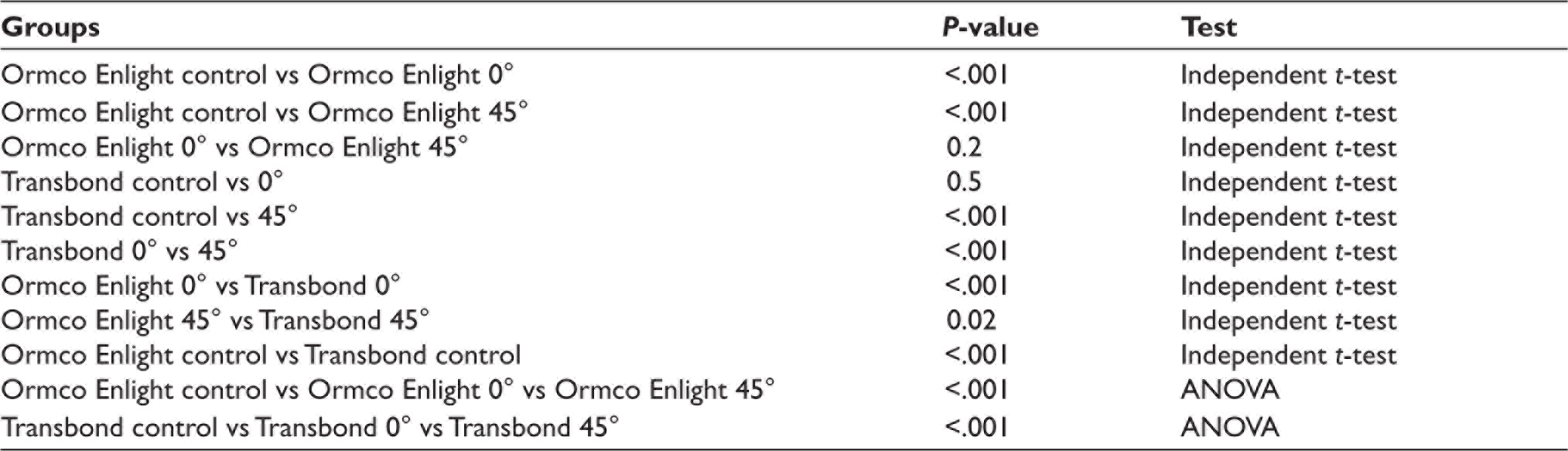
On comparing the SBS between 0° instrumentation groups of the two adhesive systems, Ormco Enlight adhesive had the highest bond strength and the same was seen on comparison between the 45° instrumentation groups between the two adhesives where Ormco Enlight adhesive had the highest bond strength and the differences were statistically significant, P value < .001 as shown in Table 2.
When comparing the Transbond adhesive groups, the 45° instrumentation group had the greatest bond strength in the Transbond adhesive group, but the change was not statistically significant (P > .05), whereas in the Ormco Enlight adhesive group, the bond strength values were almost similar. The differences were not statistically significant (P > .05). The results of the debonding test in terms of SBS are shown in Table 2. One specimen of the 0°-angulation group could not be tested because fracture of the bracket occurred when subjected to debonding. The mean SBS of the groups were as follows: Group 1 – 11.4 ± 3.8, Group 2 – 13.1 ± 1.9, Group 3 – 10.1 ± 2.2, Group 4 – 14.2 ± 2.5, Group 5 – 14.1 ± 2.1, Group 6 – 15.8 ± 2.1.
Independent t-tests and ANOVA Tests Performed to Compare the SBS Between the Groups.
Discussion
Patients receiving fixed orthodontic treatment must prioritize maintaining good professional oral hygiene to lower their risk of developing periodontal illnesses and enamel erosion. 20
However, ultrasonic instrumentation has also been found to decrease the SBS of orthodontic brackets. 7 Hence, it is important to assess the effect of ultrasonic instrumentation on bond strength.
Ormco Enlight Showed the highest bond strength values with an average of 15.8 ± 2.1 MPa compared to that of Transbond which is 14.1 ± 2.1 MPa and it was statistically significant (P < .05). Earlier studies comparing the bond strength of various brands of adhesives have majorly favored the 3M Transbond adhesive,10, 21, 22, but few studies that compared Ormco and Transbond adhesive concluded that there was no significant difference between the two in terms of SBS.23–25 This finding could be probably due to the chemico-mechanical interaction of the composition in Ormco composite to that of the ceramic brackets. When compared in terms of angulation of ultrasonic instrumentation, among the groups bonded with the Ormco Enlight, the 45° angulation group had statistically significant higher bond strength values compared to the 0° angulation group. Among the transbond groups, there was no statistically significant difference in the bond strengths even though the 45° angulation group had slightly higher bond strength value than the 0° angulation group. These results were similar to the study conducted on metallic brackets by Bonetti et al. wherein he compared the influence of ultrasonic tip angulation on the SBS of brackets but was not compared between two commercial brands of adhesives. The overall SBS values of ceramic brackets in this study ranged between 12 and 17.9 MPa which were greater than those of the SBS of metallic brackets (3.4–12.5 MPa). This increased SBS of ceramic brackets is in agreement with previous studies where ceramic brackets had greater bond strengths compared to metal brackets.9–11. This increased SBS of ceramic brackets may be attributed to the fact that ceramic brackets bond both by micromechanical and chemical bonds.26, 27
In this study, ultrasonic instrumentation was carried out around the bracket base at different angulations with two different orthodontic adhesives. To simulate extreme oral environment and accentuate the most deleterious effect of ultrasonic instrumentation on the SBS of ceramic orthodontic brackets, the time of instrumentation was overdone when compared with a routine clinical procedure, in which the scaler tip probably contacts the bracket–enamel interface only for a short period. Thus, a period of 1-min instrumentation was mandated in this study. 28 A power adjustment of 7.5 W was used as recommended by Chapple et al. and few other authors.29–32 And to simulate conditions of a routine prophylactic clean up, an experienced operator who was trained to deliver force as low as possible, performed all the ultrasonic procedures.
In the study, the SBS of one bracket from the 0°-angulation group was not assessed due to bracket fracture during the SBS assessment. Limitations of the study were that the power setting for ultrasonic instrumentation was standard, whereas in clinical practice, it is not always possible for the clinicians to do oral prophylaxis in the same setting; moreover, only one commercial brand of scaler and respective scaler tip was used which could also converge the application of the current results. Apart from these, the shearing stress that the orthodontic brackets undergo in the oral environment along the entire duration of orthodontic treatment cannot be simulated in an in vitro study.
Conclusion
Ceramic brackets subjected to 45° angulation demonstrated greater SBS values compared to the 0° angulation group with a minute of ultrasonic instrumentation around the base of the bracket.
The Ormco Enlight adhesive has comparable SBS to that of 3M Transbond XT adhesive.
Hence, whenever oral prophylaxis is attempted on an orthodontic patient, ultrasonic instrumentation at an angle of 45° would be less detrimental to the SBS of orthodontic brackets.
Footnotes
Acknowledgements
We greatly acknowledge the work by Bonetti et al., the study was the reference for our study and the idea of formatting of the methodology (in subsections) was referred from the work by Bonetti et al.
Authors’ Contributions
All the authors developed the concept and design of this study. PR contributed to acquisition of clinical material. Both the authors performed statistical analyses, and contributed to the interpretation of the data. PR drafted the manuscript. All authors critically revised the manuscript and gave the final approval.
Data Availability Statement
The datasets used and/or analyzed during the current study are available from the corresponding author on reasonable request. For privacy reasons, however, individual data allowing for the identification of participants (e.g., videos) cannot be made available.
Declaration of Conflicting Interests
The authors declared no potential conflicts of interest with respect to the research, authorship, and/or publication of this article.
Ethics Approval
This study was approved by the Scientific Review Board-Saveetha Dental College and Hospitals, SIMATS. The study methods were performed entirely in accordance with the relevant guidelines and regulations of the World Medical Association Declaration of Helsinki.
Funding
The study was supported by a grant from KRM WEB VISION; Grant KRM/11/234.
Informed Consent
The participant has consented to the submission of the article to the journal.